






Abstract
New and notable research from the journals, summarized by the members of the Contexts graduate editorial board.
Father Schools and Promise Keepers
In many countries, women have gained greater access to education, the right to work with fair compensation, and protection from violence. These all reflect changing norms of femininity (what it means to be a girl or a woman), but it’s debatable whether the global spread of gender equality represents “Western” femininity. Further, what about masculinity? In a recent Gender & Society article, “Taming Tiger Dads,” Allen Kim and Karen Pyke explore American norms of masculinity in education programs intended to make Korean men better fathers.
The Father School movement is a response to a “masculinity crisis” in South Korea. During the 1990s, many men lost their jobs and their claim to the breadwinning role as divorce and women’s participation in the labor force rose. Programs like the Father School advocated for a new type of masculinity that emphasized men’s more involved and loving emotional family connection and the rise of the “New Man.”
The system is based on an American program for evangelical men called Promise Keepers, so the Korean Father School uses rhetoric that glorifies American fatherhood norms. What is more surprising is how blatantly American masculinity is built up while Korean masculinity is portrayed as a problem. Participants in the study used phrases like “typical Korean father” as markers of paternal inability, while “American father” indicated paternal success.
Kim and Pyke argue that the framing of American fathers as admirable and Korean fathers as inadequate reflects a larger trend of Western hegemonic masculinity. The Father School movement, then, reflects a combination of capitulation and bargaining, trying to maintain a Korean identity while adapting to the dominant American model.
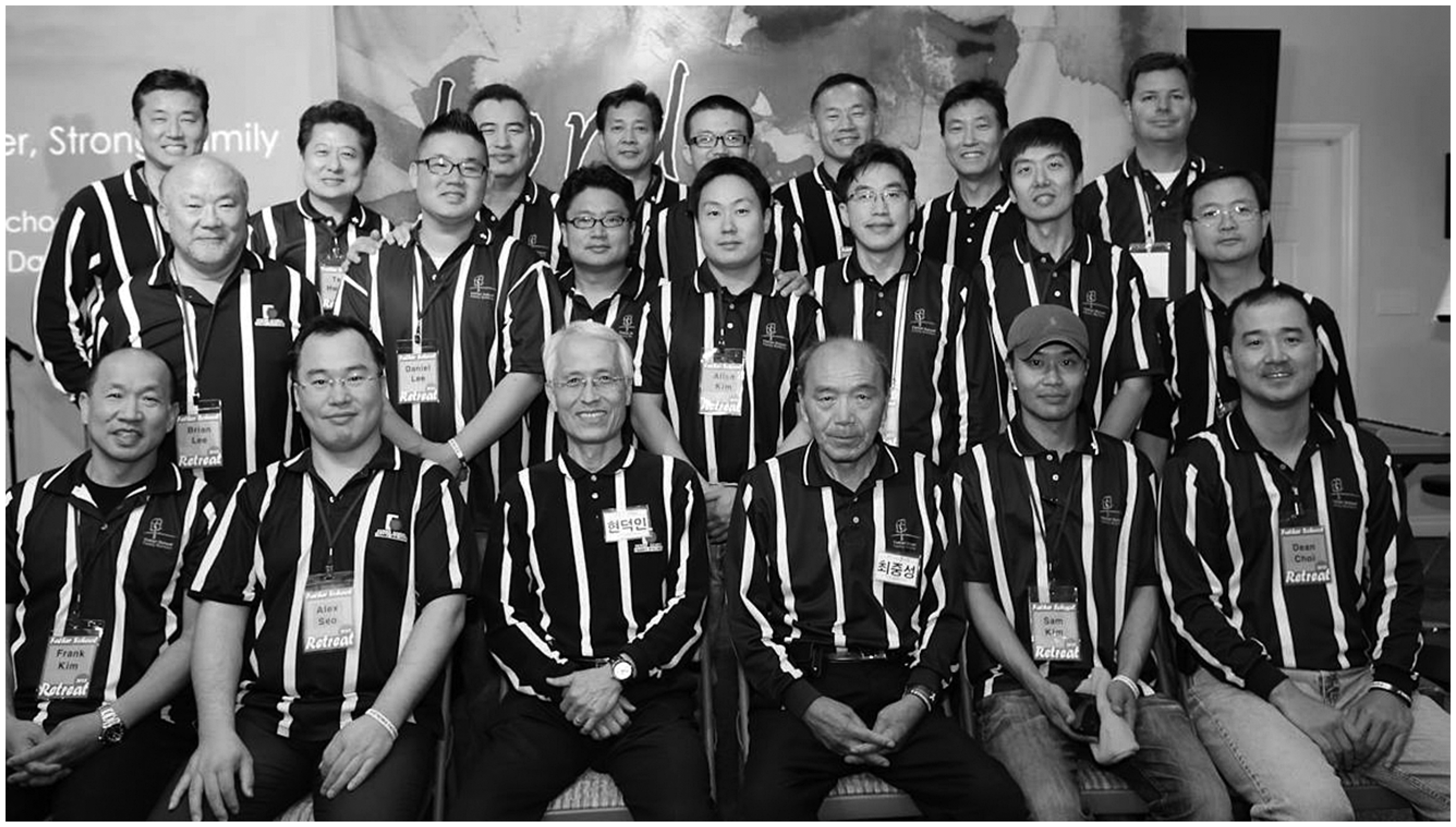
Students at Father School USA.
Image via fatherschoolusa.org.
Protest Works
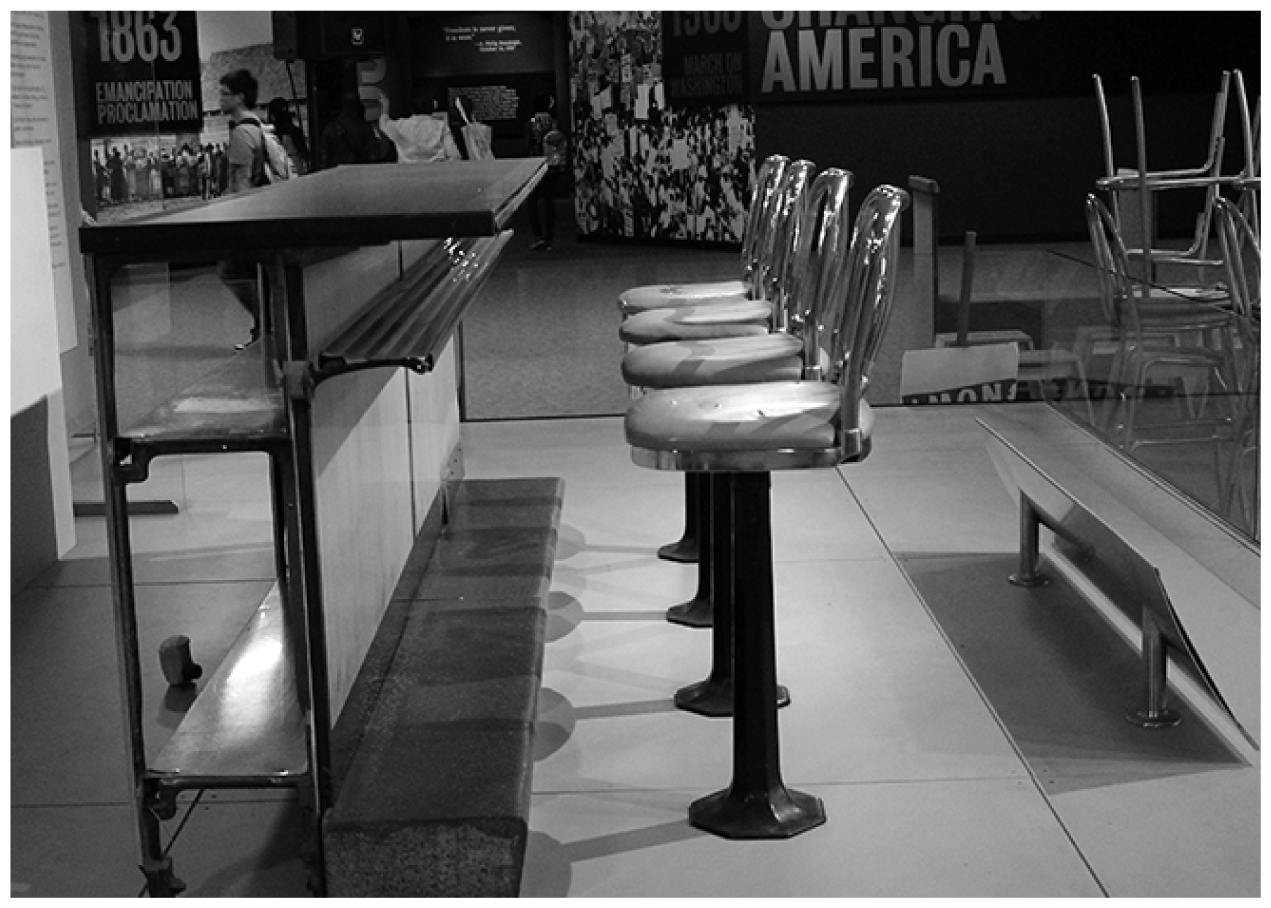
In these early years of the twenty-first century, civil rights motivated major protests in the U.S. Movements toward inclusion and recognition for people of color, women, and the LGBTQ community bring to mind the Civil Rights and Women’s Liberation movements of the twentieth century and raise a recurring question for sociologists: are protests successful? In their new American Sociological Review article, Michael Biggs and Kenneth Andrews examine whether lunch-counter sit-ins by Black college students in the 1960s successfully resulted in desegregation in the South.
The Woolworth’s lunch counter, once a site of violent confrontation, on display at the Smithsonian National Museum of American History.
While some scholars have found that protests have no direct effect or influence on the social institutions they target, Biggs and Andrews expected movements would have a positive impact. They depart from previous research by tracing the impact of protests over time using local-level data collected from archival sources and the 1960 Census. They hypothesized that sit-ins would facilitate lunch-counter desegregation in cities and surroundings areas if the movement had strong formal support, weak opposition, and a strong economic base or vulnerable economic targets.
The analysis supported this expectation. In 334 Southern cities, lunch-counter sit-ins increased the likelihood of desegregation. The protests also affected desegregation in nearby cities; desegregation in one city led to desegregation in nearby cities as well. It’s strong evidence that movements can directly affect social outcomes.
Slut-Shaming Romance Writers
Romance is the most widely read fiction genre, but stigma means few own up to that readership. Instead, groups of giggling girls claim to pick up Fifty Shades of Grey as a joke and romance readers hide their books in public. If the love of romance is complicated for readers, what about its writers? In a new Gender and Society article, Jennifer Lois and Joanna Gregson report findings from a four-year ethnographic study of the romance novel industry and its authors.
Lois and Gregson find that outsiders to the romance writing subculture contributed to “slut-shaming” authors through sneering or leering. In sneering, female writers are shamed for having and publicly displaying sexual desire. (The few male writers in the study’s sample were not shamed in the same way.) In leering, outsiders direct sexual gestures or comments toward writers. In most cases, a male outsider leered at a female romance writer in order to pursue sex; however, leering between female outsiders and female writers also happened when outsiders would over-share personal sexual experiences or opinions about sex work without regard for the writer’s comfort.
Romance writers are prolific and their novels profitable.
Bjørn Bulthuis, Flickr CC

While sneering and leering appear to be opposites—leering is ostensibly an act of approval, whereas sneering reflects disapproval—Lois and Gregson argue that both reactions are forms of slut-shaming. Central to both reactions is the assumption that romance novels are not rightly considered fiction, but instead are the writers’ actual fantasies and sexual experiences. Whether sneering or leering, outsiders labeled romance writers as sexual deviants and welcomed themselves into conversation about the writers’ private sex lives. Despite the widespread popularity of the romance genre, romance writers face intense public shame for their exposure of women’s sexual desire.
Unemployment and Well-Being
Sociologists of mental health study how the broader social forces surrounding individual circumstances affect psychological well-being. For example, unemployment affects well-being, but how might this relationship depend on the unemployment rate in your country?
In Social Forces, Esteban Calvo, Christine A. Mair, and Natalia Sarkisian ask how individual employment status and national labor force context interact to affect individual life satisfaction in 95 countries over almost 30 years by looking at people who are working, unemployed, in school, or retired. The study’s findings show that people adapt to different labor force statuses in ways that are contingent on the national employment context. Unemployed people have the lowest life satisfaction across the board, and this is exacerbated for those who live in high unemployment countries. In fact, regardless of their own labor status, individuals in these high unemployment countries have lower life satisfaction—in other words, the stressful experience of living in a high unemployment context affects everyone.
Context affects the experience of unemployment.
Raymond “Dmitri” Beljan, Flickr CC
In a related finding, students experience the greatest life satisfaction “premium” in high unemployment countries. That means going to school may be a common (and successful) strategy for delaying and avoiding the stressful conditions of a weak labor market. One implication is that social policies directed at alleviating the effects of unemployment should consider education programs to bolster well-being.
Race and Contraception
As this summer’s American Sociological Association presidential address by Paula England showed, sex, pregnancy, and contraception present a thorny set of problems for sociologists as well as policy makers.
U.S. pregnancy rates among adolescent females aged 15-19 have been declining for more than two decades. Despite this shift, the disparity in pregnancy rates, abortion rates, and unintended pregnancies between Black and White teens remains pronounced: young Black women are more likely to get pregnant, and especially to have unplanned pregnancies. In their recent Demography article, sociologists Jennifer Barber, Jennifer Yarger, and Heather Gatny use the new Relationship Dynamics and Social Life study to investigate this disparity. Using a sample of 18- and 19-year-old Black and White women, they analyze pregnancy desires and related attitudes to see why the disparity in unintended pregnancies emerges during the transition to adulthood. Participants completed a survey rating their agreement with statements on expectations and willingness regarding sex, contraception, and pregnancy.
Results show that both groups have very similar levels of desire to become pregnant or prevent a pregnancy. Beyond that, important differences emerged. Black women had more negative attitudes toward sex than Whites (largely associated with their more religious upbringing) but also were less willing to refuse a partner who wants sex. Black women expressed less difficulty accessing birth control than their White peers, but associated it with several negative consequences, including sending distrust signals to their partners. Black women also felt less negatively than White women about the potential impact of pregnancy on their lives, in part because they were more likely to have been raised by single mothers.
As a result of these differences, the authors conclude that Black teens may be less motivated to take the steps necessary to prevent unplanned pregnancies.
Monik Markus, Flickr CC

Online Dating Choices, Constrained
Single people have an ever-expanding array of choices for romantic partners. Arranged marriages are no longer prevalent, and norms and laws have expanded the range of acceptable partners. Loving v. Virginia, for example, invalidated U.S. prohibitions on interracial marriages in 1967, and this year’s Obergefell v. Hodges decision held that states can no longer ban same-sex marriages. The Internet has further expanded the pool of potential partners (as explored by comedian Aziz Ansari and sociologist Eric Klinenberg in their new book Modern Romance).
With more tools and fewer legal restrictions, there’s just one big holdup: our own biases still constrain our perceptions of available mates. For example, Gert Stulp and colleagues showed in 2013 that men are taller than their female mates in more couples than would be expected by chance alone. And a recent Marriage and Family Review article confirms that around the world, on average men in heterosexual married partnerships are a few years older than their female partners. Preferences and biases shape our notion of how big our dating pool might be.

As it happens, interracial marriage is still relatively rare, but it’s more common in lesbian and gay relationships than among straight couples. What we haven’t known is whether this is due to more limited dating markets or more open racial preferences. Jennifer Lundquist and Ken-Hou Lin took on the question, examining the dating behavior of White people who identified as straight, lesbian, or gay on a major dating website. Their findings, published in Social Forces, show that White daters correspond most frequently with other White people. However, straight White men and White lesbians are more likely than other Whites to contact or respond to non-White potential dates. Among Whites, straight women were the least likely to contact or respond to prospective partners who were non-White. Overall, minority men, straight or gay, were the least desired partners among these White daters. The researchers conclude that higher rates of interracial cohabitation for gay men reflect constrained dating markets, whereas the prevalence of interracial lesbian coupledom demonstrates more open racial preferences.
With more tools and fewer legal restrictions on who and how to date, there’s just one big holdup: our own biases still constrain our perceptions of available mates.
In other words, laws, norms, and technology can expand the sea of potential partners, but social biases still shape how many “fish” we think are out there.