Abstract
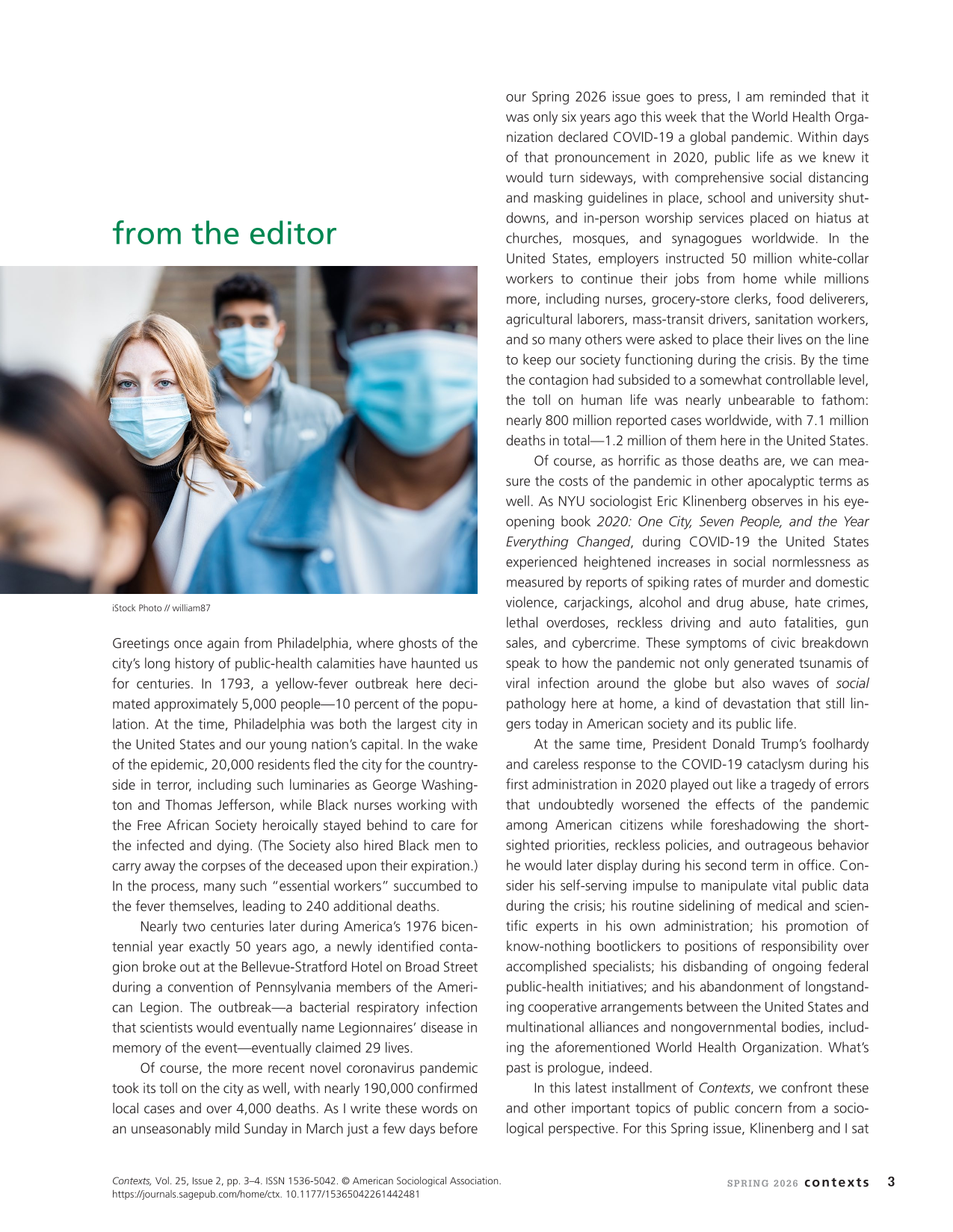
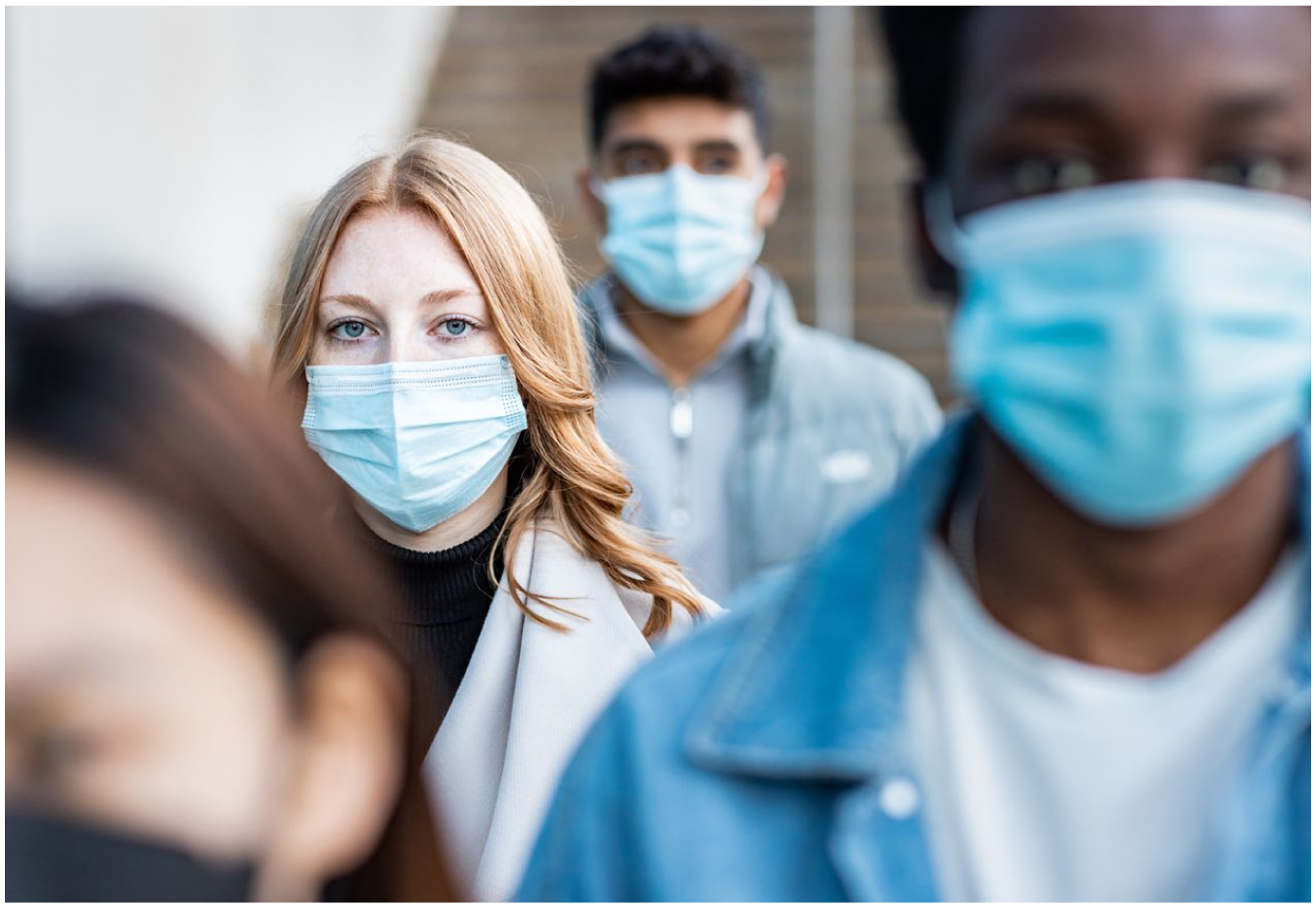
iStock Photo // william87
Greetings once again from Philadelphia, where ghosts of the city’s long history of public-health calamities have haunted us for centuries. In 1793, a yellow-fever outbreak here decimated approximately 5,000 people—10 percent of the population. At the time, Philadelphia was both the largest city in the United States and our young nation’s capital. In the wake of the epidemic, 20,000 residents fled the city for the countryside in terror, including such luminaries as George Washington and Thomas Jefferson, while Black nurses working with the Free African Society heroically stayed behind to care for the infected and dying. (The Society also hired Black men to carry away the corpses of the deceased upon their expiration.) In the process, many such “essential workers” succumbed to the fever themselves, leading to 240 additional deaths.
Nearly two centuries later during America’s 1976 bicentennial year exactly 50 years ago, a newly identified contagion broke out at the Bellevue-Stratford Hotel on Broad Street during a convention of Pennsylvania members of the American Legion. The outbreak—a bacterial respiratory infection that scientists would eventually name Legionnaires’ disease in memory of the event—eventually claimed 29 lives.
Of course, the more recent novel coronavirus pandemic took its toll on the city as well, with nearly 190,000 confirmed local cases and over 4,000 deaths. As I write these words on an unseasonably mild Sunday in March just a few days before our Spring 2026 issue goes to press, I am reminded that it was only six years ago this week that the World Health Organization declared COVID-19 a global pandemic. Within days of that pronouncement in 2020, public life as we knew it would turn sideways, with comprehensive social distancing and masking guidelines in place, school and university shutdowns, and in-person worship services placed on hiatus at churches, mosques, and synagogues worldwide. In the United States, employers instructed 50 million white-collar workers to continue their jobs from home while millions more, including nurses, grocery-store clerks, food deliverers, agricultural laborers, mass-transit drivers, sanitation workers, and so many others were asked to place their lives on the line to keep our society functioning during the crisis. By the time the contagion had subsided to a somewhat controllable level, the toll on human life was nearly unbearable to fathom: nearly 800 million reported cases worldwide, with 7.1 million deaths in total—1.2 million of them here in the United States.
Of course, as horrific as those deaths are, we can measure the costs of the pandemic in other apocalyptic terms as well. As NYU sociologist Eric Klinenberg observes in his eye-opening book 2020: One City, Seven People, and the Year Everything Changed, during COVID-19 the United States experienced heightened increases in social normlessness as measured by reports of spiking rates of murder and domestic violence, carjackings, alcohol and drug abuse, hate crimes, lethal overdoses, reckless driving and auto fatalities, gun sales, and cybercrime. These symptoms of civic breakdown speak to how the pandemic not only generated tsunamis of viral infection around the globe but also waves of social pathology here at home, a kind of devastation that still lingers today in American society and its public life.
At the same time, President Donald Trump’s foolhardy and careless response to the COVID-19 cataclysm during his first administration in 2020 played out like a tragedy of errors that undoubtedly worsened the effects of the pandemic among American citizens while foreshadowing the shortsighted priorities, reckless policies, and outrageous behavior he would later display during his second term in office. Consider his self-serving impulse to manipulate vital public data during the crisis; his routine sidelining of medical and scientific experts in his own administration; his promotion of know-nothing bootlickers to positions of responsibility over accomplished specialists; his disbanding of ongoing federal public-health initiatives; and his abandonment of longstanding cooperative arrangements between the United States and multinational alliances and nongovernmental bodies, including the aforementioned World Health Organization. What’s past is prologue, indeed.
In this latest installment of Contexts, we confront these and other important topics of public concern from a sociological perspective. For this Spring issue, Klinenberg and I sat down for a far-ranging conversation about his book 2020 and the lingering social and political effects of the pandemic. University of Wisconsin–Madison sociologist and ASA Vice President-Elect Jessica Calarco offers One Thing I Know about how COVID-19 revealed how the United States relies on the labor of untold numbers of underpaid (if paid at all) women to compensate for the country’s lack of a sufficiently robust social safety net. Ithaca College sociologist Joslyn Brenton writes about how affluent American families capably drew on household resources to weather the pandemic, a luxury not available to their less well-off counterparts. Elsewhere in the issue, our authors take up questions regarding how Fox News contributed to the recent spate of moral panics surrounding transgender people; how feminists mobilized during the 1970s and 1980s to crusade against sexual harassment and assault on college campuses by repurposing Title IX of the Educational Amendments of 1972; the multifaceted experiences of mothers raising children with disabilities; the politics surrounding how pharmaceutical companies enlist Black celebrity women such as Oprah Winfrey, Serena Williams, and Simone Biles to market GLP-1 drugs such as Ozempic and Mounjaro; and many others. On behalf of the entire editorial team at Contexts, I hope you find the thought-provoking pieces included in our Spring issue edifying, enlightening, and enjoyable. Please read them in good health.