Abstract
Liu Jinsuiyue and Keith Kerr on how pagodas absorb the practices and beliefs of the communities that built and still use them.
From afar, pagodas look singular and uniform. For the uninitiated, the pagoda often appears as a Chinese silhouette rising against the distant sky, a stand-in for an entire people—ancient, unified, and culturally seamless. Outsiders project their assumptions about China onto the pagoda, much as they invest the Great Wall with similarly imagined fantasies.
But up close, the pagoda tells a very different story.
As totems of stone and wood, pagodas shape the diverse social reality of everyday Chinese life. In frontier regions forged by centuries of trade and conflict, pagodas absorb the practices and beliefs of the communities that built—and still use—them. They reveal Han artisans working alongside Tibetan monks, nomadic patrons funding Indian Buddhist construction, and imperial authorities borrowing local religious symbols to legitimize their rule. Today, these histories remain layered and visible, now joined by markers of the modern Communist state. Together, the ancient and modern symbols that adorn pagoda complexes tell a story of political history and cultural identity. Not simply architecture, pagodas testify to the evolution of ordinary social life in China. They remind us that history is not only inherited but continually inhabited.
The pagoda’s physical permanence imbues the scene with a sense of community and hope, offering a reliable spatial anchor that persists across generations. The symbolic authority of the pagoda lends moral weight to otherwise ordinary activities.
As in the past, pagodas organize everyday living. Not solely sites of worship, pagodas function as places where people gather and conduct their daily routines. Friends and family use them as sites for playing chess, exercising, tourism, fortune-telling, and socializing. As in the past, pagodas today serve as a healing refuge from the stresses of everyday life. And while the sources of stress have undoubtedly changed over the centuries, the steady presence of the pagoda’s gaze remains.
More than a backdrop, the pagoda organizes and shapes the daily rounds of the local residents and tourists who interact under its long shadow. Mass urban sprawl has drawn the pagoda complexes from the city outskirts to the center of urban life. The open space surrounding them serves as an especially vital public resource. The pagoda surroundings provide shaded seating, stable ground, and opportunities for residents to engage across generations without formal coordination. For instance, chess played under a pagoda unfolds differently than chess played inside a private home: The game becomes public and interactive, a collective ritual where spectators offer pointed remarks to one another. The pagoda’s physical permanence imbues the scene with a sense of community and hope, offering a reliable spatial anchor that persists across generations.
The pagoda blurs the boundary between the sacred and profane, allowing otherwise secular practices to unfold within spaces long associated with religious devotion.
In this way, the symbolic authority of the pagoda lends moral weight to otherwise ordinary activities. As a premodern site of religious devotion and protection, customary life in its presence reflects a sense of legitimacy and continuity. Simple lunch-break walks, the feeding of birds, or just the act of sweeping the grounds merge with a deeper, storied landscape. The pagoda blurs the boundary between the sacred and profane, allowing otherwise secular practices to unfold within spaces long associated with religious devotion. In drawing people into organized social routines within a living historical space, the pagoda gives meaning to the ordinary.
Experiencing the pagoda up close, rather than gazing at it from afar, redefines it as more than a relic of the past: It is also a contemporary orchestrator of daily Chinese life. It anchors ancient memory, modern leisure, generational ritual, and a diverse Chinese identity to the singular present. The pagoda not only reflects everyday life but also produces it.
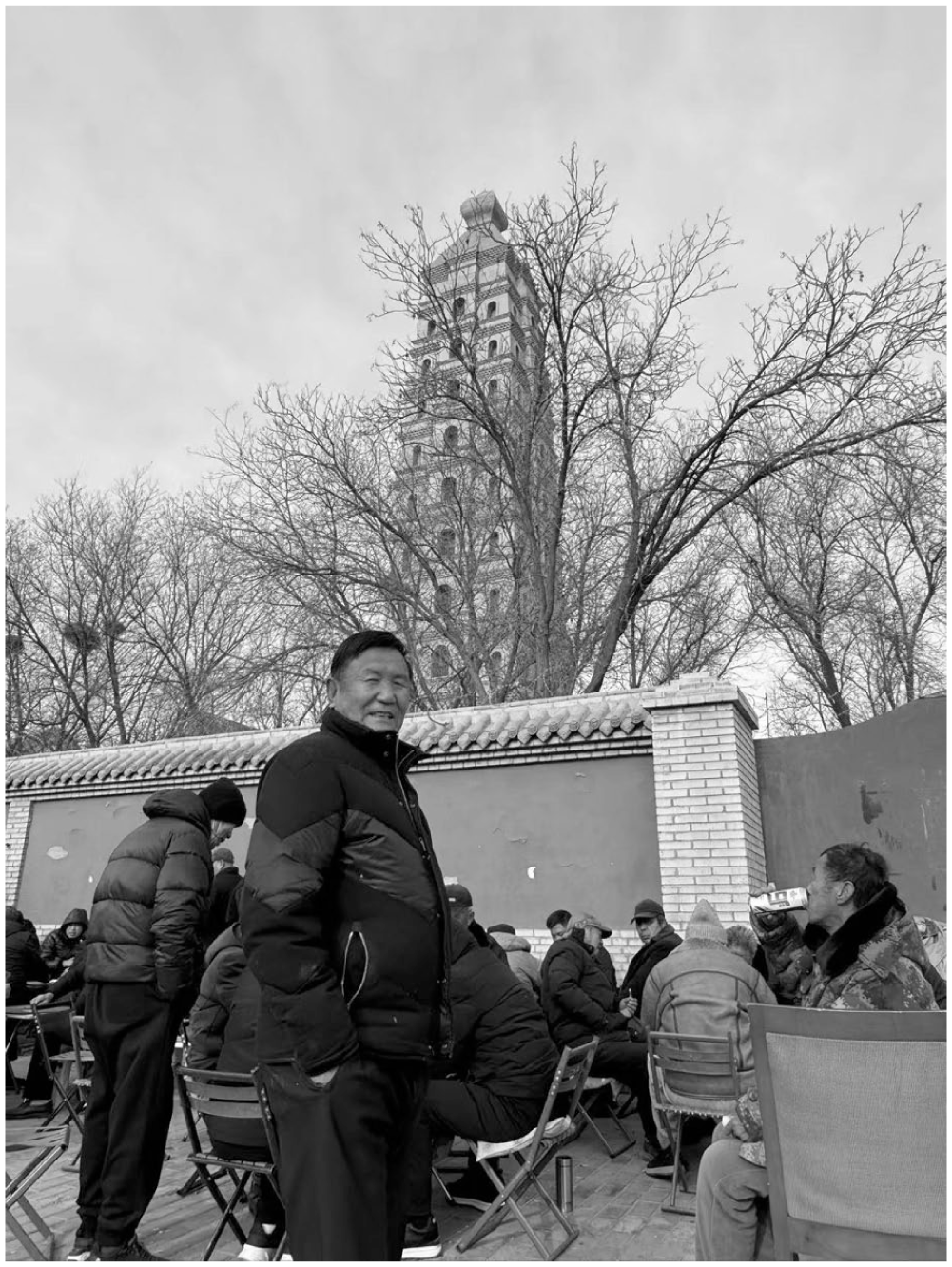
Across China, residents gather at city pagodas to play chess and cards, believing that the public space surrounding the pagoda possesses a tranquil and auspicious aura bringing good fortune to participants. These games of chess are played almost exclusively by men of retirement age.
© Liu Jinsuiyue and Keith Kerr
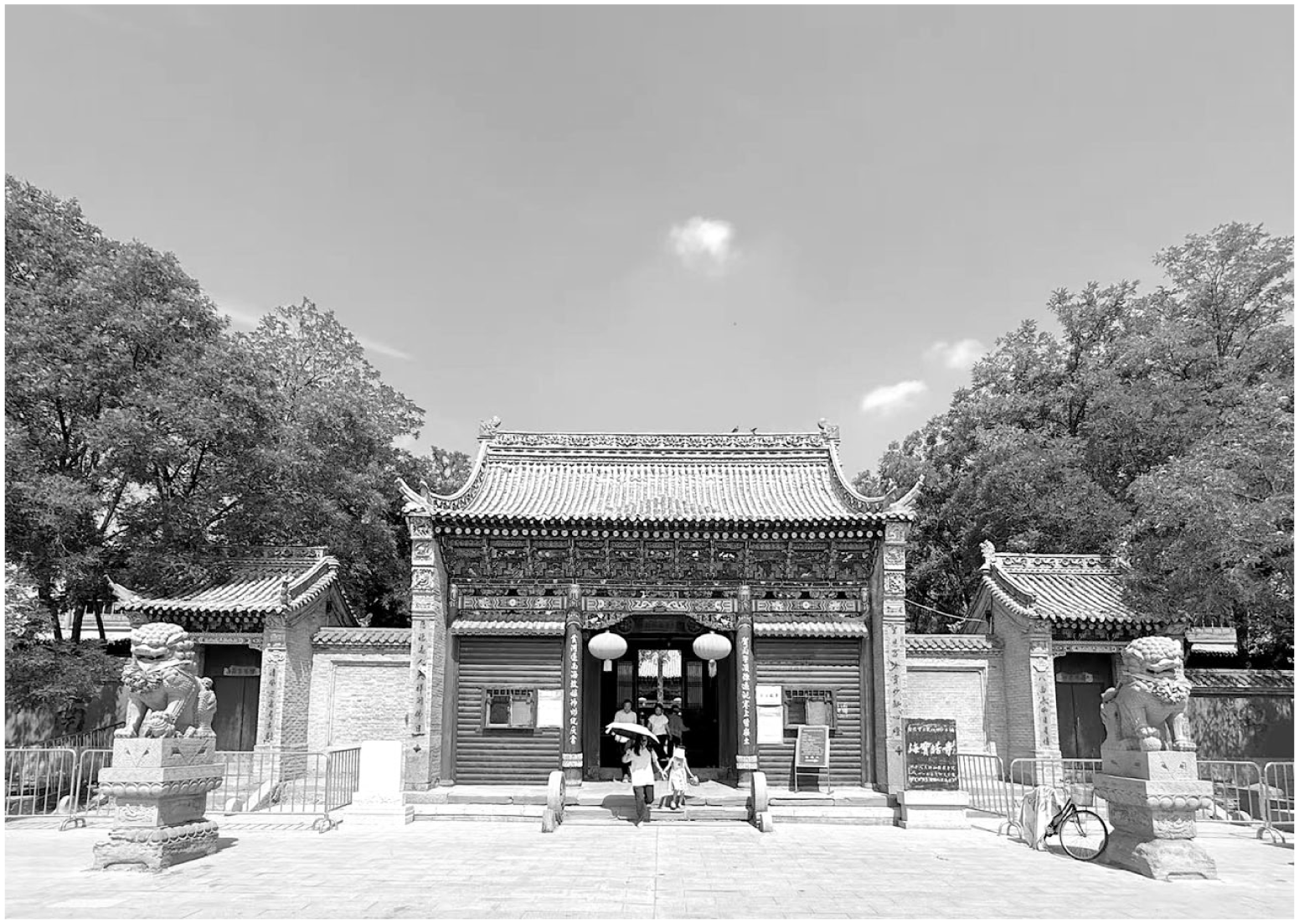
Pagodas have historically been surrounded by walls and a main gate, which serve as a physical and spiritual boundary separating the sacred realm of the pagoda from the secular world.
© Liu Jinsuiyue and Keith Kerr
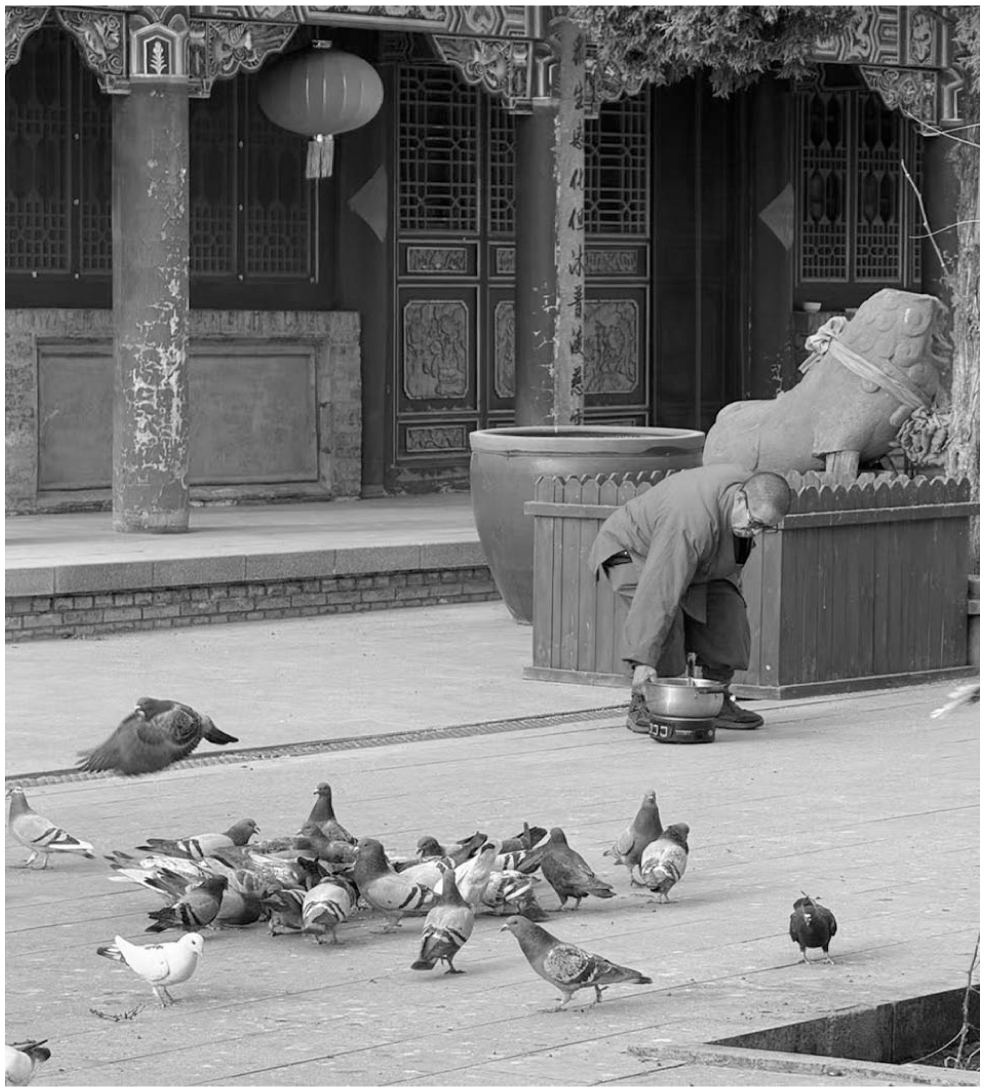
Monks inside the pagoda complex feed birds as a routine practice. Buddhist doctrine regards compassion for animal life as a vital component of spiritual cultivation. The absence of fear among birds toward the monks symbolically and visually embodies the harmonious coexistence between humans and nature.
© Liu Jinsuiyue and Keith Kerr
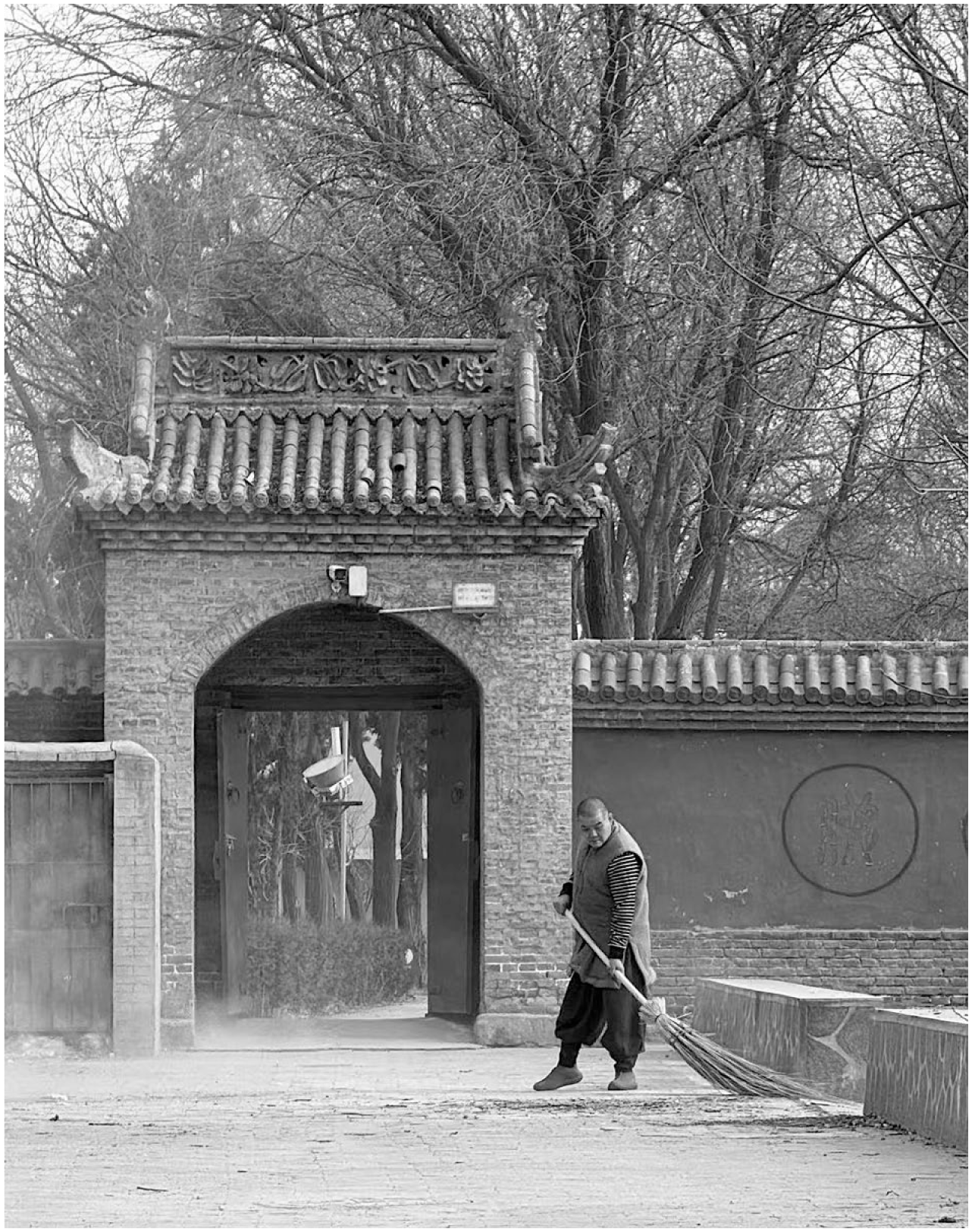
Pagodas maintain a state of serenity and sanctity. Chinese Buddhist practice does not consider sweeping to be merely a menial task but rather a meditative form of spiritual discipline.
© Liu Jinsuiyue and Keith Kerr
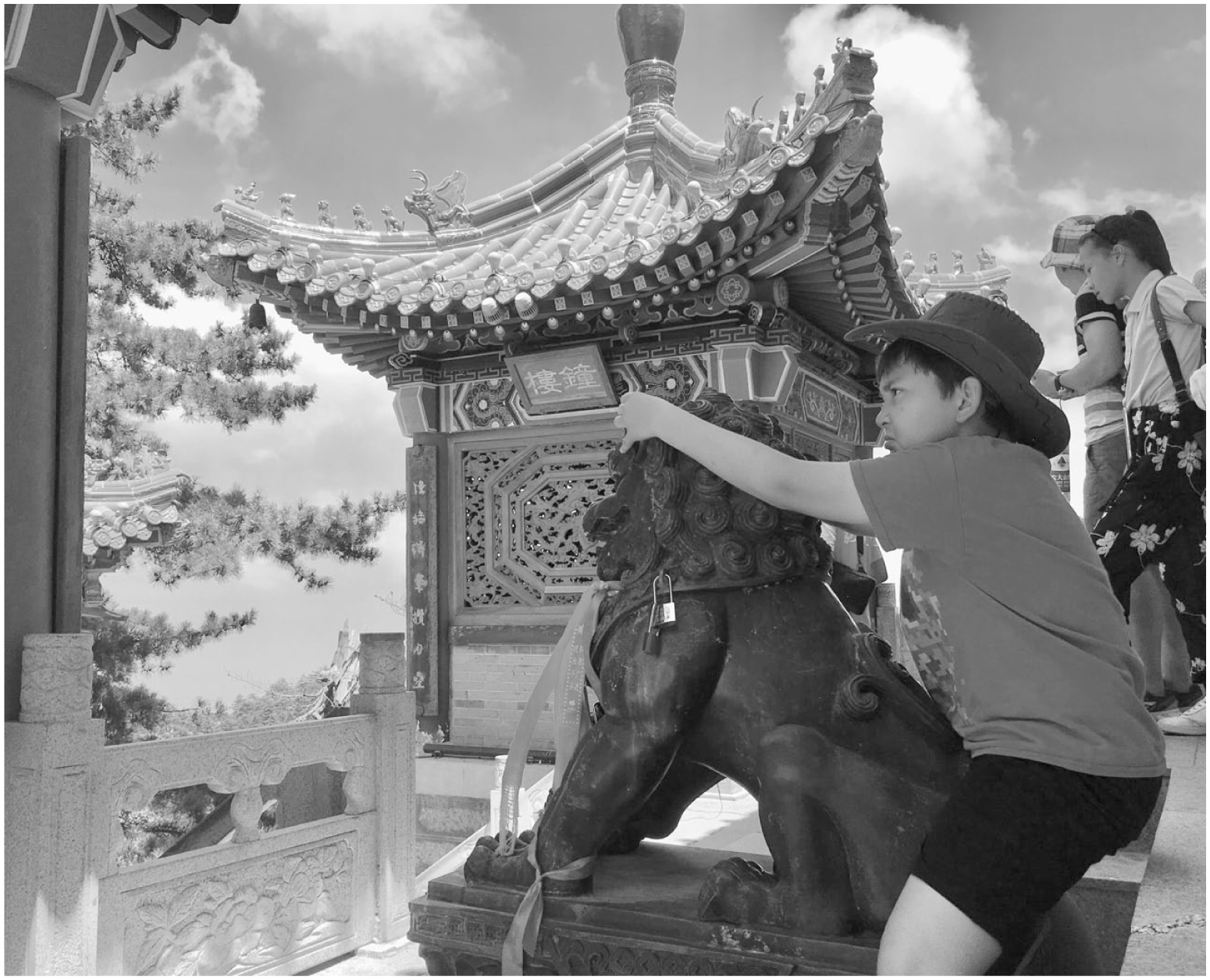
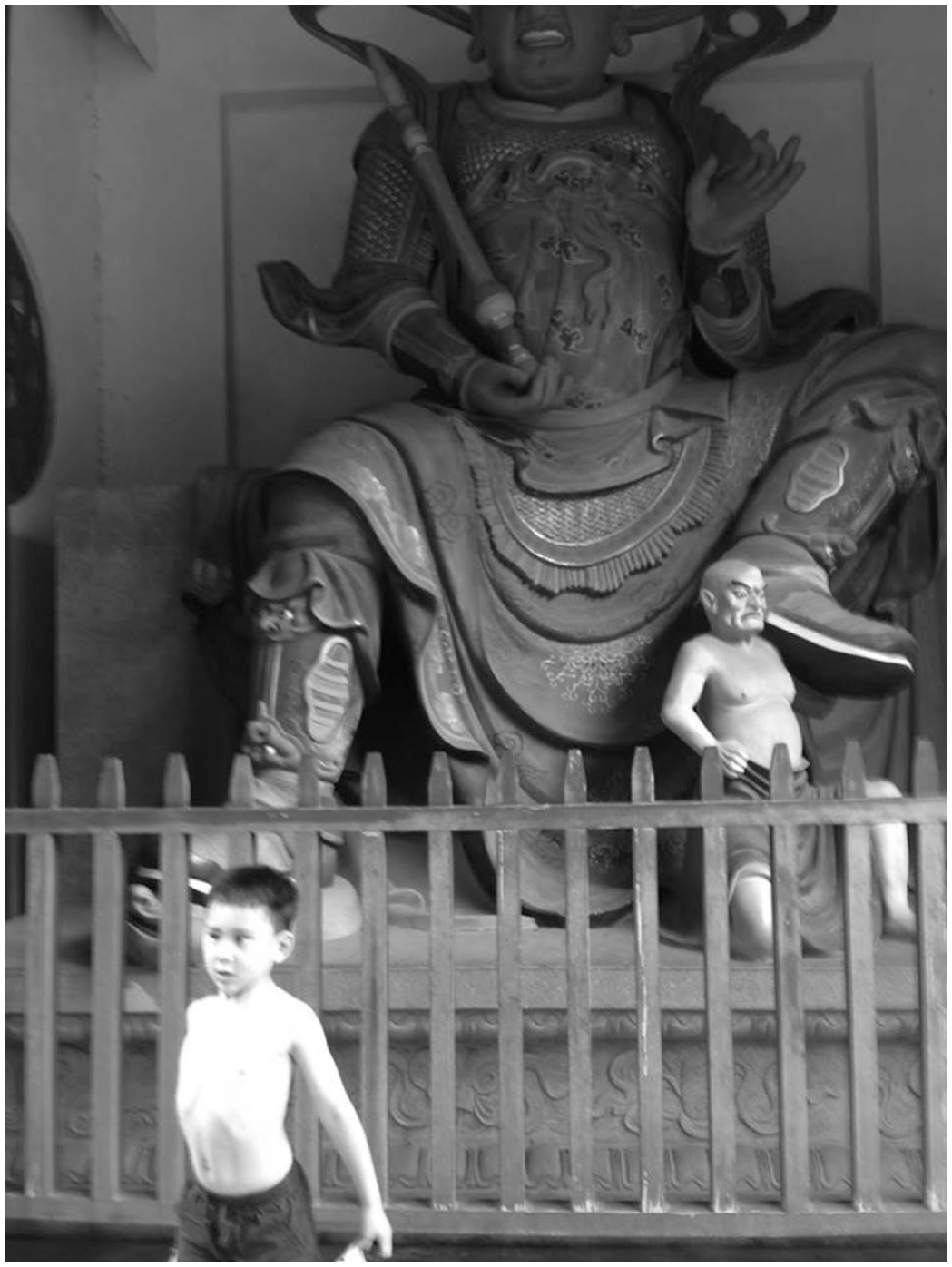
Pagodas and their guardian deities persist not as relics of dynastic time but as inhabited spaces woven into everyday life. In this photo the larger guardian deity towers over the smaller nature spirit, symbolizing the subduing of chaos. A young boy gleefully and playfully mimics the chaotic spirit behind him.
© Liu Jinsuiyue and Keith Kerr
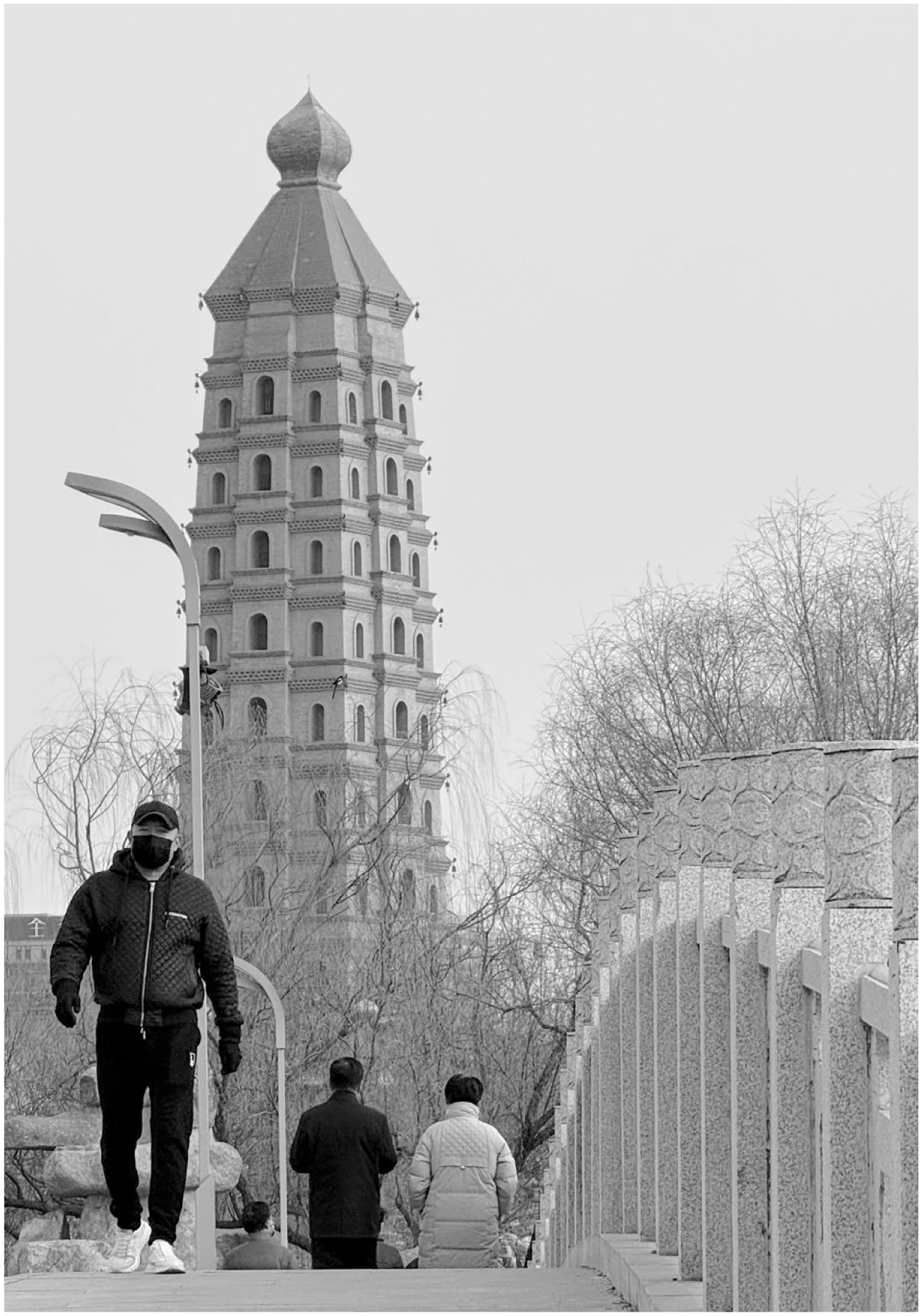
Even without entering the pagoda local residents perceive it as a source of peace and tranquility in their everyday lives. In modern times, as bustling and fast-paced cities have grown around them, pagodas increasingly lend balance to the stressors of life. Here a man on his lunch break walks through trails outside the pagoda before returning to work.
© Liu Jinsuiyue and Keith Kerr
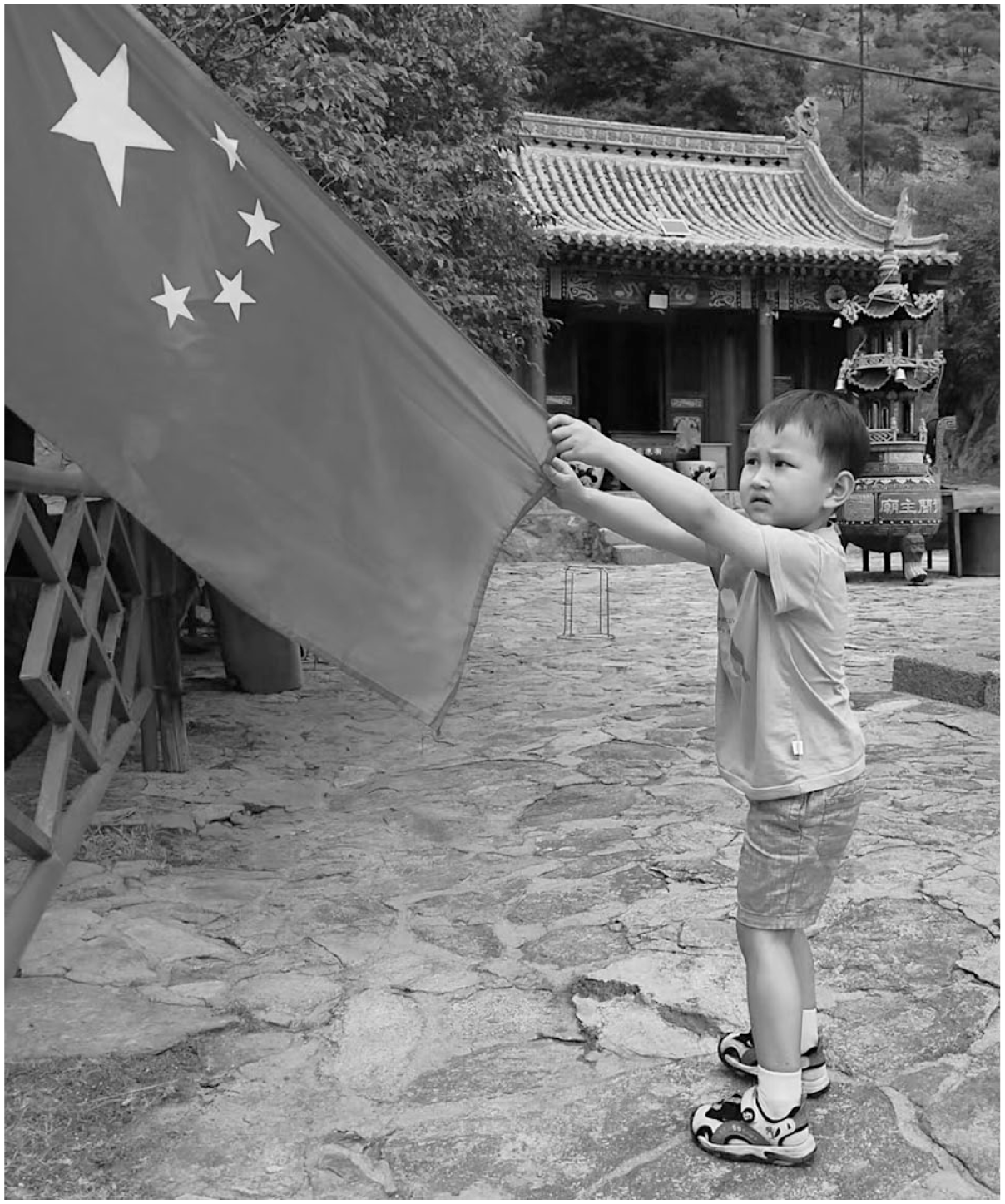
Chinese history has been one of incomprehensible change and uprootedness, especially twentieth-century history in which many pagodas were destroyed and then rebuilt. But given their central function in everyday Chinese life they have survived, absorbing and maintaining the imprints of successive political orders.
© Liu Jinsuiyue and Keith Kerr
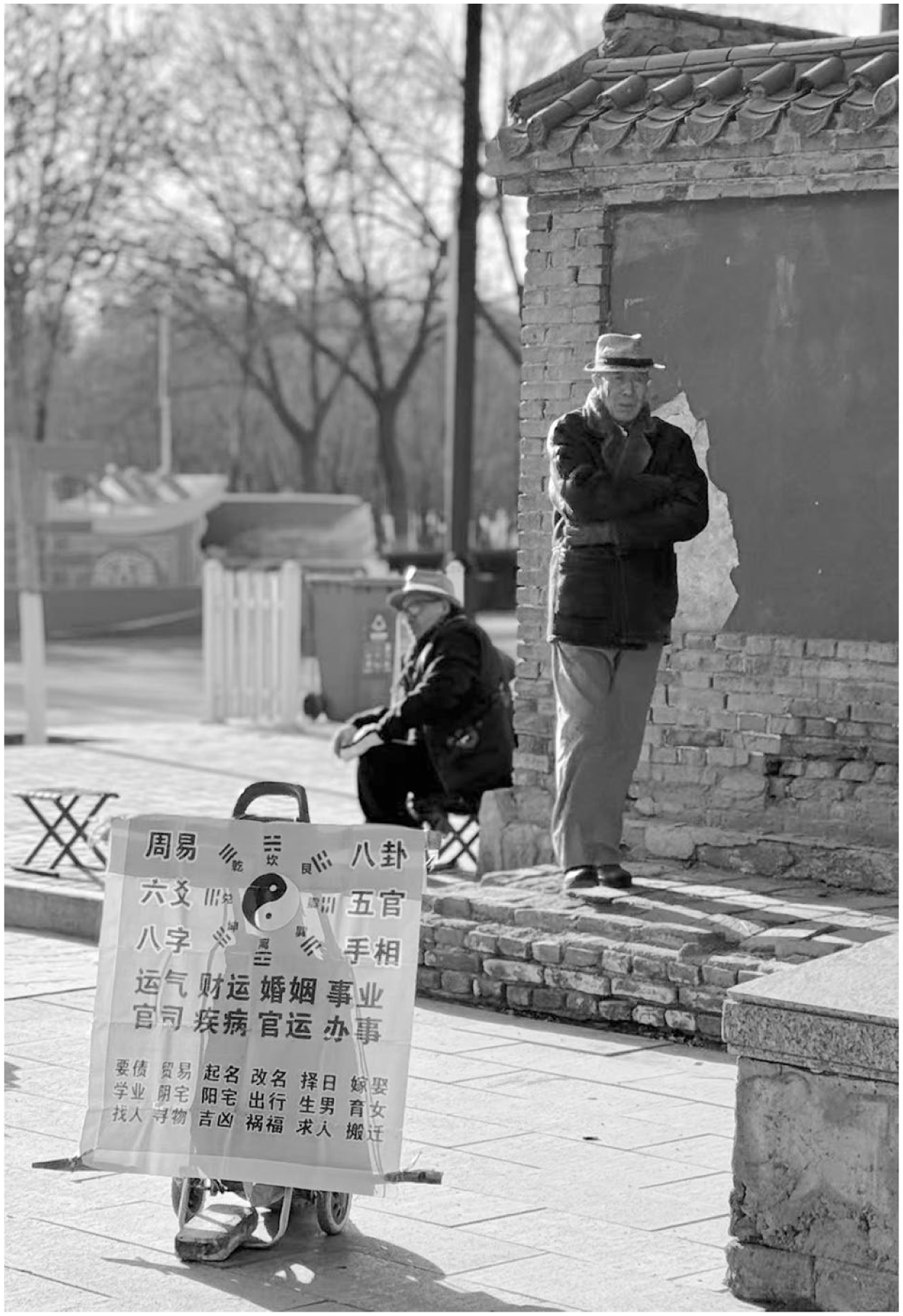
The pagoda attracts large numbers of both religious pilgrims and secular tourists. Unlike during the Ming and Qing dynasties, when local vendors only gathered during temple festivals, today they cater to visitors by operating daily around the pagoda. Here, vendors offer fortune-telling services at the start of the day.
© Liu Jinsuiyue and Keith Kerr
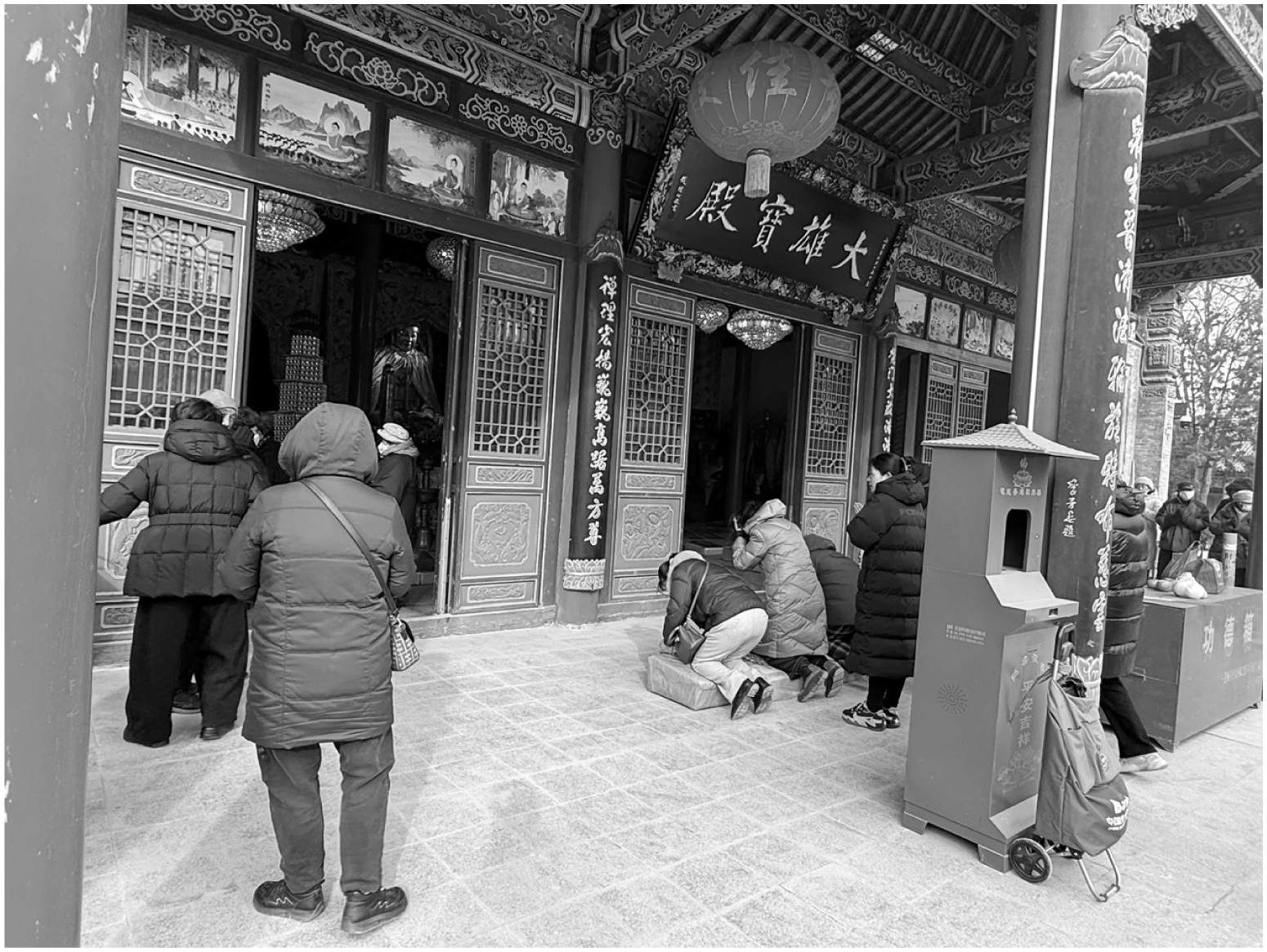
Devout pilgrims frequenting the pagoda worship and burn incense under the guidance of monks to attain inner peace and spiritual calm. Many pilgrims believe that burning incense brings blessings and good luck.
© Liu Jinsuiyue and Keith Kerr
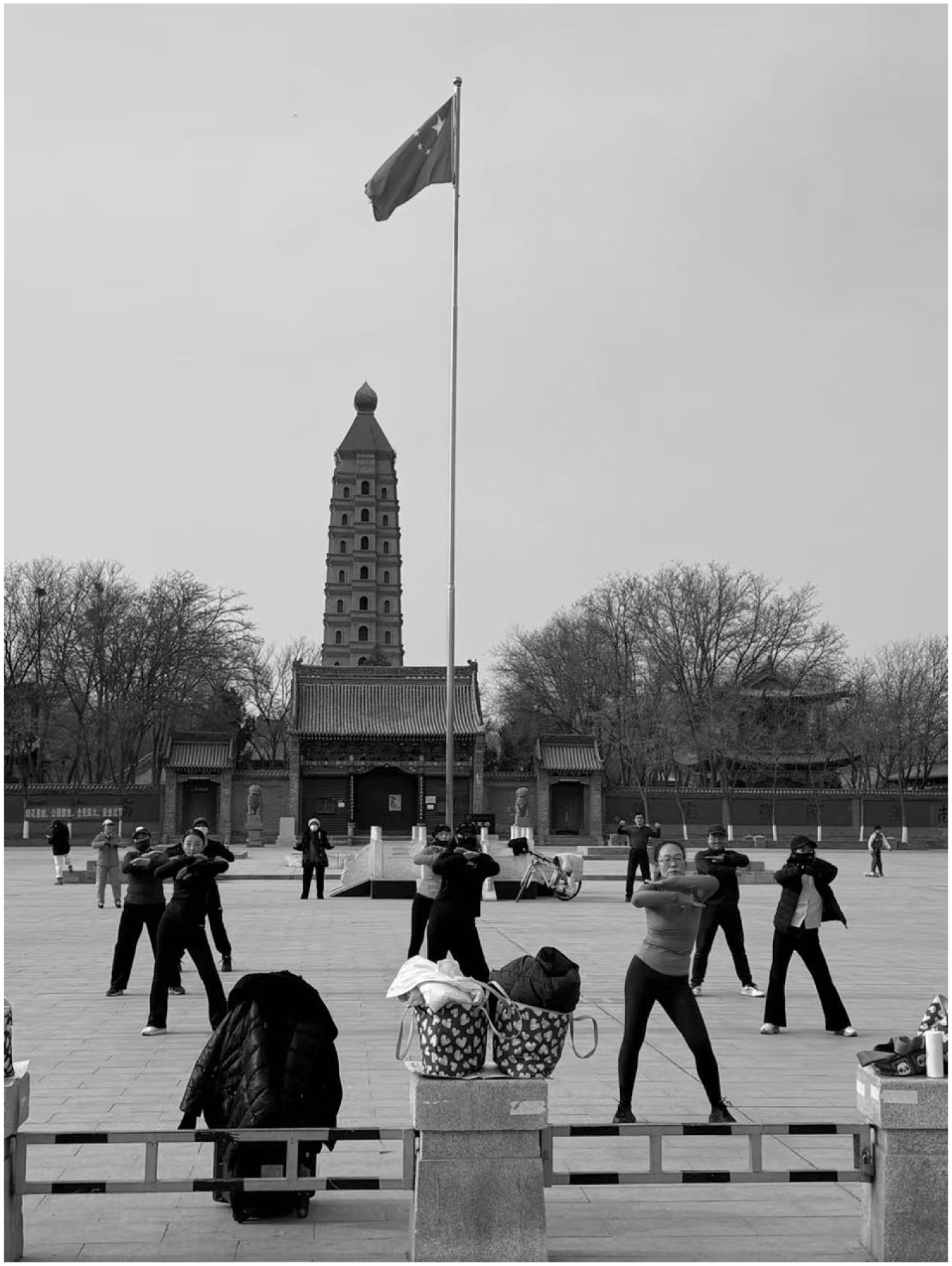
Driven by modern municipal renovation over the last 25 years, the public spaces outside pagodas in the city have been transformed into civic parks. Local residents utilize the open and paved squares outside pagodas for organized physical exercises. These group-based exercises emphasize music and dance, attracting mostly female participants. While many believe exercising near the pagoda brings good fortune and health, others value the scenic environment, the social dynamics of group exercise, and the fresh air of the park.
© Liu Jinsuiyue and Keith Kerr
While most pagodas are located within city centers and serve as public spaces that attract a diverse mix of residents engaging in a wide range of spiritual and secular activities, the most sacred sites are located far outside cities and high in the mountains. At these sites, growing middle-class residents vastly outnumber religious pilgrims, reflecting the rise of domestic tourism as an important driver of the Chinese economy.
© Liu Jinsuiyue and Keith Kerr