







Abstract
This article describes a survey of Hispanic immigrant entrepreneurs in a New Destination state. Results focus on the human capital, educational aspirations, and motivations. Findings challenge the idea that most Hispanic immigrants start up businesses because of limited human capital, discrimination, or blocked opportunities in the workforce. Rather, these entrepreneurs leverage accumulated human capital in the form of education, experience, and personal initiative, and express strong interest in continuing education though not necessarily formal higher education.
The purpose of this paper is to consider the linkages between the human capital attributes, educational aspirations, and motivations of recent Hispanic immigrants that have established small businesses in the United States. The paper distinguishes between those entrepreneurs that have located in rural and urban areas. Several considerations drive the focus on Hispanic migrant entrepreneurs. First, like their U.S.-born counterparts, the majority of immigrant small business owners lack a college education (Kallick, 2012). Immigrants originating in Mexico make up 12% of all immigrant small business owners and similarly are likely to lack a college education. Second, immigrant entrepreneurs make a major contribution to the U.S. economy and represent one out of every six small businesses (Kallick, 2012). Third, research suggests that increasing educational attainment within a population increases business formation (Kim, Aldrich, & Keister, 2006). The presumed mechanism between education and business formation is the ability of the business owner to effectively deploy increased human capital assets. Fourth, evidence suggests that Hispanic migrants choosing rural destinations differ in meaningful ways from those that choose urban destinations. Finally, an open research question revolves around whether business owners view their current skill sets (human capital assets) as sufficient and if not, which assets are needed and how they should be obtained.
To explore these issues the paper first situates this research within the literature. Next, drawing from a unique sample, this article provides a description of the human capital, educational aspirations, and motivations of a group of Hispanic immigrant entrepreneurs in a New Destination state. Finally, the paper discusses the implications for higher education when these are considered together.
Background
College attainment rates among immigrant business owners are similar to U.S.-born small business owners. However, additional education has been found to increase the likelihood of self-employment as well-being self-employed longer (Robinson & Sexton, 1994). Even more specifically, educational attainment is positively linked to Mexican Hispanic business survival (Lofstrom & Wang, 2007). Although a college degree is not required for business entry, educational attainment plays a key role in small business formation and longevity.
Nonetheless, a 10-year literature review (Gorman, Hanlon, & King, 1997) found small business owners did not view formal education and training positively. According to a study reviewed (Kailer, 1990), one explanation may be small business owners associated formal learning with lectures and theory that do not directly transfer into practices or everyday application. Attitudes among small business owners regarding informal or nonformal education are positive, but time for training appears to be a substantial constraint (Walker, Redmond, Webster, & Le Clus, 2007). Although much research has been done on the training needs of small businesses (for one example see Billett, 2001), more research is needed to understand the disconnection between small business owners understanding the need for ongoing development of skills and actual participation in ongoing educational or training programs (Walker et al., 2007).
Successful small businesses are demonstrably important for the nation’s economic well-being. Small businesses (defined as having at least one employee but less than 100 employees) employed 34 million people in 2007. All businesses in the United States in that same year generated an estimated US$29 trillion in receipts with US$6 trillion of that attributable to small businesses. Immigrant-owned small businesses (where immigrants were half or more of the owners) accounted for at least US$591 billion in receipts. Immigrant-owned businesses comprise 18% or one in six of small businesses in the United States (Kallick, 2012).
Entrepreneurship and small business ownership among minority populations is often viewed as a pathway out of poverty (Kosanovich, Fleck, Yost, Armon, & Siliezar, 2001; Surender & Van Niekerk, 2008; Todd, 2007; Varis, 2008). In addition, small business creation is considered by some as a channel for increasing social capital within a community (Flora, Sharp, Flora, & Newlon, 1997; Sanders & Nee, 1996; Sharp, Agnitsch, Ryan, & Flora, 2002). For rural areas in particular, small business creation and development has been viewed as a positive regional economic development strategy (Johnson & Rasker, 1995; Kauffman Foundation, 2003; Kellogg Foundation, 2001) although recent research has begun to call this conclusion into question (Edmiston, 2007). Nevertheless, immigrant small business owners play an important role in providing jobs, employing some 4.7 million people (Kallick, 2012).
Of these immigrant small business owners, in 2007, more than 15% originated from Mexico or Central America (Kallick, 2012). Previous studies on Hispanic self-employment (Robles & Cordero-Guzman, 2007) suggested barriers in traditional labor markets and human capital deficiencies drive the recent growth in Hispanic entrepreneurship, particularly among immigrants. Data from 2007 (Kallick, 2012), however, indicate that while 58% of immigrant business owners do not have a college degree, this rate is similar to that of U.S.-born small business owners (56%). Other researchers have found Hispanic migrant business ownership to be a means to intergenerational mobility and not simply a means of overcoming discrimination in the labor force (Raijman & Tienda, 2000)
However, low human capital does interact with lack of financial capital and limited access to markets to act as substantive barriers to business creation by Hispanics, according to Bates, Jackson, and Johnson (2007). These are the same barriers faced by most minority groups. A great deal of the existing research on minority entrepreneurs focuses on African Americans and Asians, leaving the extent to which Hispanic immigrants face similar barriers an open question. Absent these barriers, Mexican men are more likely than nonminority Whites to go into business themselves, according to Lofstrom and Wang (2007), while Hispanic women have been shown to dominate the number of minority women business owners as demonstrated by Smith-Hunter (2004). Raijman and Tienda (2000) showed an important entry pathway for Hispanic migrant entrepreneurs was the informal economy, in contrast with other ethnic groups in their study. All these studies, however, focus largely on urban areas, leaving Hispanic populations in rural communities understudied (Rochín, Saenz, Hampton, & Calo, 1998). The roles of human capital and motivations for small business creation among rural Hispanic immigrants, then, are largely unexplored.
Many areas of the United States have seen their social and demographic profile altered in the face of shifting migration streams from Mexico and other Latin American countries. Historically, Hispanic migrants entered traditional urban gateways in California, New York, Florida, Texas, New Jersey, Illinois, and Massachusetts, but in recent decades these migration streams have shifted to interior urban areas, small towns, and rural communities (Alba & Denton, 2004; Farmer & Moon, 2009; Kandel & Cromartie, 2004; Lichter & Johnson, 2006). For smaller communities, these shifts in migration streams have had a disproportionate impact because of relative population size.
Rural communities in these “New Destination” states are facing significant demographic changes driven by migration coupled with decreasing fertility and aging in place of native populations. In addition, these rural areas in the United States are grappling with other macro-level changes including the continuing consolidation of agriculture and declining manufacturing employment resulting from global economic restructuring. As fuel costs continue to rise, rural areas also experience an increased “cost of space” (Kraenzel, 1980) for many services such as education, fire and police protection, and health care. Rural communities wrestle with incorporation of newly arrived migrants, provision of services, economic diversification, and access to larger markets for local goods.
One potential development tool in the United States, as well as countries around the world, is rural entrepreneurship (Dabson, Malkin, Matthews, Pate, & Stickle, 2003; Kalantaridis & Bika, 2006; Mohapatra, Rozelle, & Goodhue, 2007; Terjesen, 2007). Experience in the United States has demonstrated that “smoke-stack chasing” is sometimes a successful strategy for rural communities to obtain higher paying jobs, but often this strategy fails to create the anticipated employment and is often disappointing in overall returns for the community’s investment (Dabson et al., 2003). Stimulating new business formation and efforts toward retention or expansion of existing enterprises within the local community has proven to be an attractive alternative strategy for job creation. Small business has been shown in some studies to be an effective job creation engine for rural areas (Dabson et al., 2003; Renski, 2009). Nevertheless, research on the effectiveness of stimulation of small business formation in rural areas remains sparse.
The following survey results represent an initial exploration of links between human capital, educational aspirations, motivations, and business formation of a group of rural and urban Hispanic migrant entrepreneurs in a New Destination state. A description of the study area, sampling frame, and survey method is presented below followed by a discussion of the descriptive results and conclusions, comparing and contrasting rural and urban business owners.
Data and Method
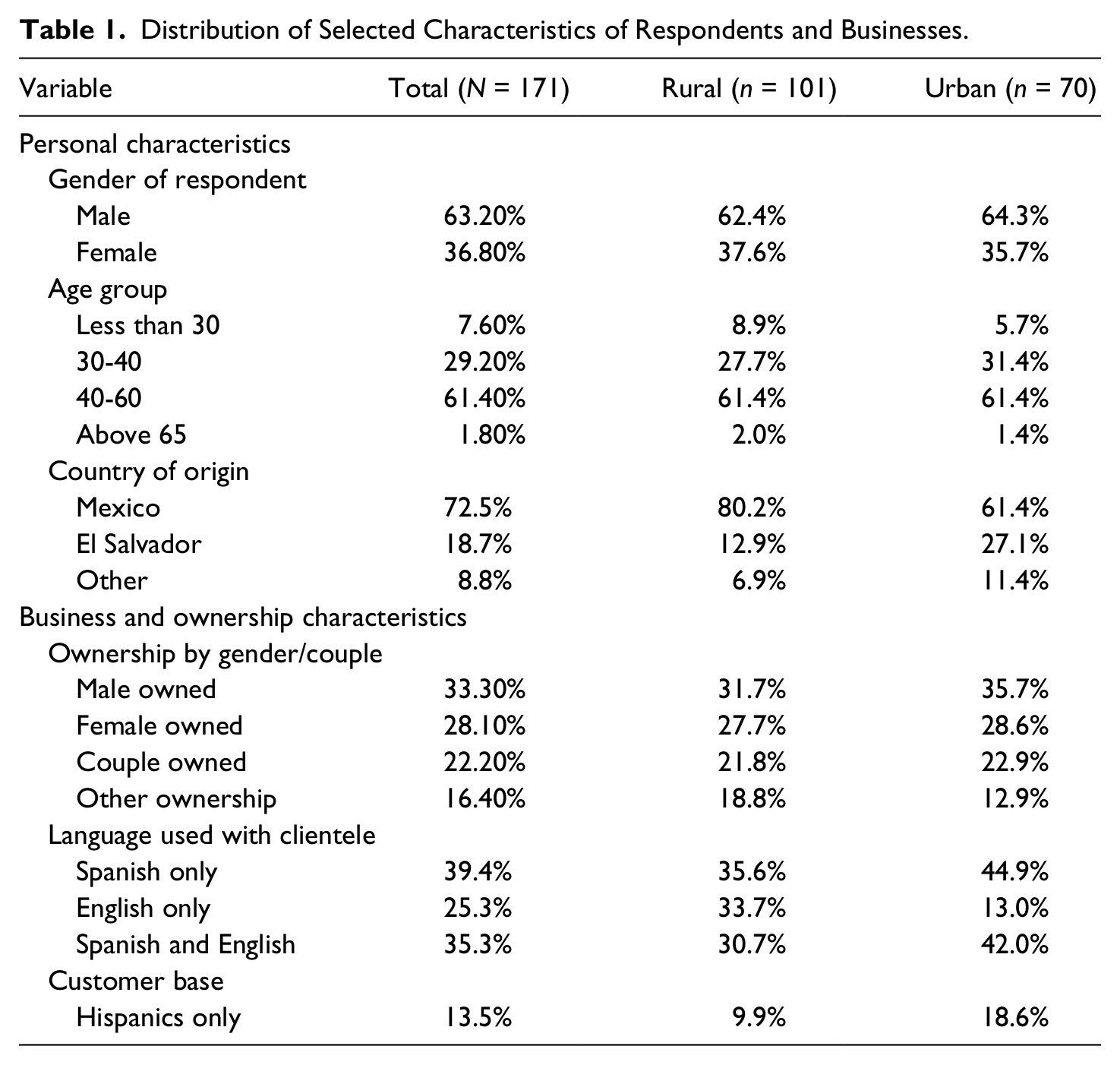
This case study presents data collected over several months in rural and urban western Arkansas. The study area was based on the rapid expansion of Latin American migrant populations in the targeted counties. In all, 171 interviews in 39 different communities were completed (see Table 1).
Distribution of Selected Characteristics of Respondents and Businesses.
A comprehensive list or database of Arkansas businesses owned by Hispanic immigrants did not exist when the project was initiated and to our knowledge still does not exist. Although the recent release of the Public Use Microdata Sample (PUMS) version of the Survey of Business Owners 2007 and the American Community Survey (ACS) 2007-2011 data include some information about immigrant business ownership, both datasets suffer from suppression of data or very large margins of error in rural areas. In this project, urban areas as well as rural areas were surveyed to allow for comparisons of needs and characteristics for these two contextual settings within which entrepreneurs operate.
One purposeful and key research objective was describing the target population of Hispanic migrant entrepreneurs, particularly in rural areas. This population may be understudied precisely because they are relatively rare and difficult to access. Significant resources were expended to overcome anticipated barriers in surveying this population. Fieldwork was conducted by a uniquely qualified researcher fluent in Spanish as well as several Central American indigenous languages and whose academic background included linguistics and anthropology. Semistructured interviews including a structured questionnaire were conducted in the language of choice of the participant, usually Spanish. Responses were recorded on the questionnaire and then entered into a database for analysis.
Identification of potential business owners was made through formal and informal means:
businesses posted on the Arkansas Department of Health website (businesses which were required to have inspections by the Department of Health)
referrals from
County Cooperative Extension faculty key informants
1
other Hispanic entrepreneurs
physical reconnaissance of the business districts in local communities and along primary transportation corridors.
The sample of business owners was limited by definition to clarify eligibility and align with community and economic development goals within the state. Requirements for inclusion were
the business owner must be an immigrant from Latin America (Mexico or Central America)
have a business in operation in the target study area
have a “formal” presence, defined as a store-front, participation in local business associations, known to regulatory agencies, or using public advertisement
Under these qualifications, a business such as a mobile eatery (“taco truck”) would be eligible but a business based on running a construction crew would not unless this business met the definition for a “formal” presence given above. These qualifications meant that independent contractors without public listings were not included. An unknown number of informal enterprises may be in operation but also are not included in this study. Researchers acknowledge the importance these informal operations often have for disadvantaged populations, but research on these informal operations is beyond the scope of this study. A final category that was explicitly excluded was failed businesses.
Besides identifying potential participants, two other difficulties were encountered in obtaining interviews. First was availability. Potential participants were approached during their business hours, which sometimes resulted in the owner having little or no time to answer the survey questions. Many business owners were found to have other full-time employment or own more than one business and often were not on-site when the study was conducted in their area. The second problem was the anticipated lack of understanding of the purpose of the study and concerns about confidentiality of the information obtained from the business owner. Despite efforts to clarify research objectives and assuage concerns about being targeted for regulatory compliance or immigration status, some owners declined to participate.
The section below details descriptive results on survey responses from the target audience. General demographic characteristics are provided first and presentation follows of tables providing response rates from a series of questions about educational attainment, educational aspirations, and motivations for opening a particular business. Titles of tables reflect the questions on the survey instrument.
Results
Table 1 provides a selected set of characteristics of business owners and businesses included in the survey. These characteristics provide a sense of the target population and a few notable differences between rural and urban entrepreneur groups. Gender and age distributions do not differ much between rural and urban areas, but country of origin does. Eighty percent of rural entrepreneurs were originally from Mexico compared with 61% for urban areas. Ownership patterns—comparing male, female, couple, and other owned—are similar between rural and urban areas and follow national patterns. Language use with customers and customer base figures suggest the possibility that urban businesses are operating in emerging ethnic enclaves whereas rural businesses are serving a broader clientele beyond coethnics. This is an important finding as ethnic enclaves have been found to foster coethnic business development and training as well as provide more extensive informal social networks (Portes, 1995; Raijman & Tienda, 2000).
Types of businesses included in the survey are concentrated in retail trade and accommodation and food services (see Table 2). Nationally, immigrant owners most commonly own restaurants, physician’s offices, real estate firms, grocery stores, and truck transportation services (Kallick, 2012). The two most common businesses within the survey are restaurants and grocery stores, representing about 30% of the businesses in the survey. However, the majority of the restaurants are located in rural communities; grocery stores and restaurants make up 43% of the businesses in rural communities. This is not surprising as the larger number of coethnics in an urban area would provide a better market for other services targeted toward the coethnic customer. A close examination of the businesses and services located in urban communities demonstrates a far greater variety than businesses found in the smaller towns of the study area. Coupled with language use and customer base, these results have suggested the formation of emerging ethnic enclaves within the urban areas of the study area, an important finding for local leaders and future research.
Businesses by NAICS Category.
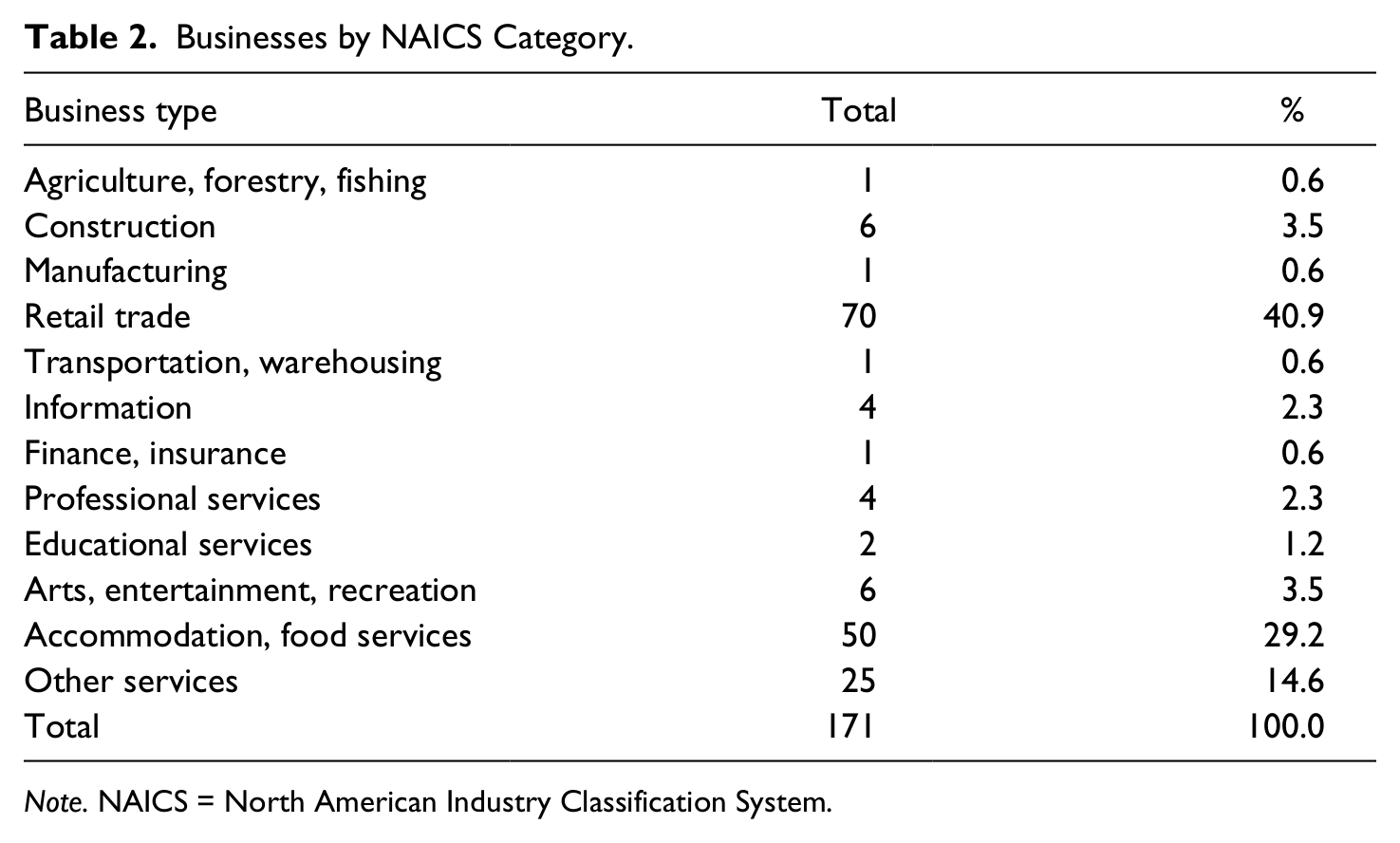
Note. NAICS = North American Industry Classification System.
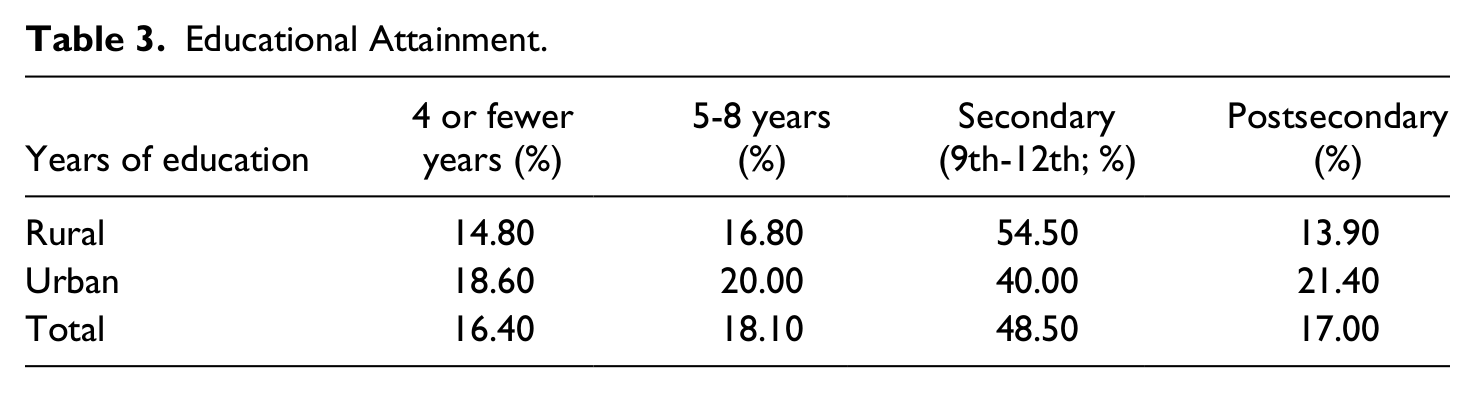
Educational attainment levels of recent immigrants to the United States, especially from Mexico and Central America, have been much studied. For immigrant small business owners specifically, educational attainment rates are about the same as for U.S.-born small business owners (Kallick, 2012). However, national level research on Mexican migrants to rural areas has found that migrants to rural areas since the passage of North American Free Trade Agreement (NAFTA) have more education (Farmer & Moon, 2009, 2011a) and more entrepreneurial experience (Farmer & Moon, 2011b) than those migrants choosing urban destinations. In this study (see Table 3), just less than half (49%) of all respondents had secondary school education (9-12 years of education in their country of origin) prior to coming to the United States. Only 17% had education beyond 12th grade. Interestingly, the rural–urban differences in this study also demonstrate rural immigrant business owners as generally having more education than their urban counterparts. Although a higher percentage of urban business owners had more than 12 years of schooling (21% compared with 14%), urban businesses also had a higher percentage (39% compared with 32%) of owners with low education attainment (8 or fewer years). Higher educational attainment within this Hispanic immigrant population is a particularly important finding for community leaders as rural populations typically suffer lower educational attainment rates than urban populations (Kusmin, 2011). This finding suggests that, especially within a rural migrant community, these immigrant entrepreneurs may comprise an “entrepreneurial class” with considerable human capital assets.
Educational Attainment.
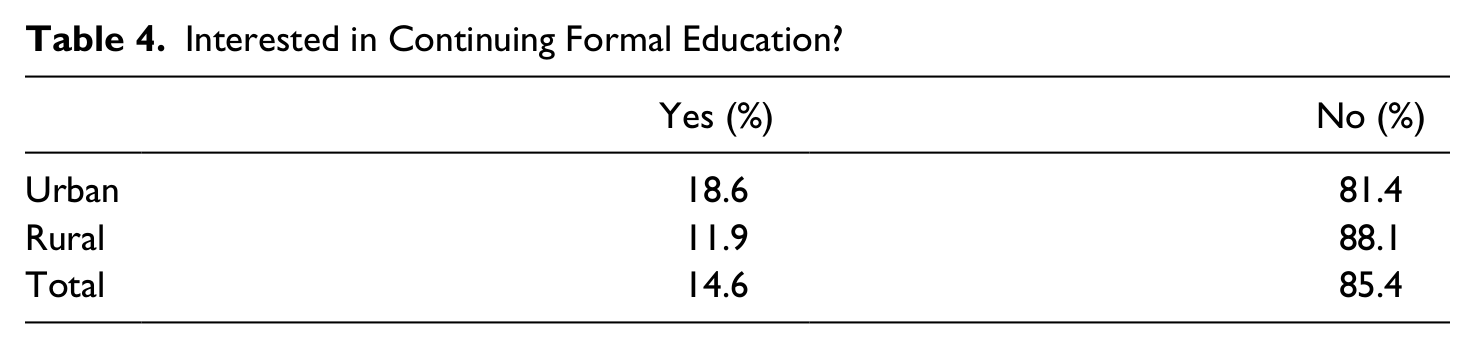
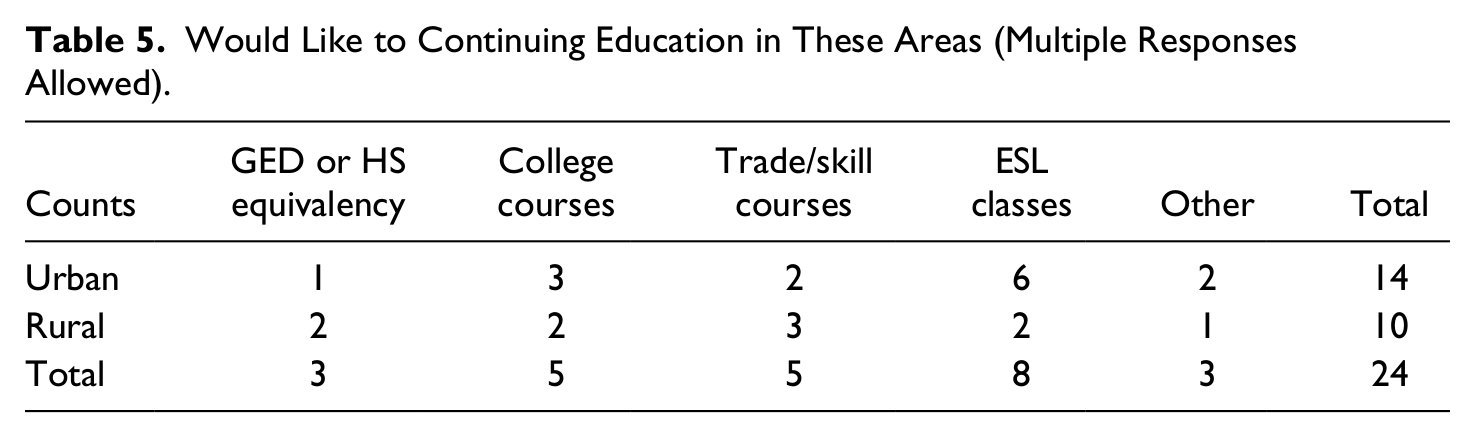
Given the general clamor regarding the need for increased educational attainment to be successful in the global economy and the relatively low attainment levels of Hispanic migrants, the project asked the owners about their interest in continuing their formal education. As can be seen in Tables 4 and 5, overwhelmingly (85%) the respondents indicated a lack of interest in further formal education. Based on other research on barriers to secondary education for Hispanics, formal higher education simply may not be perceived as necessary for success for these owners. The majority of the owners in the survey have been in the United States for an average of more than 20 years, indicated they were reasonably fluent in English, and do not already have any college experience. Taken together, these attributes in the broader Hispanic population have been linked to the perception that higher education is “not necessary for success” (Becerra, 2010). These answers may also reflect the reluctance of small business owners in general to undertake formal education (Gorman et al., 1997). For the few who responded in a positive fashion, eight (six of whom were urban owners) would like English as a second language classes, five each were interested in college courses or trade/skill courses.
Interested in Continuing Formal Education?
Would Like to Continuing Education in These Areas (Multiple Responses Allowed).
However, these findings do not give a complete picture of these entrepreneurs’ interest in expanding their knowledge or education. When asked about interest in workshops or training in areas specific to business operations, two thirds responded positively. Respondents were allowed multiple responses and urban and rural business owners are very similar in the kinds of training and information they seek (see Table 6). The most common request was for information on licenses or business regulations, followed closely by assistance with writing business plans and management training. Other research on this target population identified obtaining loans as a significant barrier (Abreo, Moon, Farmer, Miller, & McCullough, 2011). However, close examination of responses about specific barriers revealed a key underlying problem was lack of understanding about how to write a business plan in a manner acceptable to lending institutions. This nuanced understanding helps explain the results in Table 6—why “how to get a loan” is the fourth most frequent response and “help with business plan” is the second most frequent.
Interested in Workshops or Training in These Areas (Multiple Responses Allowed).

Language difficulties are not identified among the biggest barriers faced by these entrepreneurs, which also clarifies why interest in language classes or language assistance is relatively low. On average, these entrepreneurs have been in the United States more than 20 years and only 25% are in the United States for the first time, helping to explain the language responses. Even though requests for language classes are relatively low, it is notable that this response shows the greatest difference between rural and urban entrepreneurs. Language classes are of more interest to rural owners. This finding too may be linked to the emerging ethnic enclave in urban areas; a feature typical of the emergence of ethnic enclaves is the ability of coethnics to function almost entirely within the enclave, reducing the need to learn the language of their destination community (Portes, 1995). Immigrants in rural areas without the enclave emergence would be under more pressure to learn English.
The human capital assets prospective owners have to deploy include formal and informal education as well as life experience. A prospective owner makes the decisions about whether to open a business and which specific business to open based on a number of factors, including the owner’s own knowledge, skills, and experiences. Some researchers have suggested that Hispanics may use business creation primarily as a response to low educational attainment and discrimination or limited opportunities within the labor force (Robles & Cordero-Guzman, 2007). This raises an important issue around perceived opportunities and the role of human capital assets in actual business formation among the targeted population.
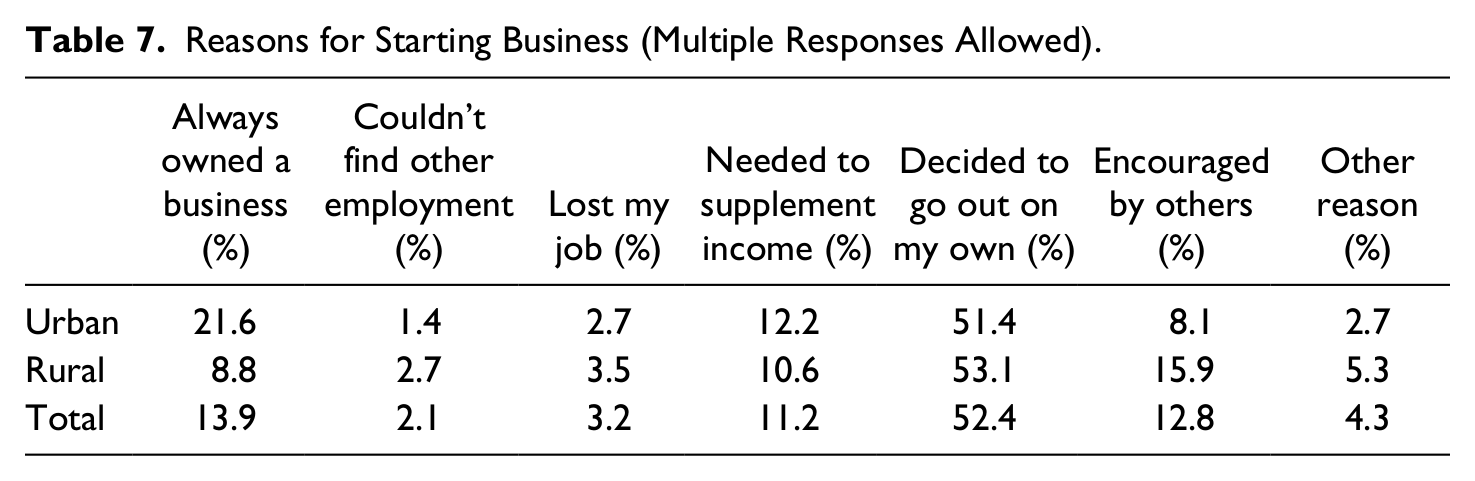
Table 7 presents responses to a question regarding the owner’s motivation for being self-employed. The findings in this study strongly challenge the suggestion that these immigrants opened a business as a result of discrimination or limited opportunity. Over all, only 5% of respondents reported they opened their business because they could not find other employment or had lost their job. Only 11% reported the business was opened to supplement income. The leading reason for opening a business was “decided to go out on my own.” Little difference exists between rural and urban business owners’ motivations save for a clear distinction in those business owners who have “always” been a business owner. Urban owners are more likely to fall into this category than rural ones. Rural owners are more likely to leave a job and begin a business through the encouragement of others than are urban owners.
Reasons for Starting Business (Multiple Responses Allowed).
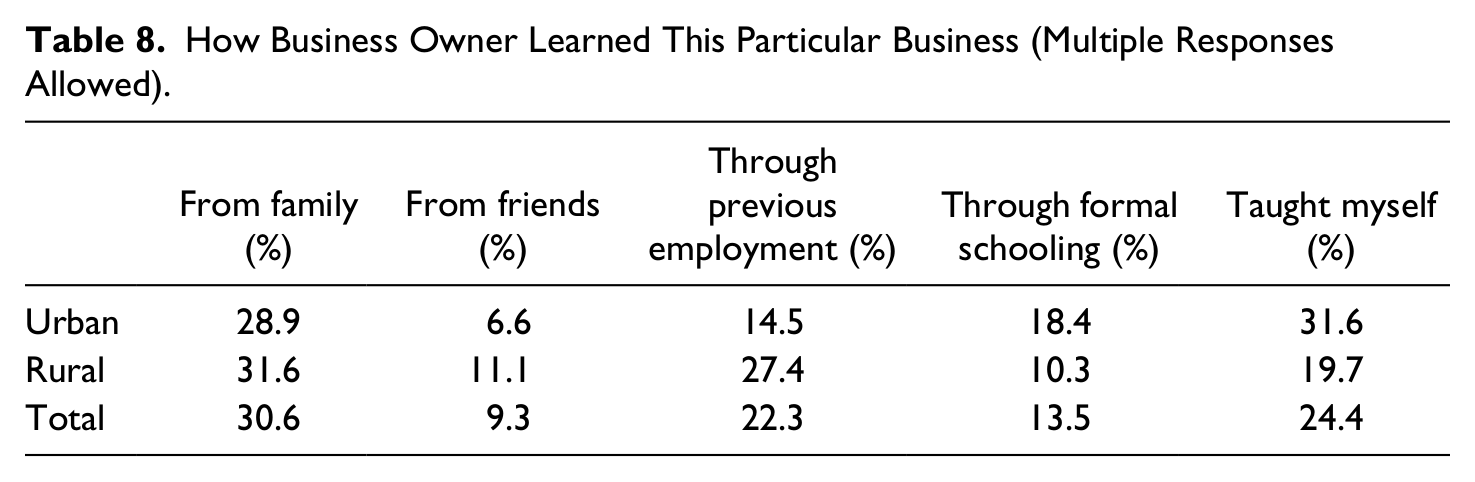
Tables 8 and 9 provide responses to how these owners learned their particular business and why the owner chose this particular type of business. One of the strongest predictors of small business creation is coming from a family that has run its own business (Delmar & Davidsson, 2000). A parallel is demonstrated in Table 8 as 31% of respondents learned their particular business from family. A notable difference, however, between rural and urban participants is the response that the owner learned this particular business from previous employment. Rural owners were twice as likely to give this response as urban owners. This response, coupled with the motivation of the encouragement of others to leave employment and open a business, suggests that rural owners developed on-the-job experience and expertise and then opened a business as a means of achieving more return on their human capital. This is substantially different from the picture painted by urban owners’ responses. More urban owners (18% compared with 10%) learned their business through formal schooling and an even larger portion (32% compared with 20%) taught themselves. These results are similar to other studies of entrepreneurs that also found that the ability of entrepreneurs to leverage accumulated human capital is locality specific (Skuras, Meccheri, Moreira, Rosell, & Stathopoulou, 2005; Wang & Li, 2007).
How Business Owner Learned This Particular Business (Multiple Responses Allowed).
Why Choose to Open This Particular Type of Business.
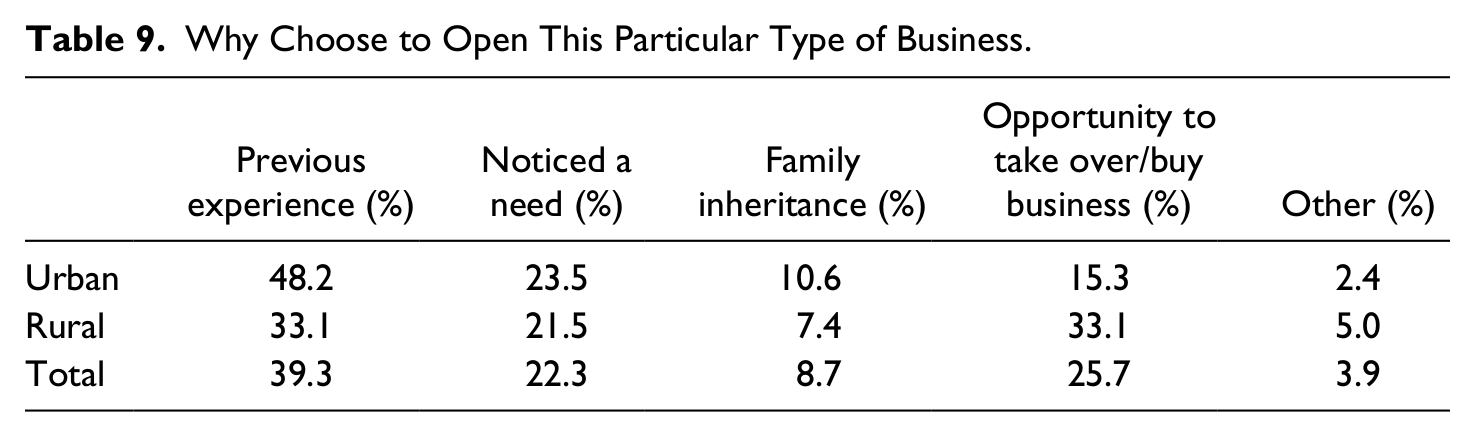
Nearly 40% of respondents indicated they opened their particular business based on their own previous experience while less than 9% inherited this particular business from a family member. Twice as many rural business owners (33% compared with 15%) took advantage of an opportunity to take over or buy the business they were currently operating.
Taken together the patterns of responses in Tables 7, 8, and 9 suggest individuals who are leveraging their accumulated human capital—education, experience, family connections, and individual learning initiative—for business creation. This counters the picture painted by other researchers who have suggested these Hispanic immigrant entrepreneurs are pushed into business creation because of blocked opportunities in the labor force or limited human capital.
Conclusion
Higher education has played an important role in entrepreneurship education for nearly 70 years since the first course was taught in 1947 and has expanded rapidly in recent decades outside the traditional business school (Katz, 2003). Higher education is also now being disrupted by the evolution of online courses, digital textbooks, mobile connectivity, and other rapid communication technologies made possible by innovations in the last decade (Anderson, Boyles, & Rainie, 2012). The current state of higher education creates an opportunity for innovative approaches to address the reluctance of small business owners toward formal educational institutions and, potentially, provide less formal educational settings conducive especially to immigrant entrepreneurs. Institutions of higher education may be able to play a key role in immigrant entrepreneurial formation and ongoing success.
Contrary to other research, this study does not find these immigrant business owners establishing their businesses as a result of limited human capital or blocked opportunities elsewhere such as losing a job, insufficient income, or inability to find employment. Rather, these entrepreneurs are using their accumulated experience, knowledge and initiative to “go out on their own.” They deploy their human capital assets to create and continue their business operations yet recognize the benefit of increasing their human capital.
Like other small business owners, these entrepreneurs express interest in less formal, ongoing education geared at specific management or operational areas of their business. This is congruent with previous research. However, time or other barriers appear to operate as constraints for other small business owners in actually participating in ongoing learning opportunities (Walker et al., 2007). This research did not address constraints, but for immigrant small business owners, additional factors may come into place.
The important function of coethnic business owners as sources of information and ongoing training has been clearly established (Portes, 1995). This suggests that immigrant entrepreneurs in urban areas may have access to more network resources and perceive less need to seek out other sources of information. In rural areas where the size of coethnic networks is likely to be smaller, availability of learning opportunities as well as accessibility of those opportunities may act as additional barriers.
Rural entrepreneurs experience other barriers in terms of “cost of space” (Kraenzel, 1980). Research on Canadian rural entrepreneurs demonstrated rural business owners had even more time and resource pressures because of the impacts of limited infrastructure, labor availability, services, and additional time required to travel outside their community to perform actions associated with running the business (Siemens, 2010). More research identifying specific participation barriers for immigrant owners obtaining ongoing education is needed as the literature on this topic is relatively sparse.
In addition to improving business performance, another important potential function of less formal learning opportunities could be enhanced social integration of the immigrant small business owners into the local community. Research in the United Kingdom has suggested informal learning opportunities for immigrants could enhance the development of social capital through increased access to social and cultural norms of the local community (Morrice, 2007). Such increased social capital also leads to increased informal learning and more extensive social networks that positively influence success rates of small businesses (Renzulli, Aldrich, & Moody, 2000; Sequeira & Rasheed, 2006). This suggests less formal learning opportunities have the potential to create a virtuous circle, improving social and economic integration.
Footnotes
Authors’ Note
The authors are entirely responsible for the design, collection, analyses, and interpretation of data; writing of report; or decision to submit this paper.
Declaration of Conflicting Interests
The author(s) declared no potential conflicts of interest with respect to the research, authorship, and/or publication of this article.
Funding
The author(s) disclosed receipt of the following financial support for the research, authorship, and/or publication of this article: This research was funded by USDA’s National Institute of Food and Agriculture, the Arkansas Division of Agriculture and Arkansas Agricultural Experiment Station.