







Abstract
This article is a case study of failure at the federal, state, and local levels. In 1956, Newburgh, New York, undertook an ambitious, arguably oversized, urban renewal program. Between 1962 and 1974, city officials successfully cleared roughly 120 acres of prime waterfront real estate for redevelopment, displacing a largely black population. But combined with economic recession and changing federal and state policies, conflict between and among white city officials and black residents prevented reconstruction. Newburgh's greatest assets were its scenic waterfront and historic architecture. Clearance of the former led to destruction of the latter. Newburgh's waterfront remains largely empty even today.
Keywords
October 3, 1968, was Unity Day in Newburgh, New York, a city of roughly 27,000 situated on the west bank of the Hudson River, seventy-four miles north of New York City. Newburgh’s ambitious urban renewal program, encompassing almost 130 acres, had been stalled for years. A political standoff between Newburgh’s all-white city council and the city’s quickly growing black community, led by local ministers and National Association for the Advancement of Colored People (NAACP) activists, had prevented construction of a new low-income public housing project, thus slowing the pace of relocation and, thereby, site clearance. A resolution to this conflict was nowhere in sight—until the newly minted New York State Urban Development Corporation (UDC) offered to get involved.
The brainchild of Gov. Nelson Rockefeller, the UDC was a public-benefit corporation designed to spur redevelopment, particularly in upstate New York cities, where, in the words of UDC President and CEO Edward J. Logue, there was a “significant inventory of unbuilt urban renewal land”—places like Utica, Ithaca, Rome, Syracuse, Buffalo, and Rochester, as well as Newburgh. (Statewide, only 198 acres of cleared land out of 2,741, or 7.2 percent, had been rebuilt between 1949 and 1967.) 1 In cooperation with local governments, the UDC would facilitate construction of low-and-moderate-income housing complexes, along with some commercial and civic structures. Newburgh, which by 1968 had come to embody the “disruptions” but not the benefits of urban renewal, 2 was the first city in the state to reach for this lifeline. 3
By design, the UDC’s proposal to help rebuild Newburgh brought a new sense of shared purpose to the city. Before any planning would begin, UDC officials insisted that city leaders and stakeholders prove their commitment to cooperation. The first test was a measure of political cohesion, requiring the city council to approve the UDC’s formal offer of assistance. The proposal passed unanimously. The second test took the form of a citywide fundraising campaign, intended to assess the strength of community support and to help pay for planning studies the UDC would undertake. The UDC Week fund drive raised $15,000 above the $45,000 target, tracked by a twenty-foot high barometer outside of City Hall. This effort brought together local banks, businesses, and other civic boosters. Television and radio stations contributed airtime, including a televised fund drive and an eleven-hour radiothon. Shoppers dropped nickels and dimes into UDC canisters placed on store counters across the city. Grassroots groups played a key role, none more so than the NAACP, which raised over $3,000. Newly confident that their concerns would receive a fair hearing, the organization’s leaders spoke on behalf of the state agency, organized a door-to-door canvass, and threw a cocktail party to educate the public and raise funds for redevelopment. 4
Unity Day was a celebration of the fund drive’s success, as well as the city’s status as the first to partner with the UDC. But the good feelings engendered by this event were short-lived, perhaps illusory. In retrospect, conflict seemed inevitable. The UDC prioritized the development of racially and economically integrated housing; Newburgh’s leaders sought to rebuild the city’s tax base and revitalize its central business district, while preserving residential segregation. The City and the NAACP soon resumed fighting—likewise, the mayor and council members.
Newburgh’s story is a telling example of urban renewal at its worst, where the infusion of federal funds exacerbated political and racial divisions to disastrous results. While its leaders agreed that demolition was the solution to “blight,” they were unable to reach a consensus on how to rebuild. The City’s oversized commitment to urban renewal seemed to demand a similarly ambitious reconstruction plan in order to justify the destruction and resultant diminution of tax rolls. In pursuit of such a plan, political leaders put their faith in unreliable private developers—until the summer 1973. At that time, the nation’s economy was in recession, the UDC was on the wane, and the federal government’s commitment to renewing and rebuilding the nation’s cities was at its end. Newburgh’s small size meant that it was unable to absorb the damage. Acres upon acres of land along Newburgh’s waterfront still lie vacant today.
Despite the popular desire for unity and renewal, Newburgh lacked cohesive leadership and an inclusive plan for change. In its dysfunction and breadth of destruction, Newburgh was extreme, but its story is not so different from those of other cities suffering population loss and economic decay in the decades following World War II. Like them, Newburgh’s political and business leaders chased the dream of urban transformation via federal grants, state-funded construction, and the inflated promises of private developers.
Origins of the Conflict
Urban renewal became a source of political and racial conflict in Newburgh as soon as the first planning maps were made public in 1957. Upon viewing them, Rev. Lloyd Burrus, minster of Newburgh’s Ebenezer Baptist Church and president of the local NAACP, wrote to the city council to complain about plans to demolish “the entire Negro section of the City of Newburgh.” The proposed twenty-two-acre Water Street urban renewal project was slated to displace 2,132 persons, 1,818 of them were black. This was more than a third of the city’s nonwhite population. 5 Although a self-proclaimed proponent of “slum clearance,” the minister protested what he regarded as “indiscriminate clearance of churches, stores, good houses, as well as dilapidated houses.” On behalf of the black community and on the basis of federal regulations, Rev. Lloyd Burrus demanded that the families and neighborhoods facing displacement be given a voice. Although there was some talk by city leaders about forming a racially inclusive Citizens’ Advisory Committee on Urban Renewal in 1957, the resulting committee included only one token black member (Figure 1). 6
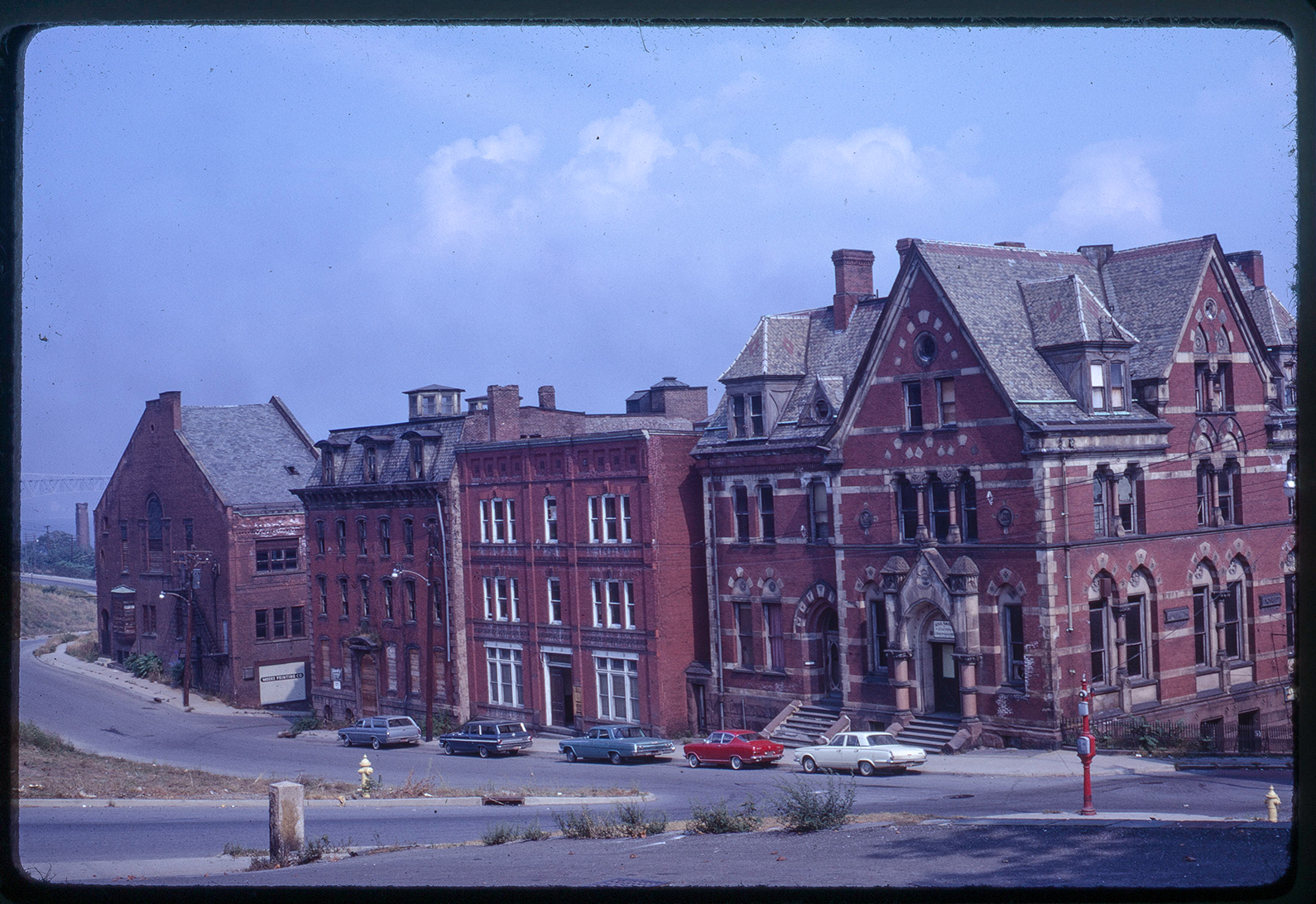
The predominantly black congregation of the Soul Saving Station Church of God in Christ moved into the former Newburgh Savings Bank (far right) in 1955 and moved out in 1970. Despite protests by local preservationists, the building was demolished later that year. Credit: Tom Daly.
Relations between local government and Newburgh’s black community deteriorated further in 1961, when City Manager Joseph McDowell Mitchell, the protégé of council member and future mayor George McKneally, began to implement a punitive reform of the city’s welfare program designed to deter Southern migration and save taxpayer money. Some of the measures targeted new arrivals, others unwed mothers and their children. Newburgh’s “war on welfare” quickly garnered national attention and became an object of debate in Republican policy circles, receiving support from Arizona senator Barry Goldwater and disapproval from Gov. Nelson Rockefeller, both presidential hopefuls. 7
Urban renewal quickly became enmeshed in the welfare war. Proponents of Newburgh’s reform program blamed black newcomers for the physical and moral deterioration of Newburgh’s once-grand downtown, the same area slated for redevelopment. Mitchell and McKneally attributed crime, disease, and blight in the renewal area to the city’s rapidly shifting racial demographics. 8 NAACP leaders made different connections between welfare reform and urban renewal. From their perspective, the city’s policies on both fronts were evidence of racial bias and injustice. By blaming black residents, Republican council members papered over the role white landlords, police officers, and housing code inspectors played in downtown’s decline. Furthermore, the NAACP accused city officials of punishing not only welfare recipients but also black property owners who were denied a fair price for the homes and businesses the City seized for redevelopment. As tensions ratcheted up in the summer of 1961, the NAACP successfully lobbied federal officials at the Housing and Home Finance Agency (HHFA) to reappraise Newburgh properties, and Councilman McKneally threatened to shift redevelopment to another area of the city. This standoff was resolved after HHFA found in favor of the City. The urban renewal boundaries remained unchanged, as did the bitterness. 9
By the summer of 1963, conservative welfare reformers had lost what became known as the “Battle of Newburgh.” Mitchell no longer enjoyed the city council’s support, even that of Councilman McKneally who was himself on the outs with voters. In January 1962, a NBC White Paper documentary had exposed the City’s welfare policies as mean-spirited. The final straw was a bribery scandal, which implicated McKneally as well as Mitchell. 10 But another battle was already on the horizon. This time the NAACP would have allies in local government, and the protests would originate in Newburgh’s predominantly white West End.
Public Housing and Political Dysfunction
Once again, the city’s problems derived from racial discord exacerbated by urban renewal. Early in the planning stage, city officials were put on notice that relocating the largely black population from the redevelopment area would require an investment in public housing. Indeed, HHFA officials rejected the City’s initial relocation report because available housing was “inadequate to meet family needs,” and the report included no plan “to supplement the supply of accommodations.” HHFA regional director Charles Horan warned that without new housing, relocation would take eight years rather than the four proposed by Newburgh’s planning consultants. To ensure the release of renewal funds, the city council agreed to the construction of a new low-income public housing complex. 11 The problem was that city officials and civil rights leaders could not agree on a housing site. Specifically, the fight was over whether or not the new housing would integrate Newburgh’s West End.
In November 1963, voters elected a new mayor and two new city council members, all white Democrats who promised change from the controversies of the past three years. But the city’s new leaders inherited a big problem. The construction of the Diebold project, a new public housing complex intended to rehouse displaced families, had been stalled by the urban renewal area’s hilly topography and resultant cost overruns. Compounding the problem was the concern, shared by local Democratic and civil rights leaders, that building a one hundred-unit low-income high-rise next to another such project would create a new ghetto, thus perpetuating residential segregation in Newburgh. Related was the question of the urban renewal area’s economic viability. The State had recently withdrawn its offer of a low-interest Mitchell–Lama mortgage for construction of 200 moderate-income garden apartments, anticipating prohibitively expensive construction costs. Furthermore, reuse appraisals predicted that the twenty-two-acre Water Street renewal project would “be a miserable failure,” if redevelopment did not extend beyond the original boundaries into the surrounding area. As a result, on a party-line vote, the new Democratic majority commissioned a feasibility study focusing on 100+ additional acres encompassing the original site. The Democrats also voted to suspend all work in the urban renewal area until the study could be completed (Figure 2). 12
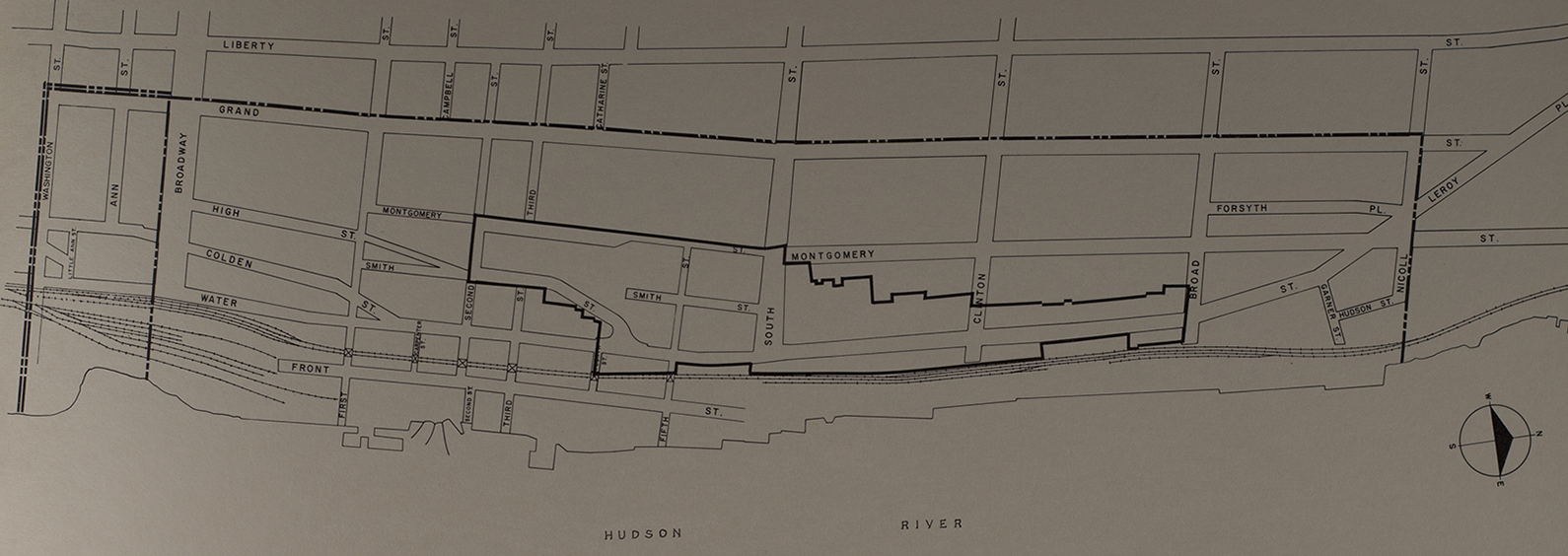
The proposed East Newburgh urban renewal area would encompass the Water Street urban renewal area and entail clearance of an additional hundred acres. Credit: City of Newburgh.
In December 1964, planning consultant David Rosen presented his findings, urging city leaders to expand the urban renewal area and to relocate the Diebold housing complex to an outside site. Rosen contended that concentrating low-income housing in the urban renewal area would deter white middle- and high-income families from moving back into what was once the most elegant section of the city, with stunning views of the Hudson River and Mount Beacon. In other words, he made an argument in favor of racial integration from the standpoint of economic self-interest. His argument convinced only the Democrats, who voted to move Diebold housing from the urban renewal area to an undeveloped West End site. From the perspective of the Democratic majority, both racial justice and economic redevelopment demanded this action. Council member Murray Cohen explained their thinking to New York Times reporter James Sikes: Our feeling was that putting this high-rise apartment building in an area with a high concentration of Negroes was a policy of racial containment. We feared Diebold would block redevelopment of the area. The Water Street site borders on another business and professional district that’s teetering on the brink. If we were going to put all the low-income Negroes down there, it would close, and the tax base of the city would collapse.
Site clearance combined with NIMBYism produced a crisis of affordable and open housing in cities across New York State. At a statewide meeting of urban renewal officials in the summer of 1965, Commissioner James Gaynor of the New York State Department of Housing and Community Renewal deplored the general inadequacy of local relocation plans. He singled out Newburgh, as a place “where the failure to develop a proper relocation plan had just about killed hope of urban renewal.” Later in the day, Gaynor commented, “Everyone wants to get rid of the slums, but no one wants to have the former slum dweller live down the block.” 14
The attitude of West End whites and their Republican allies infuriated the leaders of Newburgh’s black community. In a letter to the Evening News, Samuel Hodge, a pre-Goldwater Republican who would become president of the local NAACP, directly addressed the “white citizens group opposed to having Negroes as neighbors.” “No Negro asked for ‘urban removal’,” he wrote. “Instead, it was shoved down our throats.” Black families “uprooted by the white power structure for the good of the city at large” left their homes reluctantly and deserved “better housing,” no matter its location. Furthermore, racial residential integration was in the city’s economic and political best interest. “[W]hat do you think your precious West End will be worth ten years from now if the potentially more beautiful and valuable Water Street area is allowed to be blighted or racially compacted?” he asked white readers. “I will tell you. The West End will be worth a constant increase in taxes with no increase in services.” 15
While public housing construction stalled, plans to enlarge the city’s urban renewal area proceeded. 16 A pilot relocation survey from March 1967 found that the proposed renewal project would require displacement of roughly a thousand residents, the vast majority black or Puerto Rican. It was at this point that the city council’s Democratic majority decided to relocate the Diebold housing project to a different site, along the banks of Muchattoes Lake, in a more commercial section of the city’s west side. Later that year, just before voters went the polls, the State approved the City’s Lake Street plan. 17
Republicans regained control of Newburgh’s government by campaigning against crime, taxes, and any West End Diebold project. As with welfare reform, party candidates used the conflict over public housing and racial integration to mobilize white support. The Diebold controversy revived the political career of former councilman George McKneally. It also gave rise to a new Republican star, George Shaw, chairman of the West End Citizens Committee. In 1967, McKneally and Shaw built a winning ticket with Mildred Levy. Although Democrats won the eastern wards of the city, Republican strength in Newburgh’s all-white West End meant that their candidates, running at-large for mayor and city council, swept the Democrats out of office. 18
The city’s new leaders moved quickly to prevent the construction of public housing in Newburgh’s West End. Even before taking office, Mayor-Elect McKneally took steps to prevent the transfer of Lake Street property to the Newburgh Housing Authority (NHA). Once in office, the new mayor instituted a “purge” of the city manager, city planner, and both the chairman and the director of Newburgh’s Urban Renewal Agency (NURA). In concert with the new city council, he attacked NHA’s leadership, demanding the resignation of the agency’s chairman whom they accused of participating in a “conspiracy…to prevent the Diebold Project from being on Water Street.” Despite the possible loss of state funding, the city council also sought to rezone Lake Street for industrial or recreational rather than residential uses. Once again, plans for new public housing stalled. 19
In the political void left by the Democratic defeat, the local branch of the NAACP took the lead in negotiating with the City, but what little trust remained between the two sides was soon extinguished. From the NAACP’s perspective, the final straw was the failure of all four city council members to participate in a housing summit organized by the Greater Newburgh Chamber of Commerce and Mid-Hudson Pattern for Progress on July 18, 1968. Mayor McKneally did attend but arrived one hour late. In response, the Chamber of Commerce called on the council to convene a new session the following week. But by this time, the NAACP’s leadership had tired of pointless and humiliating housing summits. The organization met in emergency session and agreed on a new tactic. The following day, NAACP President Samuel Hodge announced the start of a selective buying campaign targeting Broadway merchants. The point was to “force” local merchants “to apply pressure on the Newburgh city council to approve the Lake Street site for…public housing.” Independently, the NAACP’s more militant Youth Brigade organized a picket to support and enforce the boycott. 20 Although the NAACP’s fight was with the City, not local merchants, this was a well-targeted campaign. The city’s Lower Broadway business district was directly adjacent to the enlarged East Newburgh urban renewal area and dependent on black consumers. The stability of this economically fragile area was of keen interest to City Hall and the local Chamber of Commerce.
A Compromise Solution
In the midst of the NAACP boycott, UDC President and CEO Ed Logue offered the City a compromise solution to the public housing impasse. The UDC would develop the Lake Street site for residential and recreational, as well as commercial and industrial, uses. This offer did not appear out of the blue. The Governor’s office had requested UDC officials to study Lake Street for the “feasibility of further development,” and Logue had been in communication with Newburgh’s mayor and city manager since mid-June. Soon after, McKneally met Logue face-to-face at a private luncheon in the lavish New York City offices of William Zeckendorf, a high-profile but bankrupt property developer who was promoting a proposal to redevelop Newburgh’s riverfront around a deep-water port. Both McKneally and Zeckendorf regarded the UDC’s involvement in Newburgh’s renewal as an opportunity to push the port plan forward. 21
The UDC was an independent state agency vested with extraordinary powers that promised to shorten the time of redevelopment, from planning to completion. It enjoyed superior powers of land condemnation and acquisition, as well as the ability to override local zoning restrictions and building codes, sparking consternation among local politicians. New York City Mayor John Lindsay, for example, expressed the concern that the new agency would “shoulder the cities out of any role in their own reconstruction.” Also worrying to local officials was the UDC’s commitment to integrating not just ailing cities but also the burgeoning suburbs. The agency’s goal was to ameliorate economic and racial inequities by creating, in the words one UDC official, “balanced communities,” meaning “balanced as to racial composition, family income, and land use.” 22
Despite some qualms, city leaders looked to the UDC for help with a common problem—an overabundance of unproductive land cleared with urban renewal funds. In response to the letters, reports, and memoranda filling what former UDC staffer Alan Talbot described as the agency’s “supplicant box,” Logue and his crew traveled from city to city, meeting with local officials. Their first trip was to Newburgh, which Stephen Lefkowitz, the UDC’s former chief counsel, recalled as “a pretty woebegone place”: The huge broad street, Broadway, leading down to the Hudson River, was then, just devastated. I mean there were empty store after empty store…. [T]he next day there was a headline in the Newburgh paper that said something like, “Urban Development Corporation, with its vast powers, is going to rebuild Newburgh.”
After meeting with Newburgh’s mayor and city council on July 29, 1968, Logue presented them with a formal offer of assistance designed to address local concerns and appeal to key constituencies. The UDC would hire planning consultants to (1) produce a development program for the Lake Street site, complete with a schedule for implementation; (2) conduct a more preliminary feasibility study of the lower Broadway business district; and (3) review the various plans for the city’s urban renewal area, including Zeckendorf’s proposed port, “with a view toward identifying a role that the UDC might play in furthering the development of these projects.” Even before seeing the UDC proposal, the directors of the local Chamber of Commerce passed a supportive resolution. NAACP protests gained a new focus, pressuring the city council to approve an agreement with the UDC. The West End Citizens Committee sounded willing to end its opposition to the residential redevelopment of Muchattoes Lake, but the group’s former chairman remained skeptical. George Shaw was the city’s most prominent UDC critic. He objected to the plan to build housing on the Lake Street site rather in the urban renewal area. He further criticized the UDC for its failure to help the City rebuild its shrinking tax base with a definitive plan for commercial and industrial development. Mayor McKneally chided the councilman for his recalcitrance, describing the UDC offer as Newburgh’s “last chance.” “We had better seize it,” McKneally insisted, “or we’re not going to make it.” With editorials directed at Shaw, the publishers of the Evening News urged the councilman to “join up.” The NAACP threatened a voter recall, if Shaw were “the cause of Newburgh losing the UDC offer,” and the organization’s Youth Brigade was prepared to launch a protest march. On August 8, with pressure mounting, Shaw seemed to relent. Four days later, the Republican mayor and city council voted unanimously in favor of the UDC proposal. 24
The conflict between McKneally and Shaw both presaged a future electoral challenge and reflected state and national divisions within the Republican Party. In the prior year’s election, Shaw had received more votes than either Mayor McKneally or Councilwoman Levy, and he quickly began using this political support to build an independent power base. Unlike McKneally, who supported the governor, Shaw distrusted Rockefeller and what he regarded as the state’s meddling in local affairs. Upon first learning of the UDC offer, Shaw commented, “It’s a political move on the part of Albany. I hope Rocky will be as interested in Newburgh after the [Republican National] Convention as he is now.” 25 Even after meeting with Logue, Shaw would stand by this assessment, insisting that the City should “stop running to New York, Albany, and Washington to solve our problems.” Mayor McKneally countered, “The day is long past when a city like Newburgh can develop for itself. It needs outside help, and I consider Newburgh most fortunate in having the UDC.” 26
The UDC and Private Developers
Although McKneally and Shaw disagreed over the State’s role in urban redevelopment, in the summer and fall of 1968, they shared one article of faith: that Bill Zeckendorf’s port plan was the key to the city’s prosperity. The problem was, on the one hand, UDC officials, particularly Ed Logue, were skeptical of the bankrupt property developer’s plan for Newburgh. On the other, political support for the UDC was, in part, predicated on the corporation’s willingness to help implement the port plan. Indeed, early on, Shaw accused Logue of a bait-and-switch maneuver. He acknowledged that the city council had reached out to the UDC, “but we wanted help with Zeckendorf’s proposal for a deep-water container ship port,” not Lake Street housing. Complicating matters was Logue’s imperious manner. Of the UDC director, famous for the redevelopment of New Haven and Boston, journalist Richard Schickel wrote, “The overall impression is of an extremely intelligent, very tough man who is too confident by half about the correctness of his course.” Over the course of his work in Newburgh, Logue’s too often dismissive certitude, along with his failure to respond promptly to unwelcome queries, often served to make a bad situation worse. For example, Logue opposed the use of monies leftover from the UDC Week fundraising campaign to pay for planning of Zeckendorf’s port. But rather than speak directly with the admittedly importuning private developer, Logue ordered his subordinates to respond, eventually pushing Zeckendorf to appeal to the governor. In the case of the port plan, Logue’s assessment was probably correct, but his refusal to take the private developer’s phone calls or meeting requests made matters worse. This same behavior would later sour the UDC’s relationship with Newburgh stakeholders. 27
Logue’s manner was not the only roadblock. As a group, Newburgh’s political leaders were divided, anxious, and ambivalent about redevelopment. In February 1969, conflict arose as the City and UDC began the process of negotiating a memorandum of understanding (MOU) outlining the nature of their partnership. The UDC’s Robert Litke, who was responsible for negotiating the deal, reported to Logue that the city council was “much concerned…that we will do Lake Street and then leave them with a set of plans that will never be carried out for CBD [central business district] redevelopment.” A revised version of the MOU attempted to assuage these concerns by providing “a reasonable emphasis on things other than Lake Street.” Furthermore, city officials insisted that the UDC enter into a separate agreement with NURA, an agency independent of the city council established by the prior administration. The reason for this, according to Litke, was that council members were “so disgusted and afraid of urban renewal” that they wanted “to avoid as much as possible any identification with the renewal process and the Renewal Agency.” (There would be a thaw in relations the following year after the NURA chairman, a Democratic appointee, was forced out.) The issue over which negotiations almost broke down was whether the city council and planning board would have a say in the design of site plans and the selection of developers. The final version of the MOU gave the City the right to review and approve or decline such proposals, but the UDC “reserved the right to terminate any obligations” in the case of refusal. The MOU also specified that the UDC would only undertake projects judged to be “financially feasible,” giving the agency another way out. 28
By the time the City and UDC reached agreement on March 3, 1969, Newburgh’s urban renewal program seemed already to have turned a corner. Even before negotiations with the City began, the UDC unveiled designs for Lake Street and plans for the lower Broadway business district. UDC officials also convinced the governor to introduce a bill for construction of a waterfront arterial, believed by its planning consultants to be “key” to the redevelopment of East Newburgh, which had earlier in the decade been bypassed by a new bridge and interstate highway. Later that fall, Gov. Nelson Rockefeller would again visit Newburgh, this time for a groundbreaking ceremony on Lake Street, the first UDC project to enter the construction phase (Figure 3). 29
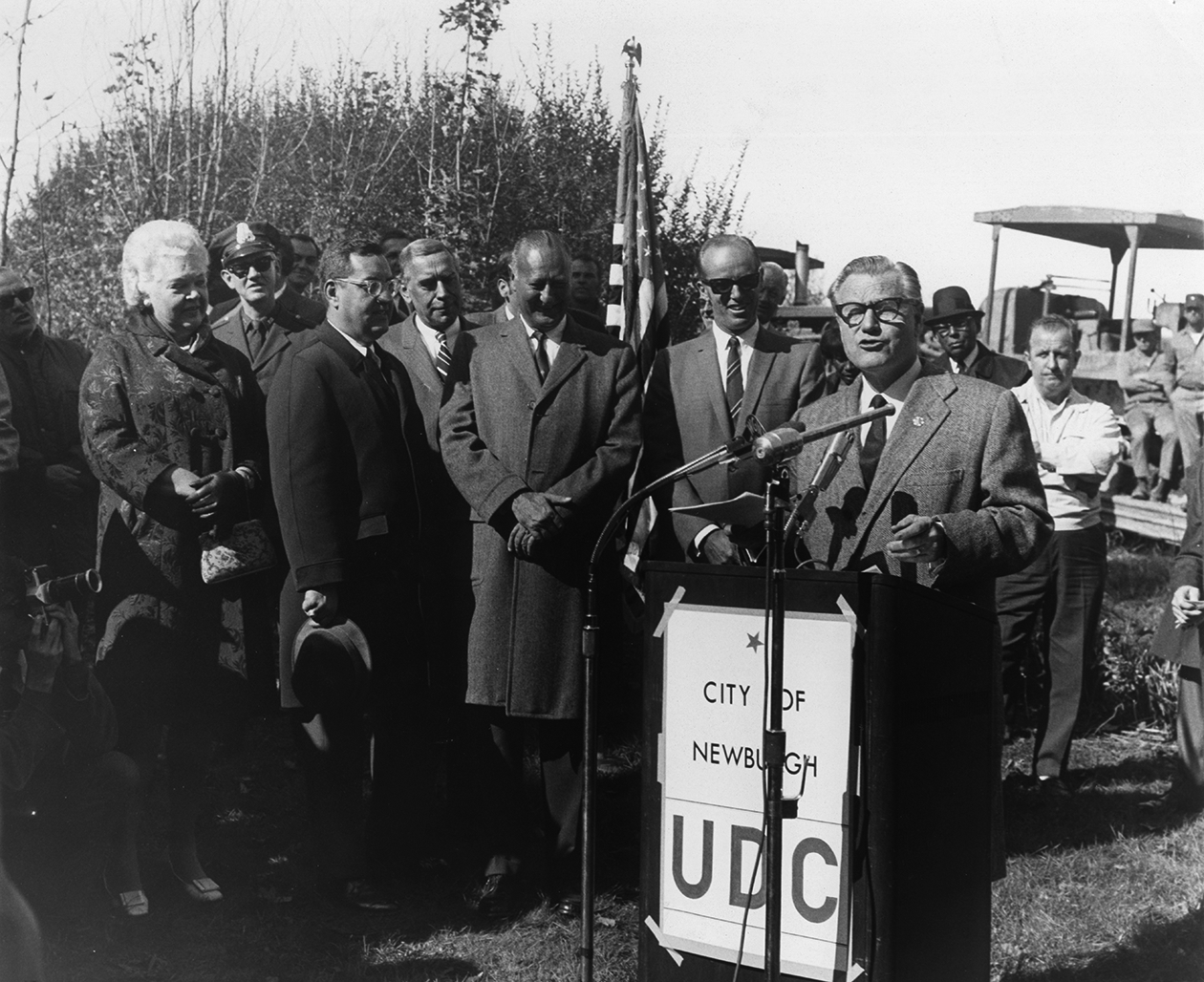
Lake Street Houses groundbreaking ceremony, October 29, 1969. Gov. Nelson Rockefeller at the podium is flanked (left to right) by Mildred Levy, Peter Patsalos, George McKneally, and Lawrence Herbst. Credit: Augusts Upitis.
Even more consequential was the US Department of Housing and Urban Development’s (HUD) final approval of Newburgh’s $8.5 million part II urban renewal grant, more than five years after the City had submitted its initial application. 30 This was a victory for NURA as well as for the mayor whose brother Martin McKneally, a member of Congress, helped shepherd the application through administrative hurdles. With these funds, the City could begin acquiring East Newburgh properties and relocating residents. NURA would start awarding demolition contracts the following summer. 31 As was true nationwide, the problem in Newburgh was that the federal government funded demolition but not reconstruction—that was left to private developers and state agencies.
The City now entered a new phase of redevelopment. The mayor and city council began looking for a private developer with big ideas to rebuild Newburgh’s deteriorating and soon-to-be-deserted waterfront. William Zeckendorf had been waiting for this opportunity, having recently allied himself with the storied construction firm of Starrett Brothers and Eken. Together, they were designated Newburgh’s “tentative preferred sponsor,” despite the lack of a concrete redevelopment plan. To address this need, the mayor convened a meeting of stakeholders. Zeckendorf quickly took center stage, promising not only to prevent Sears from moving out of downtown Newburgh (a source of much concern to the Chamber of Commerce) but also to convince Macy’s to drop its plans for a nearby shopping center. UDC staffer Stuart Polly, who attended this meeting, commented, “Even the mayor thought that was going a bit too far and, after a few groans, the subject was dropped.” The private developers then proposed to demolish not only the section of the urban renewal area slated for clearance but also one designated for rehabilitation, which would have necessitated the relocation of 500 additional families and the demolition of structures that local preservationists had fought to save. The developers also recommended building the riverfront arterial as an elevated highway, a decision that would have added considerably to the State’s expense. These unrealistic proposals seemed to bode ill for East Newburgh, but Polly diplomatically “left the meeting stating the UDC was committed to revitalizing downtown Newburgh, that any time anyone has a reasonable proposal, we would be glad to cooperate in any way we can.” He concluded, “It was the mayor’s show and I suggest we leave him holding the cards for the present.” 32
In the meantime, Councilman Shaw and his ally, Mildred Levy, had soured on the City’s tentative preferred developer. The initial site plan presented to the city council in December 1969 arrived incomplete and a day late. The kindest assessment was “very, very preliminary,” the most damning (by Shaw), a “sham.” Even Mayor McKneally slammed the proposal, calling it “a complete disaster.” As negotiations between city officials and the developer unfolded over the spring and summer of 1970, it became clear that Zeckendorf (now demoted to Starrett “consultant”) had overpromised. In the initial phase, at least, Starrett proposed to build an $8 million moderate-income residential complex—no port, no shopping center, no luxury housing. The major sticking point was the developer’s demand for tax abatement. “Without tax abatement, there is no project,” Starrett chairman Robert Olnick informed city officials. Nevertheless, the city council voted 3–2 to name Starrett Newburgh’s preferred sponsor. The problem was that the transfer of city-owned land required approval by a 4–1 vote, and both Shaw and Levy voted nay. Levy defended her decision, telling reporters that Starrett’s proposed construction site was “prime land…suited for high-income housing. As soon as high interest rates…start to drop, Mrs. Levy expects developers interested in building high income housing on the site to ‘snatch up the land,’ without an abatement.” As a result of this vote, Starrett withdrew its proposal. Olnick explained, “We felt that without the unanimous support of the council, a good working relationship between our firm and the City of Newburgh cannot be established.” 33
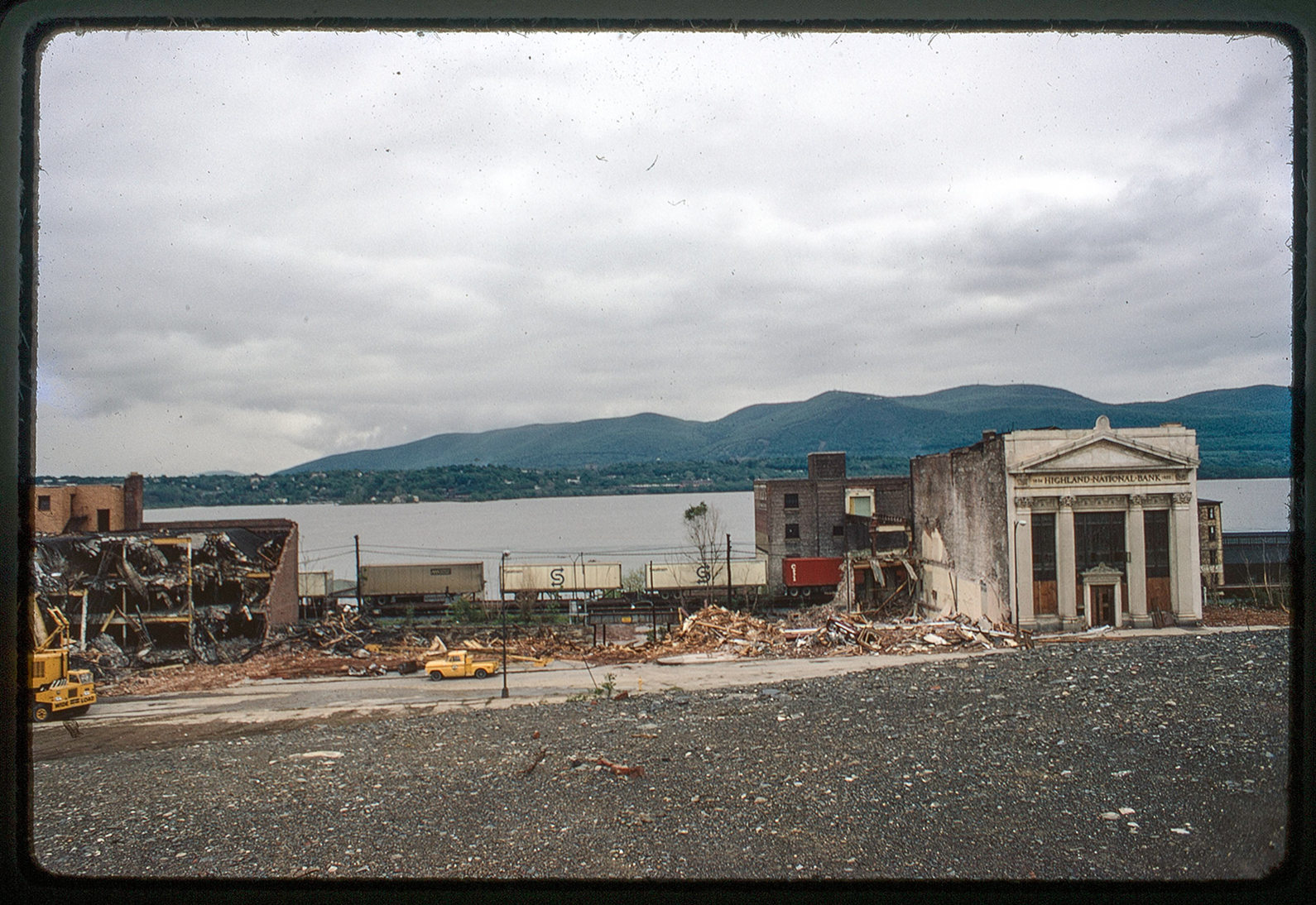
Along with concern about the city’s declining tax base, political ambition contributed to the discord in Newburgh’s city council. (After all, even with the abatement, tax revenue would have increased had the Starrett site been redeveloped.) The land disposition vote was a victory for George Shaw, who was already planning to challenge McKneally in the next election. It was a defeat for the mayor, who had aligned himself with the redevelopers. With Starrett and Zeckendorf out of the picture, Shaw now trained his fire on the UDC. Agency officials were prepared for the uptick in political attacks and surprisingly complacent about McKneally’s likely defeat. “If George Shaw should win the election (and it is wide open right now),” Stuart Polly wrote to Ed Logue a couple weeks before the election, “we will probably have no greater difficulties in Newburgh than we have always experienced.” Nevertheless, at McKneally’s request, UDC officials sought to assist the mayor’s reelection with “dispassionate disclaimers concerning the inaccuracies in George Shaw’s latest diatribes” and—after Shaw won the Republican primary and McKneally elected to run as an independent—a ribbon-cutting ceremony at the Lake Street Houses, the goal of which was “to give McKneally some press” a few days before voters went to the polls. McKneally got the press coverage but lost the election, even though, under his administration, the city made more progress toward renewal than at any other point in its history. In addition to Lake Street Houses, a housing complex sponsored by Newburgh’s AME Zion Church would soon open, and clearance of the East Newburgh urban renewal area was proceeding quickly. Indeed, after the election, Mayor Shaw would characterize this demolition work as the City’s “most import single accomplishment in 1971,” having opened up a “beautiful” vista of the Hudson River Valley (Figure 4 and 5). 34
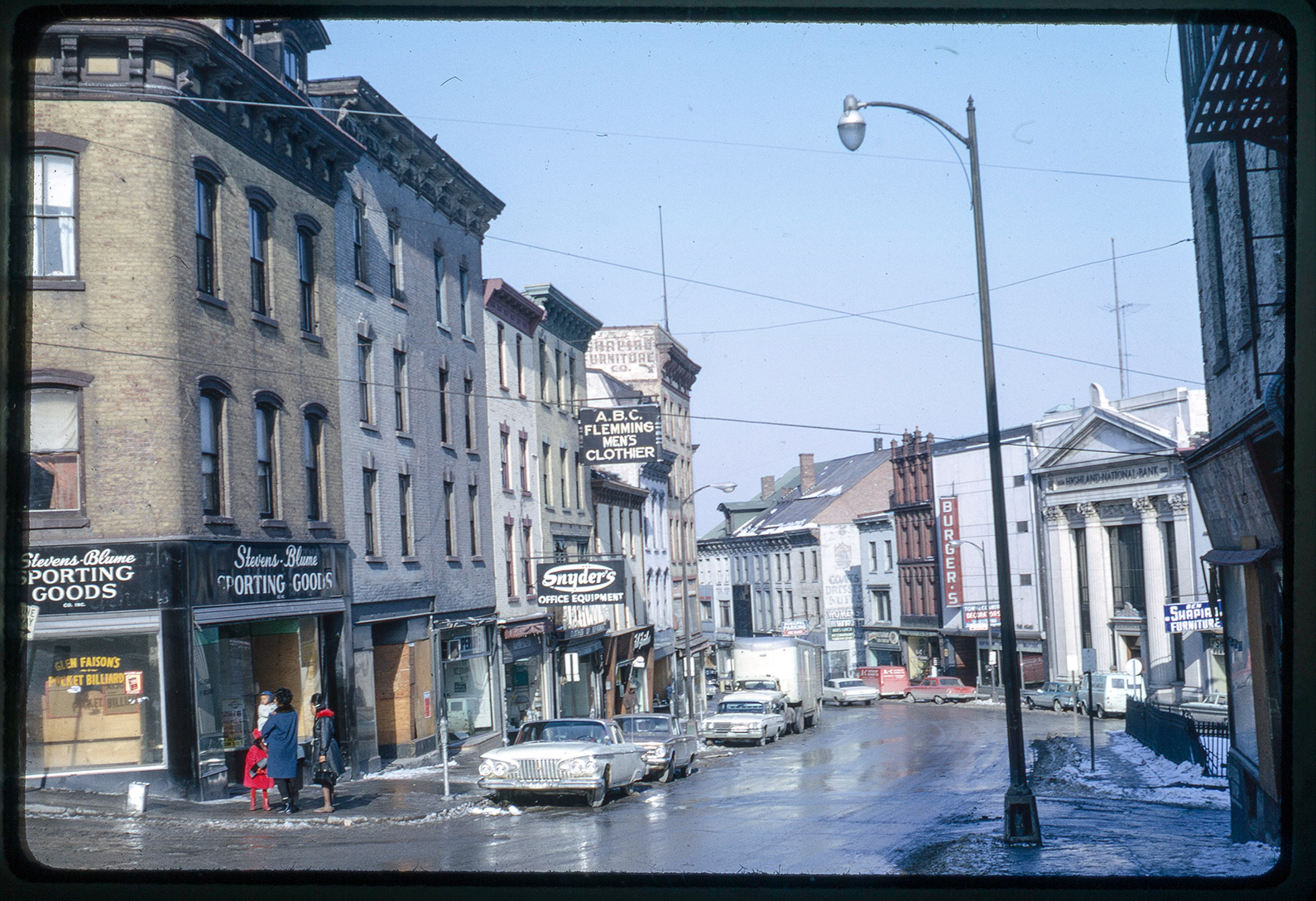
Water Street shopping district, ca. 1960s. The Highland National Bank is visible on the right. Credit: Tom Daley.
The Highland National Bank building awaits demolition. Credit: Tom Daley.
As a candidate George Shaw had promised voters a more rational approach to redevelopment, but as mayor, he quickly allied himself with a new private developer who proposed to solve the city’s problems through an even more expansive program of demolition and reconstruction. Frank Developers unveiled its plan for East Newburgh soon after Shaw took office. By May, the new mayor was suggesting that downtown Newburgh might not need the UDC’s help, as Frank’s preferred site included “many of the same areas which UDC wishes to develop.” (In addition to Lake Street Houses, the UDC was planning a new public library/school administration building in the East Newburgh urban renewal area and a new office building in the lower Broadway business district.) Despite their skepticism, UDC officials were willing to step back and let the developer take the lead. Stuart Polly explained the UDC’s understanding of its role: Our decision in Newburgh from the very beginning has been that we will assist them in the East Newburgh renewal area as developers only in those circumstances where private enterprise cannot be attracted. This understanding has never been an important part of our dealings in Newburgh, because Zeckendorf stepped in…. With him on board, our role has been one of consultation…. Our position again, vis-à-vis the new preferred sponsor, will be to be available for consultation in the near future and possibly if the new sponsor can get anything off the ground, we may have a role in some later developments there.
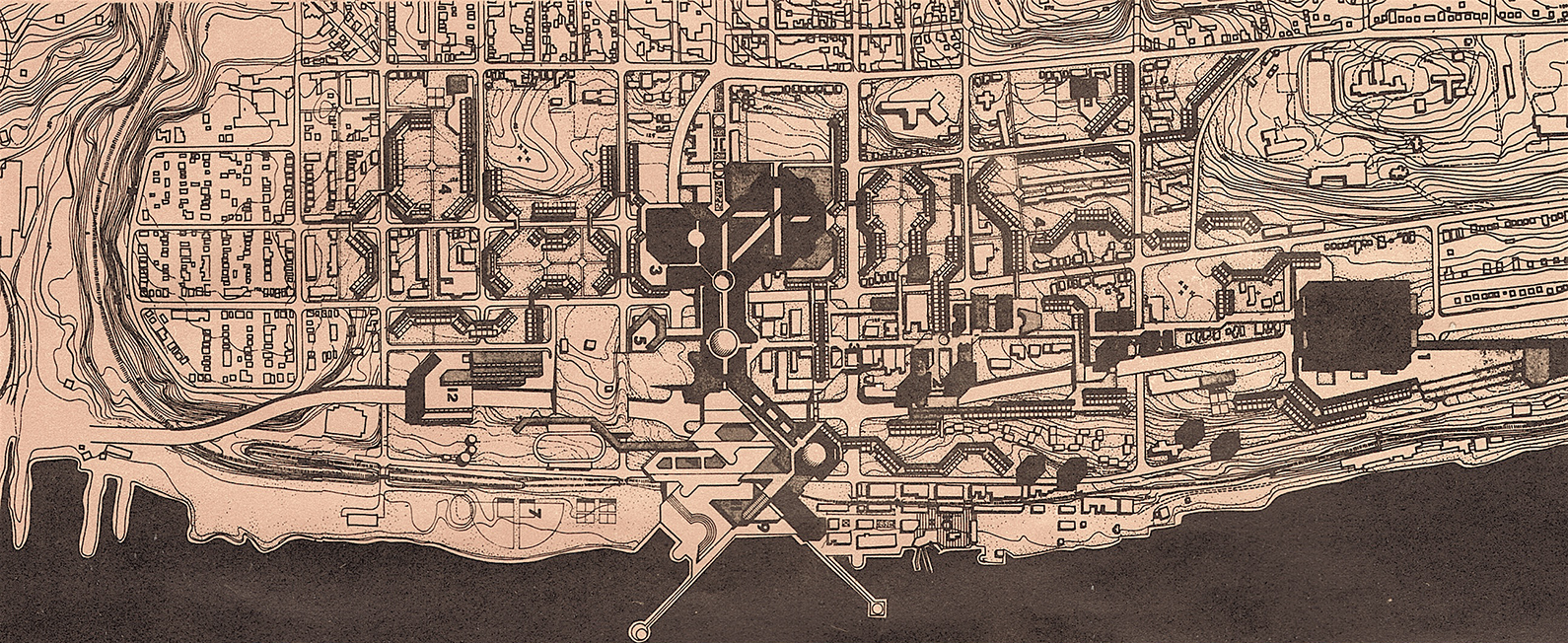
The Frank Developers plan almost doubled the area slated for redevelopment. Credit: City of Newburgh.
While Newburgh’s white political leadership coalesced around the Frank plan, the city’s black community rebelled. As a group, they had suffered far more than their fair share of displacement and dispossession. Within the community, a new critique of urban renewal had been brewing since the late 1960s, as faith in integration declined and concern about the redevelopment area and its inhabitants rose. A new generation of NAACP leaders was impatient with the political status quo and tired of empty promises. To their eyes, redevelopment was a cause of, rather than a cure for, racial injustice and inequality. After sitting through a public presentation at Montgomery Street School on the edge of the East Newburgh urban renewal area, the largely black audience’s anger and despair had reached the boiling point. One woman declared, “The white people used to have the waterfront, and they want it back. We’re going to be out of here—where are we going?” Richie Peterson of the NAACP accused Frank Developers of “n***** removal.” He continued, “What you are doing is destroying a black community, a political base, and a way of life. You are destroying our self-respect, our unity. This is our waterfront. When the downtown wasn’t important, we couldn’t get help. Who will own and control the area?” He and others expressed bitterness about the losses their community had already incurred. Ultimately, their question for Frank, as well as for city leaders, was whether African Americans would have a voice in the redevelopment process and a share of the benefits. This question would never be answered to anyone’s satisfaction. A few months after this public presentation, in July 1972, as the city council awaited a draft MOU from Frank, the development company announced a corporate reorganization. 36
Economic Realities
Popular faith in private development, even among local business leaders, had by this time begun to falter. In the summer of 1972, the Chamber of Commerce proposed to take the lead with its own plan to “rebuild lower Broadway” rather than wait for another developer selling a “dream downtown.” The relatively modest plan included construction of a new public safety building, office building, commercial space (including a department store site), and parking for 250 cars. Chamber leaders looked to the UDC for help, and on January 9, 1973, Ed Logue met with the organization’s executive committee. This meeting exposed the flaw in the UDC’s tacit policy of taking a back seat to private development in downtown Newburgh: there was no agreement, formal or informal, defining the agency’s role. According to the UDC’s Michael Seltz, the Chamber president opened the meeting by quizzing Logue “on the present status of the UDC downtown effort,” referring to the 1969 revitalization plan commissioned with monies from the UDC Week fundraising campaign. Logue expressed his “surprise at the question” and explained that the UDC “was not in a position to take unreasonable risks.” He urged the businessmen to “think in terms of incremental change…not grand designs that had no chance of being implemented,” adding that the UDC “by itself could not create a market.” Putting the onus back on the city’s business leaders, Logue encouraged them to find tenants for the lower Broadway office building that the UDC had so far found economically infeasible. The good feelings and renewed commitment resulting from this meeting soon faded, when Logue failed to keep his promise to report back promptly. 37
In this case, there were extenuating circumstances—as Logue explained in a note to the Chamber’s president, “The national administration’s housing moratorium has disrupted our activities and priorities.” On January 9, 1973, the same day Logue met with the Chamber’s executive committee, HUD announced the suspension of Section 236 mortgage subsidies key to the UDC business model—as well as to that of any developer of low-and-moderate-income housing. At the time, the UDC was the largest recipient of such subsidies, which had helped finance over 90 percent of the almost 31,000 housing units built by the UDC over the past five years. The HUD moratorium prompted underwriters to reevaluate the risk of investing in UDC bonds, a situation made worse by a March 1973 draft audit, which revealed that the corporation was dangerously overextended. Ultimately, these financial problems, combined with the incipient recession, led Moody’s to downgrade the agency’s bond rating. As a result, the market for UDC bonds contracted, and potential investors demanded an increased rate of return. 38
Since its inception, the UDC under Ed Logue’s leadership had been the target of political attacks, but in the spring 1973, these attacks finally hit their mark, reining in the UDC’s power to override local zoning ordinances. The challenges originated in New York’s predominantly white towns and suburbs, including those surrounding the City of Newburgh, but even supporters, like former Mayor George McKneally, opposed the UDC’s efforts to build housing outside of New York’s deteriorating cities. State Senator Richard Schermerhorn, a longtime UDC critic—and one of many sitting in the state legislature—launched another challenge to the UDC in the form of a competing, locally controlled corporation, the Newburgh Development District Corporation, with the ability to issue up to $50 million in bonds. Most of the funds were to be used to finance implementation of the $431 million “growth center” plan by an offshoot of Frank Developers. Schermerhorn’s bill was quickly caught up in controversy and failed to become a reality. The only element of the Frank plan to reach the construction phase was a ninety-one-unit upper-middle-income housing complex, Waterside Place (now Ferry Crossing) Condominiums, in the northeast corner of the urban renewal area, along the Hudson River. 39
A Blank Canvas
In the fall and winter of 1973–1974, Newburgh’s political and business leaders were desperate for help and reached, one last time, for the UDC lifeline. This time, however, Ed Logue was in no position to meet the city’s needs, much less its leaders’ demand for a developer to rebuild downtown Newburgh. That fall, Logue met with Sen. Schermerhorn and told him essentially what he had told the Chamber of Commerce executive board earlier in the year. UDC Staffer Linda Myers recorded their conversation: “Mr. Logue indicated that UDC stood ready to assist in Newburgh, if we had the cooperation of the city council. He cautioned against holding out for master plans and grand schemes and suggested that a small start could be significant.” The proposed downtown office building could be that small start, but city stakeholders needed to identify tenants willing to sign leases before planning could move forward. The UDC would not build on speculation. Schermerhorn delivered Logue’s message to Newburgh’s political leaders, but this was not what they wanted to hear. “…[I]t’s a letdown,” Mayor Shaw told the Evening News. “We thought UDC with its name and power would have the ability to attract developers itself.” 40
What is striking about this final go-around was Mayor Shaw’s acknowledgment of what had always been the State’s message to Newburgh, that there was no “panacea” for urban decline—not the UDC, not private developers. The public benefit corporation was simply a “useful instrument” for effecting change. In fact, that was precisely Gov. Nelson Rockefeller’s Unity Day message back in October 1968, Now, I don’t claim that the Urban Development Corporation is the final answer to our urban problems. Certainly the City of Newburgh does not want to rely upon a State agency to solve all its problems. But the Urban Development Corporation is a tool, a mechanism, and an important one, for meeting the urgent problems of our urbanized State….
Newburgh’s emptied, and largely unreconstructed, waterfront is the product of failures at the federal and state, but particularly the local, level. This story might have been different had the city’s residents been less polarized and its officials more willing to compromise. By the time the mayor and city council were ready to stop fighting and readjust their vision, the federal government had cut housing funds, and the UDC was enmeshed in a financial crisis. Newburgh’s tragedy is that after the City used federal urban renewal funds to destroy hundreds of family homes, whole neighborhoods, and some architectural treasures, its leaders proved incapable of articulating, much less implementing, a shared vision of the future. More than lack of investment, lack of cohesion and inclusion explains Newburgh’s failure to rebuild, even now. 42
However locally made, this tragedy is part of a broader national story. 43 An unintended consequence of the federal urban renewal program, which funded demolition but did little to assist reconstruction or rehabilitation, was that it encouraged local officials and planners to regard large swaths of inhabited urban land as a blank canvas upon which to project their hopes—“recapturing a vanished splendor,” rivaling the suburbs, heralding the future, replenishing city coffers. 44 In Newburgh, these hopes proved unrealistic, and the results were unfair to the whole city but especially to those whose lives were upended by relocation.
Footnotes
Acknowledgments
For comments on earlier drafts of this essay, the authors wish to thank Douglas Appler, Barry Benepe, David Hochfelder, Mary McTamaney, Richard Ocejo, and Lynn Woods. Thanks also to the staff at M.E. Grenander Department of Special Collections and Archives and to Tom Daley for permission to use some of his many photographs of Newburgh during urban renewal.
Declaration of Conflicting Interests
The author(s) declared no potential conflicts of interest with respect to the research, authorship, and/or publication of this article.
Funding
The author(s) received no financial support for the research, authorship, and/or publication of this article.
