






Abstract
Introduction:
Despite the BASIL-1 trial concluding that bypass surgery (BS) was superior to plain balloon angioplasty (PBA) in terms of longer-term amputation free (AFS) and overall survival (OS), CLTI patients are increasingly offered an endovascular-first revascularization strategy. This study investigates whether the results of BASIL-1 are still relevant to current practice by comparing femoro-popliteal (FP) BS with PBA in a series of CLTI patients treated in our unit 10 years after BASIL-1 (1999-2004).
Methods:
We retrospectively analyzed prospectively gathered hospital data pertaining to 279 patients undergoing primary FP BS or PBA for CLTI in the period 2009 to 2014. We report baseline characteristics, 30-day morbidity and mortality, major adverse cardiovascular events (MACE) and long-term AFS, limb salvage (LS), OS, major adverse limb events (MALE), and freedom from re-intervention (FFR).
Results:
234 (84%) and 45 (16%) patients underwent PBA and BS respectively. PBA patients were significantly older (77 vs 71 years, P = 0.001) and more likely to be female (45% vs 28%, P = 0.026). Bollinger and GLASS anatomic scores were significantly more severe in the BS group. Technical success was better for BS (100% vs 87%, P = 0.007). Index hospital stay was shorter for PBA (9.1 vs 15.6 days, P = 0.035) but there was no difference in hospital days or admissions over the next 12 months. AFS (HR 1.00), LS (HR 1.44), OS (HR 0.81), MALE (HR 1.25) and FFR (HR = 1.00) were not significantly different between PBA and BS.
Conclusion:
Important clinical outcomes following FP BS and PBA for CLTI have not changed significantly in our unit in the 10 years following the BASIL-1 trial. BASIL-1 therefore remains relevant to our current practice and should inform our approach to the management of CLTI going forward.
Keywords
Introduction
Chronic limb threatening ischemia (CLTI) is an increasing global health and social care problem, mainly due to tobacco use and the increasing worldwide prevalence of diabetes. 1 Despite this, the evidence base informing preferred revascularization strategies in CLTI remains extremely poor. 2 The UK Bypass versus Angioplasty for Severe Ischemia of the Leg trial (BASIL-1) trial remains the only published randomized control trial (RCT) to have compared infra-inguinal bypass surgery (BS) with plain balloon angioplasty (PBA) in patients with chronic limb threatening ischemia (CLTI). 3 BASIL-1 showed that in patients living more than 2 years, a BS first revascularization strategy was associated with better amputation free (AFS) and overall survival (OS). 4 Furthermore, the immediate technical and early clinical failure rate of PBA was higher than with BS, and many patients randomized to PBA had to cross-over to BS. 5 BS performed after failed PBA was associated with worse outcomes than primary BS. Furthermore, in an infra-popliteal (IP) BASIL-1 sub-group analysis, BS was associated with better quality of revascularization in terms of relief of ischemia rest pain. 6 So, the only available “level 1” evidence strongly suggests that endovascular intervention should normally be reserved for those CLTI patients who cannot have vein BS. 7 Despite this, patients with CLTI are increasingly offered primary endovascular intervention. 8 This non-evidence-based trend is often justified on the grounds that the current results of endovascular treatment are likely to be better than those observed in BASIL-1 in which procedures were performed between 1999 and 2004. This view has to a significant extent been based on the belief that drug coated balloons (DCB) and drug eluting stents (DES) provide superior clinical outcomes when compared to PBA and bare metal stents (BMS); even though there is no evidence for that in the CLTI population, and in fact the opposite appears be true.9-11 Indeed, there are significant on-going safety concerns associated with the use of paclitaxel DCB and DES10,11 such that regulatory authorities have felt the need to issue advice regarding their use12,13 and on-going RCTs evaluating these devices intermittently had their recruitment paused.14,15 Nevertheless, like many vascular units, we have increasingly used primary endovascular revascularization (in the form of PBA ± BMS) for CLTI on the grounds that it is assumed to be quicker and easier for patients than BS, at least in the short-term. It is also logistically much easier to deliver timely PBA than it is BS in an increasingly stretched UK National Health Service (NHS). However, a critical internal review of our practice and outcomes suggests that our growing enthusiasm for an endovascular first revascularization strategy where possible in patients presenting with CLTI, based on these considerations, and also a belief that the results of endovascular revascularization have improved since BASIL-1, may have been misguided.16-18 The aim of the present study, therefore, was to further investigate whether the results of BASIL-1 are still relevant to our current practice by comparing femoro-popliteal (FP) BS with PBA in a series of CLTI patients treated in our unit between 2009 and 2014, 10 years after BASIL-1.
Methods
We retrospectively analyzed prospectively gathered hospital electronic data pertaining to a contemporary series (CS) of patients undergoing FP BS or PBA for CLTI between 1 January 2009 and 31 December 2014, 10 years on from the BASIL-1 recruitment period. Inclusion criteria were the same as for the on-going BASIL-3 trial. 14 In patients undergoing bilateral revascularization during the study period, the first leg undergoing attempted revascularization was designated as the index leg. Patients who had undergone an intervention for CLTI in the index leg within the previous 12 months were excluded. We report baseline characteristics including Bollinger 19 and GLASS 1 anatomic scores, 30-day morbidity and mortality, major adverse cardiovascular events (MACE), and long-term amputation free survival (AFS), limb salvage (LS), overall survival (OS), major adverse limb events (MALE), and freedom from re-intervention (FFR). Major amputation was defined as any above ankle amputation of the index limb. FFR patients were those who did not undergo any subsequent attempted revascularization of the index leg during the study period and did not return to theater for complications. Minor amputation was not considered as a re-intervention as we took the view that this was a likely consequence of the severity of the presenting disease rather than the type of primary revascularization. MALE was defined as any return to theatre for complications, any further attempt at revascularization, or any major amputation during the study period in respect of the index limb. MACE was defined as myocardial infarction (MI), coronary revascularization, transient ischemic attack (TIA), cerebrovascular accident (CVA) or death within 30 days of the primary index revascularization.
Ethical approval was not required for this study as is was deemed as a service outcomes audit.
Hazard ratios were used to detect statistically important differences in outcomes using 95% confidence intervals. Differences between the cohorts were compared using t-test, chi-squared and Wilcoxon Rank Sum tests according to distribution of data. Statistical analysis was performed using SAS v 9.4.
Results
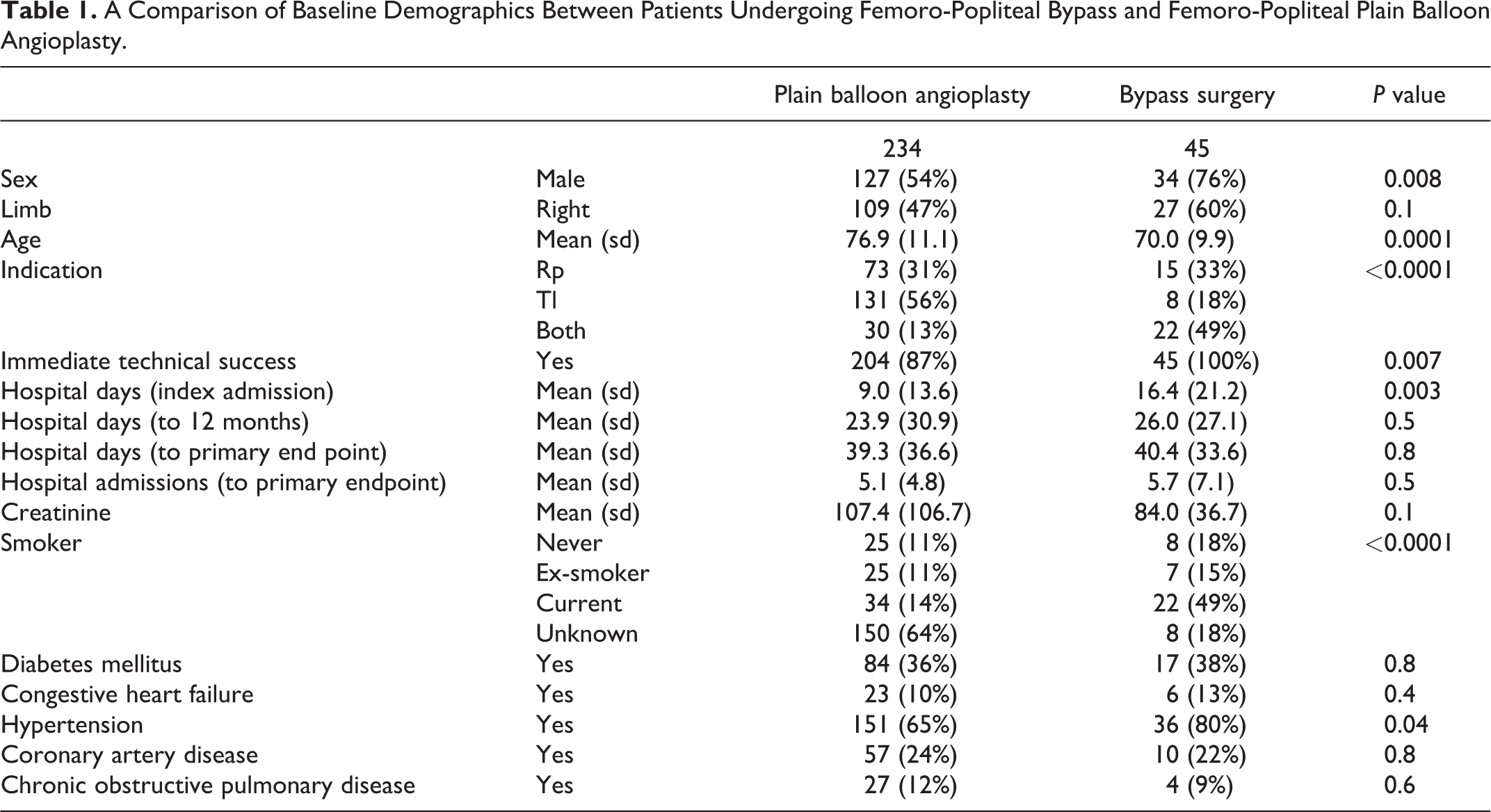
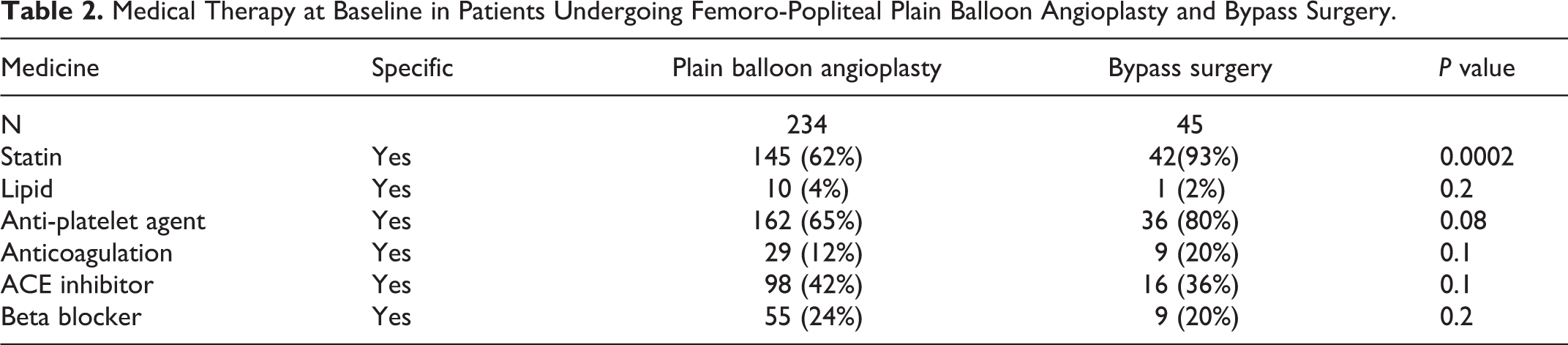
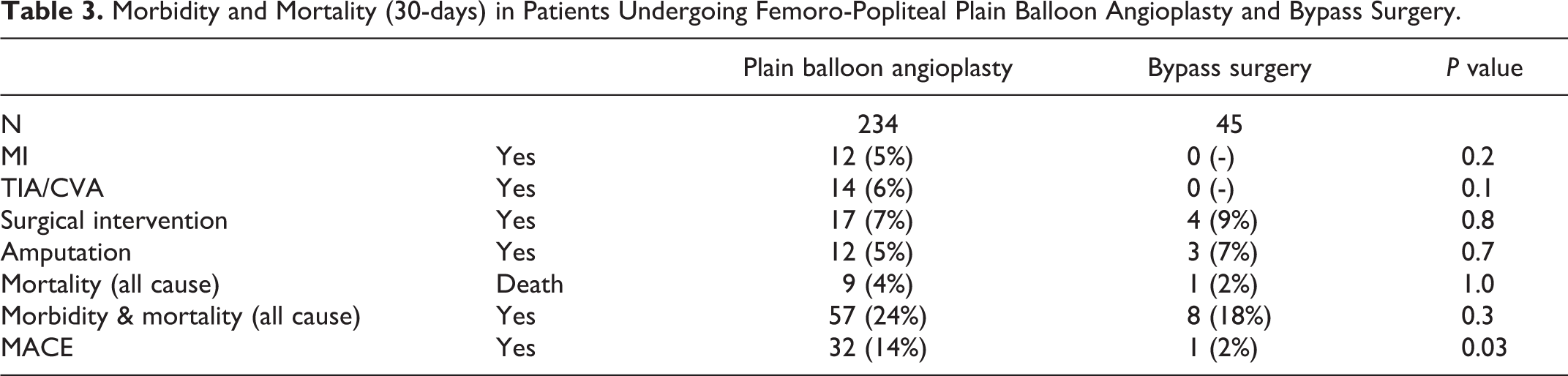
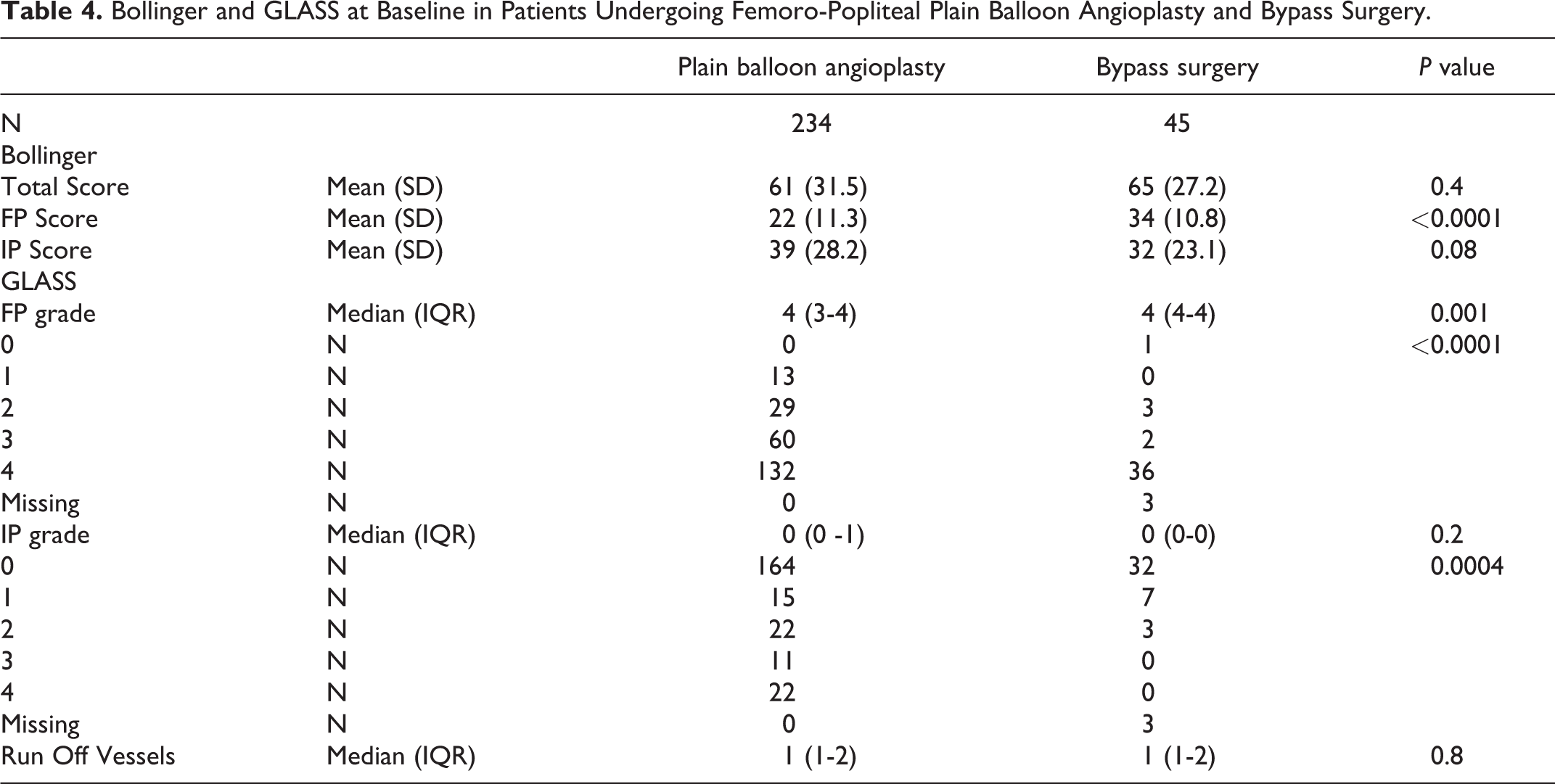
There were 234 (84%) and 45 (16%) patients who underwent PBA and BS respectively (Table 1). PBA patients were significantly older (77 vs 71 years, P = 0.00) and more likely to be female (28% vs 45%, P = 0.026). Rates of tissue loss and baseline medical status were similar between the 2 groups. Fewer patients in the PBA group were receiving best medical therapy (BMT) (Table 2). Immediate technical success was better for BS than PBA (100% vs 87%, P = 0.007). Index hospital stay was shorter for PBA than BS (9.1 vs 15.6 days, P = 0.035). There was no difference in the number of hospital days or admissions out to 12 months, or until primary endpoint. Morbidity and mortality out to 30-days were similar except for MACE, which was lower after BS (2% vs 13.5%, P = 0.021) (Table 3). The anatomic extent and severity of arterial disease was significantly worse in the BS as demonstrated by Bollinger and GLASS (Table 4). Out to 7 years AFS (28% vs 29%, HR 0.96, 95% CI 0.64-1.45, P = 0.8), LS (76% vs 73%, HR 1.26, 95% CI 0.65-2.44, P = 0.5), OS (34% vs 29%, HR 0.81, 95% CI 0.52-1.27, P = 0.4), MALE (50% vs 50.0%, HR 1.16, 95% CI 0.71-1.88, P = 0.6) and FFR (58% vs 62%, HR = 0.96, 95% CI 0.52-1.77, P = 0.9) was not significantly different between the PBA and BS groups (Figures 1–5).
A Comparison of Baseline Demographics Between Patients Undergoing Femoro-Popliteal Bypass and Femoro-Popliteal Plain Balloon Angioplasty.
Medical Therapy at Baseline in Patients Undergoing Femoro-Popliteal Plain Balloon Angioplasty and Bypass Surgery.
Morbidity and Mortality (30-days) in Patients Undergoing Femoro-Popliteal Plain Balloon Angioplasty and Bypass Surgery.
Bollinger and GLASS at Baseline in Patients Undergoing Femoro-Popliteal Plain Balloon Angioplasty and Bypass Surgery.

Comparison of amputation free survival following femoro-popliteal bypass surgery and plain balloon angioplasty for chronic limb-threatening ischemia in a series of patients treated 2009-2014.

Comparison of limb salvage following femoro-popliteal bypass surgery and plain balloon angioplasty for chronic limb-threatening ischemia in a series of patients treated 2009-2014.

Comparison of overall survival following femoro-popliteal bypass surgery and plain balloon angioplasty for chronic limb-threatening ischemia in a series of patients treated 2009-2014.

Comparison of freedom from re-intervention following femoro-popliteal bypass surgery and plain balloon angioplasty for chronic limb-threatening ischemia in a series of patients treated 2009-2014.

Comparison of major adverse limb events following femoro-popliteal bypass surgery and plain balloon angioplasty for chronic limb-threatening ischemia in a series of patients treated 2009-2014.
Discussion
Our key conclusion from this study is that important short, medium and long-term clinical outcomes following FP BS and PBA for CLTI in our unit have not changed significantly, in either absolute or relative terms, in the 10 years following the BASIL-1 trial. We believe, therefore, that the results and conclusions of BASIL-1 remain relevant to our current practice and should inform our preferred revascularization strategies for CLTI. Specifically, current and other previously published data do not support the mantra that improvements in endovascular technologies and expertise have translated into better longer-term clinical outcomes for patients with CLTI since patients were randomized in BASIL-1.6,7,16-18
Although comparison between RCT data (BASIL-1) and contemporary data are limited we have shown in our previous publications that contemporary clinical outcomes in both PBA and BS in the FP segment are significantly worse now than those observed in BASIL-1. In patients undergoing BS, both survival (HR 1.66, 95%CI 1.00-2.74, P = 0.05) and limb-based outcomes (MALE, HR 1.93, 95%CI 1.15-3.22, P = 0.01) were significantly worse in the contemporary series. 17 Survival in those undergoing contemporary endovascular intervention was inferior to that observed in BASIL-1 (HR = 0.58, 95% CI: 0.44 to 0.76, P = 0.0001) while there was no improvement in limb-based outcomes (MALE, HR = 1.02, 95% CI: 0.76 – 1.37, P = 0.9) (unpublished data).
In this study those treated with BS had significantly worse FP Bollinger and GLASS scores, suggesting an increased burden of disease in those patients treated with BS. Interestingly there was not a significant difference in disease burden compared to those treated in BASIL-1. Thus, the severity and complexity of disease treated has not worsened in this time. This supports the hypothesis that in our center only those patients who are deemed very unlikely to have successful endovascular intervention are being considered for BS.
Although out to 7 years clinical outcomes are equivalent, in terms of survival, there seems to be a trend to improved mid-term survival for patients undergoing BS. This may be as a result of more comprehensive use of so-called best medical treatment (BMT) (statin therapy 93% vs 62%, P = 0.0002, antiplatelet therapy 80% vs 65%, P = 0.08), or the older age of the patients in the PBA group. However, interestingly this trend was not observed when comparing the CS against the B1 cohort.
We must recognize the limitations of this study; the bypass group has small numbers (although reflective of the general spread of interventions in most centers) and may under/overestimate treatment effect. Single center studies are limited by local practice, expertise and pressure on healthcare resources, questioning generalizability. Finally, the only endo intervention considered here was PBA ± bailout BMS, in many other countries atherectomy and drug eluting devices are used as standard practice and may provide different results (although no independent randomized data supports this as yet).
It seems likely, therefore, that were BASIL-1 to be repeated now, similar results would probably be obtained and conclusions drawn. In other words, what evidence we have suggests that endovascular intervention should still be reserved for those patients who are not suitable for BS either because they do not have an adequate venous conduit or because they have co-morbidities that are thought to preclude open surgery. The clinical superiority of BS over endovascular intervention appears to be especially marked in patients with advanced limb threat 20 as well in those where the target artery path (TAP) is heavily diseased. 21 The results of RCTs such BASIL-2, BASIL-3, and BEST-CLI,14,22,23 where patients can be stratified by level of limb threat and anatomic severity of disease, are urgently required to improve the evidence base underpinning the management of CLTI. In terms of our own practice, current and other previously published data from our unit have led us to conclude that our revascularization pendulum has swung too far in favor endovascular therapy. Specifically, a 5:1 ratio in favor of PBA versus BS no longer looks appropriate.
Footnotes
Declaration of Conflicting Interests
The author(s) declared no potential conflicts of interest with respect to the research, authorship, and/or publication of this article.
Funding
The author(s) received no financial support for the research, authorship, and/or publication of this article.
