







Abstract
Collaboration is widely recognized as essential for mitigating resource dependency and effectively fulfilling public responsibilities. Meanwhile, the use of information technology is expected to enhance communication and strengthen interactions among collaboration participants. Given the substantial annual investments in IT and collaboration initiatives, public managers need to understand how technology, particularly collaborative tools, can be leveraged to achieve better collaboration outcomes. This case study examines the use of collaborative technology in an intraorganizational collaboration context, employing a mixed-methods approach that begins with an experiment followed by semi-structured interviews. The findings reveal that the use of collaborative technology alone does not guarantee improvements in the collaboration process or performance. Achieving desired outcomes requires a supportive organizational and technological environment characterized by sustained leadership, thorough planning, active stakeholder engagement, robust communication mechanisms, and a commitment to continuous learning. Most importantly, genuine collaboration and engagement from all parties involved are key to success.
Keywords
Introduction
Collaboration generally refers to two or more individuals or organizations working together to accomplish common goals. Collaboration may occur when there is diminishing importance of boundaries while an increasing need for interpersonal or interorganizational relations. Previous collaboration governance frameworks and models primarily depicted macro-level interorganizational collaboration dynamics (Ansell & Gash, 2008; Emerson et al., 2012). However, understanding such organizational-level collaboration typically requires knowledge of micro-level intraorganizational collaborative behaviors that form the foundations of these macro-level phenomena. Intraorganizational collaboration includes interpersonal (individual) and intergroup (group) interactions. Although the boundaries of these levels of individuals, groups, and organizations may not always be explicitly identified or mutually exclusive, interactions at each level have unique characteristics and requirements for collaboration design and management, thus calling for specific academic attention.
Effective collaboration management often necessitates a fundamental redesign of how individuals and organizations operate, what they contribute, and how they engage and interact with other collaborators at both individual and organizational levels. Such a fundamental restructuring often involves using information and communication technology (ICT), especially collaborative technologies, to facilitate communication and improve collaboration performance. ICT is an umbrella term that encompasses all the technologies, hardware, software, and applications that enable communication, data generation, information sharing, and global connectivity (Charfeddine & Umlai, 2023; Masanet & Matthews, 2010). In comparison, collaborative technologies refer to a subset of ICTs that specifically focus on supporting individuals, groups, and organizations to “work together on shared projects, tasks, and goals, regardless of their physical location” (Kulkarni et al., 2023, p. 135). Examples of collaborative technologies include knowledge creation/management software, information sharing software, synchronous virtual conference tools, and asynchronous collaboration project management platforms. These collaborative technologies demonstrate the potential to drive the top-down early-stage digital governance to a new period of collaboration, participation, and transparency. For instance, collaborative platforms like Zoom, Trello, Google Workspace (formerly G Suite), and Quip bridge geographical gaps and create virtual workspaces that feature instant interaction, seamless communication, flexible scheduling, inclusive decision-making, and accommodating work environment (Miroslavov, 2024; Yarooms, 2023). According to the Gartner, Inc. Digital Worker Experience Survey, since the pandemic began, there has been an accelerated use of collaboration tools such as virtual meeting platforms in the U.S., Europe, and Asia-Pacific workplace, from 55% of workers in 2019 to 79% of workers in 2021 (Gartner, 2021). In 2023, a survey of Microsoft indicated that 85% of their employees considered collaboration technologies crucial for supporting the new hybrid work environment (Microsoft, 2023).
Collaborative technologies are reshaping organizational operations and streamlining workspace management. However, effective collaboration management demands a deeper understanding of how these technologies interact with collaboration processes and overall performance. Does the adoption of such technologies necessarily lead to positive outcomes? Specifically, as hybrid and remote work models become increasingly prevalent, how can organizations leverage collaborative technologies to maximize their benefits and improve collaboration? Gaining insights into these questions could boost public organizations’ enthusiasm for pursuing innovative technology projects and encourage strategic design and management of such initiatives.
This study focuses on the relationship between the use of collaborative technologies and collaboration interaction and performance in an intraorganizational context. It asks the following research question: How and under what conditions does collaborative technology affect the collaboration process and performance? To answer it, this case study looked at a public organization’s collaborative technology project. The research site provided technological services and innovations in two U.S. midwestern local governments and was selected because of its innovative culture and nationally recognized leadership in technology innovation. Its collaborative technology project attempted to enhance organizational performance by transitioning from simple communication tools (i.e. emails, messages, and Google Docs) to a more unified project management collaborative tool (Quip). Following a mixed-methods research design, this study started with a pretest-posttest experimental intervention and then used its results to inform subsequent semi-structured interview questions. The final interpretations highlighted key prerequisites for effectively utilizing collaborative technologies to enhance collaboration processes and performance. These essential factors include but are not limited to, sustained leadership, thorough planning, active stakeholder engagement, robust communication mechanisms, and ongoing learning.
The following section reviews the existing studies on technology use, its effectiveness in public sectors, and the interplay between collaborative governance and technologies. After the review, an explanatory mixed-methods approach to data collection and analysis is presented. The Results section reports the experimental and interview findings separately, which are then integrated into the Discussion section. The study concludes by outlining key practical and theoretical implications and proposing a future research agenda in the area of collaboration and technology.
Literature review
Technology use and its effectiveness
Even before the advent of the Internet in the late 1980s, public organizations actively leveraged information technology to enhance operational efficiency and improve internal communication (Bozeman & Bretschneider, 1986; Bretschneider, 1990; Ho, 2002; K. L. Kraemer & Dedrick, 1997). By the late 1990s and early 21st century, technological advancements and the widespread use of computers fueled a rapid increase in ICT adoption within public organizations across the whole world.
Many studies during this period adopted a celebratory tone, highlighting technology’s potential to revolutionize public service delivery, enhance managerial effectiveness, and promote democratic values. Predictive models and frameworks emerged, such as staged models designed to describe, predict, and guide the evolution of technology in public organizations (Layne & Lee, 2001; Mergel & Bretschneider, 2013; Moon, 2002). Such overemphasis on technological changes resulted in a significant overlook of the organizational and administrative contexts of digital governance practices. Subsequent empirical studies later revealed that the actual progression through e-government stages, if such stages exist, is “neither as accelerated nor as simple as the models posit.” (Coursey & Norris, 2008, p. 532).
Meanwhile, information technology has predominantly been employed to reinforce existing administrative and political arrangements instead of defining a political system or leading the organizational transition process (Biancone et al., 2023; Hinkley, 2022; Richardson & Emerson, 2018). Similarly, when discussing the role of e-government in promoting citizen participation, scholars worldwide found that despite ICT’s explosive adoption, only a few local governments had adopted e-democracy initiatives, among which few have achieved their intended goals, and even fewer local governments planned to adopt e-democracy shortly (Federici et al., 2015; Gupta & Biswas, 2021; Norris & Reddick, 2013). For example, Zou et al. (2023) argued that “technocraticism prevails in the research and practice of e-government. . . the use of ICT does not automatically foster greater participation, nor does it lead to good governance.” (p. 3). It becomes clear that the process and impacts of ICTs on the public sector have been more of a gradual evolution rather than a revolutionary transformation (Lindquist & Huse, 2017; Norris, 2010; Stratu-Strelet et al., 2021).
Despite the practical backlash, technology adoption in government and its potential effectiveness has long been a shared interest of many scholars and practitioners (Maclean & Titah, 2021; Mas & Gómez, 2021). As of June 13, 2024, the E-Government Reference Library v20.0 (EGRL) contains 19,932 references on digital government, digital governance, and digital democracy (Scholl, 2024). A search of the EGRL v20.0 using “performance” as the keyword revealed a diversity of topics, including website quality and usability, e-governance performance, e-service effectiveness, e-project efficiency, public value creation and integration, public crisis management, success rates of e-project implementation, and the performance of intelligent decision-making (Nam, 2019; Mao et al., 2021; Panagiotopoulos et al., 2019; Schuppan, 2009; Sharma et al., 2021; Twizeyimana & Andersson, 2019). These studies, unsurprisingly, indicated a broad set of factors practically impacting technology effectiveness on government operation, transformation, and value creation. Examples of these influential factors are users’ demographic conditions and IT experience, their perceived technology usefulness and risks, motivation of employees, cultural and political situation, leadership, IT governance, organizational process and decision making, resources, task-technology fit, collaboration within or across organizations, among others.
Collaboration at different levels and potentials of technology
Collaboration generally refers to two or more individuals or organizations working together to accomplish common goals (Batory & Svensson, 2019). Governance describes the decision-making process that implements new initiatives and resolves issues (Biancone et al., 2023). Collaborative governance is thus a process involving multiple individuals or organizations working on collective decision-making and problem-solving.
Extensive public administration research has explored the mechanisms, challenges, and effectiveness of collaborative governance, particularly in addressing emerging issues such as emergency management, healthcare, environmental protection, and immigration, which demand cross-boundary cooperation and collective problem-solving (Biancone et al., 2023; McNaught, 2024; Susha & Gil-Garcia, 2019). These studies primarily concentrated on interorganizational collaborative efforts spanning organizational boundaries, supported by frameworks and models that illustrate the dynamics and processes of collaboration. For example, Emerson et al. (2012) referred the collaboration process and dynamics to principled engagement, shared motivation, and capacity-building for joint action. According to Ansell and Gash (2008), influential factors of the collaboration process include policy and organizational agreement, levels of conflicts or trust, shared understanding, communication, leadership, external demands, resources, interdependence, and incentives.
Another common collaboration scenario involves individuals within the same department or across several departments within an organization working together to complete a task (Mac McCullough et al., 2020; Reeb, 2023). This intraorganizational collaboration environment differs from interorganizational conditions in several ways, such as the presence of a baseline level of trust among members, the greater likelihood and frequency of face-to-face interactions, and a shared understanding of the organization’s mission, goals, culture, and plans. For instance, collaboration at the individual and group level is less hindered by conflicting missions or values and a lack of commitment. Instead, it allows for more focused planning and substantive communication among participants. Insights from conflict resolution and psychology literature are particularly relevant at this intraorganizational level, whereas organizational ecology and contingency theory offer greater applicability to collaboration in interorganizational settings.
No matter what level it is, measuring collaboration performance could be challenging given the conceptual and methodological complexity and the normative appeal of using collaboration to solve problems (Douglas & Ansell, 2021; O’Leary & Vij, 2012). Also, the inconsistency in operationalizing and measuring key aspects and effectiveness of collaboration, the difficulty in observing and evaluating the evolving collaboration performance over time, the biased self-reported perceptions on collaboration performance, and the diverging perspectives of different collaboration participants and organizations are all challenging the practice of collaboration performance measurement (Emerson & Nabatchi, 2015; Moynihan et al., 2020; Poocharoen & Wong, 2016).
Another challenge in collaborative governance is the relationship between governance processes and technology adoption, particularly with advancing collaborative technologies (Barandiarán et al., 2019; Bolívar, 2018). Studies on this topic have investigated areas such as healthcare, water management, and smart city development, with the common assumption being that collaborative technologies can engage potential collaborators, enhance transparency, accessibility, and data-driven decision-making in collaborative governance (Batory & Svensson 2019; Gilman, 2017; Hinkley, 2022). Collaborative technologies are information communication tools that enable sharing, exchanging, and integrating data across boundaries among individuals and organizations (Sun et al., 2022). They also facilitate interactions by accelerating the speed and flow of information, both synchronously and asynchronously. On the other side, collaboration programs call for technologies to meet the growing need for information and knowledge exchange and integration. Collaboration managers are expected to capture the attention of individuals and organizations, organize information flow, and promote knowledge sharing through both formal and informal communication channels in addition to traditional face-to-face interactions (Biancone et al., 2023; Hinkley, 2022). This demand becomes a key driver for adopting collaborative technologies, which offer significant benefits in breaking down boundaries and speeding up information exchanges.
The COVID-19 pandemic accelerated technology adoption across the public sector, highlighting the potential of digital tools to facilitate intraorganizational and interorganizational collaboration and remote service delivery during crises. While these tools present opportunities to enhance collaborative governance, the successful integration of technology into such processes requires a deeper understanding of the dynamics and relationships between technology use and the collaboration process and performance (Biancone et al., 2023; Chen & Lee, 2018; Mitchell et al., 2015).
Consequently, this study explores the relationship between the use of collaborative technology and the collaboration process and performance within the context of intraorganizational collaboration. After examining this relationship, the study will further investigate the conditions critical to effectively using collaborative technology. As this case study seeks to provide empirical evidence of these relationships, it intentionally refrains from proposing conceptual frameworks or hypotheses at the outset. However, a more robust framework, grounded in the study’s findings, is expected to emerge by the conclusion of the paper.
Methods
This study utilizes the case study method due to the pursuit of rich and embedded data and the interest in the role of collaborative technologies in internal organizational collaboration. Though limited to interpersonal collaboration and the use of a specific collaborative technology tool, this case study allows for an in-depth exploration of technology adoption and its effectiveness in accomplishing interpersonal-level collaboration tasks. Meanwhile, it provides an opportunity to investigate the role of the organizational and technological environment of technology use in public organizations. Using a mixed-methods approach, this case study collects more rigorous and epistemologically sound data than qualitative or quantitative research alone, thus advancing our understanding of the research issue.
Data collection and analysis
The research site is an interlocal government technology commission in the Midwest of the U.S. that centrally provides technical support and consulting to approximately 70 governmental entities and over 5,000 dedicated government workers across 120 locations. As a nationally recognized leader in government IT management, the organization is dedicated to providing high-quality, cost-effective technology services and facilitating technology innovations across local government departments. The organization was selected to participate in this study primarily due to its innovative organizational culture and committed leadership in technological advancements, such as the use of collaborative technologies.
The study began with face-to-face conversations with the organization’s CIO, program manager, and division directors to establish rapport, understand the context, explain the study’s purpose, and seek cooperation. This phase lasted about 8 months, culminating in a precise study procedure and timeframe, including participating groups, intervention, and instruments. Figure 1 illustrates the detailed research design and data collection process. Specifically, the organization aimed to enhance performance by transitioning from simple communication tools (i.e. emails, messages, and Google Docs) to a unified collaborative project management tool (Quip), which was identified as the intervention in this study. Among the several divisions in the organization, two (the Administrative Division and Technical Division) were recommended by the organizational leadership to participate in this study. Specifically, the Administrative Division manages projects, processes, and resources that ensure smooth department operations. Employees in this division rely on strong organizational, managerial, and interpersonal communication skills to carry out their jobs, which emphasize long-term planning and maintaining organizational cohesion. Technical Division, on the other hand, specializes in tasks that directly contribute to the organization’s core products, services, or technical infrastructure. Employees in this division focus on innovation and technical problem-solving. Their work requires expertise in specific technical fields and often involves collaboration with other teams to develop solutions or complete projects. Unlike the Administrative Division, the Technical Division is more dynamic and innovation-driven, requiring more leadership and technological support.
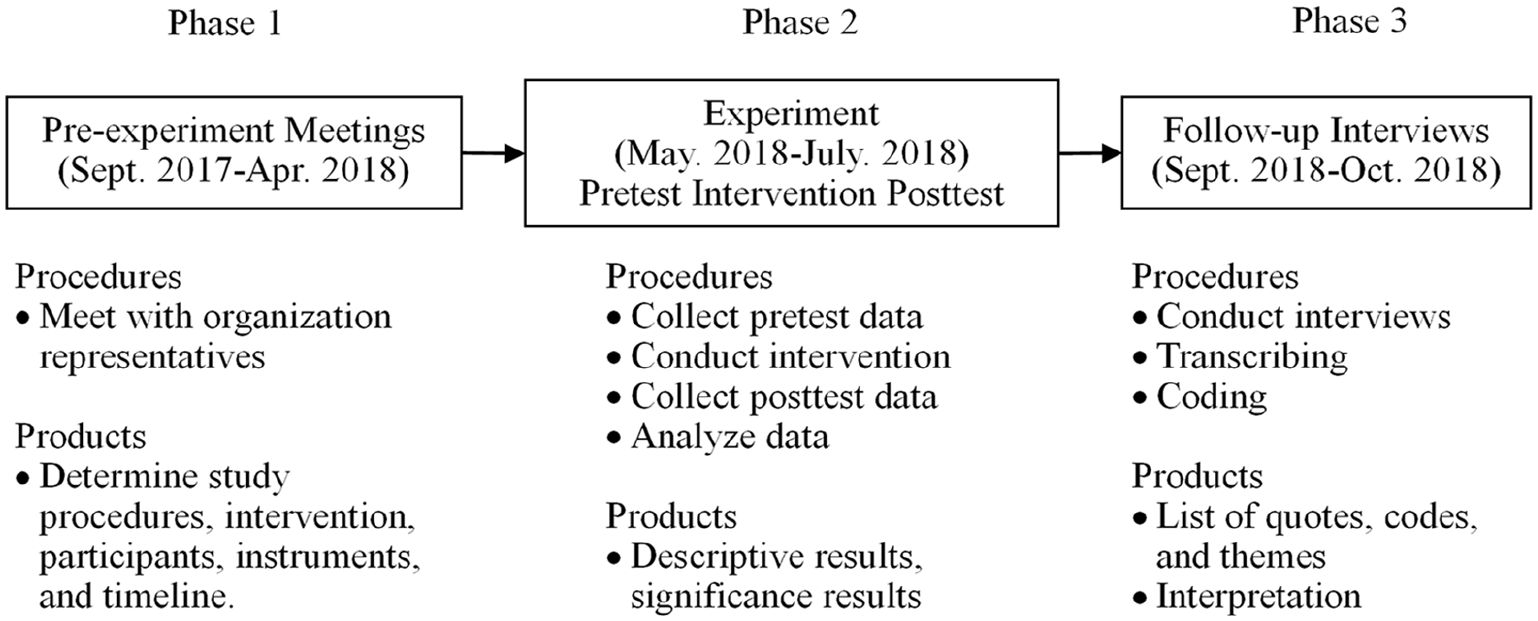
Design of the case study.
Under each division, two departments were randomly assigned to the treatment and control group by tossing a coin. This procedure ended with four participating departments: the PMO department and Cloud department were treatment groups (11 participants), and the Finance department and Oracle department were control groups (9 participants). All four departments were asked to do a departmental-level strategic planning task within 5 weeks. Back in the days before 2018, this department-level task was done biennially by each department head alone. Starting in 2018, the organization sought to reform its strategic planning process, shifting it from a task traditionally assigned solely to department heads to one that requires the active engagement of all department employees. To achieve this goal, participants in this study were asked to work collaboratively with colleagues from the same department to develop their departmental-level strategic planning reports.
At the quantitative stage, the focus is to explore How the new collaborative technology affects the collaboration process and performance? All groups participated in the pretest Qualtrics survey before the intervention. Web survey tools such as Qualtrics, compared with mail and telephone survey tools, have lower costs, are more efficient, and create more complex questionnaire designs (Newcomer & Triplett, 2015). After the pretest, participants in treatment groups were given a new collaboration software, Quip, to do a departmental-level strategic planning task. Like other collaborative project management tools, Quip is designed to facilitate teamwork, streamline project workflows, and enhance communication among team members. Quip combines documents, spreadsheets, checklists, and chat into one platform, providing a real-time communication solution that promotes accelerated, connected, and transparent team collaboration.
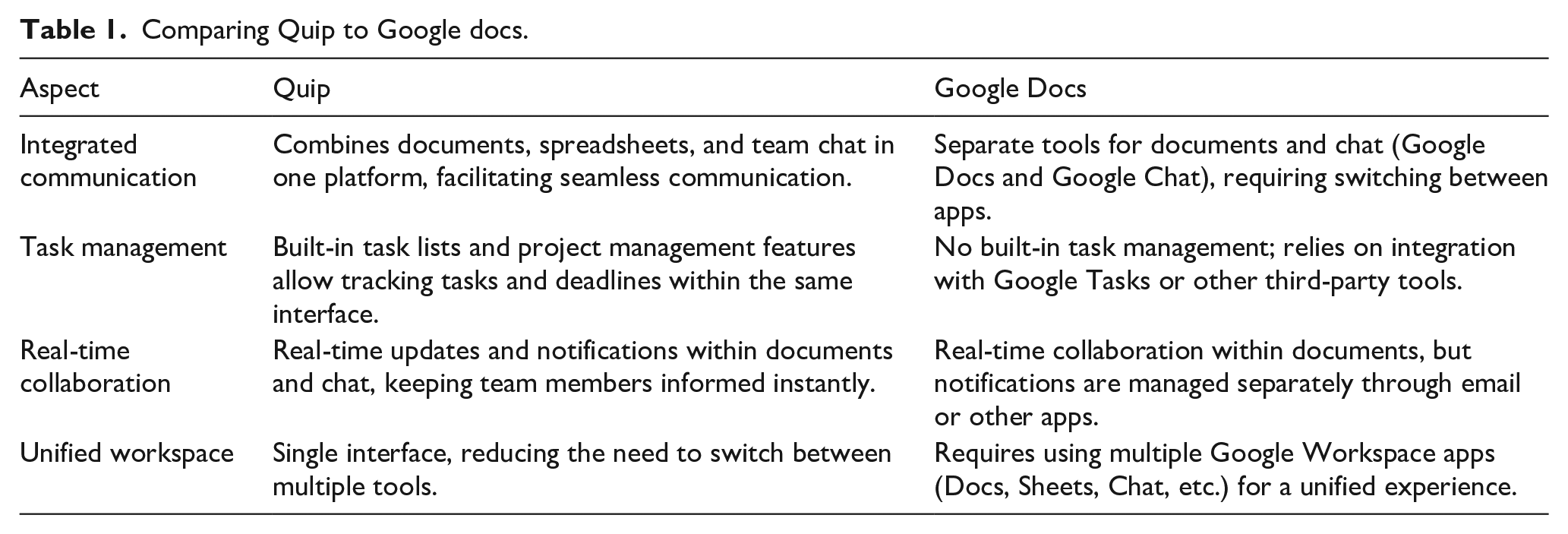
Participants in control groups were also invited to do the same task without receiving the new software Quip. Instead, they continued to utilize emails and Google Docs, the tools that had been used in the past for the task. Table 1 demonstrates that Quip offers several advantages over Google Docs in areas like integrated communication, task management, real-time updates, and a unified workspace for project management and team collaboration.
Comparing Quip to Google docs.
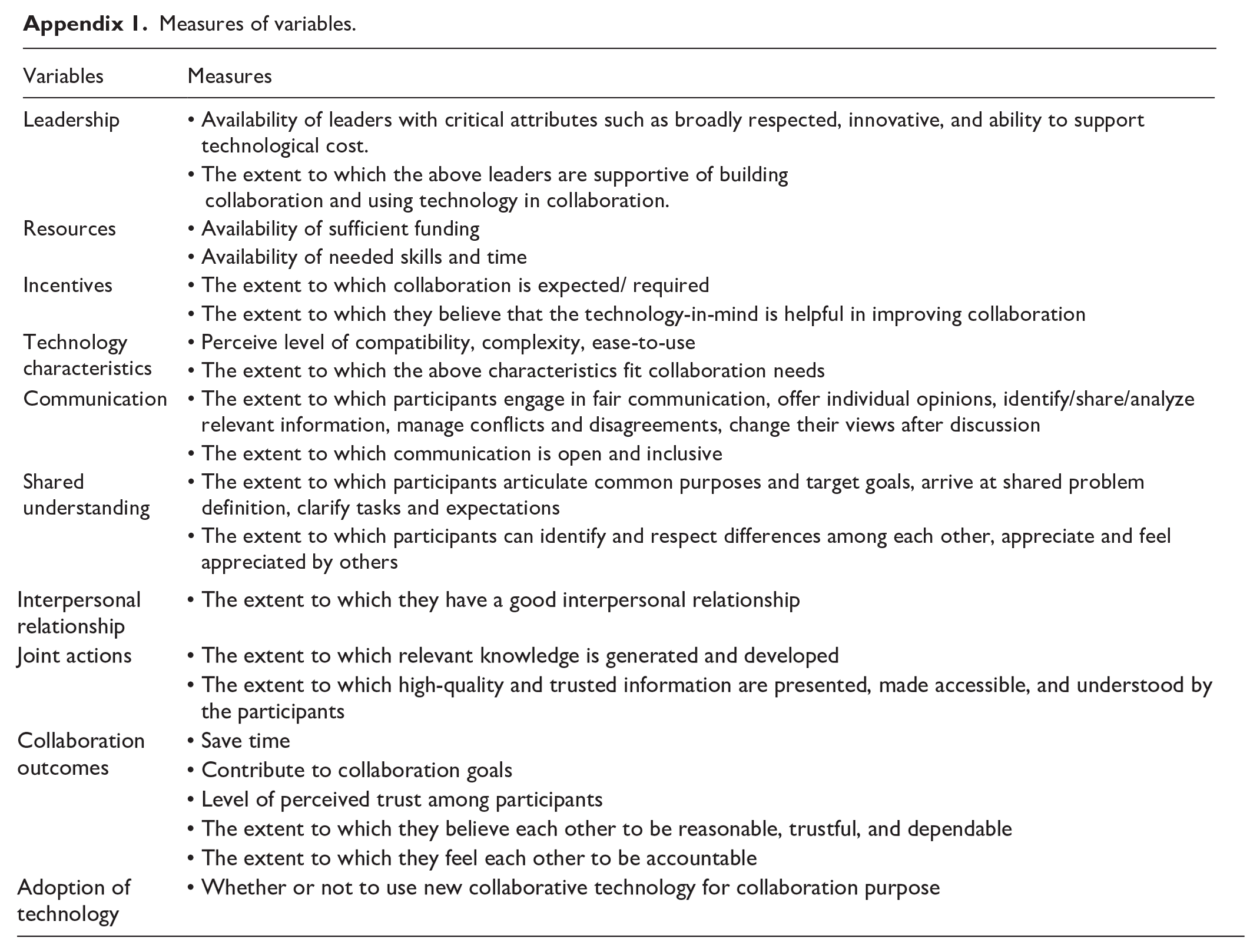
During the experiment, treatment group participants received tutorial videos introducing the features and functions of the new collaborative technology Quip. Since Quip is easy to use, standardized training sessions were not provided for treatment group participants. Instead, they were asked to watch tutorial videos at their own pace for self-training. After 5 weeks, all groups participated in the posttest Qualtrics survey to collect their perceptions of the departmental and technological environment and the role of technology they used to accomplish the task. Appendix 1 shows detailed measures built on insights from previous collaboration literature and public information management literature. Specifically, the interaction level of the collaboration process was measured using indicators such as communication, common understanding, shared knowledge, and interpersonal relationships. In addition, collaboration performance was evaluated on trust, accountability, time-saving, and contribution to achieving collaboration goals. The 10-level Likert Scale was used in the above measurement. Appendix 2 displays the specific survey questions investigated in the experiment.
The pretest and posttest surveys indicated how participants felt about using technology in interpersonal collaboration, such as the strategic planning task. However, they failed to demonstrate how participants utilized technology tools and why they perceived that way. To further explain the “how” and “why” questions, follow-up semi-structured interviews were conducted with all 20 survey participants in September and October 2018. Semi-structured interviews allowed for “a dialogue whereby initial questions are modified in the light of the participants’ responses and the investigator can probe interesting and important areas which arise” (Smith & Osborn, 2008, p. 57). At the beginning of each face-to-face interview, the interviewee was informed orally about the nature and purpose of the interview, the expected amount of time to complete the interview, and the investigators’ contact information. Detailed interview protocols can be found in Appendix 3. All interviews were recorded and transcribed except one with a treatment group participant. The average interview length was about 24 min; the shortest took 17 min and the longest took 43 min. Results of the interviews contributed to explaining the experimental results collected from the pretest and posttest surveys.
In analyzing the pretest and posttest survey data, the Wilcoxon Signed-rank Test and Paired-samples T-Test were conducted to see the overtime trend in treatment and control groups. When comparing treatment groups with control groups, the tests were Independent Sample T-test and Mann-Whitney U Test, depending on the normality of the data. Specifically, all normally distributed data were tested using the Independent Samples T-test. Mann-Whitney U Test does not assume normally distributed data, but it does assume that the distributions are non-normal in a similar manner, which is a homogeneity of variance assumption and has been tested using Levene’s Test when needed.
All interview recordings were transcribed and then open coded in MAXQDA12, one of the most popular qualitative data analysis tools. Open coding ensures codes and themes emerge directly from the raw data, thus increasing the work’s validity.
Validity, reliability, and ethical issues
For surveys, all questions were first reviewed and discussed with the organization’s CIO and program manager to ensure the survey questions’ content validity and the measurements’ accuracy. The resulting questionnaires were then tested by the organization’s CIO, program manager, and division directors. Based on their comments and suggestions, modifications were made to the wording and question structure, and the end products became the questionnaires used in the pretest and posttest surveys. The surveys were deemed reliable as the pretest results revealed identical demographics (e.g. age, gender, and job experience) and comparable initial performance levels across all participating groups. Meanwhile, an analysis of the overtime trend showed that the groups’ overall perceptions of collaboration and the organizational and technological environment remained essentially unchanged following the intervention.
For interviews, several measures were taken to address the main validity issues in qualitative research (Rubin & Rubin, 2012). For example, to ensure the interviewees were knowledgeable about the research problem, all interviewees were participants in the pretest and posttest surveys in which they reported their experiences and perceptions before and after the intervention. To ensure they were speaking from firsthand experience, at the beginning of each interview, they were asked about their personal experiences of doing the planning task in the past and 2018. They also recalled working with/without the new technology tool. To ensure they were not just showing their best faces, interviewees were encouraged to discuss problems or challenges and make improvement suggestions. All interviews were conducted privately in an organizational meeting room between an interviewee and the interviewer(s).
This study also emphasized ethical issues such as voluntary involvement, informed/implied consent, confidentiality, and data security. At the beginning of each survey and interview, participants were notified literally or orally about the nature and purpose of this study. The perceived usefulness of the study became the primary incentive for employees to participate as they expected to see issues with the use of collaborative technology, how to improve working conditions, and the ultimate collaboration performance in their departments. Participants’ signatures in surveys and their completed interviews served the purpose of implied consent. To protect participants’ privacy and anonymity, it was guaranteed that the raw data from surveys and interviews would not be provided/reported to their department heads or organization managers. Meanwhile, information about individual participants’ names, departments, and job positions were hidden in writing the results in the next section. All the data were secured in a password-required folder.
Results
The above mixed-methods design explains how and under what conditions collaborative technology affects the collaboration process and performance. After experimental and interview data collection and analysis, the following results indicate that collaborative technology use does not guarantee good collaboration process and performance. Instead, desired results would require a supportive organizational and technological environment such as sustained leadership, planning, stakeholder engagement, communication mechanisms, and learning.
Negative experiences with the new collaborative technology
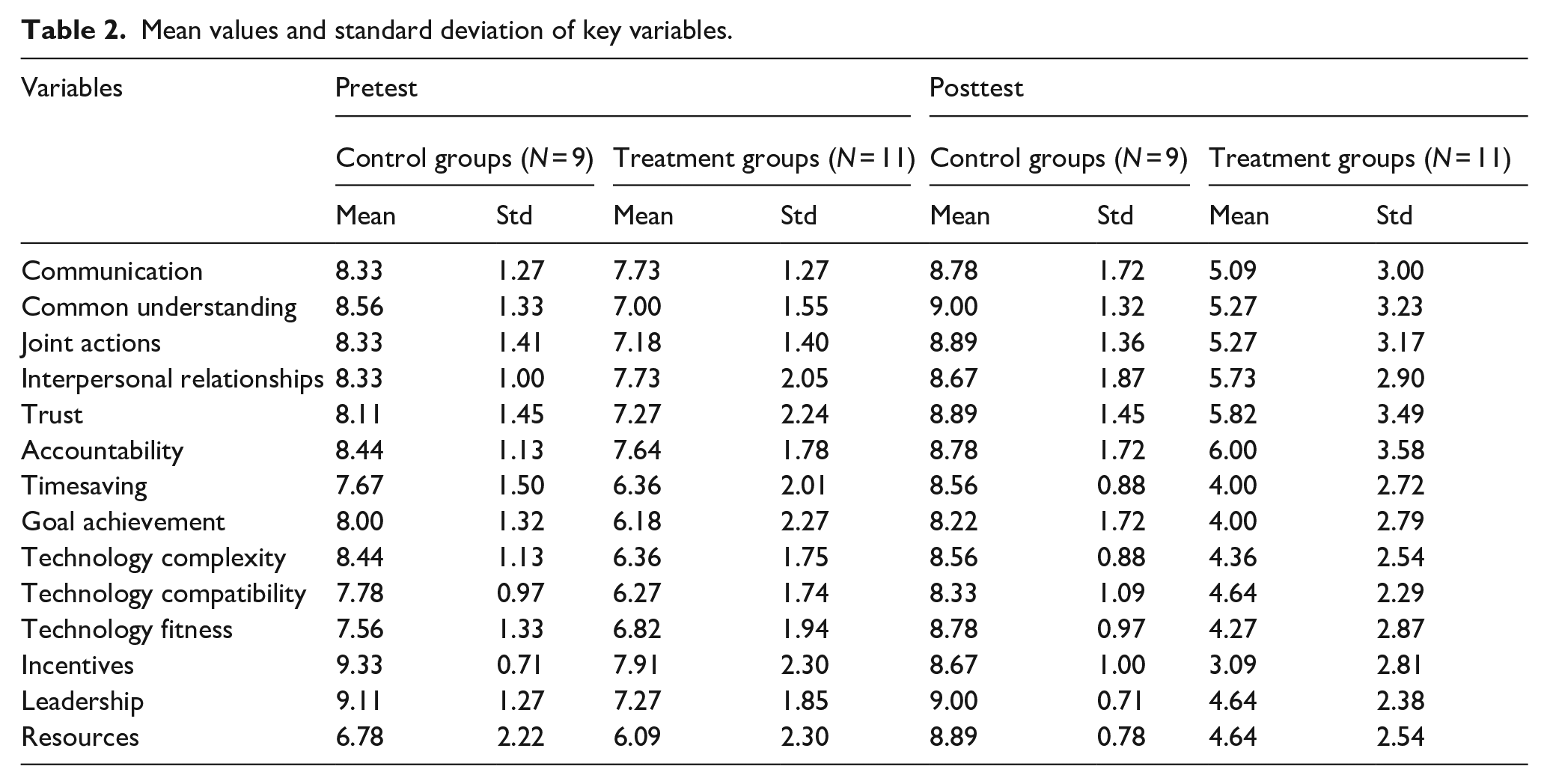
Descriptive statistics in Table 2 and comparison in Figure 2 displayed the results before and after the intervention. When looking at the overtime trend, control groups in the year of the study reported a significantly (p < .05) increased level of trust in using Google Docs (z = 2.333) and an improved feeling of fitness between Google Docs and task needs (t = 2.630). Treatment groups, however, had a significantly (p < .05) decreased level of communication (t = −2.785) and shared knowledge over time (t = −2.345). The new collaboration software, Quip, was reported to be significantly (p < .05) less easy to use (t = −2.204), incompatible with existing systems (t = −2.463), and could not fit well with the collaboration task needs (t = −2.410). It was statistically less needed in doing the assigned task (t = −2.807), supported by department leadership (t = −2.609), and ineffective in saving time (t = −3.086) and achieving task goals (t = −2.915).
Mean values and standard deviation of key variables.
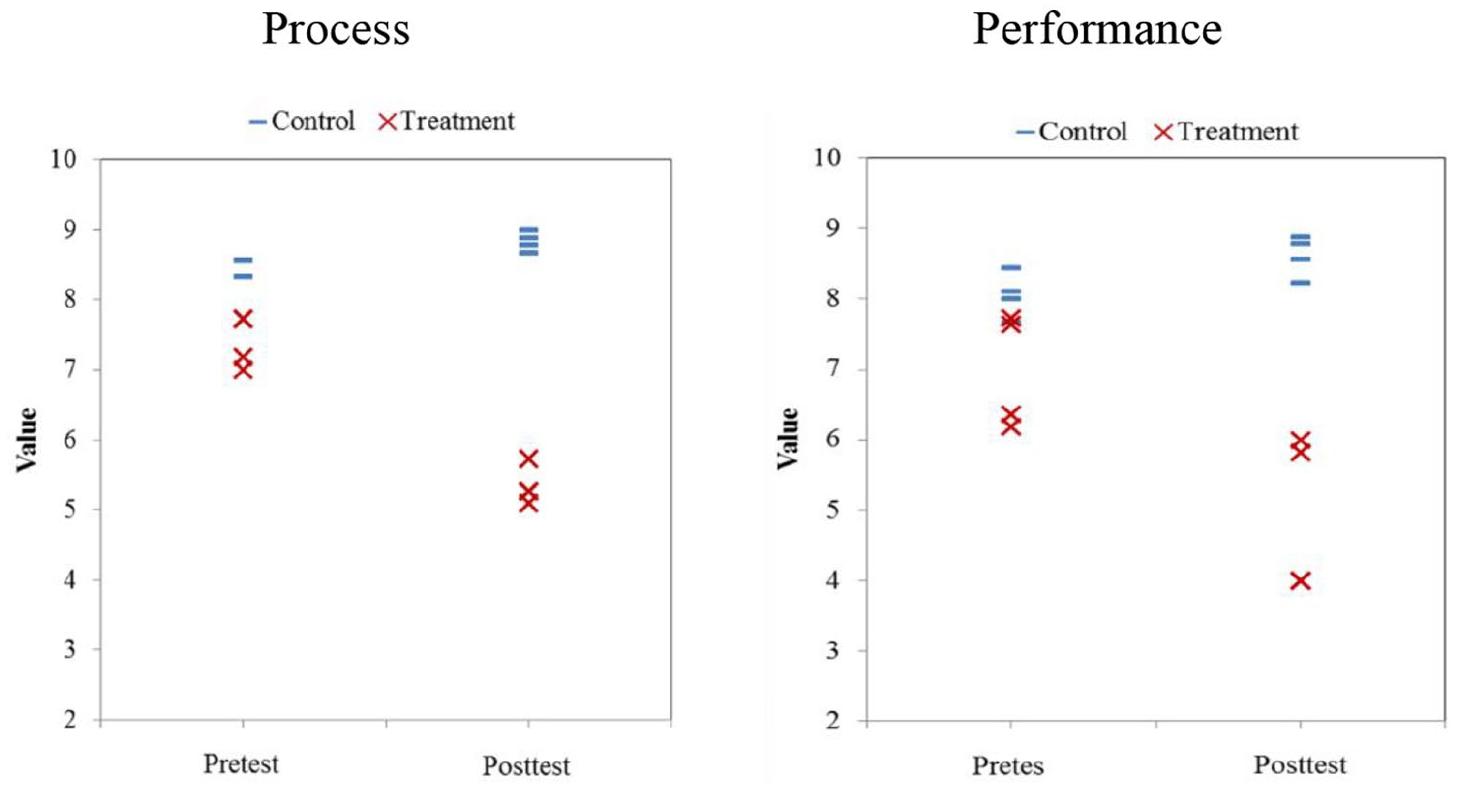
Treatment groups and control groups in pretest and posttest.
When comparing the treatment groups to the control groups, descriptive statistics in Table 2 showed that numerically, control groups scored higher than treatment groups regarding the collaboration process and performance, both before and after the treatment. The Independent Samples T-test and Mann-Whitney U Test were conducted to test if these differences are statistically significant. Specifically, the Independent Samples T-test showed that treatment groups had a significantly lower rating of common understanding before the intervention, F(1, 18) = 0.461, t = −2.375, p < .05. Also, treatment group participants reported an afterward negative evaluation of “the new collaborative technology could save collaboration time,” F(1, 18) = 4.647, t = −4.801, p < .01.
The homogeneity of variance test of non-normally distributed data showed that posttest trust, communication, common understanding, and shared knowledge had a p-value less than 0.05, which implies the null hypothesis of equal distributions between the two groups has been rejected. Therefore, rather than using the Mann-Whitney U Test, the analysis used an Independent Samples T-test with bootstrapping (based on 1,000 bootstrap samples) at a 95% confidence interval as the estimation technique. The results in Table 3 showed that treatment groups had a significantly lower level of posttest trust (t = 2.652), communication (t = 3.212), common understanding (t = 3.489), and shared knowledge (t = 3.421) than control groups.
Independent samples T-test with bootstrapping.
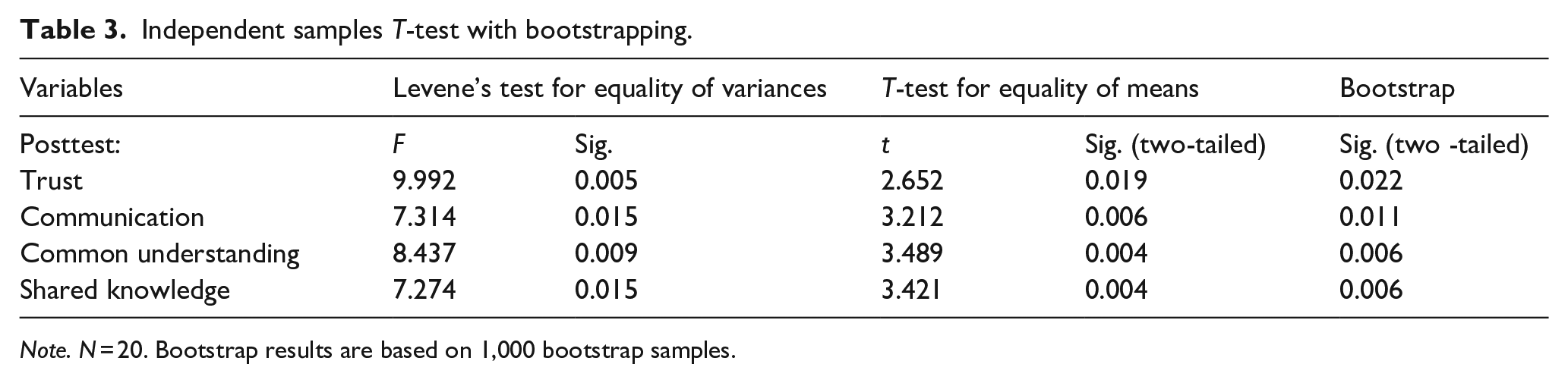
Note. N = 20. Bootstrap results are based on 1,000 bootstrap samples.
All other measures of collaboration performance and process were tested using the Mann-Whitney U Test. Treatment groups reported significantly worse feelings about the after-treatment interpersonal relationship (z = −2.870, p < .01) and whether the new collaborative technology contributed to achieving collaboration task goals (z = −2.389, p < .05).
To conclude, treatment groups had a significantly lower rating of common understanding of the collaboration task before the test. After the intervention, compared to emails and Google Docs used by control groups, the new collaboration software Quip used by the treatment group negatively affected the trust, communication, common understanding, shared knowledge, and interpersonal relationships among employees. It was also less effective in saving collaboration time and contributing to achieving collaboration goals. Figure 2 helps us understand these comparison results between treatment groups and control groups.
Is there a significant difference between the technological and organizational environments of control and treatment groups? The Independent Samples T-test results in Table 4 showed that in doing strategic planning in the past, treatment groups felt the technologies they used were significantly less easy to use and incompatible with existing systems. Unfortunately, the new collaboration software Quip did not change their perceptions. Also, it failed to fit the collaboration task needs well, not to mention the concerns with the funding. What’s more, the Independent Samples T-test with bootstrapping showed that the treatment group had a significantly lower level of posttest technologies’ ease to use (F(1, 18) = 7.471, t = 5.109, p < .01) and leadership support (F(1, 18) = 8.369, t = 5.782, p < .01) than the control group.
Independent samples T-test.
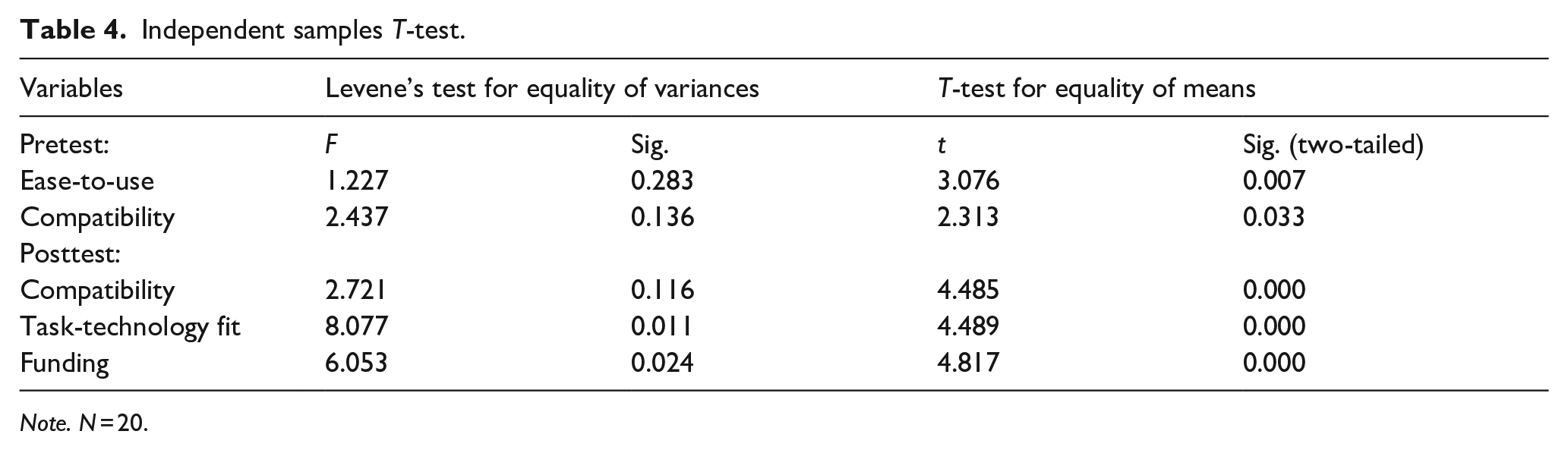
Note. N = 20.
All other measures of the technological and organizational environment were tested using the Mann-Whitney U Test. Treatment groups reported a significant negative perception of leadership in using technologies for strategic planning before the intervention. After using the new collaboration software Quip, they felt it was less needed to do the task.
To summarize, in doing strategic planning in the past, the treatment group reported less supportive leadership and the technologies they used were significantly less easy to use and incompatible with existing systems. Such pretest survey results underscored the treatment groups’ hope for more decisive leadership and user-friendly technology tools. Unfortunately, the condition did not change much even with the new collaborative software Quip, which they believed was even less easy to use, incompatible with existing systems, incapable of fitting the task needs well, and not needed and supported by department leadership. Also, the potential funding issue caused a big concern among treatment group participants.
Why and how?
The above experiment results inspired the research interest in understanding Why the use of new collaborative technology failed to improve the interpersonal collaboration process and performance? How might such a result be affected by the organizational and technological context? Face-to-face semi-structured interviews with all experiment participants were then administered to explore the above “why” and “how” questions.
Surprisingly, employee participants in treatment groups complained that they did not see any collaboration in doing the task by saying, “I don’t have an opportunity to really sit down and plan.” “I was not involved in the planning of it.” This resulted in limited experience in using the new collaborative technology. For example, some of them said that, “organizationally, we just didn’t come together to use it (Quip).” “Never used it.” “For the documents that were in Quip, I reviewed them, but I don’t know if I put any edits within the documents themselves.”
In contrast, control group participants were glad to see encouraged engagement and inclusive participation in accomplishing the assigned strategic planning task this year. They shared that “we had a meeting, in person first. . .put it out for everybody and then took feedback.” Then, “we just did it in our normal. . .team meeting. . .We reworded a few things and switched a few things around.”
Several factors were identified as roadblocks to using the new collaborative technology in treatment groups. For example, treatment group interviewees mentioned that they do not have time to learn it, “I had a difficult time finding time to understand how to use this.” This might be because they did not see the needs or benefits of using it, “it just wasn’t enough advantage with Quip to make it worth that effort.” Another reason might be a lack of commitment and support they saw from the department leadership side. “[G]iven our time constraints, our manager was not actively soliciting that information.” Reasons like no time to learn, no need to learn, and lack of leadership support helped explain why they reported limited knowledge about the new technology, “I can learn something, but I don’t know enough now.” Together, these factors brought in a possible misunderstanding of the features and values of the new collaborative technology, while some insisted that “it didn’t match our business need.”
In fact, participants who did have certain experiences with the new collaborative technology spoke highly of it. “Yeah, it was pretty easy from what I looked at, and saw. . .it was pretty compatible with what I saw, and what they were really using it for. . .it did everything I would want it to do.” “From a collaboration and communications standpoint, I liked it, if I can recall back when I used it. So, easy to access, easy functionality to get around, easy to download stuff.”
People without much experience with the new technology tended to avoid giving an evaluation regarding its effects. One interviewee said, “in my belief, it had little impact, just because we didn’t use it. Not that it couldn’t have, but we just didn’t.” Others were less willing to assess as they said, “I don’t know that I’d looked at it in enough detail to really come to and give you a truly honest assessment to say I see or did not see a weakness.” “I didn’t use it enough to be able to make a fair judgment.” This finding helped interpret the previously reported decreased level of overtime perceptions of treatment groups on the role of new collaborative technology in the collaboration process and performance. More importantly, it demonstrated a lack of interpersonal collaboration within treatment groups. This unexpected condition could impair the interests and incentives of participants; it also discouraged them from spending time on and using the new technology for collaboration purposes.
Looking forward, interviewees in both groups shared thoughts on ensuring an effective transition from old technology to a new one. The four most commented suggestions were stakeholder involvement, leadership, mechanisms of facilitating learning, and planning. Interviewees were interested in participating, “I think, if anything, getting everybody involved in the initial discussion was a good step.” From the participation, they could get “a little more ownership and a little more accountability, and a little more pride.” Interviewees also expressed strong expectations of sustained and supportive leadership throughout the collaboration project. “Leadership. Yeah, I think we didn’t have. And that wasn’t defined very well.” “[T]he manager’s insistence. . .So it’s both the expectation and follow-through from management to use the product. . .sustainable leadership.”
What’s more, they emphasized the importance of learning either via departmental training or self-learning, by saying “we need an additional understanding of the functionality” “[T]rain people. . .So we would need to identify what are our current needs, and what are our current requirements, and what of those requirements and needs are our current toolset not capable of meeting?” Besides, there is a need for a project plan that defines expectations, goals, roles, processes, and timeframe. “It’s just like having a project plan. You say: how are we going to communicate? How often are we going to do it? What’re our goals? What do we need to accomplish? Who’s responsible for what?”
Additionally, interviewees highlighted the significance of having face-to-face conversations, in addition to online communication. “[S]ome internal conversations that could’ve helped encourage a different level of participation. At least give it a shot. I don’t think we took those preparatory steps.” “We still expected to have a personal, just talking in the hallway type conversation. . .And then he edited within Quip.”
Discussion
Not surprisingly, using a mixed-methods approach that consists of an experiment and interviews demonstrates a more effective inquiry than using the quantitative or qualitative method alone. As indicated above, the experiment results showed that in conducting the interpersonal collaboration task, the new collaborative software Quip, compared to emails and Google Docs, hampered the trust, communication, common understanding, shared knowledge, and interpersonal relationships among employees. It was also less effective in saving collaboration time and contributing to achieving collaboration goals. What’s more, treatment group participants thought it was less needed and supported by department leadership, less easy to use, incompatible with existing systems, and incapable of fitting the task needs.
Such experimental results indicated almost a negative experience with the new collaborative technology. However, they failed to demonstrate how participants utilized the new collaborative tool and where their perceptions came from. Follow-up semi-structured interviews addressed the “how” and “why” questions and the results substantively helped interpret the quantitative results. As analyzed before, the pretest survey result underscores the treatment groups’ hope for stronger leadership and user-friendly technology tools. Unfortunately, the lack of effective leadership persisted throughout the intervention. Compounding the issue, the collaborative tool Quip was not effectively adopted for various reasons. As a result, the treatment groups in the posttest survey expressed dissatisfaction with Quip and the collaboration process/outcomes.
In contrast, the two departments in the control groups did not encounter similar leadership or technology challenges. Instead, control group participants appreciated the increased engagement and inclusive participation in completing the strategic planning task compared to previous years. As a result, their overall posttest survey scores became higher than their pretest scores.
This study indicates that adopting new, advanced collaborative technology does not guarantee an interactive collaboration process or improved performance. Good results require supportive organizational and technological environments such as sustained leadership, planning, stakeholder involvement, and mechanisms of communication and learning. Among them, a strong commitment from all collaboration parties to genuine collaboration and engagement is the key. These could serve as valuable insights for smooth technological transitions in public organizations, from outdated technology tools/systems to more updated and collaborative ones.
Empirical evidence found in this case study, together with the insights from the literature review, motivates the development of a conceptual framework with higher applicability and explanatory power (See Figure 3). Future research will focus on developing hypotheses and testing the relationships among variables identified in this case study.
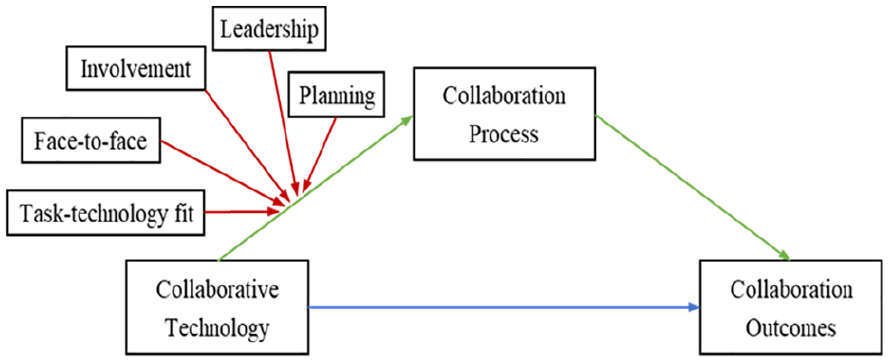
Conceptual framework based on case study results.
Conclusions
A study on collaborative technology effectiveness is timely and significant, given the amount of annual public spending on ICT programs, the citizen demands of increasing efficiency and effectiveness at all levels of government, and the ubiquitous use of collaborative technologies in the post-pandemic workforce. This study explores how and under what conditions the use of new collaborative technology affects the collaboration process and performance. It captures real-world human interaction and reflects collaboration challenges with new technologies in a real organizational context. Its findings display high ecological validity and provide insights into developing contextual hypotheses.
Theoretically, this study adds to the knowledge gained from existing literature on technology effectiveness and the interplay of technology and collaboration. For example, it advances the research on technology effectiveness by integrating real-world lessons and contextual factors into the inquiry of how varying organizational and technological contexts may lead to differences in technology effectiveness in public organizations. Meanwhile, this study extends collaboration literature by measuring the process and outcomes distinctively and capturing an overlooked antecedent of collaboration outcomes, namely, collaborative technologies.
Practically, the identified influential factors could help public organizations strategically adjust efforts to produce a more interactive collaboration process and better collaboration performance with the help of collaborative technologies. Additionally, public managers can find this study conducive to self-assessing their organizational and technological environment and identifying potential advantages and challenges before investing in collaborative technology projects.
This study is one of the first few studies adopting a mixed-methods approach to examine collaborative technology use and its influential contextual factors empirically. To some extent, prior e-government and collaborative governance studies are limited to qualitative case studies or quantitative surveys. However, a more robust mixed-methods approach is often underutilized due to its complexity and durability in conduction. In this study, a case study with rich real-world experiment and interview data offered a more rigorous examination of the collaborative technology effectiveness in collaboration and its determinants.
However, a critical limitation of this case study is applicability, as the identified influencing factors and relationships between collaborative technology use and interpersonal collaboration context may not apply to other cases or groups. Another concern about the case study relates to the moderating role played by organizational and technological factors. The case study sample size is not large enough to test such a moderation relationship between variables. Meanwhile, the case study is limited to interpersonal collaboration and could not tell the interdepartmental collaborative stories. All these concerns motivate a substantial sample examination to understand better how and under what conditions the use of collaborative technologies affects interpersonal and interdepartmental collaboration process and performance. Future research may complement this study with a large-scale survey that allows for a moderation test and a more rigorous examination of the relationships shown in Figure 3.
Footnotes
Appendix 1
Measures of variables.
| Variables | Measures |
|---|---|
| Leadership | • Availability of leaders with critical attributes such as broadly respected, innovative, and ability to support technological cost. |
| • The extent to which the above leaders are supportive of building collaboration and using technology in collaboration. |
|
| Resources | • Availability of sufficient funding |
| • Availability of needed skills and time | |
| Incentives | • The extent to which collaboration is expected/ required |
| • The extent to which they believe that the technology-in-mind is helpful in improving collaboration | |
| Technology characteristics | • Perceive level of compatibility, complexity, ease-to-use |
| • The extent to which the above characteristics fit collaboration needs | |
| Communication | • The extent to which participants engage in fair communication, offer individual opinions, identify/share/analyze relevant information, manage conflicts and disagreements, change their views after discussion |
| • The extent to which communication is open and inclusive | |
| Shared understanding | • The extent to which participants articulate common purposes and target goals, arrive at shared problem definition, clarify tasks and expectations |
| • The extent to which participants can identify and respect differences among each other, appreciate and feel appreciated by others | |
| Interpersonal relationship | • The extent to which they have a good interpersonal relationship |
| Joint actions | • The extent to which relevant knowledge is generated and developed |
| • The extent to which high-quality and trusted information are presented, made accessible, and understood by the participants | |
| Collaboration outcomes | • Save time |
| • Contribute to collaboration goals | |
| • Level of perceived trust among participants | |
| • The extent to which they believe each other to be reasonable, trustful, and dependable | |
| • The extent to which they feel each other to be accountable | |
| Adoption of technology | • Whether or not to use new collaborative technology for collaboration purpose |
Appendix 2
Survey questions associated with variables.

| Variables | Survey questions |
|---|---|
| Interactions in the collaboration process will be measured as communication, shared understanding, interpersonal relationship, and joint actions. | To what level do you think people in your office are: 1. Able to engage in open and inclusive communication 2. Able to have a common understanding of collaboration purposes and tasks 3. Able to build a good interpersonal relationship 4. Able to develop relevant knowledge and activities to meet collaboration needs |
| Collaboration outcomes will be measured as trust, accountability, timesaving, and goal achievement | To what level do you think people in your office are: 1. Trustful 2. Accountable To what level do you think the technologies used in your office: 1. Save time 2. Contribute to collaboration goals |
| Fitness between collaborative technology and collaboration needs will be measured as complexity, compatibility, and perceived fitness | To what level do you think the technologies used in your office: 1. Are easy-to-use 2. Are compatible with other systems 3. Fit collaboration needs |
| The supportive organizational environment will be measured as incentives, leadership, and resources | To what level do you think your office has: 1. The need for using technologies in collaboration 2. Innovative leadership 3. Supportive leadership regarding using technologies in collaboration 4. Sufficient funding to support technological cost |
Appendix 3
Acknowledgements
I thank all the public employees who participated in this study for their time and support.
Declaration of conflicting interests
The author declared no potential conflicts of interest with respect to the research, authorship, and/or publication of this article.
Funding
The author received no financial support for the research, authorship, and/or publication of this article.
