







Abstract
Platform government has become an important topic in the field of digital government. However, existing research lacks empirical evidence regarding the impact of platform government, leading to unanswered key issues such as the government IT productivity paradox, the distinction between platform characteristics and digitalization characteristics, and the negative effects of platform government. Therefore, this article uses the construction of platform government by China’s publicity department on social media platforms during public health emergencies as an empirical background to examine the impact of platform government characteristics on public trust in government. To further explain the mechanisms, this article introduces two concepts: government values transmission and public values consensus. Tens of thousands of data were integrated into 1,464 governance events. Sentiment analysis and text similarity were used for variable measurement, and correlation analysis was employed for accuracy verification. The results indicate that, the platform government characteristic co-creation has a significant positive impact on public trust, while the interaction effect between co-creation and openness has a negative impact. Government values transmission and public values consensus play mediating roles. In this regard, the article analyzes reasons such as information overload, the visibility of conflicts of interest, and the substitution effect, and provides specific policy recommendations based on these factors.
Introduction
The new generation of information technology is reshaping government and public administration in ways that surpass previous e-government initiatives (Agarwal, 2018). As new governance theories and practices emerge, the digital governance paradigm is demonstrating its strength, following Weber’s bureaucratic governance and the NPM movement (O’Reilly, 2011). Platform government, as a new organizational form, is attracting growing research attention. Currently, many countries have recognized the concept of platform government and included the word “platform” in their national digital government construction plans. Platform government involves the participation of multiple social entities such as government, residents, enterprises, and NGOs, with each entity utilizing an information technology-based platform to deliver information and services.
However, the current influence of platform government still lacks empirical evidence, which restricts the development of digital government theory. First, from the perspective of government practice, the ongoing construction of digital government (such as platform government) has prompted reflection on the classic issue of the “IT productivity paradox,” namely whether digitalization can deliver sufficiently good performance (G. Lee & Perry, 2002). This issue has been less researched, closely related to the complexity and difficulty of quantifying public sector performance. Although this article does not directly provide evidence to answer this question, it offers a new perspective for quantifying digital government performance. At the same time, existing research has focused more on the technical architecture and policy design. In terms of the platform government itself, what are the differences between platform characteristics and traditional digital characteristics, and what kind of impact can these differences have (Kim et al., 2022)? Finally, considering the complexity of governance, platforms may not only enhance governance efficiency and service quality but may also trigger conflicts among multiple stakeholders, changes in public values, and imbalances in responsibilities and powers, which are aspects that have received little attention. In light of these issues, this article uses public health emergencies as a backdrop and the construction of social media platforms by China’s publicity departments as a case study to empirically examine the impact of platform government.
Public health emergencies provide a “natural experiment” for observing the governance effectiveness of platform governments in extreme situations. The unique offline and closed environment significantly enhances public online participation (Colovic et al., 2022), offering rich data to validate the effects. At the same time, public health emergencies pose severe challenges to government governance capabilities, forcing governments to strengthen through technologies—this creates conditions for the development of platform governance itself. In public health emergencies, the effectiveness of governance is directly related to the safety of people’s lives and social stability, significantly impacting public trust in the government. This empirical context better connects platform government performance with public trust, a core performance indicator, thereby providing a meaningful basis for quantifying digital government performance.
This article focuses on the construction of China’s publicity departments on social media platforms, stemming from its unique attributes within the digital governance ecosystem. Currently, the platform construction of China’s publicity departments have become the forefront carriers of “interface politics” in digital government, undertaking complex functions such as policy dissemination, public opinion guidance, and public service access. The integration of these functions makes it an ideal entry point for observing the government’s “platformization development.” Moreover, on social media platforms, official media with daily interactions exceeding millions have demonstrated a shift from one-way government management to a model of co-creation between the government and the public. Each trending event can serve as a microcosm for observation. In public health emergencies, the China’s publicity departments utilized social media platforms to actively contribute by being the first to disseminate information about the emergency (Zhao & Zou, 2021). The departments focused on prevention and control efforts. They released easy-to-understand scientific knowledge and policy illustrations. Social media platforms were a crucial channel for the Chinese government to communicate with the public, offer services to the public, and accept public supervision. These platforms were an emerging means of reducing social conflicts, listening to people’s opinions, innovating government workflow and services, and establishing a service-oriented government.
The theoretical contributions of this article are reflected in two aspects: first, in the context of public health emergencies, it empirically examines the impact mechanisms of platform government characteristics (co-creation and openness) on public trust, enriching the research in the fields of digital government and public trust. At the same time, this article reveals the effects triggered by the interaction between co-creation and openness. Second, it proposes and organizes core concepts such as government values transmission and public values consensus, integrating public management theory into the performance evaluation framework of platform government, and empirically tests the mediating roles of these two concepts. Methodologically, this article innovates the measurement methods, utilizing machine learning to quantify public trust and public values, and validates the accuracy of these measurements through event-related data, providing new methodological tools for future research. Additionally, this article explores the applicability of the research conclusions in different governance contexts and offers policy recommendations, providing references for the theoretical development and practical application of platform government.
Theoretical background
Platform government and its characteristics
The definition of platform government is: “Digital government based on the new generation of information technology, build a platform that connects a wide range of different social governance entities, including government, enterprises, the public, and social organizations. It continuously promotes the sharing of digital resources through platform software, achieves the digital transformation of the entire social governance system, and promotes the modernization of government governance capabilities.” Government platform is expanding into various areas, including social media (P. Xu et al., 2022). The social media aspect of platform government is significant, aiming to incorporate grassroots voices into government to promote democracy and accountability (Nabatchi, 2010).
Co-creation, openness (Colovic et al., 2022), and the interaction between the two, are three key characteristics of platform government. They reflect three trends of information flow in the model of two-way communication between the public and the government through the platform. (1) Openness focuses on the process of information flowing from the government side to the public side through the platform (Schmidthuber et al., 2021), providing the public with a foundation for understanding and participating in public affairs. (2) In the current stage of digital government development, co-creation emphasizes the process of information flowing from the public side to the government side through the platform, with the government striving to integrate and utilize this input (Alves, 2013). The core idea is to transform the public from passive policy recipients into active policy participants and value creators. (3) The interaction between co-creation and openness further reflects whether a certain level of two-way information flow has been achieved between the government and the public through the platform. The resulting knowledge collisions and integrations may lead to either synergistic effects or issues like information overload (Weibl & Hess, 2020). Only by achieving a true two-way flow of information can we avoid the “information islands” caused by the government’s one-way information output, as well as the “opinion vacuum” that may arise from the public’s one-way input. In the future, as information technology and national governance capabilities continue to develop, co-creation, openness, and their interaction will gradually merge, allowing the government and the public to establish a seamless two-way communication mechanism through the platform, which will truly unleash the potential of platform government.
Co-creation
Co-creation refers to the collaborative process in which the government, public service users, and other societal stakeholders contribute their knowledge and expertise to enhance public services (Hartley et al., 2013; Kim et al., 2022). When co-creation is high, platform participants work with public administration to improve public services (Alves, 2013; Lember et al., 2019). The users of the platform government can provide real-time demand and location information to the government, ensuring faster access to services, especially for socially disadvantaged groups who can obtain services more quickly through social networks than usual. Research has found that government service platforms can enable communities where ethnic minorities reside to achieve fast service delivery (C. K. Xu & Tang, 2020). In public health emergencies, people can also improve the quality of public services by participating in platform government activities. By widely sharing their information and experiences, people form social consensus, which influences policy-making (Nabatchi, 2010). People can also gain spiritual strength such as unity from this interaction.
This article needs to differentiate it from a similar word: Coproduction. Co-creation emphasizes the interactive process between the government and citizens in designing and innovating public services, where value is created collaboratively through interaction and resource integration (Alves, 2013). Coproduction focuses on the joint investment of resources and efforts by the government and citizens in the production and delivery of public services (Steen & Brandsen, 2020). The former emphasizes interaction at the design and decision-making level, while the latter places more importance on collaboration at the execution level. In fact, in the context of public health emergencies, both forms of collaboration coexist. For example, Co-creation includes citizens interacting with the government to provide suggestions for policy-making and propose innovative solutions (such as optimizing vaccination processes). Coproduction involves citizens responding to government calls, disseminating epidemic prevention information, reporting violations, and participating in volunteer services. Referring to existing research (Colovic et al., 2022), and given that this article focuses more on the process of residents communicating with the government on social media platforms rather than the offline outcomes of public services, the word Co-creation is used.
Openness
Openness is crucial for the development of platform government, as it determines the degree to which various entities can participate freely in the platform. Increased openness can have numerous benefits, including the wider and more effective use of open data to enhance the values of public services and more economical integration of public service innovations through more open market options (Fishenden & Thompson, 2012). It also helps build trust between the government and citizens, which is essential for effective governance (Reddel & Woolcock, 2004; Schmidthuber et al., 2021). However, openness is only meaningful when information is utilized to improve public services. Because openness can also have negative consequences if personal information is leaked.
The openness of the China’s publicity departments in public health emergencies can be seen in several ways (Chen & Liu, 2020). Firstly, it publicized data about the new virus to help people make scientific decisions and interrupt the spread of the situation. Secondly, it released and interpreted emergency management policies and publicized prevention cases to support grassroots governance. Thirdly, it protected people’s right to know and supervise, alleviated social panic, enhanced people’s trust in the government, and maintained social stability. Most importantly, when government information is not opened in a timely and sufficient manner, it can easily become a breeding ground for rumors (Fu et al., 2023), which is one of the biggest obstacles in public health emergencies.
Interaction
Interaction refers to the synergistic effect of co-creation and openness in platform government governance. Specifically, it measures how the government enhances governance effectiveness through co-creation mechanisms while providing adequate information. Exploring this characteristic aims to break through traditional unidimensional research and reveal the coupling mechanism between platform government characteristics.” There is a theoretical gap regarding whether this interaction is positive or negative. On one hand, the interaction variable reflects the synergy between co-creation and openness. According to the theory of synergistic effects (Weibl & Hess, 2020), the combination of two variables may produce a greater effect than individual. On the other hand, this interaction also reflects the issue of the “information overload trap.” (Cheng et al., 2024) In the context of public health emergencies, when openness (the volume of information) exceeds co-creation (the capacity of multiple stakeholders to process information together), it may lead to a decline in trust.
Many studies agree that co-creation and openness are both important (Alves, 2013; Fishenden & Thompson, 2012; Schmidthuber et al., 2021). There is no doubt that low co-creativity and low openness will have a significant negative impact (Dudau et al., 2019; Schmidthuber et al., 2021). But there is a lack of attention to the specific impacts and mechanisms of interaction. When co-creation and openness are both high, information spreads quickly, and the cooperation among governance subjects and their involvement can have a significant impact on public values. A high-open, high-co-creation platform government is a process in which diverse entities interact efficiently around information resources on the platform. Theoretically, organizations can shape collective core values through this kind of efficient interactions. Therefore, this article argues that, by combining open information with co-creation mechanisms, the government can better meet public needs and enhance public trust.
Performance of China’s publicity departments
Performance measures of government often focus more on tangible outcomes and less on intangible outcomes (Dudau et al., 2019; Osborne et al., 2021; H. Wang & Ran, 2023). Unlike previous research focusing on efficiency and effectiveness, an increasing number of scholars have realized that different governance entities have conflicting goals, driven by their different values (Bartlett, 2020; Ranjan & Read, 2016). Therefore, public values have received more and more attention from scholars. Some studies on public organizations emphasize the importance of public values (Tetlock et al., 2013). There are also studies dedicated to examining the micro-level values co-creation process and exploring the relationship between values creation, values conflicts and values destruction (Skarli, 2023). More importantly, despite the significant growth in literature on the importance of public values, there is little consensus on how to measure (Stoker, 2006; Thomson & Perry, 2006).
For China’s publicity departments, the emphasis is more on these intangible outcomes. In order to provide a more suitable performance framework for China’s publicity departments, we examined how some scholars design performance to enhance the capabilities of public organizations (Bray et al., 2020; Moynihan et al., 2011; Whitford et al., 2020). Boyne (2003) reviewed empirical research related to public service performance and suggested that among the five core factors—resources, regulation, market, organization, and management—resources and management are the two factors most likely to lead to service improvements. Boyne (2003) further pointed out that resources refer to the need for organizations to acquire more resource inputs, and that increased resource inputs (whether financial or otherwise) will result in better service performance. They also define “management” across multiple dimensions, including leadership, culture, human resource management, and strategy. This kind of management imply that organizations evaluate and adjust their actions and outcomes to enhance departmental performance.
From a resource perspective, (Levi & Stoker, 2000) point out that public trust in government can enhance the efficiency of the public sector, serving as an important lubricant resource for social systems, and can reduce transaction costs. Dasgupta (2000) further emphasizes that trust is a vital resource for the public sector and constructs a model of trust as a commodity. Edney (2012) delves into the specific functions of China’s publicity departments, clearly stating that public trust is a key objective that this department strives to obtain and maintain. Similarly, their research also indicates that the management of public values is one of the core aspects. They systematically explain the emphasis placed by China’s publicity departments on shaping and managing public values to ensure alignment with the policy objectives. It is noteworthy that the process of managing public values as a performance management approach is not unique to the Chinese government. Salmon (1989) explores how governments in countries like the United States utilize media to shape public perceptions of public values. Bryson et al. (2014) provide a detailed discussion on the roles and responsibilities of government in managing public values. Therefore, exploring these elements in the context of China’s publicity departments also holds significant implications for governance in other countries.
Trust in Government
Rousseau et al. (1998) define trust as “the positive expectation of individuals regarding the behavior of others under conditions of uncertainty and vulnerability.” In the relationship between government and the public, trust is often viewed as the public’s positive evaluation of government actions and confidence in its fulfillment of public functions (Levi & Stoker, 2000). The previous analysis indicates that public trust in government is not only an important source of legitimacy but also a key resource for ensuring social stability and the efficiency of policy implementation (Hetherington, 1998). Specifically, in public health emergencies, the concept of government trust encompasses multiple dimensions. For instance, it includes the public’s recognition of the government’s professional capabilities and execution in crisis management, the public’s sense of alignment with government actions that reflect public interest and values, and the public’s trust in the stability and fairness. On social media platforms, government trust is also influenced by the characteristics of information dissemination and interaction patterns. The public not only pays attention to the authenticity and authority of the information released by the government but also evaluates the government’s responsiveness and transparency through interactive behaviors, such as comments and shares (Warren et al., 2014). Political participation on social platforms facilitates the accumulation of government social capital, which, in turn, promotes trust building.
Considering the impact of platform government characteristics on trust is meaningful. Research has found that improving the deliberation process in platform governments can help public managers address democratic deficits (Nabatchi, 2010). Listening and involving citizens with relevant interests in governance can enhance their confidence in the government. Research by Warren et al. (2014) indicates that the government’s use of social media platforms can have a significant positive impact on public trust. Starting from the characteristics of the platform, transparency helps alleviate public uncertainty, thereby enhancing trust in the government’s capabilities (S. Grimmelikhuijsen et al., 2013). For example, during public health emergencies, the government can strengthen public recognition of its professional capabilities by releasing epidemic data, policy measures, and scientific information through social media. The co-creation aspect of platform government is reflected in its ability to engage in two-way communication with the public. Timely responses to public concerns, answering questions, and addressing complaints can enhance public recognition of government values and service attitudes (Shi et al., 2023), thereby increasing value-based trust (Mergel, 2013). The construction of official media on these platforms reinforces the authority and credibility of information, making it easier for the public to accept and trust government. By combining open and co-creation mechanisms, the accuracy and efficiency of information dissemination can be improved, better meeting public needs and more effectively mobilizing public participation.
Based on the above analysis, the following hypotheses are proposed:
H1a: In public health emergencies, the co-creation of platform government has a significant positive impact on public trust.
H1b: In public health emergencies, the openness of platform government has a significant positive impact on public trust.
H1c: In public health emergencies, the interaction between the co-creation and openness has a significant positive impact on public trust.
Government values transmission
The Moore Strategic Triangle Model emphasizes the need for the government to achieve mutual coordination among three strategic elements: public value, enabling environment, and operational capacity. Among these, public value is the core of the three elements (Bardach & Moore, 1997), and the government’s primary goal is to create public value. As an important part of public value, government values must be communicated to the public (A. Schneider & Ingram, 1990) to help them understand and support its policy objectives, thereby reducing governance costs. For instance, the government needs to foster a strong public identification with values that transcend individual self-interests to better implement environmental protection policies (Steg & Vlek, 2009). At the same time, the legitimacy and support of the government stem from the recognition of the public and stakeholders. By transmitting values, the government can enhance public understanding and support for its actions, thereby consolidating the enabling environment. Therefore, this article uses the term “Government Values Transmission” to describe this behavior, and values transmission is often used within families (Albanese et al., 2016). Government values transmission refers to the process by which the government conveys its advocated core values (such as life matters, fairness, efficiency, transparency, etc.) to the public through policy design, public education, and public participation, in order to enhance the legitimacy of policies and social support, and guide public behavior to align with policy objectives. Due to the existing benefits mentioned above, it is a common political practice in many countries for the government to convey values to the public (Jacobs, 2014), as observed in President Obama’s regular public promotion of healthcare reform, indicating an attempt to communicate public values (Jacobs, 2013). This need is especially relevant to China’s publicity departments, which regularly engage in values communication and education campaigns to create and deliver public service products, including public values. Especially in public health emergencies, many difficult values conflicts have emerged, such as information disclosure, social order during lockdown, allocation of medical resources, social assistance, etc.
Based on the logic of the Moore’s Strategic Triangle model, the characteristics of platform government (co-creation and openness) significantly enhance the operational capacity of the government through technological empowerment, enabling it to integrate resources and optimize actions more efficiently, thereby better creating public values (i.e., conveying values to the public). This values transmission further strengthens the legitimacy of the empowering environment and social support, increasing public trust in the government. Therefore, the characteristics of platform government create a virtuous cycle through the enhancement of operational capacity and the creation of public values, ultimately increasing public trust in the government. Based on the above analysis, this article proposes the following hypothesis:
H2: In public health emergencies, the variable of government values transmission partially mediates the effect of platform government characteristics on public trust.
However, it is important to note that excessive effectiveness in the government values transmission to the people can also lead to path dependence and institutional rigidity, inhibiting society’s ability to innovate.
Public values consensus
Although the pursuit of consistent values among the public may seem incompatible with the goals of a diverse society, this is not the case during public health emergencies. Bavel et al. (2020) point out that individuals need to align with collective interests during such events, and individual behaviors in society are regulated by collective values. Those who conform to collective values can earn respect, while those who act “incorrectly” may face social exclusion (Ellemers & van den Bos, 2012).
Auguste Comte was one of the earliest scholars to propose the concept of values consistency (Schwartz & Sagie, 2000). He believed that the stability of society relies on a consensus of values among its members. The Attraction-Selection-Attrition (ASA) theory framework suggests that the culture and characteristics of an organization are gradually formed through the processes of attraction, selection, and attrition, ultimately leading to a convergence of member characteristics within the organization (B. Schneider, 2006). The ASA framework emphasizes that individuals are attracted to organizations that align with their own values and the mechanisms of selection and attrition gradually shape the convergence of values among members. Similarly, at a broader societal or group level, similar mechanisms exist: individuals tend to choose social environments that correspond with their own values and gradually form a consensus of values within the group through processes such as migration, socialization, or exclusion. This article refers to the consistency of values among the public as “public values consensus” (Schwartz & Sagie, 2000), which denotes the degree of alignment in core values among members within a specific society or group. Values consensus is an important aspect for organizations (Peng et al., 2015). It refers to the extent to which individuals identify with group values, which can be seen as a result of the socialization process by which users choose their identity (Chatman, 1991). High values consensus promotes long-term commitment and helps build strong social networks (Moynihan & Pandey, 2007). Groups with high values consensus tend to be more actively involved in affairs and take on additional social responsibilities, such as providing assistance or volunteering (Edwards & Cable, 2009). Research has found that organizations can achieve long-term effective cooperation through shared identity, beliefs, and especially core values (Conner, 2016).
The China’s publicity departments have a core task of promoting values consensus to engage the public. According to the ASA theory framework (B. Schneider, 2006), the government has designed platform government applications based on its governance philosophy, attracting individuals with similar values foundations to interact. Through the platform’s interactive features and the echo chamber effect created by platform algorithms, a reinforcing cycle of values convergence can form within the group (Bakshy et al., 2015), thereby enhancing the group’s sense of identity and belonging to government actions (Mergel, 2013). Therefore, the government’s construction of platform governance, through technological empowerment and interactive mechanisms, not only strengthens the public values consensus but also indirectly increases the public trust during public health emergencies. Based on the above analysis, this article proposes the following hypothesis:
H3: In public health emergencies, the variable of public values consensus partially mediates the effect of platform government characteristics on public trust.
However, it is important for public administrators to be mindful that excessive or inadequate values consensus can be detrimental to governance. In “platform government,” too little values consensus may result in chaos due to the absence of “government” function, while too much values consensus may cause the online democracy to wither, due to the absence of “platform” function.
Theoretical framework
Integrating the theories of platform government, Moore’s strategic triangle, and ASA reveals that platform government, through technological empowerment and social collaboration, has formed a dynamic process of values co-creation and transmission. On the other hand, it utilizes the characteristics of platforms and algorithms to promote the consistency of values among platform audiences. Platform government representing the government side, serves as the technological and collaborative foundation of the framework, emphasizing creating an environment for values communication. The ASA framework represents the public side, emphasizing social psychological mechanisms and explaining how platform characteristics promote values consensus through interaction. Moore’s strategic triangle acts as a bridge between the government and the public, emphasizing goal orientation and clarifying that the core tasks of government are the creation of public values and obtaining authorization from the public. This framework integrates technology, institutions, and social psychological mechanisms into a systematic framework, revealing the dynamic process of public values creation and providing a model for analyzing the governance process of platform government in public health emergencies.
The main framework of this article is shown in Figure 1. Public trust in government is a crucial resource for the publicity departments to acquire, while public values management is the most critical component of China’s publicity departments’ work. The article analyzes the public values management from two perspectives: the “process” and the “outcome” of the work. It categorizes public values management into government values transmission and public values consensus. These two aspects encompass the complete loop of public values management from the government’s imposition and society’s feedback. From a practical perspective, transmitting the government’s values to the public has been a priority for China’s publicity departments, and China’s leaders have explicitly stated that promoting the unity of social values is the core task of China’s publicity departments. This article aims to examine the impact of platform government characteristics (co-creation, openness, and interaction) on the performance of publicity departments, particularly the mediating role of government values transmission and public values consensus.
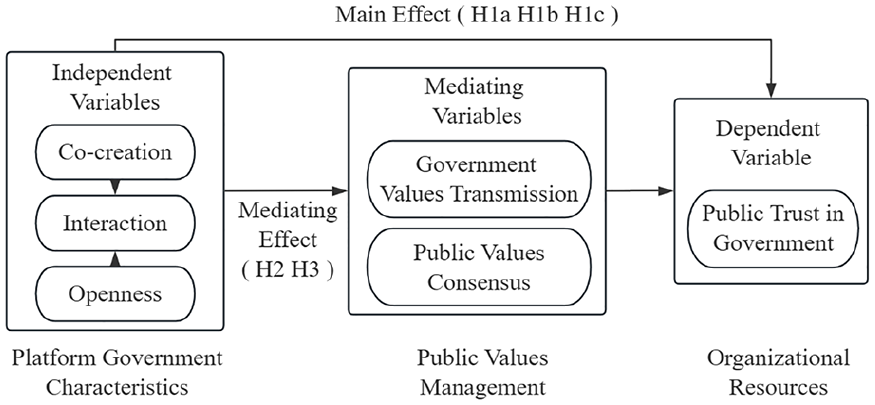
Theoretical framework.
The influence of platform government characteristics on the performance of China’s publicity departments
Data collection of government texts and public comments texts
This study focuses on the role of three main official media under the Publicity Department of the Central Committee of the Communist Party of China—Xinhua News Agency, People’s Daily, and CCTV News—in public health emergencies on Sina Weibo platforms. Data were collected from January 1, 2022, to June 30, 2022. Because in the second half of 2022, platform began to control comments frequently, which affected the data.
In public health emergencies, the government’s behavior is often highly goal-oriented and strategic. Therefore, although co-creation and openness are characteristics of the platform, whether these characteristics are realized in each specific governance event depends on the government’s strategic choices in particular contexts. The unit of analysis for this study is the governance events came from the media platform releases. Based on existing studies (Venkatesan et al., 2021), the “#” topic on the microblogging platform was used as the unit of analysis, and if it carried the same topic, it was categorized as the same governance event. Through these topics, the government can guide public discussions, disseminate policy information, and engage in other intellectual activities. Therefore, topics are not only the direct carriers of platform government actions but also a key arena where platform characteristics are manifested in specific governance events. Using topics as the unit of analysis can effectively capture the differentiated expressions of characteristics across various events. After cleaning and organizing the data, a total of 1,464 events were collected. For each event, the top 20 comments were collected according to the number of likes.
Measure subjective variables with objective data
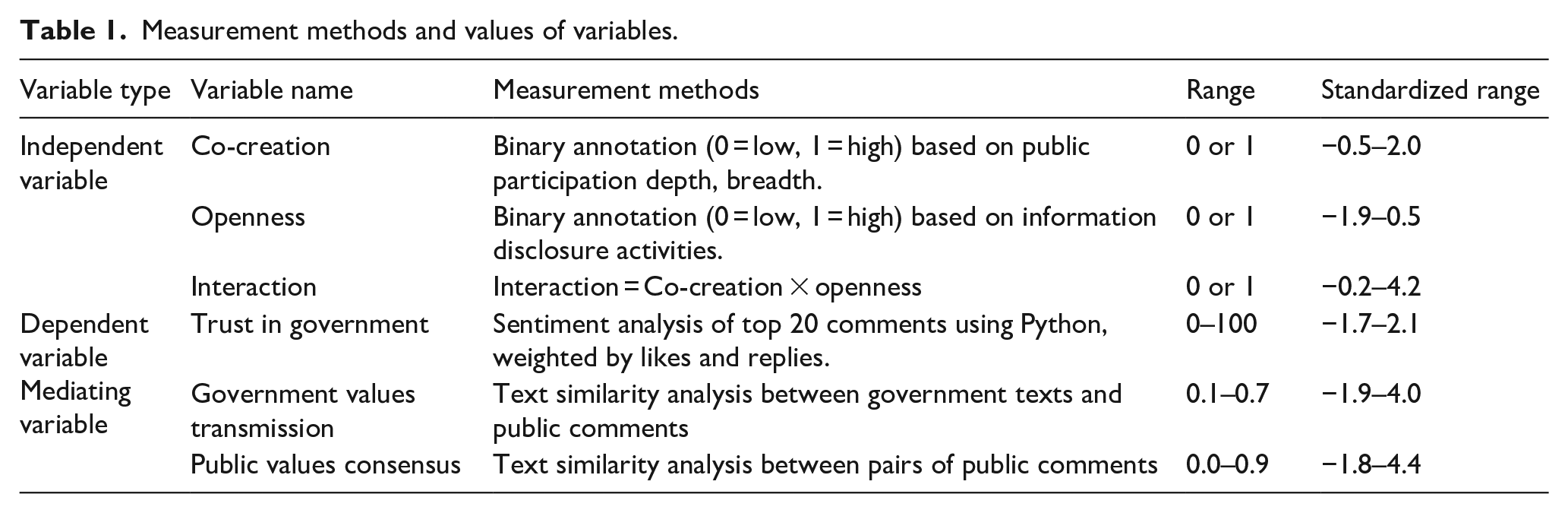
In terms of independent variables, this study employs a manual annotation method to label the characteristics (with the presence of a characteristic labeled as 1, and its absence as 0). Manual annotation allows for a better integration of context and content features, ensuring accurate identification and classification of complex social phenomena. This study invited 10 graduate students to participate in the annotation work, with a decision based on the results of more than two-thirds of the annotations for a particular event; otherwise, an expert would make a final determination. All participating graduate students are from public administration programs, possessing a certain level of academic research capability and a basic understanding of platform governance. Based on Colovic et al. (2022), we also integrated this with the context of public health emergencies. The specific classification criteria are as follows: (1) Co-creation refers to the process in which the government interacts and collaborates with the public through platforms, jointly participating in policy formulation, information dissemination, and problem-solving. This includes considering the depth and breadth of public participation, such as topics like #TogetherInEpidemicPrevention#, which encourage the public to share emergency experiences, raise questions, or make suggestions. Particularly, if volunteers and crowdsourced participants are recruited through the platform, it represents a deeper level of encouraged participation. Additionally, it considers whether there is multi-party collaboration, such as official media jointly releasing information with enterprises, or experts, or co-developing tools. It also assesses whether information dissemination is interactive; if official media actively engages with the public through live broadcasts, Q&A sessions, or polls, it can be labeled as having a high level of co-creation. (2) Openness refers to the transparency, inclusiveness, and information-sharing capabilities exhibited by platform governance. This includes considering whether it involves information disclosure activities, as official media publish epidemic data daily on platforms, especially through press conferences and similar formats. It also involves one-way responses to public concerns, such as the “Epidemic Prevention Hotspot Q&A” section established by official media, which provides authoritative answers to public inquiries. Thirdly, experience sharing and debunking rumors are specific actions by official media that can be seen as exhibiting openness. The interaction term is the product of the two binary variables; when both are 1, this variable is also 1.
In terms of the dependent variable, we aim to use the emotional index to measure public trust in the government. First, trust and emotion are two distinct concepts. Trust is a long-term psychological state that reflects the public’s overall perception of the government’s competence, while emotion is an immediate response to specific events or policies. However, this article argues that short-term fluctuations in emotion can be viewed as marginal changes in long-term trust, meaning that the ongoing accumulation and dynamic changes of emotions may gradually shape or erode public trust in the government (Jones & George, 1998). Williams (2001) points out that the motivation for trust is driven by positive emotions, while negative emotions can diminish the motivation for trust. Therefore, the accumulation of positive emotions enhances trust, whereas the accumulation of negative emotions weakens it. The establishment of long-term trust may also be comprised of these small moments (J. I. Lee et al., 2023). Therefore, in terms of specific algorithms, this study collected the top 20 comments with the highest number of likes for each governance event to calculate the sentiment index. First, the sentiment analysis package in Python was used to score each comment, where positive values indicate positive sentiment. Secondly, to reflect the influence of the comments, the number of likes and replies for each comment were used as weights for adjustment. Finally, the sentiment value of each comment was multiplied by its weight, summed up.
In terms of mediating variables, we use machine learning text similarity to assess the government values transmission and public values consensus. Based on social cognitive theory (Bandura, 1986), humans transform experiences into internal models through symbols such as language. Therefore, language is not only a tool for communication but also carries individual values, and the consistency of these values can be reflected in the similarities expressed through language. Since the consistency analysis model was proposed (Romney et al., 1987), some researchers have measured the degree of mutual agreement among citizens by identifying the values embedded in the content of social media texts (Unsworth & Townes, 2012). In this article, government values transmission is assessed by calculating the text similarity between the government information and the top 20 public comments. Specifically, the similarity for each comment is computed against the government information, and then a weighted average is taken based on the number of likes and replies, resulting in a value between 0 and 1. A higher value indicates a stronger degree of values transmission. For public values consensus, the text similarity between pairs of public comments is calculated, and a weighted average is taken based on the sum of likes and replies, also resulting in a value between 0 and 1. A higher value indicates a stronger degree of values consensus among public comments.
Furthermore, this study collected additional variables, including the number of reads, discussions, and original posts, the form of the post (text, image, video), whether the event had limited comments, and whether the location was a municipality directly under the Central Government. This article presents the measurement methods and values for variables as shown in Table 1. After measuring the variables, this article first standardizes the variables before conducting regression analysis. This approach eliminates the impact of scale differences, preventing the model from being biased toward features with larger scales. Additionally, since there is interaction variable, standardization can alleviate multicollinearity issues, resulting in more stable model parameters.
Measurement methods and values of variables.
Subjective variable measurement accuracy verification
As this study aims to use objective data to depict subjective variables, additional methods were employed to verify the variable measurement’s accuracy. This study counted high-frequency keywords for the categorized texts and found that low co-creation and low openness were primarily associated with general events such as quarantine and sampling. High co-creation and low openness were mainly related to events such as material donation and volunteering that involved multiple subjects co-creating. Low co-creation and high openness were mainly associated with data disclosure such as new diagnoses, cures, and deaths. High co-creation and high openness were related to events that promote public service improvement, such as crowdsourcing and online collective actions. These findings demonstrate the high accuracy of the classification.
When verifying the accuracy of machine learning metrics, this study validated them through correlation analysis based on existing practices (S. A. Wang et al., 2022). There is a negative correlation between the absolute value of public trust and the number of times an event is read. This means that the more people pay attention to an event, the more objective the overall attitude of the public, tending towards a middle ground between trust and distrust. Government values transmission is negatively correlated with the form of content publication, indicating that using different forms of publication will lead to different values transmission efficiencies. Public values consensus is negatively correlated with the number of original Weibo posts, indicating that a greater diversity of values corresponds to a higher number of original posts. These results are consistent with previous findings and real-life experiences, demonstrating the effectiveness of the metrics.
Empirical analysis in public health emergencies
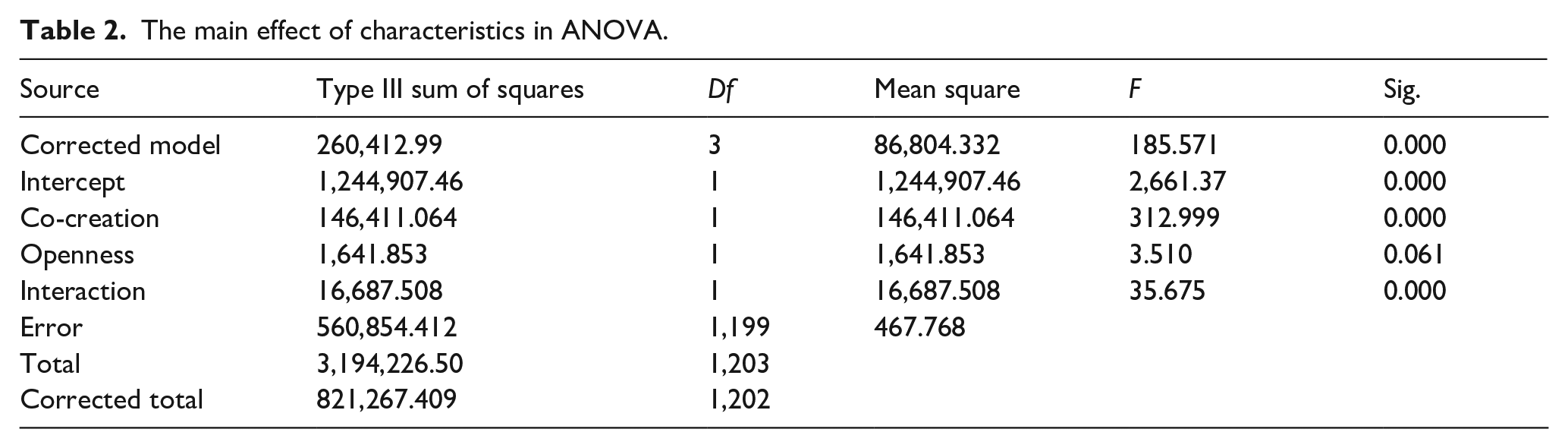
This study utilized ANOVA and regression for quantitative analysis to complete the analysis. Figure 2 shows that there is an interaction between co-creation and openness, as the two lines intersect. This finding is consistent with the theoretical analysis, as indicated by Table 2. Moreover, the main effect of co-creation is significant, while the main effect of openness is not significant (Figure 3).
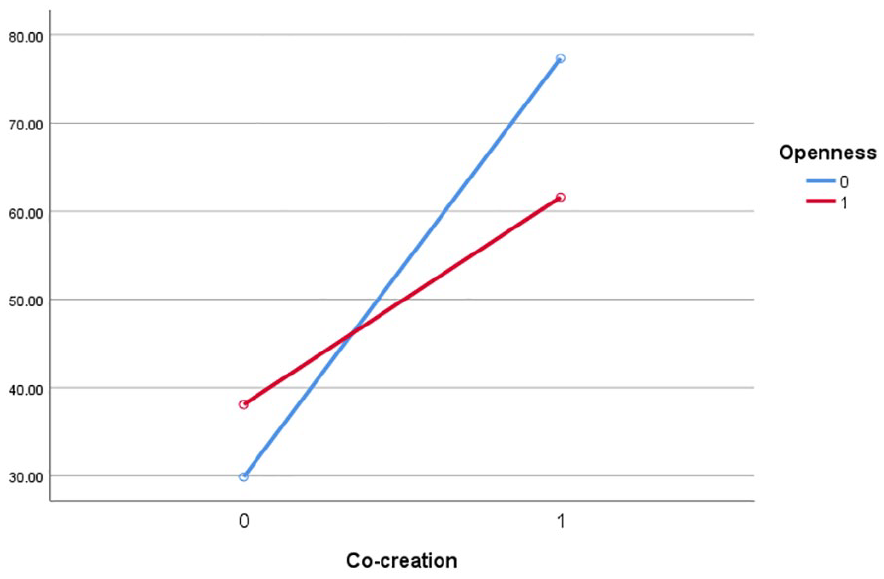
Estimate marginal means (trust in government).
The main effect of characteristics in ANOVA.
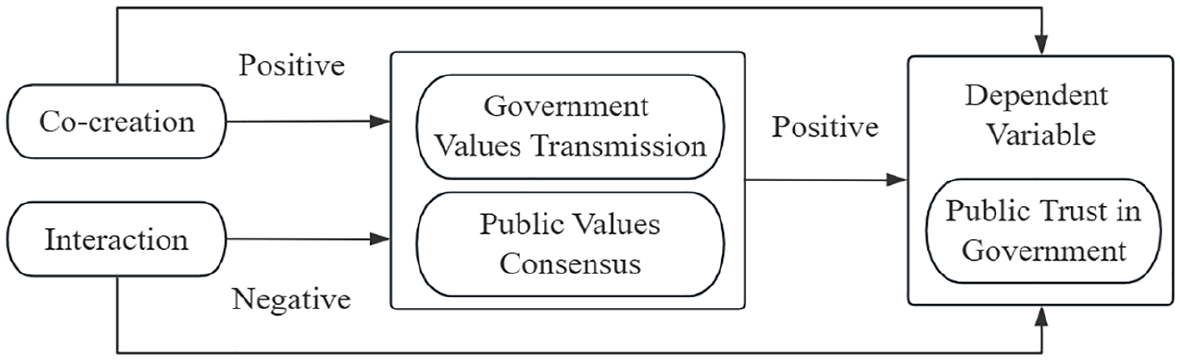
Results of the model.
Table 3 shows regression results, in public health emergencies, in public health emergencies, the co-creation and openness of platform governance significantly positively impact public trust. However, the interaction between co-creation and openness negatively affects the performance of the publicity departments. The results of ANOVA and regression indicate that co-creation and interactivity have significant effects, and robustness tests are needed for further confirmation.
OLS regression (main effect and part of mediating effect).
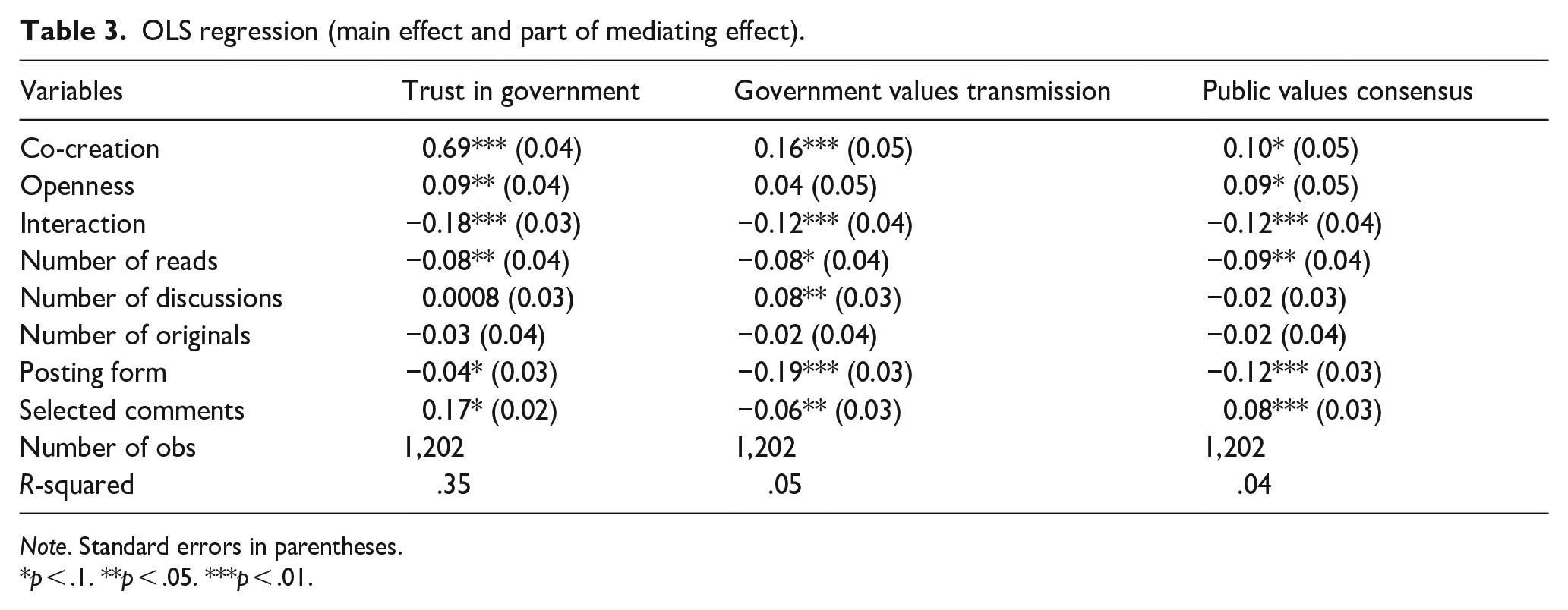
Note. Standard errors in parentheses.
p < .1. **p < .05. ***p < .01.
Robustness checks on the closed comment section
There may be two main endogeneity issues in this study. The first is the problem of sample selection bias. Since the publicity departments’ strategies of closing the comment section for specific events in public health emergencies may lead to a selection bias in the sample, the selected sample may not be fully representative of the overall events, resulting in a biased estimation. To address this issue, this study employs the Heckman two-stage method to correct. This study finds that, most of the events where comment selection was closed occurred in municipalities directly under the Central Government. As a result, it is estimated that the likelihood of selected comments being chosen by political media is highly correlated with the political status of the event location. Table 4 indicates that the sample selection issue in this study is not serious and does not affect the results.
Heckman two-stage model.
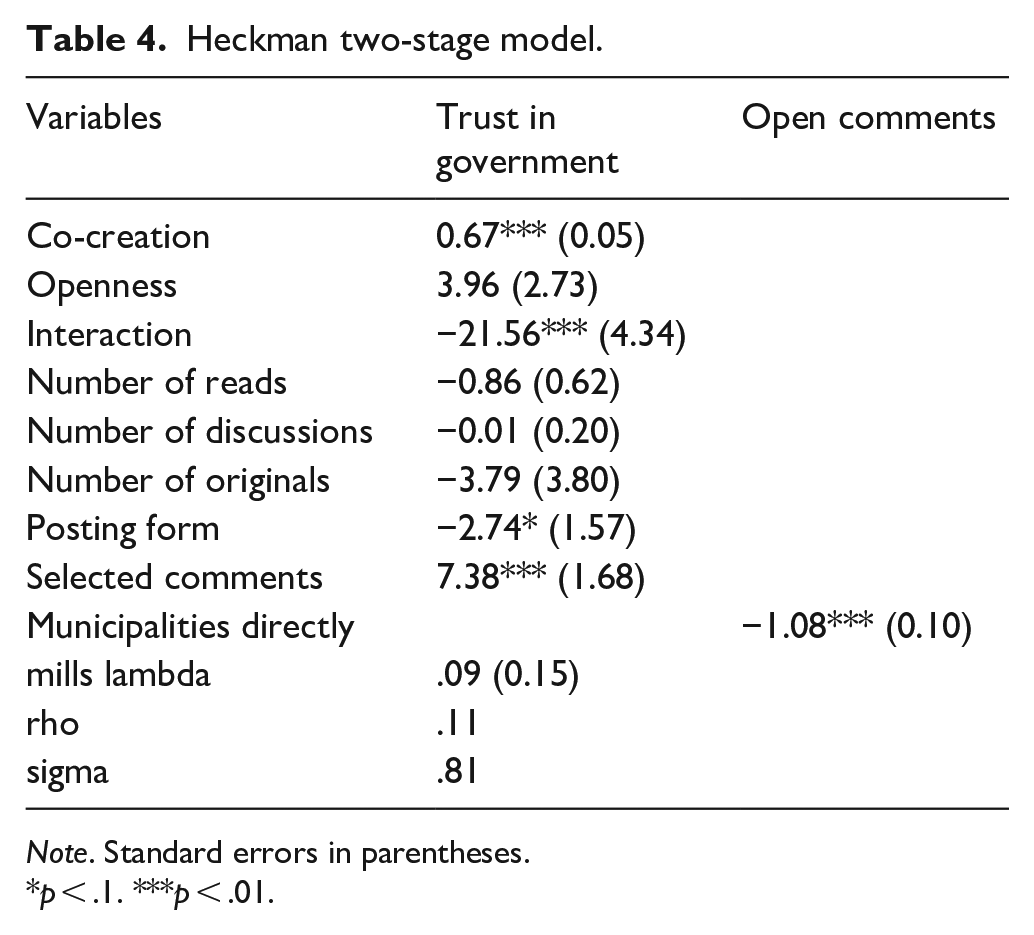
Note. Standard errors in parentheses.
p < .1. ***p < .01.
This study may also have issues with reverse causality. Although there is a strict chronological order between the independent and dependent variables in this research, the characteristics of events may not be entirely exogenously determined but rather influenced by the government’s expectations of public reactions. If the government anticipates that a particular event may be controversial or even provoke negative public sentiment, it may be more inclined to adopt co-creative or open approaches to mitigate potential negative emotions. Therefore, while comment sentiment is a result, it may influence the characteristics during the design phase. Accordingly, this article examines the robustness of the results through grouped regression (high controversy events and low controversy events, high trust and low trust events, sorted by public trust and alignment of public values, taking the top and bottom 50%). Table 5 indicates that in high controversy events, low controversy events, high trust, and low trust events, the co-creation and interaction terms remain unchanged, which alleviates concerns about reverse causality. In summary, hypothesis H1 is supported, while hypotheses H2 and H3 are not supported.
Group regression.
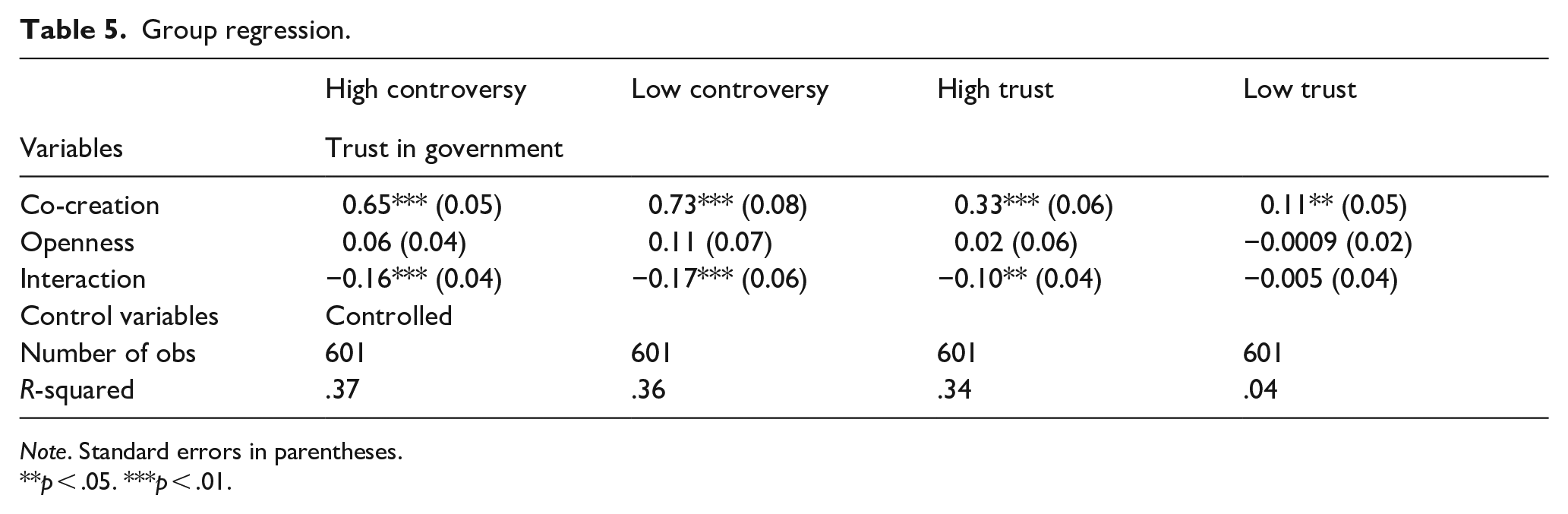
Note. Standard errors in parentheses.
p < .05. ***p < .01.
Mediating effect of public values management
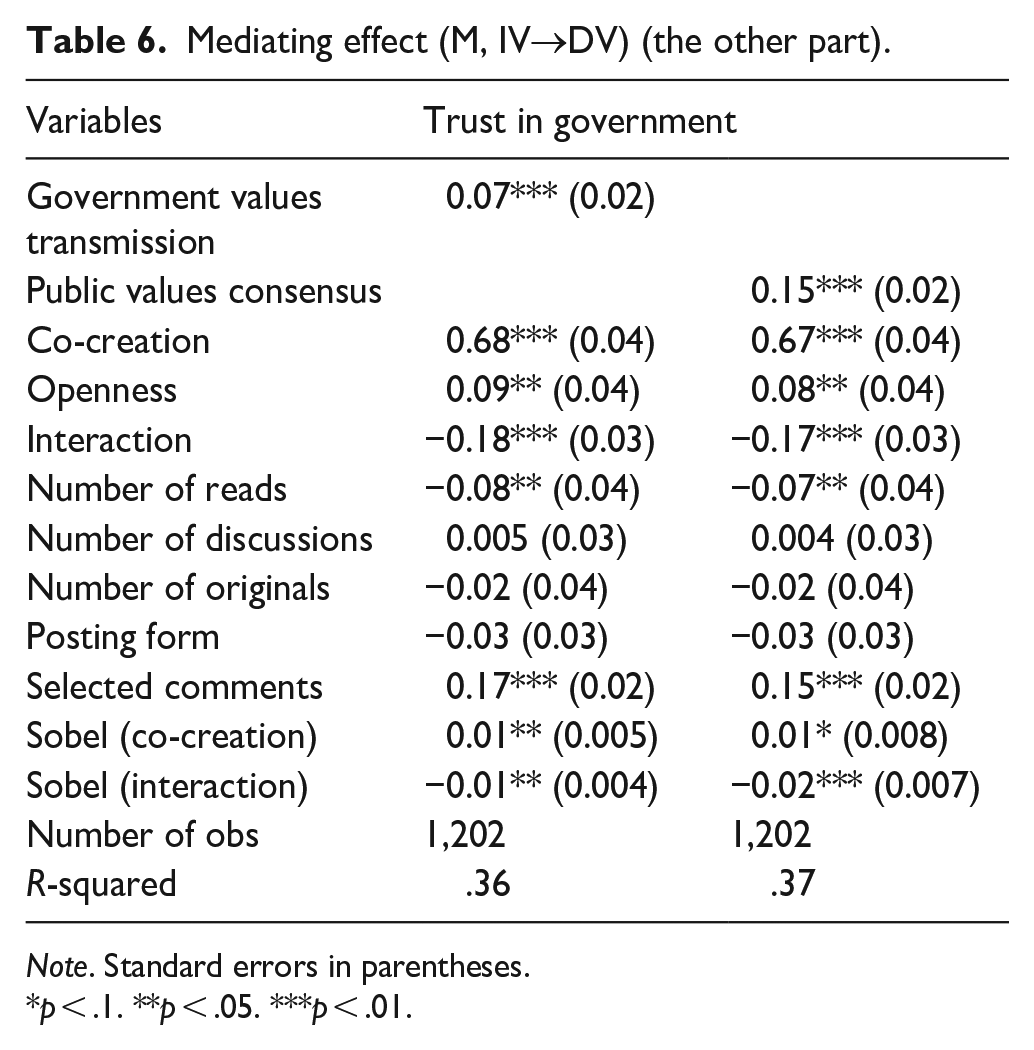
Tables 3 and 6 show that government values transmission acts as the mediating variable between co-creation, interaction and trust in government. Hypothesis H4 and H5 are supported, government values transmission and public values consensus play mediating roles between characteristics and trust.
Mediating effect (M, IV→DV) (the other part).
Note. Standard errors in parentheses.
p < .1. **p < .05. ***p < .01.
Results
This article takes the characteristics of platform government as the independent variable and public trust in government as the dependent variable. Empirical results indicate that the co-creation significantly enhances public trust in government. During public health emergencies, the public often faces high levels of uncertainty and anxiety. Platform government allows the public to directly participate in the processes of information dissemination, policy formulation, and resource allocation. This sense of participation can give the public a feeling of partial control over the situation, thereby increasing trust in the government (Liu & Kim, 2011).
However, openness is completely different from co-creation. Before the development of platform forms, digital government already placed great emphasis on openness, which has become a fundamental expectation among the people. This “default standard” means that openness on platforms is no longer seen as an additional trust-enhancing factor, but rather as a basic responsibility of the government. As a result, the marginal effect of openness on trust has diminished (S. G. Grimmelikhuijsen & Meijer, 2014). During emergencies, public trust relies more on the government’s ability to solve problems. Therefore, mere openness cannot directly address deeper issues such as resource allocation and policy implementation.
One of the important findings of this article is that the interactions of co-creation and openness can produce significant negative effects. There are three reasons for this. The first is information overload (Cheng et al., 2024). During public health emergencies, the high frequency and density of information may exceed the public’s cognitive processing capacity. This information overload can weaken the public’s understanding and trust in the information, and even raise doubts about the government’s capabilities. The second reason is the visibility of conflicting interests (Ansell & Gash, 2008). High levels of openness make the interests of different social governance entities more transparent, while high levels of co-creation further encourage these entities to deeply engage in the governance process. The government needs to coordinate and allocate among multiple interests. However, due to limited resources and the inevitability of conflicting interests, it is difficult for the government to meet the expectations of all parties. This visibility of conflicting interests may lead to dissatisfaction among entities towards the government. The third reason is the existence of substitution effects among the characteristics. When both openness and co-creation reach high levels, their functions may overlap, resulting in diminishing marginal returns (S. G. Grimmelikhuijsen & Meijer, 2014).
The concepts of government values transmission and public values consensus are two important ideas proposed in this article, and we support their mediating role. Co-creation can enhance public trust in government by improving the government values transmission and public values consensus. Co-creation facilitates two-way communication between the government and the public, allowing government values to be conveyed more effectively. When the transmission of government values is strengthened, the public is more likely to perceive the government’s sincerity and responsibility, thereby increasing trust. At the same time, through co-creation, the public is more likely to identify with government actions and policies, leading to a perception of values consensus. When the public alignment with government values, they will trust the government because values consensus can reduce uncertainty and conflict. Conversely, the mechanism of the interaction effect is opposite; higher levels of co-creation and openness can lead to information overload, conflicts in social values, which can severely undermine the authority and sustainability of the government’s values transmission process. Similarly, this interaction may also result in diverse expressions of values and conflicts of interest among multiple stakeholders, leading to more fragmented public cognition and accelerating social values in multiple directions simultaneously.
Discussion
This paper makes two main theoretical contributions. First, it empirically examines the impact of platform government characteristics on public trust. Co-creation significantly enhances public trust (Kim et al., 2022; O’Reilly, 2011). It allows the public to directly participate in the processes of information dissemination, policy formulation (Liu & Kim, 2011). However, openness does not have a significant impact, as digital government had already placed great emphasis on openness before the development of platform, making openness a basic expectation among the people. This “default standard” means that openness is no longer seen as an additional factor for building trust, leading to a diminished marginal effect (S. G. Grimmelikhuijsen & Meijer, 2014). The interaction between co-creation and openness can produce significant negative effects, influenced by factors such as information overload (Cheng et al., 2024), the visibility of conflicts of interest (Ansell & Gash, 2008), and the substitution effect.
Second, this article aims to explore the influence mechanism, proposing core concepts such as government values transmission and public values consensus. Specifically, this article integrates public administration theory into the performance evaluation of China’s publicity departments, expanding its scope beyond media communications (Venkatesan et al., 2021). Current publicity department performance lacks guidance from public administration theory. This can expose problems during emergencies. For example, the publicity department of Jilin Province in China conducted an inappropriate “display of supplies by administrative personnel” activity, which caused strong public dissatisfaction. The underlying reason is that the one-way communication leads to the some officers ignoring the feelings of the people. Moreover, the reliance on single communication theory as guidance leads the publicity department to be accustomed to organizing “Display” activities for network popularity, neglecting publicity’s political and social impact. Therefore, according to the consensus principle of performance, this article defines the new performance (government values transmission and public values consensus) applicable to the publicity department and has practical value. This article further examines the mediating role of these two factors. Co-creation can enhance people’s trust in the government by improving values transmission and values consensus. It allows the public to comprehend the government’s decision-making process and the values pursued by the government (Osborne et al., 2021). The interaction can lead to information overload and conflicts in values, weakening the effectiveness of the government’s process of values transmission. The interaction also brings about diverse expressions of values and exposes conflicts of interest among multiple parties, resulting in trust reducing.
Digital government, public participation, and information transparency have become core principles of modern national governance. Therefore, although this article is based on China, the conclusions have broad applicability. Specific applications need to be analyzed in conjunction with the different national or political contexts. In cultures that place a greater emphasis on individualism, issues of visible conflicts of interest may be more pronounced, requiring the government to have stronger coordination capabilities to balance multiple demands. In collectivist cultures, public trust relies more on government’s performance rather than on a sense of participation. In such cases, co-creation may need to be combined with more efficient resource distribution mechanisms. The applicability of platform government also depends on a country’s technological infrastructure and digital literacy. In countries with advanced technology, the co-creation and openness characteristics are more readily accepted. Additionally, different social environments can produce varying trust effects. In crisis situations, such as public health emergencies, the co-creation can significantly enhance public trust, whereas in routine governance, the marginal effects may be diminished.
Based on the above content, this article proposes the following policy recommendations. First, optimize platform design to balance co-creation and openness. The government needs to establish a hierarchical information release mechanism, categorizing information based on its importance and urgency to reduce the cognitive burden on the public caused by information overload. Integrating artificial intelligence technology into platform design for personalized information delivery ensures that the public can access high-quality information relevant to them. Second, strengthen the establishment of interest coordination mechanisms to alleviate the visibility of conflicts of interest. Ensure that the demands of different interest groups can be expressed and coordinated fairly and disclose the standards and processes for resource allocation to enhance public perception of fairness. Third, the government should appropriately bear a certain degree of public negative sentiment in emergencies, in exchange for long-term public trust. By improving the public opinion assessment mechanism, accurately identifying public opinion risks, and ensuring that discussions do not deviate from core policy issues, the government should strive to maintain openness and inclusiveness in dialogue. Prioritize responses to high-impact opinions while allowing diverse voices to be expressed. Fourth, establish and improve the performance evaluation and feedback mechanism for publicity departments. Performance evaluations should be based on a multidimensional indicator system that covers public values. By incorporating big data analysis and artificial intelligence technology, quantify the public’s emotional tendencies towards publicity content, their understanding of policies, thereby providing an objective basis for performance evaluation.
Footnotes
Declaration of conflicting interests
The author(s) declared no potential conflicts of interest with respect to the research, authorship, and/or publication of this article.
Funding
The author(s) disclosed receipt of the following financial support for the research, authorship, and/or publication of this article: This research was supported by the National Natural Science Foundation of China [71974044, 72034001] and the Fundamental Research Funds for the Central Universities [HIT.OCEF.2022054, HIT.HSS.DZ201905].
