







Abstract
The use of e-government has transformed public service delivery, however, the impact of this digital shift on citizens’ trust in government remains unclear. For this purpose, a systematic review of 49 peer-reviewed studies on the relationship between e-government use and citizens’ trust in government, published between 2004 and 2024, was conducted. This review traces the evolution of research focus, theoretical frameworks, and empirical findings in this field. Findings demonstrate a steady growth of interest, particularly in countries with advanced digital infrastructure. Most studies focus on service quality, transparency, data security, and user satisfaction as primary drivers of trust. Methodologically, quantitative, cross-sectional survey designs dominate the field, with limited use of qualitative and mixed-method approaches. Theoretically, many studies rely on technology adoption models and traditional trust frameworks, with limited attention to emerging technology features such as explainability or algorithmic transparency. This review contributes to the literature by mapping these theoretical and methodological patterns, identifying key gaps, and proposing a research agenda centered on actual use and emerging AI-based government services. It provides valuable insights for both scholars and policymakers seeking to understand and strengthen public trust in an increasingly digital public sector.
Keywords
Introduction
The use of e-government has changed the way public institutions operate and communicate with citizens. E-government refers to the strategic use of information and communication technologies (ICTs) to deliver government services, disseminate public information, and facilitate communication between public institutions and stakeholders. It encompasses a broad range of digital channels and tools, such as websites, mobile apps, online portals, and increasingly, Artificial Intelligence (AI)-powered systems, including chatbots, predictive analytics, and automated decision-making tools (Upadhyaya, 2024). More than technical innovation, e-government transforms public administration, shifting from traditional paper-based bureaucratic systems to citizen-centric digital governance (Gracia & Casaló Ariño, 2014; Liu & Zhou, 2010). It restructures how decisions are made, how public value is co-produced, and how institutions maintain legitimacy (Parent et al., 2005). As governments worldwide adopt these digital tools to enhance service delivery and citizen engagement, it becomes essential to understand how the use of these technologies shapes citizen’s trust.
Trust is a foundational element in the relationship between government institutions and citizens, particularly in the digital context. Trust has been defined as a psychological state comprising the intention to accept vulnerability based on positive expectations of another party’s intentions or behavior (Morgeson et al., 2011; Welch et al., 2005). In the digital context, trust in government institutions determines citizens’ willingness to engage with online platforms (Alzahrani et al., 2017). Within the context of e-government, where traditional face-to-face interactions are replaced by digital interfaces, perceived trust becomes even more crucial to reduce uncertainty and risk in interactions (Liu & Zhou, 2010). Research consistently shows that initial skepticism can hinder adoption of new technology (Beldad et al., 2012; Welch et al., 2005), yet when people do engage and find the systems usable, transparent, and responsive, trust often grows (Gracia & Casaló Ariño, 2014; Li & Shang, 2023; Porumbescu, 2016a,2016b,2016c). Conversely, negative experiences such as delays, security lapses, or a lack of transparency may cause trust to erode even after initial engagement (Beldad et al., 2012; Welch et al., 2005). Thus, the quality of digital service delivery, defined by responsiveness, interactivity, and data security, can either fortify or erode public trust (Gracia & Casaló Ariño, 2014; Welch et al., 2005). It can be concluded that successful digital interactions can reinforce institutional legitimacy and strengthen citizens’ trust in the public sector (Gracia & Casaló Ariño, 2014; Li & Shang, 2023). Hence, governments must consider trust as a dynamic and evolving construct, shaped by citizens’ digital experience (Beldad et al., 2012; Morgeson et al., 2011).
E-government research has significantly evolved over the past two decades, highlighting the shift in public administration literature. Prior studies were focused on technological implementation, infrastructure, and digital capacities, viewing e-government as a technical initiative aimed at enhancing operational efficiency. Gradually, scholars began investigating user behaviors, adoption factors, and citizen satisfaction with digital services. However, these studies mainly focused on factors influencing citizens’ willingness to adopt e-government services, such as perceived ease of use, security, and technological readiness (Liu & Zhou, 2010; Welch et al., 2005). As a result, trust was often treated as a predictor rather than an outcome (Morgeson et al., 2011). More recently, scholars have begun to treat trust not only as a predictor, but also as an important outcome of e-government use. This shift marks a growing interest in how digital interactions influence citizens’ perceptions of government. As citizens move from intention to actual use, it becomes essential to understand how these experiences affect their level of trust. Accordingly, this review is guided by the following research question: How does the use of e-government services affect citizens’ trust in government?
This study aims to systematically review empirical evidence from the past two decades by analyzing 49 peer-reviewed articles, primarily from top-tier journals such as Government Information Quarterly, Public Administration Review, Public Management Review, and the Journal of Public Administration Research and Theory. This review provides a coherent and comprehensive overview of the current state of research. It makes three contributions to the literature: first, it maps key theoretical and methodological patterns in empirical research on e-government use and citizens’ trust in government. Second, it synthesizes the main technological, experiential, and contextual factors that shape how e-government use affects trust. Third, it highlights important gaps in the literature and develops a structured agenda for future research and implications for digital governance practice. In the following sections, we first discuss the research background, followed by the research approach for this systematic literature review. We then present and analyze the findings derived from the reviewed literature on how e-government use impacts citizen trust. Building upon this synthesis, we propose a research agenda highlighting areas requiring further investigation. Finally, the paper concludes by summarizing key contributions, implications for policy and practice, and limitations of the current review.
Research Background
The Use of Information and Communication Technologies in Government: Implications for Public Governance
The integration of ICTs into government operations has transformed the way governments operate. By using tools such as the internet, mobile applications, and cloud computing, governments aim to enhance service delivery, improve efficiency, and promote transparency and accountability (Heeks & Bailur, 2007; Mergel, 2019). This digital transformation, commonly referred to as e-government, began taking shape in the late 1990s and early 2000s, marking a significant shift toward digitalization (Fountain, 2001). According to Fountain’s research, e-government has the potential to fundamentally alter administrative practices and restructure traditional bureaucratic hierarchies. Scholars define e-government as the use of ICTs to deliver both informational and transactional services to citizens, businesses, and other stakeholders.
The global shift toward e-government is reflected in significant investments and growing advancements in digital governance. Governments worldwide are reshaping how they operate by adopting e-government technologies to improve efficiency, reduce costs, and encourage more citizen participation in public affairs (Thompson et al., 2008). Indeed, global IT spending on government services reached over $548 billion in 2022 and was expected to grow to nearly $590 billion in 2023, reflecting governments’ continued commitment to digital transformation (Statista, 2024). This trend is further supported by global assessments. Data shows that over the past decade, a majority of the Organization for Economic Co-operation and Development (OECD, 2020) nations have made substantial progress in moving key government services online, thereby reinforcing their digital governance structures. Furthermore, the 2022 United Nations E-government Development Index highlights this progress, with countries such as Denmark, Finland, and South Korea leading the rankings, demonstrating high levels of digital public service maturity and effective implementation of digital government policies (UN E-Government Survey, 2022). The latest 2023 OECD Digital Government Index (EGDI) further confirms this progress, with South Korea achieving a top score of 0.94 out of 1, demonstrating a highly developed digital public service system and strong implementation of digital government policies (OECD, 2024). Similarly, countries like the United States and China have been at the forefront of these efforts, making large-scale investments in e-government platforms and services, aiming to modernize public administration and improve how governments engage with their citizens (Statista, 2024). In recent years, advancements in mobile government (m-government), cloud computing, and AI have further expanded governments’ digital capabilities, enabling real-time responsiveness, improved data sharing, and more personalized service delivery (Al-Sai & Abualigah, 2017; Kundra, 2011; Marri et al., 2019).
As countries worldwide invest in ICTs to improve their service delivery and promote transparency, a critical question remains: to what extent does the use of ICTs in government actually foster trust among citizens? While digital tools may improve service delivery, and promote transparency, their impact on public trust is not guaranteed. Understanding the relationship between e-government use and trust in government requires deeper insight into the nature of trust: what is it, how it forms, and what shapes it in the digital age.
Citizens’ Trust in Government
Trust in government is a multifaceted construct involving citizens’ beliefs about the government’s ability, integrity, benevolence, and responsiveness (S. Grimmelikhuijsen et al., 2013; Houston & Harding, 2013; Rousseau et al., 1998). It reflects both cognitive and emotional dimensions: it combines rational expectations about institutional performance and a psychological state of vulnerability (Easton, 1975; Levi & Stoker, 2000; Mayer et al., 1995). In this sense, trust in government reflects a dynamic combination of cognitive expectations and psychological willingness to accept the risks of being governed. Thus, trust plays a critical role in maintaining the legitimacy of public institutions, fostering voluntary compliance with laws, and contributing to social order (Tolbert & Mossberger, 2006).
It is important to note that trust is dynamic, shaped by ongoing interactions between citizens and governments, and is influenced by citizens’ perceptions of process fairness, transparency, and accountability (Donovan & Bowler, 2004; S. Grimmelikhuijsen et al., 2013). According to prior literature, trust in government can be distinguished into “general trust” and “specific trust.” General trust reflects citizens’ overall satisfaction with the political system, while specific trust relates to satisfaction with particular policies, services, or public actors (Craig, 1996; Easton, 1965, 1975). Trust in government is shaped by a combination of objective factors, such as government performance, transparency, and responsiveness, and subjective factors, including citizens’ perceptions of fairness, inclusiveness, and alignment with cultural norms (S. Grimmelikhuijsen et al., 2013; Levi & Stoker, 2000).
In today’s digital era, trust in government is increasingly influenced by how citizens experience online services and e-government platforms. While these technologies can enhance access to information and services, they also introduce new challenges. Citizens expect digital interactions to be fair, transparent, and ethical, and they hold governments accountable to these standards (Alzahrani et al., 2017; Bannister & Connolly, 2011). Ultimately, while these platforms can make the government more accessible, they must be well-designed. Meeting citizens’ expectations for transparency, accountability, and ethical conduct is essential for building and maintaining trust in the digital age (S. Grimmelikhuijsen et al., 2013; Zuiderwijk et al., 2021).
The literature suggests a complex and evolving relationship between E-government use and citizens’ trust in government. Therefore, a systematic literature review is essential to bring clarity to the field, identify knowledge gaps, and provide a stronger foundation for future research on how ICTs in government affect trust across different systems and cultures.
Research Approach: Systematic Literature Review
This section outlines the systematic literature review (SLR) approach employed to investigate the relationship between e-government use and citizens’ trust in government. This review adopts a configurative SLR design with narrative and thematic synthesis. This design is appropriate when the evidence base is conceptually rich but methodologically diverse, and when the aim is to build an integrated understanding of concepts, mechanisms, and contexts rather than to compute pooled effect sizes. In such reviews, findings from individual studies are systematically mapped and then interpreted across cases to develop frameworks and research agendas. Similar configurative SLR designs are well established in e-government and trust research. Mahmood et al. (2014) and Alzahrani et al. (2017) use structured database searches and screening procedures to synthesize how trust in e-government adoption has been studied, grouping antecedents into thematic categories and developing conceptual frameworks through qualitative rather than bibliometric or meta-analytic techniques. Similarly, Lai and Marques (2024) employ a systematic review to identify key dimensions of citizens’ trust in e-government and organize them into an integrative framework. Furthermore, comparable approaches are used for other digital-government outcomes. MacLean and Titah (2022) review 60 empirical studies on e-government impacts from a public value perspective, classifying impact types and value dimensions through qualitative synthesis. Similarly, Khan et al. (2021) thematically organize 63 studies on e-government and corruption and propose an integrated framework and research agenda, while Zuiderwijk et al. (2021) synthesize 26 studies on AI in public governance into themes of opportunities and risks and derive a research agenda. In the broader public administration field, Ritz et al. (2016) and Halling and Baekgaard (2024) use systematic searches combined with narrative and thematic synthesis to map concepts and relationships and to develop comprehensive models and research agendas. The present review follows this established configurative SLR paradigm in the specific context of e-government use and citizens’ trust in government. Following Kitchenham’s (2004) principles for systematic reviews, this section details the five steps that structured the review: study identification, study selection, relevance and quality assessment, data extraction, and data synthesis.
Step 1: Identification of Studies
The starting point of this review is the following research question: How does the use of e-government services affect citizens’ trust in government? In this first step, we determined the objectives that shaped the literature review in order to answer this question in a structured way: (1) To examine how citizens’ trust in government is conceptualized, defined, and measured in the context of e-government use, this first objective is addressed in Section “Conceptualization, Operationalization, and Measurement of Trust.” (2) To analyze the dominant methodological approaches used in studies on e-government and trust. The goal is to highlight methodological strengths and weaknesses across the literature. These findings are reported in Section “Methodology Adopted.” (3) To identify and categorize the key factors that influence citizens’ trust in e-government, including independent, mediating, and moderating variables. This objective is reflected in Section “Key Determinants of Citizens’ Trust in E-Government,” which outlines the main determinants of trust and their theoretical placement. (4) To identify gaps in the current literature, particularly concerning underexplored areas such as the role of AI in public service delivery and emerging trust challenges in digital governance. This objective is addressed in Section “Gaps in the Current Literature on E-Government Use and Citizens’ Trust,” which also informs the discussion on future research directions in Section “Discussion.” To support these objectives, we also provide general findings in Section “General Findings,” which presents publication trends, sources, geographic focus, research evolution over time, and the main theoretical foundations applied in the literature.
Step 2: Selection of Studies
In the second step, we defined the search terms, as well as the exclusion and inclusion criteria. Using the search terms outlined in Table 1, we limited the search results to journal articles and conference proceedings written in English and published between 2004 and 2024. The search was conducted across major academic databases, including Scopus, Web of Science, ScienceDirect, and Google Scholar, to ensure comprehensive coverage of high-quality, peer-reviewed literature in the fields of public administration and information systems. Major search terms involved combinations of: “e-government,” “digital government,” “citizen trust,” “trust in government,” and “impact.” Boolean operators “AND” and “OR” were employed to optimize coverage.
Search terms used for the literature review.
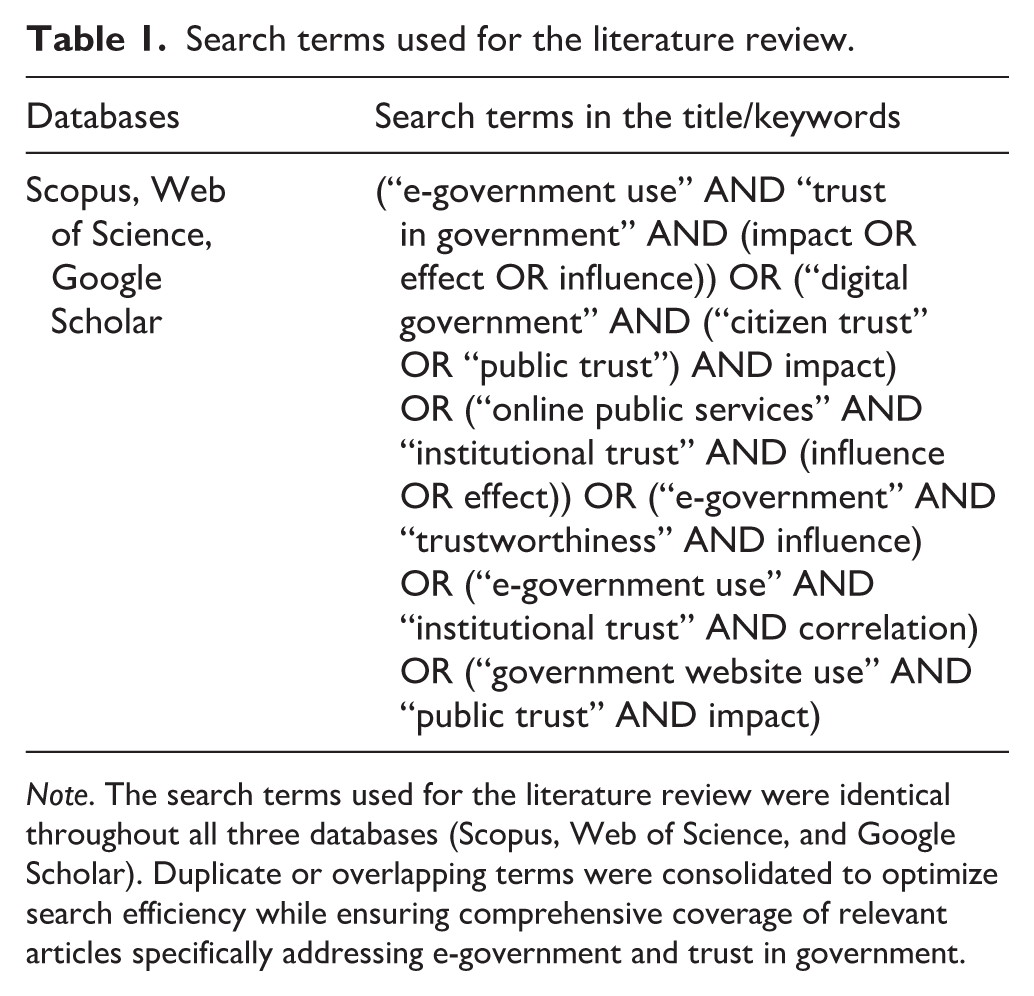
Note. The search terms used for the literature review were identical throughout all three databases (Scopus, Web of Science, and Google Scholar). Duplicate or overlapping terms were consolidated to optimize search efficiency while ensuring comprehensive coverage of relevant articles specifically addressing e-government and trust in government.
Restricting the search to English-language publications and to databases that mainly index international journals likely introduces geographical and cultural bias. This approach may underrepresent studies published in local or regional outlets and may contribute to the concentration of cases from digitally advanced countries. As a result, the findings of this review should be interpreted with caution when generalizing to contexts that are less represented in English-language and Scopus/Web of Science-indexed journals. Future reviews could address this limitation by incorporating non-English publications and regionally indexed databases.
Step 3: Study Relevance and Quality Assessment
The third step involved assessing the relevance and quality of the studies identified in the search. The initial search generated 2,057 records, including 1,881 from academic databases (Scopus, n = 1,692; Web of Science, n = 127; Google Scholar, n = 62) and 176 additional records identified through the top journals in public administration and information systems. After removing duplicates manually (n = 10) and via Covidence (n = 984), 1,063 unique records remained for screening. Then, we screened the titles and abstracts to check whether studies met three relevance criteria: (1) explicit focus on e-government or digital government, (2) inclusion of citizens’ trust in government or institutional trust, and (3) an explicit link between e-government use or digital interaction and trust. This stage excluded 977 records and resulted in 86 articles selected for full-text assessment.
In the second stage, the 86 full-text articles were assessed for both relevance and quality. Quality assessment drew on criteria derived from Batini et al. (2009) and Bano and Zowghi (2015), including clarity of research objectives, alignment between research design and objectives, methodological transparency, completeness of reporting, robustness of analysis, and timeliness. Particular attention was paid to studies published in reputable, peer-reviewed outlets, with a focus on journals ranked in the top three Scimago quartiles (Q1–Q3). Studies were excluded if they did not clearly model trust as an outcome, did not examine e-government use, or exhibited major methodological weaknesses. After this stage, 49 articles met all relevance and quality criteria and formed the final sample for synthesis. The selection process followed PRISMA guidelines to ensure transparency and replicability, as shown in Figure 1.
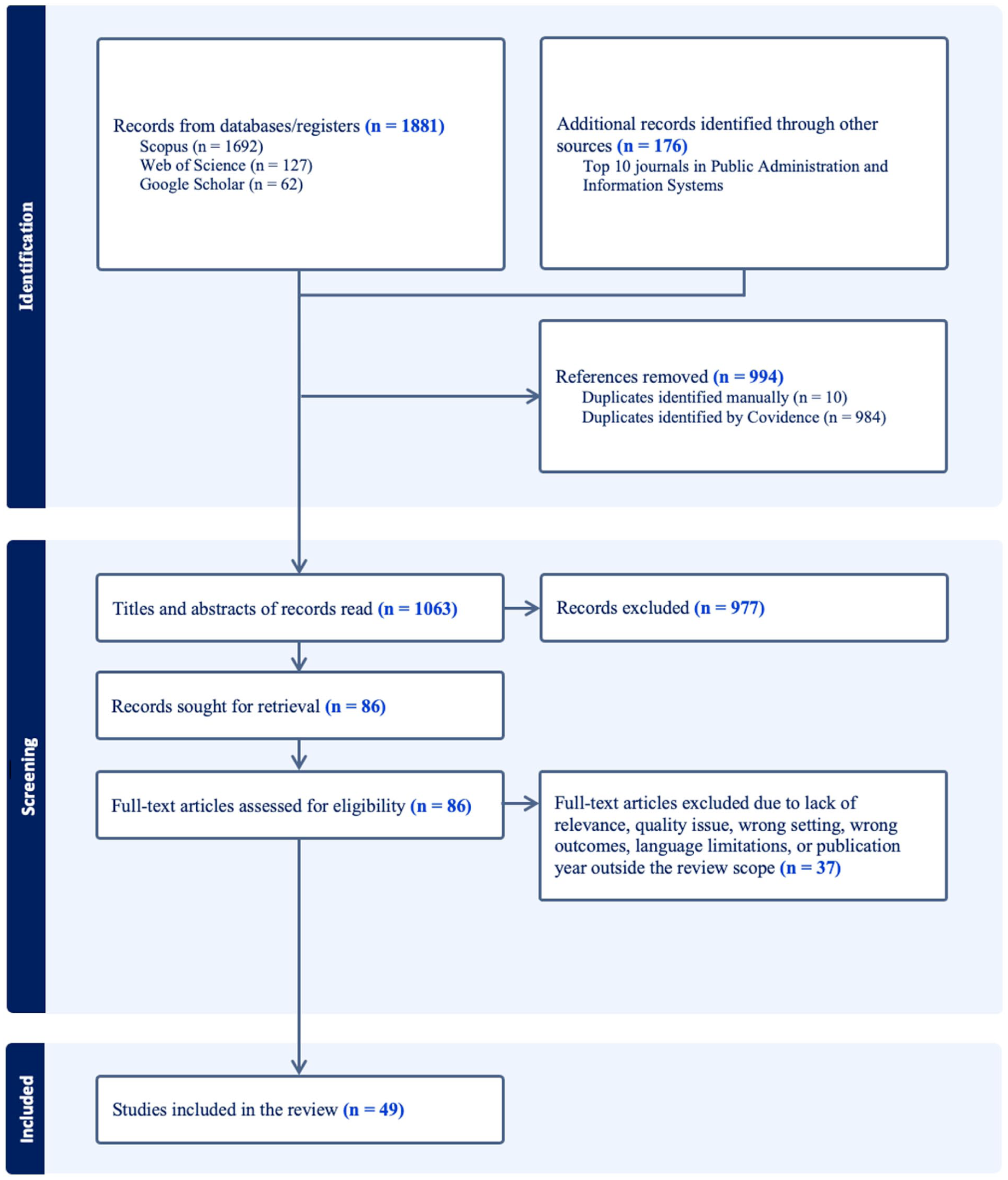
Study selection, assessment, and inclusion (presented using the PRISMA flow diagram).
Step 4: Data Extraction
A structured data extraction protocol was developed to collect information consistently from each of the 49 included studies. For every study, we recorded bibliographic details (authors, year, outlet), contextual information (country or region, level of government, policy domain), methodological characteristics (research design, data collection methods, sample type and size, analytical techniques), and the theoretical framework used. We also coded the substantive variables relevant to the research objectives, including how trust in government was defined and measured, how e-government use was operationalized, the main explanatory factors (such as system quality and transparency), and any mediating or moderating variables (e.g., satisfaction, perceived ease of use, or cultural factors). All extracted information was entered into a structured spreadsheet to ensure consistency and traceability across studies.
Step 5: Data Synthesis
In the final step, we synthesized the extracted data to answer the guiding research question: How does the use of e-government services affect citizens’ trust in government? We applied narrative and thematic synthesis. Based on the extracted variables, we conducted thematic coding to organize the evidence into four analytical dimensions that reflect the aims of the review: (1) conceptualization and measurement of trust, (2) methodological approaches, (3) factors influencing trust in government, and (4) gaps and future directions. Within each dimension, we compared studies side by side, noting recurring patterns, points of divergence, and underexplored issues. This synthesis provides the foundation for our main findings and the subsequent research agenda.
Findings
In the following sections we report on the results emerging from the analysis of the 49 papers included in our review. The results are organized to provide a clear understanding of how research on e-government use and citizens’ trust in government has developed.
General Findings
Articles by Publication Source and Year
Research on the relationship between e-government use and citizens’ trust in government has grown steadily over the past two decades. In the early 2000s, few academic articles addressed this topic, largely because e-government itself was a relatively new concept. Interest increased after the OECD (2003) recognized e-government as a key part of governance and the UN launched its e-Government Surveys in 2003 (UN E-Government Survey, 2008). During the 2010s, publications rose as governments invested in digital services. The COVID-19 pandemic (2020–2023) triggered another wave of studies, as governments accelerated digital transformation to handle the crisis. Since 2023, interest has grown further with the rise of AI and efforts to improve digital inclusion, as emphasized in the latest UN e-Government Survey (UN E-Government Survey, 2024). Table 2 presents the 49 reviewed articles by publication source and year. Key journals like Public Management Review, Government Information Quarterly, and Public Administration Review frequently publish articles on e-government and trust, underlining the topic’s importance in both public administration and information systems research. Over time, research on e-government and trust has expanded from a handful of specialized journals to a much wider range of academic outlets, showing how relevant the topic has become across different disciplines.
Number of papers reviewed by publication source and year of publication.
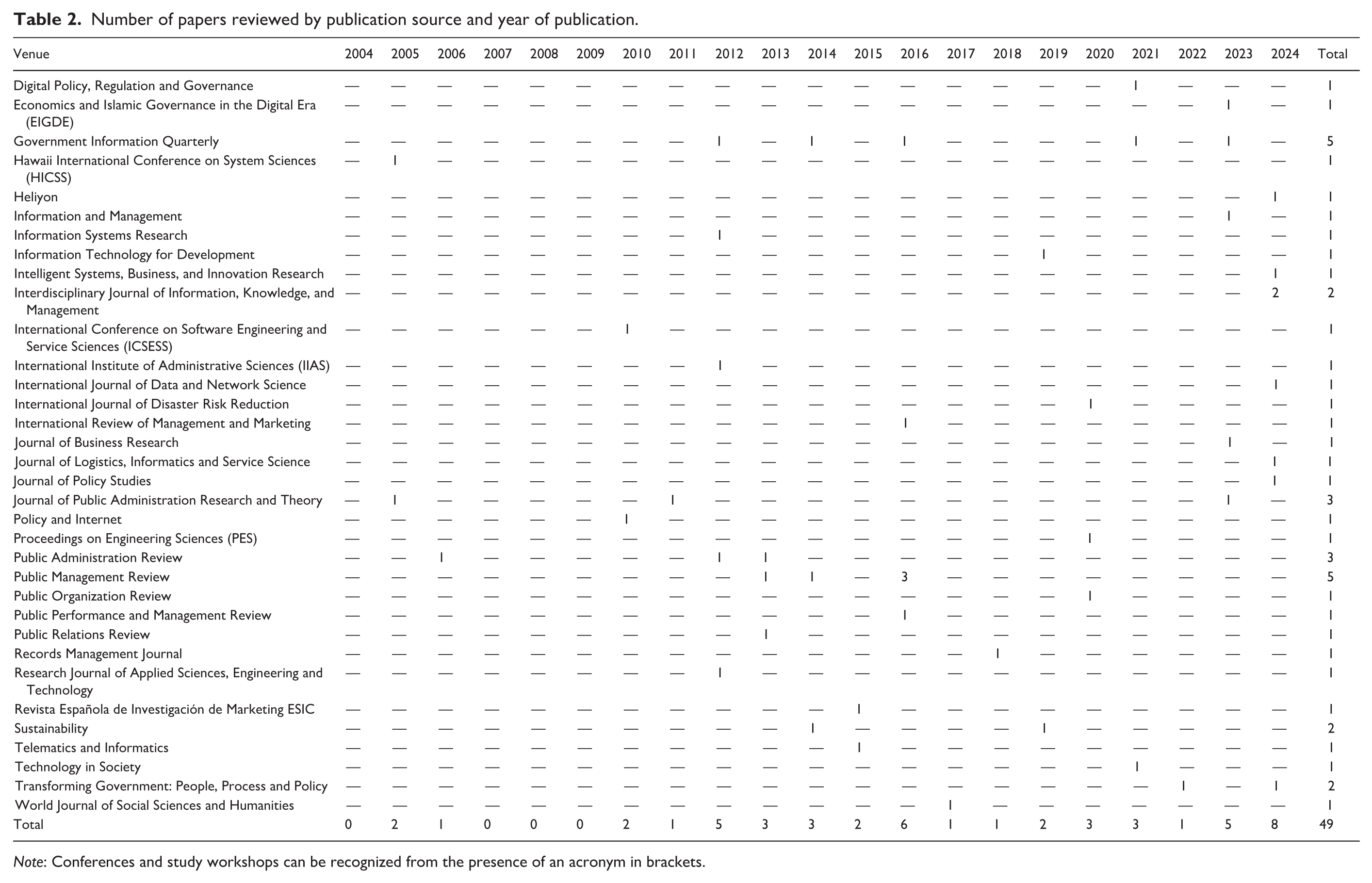
Note: Conferences and study workshops can be recognized from the presence of an acronym in brackets.
Geographic Distribution of the Studies
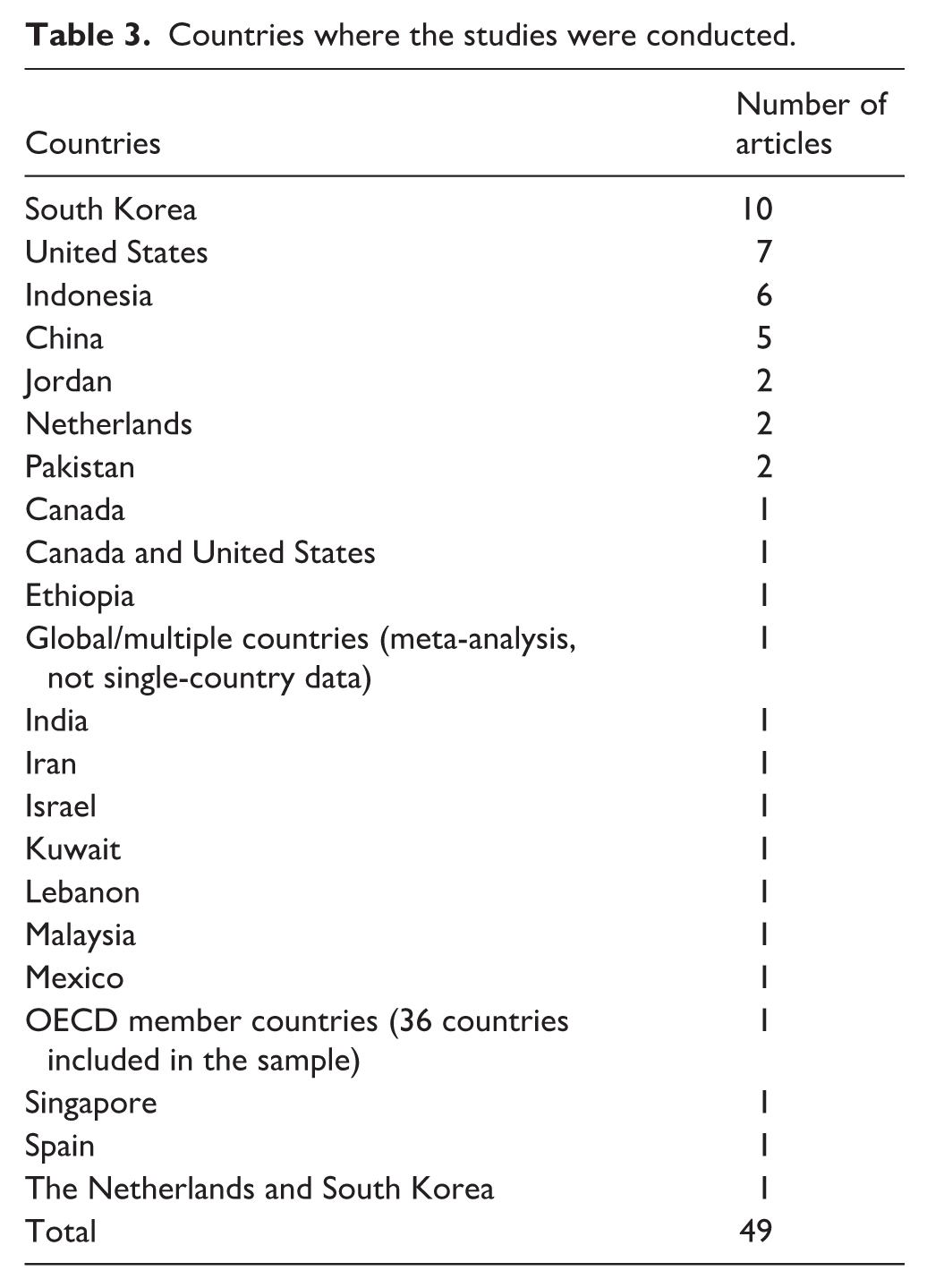
Table 3 shows that the 49 studies are unevenly distributed across countries. South Korea (10 articles), the United States (7), Indonesia (6), and China (5) account for almost half of the sample. Most of these studies are set in countries with relatively advanced or fast-developing digital government and stronger administrative capacity. In these contexts, e-government is often linked to efforts to improve service performance and transparency (Hartanto et al., 2021; Li & Shang, 2023; Parent et al., 2005; Pramuditha et al., 2024; Tolbert & Mossberger, 2006). When citizens experience digital services as convenient, reliable and easy to use, trust in government tends to rise. At the same time, some studies show mixed or even negative effects of certain forms of online interaction, for instance intensive use of information-oriented portals (Im et al., 2014; Porumbescu, 2016a,2016b,2016c). Only a small number of studies focus on local governments in lower-income or otherwise more constrained settings, such as Ethiopia, Pakistan, or rural local governments in developing countries (Beshi & Kaur, 2020; Ella, 2020; Mansoor, 2021). In these cases, basic governance problems and inequality are more prominent. The findings suggest that e-government can support trust where citizens also observe fair treatment, integrity, and responsive behavior, and where digital channels provide timely and accurate information. If these conditions are weak, digital services may do little to change distrust. Furthermore, cultural and institutional differences further shape these patterns. Cross-national and group-comparison studies show that the effects of transparency, internet use, and e-government use on trust vary across countries and social groups (S. Grimmelikhuijsen et al., 2013; Im et al., 2014; Lissitsa, 2021). In societies with stronger acceptance of hierarchy, citizens may place more emphasis on performance and reliability, while in settings with lower power distance expectations for openness and voice are more central to trust. Differences in administrative traditions and accountability arrangements further shape how responsiveness, fairness, and data protection are built into digital services (Beldad et al., 2012; Bertot et al., 2010; Myeong et al., 2014). In conclusion, these patterns indicate that the mechanisms identified in this review are most likely seen in digitally advanced and more stable public sectors and may work differently in other political and cultural contexts.
Countries where the studies were conducted.
Research Trends
This section summarizes the main research trends on how e-government use affects citizens’ trust in government. The 5-year segmentation reflects the evolving e-government research, as outlined in Table 4. From 2004 to 2008, the focus was on the foundational aspects of e-government adoption, particularly government websites and online service accessibility, driven by the global rise in internet penetration, predominantly in countries like the U.S. and South Korea (OECD, 2020). 2009-2013 saw a shift to service quality and citizen satisfaction, with the 2008 financial crisis prompting governments to leverage e-government for greater efficiency and transparency (S. Grimmelikhuijsen et al., 2013). From 2014 to 2018, the focus expanded to direct communication via social media and digital feedback, as platforms like Twitter and Facebook became integral to government engagement, enhancing transparency and trust (Porumbescu, 2016a,2016b,2016c). The period 2019 to 2024 marked the rise of AI-driven services, accelerated by the COVID-19 pandemic, which highlighted the need for digital inclusivity and greater government responsiveness through advanced digital technologies (Kreps & Jakesch, 2023; J. Wang et al., 2024). This segmentation provides a clear view of how e-government research has shifted from basic adoption to AI-driven governance, aligned with technological advancements and societal changes. The evolution of e-government research reflects changing public expectations and the increasing complexity of government services.
Research trends on e-government use and trust in government over the years.
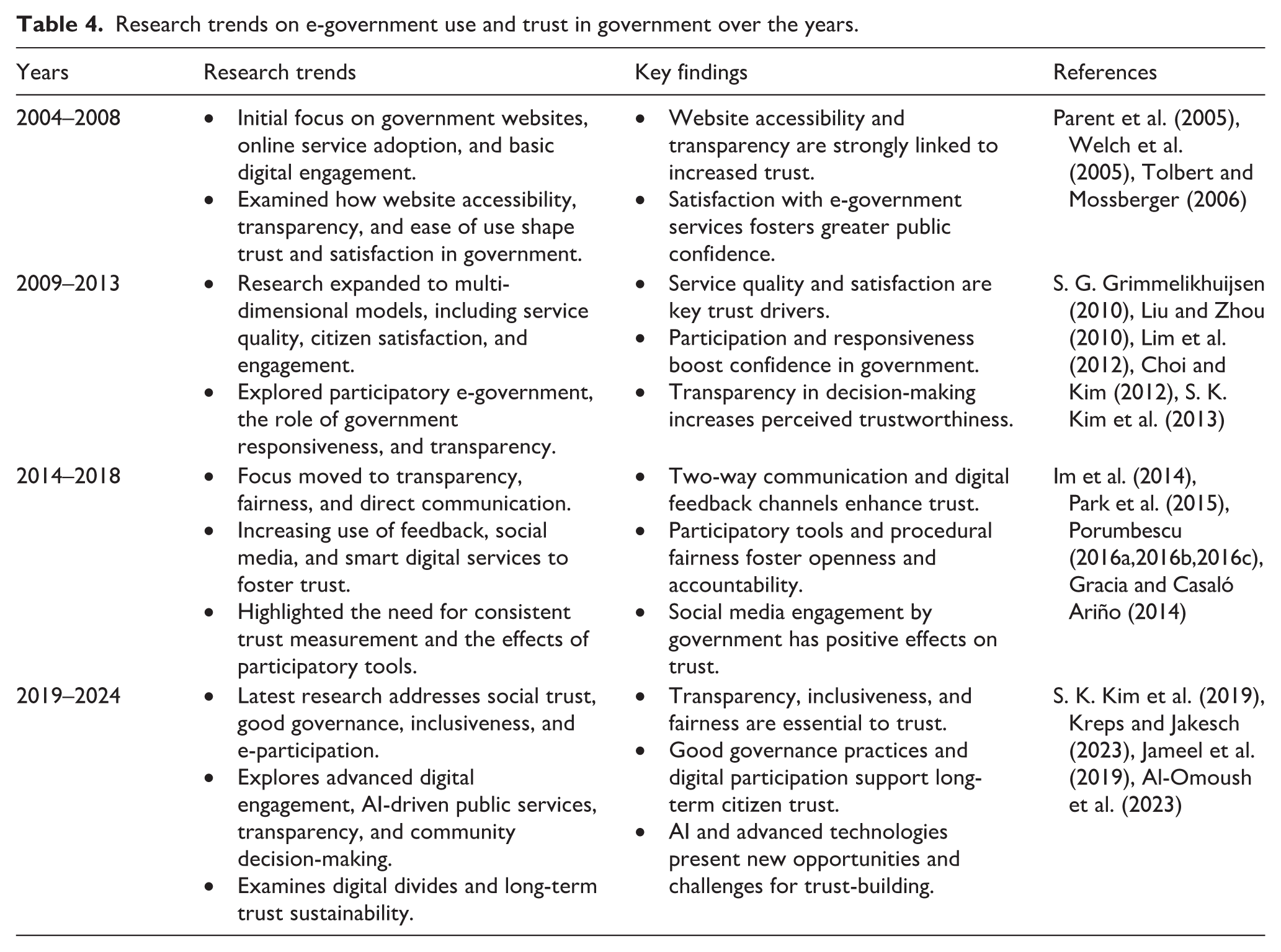
It can be concluded that e-government use can strengthen trust only when it improves accessibility, quality, and openness. In the early years, basic web access and transparent information increased satisfaction and modestly raised trust. As services developed, trust depended more on perceived service quality, responsiveness, and opportunities to participate online. With the spread of social media, two-way communication and procedural fairness through digital channels became central to building trust. Recently, AI-driven government services can support longer-term trust when they are inclusive, transparent, and exhibit good governance. However, they also create new risks related to lack of transparency, privacy issues, intensified surveillance, digital exclusion, and algorithmic bias that may disadvantage specific groups. Overall, the evidence suggests that e-government use trust through the quality, fairness, protection or rights, and inclusiveness of digital experiences, rather than through technology alone.
Theoretical Foundations
The analysis of the selected studies shows a variety of theoretical foundations. Among the 49 studies, only four did not explicitly reference or utilize any formal theoretical framework. In addition, several studies, while not entirely theory-free, were mainly informed by broad concepts or frameworks drawn from prior literature rather than by established theories. For instance, S. G. Grimmelikhuijsen (2010) adopted a multidimensional concept of trust; Choi and Kim (2012) relied on prior work in public administration; and Beldad et al. (2012) used prior literature on online trust as their foundation. The remaining studies employed a range of formal theories or models to investigate trust in e-government (see Table 5).
Findings of theoretical foundations.
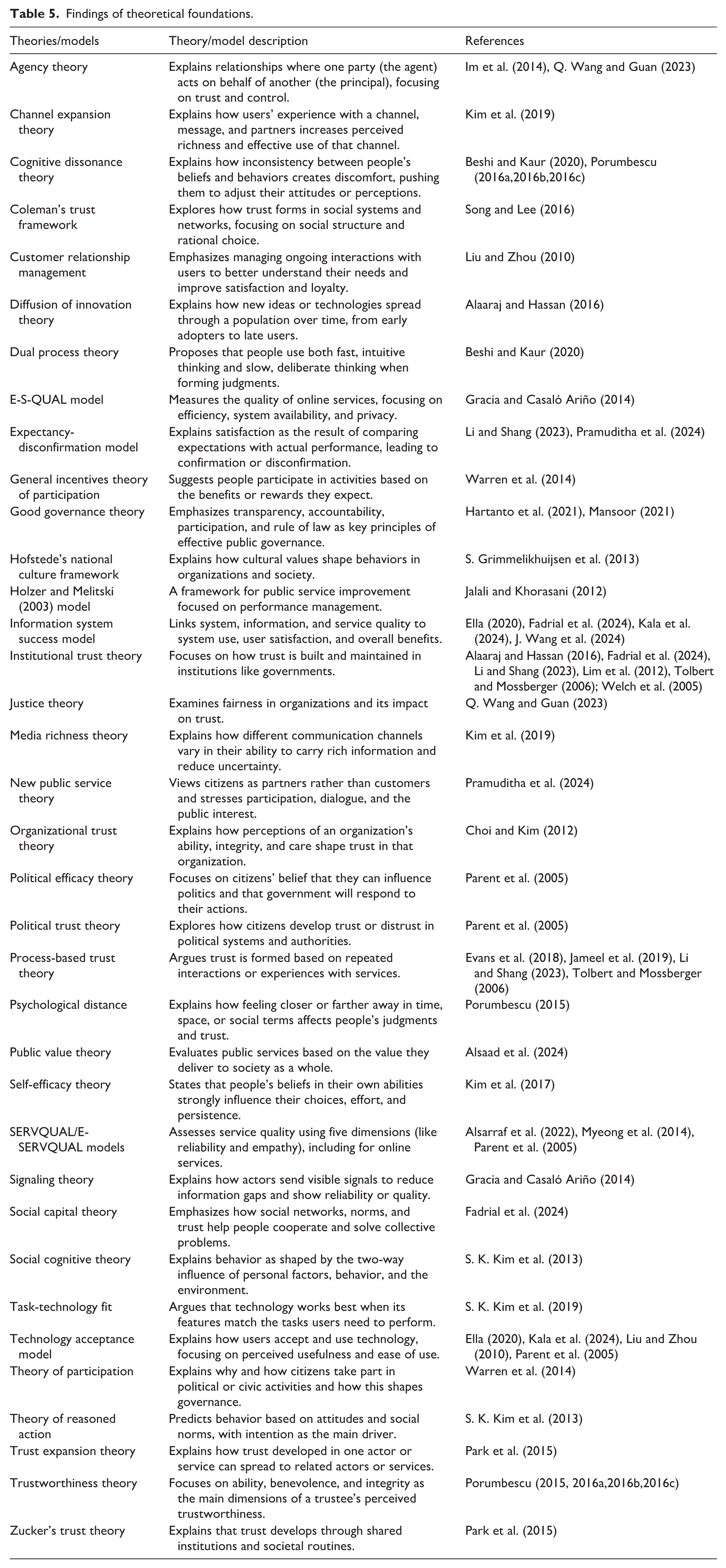
A small set of frameworks appears repeatedly. Institutional trust theory, the technology acceptance model, the information system success model, process-based trust theory, and public value theory are the most common bases for modeling how e-government use relates to trust. Across the sample, these theories are mainly used to structure research models and select variables rather than to extend, integrate, or challenge existing explanations of trust. In this sense, the theoretical landscape is broad but fragmented, with limited attempts to develop new trust frameworks for digital and AI-enabled government services.
Conceptualization, Operationalization, and Measurement of Trust
Definitions of Trust
A review of the selected studies reveals that only a limited number of papers provide an explicit definition of trust. When defined, trust is typically described as a belief, expectation, or evaluation of the integrity, reliability, or responsibility of institutions or systems. Some studies frame trust as an attitude or assessment of whether public authorities fulfill expected responsibilities according to normative standards (Tolbert & Mossberger, 2006). Others define trust as a willingness to rely on institutions based on perceived competence and integrity, or as confidence in expected behavior under uncertainty (Im et al., 2014; S. Kim & Lee, 2012; Parent et al., 2005). These definitions portray trust as both relational and evaluative, involving vulnerability and risk. In contrast, most studies do not directly define trust but treat it as a multidimensional concept or discuss it in relation to its role in e-government or digital governance. In these cases, trust is generally conceptualized as citizens’ confidence or positive expectations toward government agencies or digital platforms (Beldad et al., 2012; Choi & Kim, 2012; S. G. Grimmelikhuijsen, 2010; Lim et al., 2012).
For this review, it is important to recognize both the explicit definitions provided in some studies and the more implicit, conceptual approaches that characterize the majority of the literature. This diversity reflects both the complexity of trust and its central importance in digital governance research. Building on these insights, this study proposes the following definitions of trust and trust in government. Trust is the willingness to rely on institutions, systems, or individuals, based on positive expectations of their competence, integrity, and ability to act fairly and transparently. It involves accepting vulnerability, where the trustor believes the other party will act in their best interest and perform their tasks reliably and satisfactorily. Thus, trust is not only confidence in another’s actions but also the assurance that the trustee will act in ways that align with the trustor’s needs. Trust in government is citizens’ willingness to accept vulnerability and rely on public institutions, officials, and their digital systems. It reflects positive expectations that government will use its power and technological resources responsibly, fairly, and transparently. It is reflected in citizens’ confidence and satisfaction with how government acts effectively and responsively. It also extends to the belief that governmental decisions contribute to the broader welfare of society and address citizens’ needs.
Trust Measurement
Trust is operationalized as an outcome variable across the selected studies (Parent et al., 2005; Welch et al., 2005). The most widely used way to measure trust is through surveys. Researchers typically ask respondents to rate their experiences with government websites, online portals, and digital interactions using scales or sets of questions (Liu & Zhou, 2010; Welch et al., 2005). These questions often ask about perceptions of transparency, how easy digital services are to use, satisfaction with online interactions, and how secure citizens feel about sharing information (Beldad et al., 2012; S. Kim & Lee, 2012; Porumbescu, 2016a,2016b,2016c). Most surveys draw from established question sets or adapt items from previous research to ensure comparability across studies (S. K. Kim et al., 2013; Parent et al., 2005). Beyond surveys, a smaller number of studies employ experiments or scenario-based methods to investigate trust in controlled settings (S. G. Grimmelikhuijsen, 2010; S. Grimmelikhuijsen et al., 2013). These methods test how variations in transparency or service features affect participants’ trust. In addition, some research utilizes large national or cross-country datasets to analyze trust at a broader level (Alswalmh et al., 2024; Q. Wang & Guan, 2023). While survey-based measurement remains the dominant approach, the use of experiments and large-scale data adds diversity and depth to the field (S. G. Grimmelikhuijsen, 2010; Lee-Geiller, 2024).
In summary, most research uses clear, structured questions in surveys to measure trust, though other methods like experiments and large-scale data analysis are also used. The trend toward standardized tools helps researchers compare results and strengthens understanding of what shapes citizens’ trust in the digital era (S. Grimmelikhuijsen et al., 2013; Parent et al., 2005; Porumbescu, 2016a,2016b,2016c).
Methodology Adopted
In this section we examined the methodological approaches of the selected studies.
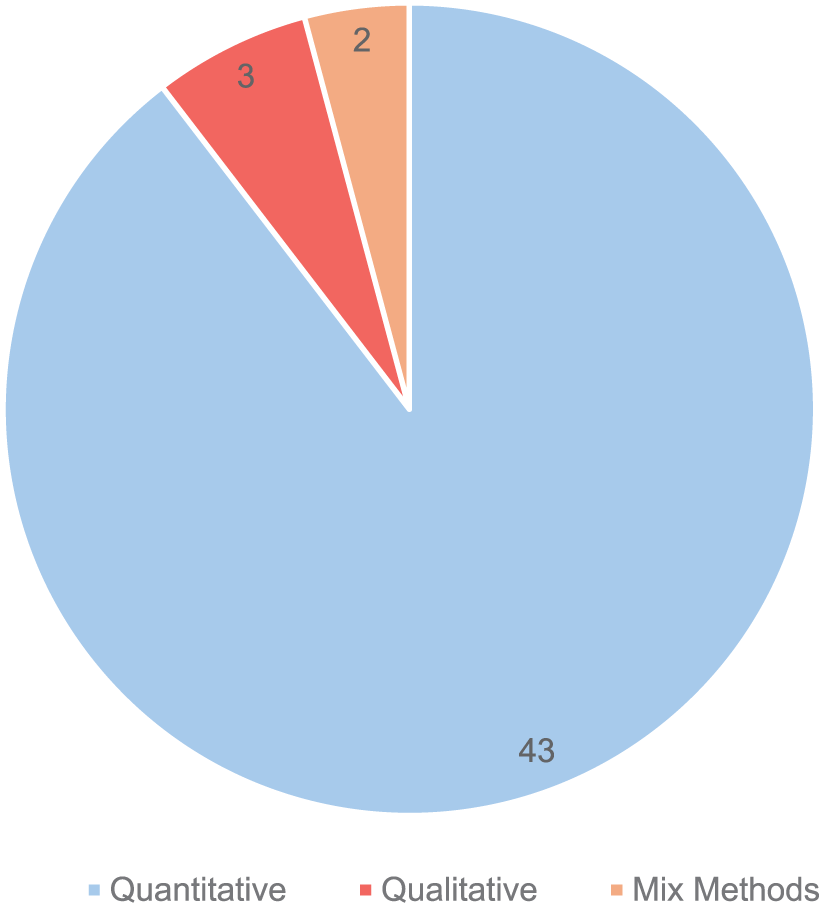
Types of methodological approaches in reviewed studies.
Given that most of the research relies on quantitative methods, there is a clear gap in the field. Quantitative methods can indeed measure trends across large populations effectively. However, they cannot capture the complexity of trust. Trust is shaped by many factors that quantitative approaches may overlook, these include emotional, social, and cultural influences that affect how citizens perceive government services. Qualitative research offers a way to explore these factors in greater depth. Interviews or case studies can provide insights into the reasons behind citizens’ attitudes; this kind of research can reveal the personal and contextual elements that influence trust. This methodological imbalance suggests opportunities for future research to adopt a mixed-method approach. By incorporating both qualitative and quantitative methods, future studies could capture the complexity of citizens’ trust in government services and the underlying factors that influence their perceptions and behaviors.
Key Determinants of Citizens’ Trust in E-Government
This section identifies and groups the most common variables examined across the selected studies. These factors help explain why citizens choose to trust or distrust digital government services.
Factors Influencing Citizens’ Trust
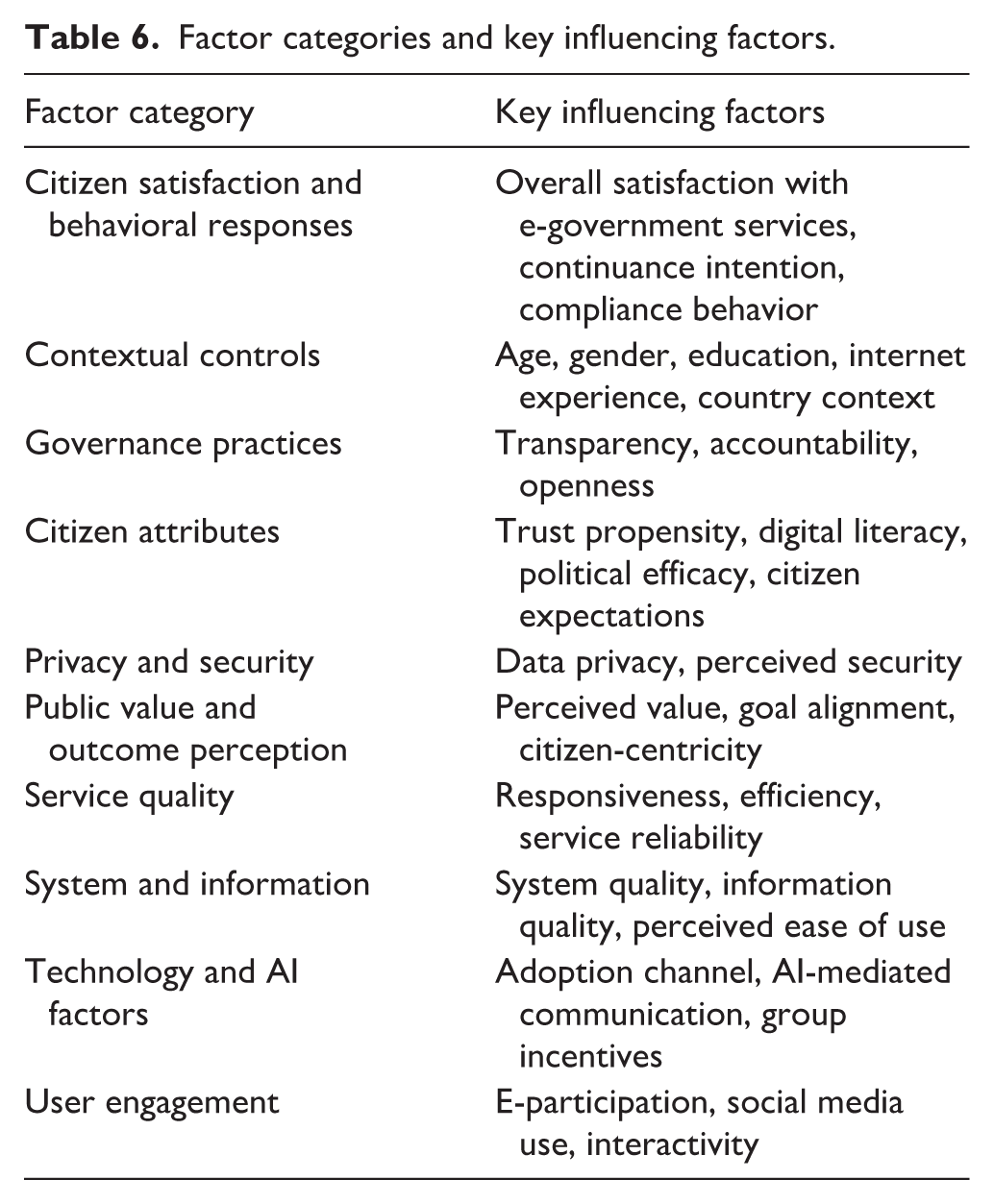
A review of the 49 studies reveals that citizens’ trust in government is shaped by multiple interrelated factors. Citizen satisfaction is the most frequently cited determinant; trust rises when users find digital services effective, user-friendly, and responsive. Contextual factors, such as age, gender, education, and internet experience, also matter, with higher digital literacy linked to greater trust. Governance practices like transparency, accountability, and openness are repeatedly highlighted. When governments communicate clearly and act ethically online, legitimacy and trust are reinforced. Privacy and data security remain critical; citizens are more trusting when they believe their personal data is protected. Other key drivers observed across the selected studies include the perceived value and efficiency of digital services, service quality (timely responses, reliability), and system quality (ease of use, information reliability). Recent research points to the positive impact of AI-powered systems and mobile apps on interactivity and efficiency, further enhancing trust. Finally, user engagement, through e-participation and feedback mechanisms, helps citizens feel heard, further building trust. Taken together, these findings underscore that building trust in government depends on delivering secure, high-quality, transparent, and inclusive digital services. These insights are summarized in Table 6, which presents the factor categories and their associated influencing factors.
Factor categories and key influencing factors.
Visual Summary of Variables
This section presents a visual summary of the key variables identified across the selected studies. The summary groups variables that influence citizens’ trust in government through e-government use. The most common independent variables include system-related factors such as perceived usefulness, ease of use, service quality, information quality, and responsiveness, all highlighting the importance of the user experience. The dependent variable is typically trust in government, usually measured as citizens’ belief in government competence, integrity, and benevolence. Mediating variables, such as satisfaction, perceived performance, and transparency, help explain how e-government use leads to changes in trust. Moderating variables like digital literacy, political ideology, and social media exposure influence the strength or direction of these effects. Control variables (age, gender, education, and other socio-demographic factors) help account for variation across user groups. Figure 3 provides a visual summary of these relationships as found in the 49 reviewed studies.
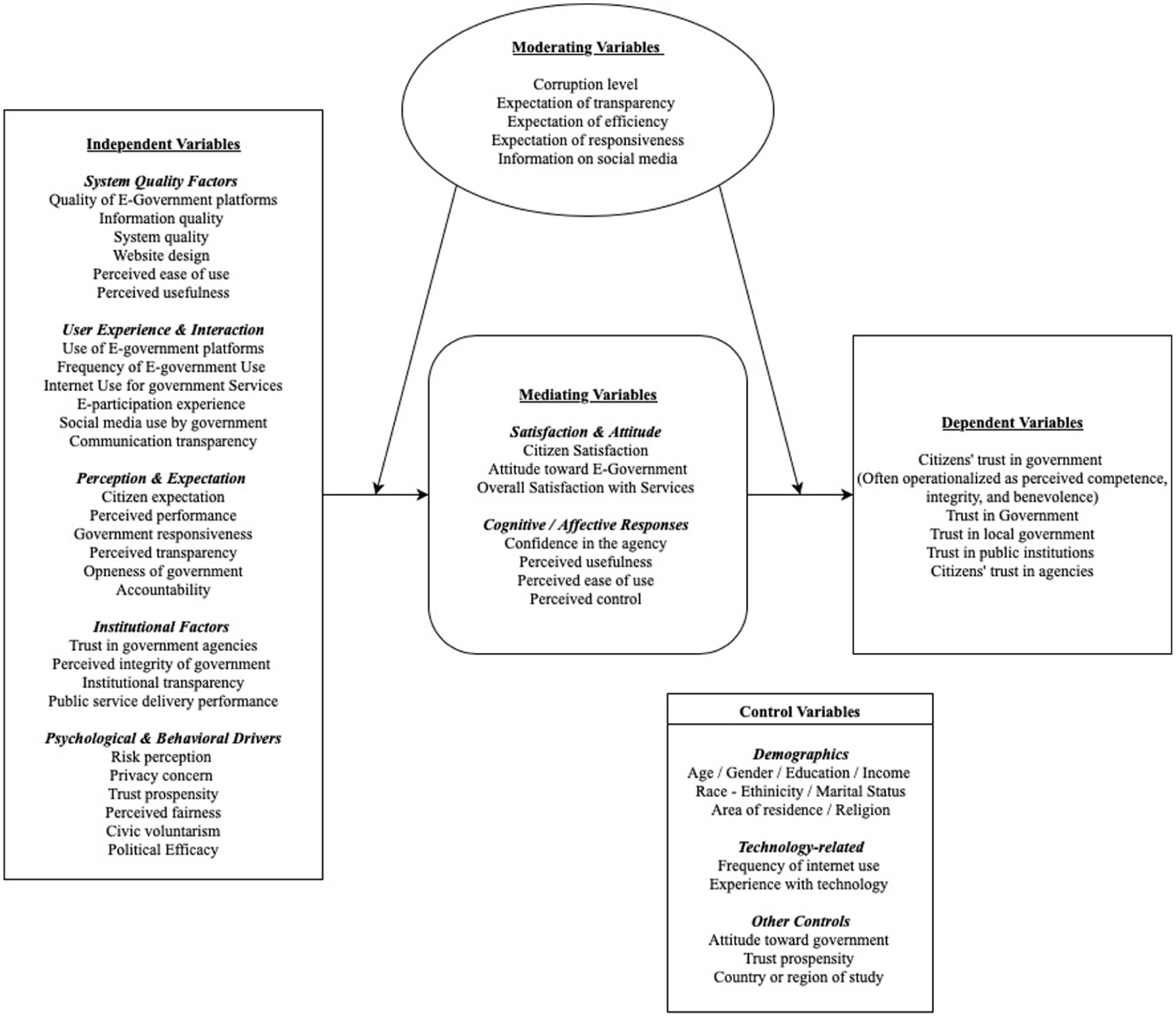
Conceptual framework of variables influencing citizens’ trust in government through E-government use.
In constructing Figure 3, variables were assigned to the roles of independent, mediating, moderating, or control factors based on two criteria. First, we coded how each construct was specified in the original empirical models and placed it in the category in which it most frequently appeared across the 49 studies. Second, we considered the theoretical position of the construct in dominant frameworks (e.g., service and system quality as antecedent conditions; satisfaction and perceived performance as process variables linking use and trust). We acknowledge that some variables are more fluid: for instance, transparency or satisfaction are treated as direct predictors of trust in some studies and as mediators or moderators in others. The framework should therefore be read as an integrative heuristic that summarizes typical roles in the literature, rather than as a fixed causal model in which each variable can only occupy a single position. This approach allows us to reflect the diversity of operationalizations while still providing a coherent overview of how e-government use is theorized to affect trust in government. To conclude, the review finds that trust in government is built step by step. It is shaped by many different factors, and this structure clarifies how various elements interact to shape trust through e-government use.
Gaps in the Current Literature on E-Government Use and Citizens’ Trust
The analysis of 49 empirical studies shows clear progress in understanding the relationship between e-government use and citizens’ trust in government. However, several important gaps remain.
Most studies still focus on citizens’ intentions or willingness to use e-government services, rather than examining the effects of actual use. Only a small number of articles analyze how real interactions with e-government platforms shape trust over time (Li & Shang, 2023; Tolbert & Mossberger, 2006; Welch et al., 2005; Xia, 2017). In addition, there is limited research on new technologies, such as AI-driven public services and mobile application, even as these tools become more common in digital government. Few studies address how features like automation, algorithmic decision-making, or chatbots affect trust in government systems.
The majority of reviewed studies use quantitative, cross-sectional surveys and often rely on convenience sampling (S. Kim & Lee, 2012; Liu & Zhou, 2010; Morgeson et al., 2011; Tolbert & Mossberger, 2006). This approach limits the generalizability of findings and makes it difficult to capture changes in trust over time. There are few qualitative studies that explore citizens’ lived experiences, and longitudinal or experimental research is almost nonexistent.
Many studies rely on established theories, such as the TAM or Institutional Trust Theory, but seldom attempt to extend or adapt these models to the changing realities of e-government (Liu & Zhou, 2010; Morgeson et al., 2011). There is a lack of theoretical innovation, especially concerning the integration of new frameworks for digital, algorithmic, or AI-mediated trust. The field would benefit from testing and developing theories that reflect the complexity of today’s digital government services (S. Grimmelikhuijsen, 2012; Parent et al., 2005; Welch et al., 2005).
Few studies address how citizens interpret or feel about digital governance, especially with new technologies like AI and automated decision-making. There is a lack of research into how people react to algorithm-driven services, and what emotional or psychological responses these generate (Mansoor, 2021; Porumbescu, 2016a,2016b,2016c). This gap is important as technology continues to shape the relationship between government and citizens.
Trust is defined and measured in different ways across studies, making comparisons and synthesis difficult (Alswalmh et al., 2024; Fadrial et al., 2024; Kala et al., 2024). Many studies use survey questions or indices that are not always explained in detail. There is a need for more consistent and transparent operationalization of trust, as well as better reporting of measurement tools, to strengthen the reliability of future research.
The reviewed literature is dominated by studies from developed or digitally advanced countries, often focusing on urban, highly literate, or younger populations (Porumbescu, 2016a,2016b,2016c; Tolbert & Mossberger, 2006; West, 2004). Rural areas, older adults, marginalized groups, and people with lower digital skills are rarely studied. This means that existing findings mainly reflect the experiences of already-connected users and tell us little about those at the margins of the digital state. The link between e-government use and trust is therefore likely to differ across political systems, cultural settings, and administrative traditions, but current evidence cannot capture this variation.
Discussion
Synthesis of the Main Findings
This systematic review examined 49 empirical studies to answer the question: How does the use of e-government services affect citizens’ trust in government? Overall, the evidence shows that e-government use can strengthen trust when digital interactions signal competence, integrity, and fairness. Trust in Government tends to increase when citizens experience services as useful, easy to use, reliable, and responsive, and when digital channels make government actions more transparent. Across the studies, citizen satisfaction is the central pathway linking e-government use to citizen’s trust in government. Positive experiences with online services lead to higher satisfaction, which in turn improves perceptions of government performance and reliability. Perceived service quality, system quality, transparency, and responsiveness are the most consistent drivers of this process. When citizens believe that their data are handled securely and that privacy is protected, they are also more willing to trust digital government systems. Furthermore, the effect of e-government use on citizens’ trust in government is not uniform. Contextual factors such as age, education, digital literacy, and prior internet experience shape how different groups interpret their online interactions with government. Studies from countries with advanced digital infrastructure show stronger positive links between use and trust, whereas findings from less resourced settings are more mixed. Recent work on AI and mobile platforms suggests that new technologies can further enhance trust when they improve efficiency, interactivity, and access, but research on these developments remains limited.
We can conclude that these 49 studies indicate that e-government use enhances citizens’ trust in government when services are user-centered, transparent, secure, and responsive, and when citizens feel that digital channels give them a fair and reliable way to interact with public institutions. However, as discussed in Section “Gaps in the Current Literature on E-Government Use and Citizens’ Trust,” important gaps remain regarding emerging technologies, excluded groups, and the longer-term dynamics of trust.
Theoretical Implications
This systematic review highlights how research on e-government and trust draws from a range of established theories, such as the TAM, Institutional Trust Theory, Public Value Theory, and Process-Based Trust Theory (see Table 5). Most studies use these frameworks to structure their research questions and interpret findings, rather than to develop new theories. As a result, theory development in this field remains limited. Many studies do not fully integrate or extend these theories to capture the unique features of digital and AI-enabled government services. Furthermore, while TAM remains popular for explaining adoption and use, it often overlooks the complexity of trust as an outcome. Similarly, Institutional Trust Theory and Public Value Theory provide strong foundations for understanding relationships between citizens and institutions but overlook critical aspects like algorithmic governance and automated decision-making processes. Indeed, most reviewed studies rely on traditional models without adapting them for the evolving digital context. Another theoretical limitation is the lack of models that connect the technical, social, and emotional dimensions of trust in digital governance. Some studies suggest that trust in government is shaped by user satisfaction, perceived fairness, and data security. However, these factors are not always clearly linked in the conceptual models. There is a need for frameworks that explain how citizens’ digital experiences shape their expectations, perceptions, and willingness to trust government services. The review also notes that newer models, especially those incorporating AI, human–machine interaction, and algorithmic transparency, are largely absent from current research. To conclude, the field would benefit from more integrated and updated theoretical models (See Section “A Research Agenda on the Effects of Technology Use in Government Services on Citizens’ Trust in Government”).
Practical Implications
The findings have practical implications for central government policymakers, local public service managers, and system designers or IT providers. For central policymakers, the results underline the need for clear standards on service quality, transparency, and data protection. Governments should adopt national guidelines on usability and accessibility for all public-facing digital platforms, including plain language, mobile-friendly design, and minimum response time targets. They should also set mandatory rules for privacy and security, such as default data minimization, clear consent procedures, and regular independent audits of digital and AI-based systems. Public reporting of performance indicators (e.g., uptime, response times, complaint resolution) can signal reliability and strengthen trust at the system level. For local managers and frontline agencies, trust-building depends on how digital channels work in day-to-day interactions. Managers should ensure that online requests and complaints receive timely, substantive responses, and that citizens can track the status of their cases. E-participation tools and feedback forms should not only collect comments but also feed into visible changes, for example by publishing “you said, we did” reports. Local agencies should also provide assisted digital options, such as help desks, call centers, or in-person support, so that older adults, rural residents, and people with low digital skills are not excluded from online services. For system designers and IT providers, the evidence points to the importance of user-centered and trustworthy design. Interfaces should be tested with diverse user groups, including those with limited literacy or unstable internet access, to ensure that key tasks (such as applying, paying, or requesting information) are simple and reliable. Privacy and security safeguards should be made visible in the interface, for example through clear explanations of what data are collected and how they are used. Where AI or automated decision-making is involved, systems should provide simple explanations of the main decision criteria, offer human review or appeal channels, and log errors or complaints for continuous improvement. These design features can reduce perceptions of arbitrariness and help sustain trust in digital government. Finally, all three actor groups need to address digital inequality explicitly. Policies and designs should be tested against the needs of groups who are less connected or less trusting, not only frequent online users. This includes monitoring differential take-up and satisfaction across age, income, education, and location, and adjusting outreach and support strategies accordingly.
A research Agenda on the Effects of Technology Use in Government Services on Citizens’ Trust in Government
This section proposes a research agenda aiming to move beyond general e-government use and to develop theory about how concrete AI-enabled public services shape citizens’ trust in government.
Recommendation 1: Study specific AI-based government services as objects of trust. Most existing studies examine “e-government use” in general, often focusing on websites or mobile portals. Future research should analyze concrete AI services, such as chatbots, automated eligibility checks, or decision-support systems, and examine how their use affects trust in government. This implies describing clearly what type of AI is used, in which policy domain, and at which level of government, rather than using “AI” as a broad label. Researchers should model AI-specific features such as explainability, perceived fairness, and human oversight, instead of treating AI as just another delivery channel.
Recommendation 2: Test whether satisfaction still mediates the link between AI government services use and trust in government. Previous work suggests a “use → satisfaction → trust” pathway for traditional e-government. Future studies should test whether this mediation still holds for AI-mediated services. Researchers can examine whether interactions with AI systems increase trust mainly by raising satisfaction with service performance, or whether AI also changes deeper perceptions of government competence and benevolence. Comparative models, with and without satisfaction as a mediator, would clarify whether this long-standing mechanism remains valid in an AI context.
Recommendation 3: Examine algorithm literacy as a moderator between AI government services use and trust in government. The review shows that digital skills and experience shape how citizens react to e-government use. In the AI context, an important extension is algorithm literacy, that is, citizens’ basic understanding of how algorithmic systems work and what their limits are. Future research should test whether algorithm literacy moderates the relationship between using AI-based services and trust in government, for example by comparing high- and low-literacy groups or by designing interventions that raise algorithm literacy and measuring the effects on trust.
Recommendation 4: Use Mayer et al.’s (1995) cognitive trustworthiness framework and complement it with emotional responses. Many variables already used in the literature map onto Mayer et al.’s three dimensions of trustworthiness: ability (competence, efficiency), benevolence (public interest, care), and integrity (fairness, honesty, privacy protection). Future models should make this structure explicit and examine how AI-based government services use influence each dimension. At the same time, interactions with AI systems also trigger emotional reactions, such as anxiety, fear of surveillance, or feelings of reassurance when processes appear fair and predictable. Building on Mayer et al.’s cognitive framework and linking it with work on affective trust would allow researchers to analyze how beliefs about ability, benevolence, and integrity, together with feelings of safety or worry, jointly shape citizens’ trust and distrust in AI-enabled government services.
Recommendation 5: Apply Zucker’s (1986) institutional trust theory and move beyond adoption models. Most studies still rely on technology adoption theories (e.g., TAM), even when they analyze actual use rather than intention. Future research should instead draw on Zucker’s distinction between process-based, characteristic-based, and institutional-based trust. This would shift attention to how repeated AI-mediated interactions (process-based), social and group positions (characteristic-based), and formal guarantees such as laws, standards, and oversight bodies (institutional-based) jointly sustain or erode trust. Such an approach aligns better with a mature e-government context, where the question is less “will citizens adopt?” and more “does continued use consolidate or undermine institutional trust?”
Recommendation 6: Develop multilevel, context-sensitive models of effects of AI-enabled government services use on trust in government. Findings from this review suggest that the same digital features may have different effects in different political and cultural settings. Future studies should therefore use multi-level designs that combine individual-level data (e.g., use, satisfaction, perceptions of AI and fairness) with contextual indicators (e.g., governance quality, rule of law, corruption, digital inclusion, cultural values) and specify the policy domains in which AI is used (such as welfare, taxation, policing, or licensing). This would allow researchers to test whether AI-enabled government services build trust more strongly in contexts with strong rights protections and accountability, and whether effects are weaker or even negative where institutions are perceived as abusive, biased, or unresponsive.
Recommendation 7: Use mixed-method and explanatory designs to show how and why emerging technology use shapes trust in government. This review shows a strong dominance of quantitative, cross-sectional survey studies and very few qualitative or mixed-method designs. Future research should use mixed methods to connect broad patterns with citizens lived experiences. For instance, researchers could combine surveys or experiments on AI-based services with follow-up interviews or focus groups to explore how people interpret automated decisions, transparency messages, or error handling. Mixed-method designs would help clarify not only whether technology use affects trust, but also how and why these effects arise in different groups and contexts.
Limitations of this Review
This review, like all systematic reviews, has several limitations. First, the search was limited to selected academic databases and key terms related to “e-government” and “trust.” This may have led in the exclusion of relevant articles found in other databases or using different keywords. As a result, there may be studies on related topics that were not included in the analysis. Second, the review focused only on peer-reviewed journal articles published in English. Grey literature and non-English publications were therefore not considered, so some valuable insights from these sources may have been missed. Third, the review did not conduct a meta-analysis or quantitative synthesis because the included studies used diverse research designs, theoretical models, and outcome measures. As a result, it was not possible to provide a statistical estimate of the effects of e-government use on trust in government. Future systematic reviews could broaden the search to include additional databases, keywords, and languages. Including grey literature may also add depth and variety to the analysis. Meta-analyses or mixed-methods syntheses could also be used to provide more robust quantitative estimates.
Conclusion
This review examined the main empirical research on how e-government use affects citizens’ trust in government. Across 49 empirical studies, the evidence shows that e-government use can enhance citizens’ trust in government, but only under specific conditions. Trust in government tends to rise when digital interactions signal competent service delivery, fair treatment, and respect for privacy and rights, and when citizens experience digital channels as a reliable and legitimate way to deal with public institutions. When services are difficult to use, unreliable, hard to access for some groups, or raise fears about data misuse and monitoring, increased use does not automatically build trust and may reinforce doubt. This review makes three main contributions. First, it systematically maps how empirical research on e-government use and trust in government has developed over the past two decades. It highlights where and how studies have been conducted, which methods and theories dominate, and which contexts and populations remain under-represented. Second, it synthesizes the main mechanisms through which e-government use shapes trust. It shows that satisfaction, perceived performance, transparency, privacy, and user engagement are recurrent links between digital experience and institutional trust. Third, it identifies key gaps in the current literature and turns them into a focused research agenda for the AI era. This agenda points to concrete constructs, theories, and designs that future studies can use to examine AI-based services, the role of satisfaction and algorithm literacy, and trust as an outcome of continued use rather than only of initial adoption. To conclude, the findings suggest that e-government services use affects trust in government through the quality, fairness, and inclusiveness of digital experiences, rather than through digitalization itself. As governments expand AI-based and data-driven services, future research needs to address the gaps and recommendations identified in this review, as it will be crucial for understanding when digital government strengthens institutional trust, when it leaves it unchanged, and when it risks undermining it.
Footnotes
Acknowledgements
The author wishes to thank the School of Public Administration at Huazhong University of Science and Technology for academic support.

Funding
The authors received no financial support for the research, authorship, and/or publication of this article.
Declaration of Conflicting Interests
The authors declared no potential conflicts of interest with respect to the research, authorship, and/or publication of this article.