







Abstract
Automation plays a crucial role in enhancing efficiency and increasing capacity for in vitro absorption, distribution, metabolism, and excretion profiling in early drug discovery. Building an automation platform requires a careful balance of innovation and practical considerations to align assay needs with technological capabilities. In this study, we present a state-of-the-art automation system designed to support the miniaturization of the Caco-2 permeability assay from the 24-well to the 96-well format. This platform integrates advanced infrastructure for cell culture and assay execution, along with several key features, including innovative cleaning protocols, cutting-edge plate tracking, and dynamic scheduling capabilities. The fully automated 96-well platform delivers significant efficiency gains, increased capacity, and faster turnaround for permeability assay support while maintaining high predictive accuracy. It correctly classified 94% of 50 literature compounds, demonstrating strong concordance with the established 24-well format. Moreover, the platform enables large-scale permeability data generation, advancing our “predict-first” modeling paradigm, in which predictive models guide experimental design and compound prioritization.
INTRODUCTION
In modern drug discovery, thousands of compounds are often synthesized for each program during the lead discovery and optimization process to find potential clinical candidates. 1 Absorption, distribution, metabolism, and excretion (ADME) properties play a critical role in the success of drug candidates and are extensively evaluated with in vitro assays to predict their behavior in vivo. 2 Manual processing of such a large volume of compounds is both time-consuming and error-prone, making automation crucial for efficiency and consistency. 3 Furthermore, automation enables the parallel processing of multiple compounds, accelerating decision-making and the optimization of ADME properties of drug candidates. As the demand for fast and large-scale ADME profiling grows, automation becomes indispensable in drug discovery and development.4–6
The Caco-2 assay is a widely used in vitro model to predict a drug’s oral bioavailability due to its close correlation with human absorption data. 7 Caco-2 cells mimic the properties of the small intestine both functionally and morphologically. 8 When cultured, these cells form a monolayer with tight junctions and express key transport proteins such as P-glycoprotein. This makes them valuable for assessing both passive diffusion and active transport of compounds. 9 The Caco-2 assay is highly complex, both in terms of cell culture and assay execution. Caco-2 cells need to grow on a semi-permeable support for 2 to 3 weeks, with media changes every 3 days to allow the formation of a cell monolayer and the adequate expression of efflux transporters before they can be used to conduct the assay. This process requires a specialized sterile environment for cell culture and careful handling to avoid disrupting the monolayer during media changes.
Historically, the Caco-2 assay has been conducted mainly in 12- or 24-well plate format, although the 96-well assay has also been reported to increase throughput.10,11 At Bristol Myers Squibb (BMS), a 24-well Caco-2 assay had been utilized for over 10 years, relying on a bulky and complex automation system. This legacy platform often experienced execution failures due to the need for multiple reformatting steps—transferring from 96-well compound plates to 24-well assay plates and then back to 96-well sample collection plates. These steps significantly increased the complexity of the workflow, leading to extended assay times (>6 h per assay) and a high rate of automation failure.
To achieve high throughput and assay robustness, transitioning the Caco-2 assay to a 96-well format is highly desirable. However, this transition is only feasible if the miniaturized format preserves tight junction integrity, ensures adequate transporter expression in Caco-2 cells, and is supported by robust automation. In our previous publication, 12 we reported that the comprehensive characterization and optimization of Caco-2 cells enabled the development of a miniaturized Caco-2 assay. In this article, we focus on building a state-of-the-art automation infrastructure needed to support the 96-well Caco-2 assay. Several cutting-edge technologies were evaluated, and multiple rounds of testing were conducted, which resulted in a fully automated, end-to-end system. This system includes two automated platforms: one dedicated to cell culture in a clean room, with the capacity to store hundreds of 96-well transwell plates, and the other a flexible assay platform integrating multiple components. Both platforms are powered by adaptable automation software, enabling scalable, seamless operation of the entire Caco-2 workflow, from cell culture to assay. This infrastructure also supports related permeability assays, such as Madin-Darby Canine Kidney (MDCK)-null and MDCK-efflux assays. With the implementation of the new automation infrastructure, the turnaround time and capacity of the assays have increased significantly.
MATERIALS AND METHODS
Materials
The Caco-2 cell line was obtained from the American Type Culture Collection (ATCC, Manassas, VA, USA). Heat-inactivated fetal bovine serum, Hank’s Balanced Salt Solution (HBSS), and bovine serum albumin (BSA) were obtained from Sigma Aldrich (St. Louis, MO, USA). Type I rat tail collagen was obtained from BD Biosciences (Billerica, MA). Dulbecco’s Modified Eagle’s Medium (DMEM), L-glutamine, Pen-Strep, non-essential amino acids (NEAA), and N-2-hydroxyethylpiperazine-N'-2-ethanesulfonic acid (HEPES) were all purchased from GIBCO/Invitrogen (Grand Island, NY, USA).
Tolbutamide and diclofenac were purchased from Sigma Chemical Co. (St. Louis, MO, USA). HPLC-grade acetonitrile, distilled water, formic acid, and methanol were purchased from J.T. Baker (Phillipsburg, NJ, USA). All test compounds were from Discovery Chemistry, Bristol Myers Squibb.
Twenty-four-well Transwell® plates (surface area = 0.33 cm2/well) with a polycarbonate membrane (0.4 μm pore size) were purchased from Corning (Corning, NY, USA). Ninety-six-well Transwell plates (surface area = 0.11 cm2/well) with a polycarbonate membrane (0.4 μm pore size) were obtained from Millipore (St. Louis, MO, USA). Corning Deep-Well V-bottom assay blocks (Corning) and Whatman 96-well 0.45 um Polyvinylidene difluoride (PVDF) Filter Blocks (GE Healthcare, Piscataway, NJ) were used for sample filtration prior to assay. V-Bottom 96-well plates from BD Biosciences (Billerica, MA) were used for the sample collection after assay incubation.
Methods
Caco-2 cell culture and assay
Caco-2 cells were cultured and seeded as described previously. 13 The cell density was 45,000 cells/well for the 24-well Transwell plate and 20,000 cells/well for the 96-well plate. The 20,000 cells/well density for the 96-well format was selected based on an internal evaluation of seeding densities ranging from 5,000 to 30,000 cells/well, with 20,000 cells/well yielding the most consistent and reproducible permeability data. Media were changed every 3 days and again within 3–24 h prior to starting the experiment. Caco-2 cells were cultured on transwells for 14–28 days, and all cells used had passage numbers below 80. Before the assay, Caco-2 monolayers seeded on Transwell® membranes were washed three times with 0.5% BSA in modified HBSS buffer, supplemented with 10 µM HEPES at pH 7.4, to remove traces of culture media. 0.5% BSA was added to the assay system to enhance compound solubility and minimize nonspecific binding. 14
Test compound solutions were prepared by diluting 300 µM dimethyl sulfoxide (DMSO) stock solutions 100-fold in 0.5% BSA in modified HBSS buffer, then filtered using 0.45 µm PVDF Whatman filters. Final compound concentrations of 3 µM were added to either the apical (A→B) or basolateral (B→A) compartment, while HBSS with 0.5% BSA was added to the other side. For the 24-well plate, 200 µL was added to the apical side and 600 µL to the basolateral side; for the 96-well plate, 100 µL and 200 µL were added to the apical and basolateral sides, respectively. Plates were incubated at 37°C in a humidified atmosphere containing 5% CO2 for 2 h.
After incubation, 100 µL aliquots from the 24-well plate and 75 µL aliquots from the 96-well plate were collected from both the apical and basolateral compartments. These were transferred to collection plates preloaded with 100 µL acetonitrile containing an internal standard to minimize non-specific binding. The collection plates were then sealed and analyzed by liquid chromatography-tandem mass spectrometry (LC-MS/MS).
Caco-2 sample analysis by LC-MS/MS
Collected samples were vortexed for ∼10 s using a Vortex Genie 2 lab mixer from Scientific Industries (Bohemia, NY), then centrifuged at 3275 × g for 30 min. Supernatants from the 96-well plates were transferred to a 384-well plate through Tecan for LC-MS/MS analysis.
Sample analysis was performed using a high-performance LC-MS/MS system comprising a Sciex 6500 mass spectrometer (Sciex, Framingham, MA), two Shimadzu 20 AD binary pumps (Shimadzu Scientific Instruments, MD, USA), and an LeadSampler (LS-I) autosampler (Sound Analytics, Niantic, CT, USA). MS/MS optimization for each compound was performed using LeadScape™. 15
A 5 µL sample aliquot was injected, and separation was carried out on a Kinetex XB-C18 column (2.6 µm, 2.1 × 30 mm, Phenomenex, Torrance, CA) under gradient elution. Mobile phase A was 0.2% formic acid in water, and mobile phase B was 0.2% formic acid in acetonitrile. The gradient was as follows: 2% B for 5 s, ramping to 98% B over 25 s, holding for 20 s, then returning to the initial composition. Each run lasted approximately 1 min. Data acquisition used universal source parameters: IonSpray voltage at 5 kV, vaporizer temperature at 600°C, curtain gas at 45, gas 1 at 60, and gas 2 at 50. Peak integration and data processing were conducted using GMSU software (Gubbs, Inc., Alpharetta, GA). 16
Data Analysis
Permeability coefficient (Pc) was calculated according to the following equation:

Compound recovery, which measures compound loss during the assay, was calculated using the following Eq. (2):

Statistical Analysis
All experiments were performed in triplicate (n = 3), and results are expressed as mean ± standard deviation. For Pc correlation between 24-well and 96-well formats, data were grouped into predefined permeability bins (threshold: 40 nm/s). Efflux ratio correlations were assessed using Pearson’s correlation coefficient.
RESULTS AND DISCUSSION
Cell Culture Automation
A dedicated cell culture automation platform was developed in collaboration with HighRes Biosolutions to ensure reproducible cell culture. Specifically, a liquid handling device was required for efficient media changes in both the top and bottom compartments of the 96-well transwell, without removing the transwell insert. The BioTek MultiFlo FX was selected for its ability to perform media exchanges without insert removal, significantly streamlining the automation process. Additionally, the cell culture platform was equipped with two dedicated MultiFlo FX devices for cell seeding and routine cell culture maintenance (see Figure 1, left panel). The system was designed to operate within a High-efficiency particulate air (HEPA)-filtered environment in a cell culture room to maintain sterile conditions. It includes a single ACell robotic arm to transport transwell plates between the SteriStore M incubator and the MultiFlo FXs and is managed by dynamic scheduling software (Cellario), which efficiently tracks hundreds of transwell plates and handles complex workflows.
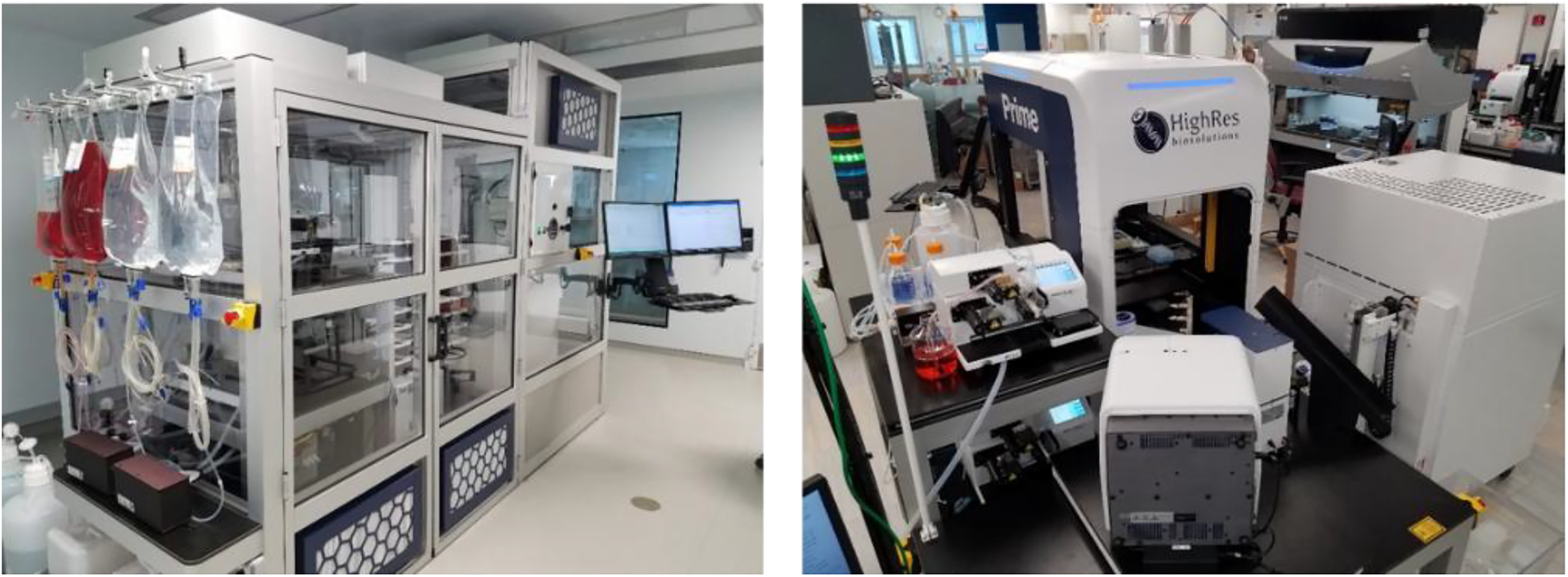
Caco-2 automation infrastructure for cell culture (left) and assay (right).
Assay Automation
Similar to the cell culture system, a dedicated assay platform was developed in collaboration with HighRes Biosolutions to execute the Caco-2 assay. A key operational component of this platform is the transwell plate washing step, for which the same MultiFlo FX was integrated to enable fast and efficient washing. Some unit operations, like compound transfers, still require a 96-well pipetting system, so a dedicated liquid handling robot (HRB Prime) was incorporated into the design (see Figure 1, right panel). Like the cell culture system, a single ACell robotic arm transports transwell plates between a SteriStore D incubator and the MultiFlo FX and Prime devices. The system is also powered by dynamic scheduling software (Cellario), which can manage complex workflows. The software’s flexibility enables real-time adjustments, improves error recovery, and ensures seamless integration of methods across both cell culture and assay systems.
Figure 2 illustrates the workflow of the newly automated 96-well Caco-2 permeability assay process, which integrates advanced infrastructure and automation to enhance efficiency. The process is divided into four main phases: cell seeding, feed, preparation, and assay.
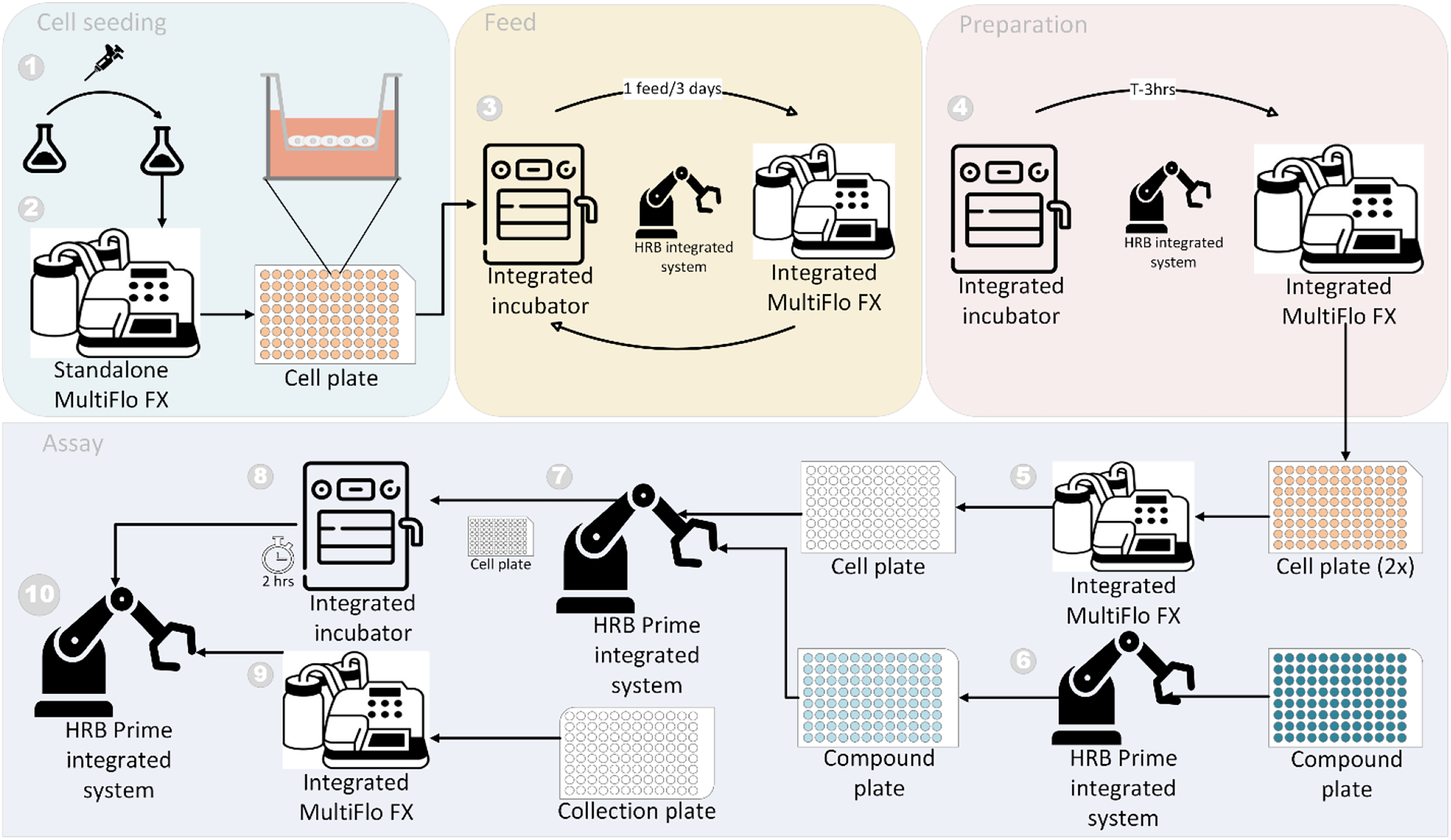
Caco-2 process flow diagram for operations and automation.
Cell Seeding (blue panel): Caco-2 cells are dispensed into 96-well transwell plates at a predefined density using a standalone MultiFlo FX liquid handler.
Feed (yellow panel): Media exchanges are fully automated and performed every 3 days using dual MultiFlo FX units on a single robotic platform.
Preparation (pink panel): Automated media change is conducted at least 3 h prior to assay execution, and plates are unloaded to the user before the assay begins.
Assay Execution (gray panel): Each 96-well compound plate supports two transwell plates for bidirectional transport studies (apical-to-basolateral and basolateral-to-apical). Each workflow includes:
Automated washing of transwell assay plates three times. Direct compound transfer from compound source plate to assay plate. Controlled incubation of transwell plates. Pre-addition of internal standard to collection plates. Automated sample collection from assay plates into pre-loaded collection plates. Downstream analysis by LC-MS/MS.
The automated system minimizes manual intervention and improves throughput, ensuring streamlined media changes, compound transfers, and plate washing, leading to higher assay precision and reliability.
Assay Validation
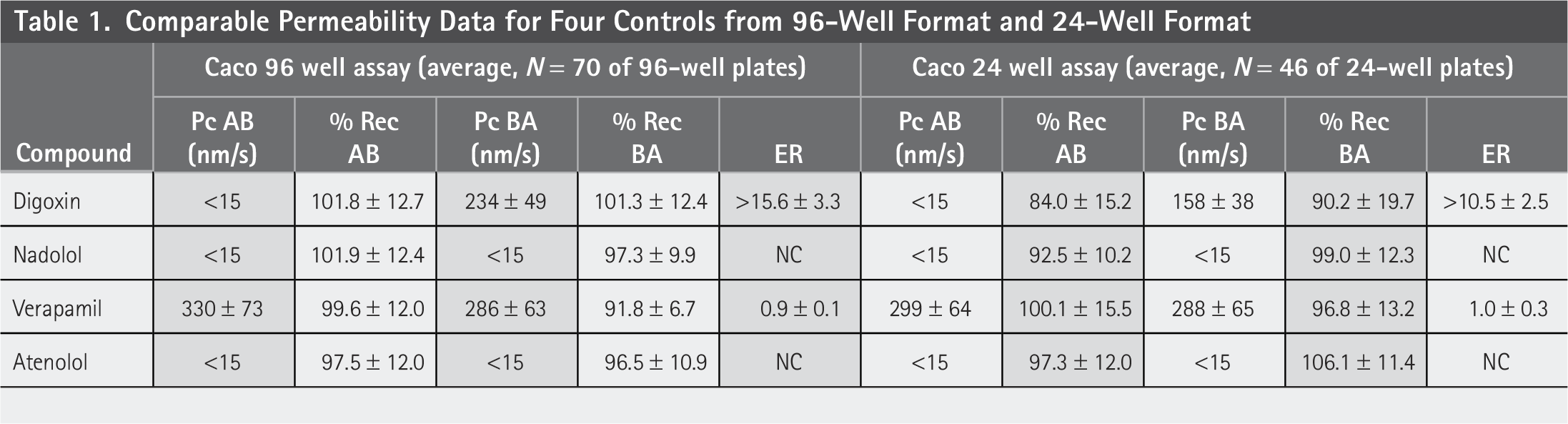
Extensive validation was performed following the implementation of the automated cell culture and assay platform to compare its performance with the historical 24-well plate platform prior to full deployment. To ensure the integrity of the Caco-2 cell monolayer throughout the automated workflow, transepithelial electrical resistance measurements were performed during assay validation and are routinely monitored during production runs. An acceptance threshold of >300 Ω·cm2 was established based on initial evaluations; and only plates meeting this criterion were used for permeability assessment. In addition, control standards were evaluated across multiple cell passages and days. Four control compounds, including digoxin and atenolol, were assessed. Digoxin’s efflux ratio served as a marker for Pgp function, while atenolol, a low permeability control, indicated monolayer integrity through tight junction formation. As shown in Table 1, both formats produced comparable permeability coefficient (Pc) values and efflux ratios (ER), confirming satisfactory Pgp function and tight junction formation in the 96-well Caco-2 format.
Comparable Permeability Data for Four Controls from 96-Well Format and 24-Well Format
Further validation was conducted using 50 literature compounds with diverse structures and properties (see Supplementary Data), where 94% of the compounds were correctly binned for both Pc A→B and Pc B→A values (Figure 3), and the efflux ratio correlation was strong (R2 = 0.89, Figure 4). Additionally, a larger set of 160 internal BMS compounds was tested in parallel using both 96- and 24-well formats, showing high concordance for Pc and efflux ratios. 12 These results confirm that the automated 96-well Caco-2 platform provides permeability and efflux values equivalent to the conventional 24-well format, supporting its suitability for routine ADME screening.
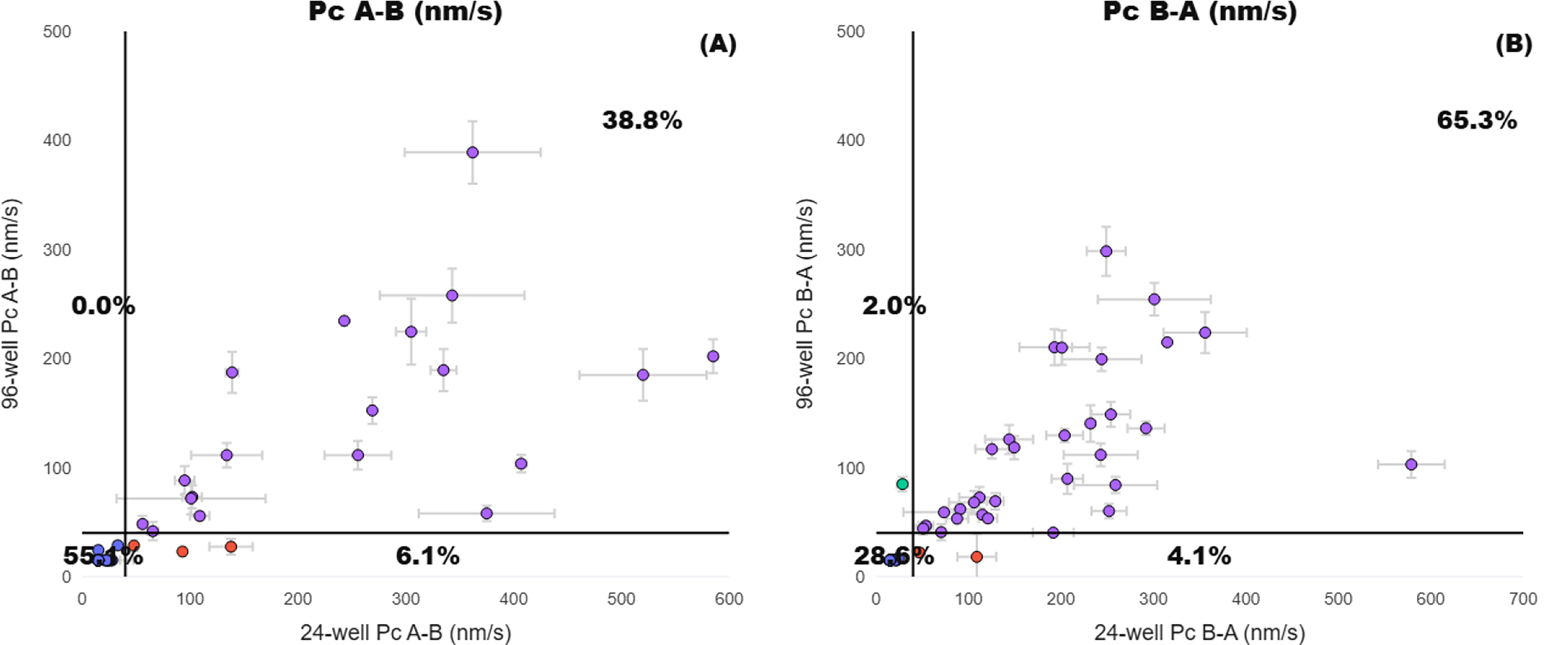
Scatter plots comparing Pc A→B
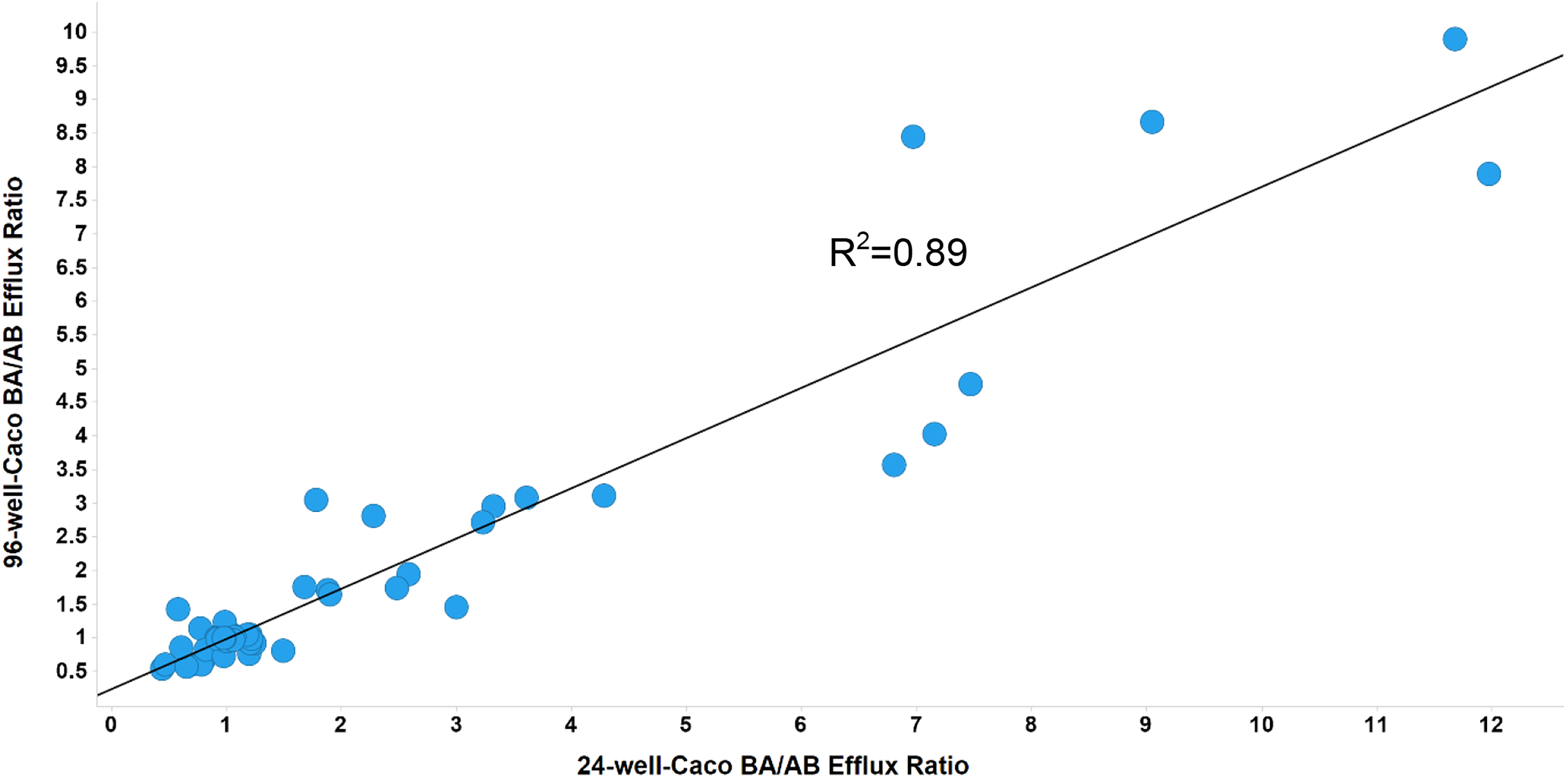
Good correlation of efflux ratio for a set of 50 literature compounds at 24-well and 96-well formats (N = 3).
Assay variability was most evident for compounds with low permeability coefficients (Pc < 15 nm/s), where small fluctuations in Pc A→B can disproportionately influence efflux ratio calculations (Pc B→A/Pc A→B). Such changes likely reflect inherent variability of cell-based systems rather than true differences in transporter activity. To minimize misinterpretation, a conditional threshold was applied for compounds with Pc < 15 nm/s, which reduced variability without impacting overall permeability classification. Compounds with Pc < 40 nm/s were categorized as low permeability, consistent with poor predicted oral absorption.
Assay Implementation
Following its successful validation, the 96-well platform has been fully implemented for routine permeability assays from 2022, leading to a substantial reduction in turnaround time and an increase in assay capacity. The new platform allows for plates to be assayed in a stacked manner, with the system processing up to eight compound plates per day. Each plate accommodates 32 test compounds in triplicate, with a total assay process time of approximately 4 h for 8 plates. Furthermore, by incorporating an additional assay system, the overall capacity can be doubled, allowing for the simultaneous processing of plates across multiple permeability assays, including Caco-2, MDCK-null, and MDCK-efflux.
To maximize efficiency, multiple LC-MS systems with dual-channel configurations allow for overnight sample analysis, with data processing and upload completed the following day. The integration of the 96-well automation platform, high-throughput LC-MS/MS systems, and fast data processing tool has significantly reduced the average turnaround time for Caco-2 permeability assays from approximately 9 days to 2.5 days between 2021 and 2024 (Figure 5). The MDCK-null assay also demonstrates a highly efficient turnaround (Figure 6). Overall, this system has achieved a 7-fold increase in efficiency, a ∼70% reduction in footprint (127 vs. 388 ft2), a 75% decrease in media consumption (150 vs. 600 plates/bag), and a 56-fold reduction in liquid waste (3 vs. 168 liters/week) compared to the conventional 24-well format.
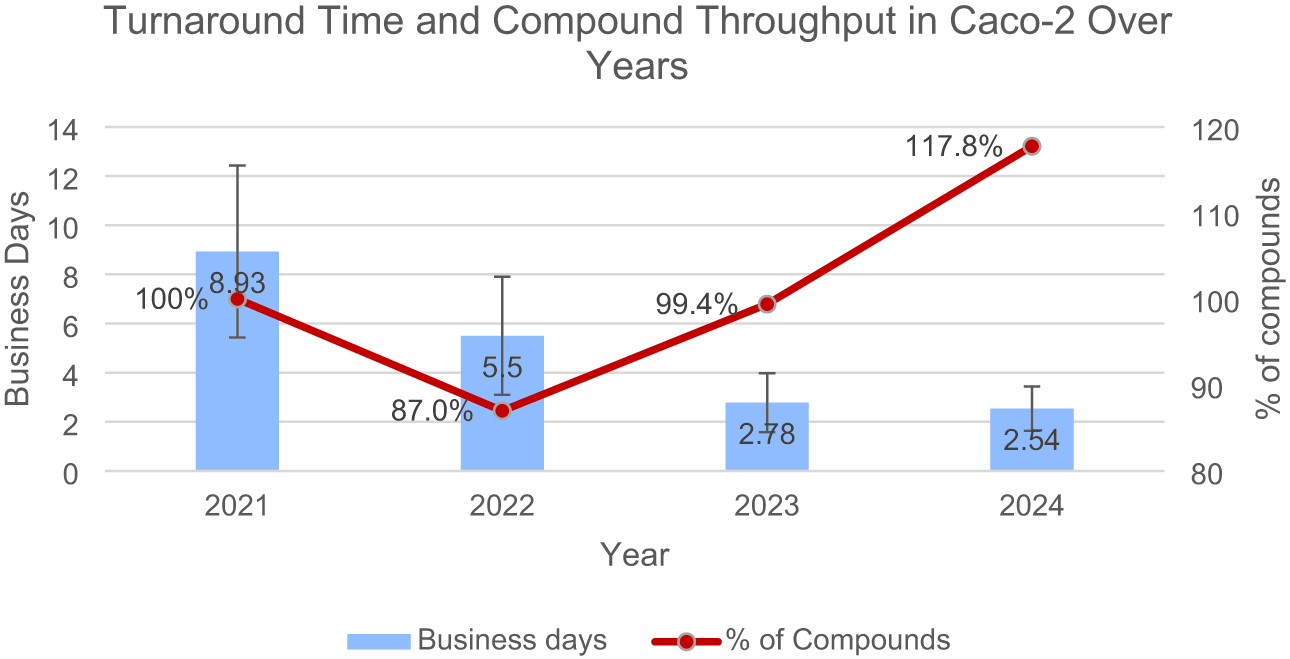
Turnaround time and submission trend for Caco-2 assay from 2021 to 2024. Blue bars: Average turnaround time in business days for Caco-2 assays (with error bars showing standard deviation across all the submissions within the respective year). Red line with dots: Percentage of compounds processed annually, normalized to the baseline year 2021 (set at 100%).
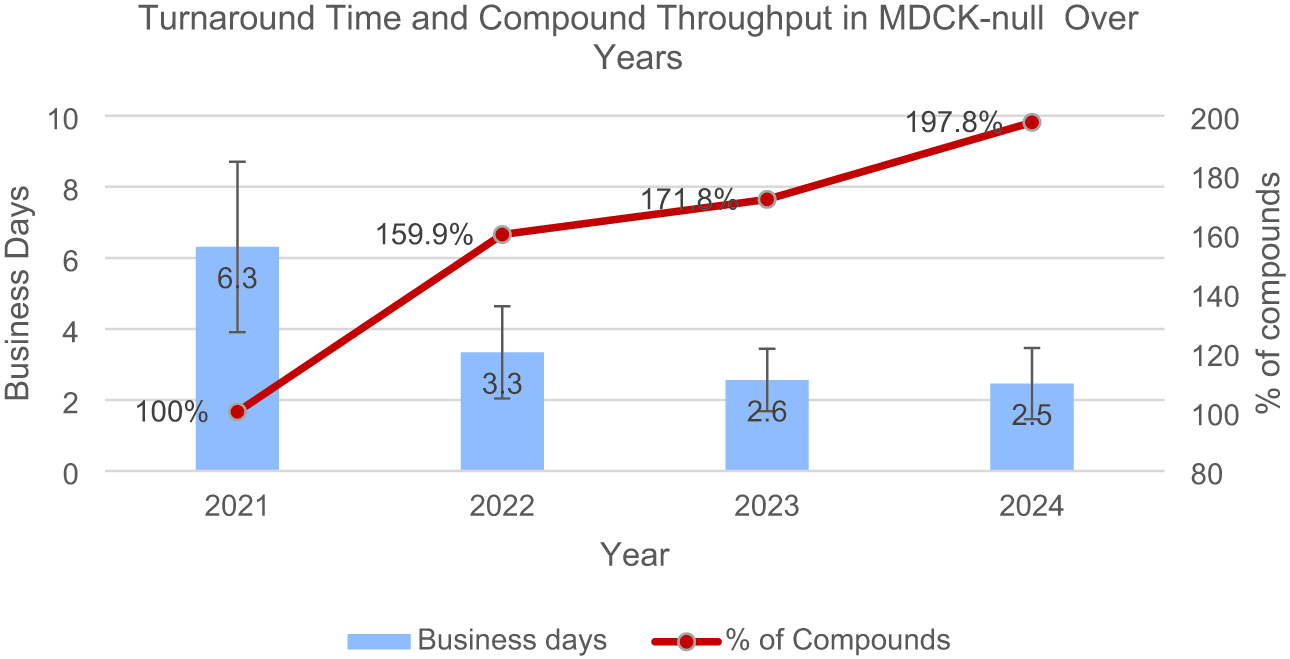
Turnaround time and submission trend for MDCK-null assay from 2021 to 2024. Blue bars: Average turnaround time in business days for MDCK-null assays (with error bars showing standard deviation across all the submissions within the respective year). Red line with dots: Percentage of compounds processed annually, normalized to the baseline year 2021 (set at 100%).
Previous 96-well Caco-2 platforms10,11 (e.g., Larson, Skolnik) improved throughput but relied on semi-automation, leaving critical steps such as cell seeding and sampling manual. In contrast, our system delivers true end-to-end automation with dynamic scheduling, barcode tracking, and multiplexing, achieving a seven-fold throughput increase. While companies like Pfizer, 6 AbbVie 5 and AstraZeneca 17 have automated Tier 1 HT-ADME assays, these efforts have not extended to Caco-2 assay. Our platform overcomes these challenges, representing the first fully integrated solution for high-throughput Caco-2 permeability screening.
Enabling in silico ADME predictions
Multiple publications have demonstrated the utility of model-based ADME predictions for advancing compounds through lead discovery and optimization.18–20 To enable these “predict-first” efforts in drug discovery, large datasets of measured ADME data are required to ensure models have sufficient data for training. Both highly responsive compounds and inactive compounds are needed to ensure balance in training sets. Internally, we have leveraged the new 96-well automation capability to generate significantly larger datasets, all of which go to enable our “predict-first” modeling paradigm. 21 Despite the push towards computational methods, the high volume of real-world data is still a critical requirement to protect against model drift and act as the final spot check before progressing to the next phase in development.
CONCLUSION
This Caco-2 automation infrastructure enables a fully automated 96-well format designed to support high-throughput permeability assays in a discovery setting. To ensure robustness and operational quality, the system incorporates several advanced features. These include innovative cleaning protocols, precise plate tracking for seamless loading and unloading of single or multiple plates, and dynamic scheduling capabilities to optimize workflow efficiency. These operational enhancements have enabled the smooth transition to the 96-well format and allowed for multiplexing of various assays such as Caco-2 and MDCK on the same platform. The system has demonstrated significant efficiency gains, including reduced liquid waste, lower compound consumption, increased throughput, minimized downtime, reduced staffing requirements, and a smaller operational footprint—collectively supporting scalable and reproducible assay execution in early drug discovery.
AUTHORS’ CONTRIBUTIONS
X.C.: Lead drafting, equal data curation, analysis, and editing; G.B.: Lead conceptualization, methodology, and equal editing; S.P.: Equal data curation, analysis, and validation. A.P.: Equal data curation, analysis, and validation. Y.S.: Equal data curation, analysis, and validation; C.H.: Equal data curation, analysis, and validation; D.C.: Supporting methodology. P.C.: Lead resources. N.D.: Support visualization. M.E.C.: Equal supervision and lead project administration. W.S.: Lead supervision and equal editing.