







Abstract
The Individualized Education Program (IEP) is a foundational tool for supporting the educational, social, and developmental progress of students with disabilities. Using a relational quantitative research design, this study examined the quality of 487 IEPs developed for students with autism spectrum disorder (ASD; n = 214) and intellectual disability (ID; n = 273) in Turkey. IEPs were sourced from 193 teachers across 19 special and general education schools. A total of 487 IEPs were analyzed using the Individualized Education Program Quality Assessment Scale. Descriptive and inferential analyses were conducted to determine differences based on student and teacher characteristics. Results indicated that the overall quality of IEPs was moderately low. Significant relationships were found between IEP quality and both student age and teacher age, although these associations were small in magnitude. IEPs developed for students with ASD were of higher quality than those for students with ID, and quality declined as the severity of disability increased. IEPs written by certified teachers were rated higher in quality than those written by special education program graduates. These findings highlight the need to strengthen teacher preparation and professional development programs to ensure that educators are equipped with both specialized and developmental knowledge to create high-quality, individualized plans.
Keywords
Introduction
Individualized Education Programs (IEPs) are formal documents designed to support the cognitive, academic, social, and emotional development of students with disabilities by addressing their unique and individualized needs (Kurth et al., 2022). These programs are developed based on each student’s current levels of performance, learning pace, interests, and strengths and are intended to be continually reviewed and updated to enhance the effectiveness of the educational process (Agran et al., 2020; Deris et al., 2023). IEPs also serve critical functions, such as promoting inclusive learning environments for students with diverse needs, strengthening collaboration among educators, professionals, and families (Rossetti et al., 2017), and advancing educational equity (Ruble et al., 2010; Sanches-Ferreira et al., 2013). In addition to serving as a roadmap for individualized instruction, IEPs ensure compliance with legal mandates in special education (Agran et al., 2020; Pretti-Frontczak & Bricker, 2000) and guarantee students’ meaningful access to learning and opportunities for participation alongside their peers.
In Turkey, the legal requirement to develop IEPs came into effect more than 20 years after the legislation in the United States and European countries (e.g., the Education Act of 1981 and the Education for All Handicapped Children Act [1975]), with the Decree Law No. 573 on Special Education (1997). This law, mirroring regulations in the United States and European Union countries such as England, Ireland, and Italy, has defined and standardized the essential components of an IEP and established procedural safeguards and guidelines to ensure that students’ strengths and needs are clearly identified and effectively addressed (Rakap et al., 2019). Developing IEPs in alignment with these legal and professional standards is essential for ensuring their quality (Forlin & Chambers, 2011; La Salle et al., 2013). The presence or absence of these key components is often used as an indicator of the overall quality and compliance of an IEP (Kurth et al., 2025). Given Turkey’s position as a middle-income country continuing to strengthen its inclusive education system, examining IEP quality in this context provides valuable insights for other nations undergoing similar educational reforms and capacity-building efforts.
In Turkey, special education services are centrally governed by the Ministry of National Education (MoNE), which is responsible for teacher preparation, certification, curriculum standards, and oversight of IEP implementation across educational settings. Preservice special education teachers complete a 4-year undergraduate degree (approximately 143–150 credits) offered through faculties of education (Karal & Wolfe, 2018). These programs include coursework and practicum experiences focused on assessment-based instruction, IEP development and implementation, individualized and evidence-based instructional practices, collaboration with families and multidisciplinary teams, and supervised school-based practice. As part of their training, candidates receive structured instruction on identifying present levels of academic and functional performance, developing measurable goals, monitoring progress, and aligning instructional supports with students’ individualized needs (Rakap et al., 2019).
In addition to university-prepared special education teachers, Turkey employs teachers from other disciplines (e.g., classroom teachers and subject-area teachers) who obtain special education certification through MoNE-regulated pedagogical formation and in-service certification programs. These certification pathways typically require a minimum of 857 instructional hours and are administered or approved by MoNE in collaboration with universities. The curriculum emphasizes practical competencies, including IEP preparation, classroom adaptations, instructional accommodations, and legal responsibilities in special education, although the depth and duration of training are more limited than those of full undergraduate special education programs (Karal & Wolfe, 2018).
To ensure meaningful access to education and measurable student progress, high-quality IEPs must include several foundational components (Deris et al., 2023). Drawing on the requirements outlined in the Individuals with Disabilities Education Act (2004), Kurth and colleagues (2025) identified eight essential components of IEPs: (a) clearly defined present levels of academic achievement and functional performance (PLAAFP); (b) measurable, objective, and observable instructional goals; (c) criteria for evaluating progress; (d) detailed descriptions of special education and related services; (e) identification of additional supports necessary for success in general education; (f) specification of the extent of participation in general education; (g) transition planning for students aged 16 and above; and (h) active involvement of parents and students throughout the process. Turkish law includes parallel components, such as (a) annual and short-term goals; (b) type, duration, and providers of support services; (c) instructional methods, materials, and assessment procedures; (d) classroom adaptations; (e) strategies for managing behavioral challenges and promoting positive behaviors; and (f) student demographic and personal information (Ministry of National Education, 2022).
Although these components are universally recognized as essential to ensuring educational access and benefit (Deris et al., 2023; Kurth et al., 2025), numerous studies have shown that IEPs frequently fall short of quality expectations and often omit key components (Kurth et al., 2025; Rakap et al., 2019). Common deficiencies include limited family participation and incomplete IEP teams (Rakap et al., 2019; Ruble et al., 2010), failure to individualize instruction based on student needs (Findley et al., 2022; La Salle et al., 2013), poorly defined PLAAFPs (Kurth et al., 2022; Rakap et al., 2019; Ruble et al., 2010), absence of systematic evaluation process (La Salle et al., 2013), low-quality instructional goals (Kurth et al., 2022; Rakap, 2015), and inconsistent specification of services and supports (Findley et al., 2022; Ruble et al., 2010).
Ruble et al. (2010) examined the IEPs of 35 students with ASD and reported generally low overall quality, finding no significant relationship between IEP quality and teacher experience, geographic region, severity of autism, ethnicity, or family income. Similarly, Findley et al. (2022) found that IEPs for 20 students with ASD did not meet legal standards, lacked evidence-based interventions, and showed weak alignment between students’ current PLAAFPs and annual instructional goals. In their analysis of 135 IEPs for students with ID, La Salle et al. (2013) reported significant variability in quality; IEPs emphasizing academic skill development tended to be of higher quality, while those focusing on nonacademic areas were generally weaker. They also noted that educational placement (general vs. special education) and grade level did not significantly affect IEP quality. Similarly, Kurth et al. (2022), in their study of 121 students with complex support needs, found that overall, IEP quality was low and unrelated to placement setting.
In Turkey, research examining IEP quality remains scarce (Berk & Açar, 2024; Rakap, 2015; Rakap et al., 2019). Berk and Açar (2024) evaluated 850 IEPs from students attending special education and rehabilitation centers and found low overall quality across documents. Similarly, Rakap et al. (2019) reviewed 206 IEPs for students in inclusive classrooms and reported that many lacked legally required and recommended components. In another study, Rakap (2015) assessed the quality of instructional goals in IEPs developed for 100 preschool-aged children and found overall low quality, with no variation by student age, disability type, or developmental domain. Thus, despite Turkey’s well-established special education regulations, implementation gaps remain, mirroring challenges observed in many education systems worldwide as they strive to ensure fidelity to inclusive education principles.
Research has identified multiple factors contributing to variations in IEP quality, including teacher expertise, family involvement, and the availability of institutional supports and resources (Brownell et al., 2010; Darling-Hammond, 2000). Likewise, contextual factors such as school culture, administrative support, and fidelity to evidence-based practices influence the quality and implementation of IEPs (Darling-Hammond, 2000; Rossetti et al., 2017). Moreover, family engagement is essential to ensuring that IEPs reflect students’ holistic needs, strengths, and aspirations (Rossetti et al., 2017; Sanches-Ferreira et al., 2013).
Although these factors have been widely examined in high-income countries, there remains a significant global gap in empirical studies from low- and middle-income contexts, including Turkey (Rakap et al., 2019). Understanding IEP quality in such settings contributes to international comparative knowledge, highlighting both shared and context-specific challenges in ensuring equitable education for students with disabilities. Therefore, a comprehensive analysis of IEPs in Turkey, alongside the identification of teacher- and student-level variables influencing their quality, can inform evidence-based recommendations, guide teacher training reforms, support policy revisions, and strengthen the alignment between IEPs and students’ actual educational needs. By situating Turkey’s experiences within global efforts to enhance inclusive education, this study offers insights that can inform both national and international policy and practice.
The purpose of this study was to examine the quality of IEPs developed for students with ASD or ID in Turkey and to explore how various teacher and student characteristics relate to IEP quality. Specifically, the study aimed to address the following research questions:
Method
Research Design
In this study, the research team employed the relational research model, a quantitative research design. This approach is particularly appropriate for examining how two or more variables covary, allowing researchers to identify patterns of association and potential predictive relationships among variables (Fraenkel et al., 2012).
Sample
This study employed a purposive sampling strategy, targeting special education schools (n = 13) and general education schools with special classrooms (n = 6) in a northern province of Turkey. Schools were selected to represent diverse educational settings while remaining feasible for on-site data collection. The research team conducted face-to-face visits to recruit lead IEP teachers (n = 193), who volunteered to participate and provided access to de-identified IEPs they coordinated. In total, these teachers contributed 487 IEPs, with an average of approximately three IEPs per teacher (range = 2–8).
The students’ ages ranged from 4 to 22 years (M = 12.3, SD = 3.86). Of the total sample, 309 students (63%) were boys, and 178 (37%) were girls. In terms of disability type, 214 students (44%) were diagnosed with ASD, while 273 students (56%) had ID. Regarding the severity of disability, 197 students (40%) were identified as having mild disabilities, 223 (46%) as moderate, and 67 (14%) as severe. The distribution across educational levels showed that 45 students (9%) were enrolled in early childhood programs, 154 (32%) in elementary school, 155 (32%) in middle school, and 133 (27%) in high school.
In Turkey, special education services fall under MoNE. Preservice special education teachers complete a 4-year undergraduate program, which includes IEP development, individualized instruction, and school practice. Classroom teachers from other disciplines can obtain certification through MoNE’s Pedagogical Formation programs (minimum 857 hr), emphasizing practical IEP skills (Karal & Wolfe, 2018). The lead teachers’ ages ranged from 24 to 58 years (M = 38.3, SD = 6.51), and they had an average of 10.9 years of professional experience (SD = 5.78, range = 1–34 years). The majority of participants were female (n = 139; 72%), while 54 (28%) were male. More than half of the teachers (n = 102; 53%) held a bachelor’s degree in special education, whereas the remaining teachers (n = 91; 47%) graduated from other teacher preparation programs (e.g., general education) and subsequently obtained certification to work in special education settings (hereafter referred to as certified teachers). In terms of educational attainment, 166 teachers (86%) held a bachelor’s degree, and 27 (14%) had earned a master’s degree. Regarding their work settings, 146 teachers (76%) were employed in special education schools, while 47 (24%) worked in special education classrooms within general education schools. Demographic data regarding both the teachers and students are presented in Table 1.
Demographic Characteristics of Teachers and Students.
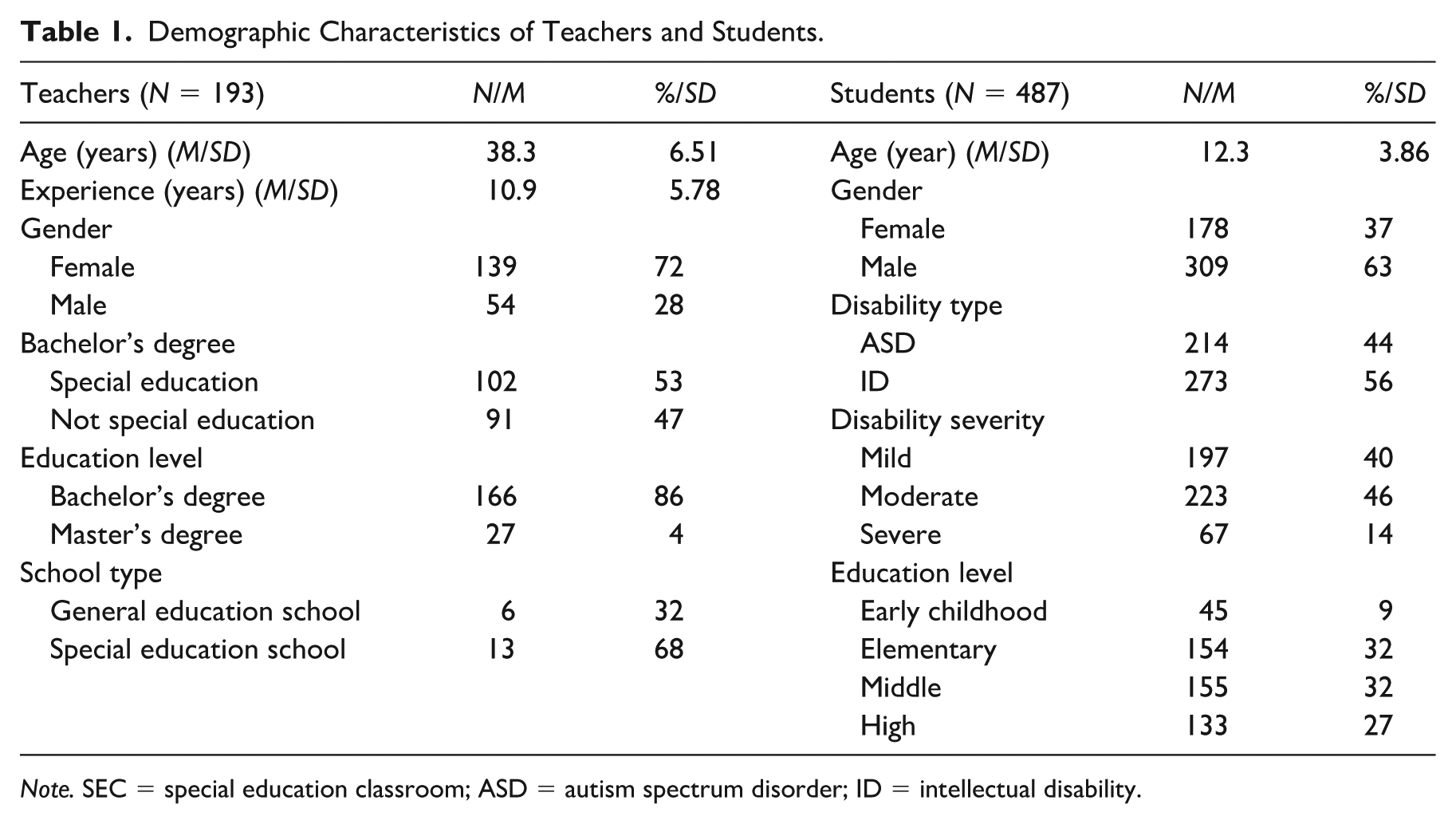
Note. SEC = special education classroom; ASD = autism spectrum disorder; ID = intellectual disability.
Data Collection Measures
Demographic Information Form
The demographic information form, developed by the researchers, was used to collect information on teachers’ age, gender, educational background (university and department), teaching level, and class type, as well as students’ age, gender, and disability type and severity. Disability severity was classified as mild, moderate, or severe based on teachers’ ratings using predefined descriptors. Predefined descriptors were determined based on the classifications of intellectual disability made by the American Association on Intellectual and Developmental Disabilities (2010) and the American Psychiatric Association (2013). Mild severity was defined as students who function largely independently with minimal accommodations and participated in general classroom routines with limited support. Moderate severity was defined as students who require regular instructional and/or behavioral support, with difficulties evident across multiple domains (e.g., communication, academics, and behavior). Severe severity was defined as students who require intensive, ongoing adult support across most classroom activities and demonstrate significant limitations in communication, adaptive behavior, and engagement. The demographic information form included designated fields to record demographic information for up to 10 children (e.g., age, gender, disability type, and severity), allowing teachers to provide separate demographic information for each student whose IEP was included in the study. Data obtained through this form are used to conduct descriptive and inferential analysis.
The Individualized Education Program Quality Assessment Scale
The Individualized Education Program Quality Assessment Scale (IEPQAS), developed by Alan and Aksoy (2023), was used to evaluate the quality of IEPs prepared for students with disabilities. The scale’s psychometric properties were previously validated. The instrument includes two subscales: the Instructional Components Subscale (IEPQAS-IC) and the Complementary Components Subscale (IEPQAS-CC). The IEPQAS-IC comprises eight items assessing (a) student performance, (b) short-term goals, (c) criteria for goal evaluation, (d) inclusion of measurable and observable conditions, (e) functional relevance of goals, and (f) specification of support services. The IEPQAS-CC also includes eight items related to long-term goals, focusing on (a) clarity of statements (positive vs. negative phrasing), (b) generalization, (c) time parameters, (d) tools and materials, (e) instructional methods, (f) evaluation, and (g) behavioral considerations.
The full scale contains 16 items, each scored 0, 1, or 2, resulting in a total possible score ranging from 0 to 32. Subscale scores range from 0 to 16. Although the IEPQAS does not provide predefined cutoff points for categorizing IEP quality (e.g., low, moderate, and high), the obtained scores were interpreted in relation to the potential total score range (0–32). Higher scores on the full scale and subscales indicate higher IEP quality. Reported internal consistency coefficients were α = .84 for IEPQAS-IC, α = .64 for IEPQAS-CC, and α = .80 for the total scale, indicating acceptable reliability.
Data Collection Procedures
Before initiating the study, Institutional Review Board approval was obtained from Ondokuz Mayıs University and the Turkish MoNE to ensure compliance with ethical standards. Following approval, the research team contacted special education schools (n = 13) and general education schools (n = 6) to explain the study’s purpose, scope, and procedures, and to secure administrative permission to review de-identified IEPs. Teachers from these schools, who served as study participants, were recruited through face-to-face meetings at the schools. Those agreeing to participate provided informed consent via signed paper forms that outlined the study’s aims, voluntary participation, data use, and confidentiality measures. De-identified IEPs, with all personally identifiable information (e.g., student names and student IDs) redacted by the schools, were reviewed on-site by the research team in digital or paper format and were not removed from the school premises, in line with institutional policies. Parent consent was not required as the IEPs were fully de-identified aggregate documents accessed via school authorization, consistent with approved institutional review board (IRB) protocols and educational privacy regulations. At the time of agreeing to participate, teachers also completed a researcher-prepared demographic information form to provide relevant background data.
Evaluator Training
The evaluation of IEP quality was carried out by 18 preservice teachers (hereafter referred to as evaluators), ranging in age from 20 to 22 years, including 8 females and 10 males. All were enrolled in a special education department and had successfully completed the course, Preparation of Individualized Education and Transition Plans. To ensure consistency, objectivity, and accuracy in the evaluation process, all evaluators participated in a 3-hr structured training session on how to use the IEPQAS. Before the training, evaluators were provided with a copy of the IEPQAS and asked to review the instrument in detail. During the training session, the first author (hereafter referred to as trainer), who holds a doctoral degree in special education and has taught IEP-related courses for several years, provided an overview of the tool, explaining each item and corresponding rating criteria. Together, the trainer and evaluators completed three IEP ratings and discussed their scoring decisions to clarify any ambiguities and ensure a shared understanding of the scale. Next, the evaluators independently rated three additional sample IEPs that had been previously scored by the research team. The evaluators’ scores were compared with the research team’s ratings, and any discrepancies were discussed and resolved collaboratively to strengthen inter-rater consistency. No formal treatment fidelity checklist was used during training as the protocol emphasized criterion-referenced reliability against expert ratings rather than procedural fidelity. Reliability was the primary fidelity indicator.
Following the initial training, evaluators were assigned 10 additional IEPs (not included in this study) to score independently using the IEPQAS. Their results were again compared with those of the research team. Evaluators who achieved at least 80% reliability on each assessment and an average reliability of 90% across all 10 IEPs were approved to participate in the main data coding phase. All 18 evaluators met these reliability criteria (individual item reliability ≥80%; overall range = 82%–96%, M = 90%) and subsequently evaluated the IEPs collected from participating teachers and schools. During the main coding phase, evaluators worked in pairs (n = 9). Each pair rated approximately 54 IEPs, with individual workloads ranging from 45 to 62 IEPs, ensuring balanced distribution and inter-rater consistency across the data set. The mean inter-rater reliability during the coding of IEPs included was 91% (range = 88%–94%) across all pairs.
Data Analysis
All quantitative data were analyzed using the Statistical Package for the Social Sciences (SPSS, Version 30). Analyses were conducted in accordance with the two research questions guiding the study. To address Research Question 1, descriptive statistics (mean and standard deviation) were calculated for the IEPQAS and its two subscales (IEPQAS-IC and IEPQAS-CC), to determine the overall quality of IEPs developed for students with ASD and ID.
For Research Question 2, a series of inferential analyses were conducted to examine differences in IEP quality based on student and teacher characteristics. Pearson correlation coefficients were calculated to assess relationships between continuous variables (student age, teacher age, and teaching experience) and IEP quality. Independent samples t-tests were conducted to determine whether IEP quality differed according to student diagnosis (ASD vs. ID), student gender (female vs. male), and teacher qualification (special education graduates vs. certified teachers). Finally, a one-way analysis of variance (ANOVA) was conducted to examine differences in IEP quality across three levels of disability severity (mild, moderate, and severe). For post hoc analyses, the Scheffé test was used to identify specific group differences when the ANOVA yielded significant results.
Before all analyses, data screening and assumption testing were conducted to ensure the validity of statistical procedures. The normality assumption was assessed using skewness and kurtosis values for the total and subscale scores of the IEPQAS, all of which fell within the acceptable range of ±1 (George & Mallery, 2010), indicating that the data were normally distributed. For linearity and homoscedasticity, scatterplots were examined in the correlation analyses, and the results showed no violations of these assumptions. The assumption of independence of observations was also met, as the 487 IEPs included in this study were developed by interdisciplinary IEP teams led by 193 teachers. Each teacher served as the creator and case manager of the IEPs for their assigned students, ensuring that the data reflected distinct team-based plans while maintaining sufficient independence across cases for statistical analysis. Finally, Levene’s test for equality of variances was performed before each t-test and ANOVA, revealing no significant violations of the homogeneity of variance assumption (p > .05).
All analyses were conducted using a two-tailed significance level of α = .05. Effect sizes were calculated and interpreted using Cohen’s d for t-tests, η2 (eta squared) for ANOVAs, and Pearson’s r for correlations, following Cohen’s (1988) conventions for small, medium, and large effects.
Inter-Rater Reliability
To ensure consistency and objectivity in scoring, inter-rater reliability was assessed during the main coding phase. As noted earlier, evaluators worked in nine pairs, with each pair independently rating approximately 54 IEPs, ranging from 45 to 62 per pair. Agreement between the two evaluators in each pair was calculated using the formula [agreement / (agreement + disagreement)] × 100% (Viera & Garrett, 2005). The overall inter-rater reliability coefficient across all evaluator pairs was 95%, with individual pair coefficients ranging from 92% to 100%, indicating excellent consistency in the application of the IEPQAS scoring criteria.
Results
Overall IEP Quality
To answer RQ1, we examined the overall quality of IEPs as determined by the IEPQAS scores. Descriptive analyses indicated that the mean total IEPQAS score was 20.5 (SD = 5.39), with mean subscale scores of 9.8 (SD = 2.88) for instructional components and 10.7 (SD = 2.94) for complementary components (see Table 2). Considering the possible total score range of 0–32, these results suggested that the overall quality of IEPs was moderately low.
Descriptive Statistics on IEP Quality Scores.
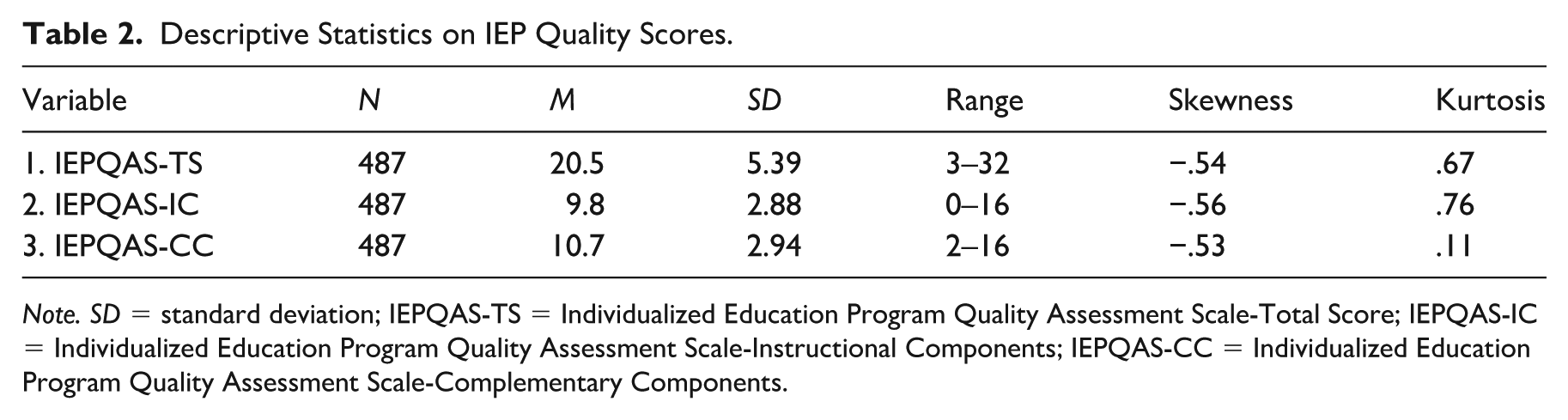
Note. SD = standard deviation; IEPQAS-TS = Individualized Education Program Quality Assessment Scale-Total Score; IEPQAS-IC = Individualized Education Program Quality Assessment Scale-Instructional Components; IEPQAS-CC = Individualized Education Program Quality Assessment Scale-Complementary Components.
IEP Quality Across Student and Teacher Variables
Pearson correlation analyses were conducted to explore the relationships between IEP quality and selected student and teacher characteristics. As shown in Table 3, there was a positive and statistically significant relationship between IEP quality and both student age (r = .20, p < .01) and teacher age (r = .28, p < .01), although the relationships were small in magnitude. No significant relationship was found between IEP quality and teachers’ total years of experience (r = .05, p > .05). These findings indicate that IEPs developed for older students and by older teachers tended to receive slightly higher-quality ratings, while teaching experience alone did not predict IEP quality.
Pearson Correlation Matrix for IEP Quality, Student, and Teacher Variables.
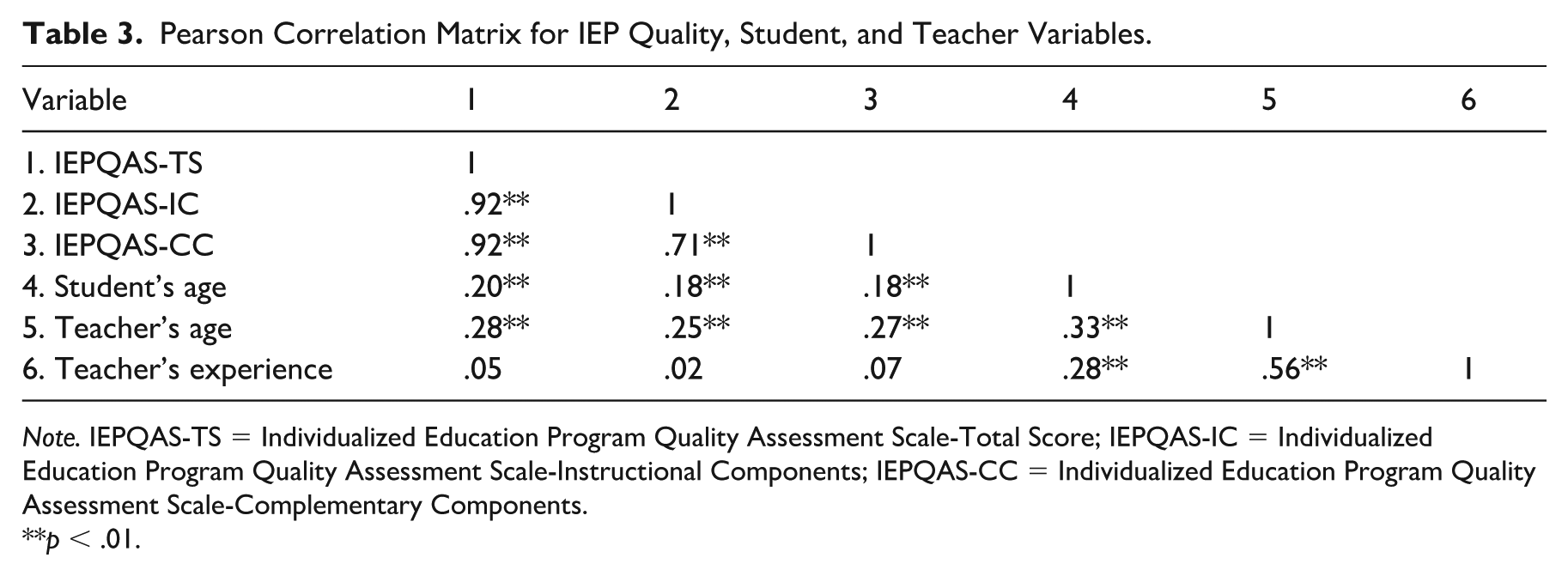
Note. IEPQAS-TS = Individualized Education Program Quality Assessment Scale-Total Score; IEPQAS-IC = Individualized Education Program Quality Assessment Scale-Instructional Components; IEPQAS-CC = Individualized Education Program Quality Assessment Scale-Complementary Components.
p < .01.
Independent samples t-tests were conducted to examine whether IEP quality differed according to student diagnosis (ASD vs. ID), student gender, and teacher qualification (special education graduates vs. certified teachers). As shown in Table 4, results indicated a significant difference in total IEPQAS scores between students with ASD and those with ID (t(485) = 3.04, p = .002, η2 = .28), with IEPs developed for students with ASD demonstrating higher overall quality. The same pattern was observed in the complementary components’ subscale, where scores for students with ASD (M = 11.3, SD = 2.78) were significantly higher than those for students with ID (M = 10.3, SD = 2.99). However, no significant difference emerged for the instructional components’ subscale. No statistically significant differences were found in IEP quality by student gender across the total and subscale scores (p > .05). A significant difference was found when comparing teacher qualification. IEPs developed by certified teachers had significantly higher total scores, t(485) = −5.04, p < .001, η2 = .46, and higher subscale scores than those prepared by special education majors. These results suggest that teacher qualification type, rather than teaching experience, may play a more influential role in IEP quality.
Comparison of IEP Quality Scores by Student Diagnosis, Gender, and Teacher Qualification.
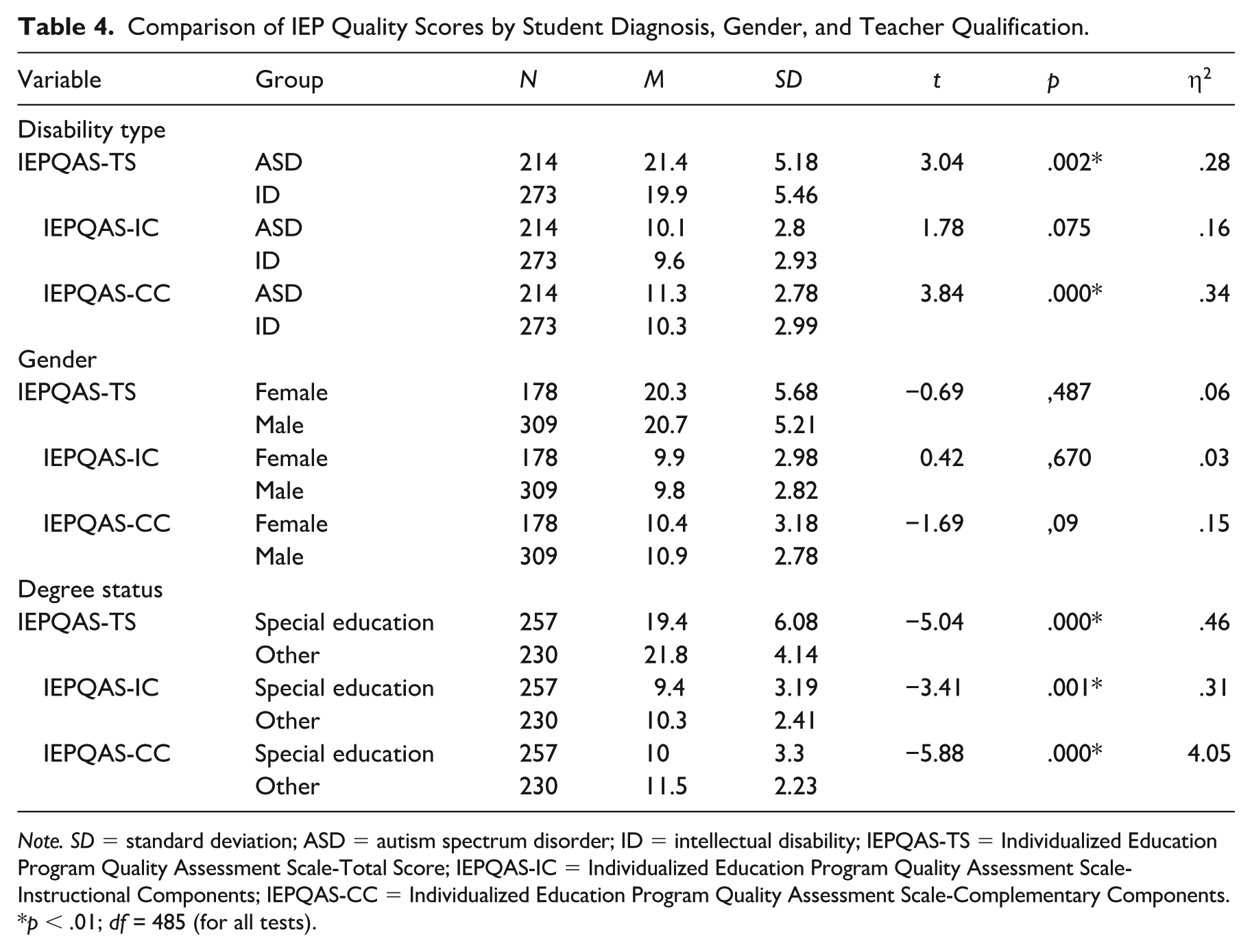
Note. SD = standard deviation; ASD = autism spectrum disorder; ID = intellectual disability; IEPQAS-TS = Individualized Education Program Quality Assessment Scale-Total Score; IEPQAS-IC = Individualized Education Program Quality Assessment Scale-Instructional Components; IEPQAS-CC = Individualized Education Program Quality Assessment Scale-Complementary Components.
p < .01; df = 485 (for all tests).
A one-way ANOVA was conducted to examine whether IEP quality differed according to the severity of disability (mild, moderate, or severe). As shown in Table 5, results revealed a significant effect of disability severity on IEP quality across all subscales: IEPQAS total, F(2, 484) = 32.15, p < .001; IEPQAS-IC, F(2, 484) = 29.58, p < .001; and IEPQAS-CC, F(2, 484) = 24.63, p < .001. Post hoc comparisons indicated that IEPs written for students with mild disabilities received significantly higher quality than those for students with moderate or severe disabilities. Likewise, IEPs for students with moderate disabilities were of higher quality than those for students with severe disabilities. Mean total IEPQAS scores were highest for students with mild disabilities (M = 22.5, SD = 4.21), followed by those with moderate (M = 19.8, SD = 5.57) and severe disabilities (M = 17.13, SD = 5.6). Similarly, for the instructional component, the means were 10.8 (SD = 2.13), 9.5 (SD = 3.08), and 8 (SD = 3), respectively; and for the complementary component, 11.7 (SD = 2.6), 10.3 (SD = 2.91), and 9.1 (SD = 3.03), respectively. These results demonstrate that as the severity of disability increases, the quality of IEPs decreases, suggesting greater challenges in developing individualized and comprehensive plans for students with more complex needs.
Comparison of IEP Quality Scores Across Levels of Disability Severity Using ANOVA.
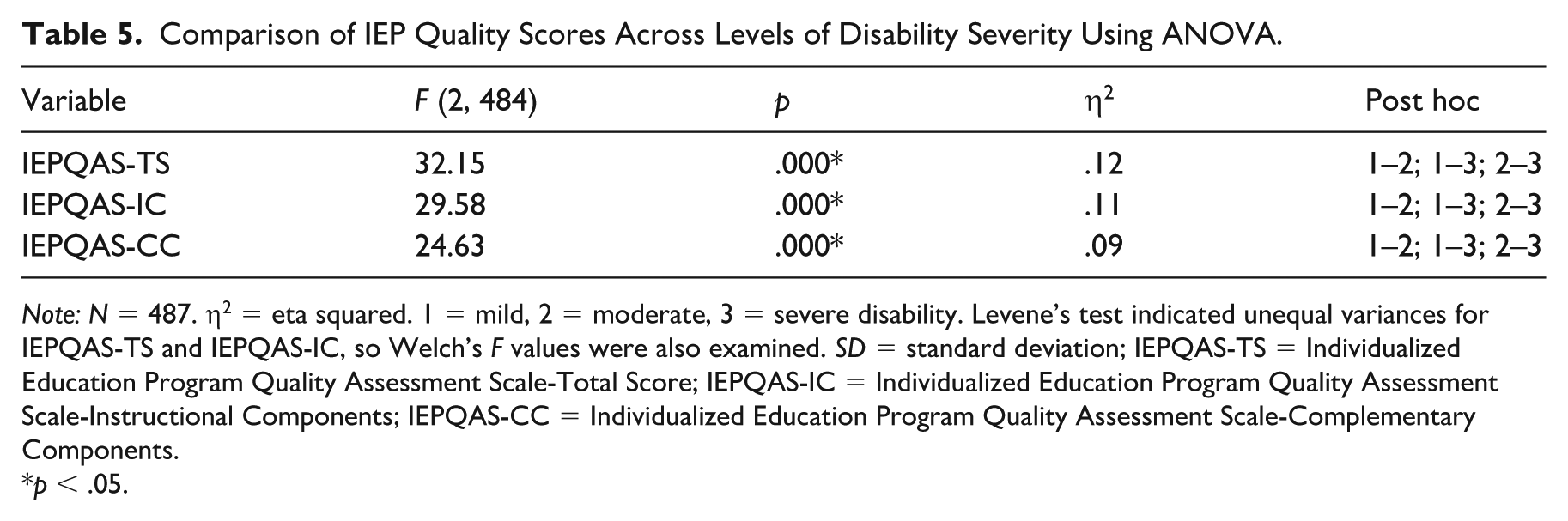
Note: N = 487. η2 = eta squared. 1 = mild, 2 = moderate, 3 = severe disability. Levene’s test indicated unequal variances for IEPQAS-TS and IEPQAS-IC, so Welch’s F values were also examined. SD = standard deviation; IEPQAS-TS = Individualized Education Program Quality Assessment Scale-Total Score; IEPQAS-IC = Individualized Education Program Quality Assessment Scale-Instructional Components; IEPQAS-CC = Individualized Education Program Quality Assessment Scale-Complementary Components.
p < .05.
Discussion
The purpose of this study was to examine the overall quality of IEPs developed for students with ASD and ID in Turkey and to explore how various student- and teacher-related characteristics were associated with IEP quality. The findings revealed that the overall quality of IEPs was moderately low. IEP quality was positively associated with student and teacher age, while no significant relationship was found between teacher experience or student gender and IEP quality. In addition, IEPs prepared for students with ASD were of higher quality than those for students with ID, and IEP quality decreased as the severity of disability increased. Finally, teachers who did not major in special education produced IEPs rated as higher in quality than those developed by teachers who were special education graduates.
Overall Quality of IEPs
The results showed that the quality of IEPs developed for students with ASD and ID in Turkey was generally low. This finding can be interpreted as a reflection of ongoing systemic challenges in implementing individualized education practices in the Turkish context. Despite the existence of national legislation mandating individualized and measurable goals, IEPs often remain procedural rather than pedagogical documents, primarily designed to fulfill administrative requirements rather than to guide instruction. These findings echo international research suggesting that IEPs frequently fail to meet the standards outlined in national legislation and best practice guidelines (Alan & Aksoy, 2023; Berk & Açar, 2024; Kurth et al., 2022; Rakap, 2015; Rakap et al., 2019; Sanches-Ferreira et al., 2013). The moderately low mean scores on both the instructional and complementary components subscales further indicate persistent weaknesses in measurable goal formulation, specification of supports and services, and inclusion of mastery and generalization criteria. Such patterns may be linked to insufficient teacher preparation, limited interprofessional collaboration, and the lack of systematic monitoring of IEP implementation. Similar deficiencies have been documented in previous studies assessing goal specificity, functionality, and congruence with student performance levels (Boavida et al., 2010; Ruble et al., 2010). Collectively, these findings highlight the need for policy and practice reforms that go beyond compliance, emphasizing teacher professional development, collaborative planning, and evidence-based IEP writing. Addressing these issues could enhance the instructional value of IEPs and promote more meaningful educational outcomes for students with ASD and ID in Turkey.
Student-Related Variables
The findings related to student characteristics indicated that IEP quality varied by student age, disability type, and severity. IEPs developed for older students tended to be of higher quality, which may reflect teachers’ greater familiarity and comfort designing academic or skill-based goals for students at later developmental stages. This pattern aligns with the assumption that teaching and goal-writing for older students often follow more structured academic frameworks (Kurth et al., 2022). In contrast, previous research focused primarily on preschool-aged children (Rakap, 2015) found no age-related differences in IEP quality, likely because the developmental range was narrower and the goals were more play- or routine-based.
A notable finding was that IEPs developed for students with ASD were of higher quality than those for students with ID. While this contrasts with some prior research reporting either no difference (Rakap, 2015) or higher quality for students with ID (Alan & Aksoy, 2023), this study’s results may be explained by differences in disability severity across groups. In the current sample, students with ASD generally had milder levels of disability compared to those with ID. This interpretation is supported by the ANOVA results showing that IEP quality decreased as the severity of disability increased. These findings are consistent with prior research demonstrating that students with more complex or severe disabilities often receive IEPs of lower quality (La Salle et al., 2013; Ruppar et al., 2016). As students’ educational needs become more intensive, teachers may struggle to articulate measurable goals or adapt instruction, highlighting the importance of additional support for teachers working with students with significant disabilities.
Teacher-Related Variables
The analysis of teacher-related factors revealed a positive but weak association between teacher age and IEP quality, suggesting that older teachers may bring greater professional maturity or understanding of student needs that contribute to higher-quality IEPs. However, no relationship was found between teaching experience and IEP quality. This difference reflects different developmental processes. Chronological age reflects cumulative professional maturity encompassing resilience to burnout, advanced stress management, and sophisticated IEP team guidance skills, while accumulated experience typically emerges as repetitive exposure reaching a ceiling without targeted professional development. Early career special education teachers demonstrate competence initially due to contemporary evidence-based education (Alan & Aksoy, 2023), but this advantage diminishes among mid-career educators without systematic skill updating (Ruble et al., 2010). These findings are consistent with research documenting a plateau in experience after 5–10 years (Wong et al., 2017) and emphasize that targeted professional learning, rather than seniority alone, is necessary to sustain IEP development competency. These findings collectively suggest that ongoing professional learning may be more critical than accumulated experience for maintaining IEP quality.
Perhaps the most unexpected result of this study was that teachers who did not major in special education developed IEPs of higher quality than those who did. Although counterintuitive, this finding can be interpreted in several ways. First, general education majors (elementary, child development) receive 4 years of training in curriculum sequencing, literacy/numeracy progressions, and child development, which is foundational for writing functional IEP goals aligned with the national curriculum (Brownell et al., 2010). Special education programs may prioritize behavioral interventions over adapting the general curriculum (Darling-Hammond, 2000). Second, this discrepancy may reflect significant variability in the quality and focus of university-based teacher preparation programs across Turkey. Special education teacher preparation programs in Turkey may emphasize disability-specific interventions over general educational planning, potentially limiting graduates’ ability to integrate broader developmental and curricular perspectives into IEP writing (McLeskey & Billingsley, 2008). Furthermore, Turkey’s rapid expansion of special education departments has led to inconsistent faculty expertise and curriculum emphasis. Newer programs often lack doctoral-level specialists in instructional design and IEP development, unlike established general education programs (Sari & Er, 2016). Third, certified teachers approach IEPs through a developmental lens (child first, disability second), producing holistic classroom goals. Special education graduates, influenced by traditional medical models, may write overly clinical, deficit-focused objectives disconnected from daily instructional contexts. Finally, certified teachers (often 30–45 years) bring established classroom management, parental communication, and reflective practice skills absent in recent 22-year-old graduates (McLeskey & Billingsley, 2008). These complementary characteristics highlight systemic gaps in special education teacher preparation that warrant reform of the curriculum and the teacher preparation standards. These findings highlight the importance of ongoing reflection and potential refinement within special education teacher preparation programs to ensure that graduates are equally well-equipped in both specialized instructional practices and broader developmental and curricular planning skills essential for high-quality IEP development.
Limitations
Findings from this study should be interpreted within the context of several limitations. First, the students’ diagnoses and severity levels of disability were obtained from teacher-reported data from demographic forms and were not independently verified using standardized diagnostic tools. Second, the study examined a limited set of teacher and student variables and did not include other potentially influential factors. Variables such as teachers’ beliefs and attitudes toward inclusion, their understanding of child development, familiarity with evidence-based instructional strategies, and the level of family participation in the IEP process may also affect IEP quality. Third, the study relied solely on document analysis, meaning that the findings reflect the written quality of IEPs rather than how these plans were implemented in practice. Fourth, one of the measurement subscales used in this study demonstrated relatively lower internal consistency, which may have reduced the precision of some subscale-level interpretations. Finally, the data were collected from a single national context, which may limit the generalizability of the findings to other educational systems or cultural settings.
Implications for Future Research
Future studies should expand on these findings by employing mixed-method designs, incorporating classroom observations, teacher interviews, and analyses of student progress data to provide a more comprehensive picture of IEP quality and implementation. Future research should continue to explore the underlying factors contributing to low IEP quality and identify effective strategies to strengthen the IEP development process. The positive association between IEP quality and both student and teacher age suggests that developmental understanding and professional maturity may play a role in improving quality. Longitudinal or experimental studies could examine how these factors interact over time. The absence of a significant relationship between teacher experience and IEP quality highlights the need to investigate other influences, such as targeted professional training, collaboration practices, and administrative support.
In addition, differences in IEP quality across disability types and severity levels highlight the importance of studying how interdisciplinary collaboration and differentiated training can improve IEP development for students with complex needs. Finally, given the unexpected finding that teachers without a special education major produced higher-quality IEPs, future research should critically examine teacher preparation curricula and explore how cross-disciplinary and practice-based training influence teachers’ competence in developing high-quality IEPs.
Implications for Practice
The findings of this study have several practical implications for improving the quality of IEP development and implementation in educational settings. First, professional development initiatives should prioritize enhancing teachers’ skills in developing measurable, functional, and individualized goals, as well as aligning these goals with students’ present levels of performance. Given that IEP quality was higher for older students and teachers, training programs should emphasize developmental considerations and provide ongoing opportunities for teachers to strengthen their knowledge of evidence-based instructional planning across age groups. Second, the finding that teacher experience did not predict IEP quality suggests that professional growth should not rely solely on years of service but instead on structured, specialized training and reflective practice. Continuous, hands-on learning opportunities, such as coaching, mentoring, and peer review of IEPs, can help teachers apply effective strategies in real-world settings.
Third, differences in IEP quality across disability types and severity levels highlight the importance of interdisciplinary collaboration. Teachers should be encouraged to work closely with related service providers, families, and specialists, especially when developing IEPs for students with severe or complex disabilities. Creating formal structures for multidisciplinary teamwork can improve the comprehensiveness and functionality of IEPs. Finally, the unexpected finding that teachers without a major in special education developed higher-quality IEPs highlights the need to critically reflect on special education teacher preparation programs. Curricula should be reviewed to ensure that preservice teachers acquire not only disability-specific knowledge but also a strong foundation in child development, curriculum design, and inclusive pedagogy. Strengthening partnerships between universities, schools, and local education authorities can support more practice-based learning and continuous improvement in IEP development.
Conclusion
This study provided large-scale empirical evidence indicating that the overall quality of IEPs developed for students with ASD and ID in Turkey remains suboptimal, particularly for students with more severe disabilities. Despite a well-established legal framework mandating individualized planning, many IEPs appear to function more as compliance documents than as instructional tools capable of guiding meaningful educational practice.
The findings emphasize the critical role of teacher preparation pathways in shaping IEP quality. The observed differences between university-trained special education teachers and teachers certified through alternative routes highlight the need to re-examine the content, balance, and instructional focus of special education teacher education programs. Ensuring that preservice preparation integrates disability-specific expertise with strong foundations in child development, curriculum alignment, and inclusive instructional planning is essential.
From a policy and practice perspective, these results call for targeted reforms in teacher education, sustained professional development focused on high-quality IEP writing, and stronger institutional supports for interdisciplinary collaboration, particularly when serving students with complex support needs. Monitoring systems that emphasize instructional quality rather than procedural compliance may further strengthen IEP effectiveness.
Future research should extend beyond document analysis to examine how IEP quality translates into classroom implementation and student outcomes and should explore how professional learning models, mentoring, and cross-disciplinary training can enhance teachers’ capacity to develop meaningful, functional IEPs. By situating Turkey’s experience within the broader global discourse on inclusive education, this study contributes actionable insights for strengthening individualized planning practices in both national and international contexts.
Footnotes

Funding
The authors received no financial support for the research, authorship, and/or publication of this article.
Declaration of Conflicting Interests
The authors declared no potential conflicts of interest with respect to the research, authorship, and/or publication of this article.
Editor in Charge: Robert Pennington