






Abstract
Students with complex communication needs (CCN) are guaranteed the right to a free and appropriate public education as well as the supports necessary to make progress in the general education curriculum. However, students with CCN are at risk of not receiving the support needed to fully participate in academic instruction. The purpose of this study was to investigate the academic experiences of students with CCN to understand how they participated in instruction and the supports educators implemented for them. We observed students with CCN across the United States and collected student and teacher demographic information from their educators. Sixty-nine students with CCN were included in the present analysis. Communication supports were infrequently implemented in all four educational placements, and 26% of students with CCN in our sample did not use speech, sign, symbols, or a speech-generating device and relied on gestures and/or vocalizations. Few students in segregated classrooms had access to speech-generating devices, and communication supports were only observed to be implemented in these settings during 12%–16% of observations. Implications for research are presented from the perspective of increasing the use of research-based supports for students with CCN to support their academic progress.
Introduction
In the United States, students with disabilities are a protected class with specific rights guaranteed by federal laws, including the Individuals with Disabilities Education Improvement Act (IDEIA, 2004). Importantly, students with disabilities are guaranteed a free and appropriate public education (FAPE), including an accurate and thorough evaluation and an individualized education program (IEP) that aligns with their needs (Turnbull et al., 2018). Students with disabilities must also be provided supplementary aids and services to support their progress in the general education curriculum. Specifically, IDEIA states that each public agency must ensure students with disabilities receive supplementary aids and services in the general education classroom, and students with disabilities should only be placed in more restrictive settings if it is not possible to teach them in the general education classroom with supplementary aids and services. However, many students, especially students with complex support needs, experience educational placements outside of the general education curriculum, and the extent to which supplementary aids and services were implemented prior to that decision is unknown (Toews et al., 2021).
Supplementary aids and services are considered the “lynchpin” to supporting students with disabilities to learn and progress in the general education curriculum and include curricular supports (e.g., modifications), communication supports (e.g., communication boards, speech-generating devices), and personnel supports (e.g., paraprofessionals; Kurth et al., 2019). Supplementary aids and services are particularly important for students with complex support needs, the 1% of students with significant cognitive disability who take their state’s alternate assessment based on alternate academic achievement standards (AA-AAAS). Students with complex support needs typically receive special education services under the categories of autism, multiple disabilities, or intellectual disability, and they often need some type of support in communication, academic access, and peer or other personnel supports (Kurth et al., 2025).
Students With Complex Communication Needs
Students with complex support needs frequently have complex communication needs (Mirenda, 2014), necessitating the implementation of individualized communication supports to meet their needs and ensure their participation in the general education curriculum and engagement with their peers. For purposes of this paper, students with complex support needs who also have complex communication needs will be referred to as students with complex communication needs (CCN). Students with CCN use aided and/or unaided augmentative and alternative communication (AAC) supports (Beukelman & Light, 2020). Unaided AAC includes the use of vocalizations, natural speech, gestures, and/or American Sign Language. Aided AAC requires the use of additional equipment that may be low-tech (e.g., tangible symbols, core boards) or high-tech (speech-generating devices; Beukelman & Light, 2020).
Unfortunately, some students with AAC may receive inconsistent support to access and use their AAC. For example, Andzik et al. (2016) conducted observations of students with CCN and found that students who used speech-generating devices only had access to their device in 63% of opportunities for communication. Students who used low-tech symbols had less frequent access to their communication supports (27% of the observations). This lack of AAC use among students with CCN has been documented in other work; for example, Raghavendra et al. (2012) observed 39 middle school students with CCN and found that they had few opportunities to communicate and rarely used their devices. Similar findings have been documented in research that examined IEPs; in a review of the IEPs of 88 students with significant disabilities, supports for communication and access to the curriculum were infrequently documented (Kurth et al., 2019). Many factors may influence student access to and use of AAC supports including but not limited to access to proper evaluations and funding for necessary devices, instruction in the use of AAC, collaborative practices between school members and families, and the student’s educational placement (Biggs & Hacker, 2021; Light et al., 2019).
School team members supporting students with CCN may have misconceptions about the potential for aided AAC to act as a support, and they may not have the skills and knowledge to effectively incorporate AAC into instruction, further complicating student access to effective supports (Moorcroft & Meyer, 2019). The frequent placement of students with CCN in segregated special education classrooms may also complicate their receipt of necessary supports, given the lack of access to academic materials and outcomes documented in such settings (Gee et al., 2020; Zagona et al., 2022).
Although students with CCN have experienced more positive outcomes in general education classrooms compared to segregated educational placements (Gee et al., 2020; Kleinert et al., 2015; Mansouri et al., 2022), students with complex support needs are more frequently placed in segregated settings outside the general education classroom such as resource classrooms, self-contained classrooms, or even separate schools. The consideration of where a student spends the majority of their school day is an important one, given the well-documented research supporting more positive outcomes in academic skills, social-communication skills, and friendships in more inclusive placements (Gee et al., 2020; Jameson et al., 2022; Mansouri et al., 2022). We also know that students may experience greater learning opportunities in general education classrooms, further supporting the potential for inclusive, general education placements to provide opportunities for learning (Zagona et al., 2022).
Support for Students With CCN During Academics
Regardless of a student’s educational placement, students with CCN have the right to access “environmental contexts, interactions, and opportunities that promote participation as full communication partners with other people, including peers” (Brady et al., 2016, p. 23). Educators must ensure the student has access to communication supports and provide necessary instruction to make progress in the curriculum and engage with peers (Biggs, Carter, Bumble, et al., 2018; Morin et al., 2018). This instruction should go beyond simple requests and should include the opportunity to learn various communication functions necessary for communicating preferences, making choices, and actively participating in their community vocabulary (Brady et al., 2016; Light et al., 2019). Instruction integrating the use of AAC for students with CCN has resulted in increased communication, academic, and social skills (Biggs, Carter, & Gilson, 2018; Morin et al., 2018).
Research focused on academic skills of students with CCN has most commonly been implemented in segregated settings and has addressed math and literacy skills including phonemes, spelling, and narrative writing. For example, in one study, students with CCN received instruction on how to use their device to blend phonemes and words during phonics instruction (Ahlgrim-Delzell et al., 2014). In a different study, researchers used systematic prompting to teach students to use symbols to respond to questions during shared reading (Tönsing et al., 2014). These studies demonstrate the potential for academic skill development with the integration of AAC, but more research is needed to understand how AAC is implemented as a support for students in all educational placements, including in the general education classroom.
Research involving the integration of AAC as a support for students in inclusive classrooms has primarily focused on peer supports and networks, social interactions of students with CCN, and friendships, and it has rarely focused on academics (Iacono et al., 2022). For example, Biggs, Carter, Bumble, et al. (2018) found that students who did not yet use speech or other symbols to communicate increased interactions with peers following an intervention in which peers modeled use of the student’s speech-generating device. Given the potential impact of educational placement as a factor in AAC use, the lack of research on communication supports in general education classrooms is problematic for understanding the state of the research and necessary future directions.
Purpose
The purpose of this study was to investigate the experiences of students with CCN during academic instruction in four different educational placements. Specifically, we first describe the communication profiles and reported use of aided AAC (e.g., symbols, speech-generating devices) of participating students with CCN to extend the literature on supports available to students with CCN in elementary schools. Next, we sought to understand the instructional supports, accommodations, and modifications provided to students with CCN as well as how the students respond during academic activities. This research is needed because of the inconsistent implementation of communication supports for students with complex support needs (Zagona et al., 2022) and CCN (Andzik et al., 2016) and their risk for poor outcomes in literacy, employment, health, and community engagement if not provided with the necessary communication supports (Light & McNaughton, 2015). Research on the participation of students with CCN in academics and the supports provided to them across educational settings is needed to inform priorities for future work in this area. The purpose of this study was to answer the following research questions:
1. What are the reported communication characteristics and aided AAC supports (e.g., symbols, speech-generating devices) available to elementary students with CCN?
2. During academic activities, how do students with CCN respond? What are the differences in student responses across four types of classrooms?
3. During academic activities, what instructional supports and accommodations and modifications are provided for students with CCN? What are the differences in instructional supports and accommodations across four types of classrooms?
Method
The data analyzed in the present study were collected as part of a larger project focused on understanding the role of educational placement in contributing to outcomes of students with complex support needs (Kurth & Jackson, 2022). In the larger project, data were collected from 116 elementary students (grades K–6) with complex support needs across 11 states and 59 school districts by research teams from six universities. All data were collected in the fall semester of 2019. In the present analysis, we reported a subset of data from the larger study: 69 students from 39 schools and 26 districts.
Participants
To answer our research questions, we analyzed student demographic data and observation data for the sample of students who had CCN (n = 69) from the larger dataset of 127 students. As shown in Table 1, the students with CCN were in kindergarten through sixth grade. There were 20 students with CCN in inclusion placements (defined here as 80% or more of the day spent in general education), 15 students in resource placements (40%–79% of the school day spent in general education), 18 students in self-contained placements (0%–39% of the school day in general education), and 16 students in separate schools. Additional student data are reported in the “Results” section.
Student Demographics.
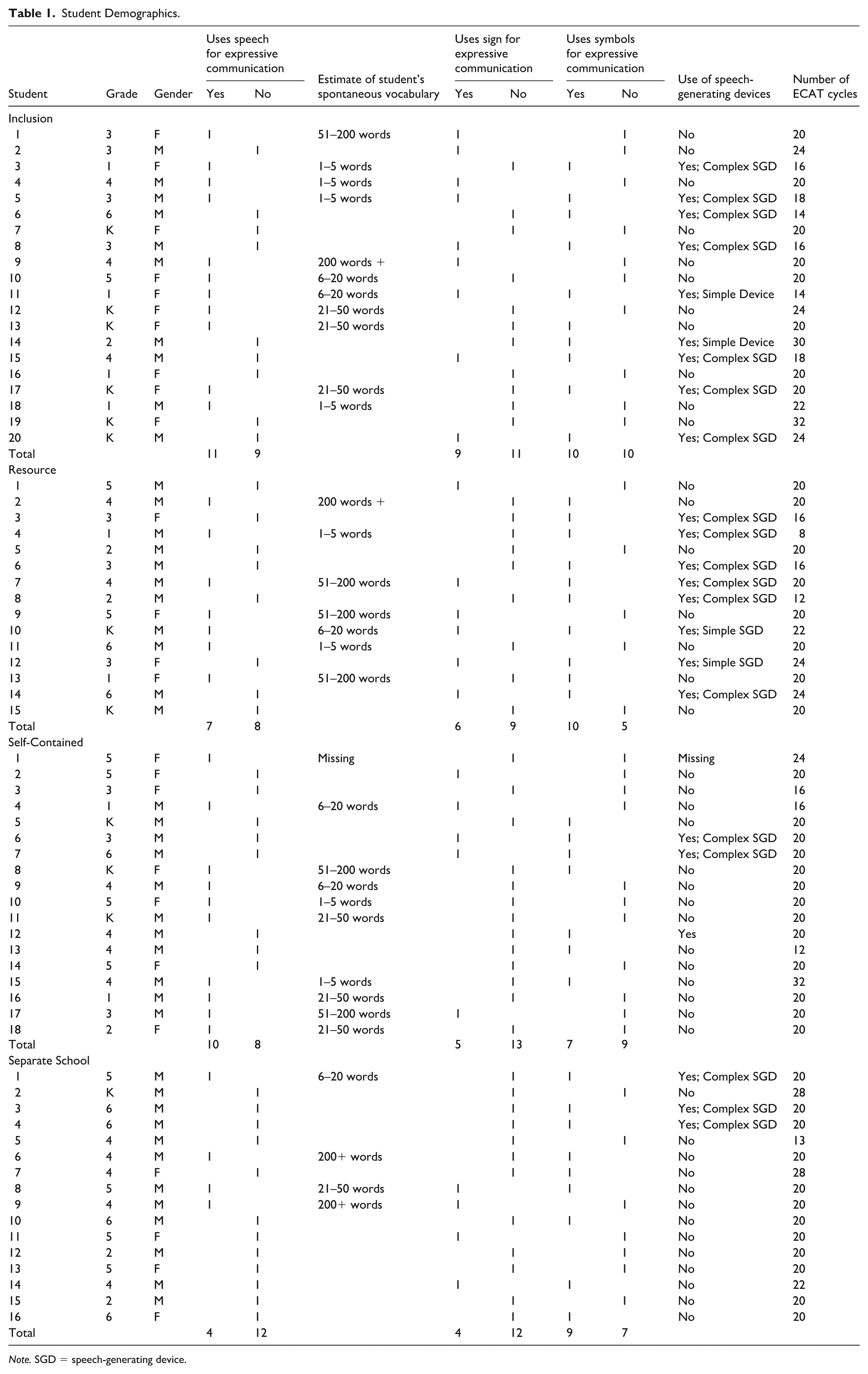
Note. SGD = speech-generating device.
Fifty-three teachers provided student demographic data and participated in observations. Forty-two teachers identified as female, three identified as male, and gender data were missing for eight teachers. Thirty-eight of the teachers participating in this study were special education teachers, and 11 were general education teachers. The mean age for teachers in our study was 37.7 (range = 24–60), and they had an average of 12.2 years of teaching experience (range = 2–34). We were missing data for 18 teachers. Only one teacher had an emergency certification, and the participant noted it was “provisional functional.”
Measures
Data analyzed in the present study were collected through special and/or general education teachers’ response to surveys and observations of classrooms where participating students with CCN were learning. All data were collected during the fall of 2019.
Academic and Communication Assessment Survey
To determine the communication characteristics and support needs of participating students, we administered the Academic and Communication Assessment Survey (ACAS; Jackson, 2019). The ACAS includes 35 items focused on understanding the skill level and supports for students with complex support needs who took their state’s AA-AAAS, and it includes items focused on communication, literacy, math, and science. The ACAS was developed from the Personal Needs Profile of the First Contact Survey (Nash et al., 2016). The First Contact Survey is designed to gather data on students who take their state’s AA-AAAS. It has 58 items focused on ten domain areas (e.g., sensory skills, motor skills, communication skills, academic skills). Only communication data from the ACAS were included in the present study, and therefore, communication items are described next.
The ACAS was administered via an online survey of the student’s lead special and/or general education teacher. The ACAS included 21 questions focused on expressive communication, including use of speech, sign, AAC, symbols, voice output technology; if the student did not use any of these modes of communication, teachers were asked whether the student used (a) conventional gestures (e.g., waving, nodding, shaking head), (b) unconventional vocalizations (e.g., making noise for attention, grunt to express satisfaction), or (c) reflexive behaviors (e.g., laughing, crying, turning away) to communicate. The ACAS also included 11 questions about the student’s academic skills, which were not analyzed as part of the present study.
To select the sub-sample of students with CCN from the larger dataset, we analyzed results from the ACAS. Students were identified as having CCN if the teacher indicated “yes” to at least one of the following questions in the ACAS about student expressive communication: (1) Does the student use sign language to meet expressive communication needs?; (2) Does the student use symbols to meet expressive communication needs?; (2a) If the teacher answered “yes” to the student using symbols, then they were asked if the student uses voice output technology to meet expressive communication needs. If the teacher indicated that the student does use voice output technology, then teachers were asked to provide details by selecting one of the following types of voice output technologies: (a) simple devices (GoTalk, QuickTalker, SuperTalker), (b) complex speech-generating devices (Tobii-DynaVox, PRC, Proloquo), or (c) none. (2b) If the teacher indicated that the student did not use speech and also did not use sign language or symbols, then teachers were asked about the best description of the student’s expressive communication. Response options for the student’s expressive communication skills included: (a) Exhibits only behaviors that may be reflexive and are not intentionally communicative but are interpreted by others as communication (e.g., turning away, crying laughing when physically stimulated, spitting out food, reaching for an object, pushing an object away); (b) uses in an intentional manner unconventional vocalizations (e.g., making noise for attention, grunts to express dissatisfaction), unconventional gestures (e.g., opening mouth to indicate done), and/or body movements (squirming to indicate discomfort) to communicate with others; and (c) uses conventional gestures (e.g., waving, nodding and shaking head, thumbs up or down), looking, pointing, purposeful eye-gazing, and/or vocalizations to communicate intentionally but does not presently use symbols or sign language.
Ecobehavioral Classroom Assessment Tool
To determine how students with CCN responded during classroom activities and what accommodations and modifications they were provided during academic instruction, we observed students, teachers, and classrooms using the Ecobehavioral Classroom Assessment Tool (ECAT; Kurth & Lockman Turner, 2019; Zagona et al., 2022). The full ECAT includes 12 categories of variables that are focused on the student, educator, and the classroom context. The ECAT uses a time sampling procedure in which the researcher observes the student and class for 20 seconds for each category, records for 20 seconds, and then observes variables in the next category for 20 seconds. For the present analysis, we analyzed observation results from 5 of the 12 categories of the ECAT, with sample variables from each category listed in parentheses: (a) student academic responses (e.g., student was observed engaged in writing, math, reading, watching or listening to academic content, discussing academic content), (b) educator academic actions (e.g., teacher was observed asking academic questions, teaching academic content, reading aloud, non-teaching activities like taking attendance), (c) instructional grouping (e.g., student learning in whole or small groups, working individually), (d) peer-assisted learning (e.g., peer tutoring, peer providing motivational support), and (e) accommodations and modifications (e.g., environmental supports like wedge seats, academic supports like text-to-speech, personnel supports like paraprofessionals). Observations were pre-arranged with teachers to take place primarily during academic times in the class schedule. During each observation, one focal student with CCN was observed individually, allowing us to report the activities of each elementary student with CCN.
Data were collected using the ECAT app; for each variable, a “0” was recorded if the variable was not observed and a “1” if the variable was observed during the observation interval. A total of 190.9 hr of observation data were included from the ECAT in the present study: 77.9 hr in general education classrooms (40.8%), 14.13 hr in resource classrooms (7.4%), 58 hr in self-contained classrooms (30.4%), and 40.9 hr in special education schools (21.4%). Table 1 includes the number of ECAT cycles that were completed for each student; each cycle is 8 min and includes interval recording for each of the 12 categories. In this study, we included a subset of categories (n = 5) that aligned with our research questions. The ECAT manual is available on OSF (https://osf.io/r3zjy/overview) and includes complete variable definitions and procedures that were completed to develop the observation tool (Kurth & Lockman Turner, 2019). Nineteen members of the research team participated in collecting data through observations and completed a comprehensive training described in the ECAT manual. Before recording data for the present study, data collectors were required to complete 10 hr of practice observations in classrooms that were not included in the study. Data collectors were required to have at least 80% inter-observer agreement (IOA) during the practice sessions prior to collecting data for the present study. The overall IOA of all data collectors in the larger ECAT study was 94% (Zagona et al., 2022). IOA was calculated by summing the marked agreements and disagreements across all variables within the 12 categories, and the total marked agreements were divided by the sum of the marked agreements and marked disagreements.
Data Analysis
To analyze our data in this study, we first identified the sub-sample of students with CCN based upon teacher responses to the ACAS in the larger study. To answer the first research question (What are the characteristics and support needs of students with CCN?), we used an Excel spreadsheet to sum the results of the following items on the ACAS and categorized the results by placement noted on the student’s IEP: (a) grade, (b) gender, (c) use of speech for expressive communication (yes/no), (d) estimate of the student’s spontaneous spoken vocabulary (i.e., none, 1–5 words, 6–20 words, 21–50 words, 51–200 words, greater than 200 words), (e) use of sign language for expressive communication (yes/no), (f) use of symbols for expressive communication (yes/no), and (g) use of voice output technology (i.e., none, single message devices such as BIGmac, simple devices such as GoTalk, QuickTalker, SuperTalker, speech-generating devices such as Tobii-DynaVox). Student demographic results are displayed in Table 1.
To answer research questions two and three, we excluded students who did not have CCN from the larger ECAT dataset. Next, we categorized the observational data of the students with CCN according to the setting in which the observation took place (general education, resource, self-contained, and separate school). We calculated the frequency and percent of intervals in which the following variables were observed: (a) student academic responses, (b) educator academic actions, (c) instructional grouping, (d) peer-assisted learning, and (e) accommodations and modifications.
A one-way multivariate analysis of variance was run using SPSS to determine the effects of classroom type on observed academic behaviors. Twelve academic behaviors were assessed (all ECAT variables). Prior to analysis, we determined there were no univariate outliers in the data, as assessed by inspection of a boxplot. Multicollinearity was also assessed by Pearson correlation. There was homogeneity of variances, as assessed by Levene’s Test of Homogeneity of Variance (p > .05).
Results
Reported Characteristics and AAC Supports Available to Students With CCN
Students in General Education Classroom Placements
Of the 20 students with CCN observed in general education placements, 11 were reported to use speech for expressive communication and 9 did not use speech (Table 1). Of the 11 students who used speech, 3 also used complex speech-generating devices (SGD; e.g., Tobii-Dynavox, PRC, Proloquo2go) and 1 also used a simple speech-generating device (e.g., GoTalk, QuickTalker, SuperTalker). Of these 11 students who used speech, 5 supplemented their speech with sign language. The four students who used speech and a complex SGD were reported to use 1–5 spoken words expressively (n = 2), 6–20 words (n = 1), and 21–50 words (n = 1). Among the nine students who did not use speech for expressive communication, four used complex SGDs, one used a simple SGD, three used a combination of SGDs and sign, one used sign only, and three used neither SGDs nor sign to communicate.
In the general education classroom placement, three students were reported to not have any form of expressive communication supports available to them; their teachers reported they did not use speech, sign language, symbols, or voice output technology. These students were in kindergarten (n = 2) and first grade (n = 1). Two students in general education classrooms were reported to use speech, but the estimation of their spontaneous vocabulary was 6–20 words (student 10) and 21–50 words (student 12); neither of these students was reported to use any symbols or voice output technology for expressive communication.
Students in Resource Placements
There were 15 students with CCN observed in resource placements, and 7 of these students were reported to use speech for expressive communication, whereas 8 students did not use speech. Six students used sign language for expressive communication, and 10 students used symbols for expressive communication. Six students used complex SGDs. Three students who used SGDs also used speech; however, the estimated spontaneous vocabulary students used varied: a first-grade student who used 1–5 spoken words also used a complex SGD, a fourth-grade student who used 51–200 spoken words expressively also used a complex SGD, and a kindergarten student who used 6–20 spoken words expressively also used a simple SGD.
Similar to the students observed in the inclusion setting, there were three students observed in resource placements who either did not use speech for expressive communication or used 1–5 words expressively, and these three students did not use a speech-generating device or symbols for expressive communication. One of these students, a second grader, was reported to use unconventional vocalizations, unconventional gestures (e.g., opening mouth to indicate hunger), and or body movements to communicate with others. A sixth-grade student who used 1–5 spoken words expressively was reported to use conventional gestures (e.g., waving, nodding, thumbs up or down), but did not use symbols or sign language. And finally, a kindergarten student in the resource setting was reported to not use speech, sign, symbols, or an SGD; their educator indicated they demonstrated reflexive behaviors that were not intentionally communicative but could be interpreted by others as communication (e.g., turning away, crying, laughing).
Students in Self-Contained Placements
A total of 18 students with CCN were observed in self-contained settings. Ten of these students were reported to use speech for expressive communication, and eight students did not use speech. Five students used sign language to communicate expressively, and seven students used symbols to communicate. Only three students were reported to use SGDs to support their expressive communication; all three did not use speech, but two of them used sign language.
Of the 18 students with CCN in self-contained classrooms, 10 students were reported to use speech; however, the estimate of the students’ vocabulary was minimal and would suggest that the students would need additional supports to access a greater amount of language. Instead of using a complex SGD, these students were reported to use conventional gestures and/or vocalizations but not symbols (n = 7). Eight students in self-contained classrooms did not use speech for expressive communication, and only three of these students used a complex SGD.
Students in Separate Schools
There were 16 students with CCN observed in separate schools. Twelve of these students did not use speech to communicate, and of those students who did not use speech, only two used a complex SGD for expressive communication. Both of these students were in sixth grade, and the only other student in separate schools who used a complex SGD was in fifth grade. This student used 6–20 spoken words in addition to their SGD. There were five students in separate schools who did not use speech, sign language, or symbols for expressive communication, and they also did not use a complex SGD to communicate. These students were reported to use reflexive behaviors that were not intentionally communicative, conventional gestures (e.g., waving, nodding, pointing), and unconventional vocalizations (e.g., noise for attention, opening mouth to indicate hunger and closing mouth to indicate done).
Classroom Observation Results
Observation data from the ECAT are reported to describe how elementary students with CCN responded during academic activities and the instructional supports, accommodations, and modifications provided to them.
Academic Responses of Students With CCN
As shown in Table 2, the student academic responses category consisted of observations of the focal student responding through writing, math, reading, talking about academic content, watching/listening, transitioning, other, no response, or out of the room/on a break. Table 2 details the complete results of the academic responses category, and we highlighted some of the most salient findings here. Across all four types of classrooms (general education, resource, self-contained, separate school), the students with CCN were observed watching or listening, defined as “directing their attention toward the instructional activity, not responding through activities such as drawing, writing, or calculating” during 23.6%–37.4% of observation intervals (Kurth & Lockman Turner, 2019, p. 30).
Observation Results.
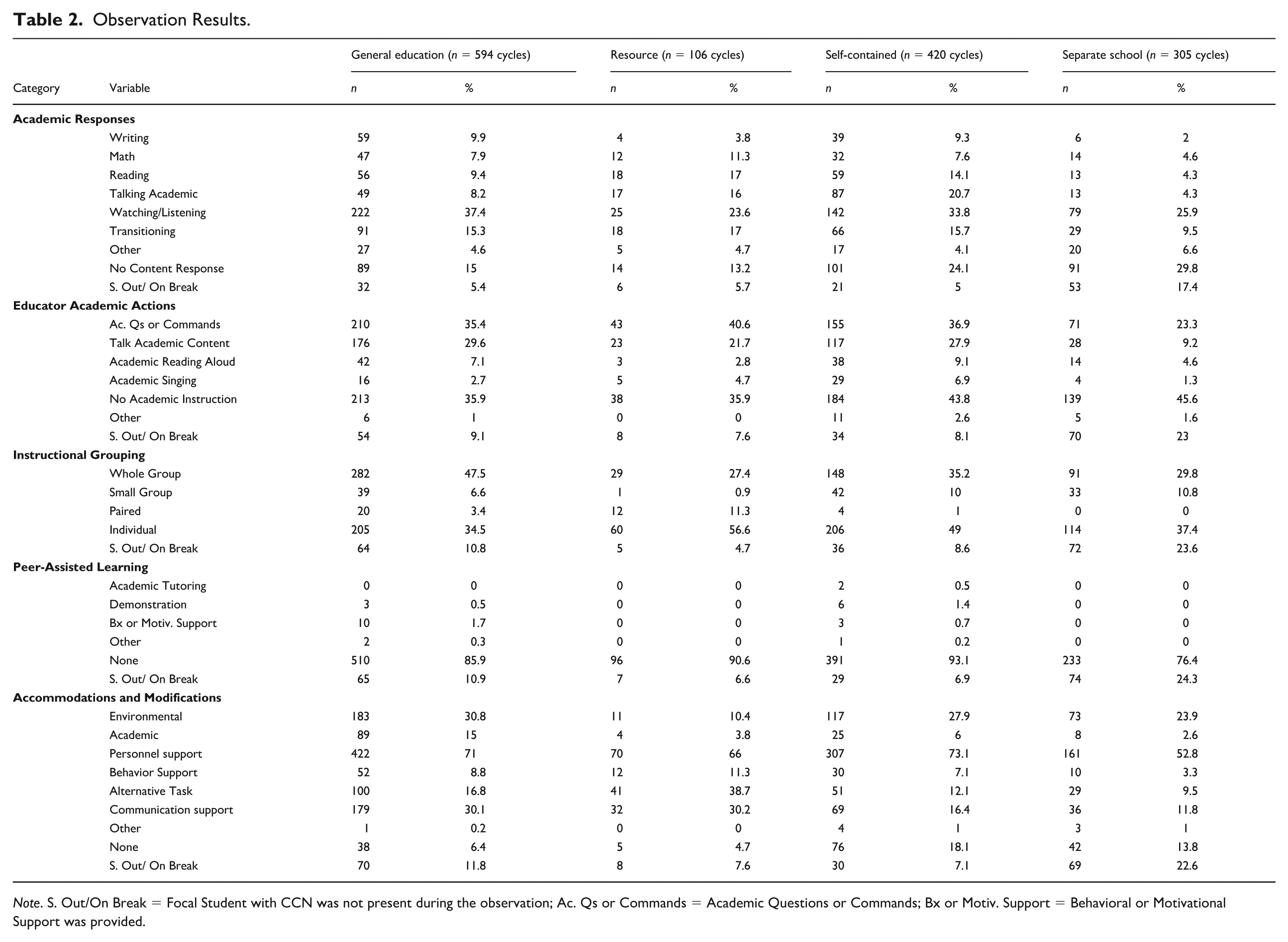
Note. S. Out/On Break = Focal Student with CCN was not present during the observation; Ac. Qs or Commands = Academic Questions or Commands; Bx or Motiv. Support = Behavioral or Motivational Support was provided.
There were low levels of writing observed across all four placements, but students were observed writing in general education (n= 59 intervals, 9.9%) and self-contained classrooms (n= 39 intervals, 9.3%) more frequently than resource (n = 4 intervals, 3.8%) and separate school classrooms (n = 6 intervals, 2%). The definition of writing for this study was “marking academic materials with a writing utensil such as a pencil, using technology to compose or write, writing with the support of accommodations such as dictation, word bank selection or picture or object selection” (Kurth & Lockman Turner, p. 29).
Students with CCN were observed to provide no response most frequently in self-contained (n = 101, 24.1%) and separate school classrooms (n = 91, 29.8%). No response was defined as “no required or expected response from the focal student, or any other students in the group at this time during the entire 20-s interval” (Kurth & Lockman Turner, 2019, p. 31). There were few observations of students talking about academic content, which was defined as “talking about or answering/asking questions about the academic material or subject using voice, or any augmentative or alternative communication (AAC) device, high or low-tech” (Kurth & Lockman Turner, 2019, p. 30). Students with CCN were observed to be talking about academic content most frequently in self-contained classrooms (n = 87, 20.7%), and talking about academic content infrequently in general education (n = 49, 8.3%), resource (n = 17, 16%), and separate school classrooms (n = 13, 4.3%).
Instruction and Accommodations and Modifications
Educator Academic Actions
Educators were observed asking questions to a group in which the focal student was participating in similar frequencies across the four placements; however, this occurred least frequently in the separate school classrooms (n = 71, 23.3%; see Table 2). Similarly, educators were observed talking about academic content (e.g., lecturing or talking about academic content with any group of which the focal student was a member) least frequently in separate schools (n = 28, 9.2%; see Table 2). Educators were observed to be providing no academic instruction to the focal student or the group in which the focal student was a member for a third to almost half of the time: general education (n = 213, 35.9%), resource (n = 38, 35.9%), self-contained (n = 184, 43.8%), and separate schools (n = 139, 45.6%).
Instructional Grouping and Peer-Assisted Learning
In resource, self-contained, and separate school settings, students with CCN spent more time working individually than they did in small groups or whole groups (see Table 2). In general education classrooms, students with CCN were observed working in whole group instructional arrangements (e.g., receiving the same instruction as most of the other students at the same time) almost half of the time (n = 282, 47.5%), and observed to be working individually about a third of the time (n = 205, 34.5%). Students were observed to be working in small groups or with partners very infrequently across all placements. Students with CCN were most frequently observed to be working in small groups while in self-contained (n = 42, 10%) and separate school classrooms (n = 33, 10.8%). Across all placements, peer-assisted learning occurred in very low frequencies (see Table 2).
Accommodations and Modifications
Despite the students in this sample having CCN, educators were observed providing supports for communication very infrequently in self-contained (n = 69, 16.4%) and separate school classrooms (n = 36, 11.8%). In general education and resource classrooms, communication supports were observed to be provided about a third of the time. There were very low levels of academic support provided during observations in all four classroom types: general education (n = 89, 15%), resource (n = 4, 3.7%), self-contained (n = 25, 6%), and separate schools (n = 8, 2.6%). Academic supports were defined as “supports to understand, access, or engage with the instructional material being presented. The student is learning the same content as others in the class” (Kurth & Lockman Turner, 2019, p. 55). A concerning result was evident when examining the frequency of personnel supports, defined as “school staff person who is providing support to the target student either directly or by proximity” (p. 56). Personnel supports were provided frequently in all placements: general education (n = 422, 71%); resource (n = 70, 66%); self-contained (n = 307, 73.1%), and separate school (n = 161, 52.8%).
Differences Between Student Responses in the Four Types of Classrooms
We found there was a statistically significant difference between the classroom types on the combined dependent variables F(24, 2,852) = 7.862, p < .001; Wilks’ Λ= .124, partial η2 = .062. Follow-up univariate analysis of variance found there were statistically significant differences based on classroom type for use of accommodations and modifications, which were highest in general education classrooms F(3, 1,436) = 26.307, p < .001, partial η2 = .035.
Discussion
Our first research question was focused on understanding the reported communication characteristics and aided AAC supports available to elementary students with CCN. In this study, 18 of the 69 students (26.1%) with CCN did not use speech, sign, symbols, or an SGD, and relied on gestures and/or vocalizations to communicate. Fifteen of the 18 (83.3%) students with CCN who did not use speech, sign, symbols, or an SGD were taught in restrictive placements: resource, self-contained, and separate school placements. Students with CCN have the right to receive necessary communication supports and the right to meaningful opportunities to communicate with others including peers (Brady et al., 2016). The implementation of aided AAC supports such as tangible symbols, core boards, and speech-generating devices and modeling is effective for supporting an increase in vocabulary and expressive communication (Biggs, Carter, & Gilson, 2018). The lack of provision of low- or high-tech AAC supports for the 18 students in our sample suggests some of the possible factors that impact student access to AAC use may be in place (e.g., lack of access to proper evaluations, lack of team members knowledgeable about AAC, lack of funding; Biggs & Hacker, 2021). Lack of access to AAC supports puts students with CCN at risk of not effectively communicating their needs or engaging in academic settings, which may impact their long-term outcomes (e.g., Kleinert et al., 2015). In addition, lack of access to effective communication supports violates the rights of the students with CCN and may interfere with their ability to make connections with others and lead a dignified life (Brady et al., 2016).
A second concern evident from our findings is that supplementary aids and services, such as communication supports and training, are required to be implemented prior to removing a student from general education (IDEIA, 2004; Kurth et al., 2019). Given that such a large number of students in our study were taught primarily outside of general education and that so many of these students were reported to not use low- or high-tech aided AAC, it is reasonable to assume that students in our sample were removed from general education without first receiving effective communication supports. Further, these supports were not provided in the restrictive classroom setting, refuting the claim that these settings are somehow more intensive and specialized settings and thus better prepared settings to meet the needs of students with disabilities (e.g., Fuchs & Fuchs, 2025).
Our third research question was focused on the instructional supports and accommodations and modifications provided for students with CCN across four types of classrooms. Overall, there were low levels of academic support provided in all four placements including support for comprehension and access to the material; this could have been because so many students did not have communication supports at all. It is possible educators did not know how to use the students’ SGDs and therefore were not integrating them into academic instruction (Andzik et al., 2019; Boesch et al., 2025). It is also possible that the students who had SGDs simply were not supported to have their device near them so that it could be integrated into academic activities (Andzik et al., 2016). However, future research is needed that includes follow-up interviews with educators to understand the potential factors impacting the provision of instructional supports, accommodations, and modifications for students with CCN.
Despite the low levels of communication and academic supports observed, we observed a high frequency of personnel supports such as paraprofessionals across all four educational placements. These supports were provided about half of the time or more across the different classroom types. This is concerning as results of previous research have found a reliance on paraprofessionals to support students with basic needs (e.g., feeding, hygiene), and the acknowledgment among paraprofessionals that they “don’t have time for this,” referring to supporting communication skills of the student such as encouraging the student to ask for help (Andzik et al., 2019, p. 94). In addition to the lack of implementation of research-based instruction and supports in communication, over-reliance on paraprofessionals is problematic, as it could set the context for students to be reliant on adults to read their communication cues without planning for and implementing more efficient communication supports that the student can use across time, regardless of the setting or adults present.
In resource, self-contained, and separate schools, students with CCN spent more time working individually than they did in small groups or whole groups. Small group and partner work, as well as peer-assisted learning, were very infrequent across placements. This represents a missed opportunity because student communication skills and interactions can increase as a result of peers providing aided AAC modeling (Biggs, Carter, Bumble, et al., 2018; Biggs et al., 2019).
Limitations
There are limitations that must be acknowledged in this study. First, observations were collected in one semester instead of across the full year as was originally planned, due to school closures associated with the COVID-19 pandemic. Second, observations only took place in elementary classrooms; observations are needed with a large population of students with CCN in middle and high school to understand how their experiences may differ. Although we recruited students with CCN across the United States, only 69 students were included in this sample. A larger analysis involving more students with CCN would provide a greater amount of data to contribute to the understanding of their academic experiences. There were few students in second grade in this sample (n = 6), which may impact generalizability. We did not observe the ways in which students communicated, and we did not observe the nuanced communication supports that may have been implemented; however, this is a necessary direction for future research. In addition, survey data reflected the teachers’ reporting of the forms of communication the student used, but we did not observe the student’s use of these forms of communication. Future research should include observations of the specific communication supports and instruction implemented as well as the forms of communication students used. Although we attempted to observe each student for the same amount of time, we experienced barriers (e.g., fire drills during scheduled observations, student absences during scheduled observations), and as a result, there were slight variations in the total time each student was observed. Finally, we were missing demographic data for 18 teachers. It is possible that teacher characteristics (e.g., degree, training) could influence their implementation of AAC in schools.
Directions for Future Research
Overall, future research should investigate the decision-making process among school teams when planning educational programs for students with CCN. The number of students who did not use speech or aided AAC such as sign, symbols, or an SGD for expressive communication and instead relied on gestures and vocalizations suggests the presence of factors that impacted their access to AAC (Biggs & Hacker, 2021). Why did they not have access to basic low-tech, objects or picture symbols? Did the school teams not know how to initiate trials of low-tech symbols or speech-generating devices, or did they have extremely low expectations for the student? Did the school teams have difficulty collaborating or preparing and planning instruction? Was a comprehensive, interdisciplinary assessment process lacking? Previous research has documented these possibilities as impeding the process of acquiring aided AAC systems for students with CCN, but more research is needed to better understand the issue including how teams make decisions about supports for students with CCN (Andzik et al., 2019).
Our second research question was focused on how students with CCN responded during academic instruction and how that differed across educational placements. Students with CCN were observed to provide no response most often in segregated classrooms (self-contained and separate schools). Given the number of students who did not use speech, sign, symbols, or an SGD in these settings, they may not have had the means to express an academic response. Another possibility is a lack of opportunity to provide a response; if the instruction was not provided in a way that the students could respond, that may have contributed to this finding. Students were observed to write very infrequently in all placements, and they were least frequently observed writing in separate schools and resource classrooms. Importantly, our definition of writing included dictation, word bank selection, picture or object selection, meaning that despite accounting for modifications to writing that students with complex support needs and CCN might need, we still observed few instances of writing among students with CCN. The overall lack of communication supports for expressive communication for the students in this study could be one way to understand this finding; however, more research is needed. Given that students with CCN may have physical support needs that impact their writing skills and they also have language needs that impact their expressive communication, they need highly individualized supports to ensure they are able to make progress in the curriculum. Given the absence of writing as a student response in this study, and the low levels of communication and academic supports implemented across placements, future research should investigate how students with CCN participate in academic tasks that involve writing, what their educators find to be barriers and enablers to their participation in writing, and what technology and communication-based supports are used for students with CCN to complete writing tasks.
In this study, we reported the analysis of over 190 hr of observation data focused on students with CCN in four educational placements. We found that about one quarter of the students in our sample did not have access to communication supports such as sign, symbols, or a speech-generating device, and most of these students were placed in segregated settings. Students with CCN were observed watching or listening to instruction one quarter to one third of the time, and they were observed providing no response most frequently in self-contained and separate school classrooms. Very few observations documented students with CCN talking about academic content, and students were observed writing very infrequently as well. We infrequently observed both communication and academic supports being implemented for students with CCN, suggesting an urgent need to advance research in this area to ensure students with CCN are provided the necessary materials and instruction to make academic progress. Given the right of students with CCN to receive the necessary supports to experience belonging and success both at school and in their personal life, the low levels of observed communication supports provided to students with CCN is deeply concerning, especially considering the infrequency of their responses during instruction. There is an urgent need for future research to explore the provision of necessary communication supports to students with CCN, and this research should focus on the experiences of both the student and the school team to build an understanding of a more effective and sustainable model for providing necessary supplementary aids and services for students with CCN.
Supplemental Material
sj-docx-1-rps-10.1177_15407969261455306 – Supplemental material for Academic Experiences of Students With Complex Communication Needs
Supplemental material, sj-docx-1-rps-10.1177_15407969261455306 for Academic Experiences of Students With Complex Communication Needs by Alison L. Zagona, Jennifer A. Kurth and Elissa Lockman in Research and Practice for Persons with Severe Disabilities
Footnotes
Acknowledgements
We acknowledge the contributions of all project co-principal investigators: Martin Agran, Matt Jameson, Diane Ryndak, Lewis Jackson, Karrie Shogren, and Michael Wehmeyer, data support from Tyler Hicks and Daria Gerasimova, and project research assistants Kirsten R. Lansey, Lyndsey Aiono Conradi, Kari Alberque, Dale Baker, Cherilyn Blue, Jessica Bowman, Kristin Burnette, Michael Farrell, Heather Fitzpatrick, Anne Gillies, Kristin Lyon, Somer Matthews, Mary Mansouri, Rosalia Pacheco, and Joanna Ryan for their efforts and insights on the project.
Authors’ Note
The opinions expressed are those of the authors and do not represent the views of the Institute or the U.S. Department of Education.

Funding
The authors disclosed receipt of the following financial support for the research, authorship, and/or publication of this article: The research reported here was supported by the Institute of Education Sciences, U.S. Department of Education, through Grant R324A180024 to the University of Kansas.
Declaration of Conflicting Interests
The authors declared no potential conflicts of interest with respect to the research, authorship, and/or publication of this article.
Supplemental Material
Supplemental material for this article is available online.
Editor in Charge: Elizabeth Biggs
Author Biographies
References
Supplementary Material
Please find the following supplemental material available below.
For Open Access articles published under a Creative Commons License, all supplemental material carries the same license as the article it is associated with.
For non-Open Access articles published, all supplemental material carries a non-exclusive license, and permission requests for re-use of supplemental material or any part of supplemental material shall be sent directly to the copyright owner as specified in the copyright notice associated with the article.
