







Abstract
Developmental criminologists have criticized typologies of juvenile sex offenders (JSOs) for assuming that JSOs involved in nonsexual offending are a homogenous group. However, this criticism has remained largely conceptual. To help empirically address the validity of this criticism, offending trajectories from age 12 to 23 were measured for a sample of male JSOs (n = 52) and juvenile nonsex offenders (JNSOs; n = 231) interviewed as part of the Incarcerated Serious and Violent Young Offender study. Within this predominantly Caucasian sample, whether offender status (JSO/JNSO) or risk factors were better indicators of trajectory group membership was examined. Four unique offending trajectories emerged, namely, a low-rate offending trajectory, a bell-shaped offending trajectory, a slow-rising chronic trajectory, and a high-rate chronic trajectory. The relatively equal distribution of JSOs in each trajectory indicated that the criminal behavior committed by this group was not expressed by just one pattern. Further, the prevalence of JSOs in each trajectory mirrored the prevalence of JNSOs in the same trajectory, suggesting that having a sex offense in adolescence was not informative of general offending patterns. Individual and familial-level risk/needs factors were better indicators of trajectory membership. Implications for existing typologies of JSOs are discussed.
Keywords
Introduction
For juvenile sex offenders (JSOs), nonsexual recidivism is far more typical than sexual recidivism (Zimring, Piquero, & Jennings, 2007), the latter being quite rare (Caldwell, 2002, 2010; McCann & Lussier, 2008). However, empirical research has been more focused on JSO sexual reoffending than JSO nonsexual offending, meaning that the development and course of the types of offenses that JSOs most commonly perpetrate are also poorly understood. The almost exclusive focus on JSOs’ sex offending has contributed to their portrayal as sex offender “specialists” at risk of sexual recidivism. More recent research using longitudinal data shows instead that the sex offending of JSOs is more typically limited, transitory, and circumspect to the period of adolescence, or said differently, adolescence limited (Lussier, van den Berg, Bijleveld, & Hendriks, 2012). Explanations of JSO nonsexual offending are predominantly based on nondevelopmental typological models that separate JSOs with and without a history of prior nonsexual offending (e.g., Becker, 1998; Butler & Seto, 2002; Pullman, Leroux, Motayne, & Seto, 2014). On one hand, criminal career researchers have criticized such models for failing to account for within-individual change in JSO behavior (e.g., Lussier & Cale, 2013). Additionally, developmental criminologists have criticized these models for assuming that JSOs involved in nonsexual offending are a homogenous group (e.g., Dennison & Leclerc, 2011; McCuish, Lussier, & Corrado, 2014; Smallbone, 2006). On the other hand, developmental and criminal career researchers have given little empirical attention to the nonsexual offending of JSOs, although initial research in this area indicated substantial heterogeneity in the nonsexual criminal careers of JSOs (Lussier et al., 2012).
Currently, it is not clear whether the heterogeneity of JSO offending trajectories is similar to trajectories found among juvenile nonsex offenders (JNSOs). Addressing this question has important implications for whether similar treatment modalities for both groups are warranted (Ronis & Borduin, 2013). In the current study, offending trajectories were mapped retrospectively and prospectively from age 12 to 23 for a sample of incarcerated adolescent male JSOs and JNSOs. Emphasis in this study was not on whether JSOs and JNSOs were characterized by different risk factors, but instead on whether JSOs were characterized by general offending trajectory patterns that differed from those of JNSOs. Additionally, criminogenic risk factors from several different domains were measured to examine whether these factors increased the likelihood of membership in a particular trajectory. Trajectory research in general has given little attention to risk factors that potentially explain why a specific course of offending develops (see Piquero, 2008 for a review). For example, do chronic offenders simply have more risk factors, or are these offenders characterized by particular types of risk factors? Developmental criminology-based and criminal career-based criticisms of JSO antisocial and criminal behavior typologies are reviewed first to demonstrate the need to more precisely measure JSO nonsexual offending. Following this, the manner in which the criminal career paradigm can be utilized to help study heterogeneity in the offending patterns of JSOs and JNSOs is discussed.
Typological Explanations of JSOs using Antisocial and Criminal Behavior
Typologies of JSOs are used to account for within-group differences that are informative of different treatment needs (Lussier, Mathesius, & McCuish, in press). Most typological models of JSOs do not make reference to juvenile delinquency, that is, the presence, nature, and extent of nonsexual offending in the youth’s background. These models instead focus on psychological functioning and the nature of the sex crimes committed. Distinguishing JSOs on the basis of their antisocial behavior patterns carries important policy and treatment implications (McCuish et al., 2014). However, initial typologies of JSO antisocial behavior assume that two categories of offenders, those with and without a history of nonsexual antisocial behavior (sex-plus and sex-only offenders, respectively), sufficiently describe the antisocial behavior patterns of JSOs. In a partial test of this conceptual model, Butler and Seto (2002) compared a small sample of sex-only and sex-plus JSOs. Sex-only offenders had fewer behavioral problems, more prosocial attitudes and beliefs, fewer issues with conduct problems in childhood, and a lower risk of future expected delinquency. Recent replications of Seto and Butler’s (2002) study have also found that sex-plus offenders had more severe risk factor profiles than sex-only offenders, including an earlier onset of offending and a higher prevalence of child maltreatment, substance abuse, and caregiver substance use and criminality (e.g., Nisbet, Smallbone, & Wortley, 2010; Pullman et al., 2014; van Wijk, Mali, & Bullens, 2007; Wanklyn et al., 2012; Way & Urbaniak, 2008). Despite the differences observed, this typology has been noted to be inconsistent with research findings from developmental criminology (Cale & Lussier, 2012; Dennison & Leclerc, 2011). Two general criticisms of this model are discussed. The first concerns the assumption that all sex offenders with a history of antisocial behavior are a homogenous group. The second concerns classification inaccuracy that arises due to this typology’s failure to monitor within-individual change.
Developmental criminologists assert that the antisocial behavior patterns of general offenders are heterogeneous, both qualitatively (e.g., type of behavior) and quantitatively (e.g., frequency of behavior). Regarding qualitative differences, Loeber and Hay (1994) identified three behavioral pathways among general offenders, namely, an overt pathway (e.g., physical aggression, fighting, and violence), a covert pathway (e.g., being deceitful, damaging property, and theft), and an authority conflict pathway (e.g., being stubborn, defiant, and rebellious against authority-figures at home and at school). Similarly, using latent class analysis, McCuish, Lussier, and Corrado (2014) found that the early antisocial behavior of JSOs was characterized by unique and mutually exclusive overt, covert, and authority conflict behavioral patterns. These three patterns mirrored the three patterns observed for the JNSO sample. By distinguishing offenders based on their involvement in qualitatively different types of antisocial behavior, McCuish et al. (2014) observed important between-group differences in risk factors. In effect, the antisocial behavior patterns and associated risk factor profiles of JSOs were more complex than specified in the sex-only/sex-plus typology. As such, treatment and intervention policies tailored to address the antisocial behavior and underlying risk factors for a singular sex-plus group may be too broad.
In terms of the second criticism regarding the failure to monitor within-individual change, developmentalists argue that, over time, some sex-only offenders will engage in nonsexual antisocial behavior, making their initial classification inaccurate (see Lussier et al., 2012). This has been described as “type switching”, and was common among JSOs in van Wijk, Mali, and Bullens’ (2007) study, where approximately 50% of sex-plus offenders were, at one point, sex-only offenders. Without monitoring within-individual change, younger JSOs are more likely to be classified as sex-only offenders simply due to having less time (e.g., opportunity) to offend nonsexually. As evidence of this, some studies have indicated that sex-only offenders were significantly younger than sex-plus offenders at the time of assessment (e.g., Aebi, Vogt, Plattner, Steinhausen, & Bessler, 2012; Pullman et al., 2014). Moreover, because sex-only offenders are often younger, instead of actual developmental differences accounting for risk factor differences between groups, it is likely that the lower prevalence of risk factors among these younger sex-only offenders was simply due to having less opportunity to be exposed to negative life experiences. The emphasis on accounting for within-individual change as part of the criminal career paradigm (Blumstein, Cohen, Roth & Visher, 1986) can provide a framework for more precisely describing heterogeneity in the offending patterns of JSOs over time.
Criminal Career Perspectives on JSOs
Blumstein, Cohen, and Hsieh (1982) defined the criminal career as an individual’s trajectory of offending from first to last offense. This trajectory consists of several parameters that measure an individual’s age of onset of offending, persistence, escalation, frequency, and desistance (Blumstein et al., 1986). The criminal career approach is often coupled with developmental criminology to emphasize that there are qualitatively different types of offenders associated with different offending trajectories. For example, Moffitt (1993) described how different patterns of offending (i.e., adolescent limited [AL] and life course persistent [LCP]) could be explained by differences in risk factor profiles. Although this dual taxonomy underestimated the heterogeneity of offending patterns (Moffitt, Caspi, Harrington, & Milne, 2002; Piquero, 2008), emphasis on monitoring within-individual change to identify between-group differences has been established as an important objective within developmental criminology (Le Blanc & Loeber, 1998; Loeber & Le Blanc, 1990). The criminal career emphasis on understanding within-individual change in offending patterns is suited to addressing misclassification issues associated with the sex-only/sex-plus typology. Additionally, the developmental criminology emphasis on capturing the heterogeneity of offending patterns is suited to addressing whether one sex-plus group sufficiently describes all JSOs involved in nonsexual offenses. Yet, the extension of these two frameworks to research on sex offenders has been limited (Cale & Lussier, 2012; Lussier & Cale, 2013), especially in research comparing JSOs and JNSOs.
The criminal careers of sex offenders have been examined, albeit minimally, in two different ways (Wortley & Smallbone, 2014). The most common research design focuses on whether the perpetration of a sex offense in adolescence is associated with continued sexual offending in adulthood. Studies based on this research design showed that the prevalence of the continuity of sex offending among JSOs was low, ranging from zero to 12% (Lussier & Blokland, 2014; Lussier et al., 2012; Piquero et al., 2012; Zimring et al., 2007; Zimring, Jennings, Piquero, & Hays, 2009). These findings are in contrast with policies asserting that the JSO is tomorrow’s adult sex offender (see Letourneau & Miner, 2005; Zimring, 2004). Moreover, JNSOs in these studies accounted for the vast majority of all sex offenses committed in adulthood. For example, using two separate birth cohort studies, Zimring et al. (2007) and Zimring et al. (2009) found that the likelihood of committing a sex crime in adulthood was significantly higher for chronic JNSOs compared to JSOs. Lussier and Blokland’s (2014) examination of a Dutch birth cohort indicated that 91.3% of all sex crimes that occurred in adulthood were perpetrated by offenders without a history of adolescent sex offending. In one of the longest prospective studies on the continuity of sex offending, although limited by low base rates, Piquero et al. (2012) found that none of their JSOs committed a second sexual offense through age 50. Despite the lack of continuity of sex offending, Reingle (2012) noted that research on adolescent sex offending remained important because a sex offense in adolescence indicated that a longer period of general offending was to come.
The second type of research design, even less common, can be used to address limitations of Butler and Seto’s (2002) typology by modeling the heterogeneity of JSO antisocial behavior and by monitoring within-individual change across the life course. Studies utilizing this research design have indicated much heterogeneity in the nonsexual offending patterns of JSOs. Lussier, van den Berg, Bijleveld, and Hendriks’ (2012) prospective study of a Dutch birth cohort followed 500 JSOs from age 12 to 30 and examined their offending trajectories using semi-parametric group based modeling (SPGM). Five unique nonsexual offending patterns were identified, that is, very low rate offenders, AL offenders, late bloomers, and high rate offenders, illustrating the heterogeneity of JSO antisocial behavior (Lussier et al., 2012). However, JNSOs were not included in this study, and thus whether these five nonsex offending trajectories differed from trajectories of JNSOs was not established. In fact, the majority of studies on the nonsexual offending criminal careers of JSOs commonly lack a JNSO comparison group (e.g., Francis, Harris, Wallace, Soothill, & Knight, 2013; Lussier et al., 2012; Wortley & Smallbone, 2014). The extent to which the nonsexual criminal careers of sex and nonsex offenders differ is therefore not well understood (Piquero et al., 2012).
In the first study to compare multiple criminal career parameters between JSOs and JNSOs, Lussier and Blokland (2014) prospectively followed a cohort of males from age 12 to 23. This cohort included JSOs (n = 341) and three types of JNSOs (n = 7,339), that is, one-time offenders, recidivists, and chronic offenders (at least six registrations). Rather than study a clinical sample of youth using purposive sampling techniques, the authors examined the criminal career patterns of a birth cohort. Their results contradicted clinical assertions that JSOs are less active offenders than JNSOs (see Seto & Lalumière, 2010). Instead, the average age of onset of offending was significantly earlier for JSOs (14.8) than for nonsexual recidivists (15.3) and one-time nonsex offenders (15.8) but significantly higher than the age of onset for chronic JNSOs (14.4). JSOs had significantly more convictions than one-time JNSOs, significantly fewer convictions than chronic JNSOs, and did not differ from nonsexual recidivists. For this sample of JSOs, continuity of nonsexual offending in adulthood was the norm (57.2%).
The current study attempted to expand on Lussier and Blokland’s (2014) study in several ways. First, to provide a more complete picture of the criminal career parameters of JSOs and JNSO, the offending trajectories of both groups were modeled using SPGM. This helped to identify whether having a sex offense implied a specific course of offending over the life course. Second, this study also included criminogenic risk factors as potential covariates of the offending trajectories identified. Controlling for these risk factors may also help to identify a specific course of offending for JSOs. Finally, whether risk factors associated with JSOs as a group differed from JNSOs within different offending trajectories was examined to help address the potential efficacy of applying general theories of juvenile offenders to JSOs.
Methodology
Sample
Data for this study were derived from the ongoing Incarcerated Serious and Violent Young Offender study, conducted in British Columbia, Canada. Incarcerated offenders between the ages 12 and 19 were 1 interviewed in open and secure custody facilities within the Greater Vancouver Regional District and surrounding areas. More research is needed on serious and violent youth (Mulvey et al., 2004) particularly because population-based samples lack sufficient base rates of chronic offenders that allow for risk factor comparisons between high- and moderate-rate offenders (e.g., van Domburgh, Vermeiren, Blokland, & Doreleijers, 2009). For this study, a subsample of male offenders was used (n = 283). Females were excluded due to differences in the development of offending (e.g., Odgers & Moretti, 2002) that complicated this study beyond its intended scope. The subsample represented all participants whose criminal history had been coded as part of the study’s first follow-up wave of data collection, determined based on whether the subject had completed an interview at least 7 years prior to December 2013. All participants were at least 22 years of age at the time that data on their criminal histories were collected. This allowed for the period of emerging adulthood to be examined, a developmentally important stage for evaluating the continuity of offending from adolescence to adulthood (Lussier & Blokland, 2014). A disproportionate number of offenders were Aboriginal (26.4%), but Caucasian offenders comprised the majority of the sample (57.1%). Participants identified as JSOs, (n = 52) had received a criminal charge for a sexual offense between age 12 and 17. Sexual offenses included sexual assault, sexual assault with a weapon, aggravated sexual assault, sexual interference (sexual-based offenses against individuals under 14 years of age), and indecent exposure. Participants identified as JNSOs (n = 231) were never charged with a sexual offense between 12 and 17 nor did they indicate in self-report interviews that they perpetrated a nonconsensual sexual act.
Procedures
The British Columbia Ministry of Child and Family Development acts as the legal guardian for all incarcerated youth. This ministry’s consent allowed research assistants (RAs) to recruit participants incarcerated in centers throughout the province. Participants needed to meet three criteria to be included in the study, namely, (1) English speaking, (2) capable of understanding interview questions (e.g., low functioning participants were excluded), and (3) willing to provide accurate information. Regarding the latter, youth were permanently removed from the interview schedule if they continued to provide inaccurate information after being re-added to the schedule. In total, two youth were permanently removed from the interview schedule. Approximately 5% of youth declined to participate when approached by RAs. To help ensure confidentiality, participants were interviewed in an isolated room away from their living unit, other youth, and custody staff. Participants were read and provided with an information sheet that explained the purpose of the study, how information would be collected (e.g., interview and file information), and that all information would be kept confidential by law, with the exception of circumstances where the participant made a direct threat to harm themselves or someone else. Participants were asked to sign a consent form which acknowledged that the procedures of the study had been explained to them and that they understood that they could withdraw from the study at any time.
Measures
Criminal trajectories were measured from ages 12 to 23 for all offenders, and therefore it was unnecessary to control for age in the analyses. Some offenders were only 22 when criminal histories were coded, and so, in line with previous studies (e.g., van der Geest, Blokland, & Bijleveld, 2009), offenses at age 23 were coded as missing for this group. All risk factors were measured using self-report information from the participant’s interview as an adolescent, typically at age 15 or 16. It was possible that risk factor onset followed offending onset, and therefore causal order between risk factors and offending trajectories cannot be assumed. In Table 1, in addition to ethnicity, risk factors from seven different domains are described. Tetrachoric ordinal α provides a more accurate indication of internal consistency than Cronbach’s α when examining scales comprised of dichotomous items (see Gadermann, Guhn, & Zumbo, 2012). For the substance use versatility and family dysfunction scales, tetrachoric ordinal α values were high (.87 and .77, respectively). For the personality development scales (prosociality, obedience, and hypermasculinity), Cronbach’s α values were adequate (.71, .64, and .65, respectively), especially considering the small number of items in each scale (see Cortina, 1993). Only 2 of the 23 risk factors measured significantly differed (p < .05) between JSOs and JNSOs (see Table 2). Sexual abuse was more prevalent among JSOs and mean number of different schools attended was higher for JNSOs.
Description of Risk Factors From Seven Different Domains.
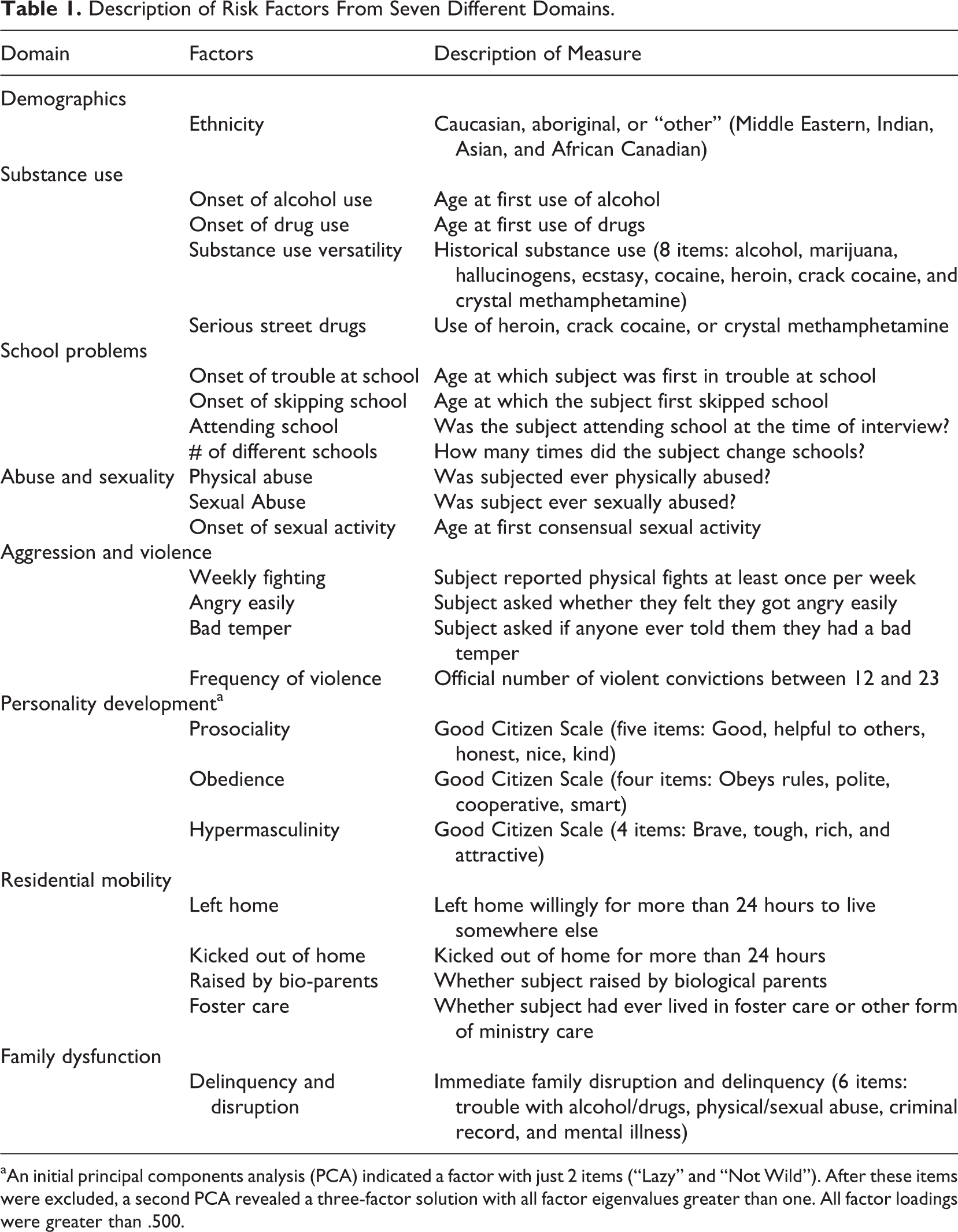
aAn initial principal components analysis (PCA) indicated a factor with just 2 items (“Lazy” and “Not Wild”). After these items were excluded, a second PCA revealed a three-factor solution with all factor eigenvalues greater than one. All factor loadings were greater than .500.
Risk Factor Comparisons Between JSOs and JNSOs.
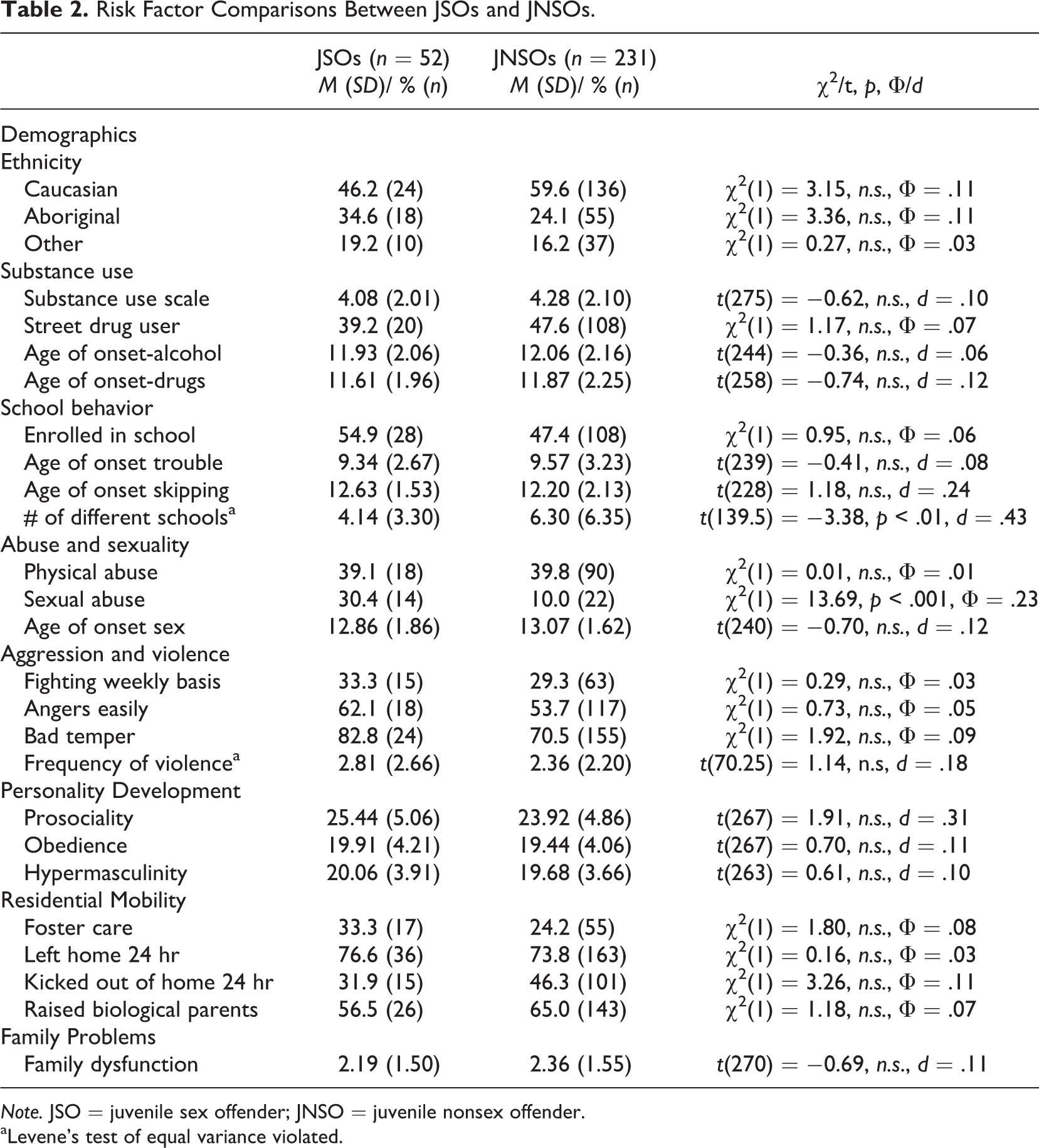
Note. JSO = juvenile sex offender; JNSO = juvenile nonsex offender.
aLevene’s test of equal variance violated.
In addition to risk factors, several criminal career parameters were measured (Table 3), including age of onset (first conviction), years of desistance (number of years since last conviction or incarceration), and persistence (years between first and last conviction up to age 23). Offending frequency measured total convictions (age 12–23), adolescent convictions (12–17), and adult convictions (18–23). Using Piquero, Farrington, and Blumstein’s (2007) formula, chronic offending in adolescence was defined as six sentencing dates and chronic offending in adulthood was defined as eight sentencing dates. Versatility measured the number of different types of offenses committed (violent, property, administrative, weapon, drug, and miscellaneous). 2 Offending continuity measured whether a participant had a conviction in both adolescence and adulthood. The prevalence of committing a sex crime in adulthood did not differ between JNSOs and JSOs (6.1% and 7.7%, respectively), with JNSOs responsible for the majority (77.8%) of sex crimes committed in adulthood. The prevalence of type switching was determined by measuring whether sex-only offenders maintained this status at age 23. Type switching was common, with 88.2% of sex-only offenders committing a nonsexual offense by age 23. None of the criminal career parameters measured differed between JSOs and JNSOs. Offending by both groups began around age 14 and ended around age 20 or 21. Approximately 20 convictions were amassed for both groups over this period.
Comparison of JSOs and JNSOs on Criminal Career Measures.
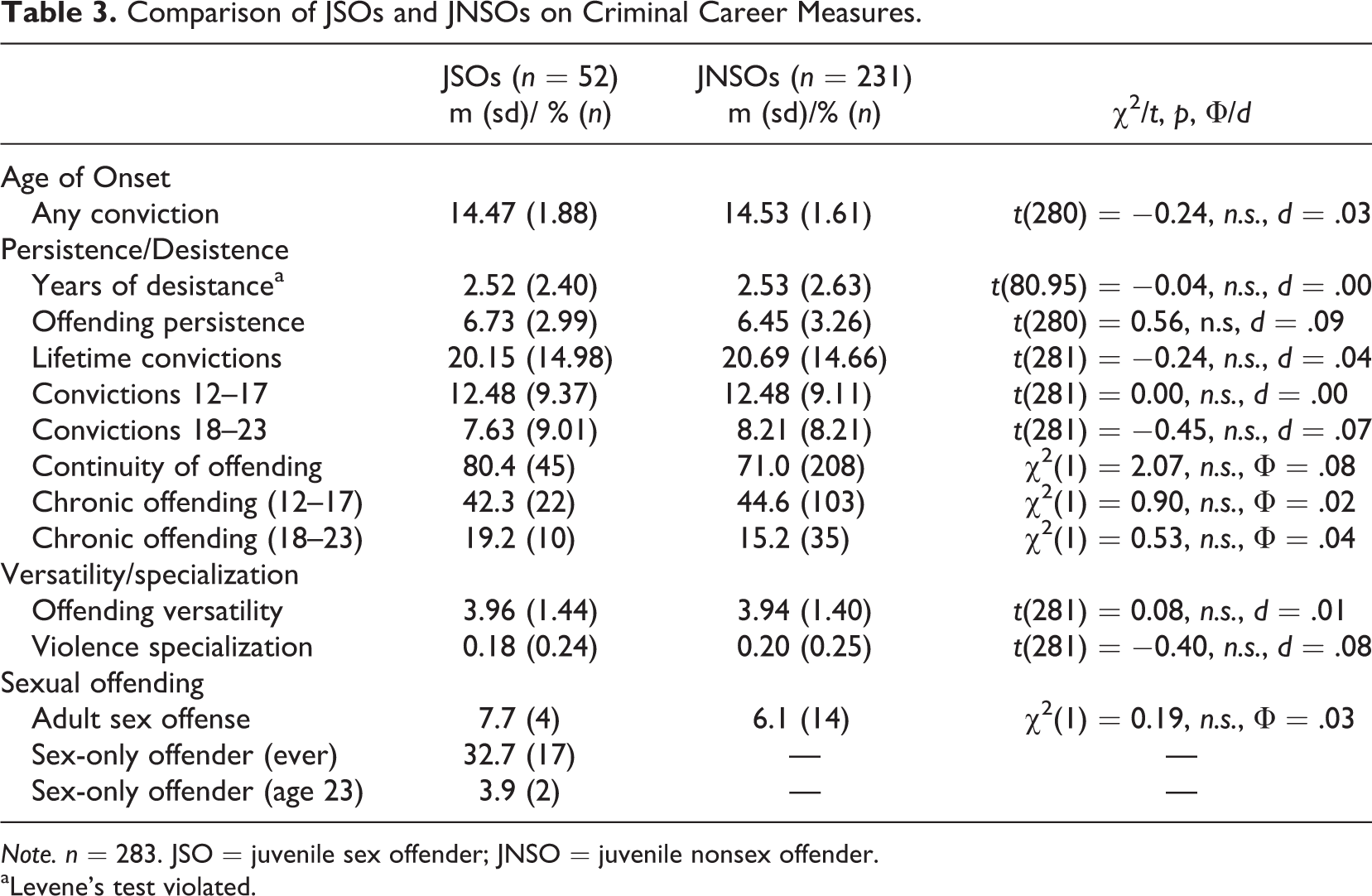
Note. n = 283. JSO = juvenile sex offender; JNSO = juvenile nonsex offender.
aLevene’s test violated.
Analytic Strategy
Nagin and Land (1993) developed SPGM to measure criminal career trajectories over the life course as opposed to measuring individual parameters separately. Unlike cluster analysis and other techniques that identify groups ex ante, SPGM allows developmental trajectories to emerge from the data (Nagin, 2005). SPGM was used to identify offending trajectories based on all convictions each subject incurred between age 12 and 23. Three offenders moved outside British Columbia, where criminal records were not available, and one offender died. Convictions and exposure time after the age at which these offenders moved outside the province or were deceased were coded as missing. Exposure time was used to account for periods of offending inactivity due to inopportunity that results from incarceration and was built into the SPGM analysis by adapting Piquero et al.’s (2001) original formula. This adaptation 3 helped to avoid high standard errors and improbable rates of offending in the model by constraining the minimum exposure time in any given year for any offender to approximately 2 months in the community per 12 months in custody. After the trajectories were identified, the prevalence of JSOs and JNSOs within the different trajectories was compared. The main analyses involved a series of multinomial logistic regression (MLR) analyses predicting trajectory group membership using offender type (JSO/JNSO) and risk factors. An additional MLR analysis reexamined each risk factor domain, this time with JSOs included as the dependent variable reference category that was compared against different offending trajectories of JNSOs.
Results
Trajectory Analyses: Model Identification
Trajectory analyses were conducted in SAS 9.3 using the Proc Traj add-on developed by Jones, Nagin, and Roeder (2001). The zero-inflated poisson model with quadratic functional form was used to estimate the distribution of the offending trajectories. This approach is appropriate for modeling periods of offending inactivity that are common within the criminal careers of many offenders. The number of trajectories that best fit the data is typically determined by examining Bayesian Information Criteria (BIC) values (Nagin, 2005). BIC values closer to zero indicate an improvement in model fit. In this study, a four trajectory-group quadratic model resulted in a BIC value of −6125.80, which was closer to zero than both a three-group model (BIC = −6192.07) and a five-group model (BIC = −6205.98). Jeffrey’s scale of evidence based on the Bayes factor (see Nagin, 2005) indicated strong evidence for the retention of a four-group model over both a three- and five-group model (Bij > 10). Probabilities of correct assignment did not significantly differ between JSOs and JNSOs in each trajectory, indicating that the trajectories reliably described both types of offenders. Finally, odds of correct classification values (see Skardhamar, 2010) were all greater than five (see Table 4), indicating high classification accuracy (Nagin, 2005).
Fit Statistics for Zero-Inflated Poisson Trajectory Model.
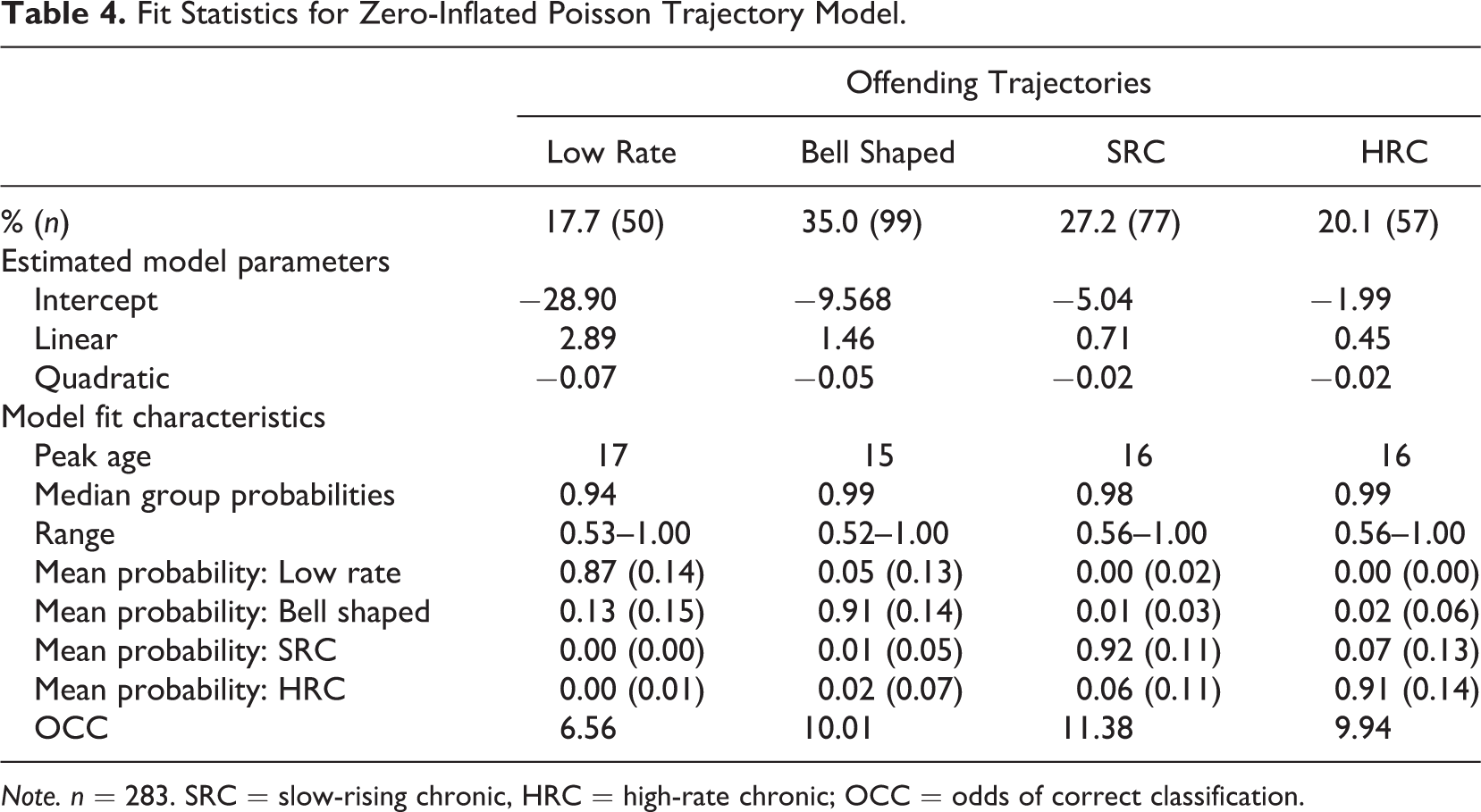
Note. n = 283. SRC = slow-rising chronic, HRC = high-rate chronic; OCC = odds of correct classification.
The four trajectories are presented in Figure 1. The low-rate offending trajectory (17.7% of the sample) never averaged more than one conviction per year. Individuals in this trajectory reached a near-zero rate of offending by age 20. For the bell-shaped trajectory (35.0% of the sample), crime peaked in mid-adolescence and by adulthood reached a rate of offending similar to the low-rate trajectory. Frequency of offending in mid-adolescence for the slow-rising chronic (SRC) trajectory (27.2% of the sample) was not substantively different from the bell-shaped group. However, through the latter stages of adolescence and into early adulthood, offending continued to rise. Offenders in the high-rate chronic (HRC) trajectory (20.1% of the sample) accumulated the most convictions from age 12 to 23. By adulthood, the HRC group’s frequency of offending began to decline but still averaged approximately two convictions at age 23. Although both the SRC and the HRC trajectories were considered chronic offenders, the key difference was that the HRC group amassed the bulk of their convictions in adolescence, whereas the SRC group amassed the bulk of their convictions in adulthood.
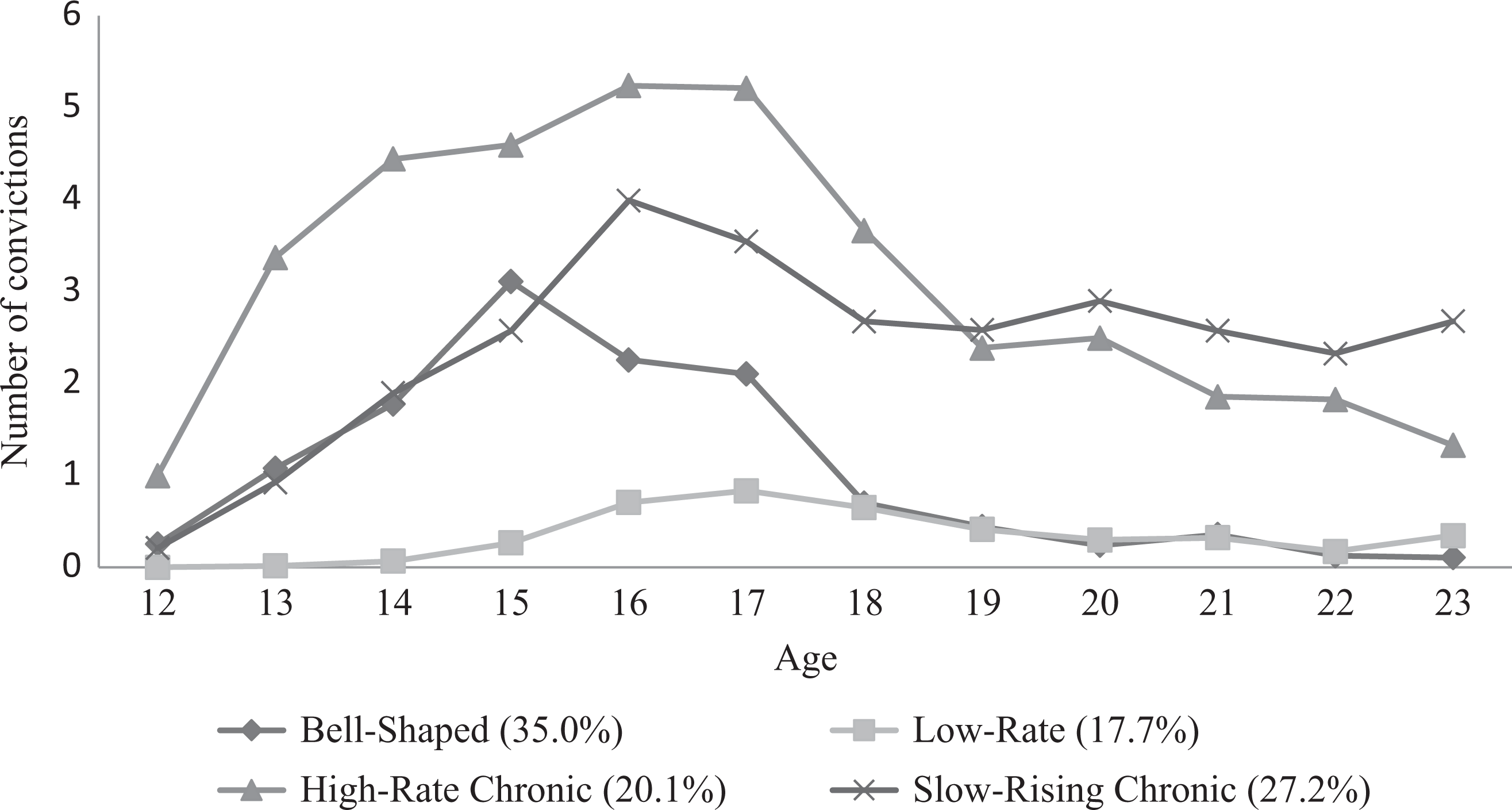
Offending trajectories of the full sample (N = 283) from age 12 to 23.
Trajectory Membership, Criminal Career Parameters, and Offender Type
Criminal career parameters helped identify differences between the four trajectories (see Table 5). For analysis of variance, Bonferroni (equal variances assumed) or Tamhane (equal variances violated) post hoc comparisons were used to determine significant differences between trajectories. Omega squared (ω2) was used as an effect size measure rather than η2 because of the small sample size (see Pierce, Block, & Aguinis, 2004). Individuals in the HRC group were the most frequent offenders, but the criminal careers of individuals in the SRC group were longer in duration. Continuity of general offending from adolescence to adulthood appeared to be the norm for this sample, especially for the HRC and SRC groups, where only one offender from each group was not convicted in adulthood. Importantly, the prevalence of JSOs and JNSOs in the offending trajectories identified did not differ. Moreover, the offending patterns of JSOs were clearly heterogeneous, given that JSOs were relatively equally distributed in each trajectory, with 17.3% in the low-rate trajectory, 36.5% in the bell-shaped trajectory, 21.2% in the SRC trajectory, and 25.0% in the HRC trajectory. This indicated that, in this sample, relying on the sex-plus/sex-only typology to describe JSOs involved in nonsexual offenses would not sufficiently account for the heterogeneity of this group’s offending patterns. Controlling for important risk factors that account for the within-group heterogeneity of JSOs and JNSOs may help identify differences in trajectory membership.
Association Between Offending Trajectories and Criminal Career Parameters.
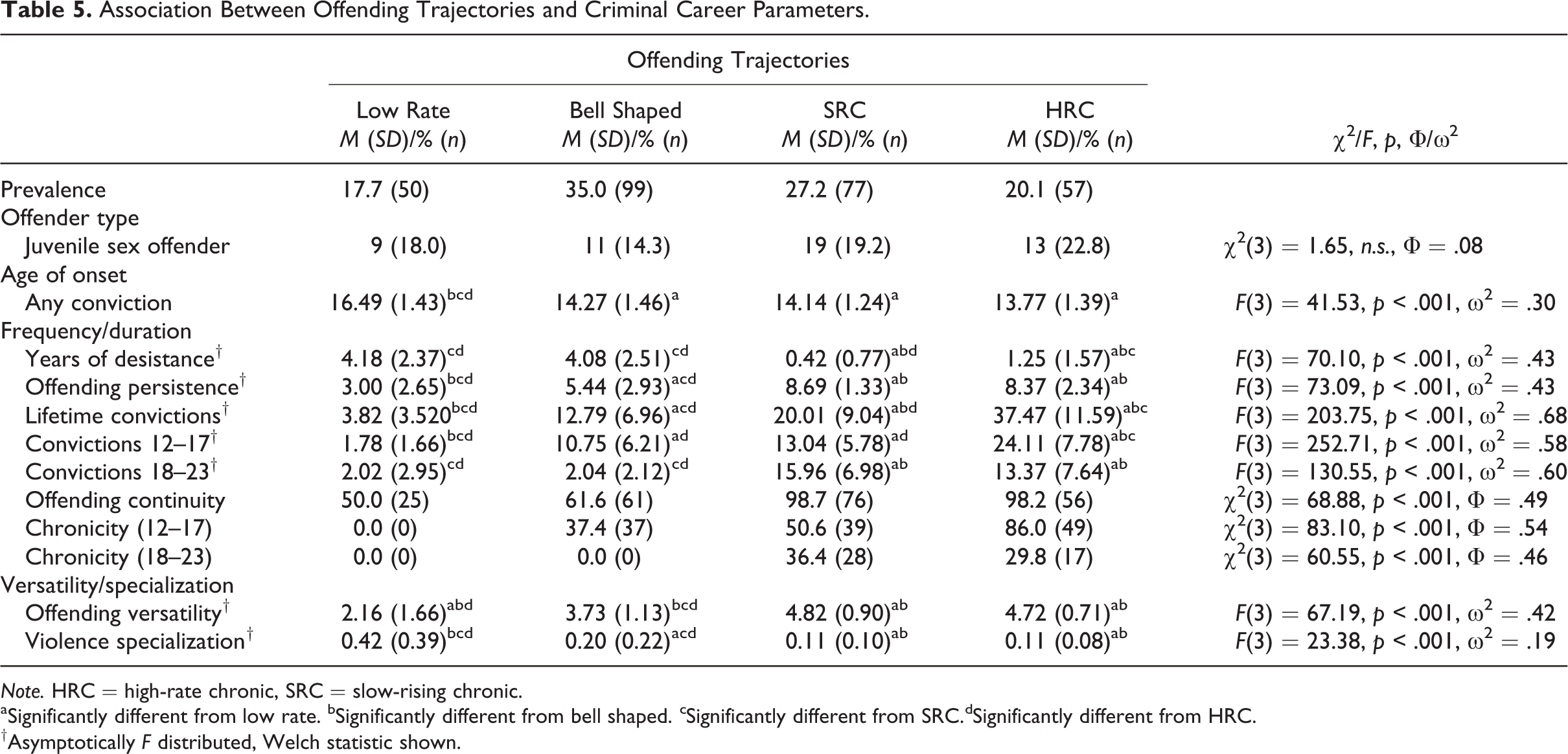
Note. HRC = high-rate chronic, SRC = slow-rising chronic.
aSignificantly different from low rate. bSignificantly different from bell shaped. cSignificantly different from SRC.dSignificantly different from HRC.
†Asymptotically F distributed, Welch statistic shown.
Association Between Risk Factors and Trajectory Membership
MLR models (see Table 6) examined potentially more complex relationships between offender type, risk factors, and criminal career trajectories. The analyses also examined interaction terms between offender type and all risk factors. 4 None of the seven models indicated that being a JSO influenced the odds of membership in a particular trajectory. However, the interaction term reflecting a situation where the youth was a JSO who changed schools more frequently increased the odds of being in the SRC trajectory relative to the low rate trajectory. A second interaction term reflecting a situation where an adolescent was a JSO coming from a more dysfunctional family increased the odds of membership in the bell-shaped trajectory relative to the low-rate trajectory.
Coefficients of Risk Factors by Trajectory Group.
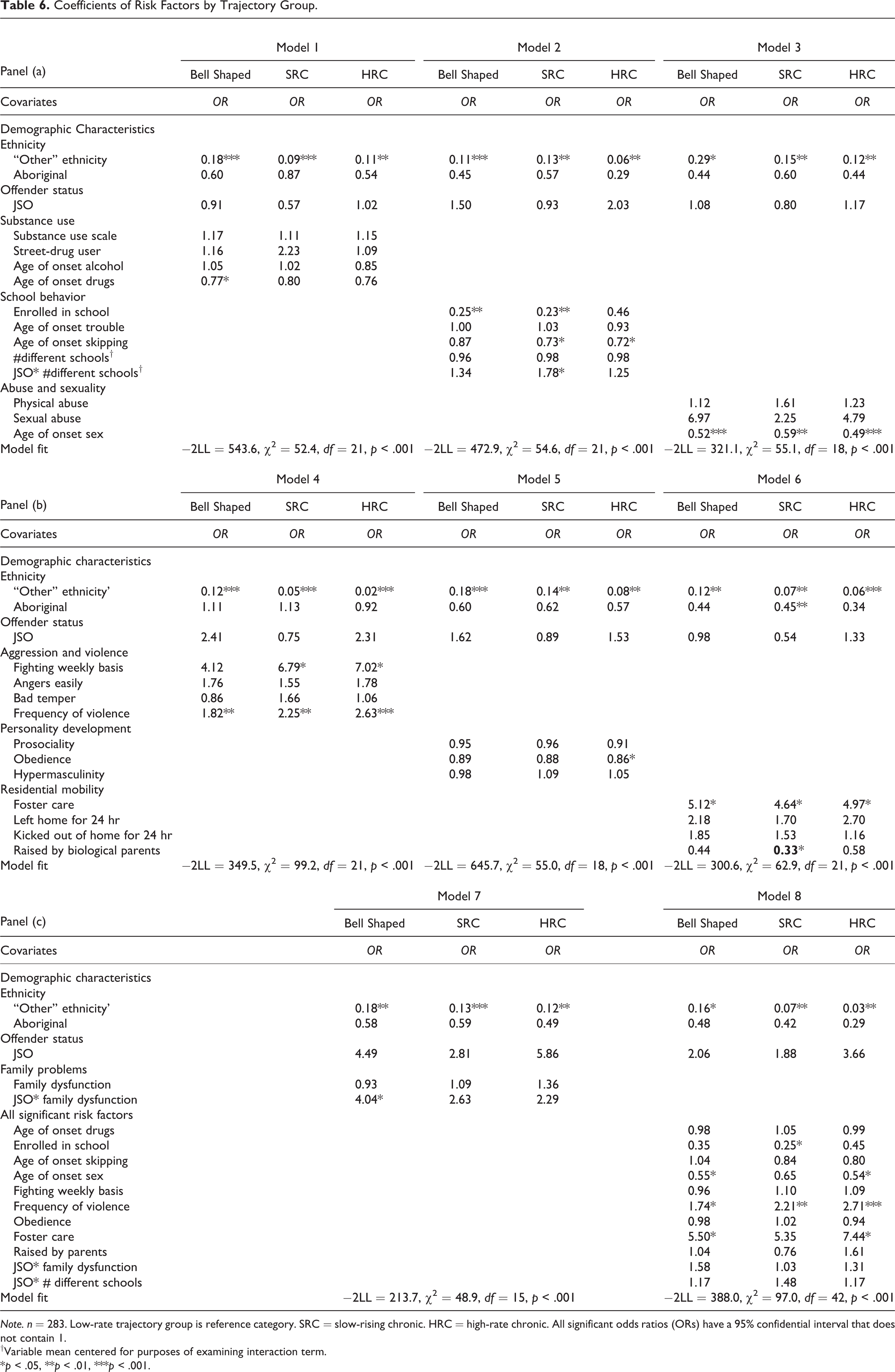
Note. n = 283. Low-rate trajectory group is reference category. SRC = slow-rising chronic. HRC = high-rate chronic. All significant odds ratios (ORs) have a 95% confidential interval that does not contain 1.
†Variable mean centered for purposes of examining interaction term.
*p < .05, **p < .01, ***p < .001.
At least one risk factor from all seven domains increased the odds of membership in the bell-shaped, SRC, or HRC trajectory compared to the low-rate group. As age of onset of drug use increased, the odds of being in the bell-shaped trajectory compared to the low-rate trajectory decreased (odds ratio [OR] = 0.77). As scores on the obedience scale increased, the odds of HRC trajectory membership decreased (OR = 0.86). School enrollment prior to incarceration decreased the odds of being in the SRC trajectory (OR = 0.23) and bell-shape trajectory (OR = 0.25). An earlier age of sexual intercourse, more frequent involvement in violence, and foster care placement all significantly increased the odds of membership in each of the bell-shaped, SRC, and HRC trajectories compared to the low-rate trajectory. An eighth regression model examined all 12 significant risk factors from the previous analyses. As the number of violent convictions increased, the odds of being in the bell-shaped, SRC, and HRC trajectories all increased relative to the low-rate trajectory. Foster care and an earlier age of onset of sexual intercourse increased the odds of being in the bell-shaped and HRC trajectories. School enrollment significantly decreased the odds of being in the SRC trajectory compared to the low-rate trajectory (OR = 0.25).
Risk Factor Differences Between JSOs as a Group and JNSOs Following Different Trajectories
A final series of MLR analyses examined whether risk factors differentiated JSOs as a group from JNSOs associated with different trajectories. After examining each of the seven domains of risk factors separately (not shown), all significant risk factors (p < .05) were included in an eighth model (Table 7). For JNSOs in the low-rate trajectory, as the number of different schools attended increased, and as the age of onset of sexual intercourse increased, the odds of being in this trajectory increased compared to being a JSO (OR = 1.16 and 2.86, respectively). On the other hand, increases in violent convictions decreased the odds of being a JNSO in the low-rate group compared to being a JSO (OR = 0.57). Similarly, violent convictions decreased the odds of being a JNSO in the bell-shaped trajectory (OR = 0.77). In contrast, the number of violent convictions increased the odds of being a JNSO in the HRC trajectory relative to being a JSO (OR = 1.24). Finally, history of sexual abuse significantly decreased the odds of being a JNSO in the SRC trajectory (OR = 0.03). These findings as well as the findings from the previous section are examined from three perspectives: How the findings fit within the existing literature, the implications of the findings for typologies of JSOs, and the implications of the findings for contemporary theories/models of offending and the application of these theories/models to JSOs.
Coefficients of Risk Factors by Trajectory Group or Sex Offender Status.
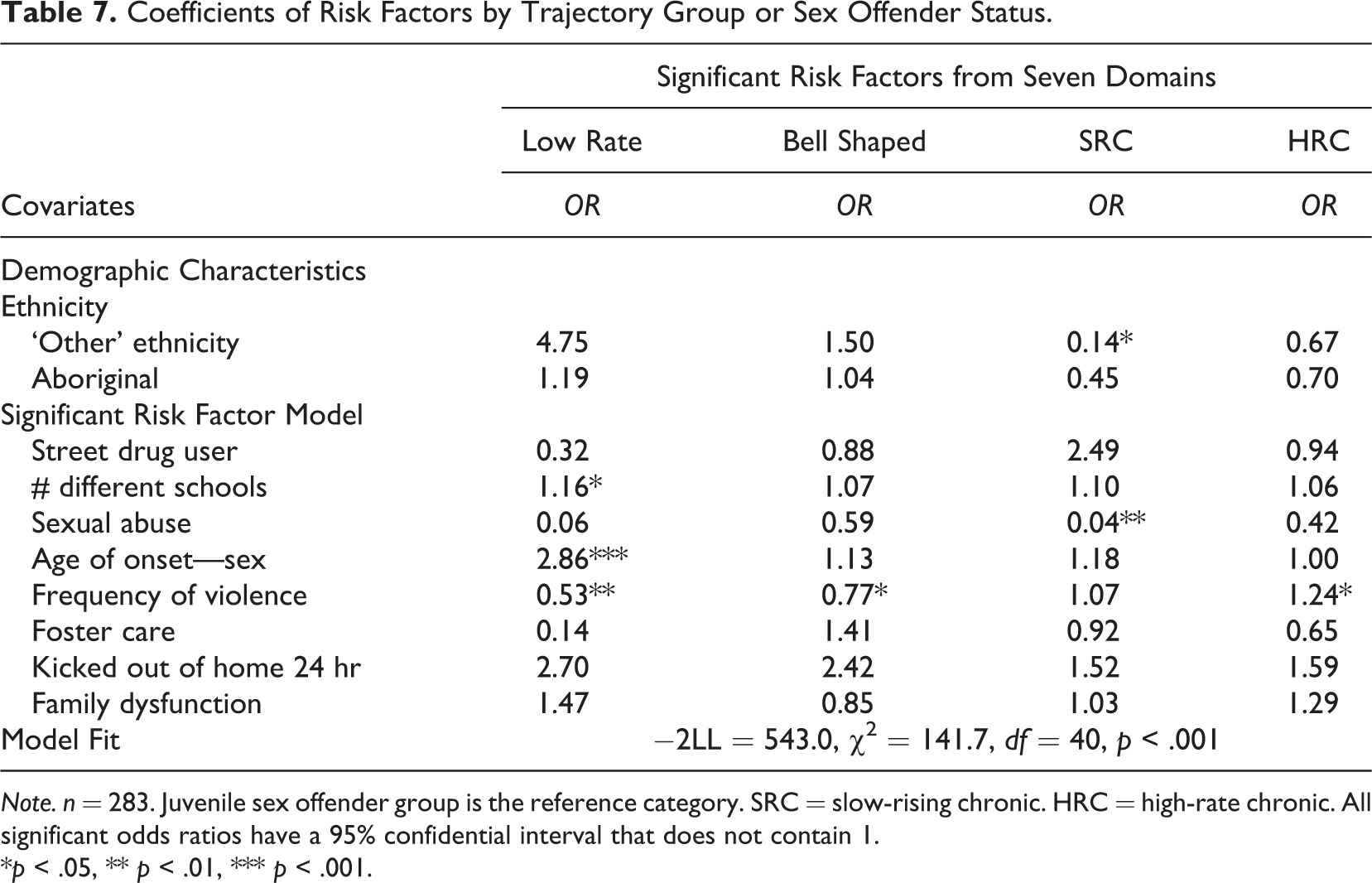
Note. n = 283. Juvenile sex offender group is the reference category. SRC = slow-rising chronic. HRC = high-rate chronic. All significant odds ratios have a 95% confidential interval that does not contain 1.
*p < .05, ** p < .01, *** p < .001.
Discussion
Although the criminal career paradigm has been used frequently to explain the course of general offending (Piquero, 2008), there has been limited research on criminal career parameters in the context of juvenile sex offending (Lussier & Cale, 2013; Lussier, 2015). SPGM was used to examine offending trajectories between age 12 and 23 for male offenders incarcerated during a period of adolescence. Four trajectories were identified, namely, (1) a low-rate group that desisted from offending by mid-adolescence, (2) a bell-shaped group that resembled Moffitt’s (1993) AL group, but desisted shortly after 18, rather than before 18, (3) a SRC trajectory that offended at a consistent rate from adolescence through early adulthood with no signs of desistance, and (4) a HRC trajectory that offended in adolescence at a rate twice as high as the low-rate and bell-shaped trajectories but slowed down at the transition into adulthood. The course of offending for the SRC and HRC trajectories was in line with Tracy and Kemf-Leonard’s (1996) finding that chronic adolescent offenders from the Philadelphia birth cohort typically continued offending as adults. The number and shape of the trajectories identified was consistent with past trajectory studies using offender-based samples. These studies identified between four to six trajectories, with at least one LCP trajectory (i.e., the SRC and HRC trajectories) and one trajectory that was limited to the period of adolescence (i.e., the low-rate and bell-shaped trajectories; Piquero, 2008). The four trajectories also resembled trajectories of nonsexual offending for JSOs from a Dutch birth cohort (Lussier et al., 2012). Lussier et al. (2012) observed that during the adolescence–adulthood transition, the frequency of offending by their “high rate” offender trajectory was surpassed by their “late bloomer” trajectory (i.e., the HRC and SRC trajectories in this study, respectively). Lussier et al’s. (2012) study, together with the current results, showed that in contrast to Moffitt’s (1993) assertion, not all JSOs were LCP offenders. Indeed, only 46.2% of JSOs were associated with a chronic offending trajectory.
Rather than examine differences in risk factors between JSOs and JNSOs, the main focus within this study was on whether patterns of offending by JSOs and JNSOs were similar, different, or both. Two key findings emerged, namely, (1) JSOs and JNSOs were equally likely to be in each of the four trajectories identified, and (2) several criminogenic risk factors emerged as important covariates of different offending trajectories. An important question regarding the first key finding concerned why JSOs and JNSOs, two apparently qualitatively different groups of offenders (e.g., Seto & Lalumière, 2010), had similar offending patterns. For JSOs and JNSOs that spent a period of adolescence incarcerated, one explanation would be that sexual offending represents a broader antisocial construct (e.g., Smallbone, 2006). This may be especially true for JSOs in the HRC and SRC trajectories, as their chronic antisocial lifestyle may have provided greater exposure to a variety of criminal opportunities, including opportunities to commit sexual offenses. In effect, instead of having a specific proclivity for sex offenses, many JSOs may simply have been exposed to opportunities for sexual offenses that JNSOs were not exposed to. As evidence of this suggestion, JNSOs were just as likely as JSOs to commit sexual offenses in adulthood. The prominence and diversity of general offending in the lives of JSOs has important implications for behavioral-based typologies.
Implications for Existing JSO Typologies
This study highlighted two limitations of the sex-only/sex-plus typology. First, the high prevalence of type switching supported previous conceptual-based critiques that Butler and Seto’s (2002) typology failed to account for the possibility that sex-only offenders were actually fledgling sex-plus offenders (Lussier et al., 2012; Rajlic & Gretton, 2010; van Wijk et al., 2007). One third (n = 17) of the JSO sample began their criminal career as sex-only offenders, but 15 (88.2%) of these 17 offenders were sex-plus offenders by age 23. Second, JSOs were proportionately represented in all four offending trajectories, which contradicted assertions by some scholars from the field of sexual violence and abuse that one nonsex offending pathway sufficiently described the heterogeneity of JSO antisocial behavior (Becker, 1998; Butler & Seto, 2002; Worling, 2001). Almost all JSOs in this sample, including those associated with the low-rate trajectory, would be considered sex-plus offenders. This suggests that nonsexual offending is the most concerning aspect of the criminal careers of JSOs, at least for those incarcerated during a period of adolescence. This also suggests that treating JSOs as a homogenous group (i.e., as sex-plus offenders) masks important within-group differences in their criminal careers. For example, sex-plus offenders in the low-rate trajectory appeared to have desisted from offending by adolescence, whereas sex-plus offenders in the SRC and HRC trajectories offended at a high rate throughout early adulthood. Additionally, these different trajectories were characterized by different risk factor profiles. In effect, important within-group differences that may be informative for planning a course of treatment or determining intervention needs are not accounted for by treating sex-plus JSOs as a homogenous group. Antisocial-based typologies of JSOs can be improved by giving attention to offending patterns instead of just the offense that resulted in an offender’s initial assessment. The backgrounds of younger sex-only JSOs should also be examined, as this assessment may help account for within-group differences in risk for future nonsex offending.
Some have argued that an antisocial versus prosocial disposition explained JSO within-group differences in nonsexual offending (O’Brien & Bera, 1986; Smith, Monastersky, & Deisher, 1987). However, the measurement of antisociality (i.e., low scores on prosociality) in this study had no bearing on trajectory group membership. Maturation after entering early adulthood (e.g., Roberts, Caspi, & Moffitt, 2001) may explain why low prosociality in adolescence appeared unrelated to adult offending outcomes. It is also possible that there are pathways to chronic offending in adulthood that do not require an antisocial identity. For example, a street-drug user may not have an antisocial orientation but will still offend at a high rate to sustain their drug-using lifestyle. To more fully explain the range of profiles associated with chronic offenders, consideration of a variety of criminogenic risk factors from several domains is likely required.
Different Trajectories, Different Risk Factors: Theoretical and Policy Implications
Results from this study have implications for general theories/models of offending as well as for the efficacy these general theories have in explaining the development of juvenile sex offending. Beginning with theories and models designed to explain the development of offending more broadly, retrospective identification of chronic offenders (e.g., after they have already committed dozens of crimes) does not carry the same policy implications as identifying the individual who is on a trajectory that will lead to future involvement in dozens of crimes (e.g., Blumstein & Moitra, 1980). Greenberg (1992) recommended incorporating developmental risk factors into criminal career research to help explain differences in offending patterns. Several theories view juvenile offenders that continue offending in adulthood as developmentally distinct from those that limit their offending to adolescence (e.g., Le Blanc & Loeber, 1998; Moffitt, 1993; Patterson, Debaryshe, & Ramsey, 1989; Thornberry, 2004). However, trajectory research concerned with uncovering differences between chronic and AL offenders has revealed either inconsistent or few developmental differences between the two groups (e.g., Moffitt et al., 2002; van Domburgh et al., 2009). Moffitt (1993) suggested that AL and LCP offenders were indistinguishable during the period of adolescence, whereas van der Geest, Blokland, and Bijleveld (2009) suggested that these prior trajectory studies were limited by low base rates of chronic offenders and a minimal range of risk factors. This latter explanation coincides with criticisms that criminology is concerned more with representative samples than with understanding offenders responsible for the majority of all crime (DeLisi, 2001; Mulvey et al., 2004; Wortley & Smallbone, 2014).The severity of the sample in this study combined with the breadth of risk factors included helped lead to the identification of different risk factors, measured in adolescence, that distinguished low-rate, moderate, and chronic offending trajectories.
Initial MLR analyses revealed several risk factors that increased the odds of membership in the bell-shaped, SRC, and HRC trajectories compared to the low-rate trajectory. The type of risk factor associated with group membership varied across the three trajectories. For example, risk factors that differentiated the HRC trajectory from the low-rate trajectory were not necessarily the same risk factors that differentiated the SRC trajectory from the low-rate trajectory. Very importantly, the bell-shaped trajectory but not the SRC and HRC trajectories had a significantly earlier age of onset of drug use compared to the low-rate trajectory. Therefore, theories should consider how trajectories may be associated with qualitatively different types of risk factors, rather than assume that higher rate trajectories simply have more risk factors. Whether risk factors differed between JSOs and JNSOs associated with different trajectories was also considered and has implications for whether existing theories of general offending can be extended downward to explanations of juvenile sex offending.
The overarching implication from the results of this study was that the criminal careers of JSOs resembled the criminal careers of JNSOs and that risk/needs factors from several domains were better indicators of trajectory group membership than having been charged with a sex offense in adolescence. Only two risk factors, number of times changing schools and the family dysfunction scale, when interacted with being a sex offender, affected the odds of trajectory group membership. It was possible that these interaction terms were informative of a distinct etiology for a specific subgroup of JSO. It was also possible that committing a sexual offense forced JSOs to change schools and affected their family functioning, especially if the victim of the offense was a family member. Nothing in the available data could have helped determine which of these two possibilities was correct, nor was it the purpose of this study to identify risk factors specific to JSOs that were informative of a particular offending trajectory. Doing so in future research would require inclusion of variables such as deviant sexual interests and fantasies, exposure to pornography, and cognitive distortions (e.g., Seto & Lalumière, 2010). This study was unable to include these key correlates due to ethics board restrictions, and so the number of risk factor differences between JSOs and JNSOs may have been underestimated. Including these factors in future research would help to make stronger assertions regarding the efficacy of theories specific to sex offenders.
Still, the data, albeit quite specific, do suggest that once an offender has committed a sex offense, the remainder of their criminal career through early adulthood will resemble the criminal careers of JNSOs. General theories/models may therefore be sufficient, at least as a starting point, for explaining the development of sex offending by serious adolescent offenders. Existing models of juvenile sex offending (e.g., Knight & Sims-Knight, 2003) do not incorporate some of the key explanatory factors of delinquency, such as the role of bonding, routine activities, self-control, and moral development/values (e.g., Farrington, 2005; Le Blanc, 2005; Thornberry & Krohn, 2005). Using a general sample of youth, future research should examine whether individuals escalate to commit sex offenses and whether contemporary models of juvenile offending can account for this escalation (e.g., through exposure to more risk factors). This is not to suggest that previously specified JSO-specific risk factors should be ignored. Interviewer impressions and file-related information from this study indicated that a small minority of JSOs presented with severe sexual deviancy problems (e.g., sexual sadism), which are not accounted for in contemporary models of juvenile offending. Thus, the explanatory power of general theories/models as they apply to juvenile sex offending should be examined initially, with key correlates believed to be specific to sex offending built into these models to help fill certain gaps. JSO-tailored intervention/treatment policies are still relevant, but many commonalities should be expected between the case management strategies, assessment procedures, and interventions for JSOs and JNSOs.
The commonalities observed between JSOs and JNSOs in this study help challenge the current underlying assumption that JSOs are a distinct type of offender and that policies/programs need to be built along this line of reasoning (see Zimring, 2004). As Letourneau and Miner (2005) pointed out, even many researchers and practitioners view JSOs as being at a high risk to sexually reoffend unless they receive intense clinical and legal intervention to address their deviant sexual interests. This misconception has, at least in part, contributed to policies that are highly punitive (e.g., adult-length sentences, sex offender registration, and public notification systems) and do not address social, familial, and psychological deficits that influence continued nonsexual offending in adulthood. The lack of sex offending continuity observed in the current study and elsewhere (e.g., Lussier & Blokland, 2014; Zimring et al., 2007, 2009) combined with clinical assertions that many JSOs do not present with deviant sexual interests (Worling, 2013) raise questions about the efficacy of these policies. Indeed, the rarity of sexual recidivism among JSOs (Caldwell, 2002, 2010; McCann & Lussier, 2008) implies that the majority of juvenile sex crimes are committed by first-time offenders that will not sexually reoffend. Reducing the rate of juvenile sex offending therefore likely requires policies emphasizing the prevention of the onset of sex offenses as opposed to policies responding punitively to JSOs to prevent sexual recidivism. For policy development, future research should examine within each offender trajectory identified, namely, (a) the likelihood of escalating to sex offenses, (b) whether this escalation is hierarchical and predictable, or simply random, (c) whether there are historical and clinical factors that could inform clinicians/practitioners and program managers about youth at risk of escalating their delinquency to sex offenses, and (d) whether the identified clinical factors can be modified through treatment/intervention. In other words, from a policy perspective, intervention programs could approach sex offending from a prevention standpoint, rather than being reactive (i.e., after the young person has committed a sex offense).
Limitations and Future Research
The limitations of this study can be divided into four themes, that is, (1) the length of follow-up, (2) sample size and generalizability, (3) measurement of risk factors, and (4) reliance on official measures of offending. Implications for future research are discussed within the context of these themes. First, due to the limited length of the follow-up period, the prevalence of the continuity of sex offending between adolescence and adulthood may have been underestimated. Desistance is best conceptualized as a process rather than as an event (Bushway, Piquero, Broidy, Cauffman, & Mazerolle, 2001; Kazemian, 2007; Loeber & Le Blanc, 1990), and evaluating this process requires a longer longitudinal study that allows researchers to evaluate whether offending reemerges after longer periods of inactivity. As offenders were only followed until age 23, it may be too early to suggest that JSOs have desisted from sex offending. Although this may not be a substantial limitation of this study given that the age-crime curve indicates that continued offending after age 23 is uncommon (e.g., Farrington, 1986), whether this is also true of sex offending should be empirically investigated. If JSOs are likely to continue sex offending after age 23, the continuity of sex offending from adolescence to adulthood may have been underestimated in this study. However, this would not necessarily imply that JSOs are at a greater risk of sex offending in adulthood. A longer follow-up period could also identify late-onset sex offenders (e.g., Harris, 2012, 2013), which would increase the proportion of JNSOs that perpetrated a sex offense in adulthood. Despite the shorter follow-up period, the adolescence–adulthood transition is a critical stage of development (Lussier & Blokland, 2014), and understanding offending over this period was an important first step for research in this area.
Sample limitations include size and generalizability. The low number of JSOs precluded examining whether characteristics of the offender’s victim was informative of a JSO’s offending trajectory. Sample size also precluded comparing developmental risk factors between, for example, JSOs in the HRC trajectory and JNSOs in the low-rate, bell-shaped, SRC, and HRC trajectories. In terms of generalizability, focus on incarcerated adolescent offenders meant that the study was highly specific. The findings require replication in other samples, especially community-based samples of less serious offenders. Additionally, because this was a Canadian sample, the prevalence of Aboriginal offenders was higher than in most samples of incarcerated adolescent offenders in the United States (e.g., Teplin et al., 2013). However, the prevalence of incarcerated Aboriginal youth in Alaska, North Dakota, South Dakota, and Montana (see Cross, 2008) is similar to this study.
In terms of the risk factor limitation theme, measurement and exclusion of risk factors were the two main concerns. Regarding measurement, the onset of risk factors may have followed, rather than preceded, the onset of offending. Future research should address this temporal order issue by examining whether there are specific risk factors that influence the onset of offending and whether other factors seem to emerge through a process of cumulative disadvantage that help explain continuity of offending within a trajectory. Regarding exclusion of risk factors, the study did not include age-graded risk factors (e.g., risk factors specific to the developmental period of adulthood) that may have influenced the shape of the offending trajectories identified. This study was also unable to examine the stability of risk factors initially measured in adolescence, and how stability or change in risk factors might influence the unfolding of offending. Further, risk factors specific to sex offenders, such as deviant sexual interests and fantasies, exposure to pornography, and attitudes supportive of rape (e.g., Seto & Lalumière, 2010), must be examined to better identify whether there are JSO-specific risk factors that are informative of trajectory group membership.
For the fourth limitation theme, reliance on official records likely meant that offending frequency was underestimated (Farrington, Ttofi, Crago, & Coid, 2014). For example, it was possible that the decline in official offending observed in the HRC trajectory did not correspond with this group’s actual reduction in offending. Self-report information on offenses not detected by police may be beneficial, but offenders are typically reluctant to report serious offenses, such as sexual offenses (Stouthamer-Loeber, Loeber, Stallings, & Lacourse, 2008). Still, this is an important area for future investigation given that sex offenders that avoid detection are less associated with traditional criminogenic risk factors than detected sex offenders (Lussier, Bouchard, & Beauregard, 2011). If the former group is eventually detected, their relatively conventional profiles may indicate a low risk of future offending. This perceived low level of risk may be misleading given that the ability of this type of offender to avoid detection may lead to their perception that future sex offenses come with a low risk of apprehension (Mathesius & Lussier, 2014).
Notwithstanding these limitations, this study made important contributions to perspectives on the criminal behavior of sex offenders and to perspectives on the risk factors associated with offending trajectories. Mainly, JSOs in this study had diverse criminal careers, but this diversity mirrored the diversity observed for JNSOs. Rather than sex offender status, key risk factors measured in adolescence were informative of an offender’s risk of continued offending in early adulthood. This study helped address the lack of longitudinal research on serious and violent offenders (Mulvey et al., 2004). The importance of better understanding the small group of offenders responsible for the majority of all crime helps to offset generalizability concerns that come with using an incarcerated sample (Tolan & Gorman-Smith, 1998). Indeed, effective treatment and intervention policies that are sensitive to the severe risk factor profiles of these offenders can substantially reduce crime rates and save the criminal justice system millions of dollars (Cohen, Piquero, & Jennings, 2010).
Footnotes
Acknowledgment
The authors wish to thank the two anonymous reviewers for their helpful comments on previous versions of this manuscript. The authors also gratefully acknowledge the assistance of the British Columbia Ministry of Child and Family Development.
Declaration of Conflicting Interests
The author(s) declared no potential conflicts of interest with respect to the research, authorship, and/or publication of this article.
Funding
The author(s) received no financial support for the research, authorship, and/or publication of this article.