







Abstract
This article examines the relationship between types of social isolation and violent delinquency. Deriving hypotheses from elements of general strain theory, we test whether the isolation–violence relationship varies across different types of isolated youth when compared to sociable youth. We also test whether other negative experiences and circumstances (types of social strain) associated with adolescence moderate the relationship between isolation types and violent delinquency. Using the National Longitudinal Study of Adolescent Health, we find that different types of social isolation had varying effects on violent delinquency. Socially disinterested youth show a greater capacity for violent behavior, but other types of marginalized youth showed no difference in violence when compared to sociable youth. Results also demonstrate that some types of strain moderate the isolation–violence relationship. The implications of these findings for research on peer relations, adolescent strain, and violence are discussed.
Most youth are able to develop and maintain peer relationships during adolescence, but a small portion either are unable to establish friendships or prefer solitude. Recent estimates indicate roughly 10% of adolescent youth are socially isolated from their peers (Vaquera & Kao, 2008). Studies have linked youth social isolation to a number of poor social and academic outcomes, such as unstable careers (Rubin, Chen, McDougall, Bowker, & McKinnon, 1995), delayed life transitions (Gest, 1997; Kerr, Lambert, & Bem, 1996), peer rejection and victimization (Nelson, Rubin, & Fox, 2005; Stewart & Rubin, 1995), and school refusal (Coplan & Prakash, 2003). Social isolation also places youth at increased risk for a myriad of negative health and mental health outcomes such as low self-worth (Rubin et al., 1995), depression (Ueno, 2005), anxiety (Coplan, Prakash, O’Neil, & Armer, 2004; Vasa & Pine, 2006), loneliness (Prior, Smart, Sanson, & Oberklaid, 2000), physical abuse (Elliott, Cunningham, Linder, Colangelo, & Gross, 2005), and suicide (Bearman & Moody, 2004).
Although social isolation has immediate and significant social and health consequences, scholarship that focuses on social isolation and delinquency generally finds that isolated youth are less at risk for engaging in delinquent behavior (Demuth, 2004). These findings, along with peer network studies that find peer delinquency consistently predicts youth violence (Haynie, 2001; Haynie & Osgood, 2005; Henry, Tolan, & Gorman-Smith, 2001; Reingle, Jennings, & Maldonado-Molina, 2012), have led researchers to suggest that delinquency is primarily driven by social interaction, exposure, and imitation. Although these studies have yielded important insights into the effects of peers and social position on delinquency and violence, most do not consider that social isolation may take different forms, which may be differentially associated with violent behavior.
In the present study, we draw on elements of general strain theory (Agnew, 1992) to hypothesize effects of different types of social isolation on violent behavior. General strain theory argues that the strain experienced, as a result of negative relationships and/or other conditions, leads to anger and frustration, which increases the risk of engaging in delinquent or criminal behavior. Although general strain theory has not addressed subtypes of social isolation in previous literature, the core tenets of the framework can be useful in understanding the impact various marginalized social positions have on violent behavior among adolescents. To that end, we posit that the motivations and circumstances tied to subtypes of isolation produce varying levels of anger and frustration, which influence the risk of engaging in violent behavior differently. Marginal social positions, and the motivations and circumstances tied to these positions, are not the only strain producers. Other negative events and relationships associated with adolescence can influence the strain experienced by the subtypes of socially isolated youth. Therefore, we also hypothesize that other forms of strain moderate the relationship between types of isolation and violent behavior.
To test our hypotheses, we use data from the National Longitudinal Study of Adolescent Health (Add Health). The Add Health is the only large nationally representative sample of school-aged youth in the United States that includes peer network data. The rich peer network data included in the Add Health allowed for the development of a network measure that includes three distinct types of social isolation (i.e., socially avoidant, actively isolated, and socially disinterested), along with a fourth group representing sociable (nonisolated) youth. By disaggregating social isolation into different forms, this study contributes to theoretical and empirical debates concerning social isolation, strain, and violent delinquency.
Theory and Background
Two of the most prominent criminological theories, social learning and general strain theory, have similar implications concerning marginalized youth and delinquent behavior. At the core of social learning theory is the notion that violent behavior is learned through social relationships. Sutherland (1947) argued that the transference of delinquent behaviors occurs within intimate friendship networks where attitudes concerning the appropriateness of delinquent behavior are discussed and modeled. Akers and colleagues (Akers, 1968, 1977; Akers, Krohn, Lanza-Kaduce, & Radosevich, 1979; Burgess & Akers, 1966) expanded this initial position, outlining various mechanisms by which the learning process takes place. Their more general model rests on the concept of differential reinforcement, which is the idea that behavior is influenced by rewards and punishments. Groups controlling the major sources of rewards and punishments expose others to different behaviors and define normative behavior. Based on this framework, learning theorists argue that violent delinquency is learned through a reciprocal process of exposure, imitation of peers, and the observation of positive and negative consequences of behavior. In terms of marginalized youth, learning theory implies that youth isolated from their peers are less prone to delinquent behavior due to a lack of opportunity, reinforcement, and modeling of behavior.
General strain theory (Agnew, 1992, 2001, 2006), an extension of Merton’s (1938) theory of structural strain, focuses on a myriad of negative relationships and conditions that produce strain and must be managed. Such relationships and conditions that produce strain include loss of positive stimuli, the presentation of negative stimuli, and goal blockage. The strain associated with these negative events and relationships produces emotions such as anger and frustration (negative affect) that youth feel compelled to alleviate or reduce, potentially through delinquent behavior (Agnew, 1992). Delinquency is only one of many coping mechanisms that youth can utilize when experiencing strain. In an extension of general strain theory, Agnew (2001) theorized that youth are less prone to use delinquency as a coping mechanism when self-efficacy, social support, positive peer association, and positive morals and values are present. Certain types of strain are also more likely to lead to delinquency than others. Events that are higher in magnitude (more severe), perceived to be unjust, associated with low self-control, and create pressure or incentives to engage in delinquent behaviors, all produce strain likely leading to delinquent behavior. From a general strain perspective, the strain associated with youth social isolation is high in magnitude and may be perceived to be unjust, but because marginalized youth spend little time with peers who model, reinforce, and provide opportunities to engage in delinquent behaviors, the strain associated with isolation is weakly related to delinquent behavior (Agnew, 2006).
Social isolation and delinquency
Studies examining the link between social isolation and delinquency generally find support for both social learning theory and general strain theory. Tolone and Tieman (1990) found that high school seniors who report low social involvement were less at risk for delinquent behavior when compared to youth with increased social activity. In a similar study of adolescents between the ages of 11 and 17, Demuth (2004) shows that self-reported loners were less delinquent when compared to youth who reported having friends. Peer network studies present findings similar to those from studies that rely on perceptions of social position. Using a subsample of Add Health data, Haynie (2002) shows socially isolated youth were no more likely to engage in delinquent behaviors when compared to nonisolated youth, lending support to previous findings on peer attachment and delinquent behavior (Demuth, 2004; Tolone & Tieman, 1990). In the only study to date examining network isolation and violent delinquency directly, Haynie and South (2005) include network social isolation as a potential mediator for the relationship between residential mobility and violence. The authors find socially isolated youth exhibit an increase in violence initially, but the significant relationship diminished when including other potential mediators and control variables. Although these findings provide support for social learning and strain theories, the theoretical frameworks and their supporting studies do not adequately address the heterogeneity that exists among socially isolated youth.
Many studies, mostly from developmental psychology, find youth are isolated for a number of reasons. Some youth may be in a state of self-imposed isolation. These youth, often referred to as socially withdrawn youth (Rubin, Coplan, & Bowker, 2009), generally fall into one of the two categories: socially disinterested or socially avoidant. Socially disinterested youth reject peer interaction because of a lack of motivation to engage in social relationships. In other words, these youth have the ability to engage in meaningful relationships but choose to remain in solitude (Coplan et al., 2004). Socially avoidant youth exhibit a combination of poor social skills and high avoidance motivations (Asendorpf, 1993). That is, these youth avoid contact with the broader peer network and prefer to remain in isolation. Others may be forced into a state of isolation as a result of peer rejection. These youth are often referred to as active isolators (Asendorpf, 1993; Rubin, 1982).
Currently, studies that lend support to social learning theory and general strain theory assume isolates are a homogenous group. Social isolation is generally defined as youth lacking all relationships, as compared to youth with social ties (Haynie, 2002; Kreager, 2004). Combining social isolates into one group discounts important differences in motivations and experiences tied to other types of marginalized youth. For instance, youth who have been rejected by their peers have been linked to a number of poor behavioral outcomes.
Peer rejection and aggression
Peer rejected youth, also known as active isolators, have been studied extensively in development psychology. Within this body of work, some have attempted to establish personality subtypes associated with peer rejection, such as “rejected–aggressive,” “aggressive–nonrejected,” and “rejected–withdrawn” (Bierman, Smoot, & Aumiller, 1993; Bierman & Wargo, 1995). Others argue peer rejection is not a personality trait but a characteristic of peer group dynamics (Olweus, 1989). In the present study, our theoretical framework, data, and methodology are more consistent with the latter view than with the former, although we do not view the two perspectives (personality vs. peer group dynamics) as necessarily mutually exclusive.
Across a number of studies, peer rejected youth are shown to be at increased risk for aggressive behavior (Dodge et al., 2003; London, Downey, Bonica, & Paltin, 2007; Prinstein & La Greca, 2004). Aggression among peer rejected youth can be both hostile and unprovoked, as well used as a problem-solving mechanism (Coie, Dodge, Terry, & Wright, 1991). Studies find these patterns to be consistent over time, demonstrating that as peer rejection increases as youth age so does aggressive behavior (Kupersmidt, Burchinal, & Patterson, 1995). It is also important to note that studies suggest that the rejection–aggression relationship is bidirectional: Youth who are aggressive also have the potential to be actively isolated because their aggressive behavior is not appealing to their respective peers (French, 1988; Hymel, Bowker, & Woody, 1993).
In an effort to bridge peer rejection and general social isolation research, Kreager (2004) investigated the role of peer conflict on the relationship between network isolation (isolates vs. nonisolates) and property crime and gang affiliation. Kreager argued that stress associated with negative peer relationships increased delinquent behavior among social isolates. The author found support for this assertion, demonstrating that isolated youth with no peer trouble commit fewer property crimes and were less likely to join a gang, while isolated youth with peer trouble had a higher probability of joining a gang and increased property crime when compared with sociable youth. Although these findings highlight the importance of strained peer relationships when examining the interplay between isolation and delinquency, Kreager’s study does not address the heterogeneity that exists among marginalized youth. The binary classification for network isolation assumes isolated youth have similar motivations and experiences tied to their social position.
General strain theory, types of social isolation, and violent delinquency
Although general strain theory does not explicitly acknowledge the subtypes of social isolation and the potential effects differences in types of isolation may have on violent delinquency, the core tenets of the framework can be useful in understanding the role types of isolation has on violent behavior among adolescents. The core focus of general strain theory is on negative relationships and conditions that produce strain. Based on the findings from the extant literature on peer rejection and aggression, we argue that youth who are actively attempting to integrate into a network but have been unsuccessful (i.e., active isolators) may engage in violent delinquency in order to alleviate frustration and anger tied to their social position. Active isolators may also use violence as a mechanism to move out of their marginal position. This is based on research that suggests aggression can play an important role in moving up the status hierarchy in schools (Faris, 2012).
The different motivations and circumstances tied to youth in self-imposed isolation (i.e., the socially withdrawn) may also elicit different levels of anger and frustration that increase the likelihood of coping in a violent rather than in a nonviolent way. Studies document distinct differences in social and behavioral outcomes among socially withdrawn youth. For instance, studies find socially avoidant youth to have the highest levels of social anxiety and depression when compared to other marginalized youth (Coplan, Rose-Krasnor, Weeks, Kingsbury, & Bullock, 2013). Other studies find that among college students, those with the highest level of shyness and lowest levels of sociability reported the greatest anxiety (Mounts, Valentiner, Anderson, & Boswell, 2006). In contrast, socially disinterested children tend to spend more time in solitude but do not show significant differences in social and cognitive abilities when compared to sociable children (Coplan et al., 2004). Socially disinterested children also do not differ from their sociable counterparts in terms of school avoidance and loneliness (Coplan & Weeks, 2010).
In studies of adults, the strain associated with various types of loneliness have been found to elicit different coping responses. Adults considered chronically lonely tend to adopt coping mechanisms that can have detrimental health effects, including alcohol use (Cacioppo et al., 2000; Hawkley & Cacioppo, 2010). Adults with temporary episodes of loneliness engage in active coping strategies, such as talking with family and friends and attending religious services (Heinrich & Gullone, 2006; Wilson & Moulton, 2010). Differences in motivations and experiences, as well as differences in social and behavioral outcomes among isolated youth, suggest isolation types may cope and perceive their marginalized position differently, which may elicit varying behavioral responses to strain associated with isolation when compared to sociable youth. For these reasons, we test the following hypothesis:
Social position is not the only circumstance that produces strain among adolescents. During this developmental stage, youth reach sexual and physical maturity, test the boundaries of self-reliance, develop more sophisticated social and cognitive skills, and establish educational goals that impact future earnings and career opportunities (Harris, Duncan, & Boisjoly, 2002). Agnew (2006) posits that during this turbulent period, youth are exposed to negative circumstances and relationships that have the potential to produce strain. The loss of positive stimuli may include events such as loss of a family member or changing residential location, which may result in a change in school. Presentation of negative stimuli includes events such as violent victimization and delinquent peers. Finally, goal blockage may include poor academic performance or obtaining and maintaining peer friendships. For instance, strain associated with low social control (e.g., parental abuse), negative school experiences, peer aggression, and failure to achieve core goals are theoretically linked to delinquency (Agnew, 2001). We argue that other negative circumstances and relationships associated with adolescence can compound the strain experienced by different types of socially isolated youth, leading to violent behavior. This argument yields the following hypothesis:
Method
Data and Sample
This study uses Waves I and II of the Add Health, a nationally representative sample of approximately 20,000 adolescents in Grades 7–12 attending 132 schools in 1994–1995 (Wave I). Add Health is a multistage cluster sample, with schools as the primary sampling unit. The sampling frame includes 80 high schools, stratified by region, school size and type, racial/ethnic composition, grade level, and curriculum. Feeder schools for each high school were included when available, resulting in 132 schools in the final sample. At Wave I, an in-school survey was administered to every student present on the day of the interview (N = 90,118), followed by an in-home interview (N = 20,745) of randomly selected students from the in-school survey. Baseline interviews from the in-home interviews were followed by in-home interviews in 1996 (Wave II) with the original Wave I respondents (N = 14,738). For inclusion in the analytic sample, respondents must have had valid responses for all measures included from Waves I and II and valid sampling weights. The final analytic sample included 10,665 adolescents from 122 schools.
Measures
Violent delinquency was measured using 6 items from the Wave II in-home survey. Students were asked how often in the last 12 months they had used or threatened to use a weapon to get something from someone, injured themselves or others in a serious physical fight, pulled a knife or gun on someone, and shot or stabbed someone. Response categories for all items ranged from 0 = never to 2 = more than once. Violent delinquency was calculated as the sum of the 6 items, with higher scores representing increased violent behavior (Chronbach’s α = .73).
Social isolation was derived from the friendship section of the in-school survey. Adolescents were asked to nominate 5 of their closest male and female friends for a total of 10 friends. Students were instructed to place named friends from their respective school rosters in ascending order, starting with their best male and female friend. If a student nominated a friend who was not on the roster, respondents were then asked whether the nominated friend did indeed go to the school, attended the feeder school, or did not attend either school. In order to construct valid peer network measures, only students who completed the in-school questionnaire and appeared on the school roster were able to be considered for nomination. All students who completed a questionnaire were given an identification number, allowing for all friendship nominations given to a student to be traced back to this number.
Two basic network measures, in-degree (number of sent nominations) and out-degree (number of received nominations), were used to construct types of youth isolation. Using these measures, we constructed a nominal measure that characterizes three types of social isolation. The first two forms of isolation represent subtypes (social avoidance and social disinterest) of social withdrawal, youth in a self-imposed isolation. Youth were categorized as socially avoidant if they did not receive nominations or send any nominations. This is a structural acknowledgment of a lack of motivation to engage in friendship, coupled with a broad rejection by peers in the nomination process. Socially disinterested youth received friendship nominations but had no students to nominate as friends. This form of social withdrawal is a clear indication of an unwillingness to acknowledge friendships; yet, received nominations make it possible to engage in peer interaction when necessary. Youth considered to be in active isolation had friends to name; yet, they did not receive nominations. These youth are considered to be in active isolation in the sense that they perceive themselves to have friends but have been rejected by the school nomination process. All three forms of social isolation were dummy coded with sociable youth (students with sent and received nominations) serving as the reference.
We included three measures of strain: educational strain, peer trouble, and violent victimization. Educational strain includes 3 items asking the respondent whether they had trouble getting along with teachers, paying attention in school, and getting homework done during the academic year. Initial responses ranged from 0 (never) to 4 (everyday). Educational strain was operationalized as the average of the 3 items, with larger values indicating higher educational strain (Chronbach’s α = .67). Peer trouble measured having weekly or greater problems with peers or not at the time of interview (1 = yes, 0 = otherwise). Violent victimization measured how often respondents had a knife or gun pulled on them, been shot, cut or stabbed, or jumped in the last 12 months. Response categories for all items ranged from 0 (never) to 2 (more than once). Violent victimization represents the average of the 5 items, with higher values representing increased victimization (Chronbach’s α = .73). We include a measure for depressive symptoms to capture negative affect. Depressive symptoms was operationalized the abbreviated 9-item Center for Epidemiologic Studies Depression (CES-D) Scale. Original responses ranged from 1 (never) to 4(every day). Depressive symptoms scores were calculated as the mean of 9 items, with greater scores representing higher depressive symptoms (Chronbach’s α = .77). Studies using the abbreviated 9-item CES-D Scale have demonstrated that the subscale is invariant across subgroups and contains the four factors (depressed affect, positive affect, interpersonal relations, and somatic retarded activity) included in the original 20-item scale (Meadows, McLanahan, & Brooks-Gunn, 2008).
In addition to the general strain theory measures, we also control for other variables that have been associated with youth violence, such as peer violence, family relations, and school attachment. Peer violence, a core factor of social learning theory, was measured using the peer network data from the in-school survey. Peer violence was calculated as the average response of all friends in each peer network to the question “in the past year, how often have you gotten into a physical fight?” Responses categories ranged from 0 (never) to 4 (more than seven times). Unfortunately, our measure for peer violence does not include all of the same items included in the dependent variable. The in-school survey, where peer network measures are derived from, did not include questions assessing peer violent behaviors. Although peer violence does not include all of the same items included in our violence measure, physical fighting is considered a serious act of violence and has been used in previous Add Health studies (Haynie & Payne, 2006; Haynie, Silver, & Teasdale, 2006). Respondents with no friendships were assigned the sample-wide mean, so that the coefficients would compare to respondents with peers whose number of physical fights were average. In preliminary analyses, we experimented with a number of other approaches, such as replacing the missing value with zero, and the results were consistent. This approach has also been recently used in similar research examining peer network positions and substance abuse (Osgood, Feinberg, Wallace, & Moody, 2014).
Family relations, a common measure of family bonds, included 6 items from the following statements: (1) “your parent cares about you,” (2) “people in your family understand you,” (3) “you and your family have fun together,” (4) “your family pays attention to you,” (5) “how close do you feel to your father,” and (6) how close do you feel to your mother. Scores were calculated as the mean of the 6 scores, with higher scores representing increased family relations (Chronbach’s α = .77). School attachment includes three questions asking whether the respondent felt close to people at school, felt like being part of the school, and felt happy at school. Initial responses ranged from 1 (strongly disagree) to 5 (strongly agree). School attachment was measured as the average of the 3 items (Chronbach’s α = .71), with larger values representing higher levels of attachment.
Finally, we included a number of general demographic and familial factors, which include age, gender, race/ethnicity, parent’s education, public assistance, and family structure. We control for age by calculating the difference between interview month and year and year and month of birth. Gender was measured as dummy variable (1 = female). Race and ethnicity was measured using respondents self-reported racial and ethnic background: Latino, African American, Asian, and non-Hispanic White (reference). Parent’s education was measured using three dummy variables: less than high school, high school graduate, and more than a high school diploma (reference). Public assistance measured whether a respondent’s parents received public assistance such as welfare (1 = yes, 0 = otherwise). Family structure indicates that respondent was living in a two-parent household or not at the time of interview (1 = yes, 0 = otherwise).
Analytic Strategy
We begin by presenting detailed statistics for each variable used in the analysis. Following these descriptive analyses, we present a series of multivariate models. An initial baseline model examines the effect of youth isolation on violent delinquency at Wave II, net control measures. Subsequent models add, seriatim, strain measures, followed by interaction terms for types of isolation and strain measures.
For the dependent variable (violent delinquency), a large proportion of respondents did not report any acts of violence. In order to account for the skewed nature of the dependent variable, we estimate a series of survey-corrected negative binomial regressions to predict violent delinquency at Wave II. All covariates were from Wave I, whereas the dependent variable was from Wave II. All analyses adjust for the clustered nature of the Add Health sampling design. In order to account for unequal probability of selection due to oversampling based on race, disability, and siblings, all analyses were weighted using poststratification weights. The inclusion of multiple crime, victimization, and delinquency measures poses the potential problem of multicollinearity. Preliminary analyses tested for potential multicollinearity and found all scores to be within the acceptable range, which increased confidence in our results.
Results
Table 1 presents the demographic characteristics for the overall sample, isolation subtypes, and sociable youth. Findings demonstrate that approximately one third of adolescents were in marginalized social positions at Wave I (33.18%). Of the social isolation subtypes, socially disinterested youth made up the largest group (24.55%), followed by actively isolated youth (6.6%), and socially avoidant youth (2.03%). Results from Table 1 also reveal that the average adolescent is sociable, White, lives in a two-parent household, and has parents with more than a high school diploma. Findings also show notable differences between isolation types and sociable youth. In terms of gender, more than three fifths of socially avoidant youth are male. Patterns are similar for socially disinterested youth, with almost 60% self-identifying as male. Among actively isolated and sociable youth, however, both groups are roughly split between males and females. Although the majority of youth have parents with more than a high school diploma, roughly 17% of socially avoidant and actively isolated youth have parents with less than a high school diploma. These are the highest proportions across all groups.
Demographic Characteristics by Isolation Type and Overall.
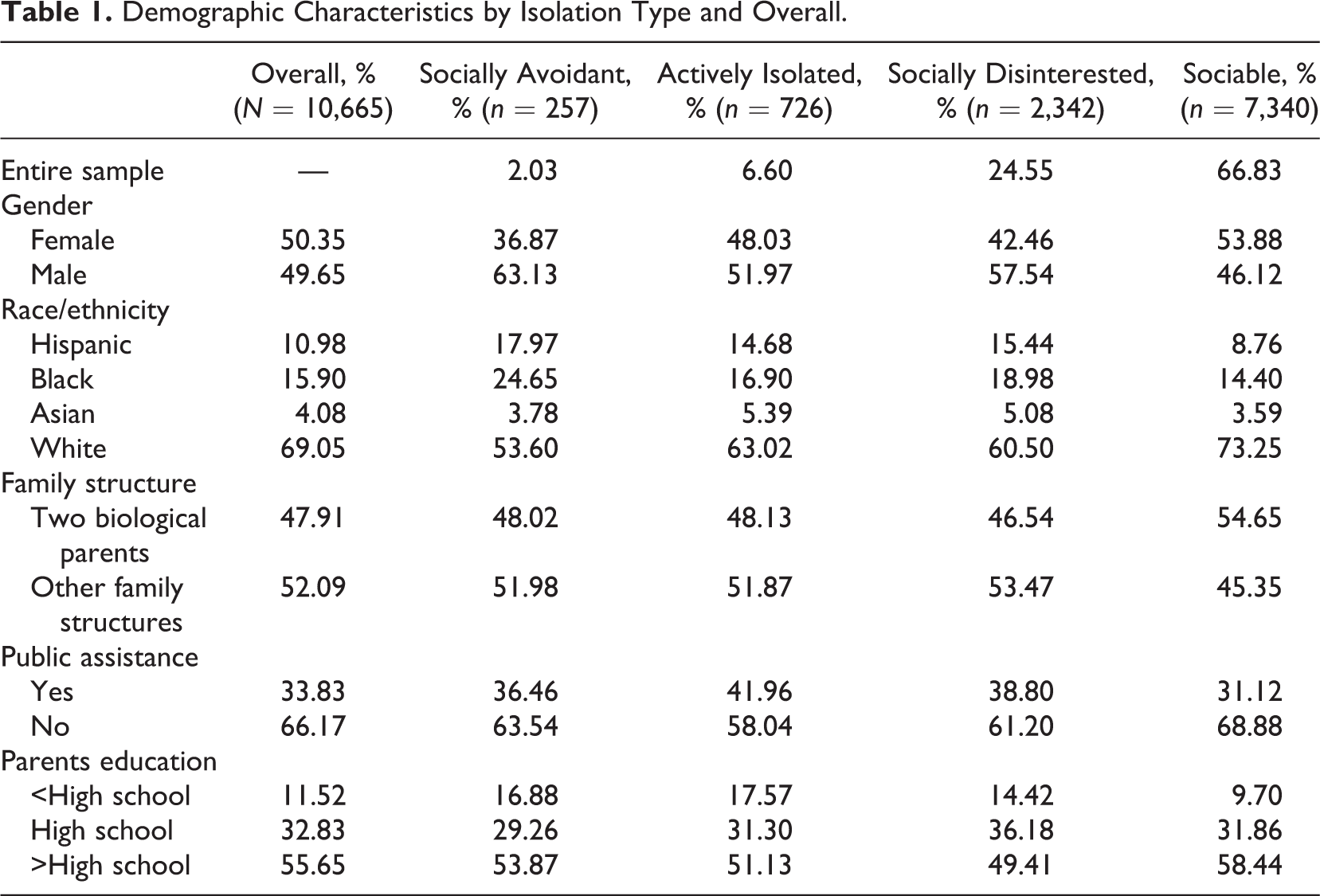
Table 2 presents mean comparisons for violent delinquency, three forms of strain, and depressive symptoms by isolation subtypes and for sociable youth. Results indicate significant differences between the various social positions for violent delinquency, educational strain, violent victimization, and depressive symptoms. When compared to sociable youth, socially avoidant and socially disinterested youth were more likely to engage in violent delinquency and report depressive symptoms. Actively isolated youth reported a lower probability of violent delinquency and depressive symptoms when compared to socially disinterested youth. In terms of educational strain, socially disinterested youth reported higher rates of strain when compared to sociable youth. Findings from Table 3 also indicate significant differences between social positions and violent victimization, with actively isolated youth reporting the highest proportion of victimization. Overall, findings from Table 3 demonstrate substantial variation in violent delinquency, educational strain, violent victimization, and depressive symptoms for isolation subtypes and sociable youth.
Means for Violent Delinquency, Strains, and Negative Affect by Isolation Type and Sociable Youth.
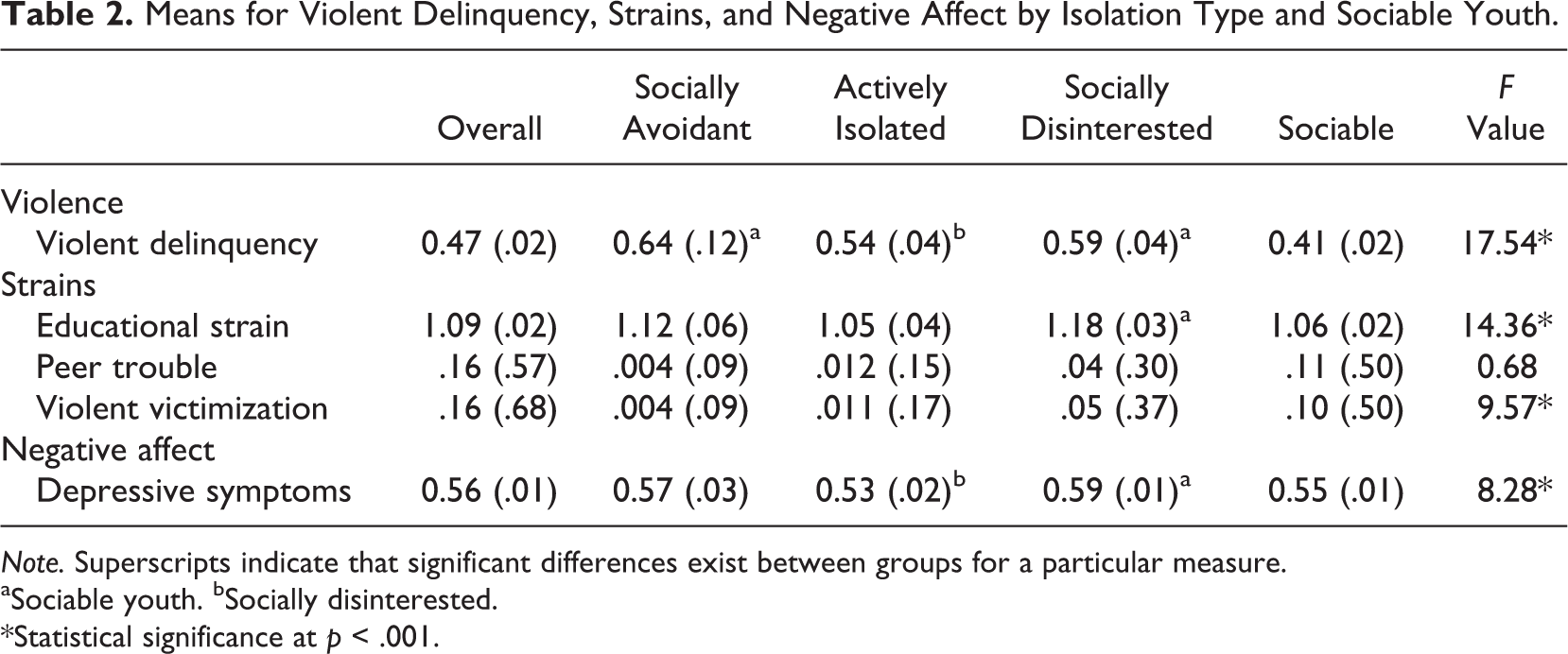
Note. Superscripts indicate that significant differences exist between groups for a particular measure.
aSociable youth. bSocially disinterested.
*Statistical significance at p < .001.
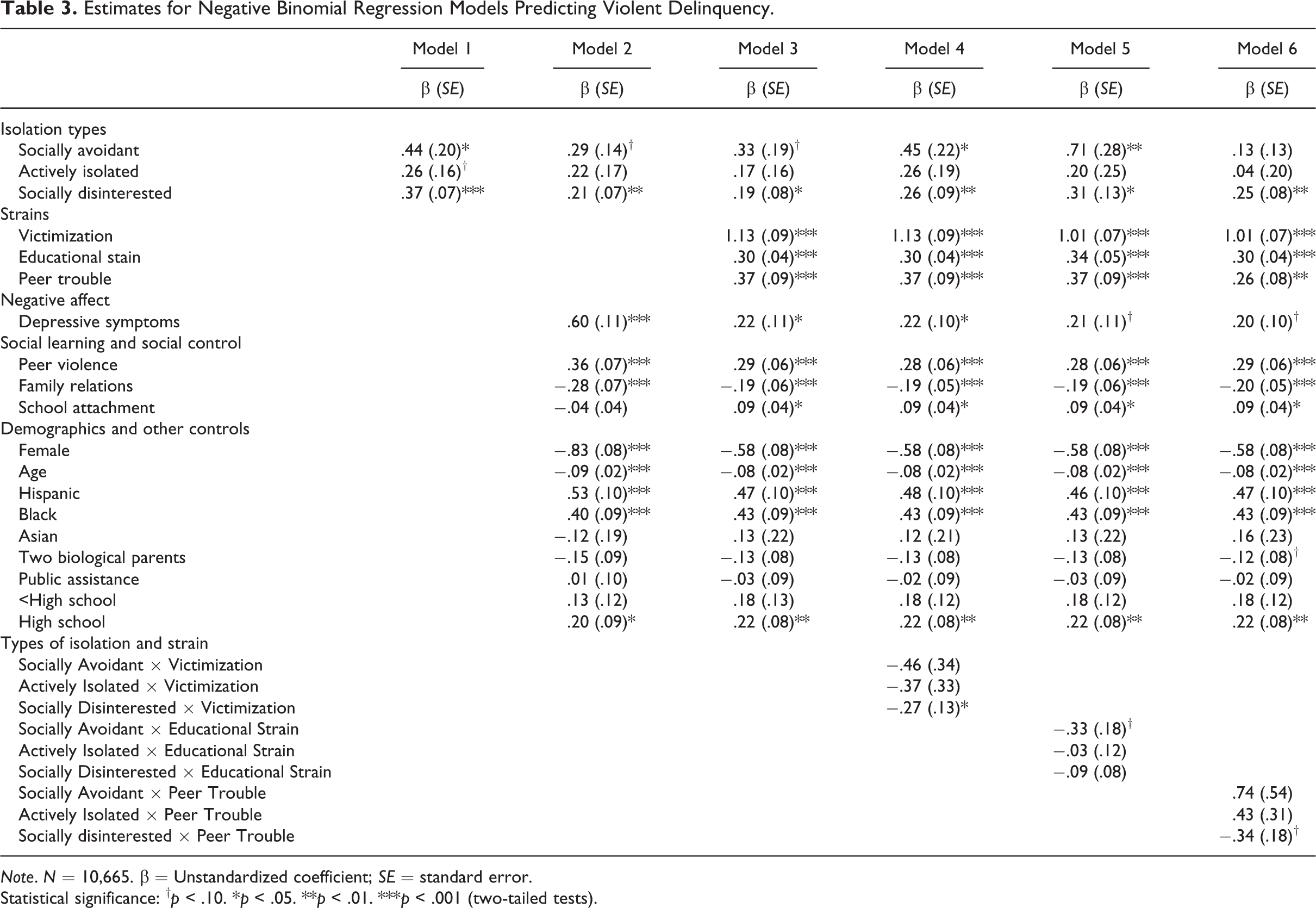
Estimates for Negative Binomial Regression Models Predicting Violent Delinquency.
Note. N = 10,665. β = Unstandardized coefficient; SE = standard error.
Statistical significance: † p < .10. *p < .05. **p < .01. ***p < .001 (two-tailed tests).
Relationships Between Isolation Types, Strain, and Violent Delinquency
Table 3 presents the negative binomial regression estimates that assess whether various types of social isolation, compared to sociable youth, predict violent delinquency. The baseline model (Model 1) demonstrates that the number of violent acts increased by 55.27%, (exp[.44] − 1)*100, for actively isolated youth, and by 44.77%, (exp[.37] − 1)*100, for socially disinterested youth when compared to sociable youth. Model 2 accounts for negative affect, social learning and social control, and demographic characteristics. Results suggest that when accounting for these variables, the coefficients for socially avoidant and socially disinterested reduced, making the socially avoidant–violence relationship nonsignificant. When including the three strain measures (Model 3), the significant difference between socially disinterested youth and sociable youth remained but attenuated the relationship slightly (.19, SE = .07, p < .01). Consistent with the general strain theory, all three strain measures (i.e., victimization, educational strain, and peer trouble) were positively and significantly related to violent delinquency. Adolescents who reported violent victimization were 2 times more likely to experience an increase in violent delinquency. Furthermore, an increase in educational strain and self-reported trouble with peers were associated with a 34.99% and 44.77% increase in violent delinquency, respectively.
The subsequent models in Table 2 evaluate the potential moderating effect various types of strain have on the isolation–violence relationship. We find some evidence that the isolation–violence depends on the types of strain. Model 4 of Table 2 shows that the number of violent acts increased by over 130%, (exp[1.13 + −.27] − 1)*100, for socially disinterested youth who had been violently victimized. Socially disinterested youth who did not report violent victimization were also at an increased risk, but the increased risk was substantially lower than those who reported victimization (.19, SE = .08, p < .01). Parameter estimates also indicate that sociable youth who were violently victimized were positively and significantly related to violent delinquency (1.13, SE = .09, p < .001).
Results from Model 5 show that educational strain does not moderate the relationship between isolation types and violent delinquency, but an increase in educational strain for sociable youth increased the number of violent acts by 41%, (exp[.34] − 1)*100. Interestingly, estimates from Model 5 also reveal an increase in the number of violent acts for socially avoidant (.71, SE = .28, p < .01) and socially disinterested youth (.31, SE = .13, p < .05) who did not report educational strain. The final model of Table 2 also produced similar findings for socially disinterested youth. Socially disinterested youth who did not report peer trouble were significantly and positively related to violent delinquency (.25, SE = .08, p < .01). Self-reported peer trouble did have a significant impact on sociable youth, increasing the number of violent acts by 29%, (exp[.26] − 1)*100.
General strain theorists also argue that men and women experience and respond to strain differently (Broidy & Agnew, 1997). For instance, women are more likely to experience gender-based discrimination, behavioral restrictions, extensive familial demands, and various types of victimization, while men are more vulnerable to financial and employment-based strain, and they experience more peer relationship problems (De Coster & Zito, 2010). Studies also find that men are more likely to react to strain with anger, whereas women respond to strain with co-occurring emotions such as guilt and anxiety (Mirowsky & Ross, 1995). Although women are vulnerable to anxiety and guilt, they also tend to have more access to emotional social support that encourages positive coping strategies. Broidy and Agnew (1997) argue that differences in types of strain experienced, emotional responses to strain, and conditioning factors such as emotional support networks explain the gender–crime gap. In our preliminary analyses, we tested these arguments by examining whether the isolation–violence relationship varies by gender. Results indicate that gender did not moderate the relationship between isolation subtypes and violent delinquency. Results for these preliminary analyses are available upon request.
Discussion
Results from this project provide several important findings regarding marginalized youth, general strain theory, and violent delinquency. First, when accounting for various marginalized positions, socially isolated youth comprise a much larger proportion of the school population than previously documented. Studies generally find that isolated youth comprise less than 10% of the population (Demuth, 2004; Haynie, 2002; Kramer & Vaquera, 2011; Kreager, 2004), but our findings reveal one third of adolescents were in marginalized positions in Wave I. Socially disinterested youth constituted the largest proportion among socially isolated youth.
Guided by elements of general strain theory, we theorized that different types of isolation will have varying effects on violent delinquency due to different motivations, experiences, and perceptions associated with particular marginalized positions. Furthermore, we argue that various negative circumstances and relationships associated with adolescence will compound the strain experienced by types of isolated youth, moderating the isolation–violent delinquency relationship.
Consistent with our first hypothesis, baseline results show that socially avoidant and socially disinterested youth were more prone to violent delinquency when compared to sociable youth, but the socially avoidant–violence relationship reduced to nonsignificance after controlling for relevant factors. The increase in violent delinquency remained relatively consistent for socially disinterested youth, which diverges from previous studies, where scholars find social isolates to have lower levels of delinquency or show no significant differences in delinquency when compared to sociable youth (Demuth, 2004; Haynie, 2002; Tolone & Tieman, 1990). We also find no evidence of a significant difference in violence delinquency for actively isolated and sociable youth. Our subsequent findings revealed that some types of strain conditioned the relationship between isolation types and violent delinquency. For instance, socially disinterested and sociable youth who experienced violent victimization were at increased risk for violence.
These findings run counter to positions put forth in the general strain theory. Agnew (2001) argued that violent victimization is a type of strain that meets all criteria (i.e., severe, unjust, low self-control, and incentive/pressure) for delinquent behavior. However, the strain produced by violent victimization for socially disinterested youth may force these marginalized youth into a deeper state of isolation. We also found that socially disinterested youth who did not report peer trouble were at increased risk for violence. These findings suggest that strains associated with violent victimization, education, and peers do not play a substantial role in amplifying the risk for violent delinquency for some isolation types and in some cases decrease the likelihood of engaging in violence.
Future research can build on this study’s findings by addressing some of its limitations. First, violent behavior only represents one type of delinquency. Future studies should investigate a greater range of delinquent behaviors, such as property crime, and alcohol and drug use. Second, complete friendship data were only collected in Wave I of in-school survey, which does not allow for the observation of how isolation types evolve and adapt over time. Future research would benefit from longitudinal peer network data that can capture the evolution of peer status and violent behavior as youth age. Another area for future research involves the incorporation of other types of strain associated with adolescence. For instance, Add Health has few measures that capture chronic stress or personal discrimination (Eitle & Eitle, 2013). A more comprehensive array of strain types may provide more insight into the role of strain on the isolation–violence relationship. Finally, given the simple operationalization of a complex concept, such as youth social isolation, the results from this study should be considered preliminary until future research can replicate these findings.
Despite its limitations, this study’s consideration of multiple types of social isolation, application of general strain theory, and the use of nationally representative panel data provide new insight into the relationship between youth isolation and violent behavior. Our findings call into question traditional assumptions concerning the homogeneity of socially isolated youth, along with the argument that youth isolation is inversely related to delinquent behavior. Findings from this study illustrate that some types of marginalized youth are more at risk for violence, when compared to sociable youth, and other negative experiences and circumstances associated with adolescence condition the isolation–violence relationship. In a time when violent behavior among youth is of great concern, results of the present study point to critical nuances in the isolation–violence relationship.
Footnotes
Acknowledgments
This research uses data from the National Longitudinal Study of Adolescent Health, a program project directed by Kathleen Mullan Harris and designed by J. Richard Udry, Peter S. Bearman, and Kathleen Mullan Harris at the University of North Carolina at Chapel Hill and funded by Grant P01-HD31921 from the Eunice Kennedy Shriver National Institute of Child Health and Human Development, with cooperative funding from 23 other federal agencies and foundations. Special acknowledgment is due to Ronald R. Rindfuss and Barbara Entwisle for assistance in the original design. Information on how to obtain the Add Health data is available on the Add health website ( ). No direct support was received from the Grant P01-HD31921. Preliminary results from this article were presented in paper sessions at the annual meeting of the American Sociological Association in San Francisco in August 2014.
Declaration of Conflicting Interests
The author(s) declared no potential conflicts of interest with respect to the research, authorship, and/or publication of this article.
Funding
The author(s) received no financial support for the research, authorship, and/or publication of this article.