







Abstract
Racial inequalities pervade U.S. justice systems and are the focus of a growing body of research. However, there are fewer studies on racial disparities in juvenile justice settings, particularly on decisions points at the “deep end” of the system after youth have been adjudicated delinquent. The current study examines racial disparities in length of stay, institutional misconduct, and community program placement for youth admitted to the Virginia juvenile justice system from 2012–2017. We find that black youth have significantly longer lengths of stay and more serious institutional misconduct than white youth. Controlling for legal and extralegal factors eliminates the disparity for length of stay, but it remains significant for serious institutional misconduct. In recent years, youth of all races are placed into community programs rather than traditional correctional centers at similar rates. Disparities for Hispanic youth and other races are difficult to distinguish because few are admitted to the system.
Keywords
Racial disparities are nearly ubiquitous in U.S. criminal justice systems and are the focus of a large and growing body of research. However, studies are still emerging on the extent and scope of racial disparities in the extant juvenile justice literature. What research does exist suggests that these disparities are found at most juvenile justice decision points, including referral, adjudication, disposition, and waivers to adult court (Puzzanchera & Hockenberry, 2016). This is particularly problematic given longstanding research findings that people who become involved in justice systems as children and adolescents are more likely to continue their involvement into adulthood (Nagin & Paternoster, 1991; Sampson & Laub, 1993). In other words, because youth of color are more likely to have contact with juvenile justice systems, they are at a greater risk of becoming involved in criminal justice systems and experiencing diminished life outcomes as adults. It is thus critical to examine racial disparities in juvenile justice settings.
Racial Disparities in Juvenile Justice Settings
National research has found that racial disparities exist at all levels of the juvenile justice system, including arrest, diversion, detention, and waivers to adult court (Puzzanchera & Hockenberry, 2016). In this review of prior research, we discuss disparities at particular decision points in the deep end of the juvenile justice system that are the focus of the current study—placement in secure confinement, length of stay, and institutional misconduct—and then describe potential sources of those disparities that can be examined in this study—differences in offending behavior, legal factors, sociodemographic and risk factors, and treatment by the justice system.
Racial Disparities by Decision Point
The National Disproportionate Minority Contact Databook contains the counts, rates, and relative rates of case processing outcomes for delinquency offenses by race from 1990 to 2013. According to their most recent data, which come from over 1,200 counties from 26 states and the District of Columbia, Hispanic youth and American Indian or Alaskan Native youth have higher rates of adjudication and residential placement than white youth. Also compared to white youth, black youth have slightly lower rates of adjudication and higher rates of residential placement, while Asian, Hawaiian, and Pacific Islander youth have slightly higher adjudication rates and similar placement rates. In short, racial disparities exist at nearly all decision points of juvenile justice case processing and these disparities are especially pronounced for black and Hispanic youth.
While some of these decisions (e.g., referrals and adjudication) occur near the beginning of juvenile justice case processing, many come later, or at the “deep end” of the system. For example, studies on placement in secure confinement are mixed on whether black youth have disproportionately high rates of placement after controlling for legal and extralegal factors (Davis & Sorensen, 2013; Leiber, 2013; Leiber & Peck, 2015; Peck & Jennings, 2016). Specifically, minority youth are significantly more likely to receive placement in facilities that emphasize physical regimens, such as boot camps or wilderness programs, and less likely to receive therapeutic placements than white youth (Fader et al., 2014). Davis and Sorensen (2013) found that after controlling for arrest rates, black youth were placed in confinement at rates nearly 70 percent higher than those of white youth. In a sample of adjudicated youth in Florida, both black and Hispanic youth were significantly more likely to receive a residential placement than white youth after controlling for adverse childhood experiences, demographics, offense type, and many other extralegal factors (Zettler et al., 2018). In contrast, some studies have found that black youth were less likely to receive out-of-home placement in a correctional facility (Bishop et al., 2010; Cochran & Mears, 2015), and Leiber (2013) suggests this may be an attempt to correct the overrepresentation caused by decisions earlier in the juvenile justice system. Still other research suggests that race has no influence on commitment decisions (Holleran & Stout, 2017).
Once youth are placed out of home, further research on disparities in their length of stay has found minimal impact of race. Nationally in 2010, committed white and minority youth had spent the same amount of time in placement (Sickmund & Puzzanchera, 2014). A study of referred youth confined in Texas found that race and ethnicity had no significant influence on length of stay after controlling for many legal and extralegal factors (Espinosa & Sorensen, 2016). Winokur et al. (2008) also found very little difference in the mean length of stay in residential placement by race and security level for youth in Florida, while Heggeness and Davis (2010) found that black and other minority youth actually had shorter stays in placements. In 2015, Maggard examined variations in length of stay before and after the implementation of Juvenile Detention Alternatives Initiative (JDAI) and found that prior to its implementation, youth of color served significantly longer time in pre-dispositional secure detention facilities, but the significance was lost post-JDAI implementation. Some current work attributes differences in length of stay to factors other than race, such as age at first arrest, severity of offense, or facility type (Espinosa & Sorensen, 2016; Walker & Bishop, 2016; Winokur et al., 2008), though Maggard (2015) theorizes that race effects could potentially exist within other variables.
There has been limited research on racial disparities in institutional misconduct in juvenile justice settings, and these results are mixed. A study of youth in California found that race and ethnicity had no significant influence on sexual, other, and total misconduct (DeLisi et al., 2008). Rather, age, prior offenses, sex offense history, and self-reported delinquency had a strong and significant influence. An additional study by DeLisi and colleagues (2010) found that when accounting for trauma, mental health characteristics, demographics, and offense history, black youth were significantly more likely to have more sexual misconduct and total misconduct. A meta-analysis of studies examining the relationship between psychopathy and total, aggressive, and violent misconduct of youth in institutionalized settings found that the percentage of white youth in the study had no effect (Edens & Campbell, 2007). Likewise, there is mixed evidence on the influence of race on misconduct in adult prison settings. Many studies find that people of color are more likely to engage in violent misconduct than white people (Berg & DeLisi, 2006; Harer & Steffensmeier, 1996; Huebner, 2003), while others find no significant differences by race (Camp et al., 2003; Jiang & Fisher-Giorlando, 2002; Steiner et al., 2014). Combined, the research on youth and adults suggests that racial disparities in institutional misconduct, especially serious misconduct, are unclear.
There is even less research on the relationship between race and disciplinary practices for incarcerated youth. Because of the limited research on youth misconduct and discipline in incarceration settings, we review prior research in school settings. Much can be learned from the literature on racial disparities in school discipline (McCarthy & Hoge, 1987; Monroe, 2005). Rocque (2010) found that black students were more likely to receive office referrals during elementary school, even after controlling for behavior and school effects. Anderson and Ritter (2017) looked at the use of exclusionary discipline in Arkansas and found that black students were more likely to receive exclusionary discipline, even after accounting for the type and amount of disciplinary referrals. However, within schools, eligibility for free and reduced lunch and enrollment in special education had a larger influence than race. Gregory and Fergus (2017) found that black, American Indian, and Hispanic youth were significantly more likely than other students to be referred to school administrators for disciplinary problems, punished by out-of-school suspension or expulsions, and referred to law enforcement. Skiba and colleagues (2002) found no evidence that racial disparities in school punishment could be explained by higher rates of misconduct by black youth, while Bradshaw et al. (2010) reported that black students had significantly greater odds of receiving referrals than white students. Thus, disciplinary practices seem to fall along racial lines, though more research is needed in juvenile incarceration settings.
Sources of Racial Disparity
Although it is clear that racial disparities exist across various stages of the juvenile justice system, much less is known about the sources of these disparities (Kempf-Leonard, 2007; Piquero, 2008). Prior theoretical examinations of this issue has focused on whether disparities can be explained by other factors (e.g., differences in underlying offending behavior or other demographic and risk factors) or whether the justice system treats individuals disparately specifically because of their different racial and ethnic backgrounds. In this section, we describe prior research on these theoretical perspectives.
Prior research has theorized that differences in delinquent behavior are the primary driver of observed racial disparities. Testing this assumption, for example, Beaver and colleagues found that when controlling for self-reported lifetime violence and IQ, black youth were not more likely than white youth to be arrested, incarcerated, or receive a longer sentence (2013). In contrast, other studies have found that disparities persist even after accounting for underlying behavior. Davis and Sorensen (2013) found that after controlling for arrest rates, black youth still were placed in confinement at rates nearly 70 percent higher than those of white youth and that the level of disparity decreased over the years studied (1997–2006). In their analysis of 125 studies, Engen et al. (2002) found that controlling for prior offending reduced the effect of race in juvenile justice outcomes but did not eliminate it, while controlling for offense seriousness did not reduce the race effect. Huizinga and colleagues (2007) similarly found that differences in offending behavior, as measured by self-reported offending, did not explain the disparities between the rates of arrest and court referral of black and white youth in Pittsburgh, Rochester, and Seattle. Black youth were also more than two times more likely to be arrested for drug offenses than white youth even though they reported selling and using them at a lower rate (Kakade et al., 2012). Taken together, these findings suggest that differences in offending behavior may account for some, but not all, observed racial disparities.
Similarly, controlling for legal factors, such as prior justice involvement and offense severity, does not explain the full extent of the racial disparities observed at multiple decision points in the juvenile justice system. Studies that accounted for prior contact with the juvenile justice system, severity of prior referral, and whether youth were under court authority at the time of referral, still found that black youth were more likely to be detained preadjudication and be adjudicated delinquent than similarly situated white youth (Leiber & Fox, 2005; Leiber, 2013). However, black youth were not more likely to receive an out-of-home placement, which may be an attempt to correct for overrepresentation at earlier stages of case processing (Leiber, 2013). A study evaluating dispositions in Florida found that after controlling for offense severity, prior adjudications, and preadjudication detention, black youth were less likely to receive severe sanctions such as confinement and transfer to adult court than white youth (Cochran & Mears, 2015). They also were less likely to receive diversion or probation and instead receive dismissals. However, there were few differences between white and Hispanic youth in that study. When examining referrals after a youth’s first referral to the juvenile justice system, Caudill et al. (2013) found that offense severity and prior dispositions had a stronger influence than race on receiving a formal disposition. Legal factors are important to justice outcomes, and their influence varies by the decision point.
Another theoretical explanation of the source of racial disparity is differences in demographic and risk factors for antisocial behavior, such as socioeconomic status, household structure, problems in school, or mental health. Huizinga and colleagues (2007) control for many risk factors of arrest, and found that disproportionate minority contact decreased, but still persisted. The risk factors included neighborhood, socioeconomic status, household structure (single parent or married), the age of the mother at her first birth, and educational problems. Leiber (2013) also controlled for and tested the effect of two extralegal factors, household structure and problems in school, finding that being from a single parent household increased the likelihood of pretrial detention for black youth, and problems in school decreased the likelihood of pretrial detention and out of home placement for black youth. When using these factors as controls, Leiber (2013) found that black youth faced harsher outcomes in the earlier stages of the juvenile justice system than white youth. Engen and colleague’s (2002) meta-analysis indicates that after controlling for risk factors associated with race, such as socioeconomic status or family structure, race still influenced dispositions. Controlling for risk factors of antisocial behavior reduced the effect of race on juvenile justice outcomes but did not eliminate it, suggesting that risk factor differences are not the only source of racial disparity.
Beyond risk and behavioral factors about the youth, features of the juvenile justice system process and differential treatment may also be of theoretical relevance to the study of racial disparities. After controlling for arrest rates, Davis and Sorensen (2013) found higher levels of racial disparity in cases that that involved more discretion, such as those involving drug or public order offenses. Racial disparities are also greater in the earlier stages of the juvenile justice system than in the later decision points (Engen et al., 2002). A meta-analysis of waivers from the juvenile court to the criminal court found the effect of race on waiver decisions was insignificant (Zane et al., 2016), further supporting that racial disparities lessen in the later stages of the juvenile justice system.
In sum, findings from these analyses suggest that differential involvement in delinquency, differences in risk factors, and the processes found in the juvenile justice system all contribute to racial disparity, but do not fully explain why youth of color, particularly black youth, experience worse outcomes than their white counterparts (Engen et al., 2002). This could be understood by the symbolic threat hypothesis, which “attempts to identify the contingencies of juvenile justice decision making by focusing on the characteristics of youth, especially minorities, and the social psychological emotions of juvenile court officers” (Leiber & Johnson, 2008). For instance, members of the majority group in a society may perceive the minority group as a threat to the status quo and, as a result, take steps to reduce possible competition (Blalock, 1967). This issue is exacerbated for youth of color because their dual status as young and a member of a minority groups symbolizes negative stereotypes often held by criminal justice decisionmakers (Tittle & Curran, 1988).
Regardless of the underlying reason, disparities in the juvenile justice system is a serious problem for youth of color. Juvenile justice involvement can lead to a host of undesirable outcomes in the life of youth (Piquero, 2008), including low educational attainment, unemployment, and adult criminal justice system involvement. In their evaluation of arrest racial disparities, Kakade et al. (2012) found that black youth with arrests at baseline were less likely to graduate from high school than white youth with arrests. Secure confinement is especially associated with negative impacts, such as school dropout, increased mental illness, less future employment, and increased recidivism (Holman & Ziedenberg, 2006). Because involvement in the juvenile justice system can affect many life outcomes, it is important to consider the impact of racial disparities beyond increased contact with the justice system.
Current Study
The current study contributes to the existing body of research in several important ways. First, we use data from the Virginia Department of Juvenile Justice (DJJ) to examine disparities at multiple decision points in the deep end of the justice system where the current research is particularly scarce. These include placement type, institutional offenses, and length of stay. Second, we build on the literature by examining the impact of race on these various outcomes after controlling for relevant legal and extralegal factors. This allows us to more accurately determine the degree to which racial disparities exist in Virginia’s juvenile justice system, which can then help guide policies around placement and care and promote more positive outcomes for all youth.
It is important to note that this study focuses on racial disparities, not on disproportionality. For example, disproportionality occurs when the rate of youth of a particular race or ethnicity involved in the justice system is greater or lesser than their share in the general population. Disparities occur when youth of different races or ethnicities enter the justice system under the same circumstances but receive different treatment or have disparate outcomes as they move from one case processing decision point to the next. We are not able to compare the rates of juveniles in our study to that of the general population, which is why we focus on disparity. Still, identifying disparities can help with understanding how to change current practices and ensure more equitable treatment. To that end, our primary research questions are: Do racial disparities exist in length of stay, institutional offenses, and placement into community programs? What legal and extralegal factors influence any disparities observed at these juvenile justice decision points?
Racial Disparities in Virginia
Although the primary focus of this study will be on length of stay, institutional offenses, and placement decisions, prior research on racial differences in the Virginia juvenile justice system provides helpful context about the system overall and decisionmaking that occurs prior to incarceration. Table 1 below provides the relative rate indices (i.e., the rate for minority youth compared to white youth) for black, Hispanic, and Asian youth at multiple decision points in the Virginia juvenile justice system, as calculated by the Virginia Department of Criminal Justice Services (VA DCJS, n.d.). Black youth are nearly three times more likely than white youth to be referred into the juvenile justice system, and nearly two times more likely to be detained and placed into secure confinement. They also are less likely to receive diversion and probation, decisions that would help distance them from the juvenile justice system. Hispanic youth have similar disparities as black youth, but to a lesser degree. Hispanic youth are 1.5 times more likely to be detained and 1.4 times more likely to be adjudicated delinquent than white youth. However, Hispanic youth are not more likely to be placed in secure confinement than white youth. Asian youth are less likely to be referred, detained, and petitioned than white youth. They also are more likely to receive diversion and probation than white youth.
2012–2013 Virginia Case Processing Summary by Race. Relative Rate Indices (RRI) for Delinquency Offenses.
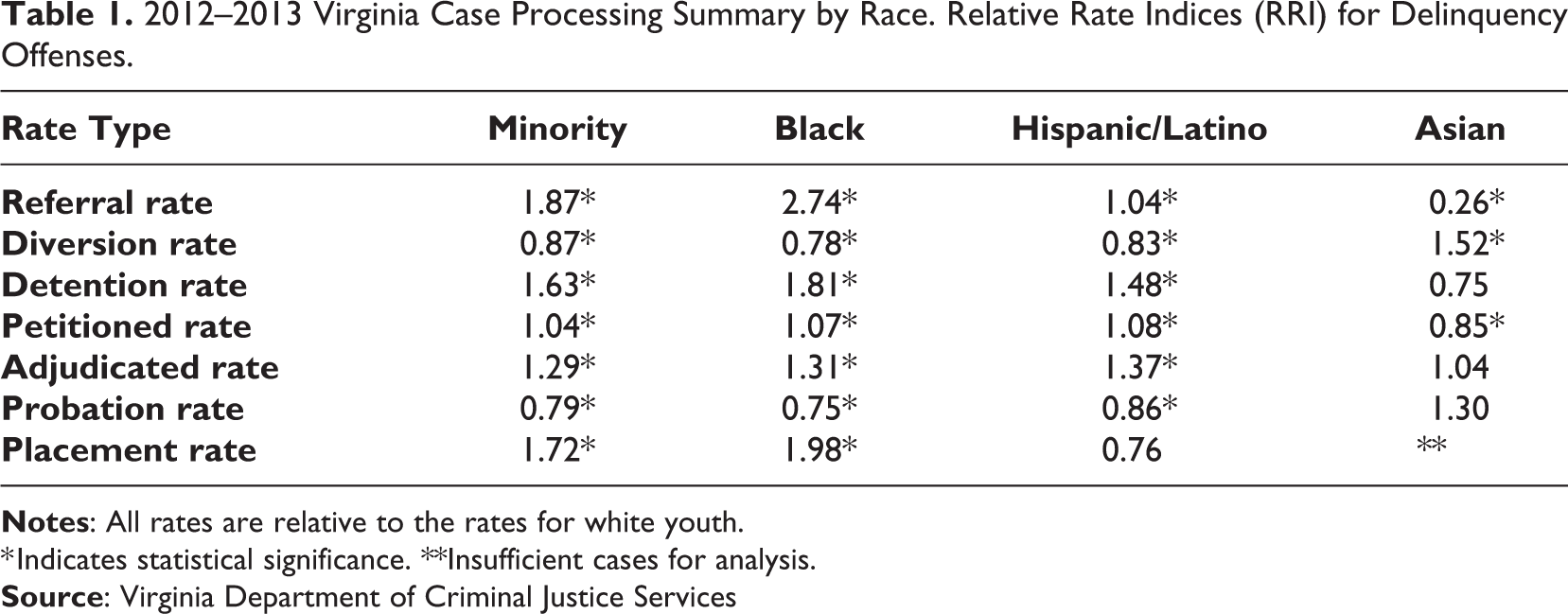
* Indicates statistical significance. **Insufficient cases for analysis.
The disparities demonstrated by these rates have remained relatively stable for the past several years in Virginia, and cannot be completely explained away by demographic factors, allegation severity, or prior offending history. An assessment of DMC in the Virginia Juvenile Justice System found similar statewide relative rate indices for the years 2007–2010 (Harig et al., 2012). This assessment evaluated the outcomes of all juvenile justice cases in Fairfax, Richmond, and Norfolk counties, controlling for age, gender, allegation severity and type, and prior referral history. The analysis found no significant racial differences in length of stay in preadjudication detention, but found that black and Hispanic youth were more likely to be adjudicated delinquent and receive a correctional placement than white youth. These disparities lessened, but most remained significant after introducing control variables. These prior findings provide some contact for the current study, specifically that greater disparities may exist between black and white youth than Hispanic and white youth, there may be few disparities in length of stay, and that black and Hispanic youth may be more likely to receive more restrictive placement types.
Methodology
This study examines decisions that occur after a youth has been adjudicated delinquent and admitted to direct care in the Virginia juvenile justice system, including facility placement, institutional offenses, and length of stay. To measure racial disparities, we first calculate the mean of each measure of interest by race. These averages are helpful for immediately identifying differences, but they do not control for factors that may account for the differences. Thus, we next employ regression analyses to control for legal (e.g., offense severity, risk level) and extralegal (e.g., age, school behavior, mental health, treatment needs) variables. We then compare the differences in rates of outcomes before and after controlling for related factors to see if any of the disparity can be attributed to a race effect.
This study’s methods comport with most racial disparity studies, which introduce covariates to lessen the differences between the groups being compared and to establish that that the observed disparity is due to a race effect (Bishop & Frazier, 1996; Davis & Sorensen, 2013; Engen et al., 2002; Guevara et al., 2011; Huizinga et al., 2007; Kakade et al., 2012; Leiber & Fox, 2005; Leiber, 2013). These covariates include potential sources of disparity (differential involvement, risk factor differences, juvenile justice system structure) as well as other demographic characteristics like age and gender. Some of the covariates we include are related to race, such as socioeconomic status or neighborhood, are not be neutral of race (Pope & Feyerherm, 1990), which makes it difficult to identify the true levels and sources of racial disparity. No single study design can estimate the “true” race effect, but including legal and extralegal controls in the regression models can lead to better approximations.
Data
This study uses data on all admissions into the Virginia DJJ from 2012 to 2017. Follow-up data on the youth extend through April 2018. The analysis of community placement programs is limited to years in which it was in existence, 2013–2017. The unit of analysis is unique admissions to DJJ, such that youth who have more than one admission appear in the data set multiple times.
Dependent variables
The three dependent variables in the study are length of stay, serious institutional offenses, and community program placement. Length of stay is the number of days served under DJJ’s direct care, which includes secure facilities, detention centers, and community placement programs. In October 2015, DJJ implemented a policy change to shorten length of stay. In the updated 2015 guidelines, the length of stay is determined by the youth’s risk level and the severity of the committing offense (DJJ, 2015). These new guidelines replaced the 2008 guidelines that used the severity of the current and prior offenses to determine length of stay. In this analysis, we are unable to fully assess the impact of this change because we only have length of stay information for youth admitted through the end of 2017, and not all of these youth had been released at the time of our data collection. Because of this limitation, this length of stay analysis examines all youth admitted between 2012 to 2017 who had been released.
Serious institutional offenses are violations for which youth are formally written up, limited to assault and sexual misconduct. We examine serious institutional offenses rather than all institutional offenses because conversations with DJJ staff revealed that there is less discretion involved in writing up youth for these offenses. Institutional offenses are important because they may influence length of stay and placement or other facets of a youth’s time in custody.
Finally, we examine whether youth placement into one of Virginia’s Community Placement Programs (CPP). In an effort to downsize current detention facilities and allow children to stay in places closer to their homes, DJJ revitalized its CPPs in 2014, which exist in local detention centers rather than large correctional centers. The CPPs allow youth to be closer to home and have greater access to reentry services (DJJ, 2017). Through June 2017, only males between ages 16 and 20 with remaining lengths of stay under 1 year were admitted to CPPs (DJJ, 2017). Our data coverage extends through April 2018, allowing us to capture youth admitted from 2012 to 2017 who received community placements through that time. Placements to CPPs can occur directly after adjudication, or DJJ can transfer youth to a CPP after they have already been placed in a correctional center.
Independent variables
The primary independent variable in our study is race. Data on racial and ethnic groups are collected by DJJ as youth enter the system. DJJ records Hispanic ethnicity separate from race, with the race of most Hispanic youth being “white,” “other,” and “unknown.” DJJ’s measure of Hispanic ethnicity was missing or unknown for half of youth admitted since 2012. To address this issue, we employed a novel surname matching procedure that imputes Hispanic ethnicity. The ethnicity imputation method uses a surname list released by the U.S. Census Bureau in 2007, which contains 151,671 surnames that occurred at least 100 times in the 2000 Census, along with the frequency with which each name appears among a number of mutually exclusive racial and ethnic groups (Hispanic, White, Black, American Indian or Alaskan Native, Asian or Pacific Islander, and Two or More Races). People with these surnames represent approximately 90 percent of the U.S. population (Word et al., 2008).
We minimally standardized the surnames by uppercasing all names and splitting hyphenated names. We then used exact matching to match these names to the Census surname list. If the first name in a hyphenated surname did not match, we tried to match the remaining names, resulting in an overall match rate of 95 percent. The percentage of self-reported Hispanic individuals with a particular surname in the Census surname list acted as the predicted probability that another individual with the same surname would be Hispanic. We identified the optimal cutoff for classifying an individual as Hispanic (9 percent) using the Liu (2012) method, which maximizes the product of sensitivity and specificity. Using this cutoff, we then compared the imputed ethnicity variable to the reported ethnicity variable to assess the methodology’s predictive performance. We found that the method correctly classified 97 percent of the individuals who had reported ethnicities, with a sensitivity of 0.91, a specificity of 0.99, and an AUC of 0.95. This method yields a more complete measure of Hispanic ethnicity, though the results should still be interpreted with caution.
In our study, we combined race and ethnicity into a single, mutually exclusive measure that includes non-Hispanic black (“black”), non-Hispanic white (“white”), Hispanic of any race (“Hispanic”), and non-Hispanic youth of any other race (“other”). The other racial group in this analysis includes Asian/Pacific Islander, American Indian/Alaskan Native, other races, and unknown. These categories were combined into a single group given their relatively small numbers in the data set.
We also include many control variables in the regression analyses, such as demographics, legal factors, and extralegal factors. The demographic factors include age at admission and sex, which is a binary measure of male or female. The sentencing-related variables are offense tier, projected length of stay, and commitment type. There are five offense tiers set by DJJ. The offense tiers increase in severity from one to four, and tier five is a treatment override. Tier one includes misdemeanors and violations of parole, tier two non-person felonies, tier three felonies against persons, and tier four class one and two felonies. Tier five is for youth who have an identified need for sex offender treatment. The projected length of stay comes from a sentencing matrix that combines the offense tier with risk level for a total of seven projected length of stay ranges, with the shortest being 2–4 months and the longest being 9–15 months. There is an additional option in the matrix for treatment overrides, which does not have a projected length of stay. Commitment type includes three categories: blended, determinate, and indeterminate.
Our final set of controls account for risk and treatment needs. All youth who enter DJJ receive a YASI risk assessment, and can receive an overall risk score of low, moderate, or high. This assessment considers school behavior issues in the last 6 months, which can be none, slight, moderate, or severe. Youth are also assessed to determine whether they have mental health, aggression management, substance use, and sex offender treatment needs.
Analytic Approach
The regression method and control variables included in the model vary based on the outcome variable. Length of stay in days is a continuous variable, but has a finite range of values and presented some issues with skewness and kurtosis. Serious institutional offenses are measured as the total number of assaults and sexual misconducts committed by the youth during their time in DJJ custody. Thus, we determined that a count model would be more appropriate for both the length of stay and serious institutional misconduct analyses. Two common count models are Poisson and negative binomial regression. Poisson regression is only appropriate when the data meet the assumption of equidispersion—that is, the conditional means equal the conditional variances (Cameron & Trivedi, 2007). We tested this assumption using the likelihood ratio test of the overdispersion parameter and found that negative binomial regression was more appropriate for both analyses. Finally, we use logistic regression to examine placement into a community program, which is a binary variable. For all analyses, we use R version 3.5.1.
The independent variables in all of the regression models are largely consistent. All models include race, age at admission, sex, and treatment needs (aggression management, substance use, and mental health). For length of stay and community program placement, we also control for projected length of stay, commitment type, and total institutional offenses. Projected length of stay is based on the offense tier and risk level of the youth and is used for sentencing, making it important for length of stay and community program placement. The length of stay models also include whether the sentence occurred under the new 2015 sentencing guidelines. For the CPP models, we exclude youth who have a blended sentence, as they are not eligible.
For the models on serious institutional offenses, we include length of stay as an exposure variable. This is an option in negative binomial regression and other count models to account for units of time that constrain the frequency of the dependent variable. In this example, youth who were in DJJ custody for longer periods of time would have had more opportunity to engage in serious institutional offenses. By including length of stay as an exposure variable, the outcome becomes the rate at which youth engaged in serious institutional offenses relative to the time they remained in custody. In these models, we additionally control for school behavior and risk level, as these may be related to behavior while under DJJ’s direct care.
For all three outcomes, we use a stepped approach to regression modeling. The first model only includes race as the independent variable, while the second models include race along with the legal and extralegal control variables listed above. This approach allows us to examine the relative contribution of race when considering additional factors that may influence the outcome.
Population
From 2012 to 2017, there were 2,001 admissions to DJJ’s direct care. These admissions represent 1,858 unique juveniles. Two-thirds of youth were black, while 22 percent were white, 9 percent were Hispanic (based on our imputation method), and 2 percent were of another race. The vast majority (92 percent) of youth admitted were boys. On average, youth were 16 when admitted. The age of first arrest was 13, indicating that many youth had become involved with the juvenile justice system at an earlier age. The most common offense tiers were two (37 percent) and three (35 percent). Fourteen percent were admitted for tier one offenses, while 12 percent were admitted for tier five and 2 percent for tier four. Table 2 shows these summary statistics of the study population.
Summary Statistics. All Admissions to VA DJJ 2012–2017 (n = 2,001).
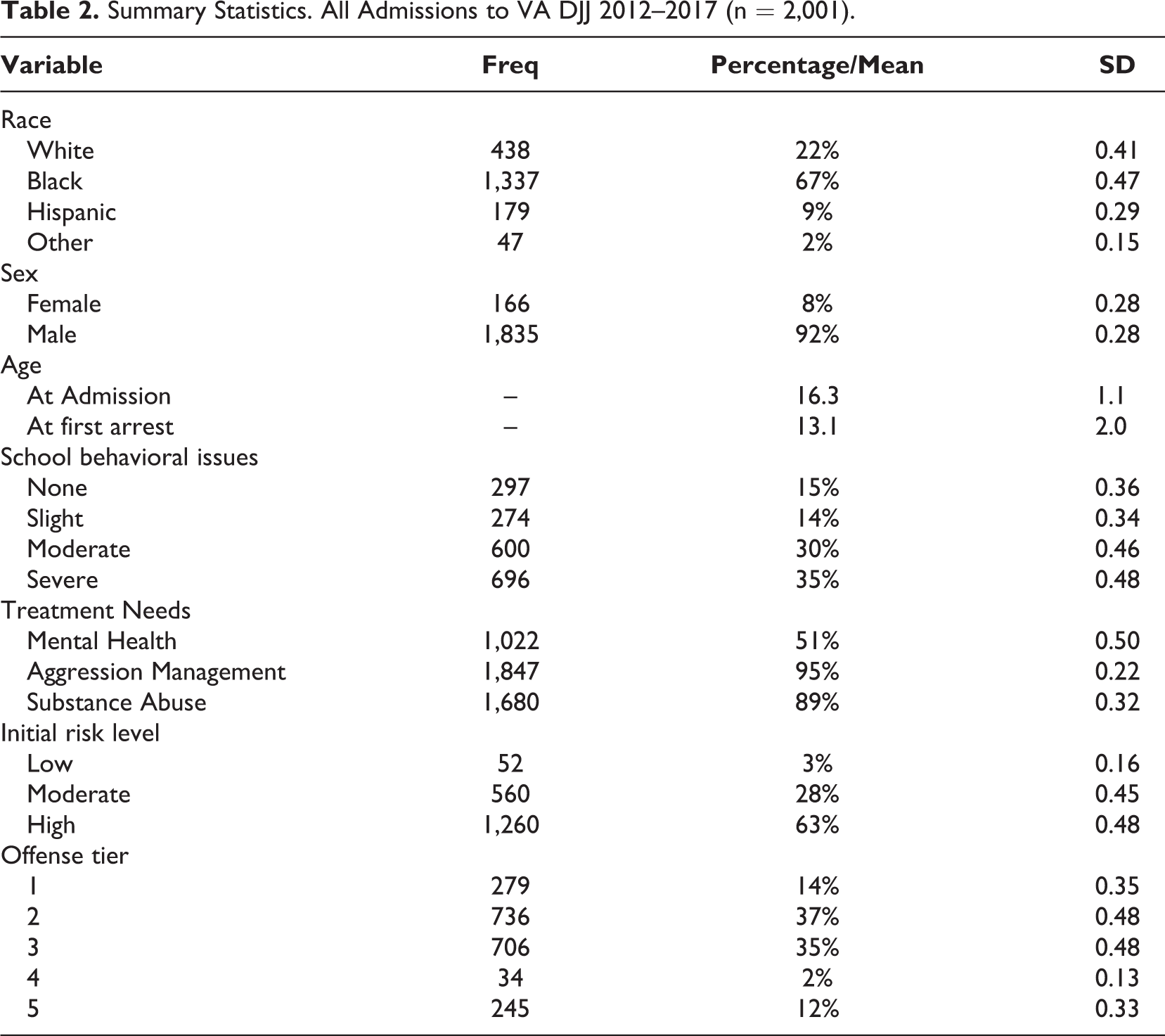
Most youth in the sample had a moderate or high initial risk level, with 28 percent at a moderate risk and 63 percent at a high risk. During intake risk assessments youth were assessed on school behavioral issues. Thirty-five percent had severe and 30 percent had moderate school behavioral issues. Comparatively, 14 percent had slight and 15 percent had no behavioral issues. In terms of treatment needs, 95 percent of the sample needed aggression management therapy, 89 percent needed substance abuse treatment, and about half were designated as needing mental health treatment.
Results
We first examine the means of each outcome by race (Table 3). From these results, Hispanic and youth of another race had the shortest length of stay, at 11.6 and 11.5 months respectively. Black youth maintained the longest length of stay at 14.5 months, and white youth had an average length of stay of 12.3 months. Black youth were also found to have committed significantly more total serious institutional offenses (2.03) than white (0.64), Hispanic (0.56), and other (0.72) youth. Youth of all races had very similar rates of placement into community programs, ranging from 29.7 percent for other youth to 32.5 percent for white youth.
Outcome Means by Race.
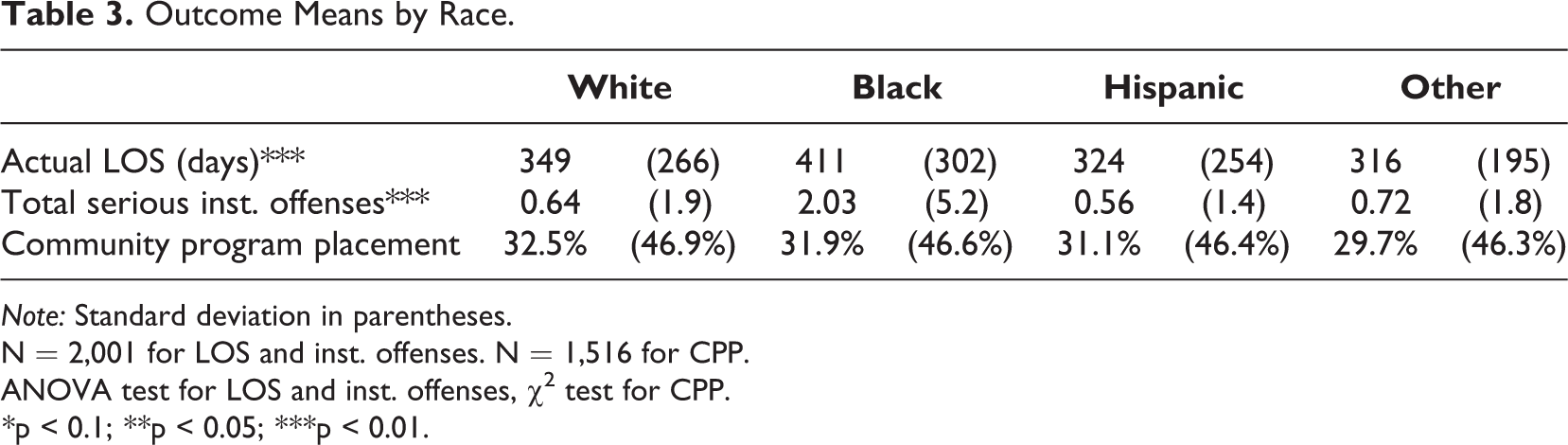
Note: Standard deviation in parentheses.
N = 2,001 for LOS and inst. offenses. N = 1,516 for CPP.
ANOVA test for LOS and inst. offenses, χ2 test for CPP.
∗p < 0.1; ∗∗p < 0.05; ∗∗∗p < 0.01.
Table 4 shows the results of the length of stay regression analyses. Model one only includes the race variable, with white as the reference race group. From this model, black youth have an average length of stay 1.18 times longer than white youth, significant at the 0.01 level. In model two, we introduce the additional legal and extralegal controls. From this model, we found that there is no longer a significant difference between black and white youth in their lengths of stay. However, we also found that youth identified as Hispanic have a shorter length of stay than white youth, though this finding only approached statistical significance (IRR = 0.91, p < 0.1) The Akaike Information Criterion is lower for the second model, indicating a better overall fit than model one, while the theta confirms that model two explains a much greater share of the variance.
Length of Stay 2012–2017 Regression Results. Negative Binomial Regression. Actual Length of Stay (days). Incidence Rate Ratio (Standard Error).
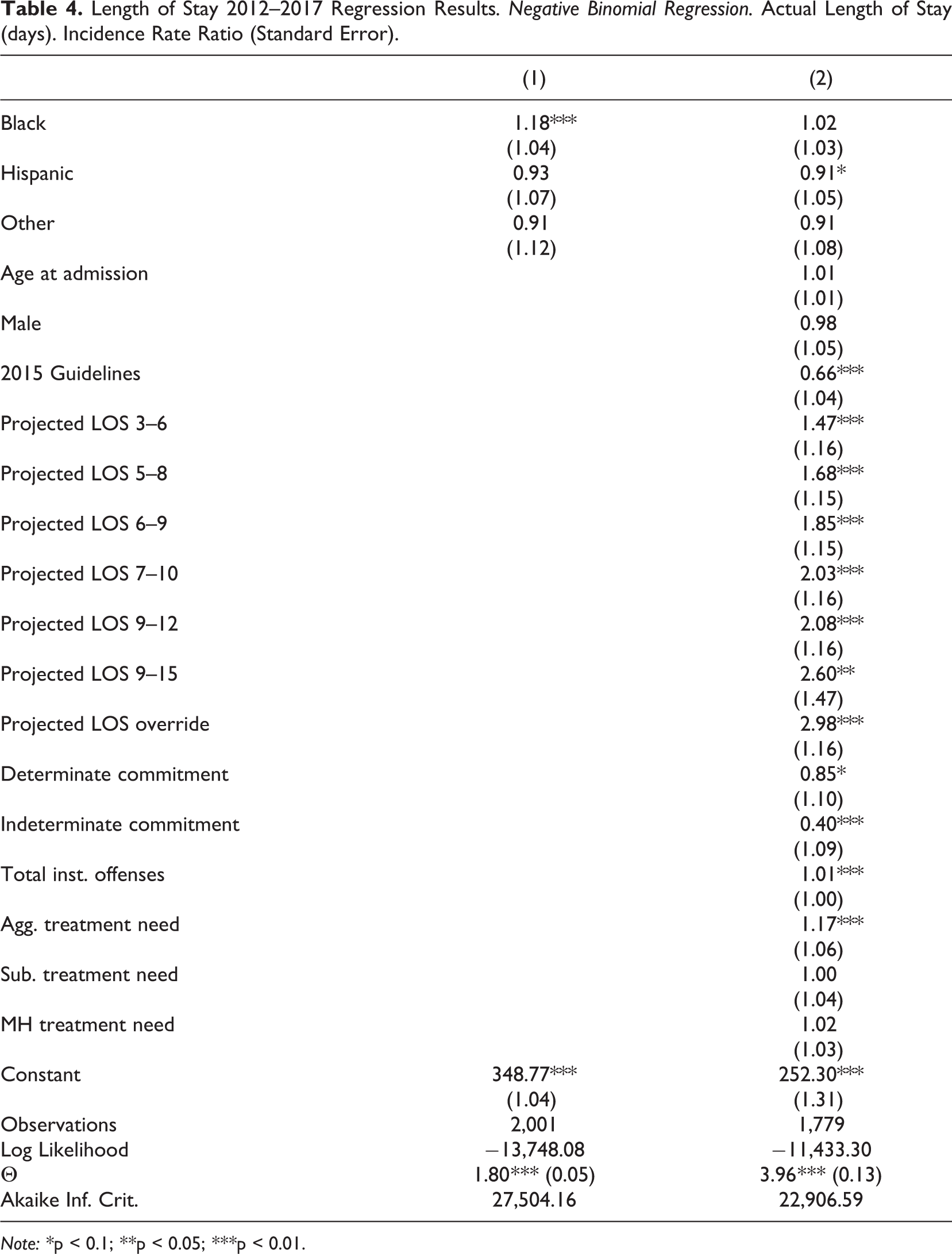
Note: ∗p < 0.1; ∗∗p < 0.05; ∗∗∗p < 0.01.
In addition, we found that youth who were sentenced under the 2015 revised guidelines had significantly shorter lengths of stay than youth sentenced before that period (IRR = 0.66, p < 0.01). This was in line with our expectations as the primary goal of those guidelines was to cut lengths of stay and shrink the juvenile justice population in Virginia. Model two also indicates that youth who received a determinate (IRR = 0.85, p < 0.01) or indeterminate (IRR = 0.40, p < 0.01) sentence had significantly shorter lengths of stay than those who received a blended sentence. Again, this was expected as blended sentences, which involve youth spending the first part of their sentence with DJJ and the later part in an adult facility, are administered in more serious cases with longer sentences. Not surprisingly, we further found that youth with longer projected lengths of stay, based on their offense tier and risk level, had longer actual lengths of stay. For example, youth with a projected length of stay of 9–12 months remained in custody over two times longer than youth in the reference category (those with a projected length of stay of 2–4 months) (IRR = 2.08, p < 0.01). Moreover, for each additional offense that youth committed in the institution, they were expected to spend 1 percent longer in custody (IRR = 1.01, p < 0.01). Finally, youth who were assessed to have an aggression management treatment need spent longer in custody(IRR = 1.17, p < 0.01).
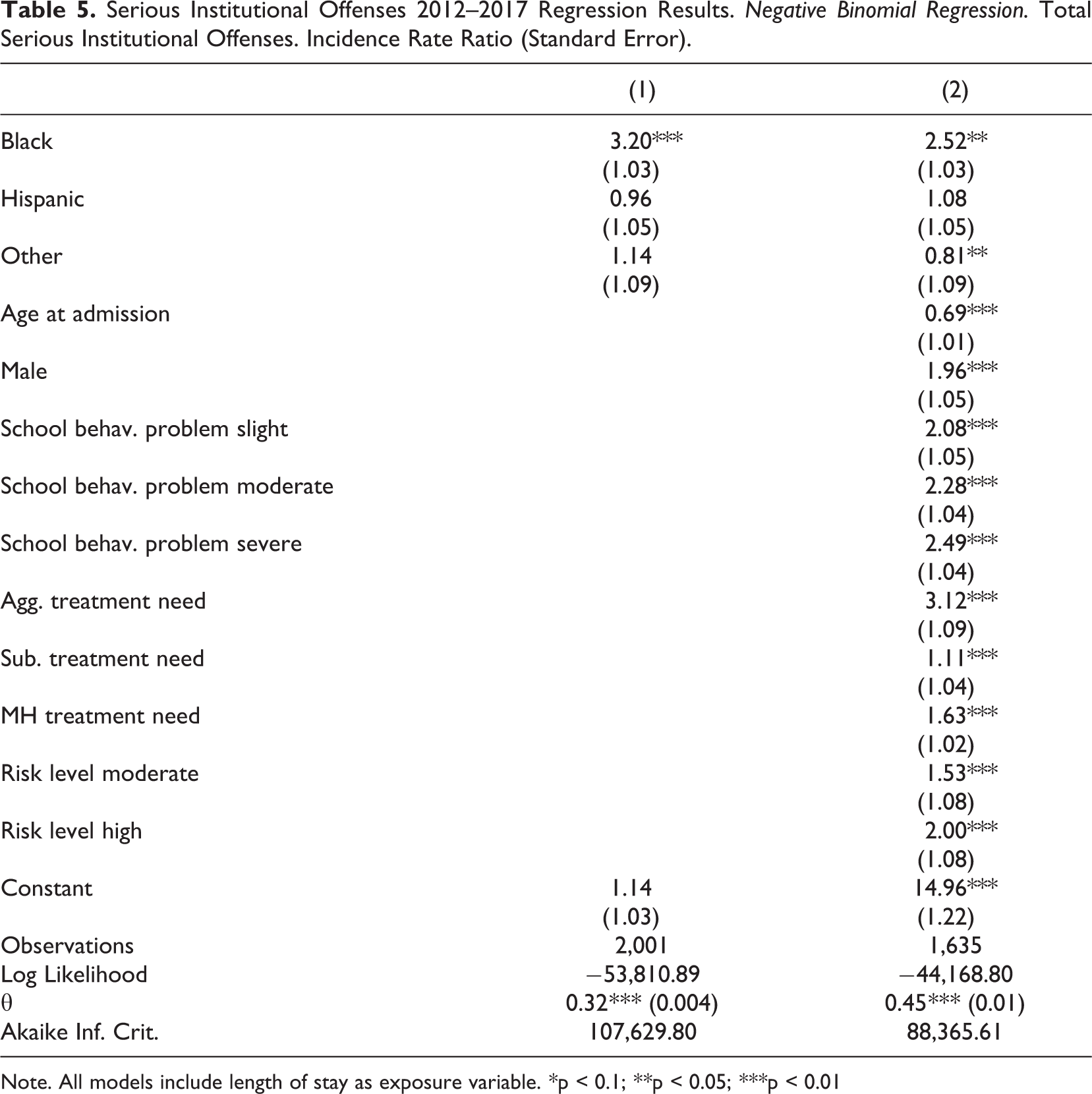
The second deep end decision point of interest in this study is serious intuitional offenses. We conducted two negative binomial regression models to demonstrate the impact of race alone and the additional contribution of other covariates (Table 5). All models include length of stay as an exposure variable to account for youth who spend a longer amount of time in custody having an increased opportunity for institutional offenses. In model one, we found that black youth had a significantly higher expected count of serious institutional offenses compared to white youth. In fact, black youth had more than three times more serious institutional offenses than their white counterparts (IRR = 3.20, p < 0.01). There were no significant differences between white youth and Hispanic youth or those of another race. These findings were consistent in model two after we included the control variables, though the magnitude of the effect for black youth decreased slightly (IRR = 2.52, p < 0.05).
Serious Institutional Offenses 2012–2017 Regression Results. Negative Binomial Regression. Total Serious Institutional Offenses. Incidence Rate Ratio (Standard Error).
Note. All models include length of stay as exposure variable. ∗p < 0.1; ∗∗p < 0.05; ∗∗∗p < 0.01
In model two, we found that many of the control variables significantly influenced how many serious institutional offenses were committed by youth. Notably, age at admission had an inverse relationship with the outcome such that each additional year in age was associated with a 30 percent reduction in serious offenses (IRR = 0.69, p < 0.01). On the other hand, males engaged in nearly twice as many serious institutional offenses as females (IRR = 1.96, p < 0.01). Similarly, youth who had behavioral issues in school and those diagnosed with an aggression management or substance abuse treatment need committed significantly more institutional offenses than other youth. We also found that youth who had a moderate risk level engaged in 50 percent more institutional offenses (IRR = 1.53, p < 0.01), while those with high risk scores had twice as many serious offenses (IRR = 2.00, p < 0.01) compared to low-risk youth. The Akaike Information Criterion indicates that the second model is a better overall fit than model one, while the theta confirms that model two explains more of the variance.
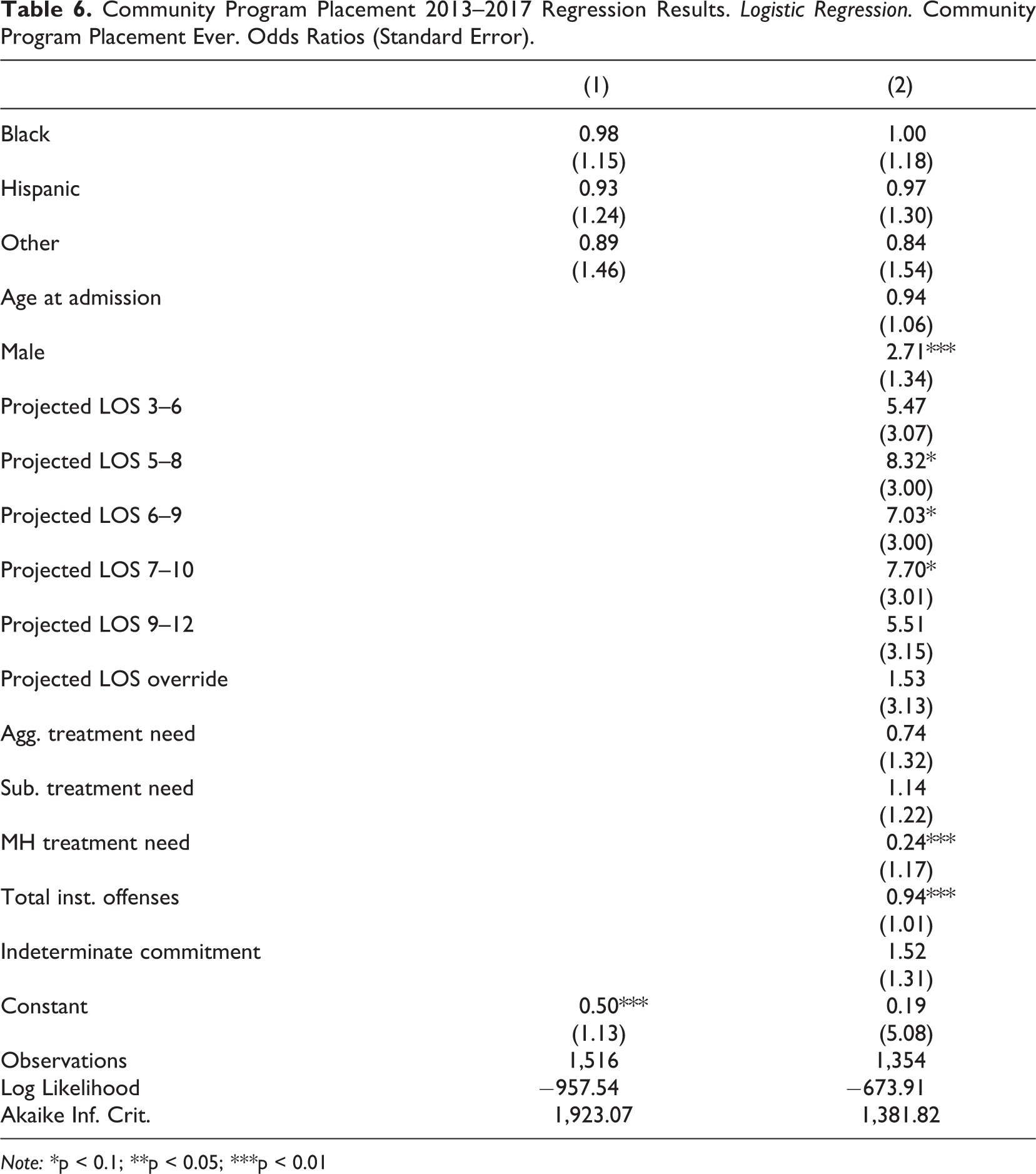
Our final set of analyses examines the relationship between race and whether Virginia DJJ placed youth into a community placement program (CPP, Table 6). Model one again only included race. In this model, we found that race had no significant impact on placement. This was maintained in the second model, which introduced the various legal and extralegal covariates. In model two, being male was associated with significantly higher odds of receiving a placement to the CPP (OR = 2.71, p < 0.01). Model two also shows that there was a generally positive relationship between the projected length of stay and placement in a CPP, though this only approached statistical significance with some of the covariates. Youth who were diagnosed with a mental health treatment need were significantly less likely to be placed in a CPP than their counterparts (OR = 0.24, p < 0.01). Finally, for each additional institutional offense that youth committed while in DJJ custody, their odds of being placed into a CPP were decreased by 6 percent (OR = 0.94, p < 0.01). The AIC and log-likelihood values suggest that model two fits the data better than model one.
Community Program Placement 2013–2017 Regression Results. Logistic Regression. Community Program Placement Ever. Odds Ratios (Standard Error).
Note: ∗p < 0.1; ∗∗p < 0.05; ∗∗∗p < 0.01
Discussion
Our first research question was concerning the degree to which racial disparities exist at three key decision points at the deep end of the juvenile justice system: length of stay, institutional offenses, and placement into community programs. Overall, the findings from the current study are mixed. After controlling for relevant legal and extralegal factors, there were no disparities in the length of stay in custody for youth or in their placement to community programs. However, our findings indicate that black youth were involved in significantly more serious institutional offenses than white youth.
Our second research question focused on whether the other covariates in the models influence any observed racial differences in the measures of interest. In our first set of analyses, we found a significant relationship between race and length of stay in custody. However, once we added control variables into the model, the effect of race was no longer significant. Instead, variables such as being sentenced under the Virginia DJJ’s 2015 guidelines, projected length of stay of youth based on their offense tier and risk level, their commitment type, and their treatment needs had the strongest influence on length of stay. Further, these variables substantially improve the explanatory power of the model, with the theta value increasing from model one to model two. These results are not surprising. They confirm prior research, which has found no effect of race on length of stay (Espinosa & Sorensen, 2016; Maggard, 2015). They also highlight the importance of judicial decisionmaking, individual risk, and clinical needs in understanding how long juveniles remain in custody.
For the analyses examining serious institutional offenses, defined as assault and sexual misconduct, we observed significant disparities for black compared to white youth, even after controlling for relevant factors. This finding comports with some of the prior research on youth and adults that finds black individuals have higher rates of institutional misconduct beyond the influence of other legal and extralegal variables (DeLisi et al., 2010; Harer & Steffensmeier, 1996; Huebner, 2003). This also mirrors the school discipline literature, which finds that black youth are more likely to receive office referrals and experience exclusionary sanctions than white youth (Anderson & Ritter, 2017; Bradshaw et al., 2010; Gregory & Fergus, 2017; Rocque, 2010; Skiba et al., 2002). It is important to note that, just as the school discipline literature focuses on the sanctions given by the school rather than differences in the underlying behavior, we are unable to differentiate between actual underlying behavior and staff responses to that behavior. In other words, our measure of this decision point may reflect actual differences in the degree to which youth commit serious offenses, the ways in which DJJ staff differentially respond to youth behaviors, or some combination of these two actions.
Many of the control variables in the institutional offense models had similarly strong impacts on the outcome. Our findings suggest that male and younger youth committed significantly more serious institutional offenses than others. This is supported by decades of prior research on the strong link between age, gender, and criminal and delinquent behavior (Baxendale et al., 2012; Farrington, 1986; Hirschi & Gottfredson, 1983; Loeber & Farrington, 2014). We also found that youth who had previous behavioral problems in school were more likely to commit serious institutional offenses in custody, suggesting that youth who engage in some forms of misbehavior are more likely to engage in more serious misconduct. Finally, both higher levels of risk and all forms of diagnosed treatment needs (aggression, substance use, and mental health) were positively correlated with institutional offenses. These findings could help staff identify youth who are more likely to engage in disruptive and problematic behavior in custody. For instance, high-risk youth with identified clinical needs should be targeted for treatment-focused programming and other in-custody interventions.
In contrast to the other measures analyzed, there were no racial disparities in placement decisions into community programs. It is difficult to interpret these findings through the lens of extant literature. Most prior research on placement decisions focuses on secure confinement, and these studies have mixed findings on the link between race and placement (Holleran & Stout, 2017; Leiber & Peck, 2015). The deviation from our study could be explained by the fact that Virginia’s CPPs are unique placement facilities. These programs are within secure facilities (i.e. juvenile detention centers), but are smaller, generally allow youth to remain closer to home, and are viewed as more focused on reentry than other correctional centers. Youth can also go to a CPP immediately, or after a period in a juvenile correctional center. The clear eligibility criteria for CPP placement may lessen the possibility of racial disparities at this decision point.
Still, there were other youth characteristics that influenced this decision. Males were much more likely to be placed into a CPP, though this is because these programs were only available to male youth during most of the study period. We also found that youth with a mental health treatment need had significantly lower odds of being placed into a CPP. This may reflect that community programs have less capacity to serve individuals who need mental health services. Having institutional offenses was also associated with a significantly lower likelihood, as part of the CPP eligibility criteria is having no misconduct for a set duration of time.
Limitations
There are several limitations to the current study. First, our findings focused on decision points at the deep end of the juvenile justice system. While we believe this is an area that has been under-studied in previous research, we are also limited in understanding how earlier decisions in Virginia’s system may have created or exacerbated other racial disparities. For example, previous research has clearly shown that there are disparities in juvenile arrests, diversions, waivers to adult courts, and other front-end decision points (Puzzanchera & Hockenberry, 2016). Thus, while our findings on disparities in length of stay, institutional offenses, and placement decisions were mixed, it is critical to recognize that these decisions occur later in case processing and after youth may have already been subjected to disparate treatment.
Further, our findings on youth identified as Hispanic should be interpreted with caution. Although we used a novel surname matching procedure to identify Hispanic youth and did our best to validate this method, we cannot be certain that we correctly identified the Hispanic youth in Virginia DJJ custody. It is likely that we under- or over-estimated the number of Hispanic youth by misclassifying their ethnicity. Likewise, there were few youth of other racial identities and this group included several different racial and ethnic groups (e.g., Asian/Pacific Islander, American Indian/Alaskan Native, other races, and unknown). Thus, findings related to the “other” racial category had limited power in our models and should also be interpreted with caution.
Another limitation is that there may be sources of racial disparity that we were unable to capture and include as covariates in the regression models. For example, factors about the specific unit or facility youth were in might influence levels of institutional misconduct. Moreover, there may be clustering effects based on the geographic regions in which juveniles lived before they were placed into custody. Unfortunately, we were unable to include a measure of juveniles’ zip code or county of residence in our models. Future research could further explore this issue using multi-level modeling to examine how disparities may exist or vary at these geographic levels.
Finally, because we are relying on official data, we have no way of knowing whether the reported serious institutional offenses accurately reflect underlying behavior. It is possible that there were racial disparities in how staff detected or reported on these behaviors that contributed to the discrepancies we found between black and white youth. This underscores our decision to limit our analyses to serious institutional offenses, which involve much less staff discretion than lower-level offenses. For these reasons, we believe future studies should continue exploring whether and why disparities may exist in misconduct, length of stay, and eligibility considerations for community programs.
Conclusion
At the deep end of the juvenile justice system in Virginia, there are no racial disparities in length of stay and community program placement. However, there is disparity in serious institutional offenses for black youth compared to white youth. Legal factors such as the offense severity and sentencing type have a strong influence on length of stay, while extralegal factors such as school behavior issues and aggression management treatment need have a strong influence on serious institutional misconduct. Covariates related to the eligibility criteria of placement in community programs had the strongest influence on whether youth received these placements. Other deep end measures that merit further research are treatment enrollment and completion, parole decisions upon release, and educational attainment while incarcerated. Future disparity research should continue to include both legal and extralegal factors in quantitative analyses, and complement them with qualitative interviews of staff and youth.
Footnotes
Declaration of Conflicting Interests
The author(s) declared no potential conflicts of interest with respect to the research, authorship, and/or publication of this article.
Funding
The author(s) disclosed receipt of the following financial support for the research, authorship, and/or publication of this article: This research was supported by the U.S. Department of Justice, Office of Justice Programs, National Institute of Justice (Grant 2014-IJ-CX-0002).
