







Abstract
Psychopathy and trauma exposure are robustly associated with youth conduct problems, but the interrelation of these constructs is unclear. The objective of the present study is to examine psychopathy mediation effects related to trauma events and trauma reactions and juvenile delinquency, conduct disorder, crime seriousness, and proactive overt aggression outcomes. The sample consisted of N =388 (M = 16.01 years, SD = 1.03 years, age range = 13–18 years) male youths from Portugal. Path analysis procedures revealed that psychopathy partially mediates the relation between trauma events and the juvenile delinquency, conduct disorder, crime seriousness outcomes, and fully mediates the relation between trauma events and the proactive overt aggression outcome. Trauma reactions have no direct significant effect on psychopathy, and psychopathy does not mediate the relation between trauma reactions and the examined outcomes. Research on trauma and adverse childhood experiences should encompass both events and reactions to those events as they have differential associations with psychopathy and externalizing outcomes. Trauma-informed service, supervision, and treatment is essential for understanding antisocial development and psychological maladjustment among youth.
Introduction
A paradigmatic debate in criminology and developmental psychopathology relates to the relative role of individual-level risk factors, such as psychopathy and environment- or process-level factors, such as trauma exposure in the etiology of conduct problems. This academic debate builds on the more fundamental question whether youth who exhibit delinquency and related behavioral problems are mostly born (suggesting individual-level factors), mostly made (suggesting environment- or process-level factors), or some combination of the two. As is often the case in theoretical debates, both perspectives are true. To date, the evidence is clear that both individual-level (e.g., Black, 1999; Gottfredson & Hirschi, 1990; Hare, 1999) and environment- or process-level factors (e.g., Belsky et al., 2020; Finkelhor et al., 2013; Loeber et al., 1998) contribute to delinquency and related conduct problems.
Numerous studies employing diverse data sources and analytical techniques found psychopathy is associated with significant behavioral impairment, conduct problems, externalizing features, maladjustment, violence, and justice system interventions among youth (Baglivio et al., 2020; DeLisi, 2009, 2016; Garofalo et al., 2020; Heirigs et al., 2019; Lynam et al., 2007; Pechorro et al., 2014; Salihovic, Özdemir, & Kerr, 2014; Vaughn et al., 2008). A personality disorder, psychopathy denotes significant impairments in self-regulation, emotional regulation, and interpersonal functioning. Generally, more extensive and severe psychopathic features translate into more extensive and severe conduct problems. Similarly, traumatic experiences including disparate forms of abuse, neglect, and adversity are also related to delinquency, victimization experiences, lower behavioral functioning, and justice system interventions among youth (Bonner et al., 2020; Braga et al., 2017; Craig et al., 2019; Duke et al., 2010; Fox et al., 2015; Miley et al., 2020; Muniz et al., 2019; Trulson et al., 2016; Xie et al., 2020). Similar to the broad-based effects of psychopathy, more extensive and severe trauma usually translates into more extensive and severe conduct problems.
Psychopathy and Trauma Among Youth
Although both psychopathy and trauma clearly relate to conduct problems among youth (for a systematic review, see Moreira et al., 2020), prior research indicated complex and multifaceted linkages between trauma, psychopathy, and delinquency. Several currents exist in the literature. First, there is evidence that traumatic experiences increase psychopathic features among youth, but the effects of specific forms of abuse and neglect are differential and inconsistent (Boduszek et al., 2019; Bonner et al., 2020; Farina et al., 2018; Kerig et al., 2012; Krischer & Sevecke, 2008; Metcalf et al., 2020). For instance, Boduszek et al.’s (2019) study of a community sample of girls found that sexual abuse conferred 116% increased likelihood of membership in a high psychopathy latent group and 57% increased odds of psychopathy in a latent group characterized by high interpersonal manipulation and egocentricity. On the other hand, physical and emotional abuse had no associations with psychopathic features.
In contrast, other studies reported associations between physical abuse and psychopathic features (Sevecke et al., 2016), but not for sexual abuse, and still others reported that sexual, physical, or emotional abuse were associated with psychopathy depending on model specification (Lansing et al., 2018). There is also evidence that trauma experiences, such as witnessing violence, have differential associations on subcomponents of psychopathic personality including grandiosity, manipulation, callousness, irresponsibility, and impulsivity (Ray, 2018). These findings suggest somewhat idiosyncratic reactions to various type of traumatic events.
Second, there is evidence that trauma and psychopathy have concurrent and divergent linkages to offending outcomes among both institutionalized and community samples of youth. Specifically, there is evidence that psychopathy and trauma experiences are associated with delinquency (DeLisi et al., 2018; Lansing et al., 2018; Tsang, 2018; Vaughn et al., 2009), as well as evidence that trauma, but not psychopathy, is associated with violence (DeLisi et al., 2018). Moreover, depending on sample composition and measures, trauma and psychopathy exhibit inconsistent and at times multifaceted associations with behavioral problems. For instance, in a study of more than 60,000 youth from the Florida Department of Juvenile Justice, Perez et al. (2018) found that childhood trauma and adversity is directly associated with serious, violent, and chronic delinquency; however, most of this effect is indirect and mediated by psychopathic personality features including impulsivity and aggression.
A third and related point is that gender, race, and ethnicity moderate the interrelationships between trauma, psychopathy, and conduct problems. Some studies found that trauma increases psychopathy among boys but not girls (Barker & Meehan, 2019; Krischer & Sevecke, 2008; Lansing et al., 2018; Sevecke et al., 2016); while other research found that trauma exposures manifest in different types of delinquency among white, black, or Hispanic youth in the United States (Bonner et al., 2020; DeLisi et al., 2017; Zettler, et al., 2018). This suggests that criminogenic effects of trauma exposure are unevenly felt across demographic statuses, and that individual forms of trauma can result in generalized greater likelihood of delinquency or reflect a more specialized relation between a trauma and offending, as in the case of sexual abuse and sexual offending (Bonner et al., 2020; Miley et al., 2020).
Fourth, gradient effects typify youth in terms of psychopathy, traumatic exposure, and subsequent psychopathology whereas the developmental course of trauma resulting in conduct problems depends on how psychopathic the youth is. To illustrate, drawing on data from 439 detained male adolescents, Vahl et al. (2016) examined six subgroups of youth: those with low psychopathic features and zero, one, or multiple forms of maltreatment and those with high psychopathic features and zero, one, or multiple forms of maltreatment. Youth with high psychopathic features evinced high externalizing symptoms, high proactive and reactive aggression, but low internalizing symptoms. Among youth with low psychopathic features, trauma (child maltreatment in their study) played an important role for both externalizing and internalizing symptoms suggesting that for youth without psychopathy, trauma exerts greater influence on overall psychopathology.
Current Aim
Although trauma and psychopathy are recurrent in conduct problems among youth (cf., Baglivio, 2019; Farina et al., 2018; Ford & Blaustein, 2013; Moreira et al., 2020; Pechorro et al., 2014; Zettler, 2021), it remains unclear how they are interrelated. One reason for the multitudinous research findings in the literature is that trauma exposure is usually modeled without considering reactions to the trauma, such as symptoms of post-traumatic stress. It is likely that a double-pronged effect occurs for trauma exposure: the actual event has causal effects on behavior and initiates subsequent cascading effects/reactions that also affect behavior. Unfortunately, we do not know if trauma events and trauma reactions differentially influence psychopathy, nor if psychopathy mediates their associations with delinquency and cognate conduct problems. To explore this, we examined four hypotheses: 1) psychopathy mediates the relation between trauma and juvenile delinquency outcome; 2) psychopathy mediates the relation between trauma and the CD outcome, 3) psychopathy mediates the relation between trauma and the crime seriousness outcome; and 4) psychopathy mediates the relation between trauma and the proactive aggression outcome.
Method
Sample and Procedures
The sample consisted of 388 male youth (M = 16.01 years, SD = 1.03 years, age range = 13–18 years) from Portugal. The majority of the participants were Portuguese nationals (88.4%), they had approximately 8 years of education on average (M = 8.14, SD = 1.63, range = 4–11 years), and a low socioeconomic status (58.2%). The Portuguese State provided authorization to assess the participants of the present study. These participants came from state-managed public schools and community educational centers in Portugal, including the capital city Lisbon, some of whom were situated in impoverished and disadvantaged zones characterized by social exclusion, high unemployment rates and limited economic resources. This was a convenience sample not originally intended to be representative of the national student population. However, the sample purposely contained youth from different urban (e.g., Lisbon), and rural backgrounds (Alentejo and Algarve regions) to make it more diverse. Written parental authorization was previously obtained, and then the potential participants were themselves informed about the aims of our investigation and asked to collaborate voluntarily. Youth not able to read Portuguese were excluded. The measures and sociodemographic questionnaire included in the present study were administered individually or in small groups of participants. The rate of participation was 89%. No monetary or other form of compensation was provided to the participants or their parents.
Measures
Predictor
Child Trauma Screen (CTS; Lang & Connell, 2017, 2018). This is a brief empirically derived measure designed to screen for trauma across child and youth serving systems. The CTS includes four dichotomous trauma exposure (events) items (e.g., Has someone ever really hurt you? Hit, punched, or kicked you really hard with hands, belts, or other objects, or tried to shoot or stab you?), and six ordinal reactions items that assess Post-Traumatic Stress Disorder (PTSD) symptoms (e.g., How often did each of these happen in the last 30 days? Try to stay away from people, places, or things that remind you about something that happened). The CTS can be scored by adding the items of the reactions factor on a 4-point ordinal scale (ranging from 0 = Never/Rarely, to 3 = Three or more times per week). The trauma exposure (events) items can also be added; however, the use of a total score that includes the trauma exposure events items is not recommended. Higher scores on the reactions factor indicate higher levels of PTSD. The CTS was validated in Portugal among the youth population (Palma, Pechorro, Nunes, & de Jesus, 2020) and its internal consistency for the current study was adequate (Cronbach’s α = .78).
Mediator
Psychopathy—Dirty Dozen (DD; Jonason & Webster, 2010). This is a brief 12-item tridimensional measure of the Dark Triad construct of personality composed of psychopathy, Machiavellianism, and narcissism. For the purpose of the current study we used only the psychopathy factor that includes four items (e.g., I tend to be unconcerned with the morality of my actions; I tend to be callous or insensitive). Items on the current study are rated on a 5-point ordinal Likert scale (ranging from Strongly Disagree, to Strongly Agree). The score of the psychopathy factor, and the remaining factors, can be obtained by adding the respective items. Higher scores on the psychopathy factor indicate higher levels of psychopathy. The version of the DD is validated in Portugal among the youth population (Pechorro, Jonason, Raposo, & Maroco, 2019) and the internal consistency for the current study was excellent (Cronbach’s α = .94).
Outcomes
Add Health Self-Report Delinquency (AHSRD; Pechorro, Moreira, Basto-Pereira, Oliveira, & Ray, 2019). This is a 17-item self-report measure of juvenile delinquency originally developed for the National Longitudinal Study of Adolescent to Adult Health (abbreviated to Add Health). The AHSRD taps criminal behaviors occurring during the last year before the assessment (e.g., Take something from a store without paying for it; Steal something worth less than €50; Buy, sell, or hold stolen property). Items are rated on a 4-point Likert scale (ranging from 0 = None, to 3 = Five or more times). The total delinquency score is obtained by adding the items. Higher scores indicate higher levels of self-reported criminality. The AHSRD was validated in Portugal among the youth population (Pechorro et al., 2019) and the internal consistency for the current study was excellent (Cronbach’s α = .96).
Conduct Disorder Screener (CDS; Lewinsohn et al., 2000). This is a brief self-report screener created to identify adolescents with conduct disorder. The CDS consists of six items representative of a diagnosis of Conduct Disorder (e.g., I broke rules at school; I got in trouble for lying or stealing). The CDS can be scored by adding the items on a 4-point ordinal Likert scale (ranging from 1 = Rarely or none of the time, to 4 = Most or all of the time). Higher scores indicate higher levels of conduct disorder. The CDS was validated in Portugal among the youth population (Palma, Pechorro, Jesus, & Nunes, 2020) and the internal consistency for the current study was excellent (Cronbach’s α = .92).
Peer Conflict Scale-20 (PCS-20; Marsee et al., 2011). This is brief 20-item self-report four-dimensional measure spanning different forms and functions of aggression. It includes five proactive overt items (PO; e.g. I start fights to get what I want), five proactive relational items (PR; e.g. I gossip about others to become popular), five reactive overt items (RO; e.g. When someone hurts me, I end up getting into a fight), and five reactive relational items (RR; e.g. If others make me mad, I tell their secrets). Items are rated on a 4-point Likert scale (ranging from 0 = Not at all true, to 3 = Definitely true). The score of each factor can be obtained by adding the respective items and a total score can also be obtained by adding all the items. Higher scores indicate higher levels of aggression. The PCS-20 was validated in Portugal among the youth forensic population (Pechorro, Russell, Ayala-Nunes, Gonçalves, & Nunes, 2018) and the internal consistency for the current study was excellent (PO α = .91, PR α = .82, RO α = .93, RR α = .85, and PCS-20 total α = .96).
Delinquency Seriousness Classification Index (DSCI). A Portuguese version of the index of crime seriousness originally developed by Loeber and colleagues (1998) was used to classify crime seriousness. This version employs a four-level progressive ordinal sequence, with higher scores indicating higher seriousness levels of crimes committed by youth, such as serious violent felonies.
Data analysis
The EQS 6.4 software (Bentler & Wu, 2018) was used to examine descriptive statistics, Pearson correlations, group differences, reliability of the measures (i.e., Cronbach’s α), and estimate path analysis models, namely to analyze the direct and indirect effects between trauma and the outcomes. Pearson correlations were high if above .50, moderate if between .20 and .50, and low if below .20 (Ferguson, 2009). To compare groups, ANOVAs and Mann-Whitney’s U test were used. Alpha coefficient was considered adequate if above .70 and good if above .80 (Field, 2013). Path analysis using constructs score were used to overcome sample size limitations and estimation errors. When the reliability of constructs is high, the underestimation of beta coefficients using path analysis is irrelevant. We tested four fully saturated models. In Model 1, trauma predicted self-reported delinquency directly and indirectly via their influence on psychopathy. In Model 2, trauma predicted CD directly and indirectly via their influence on psychopathy. In Model 3, trauma predicted crime seriousness directly and indirectly via their influence on psychopathy. In Model 4, trauma predicted proactive aggression directly and indirectly via their influence on psychopathy. No modification indices were used to improve these models. Maximum Likelihood (ML) estimation methods with Pearson covariance matrices were used. Those methods are considered robust for non-severe violations of the normality (absolute skewness and kurtosis values below 3 and 7, respectively).
Results
Table 1 presents the correlation matrix of the measures used. The Pearson correlations between the variables were positive, moderate to large in effect size, and statistically significant (rs ranging from .26 to .92). Correlations for CTS events and CTS reactions (r = .52, p ≤ .001) were large. Generally, CTS events had larger correlations with DD Psychopathy (r = .44, p ≤ .001), AHSRD (r = .42, p ≤ .001), CDS (r = .44, p ≤ .001), DSCI (r = .43, p ≤ .001), and PCS-20 PO (r = .42, p ≤ .001) than CTS reactions with DD Psychopathy (r = .31, p ≤ .001), AHSRD (r = .26, p ≤ .001), CDS (r = .29, p ≤ .001), DSCI (r = .29, p ≤ .001), and PCS-20 PO (r = .32, p ≤ .001).
Pearson Correlation Matrix.
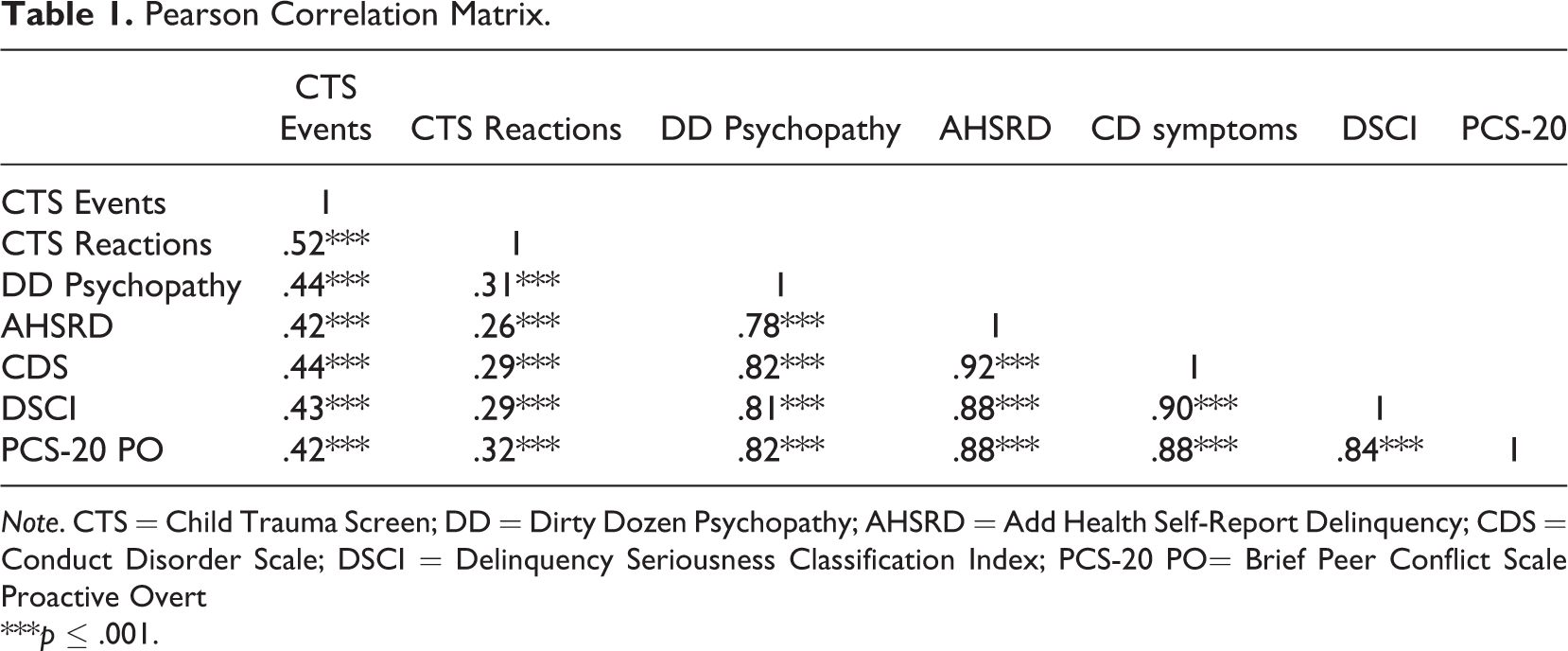
Note. CTS = Child Trauma Screen; DD = Dirty Dozen Psychopathy; AHSRD = Add Health Self-Report Delinquency; CDS = Conduct Disorder Scale; DSCI = Delinquency Seriousness Classification Index; PCS-20 PO= Brief Peer Conflict Scale Proactive Overt
***p ≤ .001.
Figure 1 displays the first model. The trauma events of the CTS had a positive impact on psychopathy (βevents = .39, p ≤ .001), which in turn predicted self-reported delinquency (βpsychopathy =.75, p ≤ .001). The total effect of events on self-reported delinquency (βevents = .38, p ≤.001) included both the indirect effect via psychopathy (βEvents = .29, p ≤ .001) and the direct effect on self-reported delinquency (βevents = .08, p ≤ .05). The total, direct and indirect effects of trauma events on self-reported delinquency were significant. The trauma reactions of the CTS had no significant impact on psychopathy (βreactions = .10, ns), or self-reported delinquency (βreactions = −.01, ns).
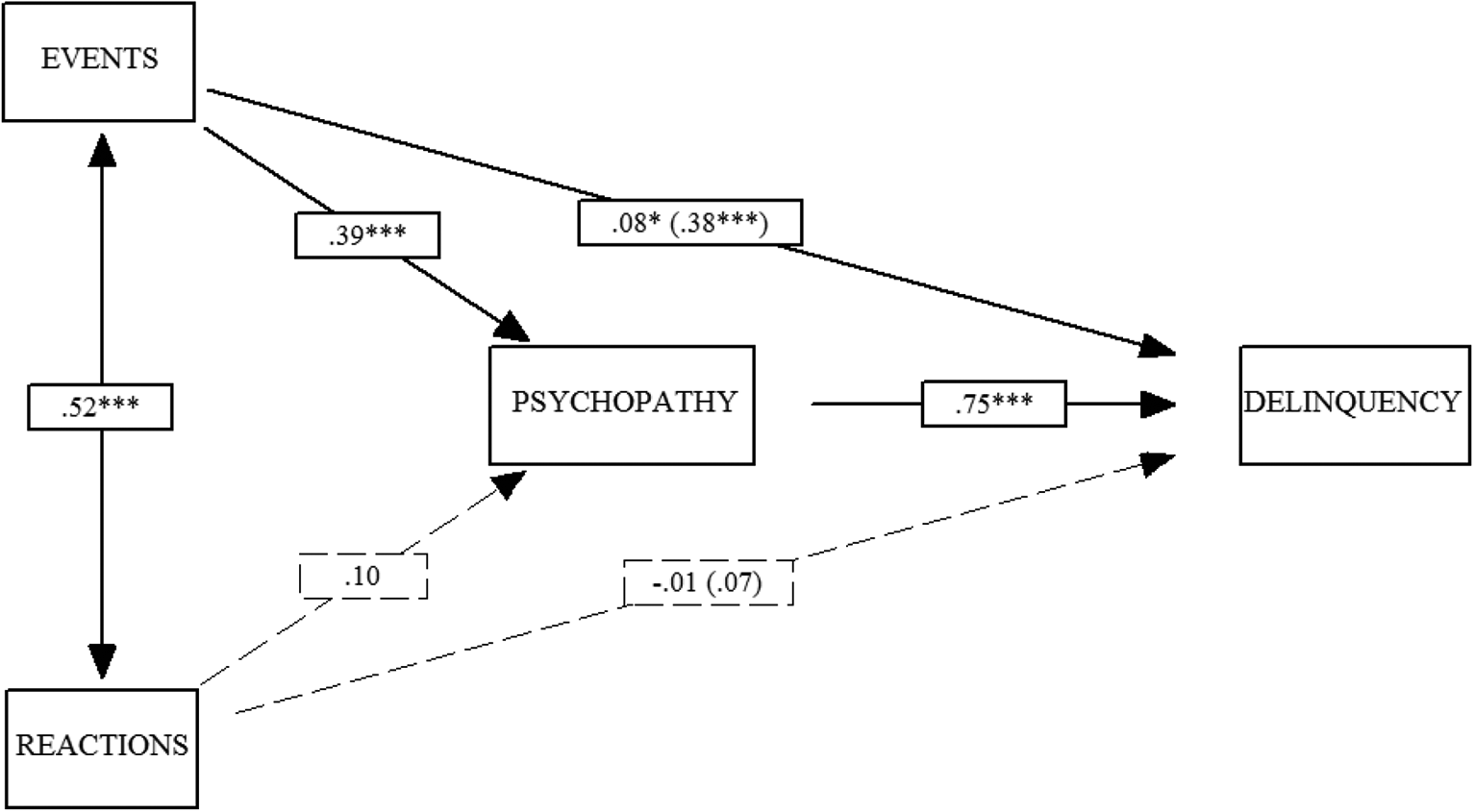
Effects of trauma events and reactions on delinquency mediated by psychopathy. Note. Total effects are included in parentheses; *p ≤ .05, **p ≤ .01, ***p ≤ .001.
Figure 2 shows model 2. Trauma events had a positive impact on psychopathy (βevents = .39, p ≤ .001), which in turn predicted conduct disorder (βpsychopathy =.78, p ≤ .001). The total effect of events on conduct disorder (βevents = .40, p ≤.001) included both the indirect effect via psychopathy (βevents = .31, p ≤ .001) and the direct effect on conduct disorder (βevents = .09, p ≤ .05). The total, direct and indirect effects of trauma events on conduct disorder were significant. Trauma reactions had no significant impact on psychopathy (βreactions = .10, ns), or conduct disorder (βreactions = .00, ns).
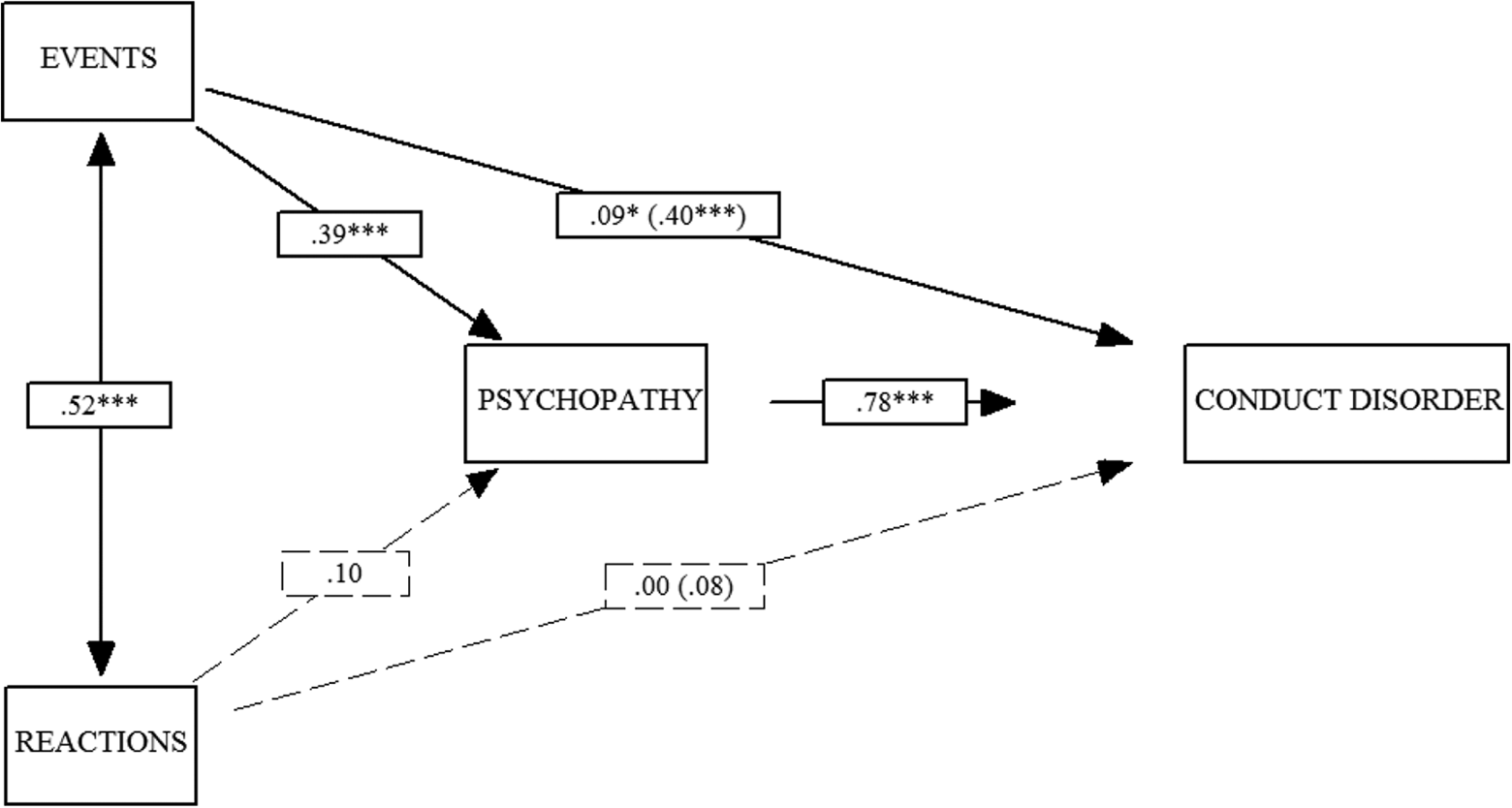
Effects of trauma events and reactions on Conduct Disorder mediated by psychopathy. Note. Total effects are included in parentheses; *p ≤ .05, **p ≤ .01, ***p ≤ .001.
Figure 3 shows model 3. Trauma events had a positive impact on psychopathy (βevents = .39, p ≤ .001), which in turn predicted crime seriousness (βpsychopathy =.77, p ≤ .001). The total effect of events on crime seriousness (βevents = .38, p ≤.001) included both the indirect effect via psychopathy (βevents = .30, p ≤ .001) and the direct effect on crime seriousness (βevents = .08, p ≤ .05). The total, direct and indirect effects of trauma events on crime seriousness were significant. Trauma reactions had no significant impact on psychopathy (βreactions = .10, ns), or crime seriousness (βreactions = .02, ns).
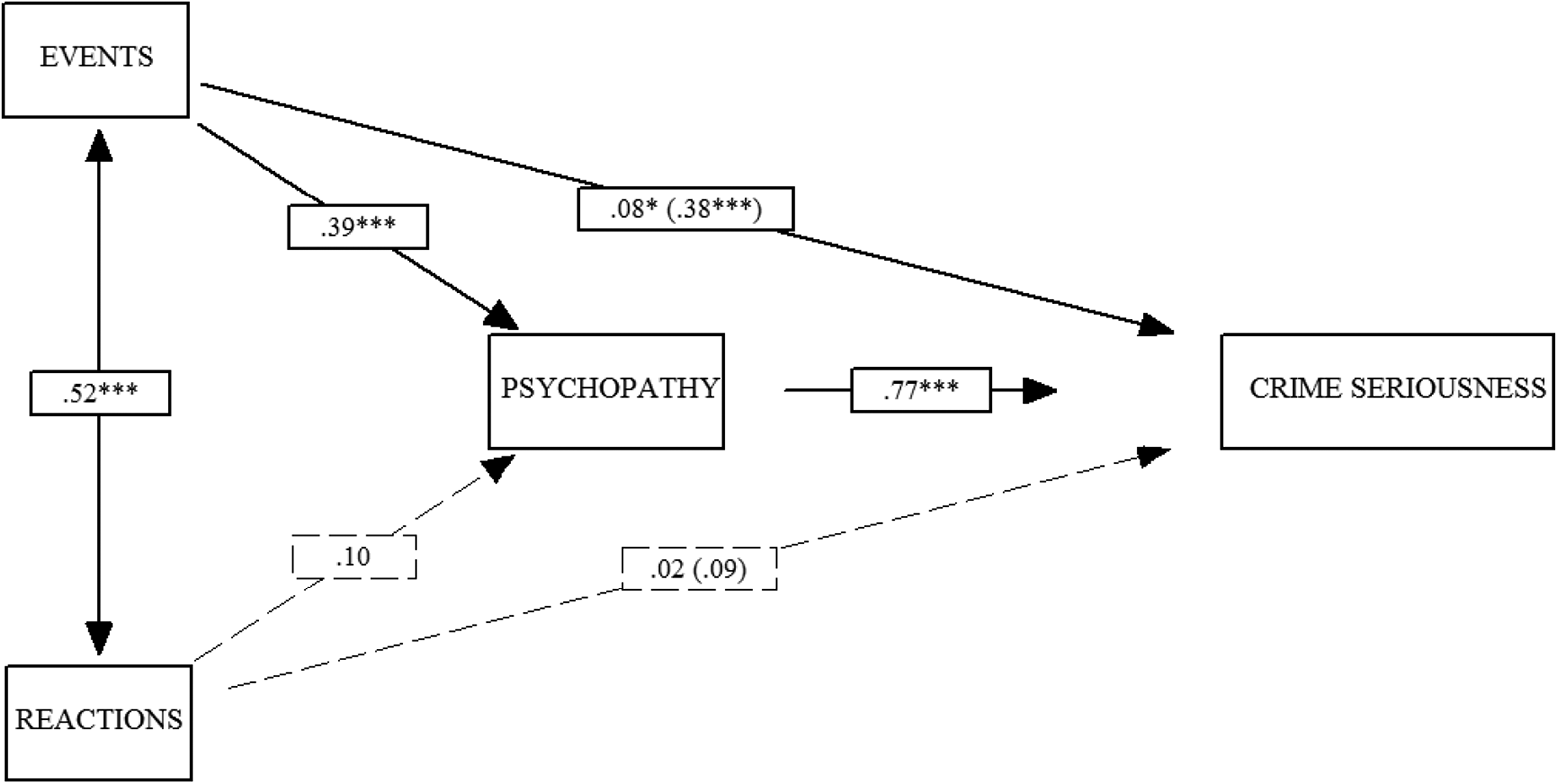
Effects of trauma events and reactions on crime seriousness mediated by psychopathy. Note. Total effects are included in parentheses; *p ≤ .05, **p ≤ .01, ***p ≤ .001.
Finally, Figure 4 shows model 4. The trauma events of the CTS had a positive impact on psychopathy (βevents = .39, p ≤ .001), which in turn predicted proactive aggression (βpsychopathy =.78, p ≤ .001). The total effect of events on proactive aggression (βevents = .35, p ≤.001) included both the indirect effect via psychopathy (βevents = .30, p ≤ .001) and the direct effect on proactive aggression (βevents = .05, ns). The total and indirect effects of events on proactive aggression were significant, but direct effects were not. The trauma reactions of the CTS had no significant impact on psychopathy (βreactions = .10, ns), or proactive aggression (βreactions = .06, ns). It is important to mention that the effects reported in these four models take into consideration that trauma events and trauma reactions are positively and significantly correlated (β= .52, p ≤ .001).

Effects of trauma events and reactions on proactive overt aggression mediated by psychopathy. Note. Total effects are included in parentheses; *p ≤ .05, **p ≤ .01, ***p ≤ .001.
Discussion
The aim of the present study was to examine trauma effects on antisocial or externalizing outcomes among youth and the role of psychopathy as a mediator between trauma and those externalizing outcomes. Although trauma and psychopathy are relevant factors to the study of externalizing outcomes among youth (Abram et al., 2004; Baglivio et al., 2020; Farina et al., 2018; Moreira et al., 2020), the nature of their relation remains unclear. Moreover, there is a gap in the literature in terms of simultaneously examining the effects of trauma events and trauma reactions. Do trauma events and reactions have a similar direct effect on antisocial/criminal outcomes in youth? Are trauma events and reactions similarly mediated by psychopathy in terms of predicting antisocial outcomes in youth? The present study provided answers to these questions.
Research Implications
Overall, findings indicate that trauma events, but not trauma reactions, are directly and positively associated with psychopathy and externalizing outcomes including juvenile delinquency, conduct disorder, crime seriousness proactive overt aggression outcome. The findings also strongly suggest that psychopathy mediates the relationship between trauma events and the juvenile delinquency, conduct disorder, crime seriousness and proactive overt aggression outcomes. In the case of the proactive overt aggression outcome, full mediation occurs. On the other hand, trauma reactions have no direct significant effect on psychopathy, and psychopathy does not mediate the relation between trauma reactions and the examined outcomes. In every model, psychopathy was robustly associated with externalizing outcomes that is consistent with its reputation as one of the most important drivers of delinquency and related conduct (Baglivio, 2019; DeLisi, 2016; Hare, 1999; McCuish et al., 2015; Pechorro et al., 2014; Ray, 2018).
Although traumatic events and traumatic reactions are strongly correlated, they have very different effects on psychopathic features that speaks to the dysphoric, malevolent valence of the disorder. It is often the case that seriously antisocial youth experience tremendous hardships, adversity, and trauma in their rearing environment (Baglivio et al., 2018; Bonner et al., 2020; Fox et al., 2015; Trulson, 2007; Trulson et al., 2005; Wolff et al., 2017), and incurring violent trauma likely hardens and exacerbates their psychopathic features. However, the cold, callous, and limited emotional experiences among youth with greater psychopathic features seemingly act like a hard shell to buffer them from the normative reactions to trauma events that would involve anxiety, stress, and depression in a youth with normative personality functioning. This is consistent with research showing that maltreatment during childhood is more damaging to youth with normal personality functioning relative to youth with psychopathic personality features (e.g., Vahl et al., 2016) and that mental health functioning partially mediates associations between trauma and delinquency (Craig et al., 2019). More importantly, the sharply differential associations between trauma events, trauma reactions, and psychopathy in the path models show the importance of considering both the event and the resultant psychological and psychiatric reactions to it.
A critical issue in theorizing about the etiology of conduct problems among youth centers on the generality or universality that various individual-level or environment- or process-level factors play in generating delinquency and related behavior. On this issue, it is critical that future research examine traumatic events and traumatic reactions among diverse samples of youth spanning community, clinical, and correctional domains. For instance, our data encompassed mostly low socioeconomic status community juveniles in Portugal, whose behavioral and developmental histories are nowhere as severe as serious institutionalized youth, such as those in confinement facilities. As such, trauma events significantly increase psychopathic personality features and all conduct problems except proactive aggression. However, among more acutely antisocial youth whose developmental histories span a bevy of risk factors (Abram et al., 2004; Loeber et al., 1998; Pechorro et al., 2014; Trulson et al., 2016), the relative effect of trauma is potentially less important. For example, Craig et al. (2020) studied the association between adverse childhood experiences and recidivism among institutionalized youth in the United States and found that traumatic experiences had non-significant associations with recidivism. Instead, behavioral indicators including juvenile justice history and rate of institutional misconduct were most salient for recidivism.
In addition to including youth beyond community settings, additional limitations of the current study can inform future research. For example, the measurement of traumatic experiences generally involves single-item binary measures of whether a particular event occurred, but this approach fails to address the complexity and multiplicity of abuse and neglect experiences. One area to expand measurement is to focus on who perpetrated the traumatic experience—whether it was a stranger or an acquaintance or family member. In the latter case, the trauma also involved betrayal. Researchers using data from youth in detention centers found that emotional numbing of fear and sadness mediated the association between trauma exposure and psychopathic traits, but only when the trauma involved betrayal (Kerig et al., 2012). This is an important point to study further. The current findings also likely reflect shared methods variance as youth self-reported all outcomes that likely explains the high correlations between the DD measure of psychopathy and conduct problems and delinquency. An important methodological weakness is the cross-sectional data that precludes temporal ordering of effects. Longitudinal designs are needed to specify the ordering of trauma events, reactions, and psychopathy. For instance, although most research models adverse childhood experiences as predating and causing psychopathy, there is also evidence that the most psychopathic or antisocial youth evoke greater abuse (Ge et al., 1996; O’Connor et al., 1998; Rutter et al., 2006) suggesting that trauma and psychopathy have reciprocal effects. It must, however, be pointed out that the causal ordering of effects, like the one we did, is a common assumption, and a limitation, of causal models, tested with cross-sectional samples. Future research should also strive to include external, validated measures of trauma exposure to examine the degree to which they comport with self-reports of trauma experiences. There is evidence that personality factors differentially affect the validity of trauma reporting (e.g., Rueben et al., 2016), and given the tendency to lie and manipulate in psychopathy, it is important to include data to validate self-reports.
Practical Implications
The current findings have broad application to practitioners working with community and adjudicated youth. Foremost, the central tenet of trauma-informed care is to recognize the salience of traumatic experiences to youth development, behavioral development, and psychological functioning. Whereas a trauma-uninformed perspective would view evidence of abuse, neglect, and related experiences as incidental or irrelevant parts of a youth’s background, an informed perspective treats trauma experiences as meaningful variables for understanding their conduct. As this explicitly relates to our findings, an informed practitioner would recognize that traumatic events increase the likelihood of psychopathic personality functioning and multiple indicators of aggression, delinquency, and violence. Consequently, immediate interventions should remove traumatic events (e.g., physical abuse, sexual abuse, medical neglect, educational neglect, etc.) from the adolescent’s rearing environment wherever possible.
The emotional style and interpersonal presentation of youth is also critical for understanding reactions to the trauma and can serve as a heuristic for placing the youth with the appropriate agency. For example, an adolescent who appears “stone cold” and has little to no emotional reaction to their trauma experiences is unlikely to have the PTSD-related reactions to the abuse and neglect. Instead, the youth appears to be in the throes of psychopathic development, which is a severe, and perhaps the most severe risk factor for conduct problems and delinquency (DeLisi, 2016). In contrast, an adolescent with anxiety, depression, avoidance, rumination, and stressful hypervigilance after trauma events is presenting an internalizing-based reaction to the trauma, has lower risk for conduct problems, but likely greater need for counseling and other services (see, Allwood et al., 2011; Tatar et al., 2012). The fortunate news is there are many programs, modalities, and interventions including Trauma Systems Therapy, Trauma Affect Regulation, Structured Psychotherapy for Adolescents Responding to Chronic Stress, Sanctuary, and Think Trauma that provide services to youth dealing with traumatic experiences. The unfortunate news is the effectiveness of the programs as determined by evaluation studies is lacking particularly among community youth (for reviews, see Ford & Blaustein, 2013; Zettler, 2021).
The qualitative and quantitative nature of the traumatic events and reactions is also critical for counselors, caseworkers, or probation officers to evaluate when working with youth. There is evidence that more severe, frequent, and chronic trauma experiences are associated with more severe behavioral maladaptation (Baglivio et al., 2020; Farina et al., 2018; Fox et al., 2015) and likely more severe internalizing reactions, such as heightened suicidal thoughts and behaviors. It is imperative that practitioners have a basic understanding of what kinds and how much traumatic experiences an adolescent has experienced especially for practitioners who provide care, counseling, or supervision for community and correctional youth. As research on trauma and delinquency continues to build, it is our hope these findings increasingly translate into community and correctional practice and inform policies that serve affected youth.
Conclusion
In their study of 3,382 severe delinquents, Trulson et al. (2016, p. 168) concluded, “Many of these youths never had a chance to lead normal lives, for they were reared in homes of severe dysfunction, violence, and poverty. Many of them were exposed to criminal behavior as children. Instead of being raised by their parents, most were lowered by them.” That sobering assessment is not limited to the most severe delinquents, but is evident in these data on community adolescents as traumatic events directly or indirectly through its association with psychopathic personality contribute to behavior problems. As such, interventions that serve to reduce trauma exposure in the lives of children can not only reduce delinquency and related antisocial conduct, but also reduce the incidence of personality pathology that makes such conduct more likely.
Footnotes
Declaration of Conflicting Interests
The author(s) declared the following potential conflicts of interest with respect to the research, authorship, and/or publication of this article: Matt DeLisi receives consulting income and travel expenses in criminal and civil litigation relating to criminological and forensic assessment of criminal offenders, receives editorial remuneration from Elsevier, has received expert services income from the United States Department of Justice and the Administrative Office of the United States Courts, and receives royalty income from Cambridge University Press, John Wiley & Sons, Jones & Bartlett, Kendall/Hunt, McGraw-Hill, Palgrave Macmillan, Routledge, Sage, University of Texas Press, and Bridgepoint Education. No direct remuneration is associated with the current study.
Funding
The author(s) received no financial support for the research, authorship, and/or publication of this article.
