







Abstract
Although a growing body of research has documented the characteristics and experiences of young people with child welfare and juvenile justice system contact (i.e., dual system involvement), less is known about the pathways leading to dual system involvement. Sequence analysis was used to empirically identify pathways by plotting child welfare and juvenile justice spells for a cohort of 4404 dual system youth in Los Angeles County between 2014 to 2016. Procedures produced a five-cluster model delineated by the extent of child welfare involvement and the ages at which involvement occurred. Comparisons across pathways demonstrated that youth with less child welfare involvement in childhood had the least intrusive juvenile justice experiences and lower recidivism than youth experiencing longer and deeper child welfare involvement in late childhood and adolescence. Pathway findings have significant implications for building a delinquency prevention continuum prior to system involvement and after involvement for young people and their family members who enter the child welfare system.
Keywords
Research investigating the intersection of the child welfare and juvenile justice systems has significantly grown and contributed to a better understanding of the young people who experience both systems (Baidawi & Sheehan, 2019; Herz, et al., 2019b; Kelley & Haskins, 2021; Miller & Pilnik, 2021); however, the use of multiple terms for this population has led to the limited growth of a clear research agenda. Historically, practitioners, policymakers, and researchers referred to youth involved in both systems as “crossover youth,” but several terms have been used interchangeably, such as “dual status,” “dual jurisdiction,” and “dual system,” to capture this experience. The proliferation of terms without distinction has arguably led to a monolithic view of this population, but recent research combined with experiences from the implementation of practice strongly suggest this approach is limited in its ability to uncover core issues leading to dual system involvement (Herz, et al., 2019b, 2021b; Vidal et al., 2019).
The Office of Juvenile Justice and Delinquency Prevention (OJJDP) Dual System Youth Design Study (DSYS; Herz & Dierkhising, 2019) proposed a framework to standardize definitions for young people who experience both systems and laid the groundwork for exploring dual system pathways. Using this framework, “crossover youth” refers to any young person who experiences maltreatment and engages in delinquency regardless of system contact, and “dual system youth” includes crossover youth who experience some level of involvement with both systems at some point in their lives. This framework also included six dual system involvement pathways derived from a conceptual understanding of how both systems operate and lessons learned from practice models (e.g., Center for Juvenile Justice Reform, 2015; Tuell et al., 2013).
Conceptual pathways reflect the intersection of system contact timing (e.g., nonconcurrent or concurrent system contact) and the order of system contact (e.g., child welfare first or juvenile justice first). Two of the pathways, (a) dual contact with child welfare first and (b) dual contact with juvenile justice first, include young people whose dual system involvement is not simultaneous and further identifies which system they came into contact first. The four remaining dually involved pathways include young people with simultaneous, or concurrent, involvement in both systems separated by the temporal ordering of system involvement. Pathways of (c) dually involved with child welfare first and (d) dually involved with juvenile justice first represent concurrent involvement beginning either in the child welfare or juvenile justice system, whereas (e) dually involved with child welfare first and historical contact and (f) dually involved with juvenile justice first and historical contact include young people with historical (and closed) child welfare involvement prior to their current child welfare involvement (see Herz, et al., 2019b, 2021b for more description of these pathways).
Two recent descriptive studies examined the viability of these DSYS pathways by linking child welfare administrative data with juvenile justice data for cohorts of youth with first delinquency court petitions (Herz, et al., 2019b, 2021b). The first study examined the pathways in three metropolitan areas (Cook County, Illinois; Cuyahoga County, Ohio; and New York, New York), and the second study examined DSYS pathways in Los Angeles County, California. Across sites, nearly half to two thirds of cohort youth had dual system involvement, and many of these young people fell into the dual contact with child welfare first pathway, with less than 5% in juvenile justice first pathways without any historical contact. The rates diverged slightly for dually involved pathways across the two studies. In Herz, et al. (2019b), between 18% and 35% of young people in the three sites were in the dually involved with child welfare first pathways (i.e., with historical contact and without), and less than 10% of dual system youth were identified in the juvenile justice first and historical contact pathway. In Los Angeles County, however, the findings were reversed. Dually involved with child welfare first pathways comprised 14% of the cohort compared to 27% in the juvenile justice first with historical contact pathway (Herz et al., 2021b).
Findings from both studies supported the viability of DSYS pathways, but the complexity and the unevenness in pathway rates raised questions of parsimony and goodness of fit. The results from these studies in combination with other nascent research on pathways call for further exploration of the developmental nature of dual system involvement to disrupt the persistent relationship between child welfare experiences and the juvenile justice system (for example, see Vidal et al., 2019). This study addressed this call by applying sequence analysis to linked administrative data for a dual system cohort of youth with a first juvenile delinquency petition between 2014 and 2016 in Los Angeles County to explore the following questions: 1. Can meaningful dual system pathways be empirically derived from an analysis of system experiences during the life course and if so, how many pathways are produced? 2. To what extent do the conceptually defined pathways proposed in the DSYS overlap with empirically derived pathways? 3. To what extent do youth demographics (i.e., gender and race and ethnicity) vary across empirically derived dual system pathways? 4. To what extent do juvenile justice experiences (i.e., arrest charge, pre-adjudication detention, juvenile delinquency court disposition, and recidivism) vary across empirically derived dual system pathways?
Literature Review
Although historical accounts of the juvenile court and the evolution of the juvenile justice system qualitatively link maltreatment and delinquency, an empirical connection was not established until the 1970s (Gray, 1986) and not well established until the 1990s after Widom (1989) documented the relationship as part of a “cycle of violence” (Maxfield & Widom, 1996). During the next 30 years, ongoing research in this area convincingly established a link between maltreatment and delinquency and violence (Braga et al., 2017; Malvaso et al., 2018a); yet. most maltreated youth will not commit delinquency or violence. Using official measures, only 5%–30% of young people in the child welfare system eventually enter the juvenile justice system, raising questions about the conditions under which this relationship is most likely to occur (Bogie et al., 2011; Cutuli et al., 2016; Kolivoski et al., 2014; Ryan et al., 2007; 2011).
Literature reviews and recent metanalyses of the maltreatment and delinquency or violence relationship have informed the field about the conditions that mediate or moderate this relationship (Baidawi & Sheehan, 2019; Braga et al., 2017; Jonson-Reid, 2002; Jonson-Reid & Barth, 2000; Malvaso et al., 2018a). As reported in studies by Braga et al., 2017; Malvaso et al., 2018a, consistent support for the maltreatment and delinquency or violence link has been found in studies regardless of methodology, but the strength of the relationship is typically mediated or moderated by the type, timing, severity, and duration of maltreatment (Smith et al., 2005; Thornberry et al., 2001) and family or individual characteristics known to be risk factors for antisocial behavior (Dannerbeck & Yan, 2011; Lee & Villagrana, 2015). A review of research also pointed to another area of risk: child welfare system experiences. Dual system youth profiles often reflect long periods of child welfare involvement and a higher number of maltreatment referrals (Baidawi & Sheehan, 2019; Herz et al., 2019, 2021, Kolivoski et al., 2014, 2017; Malvaso et al., 2018a), and the use of congregate care placements and placement instability (i.e., a higher number of placements) consistently increase the likelihood of delinquency (Citizens for Juvenile Justice, 2015; DeGue & Widom, 2009; Halemba & Siegel, 2011; Herz, et al., 2019b; 2021b; Ryan et al., 2007; Yoon et al., 2018). Yet a clear understanding of the impact of child welfare system experiences on the maltreatment and delinquency or violence relationship is limited.
This is a notable shortcoming given recent studies showing that approximately two thirds of juvenile justice populations have dual system involvement, and that these young people are more likely to be female and Black than those in the juvenile justice system alone (Halemba & Siegel, 2011; Herz, et al., 2019b, 2021b). The rate of female youth in dual system populations often exceeds that in the juvenile justice system alone, and the level of overrepresentation is consistently higher for Black youth in dual system populations compared to rates in each system individually (Dierkhising et al., 2018; Goodkind et al., 2013; Halemba & Siegel, 2011; Kolivoski, 2022; Marshall & Haight, 2014; Ryan et al., 2011). In descriptive studies, female youth often represent one third to slightly less than one half of dual system youth, whereas only 29% of juvenile arrests involve female youth nationwide (Erhmann et al., 2019). Dual system rates for female youth in four metropolitan areas, for example, were 28% and 72% higher compared to rates for those with juvenile justice involvement only. Dual system rates for Black youth were 32%–84% higher compared to rates for those with child welfare involvement only and between 12% and 43% higher compared to those with juvenile justice involvement only (Herz, et al., 2019b, 2021b).
In addition to race and gender, many experiences in the juvenile justice system differ for dual system youth compared to their counterparts with juvenile justice involvement only. Studies documented higher rates of violent charges for dual system youth (Herrara & McCloskey, 2001; Maxfield & Widom, 1996; Widom, 1989) and often involved an assault charge of some type (Baidawi & Sheehan, 2019; Dannerbeck & Yan, 2011; Dannerbeck-Janku et al., 2014). Dual system youth are more likely to be detained following their arrest (i.e., pre-adjudication detention) and the delinquency court is more likely to place them in congregate care placements, whereas their juvenile justice only counterparts tend to receive probation supervision at home (Conger & Ross, 2001; Herz, et al., 2019b, 2021b; Ryan et al., 2007). Young people with dual system contact also have higher rates of recidivism than those with juvenile justice involvement only (Baglivio et al., 2015; Halemba & Siegel, 2011; Herz, et al., 2019b, 2021b; Huang et al., 2012; Lee & Villagrana, 2015; Ryan et al., 2013).
Collectively, these findings provide extensive insight into the characteristics and experiences of young people involved in both the child welfare and juvenile justice systems, but recent studies document the need to explore the heterogeneity of dual system experiences to gain deeper insight into the developmental processes and dynamic nature factors that lead to the maltreatment and delinquency relationship (Vidal et al., 2019). Ryan et al. (2013) and Kolivoski and colleagues (2014, 2017), for example, demonstrated the importance of distinguishing dual system experiences using prospective designs that followed young people involved in child welfare over time. Ryan et al. (2013) separated dual system youth based on nonconcurrent and concurrent system involvement using a cohort of youth involved in the child welfare system in Washington state and found those with concurrent involvement experienced greater risks and were more likely to recidivate. Kolivoski et al. (2014) used latent class analysis to identify five juvenile justice trajectories using a cohort of youth with child welfare involvement in Alleghany County, Pennsylvania, and found those with deeper juvenile justice involvement had more extensive child welfare histories than youth with no or low juvenile justice involvement. Kolivoski et al. (2017) then identified child welfare placement trajectories for the same child welfare cohort sample and considered them in relationship to their juvenile justice trajectories, concluding once again that youth with more extensive child welfare experiences had greater involvement in the juvenile justice system.
Similar results emerged when pathways were applied to juvenile justice populations. Baglivio et al. (2015) distinguished nonconcurrent and concurrent child welfare involvement in a sample of youth in a juvenile justice residential commitment program in Florida and found higher recidivism for those with nonconcurrent dual system involvement. Malvaso et al. (2018b) took a different approach, comparing five child welfare experience categories determined from case histories of youth placed in Australian correctional placements: no child welfare history; notifications to child welfare without substantiation or placement; substantiated notifications; notifications or substantiations with out-of-home placement; and only placement in out-of-home care. Simliar to Kolivoski et al. (2014), youth with child welfare histories had more risks than those with no child welfare history. Risks also varied across differing levels of child welfare experiences, but the pattern across pathways was not entirely clear (i.e., in some cases, higher risks were associated with lower levels of child welfare experiences). Finally, in a more limited study, Mader et al. (2019) applied sequence analysis to episodes of system involvement throughout the life course for a dual system cohort sample produced using linked administrative data in Cook County, Illinois; Cuyahoga County, Ohio; and New York, New York. Although the study did not compare juvenile justice experiences by pathways, it successfully identified four empirical clusters or dual system pathways that applied across four metropolitan areas: (a) limited and late child welfare involvement; (b) moderate child welfare involvement; (c) long duration in child welfare; and (d) long duration in child welfare out-of-home placements.
The persistent findings regarding underlying pathways for dual system involvement underscore the need to validate which pathways may best characterize dual system involvement more generally. This requires replication using linked child welfare and juvenile justice administrative datasets in specific timeframes and across various geographical areas. Replicating this work is critical in at least two ways. First, it offers the opportunity to better understand how child welfare experiences may contribute to the maltreatment and delinquency relationship and lays the groundwork for viewing dual system involvement as a dynamic intersection of system experiences (Vidal et al., 2019). The use of a developmental pathway framework for understanding the role of maltreatment on subsequent delinquency or violence reframes the research narrative from a focus on individual and family risk to an investigation of how adverse experiences and risk factors in and across ecosystems (which include system experiences) lead to engagement in delinquency, violence, and other problem behaviors (Baidawi & Sheehan, 2019; Vidal et al., 2019).
Second, pathway research completed with linked administrative datasets representing entire jurisdictions or states contributes to a better understanding of how representative the findings are for dual system youth nationwide. One primary goal of the DSYS was to propose a methodology to generate a nationally representative rate of dual system involvement (Herz & Dierkhising, 2019). To this end, the study authors assessed the availability of child welfare and juvenile justice data to support such an estimate and found these sources lacking in complete and accurate data. Their recommendations to OJJDP in the DSYS report included (a) using linked administrative data as the standard approach for producing dual system rates; and (b) utilizing a census and hybrid sampling approach including entire states, when available, combined with randomly sampled counties or jurisdictions (Green et al., 2019; Herz et al., 2019a). Although feasible, implementing this approach would be undeniably time consuming and costly; thus, the authors also recommended replicating the linked administrative data approach across different geographical areas until a nationally representative study was possible. The current study responds to this recommendation by replicating the sequence analysis to derive empirically defined dual system pathways using a dual system youth cohort identified in the Los Angeles Dual System Study (Herz et al., 2021b).
Data and Methods
A cohort of all dual system youth in Los Angeles County who received their first petition to delinquency court between 2014 and 2016 and were born in or after 1998 (N = 4404) was used for these analyses. This cohort was originally identified by Herz et al. (2021b) using data provided by the Los Angeles County Probation Department. This cohort was derived by identifying all young people with their first delinquency court petition between 2014 and 2016 and matching them to child welfare administrative data maintained by the California’s Department of Social Services in the Child Welfare Services/Case Management System. Dual system involvement was defined as having at least one investigation by the child welfare system; thus, “dual system youth” refers to any young person in the first delinquency petition cohort who experienced at least one child welfare investigation since birth. Data agreements and permissions were secured from both agencies and the University of Southern California Institutional Review Board, and data were matched by the University of Southern California Children’s Data Network (see Herz et al., 2021b for a detailed description of the data-matching procedures).
Sequence Analysis
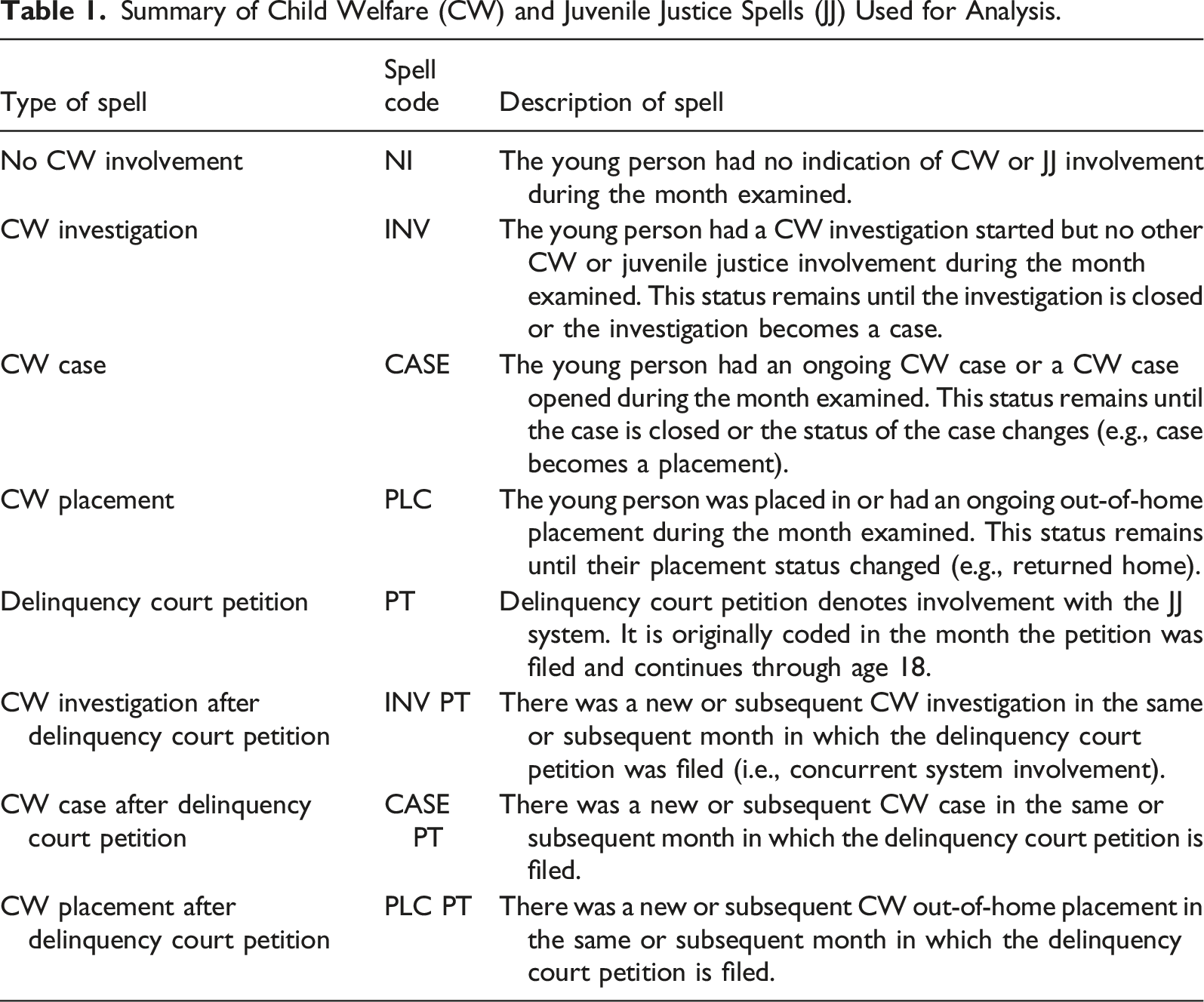
The current study used sequence analysis because it investigated dual system pathways based on episodic involvement with both the child welfare and juvenile justice systems. Although both latent class analysis and sequence analysis are used to empirically assign clusters, their approaches differ. Latent class analysis produces clusters (or classes) based on constellations of characteristics for individuals (e.g., demographic information such as race, gender, age group of individuals), whereas sequence analysis derives clusters using individual states or spells over time (e.g., enrollment in school from age 5 through 30; Hennig & Liao, 2010; Studer, 2013; Studer & Ritschard, 2016). Sequence analysis was deemed more appropriate for this study because it could assign clusters based on the timing, duration, and level of systems involvement. Sequence analysis was used to perform the following: 1. Encode each individual’s life trajectory into a sequence based on their involvement with child welfare or juvenile justice or both 2. Perform pair-wise comparisons of these sequences to quantify the similarities and differences between them 3. Group sequences into clusters based on similarity of patterns and select the optimal clustering model based on qualitative interpretability and quantitative measures of fit
Summary of Child Welfare (CW) and Juvenile Justice Spells (JJ) Used for Analysis.
Ten-Month Sequence of Spells for a 12-Year-Old Youth in the Study Cohort.

A distance metric was used to divide these life sequences into clusters by determining how similar or dissimilar the sequences were to one another. Pairwise distances between each cluster were calculated using optimal match (OM) spell distance, a variation of the OM distance calculation that is particularly sensitive to the order of spells (i.e., order of involvement with child welfare and juvenile justice; Studer, 2013; Studer & Ritschard, 2016). This process evaluated the similarity or dissimilarity between life trajectories of cohort youth based on the order of spells (e.g., an investigation prior to a juvenile court petition), depth of involvement for each spell (e.g., investigation or foster care placement), and duration of spells (e.g., a weeklong investigation or a year of foster care). A low OM spell distance between two sequences indicated that the two individuals had similar child welfare and juvenile justice experiences regarding the order, level, and duration of involvement, whereas a high OM spell distance would indicate the opposite.
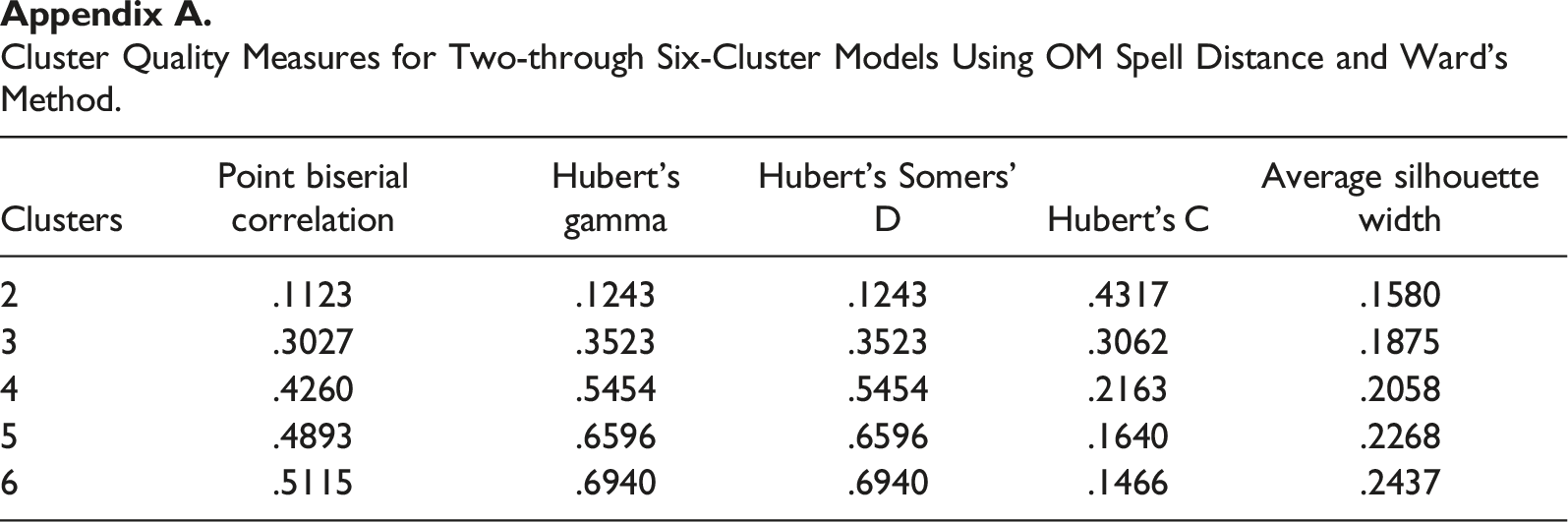
Sequences were compared using pairwise OM spell distances and grouped based on Ward’s clustering method (Murtagh & Legendre, 2014; Szekely & Rizzo, 2005; Ward, 1963). Ward’s clustering method is an algorithm that groups sequences while maximizing between-cluster dissimilarity and within-cluster similarity (i.e., clusters generated using this method would have a low average OM spell distance between sequences in each cluster and a high average OM spell distance between sequences across clusters). These measures verified the statistical strength of each cluster model (Appendix A). High scores for point biserial correlation, Hubert’s gamma, and Hubert’s Somers’ D demonstrate the model’s replicability. Higher average silhouette width score shows similarities of sequences in clusters and differences in sequences across clusters, indicating a robust model. A low Hubert’s C score indicates parity with the ideal number of clusters. Thus, cluster quality is associated with a local maxima (i.e., higher values) in the first four measures and local minima (i.e., lower values) in Hubert’s C (Hennig & Liao, 2010; Hubert & Arabie, 1985; Kaufman & Rousseeuw, 1990; Milligan & Cooper, 1985).
Additional Analysis and Measures
Following the identification of empirically derived pathways, descriptive statistics were used to compare child welfare experiences across the five pathways (i.e., clusters) and to compare the empirical pathways to the conceptually defined pathways presented by Herz, et al. (2019b) and Herz et al. (2021b). To test the magnitude of difference across descriptive statistics, a multinomial logit model, a form of regression used to estimate relationships between confounding variables and multiple categorical outcomes, was employed to identify any relationships between pathways and gender and race and ethnicity (Prindle et al., 2022). Poisson regression models, a type of general linear model, were then used to test whether juvenile justice experiences differed across pathways (McCulloch & Neuhaus, 2015). All models were estimated using Stata version 17.0. The measures used in these analyses were intentionally aligned with those used in Herz et al. (2021b) and are described in detail here.
Conceptually Defined Pathways
Overview of Conceptually Defined Pathways Used for Analysis. a
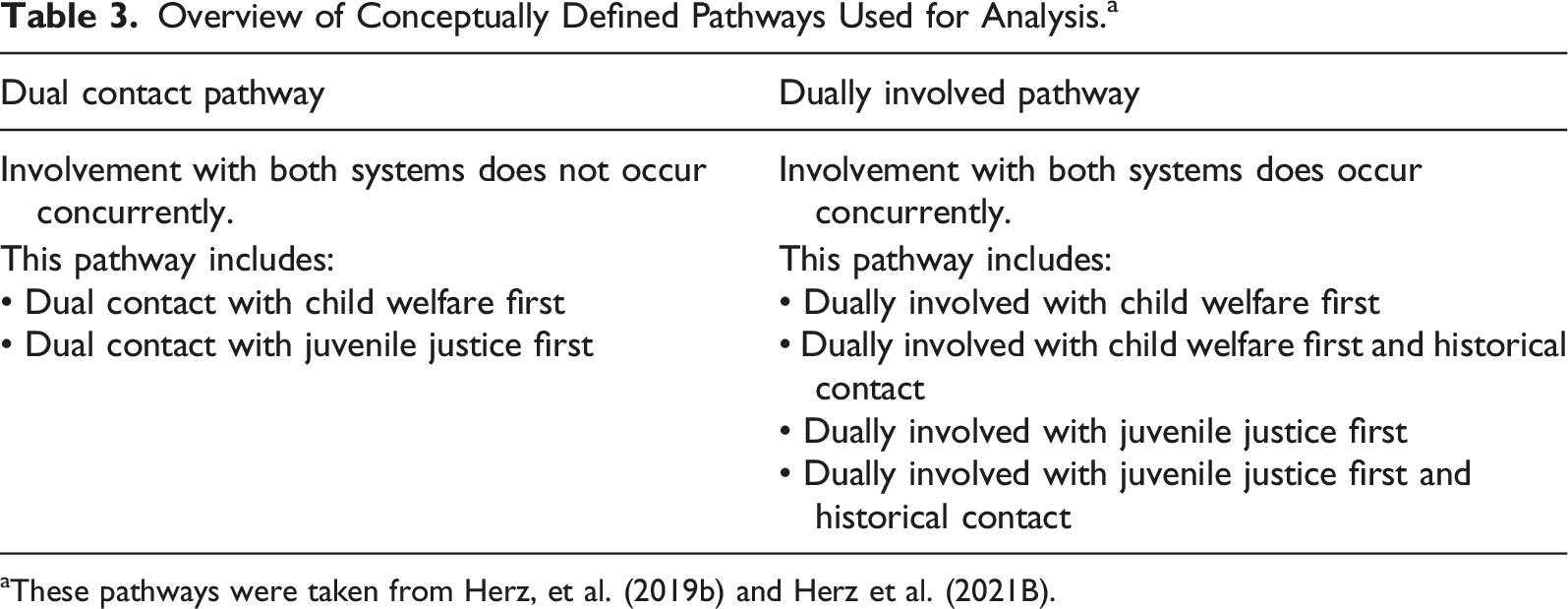
aThese pathways were taken from Herz, et al. (2019b) and Herz et al. (2021B).
This approach retains the timing of dual system involvement but loses the order (i.e., involvement occurred first through the child welfare system or juvenile justice system). Collapsing pathways in this way is supported by previous findings that 95% of young people with dual system involvement have contact with the child welfare system before the juvenile justice system (Herz, et al., 2019b, 2021b). For analysis, collapsed pathway categories were coded dichotomously (0 = dual contact, 1 = dual involvement).
Demographics
Gender was categorized dichotomously (0 = male, 1 = female) and race and ethnicity was divided into categories: White, Black, Hispanic, and other. “Other” race and ethnicity included smaller groups (e.g., Asian Pacific Islander and American Indian), individuals who identified as multiple races or ethnicities, and those with missing data. All categories are presented in the tables, but due to the small number of young people who fell into the “other” category, this category is not discussed in the results section.
Child Welfare Experiences
All youth in the study had at least one child welfare investigation. Dichotomous variables (coded 0 or 1) were used to capture whether youth had at least one case opening or out-of-home placement. Continuous variables captured age at first and last investigations, number of child welfare investigations, number of child welfare case openings, and number of out-of-home placements across all episodes of child welfare involvement between birth and case termination or the end of the study timeframe, December 31, 2017, whichever came first.
Juvenile Justice Experiences
A dichotomous variable (coded 0 or 1) was used to identify youth who received their first petition to delinquency court for an assault-related charge. Assault-related charges were the focus of this study because previous research indicated that assault charges are often more prevalent among dual system youth than single-system youth (Dannerbeck-Janku et al., 2014; Herrara & McCloskey, 2001; Herz et al., 2019), but little research has explored the relationship between assault-related charges and previous child welfare experiences or subsequent juvenile justice experiences. Assault-related charges included both felony and misdemeanor assaults. Dichotomous variables were used to capture whether youth were placed in pre-adjudication detention (i.e., placed in a secure facility following arrest and prior to court adjudication, coded as 1) or allowed to return home (coded as 0).
Dispositions ordered by the delinquency court judge were coded dichotomously to capture placement in an out-of-home setting. Youth placed in a group home or correctional setting at disposition (coded as 1) were compared to youth whose cases were dismissed or who received community supervision (coded as 0). Based on descriptive statistics, very few had their cases dismissed (< 3%) or were placed in a correctional setting (< 5%); thus, the comparison is largely between youth who were released into the community and those placed in group home settings.
Recidivism was defined as having a new arrest within 1 year after disposition (coded as 1; otherwise, coded as 0). Disposition is a preferred starting point for tracking recidivism because probation supervision and services do not formally begin until after disposition. Unfortunately, disposition hearing dates are not recorded consistently in the Los Angeles County Probation Department information system. Less than half of cohort youth (44.8%) had missing disposition dates, so an estimated disposition date was generated for these cases using the average time between petition and disposition dates. Although not a perfect measure of disposition, this estimated date is a more accurate measure of recidivism than the petition date because it allows probation intervention to begin. This imputation procedure also replicates the measure of recidivism used for this cohort in the Los Angeles study (Herz et al., 2021b).
Another limitation to the recidivism measure was the inability to capture time to recidivate (i.e., time in the community). Any measure of recidivism is dependent on time to recidivate; in other words, rearrests are only possible if a youth is in the community and not in a correctional placement. Time to recidivate could not be measured because probation data did not provide start and end dates for detention or correctional placements. Consequently, the one-year recidivism rate may be biased in at least two ways: (a) It may undercount recidivism because of the time dual system youth may have spent in detention or correctional placements; and (b) the bias itself may not be equally distributed across pathways if some young people in the cohort were more likely to be placed in a correctional environment than others. Because less than 5% of all dual system youth were placed in correctional placements, the error in the measure was assumed to be minimal.
Results
Empirically Derived Pathways
Sequence analysis procedures produced multiple cluster profiles. Both a qualitative understanding of dual system involvement and statistical tests were used to determine which profile offered the best fit to the data. First, each cluster profile was examined and compared to others. This visual comparison provided the opportunity to detect whether a particular cluster profile provided meaningful specificity to understand the relationship between spells. For example, a qualitative review of the two-cluster profile was less robust than the five-cluster profile, but the detail of the seven-cluster profile obfuscated dual system pathways. Although the six cluster had more favorable quantitative metrics, the gains between the five- and six-cluster models were not as great as the gains between the four- and five-cluster models (see Appendix A). The five-cluster model also aligned with qualitative interpretations related to practice, whereas the six-class model offered no notable gains in interpretability. These findings, combined with the qualitative interpretation, confirmed the five-cluster model as having the best balanced model complexity (i.e., parsimony), measures of model fit, and interpretability (see Appendix B for a visual representation of the five-cluster profile).
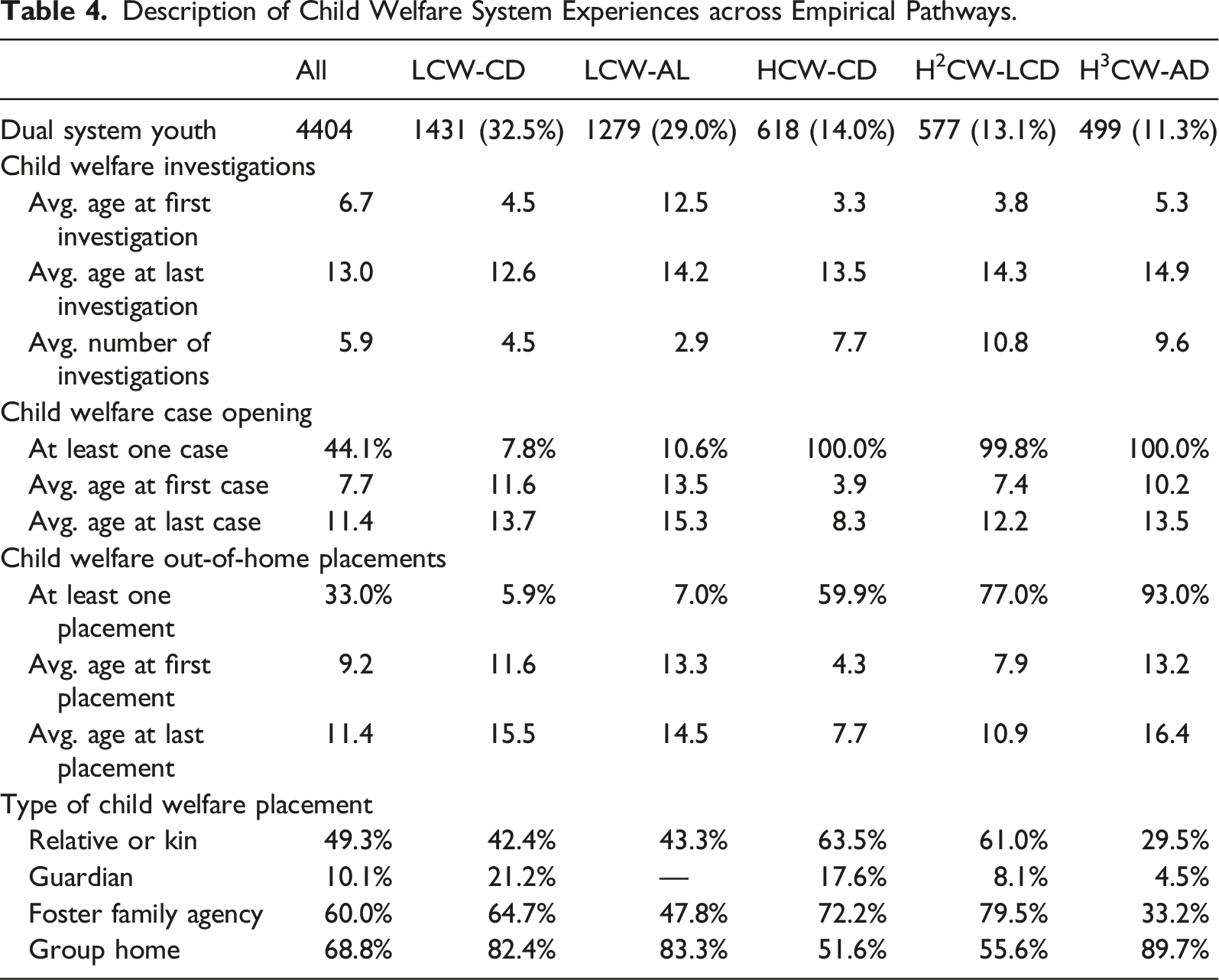
Description of Child Welfare System Experiences across Empirical Pathways.
Low Child Welfare Involvement—Childhood Dominant
The Low Child Welfare Involvement—Childhood Dominant (LCW-CD) pathway included 32.5% of all dual system youth, making it the largest pathway. Young people in this pathway received their first child welfare investigation at age 4.5 and their last investigation at age 12.6, on average. Very few of these youth had a case opened (7.8%) or experienced an out-of-home placement (5.9%). Cases and placements for this small percentage of youth began, on average, in early adolescence and ended in mid-adolescence. The small percentage of youth placed in out-of-home care experienced multiple placements and were placed in group homes (82.4%), foster family agencies (64.7%), with a relative (42.4%), and/or with a guardian (21.2%). Dual system youth in the LCW-CD pathway had less involvement in child welfare overall, and their system experience typically began and ended in childhood.
Low Child Welfare Involvement—Adolescent Limited
The second largest dual system pathway was Low Child Welfare Involvement—Adolescent Limited (LCW-AL; 29%). Investigations, cases, and placements began and ended, on average, in adolescence (12.5 years old to 15.3 years old). Not surprisingly, all youth who entered the juvenile justice system without previous child welfare contact and were subsequently referred to child welfare (n = 179) fell into this pathway. Like the LCW-CD pathway, few of these youth had a case opening (10.6%) or placement (7.0%); however, the rates for both experiences were slightly higher for these youth compared to their LCW-CD counterparts. When these youth were placed in out-of-home care, most were placed in a group home (83.3%), in a foster family agency (64.7%), or with a relative (43.4%). None was placed with a guardian. The LCW-AL cluster largely included adolescents who experienced lower levels of child welfare involvement and spent less time in care.
High Child Welfare Involvement—Childhood Dominant
The High Child Welfare Involvement—Childhood Dominant (HCW-CD) is the first of three pathways comprised of youth who experienced a deeper level of child welfare involvement. Fewer youth fell into this category (14.0%), but the average number of investigations and rates for both case openings and out-of-home care placements were substantially higher than for the low-involvement pathways. HCW-CD youth received 7.8 investigations between the ages of 3.3 and 13.3, on average, and all youth in this pathway had at least one case opening. Both first case openings and first out-of-home placements occurred approximately 6 months to 1 year, on average, after first investigations. The types of placement settings varied. Two thirds to three quarters of HCW-CD youth in out-of-home care were placed with relatives or foster family agencies, whereas about half of these youth experienced a group home placement and less than a quarter were placed with a guardian. Child welfare involvement for HCW-CD youth was long in duration and deep in experience. Case openings, on average, occurred quickly after investigations and were limited to early and middle childhood, with little spillover into adolescence.
Higher Child Welfare Involvement—Late Childhood Dominant
The Higher Child Welfare Involvement—Late Childhood Dominant (H2CW-LCD) pathway (13.1%) included youth who experienced slightly higher levels of child welfare involvement in late childhood and early adolescence. Although the average ages at first investigation and last investigation were similar between this pathway and HCW-CD, H2CW-LCD youth had a higher average number of investigations and were older at their first and last case openings and placement. All H2CW-LCD youth had at least one case opening, but unlike HCW-CD, 3 years elapsed, on average, between their first investigation and first case opening. A higher percentage of these youth were also placed in out-of-home care (77.0%). Youth placed in at least one out-of-home placement were most likely to experience a foster family agency (79.5%) or relative (61.0%) placement. More than half were placed in a group home (55.6%), whereas only 8.1% were placed with a guardian. Although the youth in this pathway had similar experiences as those in the HCW-CD pathway, they had more investigations, delayed case openings, and a higher likelihood of being placed in out-of-home care. H2CW-LCD youth were also older when they experienced case openings and placements.
Highest Child Welfare Involvement—Adolescent Dominant
The Highest Child Welfare Involvement—Adolescent Dominant (H3CW-AD) pathway is the smallest group (11.3%), but it included youth with the deepest levels of system involvement. Investigations began for youth in this pathway at age 5.3 and continued until age 14.9, on average. During this time, H3CW-AD youth had an average of 9.6 investigations, they all had a case opening, and nearly all experienced at least one out-of-home placement (93.0%). The average time between first investigation and first case opening was 5 years, and the average time between the first case opening and first placement was 3 years. The average age at last placement was the highest among all pathways at 16.4. Similar to all previous pathways, many youth experienced more than one type of placement. Most H3CW-AD youth were placed in a group home (89.7%), approximately a third were placed with a foster family agency or relative, and only 4.5% were placed with a guardian. This pathway is notably different from the others in that these youth entered the system in later childhood or adolescence, were often put in out-of-home care, and were almost always placed in a group home setting.
Relationship between Empirical Pathways and Conceptually Defined Pathways
Concordance Rates between Empirically Derived and Theoretically Defined Dual System Pathways (N = 4404).
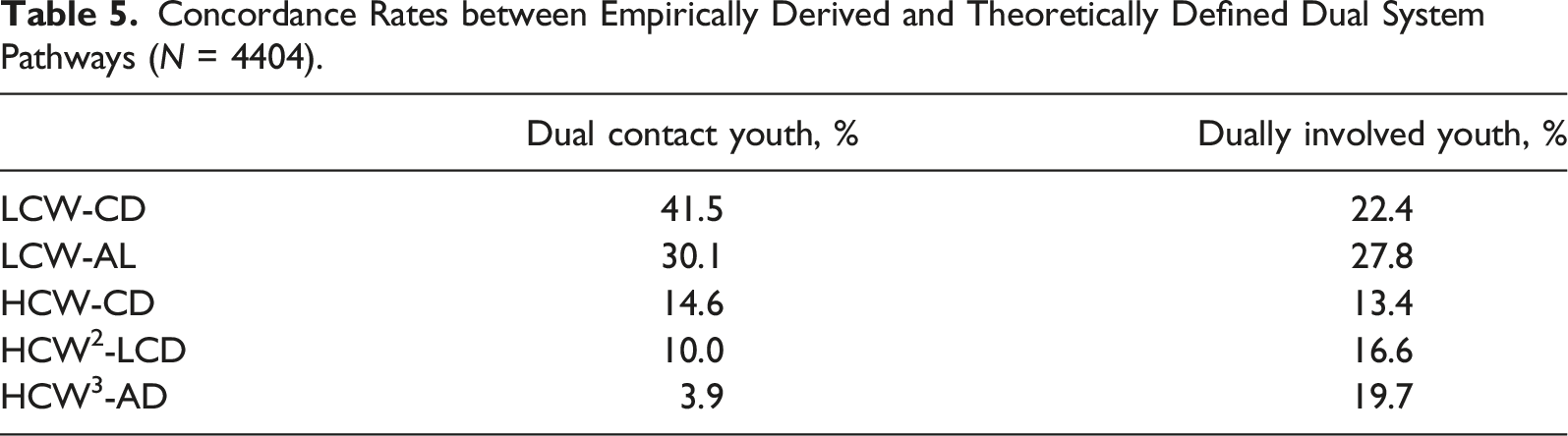
Dually involved youth (i.e., concurrent involvement) were also most likely to fall into the low child welfare involvement categories, but their concordance rate with the LCW-CD pathway was almost half of that of dual contact youth (22.5% vs. 41.5%, respectively). The concordance rate between dual contact and dually involved youth and the LCW-AL pathway, in contrast, was nearly identical (30.1% vs. 27.8%, respectively). Dually involved youth were equally likely to overlap with the LCW-CD (22.4%) and H3CW-AD (19.7%) pathways, but dual contact youth rarely overlapped with the H3CW-AD pathway (3.9%).
Comparing Demographics and Juvenile Justice Experiences across Pathways
Demographics
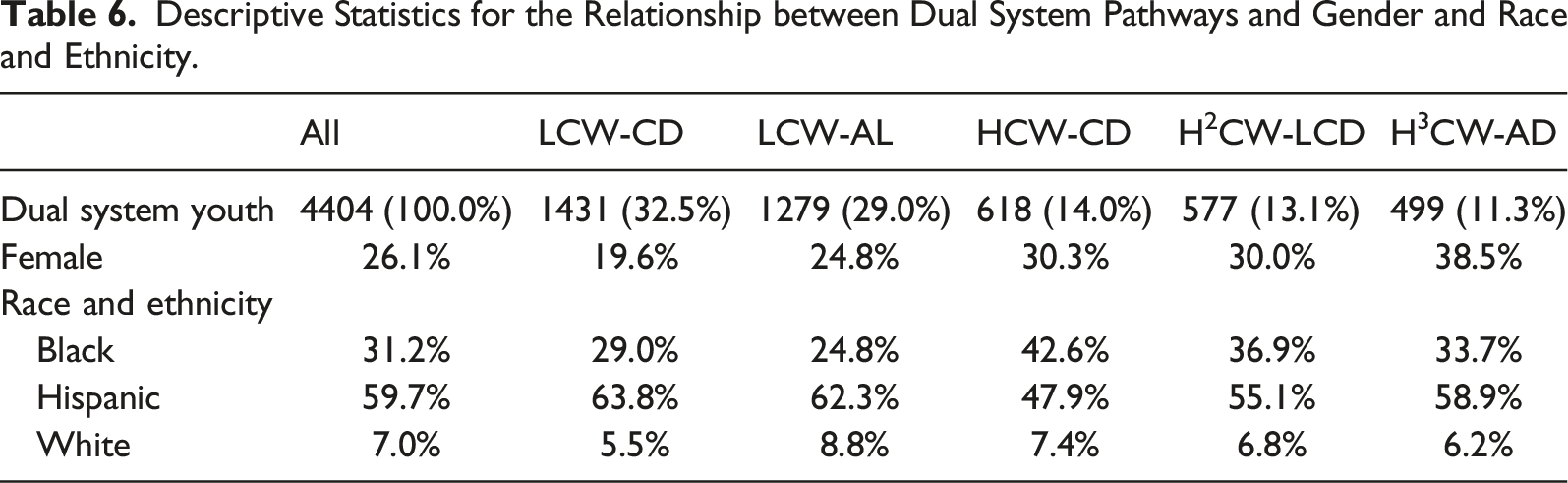
Descriptive Statistics for the Relationship between Dual System Pathways and Gender and Race and Ethnicity.
Multinomial Logistic Results for the Relationship between Gender, Race and Ethnicity, and Dual System Pathways. a
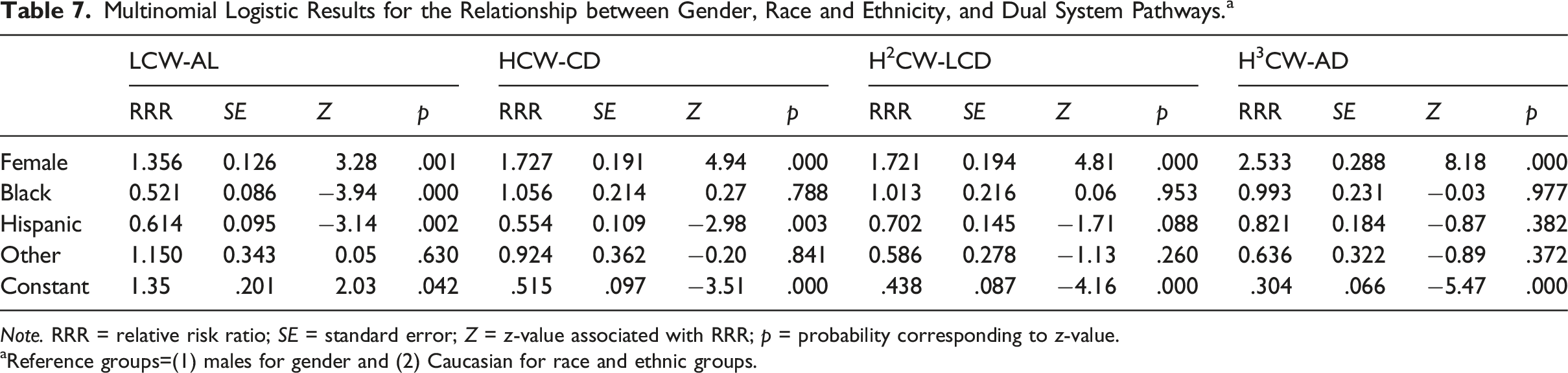
Note. RRR = relative risk ratio; SE = standard error; Z = z-value associated with RRR; p = probability corresponding to z-value.
aReference groups=(1) males for gender and (2) Caucasian for race and ethnic groups.
Juvenile Justice Experiences
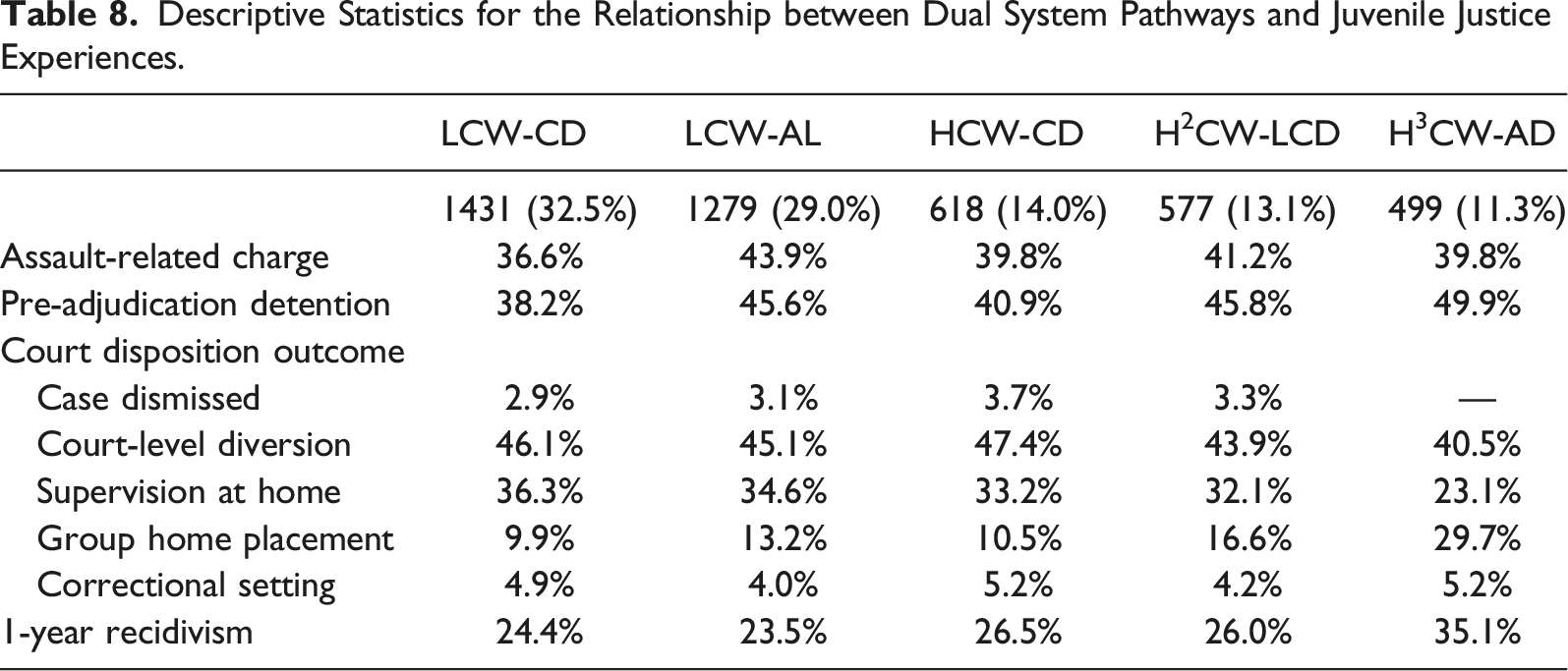
Descriptive Statistics for the Relationship between Dual System Pathways and Juvenile Justice Experiences.
Poisson Regression Model Results for the Relationship between Pathways, Demographics, and Assault Charge and Pre-Adjudication Detention. a
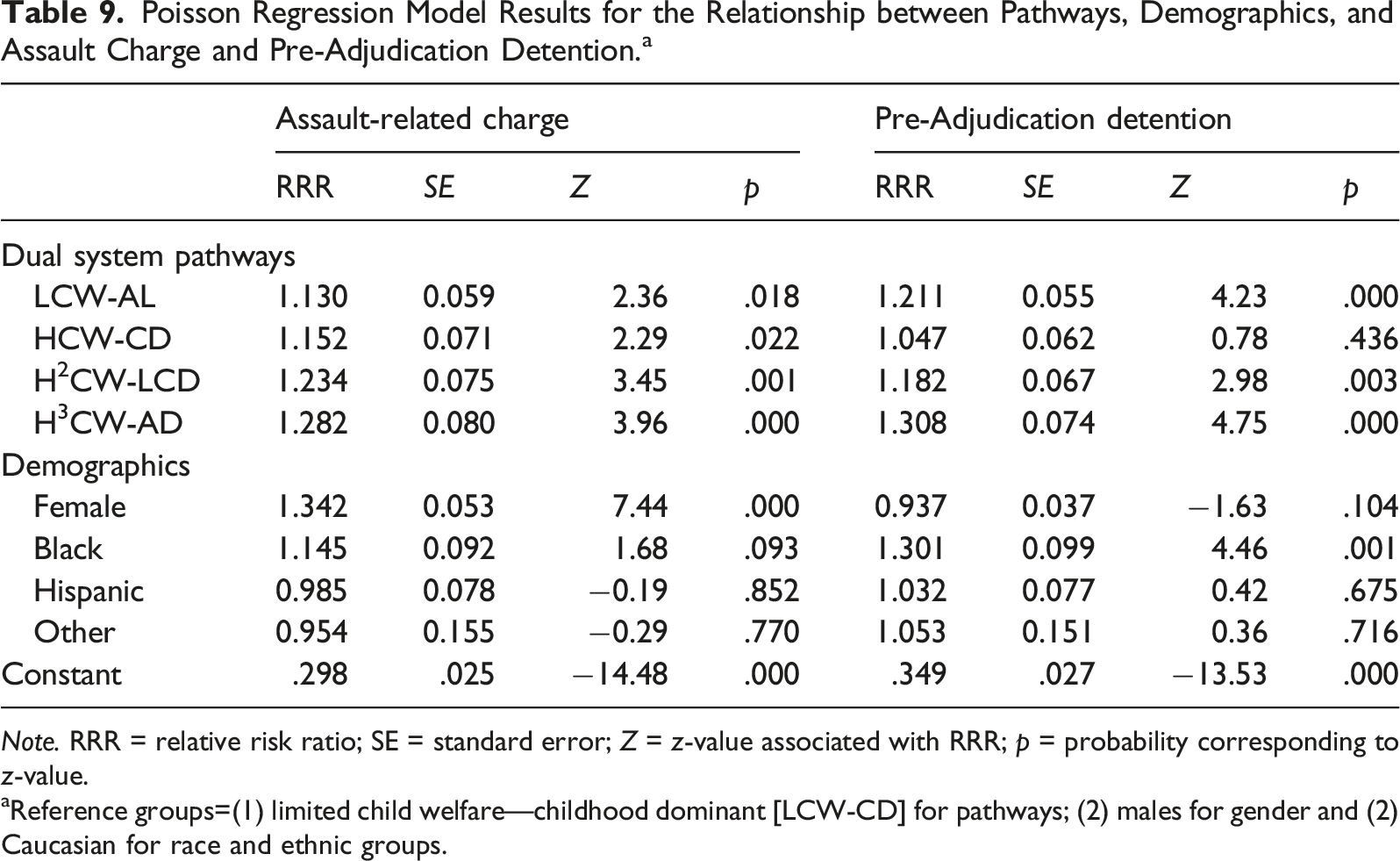
Note. RRR = relative risk ratio; SE = standard error; Z = z-value associated with RRR; p = probability corresponding to z-value.
aReference groups=(1) limited child welfare—childhood dominant [LCW-CD] for pathways; (2) males for gender and (2) Caucasian for race and ethnic groups.
Poisson Regression Model Results for the Relationship between Pathways, Demographics, and Court Disposition and Recidivism. a
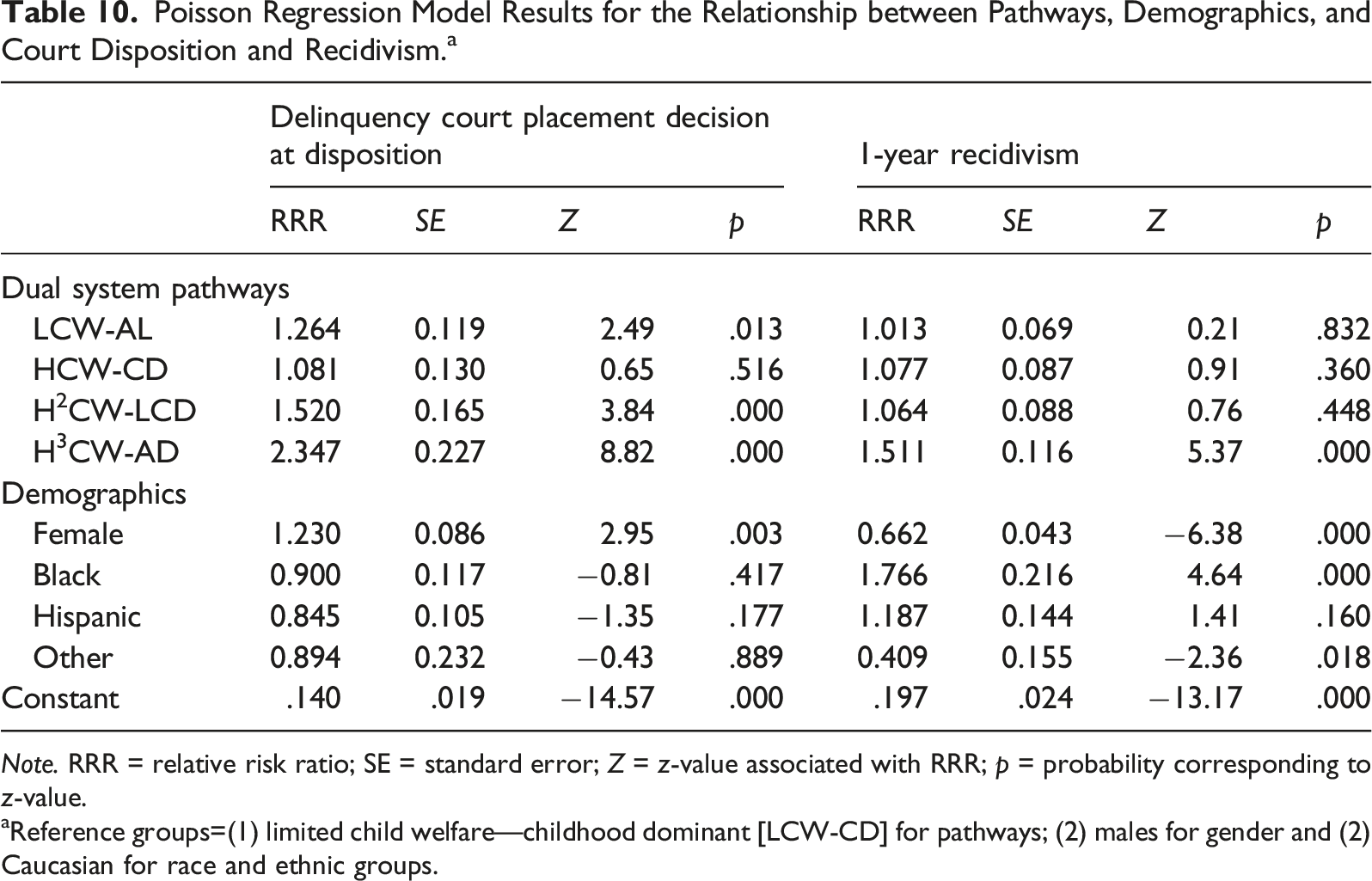
Note. RRR = relative risk ratio; SE = standard error; Z = z-value associated with RRR; p = probability corresponding to z-value.
aReference groups=(1) limited child welfare—childhood dominant [LCW-CD] for pathways; (2) males for gender and (2) Caucasian for race and ethnic groups.
Assault-Related Charges
Full model results in Table 9 show the relationship between dual system pathways and assault-related charges. Youth in all other pathways were more likely to have an assault-related charge than LCW-CD youth, and this likelihood increased as age and level of involvement increased. LCW-AL youth, for instance, were 13.0% more likely than LCW-CD youth to have an assault-related charge (p = .018), followed by 15.2% of HCW-CD youth (p = .022), 23.4% of H2CW-LCD youth (p = .001), and 28.2% of H3CW-AD youth (p < .001). In addition to the pathway effects, female youth were 34.2% more likely than male youth to have a charge related to an assault (p < .001). No statistically significant effect was found across racial and ethnic groups.
Pre-Adjudication Detention
A similar pattern was found for pre-adjudication detention, with one exception. HCW-CD and LCW-CD youth were equally likely to be detained. LCW-AL (21.1%, p < .001) and H2CW-LCD (18.2%, p = .003) youth were more likely than LCW-CD youth to be detained, but H3CW-AD youth had the highest likelihood of being detained (30.8%, p < .001). No significant effects were found for gender, but Black youth were 30.1% more likely than White youth to be detained (p < .001).
Placement at Disposition
The delinquency court was equally likely to place HCW-CD and LCW-CD youth in a group home or correctional setting (see Table 10), but the likelihood of placement increased with higher levels of child welfare involvement. LCW-AL youth, for example, were 26.4% more likely than LCW-CD youth to be placed (p = .013); this likelihood doubled for H2CW-LCD youth and increased five-fold for H3CW-AD youth (p < .000 for both findings). Regardless of pathways effects, female youth were 23% more likely to receive a placement from the delinquency court (p = .003), and no statistically significant effect was found for race and ethnicity.
Recidivism
Pathway differences largely disappeared when considering recidivism. Youth in all pathways except H3CW-AD were equally likely to recidivate as LCW-CD youth. H3CW-AD youth, in contrast, were 51.1% more likely than LCW-CD to have a new arrest within 1 year of disposition (p < .001). Black youth were also 76.6% more likely to be arrested again within 1 year of their court disposition (p = .001); no significant effect was found for gender.
Discussion
The current study sought to answer four questions: (a) Can meaningful dual system pathways be produced empirically; (b) to what extent do empirically derived pathways compare to conceptually defined pathways from previous research; (c) do youth demographics (i.e., race and ethnicity and gender) vary across empirically derived pathways; and (d) do juvenile justice experiences differ across empirical pathways? Study findings are insightful in several ways. Sequence analysis identified five clusters or pathways using child welfare and juvenile justice “spells” from linked administrative data. This finding reinforced the importance of using pathways in dual system research and improved the fit between system experiences and pathways.
When comparing empirical and conceptual pathways, dual contact youth were more likely to fall into the low child welfare involvement empirical pathways, whereas dually involved youth were more likely to fall in higher child welfare involvement pathways. Overall, empirical and conceptual pathways were strikingly similar in their consistent progression from low or limited child welfare involvement to high and deep child welfare involvement, despite the differing criteria. Conceptual pathways were based on the intersection of system involvement timing (i.e., nonconcurrent vs. concurrent contact) and the ordering of system involvement (i.e., which system involvement came first), whereas empirically derived pathways were distinguished by the level of child welfare involvement (i.e., length and depth of child welfare involvement) combined with age at first involvement with the child welfare system (i.e., developmental stage).
The relationship between the level of child welfare involvement and the developmental stage in which it occurred aligns with critical findings regarding the maltreatment–delinquency relationship produced by Thornberry and colleagues (C.A. Smith et al., 2005; Thornberry et al., 2001). In both studies, delinquency was more likely to occur among young people who experienced adolescent limited maltreatment or persistent maltreatment than among young people with childhood limited maltreatment, as measured by their involvement in the child welfare system. Similarly, in this study, cohort youth in the childhood-dominant pathways (LCW-CD and HCW-CD) had the least intrusive juvenile justice experiences compared to youth in pathways occurring in late childhood and adolescence (H2CW-LCH and H3CW-AD). This pattern highlights the importance of having adequate services and support systems for adolescents who have spent a significant amount of their lives in the child welfare system and young people who enter the child welfare system as adolescents.
Results regarding pathways and juvenile justice experiences highlighted the need to adequately serve adolescents and reduce the time spent in the child welfare system. Regression results consistently show that youth with higher child welfare involvement during adolescence were more likely than LCW-CD youth to have an assault-related charge, be detained, be placed in a group home, and recidivate with a new arrest within 1 year of disposition. Only two exceptions were found. First, HCW-CD youth were no more likely than LCW-CD youth to be detained after their arrest or placed in a group home or correctional setting at disposition. Second, the H3CW-AD pathway was the only group to have a higher likelihood of recidivism compared to LCW-CD, which replicates previous research related to dual system pathways (Herz, et al., 2019b; Herz et al., 2021b).
The relationship between gender and empirically derived pathways and juvenile justice experiences aligns with previous literature (Baidawi et al., 2021; Baglivio et al., 2015; Herz, et al., 2019b; Herz et al., 2021b; Kolivoski et al., 2014; Ryan et al., 2013). Not only were female youth twice as likely as male youth to be in the pathway with the deepest child welfare involvement (H3CW-AD), but they were also more likely to have assault-related charges and be placed in an out-of-home setting by the delinquency court. Several intersecting factors may help explain these findings. Girls with dual system involvement experience high levels of maltreatment, particularly sexual abuse, which is indicative of complex trauma (Anderson & Walerych, 2019). Experiencing high levels of complex trauma, particularly in the home, subsequently increases the likelihood of deeper child welfare involvement and placement in out-of-home settings. Left unaddressed, these experiences can lead to cumulative adversity through placement instability, placement in congregate care, and exposure to commercial sexual exploitation (Dierkhising et al., 2022; Herrara & McCloskey, 2001). Commercial sexual exploitation, in turn, exposes young people to more victimization and potentially increases their involvement in crime. Although these victims are no longer criminalized in California and many other states, commercial sexual exploitation often leads to involvement in assaults related to domestic violence and self-defense and property crimes related to meeting basic needs (Dierkhising et al., 2022; Landers et al., 2020).
Findings regarding race and ethnicity were more mixed than for gender. Even though descriptive statistics showed high levels of disproportionality for Black youth across pathways with increasing levels of child welfare involvement, multinomial regression only produced three significant findings for across race and ethnicity. Black and Hispanic youth were more likely to be in the LCW-CD pathway compared to the LCW-AL pathway, and Hispanic youth were more likely to be in the LCW-CD pathway than the HCW-CD pathway. Results for juvenile justice experiences, on the other hand, aligned with trends related to racial and ethnic disparities in the juvenile justice system. Black youth were more likely than White youth to be detained after arrest and recidivate. Disparities for Black youth are widely documented in juvenile justice research across all processing stages (Hockenberry, 2022). Explanations for these findings include implicit and systemic biases built into decision making, leading to a historical perception that Black youth present a higher risk to public safety than their White counterparts (Kolivoski, 2022). Higher recidivism rates for Black youth may also be related to higher levels of supervision in the system and differential levels of law enforcement in their neighborhoods (Jahn et al., 2022; Sampson & Lauritsen, 1997; H. C.A. Smith et al., 2009). Their involvement in both systems combined with the high use of congregate care placements for dual system youth arguably serve to amplify this relationship.
Implications for Research, Policy, and Practice
The empirical pathways identified in the current study contribute to a growing body of research demonstrating a link between increasing levels of child welfare involvement and deeper, more problematic juvenile justice-related experiences. These findings set the stage to enhance current theoretical explanations and stimulate new developmental ones (e.g., Vidal et al., 2019) to disrupt the relationship of maltreatment with delinquency and violence.
According to the findings in the current study, achieving safety early in the lives of children at risk of and exposed to maltreatment is critical, and sustaining safety and stability into adolescence is associated with decreased dual system involvement. Creating safety, stability, and connection to positive relationships is essential for the well-being of children, families, and communities. These relationships begin and are sustained in the community, not the child welfare system. The goal for all partners involved in this work should be to limit the length and depth of child welfare involvement; children should not languish in systems but rather connect with supportive systems in their extended families and communities. These goals require a community-based prevention strategy and network of providers to foster well-being for children, families, and communities (Sharkey et al., 2017).
Effective prevention requires proactively building resilience while reducing vulnerability to the risks that increase the likelihood of maltreatment and delinquency (Herz & Nash, 2021). The first step in a developing a prevention continuum is to provide community-based outreach and the necessary services to stabilize and strengthen safety in the family. When referrals occur, systems need to divert families to community-based services whenever appropriate. As part of the Los Angeles County Office of Child Protection’s countywide prevention plan, for example, the Department of Children and Family Services’ child protection hotline makes referrals to community-based agencies as part of the Hotline to Helpline program to divert families away from the child welfare system (see Herz & Nash, 2021).
For families that require more intervention, a referral to the child welfare system may be appropriate, but whenever possible, children and young people should remain with families and the delivery of services should be based in their communities. Out-of-home placements should be used sparingly, with priority given to supporting stability for children in the home or with relatives, in their schools, and in their communities. The Family First Prevention Services Act of 2018 provides funding aimed at preventing children from entering foster care and ensures that children who enter care are placed in the least restrictive out-of-home care settings with a priority placed on family-like settings (Children’s Defense Fund, 2018). Adolescents are more likely to be placed in congregate care and experience placement instability compared with younger children in care, so this legislation offers better support young people who are at increased risk of dual system involvement. If families can be better supported with prevention services and the extent of child welfare system involvement is reduced, there is significant potential to prevent future justice system involvement.
When youth have contact with law enforcement, it is important to divert them from the juvenile justice system and provide directed programming using the fundamentals of positive youth development and transformative justice programming, such as restorative justice and mediation (Osher et al., 2020). Unfortunately, some youth will ultimately enter the juvenile justice system. When this occurs, the child welfare and juvenile justice systems must communicate and collaborate to (a) assess the role of trauma and cumulative adversity in the situation (Baidawi & Sheehan, 2019; Dierkhising et al., 2022; Vidal et al., 2019); (b) understand the behavior in relationship to those experiences and current situational circumstances; (c) limit the use of (and time spent in) out-of-home care settings and ensure programming matches needs (Dierkhising et al., 2020; 2022); and (d) connect the young person to credible messengers with lived experience for guidance and support (Herz, 2020).
To contribute to the well-being of youth and families, both systems must recognize that dual system involvement is not limited to a small proportion of youth and prioritize cross-system collaboration as a defining practice for child welfare and juvenile justice interactions, decision making, and services in trauma-informed and healing-centered frameworks (Ginwright, 2018; Herz & Dierkhising, 2019; Soto-Aponte, 2021; Wright et al., 2017). True cross-system collaboration requires a collective commitment to implement policies and procedures that build promotive ecologies for children and families in their communities rather than toxic ones within systems (Akiva et al., 2022).
Dual system pathway research also informs and helps improve cross-system practice models already shown to be effective. The Center for Justice Reform’s Crossover Youth Practice Model, for example, has been used in more than 100 jurisdictions and states nationwide to improve communication and collaboration for dual system young people and generated positive results (Haight et al., 2016; Wright et al., 2020). The model, however, currently focuses on improving cross-systems work for youth simultaneously involved in both systems (i.e., dually involved youth). Findings from this study and others can guide the center’s ongoing development and expansion of the model to include policies and practices targeting earlier, preventive interventions to further enhance its impact (Miller & Pilnik, 2021).
Study Limitations and Future Research
The current study expanded previous dual system research but is not without its limitations. A retrospective approach is limited in that it does not have the capacity to understand pathways relative to young people in the child welfare system who did not cross into the juvenile justice system. Consequently, the conclusions from this study are instructive but only apply to those with dual system involvement. To improve on this study, sequence analysis should be applied to a prospective cohort of children with child welfare involvement to better compare the factors that contribute to crossing into delinquency. Replicating this approach with a child welfare birth cohort would also better inform theoretical explanations of the maltreatment–delinquency relationship.
Although linking administrative data represents a strong approach to establishing the rates of dual system involvement and exploring pathways, relying on administrative data is inadequate for fully capturing the situational circumstances that led to system involvement and a deeper understanding of system experiences. For example, the administrative data used for this study did not include information on family history or child’s performance at school, learning ability, or history of trauma or mental health and substance abuse problems (i.e., need for services). It also did not include information on the services provided and quality of placements received. Without this information, a substantial part of the youth’s story and experiences is absent. Because administrative data rarely include this information consistently, future research should conduct interviews and focus groups with young people from each pathway to better understand their lived experiences and prioritize their ideas on how to improve system responses and services.
Increasingly, it appears that gender and race plays a particularly important role in dual system experiences, but it has not been fully explored (Baidawi et al., 2021; Herz, et al., 2019b, 2021b; Kolivoski, 2022). It is particularly important to consider the intersectionality of identity, which was beyond the scope of the current study. Few studies have examined the intersection of race and ethnicity and gender in dual system populations, but initial studies demonstrated that they are closely linked and may be related to implicit biases against young Black girls (Goodkind et al., 2013; Herz et al., 2021a; Epstein et al., 2017; Kolivoski, 2022). The significance of intersectionality and the interaction between different identities and system experiences also necessitates the consideration of sexual orientation and gender identity. Initial studies have documented high levels of disparity for LGBTQ+ young people, but far more research is needed (Irvine & Canfield, 2016). Unfortunately, administrative data typically lack indicators of sexual orientation and gender identity (SOGI), but future research can and should further explore the intersectionality of gender, race and ethnicity, and SOGI for dual system youth. Again, prioritizing youth voices in this research using qualitative methods and youth-led methods is essential to better understand the impact and consequences of these issues.
Finally, the use of linked administrative data and pathways analysis should be replicated in as many different geographical locations as possible. Although imperfect, replication remains the best way to establish national estimates of dual system involvement and identify patterns that may exist for young people involved in both systems regardless of where they live (Herz & Dierkhising, 2019).
Conclusion
Overall, the findings of this study further emphasize the expansiveness and complexity of dual system involvement. Research to date has established a body of work documenting the extent of dual system involvement and clear patterns of who dual system youth are and the nature of their experiences. This study combined with others exploring the pathways to dual and multisystem involvement represents a new frontier in dual system involvement research—a next phase of dual system exploration that not only informs systems on how to help without harming the children and families they serve but also holds systems accountable for fostering the conditions children and families need to thrive.
Cluster Quality Measures for Two-through Six-Cluster Models Using OM Spell Distance and Ward’s Method.
Visualization of Five-Cluster Model Showing Proportion of Individuals with Child Welfare or Juvenile Justice Involvement by Each Month of Life Since Birth.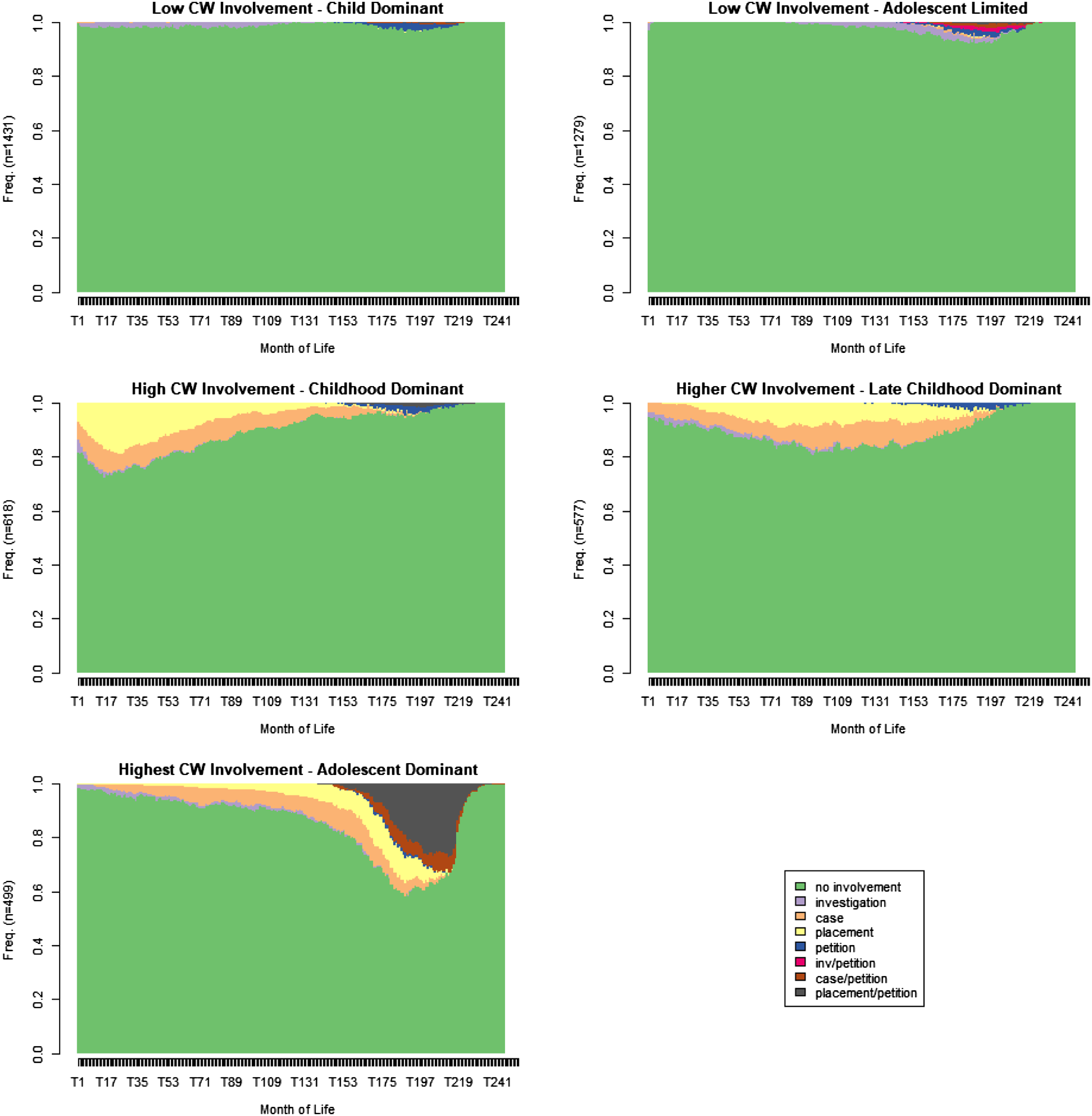
Footnotes
Acknowledgments
This project was possible thanks to an ongoing collaboration with colleagues at the Los Angeles County Probation Department and the California Department of Social Services. Although the findings reported and conclusions drawn from these data are solely those of the authors and should not be considered to reflect those of any agency of the County or California government, this analysis would not be possible without the partnership of the Departments, reflecting the ongoing commitment to data-driven program and policy development. Colleagues, particularly Huy Tran Nghiem, MS, at the Children’s Data Network contributed greatly to this work by conducting the probabilistic linkage. Finally, we wish to thank Scott Koch, Caitlin Scott, and Miriha Austin and the Reissa Foundation for investments in generating new knowledge through administrative data.
Declaration of conflicting interests
The author(s) declared no potential conflicts of interest with respect to the research, authorship, and/or publication of this article.
Funding
Project funding was generously granted by the Reissa Foundation to the Children’s Data Network. The Children’s Data Network also receives essential infrastructure funding from First 5 LA, the Conrad N. Hilton Foundation, and the Heising-Simons Foundation.
