







Abstract
This study investigated the relationship between parenting practices, childhood maltreatment (CM), callous-unemotional (CU) traits, and conduct disorder (CD) symptoms among 275 detained adolescent boys (Mage = 16.96). CU traits, and paternal and maternal parenting were assessed via self-report questionnaires. A diagnostic interview was used to assess CD symptoms. Regression analyses revealed that harsh parenting and physical maltreatment were positively associated with CU traits after controlling for CD symptoms, whereas warm parenting was significantly negatively related to CU traits. After controlling for the overlap between parenting and CM, only parenting was significantly positively related to CU traits. Findings, finally, showed that CU traits did not moderate the link between parenting (or CM) and CD symptoms. The study underscores that it is important to consider experiences with parenting practices and CM in detained adolescents with heightened CU traits.
Keywords
Introduction
Children and adolescents with conduct problems (CP) are heterogenous in etiological processes, severity, and prognosis (Fairchild et al., 2019; Moul et al., 2018), which may explain the great variability in treatment responsiveness (Perlstein et al., 2023). Evidence suggests that callous-unemotional (CU) traits are helpful to designate a subgroup of children and adolescents with CP who are more etiologically homogeneous. CU traits in youth are similar to the affective features of adult psychopathy and are commonly characterized by deficient empathy and guilt, insensitivity to others’ feelings, shallow emotions, and sometimes also by a lack of concern about performance in important activities, such as education or work (e.g., Andershed et al., 2002; Colins et al., 2014; Frick & Viding, 2009). There is some evidence that criminal justice-involved youth with CP and CU traits, are, for example, more likely to engage in aggression (e.g., Colins, 2021), to have an earlier onset of antisocial behavior (e.g., Colins et al., 2017a), to show anomalies in emotion processing (e.g., Aghajani et al., 2021), and to exhibit lower levels of treatment engagement (e.g. Bisback et al., 2022), relative to their counterparts with CP only. Hence, CU traits seem important for designating a clinically important subtype of CP in children and adolescent (e.g. APA, 2013; Frick, 2009). Findings from multiple studies support the viability of CU traits for subtyping CP, but significant limitations have also been reported (e.g. Colins et al., 2020; Colins et al., 2021; Frick et al., 2014), including work on the association between parenting, CU traits, and CP (Waller et al., 2013).
Parenting appears a critical risk factor in the etiology (Frick et al., 2014) and treatment of CP that co-occur with CU traits (e.g. Fleming et al., 2022; Waller, et al., 2015a). Yet, integration of research is difficult because markedly different research questions have been tested in varying samples and using different designs (Waller et al., 2013). Moreover, the bulk of studies focused on (early) childhood, with relatively few studies that examined associations between parenting, CU traits and CP (or other indices of antisocial behavior; e.g. Goagoses & Schipper, 2021) among adolescents. While (early) childhood is a particularly critical developmental period to study the role that parents play in the development and maintenance of CU traits and CP (e.g. Waller & Hyde, 2017), parenting in adolescence remains important (e.g. Rothenberg et al., 2020) and has been associated with CU traits (e.g. Kimonis, et al., 2013a) and CP (e.g. Pinquart, 2017) in adolescents. Furthermore, preliminary evidence tentatively indicates that intervention programs for adolescents with a parenting component can lead to a reduction in CU traits (Perlstein et al., 2023), which is encouraging given CU traits in adolescence have been associated with poor developmental outcomes (e.g. Goulter et al., 2020). Hence, research is needed that scrutinizes if adolescents with CP and CU traits differ in their exposure to parenting practices from their counterparts without CU traits. Furthermore, associations between parenting, CU traits, and CP rarely have been examined in adolescents with clinically significant CP or severely antisocial behavior (but see Pauli et al., 2021). Therefore, work with high-risk youth is required to test if parenting is related to CU traits and if parenting is related to CP at different levels of CU traits (Waller et al., 2013).
Some research with criminal justice-involved adolescents showed that maternal and paternal warmth were negatively associated with CU traits (Bisby et al., 2017; Chinchilla & Kosson, 2016; Kimonis, et al., 2013a; Vaughan et al., 2023), whilst harsh parenting was not significantly associated to CU traits (Edens et al., 2007). However, these studies did not control for CP, rendering it unclear if warm parenting is associated with CU traits, independent of CP (Clark & Frick, 2018). There is one notable exception, though, showing that harsh and warm parenting in early childhood were not or inversely related to adolescent CU traits after controlling for CP, respectively (Goulter et al., 2020). Some studies also tested the theory that parenting is only related to CP in individuals without CU traits (Wootton et al., 1997). Findings confirmed this moderating effect of CU traits among detained youth, though only for negative parenting (Edens et al., 2007; Kimonis, et al., 2013a), not for warm parenting (Chinchilla & Kosson, 2016). Yet, findings are mixed since warm parenting have also been shown to be inversely associated with CP for individuals with higher levels of CU traits (e.g. Clark & Frick, 2018; Pauli et al., 2021).
This Study
The present study will substantially contribute to the literature on parenting, CU traits, and CP in various ways. First, zero and independent associations and moderator effects will be examined in a relatively large sample of detained male adolescents, who exhibit high levels of significant CP (Colins et al., 2010). Few studies included warm and harsh parenting in the same model. This is unfortunate because relations of harsh and warm parenting on CU traits could be distinct after accounting for their correlation (e.g.Waller et al., 2012), perhaps since parental harshness partially overlaps with low parental warmth (Waller & Hyde, 2017). Thus, this study will examine unique effects of measures of harsh and warm parenting. In addition, while fathers may have a larger effect than mothers on the development of delinquency in their offspring (e.g. Hoeve et al., 2009; Roetman et al., 2019), few studies tested if maternal and parental parenting practices are differently related to CU traits, as suggested in prior work (e.g. Pasalich et al., 2011). Therefore, we will also differentiate between maternal and paternal harsh and warm parenting. Finally, childhood abuse and neglect are highly prevalent among detained youth (Vahl et al., 2016), moderately related to CU traits (Todorov et al., 2023), and to some extent overlapping with harsh and low warm parenting (e.g. Bisby et al., 2017; Gao et al., 2010). Importantly, there is some evidence that parenting experiences of detained youth relate to CU traits beyond the influence of childhood maltreatment (e.g. Kimonis, et al., 2013b). Therefore, the study will also examine if harsh and warm parenting relates to CU traits after controlling for maltreatment.
Hypotheses
Based on prior work, we first expected that parental warmth would be significantly negatively associated with CU traits, but that no significant associations will emerge between parental harshness and CU traits (e.g. Edens et al., 2007; Goagoses & Schipper, 2021; Goulter et al., 2020). It was also expected that childhood trauma will be significantly positively associated with CU traits (Todorov et al., 2023). Notwithstanding the mixed findings (e.g. Gao et al., 2010; Vaughan et al., 2021), we tentatively expected different associations for maternal and paternal parenting (e.g. Pasalich et al., 2011). In line with some prior work (Bisby et al., 2017; Kimonis, et al., 2013a), it is expected that association between parenting practices and CU traits will remain after controlling for childhood maltreatment. In line with theory and recent work (Clark & Frick, 2018), we finally expected that harsh parenting will be positively related to CD symptoms at low levels of CU traits, while warm parenting will be inversely related to CD symptoms at high levels of CU traits.
Method
Participants
Between August 2019 and December 2021, criminal justice-involved boys were recruited from two youth detention centers (YDCs) in Flanders. Detained boys were eligible to participate in the study if they were 16 or 17 years old, had no problems that could jeopardize their wellbeing or participation in the study (see Procedure), and had sufficient cognitive abilities and knowledge of Dutch. The latter two criteria were based upon both staff and interviewers’ assessment of the boys’ ability to participate in Dutch conversations and to read and comprehend the informed consent form. A total of 468 unique 16- and 17-year-old boys were detained in the YDC at the time of recruitment (COVID19 lockdown between March and June 2020 not included), of which 50 were not eligible according to our inclusion criteria. Of the 418 eligible boys, 13 boys could not be approached because we did not receive written consent from the psychologist on time (see Procedure), 57 were not approached in time to participate in the study, and 21 refused to participate, resulting in a sample size of 327. Data for one participant were deleted afterward upon request from the parents (see Procedure), resulting in a total sample size of 326 boys. The mean age at baseline was 17.0 years (SD = 0.6 years), and 40% were of Belgian origin (i.e., both parents were of Belgian nationality) as defined by the Belgian Statistical Office. Because the current study focusses on paternal and maternal experiences, we only included participants who reported to (have) had both a mother and a father figure (N = 275; Mage = 16.95), and, therefore, excluded boys who only had a mother figure (n = 38; 11.7%) or a father figure (n = 3; 0.9%). For the 275 boys included in this study, the majority of the mother figures most often was their biological mother (n = 266; 96.7%), followed by foster mother (n = 4; 1.5%), female family member (e.g. grandmother or aunt; n = 2; 0.7%) or other female caretaker (n = 3; 1.0%). Most of the father figures were biological father (n = 257; 93.5%), followed by stepfather (n = 7; 2.5%); foster/adoption father (n = 7; 2.5%) or male family members and caretakers (e.g. grandfather or uncle, n = 3; 1.1%), one participant had two mother figures and stated that one of the females was his father figure. Based on the YDC file information 69.0 % of the 275 boys had at least one violent arrest charge, with assault being the most common violent arrest charge (44.1%), followed by robbery (43.9%), threats (27.9%), sexual hands-on and hands-off offenses (7.6%), attempted homicide (5.0%), deprivation of liberty (3.1%) and homicide (1.1%). Furthermore, 35.6% boys have been detained in the past.
Procedure
The YDC psychologist from each eligible participant was first asked for written consent to approach the boy. Next, eligible participants were approached and received oral and written information about the aims, content, and duration of the study, though only when their psychologist provided written consent. They were assured their information would be treated confidentially and that refusal to participate would not affect their judicial status or stay in the YDC. Written informed consent was given by the participants before starting the assessment protocol. The detained boys’ parents/caretaker received a letter with information about the aims and practical aspects of the study and could decline participation (i.e., passive informed consent). Participants were assessed in a private area in the YDC by a PhD-student and received a small financial compensation. This study was approved by the institutional review board of Ghent University (2018/37) and the board of the YDC centers.
Measures
Callous-Unemotional Traits
CU traits were measured through the Youth Psychopathic traits Inventory (YPI), a self-report questionnaire that is based on the three-factor model of psychopathy (Andershed et al., 2002; Cooke & Michie, 2001). Its 50 items are organized into 10 subscales, with five items in each subscale. Each item is scored on a 4-point Likert-type scale ranging from 1 (does not apply at all) to 4 (applies very well). In this study, only the CU dimension was used, which includes three subscales: Callousness (e.g., “I think that crying is a sign of weakness, even if no one sees you”); Unemotionality (e.g., “I usually feel calm when other people are scared”); and Remorselessness (e.g., “To feel guilty and remorseful about things you have done that have hurt other people is a sign of weakness”). The psychometric qualities of the YPI hold in various settings, including detained boys (Colins et al., 2017b). In this study, Cronbach’s alpha (α) coefficients and mean interitem correlations (MICs) for the YPI CU score (sum of the 15 items) were good (α = .80) and acceptable (MIC = .22), which is beneficial given a key limitation in many studies on the parenting-CU link is the low internal consistency for CU measures (Waller et al., 2013). 1
Conduct Problems
Conduct problems were defined as conduct disorder (CD) symptoms and were assessed via the Schedule of Affective Disorders and Schizophrenia for School-Aged Children Present and Lifetime Version (K-SADS–PL) CD Symptoms (Kaufman et al., 1997). These K-SADS diagnostic interviews were carried out by the three doctoral researchers, of whom two were certified K-SADS interviewers and had ample clinical and forensic experience. To facilitate scoring of the information derived through interviews, file information was also collected. All interviews were audiotaped. Each of the 15 CD symptoms was first scored by the researcher who performed the interview as well as independently by a second researcher (0 = absent, 1 = present). Next, in case of discrepancies in the original scores, the interview and collateral information were reexamined and a “consensus score” was determined by both raters. The 15 symptoms were summed to calculate the total number of CD symptoms (for more details, see: Colins et al., 2023).
Parenting
Measures of parenting that have been used in prior work on the topic used a restricted number of items and were hallmarked by low internal consistency (Waller, Gardner, & Hyde, 2013). To improve the assessment of harsh and warm parenting through youth self-report, we selected eight items about harsh parenting and eight items about warm parenting from existing questionnaires and where needed, modified some items to enhance readability of the items, rephrased some items into a self-report, and changed the scoring format so that each item needs to be rated on a 5-point Likert scale ranging from 1 (never) to 5 (very often). The adolescent first received written information that the questions were about their childhood and how often they have occurred. If there was a father and/or a mother figure, the adolescent was then asked to complete 16 questions for each available parental figure separately. The 16 items can be retrieved from Supplement 1, available online. In the current sample, internal consistency of harsh parenting (α: mother/father = .90/.94; MIC: mother/father = .53/.65) and warm parenting (α: mother/father = .90/.94; MIC: mother/father = .57/.68) scores are excellent (α) and good (MIC). Confirmatory factor analysis confirmed that the unidimensionality for harsh and warm parenting scores. 2
Maltreatment
Participants also reported about maltreatment experiences by means of the well-established Childhood Trauma Questionnaire − Short Form (CTQ-SF; (Bernstein et al., 2003). Items are scored using a 5-point scale that is structured to reflect the frequency of maltreatment experiences, ranging from 1 (never) to 5 (very often true). The CTQ has five empirically derived scales (with five items each), physical, sexual, and emotional abuse, and physical and emotional neglect. The Dutch version’s sexual abuse scale includes four instead of five items, due to an ambiguity of one item (Thombs et al., 2009). The items were summed to create the five subscale scores, where these subscale scores were also summed to calculate total maltreatment, emotional maltreatment (sum of emotion abuse and emotional neglect), and physical maltreatment (sum of physical abuse and physical neglect). The internal consistency of the scores is good to excellent in terms of α (except for physical neglect) and at least acceptable in term of MIC. Specifically, α/MIC for the scores were: emotional abuse = .81/.46; physical abuse = .83/.51; sexual abuse = .86/.63; emotional neglect = .85/.53; physical neglect = .61/.26; emotional maltreatment = .87/.40; physical maltreatment: .80/.30 and total maltreatment = .90/.27.
Data-Analyses
Zero-order correlations between all main study variables were examined and interpreted as: weak (<.30); moderate (.30–.50); and strong (≥.50) (Cohen, 1988). A series of simple (and multiple) regression analyses were performed, testing associations between parenting or maltreatment and CU traits, before (unadjusted model) and after (adjusted model) adjusting for the number of CD symptoms. Main and interaction effects between parenting variables and CU traits and between maltreatment and CU traits were examined next in a series of multiple regression models, and significant interaction effects were probed. In addition, a series of multiple regression analyses were performed that simultaneously included multiple parenting variables as independent variables, allow us to test the unique and interaction effects of (maternal and paternal) harsh and warm parenting. Similarly, the unique effects of multiple maltreatment variables (e.g., emotional and physical maltreatment) and CU traits were examined in a series of multiple regression models. We also repeated these latter two analyses whilst simultaneously including both parenting and maltreatment variables, to test unique and interaction effects of parenting and maltreatment variables in relation to CU traits. Finally, to test if the relationship between parenting (or maltreatment) and conduct problems is moderated by CU traits, we ran a series of multiple regression analyses that included CU traits, parenting (or maltreatment) features, along with their multiplicative interaction terms. When probing significant interaction effects in any of the aforesaid analyses, independent variables were first mean centered (Dawson, 2014). SPSS 27 was used for all, unless otherwise specified, analyses, with p < .05 as the standard for statistical significance. Unless otherwise specified, all assumptions for (multiple) regression analyses (i.e., linearity, homoscedasticity, normality of residuals, and multicollinearity) were met.
Results
Descriptive Information and Correlations
Pearson’s Correlations Between Parenting and Maltreatment Variables and Number of Conduct Disorder Symptoms (N = 275).
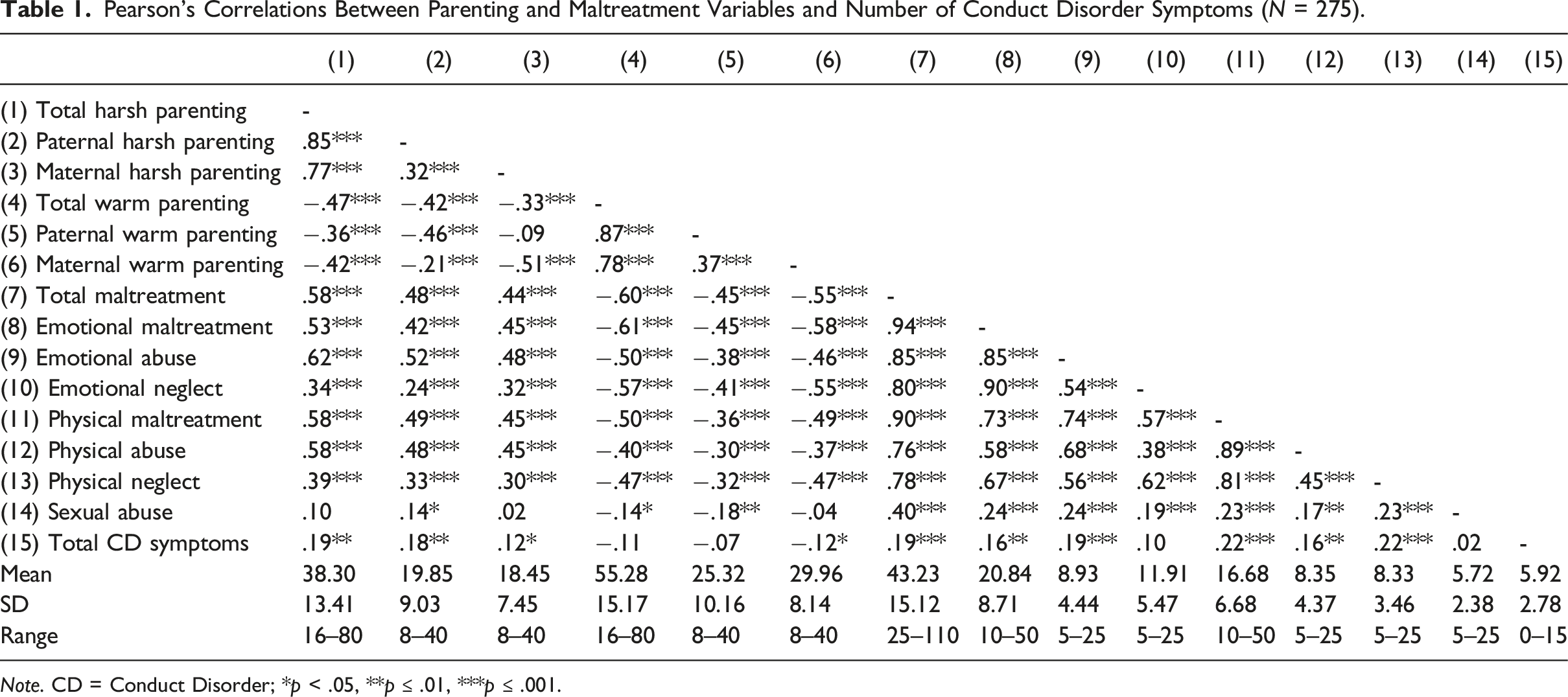
Note. CD = Conduct Disorder; *p < .05, **p ≤ .01, ***p ≤ .001.
Parenting Features in Relation to CU Traits: Main and Interaction Effects
Associations Between Singular Environmental Features and Callous-Unemotional Traits Unadjusted and Adjusted for Number of Conduct Disorder Symptoms.
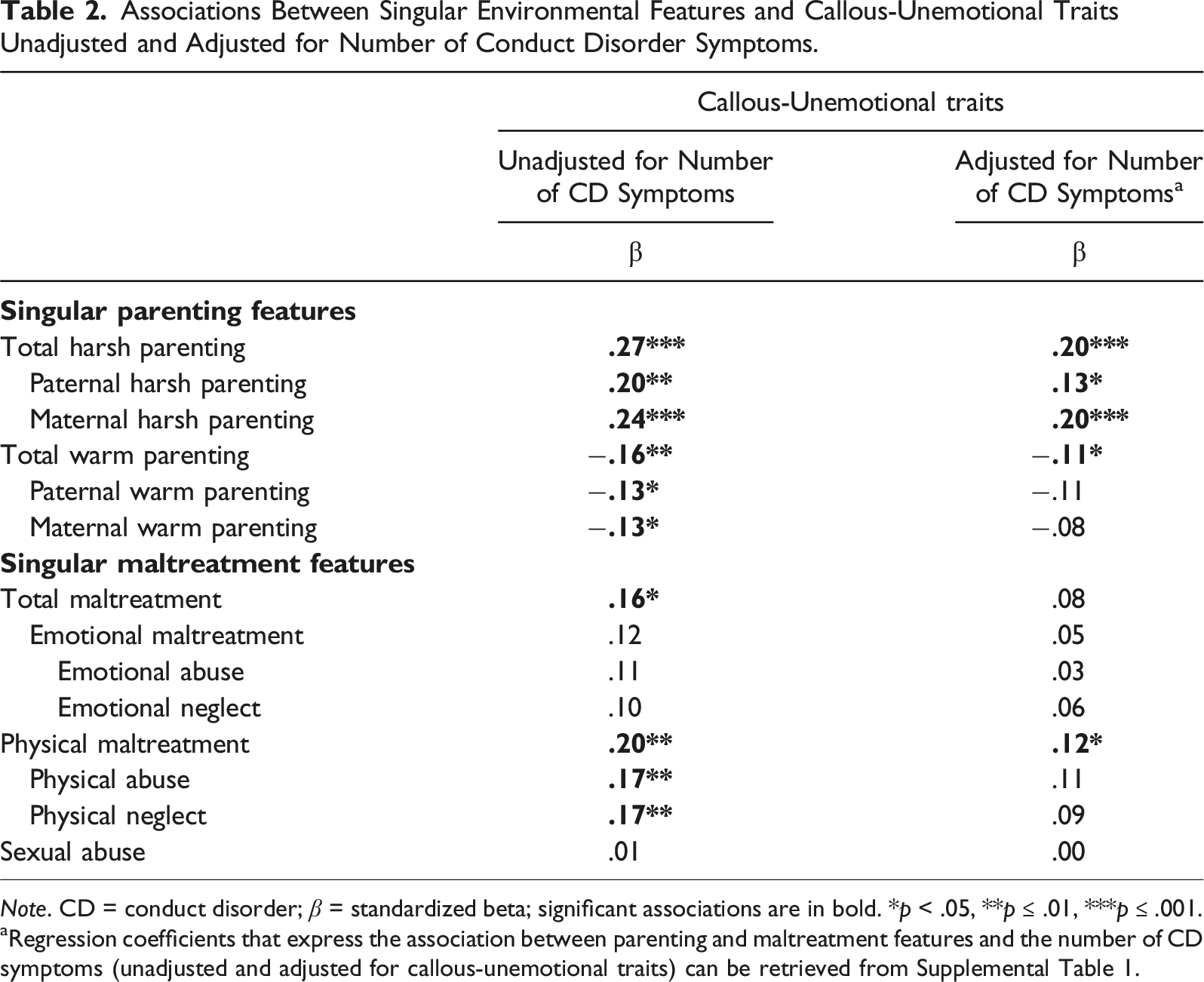
Note. CD = conduct disorder; β = standardized beta; significant associations are in bold. *p < .05, **p ≤ .01, ***p ≤ .001.
aRegression coefficients that express the association between parenting and maltreatment features and the number of CD symptoms (unadjusted and adjusted for callous-unemotional traits) can be retrieved from Supplemental Table 1.
Unadjusted and Adjusted Associations Between Parenting Models and Callous-Unemotional Traits.
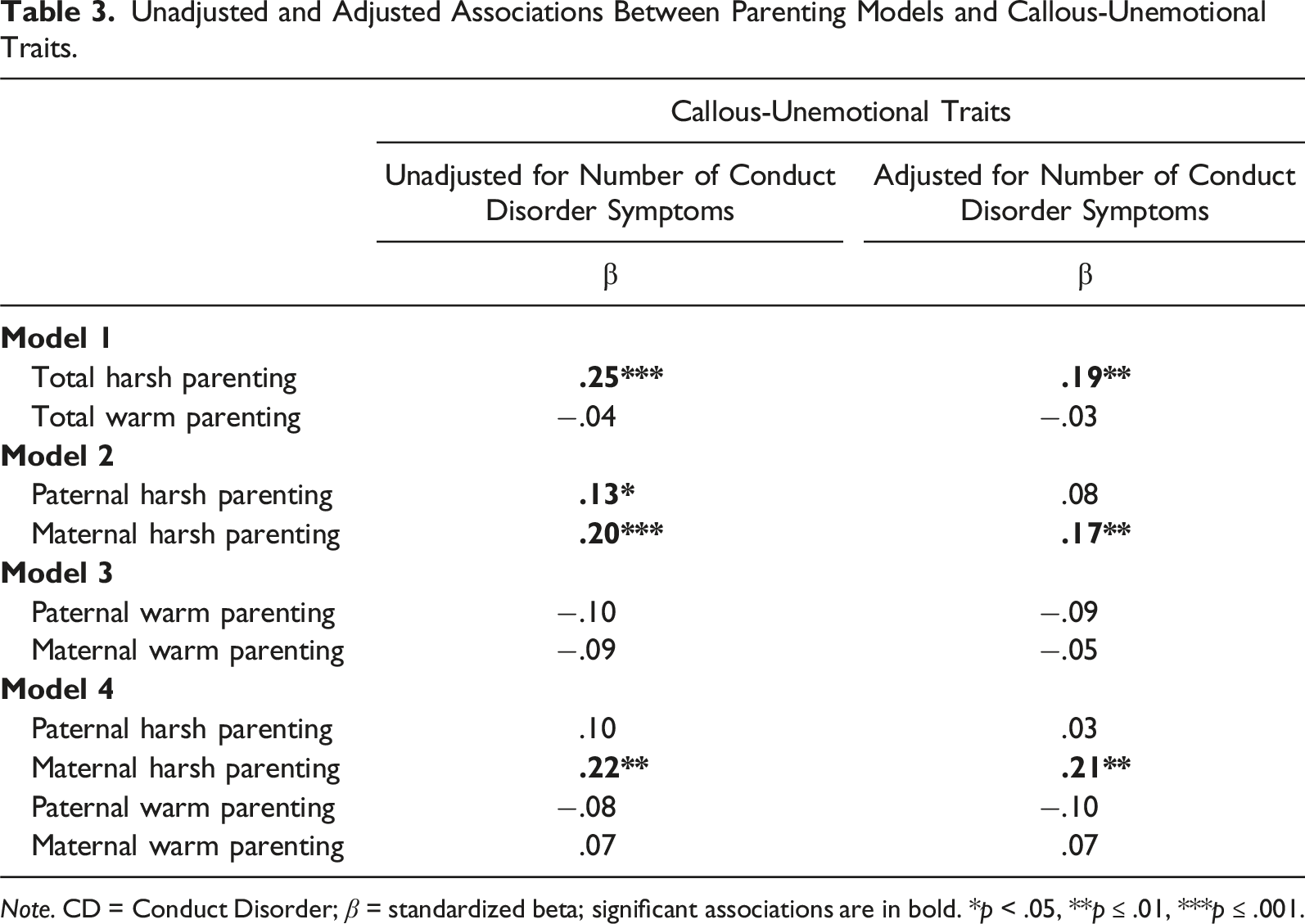
Note. CD = Conduct Disorder; β = standardized beta; significant associations are in bold. *p < .05, **p ≤ .01, ***p ≤ .001.
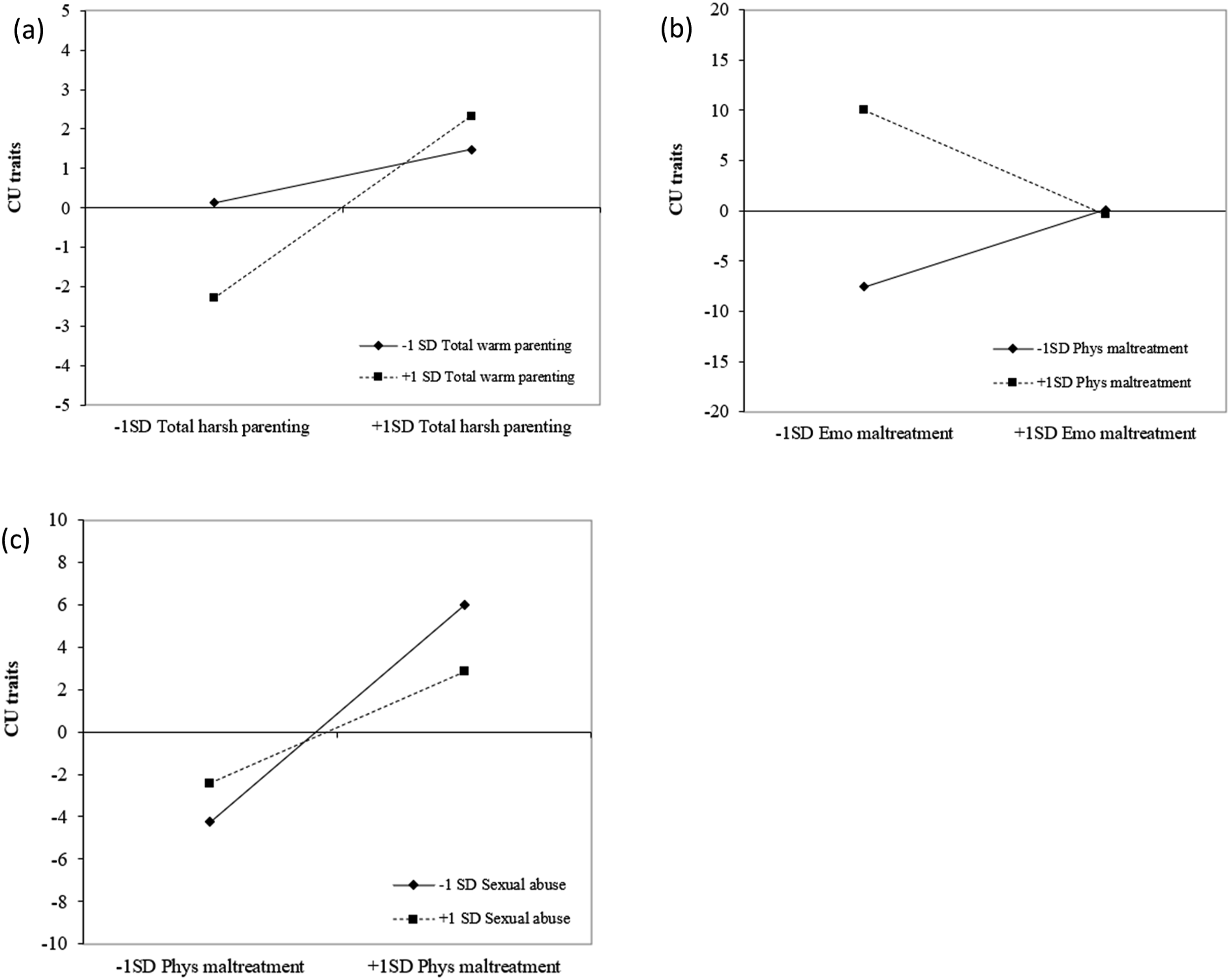
Simple Slopes of the Associations between CU Traits and Parental Harshness and Warmth and between CU Traits and Maltreatment. Note. Emo = Emotional; Phys = physical; CU = Callous Unemotional; SD = Standard Deviation.
Maltreatment Features in Relation to CU Traits: Main and Interaction Effects
Table 2 also reports associations between singular maltreatment variables and CU traits before (i.e., unadjusted model) and after (i.e., adjusted model) controlling for the number of CD symptoms. In the unadjusted models, total maltreatment, physical maltreatment, physical abuse, and physical neglect were significantly positively associated with CU traits, whilst emotional maltreatment, emotional neglect, emotional and sexual abuse were not significantly associated to CU traits. After controlling for the number of CD symptoms (adjusted models), only physical maltreatment remained significantly positively related to CU traits (Table 2). To explore if indices of maltreatment have multiplicative effects, three interaction effects were tested, after adjusting for the number of CD symptoms (for details, see: Supplemental Table 4). Two interaction effects were statistically significant, being emotional x physical maltreatment (β = −.15, p < .05) and physical maltreatment x sexual abuse (β = −.15, p < .05). Probing these two interactions shows that emotional maltreatment is positively related to CU traits, but only at lower levels of physical maltreatment (Figure 1(b)) and that physical maltreatment is positively related to CU traits, though also only at lower levels of sexual abuse (Figure 1(c)).
Unique Effects of Parenting and Maltreatment Features in Relation to CU Traits
Unadjusted and Adjusted Associations Between Multiple Environmental Factors and Callous-Unemotional Traits.
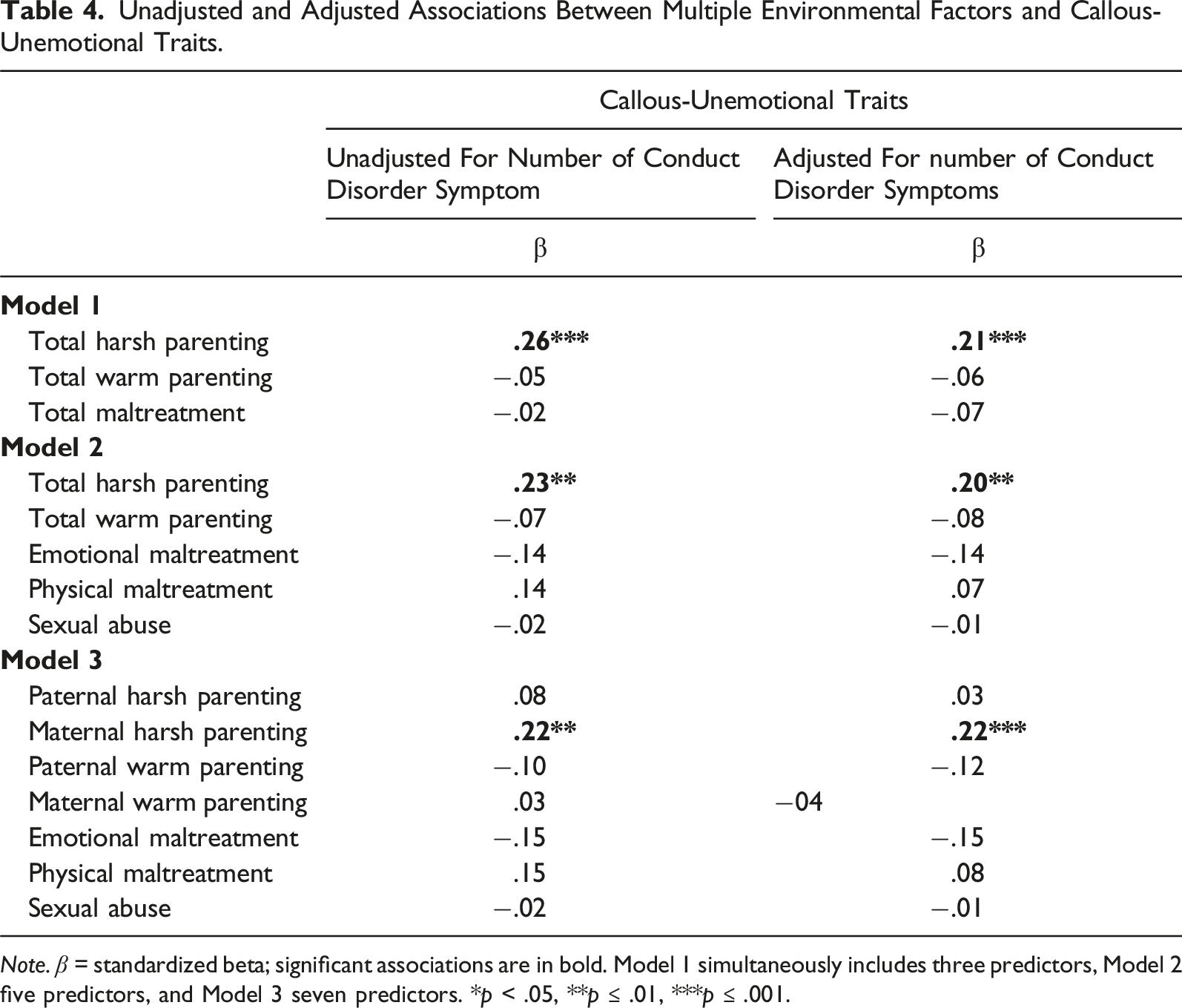
Note. β = standardized beta; significant associations are in bold. Model 1 simultaneously includes three predictors, Model 2 five predictors, and Model 3 seven predictors. *p < .05, **p ≤ .01, ***p ≤ .001.
Interaction Effects of Parenting and Maltreatment Features in Relation to CU Traits
Unadjusted and Adjusted Associations With Interaction Terms Between Parenting, Total Maltreatment and Callous-Unemotional Traits.
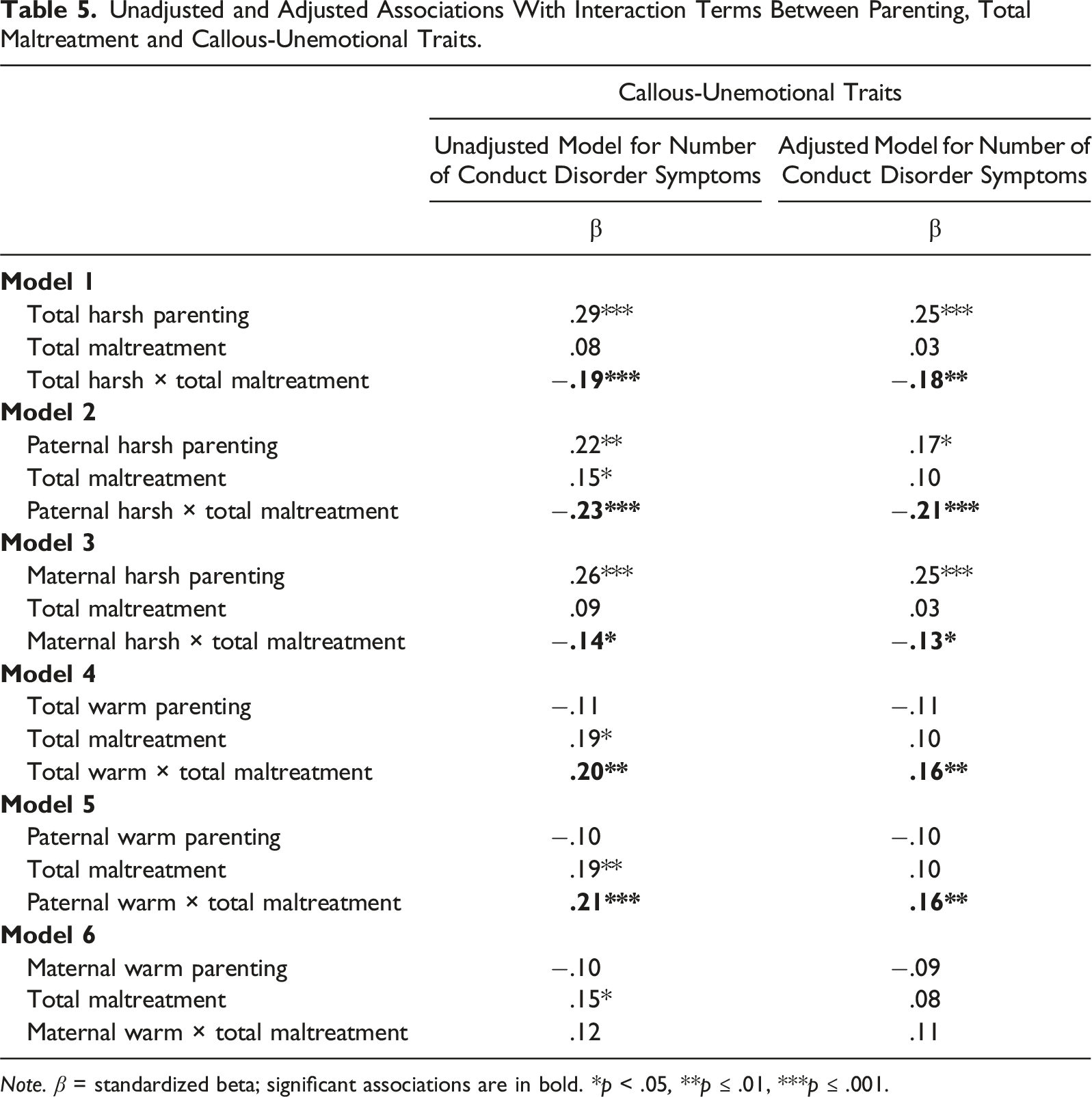
Note. β = standardized beta; significant associations are in bold. *p < .05, **p ≤ .01, ***p ≤ .001.
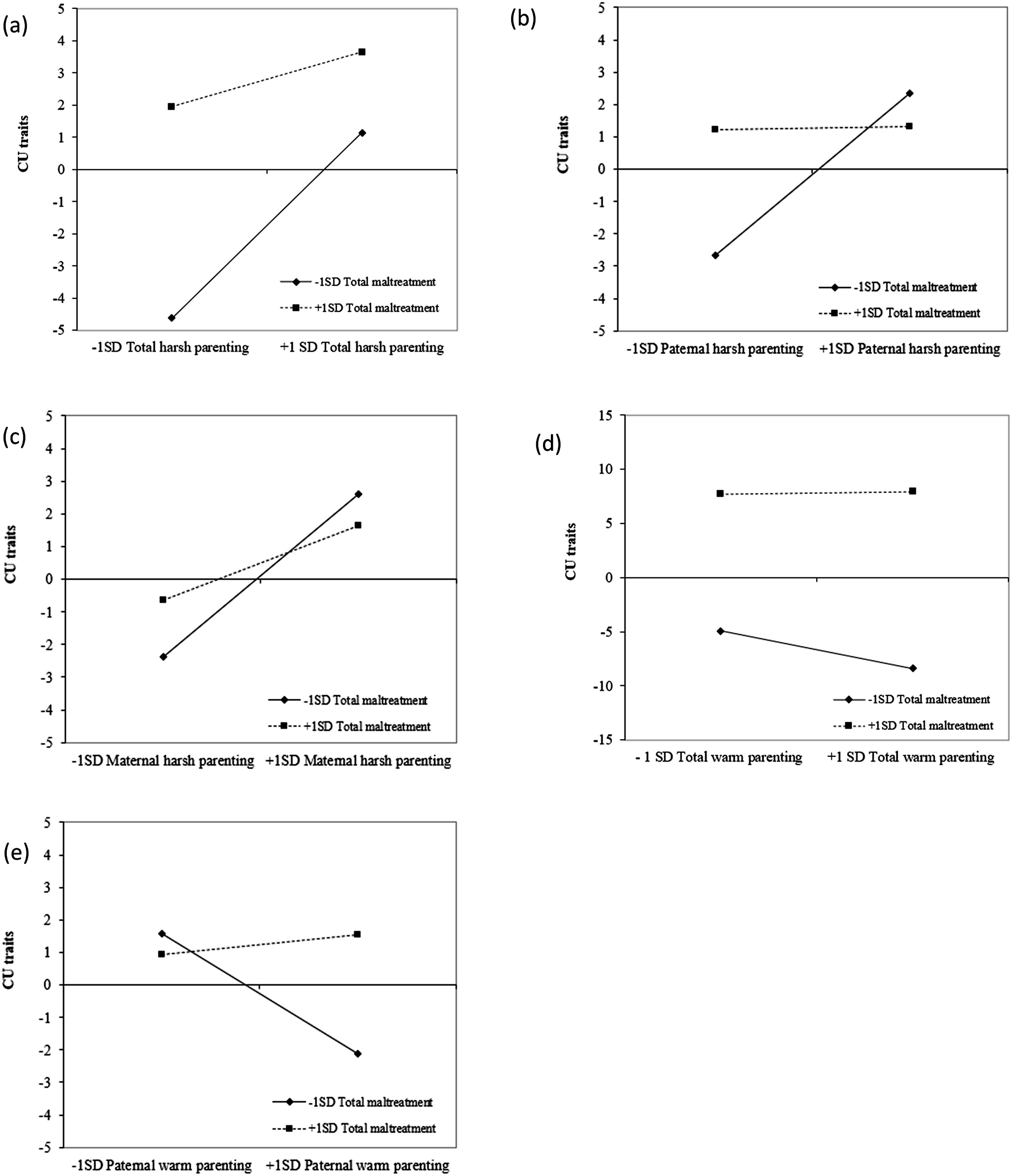
Simple slopes of the associations between CU traits and environmental factors. Note. CU = Callous Unemotional; SD = Standard Deviation.
CU Traits as a Moderator Between Environmental Features and Conduct Problems
To test if the relation between parenting (or maltreatment) and the number of CD symptoms is moderated by CU traits, multiple regression analyses were performed in which CU traits and each parenting or maltreatment variable were entered as predictors along with the multiplicative interaction term between the predictors. No significant interactions emerged (see Supplemental Tables 5 and 6).
Discussion
This study first examined if maternal and paternal parenting practices were uniquely related to CU traits, independent of CD symptoms. Findings revealed that harsh (maternal and paternal) parenting was positively related to CU traits, whereas warm (maternal and paternal) showed negative associations with CU traits. These zero-order associations were, overall, replicated when controlling for CD symptoms, suggesting that reported links between parenting practices and CU traits are not explained by the overlap between CU traits and CD symptoms. Contrary to our hypothesis, results from analyses that included both parenting practices in the same model showed that only harsh parenting was uniquely related to CU traits, after controlling for CD symptoms. Probing the significant interaction effect that emerged between harsh and warm parenting suggests that warm parenting may serve as a buffer for CU traits, though only in the presence of low parental harshness. This finding bears relevance in the light of evidence that interventions that target harsh and warm parenting may reduce CU traits (e.g. Fleming et al., 2022; Hawes et al., 2014; Pardini et al., 2007). Even though parents of detained youth are not always available or often not willing or able to enrol in parent training programs (e.g. Bourion-Bédès et al., 2023), our findings tentatively underscore the importance of ongoing attempts to increase parental participation and implement family-centred approaches in forensic settings (e.g. Simons et al., 2017).
Based on previous research (Gao et al., 2010; Kimonis, et al., 2013a; Pasalich et al., 2011), it was expected that paternal and maternal parenting are differently related to CU traits. Our findings partially support this hypothesis, since maternal harsh parenting, but not paternal harsh parenting was positively associated with CU traits. Nevertheless, it must be noted that neither maternal and paternal warmth were significantly associated with CU traits, after controlling for CD symptoms (Table 5). Hence, it is important for future research to systematically account for conduct problems when examining the parenting-CU link, as recommended in the literature (e.g., Clarck & Frick, 2018). Analyses that simultaneously included maternal and paternal parenting and maltreatment, showed that harsh maternal parenting was uniquely related to CU traits, converging with previous research in juvenile delinquent boys (Waller, Baskin-Sommers, & Hyde, 2018). Specifically, this finding can be explained by evidence that maternal harsh parenting affects a child’s emotion regulation more strongly than father’s (Ridings & Lutz-Zois, 2014) and that emotion regulation deficits hallmark youth with CD and CU traits (Frick, et al., 2014). Importantly, our parenting measure did not consider the time frame the parent figure was actively engaged or the availability and role the parent figure took in the participants life. Therefore, our findings need replication but, nevertheless, underscore the importance of considering maternal parenting when working with detained youth with CU traits.
Numerous studies also have examined the associations between indices of maltreatment and CU traits, with recent meta-analytical evidence showing that the relation between total and all but one subtype of maltreatment (i.e., sexual abuse) and CU traits is significant, with effect sizes (r) in the .17 to .23 range (Todorov et al., 2023). Our study adds to this body of evidence by confirming that total maltreatment, physical neglect, and physical abuse, but not sexual abuse, was related to CU traits at the zero-order level. Yet, emotional neglect and emotional abuse were non-significantly related to CU traits in our sample, a finding that converges with the non-significant zero-order correlations between emotional maltreatment and CU traits (total score), that was reported in a study with detained boys (Bisby et al., 2017; Kimonis, et al., 2013a). Results also demonstrated that correlations between childhood maltreatment and parenting practices can be strong (with r ’s up to .62), but not to the degree that both features measure the same construct. Interestingly, unique effects were only revealed for harsh parenting, but neither for warm parenting nor indices of childhood maltreatment (Table 3). To further add to the literature, and to inform ecological models of the development and persistence of CU traits in high-risk samples (Waller, Baskin-Sommers, & Hyde, 2018), we explored interaction effects between parenting practices and maltreatment in relation to CU traits, controlling for the number of CD symptoms. The explication of significant interact effects, overall, suggested that parental (total and paternal) warmth is a protective factor, though only at lower levels of childhood maltreatment. Additionally, parental harshness (total, maternal and paternal) was positively associated with CU traits, though the strength of this association was attenuated at higher levels of total maltreatment. Because interaction effects are difficult to replicate, our findings must be confirmed in other studies. Yet, one study reported a similar interaction effect between maternal warmth and emotional neglect (Bisby et al., 2017), encouraging future efforts to systematically test interaction effects between environmental factors in relation to CU traits.
Finally, we purportedly tested if CU traits moderated the relationship between parenting and CD symptoms, thereby using a cross-sectional design, as did pioneer studies on this topic (Oxford et al., 2003; Wootton et al., 1997). We found no evidence that CU traits moderated the parenting-CD symptoms link, thereby contrasting earlier findings (Oxford et al., 2003; Wootton et al., 1997). Our findings also contrast with prior cross-sectional work with detained youth showing that CU traits moderated the association between harsh parenting and delinquency (Edens et al., 2007) and between warm parenting and CD symptoms (Chinchilla & Kosson, 2016). These latter studies relied on parents and teachers (Oxford et al., 2003; Wootton et al., 1997) or experts (Chinchilla & Kosson, 2016; Edens et al., 2007) to assess CU traits, whereas we used a self-report format. Though unlikely and difficult to be reconciled with other findings, such as the zero-order associations between parenting and CU traits (Table 2), it cannot be excluded that interaction effects would have emerged if CU traits were measured through other informants. Some work suggested that CU traits also moderate the association between childhood maltreatment and externalizing problems (e.g. Batky et al., 2023; Li et al., 2022). But here again, we failed to replicate this finding in our sample of detained boys. Thus, results suggest that parenting and maltreatment experiences are no differently related to CD symptoms in detained boys with higher versus lower levels of self-reported CU traits.
Strengths and Limitations
This study has various strengths, including the usage of a relatively large sample of detained adolescent boys, well-established measures of CU traits (i.e., YPI), maltreatment (i.e., CTQ), and CD symptoms (i.e., K-SADS), and a parenting measure that separated between maternal and paternal harsh warm parenting. Yet, as always, this study is not without limitations. First, parenting practices were rated through a newly developed questionnaire that has not yet been validated. Yet, the proposed factor structure was confirmed in our sample, whilst the harsh and warm parenting scores also were internally consistent, thereby addressing a major limitation of prior work (for a review, see: Waller et al., 2013). Second, we did not chart the frequency of the contact with the parental figures. This is unfortunate since exposure to harsh and warm parenting practices likely differ across participants and vary from occasional to consistent exposure (Backman et al., 2021). Third, retrospective self-reports of childhood maltreatment and negative experiences with parenting can be biased for a variety of reasons, such as the desire to protect the perpetrator, normal process of forgetting, or current mood states (e.g. Fergusson et al., 2000; Goltermann et al., 2023). Thus, the sole reliance on self-reports to index the environmental-level features should be acknowledged as a study limitation. Fourth, the study design did not allow to account for the possibility that parenting is not a pure environmental feature but also reflects gene-environment correlations (Waller, Baskin-Sommers, & Hyde, 2018). Thus, we cannot exclude that associations between parenting and CU traits arose because biological parents’ pass on genes that increase risk for CU traits. Fifth, we only used data from detained male adolescents. Future research is needed to ascertain to what extent the current findings can be generalized to detained female adolescents or community-residing and clinic-referred children and adolescents.
Implications
While acknowledging these limitations, our findings have implications for research, theory, and practice. Our results illustrate that maltreatment and parenting practices, while showing overlap, are distinguishable concepts and also are differently associated to CU traits. Furthermore, interaction effects between parenting and maltreatment indices were found. This set of findings is relevant for theories that speculate about the role of the environment in the emergence and persistence of CU traits (Waller, et al., 2015b). Our findings are also informative for theories about how parenting may influence the relationship with conduct problems differently for children and adolescents with high and low levels of CU traits. Evidence of the moderating effect of CU traits (see: Wootton et al., 1997) has been used to support the etiological validity of using CU traits as a specifier for CP or CD. Result from the current study suggests that youth scoring high or low on CU traits show no differences in the relationship between their recollection of experiences with parenting practices and CD symptoms, challenging the earlier notion that CU traits designate an etiologically distinct group of youth with conduct problems, at least with regard to self-reported recollections of parenting practices of detained male adolescents.
Furthermore, our study bears some practical implications. First, we showed that youth with elevated levels of CU traits tend to experience the highest levels of negative parenting. However, while studies have shown promising results for interventions focusing on the parent-child relationship and emphasizing parental warmth (e.g. Fleming et al., 2022; Perlstein et al., 2023), it will be crucial to acknowledge the youth’s parenting experiences before all stakeholders enroll in such intervention. Even when parents are available and willing to enroll, the negative experiences with their parents suggest that often time will need to be invested to restore the trust in their parent and to (re)establish a bond between the youth and his parent figures. Second, the strong correlations between the various indices of maltreatment once more suggest that detained boys have experienced multiple forms of abuse and neglect (e.g., Vahl et al., 2016). Maltreated detained boys are not only at an increased risk for CU traits (this study) but also for mental health problems (e.g., Vahl et al., 2016) and recidivism (e.g., Vitapoulos et al., 2019). Thus, the data presented here highlight the importance of systematically ascertaining trauma histories in detained boys.
Supplemental Material
Supplemental Material - Maternal and Paternal Parenting and Maltreatment in Relation to Callous-Unemotional Traits in Detained Male Adolescents
Supplemental Material for Maternal and Paternal Parenting and Maltreatment in Relation to Callous-Unemotional Traits in Detained Male Adolescents by Thomas Cassart, Stijn Vandevelde, and Olivier F. Colins in Youth Violence and Juvenile Justice
Footnotes
Declaration of Conflicting Interests
The author(s) declared no potential conflicts of interest with respect to the research, authorship, and/or publication of this article.
Funding
The author(s) disclosed receipt of the following financial support for the research, authorship, and/or publication of this article: This work was supported by the Fonds Wetenschappelijk Onderzoek; (FWO Odysseus Grant (G0H7818N), FWO Research Project (G007720N)).

Supplemental Material
Supplemental material for this article is available online.
Notes
Author biographies
References
Supplementary Material
Please find the following supplemental material available below.
For Open Access articles published under a Creative Commons License, all supplemental material carries the same license as the article it is associated with.
For non-Open Access articles published, all supplemental material carries a non-exclusive license, and permission requests for re-use of supplemental material or any part of supplemental material shall be sent directly to the copyright owner as specified in the copyright notice associated with the article.
