







Abstract
The purpose of this article is to portray the importance of aesthetic experience (a notion understood as the systematic observation and critical analysis of artworks) within the framework of transformative learning. The article includes an extended literature review vis-à-vis the contribution of aesthetic experience in unearthing the integrated knowing, encompassing critically reflective, affective and imaginative dimensions of learning. The ideas of Eisner, Broudy, Gardner, Perkins, Kant, Dewey, Sartre, Efland, Frankfurt School and Palo Alto Mental Research Institute are examined as well as the contributions of the scholars of transformative learning theory to the issue at hand. In the final part, a method is presented, which is constructed synthetically resting on the aforementioned theoretical views and regards the utilization of aesthetic experience in the processes of transformative learning.
Introduction
Transformative learning theory has been established by Jack Mezirow at the beginning of the ‘80s. He defined transformative learning as a rationally based, adult dimension procedure, involving the validation and reformulation of meaning structures (1991, 2000, 2009). On the other hand, alternative conceptions of transformative learning have been developed beyond the framework defined by Mezirow. Several scholars have attempted to group these diverse directions into categories, such as social-emancipatory approach, connected learning, planetary view, approach of ideology critique, developmental approach, psycho-analytic view, and so on (e.g., see Cranton, 2006; Dirkx, 1998; Merriam, Caffarella, & Baumgartner, 2007; Mezirow, 2009; Taylor, 2008). These grouping suggestions differ from one another, nevertheless they all agree that psycho-analytic approach—which is grounded on Jung’s depth psychology and argues that transformative learning involves dialogue between the content of the unconscious and the ego consciousness (e.g., see Boyd & Myers, 1988)
Nevertheless, there is a wide convergence among leading scholars of transformative learning, regardless of their different views on its components and its methods, that the conscious and the unconscious dimensions of learning are both significant and complementary (Cranton et al., 2006; Elias, 1997; Kasl & Elias, 2000; Taylor, 2008).
However, the question that arises is whether the adult educators are in position to apply appropriately the methods connected to Jungian analytical depth psychology, such as the examination of emotions, images and dreams which arise from the inner world of the participants. Kasl and Elias have noted that (2000), while the adult educators are relatively well schooled in how to facilitate critical reflection, they are relatively unprepared and lack competence and comfort in fostering learning processes that are linked to depth psychology. Nine years later, Cranton and Kucukaydin have concluded, via literature review, that yet “Transformative Learning literature lacks a discussion of the significance or relevance of Jungian theory” (2009, p. 1) and that this absence of critical examination allows a space “to be suspicious about the extrarational approach’s assertions, premises and propositions” (Cranton & Kucukaydin, 2009, p. 3). In this argumentation I would add that has not yet been clarified in the literature the difference between extrarational approach of transformative learning and psychotherapy, consequently it is not clear which particular skills, qualities and relevant education is required for the adult educators in order to deal with psyche. For those reasons, my inquiries in the field of transformative learning, including this article, are still limited to the processes that take place in the realm of the aware.
I frame my ideas mainly within Mezirow’s conceptual framework. However, I share many scholars' outlook that criticize his theory for being too reasoning—advancing oriented and that it needs to be broadened so that it can involve strategies that facilitate the rise of emotions and imagination (see e.g., Fleming, 2000; Illeris, 2004). This interaction between cognitive, emotional and imaginative dimensions of learning is acutely emphasized through aesthetic experience—a notion understood as the systematic observation of artworks. There is a great deal of literature on this issue written by scholars that study the learning processes in general education (Gardner, Broudy, Efland, Eisner, Perkins, publications of Getty Education Institute for the Arts and others). Though, there is much less research in the field of adult education and especially transformative learning theory. So, I attempt in this article to examine the ways in which aesthetic experience could be a vital component of transformative learning theory and practice.
In the first part, I review the literature that has been developed for the issue of emotional and imaginative expression as well as cognitive development through art. Next, I examine the literature vis-á-vis the contribution of aesthetic experience in empowering critical reflection. In the third part, I present the theoretical approaches on this issue developed by transformative learning scholars and, finally, I present a method that concerns the utilization of aesthetic experience within the transformative learning processes.
Aesthetic Experience: A ‘Cognitive Feeling’ Process
Several important scholars of pedagogy, philosophy of education and art education portrayed the importance of aesthetic experience in the development of cognitive but also affective and imaginative sides of thought processes. One of the fundamental contributions was provided by Howard Gardner (1983, 1990) who suggested that the person possesses many kinds of intelligence (verbal–linguistic, logical–mathematical, kinaesthetic, musical, visual, spatial, interpersonal, intrapersonal and others). In each kind of intelligence, a different symbolic system may be found. In other words, for each kind there is a corresponding system of representations and conceptualisations of various concepts, ideas and facts. Therefore, in order to achieve a multifaceted reinforcement of our intelligence, we need an extended use of symbols. The aesthetic experience serves this aim, because it offers to the participants the possibility to process a variety of symbols through which it is possible to articulate holistic and delicate meanings, to draw on emotional and imaginative situations, to use metaphors and in general to express different perspectives of reality—leading thus to the awareness of issues which may not be easily comprehended through rational argumentation.
A parallel view to Gardner’s perspective was developed by Eisner, Broudy, Perkins and others. Eisner (2002) argued that aesthetic experience enlarges the imagination and the emotional expression, while simultaneously fosters the development of cognitive functions. Aesthetic experience provides the means through which meanings that are ineffable, but feelingful, can be expressed and understood, helping us to tolerate ambiguity, to discern subtle relationships and to focus on details. Broudy in his turn (1987) pointed out that aesthetic experience activates the imagination by making possible the emergence of visions that have never existed and, on the same time, it enables the mind to organize the new knowledge that arises. Furthermore, the contact with art enlightens and refines the repertory of feelings and also facilitates the blend of feelings with ideas, enhancing thus the development of cognitive strategies. For those reasons, Broudy calls aesthetic experience both a ‘cognitive feeling’ and a ‘feelingful cognition’ (1987, p. 11).
Perkins in his book The Intelligent Eye (1994) presents ideas that are in concert with those above. Moreover, he suggests a methodological tool, which consists of four phases, for the systematic observation of artworks. He also suggests not emphasizing on the technical characteristics of the artworks but to their affective qualities. During the first phase, the facilitator asks learners to take looking time in order to catch the spirit of the artwork. He encourages them to let questions emerge and ask themselves about interesting features or discover new ones. At the second phase, learners are stimulated to search for characteristics of the artwork that make their observation broader, to notice sides that otherwise remain invisible. For instance, they might look for surprises, symbolisms, cultural and social connections, ‘technical’ dimensions, and so on. At the third phase, the facilitator asks the participants to investigate more analytically the artwork by exploring deeper what surprised, interested, or puzzled them. They might also compare the artwork with another one that seems to be related in some way. In general, they try to come to evidenced conclusions about their experience of the artwork. Finally, in the fourth phase, the learners review the work holistically, marshalling all they have discovered.
The significant contribution of aesthetic experience to the development of thinking, feeling and imaginative dispositions led Gardner, Eisner, Broudy, Perkins and others to suggest that it should be one of the constitute components of any educational process. In practice, many programs have been implemented, which aimed an art-infused curriculum, for example, Project Zero and Artful Thinking Program (initiated by Harvard Graduate School of Education), Creative Community Building Through Cross-Sector Collaboration (Centre for Creative Communities in United Kingdom).
Aesthetic Experience and Critical Reflection
The contribution of the aesthetic experience, as acquired through our contact with art, to the development of critical reflection, has been examined within the framework of many scientific fields. Traces of the initial quest are found in the philosophical work of the German idealist philosophers, Kant, Hegel and Schelling, who introduced the issue of whether and to what extent aesthetic experience could facilitate accessing truth and therefore offer to the beneficiaries incentives for the qualitative transformation of their thinking modes. Of particular importance are the views of Kant, which were declared in his book Critique of Judgement (1790/1995). He claimed that the aesthetic situation, that is the sum of the relations among the artist, his work and the recipient, constitute a field in which a particular thinking mode prevails, which he termed ‘aesthetic rationality’, that is different from the model of rationality upon which the social reality is organised. Within the broader aesthetic framework, this thinking mode is expressed by deep, authentic, human emotions. It is a thinking mode ‘unprejudiced’, ‘global’ (holistic) and ‘extending’ (as it includes the opinions of others). Consequently, the aesthetic experience offers to its recipients the possibility to organize their cognitive competences in a manner that is different from the dominant pattern and to conceptualize the empirical reality through an alternative perspective.
Gradually, the opinion that the aesthetic experience is closely related to critical reflection was supported by theoretical approaches and research in the fields of pedagogy, philosophy, psychology and neurophysiology. Dewey, in his book Art as Experience (1934/1980), claimed that the aesthetic experience constitutes the primary means for the growth of imagination, which he considered as a fundamental element of the process of learning. The works of art are permeated with the imaginary dimension that the artist provides. On the other hand, in order to comprehend their meanings, we need to exceedingly mobilize our imagination. For these reasons, the aesthetic experience is wider and deeper than the usual experiences that we acquire from reality and it constitutes an important “challenge for thought” (Dewey, 1934/1980, p. 285). At the same time, the meeting of our old perceptions with new ones, which emerge through the contact with art, “has as a result the reconstruction of past” (Dewey, 1934/1980, p. 284), which strengthens our ability to construct new ways of comprehension.
Similar ideas were formulated by Sartre, whose essay What is Literature? (1947/1971) points out that in order for a literary work to become comprehensible, the reader needs to discover himself and conceptualise the incorporated meanings. Through this process, the imagination and the reflective ability of the reader are significantly activated. The reader becomes coauthor of the work, as he is free to reinvent its content and recreate it beyond the footprints that the writer left: “The reader should invent everything, continuously exceeding what’s written. The writer leads him. The elements that he gives are separated from a vacant space, one should meet them, should go beyond them. In short, reading is directed creation” (Sartre, 1947/1971, p. 57–58). As a conclusion, Sartre stated that since reading is an action of freedom and creation, it offers the stimuli for the shaping of a disposition of excess and transformation of the alienating conditions of reality.
Efland (2002) presented some of the most concrete arguments which explain that aesthetic experience provides unique opportunities for the reinforcement of critical reflection. He supported that the comprehension of art constitutes a complex activity that cannot be governed by firm rules, ‘undeniable’ generalisations and ‘accurate’ diagnoses. The symbolic forms that are contained in the works of art have a flexible structure and are conditioned by a rationale that endorses and prioritises the holistic approach, the metaphors and the narration in the shaping of meanings. Moreover, the comprehension of each work of art is susceptible to multiple interpretations that are not mutually exclusive but can bring about, with their interaction, enrichment to the whole approach. Thus, contact with art familiarizes us with interpreting complicated and ambiguous issues, by drawing meaning from various situations, and allows us to be receptive in alternative views, beyond what is considered as a given. If in all the above, according to Efland we add the fact that artworks offer incentives to comprehend their social and cultural frame, it seems valid to state that any educational program should include in its central objectives the development of reflection through aesthetic experience.
The theoretical views of the scholars of the Palo Alto Mental Research Institute (Watzlawick, 1981/1986; Watzlawick, Beavin Bavelas, & Jackson, 1967) contributed significantly to the documentation of the aforementioned approaches. These scholars, based on research of anatomy and neurophysiology, showed that in order for a person to have a complete thinking process, the equivalent and cooperative function of both hemispheres of the brain is needed. The left hemisphere has rationalization as its main operation. It interprets our experiences with logical–analytic arguments to shape our perception of reality. Its way of operation is linked to anything that is related to logical–analytic argumentation, calculations, numeracy and planning, identification of the details and the partial elements of each situation. The right hemisphere is specialised in the holistic recognition of complex situations, relations and structures. It does not explain with rationalisations but it creates; it encourages the expression of feelings, intuition and imagination, recalls memories, and corrects our decisions if needed. It uses all the elements that are suitable for the activation of its operation, such as pictures, allegories, parables, similes, synecdoches, analogies, variants, ambiguities, puns, paradoxes and the apparently absurd.
Watzlawick (1981/1986) notes that all of the above lead to certain conclusions of particular importance for the means of transformation of our dysfunctional assumptions as well as for the role of art in this process. The left hemisphere offers a reason-based interpretation of reality, but this often comes about in a schematic and one-dimensional way. Through this hemisphere, we usually see only one picture of the world, which we consider reasonable and acceptable. However, such a picture is nothing more than a fabrication of the mind: “It is not the world, but a mosaic of separate pictures, that today are interpreted in one way and tomorrow differently, a fabrication made from fabrications, an interpretation shaped by interpretations” (Watzlawick, 1981/1986, p. 66). On the contrary, the right hemisphere, having the ability to conceive holistically the situations, to process proportions and variants, to give meaning to the apparently paradoxical and so on, offers the possibility of understanding multifunctional phenomena, of perceiving alternative ways of seeing, and of reconciling with the alien and the untold. Consequently, the interconnected operation of both hemispheres is absolutely necessary to realise the transformation of our frame of reference. Moreover, the encounter with artworks, which include a wide range of elements that correspond to the right hemisphere’s ways of operation, contributes significantly to its activation and strengthens the transformation process.
The contribution of critical theory
An important approach of the role of art in the growth of critical reflection was realised by Adorno and Horkheimer, the founders of the critical theory which started its development in the 1930s in the Institute of Social Research in Frankfurt (widely known as the ‘Frankfurt School’). In a series of papers (inter alia, Adorno 1941/1997, 1953/1984, 1970/2000; Horkheimer 1938/1984; Horkheimer & Adorno 1947/1984), the two German theorists elaborated on Kant’s view that the aesthetic experience provides the possibility of a thinking mode that is distinct from the dominant one, and rewrote this idea claiming that contact with authentic art contributes in the process of human liberation. The core of their reasoning was that the spiritual content and the structure of great artworks contain attributes that are rarely identified in other mechanisms of social reality which are dominated by instrumental rationality and conformism. Consequently, the encounter with great art cultivates a thinking mode that is opposed to the alienating norms of social life.
According to Adorno and Horkheimer, a great work of art is characterized, first, by the deep internal cohesion of its elements, which provides a holistic dimension. Its spiritual content (its meaning) is in a dialectic relation with its morphological structure (i.e., the aesthetic cluster of individual elements, such as the linguistic expressions in literature, the sound structures and the accentual systems in music, the colours and the proportions in the works of fine art). The content is functionally expressed through properly shaped morphological elements, which in their turn reflect the essence of the artwork. Through the dialectic relation of form and content an interaction takes place among all the structural and contextual elements and among each of the elements and the entire work. The individual elements interconnect so that a complete whole is created and they are all important for the comprehension of the work of art. At the same time, the individual elements are connected to the central point of reference and they only acquire meaning if their relation with the whole is comprehended. Moreover, the holistic dimension of an art masterpiece means that the contact with it reveals all the various aspects and the dialectic contradictions of an idea, of a phenomenon, of an individual or social process.
Another characteristic of important works of art is the truth they contain. They express deep emotions of human existence, “an explanation of life, ripe of meanings” (Horkheimer & Adorno, 1947/1984, p. 99). When somebody experiences a genuine aesthetic experience, then, in certain unique moments, she conceives in awe the truth as something more than subjective experience, as one objective “so it is” that exceeds the limits of the system of perceptions of the Ego: “The emotion from important works of art (…) concerns the moment at which the receiver forgets herself and is lost into the work: when she herself is shaken. When she loses the ground. The possibility of truth that is incarnated in the aesthetic picture becomes vivid in front of her” (Adorno, 1970/2000, p. 415).
Finally, great works of art are characterized by their anticonventional texture. Their structure and content differ from the usual, they oppose the stereotypes, the standardisation, the obvious and they lead us to inquiries we are not used to. The channels for their comprehension do not follow known patterns and clichés. One does not easily guess the meanings. Single-meaning expressions of a situation do not exist. The interpretations that emerge are unexpected. Solutions of conflicts are not schematically ‘merciful’. The questions placed by the artist do not have one and only ‘clear’ answer, as the dominant way of thought would expect. The important works of art have unlimited possibilities for interpretation. They give everyone the possibility of shaping a dialectic relation with them, of approaching them in a unique way and discovering personal meanings.
For these reasons, the two German scholars claim—walking on the footprints of Dewey and Sartre that were presented earlier—that it is not possible for an important work of art to become easily comprehended. The observer needs to intensely activate her psychic and mental forces in order to reach its substance. She needs to be consciously involved in the activity of detection of meanings that exists behind the surface and give her own interpretation. The more she achieves that, the more decisively she enters in the spiritual content of the work and recreates it.
From the above arguments of Adorno and Horkheimer derives the next basic part of their reasoning, concerning the critical function of aesthetic experience. Works of great art, due to their anticonventional character, their holistic dimension, the authentic meaning of life that they display and the multiple interpretations that they are susceptible to, are in contrast to the instrumental rationality that is incorporated in the mechanisms of social reality. The characteristics of authentic art differ from the stereotyped forms of behaviour, the alienated relations and the closed systems of perception that govern the established order. Therefore, the contact with art functions as a field where critical consciousness is cultivated. It offers criteria that help us disembody by the dominant norms, to doubt the predispositions and assumptions that are established in the social and productive procedures and to conceive a perspective of a world that is better than the one we live in. This emancipating potential of art was pointed out later by another representative of the Frankfurt School, Marcuse, who in his book The Aesthetic Dimension (1978) supported that contact with the art masterpieces makes possible the inversion of the established experience and regenerates the desire for human liberation. Adorno (1970/2000) moved one step further. He argued that, to the extent that we incorporate aesthetic elements in the way we think, that is, to the extent that we approach holistically and dialectically the situations and care for the genuine expressions of existence, it is possible to create the conditions that can liberate our conscience from the coercions of the reificated social reality.
Concluding Remarks on the Literature Review
The literature review presented in the previous parts of this work formulates a sum of ideas that demonstrates the crucial role of art in empowering the affective and imaginative dimensions of learning as well as the critical thinking strategies. The mélange of cognition, emotion and imagination which is involved in the aesthetic situation helps us to capture the significance of the inquired issues and the deepest roots of meaning, when logical judgements are inadequate. It permits us to experience alternative ways of interpretation beyond the information given. It gives us the means to conceive different realities, to expand our consciousness and to reshape our perspectives. Therefore, there are many reasons to argue that aesthetic experience should have a distinctive role within the theoretical framework and practice of transformative learning.
Approaches Within the Framework of Transformative Learning
Freire was the first scholar who laid the foundations for the utilisation of aesthetic experience at the heart of the transformative learning process. Even in his youth, as he has pointed out in an autobiographical report, an important influence in his thought was the “aesthetic creativity of writers such as Jose Lins do Rego and Graciliano Ramos” (Shor & Freire, 1987, p. 20). Freire also reports that as new teacher he used texts “of very good Brazilian writers” for language learning (Shor & Freire, 1987, p. 28). And when he later developed his educational method (Freire, 1970, 1978), he placed at the epicentre the holistic examination of ‘codifications’ by participants (mainly sketches that were created from important painters such as Francisco Brenand) (Freire, 1978). These codifications represented situations that were relative to the experiences of the learners and were specifically prepared so that they could become incentives for critical analysis of issues of social reality. Each codification represented a subissue of the major issue. For example, ‘labour’ was one of the subissues of the issue ‘culture’. In order to examine the subissue ‘labour’, Freire used a sketch that represented a potter at his work (Figure 1 , 1971, p. 141). The sketch contained multiple stimuli in order to discuss critically various aspects that are included within the concept of labour, such as intellectual and manual work, exploitation and alienation related to work, but also the aspect of human beings' valorization through work.
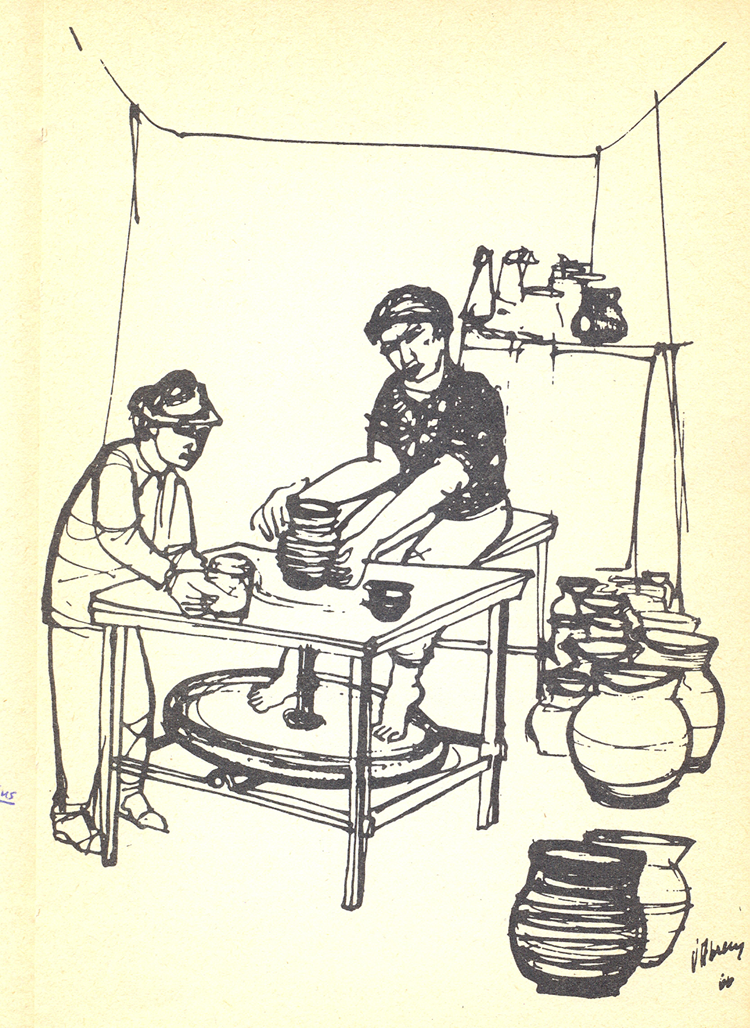
Sketch used by Freire in his teaching
The dialogic analysis (decoding) of the aspects that were contained in each codification rendered the critical comprehension of the subissue achievable by the participants. Finally, through synthetic and holistic analysis of the total of the subissues, the participants reconstructed their perception of the major issue.
The Freireian method was profoundly adjusted to the social, political and educational conditions of its implementation framework. It was addressed mainly to socially excluded groups who were living under oppressive sociopolitical conditions. Undoubtedly, the targeted symbolism that was included in the codifications was assisting the participants to draw clear messages for the causes of their situation. However, I argue that in the contemporary societies of the developed countries, where the social conditions are very multifaceted, it is of greater significance to use in the educational procedures works of art which are not implemented to serve a preexisting educational scope, because they provide the necessary stimuli for a broader inquiry of meanings, situations, assumptions, emotions and alternative interpretations. Yet, the ideas of Freire for the utilization of works of art in a holistic way in order to raise the critical consciousness are still valuable for the field of adult education.
The Freireian method was widely spread—a variety of examples may be found in the books of Brookfield (1987) and Shor (1980, 1992). In this process, the view and the practice of Ira Shor played a central role. He elaborated the method meticulously and extended the use of works of art including theatre, poetry and music. However, in his effort to lead the trainees to the questioning of the hegemony of the prevailing classes he was interested unilaterally in extracting sociopolitical messages from the artworks, overlooking the critical and emancipating potential incorporated in them. This resulted in the handling of artworks in a limited way, reducing them to simple means for the development of sociopolitical inquiring. A typical example of this is the way in which Shor implements Shakespeare’s Eric the V (Shor, 1992). He is proposing to the instructors to use the work as an ‘introductive text’ and draw from this leads in order to place questions such as “Is law an unchanging body of rules?” “Who benefits by the changes of laws?” “What legal changes are necessary now? Why?” “Are minorities treated the same as whites by the law?” and so on. Moreover, he prompts the instructors and participants to consider this particular play as politically problematic and to dispute the “pro-aristocratic inclination of Shakespeare” and “his intention not to criticize monarchy” (Shor, 1992, p. 156).
On one hand, it should be pointed out that, with this method, Shor managed to raise participants' consciousness concerning the unfairness that was interwoven with their social origin and to alert them to confronting the established social order. On the other hand, however, he unwillingly damaged their critical ability, because his method approached the works of art from a rather predetermined point of view and abrogated the possibility of comprehending their holistic dimension and the dialectic contradictions that they express. Moreover, the disdaining political criticism of writers such as Shakespeare included the danger of draining from the participants the wish to continue dealing with art masterpieces.
We need to return, at this point, to Freire’s opinions and suggest that the way he faced the classic texts was different. It is characteristic that, when Shor asked him in their dialogue (Shor & Freire, 1987) “Do you think that students need to study the classics of any discipline, but not as objects of worship?” Freire answered that the objective is “to study really, to read seriously, critically” (Shor & Freire, 1987, p. 83) and underlines the importance of approaching the classic texts deeply, argumentatively, with a complete activation of our capabilities (Shor & Freire, 1987). Also, in another text (Freire, 1985) he underlines the importance of trying to mould a holistic perception for the important texts through the comprehension of the interaction of their components.
Towards the end of the 20th century, the Freireian approach lost gradually the range of its application. However, theoretical approaches and case studies have continued to appear that focus on the important role of aesthetic experience in transformative learning (e.g., Cranton, 2006; Dirkx, 1997, 2000, 2001; Taylor, 2000). It should be noted that the literature concerning the use of aesthetic experience in the context of transformative learning is framed in four trends.
The first trend is expressed mainly by the works of Dirkx and it is framed in a psycho-analytic view of transformative learning. Dirkx considers (2001) contact with artworks as one of the essential components of the ‘imaginal method’, which seeks to help adult learners to enter in a conscious dialogue with the images that are gateways to the unconscious.
The second trend poses multiple mass culture works as observation objects, in order to critically examine the stereotyped messages they contain (e.g., Dass-Brailsford, 2007; Tisdell, 2008).
In the third trend’s context, works of art are used as stimuli towards the reinforcement of critical thinking on several issues. The works of art are chosen using the criterion of providing appropriate stimuli for the critical analysis of the issue at hand, although without taking into account emphatically the criterion of their aesthetic value. Consequently, the chosen works of art could possibly not be qualified as ‘threadbare’, although they could not be reckoned within the sphere of great art. 1 For example, Roden (2005) mentions that she uses popular films such as Chicken Run and Thelma and Luise, whereas Bitterman (2009) uses a Spike Lee’s documentary film. There is no doubt that the critical analysis of the messages included in artworks with similar characteristics could contribute to the transformation of beliefs that form the way in which we perceive ourselves and the world. Nevertheless, the fact that works of great art are not used denies the undertaking of some significant advantages which we have already presented.
The fourth trend, which is in concert with the ideas of this article, attempts to combine critical reflection with the affective and imaginative dimensions of learning by infusing the learning process with frequent observation of important artworks. However, we should note that in the literature there are very few references on this kind of approach (e.g., Greene, 1990, 2000; Jarvis, 2006; Kegan, 2000, and maybe a few more). Moreover, there are no references to the ideas of Freire, Efland, Perkins, Broudy and Harvard’s Projects regarding the observation of works of art. In addition there are very limited references to the aesthetic theory of Adorno and Horkheimer. Nevertheless, I argue that the incorporation of all these elements in the theory and practice of transformative learning could award it an additional potential.
In the next section a method regarding this issue is suggested. Through this method, which I name “Transformative Learning through Aesthetic Experience”, I attempt to offer to transformative adult educators a tool of practice, which allows the critical, feelingful and imaginative approach of issues through aesthetic experience.
Towards a Comprehensive Method
First, I will describe the foundations of the method. The first six of them are related to the theoretical approaches that have been already presented in this article. Next, I will present the stages of the method through an example of its application. The example is drawn from my experience in a training the trainers program that lasted 24 sessions (3 hours each) and which I had facilitated in 2009.
The foundations of the method
I draw basic concepts from Mezirow’s theoretical framework (i.e. ‘disorienting dilemma’, ‘points of view’, ‘habit of mind’, ‘incremental transformation’).
2
The use of aesthetic experience does not seek to replace other methods which promote transformative learning, such as class discussion, role playing, brainstorming, problem-posing etc. However, I argue that the systematic observation of artwork is very important and consequently it should be a basic component of transformational processes. I incorporate Freire’s idea for the holistic observation of an issue through aesthetic experience. The use of great artworks as stimuli for the examination of various issues contributes to the development of critically reflective, emotional and imaginative dimensions of the learning process much more than the use of trivial artworks. I adopt the ideas of Adorno, Horkheimer and Castoriades in order to frame the criteria on the evaluation of the aesthetic value of artworks. I use Perkins's approach on the systematic observation of artworks – see the first part of the article. Finally, adult educators have to be aware of the fact that some of the learners may not feel familiarized – due to the process of their socialization – with works of art and thus may either lack the desire to inquire or have difficulties in interpreting their meaning (Bourdieu & Darbal, 1991/1969). Therefore, it is of great importance for adult educators to try in every possible way for the creation of a learning environment which will allow all participants to have an emotional, intellectual and cultural access to the understanding of art (Thompson, 2002).
An example of application
First stage: Determination of the need to critically examine an habit of mind
The method’s first stage contains the determination of the need to critically examine the taken for granted assumptions concerning a major issue (habit of mind).
In our example of training the trainers program, during the second session, the group was discussing an issue of great importance: the identity of a transformative adult educator. Most participants stated that they would desire to wear this title. However, I detected that many of them expressed various points of view that revealed that they had been considering this issue quite lightly. For instance, concerning the aspect of time utilization by educators, many participants expressed a quite efficiency-oriented disposition, arguing that having enough time for reflection and self-reflection is a kind of luxury, which is incompatible to a ‘productive’ time strategy. Moreover, they expressed little appreciation for the importance of relationships of an adult educator with others (peers, pupils, members of social associations etc.) in fostering critical reflection and self-reflection.
I considered that the issue of the identity of a transformative educator was a governing habit of mind for the group and that the participants were facing a disorienting dilemma: the role of transformative educator that they desired to undertake demands much more work and dedication than they initially presupposed. We agreed to further critically examine this issue in the following sessions.
Second stage: The participants express their ideas about the points of view that need to be examined
At this stage, in our example, the learners first expressed individually (by writing down their opinion) and, then, collectively their suggestions about which points of view should be examined.
Third stage: Identification of the points of view and the aspects of the first one
At this stage the educator examines the participants' suggestions and discusses with them the points of view that should be holistically and critically approached in order to re-assess the taken for granted assumptions. The group discusses the order of the examination of the points of view as well as identifies the aspects of the first one that should be examined.
In our example, we decided to begin with the elaboration of the point of view regarding the characteristics and attitudes of a thinker. We agreed to question the following aspects during the next (third) session: Which is a thinker’s inner disposition? How does he/she learn? How does he/she relate to others? To the society? Which are the “dangers” and the “rewards” of being a thinker in our days?
Fourth stage: Identification of artworks
During this stage of the method, the educator identifies several artworks which could serve as stimuli for the elaboration of the various aspects of the point of view at hand (the meanings of the artworks have to be related to the aspects). In another version of the stage the participants may suggest various artworks which may be incorporated in the learning process.
In the context of our example, I suggested works from painting, sculpture and literature in order to examine the characteristics and attitudes of a thinker.
Fifth stage: Critical elaboration of the aspects through aesthetic experience
During this stage, the educator facilitates a process which aims to approach the various aspects at hand from different perspectives in order to reveal to the participants as many different cognitive, affective and imaginative dimensions of learning as possible and to offer them the opportunity to revisit their initial views. One of the main learning tools in this process is the aesthetic experience. The observation of every artwork is implemented using Perkins's methodological tool.
In our example, I presented consecutively the following artworks: Rembrandt’s painting Scholar in his Study 3 (Figure 2 ), Rodin’s sculpture The Thinker 4 (Figure 3 ), a fresco from Pompeii A Thinker 5 (Figure 4 ), Raphael’s The School of Athens 6 (Figure 5 ) and Proust’s Days of Reading (1905/2008) in which he described how reading literature activated his imagination and allowed him to perceive himself in different ways or to discover areas of his inner life. Each piece was analyzed and critically connected to the related aspects. The participants expressed their experiences, feelings and thoughts.
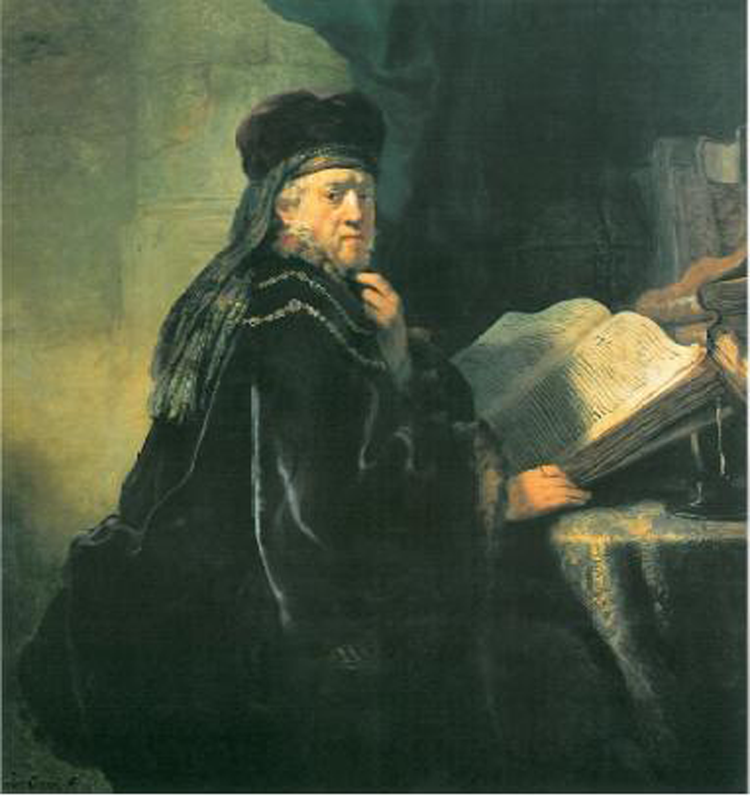
Scholar in his Study (1634), Rembrandt
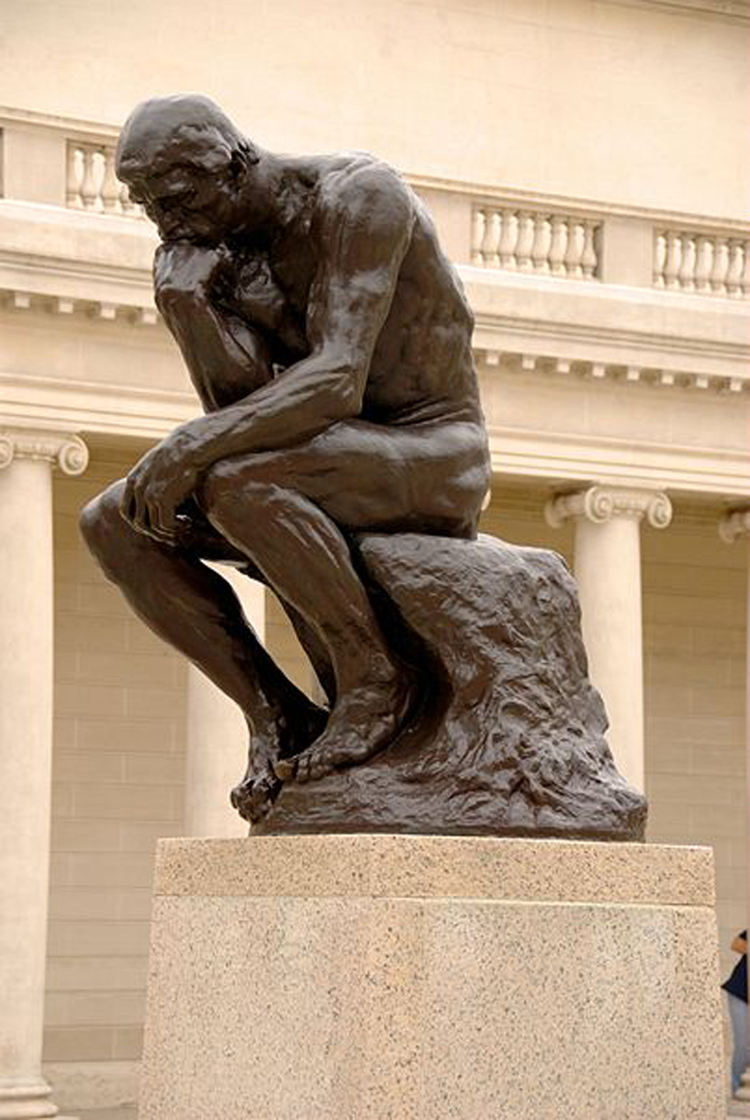
The Thinker (1902), Rodin

A Thinker / Sappho Portrait / Fresco from Pompeii, ca. 50 A.D
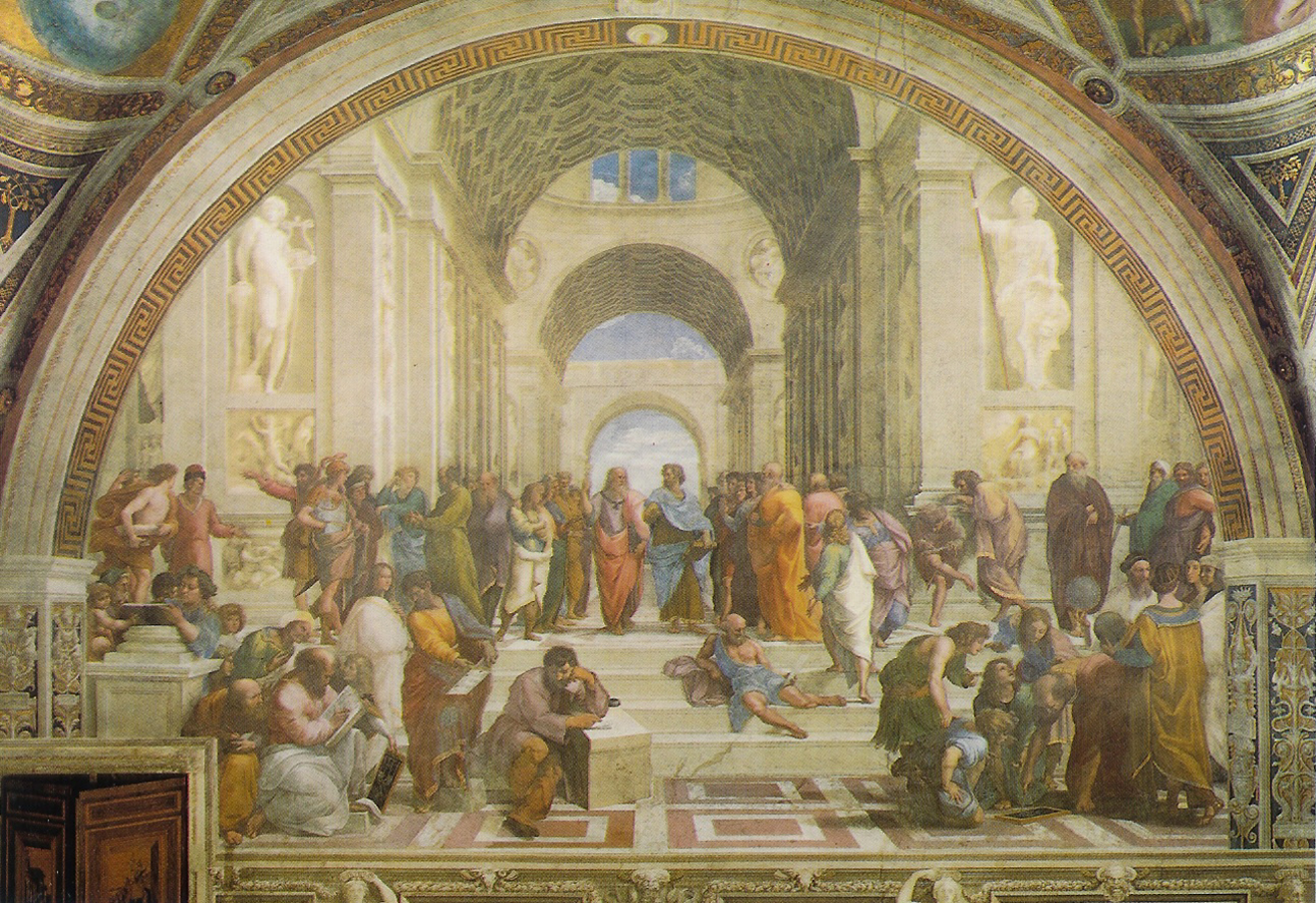
The School of Athens (1509-1511), Raphael
The systematic observation of every work of art at this stage was implemented using Perkins's methodological tool.
Sixth Stage: Critical Reflection on the Experience
At this stage, the educator facilitates a critical evaluation of the previous steps. In our example, I animated a discussion aiming at the comparison of the participants' initial assuptions about the point of view with those resulting from the previous stages. We also appraised the impact of the aesthetic experience in the whole process.
Remarks
Throughout the application of the method, in the third session of this program, it was noticed that the works of art provided learners the opportunity to vividly access their views and emotions about the characteristics and attitudes of a thinker. While examining the spirit of the artworks, the discussion considered the stereotypical conceptions and behaviors regarding the subjective nature and the social being of the thinkers. Alternative and multiconnected aspects have been raised (e.g. a thinker is someone with an unconventional attitude, someone who learns not only from studying but also from building relationships and through social action, someone who may be an active citizen, who creates networks, shares knowledge with others, etc.). Also, an insight started emerging, that being a critical thinker is very demanding, but the moral, affective and intellectual rewards may be great both for her and her environment. Finally, the participants discussed the possibility of developing an alternative conception of reality where the status of the thinkers could have been different.
In the end of the session participants were asked to express in one word their impression of what they had experienced. The words they used were (in the order they mentioned them): ‘satisfaction’, ‘change’, ‘emotion’, ‘anxiety’, ‘new horizons', ‘puzzled’, ‘challenge’, ‘holistic’, ‘enrichment’, ‘reflective disposition’, ‘opening’ and ‘fulfillment’.
Next Steps
During the next steps of the method, the group progresses spirally to the elaboration of the rest points of view. The described fourth to sixth stages are applied in every step, if possible.
In our example, during the next sessions, we continued to critically examine the habit of mind regarding the identity of a transformative adult educator. We elaborated various points of view, like the time strategy, the relations of the educators with the participants, the peers and the social context, as well as their self-evaluation and self-directed learning processes. Believing that the aesthetic experience is not intended to be applied in an isolated part of a learning program but that it could be infused in as many sessions as possible, I suggested in various occasions to the group to further critically examine those points of view through the use of artworks. We observed mainly films, such as Cantet’s The Class, which deals with the practice of a critically reflective teacher, as well as Visconti’s The Leopard which discusses the development of critical thinking of a grown-up man under the influence of the social milieu. Procuration was taken to ensure that the processes were related to each other, as well as to the major issue at hand. Thus, the aesthetic experience was integrated into the attempt to traverse a progressive series of transformations that could culminate in a transformation of the governing habit of mind.
Application in various settings
I argue that finding the ways in which “Transformative Learning through Aesthetic Experience” could be applied in various settings is a challenge for the adult educators. In Greece, various relevant applications have already taken place, among which I mention three that were presented at the Conference “Education through Arts”, organized by the Hellenic Adult Education Association in Athens on May 15–16, 2010. During that Conference Pavlakis (2010) examined the issue of leadership within business context, through the critical observation of paintings that present several styles of leadership. Moreover, Chasidou (2009) presented a transformative learning process that she applied in a Parenting School, using the film Secrets and Lies. Finally, Manthou (2010) presented the way in which the issue of multiculturalism was approached in a School of Second Chance, through the systematic observation of art photos from the African tribe of Himba.
Flexibility in application
The aforementioned method should be implemented flexibly, according to the circumstances of each learning process. For instance, the stages of the method should not follow the exact described sequence. Moreover, the use of the method is not necessarily related to the transformation of a habit of mind, but might only refer to a critical examination of points of view. In this case, the stages four to six of the integral method could be activated.
Epilogue
I am confident that the systematic infusion of aesthetic experience within the processes of transformative learning could play a catalytic role in unearthing the integrated knowing, encompassing critically reflective, affective and imaginative dimensions and enriching the literal language with nondiscursive forms of representation. As John Dewey stated, the stamp of aesthetic experience needs to be on any intellectual idea in order for that to be complete: No intellectual activity is an integral event (is an experience), unless it is rounded out with this quality. Without it, thinking is inconclusive. In short, esthetic cannot be sharply marked off from the intellectual experience since the latter must bear an esthetic stamp to be itself complete (Dewey, 1934/1980, p. 40).
Footnotes
The main ideas of the article were included in a presentation within the context of the 8th Transformative Learning Conference, Bermuda, 2009.
The author declared no potential conflicts of interests with respect to the research, authorship, and/or publication of this article.
The author received no financial support for the research, authorship, and/or publication of this article.