







Abstract
This article describes a Cooperative Inquiry (CI) undertaken by seven transformative educators who set out to explore how they could better walk with the authority inherent in their professional roles so as to avoid unconsciously replicating unhealthy power dynamics. Their process revealed the insidious and cyclical nature of hegemony, enabling co-inquirers to uncover deeply ingrained patterns vis-a-vis power. Action/reflection cycles highlighted the role of self-policing, vulnerability, hegemonic traps, interruption practices, and the significance of wholeheartedness. Furthermore, the CI process itself was found to be empowering, as presentational knowledge and collective meaning-making supported the dismantling of isolation and shame that often accompanied and perpetuated feelings of disempowerment. Co-inquirers more effectively identified when and how cultural constructs affected them, thereby claiming greater agency in both personal and professional lives. The need for ongoing individual and collaborative reflexivity to reinforce and affirm positive, wholesome power dynamics was also shown.
Introduction
Power is ‘always already there’. (Foucault, 1980, p. 141)
Power structures exist in our culture that, if left unexamined, continue to reinforce the status quo about who has power, who doesn’t, and what power looks like. As Brookfield (2005) stated, “Power is omnipresent in human existence, evident as much in the minutiae of interpersonal relationships as in large-scale political arrangements” (p. 46). Despite the ubiquity of the influences of power structures in our lives, we remain largely unaware of them, rarely exploring these impacts and their sources. Within the realm of critical theory, Brookfield refers to this as hegemony, where people are found “to embrace as commonsense wisdom certain beliefs and political conditions that work against their interests and serve those of the powerful” (p. 43). The mechanisms that underlie this process occur simultaneously within the individual and at the cultural level. Educators, and others concerned with social change, need to address these subtle power structures by bringing them into conscious awareness, thereby yielding potential for both personal and social transformation. Otherwise, as Butterwick and Lawrence (2009) articulated, “We can create an environment where transformational learning can occur; however, without care and attention to the power we have … we can also contribute to oppression and silencing” (p. 44). As a group of seven transformative educators, we came together to collectively examine a shared belief, garnered through experience, that it is necessary for those in positions of power to diligently explore external power structures in order to avoid perpetuating the disempowerment inherent in these systems.
The cooperative inquiry (CI) methodology provided a framework for collective exploration into the authority inherent in our professional roles and how to better avoid unconsciously replicating unhealthy power dynamics. Further, the CI supported examination of the interplay between our personal relationships with power and our efforts to foster positive personal and social change. Though currently working in diverse formal and nonformal educational environments across North America, at one time, coinquirers all taught for the same transformative higher education program. Having experienced the synergistic capacities of our collaboration, we yearned to bring that collective creativity to this investigation. While feeling the need to deepen our understandings of, expose, and change relationships to power, all coinquirers began this inquiry believing themselves to be well versed in literature pertaining to issues of power, hegemony, and the transformative process.
Cultural Constructs and Understandings of Power
Power is a concept widely examined in diverse fields of study from economics to philosophy, from politics to art, in education and in leadership. Our exploration did not attempt to categorically define what power is. Rather, our investigations alternated between what have been identified as two poles of power: “The generative side of power is the power-to that Paul Tillich refers to as the drive to self-realization. The degenerative, shadow side is power-over—the stealing or suppression of the self-realization of another” (Kahane, 2010, p. 17). While our intention was to focus on the energizing and liberating potentials of power, we also recognized the need to understand the foundations that give rise to experiences of powerlessness.
As educators and change agents, explorations of the powerful/powerless dichotomy seemed incumbent upon us, as we were continuously face-to-face with the conundrum of attempting to foster empowerment while embedded in a system in which our role as a teacher is one of the mechanisms by which systemic power is maintained. As Palmer (2004) asserted, “Power comes to anyone who controls the tools of coercion, which range from grades to guns” (p. 76). It is quite challenging to recognize how deeply controlled we are by cultural forces simply because we all: develop in a society with a democratic story about itself that is so enveloping and sentimental that it is hard to notice how authoritative and oligarchic power actually is, at work, in school, in government, in business, in the media, etc. Power in society is like power in schools, colleges, and classrooms—unilateral, unelected, top-down, hierarchical, patriarchal, not democratic. (Shor, 1996, p. 23)
The investment of authority in us as educators and leaders has occurred without our active consent and at a level prior to our work to contravene it. As Brookfield (1995) suggested, “An awareness of how the dynamics of power permeate all educational processes helps us realize that forces present in the wider society always intrude into the classroom” (p. 9). The awareness required to understand power dynamics is not static; it is an ongoing process and not one that is ever accomplished.
The Concept of Hegemony
Some of the most influential articulation of the pervasive nature of hegemonic control was accomplished by Gramsci, who identified the role of consent and the embracing of the dominant cultural views by a willing populace. In his view, education and the media are the major inculcators of culture’s deeply held beliefs and practices, noting that “every relationship of hegemony is necessarily an educational relationship” (Gramsci, 1971, p. 350).
Paralleling the work of Gramsci, regarding the transmission of power dynamics within and through culture, is the work of Foucault. “What Foucault adds to Gramsci is … an understanding of how various complex social techniques and methods central to the construction of identities, values, and political settlements are constituted and how they operate” (Olssen, 1999, p. 104). While those who study these individuals could articulate myriad differences in their approaches to understanding power, for nontheorists and non-Marxists, the interplay between them adds to a better understanding of the concept of power, as it manifests in the interlocked spheres of persons and cultures. The task then becomes to awaken to the nature of these identity and culture-creating forces and to determine whether one wishes to challenge or assent to them. Otherwise, “Because we learn self-discipline, undertake self-surveillance, and exercise self-censorship, there is little need for dominant groups to force ideas or behaviors on us” (Brookfield, 2005, p. 45).
Personal awareness is one step, but as educators and social change agents, there is another level to be acknowledged and integrated. While social change work and transformative education practices often change the container through which new ideas are explored (learning directly from the natural world or sitting in circles instead of in rows with the teacher at the front), we must consider whether we have simply replicated the old foundations of power-over education in a new form. Marino (1997) delved deeply into this question observing: I have gradually begun to ask myself and colleagues how we really know if we are indeed engaged in producing truly emancipatory materials—or if we are only, unconsciously, reproducing colonized patterns based on immersion in our own cultural pea soup. (p. 103)
This was a foundational query to the launching of our CI and continually surfaced throughout it. We recognized, as Palmer (2004) asserted, that we are susceptible to the ways in which: The world used punishments and rewards to motivate us, to redirect us, or to keep us in line. But those sanctions cannot work until we internalize them. Only when we assent to the world’s logic does it have power over us. (p. 105)
Acknowledging our susceptibility revealed our vulnerability to external as well as internalized judgments. The form and intention of a CI support such discoveries. In fact, Heron and Reason (2001) noted that: If the co-researchers are really willing to examine their lives and their experience in depth and in detail, it is likely that they will uncover aspects of their life with which they are uncomfortable and at which they have avoided looking. (p. 185)
The methodology of the CI itself may be effective in countering hegemony through the cultivation of openness to critical self-reflection deeply shared with others of similar intent.
CI as Transformative Process
Action research (AR) approaches aim to generate change and transformation on social, political, and/or personal levels (Reason & Bradbury, 2001). As a form of AR, CI “involves two or more people researching a topic through their own experience of it, using a series of cycles in which they move between this experience and reflecting together on it” (Heron, 1996, p. 1). The methodology is further described as: a way of working with other people who have similar concerns and interests to yourself in order to: (1) understand your world, make sense of your life and develop new and creative ways of looking at things; and (2) learn how to act to change things you may want to change and find out how to do things better. (Heron & Reason, 2001, p. 179)
CIs have had an impact in empowering and fostering transformation in education and other arenas of social change (see Douglas, 2002; Ospina, El Hadidy, & Hofmann-Pinilla, 2008; Osterhold, Husserl Rubiano, & Nicol, 2007; Rosenwasser, 2002; Summers & Turner, 2011). The scope of those engaging in CIs is wide, though the practice is not as yet widespread. As a form of participatory research, CIs offer the possibility of reaching beyond an informational realm of understanding and into one of transformation (Heron, 1996). One of the challenges of engaging with this form of research is the impossibility of predicting outcomes, which many funders and institutions look for. Thus, embarking on a CI in itself can be risky. While transformation seems likely, the form it might take is unknown.
Method
The participatory nature of a CI requires that all participants engage as coinquirers in every step of the research process. Coinquirers cycle between acting for change in their separate lives and individual and group reflection, as they collaboratively make meaning of their various experiences to further understanding of aspects of the launching statement. This cycle of action and reflection is repeated until the group feels it has successfully addressed the issue (Heron, 1996; Reason & Bradbury, 2001).
In addition to a series of successive action/reflection cycles, a CI involves an extended epistemology engaging with what Heron (1996) describes as propositional, presentational, practical, and experiential forms of knowing. Experiential knowing occurs through direct face-to-face encounter with a person, place, or thing; Presentational knowing is that in which meaning and significance are expressed through movement, dance, drawing, poetry, stories, images, and so on; Propositional knowing comes through in ideas and theories; and Practical knowing is expressed in a skill or competence (Heron, 1996). As affirmed by Heron and Reason (2001): In co-operative inquiry we say that knowing will be more valid if these four ways of knowing are congruent with each other: if our knowing is grounded in our experience, expressed through our stories and images, understood through theories which make sense to us, and expressed in worthwhile action in our lives. (pp. 183–184)
Coinquirers
Our CI evolved out of a shared 15-year history teaching in transformative educational environments. We had common values and experiences based on our long-term relationships and commitment to transformation in our personal lives and our work as educators and change agents. We wanted to offer education that fostered empowerment, yet noted the challenges of teaching within a cultural educational context that is hierarchical, with recognized authority figures (teacher/professor/expert). This seemed to us, at best, paradoxical and, at worst, hypocritical and paradigm reinforcing. As a result, we were experiencing “a sense of ‘felt disquiet’” (Kasl & Yorks, 2010, p. 322) in our experiences as educators.
Though no longer working for the same program, we were all involved in formal and nonformal education with transformative learning as a focal point and growing edge. As professionals, we continued to grapple with similar questions: How could we better work with power dynamics intrinsic in the larger educational system? How do these dynamics manifest in us as individuals, as well as collectively as transformative educators? We sought to examine and work towards affirming aspects of what we hoped to uncover and not focus solely on the problematic. Our launching statement was crafted to reflect this intention.
As a CI emerges out of, and is grounded in, the personal, we offer here a brief description of the six coinquirers who engaged with the entirety of the 15-month process.
Brad has spent a lifetime working in a wide variety of environmental and social justice education programs, within Canada and internationally. His teaching has been shaped by the power of collaborative learning with students, reflecting on his own privilege, paddling on lakes and rivers, and popular theatre. Currently, Brad is practicing and teaching yoga as a process of transformative inquiry and landscaping part time.
Judy is recently retired, following an eclectic history as a university educator, educational consultant, and personal counselor. The focus of her life has been to support others, both individually and collaboratively, as they make meaning and act for change for themselves, their communities, and the health of the earth. She currently offers one-on-one spiritual and life consulting, as well as group workshops, and is continually evolving her own late-in-life understandings.
Julie has been an actor, vegetarian, Waldorf teacher, and environmental educator and now co-owns an organic cattle ranch with an apprenticeship program for young adults interested in sustainable agriculture. The through line in her life has been a fervent commitment to reciprocity in all her relationships, be they with humans or the other-than-human world. Her background in transformative education plays out in business interactions when working intimately with people, animals, and land.
Larkspur is an executive director of an educational nonprofit, helping to support the rebirth of its transformative, holistic, and experiential university-level programs. As such, she has moved into a stronger position of leadership and has been on a steep learning curve. To explore and maintain her equilibrium, Larkspur is also drawn to self-expression through a form of free dance.
Neal facilitates and designs curriculum for experiential education programs in higher education. He has also previously taught a qualitative research course for graduate students, which provided a good introduction to Heron’s (1996) model of CI.
Nicky has spent most of the past 15 years within academia, while taking needed breaks from higher education to engage with supporting the spiritual lives of children, youth, and their parents. One of her foundational beliefs is that “how one teaches is as important as what one teaches” and thus she works to actively incorporate contemplative pedagogy, experiential education, and the natural world into all learning environments.
The CI Process
Initial coinquirers gathered, five in person and two virtually, for a preliminary weekend in which we shared our thoughts and questions around the concept of power in education, continued to familiarize ourselves with the CI model, and came to agreement on our launching statement We choose to manifest our power with loving fierce grace—attentive to and liberated from cultural constructs of power. Transforming our relationships to power, we claim and express what allows us to be in whole-hearted service to life!
Subsequent to this initial meeting, the CI group gathered for a full 8-hr day, via video conferencing, on average every 6 weeks, for 10 action/reflection cycles. Though we began as a group of seven, during Cycle 3, one participant decided to discontinue her participation. The remaining six coinquirers continued for the 15 months.
During the preliminary meeting, we identified questions that would direct our first action/reflection cycle: What does power feel like? When do I feel powerful and when do I feel powerless? Guiding questions for subsequent cycles emerged, as we collectively sought meaning garnered through individual actions and shared reflections, thereby identifying which part of the launching statement to shed light on next. These focus areas included the following: identifying sources of disempowerment and disconnection; acting to challenge sources of disempowerment; exposing our complicity in our own disempowerment; exploring how to live our lives as wholly and authentically as possible; and recognizing and celebrating our gifts.
One week prior to each online gathering, coinquirers agreed to post their presentational knowledge on a private site and to review and immerse ourselves in each others’ postings. After several cycles of experimentation, each meeting had a similar format: a personal check-in; a round of responsive questioning about each coinquirer’s presentational knowledge; a break, then digging more deeply into the material generated by our question, actions, and reflections. Finally, we identified the question to focus on for the next cycle.
Heron’s (1996) validity procedures were considered at regular intervals throughout the inquiry. In brief, this involved balancing various forms of convergence and divergence (e.g., maintaining the same focus question for more than one cycle vs. changing the question for each new cycle or all acting on a question in the same way vs. acting on the same question in different ways), reflection and action, and chaos and disorder (allowing our cycles to take the time they needed and learning to sit with messiness and confusion when necessary). Coinquirers also worked to challenge consensus (playing devil’s advocate and asking information gathering or illuminating questions of one another’s experiences and reflections), encourage authentic collaboration (challenging dominant voices, rotating facilitation, and regular check-ins about the CI process), and manage distress (regular and in-depth check-ins allowed us to identify and work through anxiety and projections as they arose.)
A Sample CI Cycle
To support readers who are less familiar with the CI process, we provide here a summative overview of one of our action/reflection cycles (Cycle 2).
Question
Subsequent to a cycle in which coinquirers identified what power felt like and in what situations we felt powerful or powerless, we were led to ask ourselves the questions “What are my sources of disempowerment/disconnection vis-à-vis feeling powerful? And how am I acting to challenge/transform them?”
Action/Reflection
Coinquirers diverged in how they acted and reflected on this question in their professional and personal lives, for the duration of 6 weeks. Presentational knowing was created and posted on the website for all to engage with prior to the daylong online gathering. Examples of presentational knowing from this cycle included various forms of poetry (two voice and pantoum), drawn images and graphic representations, a video recording of an interpretive dance, and creation of a symbolic necklace.
Summary of meaning making from the cycle
Collective explorations revealed both common and diverging understandings and experiences including: Identification of sources of disempowerment (e.g., judgment of self and others, physical limitations and ageism, fear, resistance, feelings of disconnection, getting hooked into a story of disempowerment, attachment to reactions that keep us safe, emotional armour, and experiences of “not love”); the significance of vulnerability and ahimsa (compassion or nonviolence) in dealing with feelings of disempowerment; questioning the role of self-surveillance as a contributor to feelings of disempowerment; the value of accepting the gifts of aging; realizing that disconnection is an illusion; appreciating that our reluctance to stand in our truths is a disservice to all; thus doing so is a vocation, though it can be scary; it is important to hold space for others as they try to be their full authentic selves; recognizing that though we can’t always remove the stressors, we can change our relationship to them; that we need to focus more on how we are being in the world rather than what we are doing in it; valuing that exploring our darkness in the light of this group is empowering; a deeper awareness of how words alone are not always what will leverage us into understanding and action.
The cycle ended with coinquirers revisiting the launching statement (it was left unaltered), checking in about our process, and determining a focus for the following cycle which was, “What are the five words that support me/guide me in living life as w/holy and authentically as possible? How do I live them now … and now … and now?”
Analysis of CI Process
There were two different layers to our analysis process. Twice during the 15 months all coinquirers engaged with a meta reflection on all previous cycles, identifying significant themes and propositional outcomes and looking for congruence between the four ways of knowing. In addition, subsequent to the main body of the CI, three coinquirers (the authors of this article) reviewed the entire data set, consisting of recorded online discussions, notes coinquirers participated in taking for each cycle, posted presentational knowledge, and the meta-reflections, for further insight. Themes identified in this second level of analysis were confirmed with all coinquirers.
Five key themes emerged and are expanded upon subsequently. Findings are considered in the context of prior studies and relevant literature (contributed by coinquirers in cycle reflections and explored more deeply by the authors in writing this article), offering insight into the potential for CIs to empower educators to recognize, challenge, and act to change the underpinnings of hegemonic beliefs and related actions, thereby making possible transformation in their lives and practice.
Findings and Significance
Crouching Naked in the Nonexistent Box
Initial CI discussions centered on phenomenological (personal/essence) and hermeneutic (cultural/interpretive) understandings of power. Although our launching statement did not explicitly use the word hegemony, it was a concept (and a reality) that we grappled with throughout our process. It’s a slippery term both to say and to understand, since it works at a level below consciousness, investing “the way things are” with a sort of inevitability that is embraced and reinforced by the dominant culture and comes to be seen as common sense rather than oppressive.
Our early work revealed profound and appalling impacts of the dominant culture even in persons such as ourselves, who were self-aware enough to pose a question around power and authority. We even evidenced initial discomfort with the word power, and personal reluctance to claim it, while finding it relatively easy to access experiences of disempowerment.
We also experienced positive manifestations of power throughout our yearlong inquiry, describing it as “oneness with all rather than feeling separated,” a sense of “agency,” “resonance,” or “effervescence,” and “something beyond ourselves that fills us and we become an instrument.” In so doing, we moved past initial discomfort to understand that power is “a productive network which runs through the whole social body, much more than as a negative instance whose function is repression” (Foucault, 1980, p. 119).
As we grappled with the concept of hegemony, we experienced interplay between established power dynamics and internalized beliefs and actions that reinforce these dynamics and create layers of often invisible oppression that mask the subtle manipulation exerted upon us by our relationships, roles, and cultural norms. Neal offered a thought-provoking image, asking us to consider our experience of hegemony as “crouching naked in a non-existent box.” The self-doubt generated by hegemony can make us uncomfortable with being known in our entirety, our flaws revealed, leaving us feeling “naked” and vulnerable. The image of the box illustrated how difficult it is to ascribe authorship to disempowering messages. In Brookfield’s words, “Defining the enemy becomes impossible when the enemy is embedded in the thoughts one thinks, the actions one takes, and the relations one lives out on a daily basis” (2005, p. 102).
One of the major forms taken by the embedded enemy is self-policing, or self-surveillance, as Brookfield (2005) referred to it, referencing Foucault’s work and its implications for adult education. An example of this concept is illustrated in Nicky’s reflections on her attempts to incorporate creativity into a higher education environment: Though we give creativity lip service in academia there is internal (based on external) pressure to meet predetermined outcomes, get things done, stick to the timeline, and so on. I think it’s a form of Foucault’s “self-policing.” It would be good for me to look more deeply at where else I “self-police” in my life.
The questions that guided our second cycle are as follows: “What are my sources of disempowerment/disconnection vis-à-vis feeling powerful? And how am I acting to challenge/transform them?” attempted this deeper inquiry into self-surveillance. Judy reflected on her Catholic upbringing in contrast to her profound connection to trees and the history of the Druids: I submerged or judged this important part of myself … I go along with the jokes about being a hippy ….but a huge part of that was about being connected to and claiming the spiritual.… I’ve internalized my sources of disempowerment …. I don’t think I discounted myself because I wanted to. These things are real. I had experiences about that.
Complicity in our own disempowerment also showed up in our process as a CI group. By Cycle 5, it became evident that coinquirers varied widely in the timely posting of their presentational knowing. Some posted on time, some late, and some not at all. Towards the end of this cycle’s virtual gathering, while reviewing CI validity procedures, we asked whether this difference was generating projections onto participants as to who was “doing it right.” Was our inquiry into power creating just another box? Here, again Judy speaks: I had a moment of being projected into my own projection …. Because the culture values being on time, and I struggle with that, I get so wrapped up in the me part of it that I don’t know what it might feel like to be on the other side.… I’ve got so much stuff around my own competence that I was blocked from seeing other people’s experience.
Realizing that the diabolical emotional hook of hegemony was active inside our own inquiry helped us recognize the reinforcing feedback loop of internal messages and external conditions that keep hegemony in place and invisible. Larkspur illustrated this in her presentational knowing from Cycle 5 (see Figure 1).
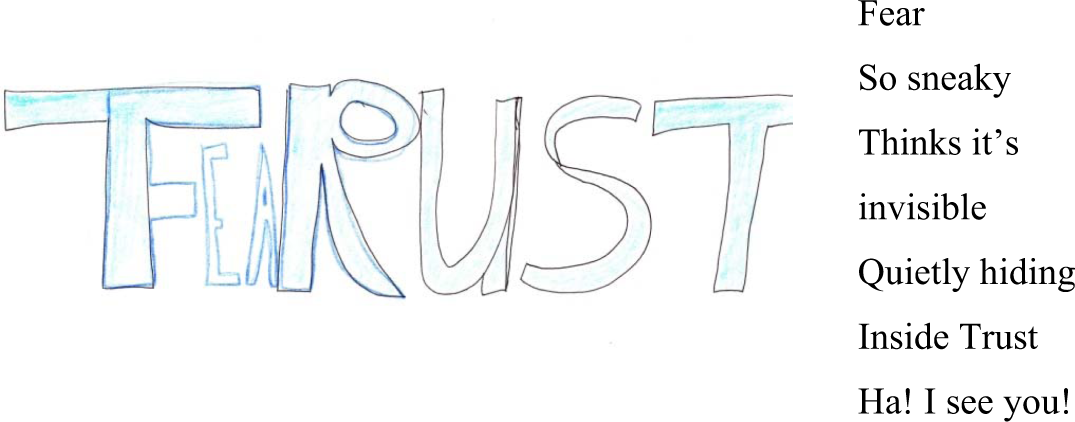
Fear cloaked within trust.
Naming and exploring the presence of hegemony in our personal and professional lives brought the “enemy” into focus and enabled our examination of its structure and influence as independent from any personal “failing.” This then assisted us in identifying entrenched patterns in our own thinking as well as in the organizations and institutions within which we work.
Larkspur observed that through this CI, she became aware of her anxiety in ways she never had before. Her coping mechanisms were so well developed that they often hid her fear even from herself. She acknowledged that much of her growth has been in uncovering, unclogging, and peeling back culturally imposed layers, thus learning to recognize all of the ways that she doesn’t claim and express her wholehearted self. She now cannot imagine going back to being unconscious of how anxiety can direct her behavior and actions.
While this is a deeply personal issue, Larkspur also speaks to how her unconscious insecurity around asking for help and being open to receiving it has impacted her in many ways in her relatively new leadership role. A big one had to do with money issues: I came to see how much work I needed to do in terms of receiving. I needed this mostly in order to support my ability to do fundraising. To ask for money, requires being able to receive money when actually offered!
Put Your Own Mask on First, Then Help Anyone Who Needs Your Assistance
Those working for change on societal, cultural, and institutional levels can become disenchanted and disheartened as the intransigence of systemic hegemony negates efforts to alter the system. While systems theory states that it doesn’t matter where change begins because the entire system responds to any variation, the field of psychology makes clear that, in most cases, the only changes over which we have any immediate control are those that emanate from and focus on our selves. Given the self-renewing power of systems, most of the changes we wish to foster may only be possible when we engage with deeply embedded inner beliefs. As O’Sullivan (2012) articulated: The creation of alternative institutions will not take place unless they are rooted in deeply held values—in our sense of who we are, who we want to be, and how we relate to each other and the living body of the earth. (p. 165)
Working as transformative educators, we believed that we needed to honestly model what we asked of students. Yet, by Cycle 2, it became clear that although we had spent years examining internal and external power dynamics, we felt stymied in our attempts to create significant change in either. Realizing the extent to which we had internalized debilitating and silencing messages, we proposed that the standard—of simultaneously dismantling inner and outer power dynamics—was perhaps a hegemonic trap in its own right.
Brad found himself unexpectedly engaging with the confluence of inner and outer power dynamics during the course of the CI. He had begun teacher training within a community-identified yogic practice that was fracturing due to the sexual misconduct of its founder. Though Brad had long explored issues of privilege, personally and as a transformative educator, he was stirred to revisit the effects of hegemony within his new identity as a yoga teacher as he simultaneously worked with his grief and disillusionment. He created a collage naming arenas of his privilege (e.g., male, White, heterosexual, North American) as well as of self-generated disempowerment (e.g., overly silencing himself to counter the space men can take in conversation). After doing his personal work in this arena, Brad spoke to fellow teacher trainees about how sexism can impact the yoga space. In his classes, as well as in conversations with colleagues, Brad now challenges participants to explore how Western Yoga is shaped by hegemonic notions around concepts including the beauty myth, individualism, and capitalism. Whether it’s celebrating the herstory of women’s work in the evolution of Western Yoga or teaching about the mycelium that weave a forest together as the class stands in vrkasana (tree pose) as a way to demonstrate interdependence with other species, Brad continues the work of unpacking these generalized patterns that make up our conditioning.
Much of Julie’s examination of power dynamics took place within the rural ranching culture of the western United States, where she and her partner operate a sustainable cattle ranch that offers a prototype yearlong apprenticeship program. Coming originally from urban California, Julie had entered a new culture through her marriage. She soon became acutely aware of gendered norms that were invisible to her partner and were constantly reinforced by local customs. While a few women independently own and run ranches, they are also harshly judged for their “unfeminine” behaviors. Young women are encouraged to remain or join ranching families, but not as cowboys or managers. The CI process revealed hegemonic propositions and actions that made Julie complicit in her disempowerment. While the realizations were painful, they also were liberating, as she noted: This process was a catalyst to take the work I’ve been trying to do for my adult life and do it with a different degree of risk and fortitude. I feel like I moved further and better in these 14 months than I had done for 13 years.
Julie now includes examination of gendered hegemonic patterns as part of the apprentice curriculum, naming how these patterns play out at the mentor ranch (e.g., male mentors expect women apprentices to cook and don’t automatically include them when tractor repair is at hand; the opposite is true for male apprentices). Women apprentices now oversee planning any branding events, choosing jobs for themselves, which assure that they learn the skills they need and bypass the men’s assumptions that the women will cook and vaccinate while the men rope, brand, and castrate. This reflects O’Sullivan’s (2012) statement that “living systems adapt by transforming themselves, and learning occurs. Thus, from the perspective of transformative learning, real learning is not something added to a system in adaptation. Transformation means, in essence, the reorganization of the whole system” (p. 171).
These and other data revealed experiences where our indwelling beliefs of limitation, though based in real experiences, interfered with efforts to implement solutions with whatever larger societal issues were before us. We determined that our effectiveness as educators and change agents was dependent on challenging our internalized disempowerment, that is, metaphorically “putting your own oxygen mask on first, before assisting others.”
Oh Shit, Here Comes This Life Lesson Again! Or, Practice, Practice, Practice
As our CI progressed, we realized that there were still patterns of power, which subtly exerted themselves in our professional work and personal lives. Even those elements that we felt we had worked through seemed to rise again and again in different forms or situations.
Recognizing these disabling habitual patterns, unique in their manifestation for each of us, instigated an examination of the role of choice in relation to power. We saw that when we made the leap from conceiving of power as “out there” and unassailable to a realization that we had been embracing and reinforcing this hegemonic form of power within ourselves and in our lives, we were then released to make different choices. Julie commented that the inquiry: has acted as catalyst for some long-needed and oft tried—yet failed efforts to do some “growing up” i.e. fully accepting the fact that I am the only real agent in and of my life. Deflecting responsibility has been an act of disempowerment.
The depth and honesty of this sort of realization reverberated throughout our inquiry, where realizations of one person were foundations upon which we all were able to build.
Brad offered the idea of an “interrupt sticky note”—a conscious, in-the-moment mental action—that interrupts the subconscious when disempowering messages are activated. In that moment of choice, we discovered, is the opportunity to bypass hegemony and fulfill our “ethical obligation to be prepared and to have engaged with his or her own personal transformative process” (Ettling, 2012, p. 543).
In Cycle 2, Brad also proposed the metaphor of “placing your paddle” as the moment in which one chooses whether to engage in old patterns or new actions. When paddling a canoe, one must determine how to maneuver the boat by using one’s paddle to either lean into or away from the current to redirect the boat. Brad reflected, There is a flow in the place of powerlessness too; of habit, conditioning, in that groove. It’s easy to stay in it … Why do we choose to lean into the flow that we know carries us down a path of feeling less powerful moment to moment … ?
“Placing the paddle” became a mantra of sorts for several coinquirers as we encountered moments when we could see the edge between two choices and needed to make conscious decisions to either lean into the current or interrupt the pattern. At times, simply recognizing an edge was deemed as successful. Seeing these patterns and acknowledging their presence made it possible to place our paddles differently—to make different choices in the moment of awareness and not get swept away by old stories about ourselves or the culture. Ettling (2012) supported this in stating, “New awareness is, in itself, a change” (p. 539).
Though at times discouraging, reencountering the same life lessons repeatedly was seen in a positive light. We discovered that the key was to “practice, practice, practice,” as Nicky articulated in our Cycle 7 collective meaning making. Practice was embraced by coinquirers in two ways: First, in realizing the need to continually revisit one’s unconscious hegemonic patterning with fresh eyes and an open mind. Nicky spoke to the cyclical nature of her journey in articulating her essence in Cycle 9: “Be Nicky. Risk as much as you dare. Pause. Reflect. Learn. Embody. Have faith. Risk a little more.” And second, was accepting the central role spiritual practice played in embracing our power in affirming ways. These practices were different for each coinquirer (e.g., contemplation or meditation practices, breathing exercises, taking a walk with the dog, listening to music, gardening, yoga, or dance).
Though treading on well-worn paths, the coming around again and again required both forms of practice in order to be able to open doors to unanticipated awareness, actions, and understandings. As Seeley and Reason (2008) expressed, “In participatory practice you no longer know where you are going to end up, and in a sense the very point is to end up with the unexpected” (p. 40).
The Soul Shines Through
It takes courage to grow up and become who you really are. (E. E. Cummings)
Our power lies in our wholeness, a vague term but a clear experience. Jung’s concept of individuation, as defined by Stein (1998), can serve here: “becoming a unified but also unique personality, an undivided and integrated person” (p. 175). The inquiry process illuminated that our experiences of empowerment were based on wholeheartedness and consequently required that we be able to identify hegemony and its capacity to obscure our wholeness. We did not generally equate wholeheartedness with wholeness: Wholehearted was used to describe how we engage with a situation, whereas wholeness was felt to be more of an outcome. Thus, we become whole when we are wholehearted in our lives.
Brown (2012) asserted that “wholehearted living is about engaging with the world from a place of worthiness” (p. 10). In Cycle 8, Brad spoke of his struggle to claim his identity as an educator without devaluing himself or his part-time work as a landscaper. Figure 2, an excerpt from his presentational knowing, is one such step.
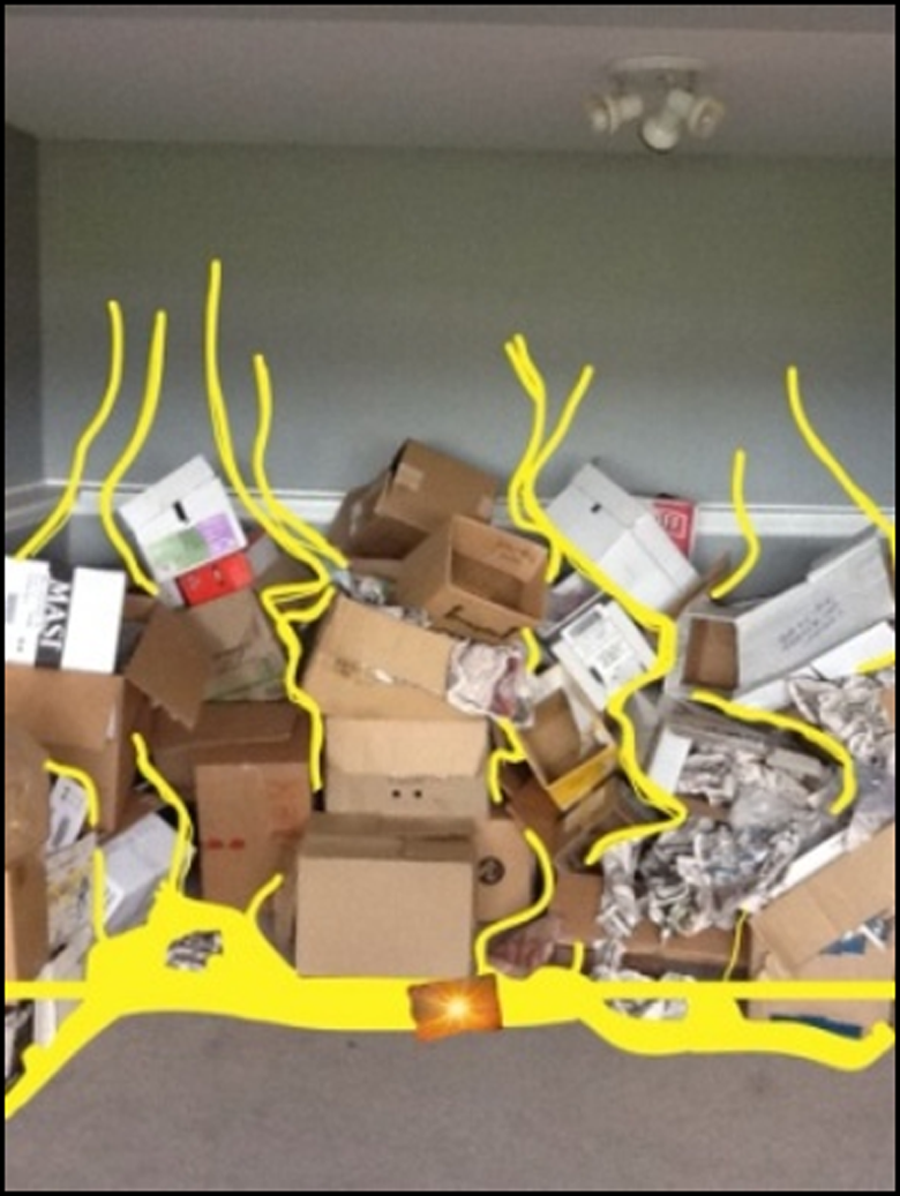
Landscaping off the mat.
Our explorations of wholeheartedness revealed how often we are not fully present for our life experiences. Life’s demands frequently had coinquirers feeling pulled in countless directions at once, thus rarely feeling unconflicted. The hegemonic powers, which validate overcommitment to work, were seen to have a life of their own. Brookfield (2005) draws a picture in which educators, through a near-invisible series of commitments supported by legitimate values, are led to where, “A state of burnout becomes a sign of your commitment to your vocation. Anything less than total exhaustion indicates a falling short of the mark of complete professionalism” (p. 101). Such states were familiar to coinquirers and were seen as prohibiting us from being our whole authentic selves. We felt a strong connection with the thoughts that Schiffman (1996) expressed around this concept recognizing that “When you are not wholehearted, when you are someplace other than where you are, parts of you shut down and begin not to participate” (p. 3).
In her work as university faculty, Nicky experienced regular conflict between her commitment to teaching from her authentic self and the university’s narrow definition of her role. While watching the film Last Chance for Eden (Mun Wah, 2002) with students, Nicky made a connection between her experience and that described by a Dinaé woman doing diversity work who speaks about needing to “leave the best parts of herself outside the door.” In her reflections from Cycle 8, Nicky noted how weighty and distorting it can feel to have labels (academic, professor, researcher, etc.) piled like boxes on top of her soul’s purpose, making it difficult to connect to her authentic response in the moment. Yet regardless of all the “stuff” piled on top of our whole selves, Nicky illustrated how our soul still finds cracks through which to shine in Figure 3.
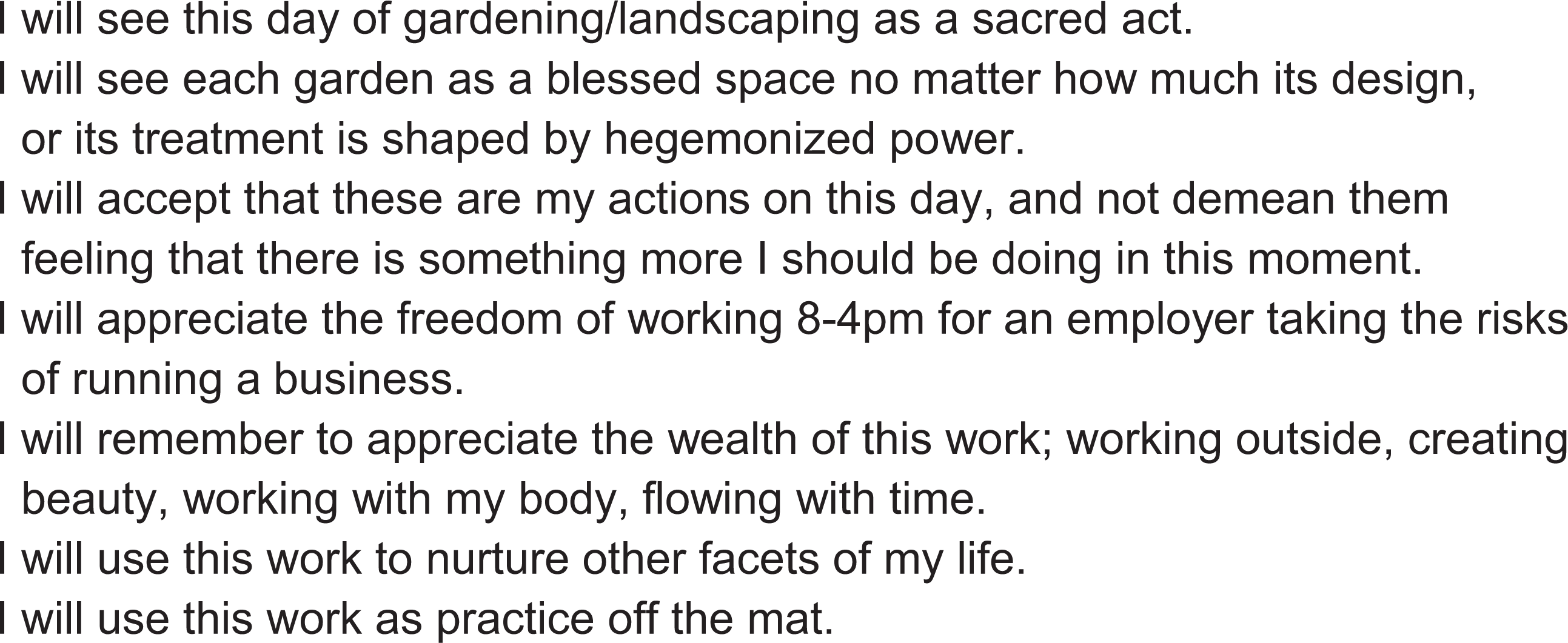
The soul shines through.
Nicky reflected on how she has changed jobs often in her lifetime, a choice that is not generally well respected in our culture. “You’re moving again?” “You’re starting over in a new job, again?” “Will you stick with it this time?” “I hope this one works better/is a better fit for you.” (aka: What is wrong with you??) During this cycle, Nicky developed deep understanding and acceptance that though her current work is as transformative educator in a university, her vocation is the role she plays in any work environment—to be her whole authentic self (warts and all!). Her contribution is often that of uncovering and giving voice to underlying issues, so they can be dealt with; of visioning a better, more powerful, and meaningful program/course/organization; of challenging people to think out of their boxes. Thus, her deeper soul’s work is to build bridges to new futures and new ways of being. Staying true to that vocation is what has had her moving from one place to the next: to where she’s needed. The inquiry process has helped her see that her career and home relocations were each prompted by the desire to stay true to that vocation and move to where she was needed. She now feels less vulnerable to the critique of others whose jobs are more static or permanent.
Wholeheartedness also requires slowing down and noticing the present moment, in contrast to the incessant busyness that cultures reinforce. Coinquirers agreed that the CI process supported our desire to take the time to live our lives more authentically. Time spent in nature was acknowledged as one of the most effective means to slow down. Judy spoke for us in her poem from Cycle 8, Fall Bird Count (see Figure 4).
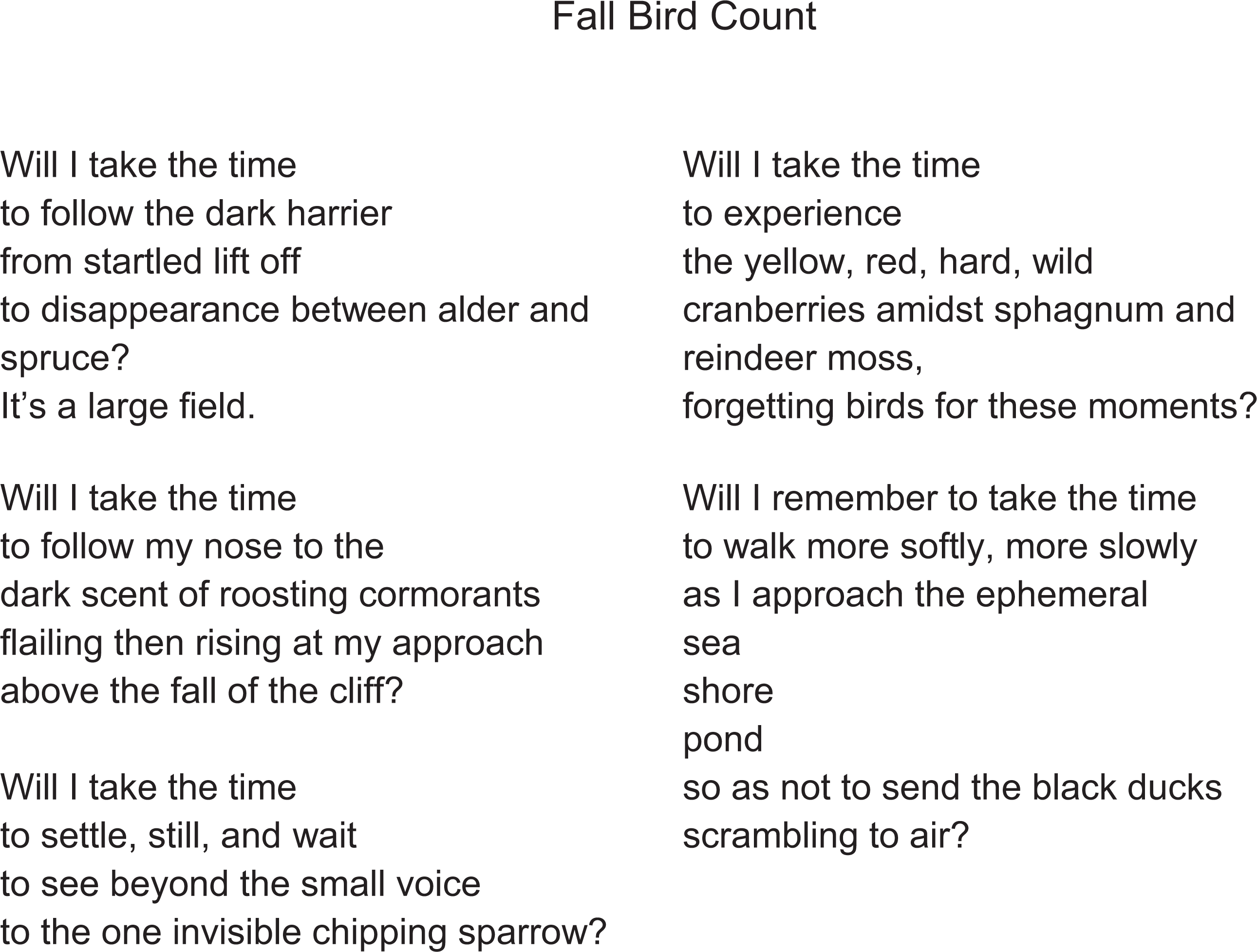
Fall bird count.
The use of time also arose for Judy in relationship to her working peers. The CI revealed an underlying sense of disquiet and self-judgment for her in relation to her retirement. In response, she took an online workshop about becoming a wise elder and participated in a spiritual retreat led by an aging Buddhist teacher. For Judy, slowing down has resulted in less monitoring and judging of herself vis-à-vis others and greater awareness when she considers doing so. This new consciousness feels like a significant move forward in her life patterning and the way she looks at aging.
To live and love with our whole hearts (Brown, 2012) involves embracing our broken and shadow sides. Palmer (2004) supported this stating, “Wholeness does not mean perfection: it means embracing brokenness as an integral part of life” (p. 5). Neal’s Cycle 2 presentational knowing (see Figure 5) reveals his personal experience of the positive potential of our wounds. And yet, there are so many cultural messages that reinforce the need to appear perfect. So prevalent are they that we appear to eat them for breakfast. Palmer (2004) acknowledged both the shining nature of our selves and the powerful distorting elements we encounter in this excerpt:
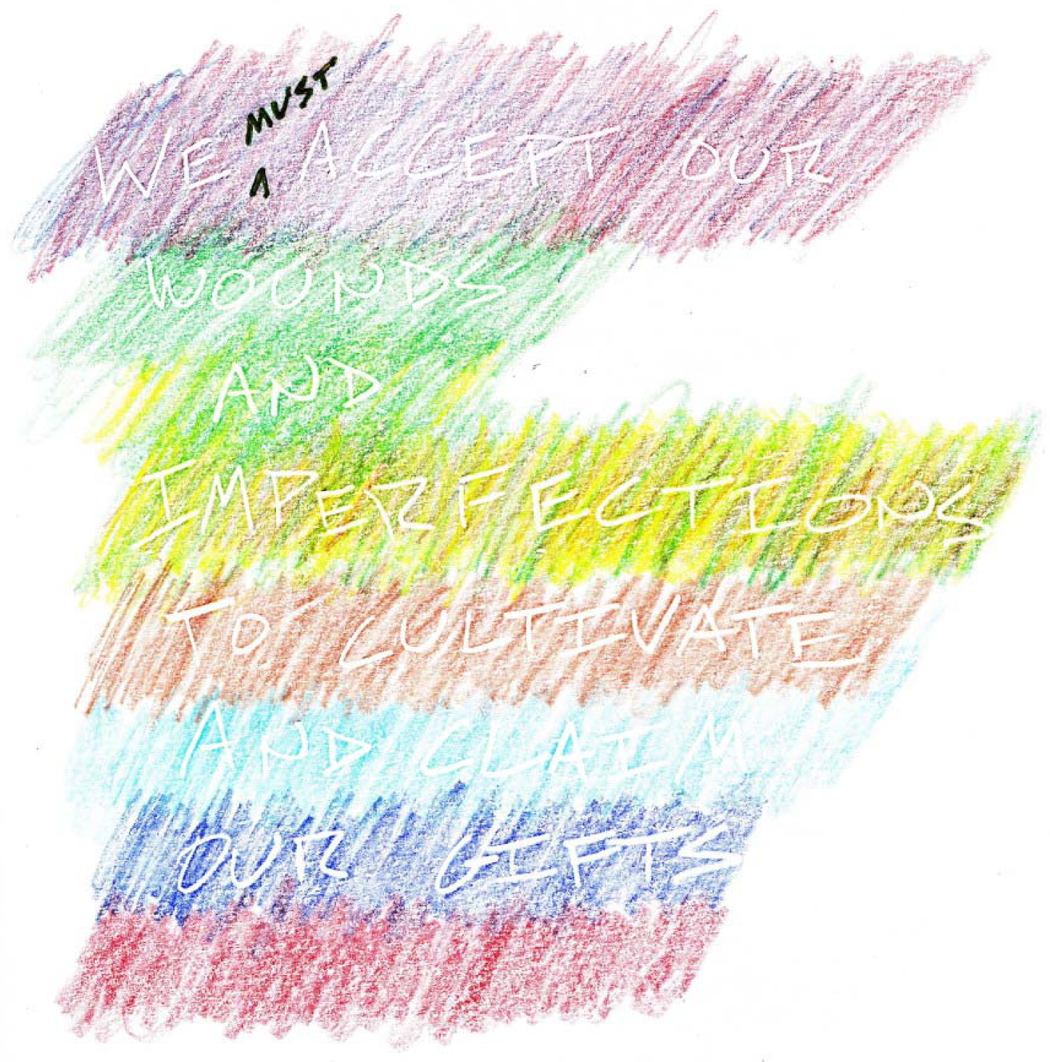
Accepting our wounds.
All of us arrive on earth with souls in perfect form. But from the moment of birth onward, the soul or true self is assailed by deforming forces from without and within: by racism, sexism, economic injustice, and other social cancers; by jealousy, resentment, self doubt, fear, and other demons of the inner life …. And yet the soul persistently calls us back to our birthright form, back to lives that are grounded, connected, and whole. (p. 34)
Though this inquiry process revealed how well we had incorporated cultural messages, it also fostered courage to become who we really are. As Neal articulated for himself: I’ve become better at saying “yes” to the opportunities that arise in my life and have been trying to evolve this as a practice. For me, this fits in with the idea of what power is. By aligning ourselves with how the universe wants to evolve we become powerful. What does it mean to find the gifts given to you constantly? I am aiming to develop my own gifts and to help students to do so. This has allowed me to both step forward and step back—becoming more confident in designing and facilitating activities and material that challenges and supports students in identifying and claiming their own gifts, while realizing that this hard, important work is a personal journey for each of us.
Collective Effervescence
The CI process itself was found to be inherently empowering and transformative, as its extended epistemology offered a way to move beyond intellectualized experience to include emotional, spiritual, and physical ways of knowing, fostering ever-deepening levels of inquiry and discovery that were witnessed by others. Presentational knowing in particular, the opportunity to express ourselves via painting, digital media, collage, sculpture, poetry, song, and storytelling, stretched us beyond hegemonic messages that creativity is the sole purview of the artist. It led to awareness not accessed through more common linear, linguistic methods of communication. Brad articulated the transformative nature of this process: Exploring visual art methods such as mosaic creation, photo essays, and sculpting, along with poetry and creative writing, in the presentational knowledge phase led to a development of confidence and skill in my using collaborative art as a transformative educator. I even began using mosaic work with youth.
For many of the other coinquirers, embracing the creative impulse, essential to living wholeheartedly, appeared to have remained largely absent in their day-to-day lives prior to the CI. We came to agree with Heron’s (1992) claims that “There is one overall point about presentational knowledge which is important for our understanding of the world. It reveals the underlying pattern of things” (p. 168).
Our shared explorations helped to dismantle the isolation and shame that often accompanies and perpetuates disempowerment. In investigating the relationship between shame and wholeheartedness, Brown (2012) noted: We can talk about courage and love and compassion until we sound like a greeting card store, but unless we’re willing to have an honest conversation about what gets in the way of putting these into practice in our daily lives, we will never change. Never, ever. (p. 5)
The community, established and reaffirmed through the CI, provided validation of and challenge to our thought processes, and the synergy of our meaning-making sessions allowed for collective knowledge generation that countermanded the cultural paradigms that dismissed our experiences. Rosenwasser (2002) confirmed that community can be “a powerful antidote to our internalized messages” (p. 53).
Our work together served as a touchstone we could tap into at any time for both nourishment and clarity. Julie endorsed these feelings, stating: You have ALL been present in my life, and I believe one reason I have been able to arrive at a place where I have hope AND action, is due to the tendrils of support that this CI has created.
This deepening connection manifested in diverse forms throughout the year. During a cycle in which we were focused both on identifying what we claim as and how we act on our individual essence or purpose in the world, we also offered one another our outside perspectives. Brad creatively affirmed each coinquirer’s gifts by likening each to a yoga asana (see Figure 6).
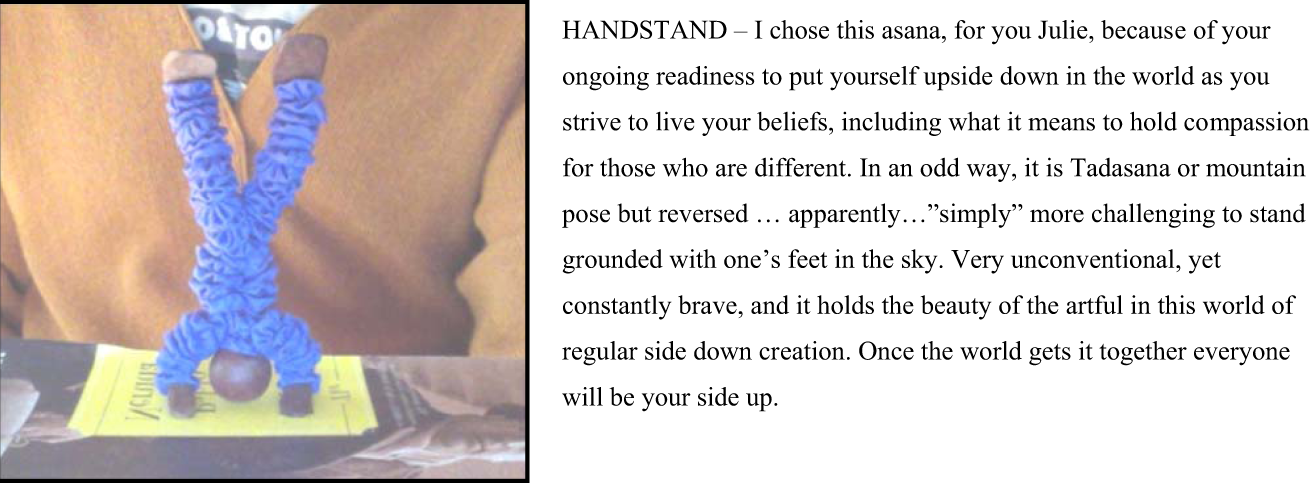
Julie’s gifts.
These and many other simple, yet profound, affirmations helped coinquirers feel supported, as we engaged with the mechanisms that acted to disempower. In one of our final gatherings, Judy identified the cumulative effects of our committed engagement with one another in stating, “This CI experience feels like collective effervescence. It sits for 6 weeks and now there’s hissing going on!”
Conclusion
This article provides a lens into our 15-month-long exploration of the relationship between power, hegemony, and transformation. Ongoing analysis of the data helped to illuminate the following informative and transformative propositional outcomes: The interplay between established power dynamics and internalized beliefs and actions that reinforce these dynamics (self-policing) create layers of oppression which are often invisible, making it difficult to recognize the subtle manipulation exerted upon us daily by our relationships, roles, and cultural norms. Ideally, internalized patterns of disempowerment and external power systems are dismantled simultaneously. However, it became clear to coinquirers that the standard of simultaneity was itself a hegemonic trap. Given that systems strive to maintain the status quo, change may only be possible when we name and challenge systems within. Despite significant effort, habitual patterns of power continued to subtly exert themselves in coinquirers personal and professional lives. Consciously realizing that we were reinforcing systems of power previously conceived as being “out there” led to sustained forms of practice that disrupted patterns and contributed to new and unanticipated awareness and actions. Empowerment is based in wholeheartedness and requires that we identify hegemony and its capacity to subvert our wholeness. The CI process is inherently empowering, as its extended epistemology moves participants beyond intellectualized experience to include emotional, spiritual, and physical ways of knowing, fostering ever-deepening levels of inquiry and discovery. Shared exploration dismantled the isolation and shame that often accompanied and perpetuated disempowerment.
These significant insights informed and transformed our thoughts and actions as we attempted to shift feelings of disempowerment to empowerment and engage with power so it “expresses our purposefulness, wholeness, and agency” (Kahane, 2010, p. 13). Despite years of praxis as committed reflective practitioners, this CI revealed the need for ongoing individual and collaborative reflexivity in order to reinforce and affirm positive and wholesome power dynamics.
It became apparent early on that we needed to reach beyond the realm of our roles as educators to examine personal beliefs and deep patterning. Though working with common, systemic oppressions, the way hegemony manifested in our individual lives was not at all generic.
Our experiences revealed and reinforced that the personal and the institutional/societal manifestations of power were always in conversation with one another. We realized that identifying and dismantling cultural constructs of power required ascertaining how the dominant culture defined, validated, and reinforced power. We could then counter this by naming experiences of being power filled, in flow, and being a part of something larger than ourselves. Thus, it became possible to claim power as something we wanted rather than something that was the domain of dysfunctional interpersonal dynamics, dominant institutions, and cultural norms we didn’t wish to reinforce. Reclaiming the word itself was empowering.
While none of us would declare liberation from cultural constructs as a result of the inquiry, we are better able to notice when and how these constructs impact us. We witnessed the influence of such norms in ways we avoided or couldn’t perceive before the CI, and in distinguishing them, we also caught sight of the subtle traps they lay. Our collective process exposed the insidious and flypaper stickiness of hegemony and revealed commonalities between one another’s unique experiences in ways that none would have suspected at the outset of the inquiry (e.g., parallels between Julie’s experiences of power in her ranching apprenticeship program with Nicky’s traditional academic environment to Brad’s teaching yoga). These commonalities liberated us from ignorance and feelings of frustration, isolation, and personal failure that reinforced hegemonic patterns.
The CI process also helped us grasp that countering hegemony is a cyclical process requiring continual “practice”—actions of mind and body that reinforce realizations and create new mental, emotional, and interactive patterns. We fostered our own authority through building modes for interrupting the hegemonic script and were able to become less reactive or rigid in our responses and more limber in moving between what life presented to us and what we desired to create for ourselves. We came to see that “to be fully present in any moment [we need] ‘sacred attention’.” In essence, this means to “pay respects to” all that is, to both the painful and the glorious aspects of ourselves” (Sewall, 2000, p. 231). As a result of the inquiry, we have more life-affirming and proactive tools with which to challenge hegemony.
Sharing presentational knowing in each cycle, and incorporating both the end product and the process of creation in our meaning-making discussions, offered an outlet for and affirmation of our creativity and led to awareness not accessed through linear, linguistic methods of communication. Reclaiming our intuitive artist selves instigated experimentation with a number of actions that felt like active subversion of hegemony.
We learned that there is power in our wholeness. This meant acknowledging that our broken and shadow sides could also be seen as gifts. In recognizing and claiming our vulnerabilities, we were learning to live in them day to day. We found ourselves drawing on Brown’s (2012) premise that vulnerability is a strength and key to risk taking. Learning to cultivate this awareness proved to be vital in countering cultural messages. As articulated by Larkspur, “Just as I’m learning and practicing that vulnerability is not weakness, I’m learning and constantly relearning that power is not strength.”
Doing this work cooperatively and within the framework of a CI differed significantly from just acting in the fields of social justice and transformative education. The alternating elements of reflection and action encouraged a deeper understanding of what might be needed and offered in a given situation. Additionally, moving between the four ways of knowing privileged new modes of informed, wise action. This reflexivity does require both time and collaborative commitment to practices that can be quite personal and take one deeper than words. Rather than just impacting the external world, engaging in a CI can shake the very bones of our assumptions about ourselves, situations, and others. It has become clear to us that doing such work in the world requires continually revisiting one’s own relationship to power. In our experience, we were less likely to project our own disempowerment into frustration-generated, power-over behaviours, as we engaged in unravelling the isolating shroud woven by and swaddled around us by hegemony. We posit this may be true for other transformative educators and change agents. It has been both the encouragement to action and the sharing of our journeys that has made possible our ongoing and ever-deepening efforts to transform our relationships to power.
Footnotes
Acknowledgments
Gratitude and appreciation are extended to the other members of this Cooperative Inquiry: Brad Davis, Larkspur Morton, and Neal Taylor. The authors would like to thank Penny Guisinger and Pam Seville for reviewing drafts of this article.
Declaration of Conflicting Interests
The author(s) declared no potential conflicts of interest with respect to the research, authorship, and/or publication of this article.
Funding
The author(s) received no financial support for the research, authorship, and/or publication of this article.