






Abstract

INTRODUCTION
I consider myself to be extremely fortunate to have been influenced by several great mentors who trained me in dental research and clinical practice. Most of them were always amicable and cheerful, even when they spoke frankly with me. However, Dr. Shigeyuki Hamada (Osaka University, Japan) was a strict mentor, who never smiled and seemed bitter to everyone in his laboratory. Nevertheless, he is the leading oral bacteriologist in Japan and has contributed greatly to the development of oral microbiology. In March, 2005, he retired from Osaka University and moved to Nihon University, Tokyo. I would like to review Dr. Hamada’s outstanding contributions to research and education, and also to reflect on the mysterious expression usually concealed under his scowl.
CONTRIBUTION TO CARIES RESEARCH
Dr. Hamada graduated from Osaka University School of Dentistry in 1967 and started his academic career, which spanned four decades. As a graduate student, he studied Group A streptococcal cell wall research (Hamada et al., 1968, 1971) and obtained a PhD degree under Prof. Shozo Kotani in 1971. Following appointment as an instructor in the Department of Oral Microbiology, Osaka University, he immediately became engaged in cariogenic pathogen research, which was still in its infancy. In those days, Japan had a pandemic of dental caries, with the prevalence in children at nearly 100%. Eradication of caries was urgent! However, since research funding resources were scarce, and both experimental equipment and techniques were still in the “pre-genomic era”, there was only the vigor of youth on which to rely. Dr. Hamada, who had no research partner, visited the Department of Pediatric Dentistry to enlist help with his research and managed to recruit two good-natured young men, Drs. Takashi Ooshima and Norio Masuda. With their tireless physical energy, Dr. Hamada first established a collection of fresh isolates of Streptococcus mutans from the mouths of children, and even from their feces. Dr. Hamada and Dr. Masuda identified a cariogenic serotype from the distribution of the isolates’ serotypes, and further demonstrated that S. mutans is transmitted from the mother (Hamada et al., 1980; Masuda et al., 1985). Dr. Masuda was given a strict order by Dr. Hamada to isolate 100 different strains from children, and stocked isolates from hundreds of subjects by working around the clock. Dr. Hamada then found a wide distribution of a bacteriocin-producing S. mutans and named it “mutacin” (Hamada and Ooshima, 1975).
The expression that made Dr. Hamada famous.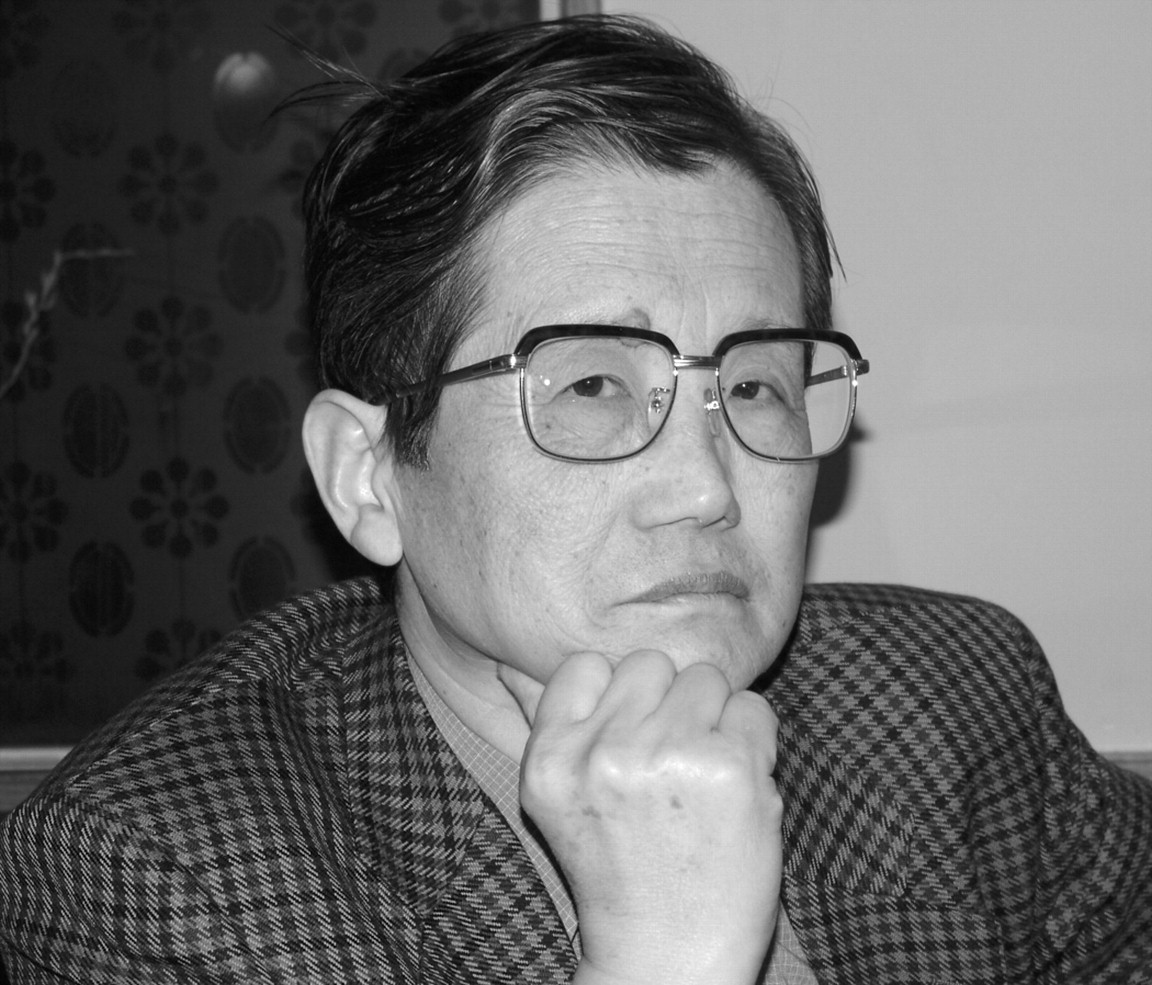
Dr. Hamada applied to study in the United States as a postdoctoral student with Prof. Hutton D. Slade at the Northwestern University Medical School. There, Dr. Hamada studied serotype-specific polysaccharides (Hamada and Slade, 1976; Hamada et al., 1976, 1977) and cell adhesion (Hamada et al., 1978, 1979). He visited the United States again in 1979, at the University of Colorado, where Dr. Slade was a guest professor after retirement. During that stay, he completed a manuscript for Microbiological Reviews (Hamada and Slade, 1980), working for over 40 days in a windowless room in the basement, writing and editing from morning until night. This review has since been cited numerous times and is widely recognized as a classic in the field. In the early 1980s, Dr. Hamada was invited by Prof. Jerry R McGhee to work during the summers at the University of Alabama at Birmingham, where he carried out joint research on cell wall serotypes of S. mutans and Group A streptococci, B-cell mitogenicity of polysaccharide-peptidoglycan, and immunity to dental caries (Hamada et al., 1981; Torii et al., 1981; Morisaki et al., 1983; Kimura et al., 1985).
After appointment as Director of the Department of Dental Research, National Institute of Health (Tokyo), in 1980, Dr. Hamada carried out a series of studies on the glycosyltransferase (GTF) of S. mutans and clarified its role in bacterial adhesion, with the late Dr. Toshihiko Koga, followed by attempts at caries prevention using structural isomers of sucrose (palatinose and trehalulose), egg yolk antibodies, and oolong tea polyphenols (Koga et al., 1982, 1983; Hamada et al., 1991). Around this time, Dr. Hamada’s group began to make full use of genetic approaches, and Drs. Nobuo Okahashi and Taku Fujiwara succeeded in molecular analyses of PAc (the surface protein of S. mutans) and of the GTF gene. For his accomplishments as a pioneer in the study of cariogenic bacteria, Dr. Hamada was presented the Kuroya Award as well as the Asakawa Award from the Japanese Society for Bacteriology, the first dentist to be granted either award.
CONTRIBUTION TO PERIODONTAL RESEARCH
In 1986, Dr. Hamada returned to the Department of Oral Microbiology at Osaka University, as professor. Confident that the etiological analysis of dental caries was nearly completed, he focused his attention on periodontal disease research. In those days, Porphyromonas gingivalis and Actinomyces actinomycetemcomitans were primary targets as representative “pathogens” of periodontal diseases. Dr. Hamada selected P. gingivalis for his studies. During the progress of immunological research of bacterial targets, including LPS, fimbriae, and hemagglutinin, in which Dr. Hamada was absorbed, Dr. Tomohiko Ogawa played an important role (Ogawa et al., 1991, 1992). Since the research progressed smoothly, Dr. Hamada hosted, with Dr. S.C. Holt and Dr. J.R. McGhee, an international symposium entitled “Periodontal Pathogens & Host Immune Responses” in Osaka in 1990. The proceedings of this symposium were published as a monograph (Hamada et al., 1990) that became a valuable document for communicating the state-of-the-art research of those days.
At that time, we never dared to set our feet near his room, because of rumors about the harshness of his directorship, such as, “Dr. Hamada is a cold-blooded researcher without a trace of mercy” and “The only thing he ever says is: ‘Where are the data?’“ However, I finally met, face to face, the man about whom so many had talked, not in Japan, but rather in Buffalo in 1993, where I was a post-doctoral fellow with Dr. Robert J. Genco (Department of Oral Biology, State University of New York at Buffalo). About two years after I returned to Japan from Buffalo, I decided to leave the university and become a practitioner, since I felt some limitations in my research abilities. I related my decision to Dr. Shigenobu Kimura (then assistant professor for Dr. Hamada), and he promptly dragged me before Dr. Hamada, who demanded to know, “Can you make good dentures?” Next he added, “You’re too late to be an excellent general practitioner. You must continue in research.” I was so afraid of Dr. Hamada that I could not refuse to stay, although I felt reluctant to do so. Thereafter, I began my research on P. gingivalis in Dr. Hamada’s laboratory.
Dr. Fujiwara had reported that P. gingivalis fimbriae could be classified into 4 types based on the diversity of the fimA genes encoding FimA (a subunit of major fimbriae) (Fujiwara et al., 1993). Therefore, with the technical support of Dr. Ichiro Nakagawa, who was also working under Dr. Hamada, I analyzed the distribution of fimA types in patients with periodontal disease and found that there were 6 types of fimA, with type II fimA being closely involved in the etiology and progression of periodontal disease (Amano et al., 2000). This relationship between fimA type and pathogenicity is still one of my primary research themes. Dr. Hamada continued to develop his research on diverse themes, including designing DNA vaccines for fimbriae and gingipains (Kawabata et al., 1999; Kuboniwa et al., 2001), and the roles of proteases in infectious processes (Kontani et al., 1997). However, he was frustrated by the lack of clear-cut results in the research of periodontal infections (such as those obtained in caries research), and his interest turned to another pathogen, Streptococcus pyogenes (group A streptococcus).
RESEARCH ON GROUP A STREPTOCOCCI (GAS)
During the past seven years, Dr. Hamada’s research has been directed toward understanding GAS, which have been recently reported as causing streptococcal toxic shock syndrome (STSS) and frequently called “man-eating bacteria”. First, a novel fibronectin binding protein (FbaB) was found on the cell surface of STSS strains, a discovery in which Dr. Kawabata played a major role (Terao et al., 2002). His group eventually determined the whole genome sequence of strain SSI-1, isolated from an STSS patient, and revealed that an extensive genome re-arrangement occurs in recent isolates (Nakagawa et al., 2003). Using epidemiological investigations and animal experiments, these investigators also demonstrated the interesting phenomenon that influenza virus infection in the winter increases the severity of GAS infection (Okamoto et al., 2003, 2004). Dr. Nakagawa also discovered that autophagy, a novel cellular compartment, plays an active role in the host protection mechanism against GAS infections (Nakagawa et al., 2004). These studies now belong to the post-genomic era, seemingly generations away from the times when Dr. Hamada began his career as a researcher. He once told me that he did not understand the details of advanced experimental techniques, but through all the stages from the pre-genomic era to the present post-genomic time, his active research mind has provided clear direction to the researchers around him and helped them aim higher for their goals.
Dr. Hamada has published 234 original papers, 51 reviews or book chapters, and three books or monographs in English, as well as 134 reviews or book chapters, 15 original papers, and 14 books in Japanese. He has always maintained vigorous research activities through the waves of technical innovations. While Dr. Hamada’s excellent research accomplishments are clearly the results of his brilliance and hard work, they would not have been achieved without his strong fortitude for research. During the four years since 2001, with Dr. Hamada as Dean of the Osaka University Graduate School of Dentistry, his determination has been exercised to the fullest to make improvements in the level of research performed, ultimately resulting in the appointment of our school as a 21st Century “Center of Excellence” by the Ministry of Education, Culture, Sports, Science and Technology of Japan.
Despite his rigid demeanor, Dr. Hamada is supported by a number of younger scientists. Other scientists might use words like “good”, “beautiful”, “interesting”, “excellent”, “wonderful”, and “fantastic” to describe students’ data. Dr. Hamada’s vocabulary was limited to “bad”, “meaningless”, and “shameful”! At first, although researchers who work for him are discouraged, they gradually learn to appreciate his strong will and the warm heart behind the frown and vocabulary, and find themselves captured. These are the secret tools by which Dr. Hamada cajoles, entertains, and inspires his many followers. Those who manage to survive his relentless discipline inherit his strong will and continue to contribute to the advancement of research and cultivation of human resources at universities all over Japan (Fig.). I would like to express my fullest appreciation to Dr. Hamada for his excellent mentorship.
Academic progeny of Shigeyuki Hamada. Dr. Hamada produced 12 professors who worked at various universities throughout Japan.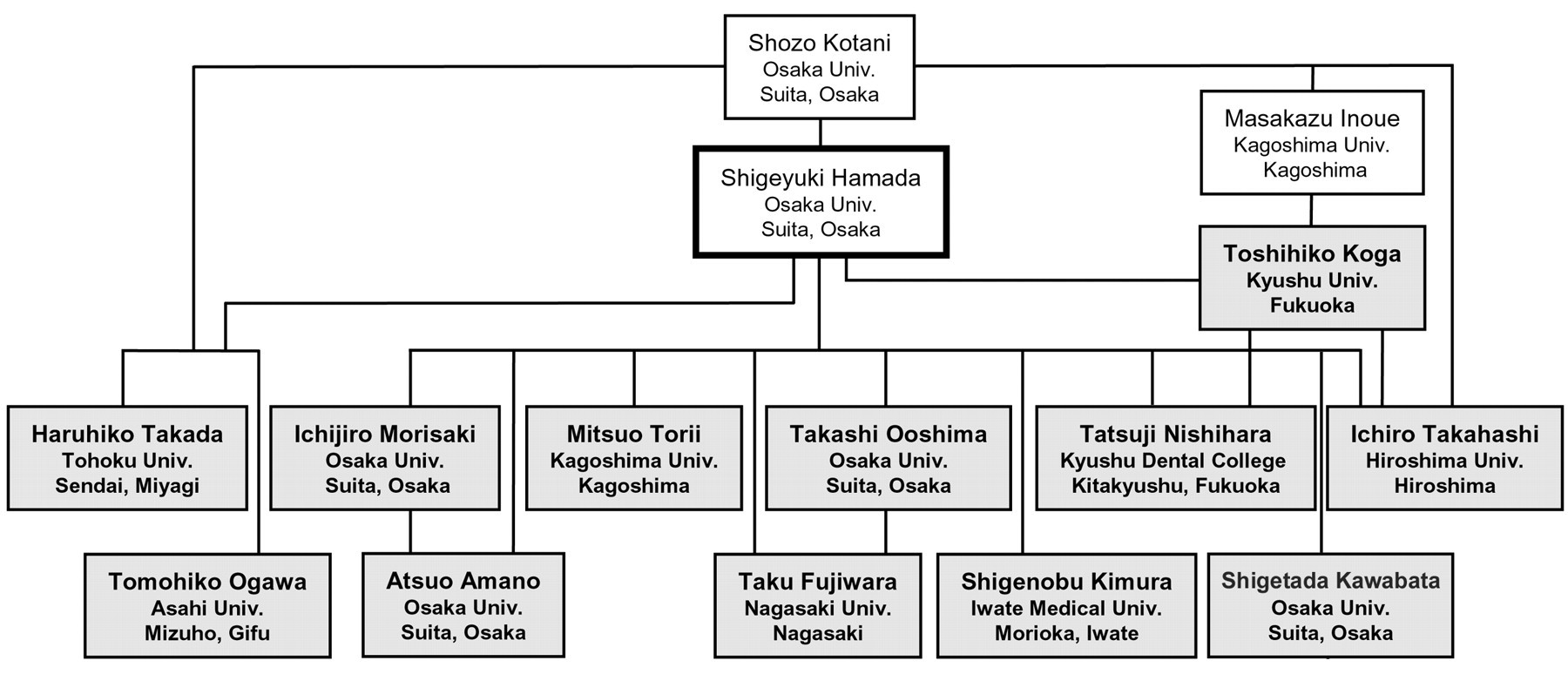
Footnotes
Acknowledgements
The author thanks Dr. Takashi Ooshima and Dr. Nobuo Okahashi for reading the manuscript, and providing important details of the early history of Dr. Hamada’s research group.