







Abstract
In this paper, we provide a framework to study trust-based coalition formation in multi-agent systems using cooperative game theory as the underlying mathematical framework. We describe how to study trust dynamics between agents as a result of their trust synergy and trust liability in cooperative coalitions. We also rigorously justify the behaviors of agents for different classes of games and discuss how to exploit the formal properties of these games for cooperative control in an unmanned military vehicle convoy.
1. Introduction
In cooperative multi-agent systems, interactions between agents often result in the formation of relationships, which can be leveraged for cooperative activities. However, there is always some degree of uncertainty as to whether or not an agent can or will maintain a relationship for mutual benefits. This is especially true at the beginning of a new relationship, where there may be very little empirical evidence to accurately estimate the probability of relationship success. Yet, in order to maintain the existence of the relationship, each agent must overcome this uncertainty and assume that the other will do the same. The mechanism that facilitates this act of faith is generally regarded as “trust.”
To illustrate this concept, let us consider an example within a military context – specifically, the use of improvised explosive devices (IEDs) by insurgents against the United State Military in Southwest Asia. Early in the Iraq and Afghanistan war efforts, IEDs were jury-rigged homemade bombs that, while deadly, could be avoided with increased awareness. However, insurgents quickly adapted by developing more sophisticated explosives, often with timing devices, pressure switches, and even wireless triggers. In addition, insurgents became more difficult to detect due to their knowledge of the local terrain and their ability to mix with civilian populations. 1 Responses to more advanced IED attacks required frontline soldiers to put more trust into their commanders when ordered to use new equipment (such as up-armor vehicles, electronic jammers, and robots) or work with local allies in these dangerous areas. While this did not imply that any soldier was safer than before, the trust helped soldiers deal internally with the wartime uncertainties so that they could continue their duties and focus on their mission objectives.
Trust, in essence, helps agents deal with uncertainty by reducing the complexity of expectations in arbitrary situations involving risk, vulnerability, and interdependence. 2 In effect, each agent in a relationship mutually trusts that the loss of some control will result in cooperative gains that neither agent could achieve alone. The benefits of trustworthy relationships include lower defensive monitoring of others, improved cooperation, improved information sharing, and lower levels of conflict. 3 However, the reliance on trust also exposes agents to vulnerabilities associated with betrayal, since the motivation for trust – the need to believe that things will behave consistently – exposes agents to potentially undesirable outcomes. Thus, trust is a concept that must not only be managed, but also justified.
In general, it is reasonable to assume that agents in arbitrary systems have selfish interests. Despite this, each agent’s goal must be to develop the most fruitful relationships from a pool of potential agents in order for cooperative activities to occur. 4 They, however, cannot assume that potential agents may not already be in pre-existing relationships with other agents. Furthermore, some agents may be within strongly connected, sub-system groups known as coalitions, where every agent in the group has a relationship with every other agent in the group. A coalition may contain a mixture of trustworthy and untrustworthy agents, but as a group, achieve synergistic gains that no sub-coalition could match. Thus, agents may be justified in forming relationships with coalition members who are not ideally trustworthy in order to acquire these synergistic gains as well.
The study of coalitions and their formation is regulated to a branch of game theory known as cooperative game theory. Here, each coalition produces a coalitional payoff value, which refers to total synergy produced from the coalition member interactions. The main contribution of this paper, thus, is a rigorous treatment of coalition formation based on trust interactions in multi-agent systems using cooperative game theory as the underlying mathematical framework. To the authors’ knowledge, this has never been done before and therefore expands on the existing computational trust research area. In addition, the paper provides a method to study coalition formation in multiple contexts simultaneously, a method to understand the manner in which different subsets of a coalition contribute to the trust payoff value in altruistic and competitive ways, and a general model for trust games. Following the theory, we show how the cooperative trust game model can be used within a cooperative application – specifically, an unmanned military vehicle convoy. By using the cooperative trust game model, we prove the optimal trust configuration for each vehicle in a convoy of any length in the context of moving forward together.
2. Brief overview of multi-agent trust research
This section briefly highlights prior work in multi-agent trust research and intends to present a broad range of possible multi-agent trust approaches.
2.1. Trust models
Trust models give agents the ability to reason about the reciprocity, honesty, and reliability of other agents. Since agents in a system are always assumed to have selfish interests, these models take the viewpoint of an agent trying to find the most reliable interaction agents from a pool of potential agents.
Some trust model research attempts to characterize trust within non-cooperative scenarios. Sen 5 demonstrates how reciprocity can emerge when agents learn to predict the value of future benefits when competitive agents cooperate. Mukherjee et al. 6 show how trust can be acquired if agents know their opponents chosen move in advance. Castelfranchi and Falcone7–9 assert that socio-cognitive models that incorporate beliefs in competence, willingness, persistence, and motivation are essential to determine the amount of trust each agent can place in other agents.
Other works in trust models factor in evidence to justify trust values. Witkowski et al. 10 propose a model whereby trust is based on performance in past interactions. Sabater and Sierra, 11 through the REGRET system, attribute fuzziness to the notion of performance and adopt a sociological approach to reputation by using a weighted sum of subjective impressions. Teacy et al. 12 develop a probabilistic trust model in terms of confidence that expected values lie within specific error tolerances. Theodorakopoulos and Baras 13 focus on evaluating trust evidence in ad hoc networks using the theory of semirings. Wang and Singh 14 define trust in terms of belief and certainty, and formulate certainty in terms of evidence based on a statistical measure defined over a probability distribution of positive outcome probabilities.
Some work also incorporates trust models into specific applications. Abdul-Rahman and Hailes 15 attempt to use social trust characteristics and word of mouth to calculate trust in virtual environments. Zhang et al. 16 present a framework to secure data aggregation against false data injection in wireless sensor networks that exploits redundancy in gathered data to evaluate the trustworthiness of each sensor. Baras et al. 17 calculate aggregate trust values in autonomous agent networks based on the data flow routes between agents. Ballal and Lewis 18 discuss the concept of trust consensus for collaborative control and show how the propagation of trust through a network can lead to a global asymptotic trust consensus among all agents.
2.2. Protocols of interaction
Whereas trust models are intended to build trust at the agent level, protocols of interaction are intended to build trust at the system level. In short, they are developed to make sure agents will gain some utility if they follow the rules – and lose utility if they do not. Thus, the rules of a system enable an agent to trust other agents by the virtue of the different constraints in a system.
Multi-agent trust protocols can be divided into three main groups: truth eliciting, reputation mechanisms, and security mechanisms. Truth-eliciting protocols force agents to follow the rules, which dictate the individual steps in interactions and the information revealed by the agents during interactions. By doing so, agents should find no better option than telling the truth. The Vickrey–Clarke–Groves (VCG) mechanisms are an example of protocols that enforce truth telling. 19 Reputation mechanisms force agents to interact with some trusted authority to get public ratings on other agents in a system. Zacharia and Maes 20 outlined some basic requirements for practical reputation mechanisms. For security in agent networks, trust is used to describe the fact that an agent can prove who they say they are. Poslad et al. 21 proposed that identity, access permissions, content integrity, and content privacy are essential for agents to trust each other and each other’s messages transmitted across a network. These requirements are specified in the Foundation for Intelligent Physical Agents (FIPA) abstract architecture and implemented by public key encryption (pretty good privacy (PGP) and X.509) and a certificate infrastructure. 22
3. Classes of trust games
This section characterizes different classes of trust games within the context of cooperative game theory. Our characterizations provide the necessary conditions for a coalition trust game to be classified into a particular class. We start with additive and constant-sum trust games, which have limited value for cooperative applications, but are included for completeness. Then, we discuss superadditive and convex trust games, which show conditions for agents to form a grand coalition. In general, the grand coalition solution concepts presented here can also be applied to smaller coalitions within a trust game through the use of a trust subgame.
3.1. Preliminaries
Cooperative game theory focuses on what groups of self-interested agents can achieve. It is not concerned with how agents make choices or coordinate in coalitions, and does not assume that agents will always agree to follow arbitrary instructions. Rather, cooperative game theory defines games that tell how well a coalition can do for itself. 23 While the coalition is the basic modeling unit for coalition game, the theory supports modeling individual agent preferences without concern for their possible actions. As such, it is an ideal framework for modeling trust-based coalition formation, since it can show how each agent’s trust preferences can influence a group’s ability to reason about trustworthiness. In essence, cooperative game theory allows us to blend the reasoning abilities of agent-level trust models with the system-level benefits of trust interaction protocols, forming a general concept of system-level reasoning.
•
•
The transferable utility assumption means that payoffs in a coalition may be freely distributed among its members. With regards to the payoff value of trust between agents, this assumption can be interpreted as a universal means for agents to mutually share the value of their trustworthy relationships. Trust cultivation often requires reciprocity between two agents as a necessary behavior to develop trust, and a transferable utility is a convenient way to model the exchange for this notion.
In defining a transferable payoff value of trust, one aspect to consider is the “goods of trust”. These refer to opportunities for cooperative activity, knowledge, and autonomy. In this paper, we refer to these goods as trust synergy
The payoff value of trust, however, also includes an opposing force in the form of vulnerability exposure, which we refer to as trust liability

This payoff is similar to the well-known constrained coalitional game (CCG) that incorporates gains from cooperation with the costs due to communications network restrictions.
17
However, the characteristic function
3.2. Additive trust game
Additive games are considered inessential games in cooperative game theory, since the value of the union of two disjoint coalitions (
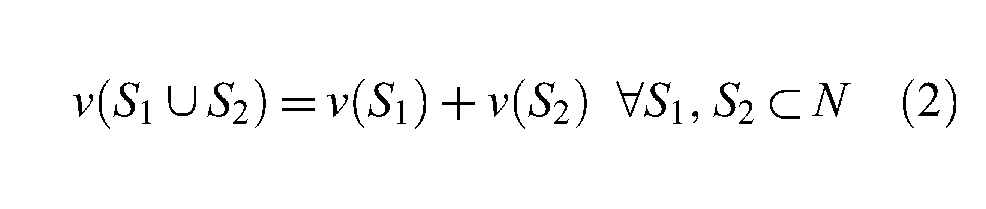
In (2), we see that the total value of the trust relationships between any two disjoint coalitions must always be zero. In other words, the trust synergy between any two disjoint coalitions must always result in a value that is equal to their trust liability. Thus, by expanding this definition for trust games and rearranging the terms, we can characterize an additive trust game as


3.3. Constant-sum trust game
In constant-sum games, the sum of all coalition values in
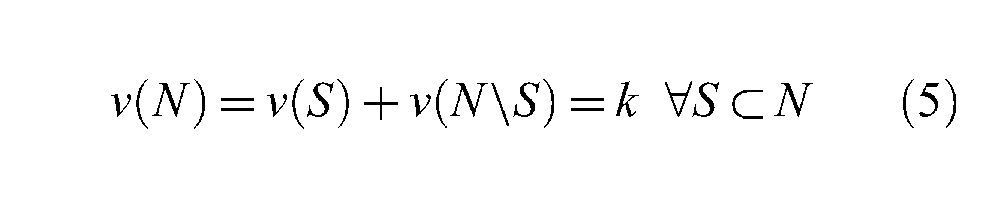
By expanding this definition for trust games and rearranging the terms, we can see that the constant-sum trust game is a special case of a two-coalition additive trust game involving every agent in the game.


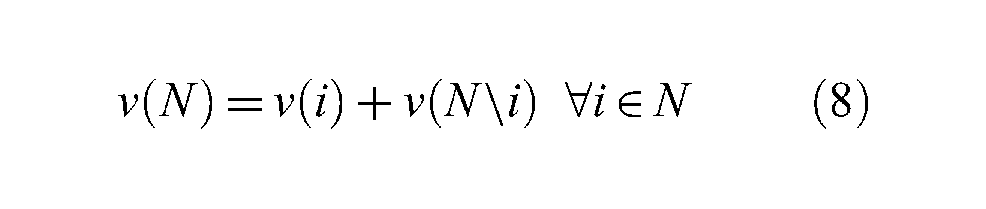
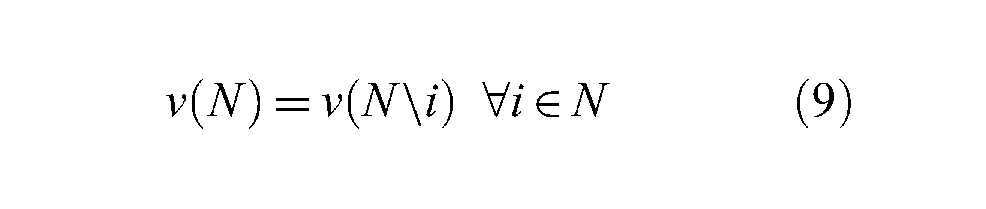
The result in (9) implies that every agent in
Our proof shows that any constant-sum trust game is necessarily a zero-sum trust game that represents a special case of an additive trust game. These facts reinforce a notion that a group of agents who do not trust each other will always prefer to work as singleton coalitions. Even if there is some mutual trust between agents, gains from trust synergy are always lost to the trust liability, making it irrational to form any coalition with any other agent. Thus, if one determines that
3.4. Superadditive trust game
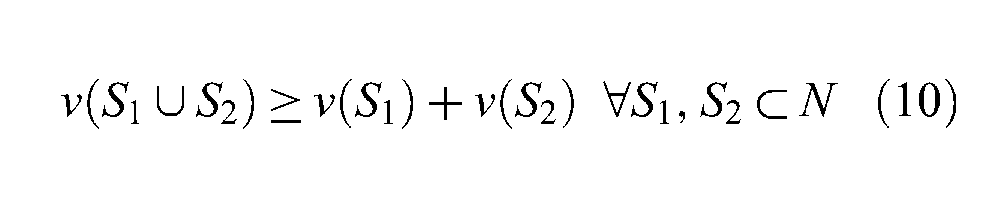
In a superadditive game, the value of the union of two disjoint coalitions (
This implies a monotonic increase in the value of any coalition as the coalition gets larger:
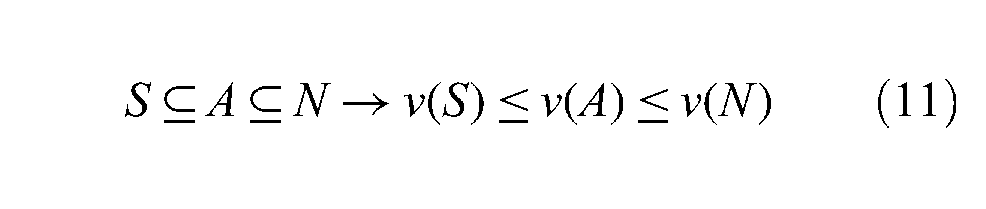
This property of superadditivity tells us that the new links that are established between the agents in the two disjoint coalitions are the sources of the monotonic increases. This results in a snowball effect that causes all agents in the game to form the grand coalition (a coalition containing all agents in the game), since the total value of the new trust relationships between any two disjoint coalitions must always be positive semi-definite. In other words, the trust synergy between any two disjoint coalitions must always result in a value that is at least as large as their trust liability. Thus, by expanding (10) for trust games and rearranging the terms, we can characterize a superadditive trust game as


3.5. Convex trust game
A game is convex if it is supermodular, and this trivially implies superadditivity (when

In convex games, the incentives of joining a coalition grow as the coalition gets larger. This means that the marginal contribution of each agent

Using these definitions, Branzei et al. 24 proved that a game is convex if and only if all of its marginal games are superadditive. We provide their proof here as a means for the reader to readily justify this assertion.
(i) Suppose

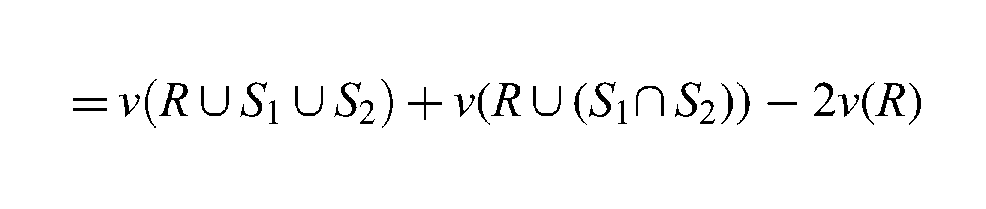

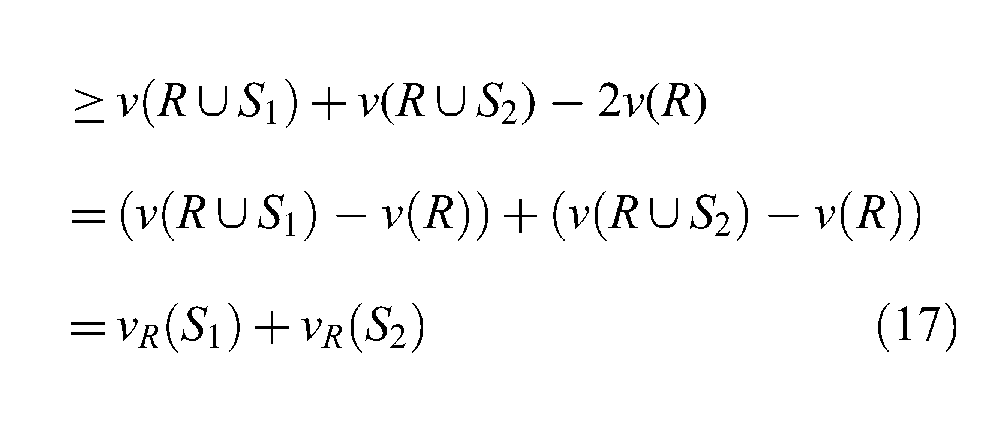
where the inequality follows from the convexity of
(ii) Let
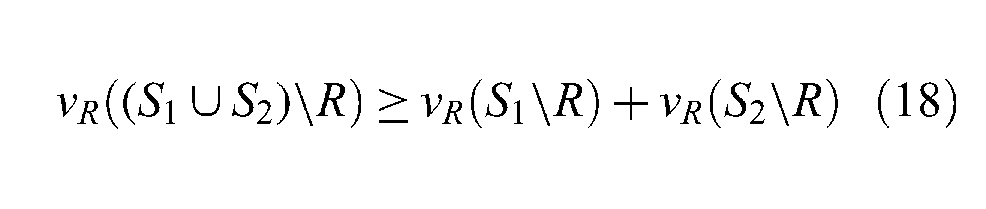

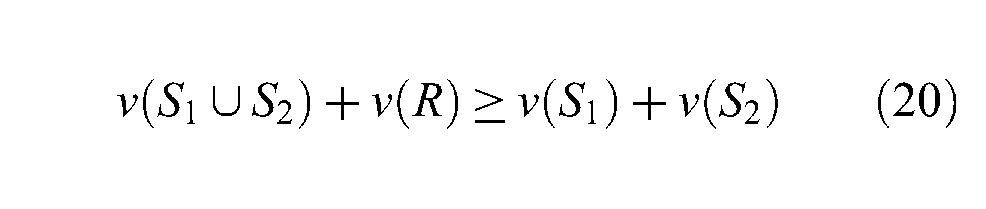
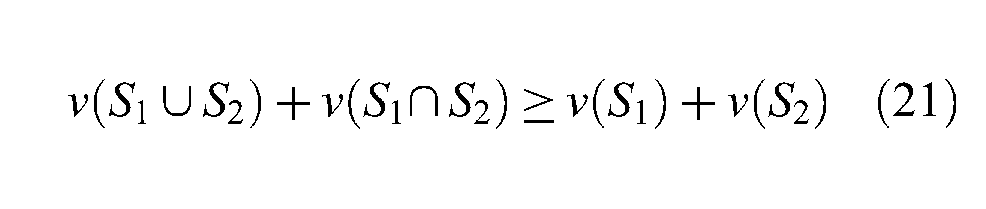
This completes the proof.
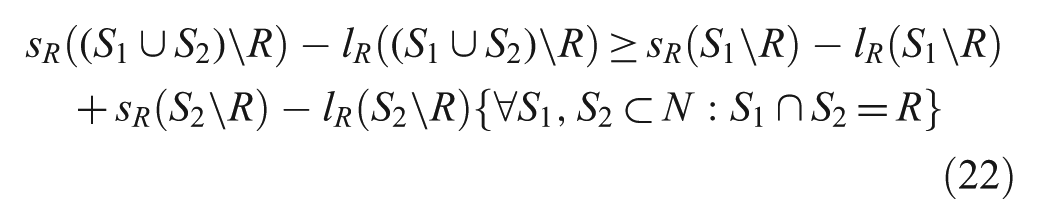
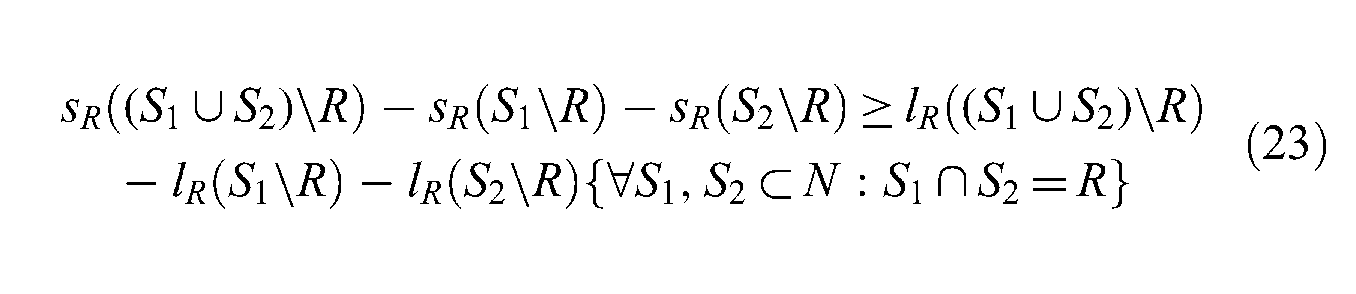
By using this characterization in Theorem 2 and expanding it to our definition of a trust game, we can state a necessary requirement to produce a convex trust game: that the marginal trust synergy between any two coalitions must always result in a value that is at least as large as their marginal trust liability:
Convex games are convenient due to several well-known properties:
the core of a convex game is never empty;
convex games are totally balanced, meaning that their subgames are also convex, each with a non-empty core;
convex games have a stable set that coincides with its core;
the Shapley value of a convex game is the barycenter of the core;
the vertices of a core can be found in polynomial time using a polyhedron greedy algorithm. 25
4. A practical model for trust games
In the previous section, we characterized different classes of trust games without explicitly defining a trust game model. In this section, we provide a general model for trust games that conforms to the theoretical constructions in the previous section and can be adapted to a wide variety of applications.
4.1. Managing agent trust preferences
The attitude of trustworthiness agents have toward other agents in a trust game is managed in an
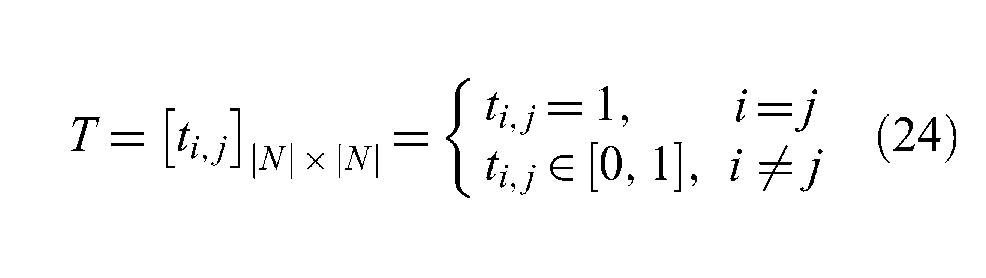
This matrix is populated with values
The manner in which
4.2. Modeling trust synergy and trust liability
We provide a general model for trust synergy and trust liability that can be adapted for a variety of applications. Our model makes use of a symmetric matrix
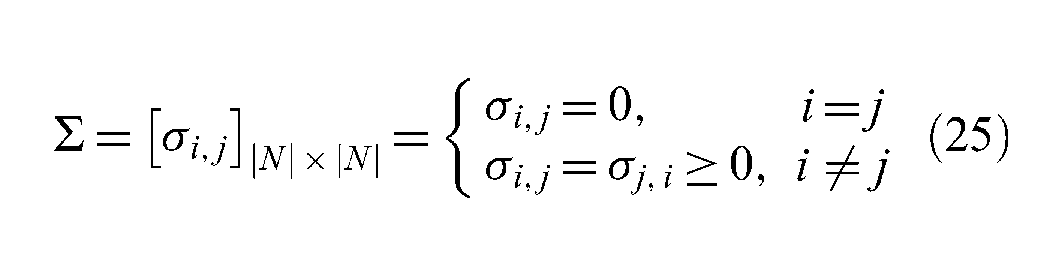
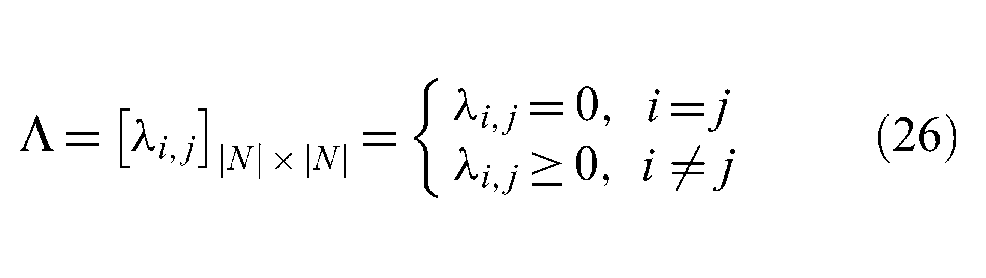
As with the
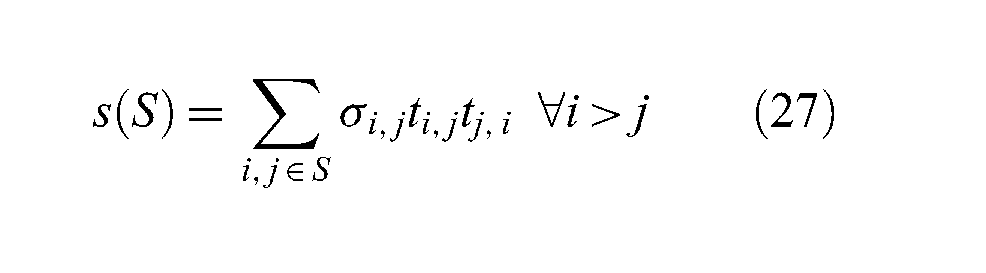
Trust synergy is the value obtained by agents in a coalition as a result of being able to work together due to their attitudes of trust for each other. The set function
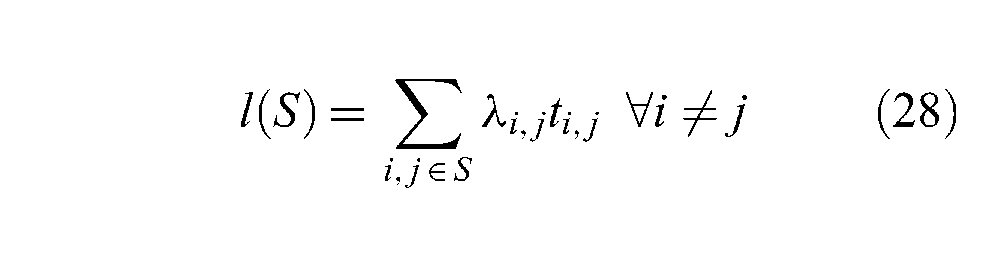
Trust liability can be thought of as the vulnerability that agents in a coalition expose themselves to due to their attitudes of trust for each other. We treat the product
4.3. Modeling the trust game
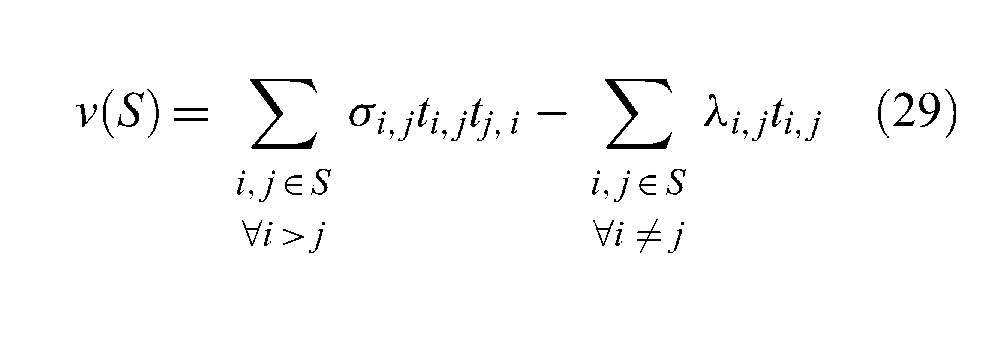
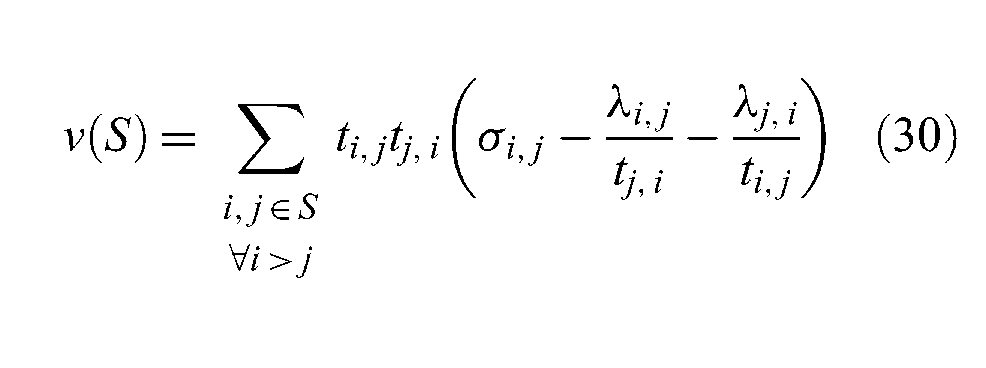
The factorization in (30) shows us that the first factor (
In general, Proposition 1 does not extend to trust-based coalitions larger than two due to the complex coupling of trust dynamics between different agents as coalitions grow larger. For example, two agents who may produce a negative trust payoff value as a pair may actually realize a positive trust payoff with the addition of a third agent. This situation occurs if both agents have positive trust relationships with the third agent that outweighs their own negative trust relationship. Such a situation is common in real-world scenarios, and justifies the importance of various trusted third parties, such as escrow companies, website authentication services, and couples’ therapists.
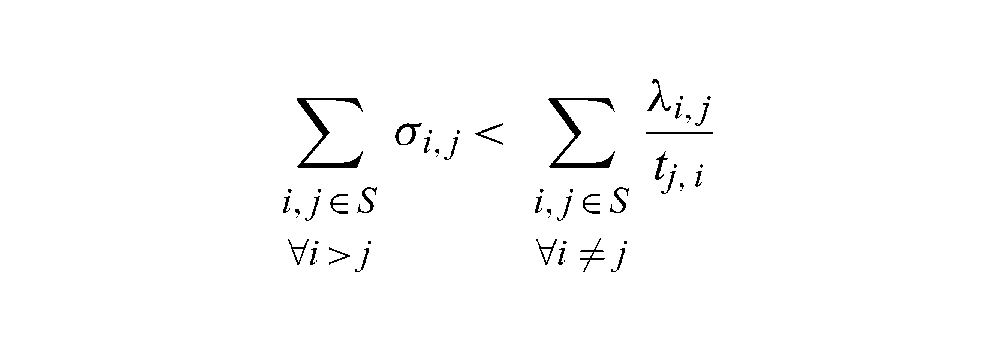
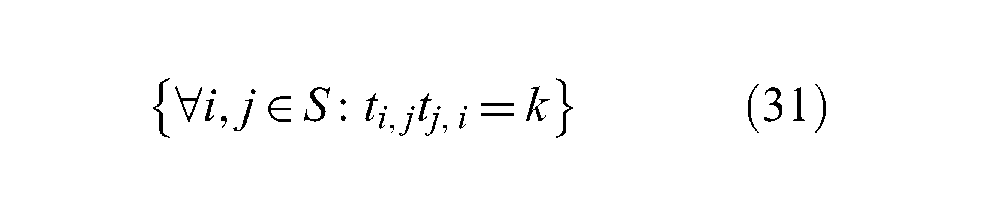
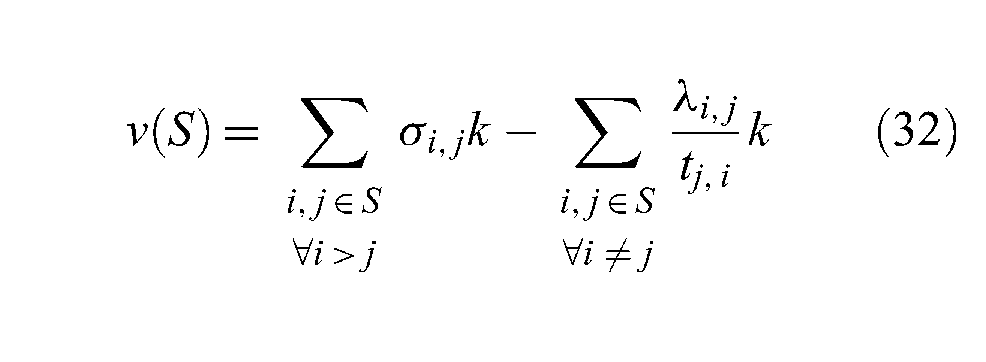
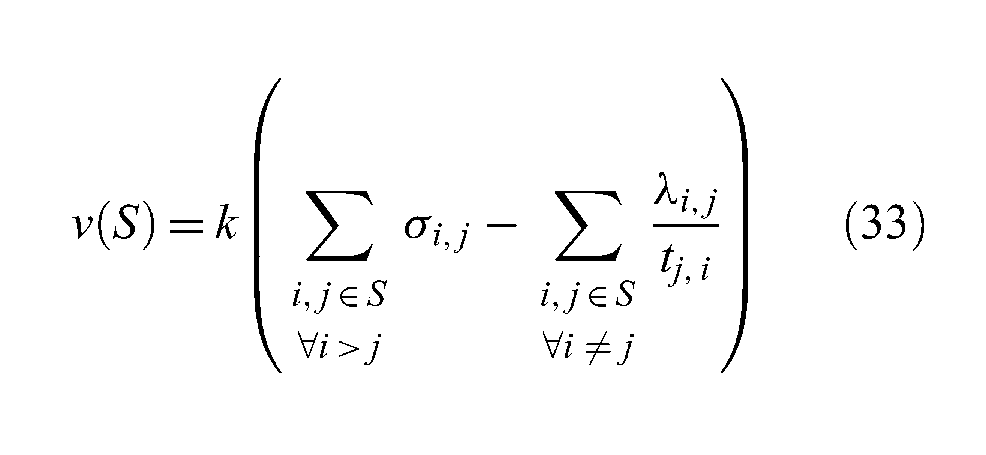
In light of this, we can mathematically justify a condition similar to Proposition 1 that is valid for coalitions of any size – but only for a special type of trust game.
Because
4.4. Incorporating context into a trust game
In practice, trust is often defined relative to some context. Context allows individuals to simplify complex decision-making scenarios by focusing on more narrow perspectives of situations or others, avoiding the potential for inconvenient paradoxes.
Coalitional trust games can also be defined relative to different contexts using the multi-issue representation, 26 where we use the words “context” and “issue” interchangeably.
•
•for each coalition
This approach allows us to define an arbitrarily complex trust game that can be easily decomposed into simpler trust games relative to a particular context. A set of agents in one context can overlap partially or complete with another set of agents in another context. One can choose to treat the coalitional game in one big context, or the union of any number of contexts based on some decision criteria.
4.5 Altruistic and competitive contribution decomposition
In the analysis of a trust-based coalition, it may sometimes be useful to understand the manner in which different subsets of a coalition contribute to its payoff value. One way to do this is to use a framework developed by Arney and Peterson, 27 where measures of cooperation are defined in terms of altruistic and competitive cooperation. The unifying concept in the framework is a subset team game, a situation or scenario in which the value of a given outcome (as perceived by a team subset) can be measured.
The authors limit the application of the framework to games where more agents in a coalition lead to more successful outcomes. Thus, adding more agents to a coalition should never reduce the coalition’s payoff value. In addition, the payoff value perceived by a coalition should not be smaller than the payoff value perceived by a subset of the same coalition. We refer to these two properties as fully cooperative and cohesive, respectively.
The authors show that in a fully cooperative and cohesive game, the marginal contribution of a subset team is equal to the sum of the competitive and altruistic contributions of the subset team.
In order to use these definitions within a trust game, we must first show they relate to the coalition game classes described in Section 3.
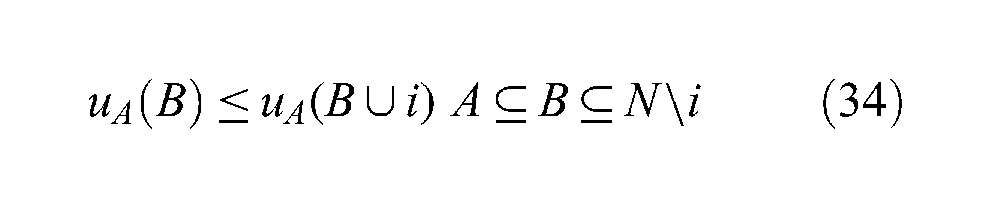
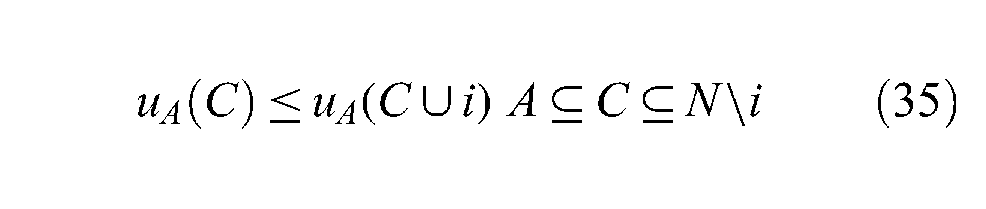
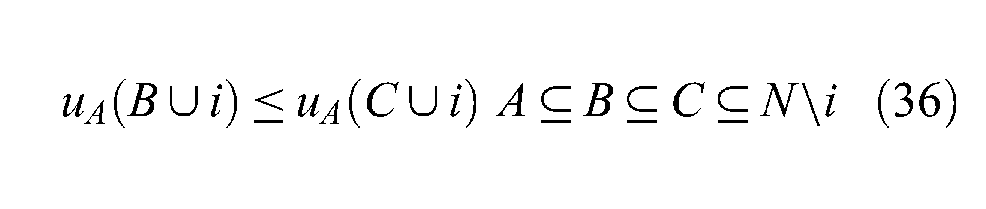
Since the system of inequalities shows that the contribution of an additional agent in a coalition is always non-decreasing, it is trivially true that

Next, we prove the cohesive case. If
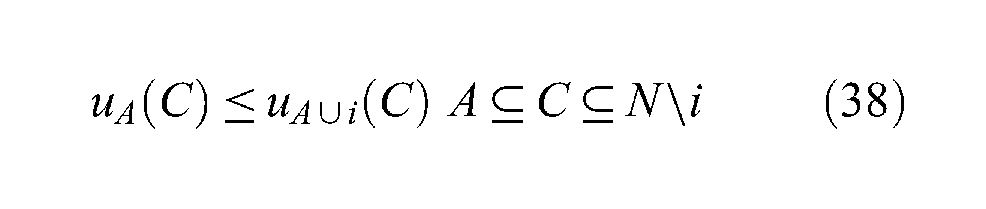
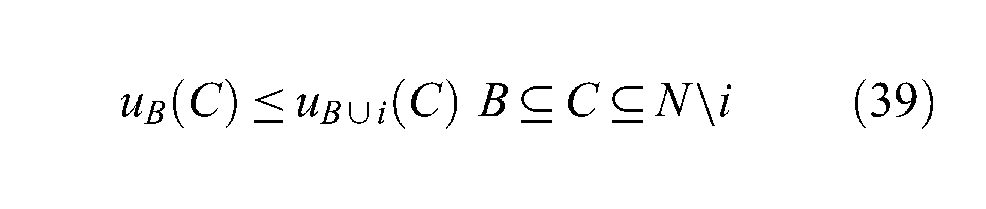
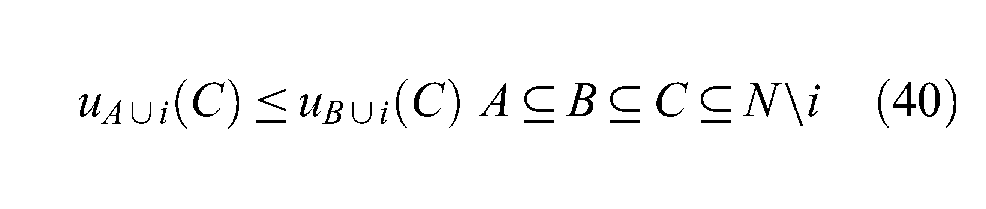
Since the system of inequalities shows that the contribution of an additional agent in the accessing coalition subset is always non-decreasing, it is trivially true that

This completes the proof.
It is important to note that the additional agent
Now that we have shown that a convex subset team game is fully cooperative and cohesive, we may decompose the total marginal contribution of a set of agents into both altruistic and competitive contributions whenever a trust game is convex. To do so, we must define a value function
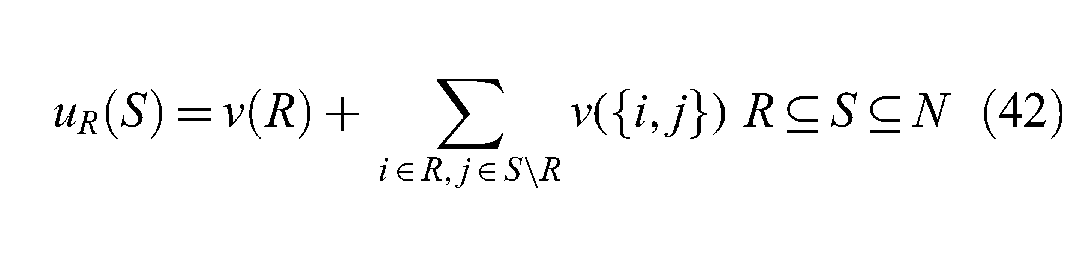
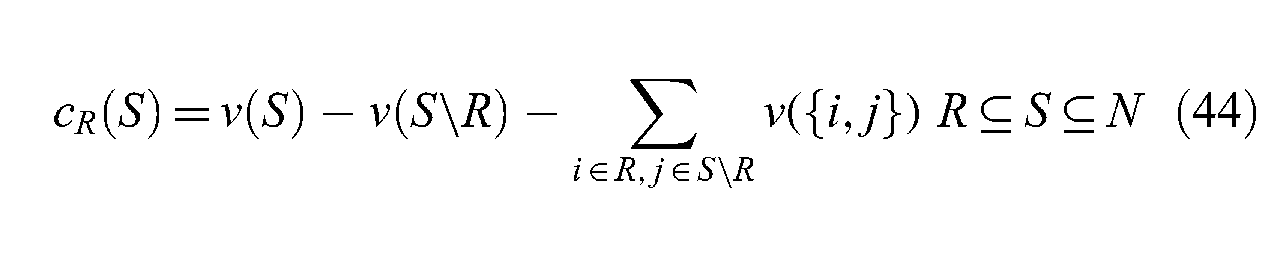
The rationale behind the payoff function in (42) is that the payoff has to be from the perspective of the agents in
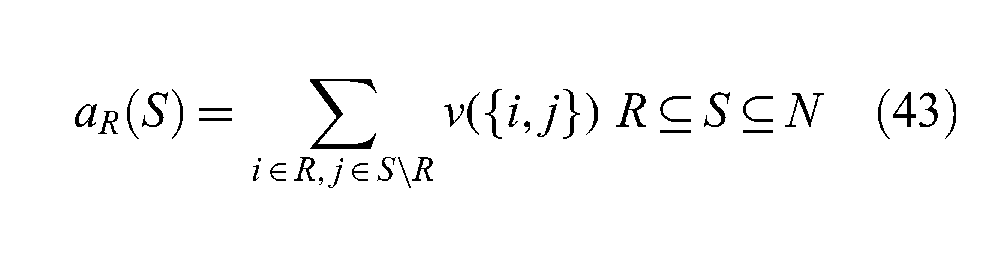
Using the payoff function

5. Applying the trust game to the unmanned military convoy
In this section, we apply a coalitional trust game in a specific unmanned cooperative control application: the unmanned military vehicle convoy (see Figure 1). Currently, the United States Army Tank Automotive Research, Development, and Engineering Center is funding the Convoy Active Safety Technology (CAST) program, which aims to improve convoy operations with the installation of a small kit in the cab of a tactical vehicle. 28 The kit connects actuators to the steering wheel, gas pedal, and brake pedal, and uses various sensors, such as RADAR, LIDAR, and electro-optical/infrared cameras, to sense a vehicle’s environment and safely drive the vehicle. Our goal with the trust game is to understand how trust-based coalitions will form under different attitudes of trust in a convoy scenario.

Tactical wheeled vehicles equipped with Convoy Active Safety Technology (CAST).
5.1. Analysis of the four-vehicle convoy trust game
We begin with a simple convoy scenario that models a homogeneous four-vehicle convoy,
It is important to note that this convoy trust game is only considering one context for coalition formation – the context of moving forward together. In a more realistic unmanned convoy trust game, additional contexts (such as the presence of hostile forces, the smoothness of the road, the time of day, and weather conditions) could influence the overall trust. We would advise the practioner interested in more complicated trust games to model each context independently and then combine them using the multi-issue representation given in Section 4.4.
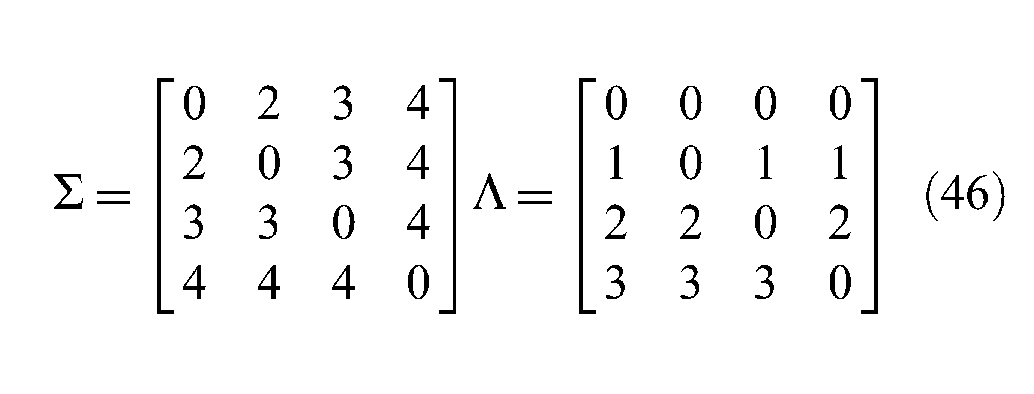
Firstly, let us analyze this game as an additive trust game. While there are infinitely many solutions for
Next, let us analyze another extreme situation where every vehicle completely trusts every other vehicle – or, when


The results in (47) provide us an interesting insight, in that all vehicles behind the lead vehicle find higher values of trust payoff with the lead vehicle than with the nearest vehicle. As such, as long as the lead vehicle is a member of a trust-based coalition in this game, there will be no incentive for any other vehicle to abandon the coalition. Thus, the vehicles ultimately form the grand coalition. Note, however, that the formation of a grand coalition does not imply that the trust game is superadditive or convex. This assertion is justified with the observation that
In order to form a convex four-vehicle convoy trust game, we must satisfy the conditions in (23), which ensure that all trust payoff values in any coalition are at least as large as any sub-coalition. While there are infinitely many solutions for
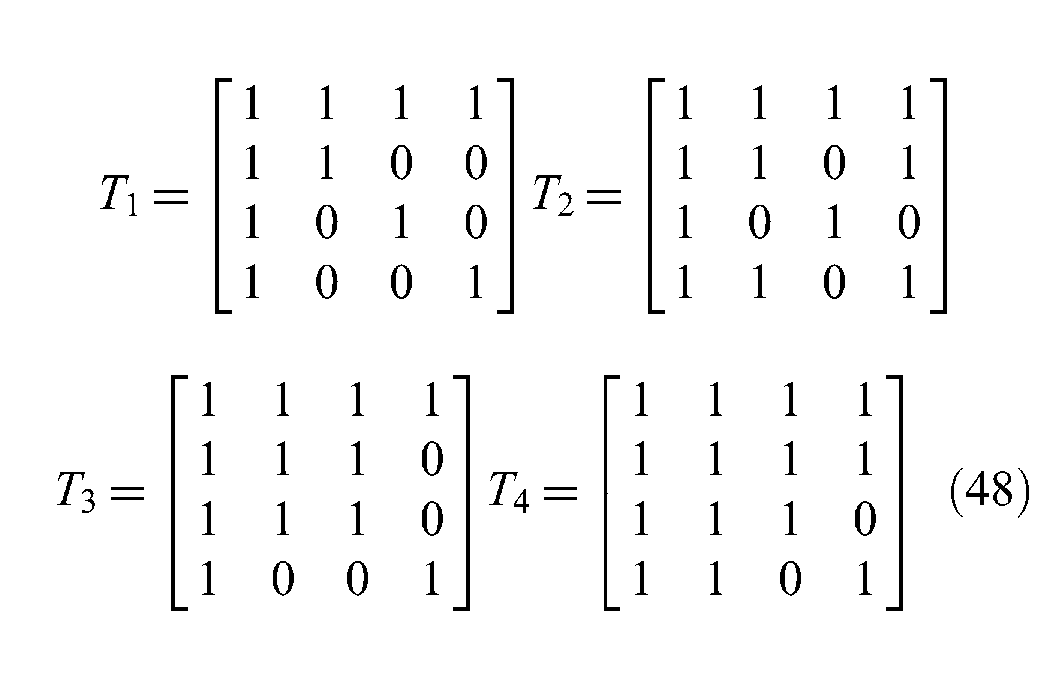
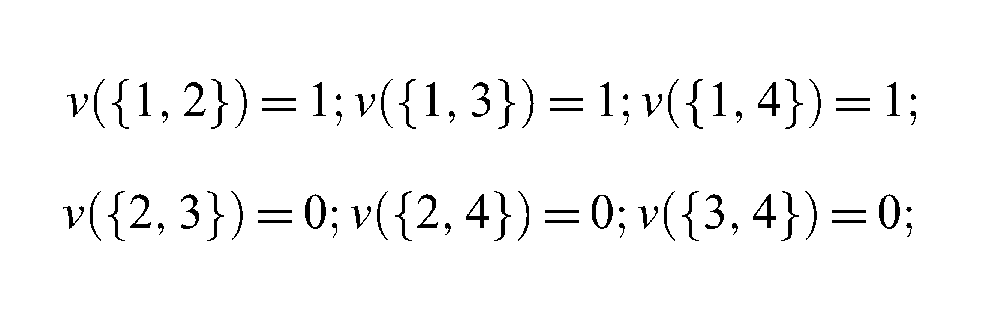

The deep insight we gain from analyzing (48) and the results in (49) is that all vehicles behind the lead vehicle need only trust the lead vehicle in the convoy to move forward, provided the lead vehicle trusts every other vehicle to follow it. This echoes the intuition seen in Jean-Jacques Rousseau’s classic “stag hunt” game, where there is no incentive for any player to cheat by not cooperating as long as each player can trust others to do the same. 29
Because the matrices in (48) produce a convex trust game, we now have the ability to analyze the results in terms of altruistic and competitive contributions. In other words, we can get better insight into the core components that make up each subset team’s marginal contribution to a coalition. For example, if we wished to understand the contributions of coalition
For unmanned military convoys, our results suggest that follower vehicles need only communicate with the lead vehicle to ensure trustworthy cooperation. The lead vehicle needs only to broadcast pertinent information to the followers, and the followers need only to acknowledge receiving the information from the lead to signal agreement. This hub-and-spoke communications network would therefore foster the reciprocity necessary to cultivate trust between the leader and its followers, while also keeping the computational complexity of the network to a minimum of
5.2. General solution for the N-convoy trust game
We conclude this section by generalizing the convoy trust game for any number of vehicles and prove the solution for the highest payoff trust-based coalition. Our proof shows that all vehicles behind the lead vehicle in a convoy need only trust the lead vehicle, and no other vehicle, to move forward so long as the lead vehicle trusts every other vehicle to follow it.
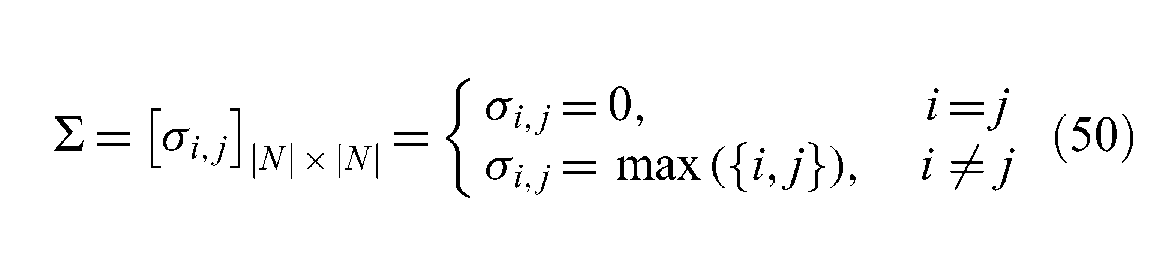
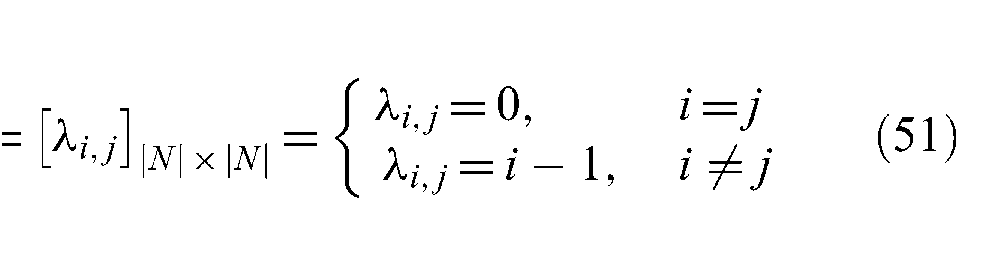
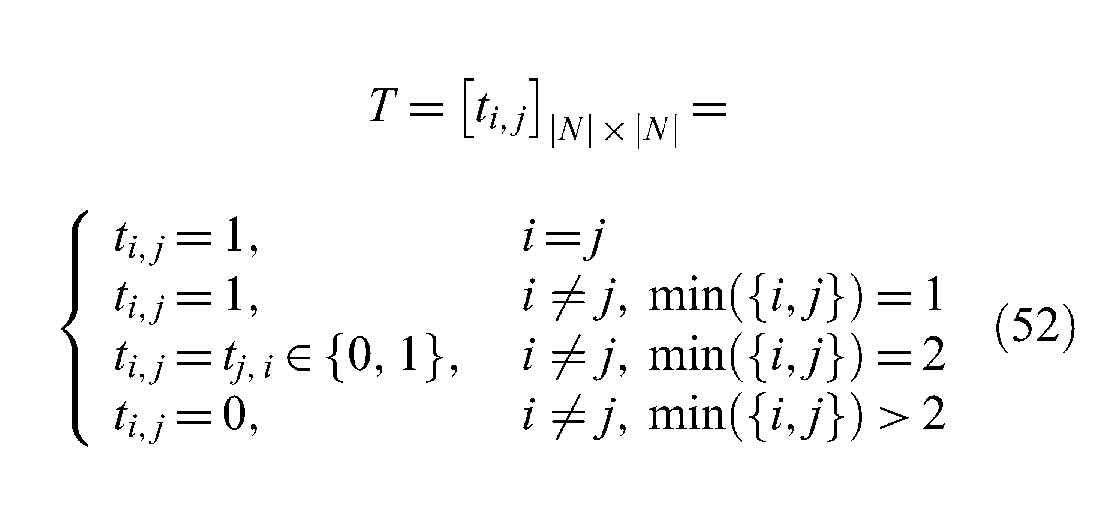
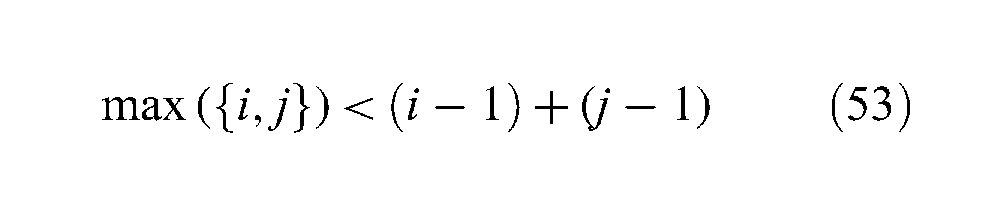

We see that if
Since the result in (54) implies that trust-based coalition formation is possible with the lead vehicle and the second vehicle, we must analyze the trust payoff values for coalitions with these vehicles. Using (30) and our definitions in (50) and (51), the trust payoff value for a coalition in the convoy trust game is
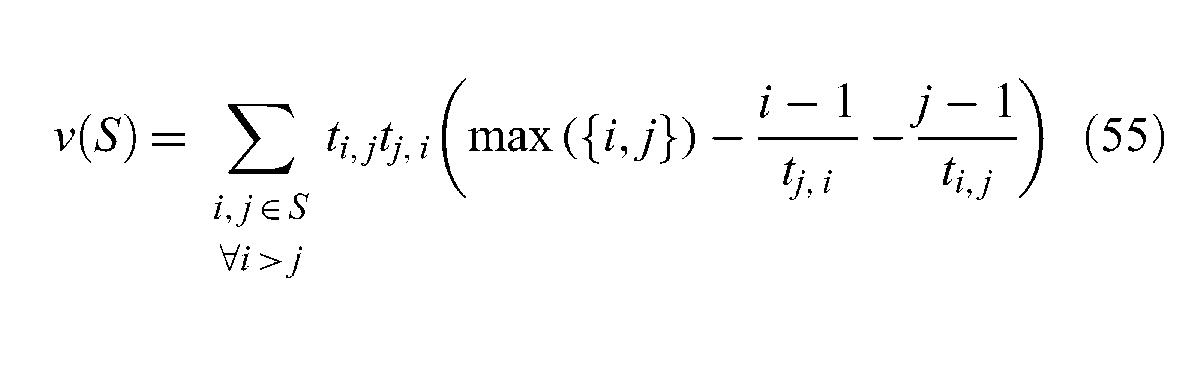
From (43), we define trust payoff values for any pair of vehicles as
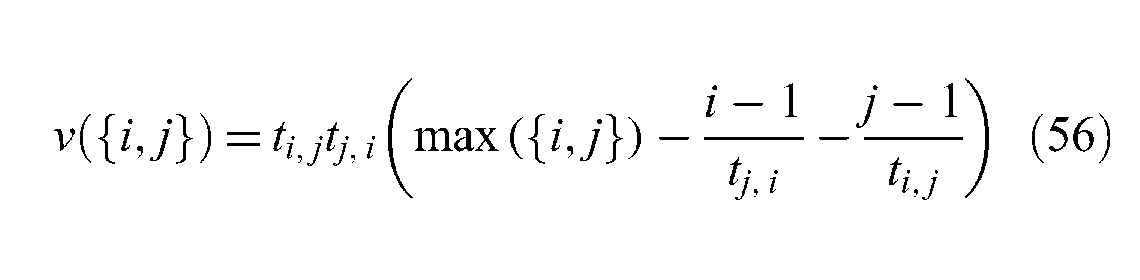
Let us first analyze coalition formation with the lead vehicle. If
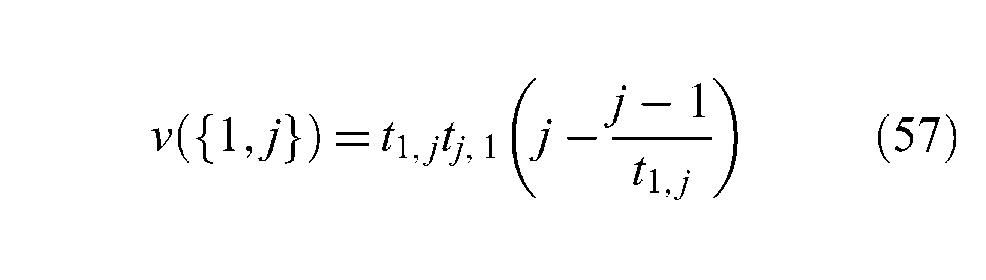
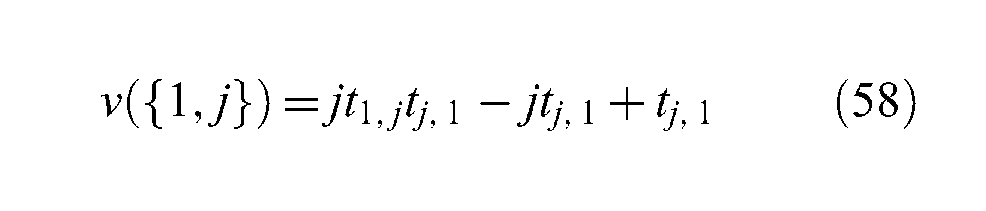
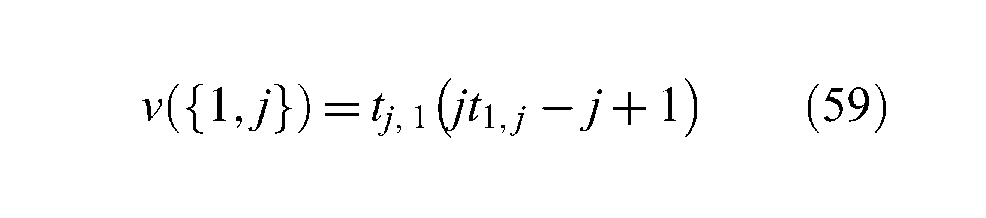
The result in (59) shows that the highest trust payoff value is achieved when both the lead vehicle and any other vehicle completely trust each other (i.e. when
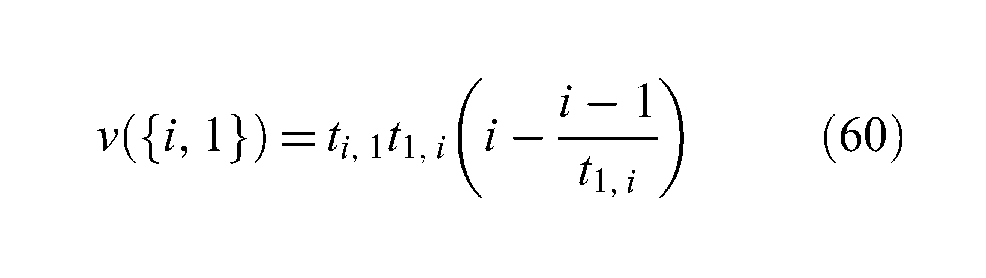
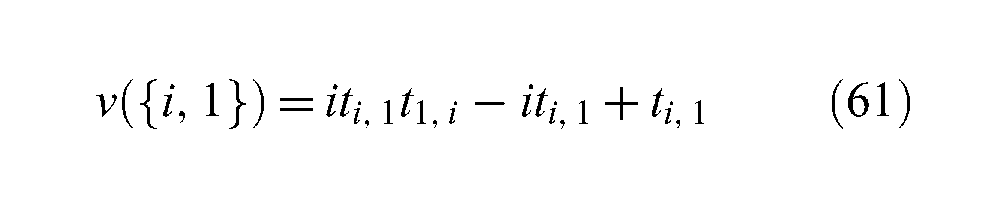
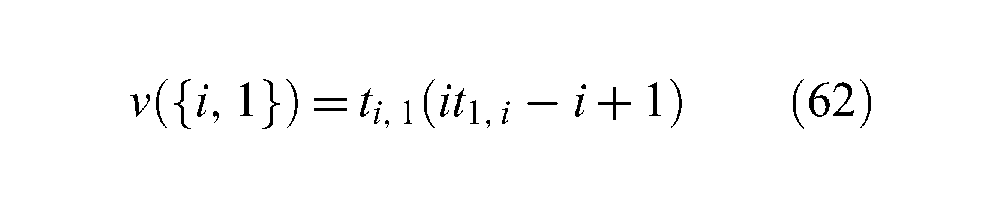
Both (59) and (62) confirm that the highest trust payoff is achieved when both the lead vehicle and any other vehicle completely trust each other. Therefore,
Now, we analyze coalition formation with the second vehicle. If
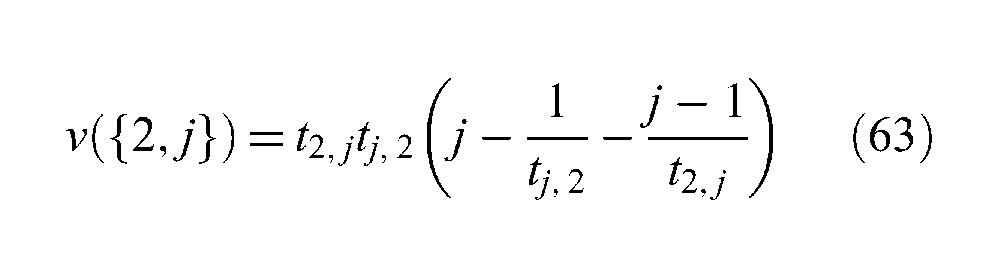
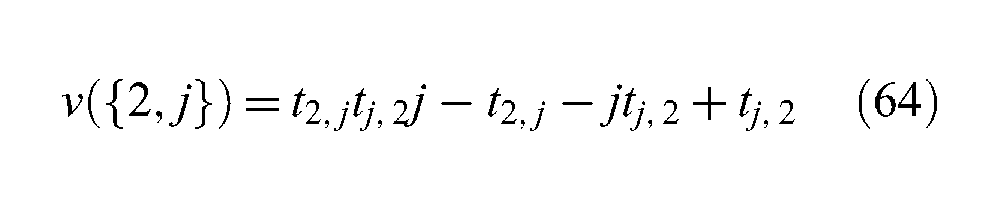
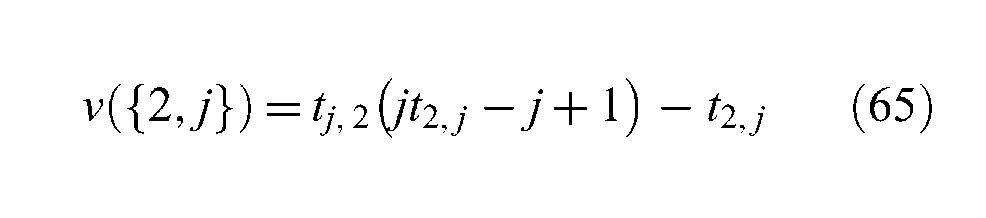
The highest trust payoff that can be achieved with the second vehicle is equal to zero, and this only occurs when both vehicles either have complete trust in each other (i.e. when
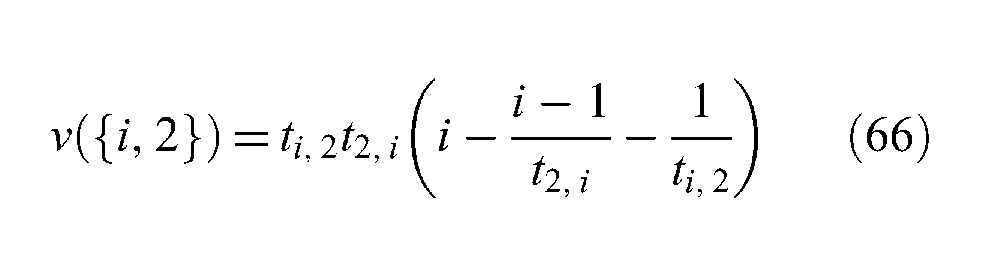
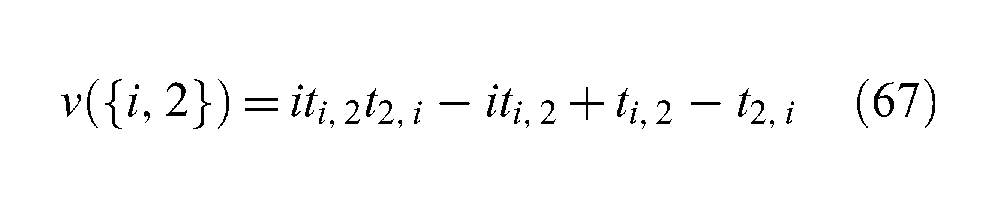
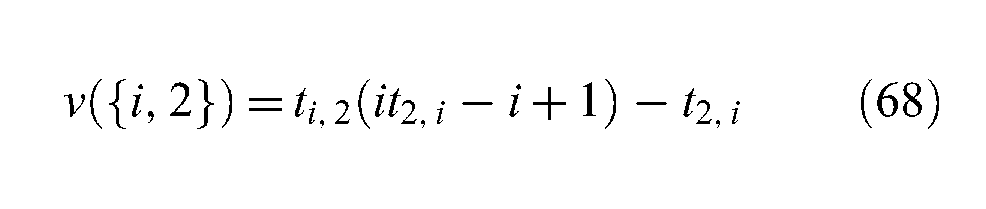
Both (65) and (68) confirm that the highest trust payoff that can be achieved with the second vehicle is equal to zero. Therefore,
6. Conclusion
In summary, this paper formalized the study of coalition formation with trust-based interactions using cooperative game theory. It characterized different classes of trust games, provided a general model for trust games, and showed how the model could be applied to an unmanned military convoy within the context of moving forward together. Our main result from the application shows that all vehicles behind the lead vehicle in a convoy need only trust the lead vehicle, and no other vehicle, to move forward so long as the lead vehicle trusts every other vehicle to follow it. In other words, the most optimal trust payoff occurs when the lead vehicle acts as the trusted third party between all of the follower vehicles. This insight could potentially be used in the design of trust interaction protocols for unmanned military convoy operations.
Footnotes
Funding
This research received no specific grant from any funding agency in the public, commercial, or not-for-profit sectors.