







Abstract
The asymptotic limit theorems of control and information theories allow the examination of systemic failures afflicting “scientific” approaches to armed conflict such as reflexive control, the OODA loop, and East Asian alternatives. Large-scale combat, like other major human enterprise, is a form of dialog between cognitive institutional entities only loosely following shifting “laws” that most often express a path-dependent historical trajectory constrained by powerful cultural riverbanks. Such “conversations,” while having their own grammar and syntax, can involve matters of science, engineering, and technology, but they are not, of themselves, scientific in the Western sense. They may, however, be studied using the methodologies of historiography, social science, human ecology, and the like. Moving much beyond this is to invoke an alternate reality.
(Russian Chief of Staff V. Gerasimov, quoting A. Svechin
1
)
(Colin S. Gray
2
)
Introduction
Following Thomas,3,4“reflexive control” in Russian military doctrine is a means of conveying to a partner or an opponent specially prepared information to incline them to voluntarily make the predetermined decision desired by the initiator of the action. As Kramer et al. 5 put the matter,
The general idea of reflexive control may be represented as shown in Figure 1. Suppose we have two sides, whom we will call Blue and Red. Suppose Blue wants to control the decision making process of Red. To achieve this objective, Blue decides to send Red some package of information
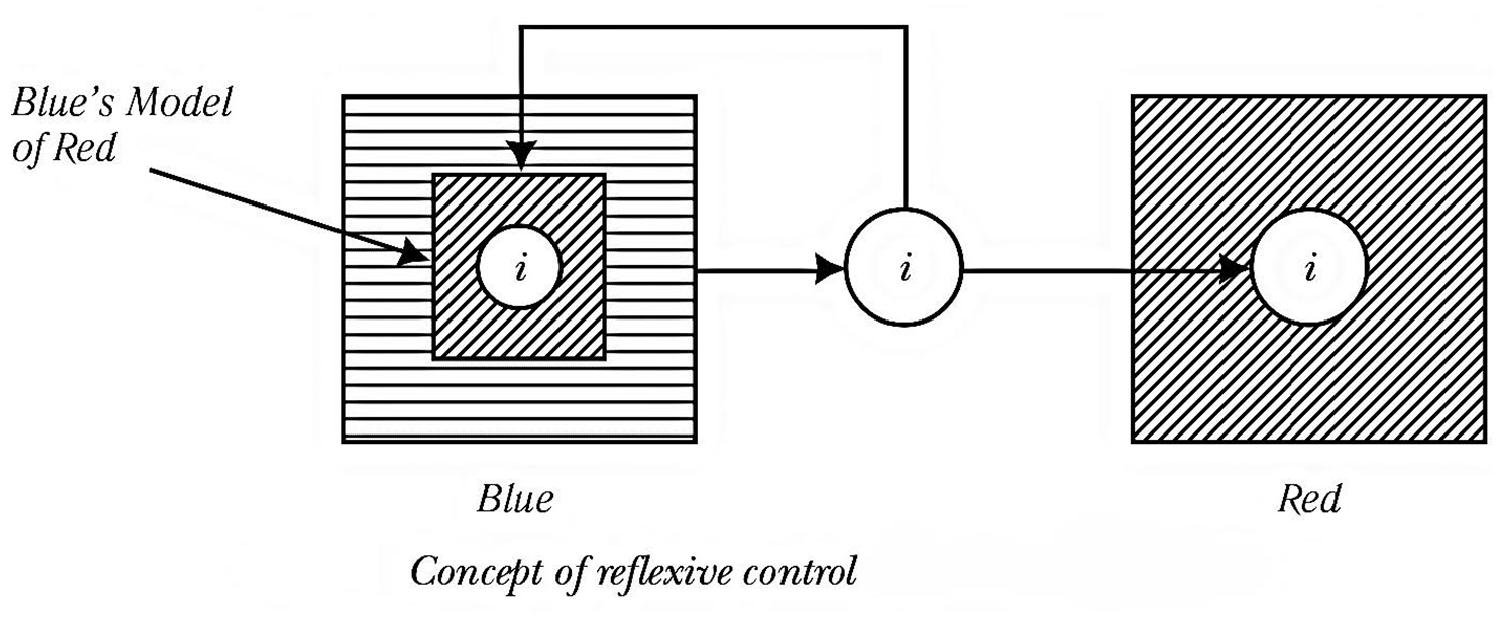
The basic idea of reflexive control. Missing from this figure, however, is a necessary feedback from Red to Blue: did the ploy work? If not, by how much did it fail? (Adapted from Kramer et al. 5 )
Missing from the figure is the necessary feedback from Red to Blue: did the ploy work? If not, by how much did it fail? How much correction will be needed?
Thomas
6
refines matters in terms of inducing “information-psychological effects” (IPE) according to the feedback loop of Figure 2. Regarding this figure, he quotes Veprentsev et al.
7
in these terms, A computer model of the psychology of the behavior of the model, its reflexive apparatus, is created; according to a special program, scenarios of IPE and their consequences are played. After the employment of an IPE ‘impulse,’ an assessment is made in real time of the closeness of the reaction of the object to the target setting and, if necessary, additional optimal effects are selected… The repetition of the cycles of IPE are limitless.
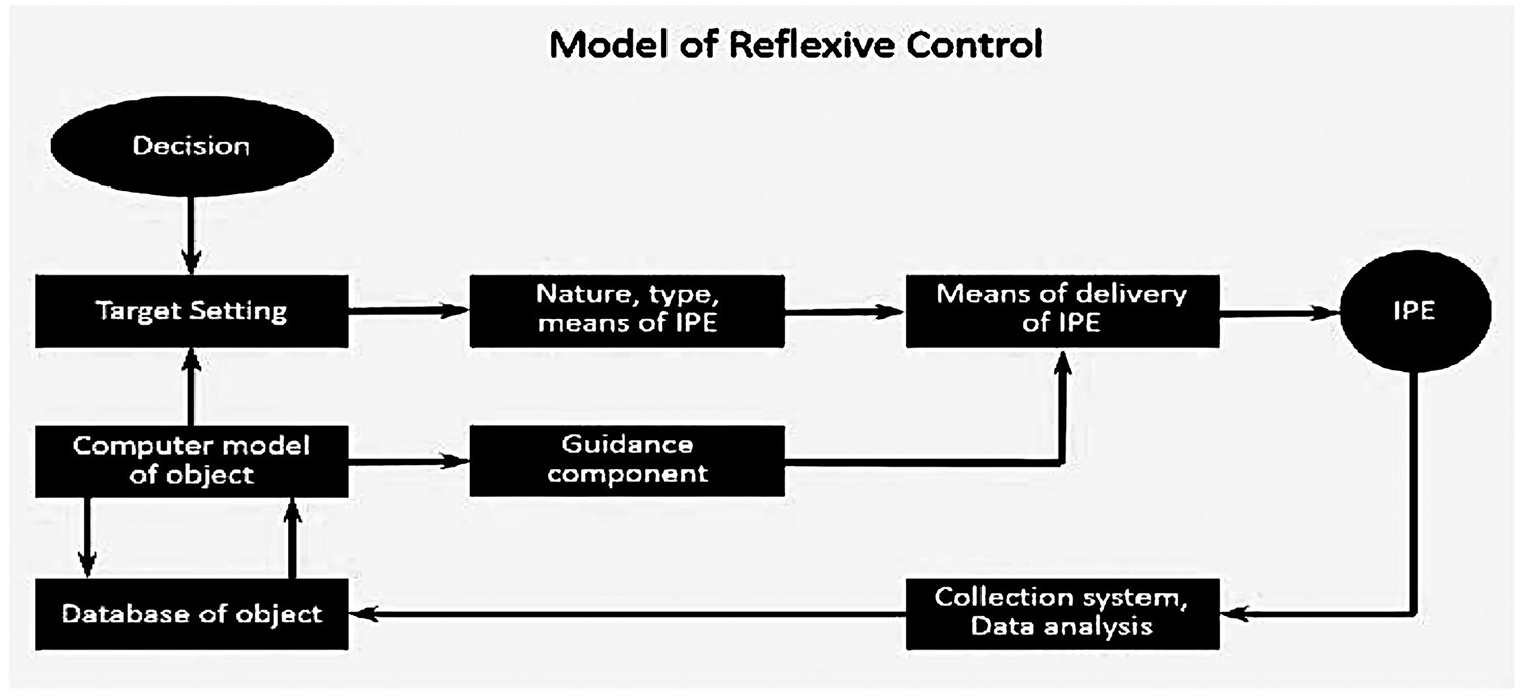
The loop imposing reflexive control. “IPE” is the information-psychological effect wanted in the opponent. Note the necessary feedback between intent and execution. (Adapted from Thomas. 6 )
Figure 2, adapted from Thomas, 6 shows more explicitly the feedback loop inherent to the methodology.
Going back as far as the writings of Sun Tzu, Jullien
8
describes a roughly similar, and quite current, Chinese perspective on control of an opponent as follows, For something to be realized in an effective fashion, it must come about as an effect. It is always through a process (which transforms the situation), not through a goal that leads (directly) to action, that one achieves an effect, a result… Any strategy thus seems, in the end, to come down to simply knowing how to implicate an effect, knowing how to tackle a situation upstream in such a way that the effect flows ‘naturally’ from it… All we need do is implant those ends [we wish to obtain] in the trajectory of things. In this way, left to its immanence, the desired effect is realized… So strategy is always a matter of knowing how to impinge upon the process upstream, in such a way that an effect will then tend to ‘come’ of its own accord… It resembles a fruit that, changing imperceptibly, eventually ripens… …[O]ne must reduce the opponent to a passivity by very gradually stripping him of his ability to react… In contrast to the event constituted by a battle, which gives rise to resistance, there is a continuously unfolding process in which the strength of the antagonist is progressively dissolved…
Deal
9
describes these matters in more contemporary terms: From the perspective of the Marxist-Leninist way of war, enemy disintegration work is an essential precursor to the use of force. This point would have resonated with Mao Zedong and other early communist readers of the ancient Chinese military classics, which stress the importance of balance between belligerents in cohesion – which side is more resolute and internally unified – as well as the need to prepare the battlefield before fighting… The first chapter of Sun Zi’s [Sun Tzu’s] Art of War opens with a recommendation to assess which side is more in harmony with, or loyal to, its leadership. If you can weaken the adversary’s resolve and cohesion in advance, your strikes will have outsized effects. War may even be obviated by successful efforts to shape the enemy’s perceptions and behavior in peacetime.
Something of this is discussed at length by Wallace. 10
There is, of course, some difference between Russian and Chinese efforts in these directions. Jankowicz and Collis
11
argue that Despite some similarities in tactics, Chinese and Russian information operations diverge in their intent; China does not opportunistically sow division and inflame internal conflict in an ideologically agnostic way as the Kremlin does, nor has the CCP been linked to attempts to interfere in democratic processes as Russia has… China’s objectives focus on the nation’s image and ensuring their point of view is heard, even through subversive means. When Beijing has engaged in more aggressive operations such as using fake content or instances of inauthentic online behavior, these efforts have related to the CCP’s top foreign policy priorities such as Hong Kong and Taiwan.
A different, and quite current, Western perspective on control of an enemy is John Boyd’s “OODA loop,” which Osinga
12
describes as follows: The OODA loop model as [ultimately] presented by Boyd… represents his view on the process of individual and organizational adaptation in general, rather than only the military-specific command and control decision-making process that it is generally understood to depict. It refers to [a] conceptual spiral… to the process of learning, to doctrine development, to command and control processes… [Many contemporary Western ideas] are incorporated through Boyd’s concluding statement in the final slide that follows [his presentation of] the OODA loop picture.. The key statements of this presentation, the OODA Loop Sketch and related insights represent an evolving, open-ended, far from equilibrium process of self-organization, emergence and natural selection. This relates the OODA loop clearly to Complex Adaptive Systems, the role of schemata and to the process of evolution and adaptation. Once again it shows that where the aim is ‘to survive and prosper’ in a nonlinear world dominated by change, novelty, and uncertainty, adaptation is the important overarching theme in Boyd’s strategic theory.
Again, from Osinga, 12 Figure 3 shows Boyd’s final iteration of the OODA loop.
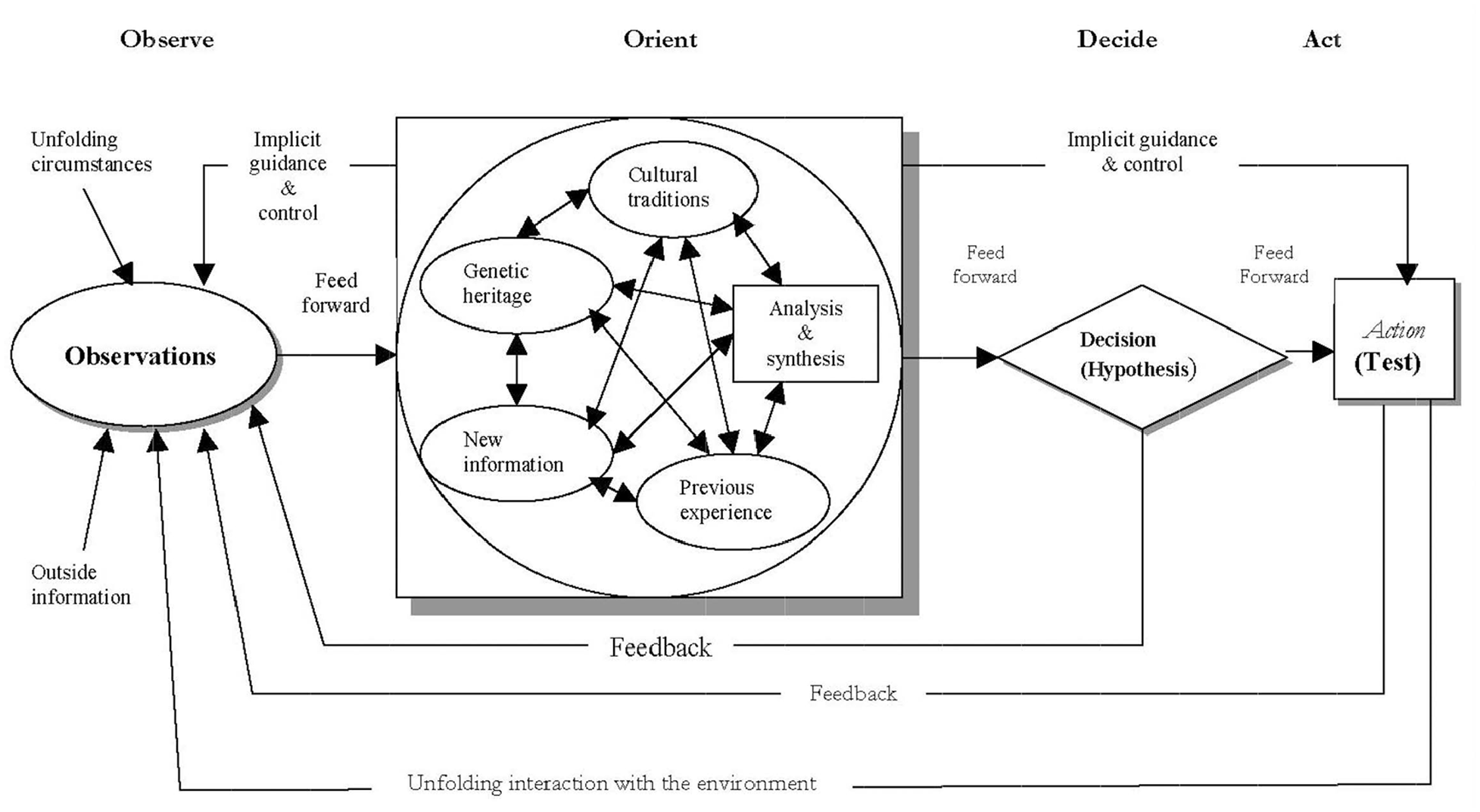
John Boyd’s later OODA loop. Again, note the necessary feedback between intent and outcome. An essential aspect of Boyd’s formulation is to “get inside the command loop” of an adversary, working him faster than he can possibly respond. (Adapted from Osinga. 12 )
A central feature of Boyd’s approach is “getting inside the enemy’s command loop,” that is, challenging him faster than he can respond, leading to collapse. Boyd was, of course, one of the architects of the spectacularly successful “left hook” strategy in the First Gulf War. Subsequent matters, of course, were, and continue to be, something quite different.
What is central to such approaches is an attempt to control an adversary while monitoring the effectiveness of that attempt, so that corrections can be made as needed in a sufficiently timely manner. There is an underlying body of formal theory in this regard that takes us beyond the psychopathic nightmares of game theory and its variants (after all, the Cold War did not end in thermonuclear holocaust, despite the concerted efforts of John Von Neumann, one of the inventors of game theory, and his many allies). That body, the asymptotic limit theorems of control and information theories, permits construction of statistical tools that prove useful in understanding, and perhaps, in some limited way, even managing, conflict. We begin with an introduction to the data rate theorem (DRT) of control theory.
The data rate theorem
Cognitive systems in real-world environments are inherently unstable. Think of a speeding vehicle on a twisting, pot-holed roadway at night. That vehicle requires, in addition to a very skilled driver, good headlights, a powerful motor, and steering that is both responsive and reliable.
Control theory’s DRT, a clever extension of the Bode integral theorem, establishes the minimum rate at which control information must be provided by an external agent for an inherently unstable control system to remain stable.
Following Nair et al.,
13
we make a linear expansion of system dynamics near a non-equilibrium steady state (nss) of the control/action system. Take an

Here
Figure 4 is the minimal possible structure of any command-and-control process in the presence of a “noise” modeled here as an undifferentiated Brownian white noise spectrum. The noise may be “colored,” i.e., having a shaped, rather than flat, power spectrum.
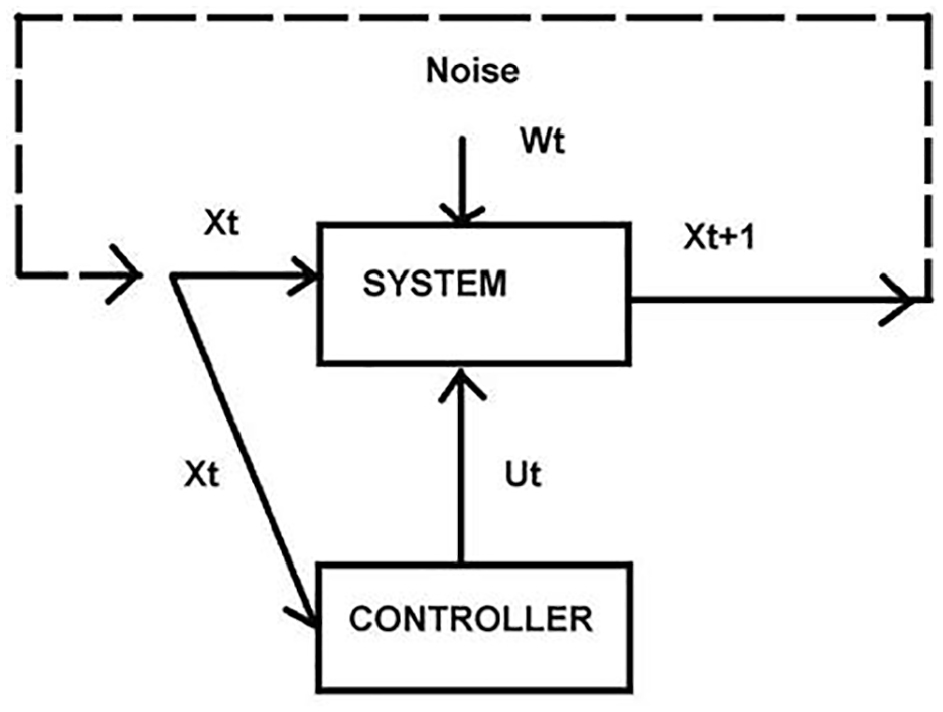
The state of the system
The assertion of the DRT is that, if

Here
System stability collapses if this inequality is violated: if headlights fail, if steering becomes unhinged, a twisting roadway cannot be navigated, no matter how powerful the engine.
A skilled practitioner will take command of
In appearance, then, through (2), we have perhaps come to the foundation of John Boyd’s OODA loop. Unfortunately, this is an illusion. The mathematical ecologist Pielou
14
writes, regarding the role of mathematical models of complex social and ecological systems, as follows: [Mathematical] models are easy to devise… the magic phrase ‘let us assume that’ overrides objections temporarily… How is such a model to be tested? The [often fortuitous] correspondence between a model’s predictions and observed events… cannot be taken to imply the model’s simplifying assumptions are reasonable [in the real world]… [T]he usefulness of models is great… [however it] consists not in answering questions but in raising them. Models can be used to inspire new field investigations and these are the only source of new knowledge as opposed to new speculation.
Further, probability models, and (2) can be re-expressed in such form (see, e.g., Wallace, 10 Section 14.3), may also provide the basis for new statistical tools useful in data analysis. The development and proper application of such tools, however, is an arduous enterprise, and remains far more of an art than a science. Indeed, the manipulation of easily available data to imply false conclusions is one of the well-known strategems of conflict management.
It is central to the use of statistical tools based on probability models that there be estimates of both face validity and error. “Control theory” (or “nonlinear dynamics”) approaches, often “arguments by metaphor,” that lack either or both such estimates indicate scientism rather than science.
A spectrum of criticisms has, in fact, been made of the OODA loop maneuver warfare metaphors, most trenchantly by Bolger, 15 as summarized, although not in a friendly manner, by Polk. 16 In short, quite often, you simply cannot do a quick end-run. Or if you do, your adversary simply refuses to give up, regroups, and keeps on keeping on. As Britain found in the American Revolution, the Wehrmacht found on the Eastern Front, France, the USA found in Vietnam, and Britain, Russia, and America in Afghanistan. And so on. Time scale counts.
What we do next is somewhat unusual, using mathematical models to critique “control theory” approaches to the manipulation and management of armed conflict, in the context of Pielou’s injunction that the proper use of such models is to raise questions rather than answer them. We are, in a sense, conducting a reducto ad absurdum for control theory methodology, driving these ideas to their logical and limiting end points. The questions raised by this exercise are ignored at peril.
We continue by imposing a significant simplification.
Scalarizing resources and their interactions
A characterization of internal and external information flows, and their relations with material resources, is required before exploring system dynamics under stress.
We see a multicomponent cognitive agent as enmeshed in, acting on, and acted on by, a real-world landscape suffering imprecision of action, reaction, and result.
We assume three fundamental resources for that agent, although more can be imposed by the methodology. The first resource is the rate at which information can be transmitted between elements of the agent itself, measured by an information channel capacity C. 17 The second is the rate at which “sensory” (or intelligence) information about the embedding environment is available to the agent, say Q, and the third is the rate at which “material resources” of various necessary forms are available, M.
For neural cells, this is the rate at which metabolic free energy can be supplied. For armed conflict, M is the rate of supply of personnel, ammunition, equipment, and fuel. For driverless cars, M is the inverse linear vehicle density, in combination with measures of road quality and vehicle responsiveness. And so on.
These rates and the available time will interact, creating, at minimum, a 3 × 3 matrix analogous to a correlation matrix, say

Here
These
This is a subtle matter, because scalarization permits analysis of a one-dimensional system. Expansion of
A first failure model
Given the scalarization in terms of

Following Section 14.4 of Wallace, 10 it is possible to adapt the standard Black–Scholes approximation from mathematical finance to derive an exactly solvable approximation as

Also expanding

where, for reasons that will become apparent, we have set
For typical values of the
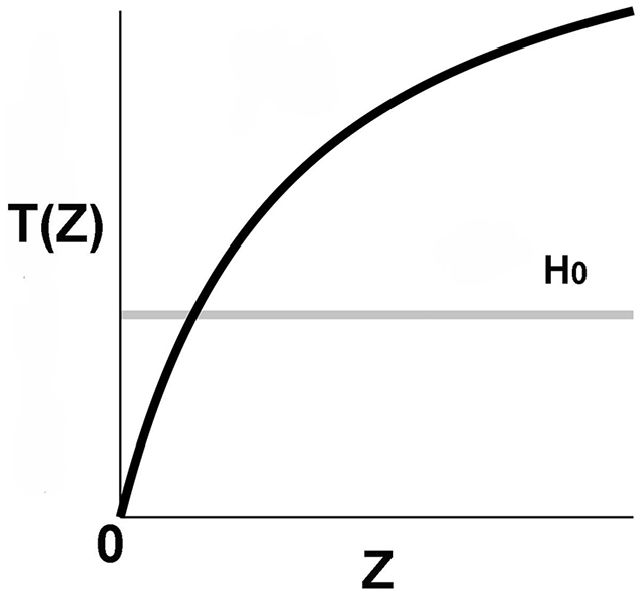
The horizontal line is the DRT limit
The horizontal line in Figure 5 is the DRT limit
A fully sufficient condition for imposing such collapse is to boost the topological information rate so that
What happens to the FCT, as we have constructed it, under conditions of fog and friction, i.e., when there is a delay in providing necessary resources, under the influence of an added “noise” that may include the effects of skilled adversarial intent?
Typically, resources must be supplied at some rate

where the second term expresses “volatility” proportional to
We are, however, primarily interested in the stochastic behavior of the Clausewitz temperature
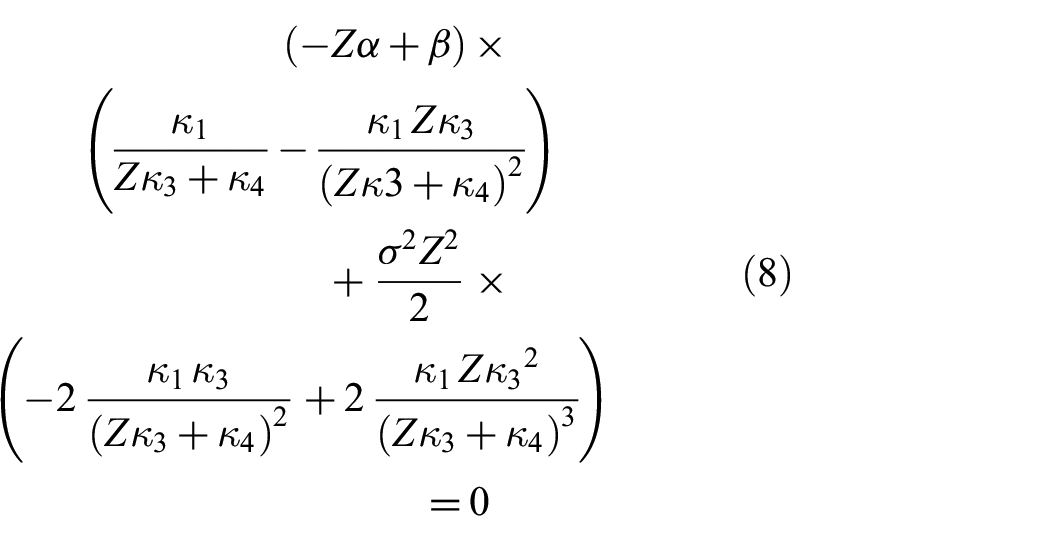
The term in
A typical solution to (8) is shown in Figure 6, showing the solution equivalence class
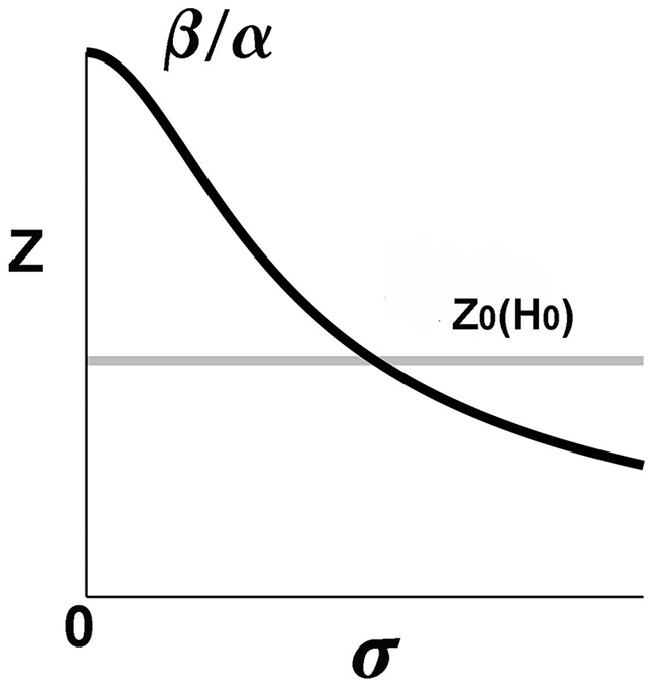
The dark line is the solution equivalence class
Fog and friction constrain the effectiveness of any and all efforts to control an adversary. A skilled practitioner will, of course, employ fog and friction as tools for precisely that purpose.
Again, what is sauce for the goose is sauce for the gander, albeit perhaps on longer time scales than the initial defeat of a conventional army and occupation of its homeland.
A second failure model
It is possible to extend the control theory argument to the expression of the scalar resource rate index
How is a control signal

where
We next apply a rate distortion argument. The rate distortion theorem asserts that there is a rate distortion function that determines the minimum channel capacity,
It is now possible to construct a Boltzmann-like pseudoprobability in the scalarized resource rate index

where
The integral in the denominator has the simple value
For a Gaussian channel, the rate distortion function is
From (10) it is possible to calculate an average–average distortion
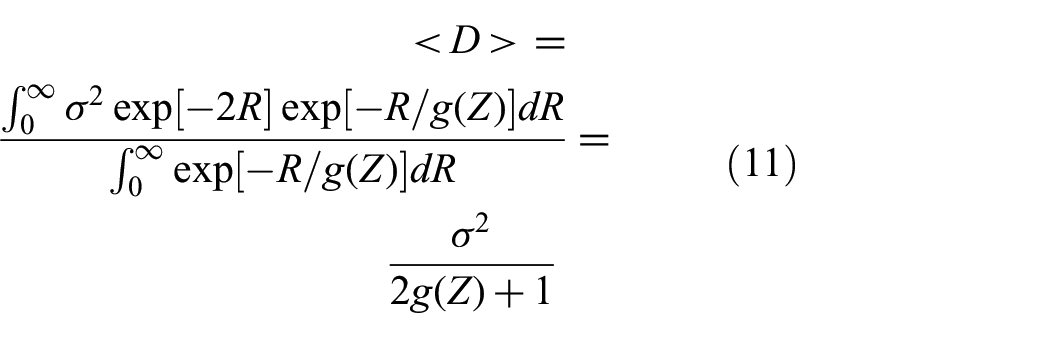
Here
We recognize the denominator of (10) as an analog to a statistical mechanical partition function, allowing definition of a Morse function 22 “free energy” analog as
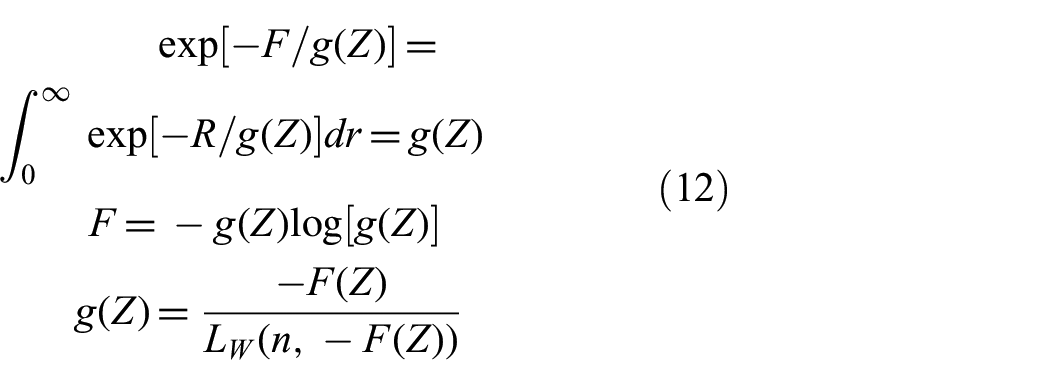
where
Then an entropy analog can be defined in a standard manner as the Legendre transform

Here, we make a first-order Onsager non-equilibrium thermodynamics approximation,21,23 so that, in first order, the dynamics of
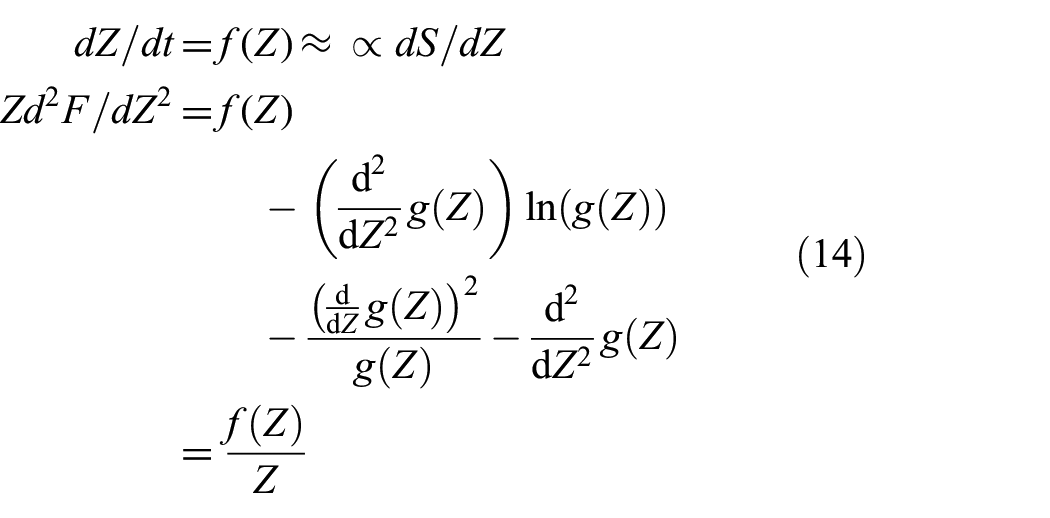
We can explicitly solve this relation for
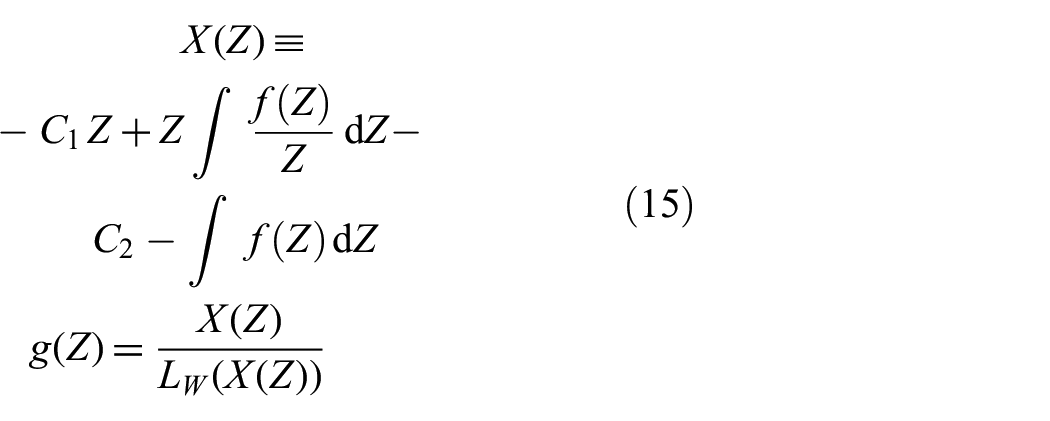
where
Figure 7(a) examines
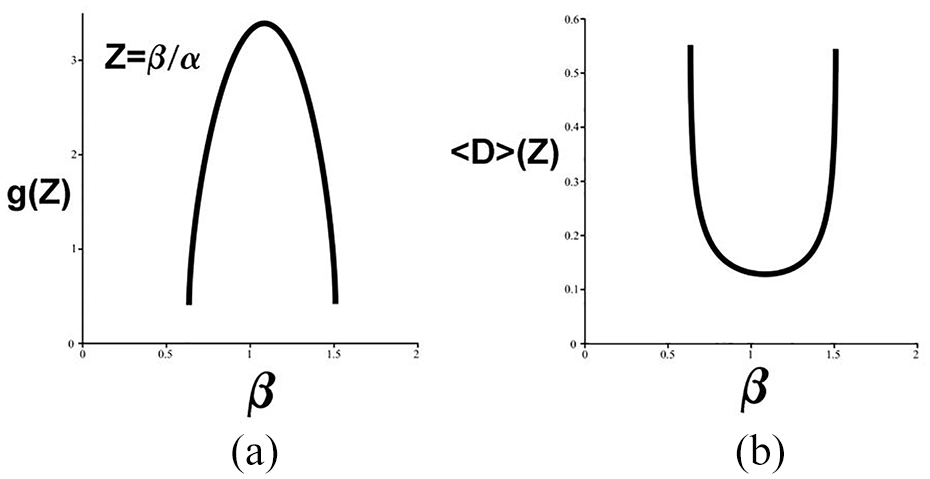
(a) Plot of
What is the effect of noise? Again, we conduct an Ito chain rule calculation on
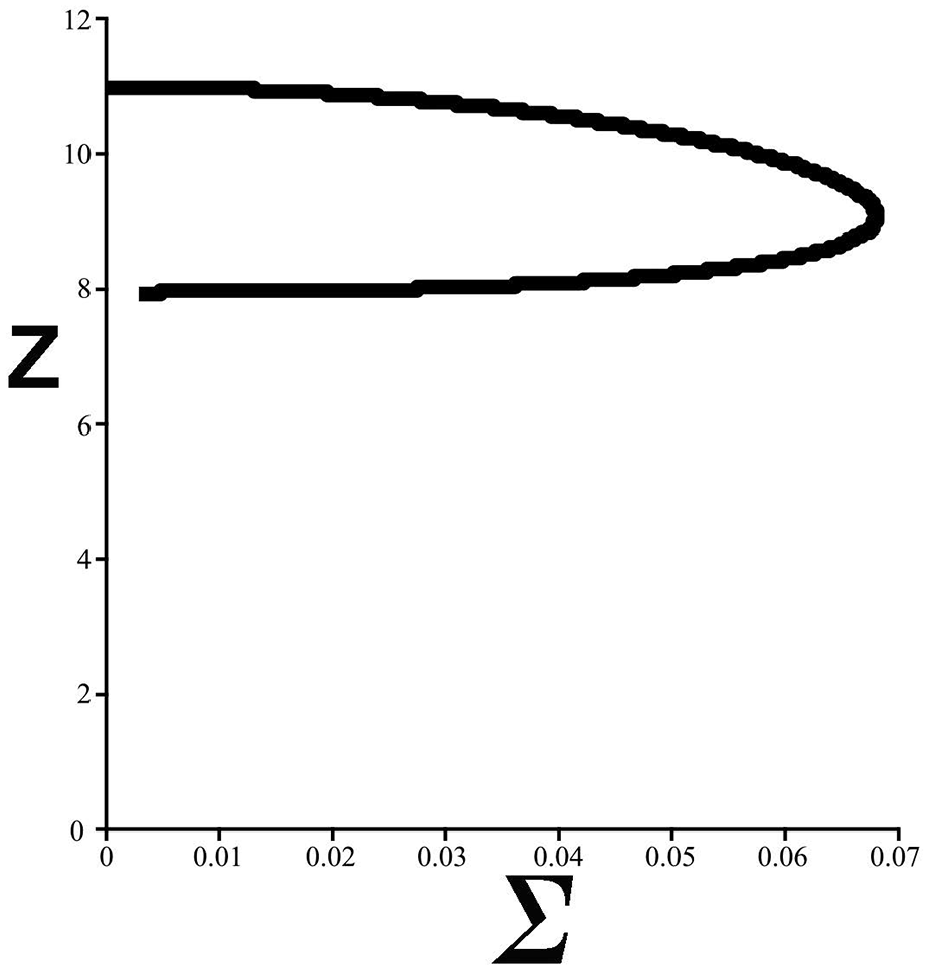
The analog to Figure 6 for
We have shown here that, in addition to the known “hoist on one’s own petard” of “OODA loop” failure on hierarchical systems, a kind of DRT mirror image, there is a broad family of control system collapse driven most explicitly by Clausewitzian fog and friction, indexed here by
In sum, explicit control theory schemes, and indeed metaphors based loosely on “nonlinear systems theory” in general, may not provide any actual scientific foundation for the practice of armed conflict on real-world landscapes of fog, friction, and skilled adversarial intent. At best, one might derive from such probability models, with considerable effort and expense, some new statistical tools useful in data analysis, provided, of course, the data fed to them are known to be sufficiently accurate.
Other “regression models”
The conversion of probability models into statistical tools for data analysis is both directly difficult and plagued by confounding subtleties. Suppose a simple regression model, say
Here, one might well find that, for some systems, it becomes necessary to extend (4), written in

leading to a new “control temperature”

“It is not difficult to show” that
Questions regarding the suitability of
Discussion
The absurdities of “scientific Marxism–Leninism” left a profound imprint on Soviet, and now Russian, military doctrine. Indeed, even Marshal V.D. Sokolovsky,
24
architect of the capture of Berlin, asserted iron-clad “laws of war” as follows: First Law: The course and outcome of war waged with unlimited employment of all means of conflict depends primarily on the correlation of available, strictly military combatants at the beginning of war … Second Law: The course and outcome of war depend on the correlation of the military potentials of the combatants. Third Law: (The) course and outcome (of war) depend on its political content. Fourth Law: The course and outcome of war depend on the correlation of moral-political and psychological capabilities of the peoples and armies of the combatants.
…and so on, leading, perhaps, to the opening corrective quote from the writings of V. Gerasimov, Russia’s present General Staff Chief.
Gerasimov aside, however, the current “alternate reality” into which Russian strategic thinking has fallen, indexed, perhaps, by inept political poisonings, crude and alarming cyber intrusions, and self-defeating land-grabs, suggests an unbroken, path-dependent, historical trajectory in Russian doctrine involving a deeply corrosive commitment to military scientism. Although Russia is clearly not the only polity crippled by commitments to alternate realties, a particular concern is current Russian doctrine surrounding reflexive control theory.
One can, of course, write a parallel analysis regarding the failures of US OODA loop doctrine. Although the regular armies of Iraq and Afghanistan quickly collapsed under overwhelming US tactical and operational superiority, as perhaps implied by (6), subsequent evolution in modes and tempos of conflict could not be so easily overcome. The story is well known, and, in addition to OODA loop reflection, may represent imposition of the second pattern of failure modes by “asymmetric” methods. As “UBL” put it, for both the USA and the USSR (bin Ladin
25
), All that we have to do is send two mujahidin to the furthest point east to raise a piece of cloth on which is written al-Qaida, in order to make the generals race there to cause America to suffer human, economic, and political losses without their achieving for it anything of note… [Just] as we… bled Russia for 10 years, until it went bankrupt and was forced to withdraw in defeat… [s]o we are continuing this policy in bleeding America to the point of bankruptcy.
Analogous vulnerabilities of East Asian Sun Tzu “evolution of conflict” control doctrine appear to exist, but are less generally understood (see, e.g., Wallace, 10 Chapters 5 and 9).
The punctuated failure modes represented by Figures 5–8 would, however, seem to apply, in various ways, to virtually all possible “control theory” approaches to organized conflict on landscapes of fog, friction, and skilled adversarial intent. Paraphrasing Gerasimov, understanding expression of these failure modes in a specific example, however, will not be according to some stereotypical pattern, but in each case will require the establishment of its own logic.
Recall that the mathematical ecologist Pielou 14 describes the conundrum in a slightly different way, asserting that the principal use of formal models in the study of complex ecologies is the important task of raising questions, not answering them. Models can suggest experimental and observational studies that are the only real sources of new knowledge as opposed to new speculation.
That being said, “control” of an opponent in real-world combat, as opposed to computer simulations or artificial intelligence inferences from “big data,” will never be a sure thing, scientism-ridden dogma of any national ideology to the contrary. Indeed, computer simulations and artificial intelligence systems are themselves quintessential cultural objects directly incorporating such ideologies. 18
Von Clausewitz,
26
in a famous quote, long ago described the general problem of scientism in military theory as follows, The first common error [in military theory] is an awkward and quite impermissible use of certain narrow systems as formal bodies of laws… A far more serious menace is the retinue of jargon, technicalities, and metaphors that attends these systems. They swarm everywhere – a lawless rabble of camp followers. Any critic who has not seen fit to adopt a system – either because he has not found one that he likes or because he has not yet got that far – will still apply an occasional scrap of one as if it were a ruler, to show the crookedness of a commander’s course. Few of them can proceed without the occasional scraps of scientific military theory. The most insignificant of them – mere technical expressions and metaphors – are sometimes nothing more than ornamental flourishes of the critical narrative. But it is inevitable that all the terminology and technical expressions of a given system will lose what meaning they have, if any, once they are torn from their context and used as general axioms or nuggets of truth that are supposed to be more potent than a simple statement…
Similarly, from Mao Tse-Tung,
27
…[T]he source of all erroneous views on war lies in idealist and mechanistic tendencies on the question of war. People with such tendencies have a subjective and one-sided approach to problems. They either indulge in groundless and purely subjective talk, or, basing themselves upon a single aspect or a temporary manifestation, magnify it with similar subjectivity into the whole of the problem… [O]nly by… taking an objective and all-sided view in making a study of war can we draw correct conclusions…
Svechin (quoted in Stone
28
) warns against a “third dimension” of error, i.e., fossilization: The great commanders, like all successful practitioners, were above all sons of their age. In Napoleon’s epoch it would be fatal to imitate the techniques of Frederick the Great, and now the application of the techniques of Napoleon’s epoch will lead only to failure. Successful action must first be appropriate to time and place, and for that it must be in accord with contemporary conditions… If our understandings do not change in correspondence with the progress of the military art, if we stay frozen to one point and bow before unchanging laws, we gradually lose sight of the essence of things. Deep ideas become harmful prejudices.
Although statistical and computational tools can sometimes help in data analysis, at base, observation and experiment remain the only sources of new knowledge, as opposed to new speculation, in the understanding and control of large-scale armed conflict.
War, like much other major human enterprise, is an act of communication between institutional entities only loosely following shifting “laws” that most often express path-dependent historical trajectory constrained by powerful cultural riverbanks. Combat remains a dialog between cognitive entities. Such “conversations,” having regularities of “grammar” and “syntax,” can often involve matters of science, engineering, and technology. They are not, however, of themselves “scientific” in the Western sense, although they may be studied using the methodologies of historiography, social science, human ecology, and so on. Moving much beyond this is to enter an alternate reality.
Footnotes
Acknowledgements
The author thanks Dr. D. N. Wallace for discussions and the reviewer for comments useful in revision.
Funding
This research received no specific grant from any funding agency in the public, commercial, or not-for-profit sectors.
