







Abstract
The Global Fragility Act, H.R.2116 116th Congress, directs the Department of State to establish an interagency initiative to stabilize conflict-affected areas and prevent violence globally. We propose and demonstrate an approach to evaluate the success of funding these initiatives. The United States Agency for International Development (USAID) has identified deteriorating economies, weak, or illegitimate political institutions, and competition over natural resources as causes of violence, extremism, and instability. The agency prioritizes mitigating the causes and consequences of violent conflicts, instability, and extremism and funds corresponding programs. Focused on military aid, we quantitatively assess these programs effectiveness at preventing or deescalating conflicts during 2010 to 2020. Our statistical analysis shows the funds during that period did not have an immediate impact on countries prone to violence. However, cumulative long-term relationships exist between some funds and the global conflict levels. As the total amount of 5 years cumulative Defense Security Cooperation Agency (DSCA) implemented funds increases, the total number of countries not-in-conflict increases while the total number of the most violent countries decreases. Those funds also correlate to the decline in total conflict levels during that timeframe. This quantitative approach assesses the aggregate effectiveness of aid across various countries.
1. Introduction
According to the US government foreign assistance website, 1 US foreign assistance in 2018 totaled $48 billion for 13,000 activities in 215 countries. These activities aim to promote economic growth, reduce poverty, improve governance, expand access to health care and education, promote stability in conflict regions, counter terrorism, promote human rights, strengthen allies, and curb illicit drug production and trafficking. 2 Several studies have thoroughly assessed security cooperation impacts on interoperability with partners and the health of the defense industrial base. Evaluating their effect on US regional influences has, however, been proven more challenging. 3 Our study assesses the impact of the past 10 years of US foreign military assistance on decreasing violence for the recipient nations. Our goal is to support the development of guidelines that will quantitatively assess US foreign assistance effectiveness at preventing or deescalating conflicts.
Researchers of foreign aid often investigate case studies. Dube and Naidu 4 show that diverted US military aid aggravated internal conflicts in Columbia. Boutton 5 concludes “that military aid increases anti-regime violence in new regimes (particularly new democracies) and in all personalist regimes.” Shah and Dalton 6 describe how a post-authoritarian Tunisia uses foreign military assistance to successfully combat terrorism, ensure its borders security, and improve its military professionalization and readiness. Cunningham 7 investigates the complexities of US military aid’s influence on civilian control of the military in South Korea, Turkey, and Egypt. Findley et al. 8 conclude, based on surveys in Uganda, that aid recipients have a slight preference for multilateral versus bilateral aid due to perceived trust in multinational institutions. Findley et al. 9 report that members of the Uganda parliament prefer government programs over foreign aid, whereas their citizens prefer aid over government spending.
Several investigators study how China competes with the United States through providing assistance. Gurrola 10 analyzes the increasing arms outflows from China into Latin America countries as a Chinese foreign policy tool to position themselves as a global arms leader, build relationships, and gain access to natural resources and export markets. Conteh-Morgan 11 compares the US and China militarization and securitization of Africa in the fight against terrorism and competition for natural resources and political influence. Hiro 12 describes how China and Saudi Arabia have stepped in to assist Pakistan economically after the revocation of US military assistance. China’s One Belt One Road initiative has significant economic and diplomatic influence in Asia and Europe. 13
Other researchers, similar to this assessment, examine trends across countries. Durch 14 identifies lack of resources or skewed distribution of wealth, rapid population growth in megacities, and unstable political structures as causes of armed conflict. Omelicheva et al. 15 investigate the impact of several US security assistance programs on the countries’ number of civilian atrocities. Tahir 16 shows a positive correlation between military aid and terrorism incidences. Dimant and Meierrieks 17 study the impact of US military aid and anti-American terrorism. Savun and Phillips 18 propose a theoretical model that correlates transnational terrorism to an active foreign policy. Neumayer and Plümper 19 and Du Bois and Buts 20 show alignment between military support and transnational terrorism. Boekestein 21 predicts violent conflicts. Bayale 22 assesses the determinants of foreign aid of 10 Sahel countries. Poe and Meemik 23 examine motivation for US aid toward the end of the Cold War. Donor countries should examine results of aid across diverse circumstances to develop best practices. 24 Our study also investigates aggregate trends.
Researchers have investigated the effectiveness of non-military foreign aid. Dreher et al. 25 find no evidence that aid reduces worldwide refugee outflows in the short term; however, they saw after 11 years or more, lagged positive effects of aid on growth. De la Cuesta et al. 26 conclude “Foreign aid may act much like oil money in reducing voters’ willingness to demand accountability from their government, enabling corruption, clientelism, and repression.” Bearce and Tirone 27 asses that foreign aid can promote economic growth in recipient countries when the donor government’s strategic benefits are small since large benefits undermine credibly to enforce their conditions for economic reform. Winters 28 summarize existing empirical evidence demonstrating that foreign aid functions better with more government and implementing agency accountability.
Our contribution is that we examine the effectiveness of military and other focused aid from the United States. We find that military aid during 2010 to 2020 often induced violence in countries not yet in conflict and prolongs or escalates violence in countries in conflict. The next section presents our method including data sources, and the following section describes our analytic results. We propose our approach as a means to assess the aggregate impact of foreign military aid.
2. Evaluating conflict trends based on aid
We test US foreign aid impact on the level of conflict for recipient nations in the short-term (the following year) and the long-term after 5 years of aid. We evaluate two general types of foreign assistance programs of either military support or society support. The major US programs aimed at improving the recipient country’s military are Foreign Military Financing (FMF) through the Department of State (DOS) and Title 10 Section 333 capacity building activities through the Department of Defense (DOD). The three capacity building activities of interest are counterterrorism operations, counter-weapons of mass destruction operations, and counter illicit drug trafficking operations. We also address military aid intended for stabilization operations and security sector reforms and all the funds implemented by the Defense Security Cooperation Agency (DSCA) and the Army Corp of Engineers. Besides these military programs, the other category of US-funded programs that we study is those specifically geared toward improving the recipient country socioeconomic and political conditions. The different funds investigated in this category are economic development, good governance, democracy, human rights, and rule of law. We do not address programs funded by foreign countries, non-government organizations, or private entities.
We assess US foreign assistance and the effect of contributing factors including their level of democratization through their voice and accountability rating, their population size and their gross domestic product (GDP) per capita. We use data from various sources including the past 10 annual reports of US foreign assistance from USAID. 1 We consolidate databases on armed conflicts around the world including the UCDP/PRIO Armed Conflicts Dataset version 21.1, 29 the Heidelberg Institute for International Conflict Research (HIIK), 30 the Stockholm International Peace Research Institute (SIPRI), 31 and the University of Central Florida Datasets on War, Conflicts and Terrorism. 32 We use the World Bank databases 33 for socioeconomic and political information including the country’s GDP per capita, its population size and voice, and accountability rating.
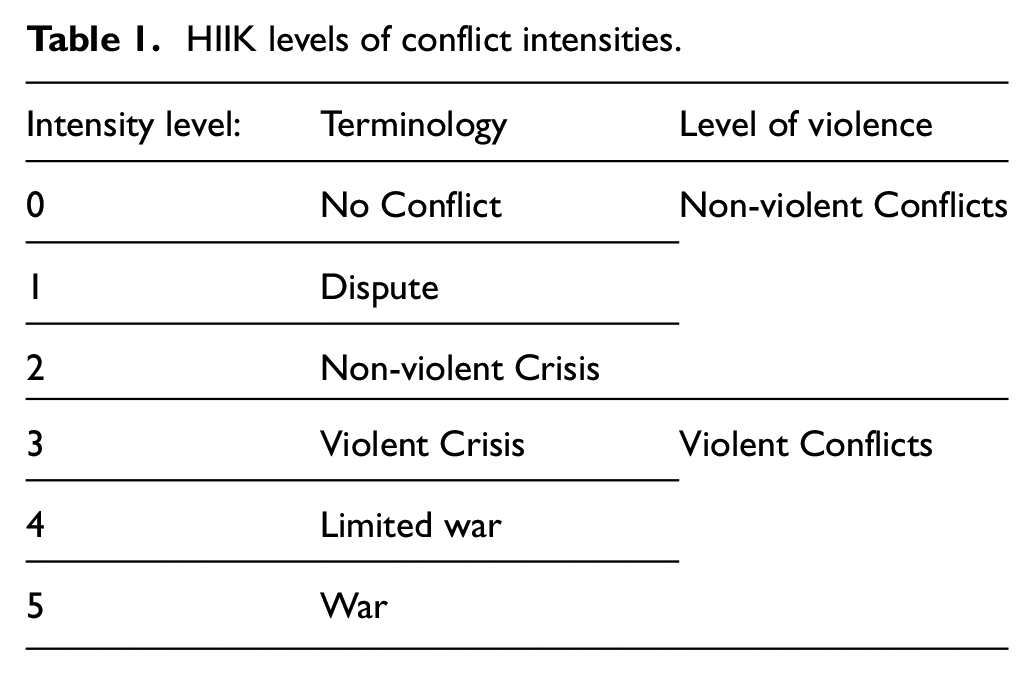
Our hypothesis is that the US foreign assistance activities contribute in the short term (1-year lag) or long term (5-year lag) to recipient nations’ security by preventing and or deescalating violent conflicts. We derive our measure of success based on the Heidelberg Institute for International Conflict Research (HIIK) 30 conflict barometer as the dependent variable for this study. As shown in Table 1, its barometer differentiates five different levels of conflicts, from dispute to war and two level of Violent and Non-Violent. Table 1 summarizes the different levels of conflict. For this study, each country with a conflict intensity level 3 and above is considered violent while a country not in conflict or with a conflict intensity, level of 2 or below is considered non-violent. Since 1993, HIIK produces annual data on hundreds of conflicts in almost 200 countries. This study uses data from 2010 to 2020. The data sets enumerate the different conflicts in each country, whether the conflict is intrastate or interstate, its cause (ideology, secession, national power, etc.), and its intensity level. We use the highest conflict intensity level for each country during a specified year to characterize it as non-violent or violent in that year. Randahl and Vegelius 34 are similar in that they use two similar categories of “peaceful” and “conflict,” an ensemble of variables, and general linear regression.
HIIK levels of conflict intensities.
From the website ForeignAssistance.gov, 1 we combined the yearly amount of US dollars per activity type based on the following criteria:
US Government Sector Name: • Combating Weapons of Mass Destruction (WMD); • Counter-Narcotics; • Counterterrorism Financing; • Stabilization Operations and Security Sector Reform; • Rule of Law and Human Rights; • Good Governance; • Economic Development—General; • Democracy, Human Rights, and Governance—General; • Political Competition and Consensus-Building.
Activity Name: • DOD—International Military Education & Training (IMET) Program/Deliveries; • DOD—Foreign Military Financing (FMF) Program, Payment Waived.
Implementing Subagency name: • DOD Defense Security Cooperation Agency (DSCA); • DOD Army Corp of Engineers.
The over 2000 rows of data represent a country in a specific year with the dollar amount of each type of funding. We removed 60 data entrees due to missing values.
3. Analytic results on aid impacts
Our hypothesis is that foreign military aid should improve the recipients’ national security. We anticipate that foreign military aid will have a bigger impact at preventing and deescalating violence in the long term (5-year lag) than in the short term (1-year lag). However, the funds can also be misused to generate or escalate violence in countries with factors precursors to violence. Bapat 35 indicates government leaders are incentive to continue aid more than resolve conflict. We use tables and graphs to display the different degrees of military aid success based on the influencing factors.
3.1. Overall distribution of funds
Figure 1 shows the average aid by type for violent countries (red) and non-violent countries (blue). Countries currently involved in violent conflicts receive significantly more aid, particularly from three types of funds of FMF, stabilization operations and security sector reform, and DSCA implemented. US foreign assistance programs appear to have prioritized aid to resolving conflicts.
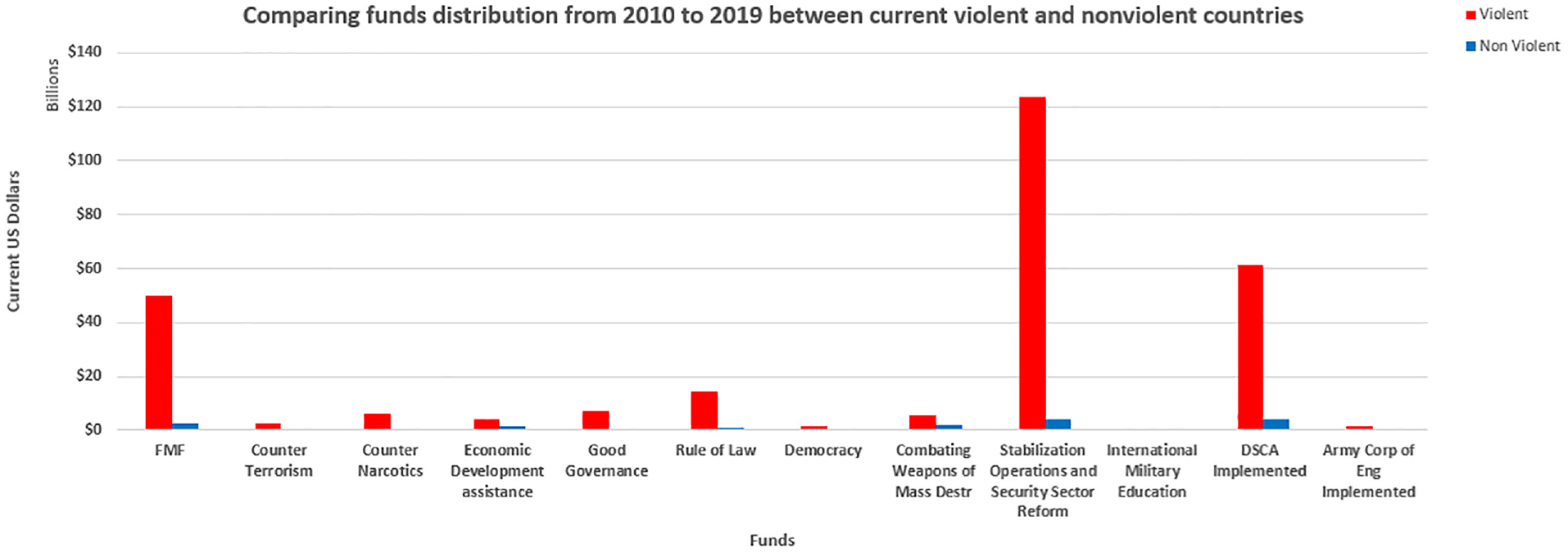
Violent and non-violent countries average funding.
We assess if being a recipient of any of the studied funds contributes to preventing, resolving, or escalating conflicts. We compare the rates of non-violent countries that received funds and those not funded for transition to violent conflict in the following year. Historically, funded non-violent countries have a statistically significantly higher rate of transition to violent conflict in the following year that those countries that did not receive funds, as shown in Figure 2. The data may imply either:
The non-violent countries that received funds were already bound to violent conflicts and the aid did not have a restraining impact (funded too little, too late or both).
The non-violent countries that received funds used the aid to escalate conflict.
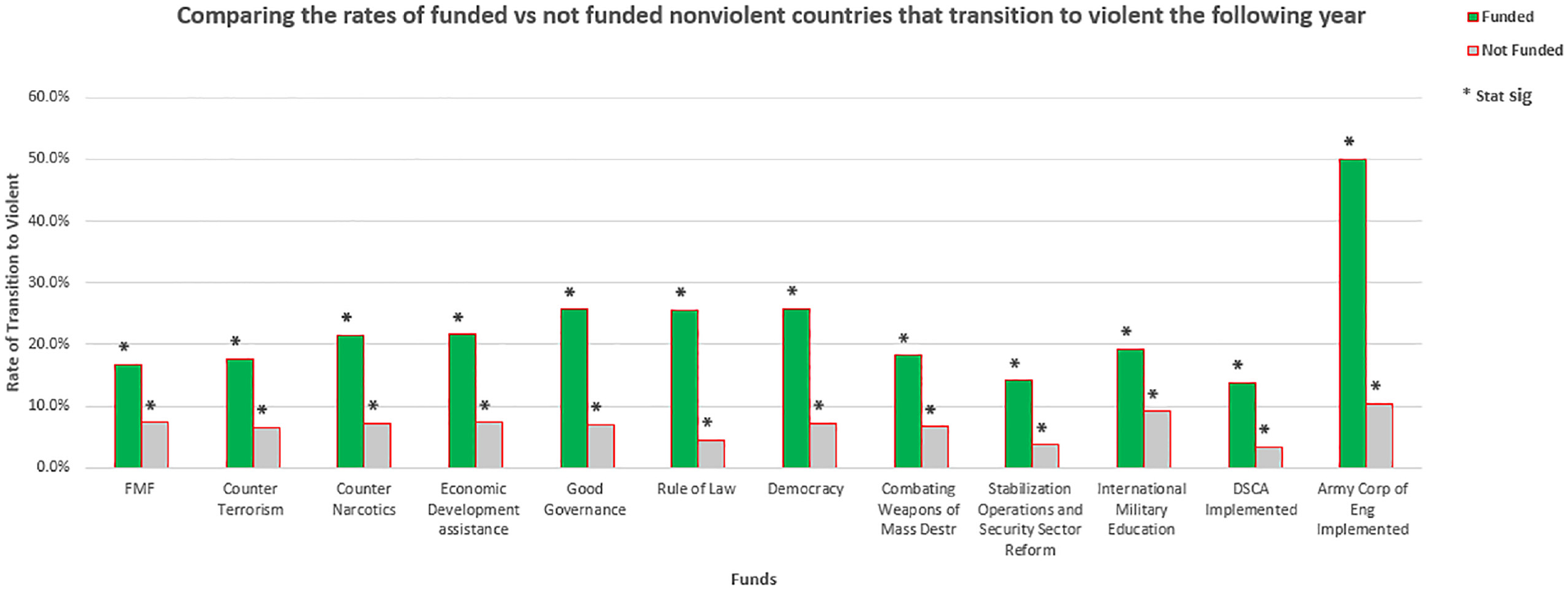
Funded and non-funded non-violent countries transition rates to violent conflicts.
Collier and Hoeffler 36 conclude that any type of aid increase expenditures on armaments. Matisek 37 found recipients prioritized political survival or stronger militaries. Ortín et al. 38 found the presence of peacekeepers has a positive impact of offset the misuse of aid.
We compare the rates of transition from violent to non-violent in the year following aid between countries that received funds and those not funded. Figure 3 shows that historically funded violent countries have lower rates of transition to non-violent conflict levels than those countries that did not receive funds. The differences in rates are statistically significant for four funds of Economic Development assistance, Good Governance, Rule of Law and Democracy.
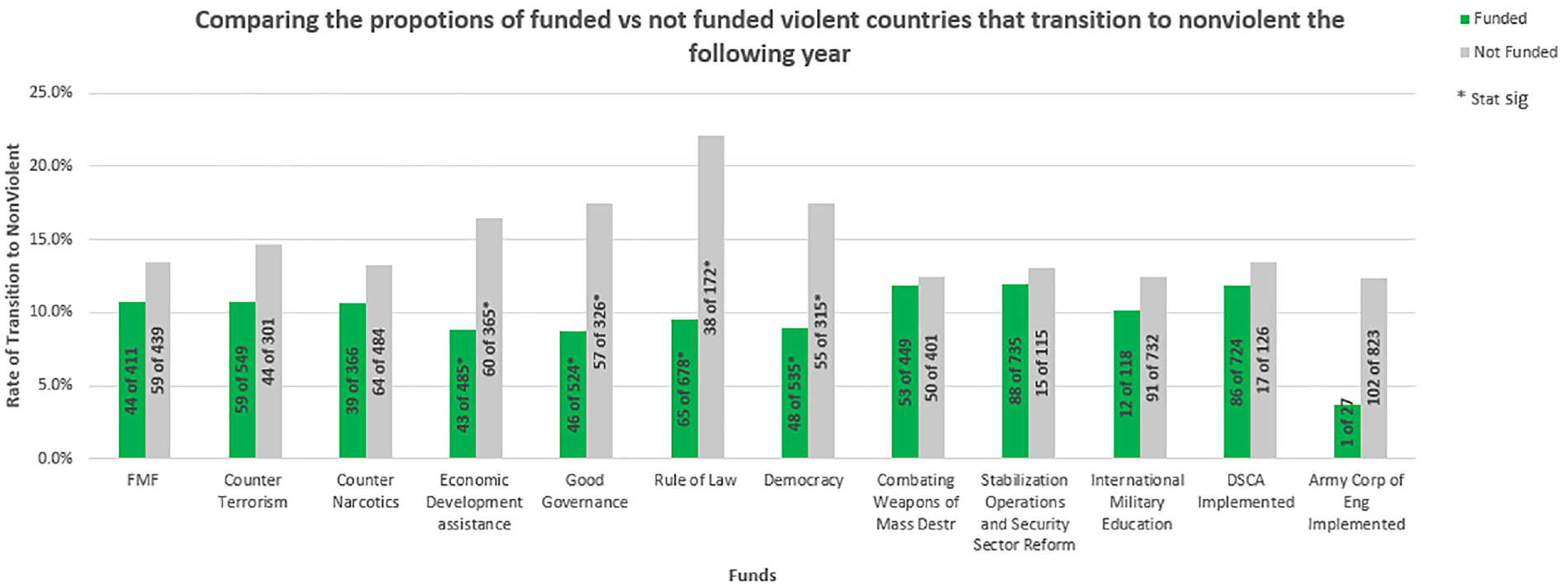
Funded and non-funded violent countries transition to non-violent categories.
Contrary to our hypothesis that these funds reduce violence, these historical data indicate non-violent fund recipients are statistically more prone to escalate into violent conflicts, and violent fund recipient are less likely to deescalate to non-violent conflicts. Foreign aid often escalates or continues violence conflicts.39–42
We examine the characteristics of the countries; Durch 14 and the USAID 43 conclude that political instability, weak economy, and large population size are prone to violent conflict. We select three variables to match these country features. The World Bank’s Worldwide Governance Indicators (WGI) 33 are estimates for six dimensions of governance. The estimates range from −2.5 (weak) to 2.5 (strong). The dimension of governance used in this analysis is Voice and Accountability, which “Reflects perceptions of the extent to which a country’s citizens are able to participate in selecting their government, as well as freedom of expression, freedom of association, and a free media.” 33 This measure assesses repression, which other researchers4,17,24,44,45 identified a major contributor to escalation. The other two indicators are from the World Bank World Development Indicators 46 are as follows:
The recipient country GDP per capita expressed in 2021 US Dollars.
The recipient country total population.
Figure 4 shows violent countries in red versus countries in blue that are not violent. Figure 5 colors indicate whether a country received DSCA implemented funding (green) or not (gray). Collectively, the two graphs show that most countries prone to violent conflict, and often already in conflict, received DSCA funding. We found a similar pattern with all the other funds. 47
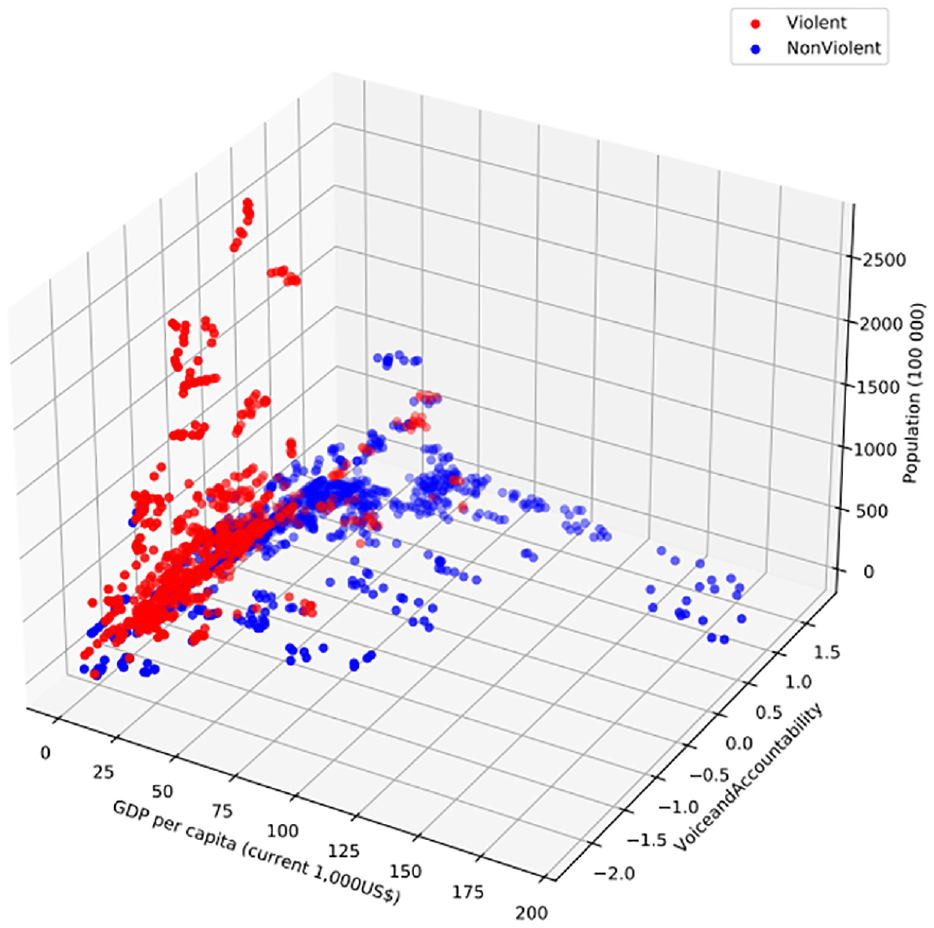
Next year violence by GDP per capita, voice and accountability rating, and population.
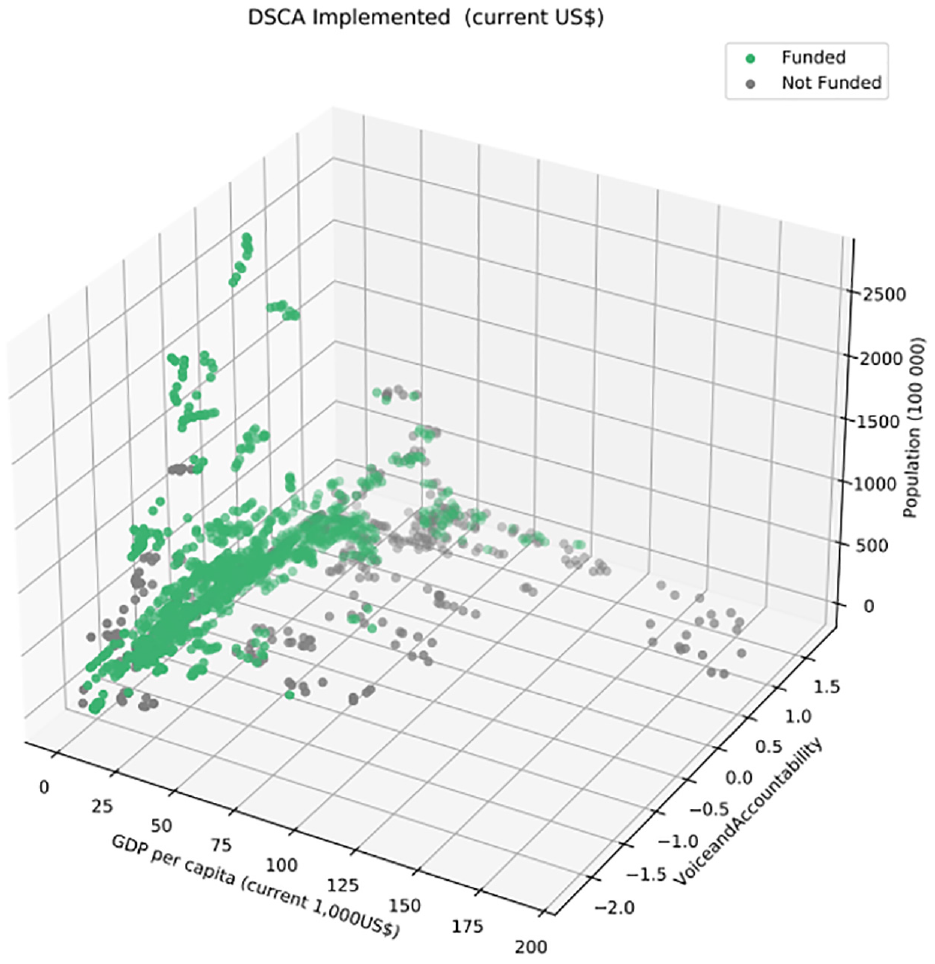
Countries prone to violence receive DSCA funding.
Short-term (next year) fund impact on currentconflict level
We next investigate the relationship between the amount of funds received, the current conflict level, and the change in conflict level the following year. We plot the different year-over-year changes in conflict intensity level versus the amount of a specific fund received and the current conflict level. Our data contain 640 instances of countries at level 0 (no conflict) during the 10 years studied. Of those countries, 43 (6.7%) increased their conflict intensity levels for the following year with some becoming violent. Furthermore, 36 out of the 43 level 0 countries that increased their conflict intensity level received at least one form of funding. Figure 6 shows only countries at level 0 (no conflict) with the horizontal axis showing the amount of DSCA aid received in a year and with the vertical axis their level of conflict in the subsequent year. Most countries at level 0 (conflict free) remain at level 0 the following year regardless of the amount DSCA implemented fund. A significant number of level 0 countries also increase their conflict intensity level despite receiving DSCA implemented funds. For the 640 instances of countries at level 0 (no conflict), Figure 7 show the rate of increased level of violence in the subsequent year based on receiving or not receiving aid for each type of fund. This graph shows that funded level 0 countries increased their level of conflict intensity at a statistically higher rate than those countries that did not receive aid for most funds. Our analysis indicates that in the short term, countries with no conflict (level 0) that do not receive aid are less likely to escalate into conflict.
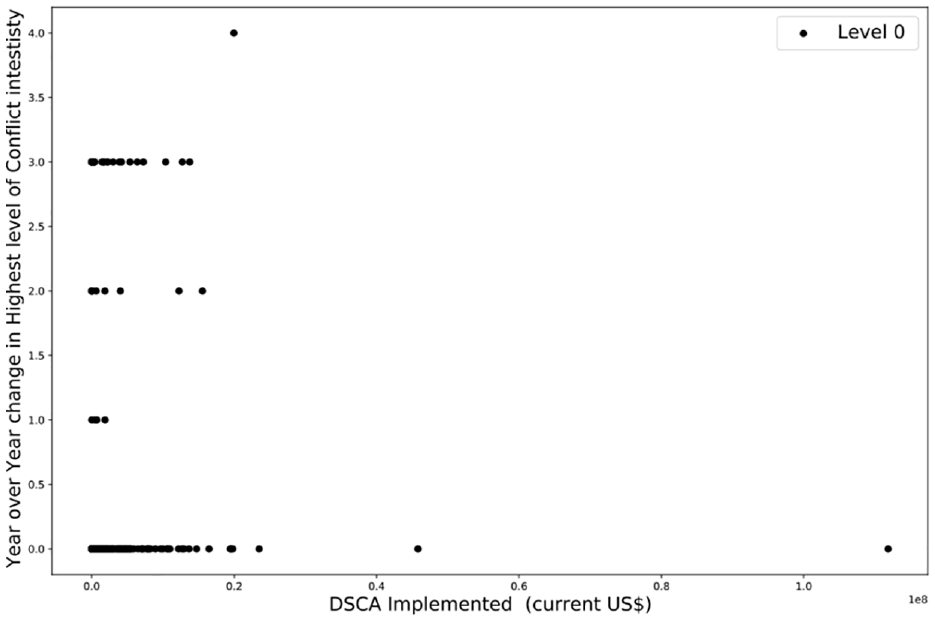
Level 0 countries change in violence by amount of DSCA implemented funds.
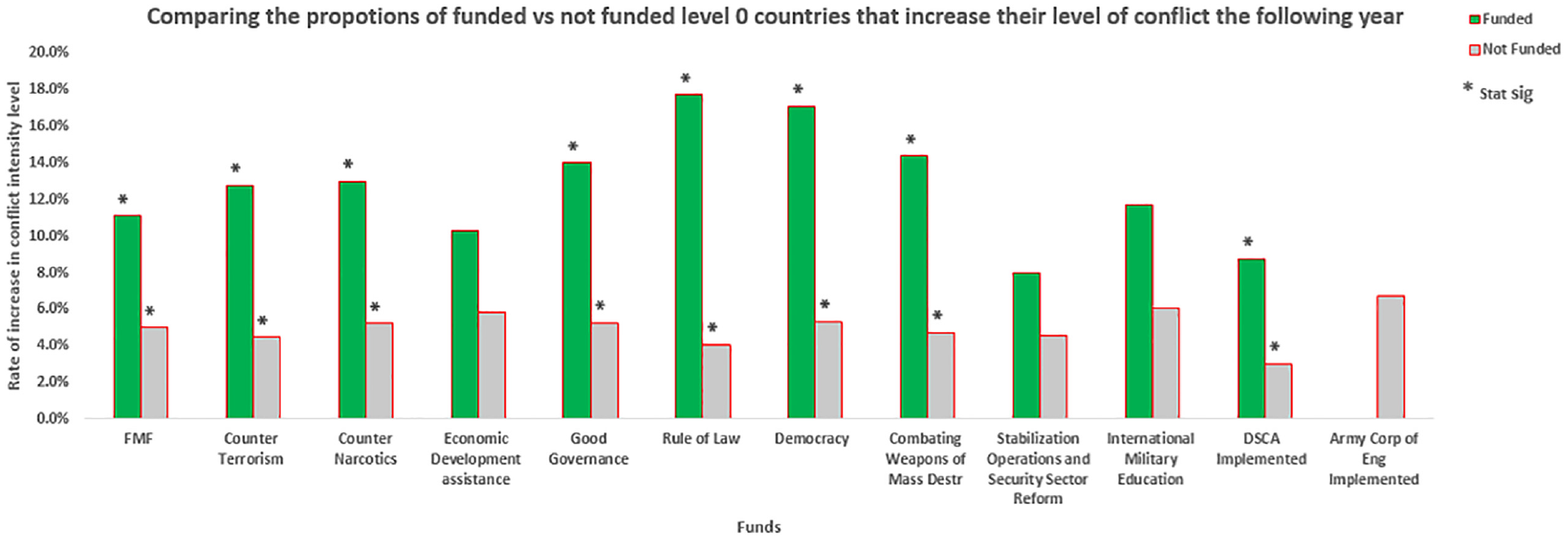
Funded and non-funded level 0 countries rate of increase level of conflict.
We now investigate how the amount of aid impacts the increase in conflict intensity level. Figure 8 compares the average amounts of the different funds received by the level 0 countries that increased their conflict intensity level the following year to the average amounts of all the level 0 countries that received funds. The graph indicates that countries whose conflict level increased generally received more funding for seven of the twelve funds. However, because of the variability of amounts of aid among the individual countries in the two populations, the differences in amounts are not statistically significant.
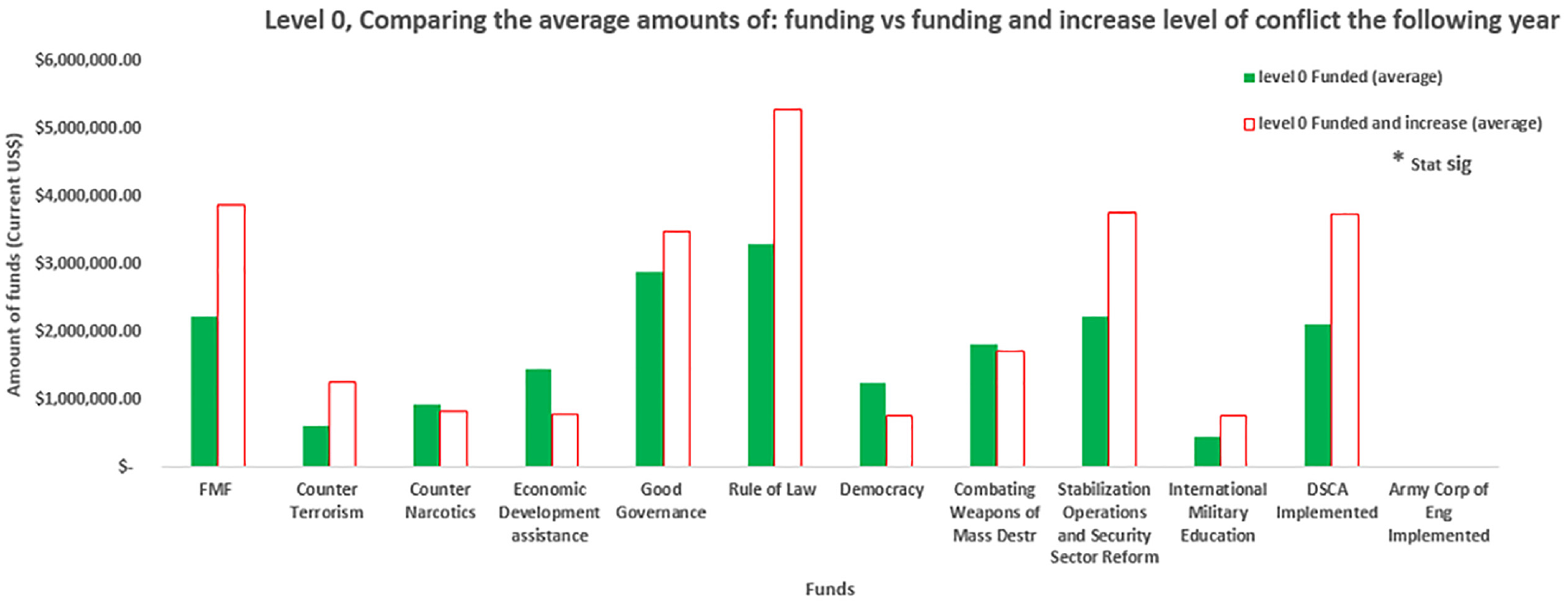
Average funding for all countries and those that increased conflict.
The observations made for level 0 countries were similarly made for countries at the other levels of conflicts. Level 3 countries, for example, had a higher rate of decrease in conflict level for countries that were not funded for 10 out of the 12 funds (Figure 9) with four of these differences being statistically significant. As shown in Figure 10, funded level 3 countries that deescalated had a lower average amount of aid than all the other funded level 3 countries for 11 of the 12 funds with five differences being statistically significant.
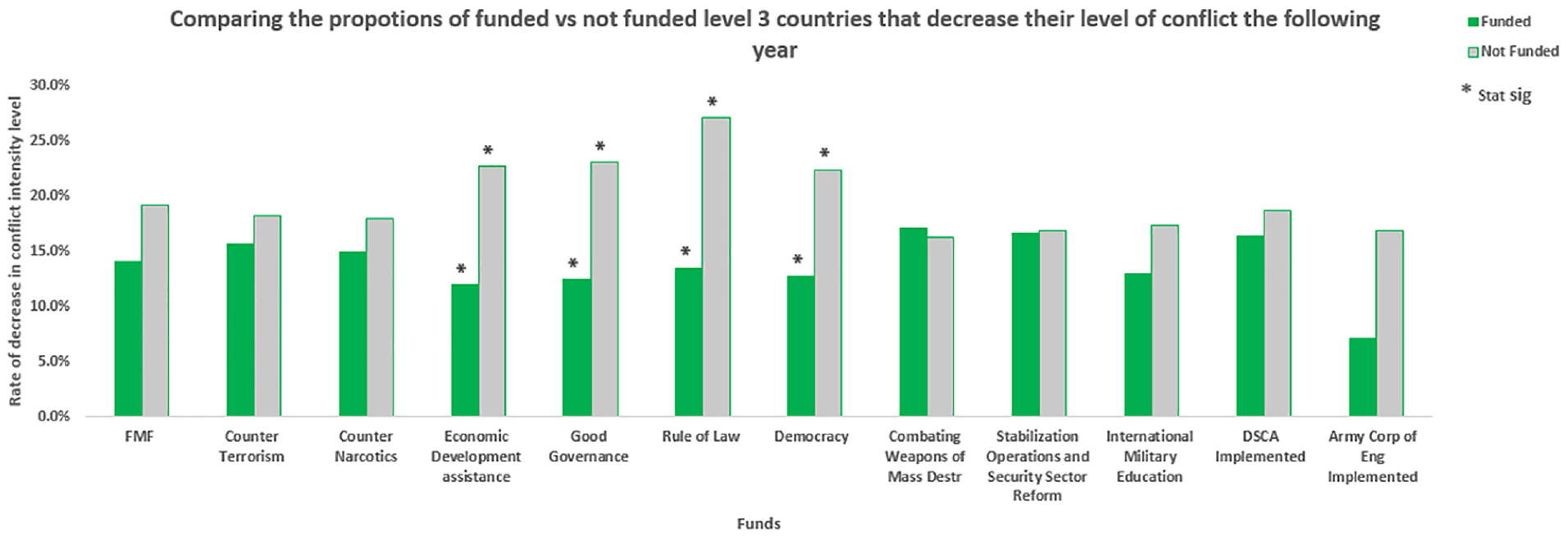
Funded level 3 countries decrease their level of conflict at a lower rate for most funds.
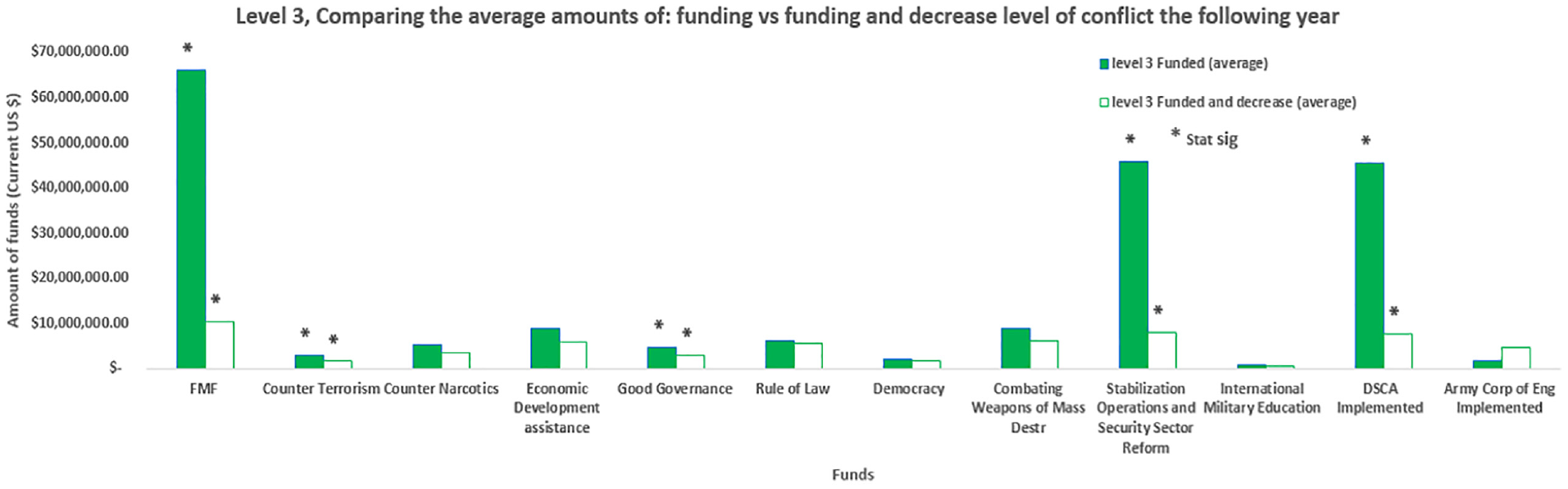
Average funds for all level 3 countries and those that decreased in violence.
Long-term (5 years) cumulative fund impact
We now investigate the 5-year cumulative global impact of the funds. Our hypothesis is, since these funds are intended to decrease violence, the number of violent countries should be related to their cumulative funding. Hence, we test for linear relationships between the total funding during 5 years and the number countries at a specific level of conflict the year following the 5 years. Some funds showed a desired significant positive linear relationship with the number of countries free of conflict (level 0) and a negative linear relationship with the countries at war (level 5). Figure 11 displays the linear regression between the 5 years cumulative DSCA implemented funds and the number of level 5 countries the following year. The 95% confidence interval is highlighted in blue. From the graph, as the amount of DSCA aid increases, the number of level 5 countries decreases. DSCA implemented funds have the desired inverse relationship with the number of level 0 countries; increased DSCA funds are highly correlated with the more countries without conflict.
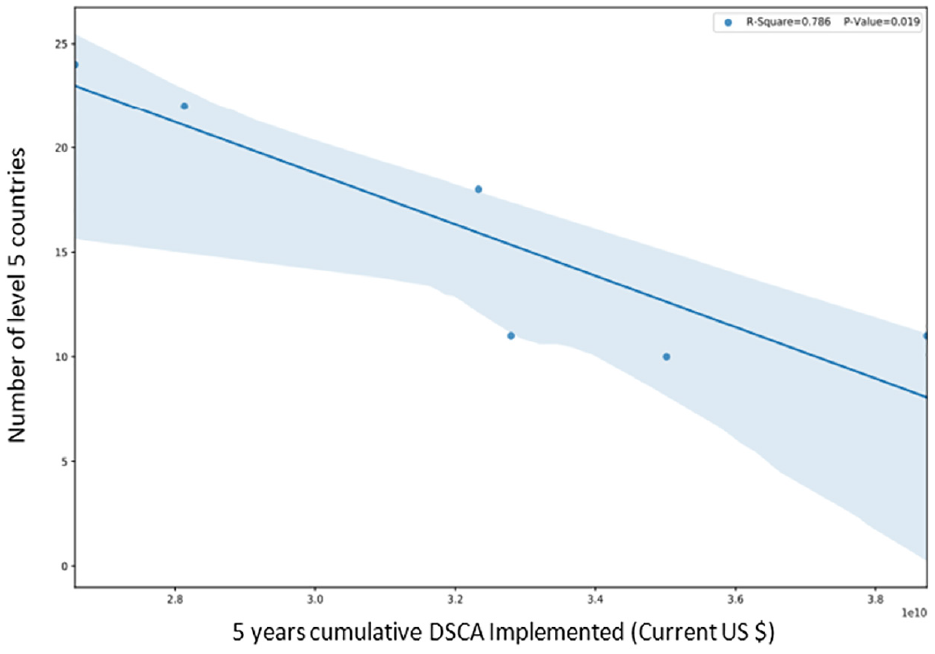
Number of level 5 countries by 5 years of cumulative DSCA implemented funds.
Some funds, on the contrary, showed a significant negative linear relationship with the number of countries free of conflict (level 0) and a positive linear relationship with the countries at war (level 5). Figure 12 displays the linear regression between the 5 years cumulative funds allocated to Stabilization Operations and Security Sector Reforms and the number of level 5 countries the following year. The 95% confidence interval is highlighted in blue. The graph shows; as these funds increase, the number of level 5 countries also increases. The funds have an inverse relationship with the number of level 0 countries. We found similar undesirable correlations with the following funds for Good Governance, Rule of law, Democracy, and Combating Weapons of Mass destruction. 47
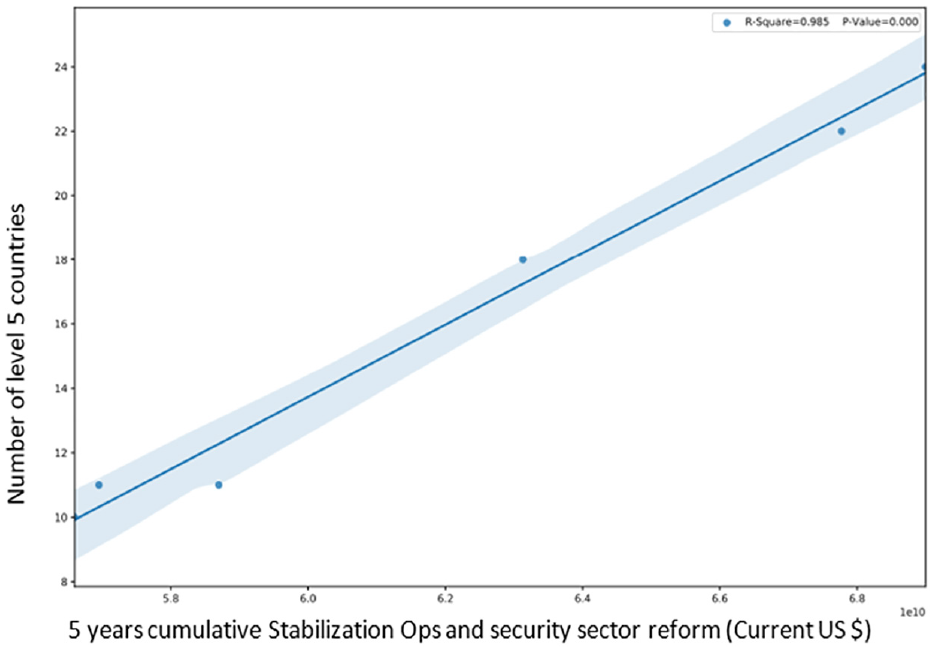
Number of level 5 countries by 5 years of cumulative stabilization operations and security sector reform funds (undesired correlation).
The previous test addresses the 5 years cumulative funds and the total number level 0 and level 5 countries the following year. We investigate the linear relationship between the 5 years cumulative funds and the total change in conflict intensity throughout the five years. Figure 13 displays the linear regression between the 5 years cumulative DSCA implemented funds and the total change in conflict intensity throughout the 5 years. The 95% confidence interval is highlighted in blue. The graph indicates that the DSCA cumulative aid highly correlates with a decrease in the recipient countries’ conflict intensity.
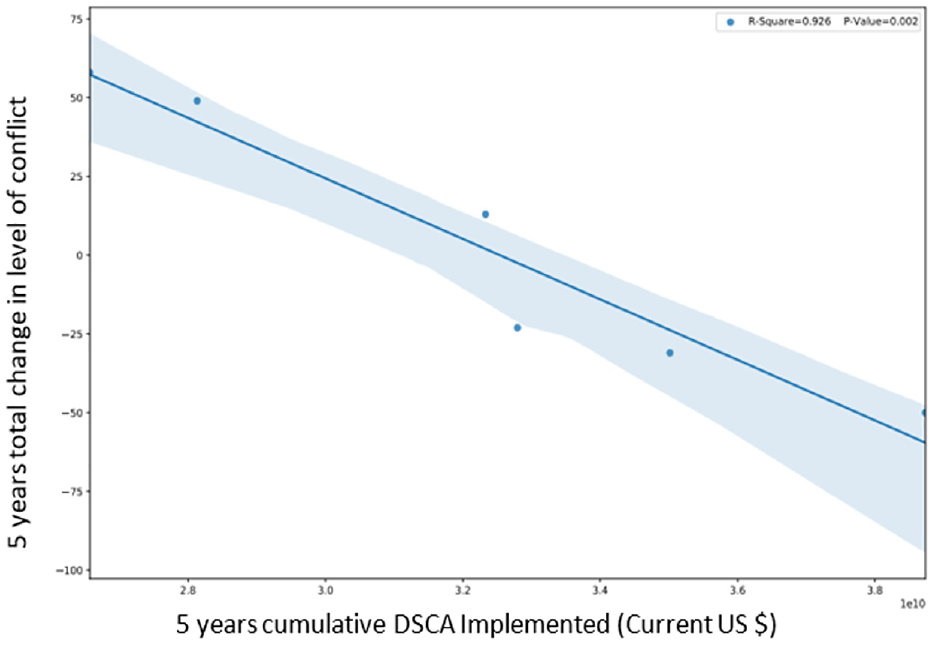
5 years total change in conflict by cumulative DSCA implemented funds (desired correlation).
Other funds show a positive linear relationship between the 5 years cumulative funds and the total change in conflict intensity throughout the 5 years. Figure 14, for example, displays that as the funds allocated to combat weapons of mass destruction increase, the total conflict intensity increases. We found similar undesired correlations with the following funds of Good Governance, Rule of Law, Stabilization Operations, and Security Sector Reforms.
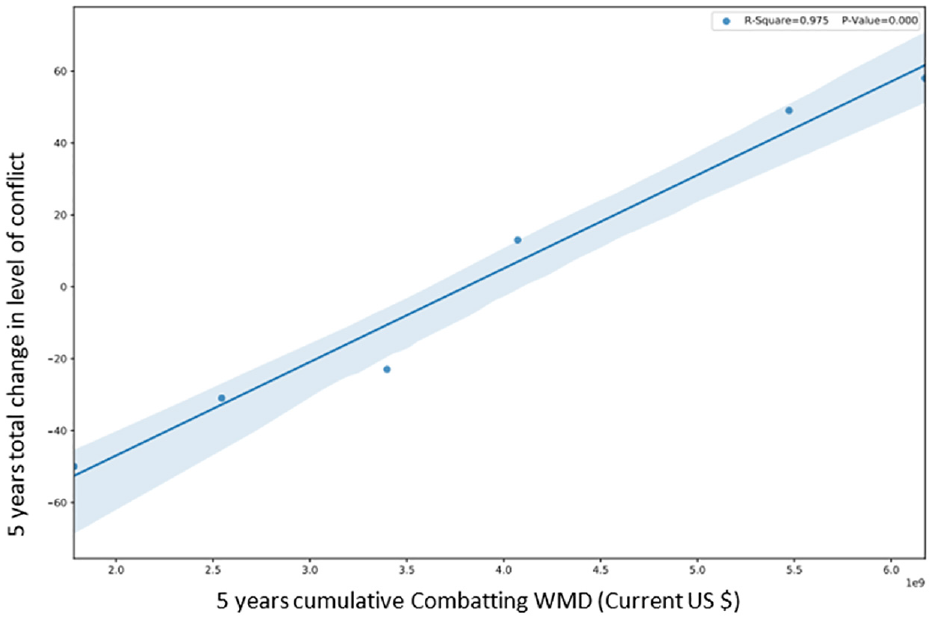
Five years change in conflict by combating WMD funds (undesired correlation).
4. Conclusion
With this study, we demonstrate a method of quantitatively evaluating US foreign assistance activities across countries. We use our method to evaluate US foreign assistance activities’ short-term and long-term impact on local and global conflict prevention.
We observe that countries with low GDP per capita, low voice and accountability rating, and very large population are more often involved in violent conflicts and remain in conflicts in the following year. We analyze and compare the global distribution of funds based on whether or not a country was in a violent conflict and the funds impact on preventing or deescalating the violence. We observe that the FMF, stabilization operations, and security sector reform and DSCA implemented funds accounted for most of the aid. Violent countries received statistically more funds than non-violent countries. Non-violent countries receiving funds were more likely to escalate into violence, while the violent countries that were recipients of funds were least likely to deescalate.
We examine the fund’s short-term impact at different conflict levels. Observations are similar throughout all the levels, specifically, countries were most likely to remain at a conflict level the following year regardless of the amount of funds. For the few countries that escalate or deescalate, the correlations suggest that the funds either impacted negatively or did not have an impact. Level 0 countries recipient of funds escalated at a statistically higher rate than non-recipients. Those countries also had a statistically higher average amount of funding than all the funded level 0 countries. Most countries that escalate received more funding; however, it is possible that the funding was given to countries already prone to violence and the funds were not sufficient or timely to prevent the conflict’s escalation.
We also investigate the fund’s global cumulative impact after 5 years. The cumulative amount of 5 years DSCA implemented fund had a desired negative linear relationship with the number of countries at war (level 5) the following year and the total change in conflict intensity throughout the 5 years. This fund also had a desired positive linear relationship with the number of conflict free countries (level 0) the following year. However, funds including Stabilization Operations and Security Sector Reforms, Good Governance, Rule of Law, Democracy and Combatting Weapons of Mass Destruction showed the opposite effect.
Foreign assistance activities have varied and complex objectives. This study only presents an approach to quantify their impact on a single objective of reducing countries’ level of violence. Our approach demonstrates a quantitative means of assessing military aid across recipient countries.
Footnotes
Declaration of conflicting interests
The author(s) declared no potential conflicts of interest with respect to the research, authorship, and/or publication of this article: The views presented in this article are those of the authors and do not necessarily represent the views of DoD or any of its components or any of authors’ affiliations.
Funding
The author(s) received no financial support for the research, authorship, and/or publication of this article.
