







Abstract
This article examines the distinctive design and uses of telescoped bullets, a significant advancement in ammunition technology that improves the efficiency and performance of contemporary weapons. Telescoped ammunition reduces weight, increases velocity, and boosts accuracy by integrating the projectile inside the cartridge case, making it suitable for both military and civilian shooting applications. This paper examines the historical development of telescoped ammunition, its key advantages over conventional designs, and the challenges associated with production and market acceptance. In addition, emerging issues such as intelligent technology, sustainable materials, and modular systems are analyzed, highlighting the potential of telescoped bullets to impact the future of ammunition. The study provides essential information on 23 mm telescoped ammunition, including its specifications, design characteristics, and potential applications.
Keywords
1. Introduction
Telescoped bullets are a specialty ammunition design distinguished by a configuration in which the projectile is partially encased within the cartridge case, yielding a more compact and efficient structure. 1 This revolutionary design permits a larger volume of propellant within the cartridge, perhaps resulting in improved velocity and superior ballistic performance relative to conventional ammunition types. 2 The telescoped design enhances aerodynamic stability in flight and reduces weight, which is especially beneficial for military applications that require decreasing soldiers’ load for greater mobility. Furthermore, the design facilitates efficient feeding mechanisms in automatic rifles, improving the operational efficacy of weapon systems. 3 The telescoped bullet concept signifies a contemporary progression in ammunition technology, incorporating advanced materials and engineering methods to enhance accuracy, lethality, and overall performance in combat situations and shooting sports, thereby illustrating a continuous evolution in the conception and application of ammunition. 4 Figure 1 shows the telescoped ammunition for the 40 mm Cased Telescoped Armament System (CTAS) developed by CTA International. 5
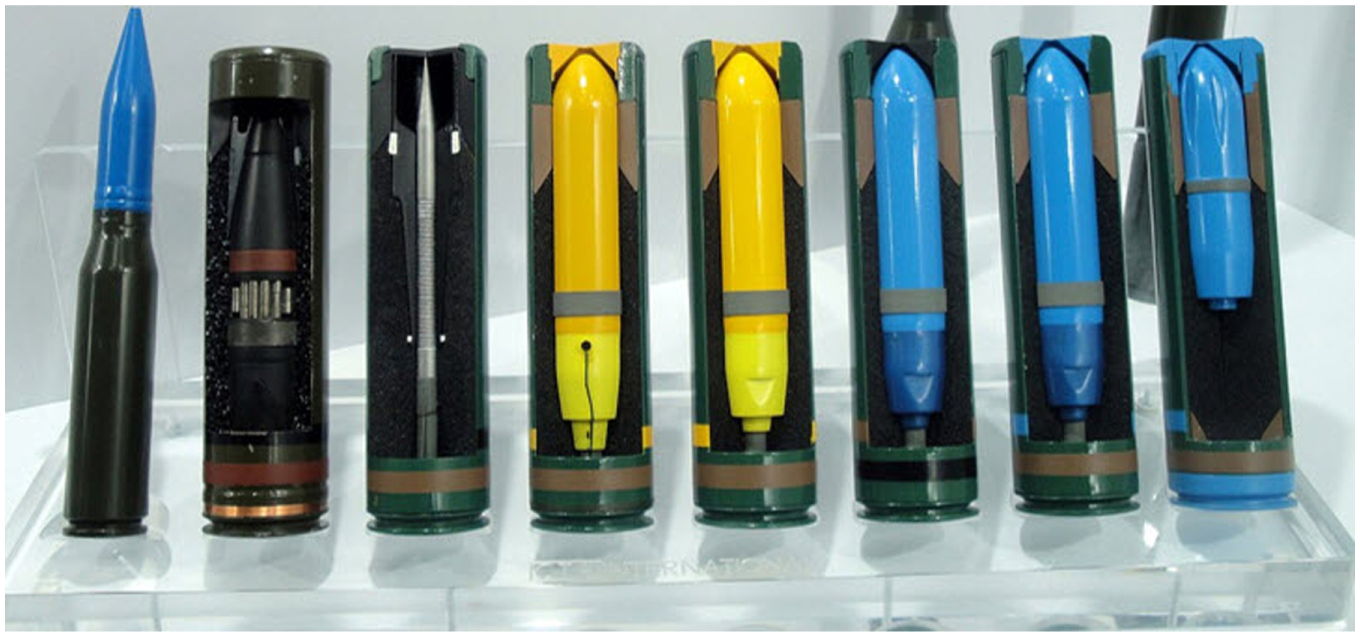
Telescoped ammunition for the 40 mm Cased Telescoped Armament System (CTAS) developed by CTA international.
Ammunition design is crucial to the efficacy and operation of contemporary firearms, since it directly affects essential elements such as lethality, accuracy, reliability, and overall performance across diverse settings. 6 Innovative designs, including bullet shape, material composition, and propellant characteristics, are crucial for meeting the varied requirements of military, law enforcement, and civilian shooters. In military applications, meticulously designed ammunition enables soldiers to engage targets efficiently at various distances while adjusting to swiftly evolving combat circumstances. 7 In addition, new ideas in ammunition design have resulted in special types—like armor-piercing, hollow-point, and frangible rounds—that meet specific needs and improve safety, penetration, and how the bullet behaves when it hits a target. In competitive shooting sports, meticulous ammunition design enables shooters to attain enhanced performance, consistency, and elevated scores, rendering it an essential component of competition strategy. 6 The incorporation of eco-friendly materials and non-toxic alternatives in contemporary ammunition demonstrates the increasing focus on sustainability in shooting practices. The significance of ammunition design in contemporary guns is paramount, as it underpins performance, adaptability, and safety across diverse shooting disciplines and military scenarios.8,9 Figure 2 shows the number of publications related to the keyword “telescoped bullets” in the last 30 years. 10
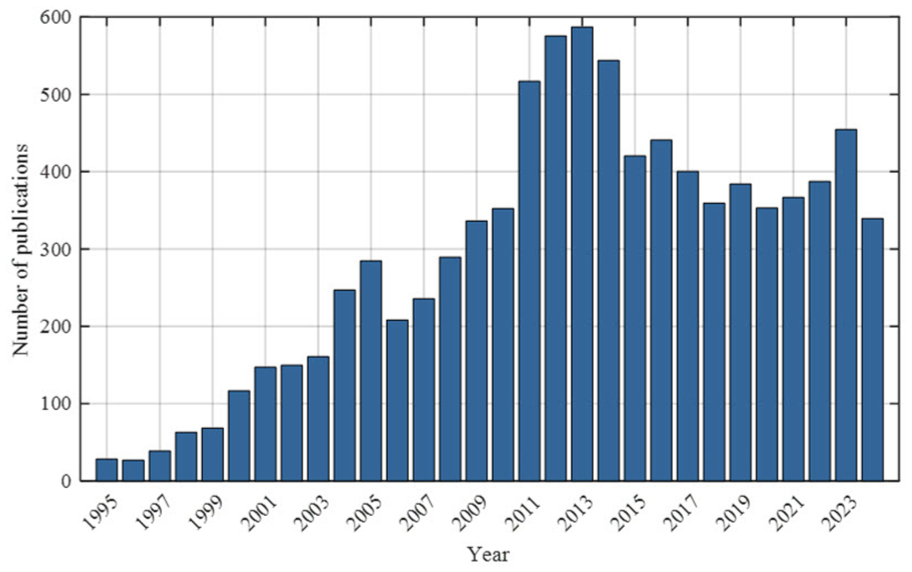
Number of publications related to the keyword “telescoped bullets” in the last 30 years.
From Figure 2, it can be seen that there is an increasing trend of interest in telescoped ammunition, especially in the period 2010–2015.
2. History and development
2.1. Brief history of telescoped ammunition evolution
The development of telescoped ammunition commenced in the mid-20th century as military engineers aimed to improve firearm efficacy and decrease weight, especially for infantry weapons. 11 The first ideas were created to find smaller and more efficient designs that could hold more gunpowder while still being easy to handle like regular handguns. The 1970s witnessed notable prototypes, such as the US Army’s “Telescoped Ammunition Case,” which exhibited advantages in overall length and weight reduction relative to conventional cartridges. 2 In the following decades, improvements in materials and manufacturing techniques facilitated the enhancement of this design, leading to significant innovations like the “Objective Finally Family of Ammunition” in the early 21st century.12 This advanced design seeks to enhance precision and lethality while enabling the incorporation of contemporary targeting systems. As military and defense sectors advance, telescoped ammunition signifies a vital modification addressing the changing requirements of contemporary combat situations. 13
2.2. Introduction of telescoped bullet design
The development of telescoped bullet design was a notable advancement in ammunition technology, intended to overcome the constraints of conventional cartridge designs. Emerging prominently in the 1970s and 1980s, this innovation featured a distinctive arrangement in which the projectile is partially encased within the cartridge, yielding a more compact and streamlined design. This design facilitates greater powder capacity, resulting in elevated velocities and improved ballistic performance. 14 The telescoped bullet design diminishes the overall weight of ammunition, rendering it especially advantageous for military applications where minimizing soldier load is essential for mobility and efficiency. With the evolution of defensive and offensive capabilities in warfare, the telescoped bullet emerged as a key subject for research and development, demonstrating the potential for enhanced accuracy and efficacy when incorporated into contemporary firearms. Its introduction transformed ammunition design by integrating innovation with practical requirements, and it continues to impact contemporary ammunition manufacturing.8,15 Figure 3 illustrates the distribution of content pertaining to telescoped ammunition. Each section pertains to a distinct facet of the technology, encompassing its structure, applications, and experimental weaponry utilizing this sort of ammunition.
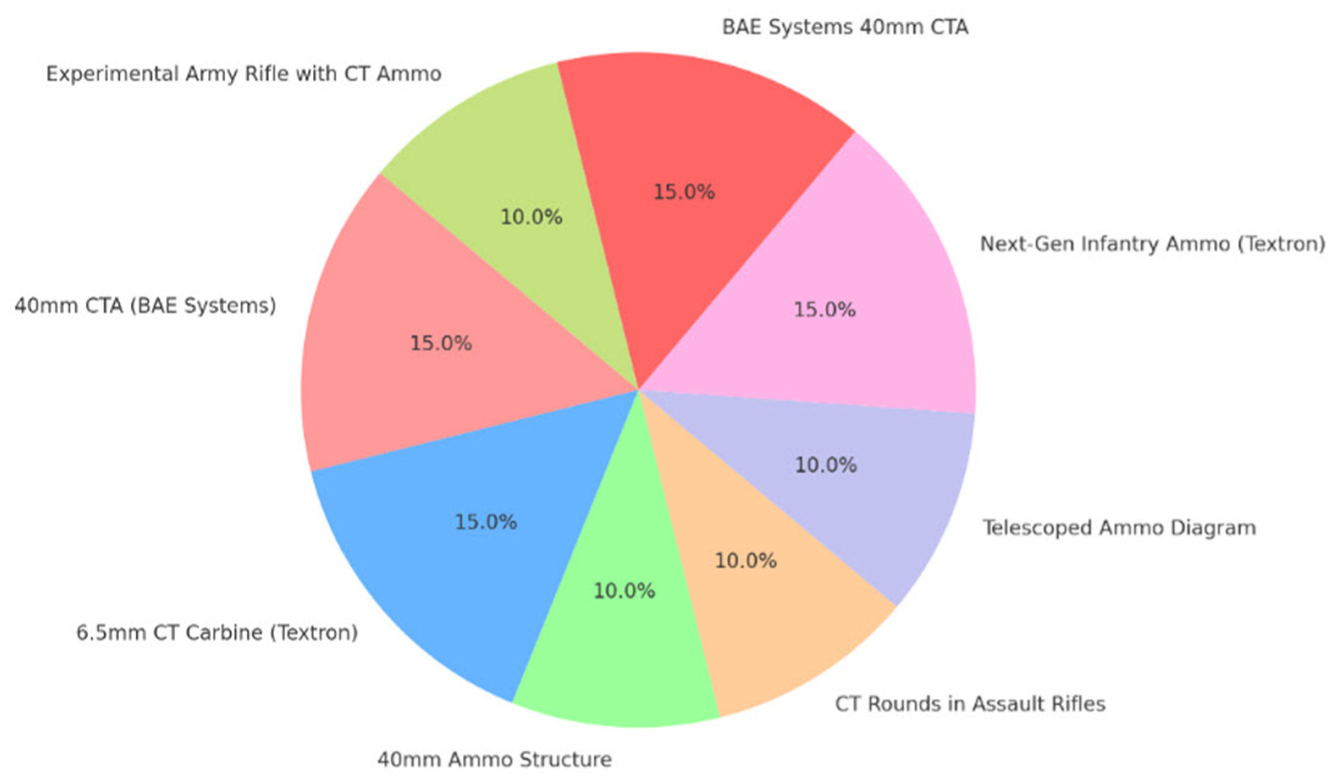
The distribution of content pertaining to telescoped bullet design.
2.3. Key milestones and technological advancements
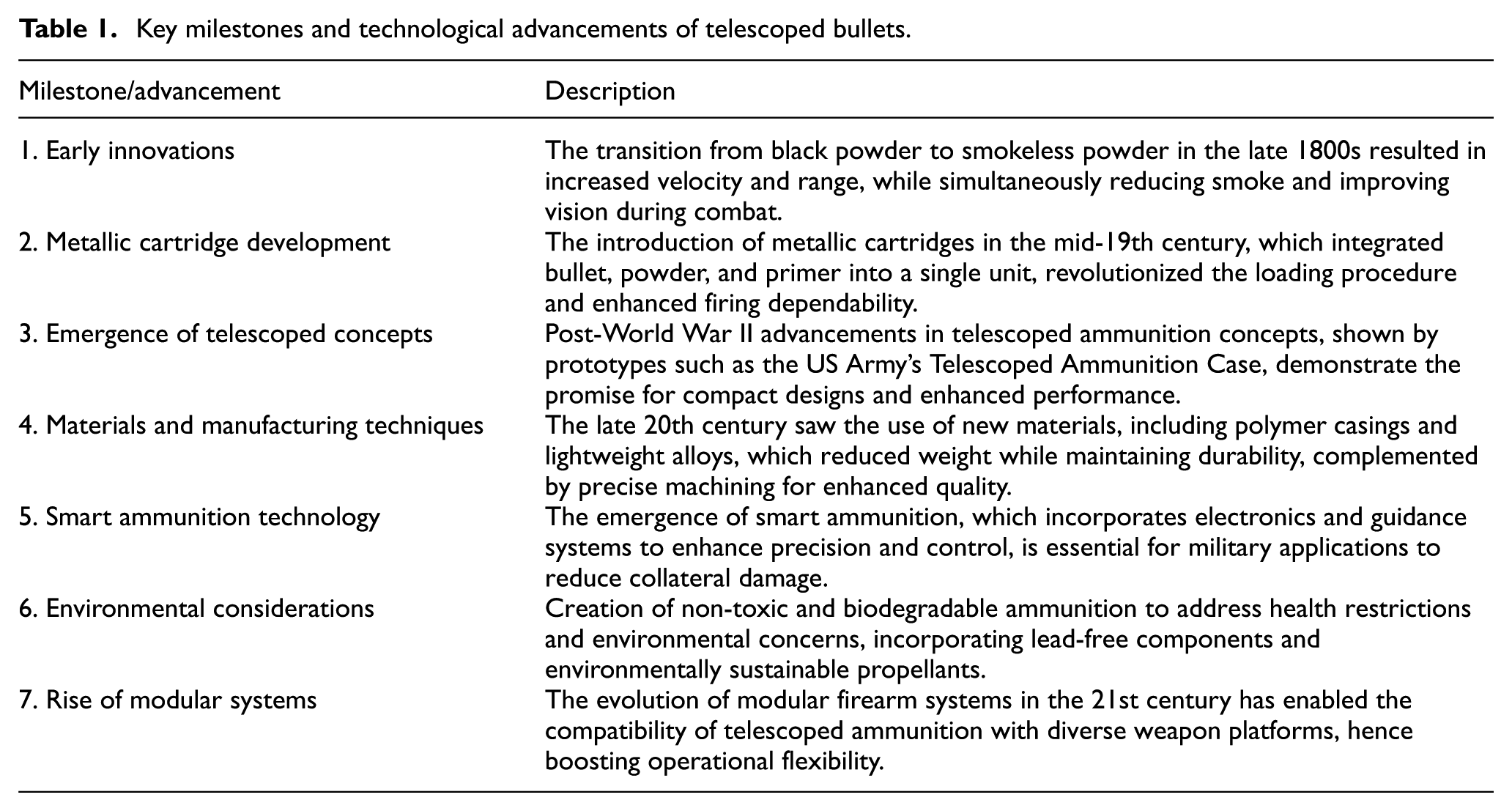
The development of ammunition and telescoped bullets has been featured by numerous pivotal milestones and technological innovations that have profoundly influenced their design, performance, and utilization in contemporary weaponry.16,17 Key milestones and technological advancements of telescoped bullets are presented in Table 1.
Key milestones and technological advancements of telescoped bullets.
3. Design features of telescoped bullets
3.1. Construction and components
The design and elements of telescoped bullets are essential to their novel structure and improved performance attributes. In contrast to conventional ammunition, which consists of a projectile housed in a regular cartridge casing, telescoped bullets utilize a more cohesive design that enhances efficiency and functionality.
Cartridge case configuration: The cartridge casing of a telescoped bullet is meticulously designed to partially encase the projectile, hence minimizing the total length of the ammunition. This compact design facilitates an increased propellant capacity while preserving a practical size for loading and firing. The design generally employs lightweight materials, like plastics or sophisticated alloys, to reduce the ammunition’s weight while maintaining durability and structural integrity.
Design of projectiles: The projectile is essential to the efficacy of telescoped bullets. These projectiles are frequently designed with sophisticated ballistic profiles that improve aerodynamics and stability in flight. The bullet’s shape and composition may differ according to its intended use, with designs refined for optimal efficiency and terminal ballistics. Certain telescoped bullets include characteristics such as hollow ends or polymer tips to enhance expansion upon impact, hence optimizing their efficacy in diverse situations. 18
Propellant: The propellant utilized in telescoped bullets is meticulously chosen for its energy density and combustion properties. Advancements in propellant technology have resulted in compositions that guarantee reliable ignition and performance across various temperatures and situations. Telescoped ammunition can attain faster velocity by accommodating a larger volume of propellant within its compact cartridge design, hence enhancing accuracy and terminal performance.
Primer system: A dependable primer is crucial for commencing the fire phase in any ammo. The primer mechanism in telescoped bullets is engineered for excellent responsiveness and effective operation within the compact cartridge design. This reliability is essential for maintaining constant performance, especially in high-pressure military applications or competitive shooting scenarios.
Comprehensive assembly: The complete construction of telescoped bullets demonstrates the unification of various elements into a singular entity. The design guarantees that all components function cohesively to ensure dependable feeding, firing, and ejection in automatic guns. Furthermore, the amalgamation of these components produces a lightweight and compact ammunition system, hence enhancing handling and storage convenience for the operator.
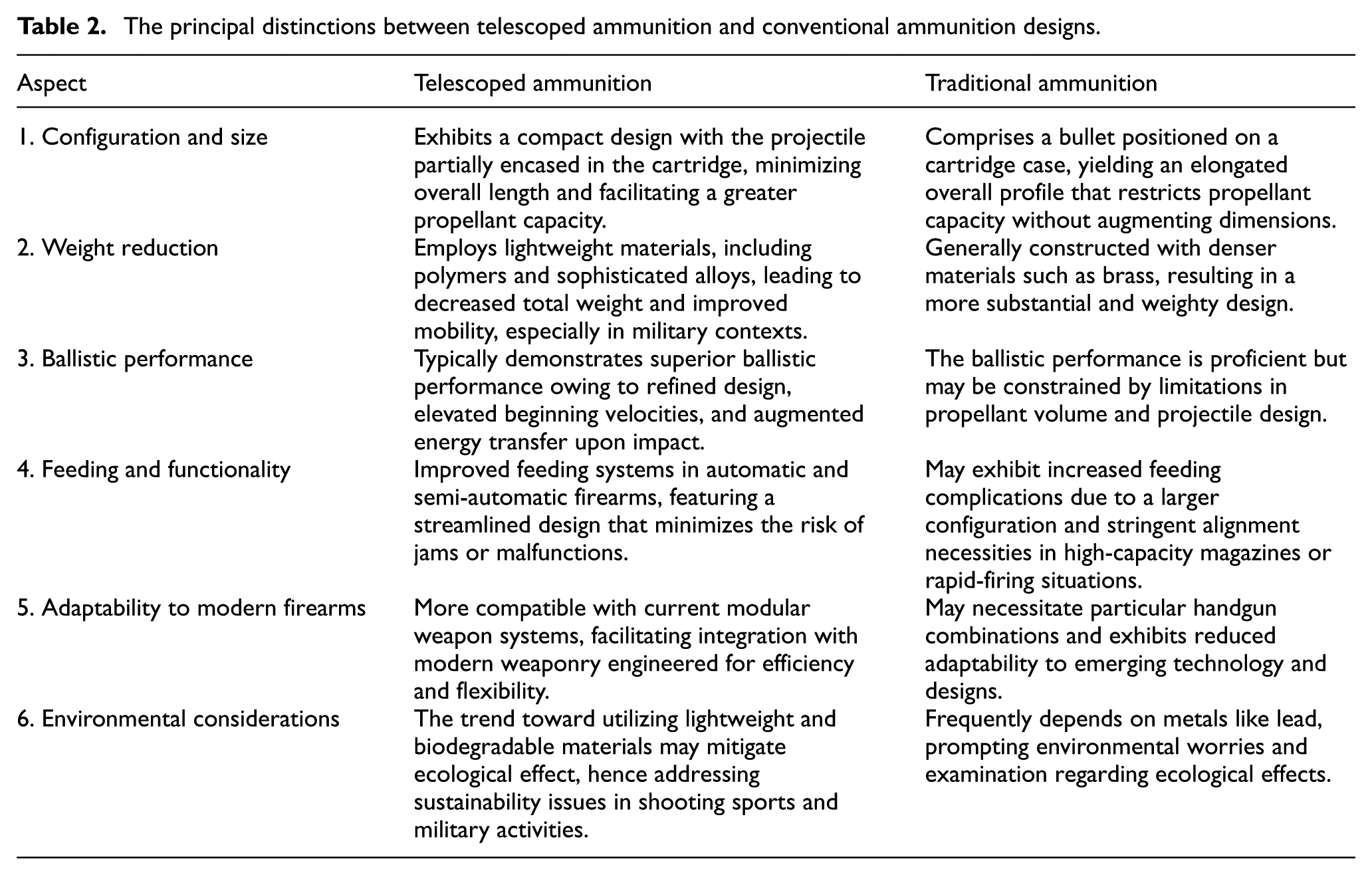
Comparison with traditional ammunition designs: The juxtaposition of telescoped ammunition designs with regular ammunition underscores the unique benefits of the former and reveals the intrinsic traits and constraints of the latter. Comprehending these distinctions is crucial for recognizing how telescoped bullets might enhance performance across many applications. 19
Table 2 compares the principal distinctions between telescoped ammunition and conventional ammunition designs.
The principal distinctions between telescoped ammunition and conventional ammunition designs.
3.2. Innovations in materials used
Advancements in materials utilized for telescoped bullets are crucial elements that enhance their performance, decrease weight, and improve overall efficiency relative to conventional ammunition designs. The choice of sophisticated materials is crucial in influencing the performance, dependability, and ecological effects of the munitions.
Polymer Case Technology: One of the most notable innovations in telescoped ammunition is the incorporation of polymer cases, providing a lightweight substitute for conventional brass and steel cartridge cases. Polymer cases not only diminish the overall weight of the ammunition but also demonstrate corrosion resistance, thereby prolonging the shelf life of the rounds. The thermal characteristics of polymers assist in heat regulation during firing, potentially enhancing performance consistency.20,21
Lightweight Alloys: Lightweight alloys have been engineered for components necessitating enhanced strength and durability, such as the cartridge base and structural parts, to optimize performance without increasing weight. These alloys are frequently designed to deliver high tensile strength while preserving a reduced density, rendering them suitable for military applications where weight is critical.22,23
Sophisticated Projectile Materials: The projectiles of telescoped bullets leverage developments in materials science, facilitating the development of optimal bullet designs. Traditional bullet jackets typically utilize materials like copper or copper alloys; however, advancements have resulted in the creation of composite materials that offer superior aerodynamics, enhanced fragmentation upon contact, and improved terminal ballistics. These sophisticated bullets can generate bigger wound channels, enhancing stopping power while reducing over-penetration. 24
Eco-Friendly Materials: The increasing awareness of environmental concerns has prompted the research and development of eco-friendly materials for munitions. Numerous telescoped rounds are engineered to be lead-free, employing non-toxic substitutes for projectile fabrication. This transition not only tackles health issues related to lead exposure but also reduces the environmental consequences of shooting operations. Research is ongoing on biodegradable polymers for cartridge components, further promoting sustainability in ammunition production.25,26
Advancements in Propellant Technology: The propellant employed in telescoped ammunition has undergone innovation, resulting in formulas that optimize energy density and reduce residue. Contemporary propellants provide elevated velocities with reduced combustion residues, guaranteeing that rifles maintain cleanliness and operate more dependably over prolonged usage. Advancements in propellant technology ensure consistent performance under diverse climatic circumstances, which is essential for military applications.27,28
Production Methods: Advancements in manufacturing methods, including 3D printing and sophisticated machining procedures, have facilitated the creation of elaborate designs and complicated geometries that were hitherto difficult to attain. These techniques provide greater precision in tolerances and enhanced component fidelity, hence improving the overall performance and durability of telescoped ammunition. 29
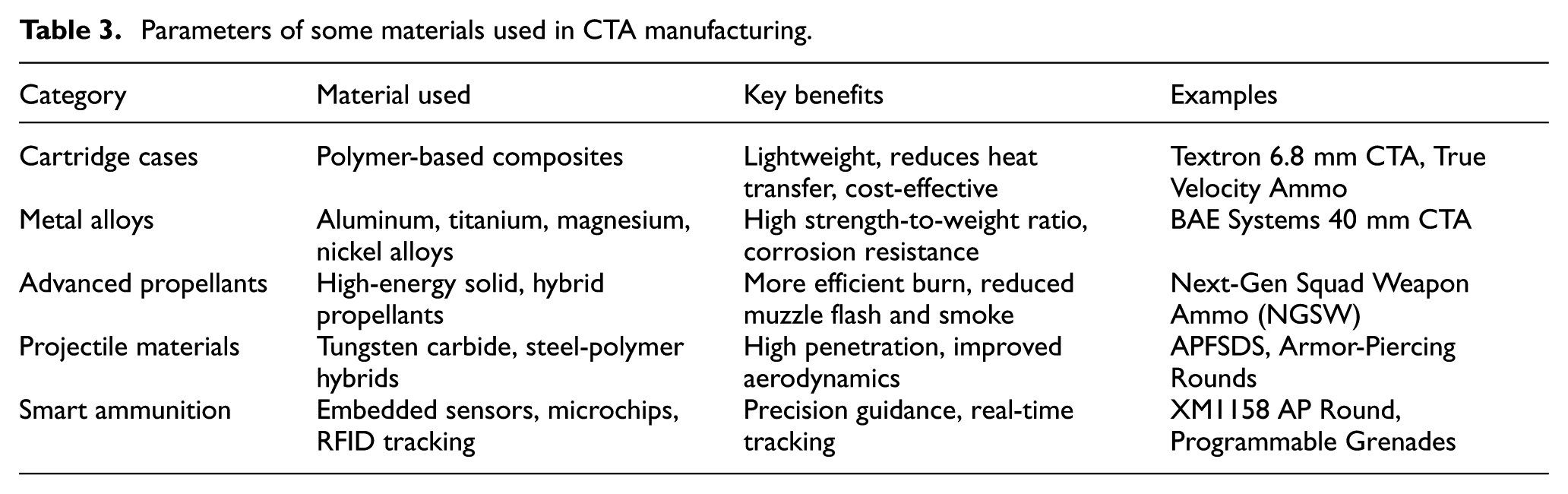
Parameters of some materials used in CTA manufacturing are presented in Table 3.
Parameters of some materials used in CTA manufacturing.
Some advanced materials that have recently been extensively studied and developed by researchers in mechanics show great promise for application in the manufacturing of equipment and functional components in modern weapon systems. These materials often possess outstanding mechanical, thermal, and multifunctional properties, enabling improved performance, reduced weight, and enhanced durability under complex loading and extreme environmental conditions. In particular, materials such as functionally graded materials (FGMs), high-performance fiber-reinforced composites, ceramic matrix composites, smart materials including piezoelectric and shape memory alloys, and bio-inspired composite materials have attracted increasing attention due to their potential to meet the stringent demands of next-generation military technologies. Recent investigations have underscored the importance of FGMs and layered composite structures in enhancing the performance of load-bearing elements under complex thermal and mechanical environments. Duc et al. 30 conducted a thermal buckling analysis of FGM sandwich truncated conical shells reinforced by FGM stiffeners on elastic foundations using the first-order shear deformation theory (FSDT), highlighting the impact of stiffener distribution and foundation parameters. In another study, Duc et al. 30 explored the transient responses of functionally graded double-curved shallow shells with temperature-dependent properties subjected to thermal environments, emphasizing the interplay between material gradients and geometric configurations. Extending this work, Duc et al. 31 further examined nonlinear dynamic behaviors and free vibrations of imperfect nanocomposite FG-CNTRC shallow shells, revealing the influence of thermal fields and initial imperfections. Phung et al. 32 performed a numerical investigation on two-layer variable thickness plates with shear connectors, addressing both static bending and vibrational characteristics. Thai and his research team 33 analyzed the bending response of symmetric FGM sandwich beams equipped with shear connectors, showing the relevance of interfacial shear effects. Vinh et al. 34 proposed a modified single-variable shear deformation theory for efficient modeling of the free vibration of rectangular FGM plates. Dung et al. 35 developed a third-order shear deformation model to study static and dynamic responses of piezoelectric bidirectional FGM plates, contributing to the analysis of smart materials. Tho et al. 36 utilized finite element modeling to analyze the bending and vibration behavior of three-layer composite plates containing a core crack, indicating significant stiffness degradation. Finally, Thai et al. 37 presented a finite element study on rotating two-layer FGM beams with shear connectors placed on imperfect elastic foundations, addressing practical considerations for rotating structures in aerospace and mechanical systems.
The model of bidirectional porous smart FGM sandwich shell is shown in Figure 4.38,39
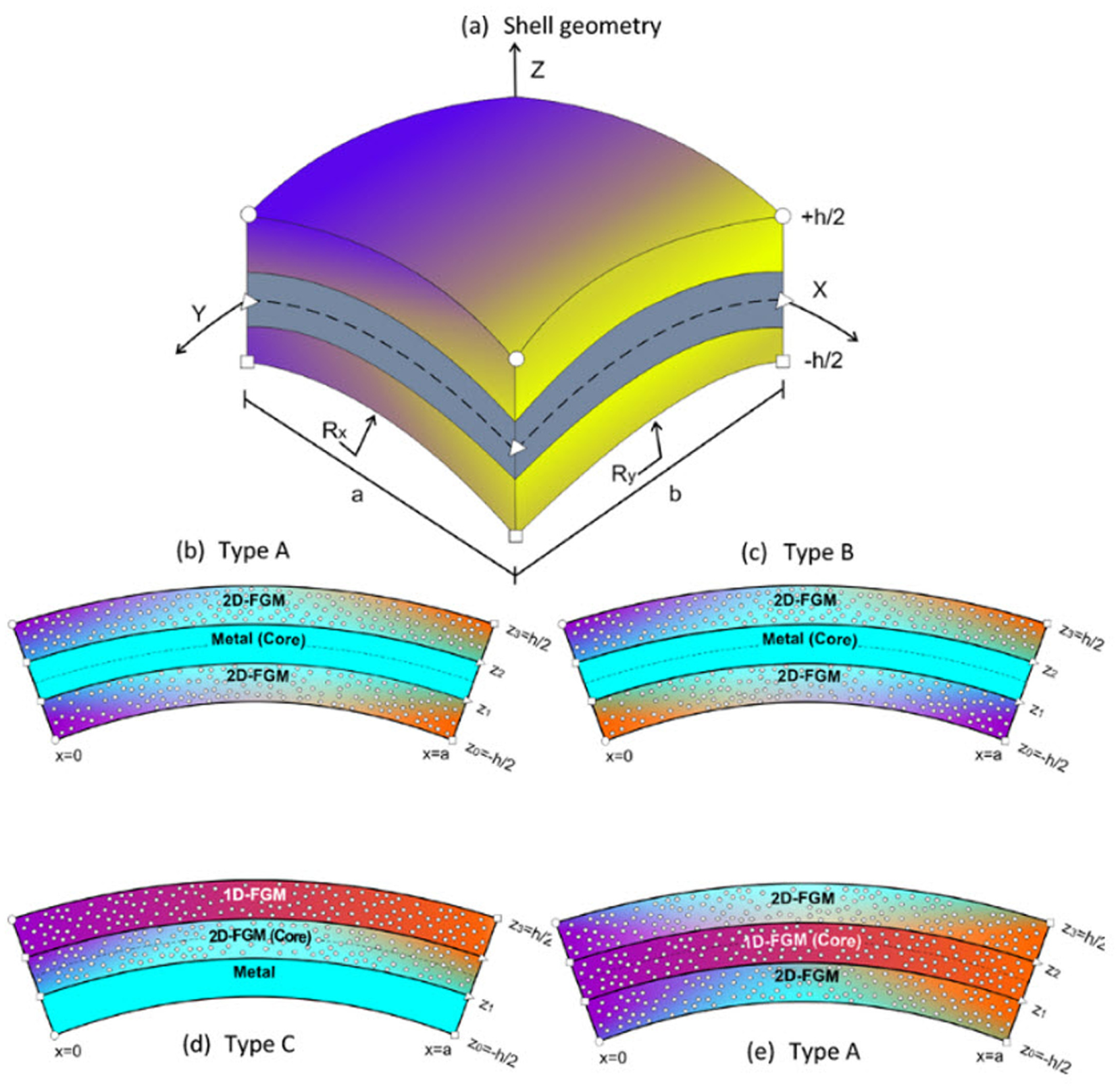
The bidirectional porous smart FGM sandwich shell. 38
4. Performance advantages
The performance benefits of telescoped bullets greatly enhance their appeal for military, law enforcement, and civilian shooting purposes. These advantages include multiple facets of ammunition performance, influencing elements such as velocity, accuracy, weight, and overall efficacy.
4.1. Enhanced speed
One primary advantage of telescoped ammunition is the possibility of enhanced velocity. The novel design facilitates an increased propellant capacity within a more streamlined cartridge container. The augmentation of propellant volume may yield elevated chamber pressures, resulting in enhanced muzzle velocities. This increased velocity not only extends the projectile’s range but also results in flatter trajectories, minimizing bullet drop over distance. Increased velocities enhance terminal ballistics, leading to more efficient energy transfer upon impact. Table 4 depicts the comparison between telescoped bullets and traditional bullets in terms of speed and influencing factors. 40
The comparison between telescoped bullets and traditional bullets in terms of speed and influencing factors.
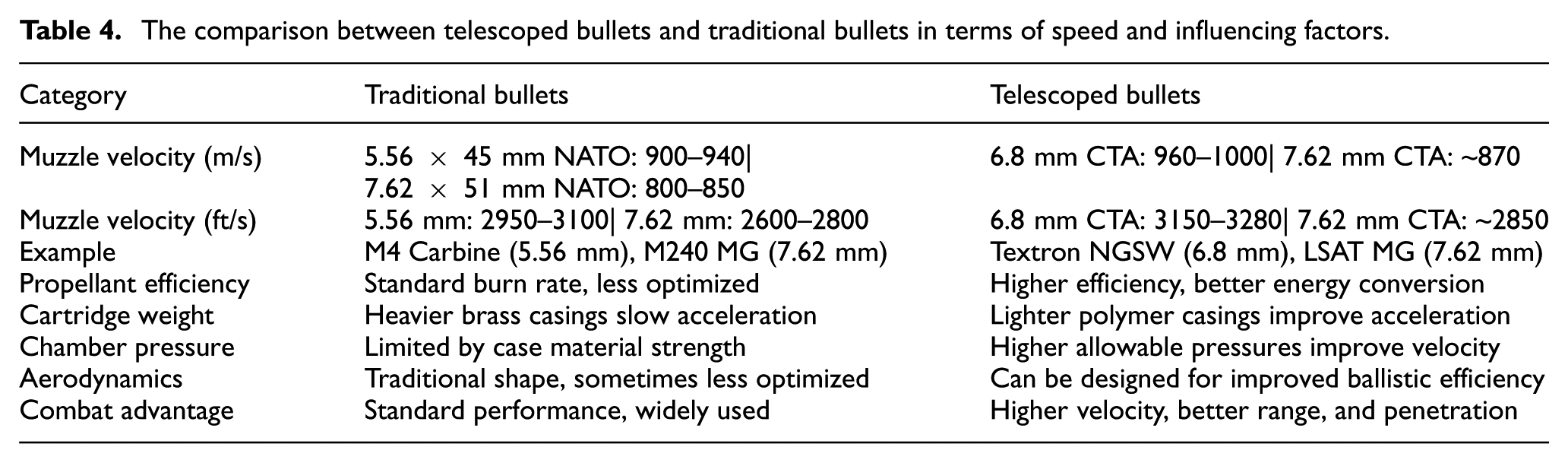
The data in Table 4 primarily reflect information from the United States weapon systems, especially those related to the Next Generation Squad Weapon (NGSW) program.
4.2. Improved precision
The design of telescoped ammunition enhances accuracy via multiple methods. The cartridge’s streamlined design reduces aerodynamic drag during flight, enhancing stability and accuracy. The optimal weight distribution of telescoped bullets, along with their superior materials, contributes to consistent performance, which is crucial for obtaining tight groups on target. The enhancements in accuracy are essential for military snipers, competitive marksmen, and individuals necessitating precise shot placement.
4.3. Diminished recoil
The diminished mass of telescoped ammo results in decreased recoil upon discharge. Conventional ammunition, particularly in bigger calibers, generates significant recoil, impacting shooter control and the ability to execute follow-up shots. The lightweight design of telescoped rounds enables shooters to better control recoil, hence enhancing rapid target acquisition and subsequent shots. This characteristic is especially beneficial in dynamic settings, such as training drills or competitive shooting scenarios.
4.4. Weight efficiency
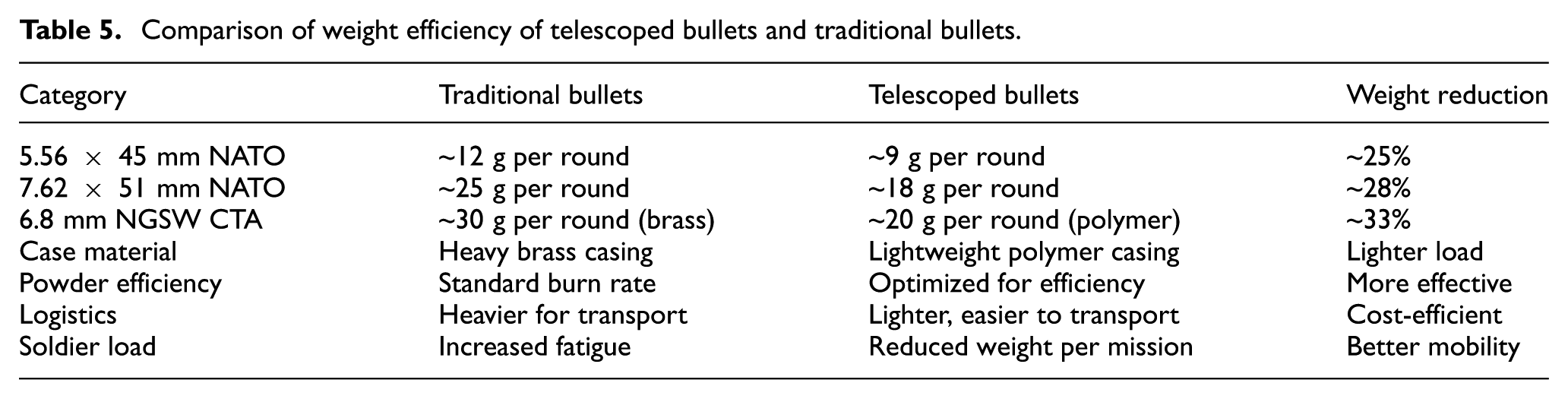
The streamlined configuration of telescoped ammunition yields considerable weight reduction relative to conventional cartridges. This reduction is essential for military personnel who must transport adequate weaponry without being encumbered by excessive weight. A reduced ammo load can augment military mobility, diminish weariness, and boost overall efficacy in the field. For civilian shooters, such reductions in weight are advantageous, facilitating the transport of additional ammo for prolonged shooting sessions or competitions. 41 Table 5 describes the comparison of weight efficiency of telescoped bullets and traditional bullets.
Comparison of weight efficiency of telescoped bullets and traditional bullets.
4.5. Enhanced terminal ballistics
Telescoped bullets frequently attain enhanced terminal ballistics owing to their refined design and elevated velocities. The capacity to transmit greater energy to a target enhances wounding potential and efficacy in neutralizing threats. Numerous telescoped bullets are designed to facilitate expansion and fragmentation upon contact, resulting in bigger wound pathways and enhanced incapacitation rates. These upgrades are essential for self-defense applications and military operations when efficacy is crucial. 8
4.6. Improved nutritional intake and dependability
The aerodynamic design of telescoped ammunition can enhance feeding efficiency in semi-automatic and automatic rifles. The design mitigates the likelihood of failures when riding, which is essential in high-stress scenarios. Consistent feeding enables shooters to sustain efficacy and assurance, especially in combat situations or competitive settings when each shot is critical.
4.7. Adaptability to contemporary firearms
The revolutionary design of telescoped bullets is compatible with the capabilities of contemporary rifles equipped with flexible and versatile systems. This versatility enables shooters to employ telescoped ammunition across various platforms, from conventional rifles to sophisticated tactical weapons. The compatibility with modern weaponry further improves the overall performance characteristics of telescoped ammunition in diverse operating scenarios.
5. Applications in modern warfare
Telescoped ammunition has become a notable advancement in modern combat, specifically engineered to address the diverse requirements of current military operations. Its distinctive configuration and performance benefits provide numerous applications that augment the capabilities of contemporary military forces. Several critical domains exist where telescoped ammunition is essential.
5.1. Infantry combat
To enhance operational effectiveness, telescoped ammunition offers infantry personnel lighter and more compact choices without compromising firepower. The decreased weight enables soldiers to transport additional ammunition without hindrance, hence improving their operational efficiency and mobility in various combat scenarios. Infantry soldier employing lightweight ammunition to improve mobility in combat is shown in Figure 5. 42

Infantry soldier employing lightweight ammunition to improve mobility in combat.
5.2. Tactical advantage
The enhanced muzzle velocity and precision provided by telescoped bullets confer tactical benefits in confrontations. Soldiers can execute swifter and more precise fire, enhancing the likelihood of successfully striking targets at greater distances. Furthermore, the diminished recoil linked to telescoped ammunition facilitates control during fast firing, enabling swift follow-up rounds. 43
5.3. Special operations forces
Special operations units sometimes necessitate ammunition capable of adapting to many combat scenarios, encompassing close-quarters confrontations and long-range precise marksmanship. The lightweight design of telescoped ammunition caters to the specific requirements of these forces, allowing them to optimize efficiency and firepower while maintaining mission objectives throughout varied settings. 44
5.4. Urban combat
In urban combat situations, where confrontations frequently take place at close quarters, the improved precision and less recoil of telescoped ammunition enable soldiers to address threats efficiently while reducing the likelihood of collateral damage. The design facilitates navigation through confined areas in urban settings, when conventional ammunition may be unwieldy.45,46
5.5. Military training drills
The lightweight and economical design of telescoped ammunition renders it an optimal selection for training activities. Soldiers can train with increased quantities of ammo without the concomitant fatigue from managing greater loads. This feature enhances marksmanship and handgun familiarity, enabling concentrated skill development without the encumbrance of weight. 47
5.6. Compatibility with sophisticated firearms
Numerous contemporary military weaponry, with modular designs and intelligent systems, can efficiently employ telescoped ammunition. This adaptability facilitates easy integration into diverse weapon systems, enhancing their overall performance and efficacy in combat situations. 48
6. Applications in shooting sports
Telescoped ammunition is increasingly acknowledged for its benefits in shooting sports, facilitating superior performance, greater handling, and competitive achievement. Its revolutionary design effectively accommodates the varied demands of multiple shooting disciplines, rendering it a viable option for both competitive shooters and fans. 49
6.1. Improved precision in competitive marksmanship
The enhanced precision provided by telescoped ammunition is essential in competitive shooting competitions where accuracy is vital. The optimized design and enhanced muzzle velocity enable shooters to attain tighter groups on targets, which is crucial for success in precision rifle contests and 3-gun championships. The capacity to execute consistent and precise shots enables athletes to flourish in their performances.
6.2. Diminished fatigue during prolonged sessions
A notable advantage of telescoped ammunition in shooting sports is its lightweight composition. Shooters frequently participate in extended training sessions or competitions, where the weight of the ammo may influence performance. The use of telescoped bullets reduces shooter fatigue, enabling prolonged concentration and enhanced shooting performance during the event.
6.3. Enhanced follow-up shot proficiency
The diminished recoil of telescoped ammo improves a shooter’s ability to execute rapid follow-up shots. In competitive settings, where speed is frequently as vital as precision, the capacity to sustain control throughout quick execution greatly enhances overall performance. Shooters can engage several targets more efficiently, hence maximizing their score potential in events such as IPSC (International Practical Shooting Confederation) tournaments.
6.4. Adaptability across various shooting disciplines
The versatile construction of telescoped ammunition renders it appropriate for multiple shooting disciplines, encompassing rifle, pistol, and shotgun sports. Diverse disciplines necessitate distinct performance attributes, and the capacity to tailor bullet designs—encompassing weight, shape, and materials—addresses the particular requirements of each scenario, whether it involves long-range accuracy or close-quarters tactical shooting.
6.5. Instructional and leisure activities
In addition to competitive shooting, telescoped ammunition is also suitable for training and leisure purposes. The lightweight design facilitates simpler handling during practice and training, rendering it an ideal option for both rookie and expert shooters seeking to enhance their skills without the additional burden of heavy ammo. This user-friendliness improves the whole shooting experience, fostering greater participation in the sport.
6.6. Environmental factors in shooting sports
The shooting sports community’s growing awareness of environmental concerns highlights the favorable potential of telescoped ammunition with lead-free and biodegradable materials. This dedication to sustainability corresponds with the ethical values of contemporary shooters and fosters responsible practices within the community. Shooters can participate in their sport while reducing the environmental effect linked to ammunition consumption.
7. Challenges and limitations
Notwithstanding the considerable benefits of telescoped ammunition, various obstacles and constraints pertain to its design, production, and implementation in both military and civilian shooting environments. Confronting these problems is essential for the future of telescoped ammunition as it gets progressively integrated into diverse applications.
7.1. Complications in manufacturing
The fabrication of telescoped ammunition entails complex engineering and meticulous manufacturing methods that may complicate the production process. The distinctive design requires specialized apparatus and processes, resulting in elevated costs and extended lead times relative to traditional ammunition production. Manufacturers lacking the capability to manage these intricacies may find scaling production to meet demand a considerable challenge. 50
7.2. Congruence with current firearms
A principal difficulty confronting telescoped ammunition is its compatibility with current guns. Not all weapon systems are engineered to support the distinctive configuration of telescoped cartridges, potentially constraining its adoption among military, law enforcement, and civilian shooters. Alterations or novel firearm designs may be necessary, requiring additional investment in weapon systems and elevating the obstacles to widespread adoption.
7.3. Market acceptance and instruction
The commercial acceptability of telescoped ammunition is essential for its success, as with any new technology. Numerous shooters, especially in conventional markets, may exhibit reluctance to embrace new ammunition types due to familiarity or skepticism over performance assertions. Education and training are imperative to surmount these obstacles, as shooters must be apprised of the advantages and practical applications of telescoped ammunition to promote its utilization.
7.4. Expenses and financial feasibility
The expenses related to the production of telescoped ammunition can vary considerably from those of conventional ammunition. The sophisticated materials and specialized manufacturing techniques may result in elevated retail pricing, potentially dissuading cost-sensitive consumers and military procurement agencies. Ensuring economic feasibility while preserving quality will be essential for producers aiming to introduce telescoped ammunition into the market.
7.5. Variability in performance
While telescoped ammunition may provide enhanced performance in numerous aspects, discrepancies in production procedures and materials might result in variances in the quality and efficacy of the ammunition. Ensuring consistency and dependability between batches is crucial, especially for military applications where performance significantly influences mission success. Quality control procedures must be stringent to reduce risks linked to variability.
7.6. Environmental issues associated with novel materials
Although telescoped ammunition may utilize eco-friendly components, environmental challenges remain to be addressed. The manufacturing of new materials may occasionally entail techniques that are not sustainable, or certain materials may exhibit unforeseen environmental consequences. Ongoing research and development will be essential to decrease the ecological footprint of telescoped ammunition as its popularity increases.
8. Future trends and innovations
The future of telescoped ammunition is promising, propelled by ongoing developments in technology, materials, and the changing demands of military and civilian shooting markets. The evolution of weapons technology is expected to introduce significant trends and developments that will enhance the performance and broaden the applications of telescoped ammunition.
8.1. Incorporation of intelligent technologies
A prominent trend emerging is the incorporation of intelligent technology into telescoped ammunition. The integration of microelectronics into cartridges could provide features like real-time trajectory modifications or data logging for performance analysis. These advances may furnish shooters with insights regarding shot accuracy, velocity, and environmental variables, facilitating data-driven enhancements in marksmanship.
8.2. Initiatives for environmental sustainability
As environmental issues become increasingly significant, the munitions business is transitioning toward more sustainable options. Future advancements in telescoped ammunition will likely emphasize the utilization of biodegradable and recyclable materials to reduce environmental effect. Investigation into non-toxic propellants and lead-free projectiles will gain heightened priority, in accordance with global sustainability objectives and promoting appropriate shooting habits.
8.3. Advanced performance materials
Continued study in materials science will result in further breakthroughs in the components utilized in telescoped ammunition. Future projectiles may employ composite materials or sophisticated metallurgy to enhance performance attributes like as penetration, expansion, and terminal ballistics. Advancements in lightweight materials that maintain strength will remain essential for the efficacy of telescoped rounds.
8.4. Modular munitions systems
The inclination toward modularity in firearms is expected to extend to ammunition as well. Future telescoped ammunition designs may be versatile, enabling shooters to tailor their loads according to individual mission requirements. This adaptability would allow users to effortlessly alternate between various projectile types or propellant charges, enhancing their efficacy in diverse situations, including as urban warfare or long-range confrontations.
8.5. Enhanced emphasis on training ammunition
With the increasing integration of technology in firearms, there will likely be a heightened focus on creating training-specific telescoped ammunition that accurately mimics the performance attributes of battle ammunition. This advancement will enable more efficient training protocols, permitting shooters to train in realistic environments without the expenses and logistical difficulties linked to conventional live ammunition.
8.6. Collaboration and research in defense
Joint initiatives among ammunition producers, military entities, and research institutions will propel advancements in telescoped ammunition technology. Joint ventures targeting specific operational demands—such as weight reduction, performance improvements, and compatibility with new weapons systems—will accelerate the development of ammunition technologies that address the changing requirements of contemporary combat.
9. Overview of the 23-mm telescoped ammunition
The 23-mm telescoped ammunition is a distinctive form of cased telescoped ammunition engineered exclusively for the Rikhter R-23 autocannon. This armament was engineered in the Soviet Union and predominantly utilized in the tail turret of the Tupolev Tu-22 bomber. In contrast to traditional ammunition, where the projectile protrudes from the cartridge case, telescoped ammunition completely encases the projectile within the case, resulting in a more compact configuration. Figure 6 presents schematic diagram of the charge structure of cased telescoped ammunition with semi-combustible cartridge.51,52
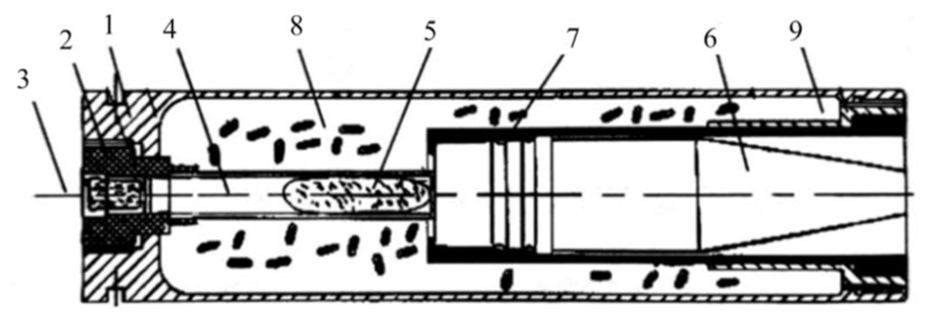
Schematic diagram of the charge structure of cased telescoped ammunition with semi-combustible cartridge; 1—combustible cartridge; 2—tail connecting block; 3—primer; 4—central fire pipe; 5—base charge propellant; 6—projectile; 7—combustible guide cylinder; 8—main charge propellant; 9—support tube.
9.1. Design and architecture
The 23 mm telescoped projectile adheres to the core principles of CTA:
Projectile positioning: The bullet is fully encased within the cartridge, minimizing overall length while preserving ballistic efficacy.
Casing material: The cartridge casing is often metallic, engineered to endure the pressures produced during discharge.
Propellant configuration: The organization of propellant within the casing facilitates enhanced combustion efficiency and regulated ignition, hence augmenting firing consistency.
9.2. Benefits of the 23-mm telescoped projectile
In comparison with conventional ammunition of equivalent caliber, the 23-mm telescoped round presents numerous advantages:
Compact design: The encapsulated projectile minimizes the ammunition’s total dimensions, facilitating more efficient storage and handling.
Enhanced feeding reliability: The telescopic design reduces the likelihood of misfeeds and jams, hence improving the functionality of automated weapons such as the R-23 gun. The R-23 autocannon, utilizing this ammo, achieved an extraordinary rate of fire of 2600 rounds per minute, rendering it appropriate for aerial defense purposes.
Enhanced safeguarding of the projectile: The complete encasement of the bullet within the cartridge safeguards it from harm during manipulation and loading.
9.3. Implementation and utilization
The Rikhter R-23 autocannon was predominantly mounted in Soviet aircraft, especially within the tail turrets of the Tu-22 bombers. The weapon system was highly classified, and information regarding the 23-mm telescoped ammunition remained confidential for years. Foreign intelligence services became cognizant of its distinctive weaponry only when the Soviet Union exported the Tu-22 to Iraq and Libya in the 1970s. In the 1982 Lebanon War, Israeli forces seized caches of this munitions, therefore highlighting its existence.
9.4. Technical specifications
Although comprehensive specifications of the 23-mm telescoped round are limited due to its classified status, certain generic information is available:
Caliber: 23 mL;
Cartridge length: 260 mm (23 × 260 mm);
Weapon compatibility: Rikhter R-23 Autocannon Muzzle Velocity: Estimated between 850 and 900 m/s, contingent upon projectile type;
Rate of fire (R-23 Autocannon): 2600 rounds per minute;
Principal function: Defensive weaponry for strategic bombers.
9.5. Heritage and impact on contemporary CTA designs
The 23-mm telescoped round exemplified early CTA technology, which has subsequently impacted contemporary ammunition designs. Modern CTA rounds, shown by the 40 mm CTA created by CTA International (a collaboration between BAE Systems and Nexter), employ analogous design ideas to enhance lethality and efficiency in contemporary combat vehicles.
The 23-mm telescoped cartridge was a substantial advancement in ammunition design, providing notable benefits in compactness, dependability, and firing rate. The R-23 autocannon, utilized in Soviet aircraft, has significantly influenced contemporary advancements in CTA technology through its design ideas.
9.6. The internal ballistic problem of CTA
9.6.1. Assumptions
To facilitate the formulation of governing equations for the firing process and to simplify the solution of the internal ballistic problem, several assumptions are adopted.
53
First, the combustion of propellant grains is assumed to follow both the geometric burning law and a linear burning rate expressed as u = uP. It is further assumed that the entire propellant mass combusts under uniform pressure P. The composition of combustion products remains constant throughout the process, and the propellant characteristics f and
9.6.2. The system of differential equations governing the internal ballistic problem
The governing equation describing the gas generation process of the propellant is expressed as follows:

The governing equation for the combustion rate of the propellant:

The governing equation describing the motion of the projectile:

The mathematical model governing the translational motion of the projectile during the internal ballistic phase:

By applying the aforementioned transformations, we obtain a system of differential equations governing the internal ballistic problem, involving the following variables: Z—Relative thickness of the burning propellant layer; P—average pressure inside the barrel (kG/cm2); S—cross-sectional area of the barrel (dm2); f—specific energy (propellant power) (kG.dm/kG); I k —total momentum of the gas (kG.s/dm2);—coefficient associated with the calculation of secondary work; Ψ—relative mass fraction of propellant burnt; W—volume behind the projectile base (dm3); l—projectile travel distance at time t (dm); and t—time of projectile motion (s).
By solving the system of equations, 2 the following relationships are obtained:

To solve the system of governing differential equations describing the internal ballistic process, the following initial conditions are imposed, corresponding to the ignition and shot start characteristics:
The initial energy provided by the primer is characterized by the propellant power f moi = 250,000 kG.dm/kG;
The ignition pressure is set at P moi = 5000 kG/dm2;
The projectile begins its motion once the pressure reaches the shot start threshold P 0 = 30,000 kG/dm2.
When t = 0 then v = 0; l = 0; z = 0; P = P
moi
;
9.6.3. Mathematical solution of the internal ballistic problem for 23mm case telescoped ammunition
Input data for the 23 mm CTA: The 23 mm CTA used in this study was designed and manufactured by the Weapon Faculty—Military Technical Academy. One of the key geometrical parameters is the cross-sectional area of the barrel, calculated as follows:

where S is the effective cross-sectional area of the barrel; η s is the groove depth coefficient, accounting for rifling characteristics (η s = 0.80÷0.83.). When η s = 0.80 and we get S = 0.80 × (0.23)2 = 0.042 dm2.
Coefficients employed in the evaluation of secondary work:

In the case of the 23 mm cannon, we get K = 1.05, and one gets:

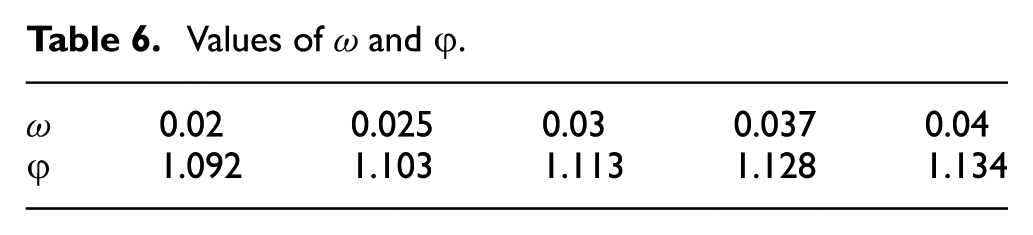
Five representative values are selected for the calculations, as presented in Table 6.
Values of ω and φ.
Propellant grain geometry and form factor, as referenced by Luong and Trinh. 54 The shape characteristics of the propellant grains are computed using the analytical expressions provided by Luong and Dien. 53 These characteristics are essential for modeling the regression of the burning surface and for determining the pressure-time profile in internal ballistic calculations. The intermediate parameters required for the evaluation are as follows:
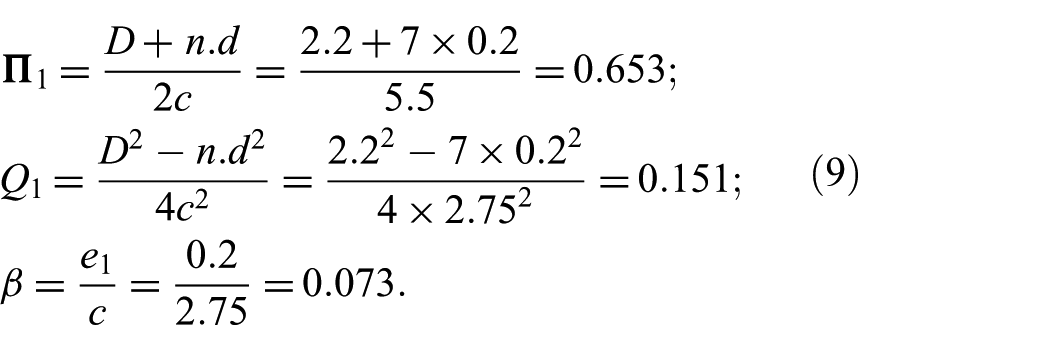
Geometrical characteristics of the propellant grains are calculated as:
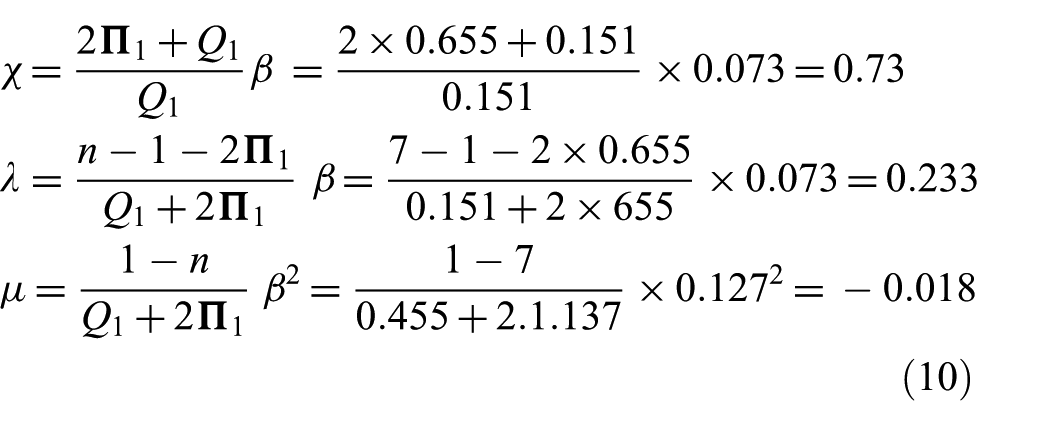
Table 7 summarizes the input data employed in the internal ballistic analysis of the 23 mm CTA.
Data employed in the internal ballistic analysis of the 23mm CTA.
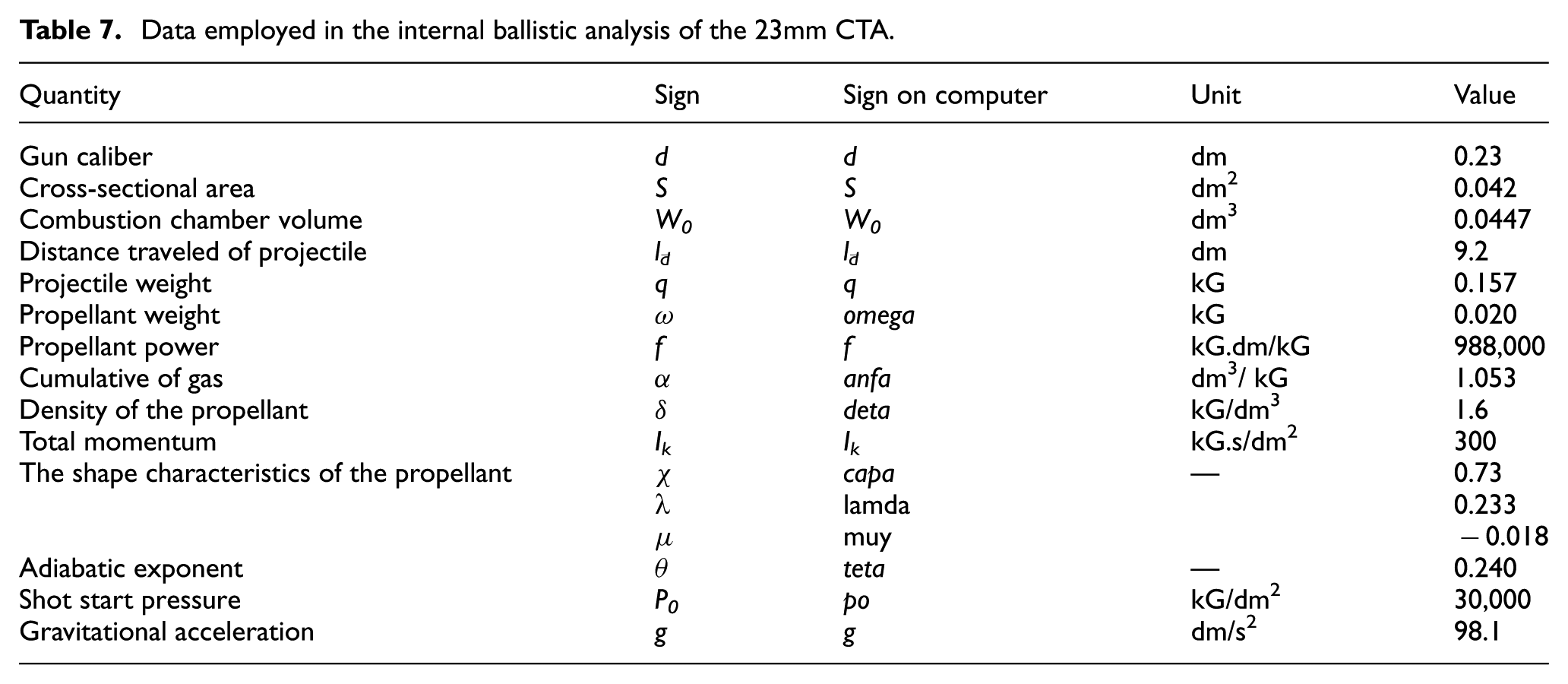
The numerical solution methodology for the internal ballistic issue is shown in the flowchart (Figure 7) and may be articulated as follows:
Step 1. Initialization: Specify all necessary starting parameters, including the physical and geometric attributes of the system, including propellant qualities, barrel dimensions, and beginning circumstances.
Step 2. Establish the iteration index: Set the loop counter i to 1.
Step 3. Numerical integration (Runge-Kutta technique): At each iteration, use the Runge-Kutta technique to resolve the system of nonlinear ordinary differential equations (ODEs) that dictate the internal ballistic process. These equations delineate the progression of pressure, the trajectory of the projectile, and the combustion characteristics of the propellant.
Step 4. Revise state variables: Employing the integration output, revise pertinent state variables including the combustion chamber pressure, the propellant’s burned percentage, the projectile’s displacement and velocity, and the gas volume behind the projectile base.
Step 5. Convergence assessment: Determine whether the calculated projectile displacement l meets the convergence criterion l ≤ l
d
, where l
d
represents the complete length of the barrel.
Should the condition remain unfulfilled, increase the iteration index i by 1 and repeat the integration procedure. If the criterion is met, continue to document the final findings.
Step 6. Result documentation: Archive all calculated outputs, including the maximum pressure, projectile muzzle velocity, temporal histories, and other essential performance indicators.
Step 7. Termination: Conclude the calculation upon the projectile reaching the muzzle position.
The numerical results obtained from solving the internal ballistic problem for the 23 mm CTA using 0.04 kG of propellant, implemented in MATLAB, are illustrated in the following Figures 8 and 9.
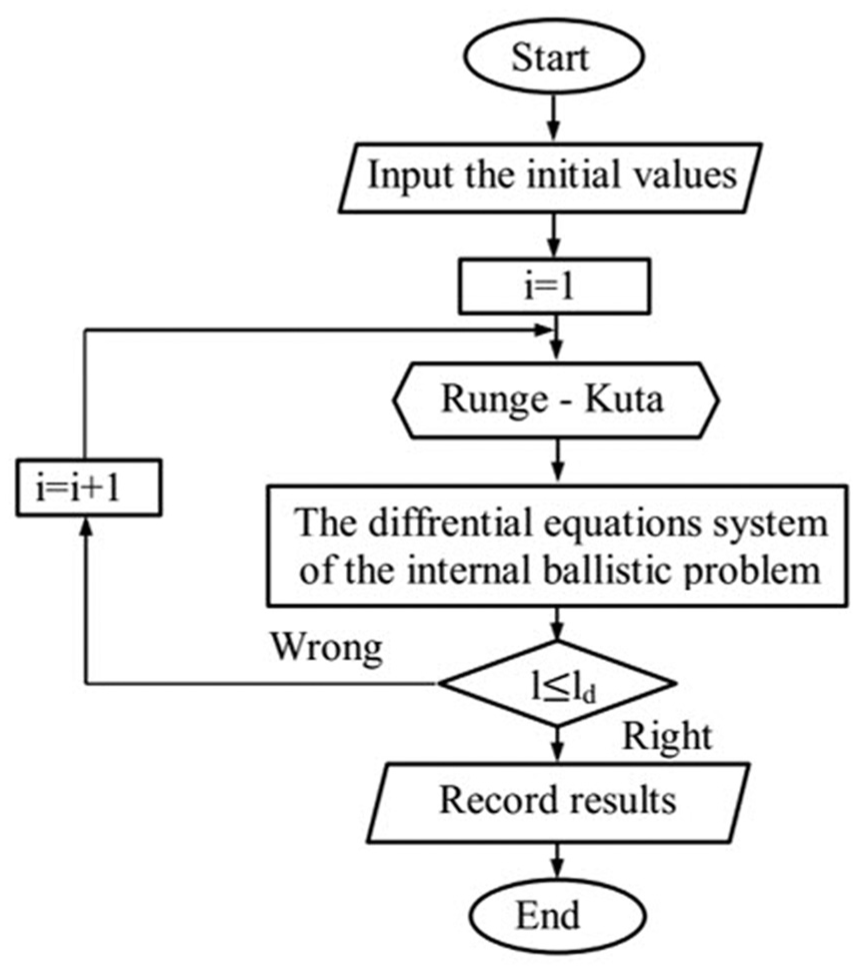
Flowchart illustrating the approach for addressing the internal ballistic issue using the Runge-Kutta technique.
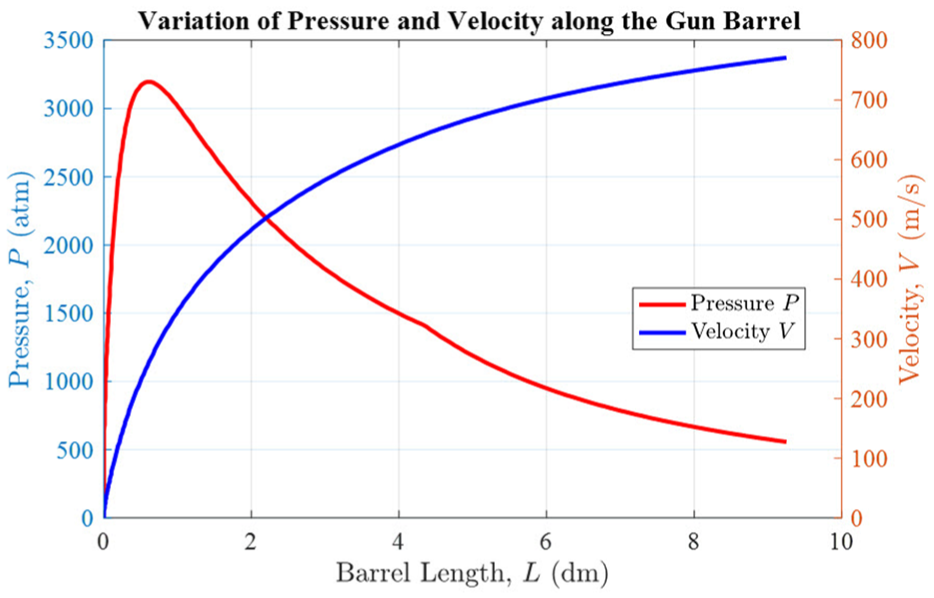
Variation of pressure and velocity along the gun barrel.
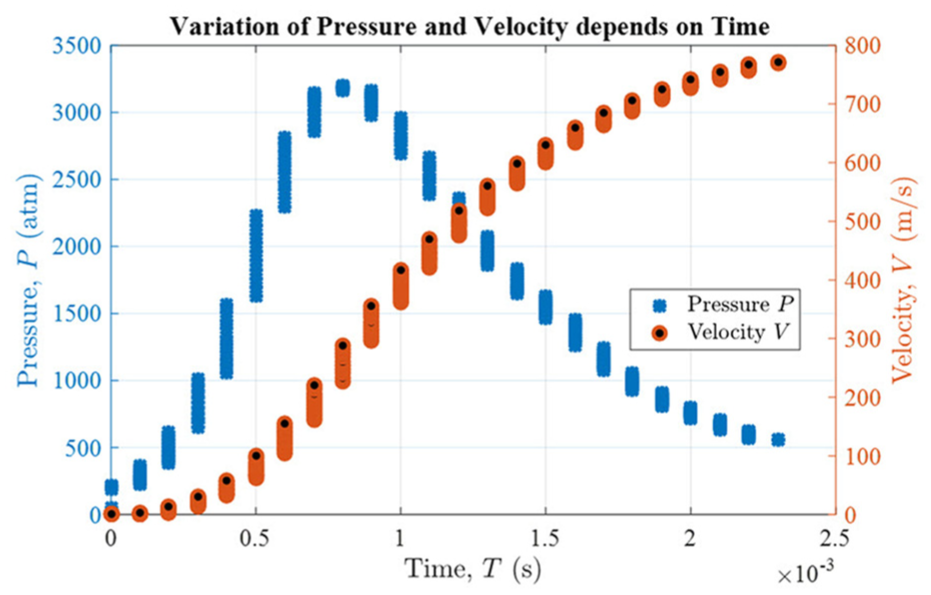
Variation of pressure and velocity depends on time.
Based on the computational results and the reference data presented in Luong and Trinh, 54 the following observations can be made:
At the time of peak pressure, the internal ballistic model yields a maximum pressure of P m = 2751.68 kG/cm2 and a muzzle velocity of V d = 768.8 m/s.
In comparison, the corresponding reference values in Luong and Trinh 54 are P mlt = 2800 kG/cm2 and V dlt = 720 m/s.
The pressure deviation is ΔP = 48.3 kG/cm2, resulting in a relative error of 48.3/2800 × 100 = 1.73%.
The muzzle velocity deviation is ΔV = 48.8 m/s, corresponding to a relative error of 48.8/720 × 100 = 6.77%.
These deviations fall within acceptable engineering tolerances, indicating that the proposed computational model provides results in good agreement with the reference data. 54
10. Recent studies on telescoped ammunition
Most recently, Li et al. 55 created a finite element model to analyze the extrusion process of the CTA employing elastic-plastic theory. They model and analyze the extrusion velocity, resistance, and stress distribution of CTA and conventional artillery. Results indicate that CTA guns exhibit an 87.6% enhancement in extrusion velocity and a 33.5% increase in extrusion resistance compared with conventional artillery of equivalent caliber. These findings offer theoretical insights for enhancing CTA gun design and internal ballistics efficacy. Shi et al. 56 examined the motion coupling and internal ballistics of cased telescoped ammunition artillery. They formulate a theoretical model and perform numerical simulations to examine the interaction of the projectile, propellant gases, and chamber dynamics. The research contrasts CTA with conventional artillery, assessing variables such as muzzle velocity, pressure distribution, and barrel degradation. The results offer guidance for refining CTA gun design, augmenting propellant efficiency, and elevating overall ballistic performance. Zhang et al. 57 examine the dynamic behavior of the cartridge during firing to resolve the cartridge extraction issue in CTA. They create a finite element simulation model to examine its mechanical properties, concentrating on radial residual deformation and extraction force following the release of chamber pressure. Their findings demonstrate that as the yield strength of the cartridge material escalates, both residual deformation and extraction force initially increase and thereafter diminish. When the yield strength surpasses 1040 MPa, the extraction force diminishes to zero, facilitating effortless cartridge removal. Chang et al. 58 analyzed the high-strain-rate plastic deformation and fracture failure of the projectile belt during the dynamic impact extrusion of cased telescoped ammunition (CTA). A three-dimensional finite element model is created with LS-DYNA to mimic the dynamic engraving process, integrating elements such as secondary ignition and gunpowder combustion. The simulation examines the resistance to projectile impact extrusion, the stress–strain properties, and the creation of grooves on the elastic belt. Results indicate that as the copper belt is inscribed into the slope chamber, it progresses from elastic deformation to plastic deformation, ultimately culminating in fracture failure. Upon complete engraving, the belt conforms closely to the rifling, exhibiting significant nonlinear changes in impact engraving resistance. Liu et al. 59 emphasized the assurance of dependability in ejection and initial round loading of a CTA machine gun. The authors suggest altering the detaining support by incorporating a blocking slope that inhibits the initial round’s movement while facilitating the smooth ejection of succeeding cartridge cases. A contact impact model incorporating gaps among the ammunition belt, CTA round, and chamber has been constructed and integrated into a multibody dynamic equation. Simulations indicate that a detention support inner bottom height of 0.3 mm optimally balances first-round retention and smooth ejection. Physical testing and modifications to the machine gun prototype, informed by simulation outcomes, validate the velocity trajectory of the bolt carrier, demonstrating the practical dependability of the computed height. Guo and Yu 60 analyzed the dynamic properties of the CTA launching process and aims to enhance its internal ballistic performance. A theoretical model is established utilizing secondary ignition and propellant programmed combustion control technologies. A computer simulation of a 35 mm CTA firing experiment corroborates the model’s precision. Subsequent investigation forecasts the launch process of a 45 mm CTA armor-piercing projectile, examining the influence of loading parameters like propellant weight, impetus, and projectile weight on interior ballistic performance. The results establish a theoretical basis for more experimental investigations on CTA. Then, Guo and Zhang 51 evaluated the interior ballistic properties of a CTA armor-piercing projectile during a hypervelocity launch. A zero-dimensional internal ballistic model is created, integrating secondary ignition and propellant combustion technology. Combustible cartridge materials are incorporated into the CTA construction to improve lightweight design and energy efficiency. A computational simulation of a 105 mm CTA grenade discharge experiment corroborates the idea. Subsequent examination of a 105 mm CTA armor-piercing projectile utilizing a semi-combustible cartridge indicates that with a propellant weight of 6 kg, the peak pressure attains 569.5 MPa, resulting in a muzzle velocity of 1702 m/s. Han et al. 61 considered the low-recoil rarefaction wave (RAVEN) firearm utilizing CTA by formulating a system of equations for interior ballistics, kinematics, and dynamics. The study used numerical simulations to create dynamic characteristic curves, which are subsequently validated by fire tests. In contrast to conventional closed-breech firearms, the swing chamber gun preserves muzzle velocity while diminishing maximum recoil by 74%. Subsequent numerical optimization of the inertial breech buffer spring improves efficiency, decreasing breech recoil force by 14.2% without jeopardizing system performance or structural integrity, therefore enhancing the overall performance of the weapon system. Wang and Zhang 62 investigated the shock wave formation and precursor flow during the launch of CTA. A 2D axisymmetric muzzle flow field model for a 6 mm CTA bullet is developed, coupled with a two-stage zero-dimensional interior ballistic model using CFD software FLUENT. The numerical simulation reveals that CTA experiences a delayed shock wave formation compared with conventional ammunition while achieving a 4.2% increase in muzzle velocity. Liu et al. 63 examined the swing chamber mechanism of a CTA machine gun, emphasizing the interaction between the bolt carrier’s guiding pillar and the chamber’s spiral groove. Initially, a conventional spiral line was employed; however, testing indicated high impact force, resulting in kinetic energy dissipation and diminished component longevity. Through the optimization of the spiral groove contour via a quintic function curve, the maximum impact force was diminished by 42.27%, and the velocity loss was lowered from 30.3% to 25.6%. Cao et al. 64 examined the ballistic efficacy of CTA, a contemporary cartridge configuration in which the projectile is encased within the propellant casing. The study investigates critical factors, including chamber pressure, muzzle velocity, and projectile acceleration, through experimental testing, contrasting CTA performance with that of traditional ammunition. Results suggest that CTA provides potential benefits in weight reduction and compactness, while preserving or enhancing ballistic efficiency. Nonetheless, issues concerning pressure dynamics and combustion characteristics must be resolved for maximum performance. Han et al. 65 evaluated the incorporation of soft recoil technology into a CTA firearm to mitigate recoil forces and enhance shooting stability. Employing the multibody dynamics program Adams, they construct a simulation model to examine the gun’s recoil motion, system dynamics, and critical performance metrics. They utilize optimization approaches to enhance the design, reducing peak recoil force while maintaining dependable operation. Clough et al. 66 developed a computational model to investigate the internal ballistic processes of 40 mm CTA. To gain a more comprehensive understanding of combustion characteristics and performance, they simulate critical parameters within the cartridge chamber, including pressure distribution, projectile acceleration, and gas dynamics.
In recent years, CTA and two-stage propulsion technologies have attracted increasing attention due to their potential to reduce system weight and optimize firing performance. Shi et al. 56 investigated the coupled motion behavior in the internal ballistics of CTA artillery, highlighting the critical interaction between the propellant gases, recoil dynamics, and projectile translation for overall system stability. Liu et al. 63 focused on optimizing the design of the driving spiral groove in the chamber of a CTA-based machine gun, which significantly improved rotational control and dynamic stability of the projectile. Li et al. 67 conducted a temperature field analysis of a newly developed machine gun barrel, revealing that localized heat accumulation can severely impact barrel lifespan. Zhang et al. 68 carried out theoretical and numerical studies on the dynamic launch response of carbon fiber composite cartridges, emphasizing the advantages of lightweight and high-strength materials for CTA casings. Chang et al. 69 analyzed the strong impact and engraving characteristics of multilayer metallic materials under two-stage combustion, providing crucial data for structural material design in CTA applications. Wang and Zhang 70 explored the influence of embedded structures on two-phase reactive flows within a small combustion chamber featuring a moving boundary, clarifying how internal architecture affects combustion behavior. In a subsequent study, Chang et al. 71 examined the dynamic impact deformation characteristics of multilayer metallic materials based on a novel combustion propulsion scheme, showing that tailored layered structures help mitigate peak stresses during the initial launch phase. Guo et al.72,73 developed a high-precision numerical model to simulate the projectile launch process and analyze the failure mechanisms of projectile-borne components, underscoring the importance of physical coupling between internal components in CTA systems. Furthermore, Guo and Yu 60 proposed a computational model for simulating the launch process of CTA systems, demonstrating the reliability of numerical approaches for evaluating ballistic performance. Finally, Han et al. 61 presented research on the dynamic characteristics of a low-recoil swing chamber gun based on CTA and rarefaction wave technology, indicating a new direction for the development of low-recoil weapon systems. Some other studies can be found in these documents.8,66,67,74,75
According to an examination of academic platforms, approximately 70% of the literature pertains to numerical simulations regarding telescoped ammunition, while approximately 30% pertains to experimental studies. The following Figure 10 is a straightforward visual representation in percentage form:
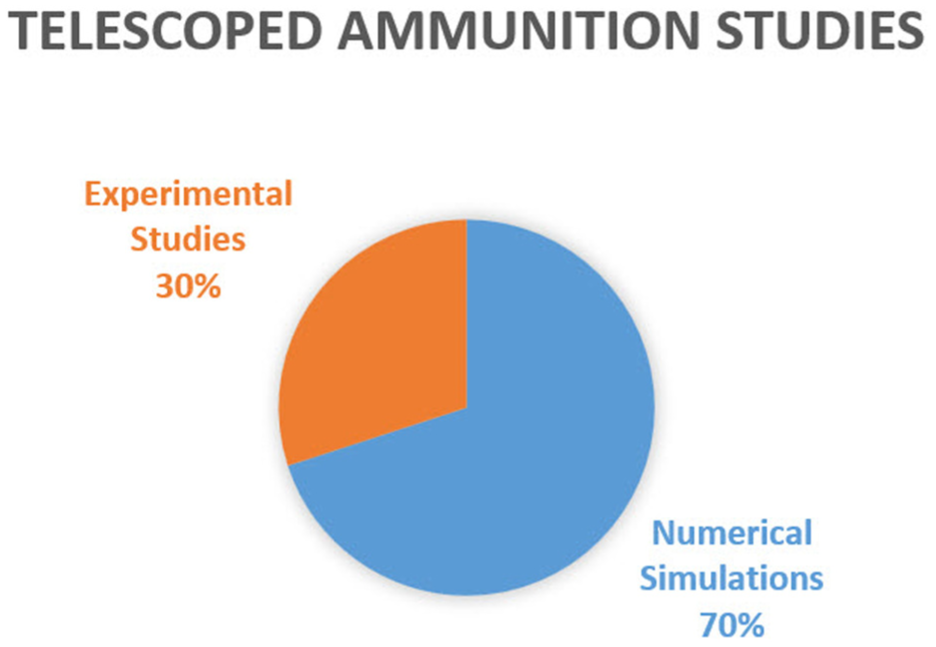
Comparison between the number of publications on numerical simulation and experimental studies related to the keyword “telescoped ammunition.”
This trend is likely a reflection of the higher costs and challenges associated with physical testing, which are in contrast to the relative simplicity and reduced expense of computational modeling.
11. Conclusion
Telescoped ammunition signifies a notable progression in ammunition technology, providing several benefits like weight reduction, heightened velocity, improved accuracy, and compatibility with contemporary rifles. Its uses encompass both military and civilian shooting contexts, illustrating its capacity to enhance operational effectiveness and performance across diverse scenarios. Notwithstanding obstacles including production complexities, compatibility concerns, and the necessity for market acceptance, ongoing advancements in materials, intelligent technologies, and sustainability efforts will facilitate its future expansion. The article also provides a comprehensive analysis of a typical 23 mm CTA, in which the fundamental structural features, operational principles, and the internal ballistic processes are systematically discussed. Particular emphasis is placed on the calculation of internal pressure within the cartridge during the firing sequence, offering insight into the dynamic behavior of propellant gases and their effect on the projectile’s acceleration inside the barrel.
Footnotes

Funding
The authors received no financial support for the research, authorship, and/or publication of this article.
Declaration of conflicting interests
The authors declared no potential conflicts of interest with respect to the research, authorship, and/or publication of this article.
Data availability
No third-party data were used. The authors copyright all data in the article.