







Abstract
Museums throughout the United States house undocumented collections with variable access. With the technological developments over the past twenty years, digital documentation, particularly photogrammetry, has become more accessible and affordable which can bring these collections to a wider audience. This tool can help enable collaboration among researchers, institutions, and museum professionals, contribute to the stewardship of these collections, and overcome the physical and financial barriers that hinder open-access, allowing museum professionals to display their artifacts in new, engaging ways and make them more accessible to the public and other scholars. With the goal of using digital documentation to make archaeology and anthropology collections more accessible, five small artifacts from disparate collections in the Evansville Museum of Arts, History & Science were recorded, drawn, and modeled: a Jerash type oil lamp, a Samaritan type oil lamp, a Roman oil lamp from Meidum, Egypt, an Ottoman ceramic smoking pipe, and a ceramic sherd. This case study illustrates how small to medium size institutions can construct a photogrammetry toolkit with minimal financial and staff resources.
Introduction
Over the past fifteen to twenty years, photogrammetry has become more prevalent in the field of archaeology to document landscapes, terrestrial and maritime sites, and artifacts (Dostal and Yamafune 2018; Yamafune 2016). The digital data produced by this technology can be easily shared between institutions and scholars in various parts of the world to encourage and enable collaboration. It contributes to the long-term preservation and stewardship of an object as its morphology and composition have been digitally re-created. Furthermore, 3D models have the potential to allow museums to create exhibits and display objects in their collections in new and interactive ways. With the recent advancements in technology, photogrammetric modeling has become more affordable and manageable making it an excellent low-cost 3D modeling tool for any archaeological or museum toolkit.
Thousands of artifacts in large and small museums throughout the world have yet to be studied. Many have been overlooked by researchers because they have questionable provenance and documentation, they are broken, uncomely, or considered non-diagnostic, or simply not accessible or known to the wider public and academic community (Jones 2022). However, each artifact holds valuable archaeological knowledge, particularly when included in larger databases. Photogrammetry can and should be used to document these smaller, lesser-known, rich collections with museum professionals and archaeologists collaborating to make them available to other researchers and the public. Although the set-up, lighting configuration, and digitization scheme will differ depending on the artifact’s shape, size, material, the 3D modeling software, and work-space constraints, this article outlines a methodology for digitally documenting small, ceramic artifacts using Agisoft Metashape as an effort to make the software and process more accessible for other researchers and collections professionals.
With the objective of using digital documentation to make archaeology and anthropology collections more accessible, five small artifacts from disparate collections in the Evansville Museum of Art, History & Science were recorded, drawn, and modeled. The digitization and publication of these artifacts will allow researchers and museum professionals to compare their own collections and methodologies to the ones presented here. It also presents museum professionals with opportunities to share objects with not only a wider public but also subject-matter experts.
Small Collections in the Evansville Museum of Arts, History & Science
The Evansville Museum of Arts, History & Science, in southern Indiana, is one of many museums throughout the United States with comprehensive archaeology and anthropology collections. However, many are not widely known and have variable accessibility. In March 2020, the two lead authors visited the museum to document five small artifacts from various collections, specifically three mold-made Roman oil lamps, a ceramic base, and an Ottoman ceramic smoking pipe bowl. 1 The goals of this project were to digitally preserve the artifacts under study, contribute to the museum’s knowledge base, and increase the accessibility of the artifacts.
Oil lamps 1961.085.0003 and 1961.085.0004, given as gifts to the museum in 1961, have a single nozzle, central, large fill hole, and broad handle. Oil lamp 1958.081.0000, purchased from the Metropolitan Museum of Art in 1958, has a symmetric double-nozzle, two small fill holes, and a partially preserved, central handle (Figure 1). The first of these, 1961.085.003, is an elongated, Jerash type oil lamp with a high, ribbed, curved or tongue handle, dating from the third to eighth centuries C.E. It is 5.3 cm in diameter, 9.0 cm long, and 2.0 cm tall with a maximum volumetric capacity of 20 mL. The top of the oil lamp is completely occupied by a high-relief decoration consisting of a linear, herringbone design radiating around the fill and wick hole. On the bottom of the lamp, the small ring base is surrounded by four fronds extending in each cardinal direction. The city of Jerash, Jordan, was the main production center for these types of oil lamps, evidenced by the complete and fragmentary lamps, oil lamp molds, and kilns found near the hippodrome. The geographic distribution of these lamp types is mainly limited to the Jordan and Hauran regions (Hadad 1997). Similar oil lamps, recovered during the Yale-British School excavations in Jerash during the early 20th century, exist in the Yale University Art Gallery collection. 2
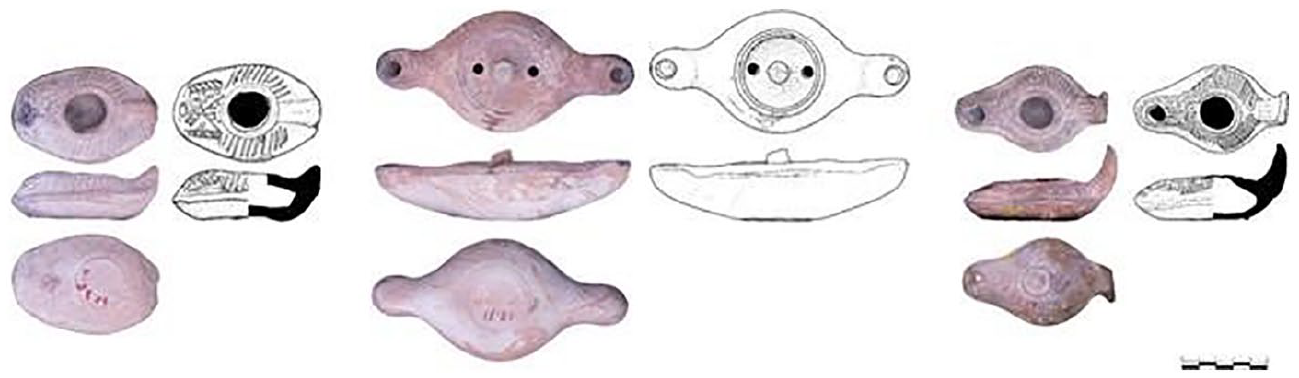
Roman oil lamps from the Evansville Museum of Art, History & Science (left to right: 1961.085.0004, 1958.081.0000, and 1961.085.0003). Photographs by R. Matheny and M. Hagseth. Drawings by M. Hagseth.
Oil lamp 1961.085.0004 is an ovoid, Samaritan type oil lamp with a broad, flat handle dating from the third to eighth centuries C.E. It is 5.6 cm in diameter, 8.4 cm long, and 2.8 cm tall with a maximum volumetric capacity of 21.5 mL. Short, parallel lines radiate in a herringbone pattern around the shoulder and, instead of a defined channel, there is a symbolic design consisting of a thin vertical line intersected by two diagonal crossed lines, and surrounded by several, irregularly placed dots. This feature is bracketed on either side by a ladder design. There are soot stains around the wick hole and in the middle of the reservoir indicating that this lamp was, at one time, in use. This oil lamp is similar to Type 3 Samaritan oil lamps from V. Sussman’s typology dating predominantly from the fifth to seventh centuries C.E. (Sussman 1978, 1983). However, the Type 3 oil lamps described by Sussman have a defined channel and tongue handle, both of which the Samaritan type oil lamp from the Evansville Museum of Arts, History & Science lacks. Good parallels with a similar nozzle, decoration, and handle have been found in fifth century C.E. sites in the Beit She’an Valley and Samaria (Rosenthal-Heginbottom 2019).
Oil lamp 1958.081.000 is 15.0 cm long with a body 7.1 cm in diameter and 3.5 cm tall and a maximum volumetric capacity of 82.5 mL. It was found in Meidum, Egypt, and is similar to other symmetrical, double-nozzled oil lamps in the Petrie Museum of Egyptian Archaeology collections dating broadly to the Roman period. 3 However, unlike the Roman oil lamps in the Petrie Museum collection, the one from the Evansville Museum of Arts, History & Science does not have any embossed decoration but instead is smooth with yellowish-red slip preserved on the top and upper portion of the bottom of the lamp. This lamp was also used at some point in its history evidenced by the soot staining around both wick holes.
The Egyptian oil lamp was carefully formed, similar to fineware pottery. However, the two Levantine oil lamps appear to be roughly made and quickly smoothed and finished, the potter probably valuing quantity over quality. The handle of 1961.085.0003 is asymmetrical, pulling toward one side and on each side of the shoulder near the nozzle, directly above the mold seam, the clay has been roughly smoothed, disrupting the mold pattern. On the back of the handle of 1961.085.0004 there are additional lumps of clay, either intentionally added to fix a crack or a bi-product of assembling both halves of the oil lamp, and, on the interior of its reservoir, there is a small, curved, pre-firing scar, possibly a fingernail or tool mark. Additionally, the bottom of this oil lamp is distorted with a convex curvature, therefore, the oil lamp does not rest on its intended, thin ring-base.
The slapdash construction of these Levantine oil lamps left fingerprints in the clay, visible mementos of the potter, and clues to each lamp’s construction sequence. There are two fingerprints extant on the back of the handle of 1961.085.0004, one of which is on the additional lump of clay (Figure 2). On 1961.085.0003, the handle preserves a possible palm-print on its back, probably from the purlicue or lower thumb, and two faint fingerprints on its upper front face; there is also one faint fingerprint on the oil lamp’s base (Figure 3). This evidence suggests that the potter of this oil lamp, after removing each lamp half from the mold, joined the halves together by applying pressure to the seam. The potter then added and formed the handle by seating the lamp in one of their hands with their thumb or purlicue supporting the back of the handle. The potter then shaped the handle by pushing the edges backward, around their thumb or purlicue. On both oil lamps, as the potters were either joining or re-enforcing the seam, adding or smoothing bits of clay, or creating and shaping specific features, they left fingerprints in these areas and did not take the time to smooth them away. Due to this method of construction, the molded decorations were deformed. Our findings and observations about this production process are consistent with similar lamps of the period (Figure 4). 4
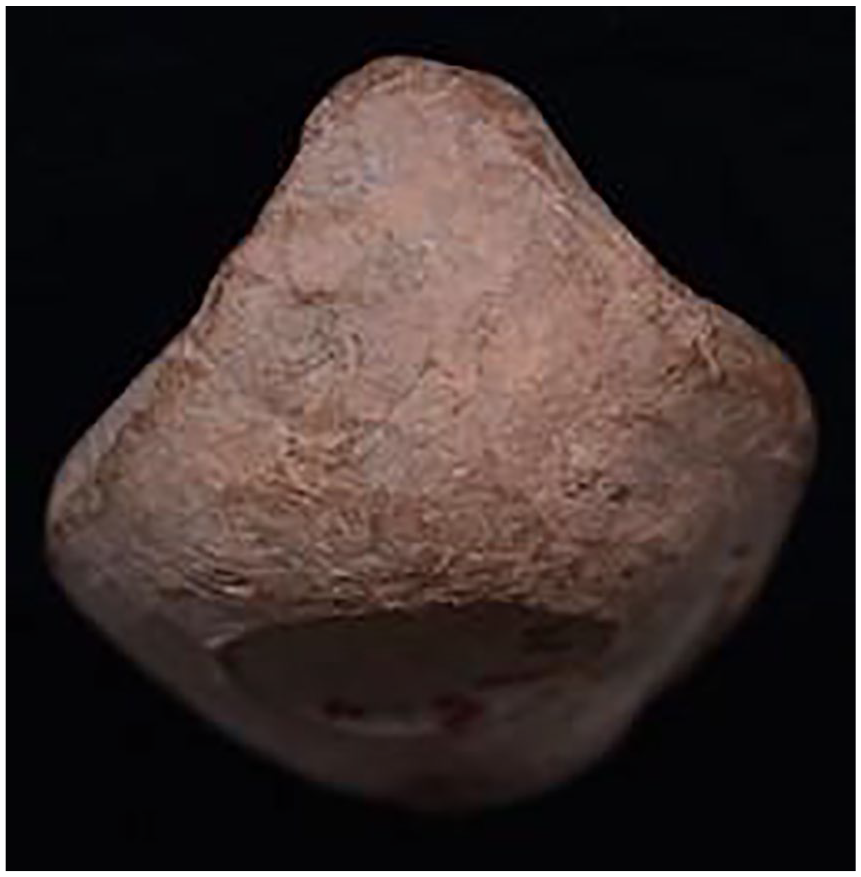
Fingerprint preserved on the additional lump of clay in the lower right region of the back of the handle of 1961.085.0004. Photograph by M. Hagseth.
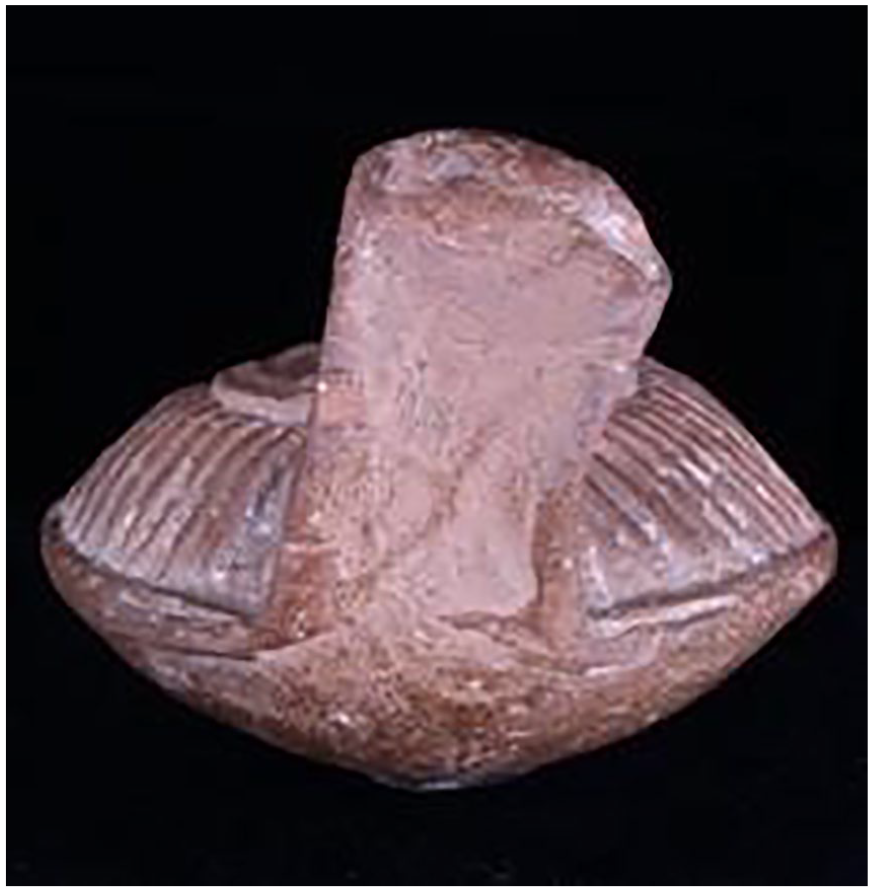
Fingerprint, probably from the lower thumb or purlicue, preserved on the back of the handle of 1961.085.0003. Photograph by R. Matheny.
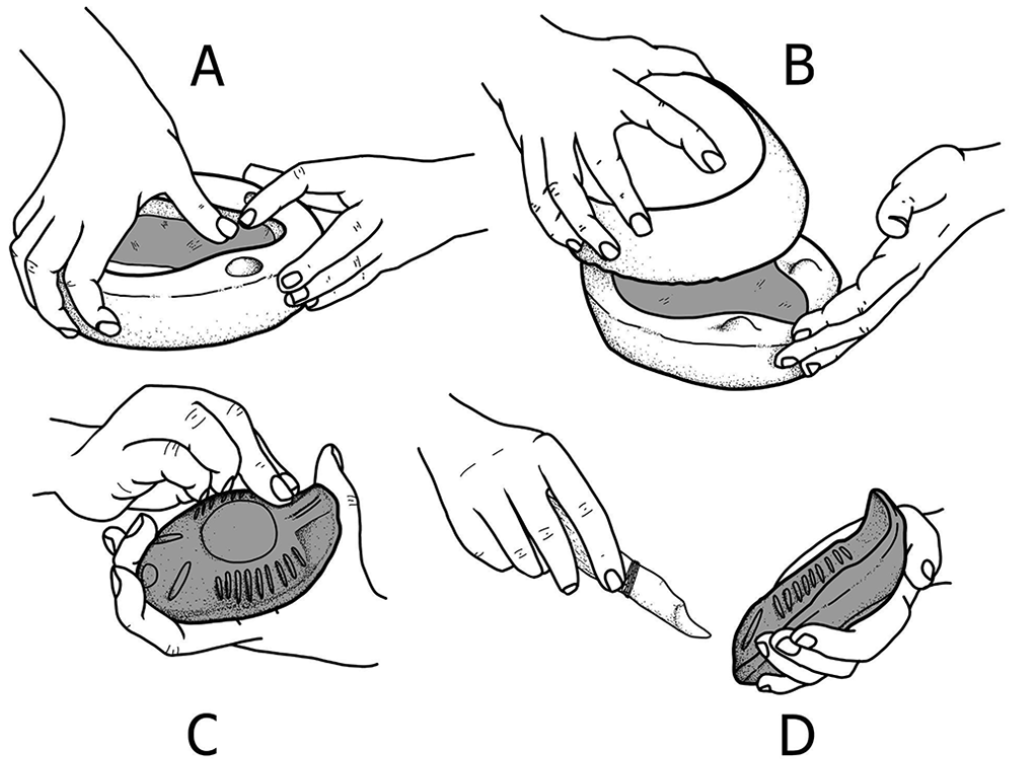
Generalized mold-made lamp production sequence. (A) Clay is pressed into the bottom half of a lamp mold. (B) Once the clay has been added to the top and bottom halves of a mold, the halves are joined using dimples or scoring marks on the mold to align the halves. (C) The potter shapes the handle by pushing the edges backward, around their thumb or purlicue, and the fingers are used to reinforce the seam. (D) The potter uses a tool to cut or punch out the wick and fill holes. Illustration by M. Hagseth.
The mold-made pipe bowl, gifted to the Evansville Museum of Arts, History & Science in 1961, is one of three components that would have comprised a seventeenth to eighteenth century Ottoman tobacco smoking pipe, the other two being a stem, probably made of wood, and a mouthpiece made of clay, stone, ivory, or coral (Figures 5 and 6). It is 5.5 cm long with a shank diameter of 2.1 cm, bore diameter of 0.8 cm, bowl diameter of 1.8 cm, and bowl height of 2.0 cm and is morphologically and iconographically similar to pipe bowls found in Syria and Israel (De Vincenz 2011). 5 The decoration on the exterior of the bowl is divided into seven faces or panels each one incised with a geometric triangular motif, similar to the Rayed Dot pattern on Levantine chibouk pipe bowls of the eighteenth and nineteenth centuries (Robinson 1985). The bottom of the bowl is segmented into a “keel” that is flanked by two lines of reticulation that were likely part of the mold. The stem end of the shank is encircled by a pair of simple, incised lines, followed by a reticulated pattern similar to the pattern on the bowl bottom and which terminates in a reinforced rim that is decorated with three to four rows of repeating small incised lines. The black staining on the interior of the bowl indicates frequent use and organic material is extant in the borehole.
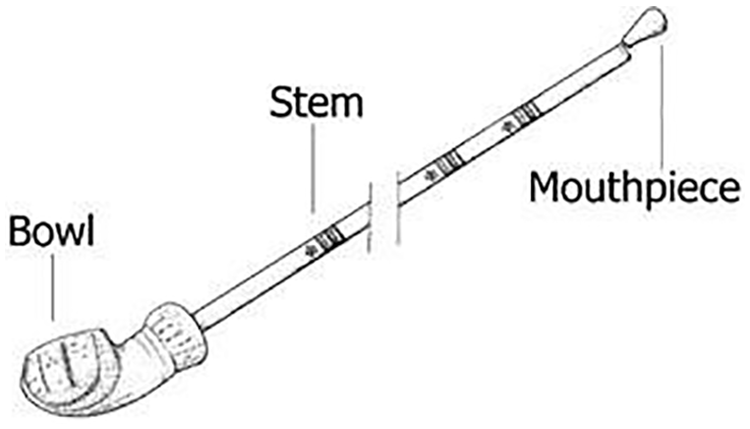
Components of a pipe. Drawing by M. Hagseth.
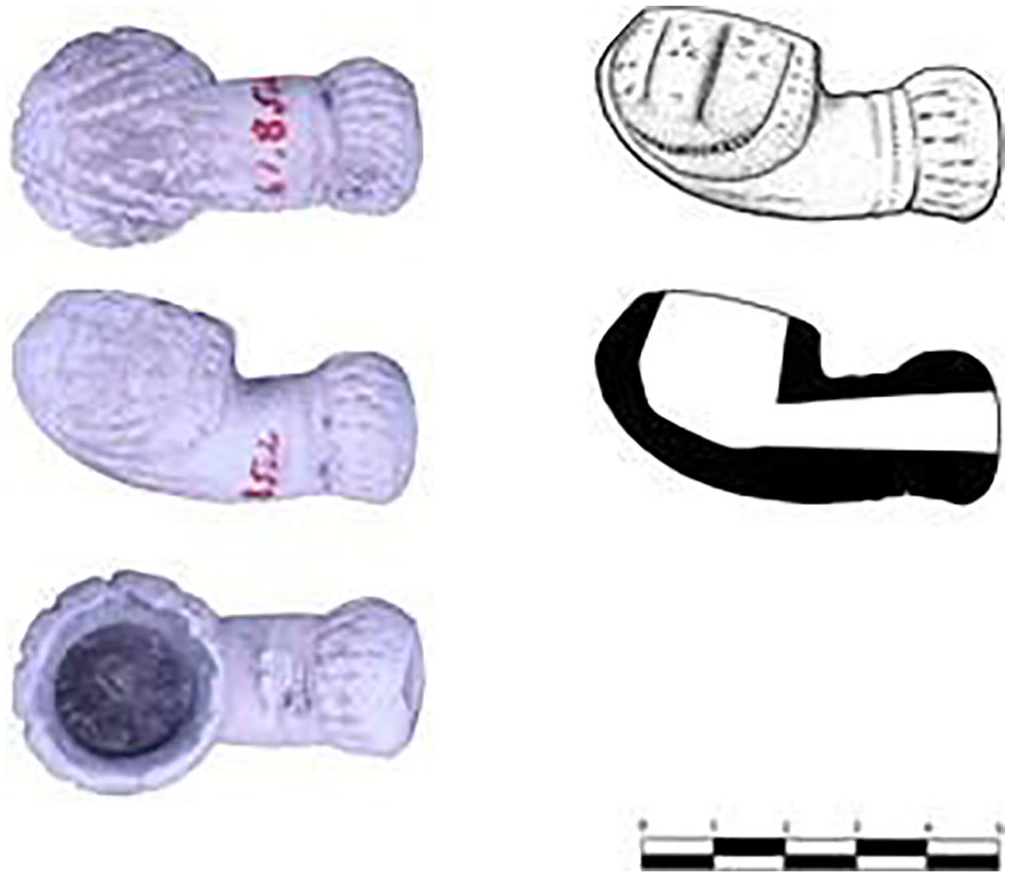
Ottoman smoking pipe bowl from the Evansville Museum of Art, History & Science (1961.085.0002). Photographs by R. Matheny and M. Hagseth. Drawings by M. Hagseth.
Broadly, Ottoman clay smoking pipes have been divided into three types: rounded, dating from ca. seventeenth to eighteenth c., disk-based; ca. mid to late nineteenth c. to mid-twentieth c., of which the pipe bowl from the Evansville Museum of Art, History & Science is an example; and Lily or bell-shaped, ca. mid-nineteenth to early twentieth c. (Sidel 2008). It is difficult to comparatively date unprovenanced pipe bowls with any more specificity due to the loss of context for the majority of known examples. The documentation of the pipe bowl from the Evansville Museum of Arts, History & Science contributes valuable knowledge to the corpus of available material; a majority of the fully documented comparable artifacts are from shipwrecks, Corinth, and Athens (Batchvarov 2014).
The ceramic, ring-base sherd (Inv. No. 1966.058.0001), given as gifts to the Evansville Museum of Art, History, & Science in 1966, was found in Sabratha, along with other various artifacts including a vase or urn and part of a floor mosaic. It is a small artifact with a preserved maximum length of 7.3 cm and preserved height of 2.0 cm. While this artifact might seem inconsequential, it still tells a story. The interior and broken edges are almost completely covered in very dark gray staining, presumably soot, suggesting that the staining occurred after the vessel had broken. The thick, spiraling rills on the interior of the sherd indicate that the vessel was probably wheel-made.
Though small and from different collections, each of these five artifacts contributes something significant to the broader understanding of their life-cycle. The Roman oil lamps preserve traces of how they were constructed with vestiges of those who handled them pre-firing. The Ottoman clay smoking pipe from the Evansville Museum of Arts, History & Science is now one of the few digitally documented artifacts of its type outside of maritime sites and the Corinth and Athens agorae. The documentation of these objects, even the small ceramic sherd, expand existing databases, such as the Ancient Pottery Database hosted by The Foundation for Archaeological Research of the Land of Israel, and increase the number of known, documented, and published artifacts of their type. 6
Methodology
Several studies have shown that photogrammetry is an excellent low-cost method for the study of small objects and that creating high-precision models is achievable for most small institutions, the most expensive pieces of equipment needed being a DSLR camera and a computer (Gajski, Gašparović, and Solter 2016; Porter et al. 2016). In fact, unlike laser scanning, photogrammetry can be done at its most simplistic level with a cell phone’s camera. As stated above, a leading goal of this article is to make photogrammetry an accessible technology. With this in mind, detailed specifications concerning the equipment used and its performance have also been included and can be found in the Appendix. This Appendix was written to facilitate individuals in building their own photogrammetry toolkit.
Lighting Setup
Lighting is an important element of producing high-quality 3D models (Fau, Cornette, and Houssaye 2016). Increasing light exposure allows photographs to be taken with a DSLR camera set at an ISO (camera light sensitivity) of 100 or lower. This lower ISO setting was imperative for limiting digital noise, or grain, in the images to be processed by Metashape.
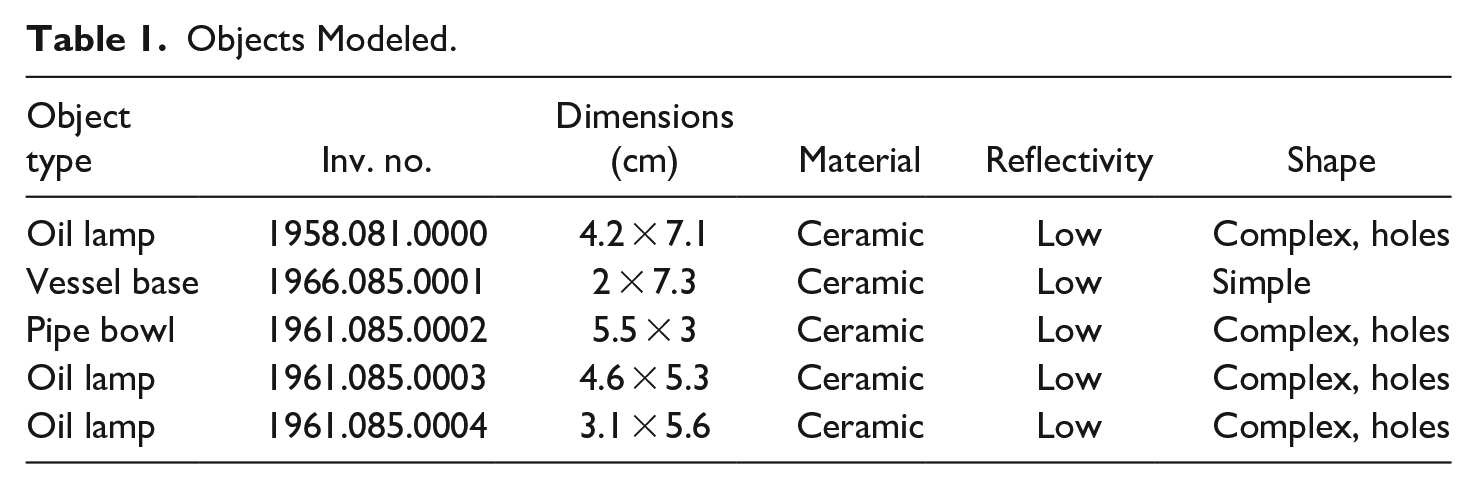
The five objects made available for study by the Evansville Museum of Arts, History & Science were all unburnished ceramics. Their low reflectivity allowed us to easily capture photographs for high-precision 3D modeling (Table 1). Lighting setup and needs will change depending on artifact shape, size, type, and material. Those with reflective surfaces, such as burnished ceramics, metals, or glass, require diffused lighting to eliminate glare (Hallot and Gil 2019).
Objects Modeled.
The lighting used for this study (Figure 7) consisted of five 5500K bar lights for color accuracy arranged to evenly surround the objects. Each artifact was positioned on top of a pedestal mounted on a turntable that was positioned in the center of a 5500K ring light to prevent shadows on the underside of the objects. Black photography velvet was also used to limit light reflection when masking in the Metashape software. 7 Additional small fill lights were added as needed to compensate for the unique shapes of the artifacts. The camera was positioned as closely as possible to the objects, ensuring that they were covering as much of the frame as possible before the focus distance limit.
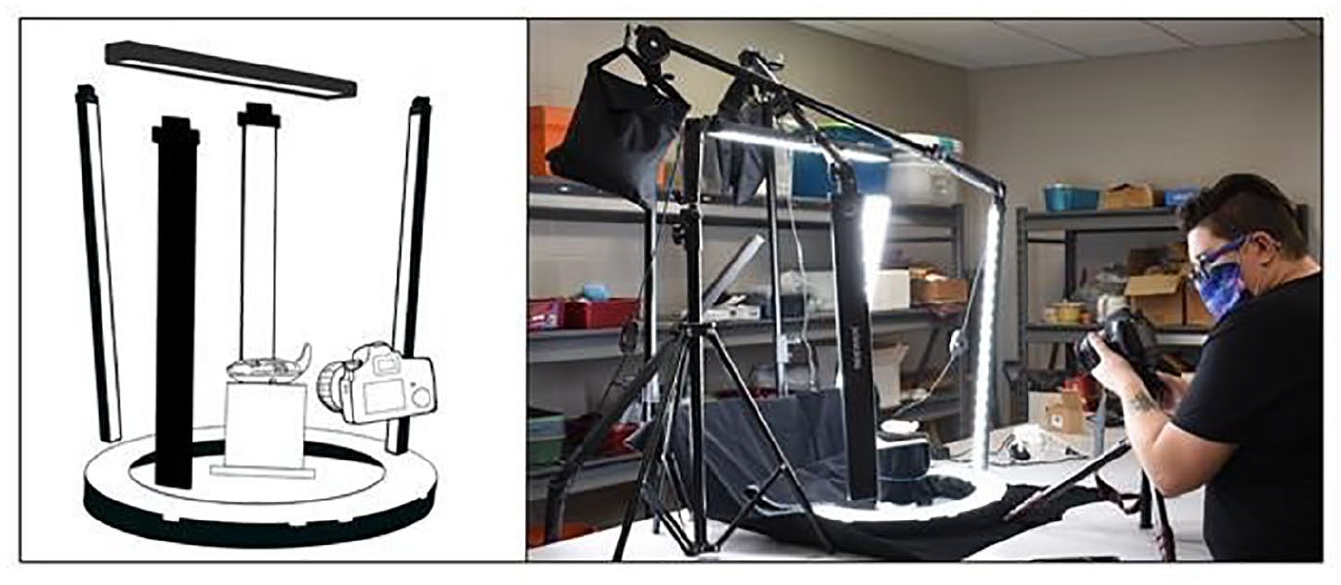
Lighting setup. Drawing and Photograph by M. Hagseth.
Photography Sequence
The photography sequence for the Evansville Museum of Arts, History & Science objects included four angles (Figure 8): oblique overhead, oblique low, nearly straight-on, and oblique underside. The oblique underside angle captured the bottom of the object obscured by shadow in the other three angles. A directly-overhead angle was experimented with but did not provide enough three-dimensional data for the software and, in many cases, caused the program to flatten the model. Before each shot sequence, a photo was taken of the empty background with the focus point manually set on where the object would be placed. This “blank” photo was used during image processing to mask out the background. After the initial background photo, the turntable was rotated to between fifteen and twenty stations to provide complete coverage of each object, resulting in about seventy-five to one hundred photos per artifact (Figure 9). To ensure a high rate of photo alignment in the photogrammetry software, and thus an accurate model, it is important that the photos overlap to a large degree. Additional photos were taken as needed to accommodate complex angles, such as the interior of the pipe bowl (Figure 10).
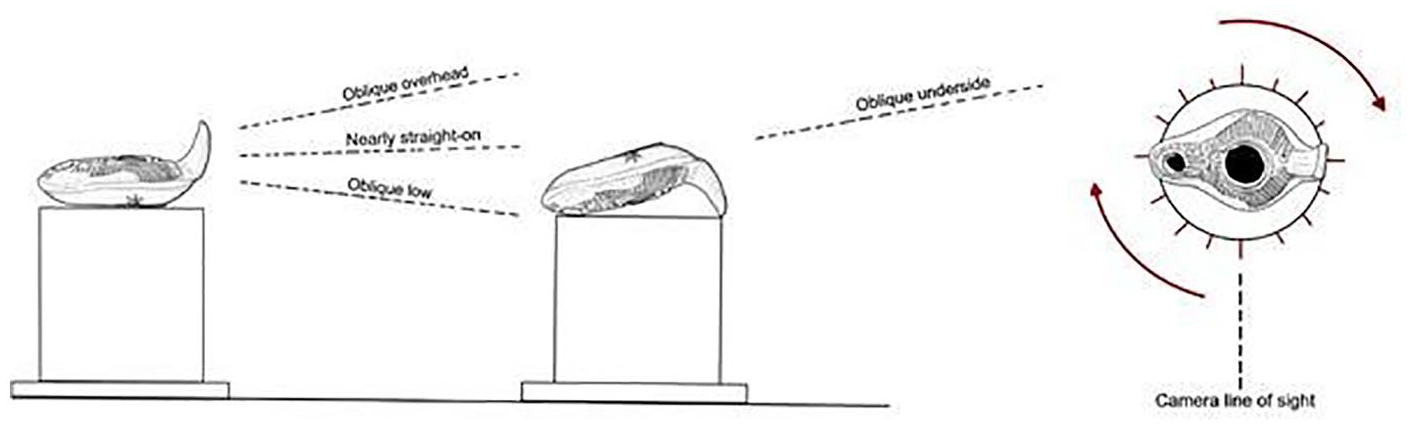
Photography sequences (left) and stations (right). Drawing by M. Hagseth.
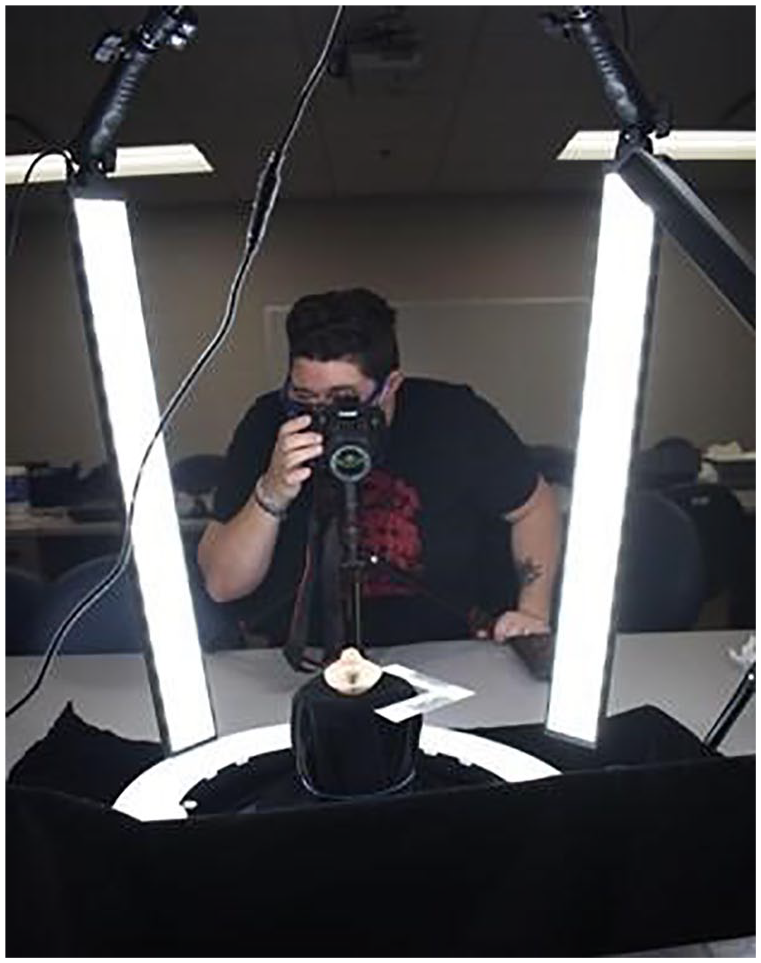
R. Matheny takes fifteen to twenty images per object rotation for each photo station. Photograph by M. Hagseth.
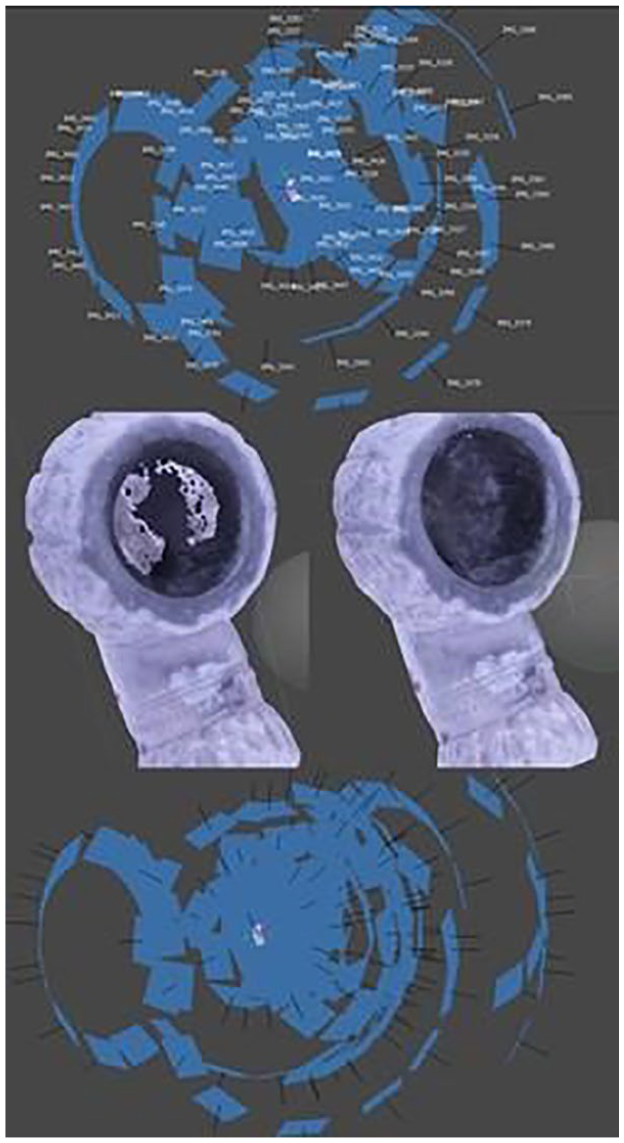
Comparison of pipe bowl (1961.085.0002) model generated with 133 photographs (top and left) and 192 photographs (Bottom and right). The blue tiles represent the position of the camera in relation to the object for each photograph.
Image Processing
While free software for photogrammetric modeling exists, such as Meshroom, a proprietary software by Agisoft called Metashape, previously named Agisoft PhotoScan, was used to document the Evansville Museum of Arts, History & Science objects. 8 The software is available in both standard and pro versions and Metashape’s user-friendly workflow makes it so that individuals with no prior experience in photogrammetry can quickly pick up the skills needed to run the software.
Once imported into the Metashape software, the images were manually masked to remove the background. Other programs, such as Adobe Photoshop, can be used to perform this task, but masking in the photogrammetry software itself proved to be the most time-effective option. Once the masks are completed, Metashape aligns the photos automatically through photogrammetric triangulation, searching for common feature points and matching them across images as tie points (Figure 11). Through this process, Metashape generates a sparse point cloud that it uses to calculate depth maps, which is then used to create a dense point cloud. The next step in the software is to generate a 3D mesh, where Metashape constructs polygons between the tie points (Figure 12). The final step in Metashape is to generate texture, which it does by building a diffuse color texture map based on the aligned photos. Any images which had a Metashape quality value of less than 0.5 units were disabled for texture generation. 9
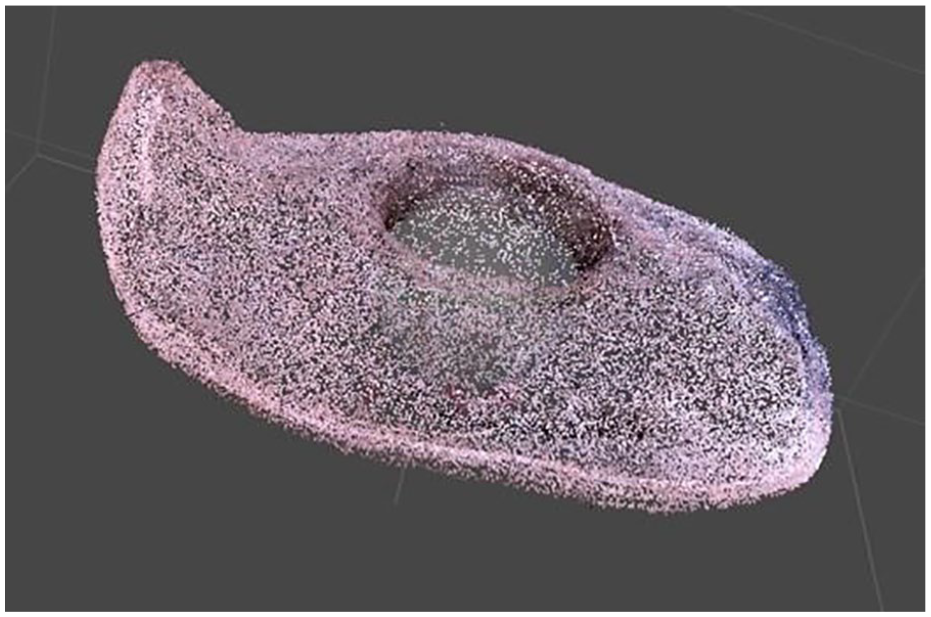
Visualization of tie points in Agisoft Metashape for oil lamp 1961.85.0004.
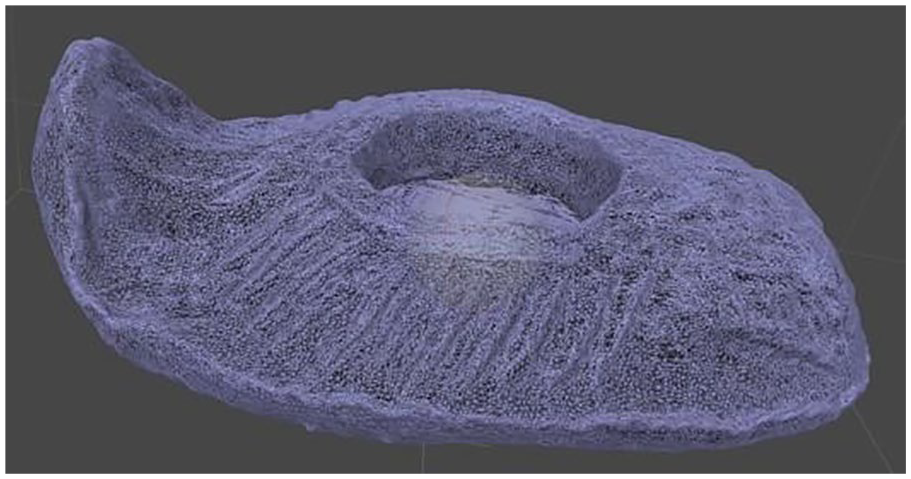
Wireframe view of Agisoft Metashape model for oil lamp 1961.85.0004.
Sapirstein (2018) showed that the use of photography targets provided excellent results for scaling and calibrating models of small objects. However, coded and non-coded target autodetection is a feature of the professional tier version of the software, the cost of which may be prohibitive for small projects or institutions. For the Evansville Museum of Art, History & Science artifacts, once a model was generated in Metashape, it was exported to the open-access software CloudCompare. 10 Multiple measurements of key features were used to improve accuracy and scale the model with excellent results in CloudCompare (Figure 13).
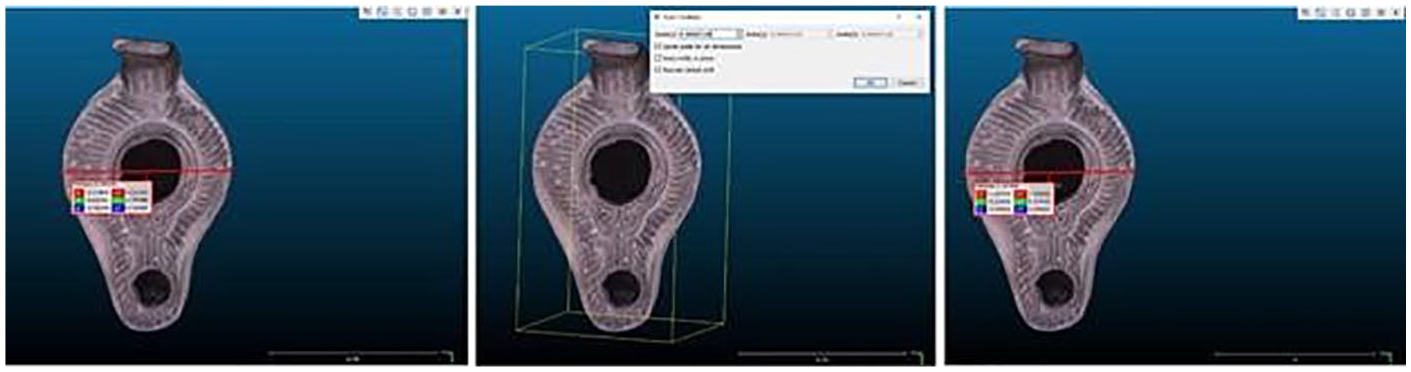
Scaling process using CloudCompare (Artifact: 1961.085.0003; left: using the point-to-point measuring tool to determine the units; middle: using the scale/multiply tool to apply the scale factor; right: scaled 3D model, note that the diameter is now 5.3 units which is the maximum diameter for this object).
Access
With the aforementioned set-up, equipment, and software, photogrammetry proved to be a quick and effective method for documenting these five artifacts from the Evansville Museum of Arts, History & Science and allowed for easy collaboration between the museum professionals and archaeologists. By the end of the project, each artifact had a description and catalog entry, archaeological quality photograph and drawing, and a scaled high-resolution photogrammetric model. These data were then provided to the museum and, with their approval, were made publicly accessible via the Digital Archaeological Record, a digital repository. 11 The three Roman oil lamps, Ottoman smoking pipe, and ceramic sherd are now accessible to the museum and, with subsequent exhibits, the general public, and the academic community (Figure 14). The process has already provided successful and effective collaboration between the visiting researchers, Evansville Museum of Arts, History & Science, and faculty and students at UE. Their publication in an open-access journal, along with the methodologies detailed here, will increase accessibility and, in turn, continue to encourage collaboration between scholars and institutions.
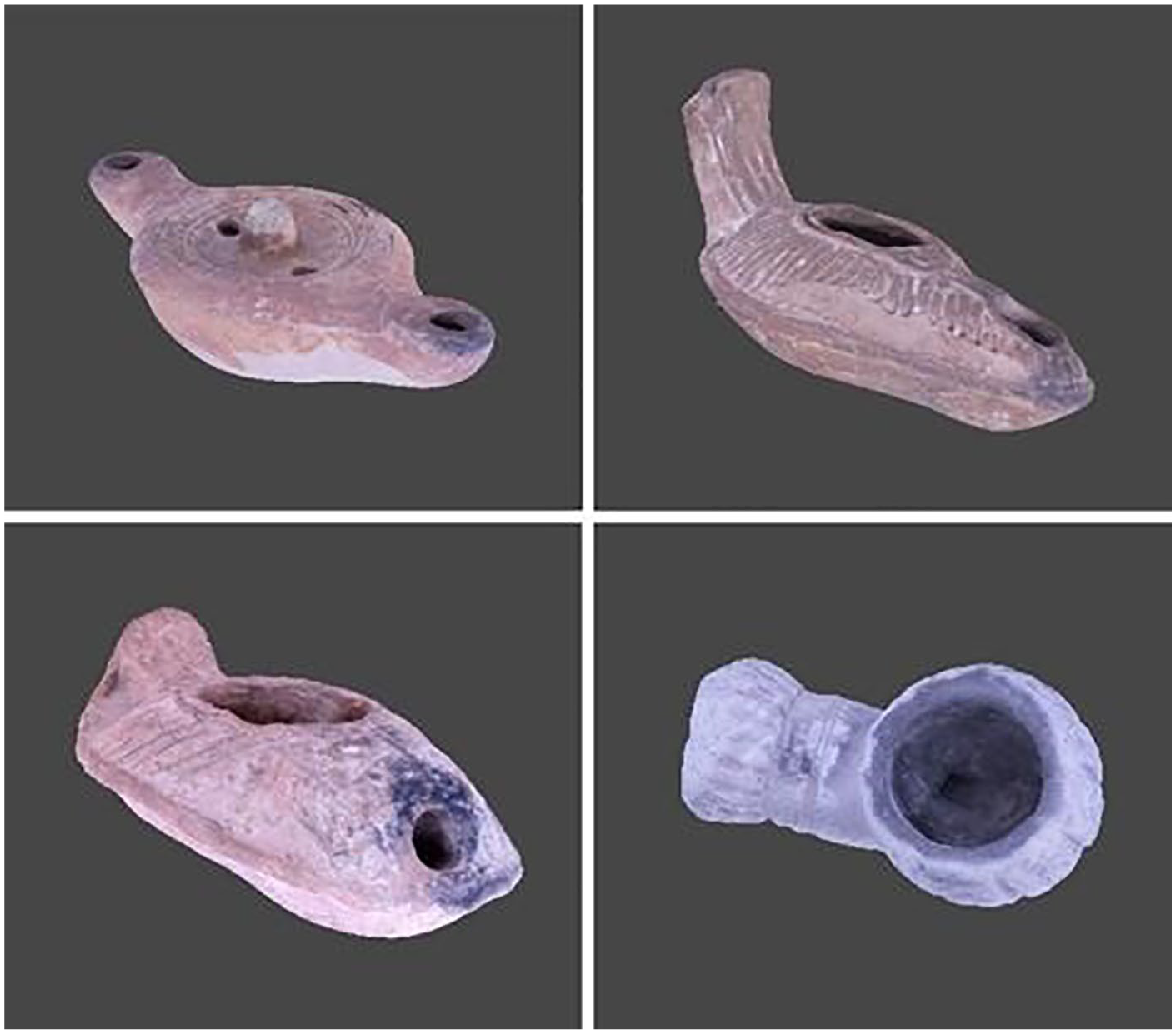
Photogrammetric models of the three Roman oil lamps and Ottoman smoking pipe bowl from the Evansville Museum of Art, History & Science generated using Agisoft Metashape (top left to bottom right: 1958.081.0000, 1961.085.0003, 1961.085.0004, and 1961.085.0002).
Discussion
The practice of archaeology has often focused on excavations, surveys, and terrestrial and underwater sites. In these cases, the work of an archaeologist happens in the field, carefully detailing stratigraphic layers and aggregating a collection of well-documented artifacts whose journey’s end is either reinterment, repatriation, a storehouse, or a museum. However, this does not always lead to the full processing and publicizing of these collections and, as a result, many museums, whose collections consist of artifacts from archaeological sites as well as gifts from patrons, are full of understudied material (Frieman 2018). Digital documentation, specifically accurately scaled photogrammetric models, can help make these objects more accessible to the public, allowing museums to display these models in different ways, and contribute to broader archaeological and anthropological investigations which require large, synthesized artifact databases.
Most museums in America only exhibit between two to four percent of their entire permanent collection for a myriad of reasons (Fabrikant 2009). From a collection’s management and curatorial perspective, objects must not remain on display because every artifact has a shelf-life (Buck and Gilmore 2010). To ensure the safety of the artifact and to prolong its existence, museums rotate collections between its collection’s storage facility and galleries. Other reasons include the physical structural constraints of a brick-and-mortar facility, or it could be linked to fiduciary or financial obligations. However, technological exploration is redefining curatorial practice by breaking down the physical barriers that prevent open-access to permanent collections housed within museums and similar institutions. Photogrammetry is one means of developing a digitally-based educational pedagogy for museums, academics, and general researchers.
With the creation of digital curation in the early 2000s, photogrammetry is the next step in the virtual procession as universities and museums can harmoniously merge specialized knowledge with the tangible object (Clobridge 2013). As noted in the Art Fund report’s study, the general curator is on the rise and within the last fifteen years, curatorial work has evolved to include more than being a subject-matter expert who only works with collections and on exhibitions (Art Fund & The Museum Consultancy 2017). With this metamorphosis, it is becoming increasingly important and time-sensitive that curators digitize their collections to share physical objects with those in more traditional academic roles whose existence is to be a subject-matter expert. This type of relationship can be found between Texas A&M University and the Evansville Museum of Arts, History & Science. Nonetheless, this newfound partnership extends beyond the listed institutions.
In 2018, Dartmouth University announced that J. Hruby received the “New Directions Fellowship from the Andrew W. Mellon Foundation to train in advanced forensic techniques that will allow her to match fingerprints from ancient objects and apply computational analysis to determine, for instance, the gender and age of an object’s maker” (Hannah 2018). This unique form of archaeology is executed by “examin[ing] ceramics for the impression of fingerprints and then tak[ing] measurements of the ridges within prints. Many scholars believe it is possible to associate the depth and density of finger ridges with specific ages and sexes” (Levy 2020). What if Hruby had access to a collection of ceramics in which she could study the fingerprints left on these types of artifacts, like the fingerprints (Inv. No. 1961.085.0004) and palm-print (Inv. No. 1961.085.0003) left on the Evansville Museum of Arts, History & Science’s oil lamps? Would it not be convenient if she could examine these 3D models and have access to imperative forensic information without having to travel to Evansville, Indiana? Furthermore, when Hruby successfully completes her forensic anthropological investigation, the rippling effects of her findings will not only change how professionals conduct archaeological and anthropological work but will further validate new research in other subdivisions of archaeology such as S.C. Murray’s recent publication on gender studies and its reevaluation of women’s role in crafting Grecian ceramics in antiquity (Murray, Chorghay, and MacPherson 2020). Nonetheless, Hruby and Murray’s groundbreaking research hinges on the access to permanent collection objects.
Large-scale archaeological projects that examine broad geographical and chronological changes in time, cultures, and networks often rely on robust artifact datasets composed of objects from various sites and eras. The study of the changes in maritime trade, economy, and transportation in the Roman world is made possible by large aggregated databases such as A.J. Parker’s comprehensive catalog of pre-1500 C.E. Mediterranean shipwrecks and the Shipwrecks Database in the Oxford Roman Economy Project (Parker 1992). 12 When exploring colonial contact and expansion through the archaeological study of foodways, scholars working in China examined a large corpus of Bronze Age cooking vessels from a wide variety of sites (Jaffe, Wei, and Zhao 2018). These types of research would be greatly aided by access to and knowledge about artifacts in museum collections. For example, scholars focusing on cultural and environmental processes in the Gobi Desert used twentieth-century collections in the American Museum of Natural History, New York, and the Museum of Far Eastern Antiquities, Stockholm, to study broad-spectrum foraging during the Holocene (Janz 2016).
Access to permanent museum collections can also help redefine scholars’ understanding and interpretation of assemblages. For instance, only the best preserved and most visually striking Scandinavian flint daggers, dating from 4,000 to 2,500 B.C.E., were found in funerary contexts by archaeologists, displayed by museums in permanent exhibits, and placed on book and magazine covers and postcards. Therefore, many archaeologists argued that these objects were not used for utilitarian purposes but were mainly for display, an indicator of elite status with their production probably controlled by chiefs (Apel 2001). However, a research program, starting in 2006, began examining the humbler flint daggers in Scandinavian and British Isles Museum collections. The inclusion of these less prestigious, but equally significant, daggers changed archaeologists’ understanding of this assemblage. It appears that prestigious, display flint daggers were exceptional and re-used, broken, and damaged flint daggers comprised the majority of the known assemblage and the variety of forms and contexts indicates that these objects were produced and utilized in a variety of ways that also suited specific and local purposes. 13 Similarly, the digital documentation of the three Roman oil lamps, Ottoman smoking pipe bowl, and even the ceramic sherd can also contribute invaluable quantitative and qualitative data to large-scale studies, help expand current and future databases, and facilitate easy collaboration between scholars and institutions.
Conclusion
Photogrammetry, as a technological advancement, is the next step in digital curatorial practices because it is not only accessible to small and midsize museums that have minimal staff and finances but also removes the physical barriers that hinder general access to a museum’s permanent collection. Furthermore, as a result of collecting institutions making their results from photogrammetry available to others, researchers have open access to high-resolution 3D models that can adequately carry the forensic information needed to rewrite our understanding of anthropology and archaeology.
Footnotes
Appendix
The equipment used to document the Evansville Museum of Arts, History & Science objects included a laptop and desktop (CPU: Intel i7-8750H, GPU: NVIDIA GeForce GTX 1060; CPU: Intel i5 8600k, GPU: Asus GeForce GTX 1070 Ti), two DSLR cameras (Nikon D3400 and Canon EOS Rebel T7), a tripod, photography lighting kit, turntable, black velvet backdrop, white balance card, CloudCompare v2.11.3 (Anoia), and a standard license to Agisoft Metashape Version 1.6, 28.
For institutions considering purchasing a new computer for photogrammetric modeling, it is important to note that while both the laptop and desktop used for this project had 16 GB RAM, the two machines had drastically different performances. This is in some part due to the differences between CPU and GPUs, but more significantly a result of the differences in thermal solutions between the two machines. A desktop has considerably more cooling for all of its components, allowing it to draw more power. Laptops, even those engineered for graphic-intensive processing, have limited thermal solutions in comparison and will start to overheat and throttle back the performance of the CPU, GPU, and RAM. In addition, the dedicated RAM on a laptop GPU is slower than desktop GPU RAM in most cases to conserve power and produce less heat. This was the main contributing factor to our desktop being able to generate ultra-high-resolution models with Metashape, while the laptop was limited to high resolution. Furthermore, processing time was considerably shorter when using the desktop. It is also worth noting that our system requirements may be significantly lower than those needed for landscape modeling.
For researchers wanting to create photogrammetric models while in the field, an alternate processing solution may be to set up a desktop workstation at your home institution and use a field laptop with relatively little processing power and remote desktop access software. This approach has the added benefit of allowing multiple parties to use the software virtually, on a single machine with rotating work schedules. A reliable high-speed internet connection is required for this type of setup, and photographs must be uploaded to cloud storage.
For cameras, the Canon EOS Rebel T7 which had a remote shutter capability to limit camera shake was preferred to compensate for the low ISO (100) and slow shutter speed that was used to capture high-resolution images of artifact details. The lenses were 18–55 mm f/3.5–5.6 G, which are standard kit lenses.
The lighting kit was comprised of five Neewer 60 Dimmable 5500K LED Light Sticks on adjustable 25″–79″ tripod light stands. Each light had a lamp length of 24.6″ by 1.96″ wide. A Neewer 5500K Dimmable LED Ring Light was also used which was 18″ in diameter. Alternatively, the use of light tents, in lieu of free-standing photography lights, has been used successfully by museums for modeling small objects and can be cheaper than other methods of illumination (Kaufman, Rennie, and Clement 2015).
Abbreviations
UE University of Evansville
Inv. No. Inventory number
RAM Random-access memory
DSLR Digital single-lens reflex
CPU Central processing unit
GPU Graphics processing unit
GB Gigabytes
Declaration of Conflicting Interests
The author(s) declared no potential conflicts of interest with respect to the research, authorship, and/or publication of this article.
Funding
The author(s) received no financial support for the research, authorship, and/or publication of this article.
1.
Tory Schendel was the former Virginia G. Schroder Curator of Art at the Evansville Museum of Arts, History & Science.
2.
Yale University Art Gallery, the Yale-British School Excavations at Gerasa, 1929.656 and 1929.653.
3.
Petrie Museum of Egyptian Archaeology, UC54394, UC54395, UC54396, and UC54397.
4.
Cleo Fitch and Norma Goldman explain the general production sequence of mold-made Roman lamps in their discussion of lamps found at Cosa, on the Tuscan coast (Fitch and Goldman 1994, 45). While this is geographically distant from the context in which the lamps in this study were found, Fitch and Goldman as well as other authors such as  demonstrate the continuity in the terracotta lamp industry and the similarity of forms and methods across regions.
5.
7.
Agisoft recommends avoiding flash and to remove light sources from the field of view when capturing images (). Photography velvet absorbs light (non-reflective) and has been a standard used in archaeological photography to prevent stray light from diminishing the quality of photographs (Reiss 1990). Masking in Metashape is a feature that allows the user to suppress a background and exclude it during photo alignment. The software’s automatic masking tools, such as the Magic Wand Tool, select uniform areas of an image to mask based on pixel color (Agisoft LLC 2020). Stray light or reflections may cause the software to “miss” pixels that belong to a background and exclude them from the mask.
8.
This project used Agisoft Metashape version 1.7.4. https://www.agisoft.com/. Meshroom is a free open-source photogrammetry software created as a part of the AliceVision project. .
9.
10.
11.
13.
Supra n. 8.