







Abstract
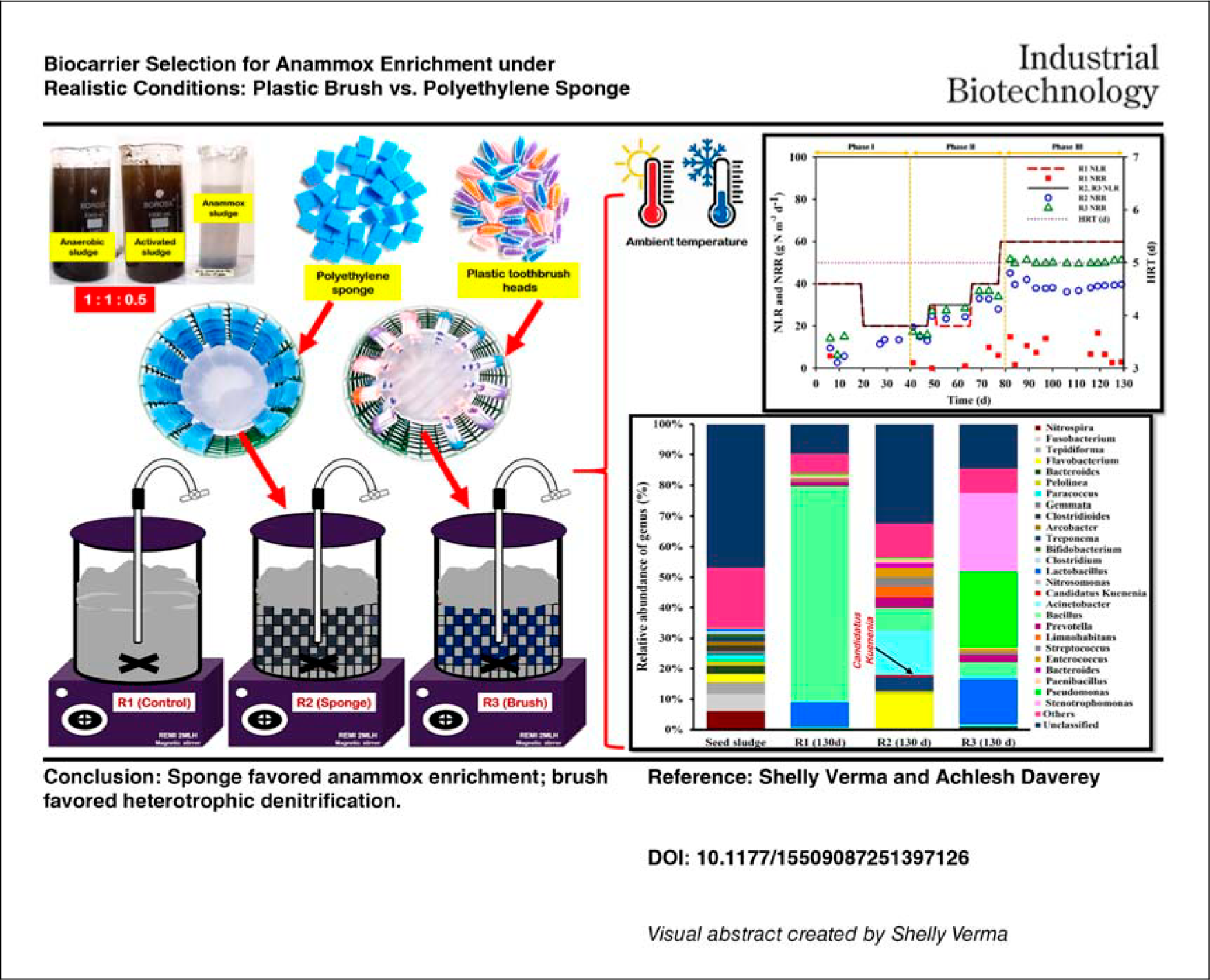
This study evaluated the performance of two distinct biocarriers—plastic brush (bristle-containing toothbrush heads) and polyethylene sponge—for enriching anaerobic ammonium oxidation (anammox) bacteria under realistic (nonsteady state) conditions. Over a 130-day period, three sequencing batch reactors (R1–R3) were operated with a mixed seed inoculum (anaerobic, activated, and anammox sludge; 1:1:0.5). R1 served as the control (no carrier), while R2 and R3 used sponge and brush carriers, respectively. All reactors were operated at ambient temperatures, without dissolved oxygen (DO) control, under varying nitrogen loading rates (NLRs) (20–60 g N m−3 d−1). Performance evaluation across operational phases revealed a statistically significant difference during Phase III (p < 0.05): R1 showed the lowest total nitrogen removal efficiency (∼12%), R2 moderate (∼65%), and R3 the highest (∼83%), despite declining ambient temperatures. However, 16S rRNA gene sequencing revealed contrasting microbial communities. R1 was dominated by Bacillus (70.29%) and Lactobacillus (7.92%), suggesting poor anammox enrichment. R2 fostered a more diverse community, including Acinetobacter (14.77%), Flavobacterium (11.72%), and a threefold increase in Candidatus Kuenenia (0.18–0.54%), confirming successful anammox enrichment. R3 was dominated by denitrifiers such as Stenotrophomonas (25.48%) and Pseudomonas (24.9%), implying total nitrogen removal was primarily via heterotrophic denitrification. Overall, polyethylene sponge proved more suitable for anammox enrichment, while brush-type carriers supported heterotrophic denitrification. Notably, this study demonstrates the first use of plastic toothbrush heads as biocarriers under realistic conditions, offering a novel comparison with conventional sponge carriers for nitrogen removal.
Introduction
Anaerobic ammonium oxidation (anammox) is a pioneering green technology that excels as an energy-autonomous alternative to conventional biological nitrogen removal (BNR), redefining the approach to nitrogen pollution. It offers a cost-effective and highly efficient solution for treating ammonium-laden wastewater.1,2 To date, the anammox process has been pervasively implemented for treating nitrogen-rich industrial and municipal wastewaters under both mainstream and side-stream conditions.
3
This unique biochemical process oxidizes ammonium (NH4+) to dinitrogen (N2) gas under anaerobic conditions, using nitrite (NO2−) as the electron acceptor and inorganic carbon (e.g., CO2) as the carbon source (Eq. 1). It offers up to 90% cost savings, efficient nitrogen removal without the need for oxygen, no requirement for external carbon (as anammox bacteria are autotrophic), 80–90% less sludge generation, and a minimal environmental footprint—positioning it as a forward-looking and sustainable alternative for next-generation nitrogen management in wastewater treatment.4,5

Despite its impressive potential, the anammox process still faces several issues that limit its broader industrial application. One major limitation is the lengthy start-up time required.3,6 For instance, the world’s first full-scale anammox reactor—established in Rotterdam, Netherlands, to treat anaerobic sludge digestion reject water—took nearly 3.5 years to become fully operational. 7 The delay is mainly due to the exceptionally slow growth rate of anammox bacteria (0.33 days−1 at 30°C and 0.0011 days−1 at 20°C) 8 and their low cell yield (0.11 g VSS g−1 NH4+-N). 9 In addition, the process is highly sensitive to environmental fluctuations, particularly temperature. Anammox activity is easily inhibited at lower temperatures, with the optimal range for anammox species being 30–37°C.10,11 This presents a significant challenge for municipal wastewater treatment plants, where the average temperatures hover around 15°C.12,13 Moreover, the limited availability of anammox biomass, coupled with challenges in retaining it due to biomass washout in treatment reactors, further hinders effective implementation. 14
Over the past few decades, biomass immobilization with carrier addition has emerged as a widely adopted strategy to speed up the start-up of anammox and enhance the retention of slow-growing anammox bacteria.15,16 Introducing suitable carriers into the system provides ample surface area for the adhesion of anammox bacteria, promoting biofilm formation and increased sludge retention time. 17 These carrier-based biofilms serve as “protective clothing” for vulnerable anammox microbes, shielding them from environmental stressors such as variable temperatures and DO levels. This enhances system recovery, increases resistance to shock loading, and ensures performance stability.13,16,18 Another key benefit of microbial immobilization is that the immobilized microorganisms can be reused multiple times without flotation or loss of biomass activity. 19 Effective biomass retention within the reactor supports successful cultivation and industrial applications of anammox bacteria.1,17
An ideal biocarrier should exhibit high performance while being low cost, user-friendly, easily accessible, insoluble, non-decomposable, environmentally stable, and nontoxic. 20 So far, a variety of natural and synthetic carriers have been employed to create favorable anaerobic microenvironments, enhance biomass retention, and improve microbial attachment for effective anammox enrichment. For example, zeolite, 21 bamboo biochar, 22 granular activated carbon, 23 montmorillonite clay, 24 nonwoven biofilm, 25 polyurethane sponge, 14 polyvinyl alcohol hydrogel carrier, 26 modified honeycomb carrier, 2 and polyurethane foam impregnated with activated carbon. 27 Nevertheless, comprehensive information on the use of waste materials—particularly plastic toothbrush heads—as biocarriers for enriching anammox bacteria remains limited. In earlier work, Daverey et al. explored the use of waste activated sludge-based biocarriers for this purpose. 28 More recently, dishwashing scrubbers have been identified as effective biocarriers for initiating the anammox process under realistic conditions. 18 Furthermore, the influence of temperature on the anammox process and associated microbial communities under practical conditions remains insufficiently understood, with only limited comprehensive investigations to date.
In light of the above, this study investigates the feasibility of using plastic toothbrush heads (bristle-containing parts), a novel and previously unreported waste-derived material, as biocarriers for anammox bacterial enrichment under ambient, non-temperature-controlled conditions. It further compares the performance of these plastic brush carriers with that of conventional polyethylene sponge biocarriers in initiating the anammox process under realistic operational settings. In addition, the study examines the impact of temperature fluctuations on microbial community composition across three sequencing batch reactors (SBRs), including a carrier-free control.
Materials and Methods
SEEDING SLUDGE
All three SBRs (R1–R3) were seeded with a mixed seed inoculum (120 mL each) comprising anaerobic sludge, activated sludge, and anammox sludge in a 1:1:0.5 volumetric ratio (48 mL, 48 mL and 24 mL, respectively). The anaerobic sludge, which appeared blackish-brown, was sourced from a UASB reactor at Bharwara sewage treatment plant (STP) in Lucknow, Uttar Pradesh, India (N 26°50′05.5″, E 81°02′13.5). The activated sludge, characterized by its light brown color, was collected from a 20 MLD STP in Dehradun, Uttarakhand, India (N 30°15′43.7″, E 78°02′34.8″). The anammox sludge, dark brown in color, was retrieved from a pre-enriched lab-scale anammox SBR (4.0 L), set-up in Environmental & Bioprocess Technology (EBT) Laboratory of Doon University, Dehradun, India. 27 The anammox SBR, maintained at 37° C with influent NH4+- N and NO2−-N concentrations of 300 mg L−1 and 396 mg L−1, respectively, exhibited an overall NRE of approximately 86% for over 1.5 years. Prior to inoculation, the collected sludge samples were carefully rinsed with phosphate buffer (pH 7.0) and characterized for total solids (TS), total suspended solids (TSS), and volatile suspended solids (VSS). The TS content was 168,000 mg L−1 for anaerobic sludge, 82,000 mg L−1 for activated sludge, and 11, 100 mg L−1 for anammox sludge. Corresponding TSS/VSS concentrations were 110,000/69,000 mg L−1, 52,000/36,500 mg L−1, and 8,100/6,500 mg L−1, respectively.
MINERAL MEDIA
The synthetic wastewater, serving as the mineral media, was prepared with the following components (in mg L−1): CaCl2.2H2O (300), KH2PO4 (25), KHCO3 (1250), MgSO4.7H2O (200), N2H6SO4 (14.5), EDTA (6.25), FeSO4 (6.25), and trace elements (1.25 mL). The trace elements solution comprises (in g L−1): ZnSO4.7H2O (0.43), H3BO4 (0.014), EDTA (15), CuSO4.5H2O (0.25), CoCl2.6H2O (0.24), NaMoO4.2H2O (0.22), and NiCl2.2H2O (0.19). In addition, the synthetic wastewater contained varying concentrations of NH4+-N (100–150 mg L−1) and NO2−-N (50–150 mg L−1), with ammonium sulfate and sodium nitrite serving as their respective sources.
IMMOBILIZATION CARRIERS FOR MICROBIAL ATTACHMENT
Two distinct materials—plastic toothbrush heads (bristle-containing parts) and polyethylene sponge—were used as “model waste biocarriers” to assess their impact on anammox bacterial enrichment. The waste toothbrush carriers were created using the bristle-containing head parts of plastic toothbrushes, with dimensions of 2.5 × 2 × 1.2 cm. The toothbrush head, typically made of nylon or other synthetic materials, can serve as a potential environment for bacterial growth. The bristles provide additional surface area that facilitates biomass attachment and immobilization. Polyethylene sponge carriers were crafted from surplus open-cell polyethylene foam cutouts obtained from a local mattress store. This thermoplastic polymer features an interconnected pore network, along with strong chemical resistance and excellent biocompatibility, making it a promising matrix for biomass immobilization. In summary, plastic toothbrush heads (bristle-containing parts) were used as-is, while polyethylene foam (10 mm thick) was initially cut into 2 × 2 × 2 cm pieces. These prepared materials were referred to as “model waste biocarriers” and were securely tied to a plastic mesh, which was placed along the walls of their respective reactors during the study. In total, 44 distinct “model waste biocarriers,” occupying approximately 25% of the reactor volume (including the plastic mesh), were added to each reactor (R2 and R3) to facilitate microbial attachment and growth.
REACTOR DETAILS AND OPERATIONAL STRATEGY
For the enrichment study, three laboratory-scale bioreactor units, designated as R1, R2, and R3, were custom-fabricated and configured to operate in SBR mode. Each reactor comprised a 2.0 L Borosil glass beaker (13 cm diameter × 18.5 cm height) with an effective working volume of 1.7 L. The reactors were mounted on REMI 2MLH magnetic stirrers to ensure homogeneous mixing at a constant speed of 150 rpm. Specifically, SBR R1 served as the control (no biocarrier), while SBR R2 and R3 were fitted with polyethylene sponges (2 × 2 × 2 cm) and plastic toothbrush heads (bristle-containing parts), respectively—used as model waste biocarriers for anammox enrichment. A thin plastic mesh (1 mm thickness) was positioned along the inner wall of each reactor to support biocarrier immobilization. The biocarriers were uniformly spaced and securely fastened to the mesh using nylon threads. This mesh was then carefully inserted into the reactor in a cylindrical configuration, forming a stable scaffold structure along the reactor wall to promote biomass attachment and retention (Fig. 1). Each reactor was equipped with a single polyvinyl chloride tube (10 mm internal diameter), functioning as both the influent and effluent conduit. Effluent was withdrawn via syringe-assisted suction into an external collection vessel, while freshly prepared mineral medium was introduced using a peristaltic pump at controlled flow rates. This configuration enabled efficient biomass retention, consistent nutrient delivery, and stable operation under SBR conditions. To prevent light-induced inhibition and suppress the growth of phototrophic microorganisms—which could generate oxygen and interfere with the strictly anaerobic anammox process—the reactors were rendered opaque by covering them with black vinyl sheets.
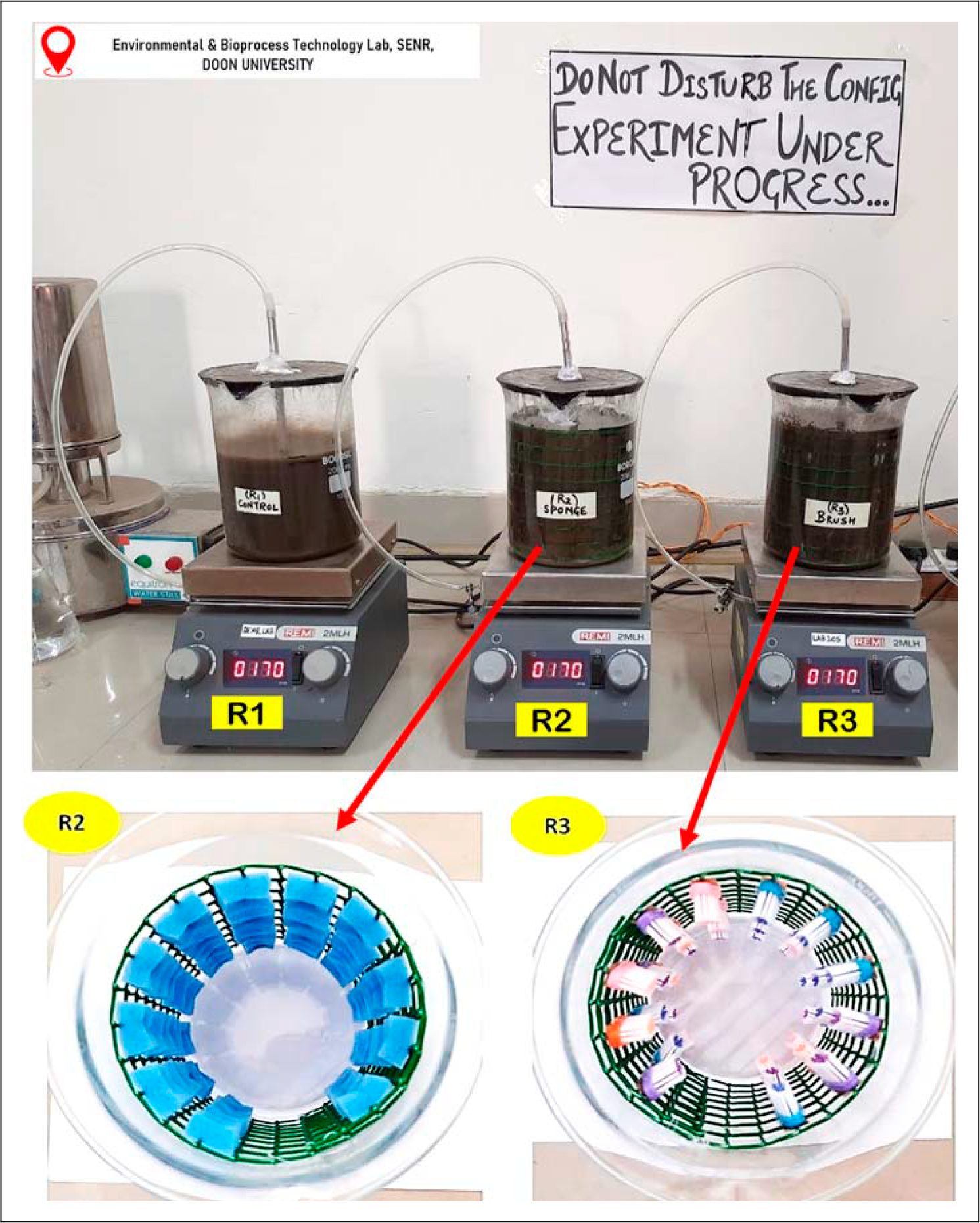
Schematic diagram of SBRs (R1–R3) setup for the enrichment of anammox bacteria under realistic conditions. SBR, sequencing batch reactor.
On Day 1, the SBR units (R1–R3) were inoculated with 0.12 L of a mixed sludge inoculum comprising anaerobic, activated, and anammox sludge in a volumetric ratio of 1:1:0.5, followed by the addition of 1.58 L of synthetic wastewater to achieve the desired working volume. The initial concentrations of NH4+-N and NO2−-N in the synthetic wastewater were 100 mg L−1 each. The enrichment process was initiated under standard SBR operation, following a 24-hour cycle comprising 0.25 hours of feeding, 23.25 hours of reaction, 0.5 hours of settling, and 0.25 hours of decantation. Daily, 340 mL of treated effluent was withdrawn via the sampling port and replaced with an equal volume of freshly prepared synthetic wastewater (pH 8), corresponding to a hydraulic retention time (HRT) of 5 days. Environmental conditions were allowed to vary with ambient fluctuations, as temperature was not externally regulated during the experiment (Table 1), and no pH control was applied. To mitigate oxygen intrusion during highly unstable operational phases, deoxygenation was selectively performed by sparging a gas mixture of argon and carbon dioxide (95% Ar, 5% CO2) immediately after the reintroduction of wastewater. This procedure was conducted occasionally, solely as a precaution to prevent anammox inhibition.
Operating Parameters of the SBRs (R1, R2, and R3)
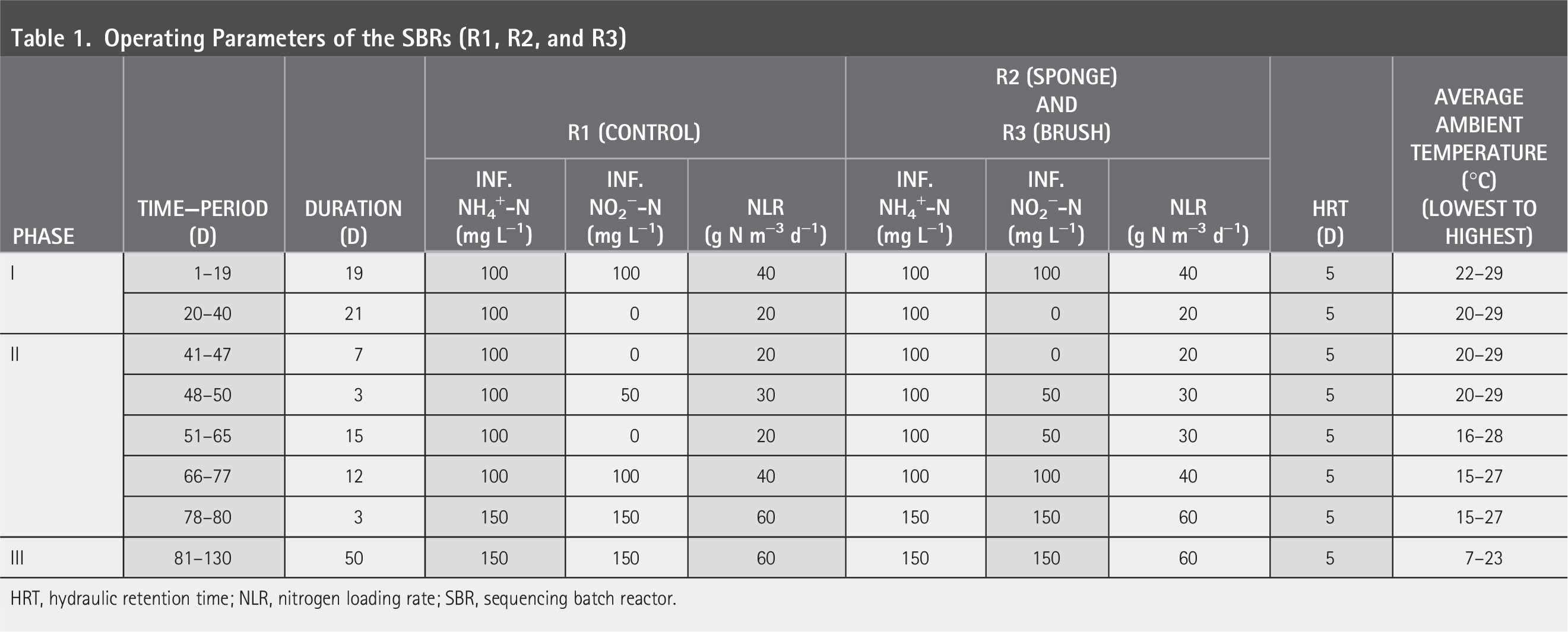
HRT, hydraulic retention time; NLR, nitrogen loading rate; SBR, sequencing batch reactor.
Analytical Methods
PHYSICOCHEMICAL ANALYSIS OF WASTEWATER
To assess the nitrogen removal performance of the reactors (R1–R3), wastewater samples were routinely collected three to four times per week and analyzed for various reactive nitrogen species. Prior to analysis, samples were pretreated by filtration through 0.2 μm disposable nylon syringe filters (Cat. No. 1046 3432, Whatman, UK), diluted with Millipore water as required, and analyzed spectrophotometrically following Standard Methods. 29 Specifically, ammonium (NH4+-N) was quantified using the Phenate method [4,500-NH3(F)], nitrite (NO2−-N) via the Colorimetric method [4,500-NO2−(B)], and nitrate (NO2−-N) using the UV spectrophotometric screening method [4,500-NO3−(B)]. In addition, pH was routinely monitored using a digital pH meter (Eutech pH 700, Thermo Fisher Scientific, USA), and water temperature was recorded manually using a mercury thermometer (range: 0–110°C; Labworld, India). Solids characterization of the inoculum sludge—including TS, TSS, and VSS—was performed in accordance with APHA (2005) protocols.
MICROBIAL ANALYSIS
To confirm the enrichment of anammox bacteria and evaluate shifts in microbial community structure within the reactors, mixed liquor suspended solids (MLSS) samples were collected at the start (day 1) and end (day 130) of the experiment. The samples were subsequently sent to Biokart India Pvt. Ltd., Bangalore, for 16S rRNA gene sequencing analysis. A brief outline of the methodology adopted by Biokart India Pvt. Ltd. is as follows: Genomic DNA was extracted from the MLSS samples using the DNeasy PowerSoil Kit (Qiagen) following the manufacturer’s protocol. DNA quality and concentration were assessed using the Qubit dsDNA HS Assay Kit (Thermo Fisher Scientific) and 1% agarose gel electrophoresis in 1× TAE buffer. The 16S rRNA gene amplicon libraries were prepared using the Nextera XT Index Kit following the 16S Metagenomic Sequencing Library Preparation protocol. The bacterial 16S V3 to V4 region was amplified using primers 16sF (5′-AGAGTTTGATGMTGGCTCAG-3′) and 16sR (5′-TTACCGCGGCMGCSGGCAC-3′). The purified libraries were quantified and sequenced on the Illumina MiSeq platform (2 × 300 bp, v3 kit). For bioinformatics analysis, raw reads were first quality-checked using FASTQC and MULTIQC, followed by adapter and low-quality read trimming using TRIMGALORE. The processed reads were analyzed through the QIIME workflow, including paired-end read merging, chimera removal, OTU abundance estimation, and taxonomic classification.
STATISTICAL ANALYSIS
Descriptive statistics (mean ± SD) were calculated in Microsoft Excel. One-way ANOVA followed by Tukey’s post hoc test was used to compare reactor performance across phases, with significance at p < 0.05. For unequal variances [e.g., Phase II total nitrogen removal efficiency (TNRE)], the Games–Howell test was applied. Analyses were performed using SPSS (Version 16.0), and graphs were prepared in SigmaPlot (Version 10.0).
Results and Discussion
NITROGEN REMOVAL PERFORMANCE OF THE SBRS (R1–R3)
To select an appropriate biocarrier for anammox enrichment, the nitrogen removal performance [NH4+-N, NO2−-N, and TN (total nitrogen)] of the SBRs (R1–R3) was evaluated for a period of 130 days. The reactors were operated under realistic conditions, without any temperature or DO control, and were exposed to fluctuating ambient temperatures. Based on the observed nitrogen removal trends, the study period was divided into three phases: Phase I (days 1–40), Phase II (days 41–80), and Phase III (days 81–130). The nitrogen removal trends and corresponding removal efficiencies (total nitrogen removal efficiency, TNRE; ammonium nitrogen removal efficiency, NH4+-NRE; and nitrite nitrogen removal efficiency, NO2−-NRE) for SBRs R1 (Control), R2 (Sponge), and R3 (Brush) are presented in Figure 2(a)–(c), respectively.
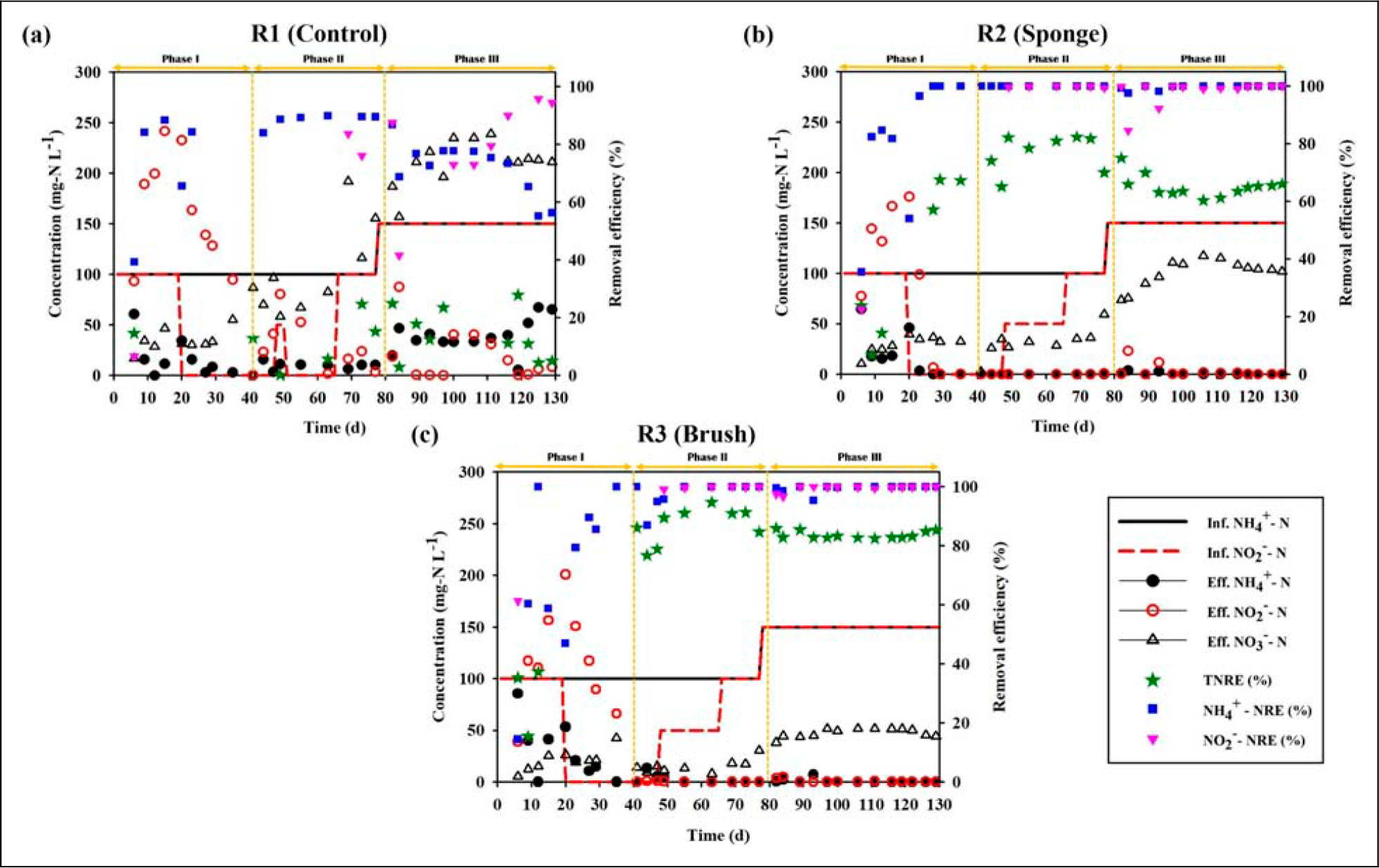
Nitrogen removal trends along with nitrogen removal efficiencies (TNRE, NH4+-NRE, and NO2−-NRE) of SBRs:
Phase I: days 1–40
This phase was marked by highly unstable reactor performance, exhibiting considerable fluctuations in nitrogen removal efficiency. No significant nitrogen removal was observed in any of the three SBRs during this period (Table 2). These findings closely resemble patterns reported in previous anammox enrichment studies.18,27 At the start of the operation, all reactors were set with an NLR of 40 g N m−3 d−1 and an HRT of 5 days (Fig. 3). Ambient temperature ranged between 22°C and 29°C (Table 1). An argon purge was applied initially to establish anoxic conditions. The initial substrate concentrations—ammonium (NH4+-N) and nitrite (NO2−-N)—were supplied in a 1:1 ratio (100 mg L−1 each) across all SBRs. As shown in Figure 2, during the initial days (days 1–5), the reactors exhibited negligible nitrogen removal, with most of the nitrogen species remaining unutilized in the systems: R1 (NH4+-N = 60.72 mg L−1, NO2−-N = 93.34 mg L−1), R2 (NH4+-N = 64.49 mg L−1, NO2−-N = 77.5 mg L−1), and R3 (NH4+-N = 85.57 mg L−1, NO2−-N = 38.76 mg L−1). This behavior is attributed to the acclimatization phase of the inoculated sludge, which contained non-adapted bacterial consortia. During this adaptation period, microbial cell lysis likely occurred, releasing ammonium into the system. 30 The release of organic carbon (from lysed biomass) and excess ammonium, combined with the initially maintained anaerobic conditions, created a favorable environment for heterotrophic denitrifiers.31,32 Consequently, endogenous denitrification became the predominant process during the early phase. This observation aligns with earlier studies.18,33,34 However, in the present case, the extent of endogenous denitrification appeared limited, as effluent ammonium concentrations remained close to, but did not exceed, the influent levels in all reactors.
Comparative Analysis of Total Nitrogen Removal Efficiencies (%) and Nitrogen Removal Rates (g N m−3 d−1) in SBRs (R1–R3) Across Different Operational Phases
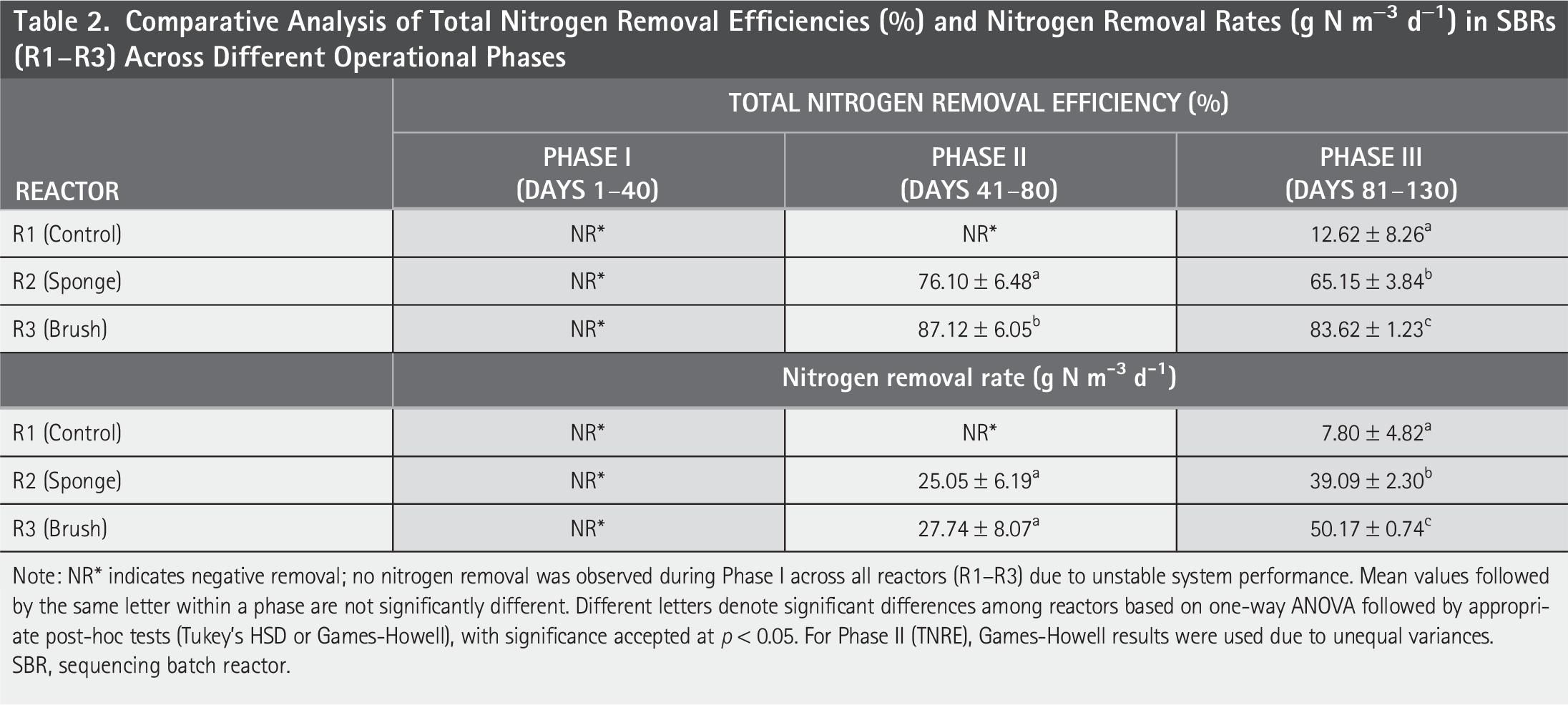
Note: NR* indicates negative removal; no nitrogen removal was observed during Phase I across all reactors (R1–R3) due to unstable system performance. Mean values followed by the same letter within a phase are not significantly different. Different letters denote significant differences among reactors based on one-way ANOVA followed by appropriate post-hoc tests (Tukey’s HSD or Games-Howell), with significance accepted at p < 0.05. For Phase II (TNRE), Games-Howell results were used due to unequal variances.
SBR, sequencing batch reactor.
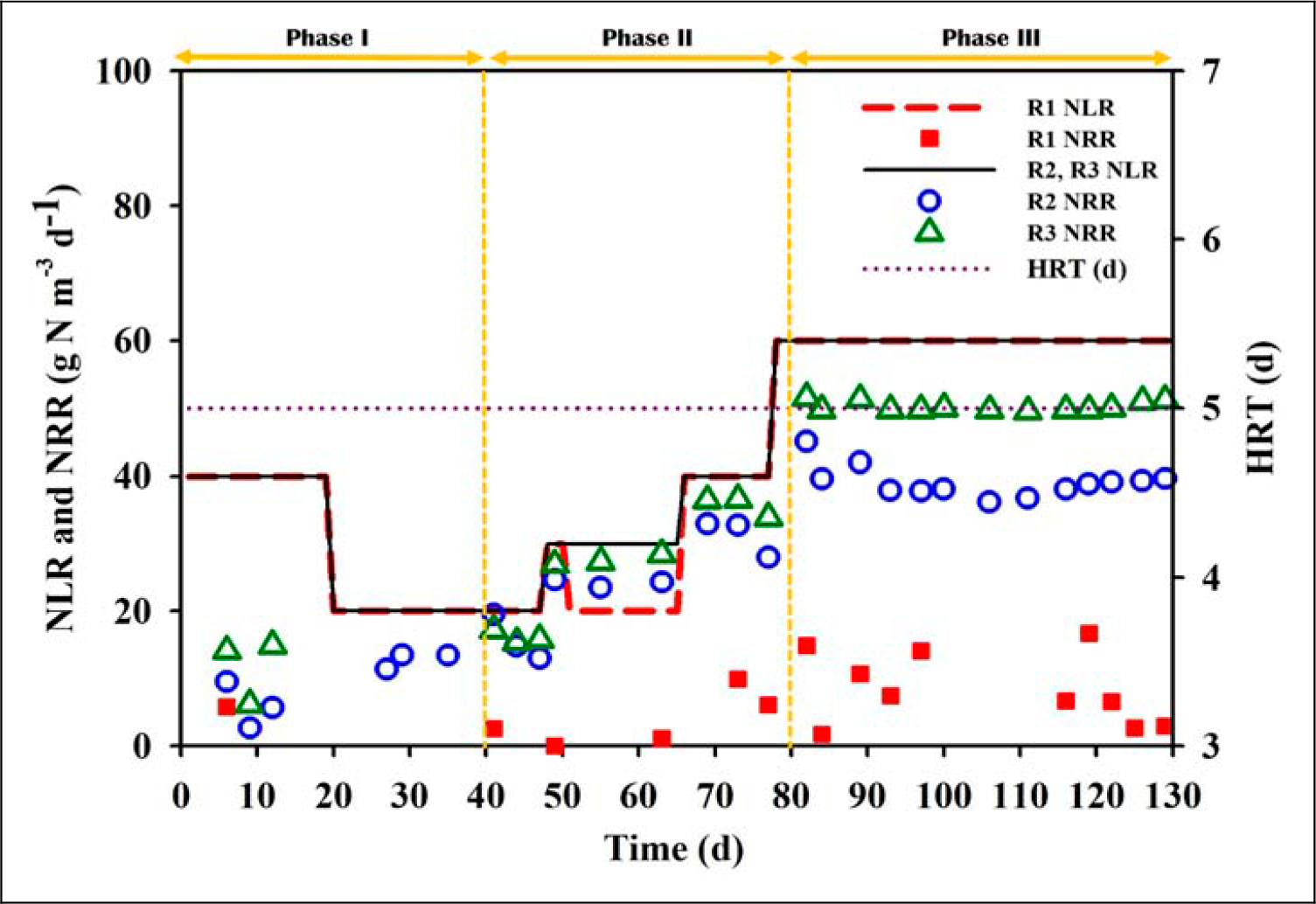
Temporal variations in the nitrogen loading rates (NLR) and nitrogen removal rates (NRR) of the SBRs (R1–R3) setup for enrichment of anammox bacteria.
After approximately one week, a noticeable conversion of ammonium to nitrite was observed, resulting in a sharp increase in NO2−-N concentrations. Between days 6 and 15, nitrite levels rose from 93.34 mg L−1 to 247.79 mg L−1 in R1, from 77.5 mg L−1 to 166.63 mg L−1 in R2, and from 38.76 mg L−1 to 156.32 mg L−1 in R3. This accumulation may be attributed to the presence of DO, as the reactors operated without DO control. The prevailing DO conditions likely inhibited denitrification while promoting the activity of ammonia-oxidizing bacteria (AOBs). At DO levels of 0.5–0.6 mg O2 L−1, AOBs can outcompete nitrite-oxidizing bacteria (NOBs) due to their higher oxygen affinity. 35 Correspondingly, nitrate concentrations remained relatively low by day 15–46.51 mg L−1, 28.05 mg L−1, and 25.15 mg L−1 in R1, R2, and R3, respectively—indicating limited nitrite oxidation. Given the risk of nitrite accumulation reaching toxic levels and potentially inhibiting anammox activity, a nitrite omission strategy was implemented. The efficacy of this strategy has been validated in prior research. 27 Nitrite concentrations exceeding 100 mg L−1 are known to be detrimental to anammox bacteria.27,36,37 Therefore, to prevent further accumulation and protect anammox activity, nitrite was excluded from the influent between days 20 and 40 in all SBRs (Fig. 2).
Phase II: days 41–80
Following the decline of NO2−-N concentrations in the SBRs—reaching 23.34 mg L−1 in R1 and approaching near-zero levels in R2 (0.06 mg L−1) and R3 (0.91 mg L−1) by day 44—each reactor was supplemented with 50 mg L−1 of nitrite starting from day 48. Reactor R1 (Control), however, responded negatively to this supplementation, as indicated by a noticeable accumulation of NO2−-N. Consequently, nitrite was excluded from R1’s influent between days 51 and 65. Despite this corrective measure, R1 exhibited deteriorating performance with negative nitrogen removal efficiencies (Fig. 2a), likely attributable to the elevated activity of NOBs. This hypothesis was substantiated when nitrite supplementation was resumed at 100 mg L−1 between days 66 and 77, leading to a twofold increase in nitrate levels—from approximately 78 mg L−1 to 156 mg L−1. Importantly, no stringent control of DO was implemented during reactor operation, resulting in persistent DO levels ranging from 0.1 to 0.5 mg L−1. Such conditions likely favored NOB proliferation, promoting nitrate accumulation that persisted within the system—a phenomenon consistent with previous reports. 38
In contrast, reactors R2 and R3 were operated with influent NH4+-N and NO2−-N concentrations maintained at 100 mg L−1 and 50 mg L−1, respectively (1:0.5 ratio), during days 48–65. During this phase, the average TNRE reached approximately 80% in R2 and 92% in R3. In response to this favorable performance, the influent concentrations were gradually elevated to 100 mg L−1 each for NH4+-N and NO2−-N during days 66–77 and further to 150 mg L−1 each during days 78–80 in both reactors. This adjustment corresponded with a rise in NO3−-N concentrations—from ∼35 mg L−1 to 70 mg L−1 in R2, and from 18 mg L−1 to 37 mg L−1 in R3—between days 69 and 80. By day 80, NH4+-N removal efficiencies in both R2 and R3 had reached approximately 99% (Fig. 2b and c). In addition, the observed stoichiometric ratios of NH4+-N consumption to NO2−-N consumption to NO3−-N production were approximately 1:1:0.47 in R2 and 1:1:0.32 in R3 (Fig. 4). These results suggest potential involvement of anammox activity in both reactors; 39 however, conclusive evidence confirming substantial anammox contribution was not established during this phase.
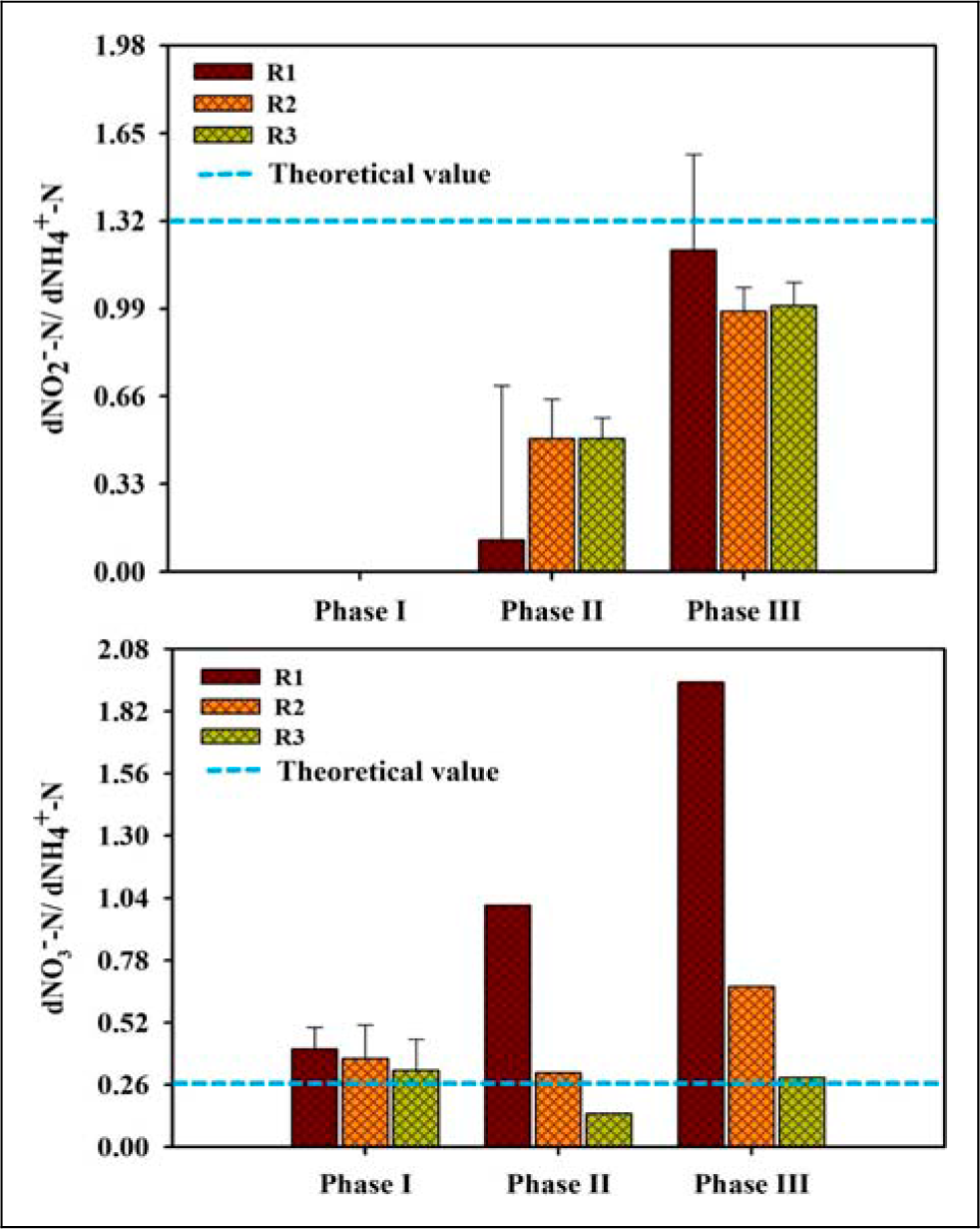
Nitrogen stoichiometric ratio of the SBRs (R1–R3) across different operational phases setup for enrichment of anammox bacteria.
Phase III: days 81–130
During this phase, all reactors (R1, R2, and R3) were operated under identical conditions, with a constant influent total nitrogen (TN) concentration of 300 mg L−1 (comprising 150 mg L−1 NH4+-N and 150 mg L−1 NO2−-N), an NLR of 60 g N m−3 d−1, and an HRT of 5 days (Figs. 2 and 3). The ambient temperature during this period ranged from 7°C to 22°C (Table 1). Notably, a progressive decline in TNRE was observed in R1 and R2, which can be primarily attributed to the gradual decrease in temperature. In R1, TNRE declined markedly from approximately 25% on day 82 to just 7% by day 129. Similarly, R2 exhibited a reduction in nitrogen removal from 75% to 66% over the same period. Comparable temperature-related declines in performance have been reported in the literature. For instance, Banach-Wiśniewska et al. (2021) 19 observed a ∼30% drop in nitrogen removal efficiency in an anammox SBR when the ambient temperature fell to 15°C. Such performance losses are consistent with the known temperature sensitivity of anammox bacteria, whose proliferation is significantly hampered at low temperatures; at 10°C, their reported doubling time ranges from 63 to 77 days.8,40
In contrast, reactor R3 (Brush) consistently maintained high TNRE despite declining temperatures, achieving 86% on day 82 and 85% on day 129 (Fig. 2c). The relatively low nitrate concentrations (∼44 mg L−1) suggest that nitrite oxidation was limited, likely due to effective denitrification. This stable performance is likely supported by the predominance of denitrifying bacteria in R3, which are known to remain metabolically active across a broad temperature range (15–35°C). 41 In addition, the sustained nitrogen removal may be attributed to a synergistic interaction between anammox and denitrification processes, although this required confirmation through microbial community analysis.
Overall, the comparative analysis of TN removal efficiencies (%) and nitrogen removal rates (g N m−3 d−1) across different operational phases revealed a statistically significant difference in SBR performance during Phase III (p < 0.05). Reactor R1 (Control) showed the poorest performance, likely due to the absence of protective properties conferred by biocarriers, which led to anammox biomass washout or inhibition under nonoptimal conditions such as temperature fluctuations and oxygen intrusion. Reactor R2 exhibited moderate efficiency, whereas R3 consistently outperformed the others (Table 2). The superior TN removal efficiency observed in R3 compared with R2 can be attributed to the fibrous, nonporous structure of the brush carriers, which likely promoted the preferential colonization of anaerobic nitrogen-removing species that remain metabolically active even in lower temperatures, such as denitrifying bacteria, by providing protected microenvironments under realistic, non-steady state conditions. In contrast, the microporous polyethylene sponge carriers (R2) appeared to favor the proliferation of slower-growing, temperature-sensitive nitrogen-removing microorganisms such as anammox bacteria, resulting in comparatively moderate nitrogen removal efficiency. However, the specific microbial mechanisms underlying these variations remain to be confirmed through detailed microbial community profiling. 42
MICROBIAL COMMUNITY DYNAMICS OF THE SBRS (R1–R3)
The microbial analysis of MLSS samples collected on day 1 and day 130 from SBRs R1, R2, and R3 robustly supports and validates the observed nitrogen removal patterns. The 16S rRNA gene sequencing revealed profound shifts in microbial community structure across all reactors (Fig. 5), highlighting a clear transition from the initial seed sludge to mature microbial consortia established by day 130. At the phylum level (Fig. 5a), the inoculum on day 1 was predominantly composed of Proteobacteria (29.4%), followed by Bacteriodetes (22.34%), Firmicutes (11.06%), Chloroflexi (8.22%), and Nitrospirae (6.06%). Crucially, Planctomycetes—the phylum harboring anammox bacteria 43 —constituted 4.83% of the initial community. This distribution aligns well with previous findings that identify Chloroflexi, Proteobacteria, Planctomycetes, and Bacteriodetes as key players in aerobic seed sludge and anammox consortia.27,44 Proteobacteria, a highly diverse gram-negative group, includes numerous nitrogen-cycling species such as AOBs, certain NOBs, and denitrifiers, all of which play key roles in pollutant degradation and nitrogen removal.34,45–47 Chloroflexi, known heterotrophs, contribute to degrading cellular debris and play vital roles in biofilm and granule formation.43,44 Bacteriodetes facilitate the breakdown of complex organics and establish filamentous networks critical for microbial aggregation. 47
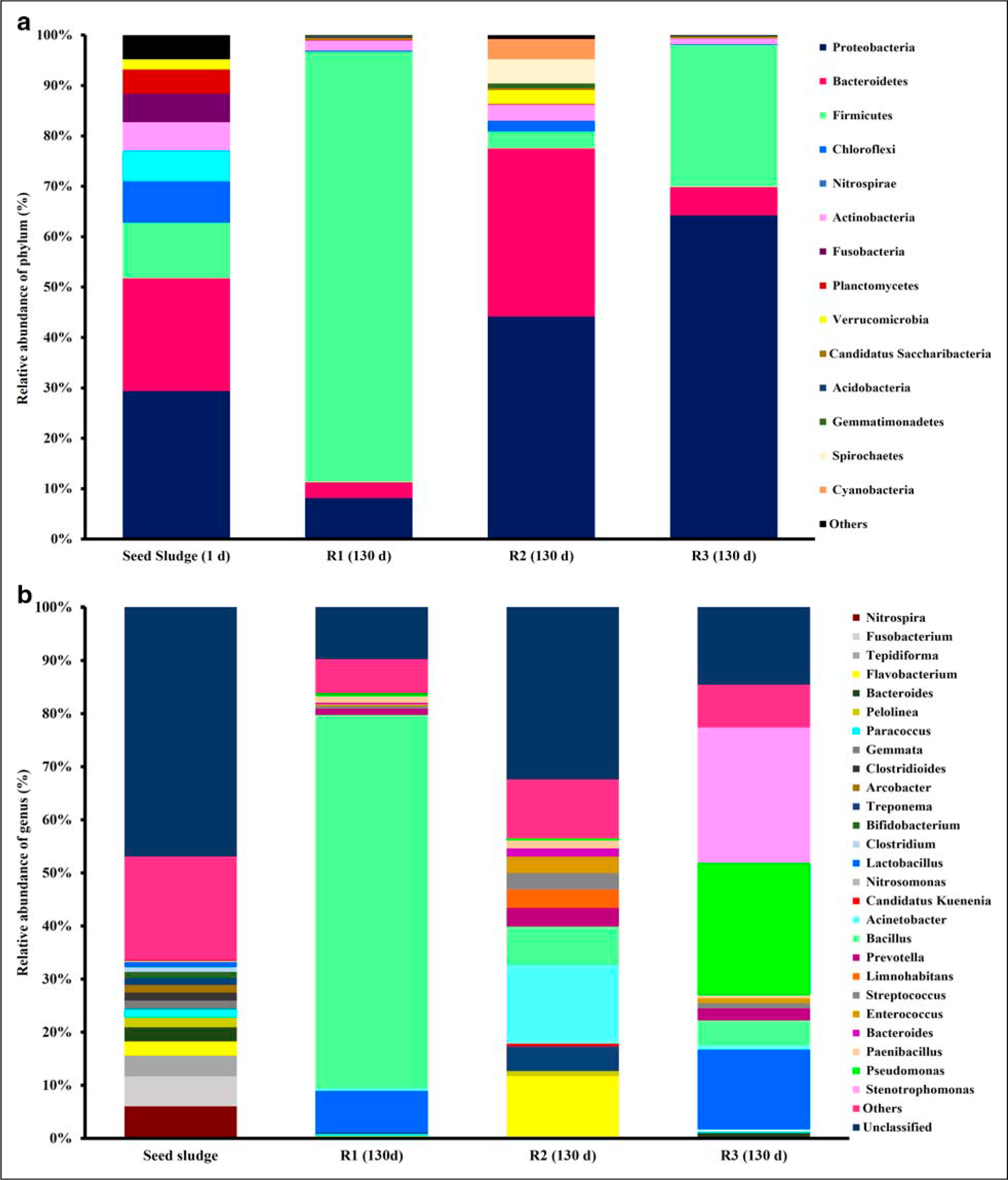
Relative abundance of the microbial population at the
After 130 days of operation under realistic, fluctuating environmental conditions, the reactors showed distinct differences in microbial community composition, closely correlating with their operational performance. In R1 (Control), Firmicutes surged dramatically to 85.4%, indicative of microaerobic conditions favoring cold-adapted fermentative acidogens. 48 This microbial shift is likely a response to the low ambient temperatures recorded during the experiment (7–22°C) and is consistent with the findings of Wang et al. (2022). 11 Conversely, R2 (Sponge) maintained Proteobacteria dominance (44.2%), supported by substantial Bacteriodetes abundance (33.29%), likely driven by relatively higher DO levels within this reactor. R3 (Brush) also exhibited strong Proteobacteria presence (64.26%) alongside Firmicutes (28.23%), yet Planctomycetes plummeted from 4.83% to a negligible 0.04%, underscoring how low temperatures hindered anammox bacterial proliferation, consistent with Le et al. (2022). 49 This decline potentially promoted protozoan growth, as reported previously. 18
At the genus level (Fig. 5b), the microbial communities further emphasize these trends. On day 1, the inoculum was dominated by Nitrospira (6.05%), Fusobacterium (5.62%), Tepidiforma (3.90%), and Flavobacterium (2.71%), along with smaller populations of Lactobacillus (0.87%), Nitrosomonas (0.32%), and the anammox genus Candidatus Kuenenia (0.18%). By day 130, R1 (Control) was overwhelmingly dominated by Bacillus (70.29%), followed by Lactobacillus (7.92%), Paenibacillus (1.25%), Prevotella (1.21%), and Pseudomonas (0.5%), genera known for denitrification activity at low temperatures.41,48 In striking contrast, R2 (Sponge) fostered a diverse community dominated by Acinetobacter (14.77%)—recognized for robust nitrogen removal under anaerobic and inorganic conditions 50 —alongside Flavobacterium (11.72%), Bacillus (7.26%), Arachidicoccus (7.26%), Treponema (4.65%), and Chryseobacterium (3.53%). Importantly, Candidatus Kuenenia increased nearly threefold from 0.18% to 0.54%, unequivocally demonstrating successful anammox enrichment within the sponge-supported SBR system. In R3 (Brush), however, the community was dominated by denitrifying genera such as Stenotrophomonas (25.48%), Pseudomonas (24.9%), Lactobacillus (15%), Bacillus (4.69%), and Prevotella (2.27%). Despite achieving statistically significant nitrogen removal (p < 0.05), the microbial composition suggests that removal in R3 was primarily driven by heterotrophic denitrification rather than anammox activity. This implies that the fibrous, non-porous structure of brush carriers preferentially facilitates the colonization of denitrifiers by creating protected anaerobic microenvironments for attachment and immobilization under ambient operational conditions but fails to retain anammox biomass effectively.
In short, these findings underscore the superiority of the sponge biocarrier in fostering a resilient, anammox-favorable microbial consortium, reaffirming its strategic potential for sustained nitrogen removal under fluctuating, real-world conditions. Moreover, previous studies have demonstrated that microporous carriers such as sponges tend to support more diverse and stable microbial communities, even under variable environmental conditions—a trend mirrored in the present study. The presence of larger anoxic zones within such carriers facilitates the selective enrichment of anammox bacteria, while their interconnected pore structure enables simultaneous nitrogen polishing through the synergistic action of anammox and denitrification processes. 42 Overall, the outcomes of this investigation are consistent with the existing scientific literature, further reinforcing the value of sponge carriers in enhancing BNR.
Perspectives and Further Research
The start-up of the anammox process is inherently fragile, requiring timely interventions to support microbial growth and prevent biomass loss. 51 Although biocarrier-based microbial immobilization has emerged as a promising strategy to mitigate start-up challenges, the search for efficient, cost-effective, and sustainable carriers remains ongoing. This study reinforces the importance of biocarrier selection in shaping microbial communities and optimizing nitrogen removal; however, several key areas warrant further investigation. Future research should explore the performance of polyethylene sponge-based systems across diverse wastewater matrices, including municipal and industrial effluents, to validate their broader applicability. In parallel, evaluating the long-term stability, economic viability, and operational demands of these carriers in full-scale settings is essential. Hybrid approaches that integrate anammox with complementary pathways—such as denitrification—offer another promising direction. For instance, the current study found brush-type carriers to be more conducive for denitrification. This insight could inform the development of integrated PD/A (partial denitrification/anammox) systems, where brush carriers support heterotrophic denitrifiers while sponges sustain autotrophic anammox bacteria. Such systems not only enable simultaneous removal of ammonium and nitrate but also help consume the nitrate produced during the anammox reaction, potentially enhancing the total nitrogen removal efficiency beyond the theoretical limit of 89%. 52 These advancements can pave the way for more resilient, adaptable, and sustainable nitrogen removal technologies in response to increasingly stringent environmental regulations.
Conclusion
This study highlights the pivotal influence of biocarrier selection on nitrogen removal efficiency and microbial community development under realistic operational conditions. Among the tested configurations, the polyethylene sponge biocarrier (R2, ∼65% TNRE) proved most effective, achieving nearly a threefold enrichment of the anammox genus Candidatus Kuenenia, increasing its relative abundance from 0.18% to 0.54%. Its ability to foster stable anammox activity even under fluctuating ambient temperatures and in the absence of DO control, underscores the value of sponge-based biomass immobilization as a robust strategy for mainstream nitrogen removal. In contrast, the absence of a carrier in R1 (Control) led to reduced microbial resilience and diminished system performance (∼12% TNRE), reinforcing the necessity of structural support to maintain functional microbial populations. Notably, while brush carriers (R3, ∼83% TNRE) demonstrated statistically significant nitrogen removal (p < 0.05), microbial analysis revealed that this was predominantly driven by denitrifying bacteria, indicating that brush carriers are better suited for promoting denitrification rather than anammox enrichment. Furthermore, this study demonstrates, for the first time, the use of plastic toothbrush heads as biocarriers under realistic conditions, providing a novel comparison with conventional sponge carriers for nitrogen removal. Collectively, these findings advocate for a targeted approach in carrier selection—one that aligns with desired microbial pathways—to optimize the performance, stability, and specificity of BNR processes in real-world wastewater treatment systems.
Authors’ Contributions
S.V.: Experimentation and investigation, data curation, formal analysis, illustrations, writing—original draft preparation, and review and editing. A.D.: Conceptualization, supervision, writing—original draft preparation, and review and editing.
Footnotes
Funding Information
This work was supported by the DST INSPIRE Fellowship [No. IF180264], Government of India. S.V. sincerely acknowledges this financial support, which was critical in enabling the successful execution of this research.
Data Availability
Data will be made available on request.
Disclosure Statement
The authors did not report any potential conflicts of interest.