






Abstract
Textile production is a highly polluting industry, from raw materials production to generation of 92 million tons of waste annually. The processing of fibers, natural (cotton, silk, and linen) or synthetic (polyester and spandex), utilizes many environmentally harsh chemicals. Researchers are seeking methods to improve the sustainability of the industry. Enzymes can reduce the environmental footprint and comprise cellulases, laccase and peroxidase, amylases, proteases, and lipases. A precisely tailored enzyme composition can be introduced to meet textile treatment requirements. In addition, cellulases can be used to degrade fabrics for recycling so the raw materials can be reused rather than landfilled or incinerated. In this work, textile treatment compositions comprising an endoglucanase, a cellobiohydrolase, and laccase are described. The enzymes were engineered into corn kernels as a unique production system. The grain can be milled and used directly, or the enzyme can be extracted and concentrated. Results show that plant-based cellulases as a concentrate can prepare cottons for further processing by increasing the softness and smoothness of the fabric by removing surface pilling. Combinations of cellulases in corn flour can degrade cotton fabrics up to 93% and polyester/cotton blends up to 13% for recycling fiber. The corn-produced laccase with a mediator is effective in bleaching denim to produce variably faded jeans for the clothing market.
Introduction
The textile industry is one of the most polluting industries in the world. 1 “Fast fashion,” which refers to the readily available, inexpensively made fashion of today, has increased this pollution. 2 The concept of fast fashion has led to the treatment of clothing as “disposable.” Many researchers and companies are focused on finding ways to make the entire textile industry more sustainable.3–6 The most common sustainable application being tested is using enzymes in fabric treatment. Chuga-Chamorro et al. found that economic limitations were the main barrier to adopting sustainable practices in denim manufacture. 3 This difficulty is driven by high “investment costs in technology and infrastructure, as well as the limited availability of long-term financing, particularly affecting small- and medium-sized enterprises.” 3 Other processes with high probability of adoption include water recycling and material recycling.4,5
The processing of a fabric, such as cotton, into material ready for garment manufacture involves the spinning of the fiber into a yarn, construction of woven or knit fabric from the yarn, and subsequent preparation processes, which are necessary for removing natural and man-induced impurities from fibers and for improving their aesthetic appearance and processability. Common preparation processes comprise desizing (for woven goods), scouring, and bleaching, all contributing to a fabric that is suitable for dyeing or finishing. 7
Several production processes use harsh chemicals for manufacturing fabrics. Bleaching is especially problematic, particularly for denim, which often requires sodium hypochlorite or potassium permanganate treatment. This treatment not only releases hazardous chlorite but also the subsequent neutralization step produces enormous amounts of salts. 8 Most cellulosic materials tend to generate fuzz, comprising short fibers protruding from the surface of yarn and fabrics, affecting their surface feel and dyability. Traditionally, chemical agents (cationic surface-active compounds) are used to decrease fuzz.
In the last decade, biopolymer-modifying enzymes have been increasingly used in the textile industry, particularly post-fabric manufacturing.3–7 These enzymes include alpha-amylase for desizing and cellulase, hemicellulase, pectinase, lipase, xylanase, and protease for scouring. 9 Biofinishing or biopolishing represents an application of cellulases for non-denim cellulosic fabrics and garments. Nevertheless, enzymes are not a universal practice, in part because of their high cost compared with chemical treatments.
Cellulosic fabrics can be subjected to treatments with cellulolytic enzymes that naturally cut small loose fiber ends that protrude from the fabric surface. Moreover, environmentally friendly dye-degrading enzymes, especially laccase, have been introduced to alleviate dye disposal issues with increasing interest for the treatment of industrial effluents and denim bleaching in this industry.10,11
Recycling of textiles is an emerging industry, although only about 2–10% of clothing is recycled while most is incinerated or landfilled.12,13 Recycled clothing is mostly resold or used for new garments or for industrial applications. 2 One of the many challenges for recycling fabrics is that they are composed of several types of yarn: cellulose, linen, polyester, spandex, nylon, or rayon, among others. These blends have great applications for wear and washing longevity. However, it makes them difficult to sort into fabric types for recycling or reuse. Nevertheless, cellulose, whether alone or in a blend, can be treated with cellulases to recover glucose for further uses.6,14
Greater than 95% of enzymes in industrial use today come from fermentation production tanks using microorganisms. This mode of enzyme manufacturing has been in place for decades and is a relatively mature technology, although precision fermentation is now the new method. 15 However, there are limitations on scaling these processes because of the maximum volumes producible from a single tank. Scale-up requires new facilities, costing hundreds of millions of dollars. For textiles, a scalable cost-effective method of large-scale enzyme production is warranted. We introduce enzymes from the seed-based corn kernel production system for textiles, a low-cost, scalable alternative to fermentation. 16 A description of this production method is included in the discussion.
This study was focused on fabrics that have already been manufactured into cloth or garments. The goals of this study were threefold. (1) To demonstrate utility of corn-produced recombinant cellulase enzymes in the treatment of cotton fabric for further processing. (2) To demonstrate that these recombinant enzymes in corn flour are effective in recycling fiber from discarded textiles. (3) To demonstrate that corn-produced recombinant laccase is effective in bleaching denim for the “stone-washed” look of jeans. Using corn-produced recombinant enzymes, an innovative and economical long-term alternative in the textile industry is introduced.
Materials and Methods
TRANSGENIC CORN MATERIALS
Transgenic corn plants expressing each of the cellulase enzymes, CBH I (X69976) and E1 (U33212), were prepared as previously described. 17 Briefly, each gene was placed downstream of a seed-specific promoter and targeted to either the vacuole (E1) or the apoplast (CBH I). Laccase was expressed from an embryo-specific promoter and targeted to the apoplast. 18 All genes were transformed into corn immature embryos using A. tumefaciens strain EHA101 harboring a binary vector containing the expression cassette with a glufosinate ammonium herbicide selectable marker. Transgenic lines were bred into elite inbred male and female lines to produce high-yielding hybrids for production. The final concentration of enzyme in the production lines is shown in Results.
ENZYME PREPARATION
When soluble cellulase enzymes were used, they were extracted in 50 mM sodium acetate pH 5.0 and concentrated using ultrafiltration on a Millipore Pelicon 2. In certain cases, the enzymes were applied as ground corn flour. Cellulases were quantified in crude extracts using the methyl umbelliferyl cellobioside assay as described, 19 using in-house purified enzyme as standard. Purified enzyme (5 µg) was analyzed by gel electrophoresis on 4–12% SDS-PAGE (Invitrogen mini gels from Thermo-Fisher Scientific) using Tris-Glycine buffer at 100 volts for 1 to 2 hours. The gel was stained for 45 minutes with 0.1% Commassie Brilliant Blue in methanol:acetic acid:water (30:5:65) and destained overnight in distilled water. Enzymes were stored in sodium acetate buffer (50 mM, pH 5.0), and enzyme concentration adjusted using the reaction buffer, which was also 50 mM sodium acetate. Each set of results reported uses a standard batch of flour or enzyme, although different batches of flour were shown to have activity based on the amount of enzyme in the flour, not the amount of flour. 20
β-glucosidase (Creative Enzymes, Shirley, NY) was dissolved at 1 mg/mL in 50 mM sodium acetate. A unit of enzyme forms 2 µM glucose/minute/µg protein from cellobioside. 21 The enzyme was added to reactions in 10–40 µL increments (10–40 milliunits).
Laccase enzyme was applied as ground corn flour. Quantification of laccase was performed using ABTS color reagent. 17 Staining of laccase in the embryo was done with 0.68 mM 2,7-Diaminofluorene (DAF in 20 mM sodium acetate (pH 5.0) on hand-dissected half seeds. All bleaching experiments were performed with the same batch of flour.
TREATMENT OF FABRICS WITH CELLULASES
Fabric squares of 11.3 cm (4.5 inches) were treated with cellulase enzymes in 20 mL of 50 mM NaOAc buffer (pH 5.0) in a self-sealing plastic bag for 45 minutes, 2 hours, 4 hours, or 96 hours depending on the goal of the experiment. Enzyme concentrations ranged from 0.1 mg/g fabric to 5 mg/g fabric. Enzymes were used alone or in combinations as indicated in the figures and tables. To determine weight loss, squares were weighed before and after treatment. After treatment squares were air dried for 24 hours before reweighing.
MEASUREMENT OF FABRIC SOFTNESS AND SMOOTHNESS WITH THE EMTEC™ TACTILE SENSATION ANALYZER INSTRUMENTATION
Each of the treated squares was analyzed using the Emtec tactile sensation analyzer (TSA) instrument (Emtec Electronic GmbH, Leipzig, Germany). The fabric was stretched over the stage and anchored with a ring. Using sound waves, the Emtec Analyzer objectively measures the micro-surface variations (feeling of softness), the macro-surface variations (feeling of smoothness), and the in-plane stiffness of any kind of tissue paper or fabric.
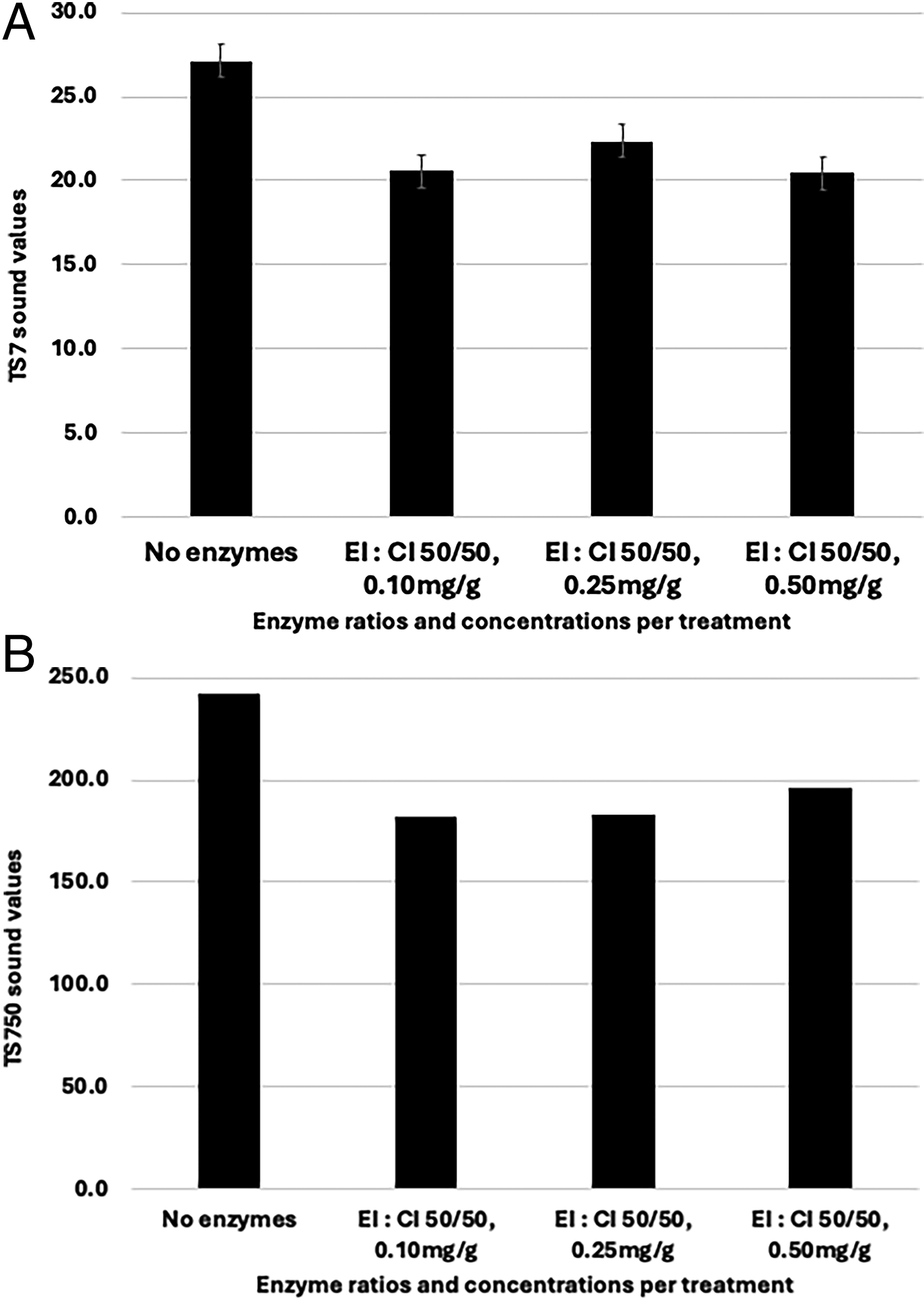
Measured parameters included the following. The “TS7” output of the Emtec TSA has units of dB V2 rms; however, TS7 is referred to herein without reference to units, rather tables show comparative numbers. The TS7 value is the frequency peak that occurs around 6.5 kHz on the noise spectrum graph output. This peak represents the softness of the sample. Softer samples produce a lower TS7 peak.
“TS750” has units of dB V2 rms, however, TS750 comparative results are reported without reference to units. The TS750 value is the frequency peak that occurs in the range of 200–1,000 Hz. This peak represents the smoothness of the sample. Smoother samples produce a lower TS750 peak.
The “Stiffness” (D) parameter has units of mm/N and is a measure of the deformation of a sample under a defined load. The lower the measured value (deformation measurement), the stiffer the material.
The “elasticity” (E) parameter has units of mm/N. The lower the measured value (deformation measurement), the less flexible is the material.
The “hysteresis” (H) and “plasticity” (P) together help to determine the recovery of fabric after deformation or crushing. The lower the hysteresis, the more elastic the sample is while recovering. The plasticity is usually negative, and the closer the negative number to zero, the better the recovery of the material.
Significant differences in the means of all haptic measurements were tested using ANOVA and Tukey calculations for Figure 2 data and Tukey’s HSD for Figure 3 as well as Table 3 .
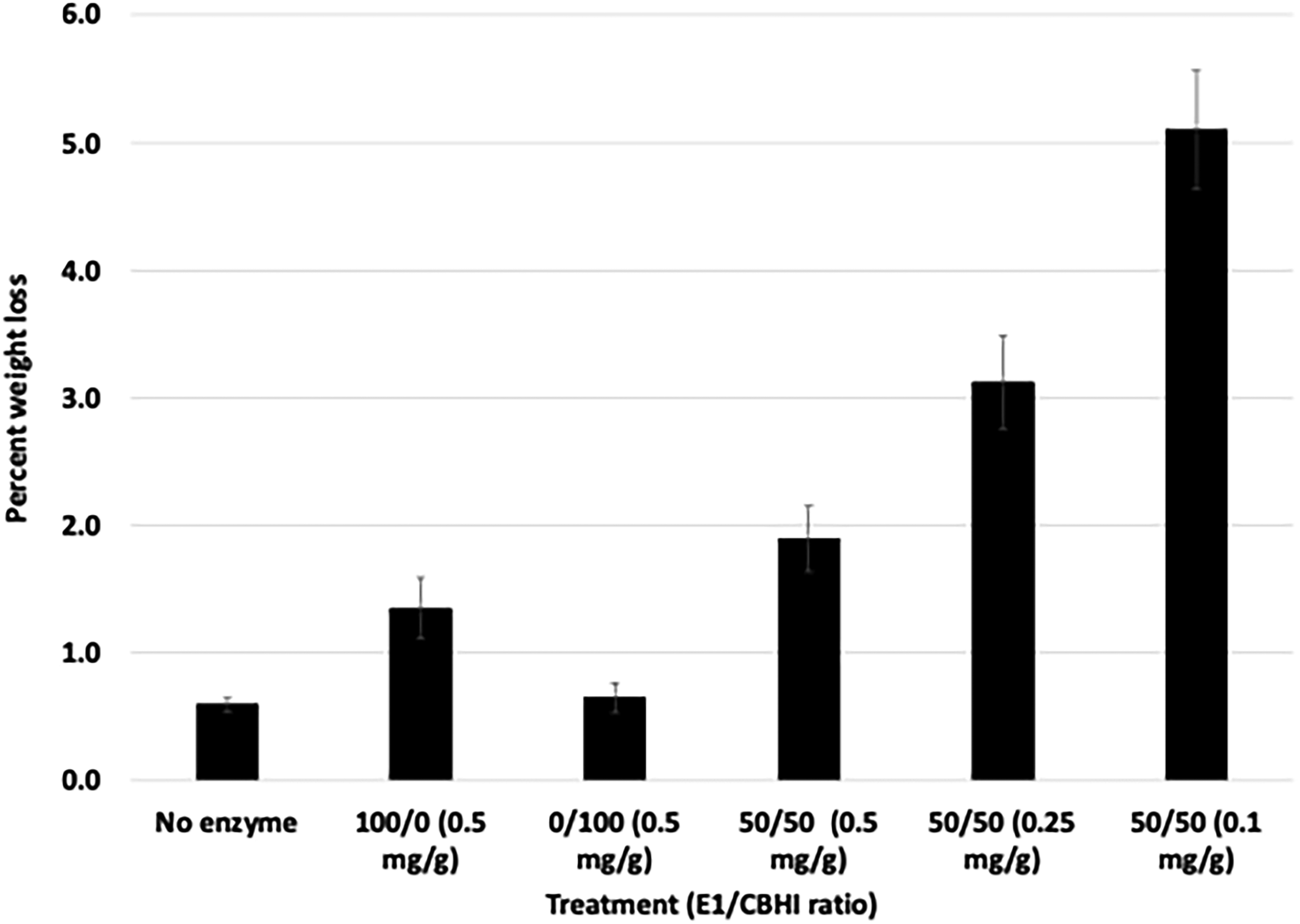
Weight loss of fabrics treated with E1 and CBH I as described in methods. Ratios of E1 to CBH I are shown below each bar. 0.1 to 0.5 mg enzyme per g fabric were used as indicated. Each bar represents the mean and standard deviation of 3 replicates. One-way ANOVA indicated significant treatment effects (p < 0.0001). Mean comparisons were conducted using Tukey’s test (α = 0.05; HSD = 0.80692).
TS7
Haptic Measurements of Enzyme-Treated Cotton Fabric Using the TSA from EMTEC
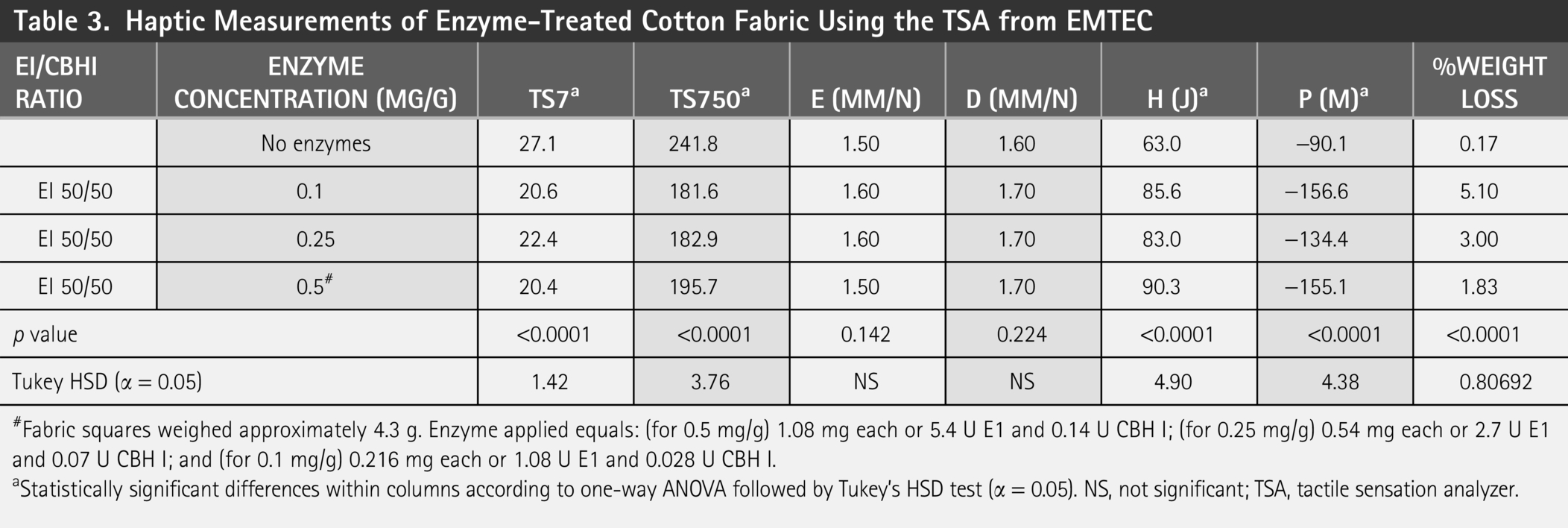
#Fabric squares weighed approximately 4.3 g. Enzyme applied equals: (for 0.5 mg/g) 1.08 mg each or 5.4 U E1 and 0.14 U CBH I; (for 0.25 mg/g) 0.54 mg each or 2.7 U E1 and 0.07 U CBH I; and (for 0.1 mg/g) 0.216 mg each or 1.08 U E1 and 0.028 U CBH I.
Statistically significant differences within columns according to one-way ANOVA followed by Tukey’s HSD test (α = 0.05). NS, not significant; TSA, tactile sensation analyzer.
TREATMENT OF FABRICS WITH CELLULASES FOR RECYCLING
The same cotton fabric as above and a second fabric composed of 35% cotton and 65% polyester were tested for more complete degradation. Fabrics (10 mg pieces in 6 mL buffer) were incubated in constantly rotating tubes with an enzyme concentration of 0.1–20 µg/mg fabric comprising an enzyme ratio of 50:50, using an incubation period of 96 hours at 50°C and an additional enzyme, β-glucosidase. After treatment, remaining fabric pieces were removed from solution, air-dried for 24 hours, and weighed.
TREATMENT OF FABRICS WITH LACCASE
One cm square pieces of denim fabric from a commercial pair of jeans or from new denim fabric purchased at a local fabric store were treated with laccase enzyme. Two mL of 50 mM NaOAc pH 5.0 and 2 mL of 4.5 mM ABTS [2,2′-azino-bis (3-ethylbenzothiazoline-6-sulfonic acid)] were added to 200 mg of corn flour. The flour had an average of 0.04% laccase by dry weight, as confirmed by a laccase activity assay on extracted enzyme. However, the corn flour contains up to ten times more non-extractable laccase, as determined by staining and activity assay. 18 Thus, 0.8 mg of enzyme (in 200 mg flour) was applied to each piece of denim fabric. The incubation was at room temperature (23°C) for 48 hours using constant rotation. Lower doses of enzyme were incubated for 72 hours. Conditions used for bleaching are shown in Table 1 .
Treatment Conditions for Bleaching of Two Types of Denim Fabric
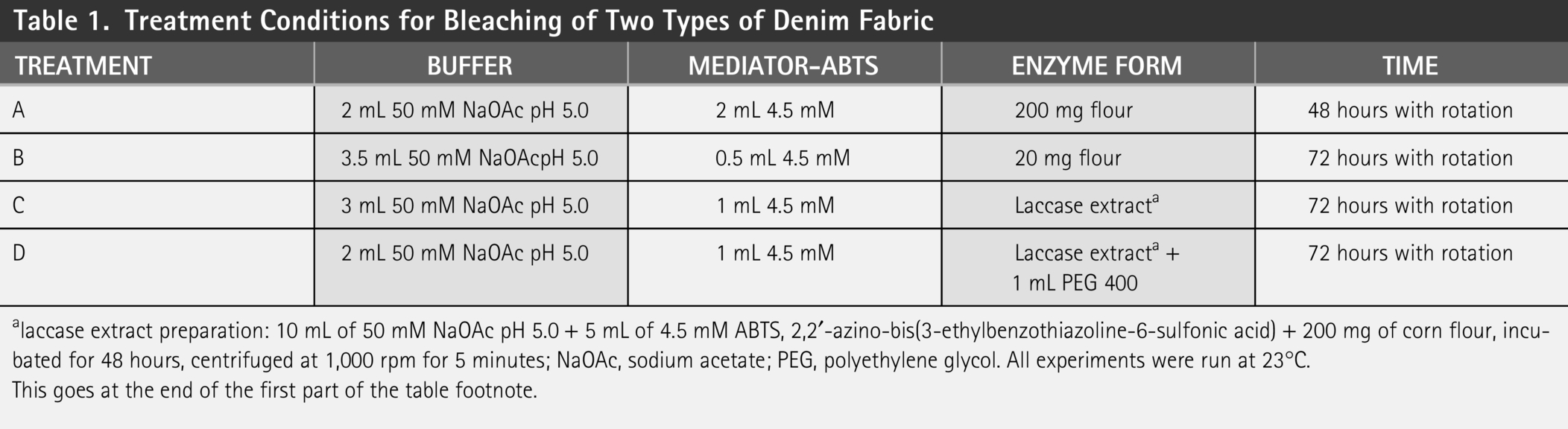
laccase extract preparation: 10 mL of 50 mM NaOAc pH 5.0 + 5 mL of 4.5 mM ABTS, 2,2′-azino-bis(3-ethylbenzothiazoline-6-sulfonic acid) + 200 mg of corn flour, incubated for 48 hours, centrifuged at 1,000 rpm for 5 minutes; NaOAc, sodium acetate; PEG, polyethylene glycol. All experiments were run at 23°C.
This goes at the end of the first part of the table footnote.
A soluble laccase application was prepared with 10 mL of 50 mM NaOAc pH 5.0, 5 mL of 4.5 mM ABTS, and 200 mg of corn flour, incubated for 48 hours with constant rotation at room temperature. It was centrifuged at 1,000 rpm for 5 minutes, and the supernatant used for fabric treatment. One mL of this extract was added into 3 mL of 50 mM NaOAc pH 5.0 buffer and incubated for 72 hours at room temperature with constant rotation. A second incubation used the same conditions but substituted 1 mL of polyethylene glycol (PEG) 400 for 1 mL of NaOAc.
All controls were prepared in the same proportions and with the same reagents except without the application of corn flour or extract. After incubation, each sample was rinsed three times with water and was shaken for 10 seconds in a vortex to remove any remaining flour residue. The fabric pieces were air dried for 24 hours at room temperature and photographed.
Results
EXPRESSION OF ENZYMES IN CORN
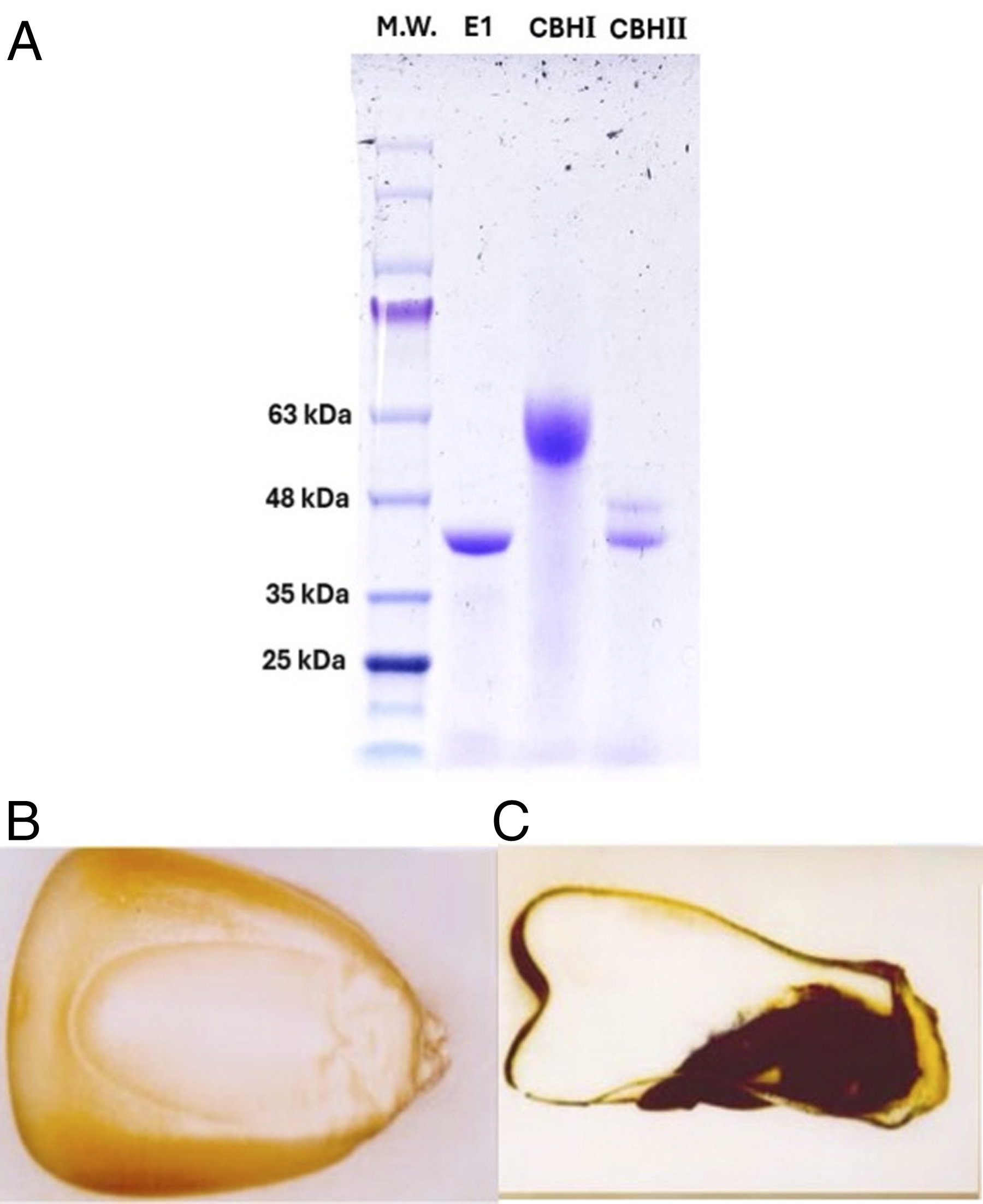
Three individual cellulases were expressed in the corn kernel system, a heat-stable endocellulase (E1) from Acidothermus cellulolyticus and two exocellulases (CBH I and CBH II) from Trichoderma reesei.17,19,22–24 The CBH II gene is driven by the rice glutelin promoter, 24 whereas the other two genes are driven by the embryo-specific globulin-1 promoter. 25 The E1 endocellulase is vacuole-targeted, and CBH I and II are targeted to the cell wall. E1 and CBH II are each approximately 42 kDa, whereas CBH I is approximately 53 kDa in size ( Table 2 ; Fig. 1 ). Each of these enzymes has been extracted from ground corn seed flour, purified, and their specific activity determined. Each original transgenic line has been backcrossed to elite male and female germplasm, which can be crossed to produce hybrid lines with high yield in both seed weight and recombinant protein. 22 Each of these enzymes has been utilized in experiments with fabrics as concentrated extracts (unpurified) or as ground corn seed flour. Results from application of E1 and CBH I are reported here.
Characteristics of Recombinant Enzymes in Corn
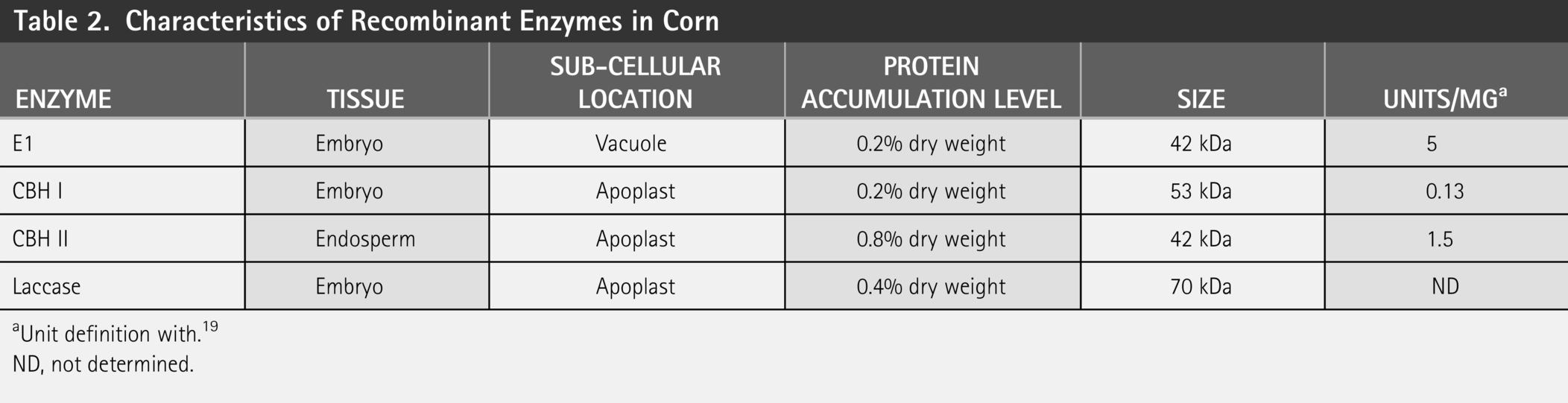
Unit definition with. 19
ND, not determined.
The Trametes versicolor laccase gene was also expressed in corn. 18 Laccase is approximately 70 kDa in size. Only about 10% of the laccase can be extracted from ground corn. 26 The insoluble laccase remaining in the ground flour is active, as observed by reaction with the dye, DAF ( Fig. 1C , dark embryo) and through activity experiments with colorants and bleaching. 11 All extracted laccase is inactive until activated by treating with 1M CuSO4 and 4M NaCl at 60°C for an hour. 26 Bleaching experiments described below are performed with enzyme in ground corn flour.
FABRIC TREATMENTS WITH RECOMBINANT CELLULASES
Cotton fabric treatments with cellulases prepare the fabric for further processing. The process increases smoothness and softness, traditionally determined through “hand-feel” using a human panel. Weight loss of enzyme-treated fabric is correlated with increased smoothness and softness through removal of fuzz and short chain fibers on the surface of the fabric. In these experiments, weight loss was one of several quantifications measured to determine the effect of cellulases on the fabric.
Most commercial sources of cellulases comprise multiple enzymes and have negative effects on the quality of the fabric. In the present study, enzymes tested were single-activity E1, CBH I, and CBH II obtained from the maize kernel production system described. Combinations of the cellulase enzymes also were tested to determine which were the most effective for weight loss and for increasing smoothness and softness of cotton fabric. Using a crude extract from each enzyme-containing flour of E1 and CBH I, weight loss of treated fabrics was observed ( Fig. 2 ). Minimal weight loss was observed with each enzyme alone, although E1 was slightly more effective than CBH I. When two enzymes were used, ratios of mixtures (w:w) of 50:50 were tested along with total enzyme concentration. A range from 0.1 mg enzyme/g fabric to 0.5 mg enzyme/g fabric in 20 mL of 50 mM sodium acetate buffer pH 5.0 was tested. The results show that 0.1 mg enzyme/g fabric was 2.5 times more effective at promoting weight loss than 0.5 mg enzyme/g fabric.
The activity of the corn-derived enzymes in these experiments greatly favored E1. In the 0.1 mg/g fabric, the 50:50 ratio of E1 units to CBH I units was 250 mU: 6.5 mU; thus, the E1 units greatly outweighed the CBH I units. However, since E1 alone did not have a major effect, it can be concluded that the CBH I is critical to this treatment.
IMPROVING SOFTNESS AND SMOOTHNESS OF FABRIC
The smoothness and softness of fabric are critical for the textile industry. These characteristics have traditionally been determined by a “hand test” that is conducted by human panels. 27 Recently, an instrument from Emtec Electronics in Leipzig, Germany, the TSA, or Tactile Sensation Analyzer, has been adapted from paper industry applications to objectively measure textile characteristics such as smoothness, softness, and other haptic parameters.
After cotton fabric treated with cellulase enzymes was tested for weight loss, haptic qualities were measured with the TSA. 28 The samples were provided to Emtec personnel in Germany for TSA measurements to confirm that the increased weight loss corresponded with better haptic qualities.27,29 The TSA measurements clearly indicated that the softness and smoothness of the fabrics were much greater with corn-derived enzyme treatment over the no-enzyme control. The best results were obtained from using E1 and CBH I together. When ratios of the enzymes were compared, E1 to CBH I ratios of 50:50 showed haptic characteristics indicative of production-ready fabric ( Fig. 3A and B , data not shown for other ratios). Also of note, although lower enzyme amounts generated higher weight loss ( Fig. 2 ), the tactile characteristics of the fabric appeared to be quite similar ( Table 3 ).
OTHER HAPTIC QUALITIES
Stiffness is a measure of the deformation (D) of a sample under a defined load. The lower the measured value (deformation measurement), the stiffer the material. Elasticity (E) is a measure of the flexibility of the fabric. The lower the measured value (deformation measurement), the less flexible is the material. The data showed that the 0.1 mg enzyme/g treated fabric had the greatest crushability and so was the least stiff ( Table 3 ). The enzyme-treated materials had higher E values, demonstrating their greater flexibility ( Table 3 ).
Hysteresis and plasticity (P and H) together help to determine the recovery of fabric after deformation or crushing. The lower the hysteresis, the more elastic the sample is while recovering. The plasticity is usually negative, and the closer the negative number to zero, the better the recovery of the material. The P and H measurements indicated that these fabrics do not recover as quickly or as completely from crushing as non-enzyme-treated controls.
BLEACHING
Corn-produced laccase enzyme was tested for bleaching activity on denim fabric. Each treatment was applied to 1 cm2 pieces of two commercial fabrics. The controls were prepared in the same ratio and with the same reagents, except the application of control corn flour without laccase was substituted. After enzyme treatment, the fabric samples were rinsed three times with water and vortexed for 10 seconds to remove any remaining flour residue and air dried at room temperature. Three different mediators were tested with the corn flour—methyl syringate, 1-hydroxybenzotriazole (HBT), and 2,2′-azino-bis(3-ethylbenzothiazoline-6-sulfonic acid) (ABTS). The methyl syringate/laccase flour pair showed no visible bleaching. The HBT mediator/laccase pair exhibited minimal bleaching (data not shown). The ABTS/laccase exhibited the most promising results, as shown in Figure 4 . Our laboratory does not have access to quantitative color detection equipment, and thus only visual results are shown.
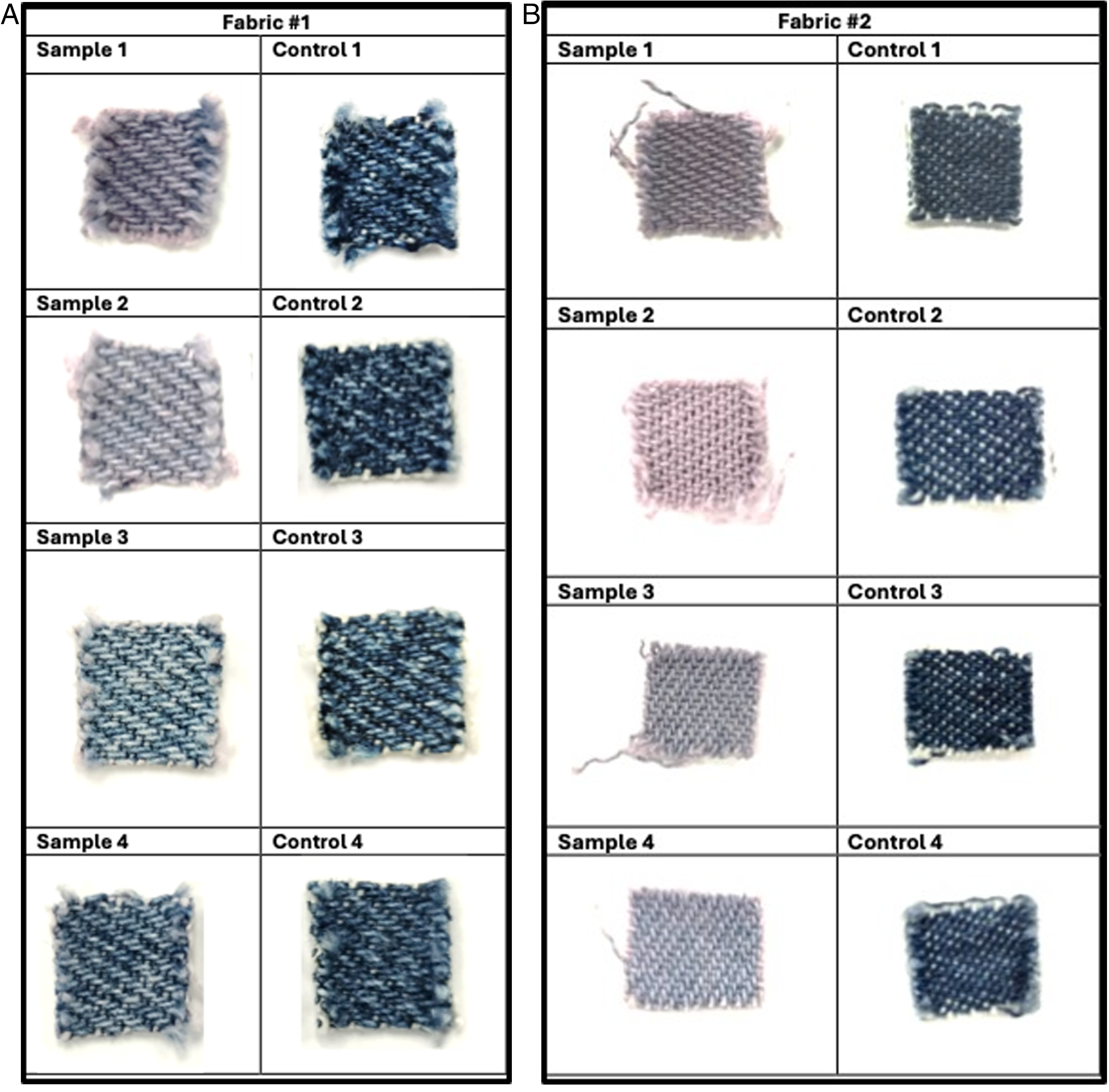
Bleaching of denim fabrics with corn-produced laccase.
Evidence of bleaching was found in both denim fabrics, especially in Fabric #2 ( Fig. 4 ). The higher amount of corn flour appears to cause the fabric to be slightly purple. When lower doses of enzyme in flour were applied, the fabrics turned an opaque blue. The lower dose of enzyme-containing flour (treatment B) also appears to have higher bleaching activity than the 10× greater amount (treatment A). The PEG, added as recommended in commercial protocols, did not reduce back staining in these experiments: compare treatment C (without PEG) and D (with PEG) of both fabrics ( Fig. 4 ). Incubation of ABTS + laccase flour produced better bleaching with less back staining than using the treated extract.
CELLULASES FOR ENZYMATIC RECYCLING OF COTTON AND COTTON BLENDED TEXTILES
An efficient method for recycling fabrics would be to degrade the fibers with enzymes to generate molecules that can be used for other applications (cotton to glucose) or for spinning new yarns (terephthalic acid for new polyester). We tested corn-produced cellulases for degradation of cotton fabrics and cotton/polyester blend fabrics.
Cotton fabric (100%) treated with various combinations of corn-produced enzymes led to a 93% degradation of cotton fibers measured by weight loss from the remaining fibers of fabric ( Table 4 ). Exogenous β-glucosidase, the final step in reducing short-chain glucose oligomers to glucose monomers, was added. When reducing sugars were analyzed in the experiments, it was clear that single monomers were not the major product, as the recovery of glucose equivalents was at most 5.2%. For fabric composed of 35% cotton and 65% polyester, weight losses of up to 13% were observed (data not shown). These latter results are preliminary and will require much more rigor to determine utility in the textile recycling industry.
Cellulase Treatment of Cotton Fabric Fibers and Resulting Recovery of Reducing Sugars. Reactions Were Done at 23°C for 24 hours Using 10 mg Fibers in 6 mL of Buffer
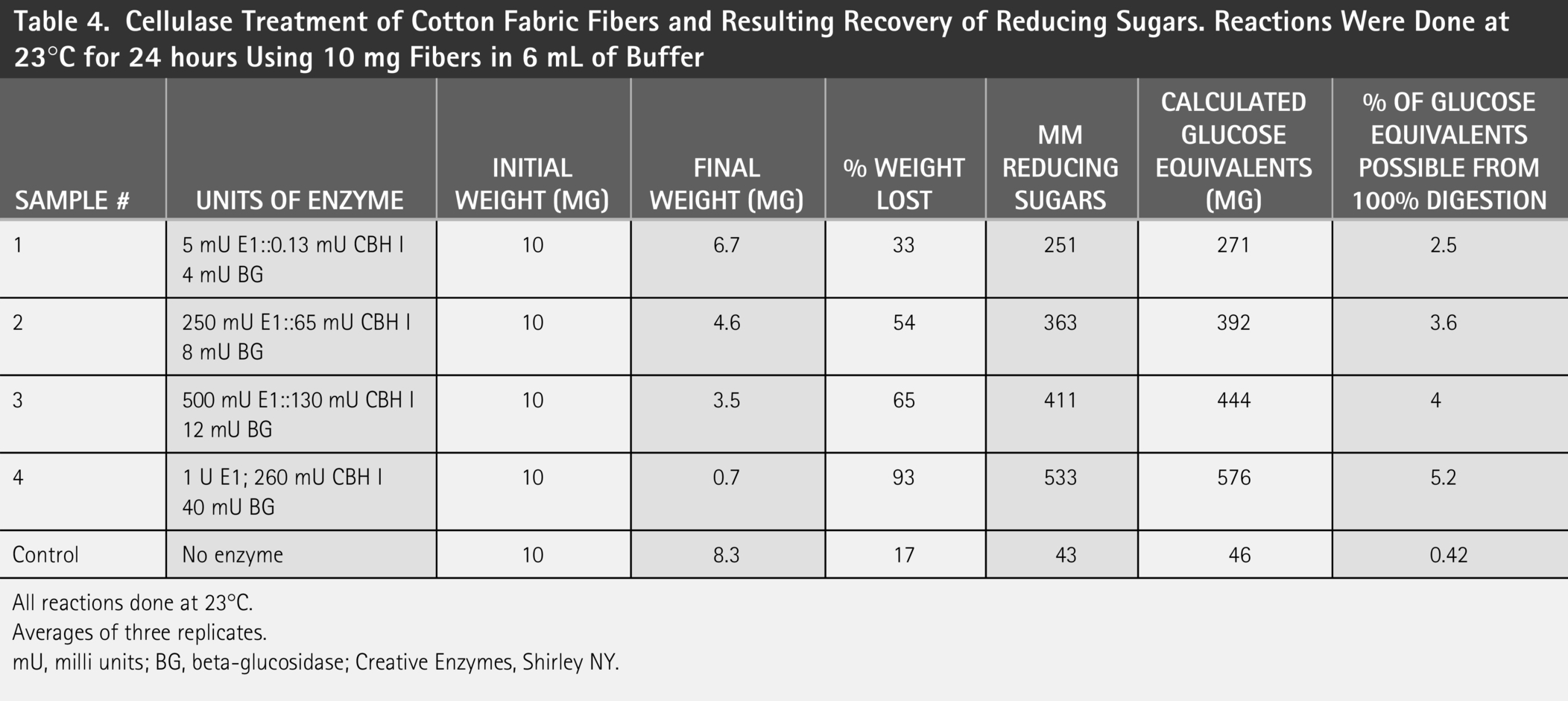
All reactions done at 23°C.
Averages of three replicates.
mU, milli units; BG, beta-glucosidase; Creative Enzymes, Shirley NY.
Discussion
The current textile industry is focused on more environmentally friendly processes to offset the past negative environmental impact.2–5,30 However, these processes need to be cost-competitive with current practices. Enzymes are one solution because they are active in almost all processes within the textile production chain. The drawback for enzymes is that they often cost more than chemical treatments.
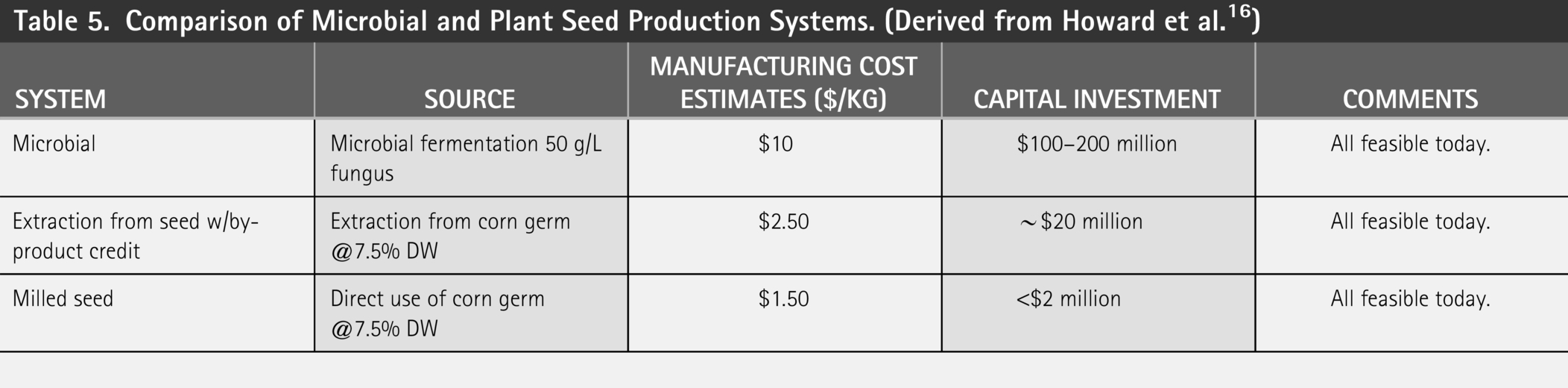
In the work reported here, enzymes from the corn grain production system were used to treat textiles in processes that industry uses. The enzymes are similar to the cellulases currently used in textile processing—heat-stable endonuclease and the Trichoderma reesei cellobiohdrolases—so they could easily be substituted into those processes. The advantage to the corn-produced enzymes is the potential for an extremely low cost of production ( Table 5 and Fig. 5 ) discussed below.
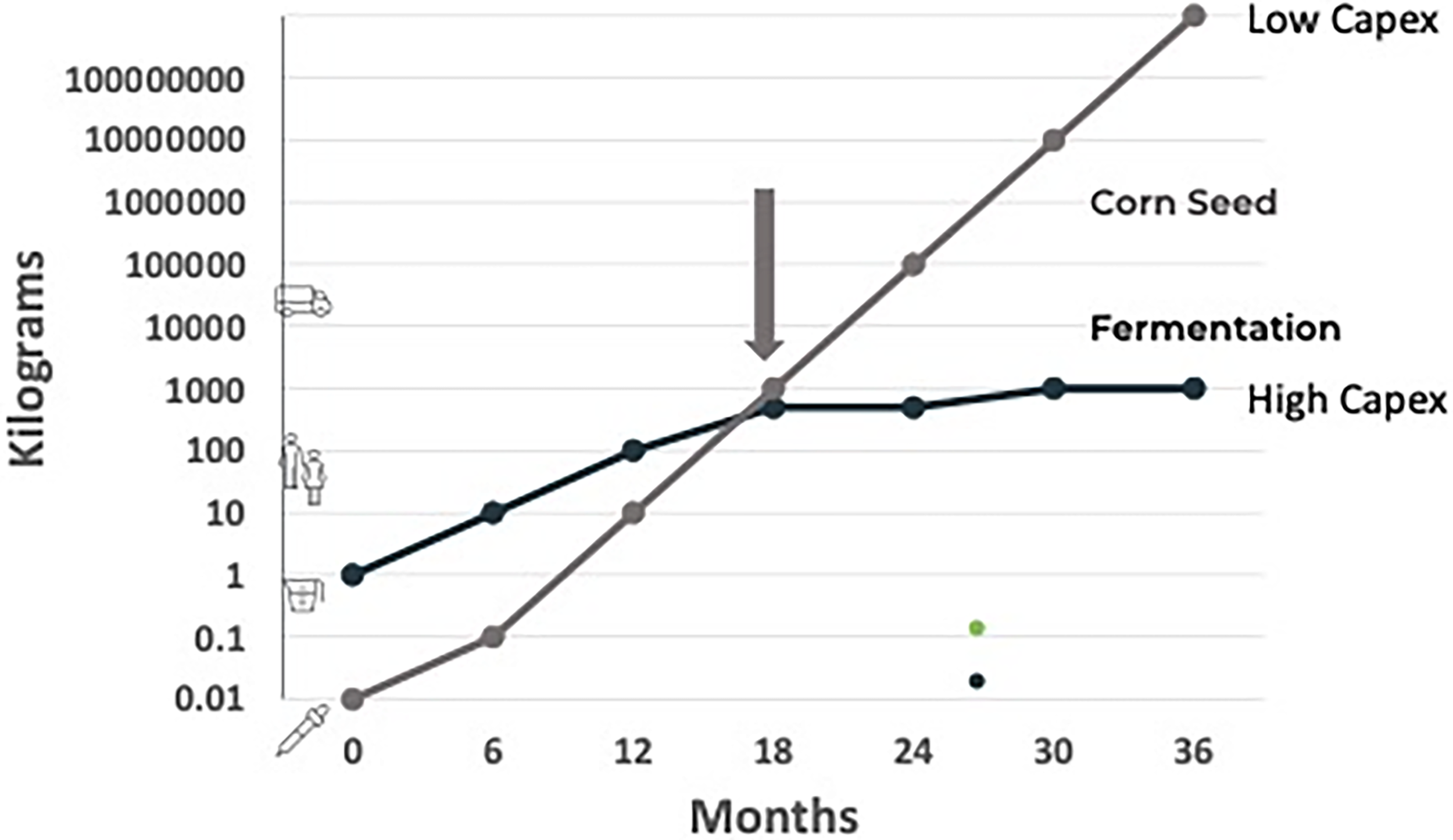
Comparison of scale-up potential and capex costs between corn seed and fermentation production of proteins. Scaling above the crossover point of 1,000 kg favors corn-seed-based production.
Comparison of Microbial and Plant Seed Production Systems. (Derived from Howard et al.
Wet processing comprises such steps as desizing, scouring, bleaching, washing, dying/printing, and finishing. 31 Biopolishing is a treatment for cellulosic fabrics during their manufacture that improves fabric quality with respect to “reduced pilling formation.” 32 The most important effects of biopolishing can be characterized by less fuzz and pilling, increased gloss/luster, improved fabric handle, increased durable softness, and/or improved water absorbency. 33 Most cotton fabrics and cotton-blend fabrics have a hand-feel condition exhibiting as rather hard and stiff without the application of the finishing processes (biopolishing). The fabric surface is also not smooth because small microfibrils protrude from it and, after a short period of wear, can lead to pilling on the fabric surface, thereby giving it an unappealing, worn look. In this work, crude extracts of corn-produced cellulases were used to polish cotton fabric and improve its haptic properties of softness and smoothness up to 25% over no-enzyme controls. All other properties were improved up to 50% except plasticity, which showed less plasticity in the treated fabric. A range from 0.1 mg enzyme/g fabric to 0.5 mg enzyme/g fabric (range suggested by personnel at Cotton, Inc.) in 20 mL of 50 mM sodium acetate buffer pH 5.0 was tested. Surprisingly, the results show that 0.1 mg enzyme/g fabric was 2.5 times more effective at promoting weight loss than 0.5 mg enzyme/g fabric. Less enzyme and its associated lower cost produced similar haptic qualities on the fabric. The higher enzyme load result may be due to enzyme inhibition by release of glucose and short-chain oligomers, an interaction that has been in the literature since the 1990s. 34 Although this hypothesis could be tested, cellulase interactions as a group with cellulose substrates are quite complex and beyond the scope of this paper.
Laccases are used in the textile industry for an environmentally friendly biobleaching of denim to create the “stone-washed” look of jeans. 35 Previous treatments included bleach (sodium hypochlorite, a pollutant) or actual pumice stones (highly damaging to machinery). Laccase is a polyphenol oxidase (EC 1.10.3.2) that catalyzes the oxidation of a variety of inorganic and aromatic compounds, particularly phenols, with the concomitant production of water from oxygen. The enzyme works through a mediator on substrates rather than reducing them directly through a binding site on the enzyme. This mechanism increases the available substrates for laccase action. Because the enzyme does not directly attack a substrate, the mediator approach does not require a soluble enzyme. Although not extracted, the insoluble laccase in the corn flour is active, as observed by reaction with the dye diamino fluorene ( Fig. 1 ), and successfully bleaches denim. Once the germ is ground, the bound enzyme is active, as shown in the bleaching result ( Fig. 4 ).
A consequence of fast fashion is the disposal of large amounts of clothing into waste streams. 13 Much of this arrives in landfills or is incinerated. 2 Recycling accounts for only a range of 2–10% of disposed clothing, depending on the information source.12,13 Recycled textiles are sold at charities’ secondhand clothing stores (less than 0.5% of total trade-in value), refashioned into new garments, sent to developing countries (often also ending up in landfills), turned into wiping cloths, and/or processed back into fibers and turned into paper, yarn, insulation, carpet padding, and other items. 13 Production of textile fibers requires sorting the fabrics into fiber types to recover homogeneous content. An additional method for recycling textiles would be to degrade them into the basic building blocks of their original polymers, such as glucose for cotton and polyethylene terephthalate for polyester. In the work reported here, cotton was degraded up to 93% as determined by weight loss with corn-produced cellulases. Although the weight loss was high, the reducing sugars produced were only at most 5.2% of the total possible in solution. This indicates that the fibers were in the process of degradation, and shorter chain oligomers of glucose were produced but not fully degraded. Polyester-cotton blends were degraded up to 13% by weight loss. A larger degradation of the blend could allow recovery of the polyester fiber in a purer form for reuse. These studies suggest that enzymes can be applied to the enormous volume of textile waste to allow other applications of the fibers and the monomers of those fibers.
The low cost of production of recombinant industrial enzymes in the corn kernel system involves several associated steps that have been modeled and allow this low cost. 16 When enzymes accumulate in the embryo of the kernel, the starch-containing endosperm can be removed by dry mill processing. The remaining germ (embryo fraction) is enhanced 7-fold in concentration of the target enzyme. The endosperm can be sold for as much as 80–100% of the cost of crop production (P. Moss, Founder, Cereal Process Technologies, LLC, Memphis, TN). The cost of the enzyme for industrial applications then comprises the cost of processing required for the application—ground flour or concentrated extracts. 16 The enzyme cost is highly influenced by the amount of recombinant enzyme expressed in the seed, which current technology has reached at 2% to 3% of dry weight (20–30 g enzyme/kg corn; E. Hood, J. Howard, unpublished), allowing 140–210 g enzyme/kg in the germ after dry milling. At this level of expression, the cost of active ingredient in ground flour could be at least 10- to 20-fold less than microbially produced enzymes ( Table 5 ). In addition to the high expression levels, processing facilities include degerming operations ($1 million), grinding and extraction/concentration operations ($500,000), and packaging ($200,000).
A further advantage of the plant seed production system is the ability to scale above 1000 kg of enzyme without an investment in further infrastructure ( Fig. 5 ). Fermentation facilities to double production of an enzyme require $100–200 million to build. Doubling production of the corn-based enzyme requires planting twice as many acres. Enzymes expressed at 0.2% of dry weight, similar to the cellulases reported here, produce 2 g enzyme/kg grain. At 150 bushels per acre, 7.5 kg can be produced per acre. One ton of enzyme would require 133 acres. Two tons would require 266 acres with no additional capex, a clear advantage.
Transgenic plants are widely grown across the US and the world. Over 90% of the corn crop and nearly 100% of soybeans exhibit insect and herbicide resistant traits through gene transfer. As of 2024, 534 plant lines have achieved regulatory approval (https://www.isaaa.org/gmapprovaldatabase/). Most of these are for agricultural field traits, though some are nutritional traits. For the plant lines reported here, the E1 cellulase line has achieved nonregulated status for growth and production. FDA discussions are ongoing. The other cellulase lines are in process. In limited discussions with textile producers, cost and performance are their most important drivers for technology adoption, suggesting the corn-produced enzymes would be competitive.
Conclusions
Corn-produced enzymes in concentrated extracts or ground flour formulations could be used to treat cotton textiles for further processing, bleaching, or recycling. Corn-produced enzymes could be less expensive than fermentation-based enzymes, especially when increased infrastructure is required for fermentation. Increasing the amount of corn-produced enzymes comprises growing more acres. Corn-produced laccase flour shows promise as a bleaching agent for denim, precluding the need to extract or purify enzyme. The regulatory process for these enzymes is partially completed.
Authors’ Contributions
M.A.S. and E.R.D. performed experiments and analyzed data. N.C.H. assisted with data analysis. E.E.H. performed conceptualization, writing, formal analysis, and validation.
Footnotes
Author Disclosure Statement
All authors were employees of GreenLab, Inc. when this work was performed but are no longer employees. E.E.H. is a shareholder in GreenLab, Inc.
Funding Information
No external funding was utilized.