







Abstract
Research suggests that gaming can play an important role in dealing with life difficulties, but few studies have examined this directly. Building on recent research, the current study set out to develop a measure of gaming in difficult life situations (GDLS) and explored the role of emotion regulation and coping self-efficacy as predictors of this behaviour. A total of 667 gamers completed the online survey. Initial analyses demonstrated validity and reliability of the GDLS scale (α = .92), with players turning to gaming as a distraction from life difficulties, to feel a sense of achievement, to connect with others, and for in-game connection and simulation. Multiple regression analysis showed that younger age, more time spent gaming in general, and lower coping self-efficacy predicted GDLS, but emotion regulation was non-significant. The study presents novel insights and a new measure for future research in this area.
Introduction
Video and online gaming is an enjoyable activity for millions of individuals worldwide. It fulfils basic psychological needs by boosting feelings of competence, autonomy and relatedness in line with self-determination theory (Deci & Ryan, 2000; Tamborini, Bowman, Eden, Grizzard, & Organ, 2010). Motives for gaming have been of longstanding interest. Yee (2006) found that individuals were drawn to gaming for three main reasons: to gain power and progress in the game (achievement), to be part of a group and gain social support (social) or to find information that an average player is unaware of (immersion). The framework by Demetrovics et al. (2011) outlined seven motives for gaming. Several align with Yee (2006); including social motivations, skills development and competition which link to achievement and fantasy and recreation which link to immersion. Of interest is the addition of escapism and coping motives by Demetrovics et al. (2011), where escapism is a means of avoiding problems faced in the real world, while coping entails gaming as a way of channelling distress and aggression in order to improve mood. This shows the wide-ranging motives for gaming and points to the potential for gaming to play an important role in dealing with stressful and difficult life periods. Little research to date has, however, examined gaming behaviours in difficult life situations or the potential individual or psychological factors that could drive this.
Gaming in Difficult Life Situations
Increasing literature explores the potential benefits associated with gaming. For example, gaming is linked to pleasurable cognitive states of ‘flow’ (Czikszentmihalyi, 1990; Nah, Eschenbrenner, Zeng, Telaprolu, & Sepehr, 2014). This optimal psychological state is arguably a distraction from life stresses, as being absorbed in a game allows for escape through experience of positive emotions (Hemenover & Bowman, 2018) that could lead to mood repair and provide relief from stress and boredom (Bowman & Tamborini, 2012; Russoniello, Fish, & O’Brien, 2013). While beneficial, this can also lead to an over-reliance on games to provide a cognitive distraction and relief from suffering, which can lead to problematic gaming (Snodgrass et al., 2014). However, problematic use can also ensue on other forms of online media. Research shows links between experiences of stressful life events and higher risk of problematic internet use in general (Velezmoro, Lacefield, & Roberti, 2010; Yan, Li, & Sui, 2014), and a study in the Netherlands found that 57% of individuals used some form of online coping after experiencing a negative life event (Van Ingen, Utz & Toepoel, 2016). Gaming may, thus, not be unique in individuals seeking relaxation and escape from stress, but it is potentially a more immersive environment for doing so as a result of the attentional demand in games being higher (Rieger, Frischlich, Wulf, Bente, & Kneer, 2015).
In addition to positive emotional effects, gaming also presents cognitive and social benefits (Granic, Lobel, & Engels, 2014). Cognitive benefits include more accurate attention allocation, enhanced mental rotation and faster reaction time (Colzato, Van den Wildenberg, Zmigrod, & Hommel, 2013; Green & Bavelier, 2015; Nuyens, Kuss, Lopez-Fernandez, & Griffiths, 2019), while social benefits include enhanced social capital through interactions with others (Kowert, Domahidi, & Quandt, 2014; Trepte, Reinecke, & Juechems, 2012). Therefore, apart from merely distraction and escape, individuals encountering life difficulties may engage in gaming for positive mood effects and social connection. Gaming can also enhance coping skills (Colder Carras et al., 2018; Procci, Bowers, Wong, & Andrews, 2013), reduce depressive symptoms (Russoniello et al., 2013) and contribute to positive functioning that supports mental health (Jones, Scholes, Johnson, Katsikitis, & Carras, 2014). Simple puzzle games mitigated flashbacks of past trauma (James et al., 2015), and even violent video games led to mood repair and reduction of depression and hostile emotions by presenting opportunities for players to exert control over their environment and act in goal-directed ways (Ferguson & Rueda, 2010). Benefits in health outcomes have also been found (Primack et al., 2012), including gaming influencing psychological well-being among cancer survivors (Francis, Comello, & Marshall, 2016). Clearly, games can offer a range of benefits, but few studies have explored how and why individuals engage in gaming during difficult life situations.
A recent qualitative study offered some novel insights into this area, highlighting six themes around player engagement in gaming during difficult life situations, including much needed respite (offering an escape from daily stresses), dealing with feelings (supporting individuals in working through their emotions), connection (facilitating social connections and social support), personal change and growth (stimulating individuals to make positive changes), gaming as a lifeline (providing a lifeline in times of existential doubt) and gaming as an obstacle to living well (potential detriment to well-being by preventing individuals from facing problems) (Iacovides & Mekler, 2019). These themes reflect both the benefits and downfalls associated with gaming during life difficulties, and outcomes likely vary due to various individual and psychological factors. In addition to exploring gaming in difficult life situations (GDLS), it is thus also important to examine factors that could underpin this such as emotion regulation and coping self-efficacy.
Emotion Regulation, Coping Self-Efficacy and Gaming
Emotion regulation refers to one’s implicit or explicit attempt to modify the felt emotion (Gross, 2015; Gross & John, 2003). In line with the widely accepted process model of emotion regulation, two strategies exist based on the time at which they are initiated in the emotion generation process (Gross, 1998; Gross & Thompson, 2007). Cognitive reappraisal refers to a shift in the way an individual thinks about a given situation which alters its emotional impact (Gross, 1998; Gross & John, 2003). This is the antecedent-focused strategy in the process model as it occurs early and intervenes prior to the emotion response being fully generated, which alters its emotional course and can reduce negative feelings (Gross & John, 2003). This is an adaptive strategy. In contrast, expressive suppression is a response-focused strategy that occurs once the emotional response has already been fully generated (Gross, 1998; Gross & John, 2003). It, thus, relies on effortful management of an emotional response, with individuals inhibiting and modifying their behavioural response to the felt emotion (Gross & John, 2003). Individuals may successfully suppress behavioural responses to negative emotions, but this may not reduce the experience of negative feelings and can allow them to remain unresolved (Gross, 2015; Gross & Thompson, 2007). This is a maladaptive strategy. Better emotion regulation has positive outcomes in relation to mental health and well-being (Balzarotti, Biassoni, Villani, Prunas, & Velotti, 2014; Gross & Muñoz, 1995), whereas difficulties in emotion regulation are associated with psychopathology (Aldao, Nolen-Hoeksema, & Schweizer, 2010; Nolen-Hoeksema & Aldao, 2011).
Difficulties in emotion regulation have also been implicated in problematic gaming (Kökönyei et al., 2019) and Internet Gaming Disorder (Wichstrøm, Stenseng, Belsky, von Soest, & Hygen, 2019), with individuals with Internet Gaming Disorder demonstrating lower likelihood of cognitive reappraisal and higher likelihood of expressive suppression (Yen et al., 2018). Difficulties in emotion regulation are linked to using gaming as a maladaptive coping strategy leading to problematic behaviour (Blasi et al., 2019; Loton, Borkoles, Lubman, & Polman, 2016; Maroney, Williams, Thomas, Skues, & Moulding, 2019). However, gaming can also be beneficial in developing emotion regulation strategies in non-clinical populations (Villani et al., 2018). For example, adolescents who play regularly are better at regulating their emotions, though they also tend to experience emotions more intensely and express them less frequently than irregular players (Gaetan, Bréjard, & Bonnet, 2016). Interactivity and immersion within the game allow for more intense experience of emotion due to rich game narratives and connection with one’s in-game character acting as emotional stimuli (Villani et al., 2018). Experiences of failure within the game also require emotion regulation strategies in order to succeed (Granic et al., 2014; Juul, 2013; Villani et al., 2018). Thus, emotion regulation is an important construct for further exploration in the context of GDLS.
Coping is another relevant construct, defined as behavioural and cognitive efforts that allow an individual to manage stressful situations (Lazarus & Folkman, 1984). Two coping styles are identified in psychological literature, namely problem-focused coping (i.e. strategies that aim to remove or reduce the cause of distress) and emotion-focused coping (i.e. reducing the emotional distress that a problem caused) (Lazarus & Folkman, 1984). In addition to gaming potentially being a maladaptive, avoidance-focused coping strategy to life stressors via escapism and distraction (Brand, Young, Laier, Wölfling, & Potenza, 2016; Maroney et al., 2019), gaming can also enhance positive emotions (Hemenover & Bowman, 2018) and assist with mood repair (Bowman & Tamborini, 2012). It can also help in recovery from stress and strain, with recovery conceptualised as a stage past coping as it aided in replenishing depleted resources (Reinecke, 2009). More specifically, those who had higher levels of work fatigue and daily hassles, those who associated stronger recovery experiences with gaming and those who had an emotion-focused coping style were more likely to engage in gaming during stressful situations (Reinecke, 2009). Clearly coping and coping styles are relevant to explore in the context of gaming, but coping self-efficacy may also be key. Coping self-efficacy relates to an individual’s confidence and perceived ability to cope when facing life challenges (Chesney, Neilands, Chambers, Taylor, & Folkman, 2006). Confidence in being able to effectively manage life difficulties may be relevant in the extent to which players seek out gaming in difficult situations, but this construct has not yet been explored in this research area.
Current Study
Research has uncovered a range of links between gaming and experience of life stressors, including specific gaming motives associated with escapism and coping (Demetrovics et al., 2011), the potential for gaming to improve mood (Hemenover & Bowman, 2018) and its role in recovery from stress (Reinecke, 2009). Emotion regulation and coping self-efficacy are relevant in the ability to manage stressful situations in general and have shown links to gaming behaviour (Bowditch, Chapman, & Naweed, 2018; Villani et al., 2018; Yen et al., 2018), but they have not been explored in combination in the context of GDLS.
Although previous literature shows important links between gaming and life stressors, few studies have examined this beyond focussing on gaming motives or problematic gaming. The recent study by Iacovides and Mekler (2019) presented novel insights into gaming behaviour during difficult life situations and showed the complexity of the issue, with potential for both benefits and problematic outcomes. Understanding the extent to which individuals use GDLS thus warrants further study, along with exploring the role of emotion regulation and coping self-efficacy in this context. Therefore, two research questions form the basis of the current study: How can we measure the extent to which individuals engage in GDLS? (RQ1), and Can emotion regulation and coping self-efficacy predict GDLS? (RQ2).
For the purpose of the current study ‘difficult life situations’ are conceptualised as negative, stressful situations in one’s personal or social life that require an individual to use coping strategies, similar to conceptualisations by Iacovides and Mekler (2019). Specific examples of such situations may include periods of heightened stress in general or more specific experiences like coping with loss, family or relationship breakdowns, questioning one’s identity, job loss or moving home. Using four of the six themes presented by Iacovides and Mekler (2019) which were deemed most important to pursue further, the current study firstly set out to develop a quantitative measure of gaming behaviour in difficult life situations to build on previous findings (Aim 1). Secondly, using the new measure, the study explored the role of emotion regulation variables cognitive reappraisal and expressive suppression and coping self-efficacy as predictors of GDLS (Aim 2). Although links between these variables and gaming exist in general, they have not been examined in relation to GDLS specifically; therefore, hypotheses are non-directional. H1: Cognitive reappraisal predicts GDLS. H2: Expressive suppression predicts GDLS. H3: Coping self-efficacy predicts GDLS.
Method
Design
A quantitative cross-sectional survey design was utilised, with data collected online via the Jisc Online Survey platform.
Participants
The study required participants to be 16 or older and to engage in at least one gaming session per week in order to take part. In total, 667 participants aged 16–64 (M = 25.65 and SD = 7.59) completed the survey (471 males, 170 females, 17 non-binary and 9 unspecified). On average, participants played 20.57 hours (SD = 14.52) of video and online games during a typical week and 24.16 hours (SD = 18.77) in a week when stressed. Favourite game genres included role-playing (24.6%, n = 164), first-person shooter (17.7%, n = 118), simulation (11.2%, n = 75), adventure (10.2%, n = 68), action (9.5%, n = 61) and Massively Multiplayer Online Role Playing Games (9.5%, n = 61).
Measures
In addition to demographics, participants also completed the following scales.
GDLS scale
Four themes from Iacovides and Mekler (2019) formed the framework used to develop the scale items: much needed respite, connection, dealing with feelings and gaming as a lifeline. An exhaustive list of items was developed, and the item pool was systematically reviewed by the researchers. Items were removed if they contained ambiguous wording, tapped into more than one behaviour or presented a duplication of ideas. This resulted in a 34-item scale for data collection.
Participants were given a definition of ‘difficult life situations’ along with examples in line with the current study conceptualisation (defined in Current Study) in order to frame the issue under investigation. The scale instructed participants as follows: ‘Thinking about difficult life situations you have faced recently, how often do you…’. Example items include ‘Immerse in a game in order to interrupt negative/unproductive thought loops?’ (much needed respite theme), ‘Try to solve your difficulty by playing as someone else who is in a similar situation?’ (dealing with feelings theme), ‘Ask for help/advice about your situation while playing with other people’ (connection theme) and ‘Feel that you have more of a sense of purpose while gaming?’ (gaming as a lifeline theme). Participants responded on a 5-point Likert scale (1 – Almost Never/Never, 2 – Some of the time, 3 – Half of the time, 4 – Most of the time and 5 – Almost Always/Always) in line with response options from previous scales on gaming motives (Demetrovics et al., 2011). Higher scores reflect a higher tendency to resort to GDLS. Validity and reliability analyses are reported in the results section.
Motives for online gaming questionnaire
The motives for online gaming questionnaire (MOGQ) measured participants’ reasons for gaming and was included as an additional means of validating the GDLS scale that was developed for the current study (Demetrovics et al., 2011). Individuals’ motives for gaming should conceptually correlate with the behavioural indicators of the GDLS. For example, those who report higher escapism motives on the MOGQ should theoretically score higher on much needed respite items associated with the GDLS scale, and those who report higher social motives on the MOGQ should score higher on the connection items associated with the GDLS.
The 27-item scale reflects seven subscales: Social (e.g. ‘I play online games because I can get to know new people’), Escapism (e.g. ‘I play online games because gaming helps me to forget about daily hassles’), Competition (e.g. ‘I play online games because it is good to feel that I am better than others’), Coping (e.g. ‘I play online games because gaming helps me get into a better mood’), Skill Development (‘I play online games because it improves my coordination skills’), Fantasy (e.g. ‘I play online games because I can do things that I am unable to do or I am not allowed to do in real life’) and Recreation (e.g. ‘I play online games because it is entertaining’). Given that our study focus was on both video and online gaming and the MOGQ makes reference to ‘online gaming’ only, we adapted the item wording to exclude the word ‘online’ for each item. Participants responded on the same 5-point Likert scale as was used in the GDLS scale. Higher scores indicate higher motives for gaming related to that subscale. The scale has a Cronbach’s alpha between .79–.90 across subscales (Demetrovics et al., 2011).
Coping self-efficacy
This 26-item scale measures participants’ perceived ability to effectively cope with life challenges and threats (Chesney et al., 2006). Participants indicate how confident or certain they are that they can perform a list of behaviours when they are dealing with life challenges. Scale items reflect adaptive coping and include items on problem and emotion-focused coping. Participants rate items on an 11-point Likert scale with anchor points: 0 (‘cannot do at all’), 5 (‘moderately certain can do’) and 10 (‘certain can do’). Total scores are calculated, with higher scores indicating higher coping self-efficacy. The scale has a Cronbach’s alpha of .95 (Chesney et al., 2006).
Emotion regulation questionnaire
This 10-item scale measures an individual’s tendency to regulate their emotions and is comprised of two subscales: cognitive reappraisal (e.g. ‘I control my emotions by changing the way I think about the situation I am in’) and expressive suppression (e.g. ‘I control my emotions by not expressing them’) (Gross & John, 2003). Participants respond on a 7-point Likert scale (1 – strongly disagree to 7 – strongly agree). Total scores are calculated for each subscale, with higher scores on cognitive reappraisal indicating a higher tendency to construe an emotional situation in a more positive way (α = .80) and higher scores on expressive suppression indicating a higher tendency to suppress emotions (α = .73) (Gross & John, 2003).
Procedure and Ethics
The study received full ethical approval from the University of Buckingham. It was advertised on Reddit pages, including subreddits of specific games (e.g. r/destiny2) and more general gaming subreddits (e.g. r/videogames). Clicking on the survey link led participants to an information sheet describing the inclusion criteria, aims of the study and types of questions participants can expect. Given the focus on difficult life situations, the information sheet contained details to ensure an informed decision on participation was made. Participants were discouraged from taking part if they believed this could cause adverse effects. Other ethical considerations were also presented (e.g. anonymity, data usage and right to withdraw). Indicating consent on the information sheet led participants to the survey and a full debrief was provided with contact for support services.
Data Analysis
Data was downloaded into SPSS-26 for analysis. A Principal Component Analysis (PCA) was utilised to validate the GDLS scale and assess its factor structure, followed by item analysis to assess reliability. Correlations with the MOGQ (a conceptually similar measure) were examined as additional validation. The role of emotion regulation and coping self-efficacy on GDLS were examined via correlations and hierarchical multiple regression analysis, controlling for player age and time spent gaming in a typical week.
Results
GDLS Scale: Validity and Reliability
Pattern Matrix of Principal Component Analysis of Gaming in Difficult Life Situation scale.
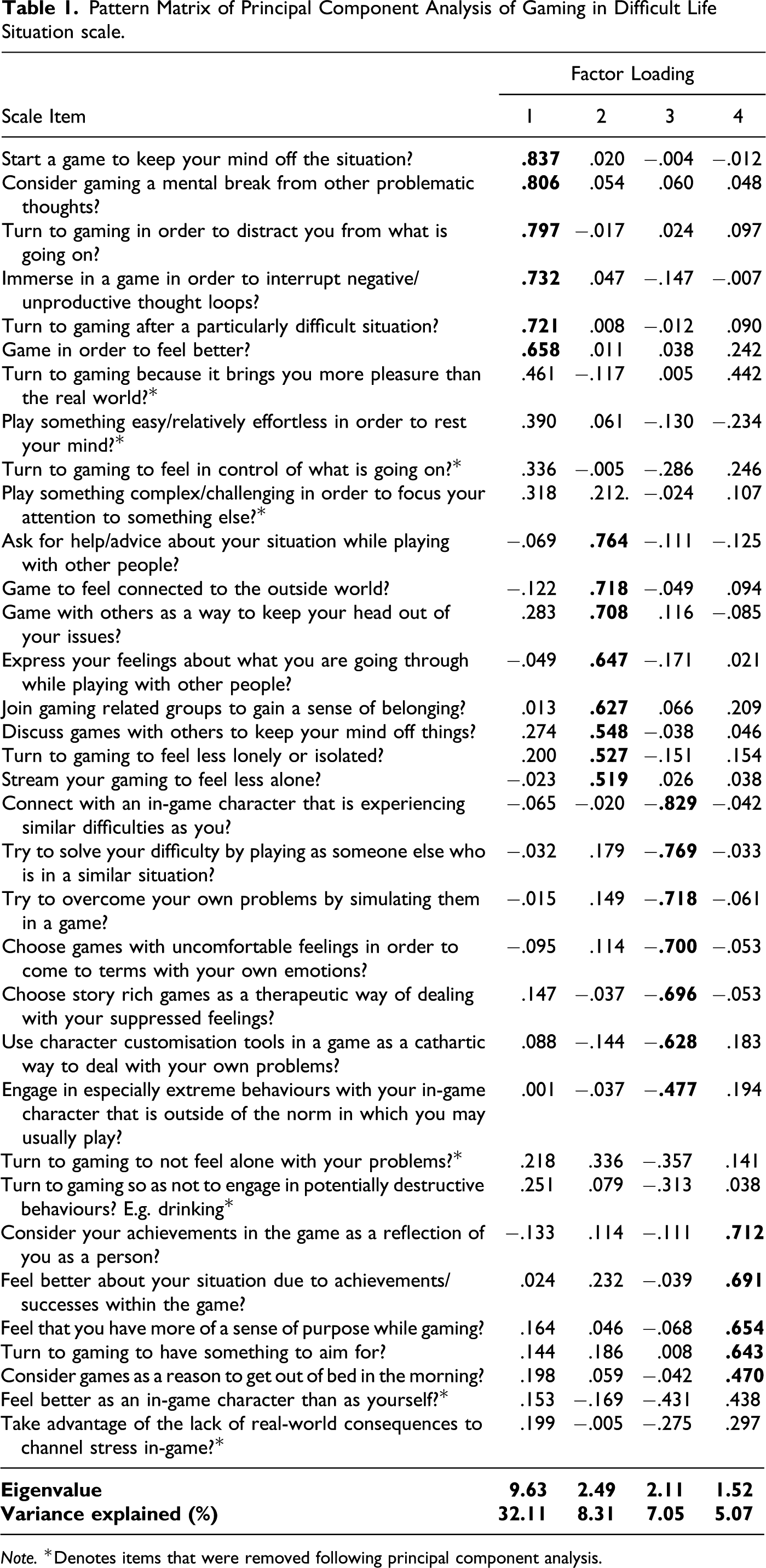
Note. *Denotes items that were removed following principal component analysis.
The four factors clearly mapped onto the original themes that provided the framework for the scale. Factor 1 was labelled ‘distraction from difficulties’ (six items) and related to players using gaming to distract themselves from problems they were experiencing (linking to the much needed respite theme). Factor 2 was labelled ‘connection with others’ (8 items) and related to players using gaming to connect with others and seek social support (linking to the connection theme). Factor 3 was labelled ‘in-game character connection and simulation’ (7 items) and is associated with players using gaming to simulate their offline challenges in an effort to cope (linking to the dealing with feelings theme). Factor 4 was labelled ‘sense of purpose’ (five items) and related to players using gaming to feel a sense of achievement when dealing with difficulties (linking to the gaming as a lifeline theme). The Cronbach’s alpha was .92 overall (Distraction from difficulties α = .90, connection with others α = .84, in-game character connection and simulation α = .84 and sense of purpose α = .81), indicating high reliability. Inter-item analysis indicated that removal of any additional items would decrease reliability, thus all 26 items were retained.
Further validation of the GDLS scale involved correlating the four subscales with an established measure of gaming motives. The MOGQ (Demetrovics et al., 2011) examines reasons why individuals engage in gaming with specific subscales also linking to elements of coping, escapism and social support and some of these should correlate with the behavioural indicators of the GDLS if they measure a similar construct.
Correlations of Gaming in Difficult Life Situations Subscales with Motivations for Gaming.
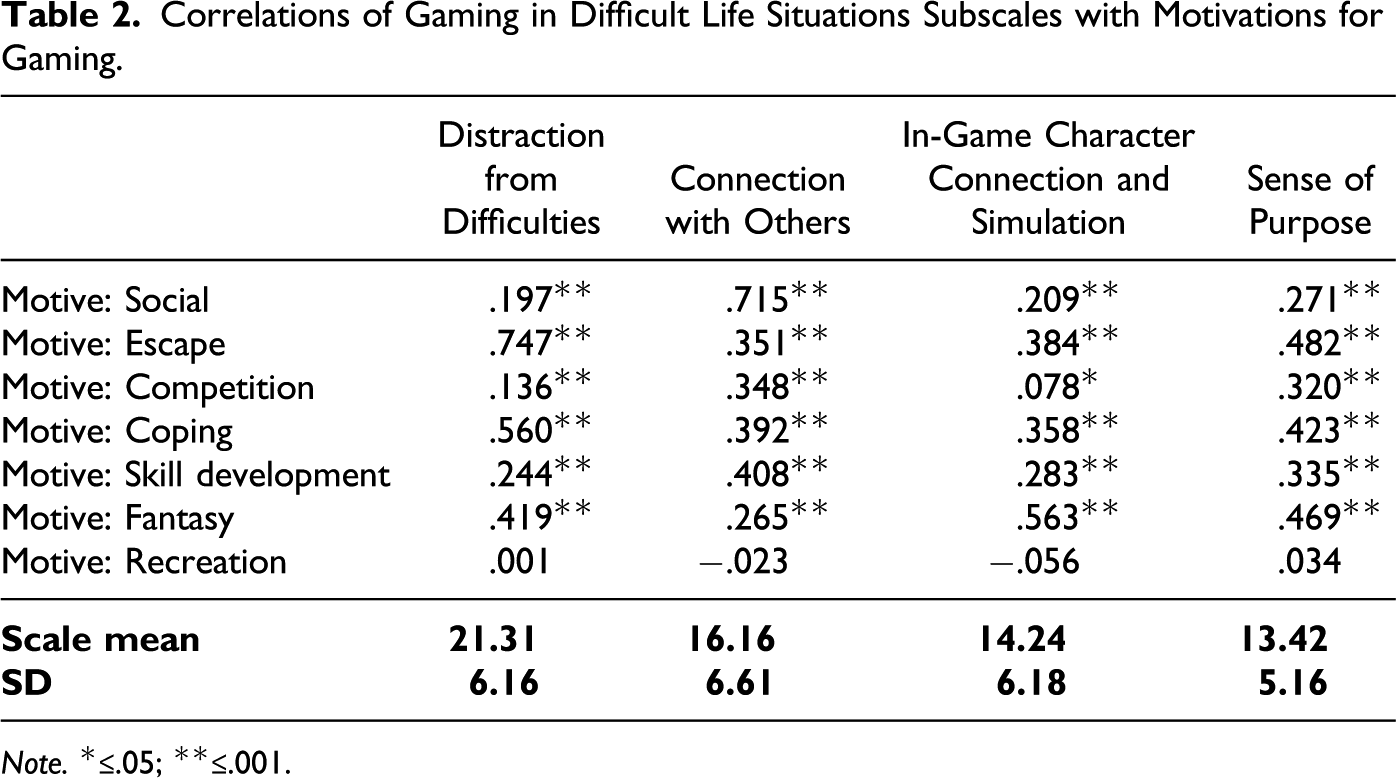
Note. *≤.05; **≤.001.
Correlations and Multiple Regression
Descriptive Statistics and Correlations of Main Study Variables.
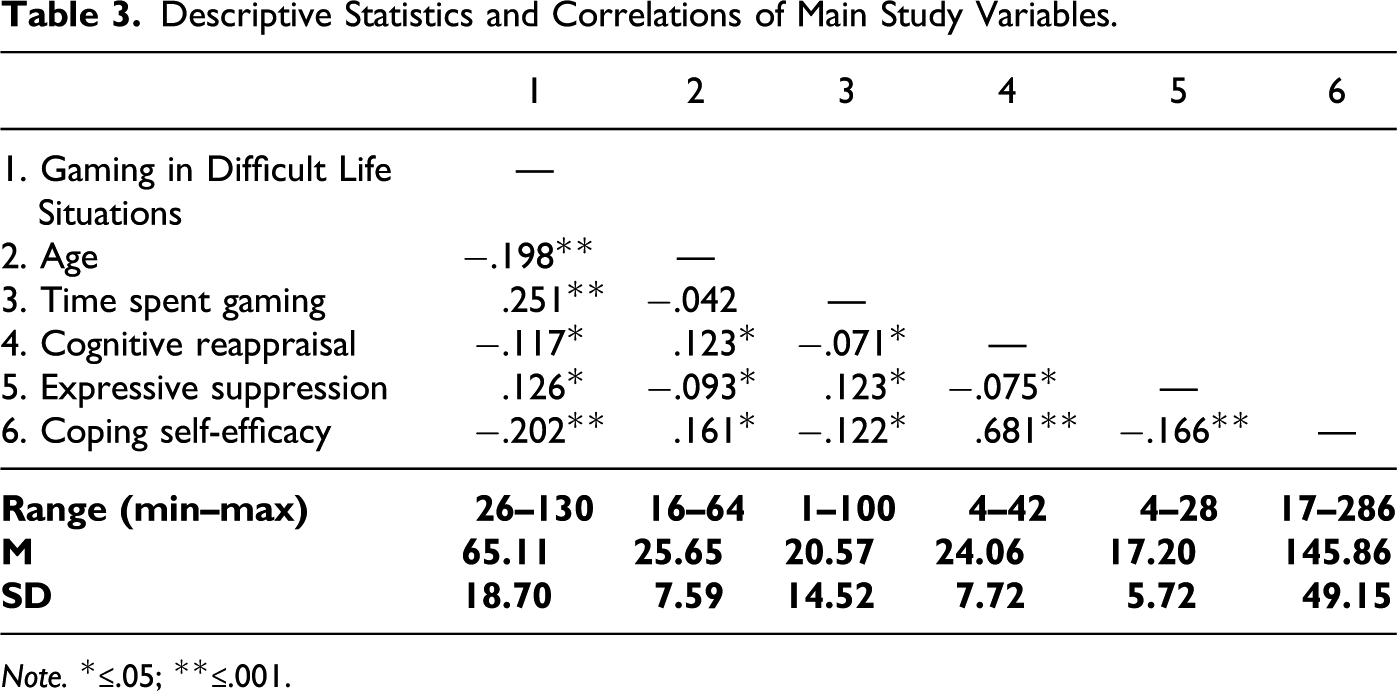
Note. *≤.05; **≤.001.
To examine whether the main variables cognitive reappraisal, expressive suppression and coping self-efficacy predicted GDLS, a hierarchical multiple regression analysis was conducted. Age and time spent gaming in an average week were controlled for and were entered at Step 1 of the analysis, while the three main variables were entered at Step 2. The dependent variable was the total score on the GDLS. Assumptions related to regression analysis were tested. The Durbin–Watson statistic was appropriate indicating independence of errors (2.06); the tolerance statistics (between .52–.99) and the VIF (between 1.00–1.94) showed multicollinearity was not a concern. Data was non-normally distributed (all variables had a Shapiro–Wilk of less than .05), thus bootstrapping was applied.
Hierarchical Multiple Regression Analysis.
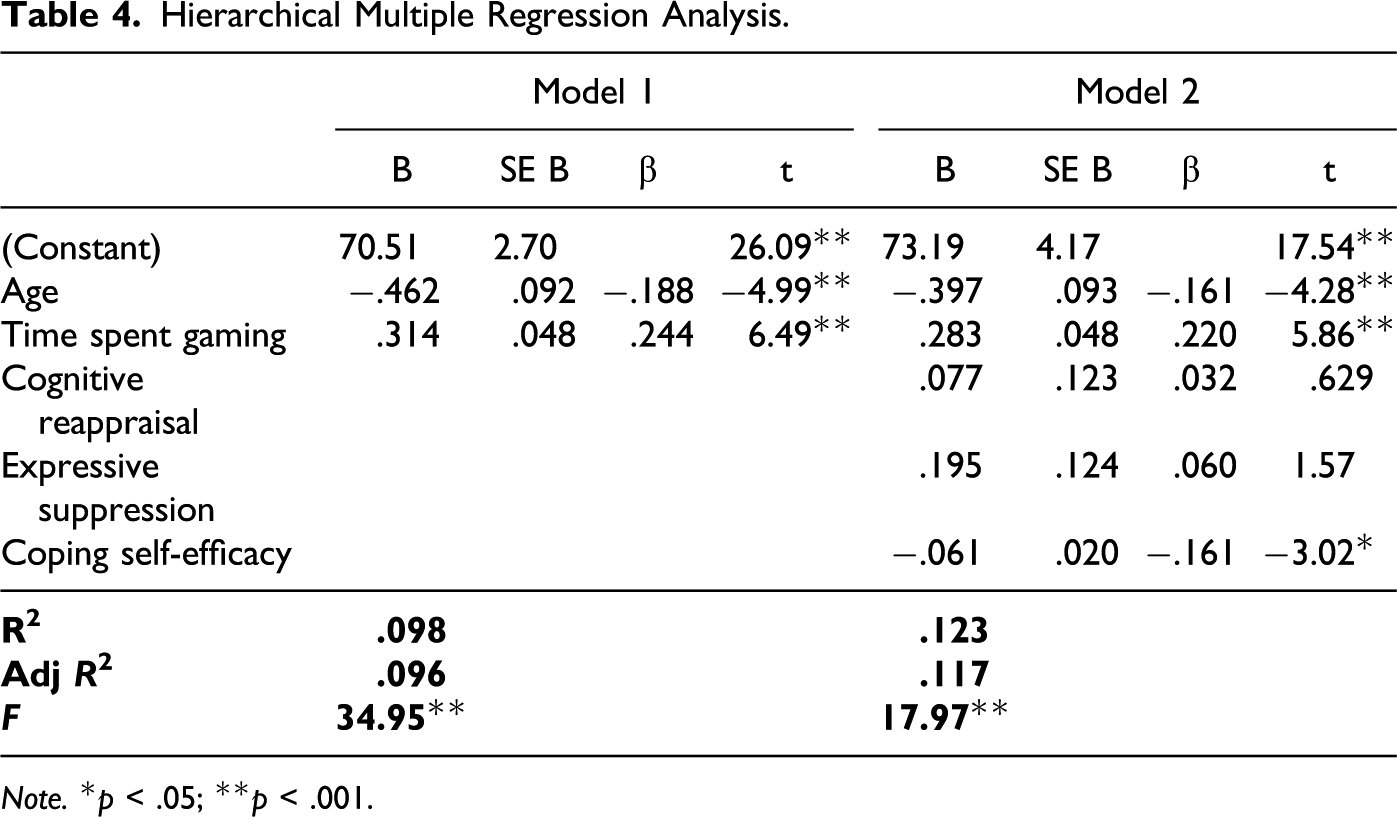
Note. *p < .05; **p < .001.
Discussion
GDLS Scale
The study first set out to develop a measure of GDLS, which was conceptualised using previous qualitative research (Iacovides & Mekler, 2019). The GDLS scale demonstrated construct validity with the items mapping onto four factors in line with the four themes on which they were based. Stringent thresholds were applied for item inclusion resulting in the removal of eight items, and the final 26-item scale demonstrated high reliability.
The ‘distraction from difficulties’ subscale reflects gaming as a tool to shift attention from real-life problems, while ‘sense of purpose’ reflects gaming as a means of experiencing a sense of achievement when dealing with difficulties. These subscales align with research showing the mood repair and stress relief potential of gaming (Hemenover & Bowman, 2018; Russoniello et al., 2013) and the motivational and emotional benefits that can result (Granic et al., 2014). However, escapism through cognitive distraction can also lead to problematic gaming when used as an avoidance strategy (Snodgrass et al., 2014). These subscales represent more indirect ways of using gaming to cope with problems, with focus on escapism and seeking positive emotions.
In contrast, ‘connection with others’ reflects gaming as a means of social connection and support-seeking, which aligns with research showing positive social effects including enhanced social capital (Kowert et al., 2014; Trepte et al., 2012). Finally, ‘in-game character connection and simulation’ reflects active attempts to deal with feelings through simulation of challenges. Exerting control over a virtual environment may aid in coping. As previously noted, games can enhance coping (Colder Carras et al., 2018; Procci et al., 2013) and support mental health and well-being (Jones et al., 2014). These subscales reflect more direct behavioural attempts to deal with problems through gaming. The development of the GDLS scale extends the work by Iacovides and Mekler (2019) and shows that gaming during difficult life situations can include both indirect (escapism and mood repair) and direct (actively dealing with challenges) behaviours.
The four subscales were correlated with an established measure of gaming motives (Demetrovics et al., 2011) and findings showed strong correlations in ways conceptually anticipated. For example, all four subscales were strongly positively correlated with coping motives on the MOGQ, distraction from difficulties was strongly correlated with escapism on the MOGQ and connection with others was strongly correlated with social motivations on the MOGQ, thus demonstrating criterion-related validity of the GDLS. The initial validation and inter-item analysis of the GDLS measure showed that it presents a coherent factor structure that is conceptually aligned with previous research and can successfully measure different behavioural indicators of GDLS. While further validation is necessary, initial findings indicate that the scale is measuring the construct of interest. Being the first scale to measure these constructs quantitatively, it paves the way for further research in this area. This can be particularly useful in examining potential factors that could underpin this behaviour.
Role of Emotion Regulation and Coping Self-Efficacy
Using the new GDLS measure, the second study aim was to explore the role of emotion regulation (cognitive reappraisal and expressive suppression) and coping self-efficacy as predictors of gaming behaviour in difficult life situations as previous research has shown links between these constructs and gaming more broadly. For example, difficulties in emotion regulation were associated with Internet Gaming Disorder (Yen et al., 2018), with escapism in gaming being a maladaptive attempt to regulate emotions (Blasi et al., 2019; Brand et al., 2016; Loton et al., 2016). However, gaming also presents contexts for developing healthy emotion regulation due to many games rewarding players for downregulating negative affective states (Granic et al., 2014; Lobel, Granic, & Engels, 2014).
In the current study, maladaptive emotional regulation (i.e. lower cognitive reappraisal and higher expressive suppression) was correlated with higher engagement in GDLS. Coping self-efficacy was negatively correlated with expressive suppression and positively correlated with cognitive reappraisal, indicating that maladaptive emotion regulation was associated with lower perceived ability to be able to cope with challenges. Lower coping self-efficacy also positively correlated with GDLS. Despite maladaptive emotion regulation and lower coping self-efficacy correlating with GDLS, only coping self-efficacy emerged as a significant predictor. Previous studies note the recovery potential of gaming (Reinecke, 2009), but dysfunctional coping styles have shown problematic gaming effects (Brand et al., 2016). Those with lower confidence in their ability to be able to effectively handle life challenges may be drawn to gaming as a distraction from difficulties and a means of regulating emotions to feel a sense of achievement. However, this study also suggests that individuals can use gaming as a direct attempt at coping with challenges, including seeking support from others and simulating their challenges and exerting control over them in a virtual environment. This opens up the possibility that those with lower coping self-efficacy may use gaming to enhance coping and help them deal with their life difficulties, and this is an important area for further investigation.
Apart from the main study variables, younger age and more time spent gaming were significant predictors of GDLS. Younger age was associated with with higher expressive suppression, lower cognitive reappraisal and lower coping self-efficacy. Age differences in stress and coping show longstanding research interest, with consideration about changes being developmental (i.e. inherent and stage-like changes as people age) or contextual (i.e. result of changes in what people must cope with) (Folkman, Lazarus, Pimley, & Novacek, 1987). Results tend to show developmental interpretations (Folkman et al., 1987; Skinner & Zimmer-Gembeck, 2007), but contextual interpretations are also applicable (Folkman et al., 1987). Studies show that older individuals engage in less escapist (Aldwin, 1991) and more proactive coping when dealing with life stresses (Neubauer, Smyth, & Sliwinski, 2019), with a general trend of increasing adaptive emotion regulation (Zimmermann & Iwanski, 2014). Thus, younger players who are still developing adaptive emotion regulation and coping skills may be turning to gaming when experiencing strain.
The same relationships were found with time spent gaming, that is those who spent more time gaming demonstrated poorer emotion regulation and lower coping self-efficacy. This may point to research on risk factors for problematic gaming (Hollett & Harris, 2020; Maroney et al., 2019; Yen et al., 2018), particularly when life stresses lead to a reliance on gaming to relieve negative emotions and provide a diversion from problems (Snodgrass et al., 2014). Thus, maladaptive emotion regulation and lower coping self-efficacy may drive individuals to engage in more time spent gaming to mitigate stress and strain that is felt, with time spent gaming being the strongest predictor for gaming behaviour during difficult life situations in the current study. Considering this alongside the age findings, future research should investigate additional relevant factors, both developmental and contextual, such as resilience, social support and self-esteem as well as types of challenges individuals face. This is important as it has the potential to uncover effective strategies for enhancing coping among younger individuals as well as intervening on those who may be at risk of using gaming as a maladaptive coping strategy. Given that maladaptive coping strategies have been linked to more depressive symptoms (Nolen-Hoeksema & Aldao, 2011), further studies can inform interventions linked to mental health outcomes and prevention of problematic gaming among those at risk.
Limitations and Future Directions
Of the main study variables, coping self-efficacy was the only significant predictor of GDLS, and there may be a range of factors that could lead individuals to feel less confident in their abilities to cope when facing challenges. These could be developmental or contextual, but may also be linked to other psychological factors such as mental health and resilience, individual traits such as self-esteem and personality or social factors such as social support and social competence. Future research should examine such factors in the context of gaming during difficult life situations. Moreover, with age as a significant predictor, future research should explore younger gamers. Studies show that gaming influences children as young as 8 years old, predicting their social competence (Hygen et al., 2019). Higher social competence at ages 8 and 10 predicted less time spent gaming two years later (Hygen et al., 2019). Future research should thus explore gaming in younger age groups, which can provide insights that could aid in developing strategies for enhancing coping and resilience. Gender differences should also be investigated as studies show differences in emotion regulation (Nolen-Hoeksema & Aldao, 2011), self-esteem, social support and life satisfaction (Pilar Matud, Bethencourt, & Ibáñez, 2014), and stress, rumination and depression between males and females (Jose & Brown, 2008). The current study also did not consider whether participants displayed any signs of problematic gaming despite previous research indicating that playing as a means of avoidance and escape can lead to problematic gaming (Snodgrass et al., 2014). Understanding the underlying risk and protective factors has important implications in terms of research and practice.
Finally, while the current study addresses some gaps in current research and presents a new measure, the findings are based on an overall score on the GDLS measure as an initial exploratory study. The results showed that there are in fact four distinct subscales in relation to gaming behaviours in difficult life situations which represent both direct and indirect acts for coping with life challenges. Future research should examine the subscales separately as there may be differential effects of variables on these different behaviours. To this end, further validation on the GDLS scale with other gaming samples should be undertaken.
Conclusion
Individuals differ in the ways they cope and adjust to difficult life situations. For some, life challenges can lead to impaired functioning while others demonstrate resilience over their experiences, and variables such as emotion regulation and coping self-efficacy represent risk and protective factors in this regard. This exploratory study showed that players turn to gaming when facing life difficulties in both indirect (distraction from difficulties and desire to feel a sense of achievement) and direct (seeking social support and simulating challenges within the game) ways. Correlations indicated that maladaptive emotion regulation and lower coping self-efficacy were associated with gaming during difficult life situations, but lower coping self-efficacy was the only significant predictor. Time spent gaming along with younger age also predicted gaming during difficult life situations. The study paves the way for future research via a newly validated measure and outlines additional variables for examination including individual, psychological, social, developmental and contextual. Further research can build on these findings and has potential to inform effective strategies for enhancing coping and resilience, and interventions for at-risk individuals. Importantly, even within the negative connotations that gaming could elicit, resorting to gaming when dealing with life difficulties can also have beneficial outcomes. Adding to knowledge on gaming as an outlet during difficulties has potential clinical and therapeutic implications.
Footnotes
Declaration of Conflicting Interests
The author(s) declared no potential conflicts of interest with respect to the research, authorship and/or publication of this article.
Funding
The author(s) received no financial support for the research, authorship and/or publication of this article.
