







Abstract
Desert Bus began as vaporware. A decade after it was initially shelved, it was rediscovered and became a way for gamers to show off their insider knowledge of rare and hard-to-find bits of gaming history. A few years later, its reputation for being one of the least fun video games ever made it the centerpiece of a long-running charity event. In this essay, I will conduct a textual analysis of Desert Bus and argue that the uniquely painful gaming experience that the game provides players makes it a perfect vehicle for charity streaming, providing both a sense of gamer authenticity and credibility to the Desert Bus for Hope event and an emotional incentive for viewers to give. This research stands to benefit scholars working on cult media, a field in which work on video games is relatively rare in comparison to work on television and film.
It's been 6 h on the road and I don’t know how much more I can take. My eyes are drooping and I have to go to the bathroom but there are not rest stops in sight. In fact, there is nothing, no landmarks, no road signs, not even a cloud in the sky so far as the eye can see. I haven’t seen another car on the road since I started out. In fact, the most exciting thing to happen on this trip was the bug that splattered on the windshield a few hours back. I wish I could coax this bucket of bolts into going a little bit faster, but it seems to top out at a measly 45 mph. Why did I sign up for this again?
Desert Bus is a cult video game with a strange history. It began its life as vaporware, software that was advertised but never actually released and presumed forgotten. A decade after it was initially shelved, it was rediscovered and became an obscure curiosity, a way for gamers to show off their insider knowledge of rare and hard-to-find bits of gaming history. A few years later, its reputation for being one of the least fun video games ever created made it the centerpiece of Desert Bus for Hope, “the world's longest running internet-based fundraiser” (“About Desert Bus,” 2022) on the streaming site Twitch.tv. What is it about this game that made it a cult hit and that makes it so effective at inspiring gamers to donate their money to a good cause? In this essay, I will conduct a textual analysis of Desert Bus's use of “abusive game design techniques” (Wilson and Sicart, 2010, p. 40), which can encourage players to rethink their relationship to play and to repurpose a game for use in all kinds of creative fan works including charity livestreams. Furthermore, I will argue that the uniquely painful gaming experience that Desert Bus provides players makes it a perfect vehicle to trigger the martyrdom effect, (Olivola and Shafir, 2013, p. 91), which refers to the idea that making oneself uncomfortable on behalf of a charitable cause can inspire people to contribute more money to that cause than they might have otherwise. Due to these features, playing Desert Bus makes for an excellent charity stream fundraising activity, providing both a sense of gamer authenticity and credibility to the Desert Bus for Hope event and an emotional incentive for viewers to give. This research stands to benefit scholars working on cult media, a field in which work on video games is relatively rare in comparison to work on television and film. By closely examining the bizarre and counterintuitive appeal of a decidedly un-fun game like Desert Bus, this essay hopes to further assist in defining what characteristics make a game desirable to a cult audience. This research may also benefit scholars interested in studying the social dynamics governing fan activism, and video game streaming culture, and charity stream events.
A Brief History of Desert Bus
Notoriously referred to by The New Yorker's Simon Parkin (2013) as “the very worst video game ever created,” Desert Bus remains one of the most famous examples of vaporware, “a name coined for software that's announced but never released or canceled,” (Schreier, 2018) in video game history. The game, which was originally slated to be released in 1995 for the Sega CD, was one part of a mini-game collection called Penn & Teller's Smoke and Mirrors (Absolute Entertainment, 1995a) and was developed by a company called Imagineering and designed with input from the magician duo as well as “former Saturday Night Live writer Eddie Gorodetsky” (Andrews, 2017). Smoke and Mirrors was designed to be a collection of pranks and practical jokes that savvy players could use to bamboozle their friends. For example, one minigame called Mofo the Psychic Gorilla (named after a character from Penn and Teller's live stage show) featured the titular ape guessing the physical playing card that a “sucker” (Absolute Entertainment, 1995b, p. 5) selected from a deck in real life… after the game's owner successfully input that information using a series of secret control pad button presses, of course (Absolute Entertainment, 1995b, p. 12). Another called Buzz Bombers is a multi-player shooting game that has been rigged to ensure that the owner of the console always wins: the game's CD case even comes with an alternative slipcover to help sell the illusion (Absolute Entertainment, 1995b, p. 38).
But Desert Bus is a slightly different kind of joke, one designed to poke fun at anti-video game crusaders in the early 1990s who, at the time, were pushing the idea that video games could be linked to real-life acts of violence (BradNicholson, 2008). The idea was to create a game so tedious and boring that “people like the Attorney General [Janet Reno] could get a good idea of how valuable and worthwhile a game that just reflects reality would be” (Parkin, 2013). According to Penn Jillette, “[Reno] said that they should design video games not to be all this excitement and shoot-em-up but rather should design video games that were like real life and people having real jobs” (Child's Play Charity, 2020). Desert Bus thus reflects a satirical attempt to give the Attorney General what she claimed to want: a video game free from excitement and based on a real-life job. As the game's instruction manual tells players: “real life just isn’t that exciting. Real life is working very hard at tasks that are often pretty darn tedious.” (Absolute Entertainment, 1995b, p. 22).
The game asks players to pilot a bus from Tucson, Arizona to Las Vegas, Nevada, which, in real-time, “takes approximately eight hours when travelling in a vehicle whose top speed is forty-five miles per hour” (Parkin, 2013). As such, “finishing a single leg of the trip requires considerable stamina and concentration in the face of arch boredom” (Parkin, 2013). “The bus carries no virtual passengers to add human interest,” indeed, the empty seats in the rearview mirror continuously remind the player of the loneliness of their journey, “and there is no traffic to negotiate. The only scenery (See Figure 1) is the odd sand-pocked rock or road sign” (Parkin, 2013), though, after a few hours of driving, a bug hits the windshield, momentarily breaking up the monotony (Channel LFD, 2022). Further complicating matters is the fact that “the vehicle constantly lists to the right, so players cannot take their hands off the virtual wheel; swerving from the road will cause the bus's engine to stall, forcing the player to be towed back to the beginning” (Parkin, 2013). This, too, unfolds in real-time, so if the player crashes after 90 min of play, they are stuck watching the bus get towed for another 90 min before they can try again. Per the manual, “There's no pause feature” (Absolute Entertainment, 1995b, p. 21), meaning that there is no way for the player to step away and take a break once the trip begins. And for those players who complete the trip, a final insult: while the game's score board is capable of displaying scores of up to five digits, completing the trip awards players with only a single, measly point (Child's Play Charity, 2020), after which they are asked if they would like to turn around and drive back again.
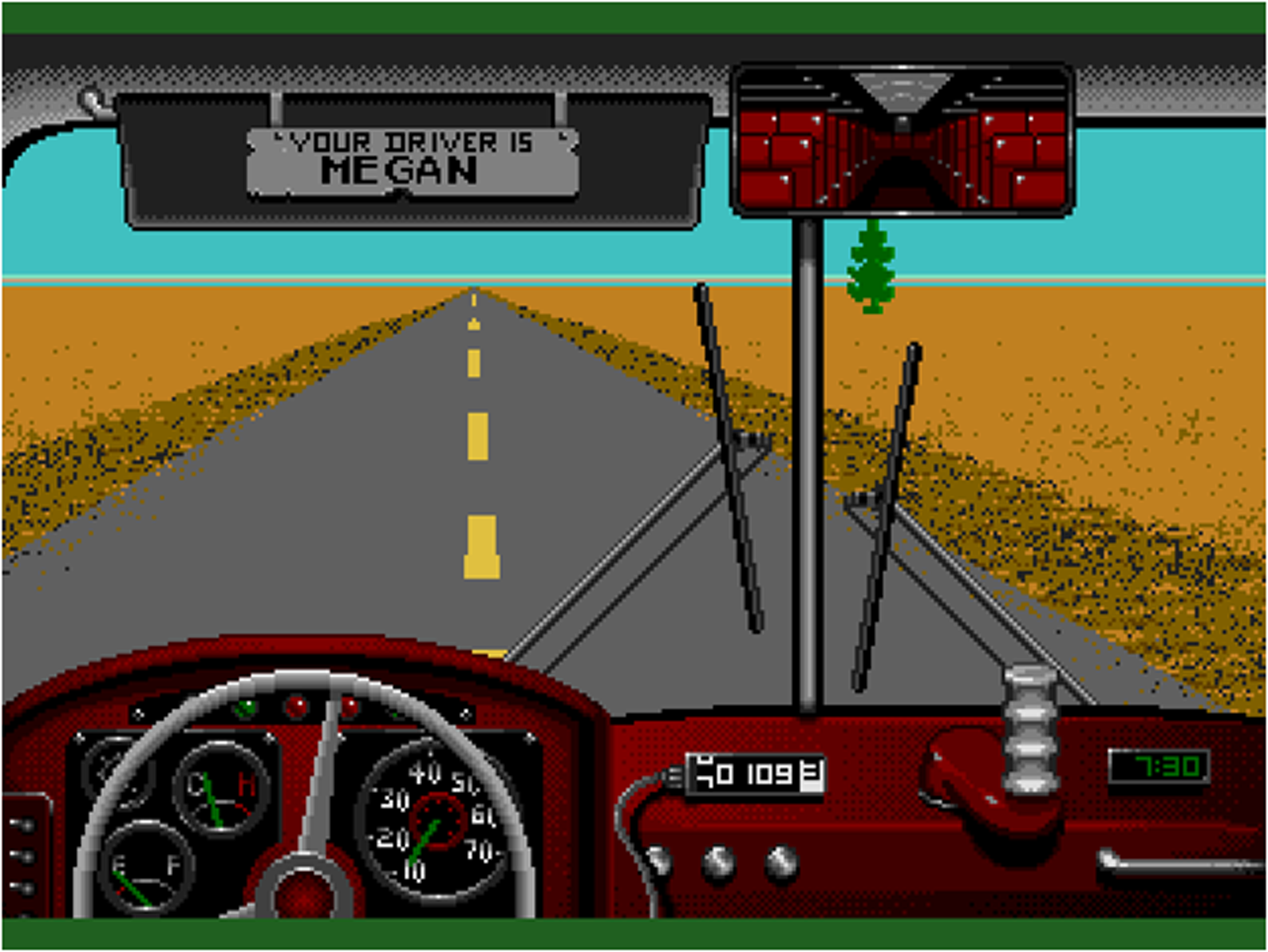
Screenshot from an emulated copy of Penn & Teller's Smoke and Mirrors, donated by a gamer who wishes to remain anonymous.
In the run up to the game's release, several review copies made their way to magazines like GamePro (Captain Squideo, 1995, p. 58), VideoGames – The Ultimate Gaming Magazine (Vebber, 1995, pp. 78–79), and even Entertainment Weekly (Strauss, 1995), and publisher Absolute Entertainment, along with Penn and Teller, “planned a lavish prize for any player that scored a hundred points, a feat that would require eight hundred continuous hours of play: a real-life trip from Tucson to Las Vegas on a desert bus carrying showgirls and a live band” (Parkin, 2013). However, by the time the game was completed, the Sega CD was dead as a platform, and soon the publisher closed its doors, causing the game to disappear without ever receiving an official release. It resurfaced about a decade later when one of those review copies made its way to Frank Cifaldi, “a freelance American journalist and self-professed video-game historian” and “the founder of Lost Levels, a Web site dedicated to the preservation of rare and obscure video games” (Parkin, 2013). Cifaldi published a copy to a couple of different Internet forums and soon a cult following developed around the notoriously painful curiosity.
Games with Cult Appeal
It can be quite difficult to pin down exactly what is meant when referring to a media text as “cult.” The term has been the subject of “battles over its meanings (as when disputes arise over which particular titles are cult film)” (Mathijs and Sexton, 2011, p. 2) and is “often used to describe media texts that have certain features such as a passionate fan following, a niche target audience, and a distinction or separation from the mainstream” (Parsayi, 2021, p. 4). However, the word's definition is not totally elastic: its use has been influenced by historical and other contextual developments, so that when one looks at the ways in which the word functions within various contexts (i.e. in journalistic articles, in academic papers, on a variety of internet discussion platforms) there are a number of recurring themes which tend to be associated with it. (Mathijs and Sexton, 2011, p. 2)
When it comes to film and television, one of the most prevalent recurring themes in discussions of what defines “cult” is that cult texts function “as a unifier that produces groups and communities of spectators” (Le Guern, 2004, p. 9). These communities may develop “ritual” behaviors (Hills, 2002, p. 92) around their consumption of the text, for example as when fans of The Rocky Horror Picture Show (Sharman, 1975) dress up in costume and sing and dance along with the film (Austin, 1981, see also Kinkade and Katovich, 1992) or when viewers of Tommy Wiseau's The Room (2003) toss plastic cutlery at the screen whenever the film's bizarre spoon-themed artwork is onscreen (Foy, 2012).
Another common characteristic of cult texts is that they are often perceived as rare or “secret” (Le Guern, 2004, p. 4) in some way, obtained through underground networks of VHS tape trading (Condis, 2011 and Bjarkman, 2004) and passed directly from fan to fan rather than through traditional distribution channels. This means that, due to their obscurity, these texts can function as a form of “subcultural capital,” (Thornton, 1997) a way for fans to demonstrate their insider status within the community.
They are often texts that have been deemed by mainstream critics to be tacky, low brow, or tasteless: To a certain extent, the cultist relationship with texts can be defined as a form of inversion of traditional value and a valorization of less “respectable” elements. This may involve, for example, the presence of “low” aesthetic elements (notably kitsch) or again the repetition of recurrent motifs that indicate genre films that capture the attention of cultist audiences. Productions that come to be regarded as cults are frequently those that have “escaped” the critics, which have not benefited from distribution resources, or whose production has been controlled by economic limitations that are particularly visible on the screen. (Le Guern, 2004, p. 8)
As such, being a fan of cult films means deploying “a particular reading protocol, a counter-aesthetic turned subcultural sensibility devoted to all manner of cultural detritus” (Sconce, 1995, p. 372), a willingness to, as Jeffrey Sconce (1995) puts it, “worship at the ‘temple of schlock’” (p. 372). They may also be texts that “transgress and offer a challenge to norms, whether these be the aesthetic norms of commercial mainstream filmmaking or broader social and ideological norms,” (Hutchings, 2003, p. 132, see also Mathijs and Sexton, 2011).
And finally, Umberto Eco (1985) notes that cult texts often utilize “intertextual frames” (p. 5) and engage in meta-textual references, so that its fans can “quote characters and episodes as if they were part of the beliefs of a sect, a private world of their own, a world about which one can play puzzle games and trivia contests, and whose adepts recognize each other through a common competence” (p. 3). Eco writes, “I think that in order to transform a work into a cult object one must be able to unhinge it, to break it up or take it apart so that one then may remember only parts of it, regardless of their original relationship to the whole” (p. 4). To him, cult films function like a cinematic playground that rewards attentive viewers with Easter eggs and hidden allusions to other bits and pieces of film culture.
Farzad Parsayi (2021) notes that, when it comes to texts other than films and media, the “medium shapes the type of audience and type of text, and this can also affect the particular form of the cult text” (p. 12). Therefore, “while the general idea of the cult is something that can be found in different mediums, the specifics of what a cult text is should be defined with an overview of the distinct affordances of each medium” (Parsayi, 2021, p. 12). While cult video games often share many key characteristics of cult films and tv shows, such as fan bases who “have developed a dedicated following with an intense attachment to the text” (Parsayi, 2021, p. 31), they also provide players with an endlessly re-workable design which affords the players the ability and the space to endlessly recreate their own versions of some, or all aspects of the game. By allowing fans to perpetuate the video game through “persistent recreation and extension,” the endlessly re-workable design provides the opportunity for the text to become the object of continuous and long-standing fan attachment (Parsayi, 2021, p. 30-31).
This attachment might take the form of “various fan activities” such as “repeated playings, fan made art, fan made games, ongoing discussions etc” (Parsayi, 2021, p. 31).
Desert Bus features many of the characteristics associated with cult media in general and with cult video games in particular. Firstly, it's strange history as a piece of vaporware that was only playable because a critic posted an unreleased review copy online parallels the history of “secret” or unreleased films and tv shows that could only be obtained via tape trading. As such, it confers subcultural capital upon those who know about it. More precisely, it grants what Mia Consalvo calls “gaming capital,” which consists of “being knowledgeable about game releases and secrets, and passing that information on to others” (Consalvo, 2007 p. 18, see also Condis, 2016). Second, its subversions of the typical gameplay loops associated with driving games (the low top speed that your bus can reach, the lack of obstacles or twists and turns in the road to provide variety, and the single point being awarded for an eight-hour trip on a point-scale that is capable of displaying values up to five-digits long) and its satirization of media discourse on games and violence function as intertextual frames and references to other areas of video game culture. And, most importantly, the torturous experience that it provides perversely invites players to engage in the kind of “persistent recreation and extension” that Parasyi believes are the hallmark of cult video games.
This Game Hurts: Abusive Game Design
Douglas Wilson and Miguel Sicart (2010) describe Desert Bus as an example of “abusive game design,” “an alternative design practice that challenges conventions of normative game design” and that “focuses on creating a dialogue between designer and player” (p. 40). According to Wilson and Sicart (2010), the normative game design philosophy that dominates commercial video game development encourages “a perspective on gameplay in which players stand at the center of the gaming experience, ready and eager to be pleased within the bounds of their established tastes, interests, and skills” (p. 2) and in which “players become mere customers” and “the player (the customer) is always right.” (p. 3). Or, as Bo Ruberg (2015) puts it, “Commonly, game players, game designers, and game scholars make the assumption that, first and foremost, games are supposed to be fun—and that the ‘right’ way to play, the normal way to play, is to maximize normative enjoyment” (p. 109). However, “Like any art form, video games can and do engender a wide range of emotions” besides enjoyment, “among them anger, annoyance, fear, alarm, and hurt” (Ruberg, 2015, p. 110). And although several recent academic studies have focused on the centrality of failure (Juul, 2016 and McGonigal, 2011) and loss aversion (Engelstein, 2020) in video game design, even these scholars tend to “explain away these bad feelings by explaining them as stepping stones on the road to success,” as elements that contribute to the creation of an overall experience of fun and empowerment (Ruberg, 2015, p. 109-110). Abusive game design techniques, on the other hand, can be thought of as a disruption of this customer/provider relationship and a way to encourage players to relate in a deeper, more personal, and potentially more critical way to the games that they play and to the designers who exist behind them and speak through them. “Rather than give players what they ‘want’ or what they supposedly ‘need,’” write Wilson and Sicart, (2010) “abusive game designers give players something idiosyncratic, weird, and confrontational” (p 46), an experience that enables new subjectivities besides that of the consumer to arise within the context of play (p. 44).
There are many different ways in which Desert Bus exemplifies abusive game design techniques. The first is “physical abuse” (Wilson and Sicart, 2010, p. 3) or the infliction of physical discomfort or pain during the course of play. Although Desert Bus doesn’t directly cause pain in the player, the endurance challenge that the game poses and the refusal to provide players with the ability to pause to take care of physical needs like the need to use the restroom or the need to stretch or rest one's eyes result in a gaming experience that is quite physically uncomfortable. Another is “unfair design” (Wilson and Sicart, 2010, p. 3). According to Wilson and Sicart, (2010) “abusively difficult games... visibly relish in the dementedness of their challenges, gleefully shoving it in the players’ faces” (p. 3). While Desert Bus is not particularly difficult in terms of the mechanical challenges it poses, the length of time commitment that earning a single point poses and the long punishment for failure that occurs if the player runs the bus off the road feel quite unfair in comparison to the way that other, more accommodating games operate. Finally, “aesthetic abuse” (Wilson and Sicart, 2010, p. 4) is the presentation of ugly or unappealing visuals and sounds within the game, and Desert Bus's aggressively dull and boring environment can definitely be categorized as aesthetically unpleasant.
The confrontational and often anti-fun experiences conferred by such games give rise to an awareness of the designer behind the systems that the player is engaging with, thereby encouraging players to begin to think like designers themselves and perhaps even to produce and design their own fan works (Fiske, 1992) in response. As Bo Ruberg (2015) puts it, “rejecting fun means turning normative expectations on their heads and embracing the art of playing the wrong way. Lingering over sadness, annoyance, or pain frequently represents a rebellion” (p. 117). And, indeed, Desert Bus has inspired many ludic creations, from game mods (Postigo, 2007 and Sotamaa, 2010) that re-create the game inside of other popular games like Minecraft (Reedspun, 2020), Doom II (Revenant100, 2018), and Pokemon FireRed (Manekimoney, 2020) to original games created during Desert Bus-themed Game Jam events (Famout, 2021, for more on game jams see Kultima, 2015) (See Figure 2).
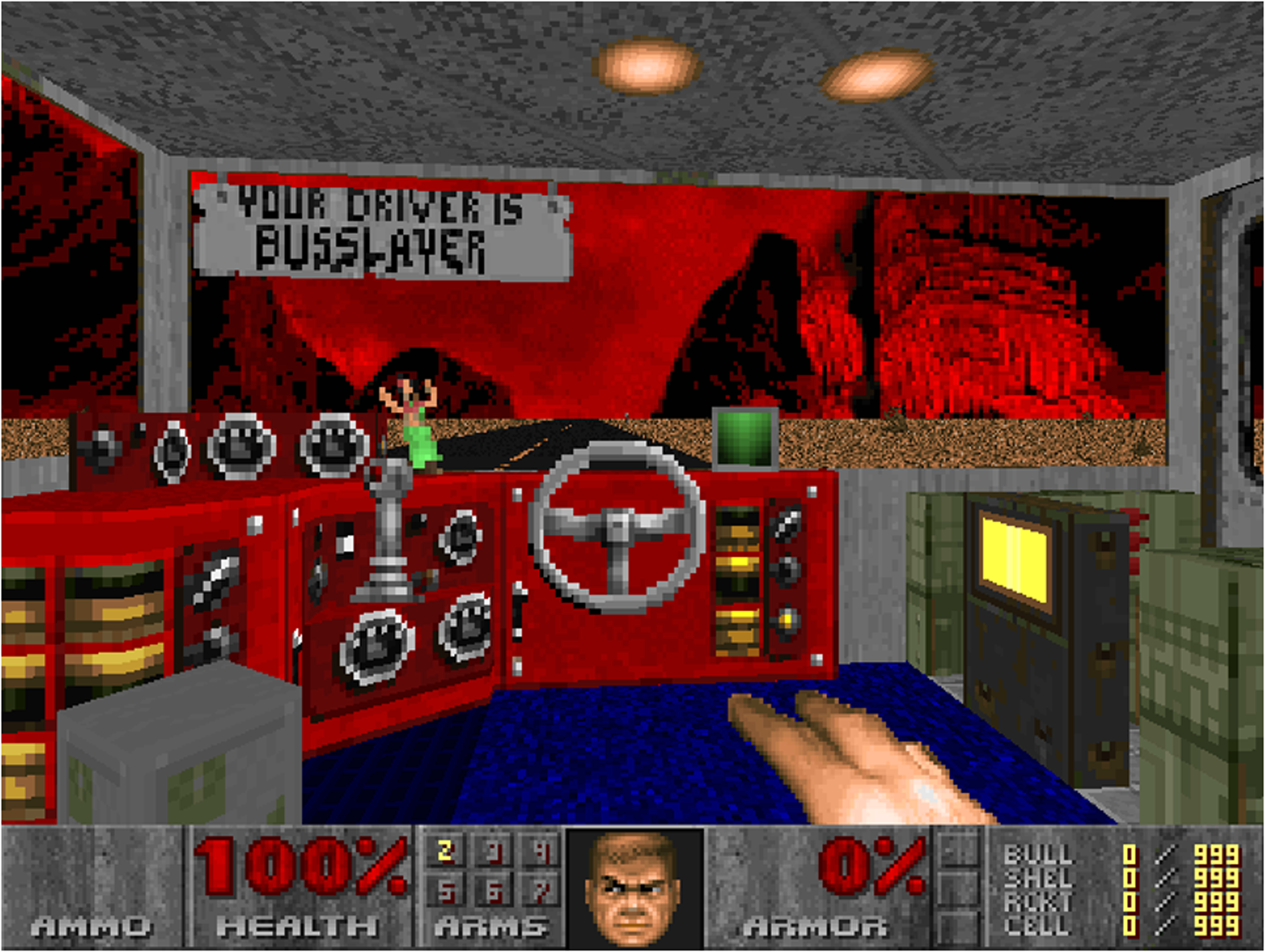
Revenant Bus, a fan-created mod of id Software's Doom II. Screenshot by the author.
Desert Bus for Hope as Fan Activism
The most well-known of these fan-created works is the annual Desert Bus for Hope event, a combination fan activist telethon and live-streamed torture chamber that started on a streaming platform called ustream.tv and moved to Twitch.tv in 2011 (The Desert Bus Video Strike Team, 2022, see Figure 3). Fan activism includes “forms of civic engagement and political participation that emerge from within fan culture itself, often in response to the shared interests of fans, often conducted through the infrastructure of existing fan practices and relationships, and often framed with metaphors drawn from popular and participatory culture.” (Jenkins, 2014, p. 65). Fan activism is sometimes “associated with active fans lobbying for a content-related outcome” (Brough and Shresthova, 2012) as in a “save our show” letter-writing campaign (Scardaville, 2005 and Savage, 2014) or a movement lobbying for more diverse casting (Brough and Shresthova, 2012, see also Garber and Paleo, 1983 and Lopez, 2011). However, it can also refer to groups taking advantage of “the porous boundaries between cultural and political concerns” (Brough and Shresthova, 2012) to harness the energy, attention, and resources of fans and directing them towards more overtly political ends. And as one of the most popular gathering places for game fans, Twitch.tv is an ideal venue for fan activist projects.

A behind-the-scenes photo of the Desert Bus for Hope annual charity event. Photo by Kolin Toney, specialkolin.com.
Twitch.tv is a live streaming platform where people broadcast themselves doing activities such as playing video games. While Twitch is primarily focused on video game content, it is expanding to other creative areas as well such as music and art” (Mittal and Wohn, 2019, p. 552). “Viewers of the stream communicate with the streamer and other viewers through the chat. Meanwhile, streamers simultaneously engage in game play and communicate via audio and video. Participation in streams is open. All that is required to chat is a free Twitch account” (Hamilton, Garretson, and Kerne, 2014, p. 1315). With functionality combining the appeals of the “sportscast, social network, video game, and teaching video” (Wulf, Schneider, and Beckert, 2018, p. 331), Twitch's popularity has grown exponentially over the last decade, boasting almost 70 million hours watched across 1.3 million unique streams daily (TwitchTracker, 2022). It is also becoming an increasingly popular venue for charitable organizations looking to raise money for a good cause via charity streams. Charity streaming refers to “individuals or groups of streamers who create events during a set time frame to raise money for the charity of their choice. Some of these efforts are made by collaborations between the streamer and charity organization, or through charity events that are organized by third parties” (Mittal and Wohn, 2019, p. 552). Mittal and Wohn (2019) report that “between 2012 and 2017 Twitch has raised over $75 million in donations for over 100 different charities” (p. 553) and that charitable groups have been looking to Twitch to “spread more awareness to their cause, reach a younger audience, and recruit more people to support their organization” (p. 553).
Desert Bus for Hope is one of the most successful charity stream events ever featured on Twitch. The event “started in 2007 by internet sketch comedy group LoadingReadyRun” (“About Desert Bus,” 2022) to benefit Child's Play, “a registered charity dedicated to improving the lives of children undergoing treatment in the hospital with toys and games” (“About Desert Bus,” 2022). Thematically, Desert Bus is an excellent match for the Child's Play charity in that both entities attempt to recontextualize what video games are and are for. As mentioned above, Penn and Teller originally conceived of Desert Bus as a tool to mock Janet Reno's rhetoric about games and violence while Child's Play emphasizes the therapeutic benefits that games can provide to children experiencing illness. Furthermore, using a cult video game like Desert Bus enables the LoadingReadyRun crew to establish their bonafides as members of the gaming community: they aren’t outsiders cynically attempting to appeal to gamers in order to manipulate them into giving money. They are true fans as demonstrated by the gamer capital that their knowledge of/mastery of a game like Desert Bus provides.
But beyond it's cult appeal, Desert Bus is an especially ideal game for a charity stream because its abusive game design techniques trigger something researchers call the “martyrdom effect” (Olivola and Shafir, 2013, p. 91). The martyrdom effect refers to the notion that “the prospect of enduring pain and exerting effort for a prosocial cause can promote contributions to the cause” as in the case of money-raising events such as “charity walk-a-thons… walking barefoot on burning coals and broken glass, plunging into extremely cold water” (Olivola and Shafir, 2013, p. 91) and the like. This is because “the prospect of enduring pain and effort for charity [leads] people to ascribe greater meaning to donating, which motivated them to donate more” (Olivola and Shafir, 2018, p. 3). This effect holds true for both participants in the painful charity events in question and “non-participating donors—i.e. friends, colleagues, and family members who are asked to sponsor the participant's fundraising” (Olivola and Shafir, 2018, p. 4). And, as the Desert Bus for Hope event demonstrates, this martyrdom effect can extend to broader fan communities.
In the case of Desert Bus for Hope, the “pain” that must be endured is the tedium of its namesake's long empty drive, which, according to the rules of the telethon, must be played “for it as long as donations come in” (“About Desert Bus,” 2022). In fact, LoadingReadyRun applies game design techniques to the structure of the fundraiser itself, setting it up so that “the donations required to add another hour go up by 7% for every additional hour” (“About Desert Bus,” 2022). For example, while it only costs a single dollar to purchase their first hour of playtime, the second hour will cost the viewing audience $1.07 in donations, etc. “Therefore, the first few days of the event are quite cheap, but by the end of the week it costs several thousand dollars to keep the team going for another hour” (“About Desert Bus,” 2022). In other words, the amount of fiscal “pain” felt by the audience as they donate more and more money mirrors the “suffering” experienced by the players/performers. The stream itself functions as a kind of metagame (Boluk and LeMieux, 2017) with its own abusive game design techniques, in which the viewers of the stream “play” using their own money and thereby join in on the painful experience being had by the players as it takes more and more money to extend the clock the longer the stream goes on. This gamified format has proved extremely effective. As of 2021, Desert Bus for Hope is “the world's longest running internet-based fundraiser” (“About Desert Bus,” 2022) and “has raised more than $8 million for Child's Play over its fourteen-year history” (“About Desert Bus,” 2022), with the 2021 event bringing in $1,188,128,81 over 167 excruciating hours (Tim, 2021).
Of course, the broadcast features a lot more than just footage of the game being played. According to Jeremy Petter, one of the LoadingReadyRun cast members, one of the things that makes Desert Bus [for Hope] work is that the game is so boring that we have to be entertaining to make up for that fact. You know, when a video game streamer is streaming a lot of the time they will just be sitting back and sort of letting the game do a lot of the work or playing the game and letting their skill do the work or whatever. But when, with Desert Bus, the game is so uninteresting that was why we started having to step up and do entertaining stuff in the first place. (Child's Play Charity, 2020)
The team punctuates the stream with skits and comedy sketches, give-aways, (Child's Play Charity, 2020) and even a craft-along (“Craft-Along,” 2022) in which creative fans will mail in art to be auctioned off for the cause. In total, preparation for the annual event can take months and includes lots of behind-the-scenes, off-camera work (Johnson, 2021) including recruiting volunteers, writing and rehearsing, designing graphical overlays and transitions, and making sets and costumes (Child's Play Charity, 2020).
Conclusion
In the years since the debut of Desert Bus for Hope, the profile of the once extremely rare and obscure game has risen greatly, inspiring the development of playable versions of Desert Bus for the iPhone (“Desert Bus,” 2015) and the Android (“Desert Bus,” 2013), and a Virtual Reality sequel (Dinosaur Games and Gearbox Software, 2017) (see Figure 4), which “adds updated graphics and a multiplayer version, in which other players can ride as passengers on the bus and ‘sit, wave, and even throw wads of paper at the driver'” (Andrews, 2017). Meanwhile, Penn and Teller are still exploring abusive game design techniques in Penn & Teller VR: Frankly Unfair, Unkind, Unnecesesary, & Underhanded (Gearbox Publishing, 2019) read: F U, U, U & U), a game in which, in true Desert Bus style, players can “be Penn Jillette as he reads the entirety of Moby Dick on an e-reader. Yup, the complete book is in the game” (Wood, 2019).
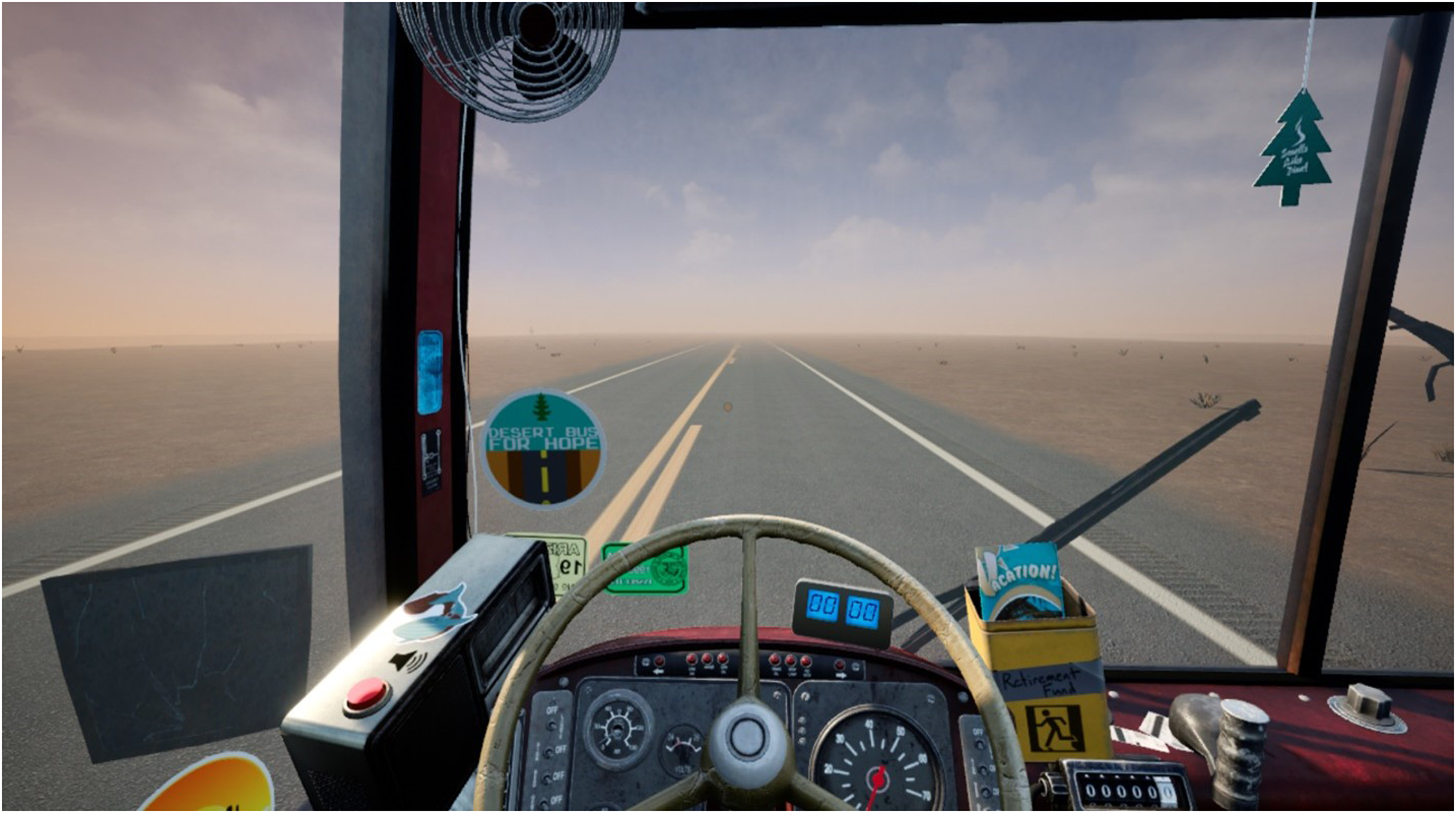
The view from the driver's seat in Desert Bus VR. Note the Desert Bus for Hope sticker on the windshield. Screenshot by the author.
Desert Bus is an excellent case study for scholars interested in studying cult video games, a type of cult media that has long been underexamined. Its history of inaccessibility and unobtainability makes it a source of gaming capital within fan culture and its utilization of abusive game design techniques encourages players to reinterpret and redeploy the game in new ways. One of these new uses is the Desert Bus for Hope charity stream event, which uses the martyrdom effect to entice viewers into donations via the “pain” that Desert Bus creates in its players. By studying the unique “appeals” of Desert Bus, I hope to both provide a framework for studying how the practices of cult game fans are both similar to and different from the practices of cult film and television fans as well as how fan activists can use cult appeal to their advantage in order to direct their fellow gamers towards a good cause. While the experience of playing Desert Bus is extremely un-fun, it is, paradoxically, a game that has created a lot of joy in the world.
Footnotes
Declaration of Conflicting Interests
The author(s) declared no potential conflicts of interest with respect to the research, authorship, and/or publication of this article.
Funding
The author(s) received no financial support for the research, authorship, and/or publication of this article.
