







Abstract
How players react to failure remains an understudied area of games research. Previous work has shown that mastery orientation can effectively gauge how players will behave in response to failure in a video game. This study shows that after playing a challenging video game for two weeks, women who initially scored lower on this scale significantly increased, while men significantly decreased. No differences were found regarding how much they played, how often they failed, or their reactions to in-game failure. This suggests that this change is not rooted in their behavior, but in their perceptions of their ability to persist in these environments. These perceptions may have been influenced by well-documented stereotype biases that women and other individuals face entering video game communities. While this doesn’t address the root cause, it suggests that the perception of their ability to persist through challenging games can change with exposure, relieving these held biases.
Introduction
Failure in Games
Video games, especially challenging video games, create a special relationship with failure—players expect that they are going to fail during their play, and even relish the experience. This has led game theorists to argue that failure is an important part of the gameplay experience (Anderson et al., 2018; Gee, 2003; Juul, 2009; Squire, 2006; Ruberg, 2017). Juul argues that we typically avoid failure, but in games we desire it, creating a paradox [2013]. Failure in a game signals to the player that it is at a challenge level that will test their ability and enriches the experience when they complete it. Players learn how to navigate through the game, develop finer skills and strategies, and take on the game's most difficult challenges all while being confronted with a level of challenge that often forecasts looming failure. Players expect to see the familiar “Game Over” screen while learning how to complete a game or taking on the most difficult challenges it presents (Figure 1). In fact, if the player completes a game without encountering any failure, the game is often dismissed as trivial or unsatisfying (Juul, 2009). This work has encouraged a robust debate between game scholars regarding the nature of failure in video games and its relationship with players. Building from Juul's argument, Ruberg further shows that players often take pleasure in what observers might call failure, arguing that failure in games is inherently a queer activity given the non-normative relationship they create with players (2017). Game developers create fail-states that are hard-coded into their game, which become default measures of what it means to fail while playing. However, Ruberg's work shows that failure is personal and contextualized to the goals that the player is pursuing at any given time. Players choose how they want to play, what goals they pursue, and what success means to them. Likewise, this also changes what it means to fail and the meaning of failure in that context. Failure to a player who aims to beat the fastest speed run time looks very different from a player just trying to get through the game at their own pace. While game scholars and play theorists have argued for years that failure is an important part of the play experience (Juul, 2009; Squire, 2006; Gee, 2003) a growing body of research has begun to dig deeper into how players conceptualize failure and how they react within games. Previous work has shown that individuals who value challenge in video games are more likely to be confident in their ability to persist through challenging experiences (Anderson et al., 2019), that failure can help players come to understand how to complete a game (Squire, 2006) and that those who fail the most in educational games actually learn more than those who complete it with fewer failures (Anderson et al., 2018).
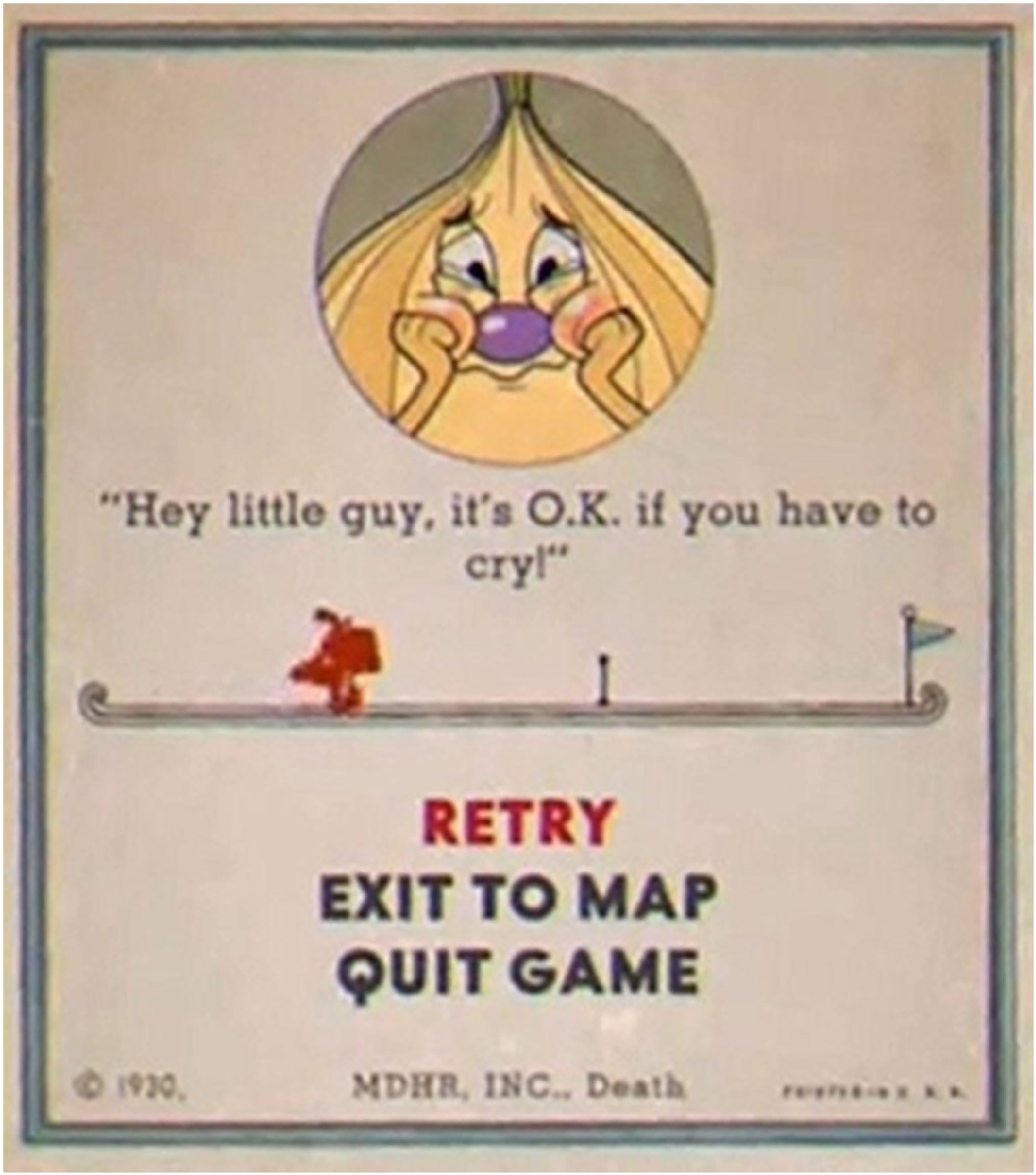
A “Game Over” screen in Cuphead.
Preliminary investigation as part of this work has shown a wide range in how players conceptualize failure (Anderson, 2020b); some players do not feel as though they have failed unless they had already completed the section in which they were met with a hard-coded fail state (i.e the game over screen), implying that setbacks during their first attempt at a new area were not considered failures. Some players felt as if they failed anytime they performed poorly, while some only felt that it was a failure if they gave up trying, suggesting that failure is contextual and personalized. This demonstrates that a nuanced investigation into the different conceptualizations of failure between different players is needed for a complete understanding of how games frame failure, how different players react, and how developers can best implement failure into their games. For some insights into how this might be accomplished, we can turn toward literature in psychology.
Mastery Orientation
Decades of research in psychology has illuminated different ways individuals tend to respond to failure, most prominently in classrooms. This research has identified a suite of positive failure strategy behaviors, including mastery orientation in which individuals can be considered “mastery-oriented” or “helpless-oriented” (Dweck & Reppucci, 1973). Mastery-oriented individuals are described as using positive, self-focusing language (Diener & Dweck, 1978), and show heightened effect and increased effort in response to failing a difficult problem (Dweck & Leggett, 1988). These individuals regard failure as information that will lead them to solve the problem rather than an assessment of ability or prediction of future attempts, even if they were falsely informed of a failure (Dweck & Reppucci, 1973). These individuals don’t even seem to think that they’ve failed in these moments; they treat them as setbacks and moments of reflection that will ultimately help them succeed (Elliott & Dweck, 1988). Conversely, some individuals are characterized as “helpless-oriented.” Indistinguishable from “mastery-oriented” individuals when they succeed, these individuals use the same strategies until they are confronted with failure. When failure occurs, their strategy use deteriorates, and ineffectual responses increase. Helpless-oriented individuals show an absence of progress after failure; report negative self-conditions; report negative affect including boredom, aversion, anxiety; decreased performance; and use of ineffective or impossible strategies (Diener & Dweck, 1978). Failure completely stops helpless-oriented individuals in their tracks, whereas mastery-oriented individuals are invigorated by failure, renewing their efforts and resolve.
Previous work as part of this line of inquiry has shown that mastery-oriented behaviors in gameplay and the number of mastery-oriented gameplay behaviors made sequentially before a helpless-oriented gameplay behavior are associated with a higher score on the mastery orientation scale for game contexts and that abandoning a level before completing it is associated with scoring lower on the mastery orientation scale for game contexts (Anderson, 2020a). This shows that the mastery orientation scale can effectively gauge how a player will react to failure in game, with more mastery-oriented players exhibiting more mastery-oriented behaviors and fewer helpless-oriented behaviors in a game context. However, there are important mediating factors to how individuals approach games including how people of genders other than men feel as though they will be welcomed to and how they will perform in the game space. These factors have not been investigated with regard to who these individuals react to failure in games.
Gender Stereotypes in Games
Researchers and developers have agreed that a gender gap exists in who plays games and what games they play (Ratan, et al., 2015; Taylor, 2012; Taylor et al., 2009; Trepte et al., 2009; Witkowski, 2011). It is also important to note that historical and cultural influences result in very different play experiences for women compared to men. The expectations and pressures placed on women when joining a gaming community often lead them to filling roles that reify stereotypes that women want to or must fill specific roles. For example, in action-oriented games, women often find themselves playing support or healing roles (Ratan, et al., 2015; Ruotsalainen & Friman, 2018). These stereotypes also encourage women to consider themselves to be less suited to and less skilled at video games than men (Richard & Hoadley, 2013). Likewise, Vermeulen, Núñez Castellar, and Van Looy found that women felt more stress and gauge their ability as lower when they thought they were playing versus a man, regardless of the actual gender identity of their opponent. However, when controlling for game experience, no actual difference in skill is found between women and men (2014). Cultural expectations lead women to this stereotype, lowering their confidence when playing with men, while playing in male-dominant spaces, and in game contexts that are considered challenging, resulting in avoidance of those spaces (Cote, 2015; Ruotsalainen & Friman, 2018). These barriers prevent women from exploring these play spaces have led to calls for increasing receptiveness to women: We need to open up more space for girls to join—or play alongside—the traditional boy culture down by the river, in the old vacant lot, within the bamboo forest. Girls need to learn how to explore “unsafe” and “unfriendly” spaces, and to experience the “complete freedom of movement” promised by the boys’ games, if not all the time, then at least some of the time, to help them develop the self-confidence and competitiveness demanded of professional women. They also need to learn how, in the words of a contemporary bestseller, to “run with the wolves” and not just follow the butterflies. Girls need to be able to play games where Barbie gets to kick some butt. (Jenkins, 2007)
This concern for the inclusion of women in game communities is perhaps best exemplified in events like game jams for women (Myers et al., 2019), women-only gaming tournaments (AnyKey, 2019), and organizations tailored to support women in games (Chess, 2017). Providing spaces for women to engage in the games they are interested in, to build networks of support, and to develop confidence continues to be important goals that advocates, researchers, and developers pursue. Other strategies that have taken aim to make game community spaces more welcoming to women have focused on community activism and reform, including community-driven moderation interventions (Brewer et al., 2020) as well as calls to combat gender inequality in the game industry itself (Ahmadi, et al., 2019). Great effort and purpose from advocates and researchers will be required to ensure these spaces are more welcoming and that the stereotypes that drive women away are dispelled. Including alleviating women themselves from these stereotypes, to show that they can play alongside and at the same level of skill as men.
Exploring Failure in a Challenging Game
While game researchers have long theorized that failure is an important part of the play experience and cognitive scientists have used surveys to gauge how individuals with a mastery or helpless orientation react differently when they encounter failure, researchers have yet to fully investigate the nuances of how individuals react to failure, particularly individuals that face barriers to entry in video game communities. This provides an opportunity to further the approaches used in cognitive science by applying them to data-rich game environments, expanding our understanding of how we can conceptualize failure as well as the nuances of how players react to failure in video games. This will not only expand our understanding of how individuals react to failure but it will also show how underprivileged individuals can be better served in game design that welcomes them to the play space.
Methods
As part of a larger study to investigate how players react to failure in a challenging game (Anderson, 2020c), 60 undergraduate students were recruited from a large university in the United States through departmental listservs. Recruitment emails solicited individuals interested in playing a notoriously challenging video game, Cuphead (Studio MDHR, 2017). Cuphead is a “run ‘n gun” platformer in which most levels the player is thrust into 1-on-1 fights with an enemy boss upon starting. Players must decode the patterns used by the enemy, dodging projectiles, and using abilities as it transitions through multiple phases. Known for its cartoonish hand-drawn art style, Cuphead drew wide appeal by thrusting players of all kinds into a cute yet challenging video game environment. In Figure 2, the player (the Cuphead figure) must dodge the “dog balloons” and rollercoaster while damaging the enemy clown balloon above. Player abilities are limited to move, jump, dash, and shoot.
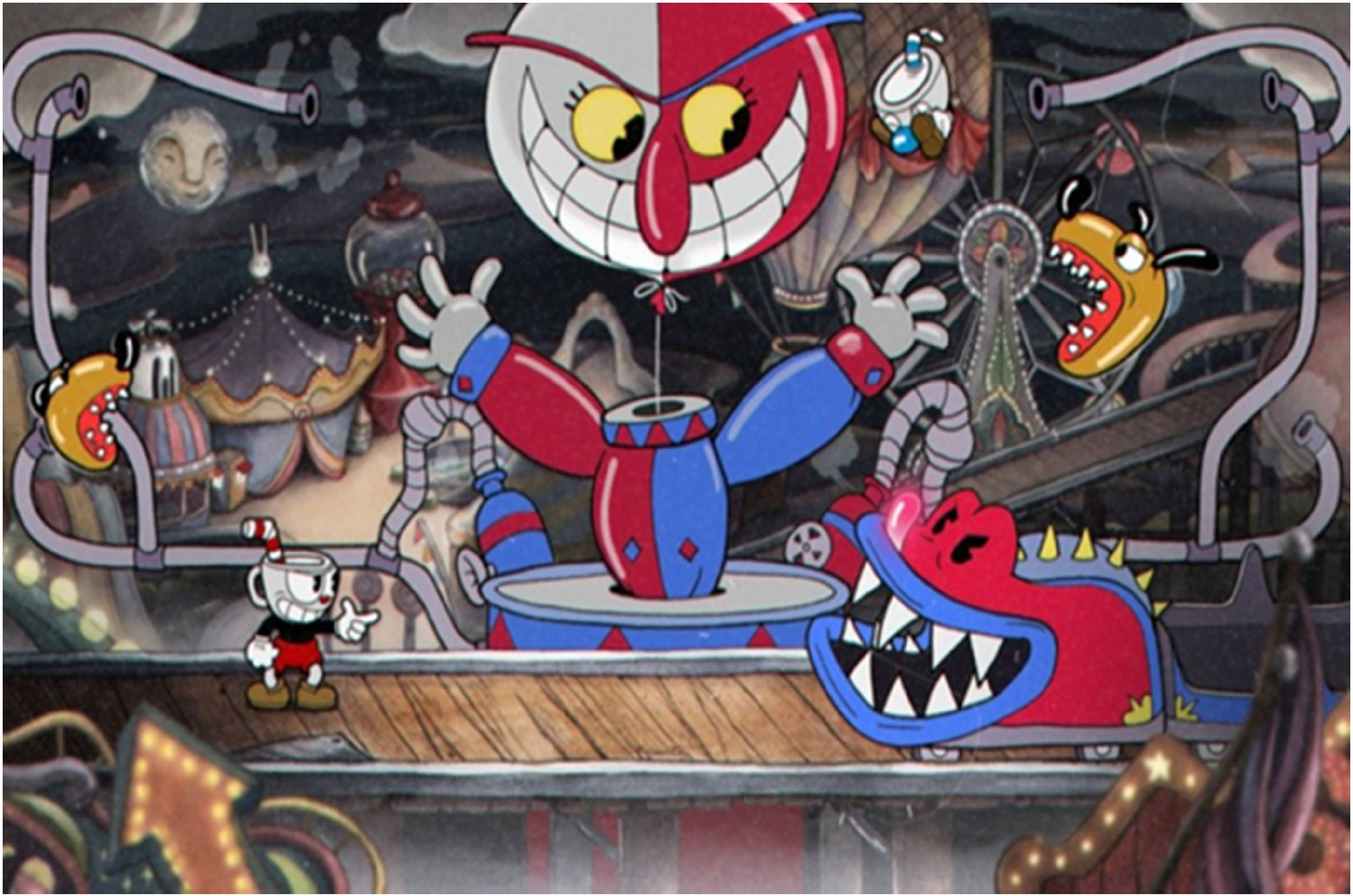
A standard Cuphead level layout.
Study Design
Participants were provided with a copy of Cuphead via Steam, asked to play for two weeks in their own play space, and to record all their gameplay with video recording software such as Open Broadcast Software or the Xbox video recorder native to Windows 10 OS. Players were encouraged to play the game as if they had bought it off the shelf, meaning there was no required amount of play time, and they could focus on whatever goals they were inclined to pursue. This approach was chosen over asking them to play in a controlled laboratory environment to ensure captured play was as natural as possible, and that during moments the player didn’t feel like playing anymore they wouldn’t be pressured to continue playing for the study requirements.
These gameplay videos were coded for moments of hard-coded failures (hits) as well as player reactions to failure (quit, retry, strategy adaptation, strategy deterioration) using behavior-analysis software, BORIS, which allows for behavioral coding of videos (Friard & Gamba, 2019). Hits were defined as any moment the player lost health. Quits were defined as any moment the player selected “Exit to map” or “Quit Game” from the pause menu or game over screen. Retry was defined as any time the player selected “Retry” from the pause screen before losing all their health. Strategy adaptation was defined as any time a player changed their strategy in response to failure, as this has been identified as a common response to failure from mastery-oriented individuals. For example, if a player encounters a projectile and a hit is recorded, then on their next encounter with the same projectile the player changes their behavior to avoid it, an adaptation is recorded. Strategy deterioration was defined as any time a player begins to use ineffectual strategies in response to failure, as this has been identified as a common response to failure from helpless-oriented individuals. For example, if the player encounters a projectile and a hit is recorded, then begins to purposefully jump in front of other projectiles or run into the boss, a deterioration is recorded. Strategy adaptation and deterioration were designed to capture behaviors reported as common responses to failure for mastery-oriented and helpless-oriented individuals, respectively, and were confirmed with the participant during interviews as described in the next section.
Participants engaged in two separate interviews between 30 and 45 min in person or over Discord. The first was conducted one week after gameplay and in accordance with McCracken's long interview procedure McCracken (1988). This interview was designed to probe into their experiences with failure in Cuphead and is not within the scope of this paper. The second interview was conducted as a data-driven retrospective interview (Seif El-Nasr et al., 2015) and was designed to check if strategy adaptations and deteriorations were in response to the failure observed. During this interview, the researcher played a randomly sampled subset of adaptations and deteriorations from the participant's recorded gameplay totaling up to 15 clips of the behaviors in question. Participants were asked what their motivations were for changing their behaviors in these clips. For strategy adaptations, if the participant reported that they changed their behavior to avoid what hit them previously, the researcher confirmed the code as an adaptation to failure. For strategy deteriorations, if the participant confirmed that they changed their behavior to purposefully take damage, the researcher confirmed the code as a deterioration of strategy. If the participant reported some other reason for changing their behavior, the researcher removed the code and adjusted coding accordingly to better identify strategy adaptations and deteriorations.
Participants also completed a mastery orientation survey modified from the Mastery section of the Work and Family Orientation Questionnaire (Helmreich & Spence, 1978). The questionnaire was designed to gauge a participant's mastery orientation through self-report of eight Likert-scale questions from strongly agree to strongly disagree. As seen in Appendix A, questions were modified to fit a game context, e.g. “I would rather play a game at which I feel confident and relaxed than a game that is challenging and difficult,” and “If I am not good at a game, I would rather keep struggling to master it than move on to a game I may be good at.” Responses were scored and summed to create a mastery score, with a higher score indicating a higher mastery orientation, a lower score indicating a helpless-orientation, and 24 indicating a neutral score. Given the self-report nature of the survey, this was taken as a measure of the participant's self-perception of their inclination towards and ability to persist through challenging game environments and interpreted as their confidence in this regard.
Finally, participants were asked to fill out a demographic questionnaire regarding their gender identity, age, average number of hours per week they spent playing video games, and for approximately how many years they had been playing video games. These questions on gameplay habits were combined by multiplying the average number of hours playing video games per week by 52 (the number of weeks in a year) and then multiplying again by the number of years playing video games to create a game experience score. This was not taken as an absolute measure of the total number of hours they had accrued playing video games, but as a rough measure of how experienced they are with the medium broadly.
Analysis Plan
After initial descriptive statistics exploration, the data were transformed using logarithm and square root to achieve a normal distribution for analyses. T-tests were used to compare pre and postmastery orientation scores, change (delta) ingame mastery orientation scores, gameplay behaviors such as number of mastery-oriented behaviors per hit (logged for normality), number of helpless-oriented behaviors per hit (logged for normality), average number of mastery-oriented behaviors exhibited until a helpless-oriented behavior is exhibited (logged for normality), number of times a level is abandoned before completion (logged for normality), game experience scores (square root for normality), and total length of gameplay files (logged for normality) between women and men. Gameplay behaviors were divided by the number of hits to standardize these measures per unit of hard-coded failure, preventing differences in player ability or amount of play to outweigh reactions to failure encountered. Post hoc linear modeling was then conducted on features of interest to determine if there were any interactions between variables.
Results
Participants
Of the 60 participants who completed the study, 23 self-identified as female, 37 self-identified as male, and none self-identified as any other gender. Ages ranged from 17 to 26 and averaged 20 with a standard deviation of 2.24. Average hours playing video games per week were skewed right, ranging from 0 to 50, with an average of 15, a standard deviation of 12.45, and a median of 10. The number of years playing video games was also skewed right, ranging from 1 to 21 with an average of 11.45, a standard deviation of 4.65, and a median of 12. These were combined into a game experience score by multiplying hours per week playing video games by 52 and then by years playing games to estimate familiarity with video games. Game experience scores ranged from 0 to 42,120 with an average of 9913 and standard deviation of 8060. Number of gameplay files ranged from 2 to 29, averaging between 7 and 8 gameplay files per participant. Participants averaged 37.9 min per file and averaged a total of 4 h and 34 min of gameplay across the files they submitted.
T-Tests
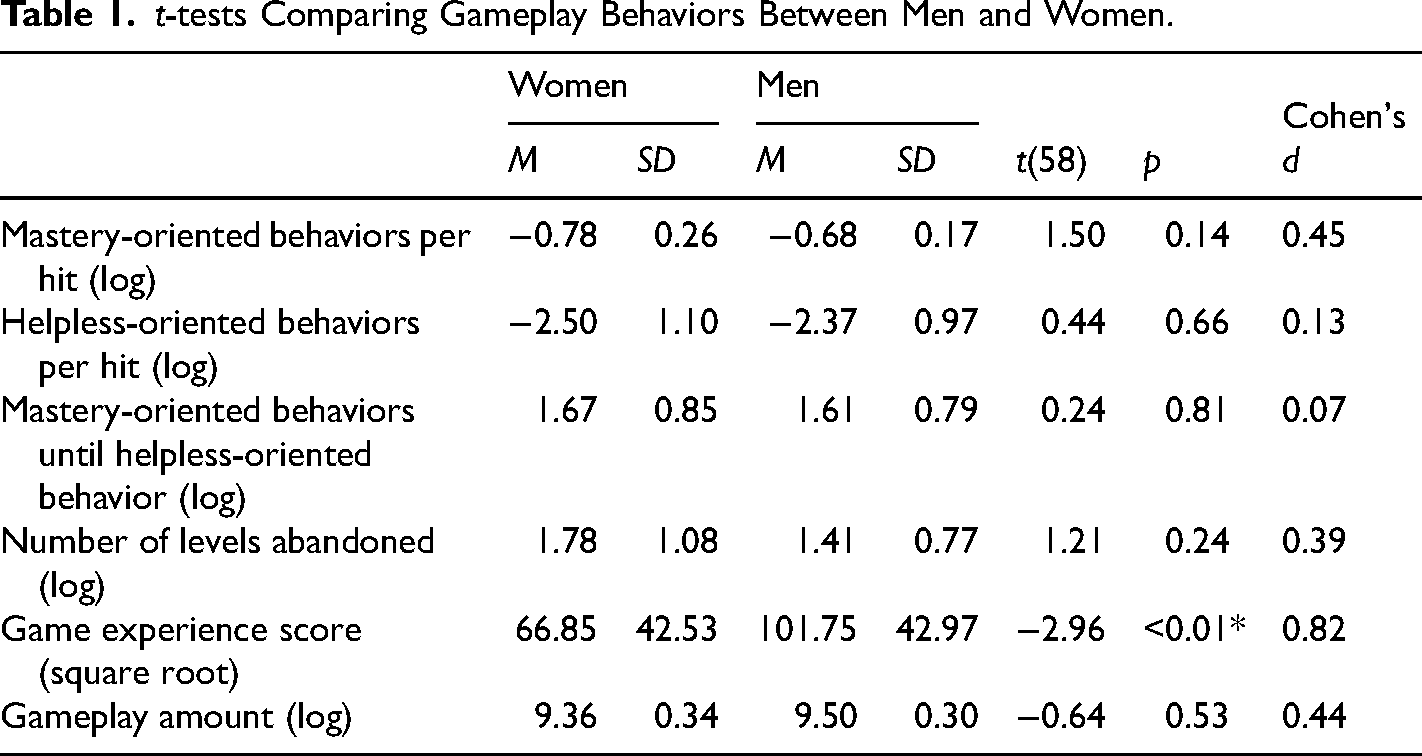
Analyses comparing gameplay behaviors between men and women found no significant differences in the number of mastery-oriented behaviors per hit, helpless-oriented behaviors per hit, the average number of mastery-oriented behaviors performed before a helpless-oriented behavior, number of levels abandoned before completion, or total time of gameplay logs. Analysis did, however, find that men have a significantly higher average game experience score than women as seen in Table 1 and Figure 3.
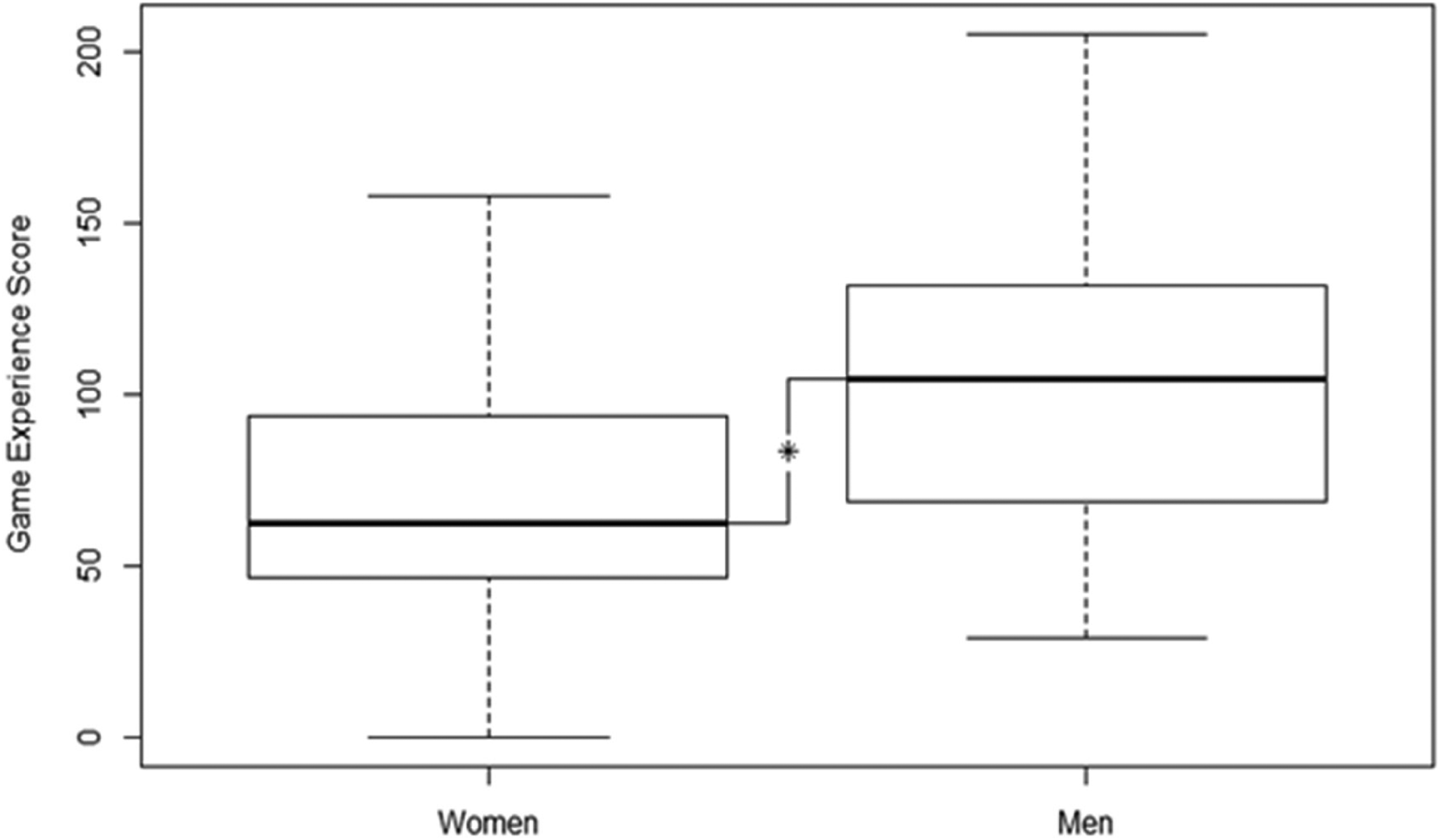
Gendered differences in game experience scores.
t-tests Comparing Gameplay Behaviors Between Men and Women.
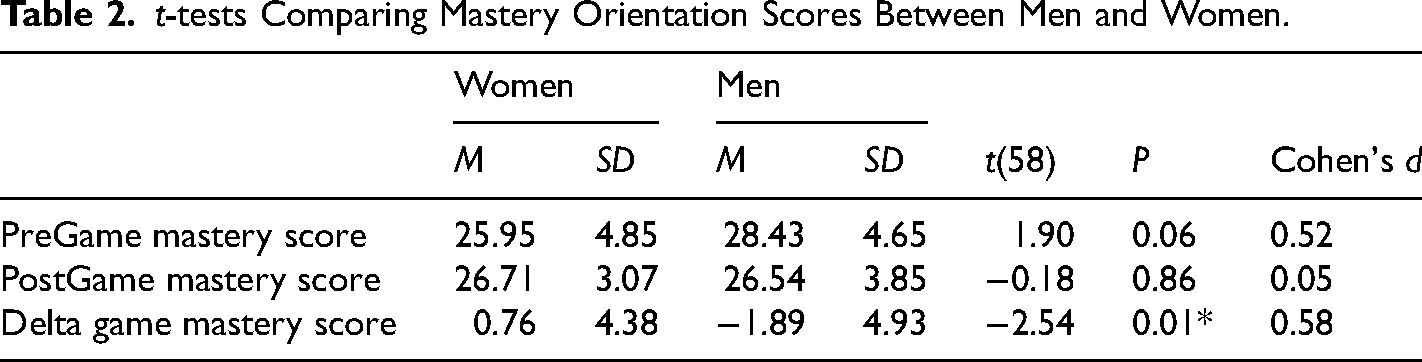
Analyses of game mastery scores found no significant difference between men and women's game mastery orientation score in pretest or posttest. However, women significantly increased game mastery orientation scores from pre to post while men significantly decreased in game mastery orientation scores from pre to post as seen in Table 2, and Figures 4 and 5.
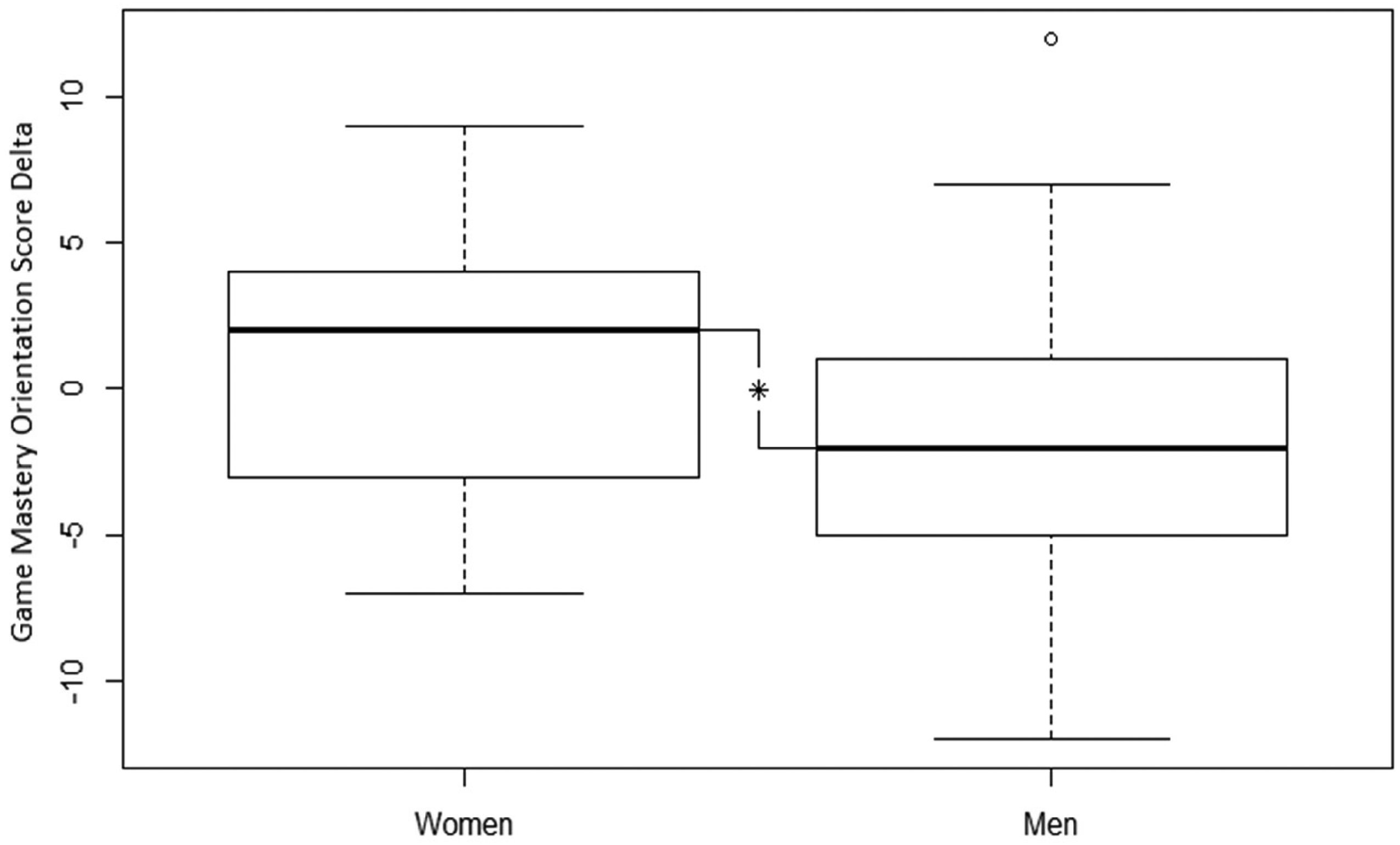
Gendered differences in game mastery orientation score deltas.
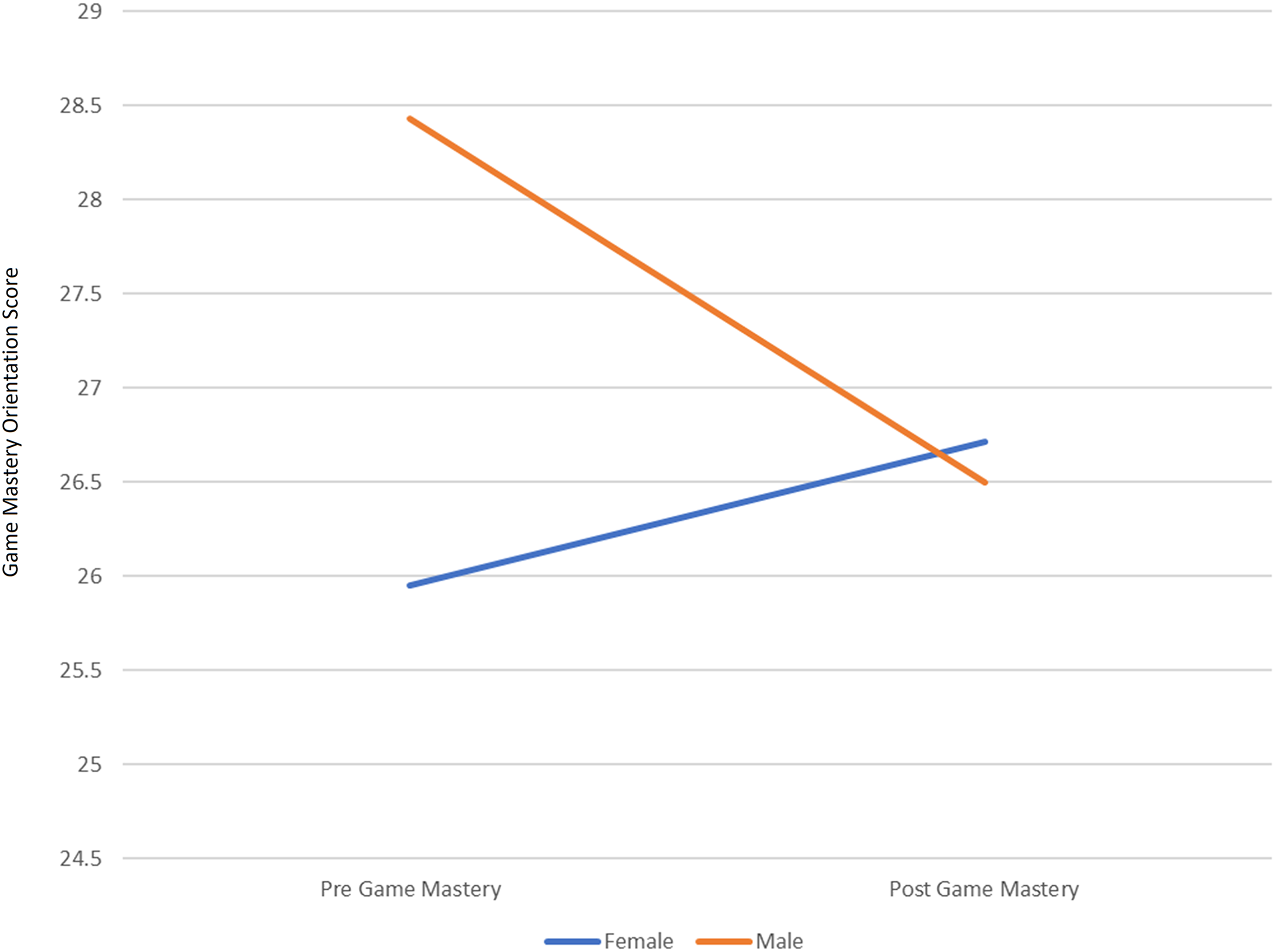
Line graph visualizing the change in game mastery orientation scores for men and women.
t-tests Comparing Mastery Orientation Scores Between Men and Women.
Post hoc Linear Modeling
Post hoc linear modeling was conducted on the two variables shown to have a significant association with participant's gender identity—game experience scores and change in game mastery scores over the course of the study. When factoring both game experience scores and gender into the model to gauge association with change in game mastery scores, no significant association was found (r(53) = .04, p = .13). Finally, comparing game experience scores alone to a change in game mastery scores also showed no significant association (r(54) = .002, p = .30).
Discussion
After playing Cuphead for 2 weeks, women show a significant increase in their game mastery orientation scores while men show a significant decrease, representing an equalization of their game mastery orientation scores. While no significant difference was found between women and men in initial mastery orientation scores, visualization shows that some women scored lower on the mastery orientation scale at the start of the study while some men scored higher, suggesting that these changes are driven by factors influencing some, but not all women in this study. Post-hoc interaction analysis shows that game experience scores do not have influence on players’ game mastery scores alone or when also considering gender. Taken together, this suggests that only women are subject to the effect over time, and that low game experience regardless of gender does not explain the effect. This points directly to the gender stereotypes prevalent in game communities as when considering game experience, no association is found (as has been seen in Vermeulen et al., 2014). These initial perceptions are likely to have been rooted in gender biases around games, suggesting to some women that they would not be able to persist through a notoriously challenging game, and suggesting to some men that they would persist better than others.
Further, while this shows a difference in women's and men's self-perceptions of their ability to persist through a challenging game, there were no differences found in their gameplay behaviors regarding how much they played, how often they failed, number of mastery-oriented behaviors they portrayed, or how long they would persist before showing signs of giving up. This further shows that their perceptions were rooted not in their ability to persist through challenge in a video game, but only in their perceptions to do so.
These analyses show that while women with less game experience initially scored lower on the mastery orientation scale, after playing Cuphead for two weeks, their scores leveled out. This may point to a well-known gender gap in how men and women approach games: That stereotypes can influence both women's and men's beliefs about their abilities to play challenging video games well. Previous literature has shown that women face stereotypes that suggest that they are not as skillful at certain roles in video games (Ratan, et al., 2015; Ruotsalainen & Friman, 2018), which can lead to women being less confident in their ability to complete challenging games. Further research also shows how these stereotypes can lead to women being introduced to games through a lens that further cements these stereotypes. As part of a larger study, this paper sheds some light on how these stereotypes can manifest and how they can be influenced.
It's notable that the survey questions posed ask very general questions about their tendency to persist through challenging gameplay and not specific questions about how well they believe they will persist through Cuphead in particular. Seeing a change in the perceptions of both men and women in their ability to persist through challenging games broadly over just two weeks of gameplay is remarkable and suggests that these perceptions are not heavily rooted in player experience; we would expect those perceptions to be more robust to counter-evidence. Rather they appear to be linked to inexperienced female-identifying players’ perceptions about their ability to persist through challenging games broadly. This suggests that what is changing over their gameplay is their self-perception of how well-suited they are broadly to be able to persist in challenging games, i.e. those beliefs that are influenced by the gendered stereotypes that are prevalent before entering game spaces.
While no difference was seen when men and women encounter failure, or how long they played, this does not mean that men and women engaged in the same playstyles during their play. It could be that individuals engaged in the game very differently aligned with many factors. Variability between which level sequence players progressed through, which weapons they chose for each boss, and even the goals they pursued were anecdotally seen. For example, one participant insisted on getting the best possible score in each level before continuing, completing each level multiple times, while most others had little concern for their score as long as they beat the boss. These differences in gameplay strategies were not analyzed as part of this study but could show different patterns in how persistent individuals are in specific areas of the game. There may also be differences in gameplay between more experienced players and less experienced player or between people of different genders that could further explain the differences seen in this study. More work is needed to understand how playstyles influence player persistence in challenging game environments.
This study also shows that the dichotomy of mastery-oriented and helpless-oriented requires nuance to capture how an individual will respond to failure and what may influence those reactions. Here we can see a subset of individuals score lower on the mastery orientation scale, yet behave in ways no different than individuals who scored higher. This suggests that an individual's answers to the mastery orientation survey can be influenced by how they perceive themselves as individuals in the space they are to persist. This perception can be subject to stereotypes and does not always reflect their actual ability to persist through failures. Further, this study shows that this score can change somewhat quickly with experience. The dichotomy of being either mastery-oriented or helpless-oriented can needlessly place individuals into a box of “will always persist” or “will not persist.” This study shows that this measure requires an understanding of the context an individual is in while gauging their ability to persist through failure. As our understanding of how an individual reacts to failure develops so too must our methods of gauging it.
It is important to consider the specific game environment in which this study was conducted. Cuphead, unlike many games on the market avoids many of the gender tropes that drive stereotypes about women in game environments. Although, it cannot be claimed that they do not avoid them all—no female-presenting protagonist is available to players in the initial game (which is remedied in following downloadable content), and the female-presenting characters that are in the game are somewhat sexualized or associated with stereotypical household activities such as home-making and childcare. Despite these instances, Cuphead looks quite different from the typical male-dominated game: hand-drawn, very cartoonish, and colorful. These factors may have provided enough of a contrast to games that immediately evoke gender stereotypes to allow women to develop some engagement and encourage them to continue playing, developing their ability, and washing out those assumptions that they would not be able to persist through the game. Conducting this study in games like those developed by From Software's Dark Souls series may show different patterns in how people of different gender identities approach and experience failure. The mechanics and sequence that Studio MDHR created in Cuphead's development may also have contributed to this breaking-through of the initial perceptions that women who scored lower on the game mastery orientation survey held. Like many games, Cuphead's difficulty increases at a rate that encourages players to push their abilities as they progress. Likely part of the reason Cuphead is considered a challenging game, this difficulty ramping comes swiftly after the game begins, and serves as a reminder to the player that they are going to need to practice and persist in order to progress. Despite this steep ramp in difficulty, Cuphead's design may have been a factor that kept women who began the study with lower perceptions of their ability to persist in challenging games engaged in the game enough to keep playing until they gained some mastery, and confidence with it. It could be that the design of some of the earliest levels of Cuphead helped them get past this initial barrier to play, and once they felt some expertise, they changed their perceptions about how well they can persist through challenging games broadly.
Limitations
Some limitations should be considered while interpreting these data for further inquiry. First, this paper represents a subset of findings from a larger study aimed at investigating how players react to failure more broadly. This study also does not directly assess the participants’ stereotype threat but rather uses their mastery orientation score as an assessment of their confidence in their ability to approach and persist in challenging games. While this measure is not designed to directly gauge an individual's perceptions about how stereotypes influence their willingness to engage in an activity, the authors feel as though the self-report nature of the mastery orientation survey gives some insights into how participants’ beliefs about their own ability factor into their confidence. A study designed to directly gauge stereotype threat could show more nuance in these findings.
Also, while this study did allow participants to self-identify their gender, it did not specifically aim to recruit an equal number or individuals who identify as women, men, or other gender identities. Furthermore, participants only self-identified as either men or women, as such this study is not able to consider how people of other gender identities react to failure in a challenging game. This perspective is needed for a full understanding of how players conceptualize failure and how they react to it. This effort could increase the power of analyses and show more nuance in how individuals faced with gender biases experience failure in a challenging video game. A study designed and controlled to more precisely explore how people of different gender identities differ in their experiences, stereotypes, and reactions to failure is warranted.
Likewise, this study does not capture other important factors that might have influence on an individual's ability to persist through challenging video games. The sample was generated exclusively by undergraduates at a high-ranking public university in the South Pacific United States. Many cultural and socioeconomic factors that might influence the results could emerge from a wider sample. A study to this effect is also warranted.
These results suggest that exposure to an environment that is highly challenging and full of failure can help equalize perceptions of women's and men's ability to persist through challenging games and demonstrates how video game skill is not inherent or unique to any gender. However, this does not erase social biases inherent to video gameplay. It could be the case that these results do not extend to other game environments where women and men might again be influenced by those stereotypes. The women in this study may have become more comfortable while playing Cuphead in their preferred play space but might not feel any more comfortable playing another challenging game, playing in more public settings, or joining another game community.
This study also does not show any long-term effects. Women who felt more confident after playing Cuphead might fall back to those stereotypes seen at the start of the study after time. Further research is needed to more fully understand if this exposure influences a player's beliefs about these stereotypes thereby extending beyond the environment in which it's initially seen or if these changes are contained to this game and context.
Finally, the methodology used in this study might be criticized for allowing players to play outside of a controlled environment. It may be argued that the natural play environment could have introduced unaccountable factors into the data. However, it is likewise the case that a controlled environment of a game laboratory may also introduce factors that could influence play, especially when considering how players react to failure. Being instructed by a researcher to play a game for a prescribed amount of time in a controlled setting atypical to their usual play space could influence the player to feel as if they were required to play even if they were not enjoying the game, report higher satisfaction in the game, or change how they play completely. Considering this, the authors made the conscious decision to enable more natural gameplay by allowing players to use their own play spaces, and choose when they wanted to play and for how long. The authors decided to allow players to choose their own play times and environment in order to ensure play was as natural to that participant as possible. This could have introduced factors outside of the scope of this study, however, most participants reported that they did not play any differently because they were in a study, and some reported that they forgot they were in a study altogether while playing. The authors believe that this was the best approach to collect natural gameplay data and allow players to react to moments of failure in an informative way.
Conclusions
The study described herein presents a novel approach to exploring how players experience failure in a video game. Through coded gameplay data, long-form interviews, and data-driven retrospective interviews, we can come to a better understanding of how players navigate a challenging game and the differences between men and women in these responses. This study empirically shows that women with less game experience initially score lower on the mastery orientation scale, suggesting a lower perception of their ability to persist through a challenging game and an increase in this perception over 2 weeks of play. We also show that men with more game experience initially have a higher perception of their ability to persist in these environments decrease in this perception. While the scope of this paper is narrow, focusing on a small sample of only men and women from an undergraduate population at a highly ranked public university in the southern Pacific United States, it does give us a glimpse into how the impact of stereotypes that women have when approaching a new game environment may be lessened simply from being exposed to the game environment in a comfortable setting. Despite the limitations of this work, we believe it is an important finding to share with the game research community and more broadly to show empirically that the stereotypes that women enter games with are not robust. However, it does not change the reality that women are often faced with these demoralizing stereotypes that force them to sacrifice their preferred play experience for comfort. Much more work is needed to truly make game environments a space where everyone can come to play in ways that they feel empowered.
Footnotes
Acknowledgments
The authors would like to thank our advisors and peers for the tireless feedback and support that helped produce this research.

Author Biographies
Appendix A—Game Mastery Orientation Survey
Please state how strongly you agree or disagree with the following statements:
I would rather play a game at which I feel confident and relaxed than a game that is challenging and difficult
❍ Strongly disagree ❍ Somewhat disagree ❍ Neither agree nor disagree
❍ Agree ❍ Strongly agree
When a group I belong to plays a game, I would rather call the shots myself than just help out and have someone else call the shots.
❍ Strongly disagree ❍ Somewhat disagree ❍ Neither agree nor disagree ❍ Agree ❍ Strongly agree
I would rather learn to play a game that is easy than one that is difficult.
❍ Strongly disagree ❍ Somewhat disagree ❍ Neither agree nor disagree ❍ Agree ❍ Strongly agree
If I am not good at a game, I would rather keep struggling to master it than move on to a game I may be good at.
❍ Strongly disagree ❍ Somewhat disagree ❍ Neither agree nor disagree ❍ Agree ❍ Strongly agree
Once I begin a game, I persist.
❍ Strongly disagree ❍ Somewhat disagree ❍ Neither agree nor disagree ❍ Agree ❍ Strongly agree
I prefer to play games that require a high level of skill.
❍ Strongly disagree ❍ Somewhat disagree ❍ Neither agree nor disagree ❍ Agree ❍ Strongly agree
I more often play games that I am not sure I can do than games that I believe I can do.
❍ Strongly disagree ❍ Somewhat disagree ❍ Neither agree nor disagree ❍ Agree ❍ Strongly agree
I like games that keep me busy all the time.
❍ Strongly disagree ❍ Somewhat disagree ❍ Neither agree nor disagree ❍ Agree ❍ Strongly agree
Age: ______ Gender: ________________ Year in school: ______ Average number of game play hours per week: ______ Number of years playing games: ______