







Abstract
At a large suburban high school in the United States, the first home football game was taking place after missing a full season due to the pandemic. The stands were packed as the school community gathered to celebrate the return to some normalcy. Shortly after the third quarter began, a beloved coach/teacher collapsed on the sideline. Paramedics arrived within 10 minutes, CPR was administered, and 20 minutes later, he was transported to a local hospital, and within a few days, he passed away. This case captures the lived experiences of a school principal and how she was able to lead her school community through a devastating event witnessed by so many. It also highlights the challenges that school leaders face when dealing with an unexpected tragedy to include the quick decisions that must be made, the importance of timely and accurate communication, privacy considerations, and ensuring social emotional support is in place for all who have been impacted. This experience is based on a real event, however, all identifying information (names, etc.) has been changed along with some of the circumstances surrounding the event. This case provides school leaders an opportunity to apply cognitive resource theory to unexpected tragedies that many will undoubtedly face at some point in their career.
When Tragedy Strikes: Lessons in School Leadership
A school principal is faced with many challenges when leading a school, and when tragedy strikes, they must make quick, well-informed decisions in the best interest of the school community. In the event of any crisis, school leaders must have the ability to consider each aspect of a situation, including immediate care; needs of the staff, students, and community; district policies and protocols; liability issues; privacy concerns; and possible long-term effects. It is essential that principals have the mental fortitude to process each consideration with clarity and access the resources available to them. Cognitive resource theory will be referenced in this case study since it focuses on a leader’s ability to identify and access resources, as well as self-regulate his or her reaction to stress (Bakker & de Vries, 2021; DeRue & Wellman, 2009).
Background
District Demographics
Oak Grove High School is part of a large district that serves 51,237 students of diverse backgrounds. Approximately 28% of students in the district are White, 36% are Black, 21% are Hispanic, 11% are of multiple races, and 4% are Asian. Thirteen percent of students in the district have disabilities, and 8% are English language learners. The district has a 90% graduation rate, and 3% of students earn a Graduate Equivalency Diploma (GED). There is a 7% dropout rate.
School Demographics
Within this district, Oak Grove High School is considered a larger high school with an enrollment of 1,405 students. The racial demographics of the school are similar to that of the district, with 25% of students being White, 38% Black, 20% are Hispanic, 15% are of multiple races, and 2% are Asian. Sixteen percent of students have disabilities, and 15% are English language learners. Fifty-one percent of the student body qualifies for free and reduced priced meals
There are 104 full-time teachers at the school and an additional 32 support staff members consisting of instructional assistants, office staff, counselors, a social worker, and a school psychologist. There are four members on the administrative team. The faculty is 65% White, 25% Black, 8% Hispanic, and 2% Asian. Thirty percent of the teaching staff is male, and 70% is female.
Oak Grove is fully accredited, provides students with rigorous general education courses, provides a robust business program, and offers a variety of opportunities for students to participate in athletics, art, STEAM, world languages, music, and theater. Of further interest, the school houses an engineering specialty center and has advanced programming for students to earn credits toward college. For students with more significant needs, Oak Grove has a comprehensive self-contained program.
Oak Grove High School is known to many as one of the only community high schools in the district. It is situated in the middle of a large neighborhood and has served many generations. Friday night football games have been a popular outing for families living in the area, so the crowds are always quite large. The community members take pride in their high school and are very supportive.
Case Narrative
The tragedy began to unfold during the first home football game of the season. It was a beautiful evening, and the close-knit Oak Grove school community was excited to return to Friday Night Lights since schools had recently returned to in-person learning. The halftime show drew loud applause from the stands, and the teams then returned to the field to start the third quarter. The school principal, Mrs. Reed, had just finished connecting with her head of security, and she was pleased to know that things were going well from a security standpoint. She pulled out her cell phone to take a video of the cheerleaders performing and suddenly heard loud gasps from the stands. She looked toward the field and saw a crowd gathering around a person who was lying near the sideline. Seconds later, both teams were on their knees.
The stands became silent. A couple coaches from the home team had rushed to Coach Brown’s side, one of the athletic trainers began CPR, and the assistant principal called 911. Mrs. Reed had met Coach Brown’s wife at the beginning of the game, so she ran to where she was seated on the sidelines. Mrs. Brown was visibly shaken and collapsed onto the field, crying in disbelief. Mrs. Reed motioned for one of her administrators to come to where Mrs. Brown was to provide support so she could speak with the emergency medical technicians (EMTs). As a veteran administrator, Mrs. Reed had faced challenges in previous years and had learned through experience how to effectively lead teams through difficult times.
While speaking with police and EMTs, Mrs. Reed became aware of an additional challenge: the presence of individuals using their cell phones to record the incident. She immediately turned to the two school security staff members who had gathered near the sidelines and instructed them to approach the individuals respectfully and request that they stop recording. The school resource officer then approached Mrs. Reed and told her the situation was dire.
Mrs. Reed, they have been performing CPR for over 5 minutes and he is not responding. They are going to transport him to the hospital.
Okay, we need to get Mrs. Brown to the hospital as well. Are you able to take her in the police car? One of my administrators can ride with her. She is here by herself and will need support.
After an administrative conference between the schools’ principals and teams’ athletic directors, a decision was made to call the game. As Mrs. Reed headed to her car, she noticed how quiet the stadium was. Just 30 minutes earlier, the third quarter had been underway, and the stands were alive with excitement. She looked around and saw that her administration team had separated and were at each corner of the field ready to help guide the fans out of the stadium and provide support as needed. In her car, Mrs. Reed called her husband to explain what was happening. It was 9:00 pm at night. She then called her supervisor to inform him. Her supervisor told her that he would inform the superintendent’s staff, the critical incident team, as well as the district communications team. He also told Mrs. Reed that he would support her through this.
As Mrs. Reed arrived at the hospital, she ran into the emergency room and explained who she was. She was immediately led back to the waiting area where Mrs. Brown was seen talking to a doctor. The doctor turned to Mrs. Reed to ask if she was a family member, and she told the doctor that she was the school principal. Mrs. Brown then said that the doctor could share the information with Mrs. Reed.
The situation is very serious. We have Mr. Brown in a medically induced coma while we run tests.
Is there anything you need me to do?
Mrs. Brown is going to need support. I have the hospital chaplains headed here now. Can you please help Mrs. Brown with calls to family members?
At that point, the head coach of the football team walked in with other coaches and embraced Mrs. Brown. They began talking, and it became evident to Mrs. Reed that they knew each other quite well. Mrs. Reed asked them to help contact other family members and then she made a decision about what needed to happen next.
Mrs. Reed called her supervisor to provide him with an update. He told her that the district communications office would be calling her to discuss a statement to be released.
Mrs. Reed, thank you for taking my call, and I’m so sorry about what has happened at your school. We will want to get a statement out before the media gets a hold of this. Can you talk to Mrs. Brown to see if she would approve a statement with her husband’s name included?
Mrs. Brown is in the room with] the coaches so I will go talk to her. Give me 5 minutes and I will call you back.
Mrs. Reed then went to the room where Mrs. Brown was. The coaches were standing in the corner, and three of Mrs. Brown’s family members had arrived. Mrs. Reed heard Mrs. Brown telling the family members that her husband was placed in a medically induced coma. A man who said he was an uncle asked Mrs. Reed and the coaches to leave the room. He then said the family did not want to talk to anyone from the school or the district.
Mrs. Reed walked to the side of the hospital and called Communications to provide them with an update.
The family said they will not speak to us at this time, so I was unable to ask about a statement.
Okay, this is understandable given the situation. We will need to put something out to the public before the media, so we will keep the statement generic and will include information about support for those who were at the game tonight.
An hour had passed, and Mrs. Reed knew how quickly rumors and misinformation could be spread, so she had to move fast with the plans for a crisis team support meeting. Her supervisor then called her back to discuss a plan. He offered to be at the school in the morning, and Mrs. Reed decided the school library would be the best place to meet. It was then determined that the crisis team would meet Mrs. Reed and her supervisor at 7:30 am the next morning to prepare for the 8:00 am meeting for students, staff, and parents. This information was then included in the letter sent by communications. The letter was sent via email to the school community at 10:30 pm.
Mrs. Reed arrived at the school at 7:00 am the next morning. The school resource officer was there and said he had met with the family before they left the hospital. He said the initial reports were that Mr. Brown was breathing on his own, but by midnight, things had taken a turn for the worse. Mr. Brown was now on life support; possibly brain dead.
Mrs. Reed tried to hold back tears but as the crisis team arrived and she saw a familiar face, she could no longer control the emotions. The lead counselor hugged Mrs. Reed and took her into one of the offices to talk. The counselor explained that the team would be there to support her as well as others. Mrs. Reed said she did not know how many would show up for the support meeting, but she figured it would be a full house. And it was. By 8:00 am, the library was full with over 200 people. There were students, administrators, staff members, several parents, and even two of the hospital chaplains. The lead counselor opened up the meeting by explaining that what everyone had witnessed was traumatic and that this morning would be focused on supporting one another. Mrs. Reed then explained that Mr. Brown would continue to be in our thoughts and prayers but due to requests from the family, she could not say anything further about his condition. Students were encouraged to speak aloud about how they were feeling or messages they would want to share with Mr. Brown. The support meeting ended up lasting a full 2 hours. As Mrs. Reed closed the meeting, she reminded everyone about the support that would continue to be available. She then met with her supervisor to talk about recommended next steps since the family was not willing to talk to anyone from the school. Mrs. Reed’s supervisor recommended she go home and try to get some rest. He told her that he would be in touch the next day to see if there was an update on Mr. Brown’s health and to also discuss the plan for school on Monday morning.
Mrs. Reed’s phone rang early Sunday morning. It was the school resource officer calling with the news she was dreading. Mr. Brown had passed away. The school resource officer was at the hospital with Mrs. Brown, her parents, and the hospital chaplain. The Brown family had given permission for a public statement to be released about his passing.
After taking a few minutes to process the news, Mrs. Reed knew the news would spread fast, so she thought about what initial steps she would need to take. She sent a text message to her administration team saying she needed to hold an emergency Zoom meeting immediately. She then called her supervisor to tell him, and she also called communications so that a statement could be drafted. By 8:00 am Sunday morning, the Oak Grove administration team was made aware of Mr. Brown’s passing, and a public statement had been released to include information about the crisis team being in the school library all day on Monday to support students and staff members.
Leadership roles rely heavily on the ability to problem solve and make effective decisions. The understanding of a leader’s personality traits and how they relate their decisions when there are stressors are attributed to the cognitive resource theory (Fiedler, 1986; Puma et al., 2018). Cognitive resource theory is one in which a leader’s reaction to stressors is determined by their experience and intelligence (Hooijberg & Choi, 1999). The cognitive resource theory is a psychological theory that focuses on individual differences in cognitive abilities and resources that influence leadership skills (Fiedler, 1986; Puma et al., 2018; Thiel et al., 2012).
According to Fiedler, cognitive resource theory states that the effectiveness of the leader is mostly determined by their cognitive resources with emphasis on intelligence and experience (Fiedler, 1986). Leaders who possess a higher level of cognitive abilities are better equipped to effectively manage challenging and complex situations (Bakker & de Vries, 2021; DeRue & Wellman, 2009). Principles of cognitive resource theory involve cognitive resources, task complexity, relationship to leadership style, and stress and cognitive load (Fiedler, 1986; Hooijberg & Choi, 1999; Thiel et al., 2012).
Four Principles of Cognitive Resource Theory
Cognitive resources: Include decision-making skills, problem-solving ability, and knowledge of previous experiences.
Task complexity: If a task or situation is more complex, it can affect how a leader’s intelligence relates to their effectiveness.
Relationship to leadership style: During complex situations, a leader’s cognitive resources can be depleted by stress or mental load, making it difficult to make effective decisions.
Stress and cognitive load: Cognitive resources are significant in determining how leaders make effective decisions in complex situations (Fiedler, 1986; Thiel et al., 2012).
Individual stress perception is due to the demands placed on them compared to resources that are available. Stress is defined on the American Institute of Stress (2022) webpage as “a condition or feeling experienced when a person perceives that demands exceed the personal and social resources the individual is able to mobilize.” During a low-stress situation, leaders relied more on cognitive abilities to solve problems than in high-stress situations where they relied more heavily on experience (Huizing & Church, 2010). Cognitive abilities such as effective listening to contemplate the situation and previous knowledge to anticipate an outcome are vital in an event of a crisis (Likierman, 2020).
As a crisis emerges, leaders have to understand the situation and the scope of the consequences based on available resources (Boin et al., 2013). The definition of crisis for educational institutions is “a sudden and unexpected situation that affects a significant part of the school population negatively and deeply” (Atkinson, 2002, p. 1). Quick decisive leadership is required during times of crisis as effective leaders are continuously collecting information to help mitigate, prevent, and respond to situations (Grissom & Condon, 2021). The quality of decisions relies on how one makes decisions and overall outcome (Phillips-Wren & Adya, 2020). Methodology of decision-making can be affected by physiological factors brought on by the stress of a crisis (Grissom & Condon, 2021). Transparently communicating the crisis, its repercussions, and the school’s or district’s response fosters trust and encourages constructive engagement with the community (Fernandez & Shaw, 2020). A predetermined plan will help mitigate decisions that are brought on during a crisis that cause physiological and psychological stress that may prevent a timely outcome (Phillips-Wren & Adya, 2020).
Rational Use of Cognitive Resources in Human Planning
Source. Callaway et al. (2022).
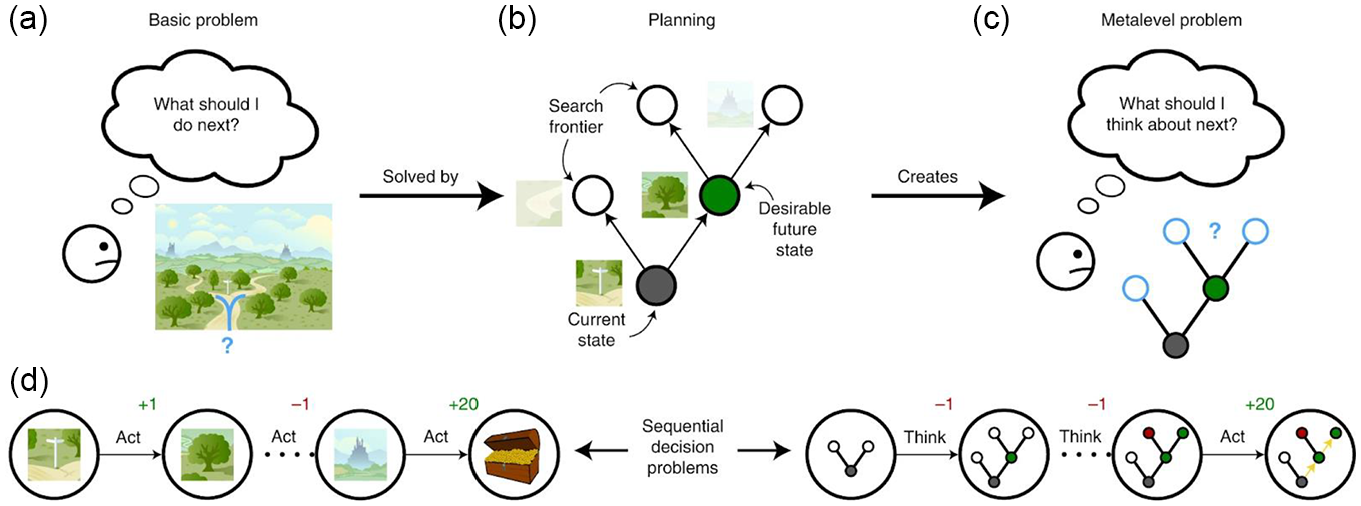
The principal, school, and district made a number of decisions in response to the tragic event. These decisions were made in a high-stress situation, and they were made with the best interests of the school community in mind. Mrs. Reed’s ability to make effective decisions in this situation was likely influenced by her cognitive resources, such as her intelligence and experience. She relied on her crisis team to help plan for the social emotional support that students, staff, and families will need. Seeking social support has been found to be among the most common coping strategies used by teaching staff after a crisis (Cole et al., 2013). As supported by the literature (Grissom & Condon, 2021), it is recommended that each school district establish an emergency operations strategy that incorporates the formation of a crisis response team. The presence of a crisis response team is considered essential within the context of a school’s emergency preparedness plan. The team should be composed of individuals with a variety of skills and expertise and should be trained in crisis intervention and trauma-informed care. The team should have a plan for communicating with the media and for providing support to students, staff, and families.
There were some challenges that the school community faced in the aftermath of the tragedy such as media attention. The media was very interested in the story, and this made it difficult for the family to grieve privately and for the school to communicate to its concerned community. According to the National Association of School Psychologists (NASP), social media can play a pivotal role in school crisis communication, serving as a valuable tool for disseminating timely and critical information to parents, caregivers, and the school community at large (National Association of School Psychologists, School Safety and Crisis Response Committee, 2015). However, school districts must be cautious about the potential challenges associated with social media during crises. To ensure responsible and effective crisis communication, school administrators and crisis teams must find a balance between immediacy and accuracy when communicating with the media or through social media. Communicating with the media allowed Mrs. Reed to convey factual information, dispel rumors, and provide resources for coping.
Discussion Questions
Initial Response
What is the emergency response protocol in your school or district? Is this protocol different for large community events?
What training do you and your administration have for handling emergency situations?
What resources are available in your district for immediate emergency response? (anything from on-site medical equipment to direct communication with first responders, etc.)
In this event, Mrs. Reed went to the hospital with the coach’s family. Would this be standard protocol in your district?
The remaining administration team stayed at the stadium while the spectators exited. In addition to ensuring a safe exit from the event, what other roles may the assistant administrators need to fill during this time?
Privacy Questions
Why was Mrs. Reed concerned about spectators filming the crisis event on their cell phones? Can we ask people to delete their videos?
What actions would constitute a violation of a release of information, such as contacting your minister for support or your spouse?
After reaching the hospital, Mrs. Reed called her supervisors and the district communications office. What is the function of the district public communications office for an event such as this one? Why is it important to contact them quickly?
Mrs. Reed knew she needed to put out a statement to her staff. Why was this important? What kind of statement would you put out?
What resources does your district have for writing public statements?
Support Questions
A crisis team was convened the morning after the tragedy occurred. What are the essential functions of a crisis team?
This was a large district, what would crisis intervention for a tragic event look like in a more rural community?
What resources are available in your district for staff support in a crisis event?
Support continued to be available to staff and students when school reconvened on Monday. How might student support differ from staff support?
Several staff members were providing emergency aid to Coach Brown while waiting for paramedics. What additional support may be necessary for these staff members?
Footnotes
Declaration of Conflicting Interests
The author(s) declared no potential conflicts of interest with respect to the research, authorship, and/or publication of this article.
Funding
The author(s) received no financial support for the research, authorship, and/or publication of this article.
