







Abstract
Hypothetical scenarios were used to assess the influence of the sensitivity of the study topic, payments, and study methods on research ethics committee (HREC) members’ approval of social research studies involving children. A total of 183 Australian HREC members completed an online survey. The higher the perceived sensitivity of the study topic, the less likely the study would be approved by an HREC member. HREC members were most likely to approve each of the hypothetical studies if no payment was offered. Payment was the most common reason for not approving the low risk studies, while risks were the most common reasons for not approving the more sensitive studies. Face-to-face interviews conducted at home with children elicited substantially higher rates of approval from HREC members with more sensitive study topics. Both HRECs and researchers may benefit from additional guidance on managing risks and payments for children and young people in research.
Keywords
Introduction
Human Research Ethics Committees (HRECs) (Australia), Institutional Review Boards (USA), or Research Ethics Committees (UK) provide ethical oversight of research, and ensure that research is undertaken in accordance with their laws and regulations (Page & Nyeboer, 2017). In Australia, the National Statement on Ethical Conduct in Human Research, requires that HRECs abide by the values of: respect for human beings, research merit and integrity, justice and beneficence (NHMRC, 2007, updated 2018). This ethical review role gives them the authority to approve, require modifications to, or reject research studies (Lynch, 2018). Furthermore, HRECs ensure that: the selection of participants is equitable, informed consent is obtained, risks to research participants are minimized and are reasonable in relation to any anticipated benefits, participants’ safety is protected, and that provisions are in place to protect participant privacy and confidentiality (Lynch, 2018).
In addition to HREC approval for a research study with children and young people, other safeguards are required: approvals are required from any institutions in which the study is to be conducted, such as schools, followed by informed consent processes with individual participants, including parents or guardians, and the child participants themselves (where they have capacity to do so) (Harger & Quintela, 2017).
While such safeguards and approvals are appropriate and reasonable, research has found that HRECs may be cautious about approving research studies with children about “sensitive” or “difficult” subjects, such as sexuality, or with those who are deemed to be vulnerable, such as children in institutions (Sikes & Piper, 2010). HREC concerns about retraumatising participants may make it challenging for researchers to obtain HREC approval to explore such topics in their research without demonstrating sufficient safeguards (Harger & Quintela, 2017).
Issues such as payments have also been controversial in relation to children's participation in research. HREC guidelines, such as those of the Australian NHMRC, generally limit payments—for any research participants—to reimbursements of costs or time involved, with disproportionate payments or inducements likely to encourage participants to take risks considered ethically unacceptable (NHMRC 2007, updated 2018: Section 2.2.10). When children are the research participants, research ethics committees exercise additional caution, expressing concerns that child participants will be overly influenced or induced to participate if a payment is offered (Bagley et al., 2007) or that their decision-making may be distorted (Wendler et al., 2002). It has been suggested that concerns about payments have limited their adoption, and, as a result children may be less likely to be participants in research; this means that attempts to expand knowledge by the participation of children in research may also be curtailed (Sikes & Piper, 2010).
Comments have also been made about the lack of transparency about HREC processes and decisions, which are usually not published or shared, and that few studies have been undertaken of HREC decision-making (Abbott & Grady, 2011; Lynch, 2018). Variability between research ethics committees’ recommendations and approvals of research studies, member roles, and the potential for these to adversely impact on the approval and conduct of research has also been highlighted as a concern (Abbott & Grady, 2011; Friesen et al., 2019; Guta et al., 2013; Lynch, 2018). If, rather than guessing, researchers had a better sense of what would likely impede HREC approval, and what would not, potentially detrimental self-censoring could be minimized or avoided (Lynch, 2018). Obtaining greater clarity about HREC decision-making will assist researchers and others in designing research studies that meet ethical requirements. The current study aims to address this important issue.
The Managing Ethical Studies on Sensitive Issues (MESSI) study is an Australian study that explored how adults and children make decisions about children's participation in social research about sensitive topics. An advisory group, which included research ethics committee members, provided input into the study design. The MESSI study used a mixed methods design involving four stages. Stage 1 involved semi-structured interviews (n = 64) exploring with HREC members, researchers, professionals 1 , parents, children and young people, how they conceptualized and made decisions about research with children; the results of this stage informed the design of the subsequent stages, in particular, the factors examined in the online surveys. Stages 2 and 3 constituted online surveys using common hypothetical scenarios which allowed similarities and differences in responses between the above groups to be identified. Stage 4 involved focus group interviews with younger children, giving them the opportunity to explore the factors they considered important in deciding to participate in social research studies. Findings from other study stages are reported elsewhere (Moore et al., 2021; Powell et al., 2018, 2020; Taplin et al., 2019)
Experimental Vignette Methods (EVM) were used to explore the differences between participants in their provision of approval, consent or assent for children aged 7 to 14 years to participate in social research studies. In Stages 2 and 3 (the online surveys) respondents were asked to make decisions about approving a series of hypothetical research studies (or vignettes). The vignettes characterised social research projects involving children and young people. Using a within-subjects design, we systematically varied the vignette's characteristics (study topic, method and payment) and were able to identify how each of these characteristics individually influenced respondent decisions to approve, provide consent or participate in each of the hypothetical studies. Importantly, we could tell whether the sensitivity of the study topic had implications for the observed relationships between payment and decisions.
This paper explores the factors influencing the decision-making of Australian HREC members in providing approval for children aged 7 to 14 years to participate in social research studies. It aims to answer the following research questions:
How does the sensitivity of the study topic, payment for participation and study method impact the likelihood of HREC member approval for a hypothetical study? Do the impacts of payment and survey method on the likelihood of HREC member approval differ with the sensitivity of the study topic?
Method
Study Design
We conducted a cross-sectional online survey of all Australian HREC members from April to August 2017. Each participant was asked to respond to each vignette and all its variations. All HREC members were eligible to participate. The survey was administered via Qualtrics (www.qualtrics.com) and hosted by the Australian Catholic University. Participation was anonymous; no identifying information or Internet protocol addresses were collected.
The MESSI study was approved by the Australian Catholic University HREC (2016-110H) and ratified by the study partners’ universities.
Recruitment
We emailed an invitation to HREC Chairpersons and/or Research Ethics Managers at the 213 Human Research Ethics Committees (HRECs) registered with the Australian National Health and Medical Research Council (NHMRC) at the time of recruitment. The email addresses for the HRECs were sourced from the 2017 public list of HRECs registered with the NHMRC 2 .
The email containing a link to the survey requested that the invitation be forwarded to all committee members. The emails invited HREC members to participate in an anonymous online survey about what influences them to provide consent for children to take part in a in non-medical or social research study (or not).
If HREC members elected to click on the survey link in the email they were taken to a Participant Information page and asked to provide their Informed Consent by confirming that they agreed to participate, after which they commenced the survey. HREC members who completed the survey were invited to go into a draw for a presentation of the research findings at their HREC meeting. Participants took an average of 30 min to complete the survey.
Measures
The survey questions and factors explored in the hypothetical scenarios were drawn from the responses given in the qualitive interviews conducted in Stage 1 of the study, in which HREC members, researchers, professionals, parents, children and young people were asked how they conceptualized and made decisions about research with children. Payment of child research participants, the sensitivity or risk in asking children about particular topics, and the research method used were all of particular concern in decision-making in relation to research with children. We were also keen to explore the reasons why HREC members would not approve research.
HREC members were asked to provide basic demographic information and information about their HREC role, experience and training. They were also asked a range of other questions in relation to their considerations of approval for social research involving children. The HREC member and HREC manager responses to these questions are reported elsewhere (Taplin et al., 2022).
The main component of the HREC member survey was a series of questions asking whether they would provide research ethics approval for the participation of children aged 7 to 14 years in four hypothetical studies or vignettes. This age range was chosen as it related to children who were commonly considered in the social sciences to be old enough to provide their own assent/consent but also required parental consent. A full factorial design was chosen whereby participants were presented with all the scenarios in order to conduct within-subject analyses Ulrich and Ratcliffe (2007). The hypothetical studies presented different combinations of factors with the potential to influence consent or participation.
There were four sets of vignettes with varying levels of risk or the sensitivity of the study topic, ranging from relatively benign, covering (i) food choices and (ii) internet safety (namely, children's views and the strategies used in relation to internet safety), through mid-range (iii) children's experience of violence, to highly sensitive (iv) sexting. In the “highest sensitivity” survey, hypothetically participants would be asked about their experiences of sexting (defined as sending a sexual or sexually suggestive message, photo or video by mobile phone), and to forward a copy of a sext they had sent to the researchers. The design of these scenarios has been discussed previously (see Taplin et al., 2019).
The second factor varied in the vignettes was the level and type of payment. Payment amounts were presented in Australian dollars (A$) 3 . For each vignette, the opportunity for the child to (i) enter a draw to receive a A$200 voucher was presented initially. Subsequent presentations varied the payment amount; participants were asked if they would approve participation if the child received (ii) no payment, (iii) A$30 (an amount commonly used by the research team) or (iv) A$100 (a high payment unlikely to be approved by a research ethics committee 4 ).
The third factor varied in the vignettes was the method of data collection. We included four methods for each of the vignettes: (i) a 15-min online survey (the initial presentation) (ii) a face-to-face interview with a researcher at the participant's home (with a parent or guardian at home but not part of interview) (iii) a group interview or focus group with a researcher at a youth centre near home (iv) filling out a survey in class.
The four sets of vignettes were presented in random order. When participants declined to approve a hypothetical study, they were asked to select their main reason for declining from a list which include the following reasons: topic, payment amount, lack of benefits, risk, methods, time, age of the child or other. These reasons were drawn from the Stage 1 results. In Stage 1, we had canvassed participants’ views about reasons for HRECs not granting approval for research involving children aged 7–14 years (summarized elsewhere: Powell et al., 2020).
The descriptions of the hypothetical studies were presented via a short, animated video and written text. The survey language was pitched at a Year 6 to 8 (11–14 years old) reading level, as measured by the Flesch–Kincaid Grade Level test (Kincaid et al., 1975) to allow for consistent presentation across all participant groups.
The scripts for the vignettes are provided in Appendix A.
Participants
Of the 213 HRECs contacted, 208 were operating and eligible to participate in the study. Five HRECS had been disbanded, seven reported that they received no applications involving research with children, four email addresses were incorrect and two HRECS refused since they needed institutional approval to participate (one from university senior management and the other from their own HREC). Of the remaining 195 HRECs. Only the five disbanded HRECs were excluded from the HREC population for the purposes of calculating response rates.
A total of 255 individual HREC members clicked on the online survey link, 26 of whom did not continue. A total of 229 HREC members participated in the MESSI survey, giving an estimated 13.8% response rate. 5
The analyses presented in this paper were conducted on the sub-sample of 183 HREC members who completed all the scenario questions (79.9% of HREC survey participants). Basic demographic characteristics are presented below (see Table 1). The characteristics of the 183 HREC members who responded to all scenarios are similar to the full sample of 229 HREC members who commenced the survey (Taplin et al., 2022).
Roles and Gender of HREC Member Respondents.
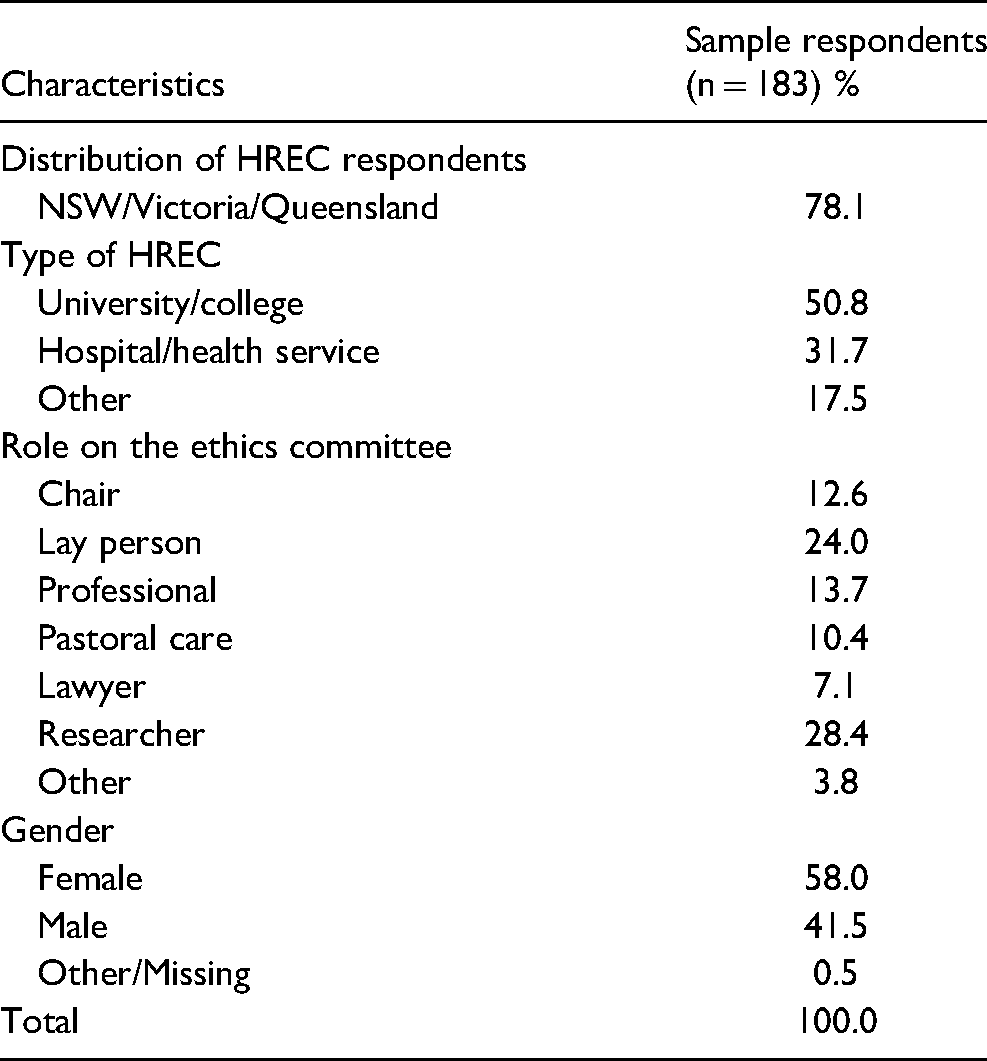
The geographic (state/territory) distribution of HREC members who completed all the scenario questions was similar to the distribution of registered HRECs across Australia, with the largest proportions from Victoria, NSW and Queensland (78.1% across these three states). Most HREC members were from either University/College HRECs (50.8%) or hospital/health service HRECs (31.7% of all respondents).
Table 1 shows that the HREC member respondents covered the range of roles required by the National Health and Medical Research Council for HREC membership (NHMRC, 2007, Section 5.1), as did the subset of respondents that answered all the scenario questions. Over half the members were female (57% of all respondents and 58% of the subset of respondents).
Statistical Analysis
Combining the study approval responses from all permutations (base case, three alternate methods and three alternate payment levels) resulted in seven scenario variations for each of the four study topics. Recall that the method for the base case is an online survey and the payment is the chance to go into a $200 draw on completion of the survey. Study approval data were collected seven times for each respondent for each of the four study topics.
Approval was recorded as a dichotomous variable, set to 1 if the HREC member approved the hypothetical study and 0 otherwise. Logistic regression is often used to estimate associations with dichotomous outcome variables; in that case, the estimated independent associations between the HREC member's approval of the hypothetical research project and the research topic, payment and method, would be given by odds ratios. Judging odds ratios as difficult to interpret, however, we instead estimated associations in terms of relative risk (RR) estimated via general linear models (GLM) using a Poisson regression with a log link. The estimation results are similar to those from log binomial regression but the Poisson with a log link overcomes convergence problems. Acknowledging the clustering of errors associated with repeated measurement of the same HREC member, we accounted for the within-person variance using robust standard errors (Schmidt & Kohlmann, 2008; Zou, 2004).
The HREC member's role in the HREC and the institution in which the HREC member was based were included as control variables. We had evidence from the Stage 1 semi-structured interviews with HREC members that approval could be related to the type of HREC and role of HREC member.
The RR is the ratio of the probabilities of giving approval between two categories of an attribute included as a regressor. A RR that is greater than 1 indicates that the probability of giving approval is higher compared to the referent group. A RR that is less than 1 indicates that the probability of approval is lower than the reference group. An RR of 2 for women versus men, for example, indicates that women are twice as likely as men to give approval.
In one set of analyses we divided the approval responses into the four study topics, comprising 1,281 data points for each study topic. Research questions considered at this level included whether for each study topic the approval rating is impacted by payment, regardless of the survey method. We denote these analyses “study-topic level analyses”. In these GLMS we include covariates for payment and survey method, controlling for type of HREC and role on the HREC.
Another analysis involved the full dataset of 5,124 responses, combining all four study topics. By including interactions between study topic and payment, plus study topic and survey method as covariates in the regression, we were permitted an evaluation of more nuanced research questions. For example, were payment found to impact on approval for an online survey in the study-topic analyses, we could evaluate whether the payment effect varied with the sensitivity of the study topic. Analogously we could consider whether more sensitive topics were any more likely to be approved were the study to be a face-to-face interview rather than online. We denote this analysis as “scenario-level analysis”. For ease of reading, we summarise key findings from this analysis graphically.
A third “summary analysis” was conducted with the full data set and HREC role and HREC type controls, plus the study topic covariate, but without interactions. This allowed us to show how the responses varied on average with the sensitivity of the study topic.
Statistical analyses were performed using STATA MP Version 15.
Descriptive Analysis of Reasons for not Approving a Study
Of the 183 HREC member respondents, 162 (89%) rejected at least one hypothetical study at its initial presentation (an online survey where participants were offered a chance to enter a draw for a $200 voucher); 14% (n = 26) rejected only one study and approved all others. HREC members who chose not to approve the initial presentation of a study were asked to select their main reason for not giving approval. These reasons are summarized descriptively for each hypothetical study. Then we show, as frequencies, the main reasons for rejection by hypothetical study topic and number of studies the HREC members rejected. Findings help to contextualize the findings of the statistical analysis of the scenario responses.
Results
How Does the Sensitivity of the Study Topic, Payment for Participation and Study Method Impact the Likelihood of HREC Member Approval for a Hypothetical Study?
Does Higher Risk/Sensitivity of the Study Topic Decrease the Chance of Approval?
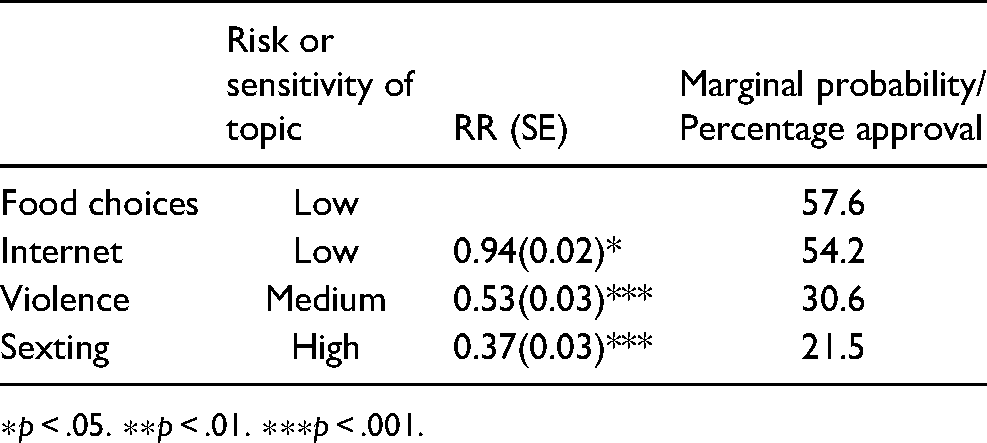
The estimated risk ratios and errors between the hypothetical scenarios and approval for the summary analysis are reported in Table 2: they show a significantly higher rate of approval for the topics of lower risk or sensitivity compared to those of higher risk or sensitivity. As shown in Table 2, the average probability of approval for the food choices scenarios was 57.6%. The probability of approval was 6% significantly lower [(1 − 0.94)*100] for the internet scenarios (54.2%); 47% [(1 − 0.53)*100] significantly lower for the violence scenarios; and 63% significantly lower for the sexting scenarios.
Unadjusted Results for the Association Between Scenario and HREC Approval.
∗p < .05. ∗∗p < .01. ∗∗∗p < .001.
Results for the association between study topic and HREC approval for the scenario-level analysis (See Appendix B) are broadly similar to the results for the summary analysis. The scenario-level analysis does, however, indicate that there was no difference in the rate of approval between the two relatively benign topics (food choices and internet) for the initial presentation (an online survey with the chance to go into a $200 draw (p > .1)). The HREC approval rating for the violence and sexting scenarios remained significantly lower than that for food choices (p < .05).
Do Higher Payment Amounts Decrease the Chance of Approval?
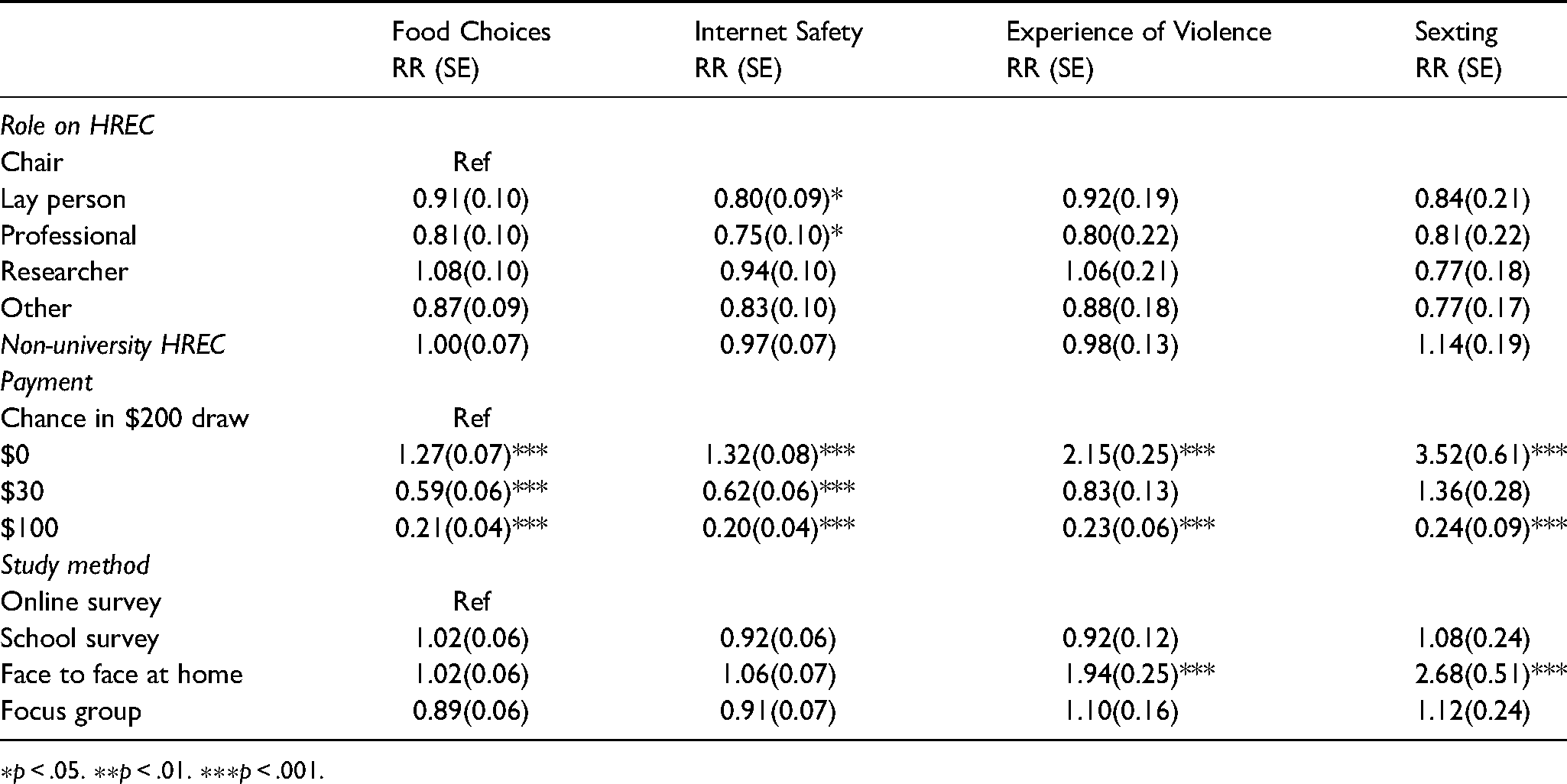
The estimated risk ratios and standard errors from the study topic level analyses are presented in Table 3.
Estimated RRs from a Series of General Linear Model Predicting HREC Member Approval for Hypothetical Studies by Study Topic (n = 1,281 for Each Study).
∗p < .05. ∗∗p < .01. ∗∗∗p < .001.
Table 3 shows that HREC members were more likely to approve all four hypothetical studies when no payment was offered, than if entry into a draw for a $200 voucher was offered (Food choices: RR = 1.27, Internet safety: RR = 1.32, Experience of violence: RR = 2.15, Sexting: RR = 3.52; p < .01 in all studies). For example, HREC members were 1.27 [27% (1.27 − 1)*100) times as likely to approve the hypothetical food choices study (low risk) and 3.52 times as likely (252% (3.52 − 1)*100) to approve the sexting study (high risk) if no payment were offered (compared to entry into a $200 voucher draw).
Table 3 (study topic level analyses) indicates that the payment of $100 to children (compared to a $200 voucher draw entry) was the least commonly endorsed with RR’s significantly below 1 in all four scenarios. For example, for the food choices scenario HREC members were 79% [(1 − 0.21)*100] less likely to approve the study if a payment of $100 was offered compared to participants being offered a chance to go in the $200 voucher draw. There was little variation in the RR’s for the $100 payment across the scenarios, with RRs ranging between 0.21 for food choices and 0.24 for sexting.
Not surprisingly, the results for the $30 payment fell in between those for the no payment and the $100 payment. Estimation results in Table 3 indicate that compared to the chance to go into a $200 voucher draw, HREC members were less likely to approve $30 payments for the hypothetical food choices and internet safety studies (low risk). (For example, HREC members were 41% [(1 − 0.59)*100] less likely to approve the hypothetical food choices study if a payment of $30 was offered.) In the higher sensitivity studies (experience of violence and sexting) HREC members were just as likely to approve surveys with a $30 payment as the chance to go into a $200 voucher draw.
Does the Study Method Influence Approval?
The study topic level analyses showed that there was no difference in the inclination to give approval for studies based on the method of data collection amongst the low risk study topics (either the food choices or the internet safety) (See Table 3). However, Table 3 shows that for the more sensitive topics (experiences of violence and sexting), HREC members were more likely to give approval if the study was conducted as a face-to-face interview in the child’s home than as an online survey (Violence [94%(1.94 − 1)*100]; Sexting [168%(2.68 − 1)*100)).
Do the Impacts of Payment and Survey Method on the Likelihood of HREC Member Approval Differ with the Sensitivity of the Study Topic?
For ease of interpretation the results from the scenario level analyses are also presented in Figure 1, which illustrates the approval rates by payment amount and scenario.
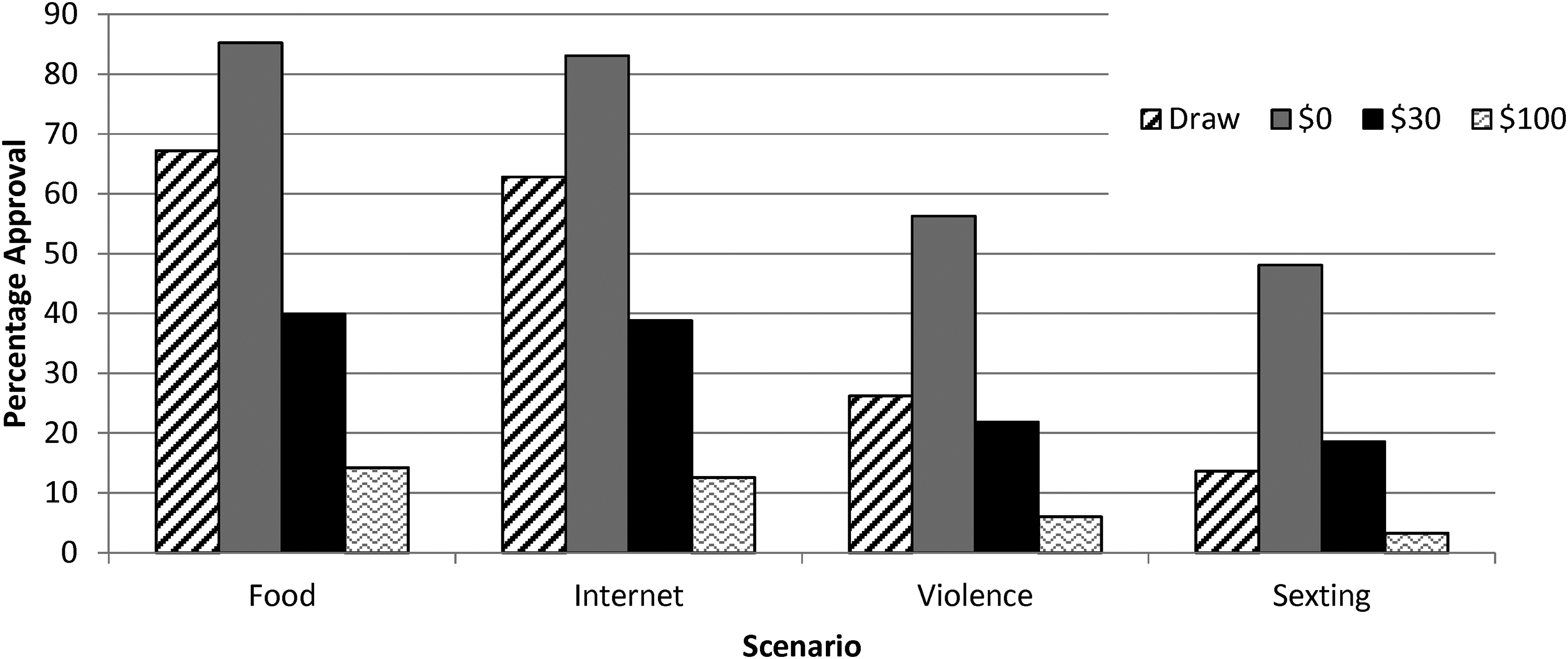
Predicted probabilities of approval by hypothetical study topic/sensitivity and payment.
Did Removal of the $200 Voucher Payment More Incline HREC Members to Approve an Online Survey for the More Sensitive Study Topics?
From Figure 1 we can see that the ratio of approval between the $200 draw and zero payment is very similar for internet safety when compared to food choices, but less similar for the violence and sexting scenarios.
The RR for $0 payment compared to the $200 draw is 1.27 for the food choices and 1.32 for the internet safety scenario in the study topic level analyses (Table 3). The RR of 1.04 (internet safety, no payment) in the scenario level analysis (Appendix B) tells us that 1.32 is 1.04 times higher than 1.27. However, this difference is not statistically significant (p > .05). Likewise, the RR for no payment compared to the $200 draw is 3.52 for the sexting scenario in the study topic level analysis (Table 3) and the scenario level analysis shows that it is 2.78 (Appendix B) times higher than 1.27 (1.27*2.78 = 3.5). According to the scenario level analysis the RR of 3.52 for the sexting scenario is significantly higher (2.78 times) than the equivalent RR for the food choices scenario. Analogously, the scenario level analysis shows that the RR for the violence scenario is 1.69 times significantly higher its food choices counterpart.
For all topics, regardless of sensitivity, HREC members were more likely to give approval for a study without payment than for one offering the chance to go into a $200 draw. However, no payment was more reassuring to HREC members for the riskier topics than for the relatively benign topics.
Did the $100 Payment Discourage Approval Equally Across all Levels of Topic Sensitivity?
There was little variation in the RRs for the $100 payment across the four scenarios (Table 3). The scenario level analysis shows that there was no significant difference (p > .05) between the RR for food choices (0.21) and the other three scenarios (internet RR = 0.20; Violence RR = 0.23; sexting RR = 0.20). (See Figure 1.)
Regardless of topic sensitivity, the $100 payment was a significant discouragement for approval.
Did the $30 Payment Discourage Approval for the Less Sensitive but not the More Sensitive Studies?
HREC members were less likely to approve the low risk/sensitivity studies (hypothetical food choices and internet safety studies) when there was a $30 payment compared to the $200 voucher draw. In the higher sensitivity studies (experience of violence and sexting), however, HREC members were just as likely to approve surveys with a $30 payment (Table 3). The scenario level analysis confirmed the difference by topic sensitivity, finding significantly larger RRs for violence and sexting than for the less benign topics (Appendix B).
HREC members saw no difference between the $30 payment and chance to go into a $200 voucher draw for the more sensitive topics but were deterred by the $30 payment for the less sensitive topics.
Did Conducting a Face-to-Face Interview in the Child’s Home Rather Than the Online Survey More Incline HREC Members to Approve Riskier Topics?
The scenario level analyses (Appendix B and Figure 2) found that that the RR’s for the face-to-face interview compared with the online survey for the violence and sexting scenarios were both significantly higher (1.94 and 2.68) than the equivalent RR for food choices (1.02). Whereas HREC members were no more likely to give approval for the relatively benign scenarios when the study (with the chance to go into a $200 draw) was conducted face-to-face, this method proved more reassuring for the riskier topics.
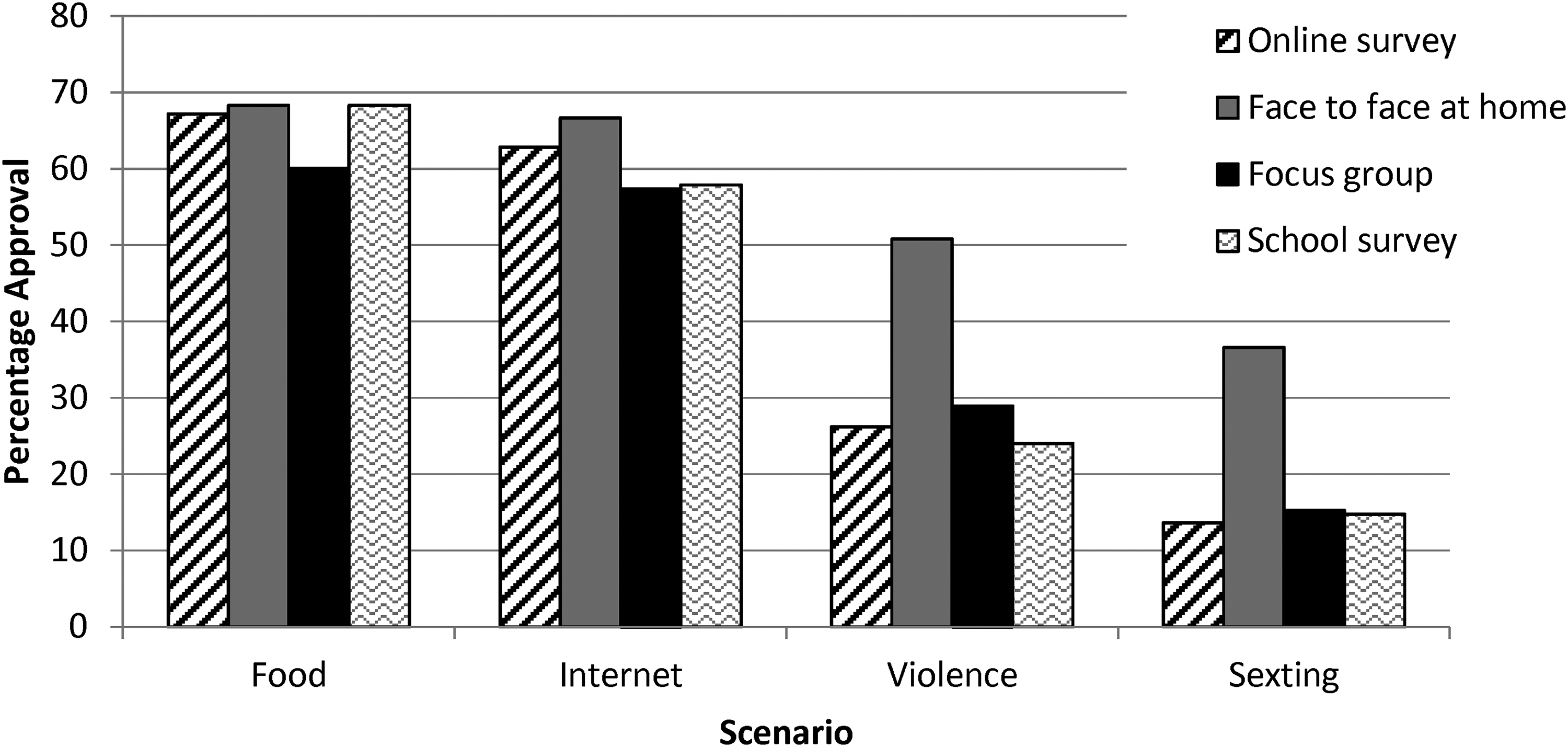
Predicted probabilities of approval by hypothetical study topic/sensitivity and survey method.
What Were the Reasons for not Approving Studies?
As was shown in Figure 1, HREC members were less likely to approve the study the more sensitive or risky the study topic (online survey where participants were offered a chance to enter a draw for a $200 voucher). Although the percentage of HREC members who would
Figure 3 shows the main reasons for rejection by hypothetical study topic and number of studies the HREC members rejected. These are presented in terms of frequencies. The most common response pattern was to reject both the sexting and experience of violence studies (the higher sensitivity studies), but to approve the food choice and internet safety studies (n = 62, 34% of 183). The next most common pattern was to reject all four studies (n = 52, 24% of 183). The third most common pattern was to reject only the sexting study (n = 23, 13% of 183). Around half of the HREC members who rejected all four studies rejected the food choices and internet safety studies because of concerns about payment. Their concern was less about payment and more about risks for the higher risk studies (violence and sexting).
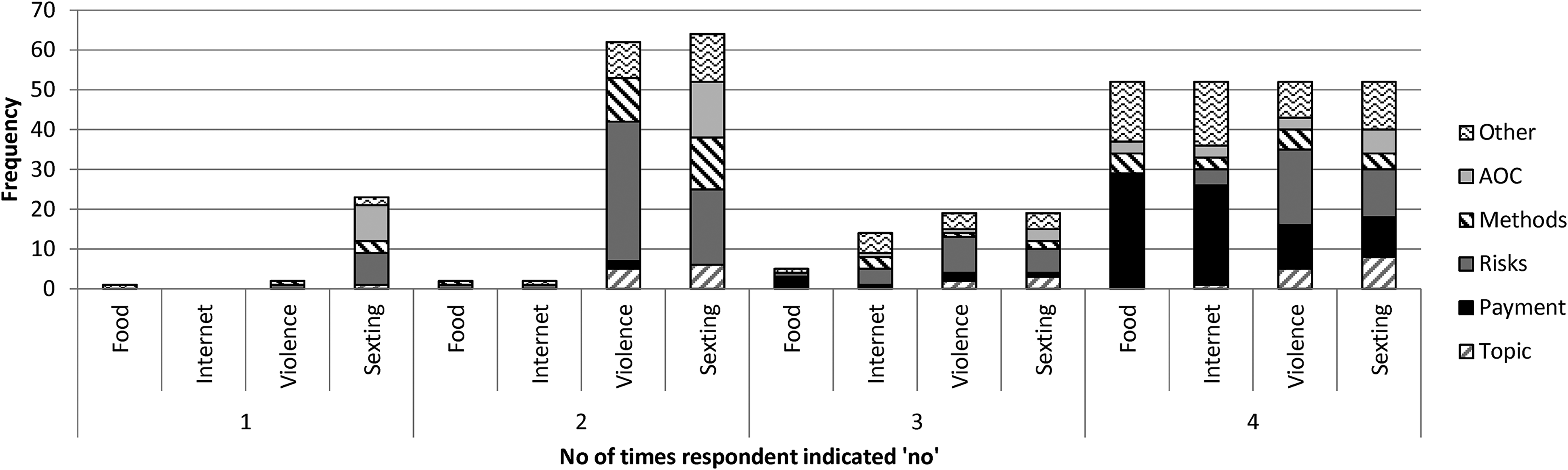
The main reason given by HREC members for rejecting hypothetical studies by the study topic/sensitivity and number of studies rejected.
Discussion
Over the past three decades there has been a growing appreciation of the importance of children and young people participating in social research on issues that affect their lives. Rather than excluding children from sensitive research, researchers have been required to design their research approaches to ensure that they are safe, ethical and practicable. In particular, researchers have had to consider how to best facilitate research so that it is palatable to the various parties who facilitate or restrict children’s participation, including parents, agencies with responsibility for children, and research ethics committees (Powell et al., 2020). The MESSI study was innovative in its use of hypothetical scenarios to explore how these research facilitators make decisions and consider the likely influence of the study sensitivity or risk, payments and study methods, on the decision-maker’s approval of children’s participation.
The results from the survey of 183 HREC members using hypothetical scenarios show that the likelihood of study approval is impacted by each of the three elements of study design considered.
Does the Higher/Risk Sensitivity of the Study Topic Decrease the Chance of Approval?
The HREC member responses to the vignettes presented showed that they were much more likely to approve a study that was considered to be of low risk or sensitivity than they were to approve a higher risk study. This result held irrespective of the study method or payment level or amount.
This finding was also consistent with the responses provided by children and young people to the same vignettes: the higher the risk or sensitivity the less likely they would agree to participate (Taplin et al., 2019). However, proportionately more children agreed to participate in both the higher and lower risk studies than did the HREC members grant approval (Taplin et al., 2019).
Although the reluctance of HRECs and others to approve high risk or sensitive social research has been discussed previously, few attempts have been made to define “high risk or sensitivity”. An earlier stage of the MESSI study, in which a range of Australian stakeholders were asked the question “what is a sensitive topic?” found that while participants identified a range of sensitive topics, they were less concerned about the topic than with the contexts of children's lives and experiences (Powell et al., 2018). That is, topics were generally not sensitive in and of themselves, but may become sensitive to particular children, depending on their individual experiences and life circumstances (Powell et al., 2018). Some researchers have commented that, in their efforts to protect children from their perceived risks from particular studies, HRECs can become risk-averse (Hildebrand et al., 2015). However, concerns about children becoming distressed or upset from discussing a particular issue are not well grounded in existing evidence. When children have experienced negative impacts or distress, researchers have shown that they were minimal and often compensated by positive benefits (Ellonen & Pösö, 2011; Finkelhor et al., 2012; Murray, 2005). The need for researchers to document for HRECs the methods they will use to mitigate and address any potential risks related to the topic being investigated should be the primary concern (Powell et al., 2020).
The responses provided by HREC members to vignettes in relation to the sensitivity of the research are also consistent with those they provided to the other questions in the MESSI study survey. In a paper from the same study (Taplin et al., 2022), more than half the HREC members nominated particular topics that they would not approve children aged 7 to 14 years to take part in under any circumstances. However, nearly half the HREC members said that they would approve such research on any topic as long as there was a benefit arising from the research, the methods were robust, and the risks clearly managed (Taplin et al., 2022).
Do Higher Payment Amounts Decrease the Chance of Approval?
This study also found that any payment for participation, in the form of cash ($30 or $100) or the opportunity to enter a draw to win a $200 voucher would generally discourage HREC members from approving a study, regardless of its level of sensitivity.
At all study risk levels, HREC approval was most likely when no payment was on offer and approval fell as the payment increased. Around half of the 52 HREC members who rejected all four hypothetical studies (presented as an internet survey with a chance to enter a $200 voucher draw) rejected the low-risk food choices and internet safety studies primarily on the basis of concerns about payment. This suggests that some respondents were so concerned about payments to children that they would not approve any study regardless of the topic or risk level.
Around half the HREC members would approve the higher risk studies if no payment was offered; yet payment was rarely given as the stated reason for rejecting the higher risk studies. Instead, the stated concerns were the study risks or topic.
At the higher risk levels, HREC members approved $200 voucher draws at the same rate as a $30 payment, while for the lower risk studies the $200 voucher draw was preferred to the $30 payment. In contrast, children and young people were equally likely to participate at the different risk levels when offered a $30 payment or entry into a $200 voucher draw (Taplin et al., 2019). Researchers with more limited research budgets may be encouraged by this finding to offer entry into a $200 voucher draw, as they appear to be acceptable to both HREC members and children and young people.
In examining the children’s responses to the same vignettes, we used Singer and Couper’s (2008) empirical test of the “undue influence” of incentives, which tests whether or not there is a statistically significant interaction between the size of the risk and the size of the payment on the decision to participate. We found that neither the A$30 nor $A100 payments provided “undue influence” in the riskier study—that is, that they were not induced to participate in a study they may not have participated in without a payment (Taplin et al., 2019). Furthermore, a remarkable number told us they would participate without payment. However, consistent with findings that monetary payments are an effective tool to increase research participation rates (Bower et al., 2014; Jennings et al., 2015; Permuth-Wey & Borenstein, 2009; Singer & Couper, 2008), children and young people were more likely to agree to participate as the payment increased (Taplin et al., 2019).
On the basis of our previous findings in relation to the children and young people, “undue influence” is unlikely to be as much of a concern as HREC members have previously thought, and should not even be a consideration with low risk studies. The origins of HREC members’ concerns about the appropriateness of payments to children for their participation in
Does the Study Method Influence Approval?
In the lower risk study scenarios, no differences were detected in the HREC members’ likelihood of approval for the different study methods tested: online survey, school survey, face-to-face survey in the child’s home and a group interview or focus group with a researcher at a youth centre near home. The only difference detected was in relation to the higher risk scenarios, where HREC members were more likely to provide approval if the study was conducted as a face-to-face interview in the child’s home.
Face-to-face or in-person interviews are generally assumed to provide more opportunity for the researcher to monitor and discontinue the study if the child participant becomes distressed or upset. However, children may prefer the anonymity of a paper or online survey when providing information about a topic that is sensitive or considered personal, rather than discussing it with a researcher at their home where they may be concerned about being overheard by their parents (Macapagal et al., 2017). Others want to be offered the choice (Hill, 2015). Researchers may need to address HREC concerns by outlining how they would mitigate any risks from conducting (online) surveys with children and young people on potentially sensitive topics, should they choose this study method.
Best Practices
HREC members were concerned about each element of the study design, but primarily the risk or sensitivity of the study, and the payment amount. When considering lower risk studies, their decisions to deny approval of the study were driven primarily by concerns about payment. However, when they considered a study to be high risk or of high sensitivity, the motivation for denying approval was largely the risk.
These findings may prompt researchers to conclude that to maximize the chance that their study is approved by an HREC, they should avoid the use of a payment for the child participant. However, there are a number of reasons to argue for payments for child participants, as for adults. Firstly, payments increase participation rates and are also appropriate as compensation for time spent on research or reimbursements for expenses (Dickert & Grady, 1999; Gelinas et al., 2018; Rice & Broome, 2004). (Largent & Lynch, 2017) argue that there is also a responsibility on the part of research ethics committees to ensure that payments are not too low as to be exploitative. Secondly, concerns about the “undue influence” of payments are unfounded. Children and young people are able to identify risks and are not induced by money to participate in research that they would not have otherwise participated in (Taplin et al., 2019). On this basis, HREC member concerns can be allayed, and their focus on payments as the reason for denying study approval is unwarranted. Payments of around $30 may be appropriate for child participants even for high risk studies. Furthermore, an undue emphasis by HRECs on payment issues rather than managing risks and methodological issues can lead to children and young people being denied that opportunity to consider their own participation.
Research Agenda
The limited research about HREC decision-making reduces the transparency of their research ethics approval processes, particularly in relation to research involving children and young people. Using hypothetical research scenarios is an innovative way to gain insights into the decision-making of HREC members, particularly in relation to their assessment of factors such as the level of sensitivity and payment levels that could not tested in a real research study with children and young people. The MESSI study has also allowed us to compare the responses of the other groups who responded to the same scenarios (children and young people, professionals and parents) to provide additional information about questions of appropriate payment amounts and the sensitivity or risk. Further research that builds on the findings from this study may provide greater clarity in terms of how to optimise the participation of children and young people in social research studies about issues that affect them. Additional research with HREC members in other countries is also needed to better understand the generalisability of these findings.
Educational Implications
HRECs would benefit from additional training and guidance on how best to facilitate children's participation in ethical research and on the issues related to payments for children and young people in research. Obtaining children and young people's direct perspectives on complex ethical issues is an innovative method that could be used more widely to provide guidance for HRECs. Some HRECs have established a children and young person's advisory committee to represent and provide advice in relation to research projects involving children and young people (Navratil et al., 2015). Others have incorporated children and young persons’ reference groups to assist with particular projects and to integrate their views into the research ethics application (Moore et al., 2016). Whichever method is used, additional input to inform HREC decision-making about these issues is needed.
To assist HRECs in their decision-making, researchers themselves would benefit from additional training and expertise on how to manage the risks related to their research with children, and in presenting that information in their research ethics applications. Better researcher awareness of the issues around payments of child participants, including appropriate payment amounts, is essential to increase the opportunities for children to participate in social research about sensitive issues.
Study Limitations
There are some limitations to the study which should be considered in interpreting these findings. Firstly, this sample of HREC members is from an Australian study and may not be applicable to other countries with different research ethics review processes. Secondly, with a relatively low response rate of around 14%, there could be concerns about selection bias towards respondents most concerned about research with children on sensitive topics. Thirdly, descriptions of the hypothetical research studies provided less information than would usually be provided in ethics applications. In designing the vignettes we had to balance the need to provide enough information for participants to decide whether they would approve a study, and the need for brevity to minimise participant attrition. Fourthly, following traditional vignette design, the information included was uniform for all groups of survey participants (HREC members, children, parents and other professionals), which also restricted the level of detail. Irrespective of these limitations, this is one of the larger studies examining these issues, and the measures used detected differences both between and within groups.
Supplemental Material
sj-docx-1-jre-10.1177_15562646221087530 - Supplemental material for How do Research Ethics Committee Members Respond to Hypothetical Studies with Children? Results from the MESSI Study
Supplemental material, sj-docx-1-jre-10.1177_15562646221087530 for How do Research Ethics Committee Members Respond to Hypothetical Studies with Children? Results from the MESSI Study by Stephanie Taplin, Jenny Chalmers, Judith Brown, Tim Moore, Anne Graham and Morag McArthur in Journal of Empirical Research on Human Research Ethics
Supplemental Material
sj-docx-2-jre-10.1177_15562646221087530 - Supplemental material for How do Research Ethics Committee Members Respond to Hypothetical Studies with Children? Results from the MESSI Study
Supplemental material, sj-docx-2-jre-10.1177_15562646221087530 for How do Research Ethics Committee Members Respond to Hypothetical Studies with Children? Results from the MESSI Study by Stephanie Taplin, Jenny Chalmers, Judith Brown, Tim Moore, Anne Graham and Morag McArthur in Journal of Empirical Research on Human Research Ethics
Footnotes
Acknowledgments
Thanks to Bianca Hoban who had an integral role in the earlier stages of the study. Thanks also to Erin Barry for her communications work on the MESSI study recruitment and for the creation and organization of the website and other promotional materials. Fuzz Designs created the logos and animations for the vignettes. Thanks also to the MESSI children's reference group and advisory committee for their advice on the design and conduct of the study, study participants, and to the MESSI team across multiple sites.
Authors’ Note
Enquiries about the MESSI study and this paper can be directed to: Stephanie Taplin, PhD, Adjunct Associate Professor, School of Public Health, Faculty of Health, University of Technology Sydney. PO Box 123, Broadway NSW 2007. Australia. Email: stephanie.taplin@uts.edu.au.
Declaration of Conflicting Interests
The author(s) declared no potential conflicts of interest with respect to the research, authorship, and/or publication of this article.
Funding
The author(s) disclosed receipt of the following financial support for the research, authorship, and/or publication of this article: This work was supported by the Australian Research Council, (grant number DP150100864).

Supplemental Material
Supplemental material for this article is available online.
Notes
Author Biographies
References
Supplementary Material
Please find the following supplemental material available below.
For Open Access articles published under a Creative Commons License, all supplemental material carries the same license as the article it is associated with.
For non-Open Access articles published, all supplemental material carries a non-exclusive license, and permission requests for re-use of supplemental material or any part of supplemental material shall be sent directly to the copyright owner as specified in the copyright notice associated with the article.
