







Abstract
Debate is ongoing concerning the activities and functioning of Research Ethics Committees (REC), especially a possible science-or-ethics dichotomy in research ethics review. We retrospectively analyzed 145 letters issued by a French REC over 18 months. All queries were classified in three levels: qualification (definition of the problem), category (aggregation of broader topics) and finally fields (ethical, scientific, or administrative). Overall, 971 queries were identified, of which 407 (42%), 379 (39%), and 135 (14%) were deemed ethical, scientific, and administrative queries, respectively. The most frequent concern was about participants’ information. The main influencing factor was the profession of the reporting readers—scientific queries were more frequently raised by a methodologist, whereas ethical queries were more frequently raised by an ethicist. These results indicate that research ethics review is a multidimensional task that should be considered a collaborative effort.
Keywords
Introduction
Independent review by a research ethics committee (REC) is the cornerstone of research participant protection in biomedical research (WMA, 2013). By identifying and recommending the avoidance of unethical research practices, RECs protect participants and preserve their rights, dignity, and welfare. The areas examined by a REC include the study's scientific value and validity, evaluation of the risks and benefits, fairness of recruitment, and whether patients’ autonomy and rights are respected (especially by informed consent) (CIOMS, 2016; Emanuel et al., 2000). The multidimensional nature of research ethics concerns raised by RECs in developed and developing countries has been reported (Novaes et al., 2009; Russ et al., 2015; Tsoka-Gwegweni & Wassenaar, 2014).
In France, all research Involving Human Participants (RIHPs) (French reference is “Researches Implying Human Persons”) must be submitted to and validated by a Committee for the Protection of Persons (CPP; the French equivalent of a REC/IRB). Thus, plans for interventional or non-interventional research “contributing to the increase of medical or biological knowledge” are randomly submitted to one of the 39 French CPPs (Légifrance, 2016). In line with international guidelines, French regulations state that a CPP must analyze the scientific relevance, information and consent processes, whether the benefit-risk balance is favorable, the justification for and security of data collection (according to regulations), participant compensation, and the protection of participants (Légifrance, 2021; World Medical Association, 2013). Thus, CPP, and more generally, RECs, must take into account methodological good practices, local or international constraining regulations, and ethical guidelines.
Debate is ongoing over the scope of research ethics review. More specifically, some authors have denounced a possible distinction between scientific and ethical concerns during REC work (Angell et al., 2008; Dawson & Yentis, 2017). Analysis of REC letters to researchers enables the definition of what RECs identify as attributions in their role as gatekeepers. In most cases, authors classify REC queries according to predetermined categories on the basis of ethical guidelines, whereas other authors base their analyses on identifying problematic documents within research folders (Dal-Ré et al., 2004; Happo et al., 2017; Hemminki et al., 2015; Lukaseviciene et al., 2020; Martín-Arribas et al., 2012; Silaigwana & Wassenaar, 2019; Tersmette & Engberts, 2017). Informed consent is the most frequent topic of queries from RECs (and therefore, informed consent documents are the most common problematic documents) (Boyce, 2002; Decullier et al., 2005; Tsoka-Gwegweni & Wassenaar, 2014). In addition, RECs frequently express concerns about the scientific aspects of research or administrative failures (Benfatto et al., 2021; Van Lent et al., 2014). Whether queries concern scientific aspects of research, informed consent, or administrative breaches, they are within the scope of research ethics review. A clear understanding of the prevalence of scientific, administrative, and ethical queries raised by CPPs/RECs may help address the multidimensional scope of REC work.
We retrospectively analyzed letters issued by a French CPP over 18 months. The main objective was to classify the queries raised by a specific French CPP (as scientific, administrative, or ethical). By conducting an in-depth analysis of queries in CPP letters, we determined the frequency and proportion of each query type and explored influencing factors.
Methodology
We retrospectively reviewed the letters of the CPP Sud-Ouest Outre-Mer 3 from August 2018 to December 2019 (date of implementation of REC file computerization, facilitating data recovery). Research plans must have been submitted for the first time to the CPP but could have been refused by another. All studies were included, whatever their topic of concern (drugs, devices, biobanking), whether they were interventional or non-interventional. Queries were classified in three levels: whether the query qualified for this analysis (whether a problem was defined), the field type, and the problem category.
First, each query was qualified, according to the problem that was identified (for example: “Length of Informed Consent Documents (ICDI; “Inadequate sample size”, “Missing investigators’ CV”,…). Qualifications were not predefined. We assumed that without predefined qualifications, a more precise and realistic description of the broad range of queries could be achieved. Thus, new qualifications were created each time it was necessary. We believe that this methodological aspect of our study is innovative compared to previous studies.
Each eligible query was then classified as a scientific, administrative, or ethical query (field type). Scientific queries were those concerning scientific or methodological aspects, or associated with potential consequences on the quality of the results of the study under review. For example, comments such as “Inadequate sample size,” “Mistakes in the study rationale,” or a “Lack of description of the study process” were considered to pertain to scientific queries. The administrative field included all breaches and misinterpretations of administrative requirements concerning the constitution of the protocol dossier. For example, the qualifications “Missing CVs,” “No administrative declaration committing to a regulatory methodology for data collection and management” or “Mistakes in data management” were considered to pertain to administrative queries. Ethical queries were described as those related to problems directly implicating participants that could not be resolved by scientific changes or compliance with administrative requirements. Examples of ethical queries were the “Length of ICDs,” “Inappropriate financial compensation,” and “No consideration of vulnerable populations.” An additional dimension (“Other”) was created to consider formal queries as orthographic ones with no effect on quality of review.
The classification of queries into one of the three fields was based on the nature of the problem, independently of the source document. For example, the problem “ICDs influencing results” was included in the scientific field even if it involved a document concerning participants’ information. Because the results of the study could be affected, it was considered a scientific problem. Also, in some cases, the same comment could be classified in one field or another, requiring more detailed interpretation. For example, two different problems can be identified concerning inclusion criteria: a query on inadequate or missing inclusion criteria leading to biased results was considered a scientific query. Queries about the inclusion of vulnerable persons without clear plans for addressing their specific vulnerabilities (especially concerning consent) were classified as ethical queries. Likewise, queries about “Wrong process in consent collection” could be ethical or administrative queries. A query related to a lack of time for participants’ reflection before providing consent was considered an ethical query. A query about the wrong type of consent process being used was considered an administrative query (in France, two consent processes are distinguished: proper consent for interventional studies, and non-opposition for non-interventional studies).
Finally, three fields of queries were identified, each comprising many different problems. To simplify data interpretation, problems in the scientific and the ethical fields were aggregated into larger categories. For example, within the ethical field, the problem qualifications “Unintelligible ICDs,” “Inconsistency of information,” “Length of ICD,” and “Lack of translation” were aggregated in the category “Unintelligibility of information.”
REC queries were analyzed by a researcher (TH), and complex cases were discussed with a second researcher (MCS). A second round of evaluation was conducted on a random selection of 25 letters. The intra-rater concordance rate was 95.8%, and the few differences observed had no major effect on the frequency or proportion of each field or category. The secondary objective was to determine whether the frequency of the three dimensions of queries and the presence of at least one dimension were influenced by research- or CPP-related factors.
CPPs can issue four types of decisions: approval, approval with remarks (recommendations but no mandatory constraints), request for complement of information (RCI)RCI (mandatory changes or answers to questions required before approval is granted), and non-approval. Except for approvals, the justifications behind all other CPP decisions are detailed (Légifrance, 2016). The following data were collected: category of research according to French regulations (interventional, interventional with low risk and burden, or non-interventional researches), type of sponsor (industrial, institutional/isolated researchers), and whether vulnerable populations were included. Vulnerability could be due to social conditions (e.g., migrants, inmates, or homeless people) or to limitations of the consent process (e.g., pregnant women, children, and persons unable to consent due to cognitive and psychiatric troubles or other medical conditions, such as intubated and sedated persons) (European Medicines Agency, 2016).
CPPs are composed of two groups of experts: health professionals with expertise in biomedical research (methodologists, physicians, pharmacists, general practitioners, nurses) and professionals from other fields (ethicists, psychologists, lawyers, social workers, patient representatives). Each research project is analyzed by two readers in each group. Studies are debated by the CPP during monthly plenary sessions. For each letter, the professions of the two reporting readers were also recorded.
Quantitative variables are expressed as frequencies and percentages, means, medians, and first and third quartiles. Because of a skewed distribution, the study characteristics were compared using nonparametric Wilcoxon rank-sum tests. The chi-squared test was used to compare categorical variables. The type I error rate was 0.05. To identify factors related to the presence of queries, we used logistic regression models (yes vs. no) that included the research category according to French regulations, the sponsor type, the presence of vulnerable populations, and the professions of the two reporting readers.
The CPP Sud-Ouest Outre-Mer 3 gave its approval for this retrospective analysis of its letter (Chairwoman Mme Marie Viguier) and the French National Commission on Researchers Implying Human Persons (CNRIPH) was also informed. This study had an approval form the Research Ethics Committee of our Institution (Reference CER-BDX 2022–10).
Results
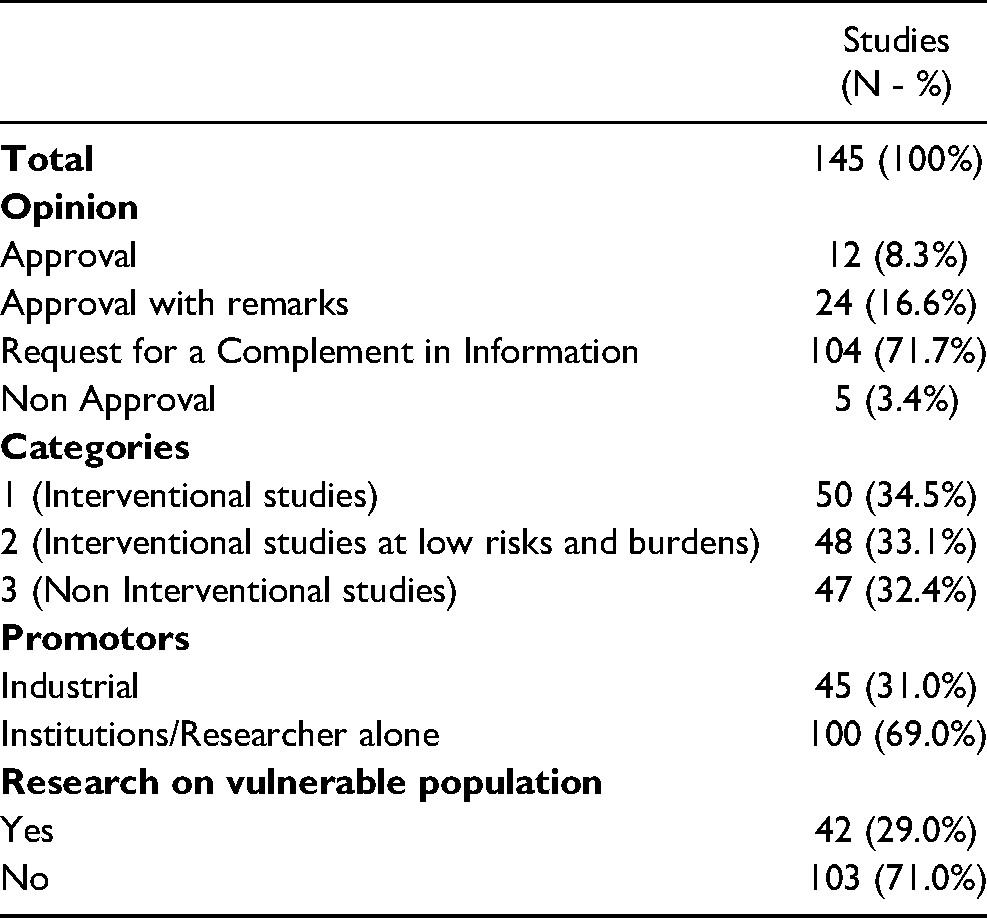
A total of 145 letters was recorded in this 18-month retrospective study. The studies were equally distributed among the interventional, interventional with low risk and burden, and non-interventional categories. In most studies (100/145, 69%), the sponsors were non-industrial. Of the studies, 12 (8.3%), 24 (16.6%), 104 (71.7%) and 5 (3.4%), respectively, received CPP approval, approval with remarks, a RCI, and non-approval. Twenty-nine percent of the studies included vulnerable populations (Table 1).
Main Characteristics of the 145 Studies.
A total of 971 queries was identified in the 145 CPP letters; from these, 53 problem qualifications were defined. The most frequent qualifications of queries were “Lack of information about protocol” (N = 71), “Unintelligibility of information” (N = 77), “Mistakes in or lack of statistical analysis” (N = 73), “Lack of study process description” (N = 55), and “No declaration committing to a regulatory methodology for data collection and management” (N = 53). The 20 most frequent query types are presented in Figure 1. A total of 407 (42%) queries, representing 23 qualifications of problems, pertained to ethical field. The scientific field included 379 (39%) queries, representing 18 different qualifications. The administrative field included 11 qualifications for a total of 135 (14%) queries. Fifty (5%) queries were classified in the “Other” dimension. These results are presented in Figure 2.
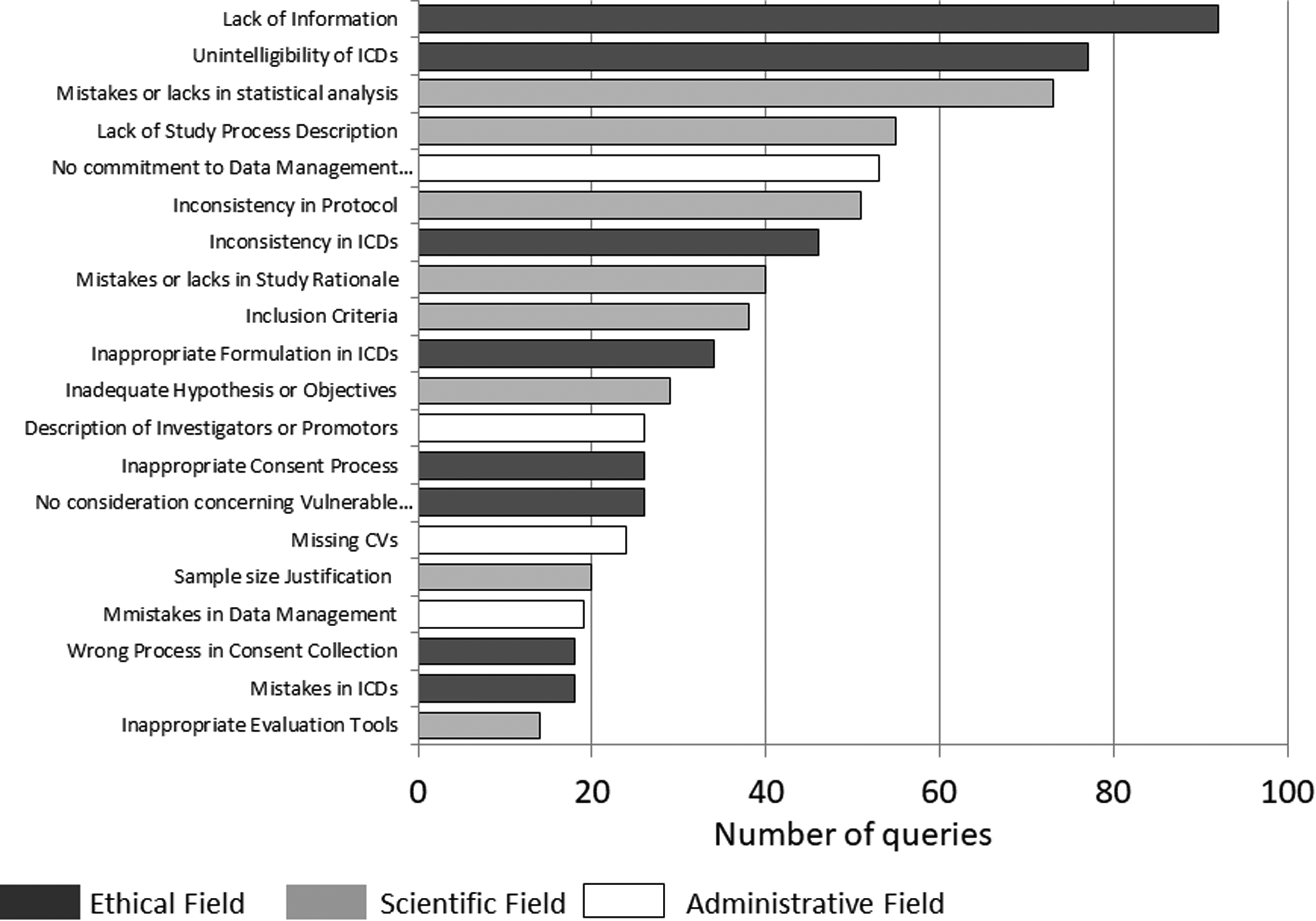
Description of the 20 most frequent queries and corresponding fields.
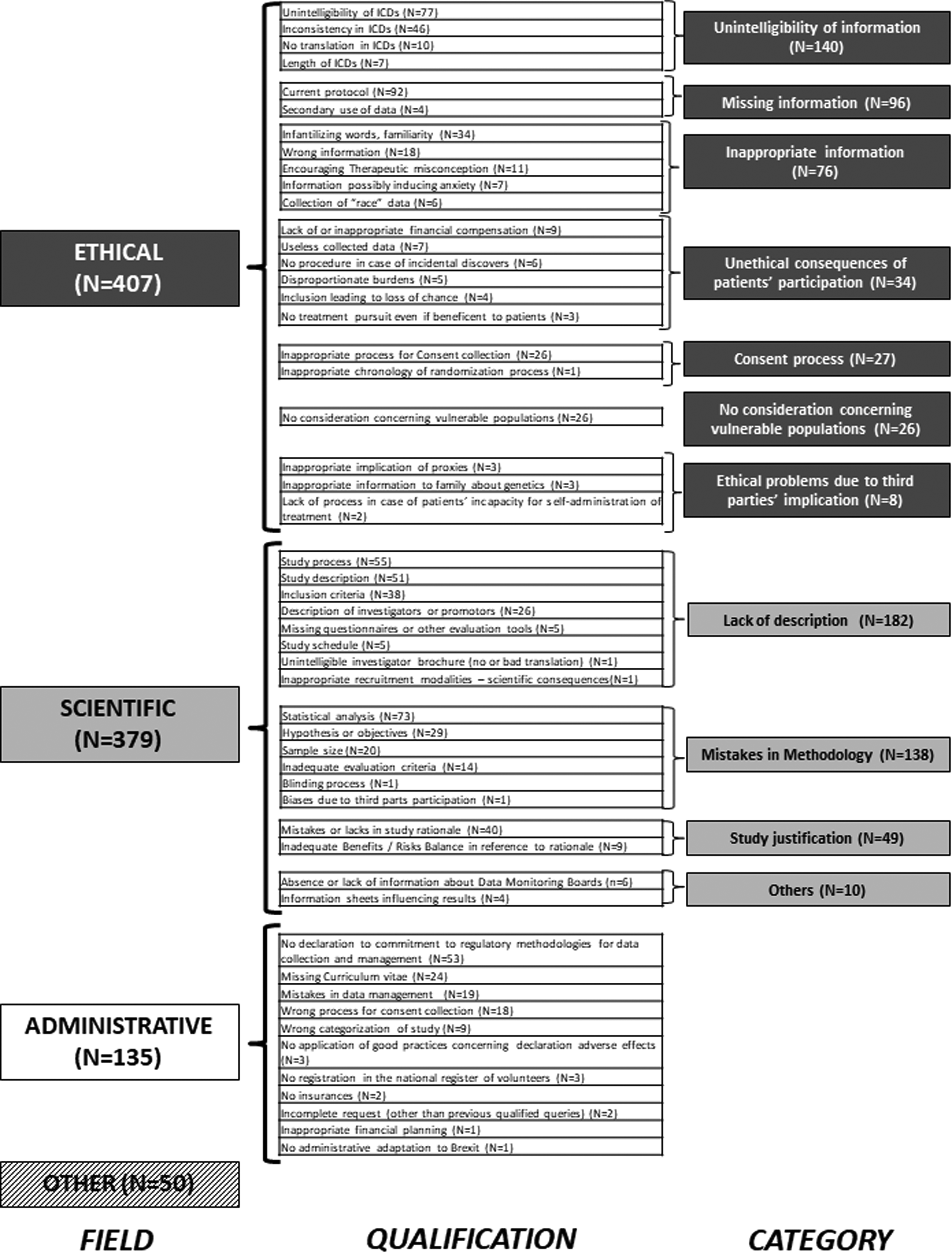
Fields, qualifications and categories of the 971 queries.
Due to the number and variety of qualifications related to the scientific and ethical fields, some qualifications were aggregated into categories. Thus, the ethical field included seven categories of qualifications: “Unintelligibility of information,” “Missing information,” “Inappropriate information,” “Unethical consequences of patients’ participation,” “Consent process,” “No consideration concerning vulnerable populations,” and “Ethical problems due to proxies’ participation.” The scientific field included the following categories: “Lack of study description,” “Mistakes in or lack of methodology,” “Lack of study justification,” and “Others.” The administrative problems were aggregated into one category (“Administrative”). The largest categories were “Lack of study description” (182 queries), “Unintelligibility of information” (N = 140), “Mistakes in or lack of methodology” (N = 138), “Administrative” (N = 135), and “Missing information” (N = 96). Queries about patients’ information were classified into “Unintelligibility of Information,” “Missing information,” and “Inappropriate information.” When pooled, they comprised 312/971 queries (32.1%). These results are presented in Figure 3.
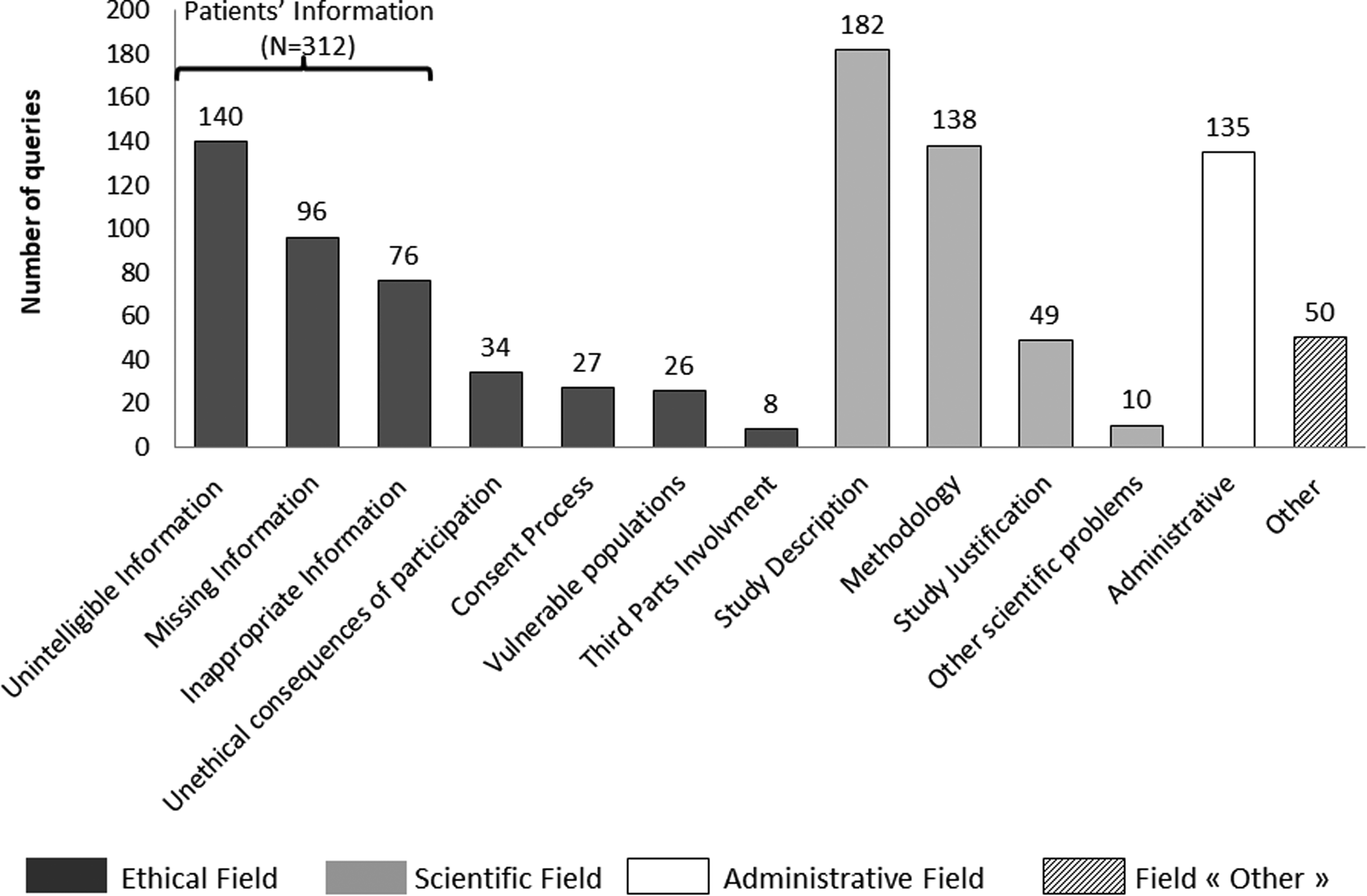
Distribution of queries according to Categorization and Fields.
Overall, 132/145 of the ethics applications studied (91.7%) generated a least one query. Respectively, 117 (80.7%), 98 (67.6%), and 84 (57.9%) were associated with at least one ethical, scientific, and administrative query. The mean number of queries by study was 6.7; 2.8 for the ethical field, 2.6 for the scientific one and 0.9 for administrative field. Medians and quartiles are presented in Table 2. Interventional studies classified as minor increase over minimal risk were associated with a significantly larger median number of queries (7 vs. 5, p = 0.021), whereas non-interventional studies were associated with a smaller number of ethical queries. Interestingly, studies with industrial sponsors were associated with a smaller number of scientific queries compared to those with institutional/individual sponsors. The inclusion of vulnerable populations had no influence on queries.
Fields of Queries Raised by the CPP Regarding the Main Study Characteristics.
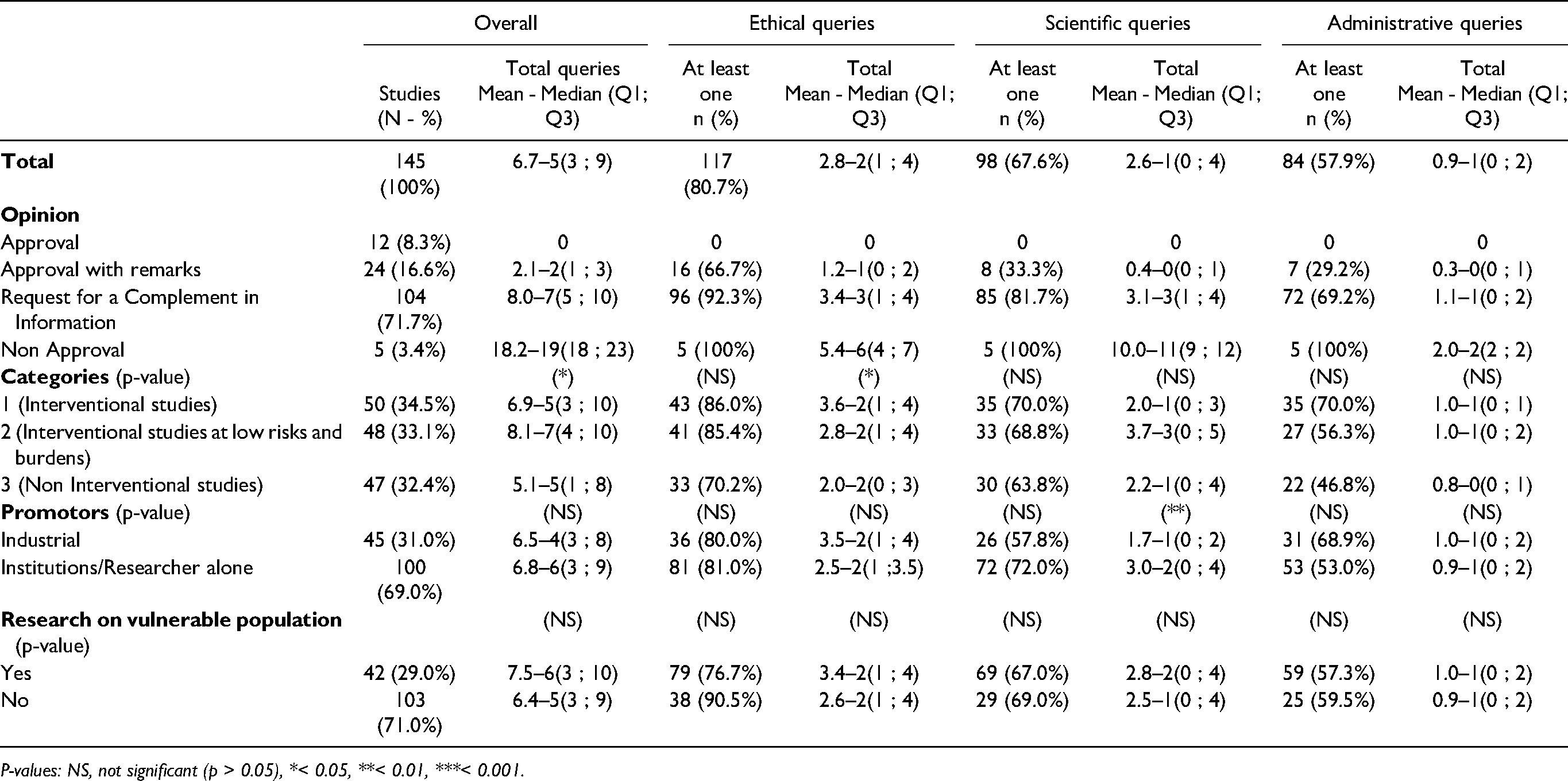
P-values: NS, not significant (p > 0.05), *< 0.05, **< 0.01, ***< 0.001.
Table 3 lists the professions of the reporting reviewers/readers. The number of methodological queries was higher when the health professional reader was a methodologist (p < 0.001), whereas ethical queries were more numerous when the non-health professional was an ethicist (p = 0.0019).
Fields of Queries Issued by the CPP According to the Profession of the Reporting Readers.
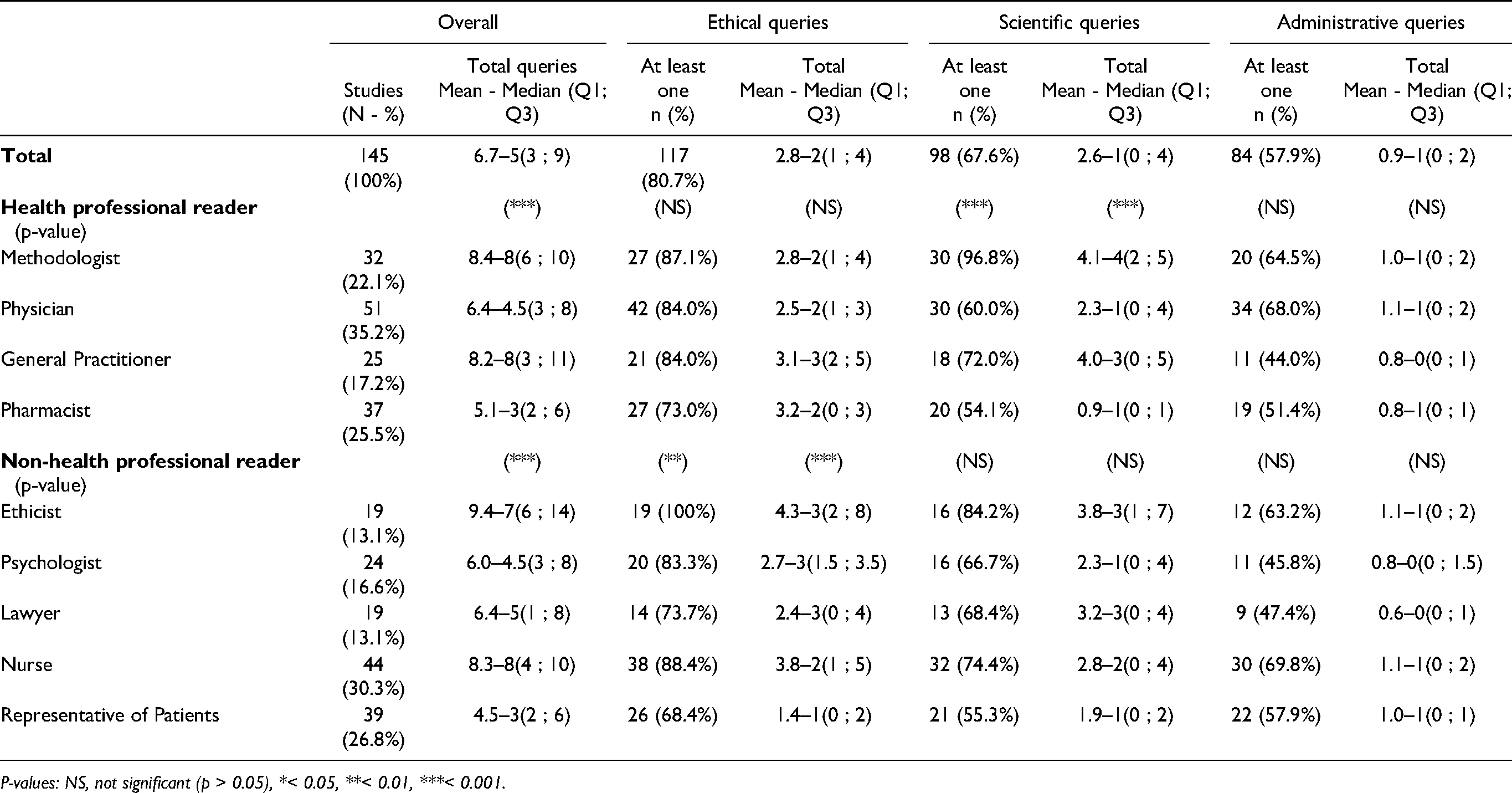
P-values: NS, not significant (p > 0.05), *< 0.05, **< 0.01, ***< 0.001.
After adjustment, no single variable was significantly associated with the presence of at least one ethical query, despite a higher likelihood of queries when vulnerable persons were involved (p = 0.07). However, because 100% of the letters evaluated by ethicists included an ethical query, the fit of the model is questionable, and an unadjusted analysis must be considered. The only factor significantly influencing the presence of at least one scientific query was whether a methodologist was involved (p = 0.014), with a nonsignificant negative association with an industrial sponsor (p = 0.08). No factor was found for the administrative field.
Discussion
We examined a sample of queries raised by a French CPP/REC based on the letters sent to the sponsors. Among the 145 research proposals submitted over 18 months to our CPP, 3.4% were not approved and 71.7% received a RCI, which likely led to significant modification of the research projects, as reported by others (Fauriel et al., 2005; Hemminki et al., 2015; Novaes et al., 2009; Tersmette & Engberts, 2017).
Similar proportions of queries pertained to the scientific and ethical fields (39% and 42% of all queries, respectively. The balance between scientific and ethical queries within REC letters has been reported (Angell et al., 2008; Benfatto et al., 2021; Tsoka-Gwegweni & Wassenaar, 2014; Van Lent et al., 2014). Therefore, the dichotomy between science and ethics during research review needs to be questioned further (Angell et al., 2008; Dawson & Yentis, 2007). The current implementation of European Union regulation 536/2014 leads to a clear separation of those two fields and so influences RECs (Lukaseviciene et al., 2020; Tusino & Furfaro, 2021). The scope of ethics review may be narrower in some countries because their RECs only analyze ethical documents, whereas scientific documents (protocols, investigator brochures) are analyzed separately and centrally. This is not the case for French CPPs. Our results do not support this separation. Ethical queries may stem from documents other than information sheets, and problems with ICDs reflected scientific impairment in four research projects. Although these cases were rare (3%), at the national level, there could be dozens of such studies per year. Their existence justifies preserving the widest possible scope of research ethics review. The science/ethics dichotomy therefore seems artificial and counterproductive.
The existence of different fields also demonstrates the complex and multidimensional work of RECs. Each field requires thorough and competent review. For the scientific and administrative fields, clear references exist (with a certain degree of interpretation). Methodological standards or regulatory obligations provide useful benchmarks, and the analysis focuses on the ability of the research projects to meet scientific and administrative requirements. In response to REC requests, sponsors must comply with research standards or regulatory requirements. The ethical dimension is different. Although ethical references define what is ethically recommended, they cannot provide definitive answers. Thus, characteristics of populations (particularly their vulnerabilities), diseases, and social contexts must be taken into account for an adequate ethical analysis. An integrative approach considering both general principles and specific contexts is key. The description of the different assessment repertoires of RECs has been previously reported (De Jong et al., 2012).
The most frequent query category was scientific: “Lack of study description.” This is directly linked to the interpretation of queries and the definition of categories. We classified queries concerning information into “Unintelligibility of information,” “Missing information,” and “Inappropriate content” categories. Ethically sound information must be understandable, completely disclosed, and appropriate. The present authors regard not being understandable, not stating everything, and not stating things appropriately as three distinct problems. Our methodological choice to use these three categories tends to reflect three complementary aspects of participants’ information. Nevertheless, when pooled, these three dimensions included almost one third of the queries, making queries on participants’ information the largest single concern. Other studies have also reported this dominance of queries concerning patients’ information (Boyce, 2002; Decullier et al., 2005; Tsoka-Gwegweni & Wassenaar, 2014). Fourteen percent of the queries involved administrative breaches. One such problem (“No administrative declaration committing to a regulatory methodology for data collection and management”) was the fifth most frequent query, ahead of multiple ethical and scientific queries. Accordingly, the importance of administrative breaches has also been reported elsewhere (Benfatto et al., 2021; Russ et al., 2015; Silaigwana & Wassenaar, 2019; Van Lent et al., 2014).
The profession of the reporting reviewers influenced the contents of the CPP letters. From univariate and multivariate analyses, studies reviewed by methodologists generated scientific queries significantly more frequently, whereas studies reviewed by ethicists generated significantly more ethical queries. Those results are not very surprising due to the specific expertise of those specific readers. Nevertheless, CPP letters are issued by the CPP as a whole. Sometimes, queries arise from the plenary discussion and REC members other than the reporting reviewers. Research ethics practices vary markedly by country and REC (Abbott & Grady, 2011; Goodyear-Smith et al., 2002; Hemminki, 2016). It is vital to assess the importance of this inconsistency and identify the level to which it is tolerable (Trace & Kolstoe, 2017). In our study we found heterogeneity within an REC (but were unable to evaluate its effect on final decisions). These results underline the need to consider research ethics analysis as multidisciplinary and collaborative in order to limit this kind of disciplinary impact (Braun et al., 2020).
There was a trend towards having less frequently at least one scientific query for industrially sponsored studies. This is consistent with reports on the importance of scientific queries in studies promoted by institutions or individual researchers (Happo et al., 2017). Furthermore, non-approved protocols were associated with a large number of scientific queries (mean 10.0). This confirms a report on the predominance of scientific problems in non-approved protocols (Tersmette & Engberts, 2017).
This study has several limitations. First, it concerned a single REC in the specific French context. For example, queries about the use of the word “race” instead of “ethnicity” are a specifically French concern that exists within a defined cultural and regulatory context (Assemblée Nationale Française, 2013). However, our results are consistent with previous published reports. Second, it was based on a retrospective analysis of CPP letters after plenary discussion. But the content and the course of debates leading to letters were not available. Even if each CPP letter contained a detailed discussion, this could have biased the classification of queries. Third, we classified queries according problem qualifications, fields, and categories. Such distinctions are artificial and were for analytic purposes. Scientific issues are indeed genuine ethical problems and not outside the scope of research ethics. We proposed these distinctions artificially just to better evaluate the complexity and variety of REC work. Moreover, in some cases, the three fields can overlap, leading to subjective classification. However, the excellent concordance rate based on a second evaluation of 25 letters indicates that such cases are rare.
Several prior studies have focused on REC letters. Some focused on specific documents, especially information sheets (Dal-Ré et al., 2004). Other authors presented their results according to the documents involved or according to the ethical principle that the query was based on (Hemminki et al., 2015; Martín-Arribas et al., 2012; Russ et al., 2015; Silaigwana & Wassenaar, 2019). Other studies used frameworks that were inspired by ethical guidelines or reference articles (Emanuel et al., 2008; Tsoka-Gwegweni & Wassenaar, 2014). However, these studies used predefined frameworks. The originality of our study is that we used a reverse method: except for the three fields (scientific, ethical, and administrative), no preliminary framework was used for the analysis of CPP letters and problem qualifications/categories emerged as they were discovered. Because the focus was on CPP activity, we evaluated the number and type of queries, not the average number of proposals associated with a given predefined category. This enabled detailed classification and a precise evaluation of the queries raised by the CPP. For example, we highlighted 11 queries (concerning 11 different studies, 7.6% of all protocols) on fostering therapeutic misconception; this confirms the reality and importance of this very specific ethical concern in research ethics (Appelbaum et al., 1987).
Conclusion
Even if RECs are key elements in research process, the ethical issues they raise and their position in relation to a science/ethics dichotomy in research ethics review warrants analysis. We believe that this study provides a detailed and original analysis of queries raised by a French REC. There were similar proportions of scientific and ethical queries, consistent with previous reports. Our findings also provide insight into the influence of the composition of the REC on review outcomes and feedback letter contents (particularly the professions of reporting readers). These results indicate that research ethics review is a multidimensional task that cannot, and should not, be reduced to its ethical or scientific aspect only. Collaborative efforts are needed to ensure high-quality research ethics review incorporating scientific and “ethical” concerns. Further studies are needed to gain more insight into these issues. A prospective, qualitative analysis of the debates during REC plenary sessions would assist in this goal.
Best Practices
RECs should not see their scope reduced to merely ethical aspects. Research projects must be considered as a whole, and scientific and ethical aspects cannot be hermetically distinguished. Current functioning of French CPPs shows its capacity to consider a wide range of ethical concerns in research protocols. Our data underline the collaborative nature of REC work, and research expertise must be considered as a collective expertise, with a complementarity of specific expertise leading to a consistent and balanced evaluation.
Research Agenda
We are building a prospective framework to further analyze the work of RECs. We also intend to conduct a qualitative prospective analysis of CPP sessions. It is obvious that deliberations during work sessions are a missing point in this study.Understanding the roles of various experts and analyzing the nature and contents of deliberations will be helpful. The fact that 8% of research projects were regarded as containing concerns about therapeutic misconception is an interesting point. We plan to explore it further by analyzing ICDs from research ethics experts in comparison with final decision letters from RECs.
Educational Implications
Our data could inform the training of researchers, REC members, and sponsors. Although artificial, the proposed classification could be used to describe the scope of research ethics to researchers and neophyte REC members. The data should also make sponsors aware of major breaches in research projects (especially administrative queries, which are readily resolved and aviooidable). Finally, data on therapeutic misconception or the fact that ethical problems are present in scientific documents (and inversely) will be useful for research ethics education.
Footnotes
Acknowledgments
the authors acknowledge all the members of the Comité de Protection des Personnes Sud-Ouest Outre-Mer 3 and especially Mme Nathalie Guiton for her constant support. The authors also acknowledge the Commission Nationale des Recherches Impliquant la Personne Humaine (French National Commission for Researches Implying Human Persons).
Author Contributions
TH, MCS, VB and DB designed protocol, TH collected and interpreted data, VB performed statistical analysis, TH, MCS, VB and DB wrote and corrected the article.
Declaration of Conflicting Interests
The author(s) declared no potential conflicts of interest with respect to the research, authorship, and/or publication of this article.
Funding
The author(s) received no financial support for the research, authorship, and/or publication of this article.

Author Biographies
TH and MCS collected and interpreted data, VB performed statistical analysis, TH, MCS, VB and DB, conceived and participated to the writing of the article.