







Abstract
According to the Swedish Ethics Review Act, research involving personal data on crimes should undergo independent ethics review. To explore the reporting of ethics approval, we extracted information from articles with Swedish personal data on crimes published in 2013–2021. Of the identified 298 articles, 92 (31%) failed to report ethics approval. Failures were particularly common in articles with a qualitative design, single or few authors and when there was a social science focus. Failures varied markedly between universities. We conclude that failures to report compulsory ethics approval are common in articles involving personal data on crime and that these failures vary markedly with the research setting. Several indicators of poor adherence to the Ethics Review Act have been identified.
Background
The regulation of research ethics varies considerably between countries. In the European Union, the General Data Protection Regulation (GDPR) (European Union, 2016) covers all treatments of personal data and provides common definitions of what is personal data; this regulation is supposed to be complemented by national laws. The GDPR defines seven special categories of personal data that “shall be subject to appropriate safeguards” if they are used for research purposes (European Union, 2016). The EU regulation also states that processing of data on criminal convictions and offenses shall be safeguarded. In Sweden, the GDPR categories of personal data have been implemented in the Ethics Review Act as requiring mandatory ethics approval (Swedish Parliament, 2003). Lawmakers have also included personal data on criminality as being particularly worthy of integrity protection and subject to compulsory ethics review. Thus, in addition to the special categories of personal data stated in the GDPR, the Swedish Act applies to personal data on crimes, convictions, and certain other specified legal decisions.
Failure to report ethics approval has been described as occurring frequently in articles related to health sciences (e.g., Asplund & Hulter Åsberg, 2021; Schroter et al., 2006; Temel, 2022) and social sciences (Asplund & Hulter Åsberg, 2021). In health sciences, where adherence to research ethics regulations has been studied most extensively, the proportion of articles involving personal data according to the GDPR that lack information on ethics approval ranges markedly between research disciplines (Asplund & Hulter Åsberg, 2021; Uecker et al., 2020; Wu et al., 2019) and between scientific journals (Block et al., 2006; Pitak-Arnnop et al., 2009; Schroter et al., 2006).
The present study contributes empirical information on adherence to the requirement for ethics approval when the research involves personal information on criminality. We have studied to what extent approval by the Swedish Ethics Review Authority (or previous Regional Review Boards) has been reported in published scientific articles. We have also explored in what settings failures of reporting ethics approval may be particularly frequent. We hypothesized that in scientific articles with personal information on crimes, (a) failures to report ethics approval are frequent but have declined in recent years, (b) failures to report ethics approval are particularly common in articles with few authors and those published in journals with low impact, (c) the frequency of failures to report ethics approval varies by academic discipline and by research design, (d) failures to report are clustered to some universities and some research groups, and (e) failures to report ethics approval are fewer when the research also includes one or several special categories of personal data, as specified by the GDPR.
Methods
To identify relevant articles, we screened the Web of Science database (Clarivate) using “Sweden” in the address field and “crim*” or “verdict*” or “convict*” in any field. The search word “sentence*” could not be used because of the very large proportion of irrelevant hits. If an article was not available online at the university library (n = 3; 1.0%), it was replaced by the next consecutive article available.
All retrieved articles published in the years 2017–2021 were screened, first by abstract and, if potentially relevant, in full text. Inclusion and exclusion criteria were in accordance with what is stated in the relevant paragraph of the Swedish Ethics Review Act: “This Act applies to research that includes treatment of […] personal data on violations of the law that includes crimes, convictions in criminal court cases, criminal coercive measures or administrative detentions” (Swedish Parliament, 2003). Articles were included if they fulfilled the following criteria: (a) study with original data or other original information, (b) study containing personal data in violation of the law according to the Ethics Review Act and (c) data collected in Sweden.
The exclusion criteria were as follows: (a) articles with completely anonymized individual data, (b) studies on suspected but not convicted individuals, (c) articles on the attitudes, experiences and working conditions of the staff of, e.g., courts, police, prisons, probation services and forensic psychiatric institutions, and (d) case studies based on single individuals with detailed exposure in mass media.
The articles were reviewed for information on approval by the Swedish Ethics Review Authority or its predecessors, i.e., Regional Ethics Review Boards, including registration number. In articles that did not report ethics approval but referred to a previous publication from the same research project, the latter was reviewed for possible reporting of ethics approval. In addition, we abstracted information on publication journal, study design, number of authors, any concomitant information on special categories of personal data as defined in the GDPR, and the corresponding author's university or other responsible institution. If the corresponding author was from an institution outside Sweden (but the article reported on personal data on Swedish citizens), the affiliation of the main contributor from Sweden was used. The coding of the research discipline was based on the main scientific focus of the article and the corresponding author's affiliation. For a research group, an ad hoc definition was used, namely, at least five different authors with at least one of them publishing at least five articles that fulfilled the inclusion criteria. When two or more research groups had collaborated, the article was assigned to the corresponding author. The impact factors of the journals were retrieved from the Journal Citation Reports database (Clarivate, 2022). In 2 instances, the impact factor was not available; 0.1 was then used as the default. Each article was assessed by two reviewers; discrepancies were resolved by consensus discussion. Chi-square analyses of 2 × 2 and 2 × 3 contingency tables were used to compare groups statistically.
The study was approved by the Swedish Ethics Review Authority (registration number 2020-05252).
Results
Overall Results and Secular Trends
Our literature search identified 298 articles published from 2013 to 2021 in 141 different journals that involved personal data on convicted crimes. Of these articles, 92 (31%) lacked information on approval by the Ethics Review Authority or a Regional Ethics Review Board. One hundred nineteen articles (40%) reported ethics approval with a registration number, making them easily traceable. Information on ethics approval without a registration number was reported in 87 articles (29%).
Over the years 2013–2017, there was an apparent gradual decline in the proportion of articles lacking information on ethics approval, i.e., from 56% to 17% (p < .05 by chi-square test; Figure 1). In the succeeding years up to 2021, there has been no consistent time trend, with the proportion of articles without information on ethics approval ranging from 17% to 36% per year.
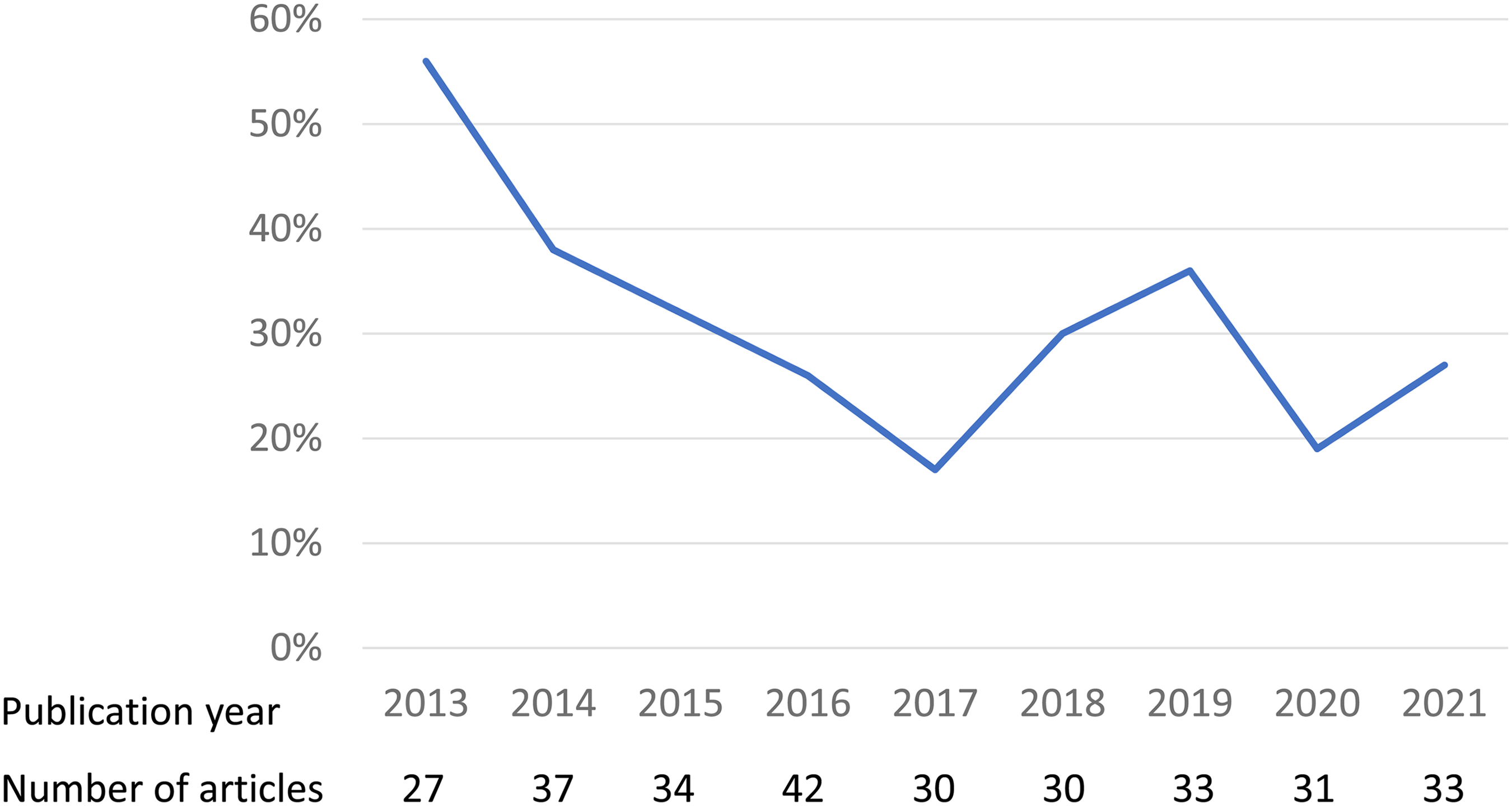
Secular trends during the period 2013–2021 in the proportion of articles with Swedish personal data on criminality lacking information on ethical approval.
Study Design and Concomitant Types of Personal Data
As shown in Table 1, the great majority of articles involving personal data on crimes and convictions were quantitative observational studies (248 of 298; 83%); in these studies, information on ethics approval was lacking in 70 articles (28%). When we analyzed observational studies with cohort designs and non-cohort designs separately, similar proportions (26 vs. 31%, not statistically significant) failed to report ethics approval. Therefore, in the following analyses, all quantitative observational studies were studied together. The proportion that failed to report ethics approval was considerably higher in studies with a qualitative design (20 of 37 articles; 54%; p < .05 vs. quantitative observational studies). In the few interventional studies that we identified, the proportion without information on ethics approval was low (2 of 13 articles; 15%).
Failures to Report Information on Ethical Approval in Articles Involving Personal Data on Crime by Swedish Research Persons.
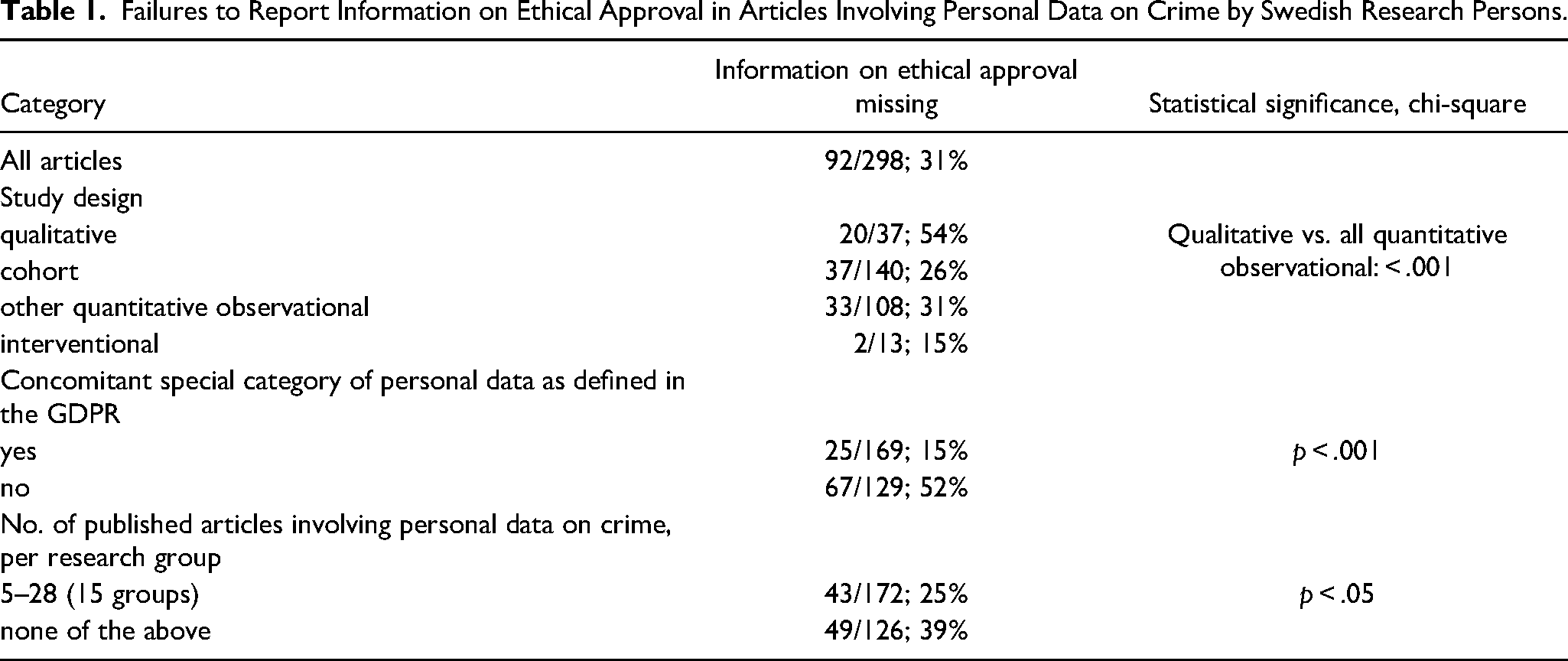
More than half of the articles included personal data that pertained not only to crime but also to personal data as defined by the GDPR. Of the 129 articles without other concomitant types of personal data as defined by the GDPR, 67 (52%) did not report ethics approval (Table 1). The corresponding proportion of articles with concomitant GDPR types of personal data was 26 of 167 (16%). The difference was highly statistically significant (p < .001).
Number of Authors
The likelihood of nonreporting of ethics approval was highest in single-authored articles (71%) and gradually declined with an increasing number of authors up to four authors, with no apparent number-of-authors effect above four authors (Figure 2). The difference was highly statistically significant between articles with 1–3 authors vs. ≥4 authors (p < .001 by chi-square test).
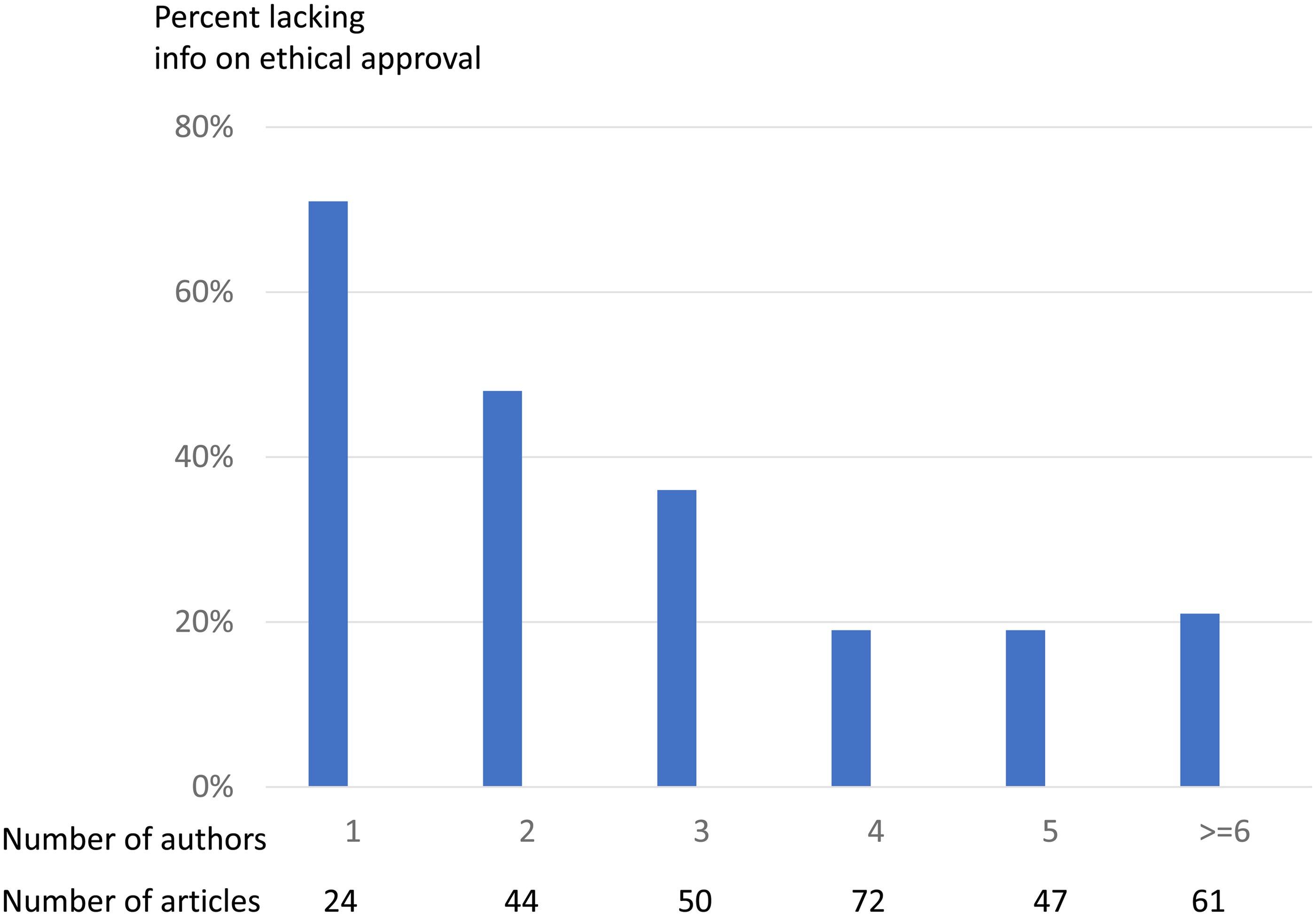
Proportion of articles involving personal data on criminality lacking information on ethical approval in relation to the number of authors of each article.
Disciplines, Universities, and Research Groups
The main focus of each article was classified into academic disciplines that were then grouped into one of four major categories: criminology (n = 82), sociology and social work (n = 48), forensic psychiatry and forensic medicine (n = 58), and psychiatry and psychology (n = 105). Five articles either had another focus or had several concomitant major foci and thus were not included in the analysis. In approximately half of the articles with a criminology focus and sociology/social work focus, ethics approval was not reported (51% and 48%, respectively). In articles with a forensic psychiatry/forensic medicine focus and a psychiatry/psychology focus, statistically significantly lower proportions failed to report ethics approval (17% and 14%, respectively; p < .001).
The 298 articles were published by 22 different universities or non-university institutions, of which 5 universities had published more than 10 articles involving personal data on convictions for crime. In four of these five universities, the proportion of articles lacking information on ethics approval ranged from 16% to 25% (Figure 3). A slightly higher proportion (29%) was observed in the group “Other universities and non-university institutions”. One university diverged markedly from the others, with 77% of the articles not reporting ethics approval (p < .001 vs. all other universities and institutions). At this university, the proportion of single-authored articles was high (31% vs. 4% in all other universities and institutions together; p < .001), as was the proportion with two authors (29% vs. 12%; p < .05). This university was also characterized by a low proportion of articles with concomitant GDPR-defined special categories of personal data (8%) compared with other universities and institutions (66%; p < .001) (Figure 4).
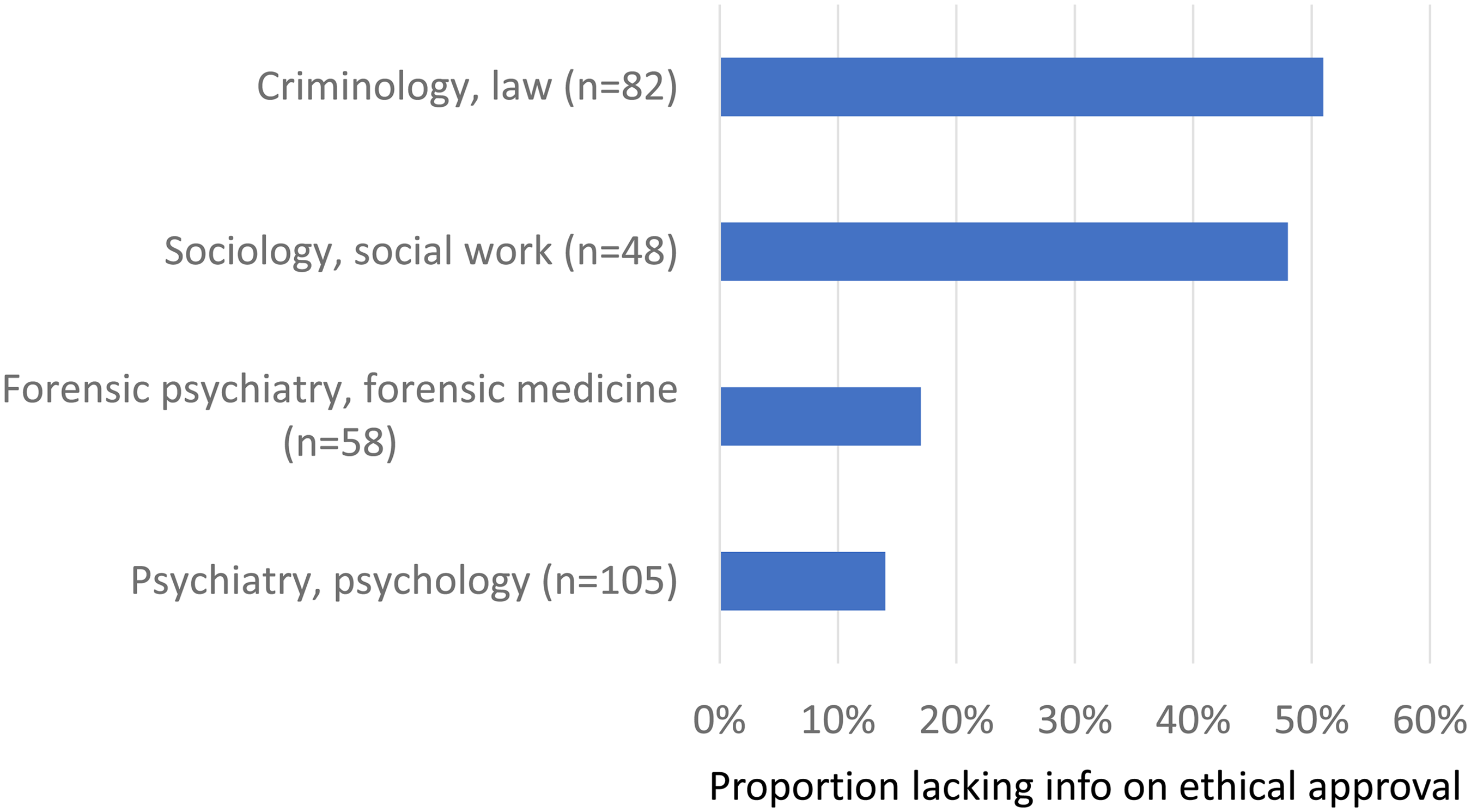
Proportion of articles involving personal data on criminality lacking information on ethical approval in relation to groupings of scientific disciplines.
Next, we analyzed whether failure to report ethics approval varied between research groups/networks, as defined in the Methods section. Fifteen research groups that had published at least 5 articles involving personal data on crimes were identified, and the number of articles ranged between 5 and 28. As shown in Table 1, the proportion without information on ethics approval was significantly higher in articles published by authors not belonging to any of the 15 groups with at least five publications (39% vs. 25%; p < .05). In the eight research groups with 5–9 published articles, the proportion of articles reporting ethics approval was highly variable (0–100%).
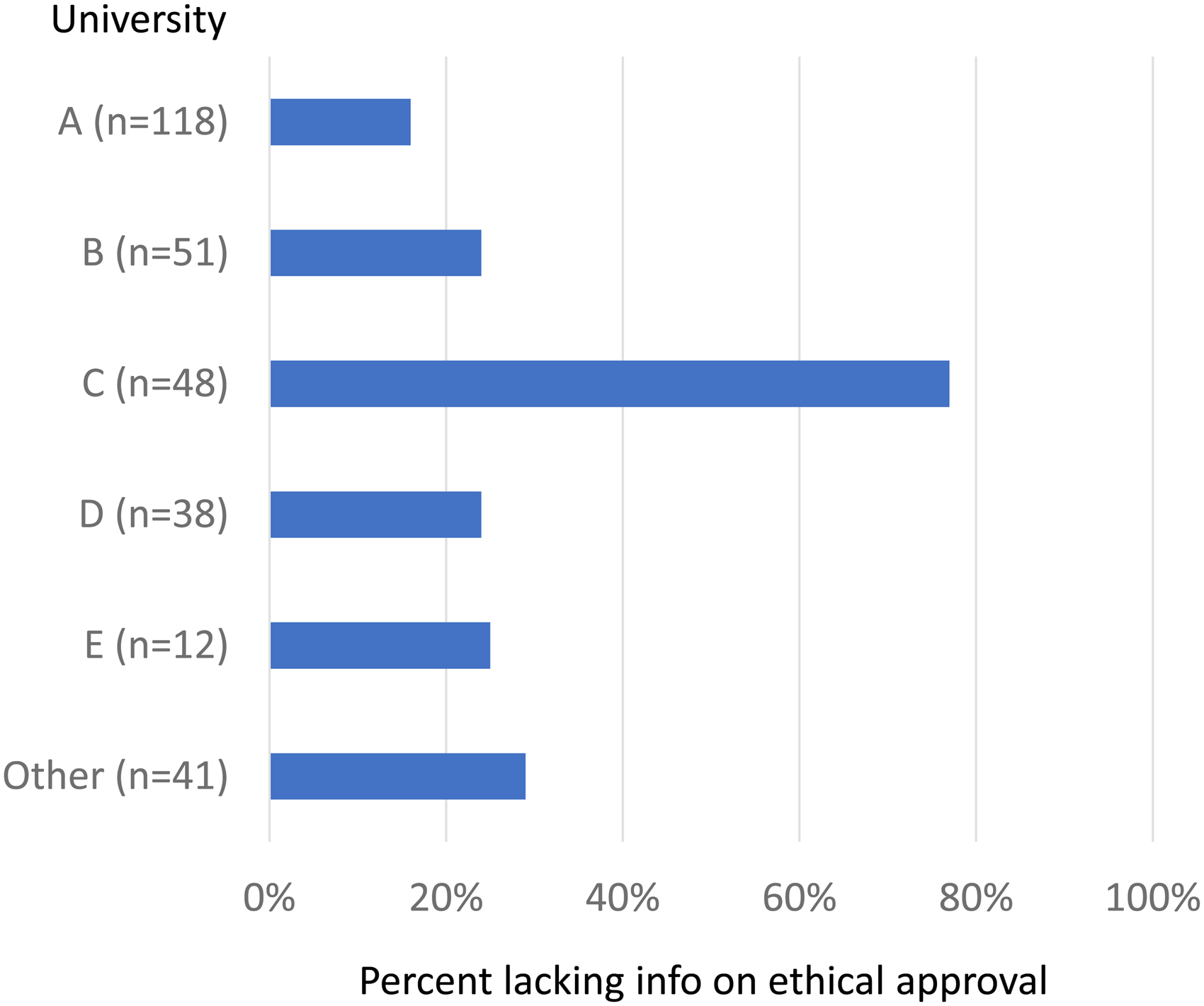
Proportion of articles involving personal data on criminality lacking information on ethical approval by university. Universities with ≤5 relevant publications during the study period are included in the Other category.
Journal Impact
We hypothesized that a lack of information on ethics approval was associated with a low impact factor of the journals in which the articles had been published. However, the median impact factor was identical (3.24), and they were similarly distributed (data not shown) in articles with and without information on ethics approval.
Discussion
The overall proportion of articles with missing information of ethics approval for research using personal data on crime was 31%, which is somewhat higher than what has previously been reported for GDPR-defined special categories of personal data in Swedish social sciences (27%) and considerably higher than in health care sciences (6–11%) (Asplund & Hulter Åsberg, 2021). The frequency of reporting ethics approval was low when no concomitant GDPR-defined special category of personal data was present. This signals that adherence to the Swedish Ethics Review Act is particularly problematic regarding personal information that involves criminality only.
Previous studies have observed that failure to report ethics approval varies by study design (Asplund & Hulter Åsberg, 2021; Block et al., 2006; Pitak-Arnnop et al., 2009; Schroter et al., 2006; Temel, 2022). Our present observations show that in studies with personal data on crime, failure to report ethics approval is nearly twice as common in studies with a qualitative design compared with studies with other observational designs.
There are several reasons why ethics approval is not reported. Approval may have been obtained but not reported in the publication. The authors may have insufficient knowledge about the legislation or have misinterpreted the law. Our observations also suggest that different research cultures result in varying proportions of articles without research ethics approval. Such cultural variations may be local between universities or occur between research disciplines. With a very low proportion of articles reporting ethics approval, one university deviated distinctly from the other four universities with substantial numbers of publications based on personal data on crime. This university was the only one without a medical school. The governance of health care research and the long tradition of external ethics reviews in health care sciences may have local spillover effects on other academic disciplines using personal data on crime in their research. Our finding that failure to report ethics approval is particularly frequent in articles with few authors is in line with what has been previously described in both health care and social science fields (Asplund & Hulter Åsberg, 2021).
There was a conspicuous gap of failures to report ethics approval between articles with a social science focus (criminology, sociology, or social work) and articles with a health science focus (forensic and general psychiatry, forensic medicine, and psychology). A reason for the more frequent nonreporting of ethics approval in social sciences may be less training regarding research ethics, resulting in insufficient knowledge about the legislation. Another tentative explanation is that scientific journals in health sciences tend to require more strict reporting of ethics approval; the same may apply to funders of research.
In the scientific literature, it has long been discussed whether social, behavioral and law research should be subjected to ethics review. Debaters have emphasized that the present ethics review systems have emerged as a reaction to atrocities in medical research and that the harms stemming from social science are not comparable with those stemming from traditional biomedical research (e.g., Dingwall, 2012; Schrag, 2011). A counterargument has been that social science poses risks to invasion of privacy, psychological trauma, and stigmatization, all of which may have serious and long-lasting implications (Nicholls et al., 2012; Oakes, 2002; Sharpe, 2017). When research is based on personal data on crimes, the main ethical concern relates to integrity. Integrity issues may be present not only in research involving personal encounters but also in research based on large-scale registers containing information on criminal activity, particularly when several registers are linked, as in many of the studies that we have reviewed here.
Critics of ethics review systems have also pointed out that the ethics review process, being governed by a health care paradigm, does not take the aims and nature of social research into consideration. External ethics reviews have been described as a form of censorship and therefore a major threat to the social sciences and their proper role in a democratic society (Dingwall, 2012).
Juridical aspects possibly contribute to varying practices in applying for ethics approval. It has been advocated that information on criminal court decisions should not be regarded as personal data since it is publicly available; a requirement for ethics review would therefore be in conflict with the Swedish constitution (Cameron, 2019).
There are considerable between-journal variations in the proportion of articles not reporting on ethics review (Dingemann et al., 2011; Schroter et al., 2006). We therefore hypothesized that failure to report was more frequent in articles published in low-impact than in high-impact journals. Our results did not, however, support this hypothesis. A previous study reporting ethics approval in Swedish health care and social sciences reached the same conclusion (Asplund & Hulter Åsberg, 2021). There seems to be an opportunity for editors of not only low-impact but also many high- and medium-impact journals to improve authors’ reporting of ethics approval when articles are based on identifiable personal data.
A strength of our study is that we have included consecutive studies reporting on personal data on crime in the Web of Science databases, irrespective of discipline and what journal the article had been published in. However, our study was restricted to research performed in only one country. While the GDPR, with its seven special categories of personal data, aims to regulate research ethics in EU member states, either by law or other forms of governance, it seems that Sweden is exceptional in including personal information on crime in its research ethics legislation.
A possible limitation of the current study is that we included only personal information on convictions in criminal court cases, criminal coercive measures, or administrative detentions. Some of the Swedish criminology research is based on police records of suspected offenders, but we included only articles with information on convictions. Therefore, some articles with relevant information on ethics approval may have been missed. A further limitation is that there may be some classification bias. Many of the studies were multidisciplinary, and we classified them by their main focus; thus, an element of subjectivity was present.
It should also be noted that we included only studies with original data published in journals included in the Web of Science databases. These databases are not complete regarding monographs, book chapters, conference proceedings and similar literature. Given that the peer review process may be less rigorous in some of this literature, it seems unlikely that failures to report ethics approval would be considerably lower if such literature were included in our present study (Asplund & Hulter Åsberg, 2021). Our selection process also results in non-inclusion of articles published in Swedish only without summary or keywords in English. Thus, a weakness of our study is that some research disciplines, for instance legal doctrinal research, probably are incompletely covered.
It should be noted that our study covers only one aspect of the ethics review process, i.e., that concerning research participants’ integrity. Other considerations, such as possible risks and benefits of the research, would have required access to full documentation of each study. Our study was not designed to explore to what extent the researchers deviate from the ethics approvals that have been granted (sometimes with a conditional decision).
We conclude that, in Sweden, failures to report mandatory ethics approval are common in research with personal data on crime and that there are several risk markers for such failures: research with a social science focus as opposed to a health science focus, no concomitant GDPR-defined special category of personal data requiring ethics approval, publications with few authors, and articles with a qualitative study design. Failures to report ethics approval vary between universities. The frequency of failure approval is not associated with the impact factor of the journals in which the articles are published. Our results point to several possibilities to improve the adherence to the ethics review legislation.
Best Practices
In research using personal data on crime, the respect for the requirements in the Swedish Ethics Review Act should be strengthened. In a recent update of the Act, a centralized inspection function was introduced; our results may be helpful for identifying research that is at high risk for being performed without compulsory ethics approval. When research with personal data on crime is conducted, universities and editors of scientific journals should pay special attention to the risk factors we have identified to ensure that ethics approval is obtained and reported.
Research Agenda
The reasons for underreporting of ethics approval, particularly in studies with a social science focus, should be explored. The analyses should focus on how different research cultures influence applications and reporting of ethics approval, including interactions between factors associated with non-reporting. It also seems that interventional studies are needed, e.g., those that focus on what interventions are effective in improving reporting.
Educational Implications
For researchers using personal data on crime, systematic education on research ethics with emphasis on the regulation of ethics review of research is warranted. Such education should involve not only junior but also senior researchers.
Footnotes
Author Contributions
KA and KHÅ designed the protocol, KA collected the articles, KA and KHÅ extracted information from the articles, KA wrote the first draft of the manuscript and KHÅ reviewed it.
Declaration of Conflict Interests
KA is the scientific secretary of the Swedish Ethics Review Appeals Board and declares no other potential conflict of interest. KHÅ declares no potential conflicts of interest with respect to the research, authorship, and/or publication of this article.
Funding
The authors received no financial support for the research.
