







Abstract
Background
Clinical trials are vital for advancing medical knowledge, yet engaging diverse populations—those under-represented due to race, age, income, education, geography, sexual orientation, or gender identity—remains a challenge, limiting research generalizability.
Methods
This study used a literature review and semi-structured interviews with participants from diverse backgrounds recruited on LinkedIn. A demographic survey was conducted via Qualtrics, yielding 21 responses and 15 study participants. The research identified barriers to participation: inadequate community engagement, trial awareness, mistrust, and unaddressed social determinants of health, with data analyzed for key themes.
Results
Four themes emerged: (1) Community engagement builds trust; (2) Addressing social determinants alleviates barriers; (3) Peer education empowers participants; (4) A representative workforce enhances recruitment.
Discussion
Findings emphasize the necessity of inclusive practices in clinical research, highlighting that targeted strategies can improve diversity in clinical trials, leading to more equitable healthcare outcomes. Future research should refine these strategies in specific therapeutic areas.
Keywords
Introduction and Background
Clinical trials play a crucial role in advancing medical knowledge and improving patient outcomes (Jager, 2023). However, there are significant, persistent challenges in effectively recruiting and retaining diverse individuals in clinical trials, impacting the broader applicability of clinical trials. This issue is of paramount importance as diversity in clinical trials ensures the generalizability of research findings to a broader population. Different racial and ethnic groups may exhibit variations in disease prevalence, treatment response, and genetic factors.
Research Agenda
By including individuals from diverse backgrounds, researchers can better understand the efficacy and safety of novel interventions across various populations, leading to more personalized and effective treatment options (NASEM, 2022). This drove our research agenda.
The purpose of this project was to develop strategies to make the process of recruiting and retaining diverse participants into clinical trials more seamless and effective. By addressing critical issues and barriers, this project aims to enhance understanding and provide actionable recommendations to improve diversity in clinical trials, ultimately leading to improved healthcare outcomes for all (NASEM, 2022).
To assess this problem, a comprehensive literature review was conducted using a systematic approach. The scope of the research question was clearly defined to focus specifically on diversity in clinical trials. Relevant databases, including PubMed and Google Scholar, were identified to ensure a broad and comprehensive search. Specific search terms and keywords, such as “diversity,” “clinical trials,” “representation,” and “recruitment,” were formulated.
Inclusion and exclusion criteria were applied to filter the results, focusing on peer-reviewed articles published within the last ten years which addressed diversity in clinical trial recruitment and retention strategies. After initial screening, 25 articles meeting these criteria were reviewed, assessing each for relevance, methodological rigor, and findings related to the research focus. Key themes identified across these articles were organized, highlighting common barriers, strategies, and recommendations for improving diversity in clinical trials. This structured approach facilitated the compilation of a robust literature review that informed the framework and findings of the study. Key themes included exclusion criteria, lack of availability, and physician bias. Exclusionary criteria (e.g., blood pressure) often limit the participation of individuals from marginalized communities (Stanton et al., 2024). These criteria may be designed without considering the unique needs/characteristics of diverse populations, inadvertently excluding them from potential trial opportunities (Huang & Wang, 2022). The lack of trial availability in underserved areas further exacerbates the lack of representation. Limited access to clinical trials in certain geographical locations disproportionately affects individuals from diverse backgrounds, hindering their ability to participate and benefit from cutting-edge research (Hamel et al., 2016). The presence of physician bias can manifest in various ways, including unequal treatment recommendations (clinical trials should be presented as a viable treatment option (NCCN, 2025)) or an inherent mistrust of certain populations. These biases prevent physicians from proposing trials to patients, further exacerbating disparities (Hamel et al., 2016).
Additionally, several themes directly related to the identified problem emerged from the literature review including mistrust, lack of awareness, lack of representation, cultural competency, and social determinants of health. Mistrust, stemming from historical injustices and unethical research practices, can undermine the willingness of individuals from diverse backgrounds to engage in clinical trials (Woods-Burnham et al., 2021). Lack of awareness about clinical trial opportunities, particularly among marginalized communities, hinders trial participation (Clark et al., 2019). The lack of workforce representation (defined by Wisdom Library as the establishment of diversity within an organization through active recruitment and comprehensive support for a varied workforce, essential for effectively meeting the needs of the a global consumer base and integrating diverse perspectives into operations and decision-making processes (2025)) in clinical trials creates a sense of exclusion and distrust among marginalized communities, as the absence of diversity among researchers, healthcare professionals, and staff involved in clinical trials may lead to a lack of understanding and sensitivity towards the unique needs and concerns of underrepresented groups (Roy et al., 2023). Cultural competency, understanding cultural nuances and tailoring recruitment strategies accordingly, is crucial to ensure effective engagement (Otado et al., 2015). Finally, social determinants of health, such as socioeconomic status, education, and access to healthcare, significantly impact the ability of individuals from diverse backgrounds to participate in clinical trials (Meyer et al., 2021).
The literature review also revealed noticeable gaps in the existing knowledge, including the need for more emphasis on workforce representation, the importance of effective community engagement to build relationships, the recognition and addressing of social determinants of health as barriers to participation, the impact of institutional and research trustworthiness on recruitment, and the development of effective recruitment and retention strategies.
Methods
The study was submitted to the University's Institutional Review Board (IRB). As this study involved anonymized interviews, observations, and surveys, the University's Institutional Review Board classified the research as Category 2 exempt (45CFR 46.104 (d) (2)).
Participants for this study were recruited via LinkedIn, targeting individuals from diverse backgrounds to ensure a broad range of perspectives regarding effective strategies for recruiting and retaining diverse participants in clinical trials. Inclusion Criteria included: Being over the age of 18, Language and accessibility requirements (English speakers only; necessary to participate in this study as it is conducted in English), Required characteristics (involvement in clinical trials in some capacity- researcher, patient, patient advocate, industry, medical provider, research staff (trial coordinator, etc.)), Location (located within the United States- aiming for geographically diverse participants), and willingness to undergo a screening procedure, when applicable, to confirm eligibility (this item is most typically used in clinical studies). Exclusion Criteria included the absence of the inclusion criteria: age (under 18), non-English speaking, no role/experience in the clinical trial process, based outside of the U.S. 1
Recruitment was completed by leveraging LinkedIn groups, joining those that focus on diversity and inclusion in research. The target population was people representing a role in the clinical trial process. The sampling approach was “purposive convenience,” seeking individuals with specific traits (representing a role in the clinical trial process) who were easily accessible/readily available given time constraints of the study.
The primary researcher engaged with LinkedIn members to share my recruitment needs, defining “diverse backgrounds” as race, ethnicity, gender, gender identity, sexual orientation, age, geographic location (Ferris State University, 2022), 2 and experiential role in the clinical trial process (Figure 1 details participant details in aggregate). Engaged members self-identified as meeting the eligibility criteria (which were easily verifiable through their LinkedIn profiles), demonstrating interest in participating in the study. A short list was developed from this process, and an invitation to participate in the research was extended to potential participants through tailored messages that highlighted the study's goals and significance.
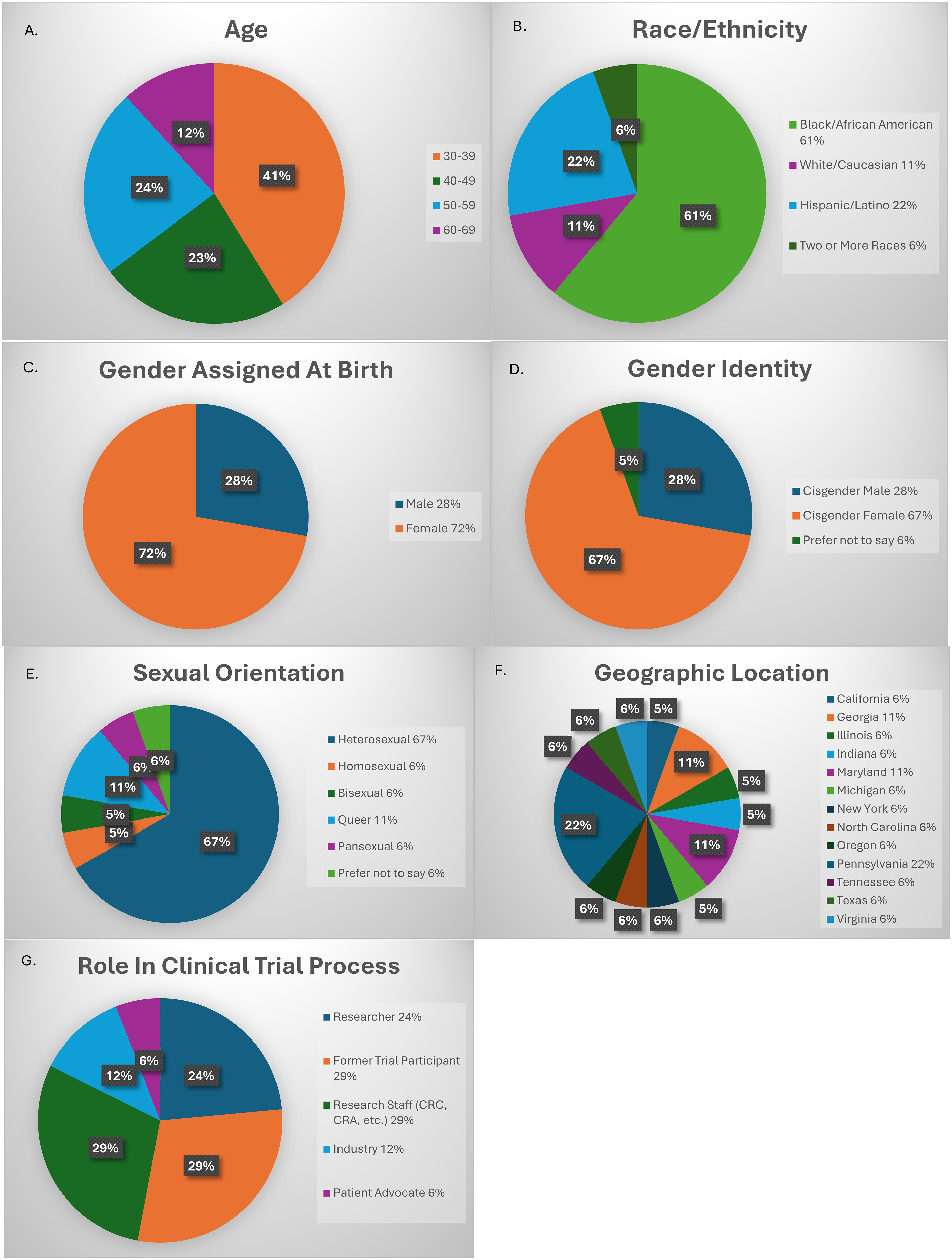
Distribution of responses detailing demographic data and participants’ roles in the clinical trial process.
The primary method of data collection for this mixed methods study involved conducting semi-structured interviews, which were facilitated via Zoom. Each interview lasted approximately 60 min, allowing for in-depth exploration of participants’ experiences and insights. One participant preferred to participate in the study by responding to the questions in the study guide in writing, allowing for thoughtful and comprehensive answers. To complement the qualitative data, a demographic survey was administered through Qualtrics. This survey was developed independently and underwent a pilot test to ensure readability and clarity, with responses compiled in aggregate form to maintain confidentiality and anonymity, preventing any linkage to individual participants. In total, 21 respondents cited interest in participation and completed the survey while only 15 participated in the interview component. The Qualtrics survey and electronic consent form were combined using logic model. The e-consent was inclusive of both the survey and interview components of the study. If the participant consented to participate in the study, the next page would begin the survey. If the participant declined, the form would close out. This streamlined the consenting process.
Interviews were recorded using Otter.ai, exclusively for transcription purposes. The recordings were transcribed verbatim to capture participants’ responses accurately. The interview guide was designed to elicit rich, qualitative data and was approved by the University's IRB prior to implementation.
The analysis of the transcript data was carried out using Dedoose qualitative data analysis and coding software. In addition to employing Dedoose, a manual grounded theory approach was utilized as described by Saldana (2009). This method facilitated the identification of key themes and patterns in participants’ responses (Table 1), allowing for a comprehensive understanding of the strategies that could enhance the recruitment and retention of diverse participants in clinical trials.
Summary of Interview Data.
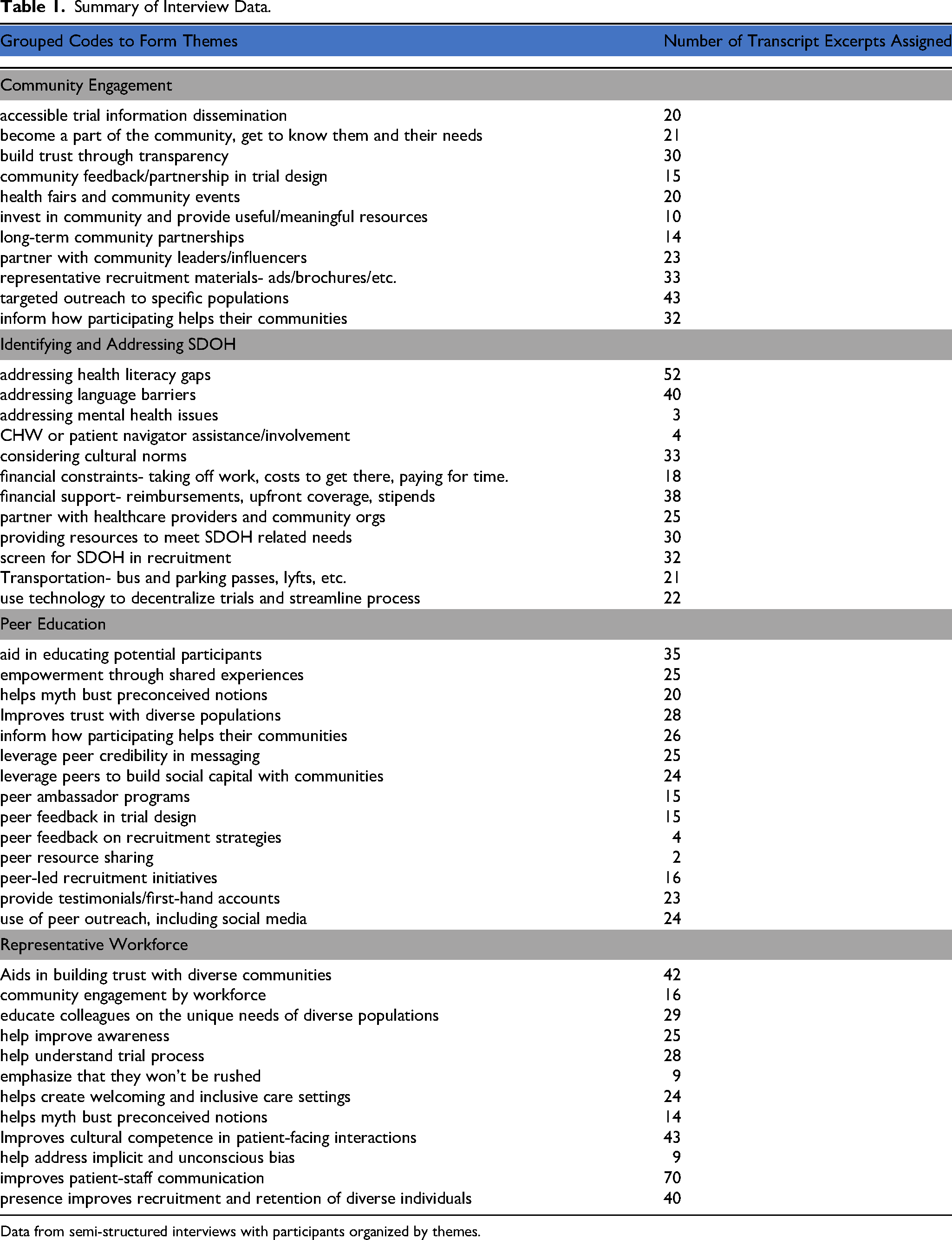
Data from semi-structured interviews with participants organized by themes.
The combination of Dedoose software and manual code development ensured a robust analysis process, enabling triangulation of findings and enhancing the credibility of the study's outcomes. Data analysis adhered to ethical guidelines as stipulated by the University's IRB, ensuring that all participant data were handled with the utmost confidentiality and respect. We used the Standards for Reporting Qualitative Research (SRQR) reporting guideline (O’Brien et al., 2014) to draft this manuscript, and the SRQR reporting checklist (O’Brien et al., 2025) when editing, included in supplement A.
Results
In examining the challenges and opportunities associated with recruiting and retaining diverse individuals in clinical trials, our study identified four key themes that emerged from analyzing participant interview data. These themes provide critical insights into enhancing inclusivity within the research community and guide actionable strategies for improvement. By addressing community engagement, identifying and addressing social determinants of health (SDOH), leveraging peer education, and fostering a representative workforce, we can create a more equitable and effective clinical trial environment.
The first theme, Community Engagement, emphasizes the necessity of building trust within communities. Participants highlighted that genuine outreach and relationship-building initiatives can significantly reduce barriers to participation, enabling a more welcoming environment for potential trial participants. The second theme, Identifying and Addressing Social Determinants of Health (SDOH), underscores the importance of recognizing factors such as socioeconomic status and access to healthcare that often impede diversity in trial participation. By addressing these determinants, researchers can create a more equitable recruitment process. The third theme, Leveraging Peer Education, reveals the effectiveness of peer-led initiatives in communicating the benefits and logistics of clinical trials, making participation more accessible. Finally, the theme of Fostering a Representative Workforce points to the need for research teams that reflect the diversity of the populations they serve, thereby enhancing trust and relevance in research.
Collectively, these themes not only align with our study's aim but also provide a framework for implementing best practices that can lead to improved healthcare outcomes. Excerpts from participant transcripts supporting these findings are presented in Table 2, linking empirical data to our synthesis and interpretation. The following sections will delve into each theme, outlining its importance and some best practices that may be implemented to achieve meaningful progress in recruitment and retention efforts.
Transcript Excerpts.
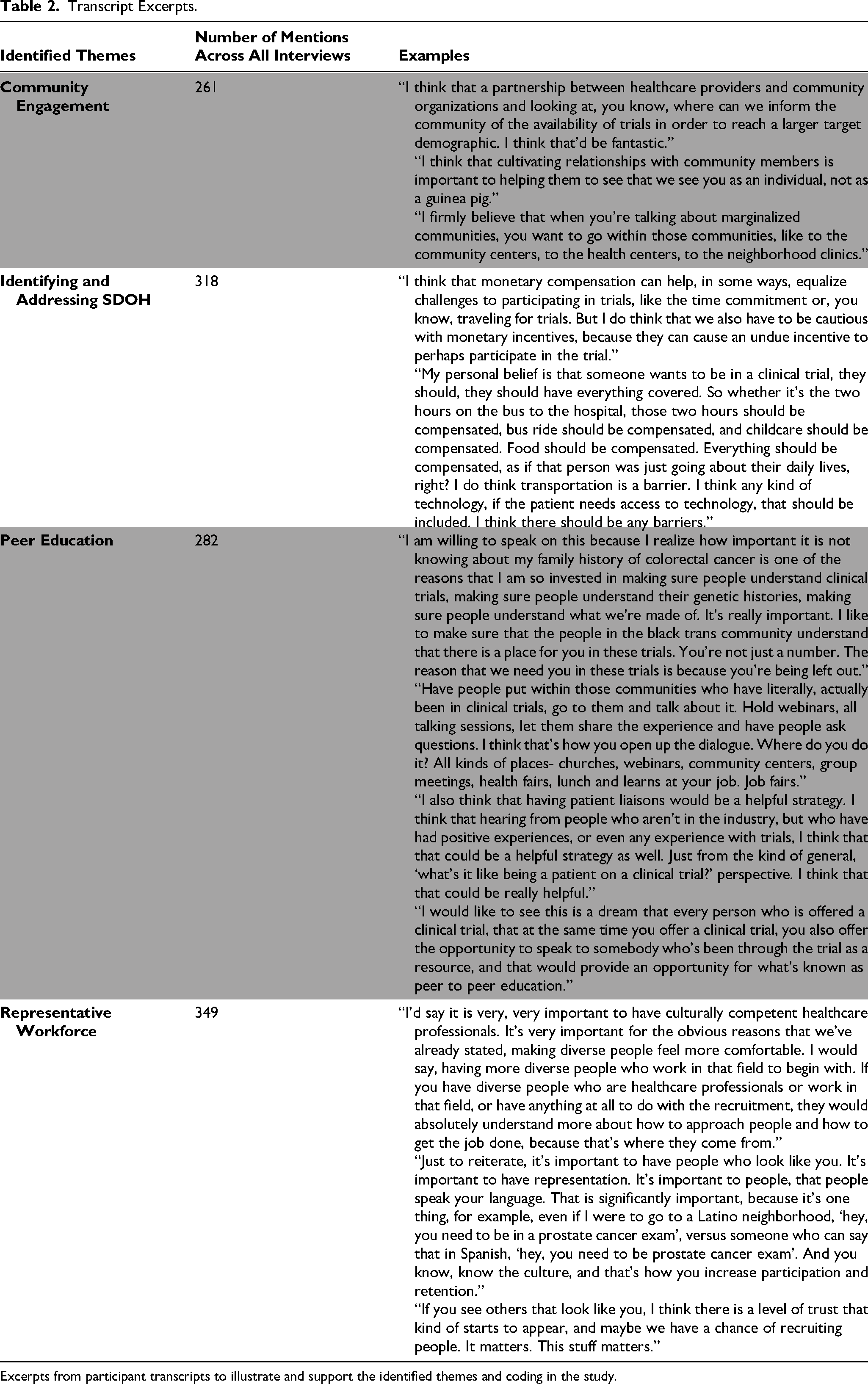
Excerpts from participant transcripts to illustrate and support the identified themes and coding in the study.
Discussion
This research is critical as it addresses the ongoing challenge of ensuring diversity in clinical trials, which is essential for the generalizability of research findings and the improvement of healthcare outcomes across populations. The results of our study, which highlight the importance of community engagement, identification and addressing of social determinants of health (SDOH), peer education, and a representative workforce, align with the literature emphasizing the necessity of inclusive practices in clinical research. By developing actionable strategies rooted in these themes, we can enhance the recruitment and retention of diverse participants, ultimately leading to more equitable healthcare solutions. This research suggested the following best practices.
Best Practices
The best practices outlined in this study were developed by the authors through a thorough analysis and synthesis of the data collected from study participants. This systematic approach ensured that the recommendations are grounded in the lived experiences and insights of those directly affected.
The analysis and synthesis involved a multi-step process, utilizing methods suggested by Finfgeld-Connett (2018), beginning with the collection of qualitative data through interviews and focus groups with study participants. The authors utilized thematic analysis to identify recurring patterns and themes within the responses, ensuring that diverse perspectives were captured. Following this, the data was systematically categorized and compared, allowing for the extraction of key insights that informed the development of best practices tailored to address the specific needs and concerns of the participants. This rigorous methodology ensured that the recommendations are both relevant and actionable.
Addressing Community Engagement
Community engagement is vital to the successful recruitment and retention of diverse individuals in clinical trials. By actively involving the community, researchers can build trust and foster relationships that are crucial for participation. Engaging the community means not just disseminating accessible trial information but also understanding the unique needs and concerns of the population (Odedina et al., 2024). One effective strategy is to invest in long-term partnerships with community organizations and leaders. This can be achieved by organizing health fairs and community events where trial information is shared in a friendly and approachable setting. For example, hosting informational booths at local events allows researchers to engage directly with potential participants, answer questions, and dispel myths about clinical trials.
Building trust through transparency is another essential aspect of community engagement. Researchers should provide clear and honest information about the trial's purpose, processes, and potential benefits. Utilizing representative recruitment materials—such as brochures and advertisements featuring images and testimonials from diverse individuals—can further enhance relatability and inclusivity. Additionally, incorporating community feedback into trial design ensures that the study aligns with community values and needs. Feedback mechanisms, such as surveys or focus group discussions, can be established to gather insights from the community about trial protocols and expectations.
Targeted outreach to specific populations, those typically not included in trials (Winter et al., 2018), is also crucial (e.g., older adults, racial/ethnic minorities, etc.). This could involve partnerships with local influencers or community leaders who can advocate for the trial within their networks. By informing potential participants about how their involvement can positively impact their communities, researchers can inspire motivation and a sense of shared responsibility. Overall, effective community engagement strategies create a more inclusive environment, can help to address the barriers of mistrust, and improve trial awareness among potential participants; all outcomes conducive to increased participation.
Identifying and Addressing Social Determinants of Health (SDOH)
Addressing Social Determinants of Health (SDOH) is essential for equitable recruitment and retention in clinical trials. According to Forrest (2025), many individuals face barriers related to health literacy, language, mental health, and financial constraints, which can deter participation. Implementing strategies to identify and address these barriers is critical. For instance, employing Community Health Workers (CHWs: defined by the American Public Health Association (APHA) as a trusted frontline public health worker, serving as a liaison between health and social services and the community often assisting in building health knowledge and self-sufficiency through outreach, education, counseling, and advocacy(2009)) or patient navigators (defined by the National Cancer Institute (NCI) as a guide for patients through the healthcare system, assisting with screening, diagnosis, treatment, and follow-up of conditions like cancer, and often facilitating communication with providers to help patients make informed decisions (2025)) can significantly enhance support for potential participants by providing assistance in understanding trial information and logistics.
To address health literacy gaps, researchers can develop educational materials tailored to various literacy levels and languages. This ensures that all potential participants can comprehend the trial's objectives and requirements. Additionally, offering financial support—such as reimbursements for travel costs, upfront coverage for expenses, or stipends for participation—can alleviate financial burdens that may prevent individuals from enrolling in a study.
Transportation is another significant barrier that can be addressed. Providing bus and parking passes, or partnering with ride-sharing services to offer discounted or free rides, can facilitate easier access to trial sites. Incorporating technology to decentralize trials, such as remote monitoring or telehealth options, can also streamline the process, making participation more convenient for individuals facing logistical challenges.
Moreover, screening for SDOH during the recruitment process can help identify participants who may require additional support. Partnering with healthcare providers and community organizations can create a comprehensive support system that addresses the multifaceted needs of potential participants, thereby improving recruitment and retention rates in clinical trials.
Leveraging Peer Education
Peer education plays a crucial role in recruiting and retaining diverse individuals in clinical trials. By leveraging the credibility and relatability of peers, researchers can effectively educate potential participants about the benefits and processes of clinical trials. Utilizing peers as credible messengers (Vaughn et al., 2025) and implementing peer ambassador programs, where trained individuals from the target community share their experiences and knowledge, can empower others through shared narratives.
This approach helps to myth-bust preconceived notions about clinical trials and builds trust within diverse populations. For instance, hosting mock trials where potential participants can learn what to expect can demystify the process and alleviate fears. Additionally, providing testimonials and firsthand accounts from past participants can serve as powerful motivators, illustrating the positive impact of involvement on both individual health and community well-being.
Utilizing peer outreach strategies, including social media campaigns, can further enhance visibility and engagement. By sharing peer-led initiatives, researchers can tap into existing social networks, fostering a sense of community and belonging among potential participants. Peer feedback in trial design and recruitment strategies can also ensure that the approaches resonate with the community, leading to more effective and inclusive recruitment efforts.
Fostering A Representative Workforce
A representative workforce is essential in fostering trust and improving recruitment and retention of diverse individuals in clinical trials. Having staff that reflects the diversity of the community they serve can significantly enhance engagement and understanding. Evidence shows that people are more likely to trust and take advice from someone representative of their community (Jaber, 2024). Additionally, a diverse workforce allows for better education of colleagues on the unique needs of various populations; staff may bring a variety of perspectives and experiences, which can enhance training programs by helping staff recognize and address implicit biases more effectively (Berkshire Associates, 2023). According to GHR Healthcare, this diversity fosters improved communication between patients and staff, as team members can share insights on cultural sensitivities, ultimately creating a more welcoming and inclusive environment for all patients (2009).
Organizations can promote workforce diversity by convening a diverse hiring panel, implementing targeted recruitment strategies that reach underrepresented communities, providing mentorship programs to support individuals from diverse backgrounds, and fostering an inclusive workplace culture that values diverse viewpoints (Berkshire Associates, 2023). By leveraging these varied viewpoints, organizations can cultivate a culture of understanding and empathy.
Diverse staff can also aid in educating staff about the trial process and ensuring they emphasize that participants will not be rushed can help alleviate concerns and enhance the participant experience. This supportive environment encourages individuals from diverse backgrounds to engage in clinical trials, knowing that their needs and concerns are being acknowledged. Historically, healthcare providers and researchers have often neglected to invest the necessary time in building trusting relationships with underrepresented communities and participants, thereby exacerbating existing mistrust. Recognizing this historical context and adopting a more intentional approach to relationship-building can significantly enhance patient engagement and increase the likelihood of participation in clinical trials (Odedina et al., 2024).
Furthermore, enhancing cultural competence in patient-facing interactions is essential for fostering an inclusive environment where diverse individuals feel valued, respected, and understood. By actively educating underrepresented populations about the benefits of clinical trials and emphasizing their viability as treatment options, a representative workforce can significantly improve awareness of trial availability. This proactive approach not only supports recruitment efforts but also enhances accessibility and encourages enrollment among diverse communities. By bridging the gap between clinical research and the populations it serves, we can ensure that all individuals have equitable opportunities to participate in advancing healthcare innovations.
The Importance of Adopting These Recommendations
The findings of this study resonate with the barriers identified in Clark et al.'s (2019) work, “Increasing Diversity in Clinical Trials: Overcoming Critical Barriers,” which underscores issues such as mistrust and lack of awareness as primary obstacles to diversity in clinical trial participation. Our results suggest that community engagement can mitigate mistrust by fostering relationships and transparency, while addressing SDOH can remove barriers that disproportionately affect marginalized populations. The reliance on peer education and promoting a representative workforce as key strategies also echoes the need for relatable voices to dispel myths and facilitate informed decision-making.
The results may have emerged as they did due to the multifaceted nature of the barriers faced by diverse populations (Hamel et al., 2016). Historical injustices and contemporary social determinants create an environment of skepticism toward clinical trials, leading to lower engagement levels (NASEM, 2022). Our study's emphasis on community partnerships and tailored outreach strategies demonstrates how addressing these barriers can directly bridge the gap between clinical research and underrepresented groups.
Limitations
Despite the significant insights gained, there are limitations to this study. Delays in IRB approval impacted the recruitment timeline, potentially affecting participant engagement and the overall response rate. Additionally, the current climate surrounding diversity, equity, and inclusion (DEI) 3 in research (Studna, 2025) may have influenced response rates, as ongoing societal discussions can both raise awareness and create apprehension among potential participants. There were also time constraints around this study as it was conducted as a capstone doctoral research study.
Future research should consider stratifying these strategies by therapeutic area, such as piloting the proposed approaches in facilities conducting cancer clinical trials. Given the varying dynamics of diseases and their treatments, tailoring recruitment efforts to specific conditions could yield more significant insights and improve participation rates among diverse populations (Wang & Wang 2023). This targeted approach could also facilitate the development of specialized educational materials and community partnerships that resonate more deeply with the unique challenges faced by patients in these therapeutic areas.
Our research contributes to the growing body of knowledge surrounding diversity in clinical trials by providing evidence-based strategies for enhancing recruitment and retention of underrepresented individuals. By continuing to address the barriers identified in this study and exploring future avenues for research, we can work towards a more inclusive clinical research landscape that benefits all populations.
Educational Implications
Incorporating community engagement, peer education, and the addressing of trust within healthcare education programs is vital for cultivating a workforce that understands the complexities of diversity in clinical trials. In an educational setting, educators can integrate these themes into core courses, such as Health Promotion and Disease Prevention, as well as dedicated workshops focused on Cultural Competency and Community-Based Participatory Research. These courses should emphasize the importance of actively involving community members in the research process, fostering relationships that enhance trust and collaboration. Additionally, incorporating case studies that illustrate successful community engagement initiatives will allow students to critically analyze and develop their own strategies, reinforcing practical applications of theoretical concepts.
To further reinforce these outcomes in the workplace, organizations can facilitate workshops led by external speakers, including SDOH experts and representatives from diverse community organizations. These sessions can provide firsthand insights into the barriers faced by underrepresented populations and effective strategies for overcoming these challenges. Furthermore, establishing mentorship programs that pair students or early-career professionals with experienced practitioners in community engagement can enhance peer education. This experiential learning approach not only strengthens trust within communities but also empowers future healthcare leaders to advocate for inclusive practices in clinical research, ultimately promoting more equitable healthcare solutions
Conclusions
In conclusion, this study underscores the critical need for targeted strategies to enhance the recruitment and retention of diverse individuals in clinical trials. By emphasizing community engagement, addressing social determinants of health, leveraging peer education, and fostering a representative workforce, we can create a more inclusive research environment that effectively addresses the barriers faced by underrepresented populations. The findings align with existing literature, demonstrating that building trust, increasing awareness, and tailoring recruitment efforts to the unique needs of diverse communities are essential for improving participation rates in clinical trials.
Despite the limitations encountered, including delays in IRB approval and the current socio-political climate surrounding diversity, equity, and inclusion in research, this study provides actionable recommendations that can be implemented across various therapeutic areas. Future research should explore the application of these strategies in specific contexts, such as cancer clinical trials, to further refine recruitment efforts and enhance diversity. Ultimately, increasing representation in clinical trials is not only a matter of ethical responsibility but also a crucial step towards achieving equitable healthcare outcomes for all populations (Jager, 2023).
Supplemental Material
sj-docx-1-jre-10.1177_15562646261444217 - Supplemental material for Bridging the Gap: Effective Strategies for Recruiting and Retaining Diverse Participants in Clinical Trials
Supplemental material, sj-docx-1-jre-10.1177_15562646261444217 for Bridging the Gap: Effective Strategies for Recruiting and Retaining Diverse Participants in Clinical Trials by Taneal D. Carter and Kevin Rogers in Journal of Empirical Research on Human Research Ethics
Footnotes

Ethical Approval
This study was submitted to Pacific University (PacificU)'s Institutional Review Board (IRB) and determined to be exempt as reviewers noted the study posed no significant risk to participants.
Author Contributions
Funding
The authors received no financial support for the research, authorship, and/or publication of this article.
Supplemental Material
Supplemental material for this article is available online.
Notes
Author Biographies
Dr. Taneal Carter currently serves as Senior Manager, Cancer Care Equity Program for the National Comprehensive Cancer Network. Her main research interests relate to clinical trial diversity, health services/healthcare delivery, health disparities, promoting patient education, outcomes measurement, and more. She served as primary researcher and author of this manuscript.
Dr. Kevin Rogers currently serves as Assistant Professor of Health Sciences at Pacific University. His main research interests include international healthcare development and refugee health. He supervised the research and provided thorough review.
References
Supplementary Material
Please find the following supplemental material available below.
For Open Access articles published under a Creative Commons License, all supplemental material carries the same license as the article it is associated with.
For non-Open Access articles published, all supplemental material carries a non-exclusive license, and permission requests for re-use of supplemental material or any part of supplemental material shall be sent directly to the copyright owner as specified in the copyright notice associated with the article.
