







Abstract
This study investigates the impact of the Fogarty/NIH-funded Responsible Conduct of Research (RCR) Education Fellowship Program on scientists’ RCR activities and practices by following up on 110 of 117 fellows who graduated from the program. The results suggest that the program played a crucial role in promoting RCR activities among the fellows, leading to positive outcomes such as publications in research ethics (64%), attendance of RCR conferences (68.2%), conducting training workshops (74.2%), developing training RCR modules (44%) and institutional ethics guidelines (28%), serving on research ethics committees (48.2%), and providing RCR consultations (52.9%). Most fellows reported significant (high to moderate) improvement in the implementation of ethics/research standards in their work (88%) and in their institutions’ commitment to RCR (75%). In conclusion, the study strongly suggests the role that RCR training might play in enhancing RCR education and ethical practices among researchers and their institutions in the low and middle-income Middle Eastern and North African countries.
Introduction
Ethics is a cornerstone of responsible scientific research, and contributes to the quality of such research to be within the accepted norm (Léo, 2020; Miteu, 2024). Ethical principles such as integrity, honesty, transparency, and accountability are critical in guiding researchers’ actions and decisions, forming the foundation of credible and trustworthy science. Unfortunately, instances of data fabrication, plagiarism, and the mistreatment of research subjects have highlighted the consequences of ethical misconduct, not only for individual careers but also for the public's trust in science (National Academies of Sciences, Engineering and Medicine; Policy and Global Affairs, 2017). These incidents have led to a renewed emphasis on ethics within the scientific community, with focused training and reinforcing guidelines seen as vital for fostering responsible conduct in research (Caron et al., 2024).
Ethics training programs that focus on instilling these values are now integrated into many aspects of scientific education. Such programs aim to equip researchers with the necessary tools to confront and navigate ethical dilemmas, promoting responsible research practices throughout their careers (Kretser et al., 2019). Such training is becoming a critical mechanism to ensure the integrity of both individual researchers and the broader scientific community (Iphofen, 2016).
The Fogarty International Center (FIC) (Carothers et al., 2014) has been instrumental in advancing ethics education, particularly in global health research. FIC has cultivated a culture of ethical awareness that transcends national boundaries through its initiatives, with a particular emphasis on enabling researchers in low- and middle-income countries to navigate intricate ethical dilemmas. By providing funding for training programs including Masters/PhD in bioethics, workshops, and collaborative projects, FIC fostered the growth of a new global generation of researchers in different disciplines but are cognizant of ethical principles, including the protection of vulnerable populations, respect for cultural differences, and informed consent (Brook et al., 2015). The Center's assistance has not only strengthened institutional ethics capacity across a variety of regions but also expanded the literature and scholarly work in this important new field (Carothers et al., 2014). These endeavors underscore the human aspect of research, guaranteeing that scientific advancements are inextricably linked with compassion, respect for individual dignity, and a dedication to community-centered, equitable health development (Millum et al., 2013). Yet much more effort is needed to fill the gaps in research and responsible conduct of research in less developed countries (Belay Hailu et al., 2025; Chongwe et al., 2020; Lavis et al., 2010; Malla et al., 2018).
The Research Ethics Education Program in Jordan was one of the FIC-funded programs between 2016 and 2020, serving as a comprehensive program for research faculty members to cultivate a highly skilled cohort of researchers conducting high-quality, ethically sound research. The program focused on providing a fellowship in responsible conduct of research (RCR) through a one-year, 16-credit-hour coursework, including a practicum in RCR. During 2016–2020, 117 fellows graduated from this program from 12 low- and middle-income Middle Eastern and North African (MENA) countries. The program is a collaborative effort between the University of California, San Diego, USA and Jordan University of Science and Technology, Irbid, Jordan. It includes workshops and an online self-training module on research ethics for researchers from Arabic-speaking countries in the MENA (Al-Delaimy et al., 2025; Al-Khatib & Kalichman, 2019). The program currently offers a master's-level curriculum, including practical experiences, and aims to adapt existing research ethics training materials to be culturally and linguistically suitable for Arabic-speaking communities. It also focuses on adapting research ethics resources to the cultural context of Jordan and Arabic-speaking countries, and provides insights into how the ethical principles of the Belmont Report align with Islamic ethical values.
This study evaluates the impact of the FIC-funded RCR Education Fellowship Program in Jordan on scientists’ activities and practices in research, ethics, and attitudes about the program. In addition, factors that supported such impacts were examined.
Methods
Research Design
The present study was a cross-sectional study that used questionnaires to collect self-reports from fellows who participated in the RCR fellowship. It aimed to comprehensively explore the Responsible Conduct of Research (RCR) activities achieved by fellows who graduated from the FIC-funded RCR Education program in Jordan and other countries in the MENA region. The study used alumni email lists to recruit participants after they graduated from the program. Questions provided insights into the influence of ethics education on participants’ career advancement, ethical decision-making, and adherence to research protocols.
Sample Selection
The study population was 117 fellows from the low- and middle-income countries who graduated from the RCR Education Fellowship Program in Jordan between 2016 and 2020. Of these, 110 participants responded to the follow-up survey 4 to 8 years after their graduation, yielding a response rate of 90%; 3 fellows passed away before the study was conducted, and 4 did not respond. The participants primarily came from Jordan (79.8%) and other MENA countries (Iraq, Yemen, Lebanon, Egypt, the West Bank, Gaza, Sudan, Libya, Algeria, Tunisia, Morocco, and Mauritania). The study's participants were professionals from diverse disciplines, including Pharmacy, Applied Medical Sciences, Nursing, Medicine, and Biology, with most participants aged between 31 and 50 years.
The Fellowship Training of the RCR Education Program in Jordan
The fellowship program was a one-year initiative structured around acquiring 16 units of training on research ethics. A blend of learning approaches was used to earn the units that include a one-week intensive face-to-face course, three online courses each spanning 10 weeks, and a summer practicum. The face-to-face course covered topics on research ethics, such as principles of research ethics, protection of human research participants, protection of animal subjects in research, informed consent, research misconduct, authorship, conflict of interest, research data management, and institutional review boards. The three online courses were the foundation of bioethics, epidemiological research methods and ethics, and ethics of clinical studies and genomic research. The practicum involved a research project required for graduation by each trainee. The research included one of the topic areas taught in the courses in relation to ethics, and with the expectation of a manuscript ready for publication or implementation of new guidelines and policies as the product. The trainee was matched with one or two mentors to work with them to complete the practicum in coordination with the program instructors. The main objective of the practicum was to develop the skills of the trainees to apply the theory and coursework they learned to practical and real-life challenges in bioethics and research ethics.
Ethics Approval
The study was approved by the Institutional Review Board (IRB) at at the Jordan University for Science and Technology (approval number: 2025/181-12). All ethics guidelines were strictly adhered to; participants’ consent was obtained, and they were informed about the study's purpose and provided electronic consent before participation. Participation was voluntary, and no identifiable data were collected.
Data Collection
Data were collected through a web-based survey divided into three sections. Section “Introduction” covered participants’ socio-demographic information, including age, gender, country of origin, academic position, and discipline. Section “Methods” captured the RCR-related activities conducted by fellows, such as academic promotion, research publications, workshops conducted or attended, webinars conducted or attended, conferences, development of training modules in research ethics and research ethics guidelines, teaching course (s) in research ethics, consultation services in the area of research ethics, serving as an editorial member or an editor of an ethics journal, and serving as a chairman or a member of Research Ethics Committee/IRB. Section “Results” reported a personal evaluation of benefits from the provided RCR training. In Section “Results”, participants were asked to evaluate the improvement in their RCR knowledge and practices at the personal level, as well as their institutions’ commitment to RCR following the fellowship.
Activity Scoring and Classification
For each participant, an activity score was calculated by awarding one point for each achievement reported in the following activities in RCR: publishing a paper in a scientific journal, book/chapter publishing, attending/presenting in a conference, attending/conducting training workshops attending/conducting a webinar, attending, conducting or developing RCR training module (s), severing as an IRB member or chair, teaching a course in research ethics, serving as an editorial member or editor of an ethics journal, getting promoted academically, and obtaining research or training funding. If a participant performed several activities in the same category, they were awarded points equal to that number. For example, the participant was awarded 5 points for publishing 5 articles in the RCR field after obtaining the fellowship. The highest achieved total score was 31. Total activity scores were categorized into three levels: below average (score < 7), average (score = 7–11), and above average (score > 11).
Data Analysis
The data were analyzed using the Statistical Package for Social Sciences (SPSS) version 25 (IBM Corp., 2017). Descriptive statistics were calculated for demographic variables, and frequencies and percentages for all categorical data were presented in tabular format. Statistical significance tests were conducted using Pearson's Chi-Square and Fisher's Exact Test. The variables analyzed included gender, age groups, academic disciplines, country of origin, and academic position. A significance level of p < 0.05 was established for all statistical tests.
Results
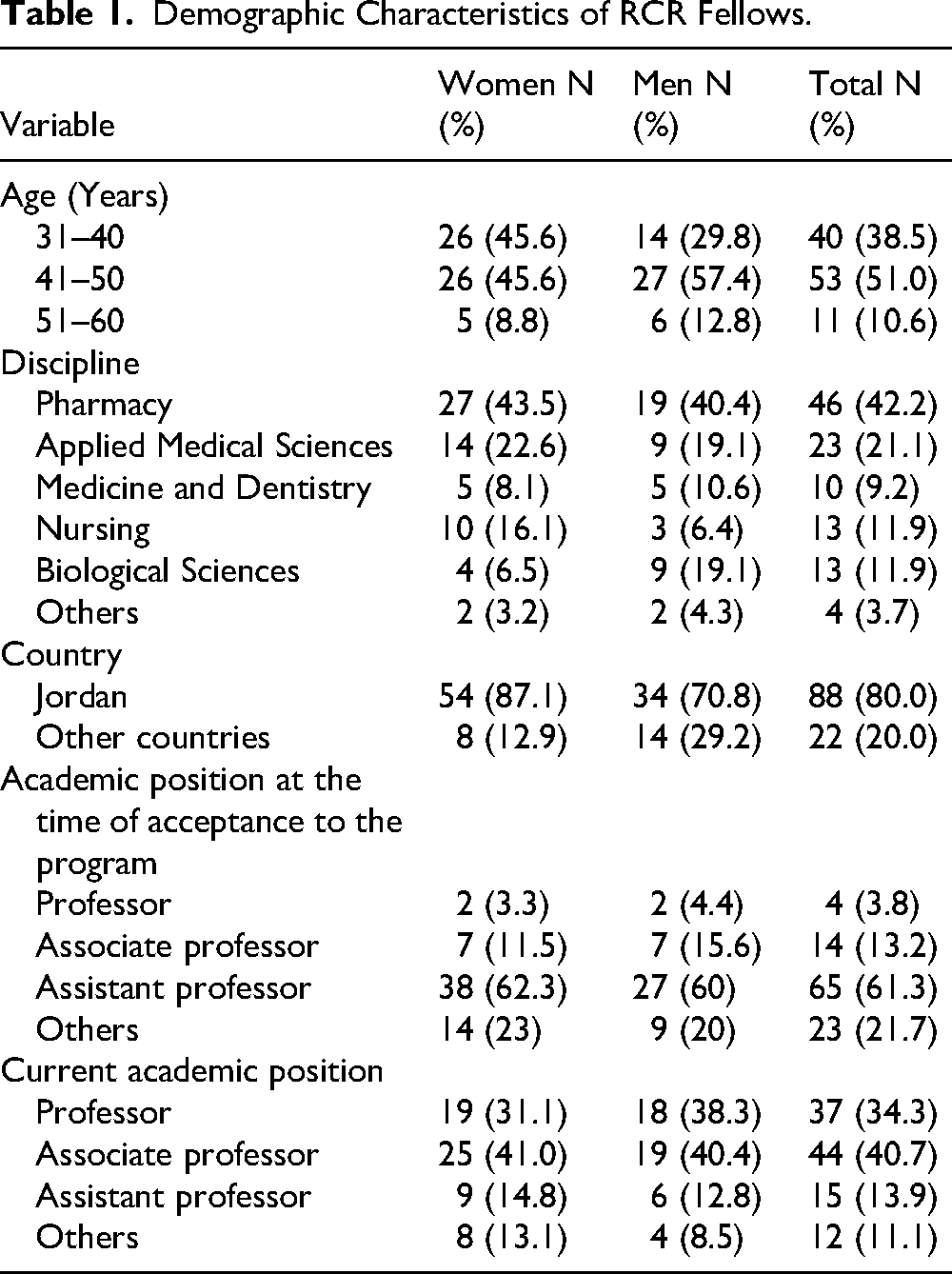
A total of 110 participants completed the survey. As shown in Table 1, 62 participants (56.4%) were females, and the majority (79.8%) were from Jordan. Participants’ ages ranged from 31 to 59 years, with a mean of 42.6. The academic professional distribution included 15 (13.9%) assistant professors, 44 (40.7%) associate professors, 37 (34.3%) professors, and 12 (11.1%) other levels of non-academic researchers. Regarding academic disciplines, Pharmacy was the most common field among the participants (42.2%), followed by Applied Medical Sciences (21.1%). The institutions with the highest representation were Jordan University of Science and Technology (34.5%), followed by the University of Jordan and Yarmouk University (10%).
Demographic Characteristics of RCR Fellows.
Ethics training was associated with high publication rates in the RCR field: 64.8% of participants published at least one paper post-training. Moreover, 10 (9.3%) participants secured research funding in research ethics, and 80 (74.8%) attended at least one professional conference in the RCR field.
Table 1 also shows the distribution of participants’ academic positions before and after their participation in the Responsible Conduct of Research (RCR) Fellowship Program. A desirable correlation between completion of the RCR Fellowship Program and career progression was observed.
Table 2 summarizes participants’ career outcomes and engagement in RCR-related activities post-ethics training. Since completing their ethics training, 57.4% of participants have published 1–4 papers in RCR, while 7.4% have published 5 or more. A smaller proportion, 4.7%, published books or book chapters in RCR. Regarding conference attendance, 68.2% participated in 1 to 4 RCR conferences, and 32.0% conducted two or more training workshops in research ethics, though 43.7% did not conduct any.
Career Outcomes and Engagement Post-Ethics Training.
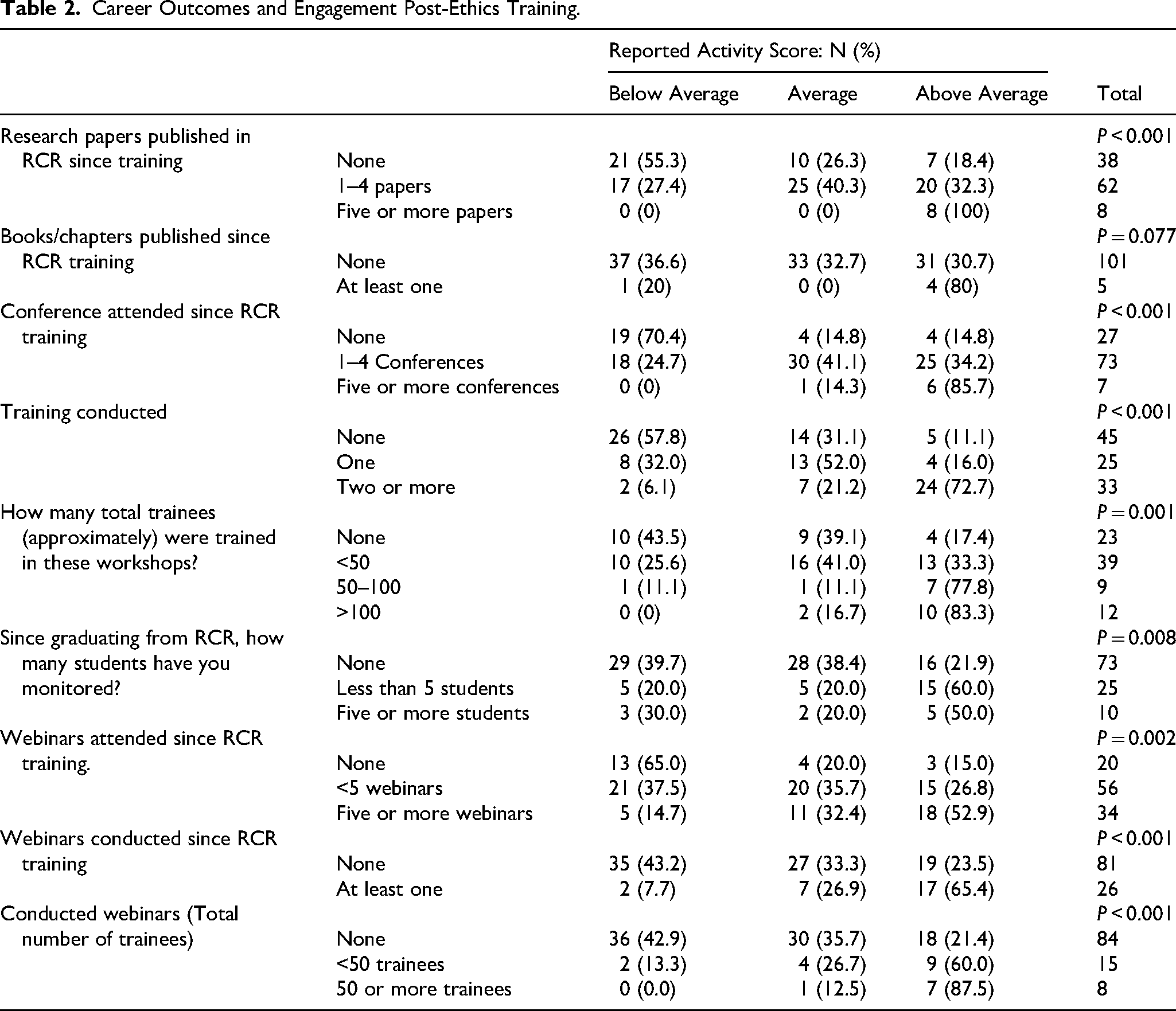
Table 3 provides details on participants’ involvement in ethics-related activities. A good portion of the participants, 52.9%, provided research ethics consultation services for their peers, and 38.9% served on RECs/IRBs. Regarding webinars, 50.9% attended fewer than five, and 24.3% conducted at least one.
Participation in Ethics-Related Activities.
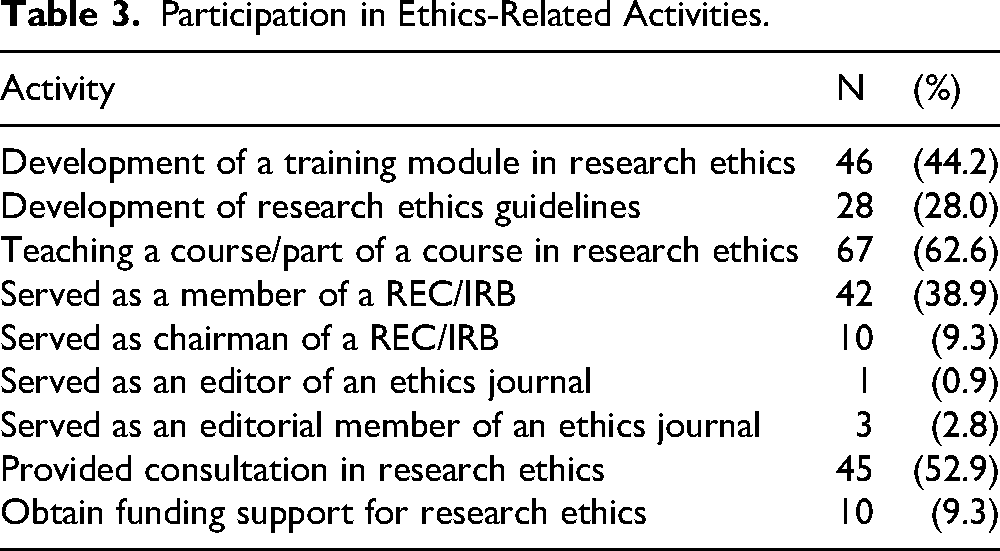
Figure 1 illustrates the perceived impact of ethics training on personal and professional development. Participants reported substantial improvements in adherence to research ethics (63% reported “highly improved”), research methods standards (57%), and institutional commitment to research ethics (40%). Moderate improvements were also reported, with 27% noting enhancements in adherence to research ethics, 31% in adherence to research methods standards, and 35% in institutional commitment to RCR.
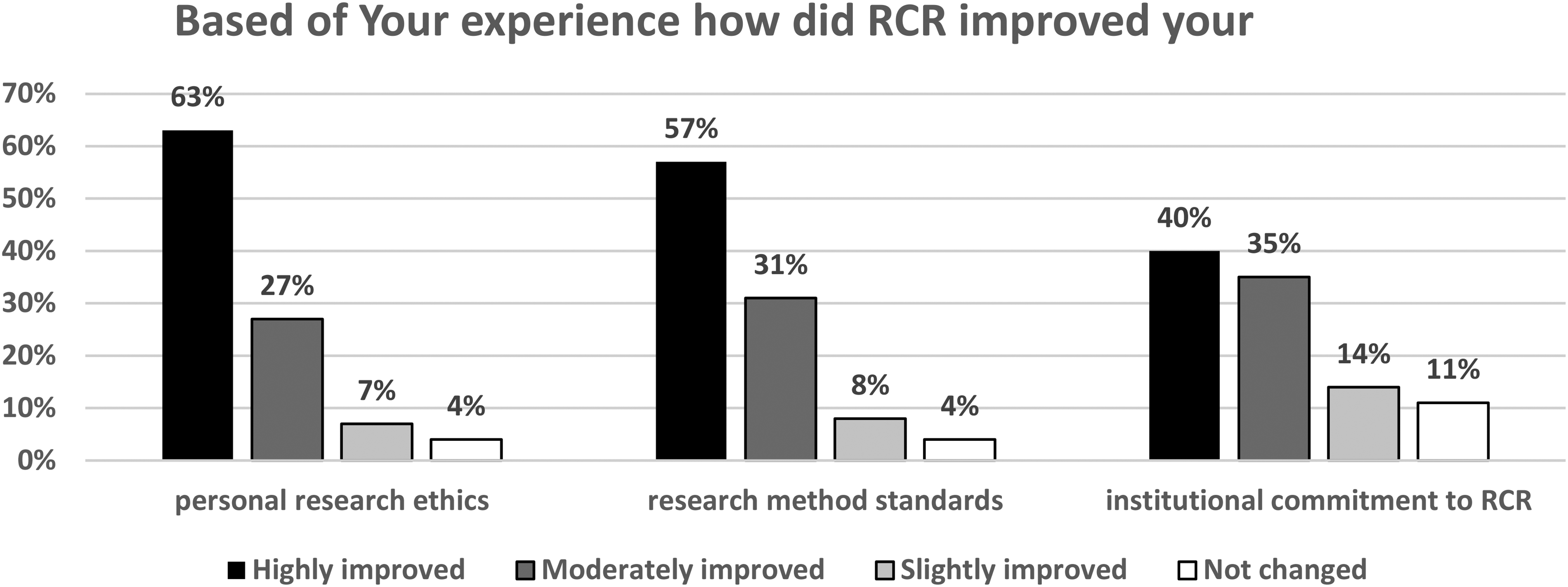
Impact of ethics training on fellows’ personal and professional development.
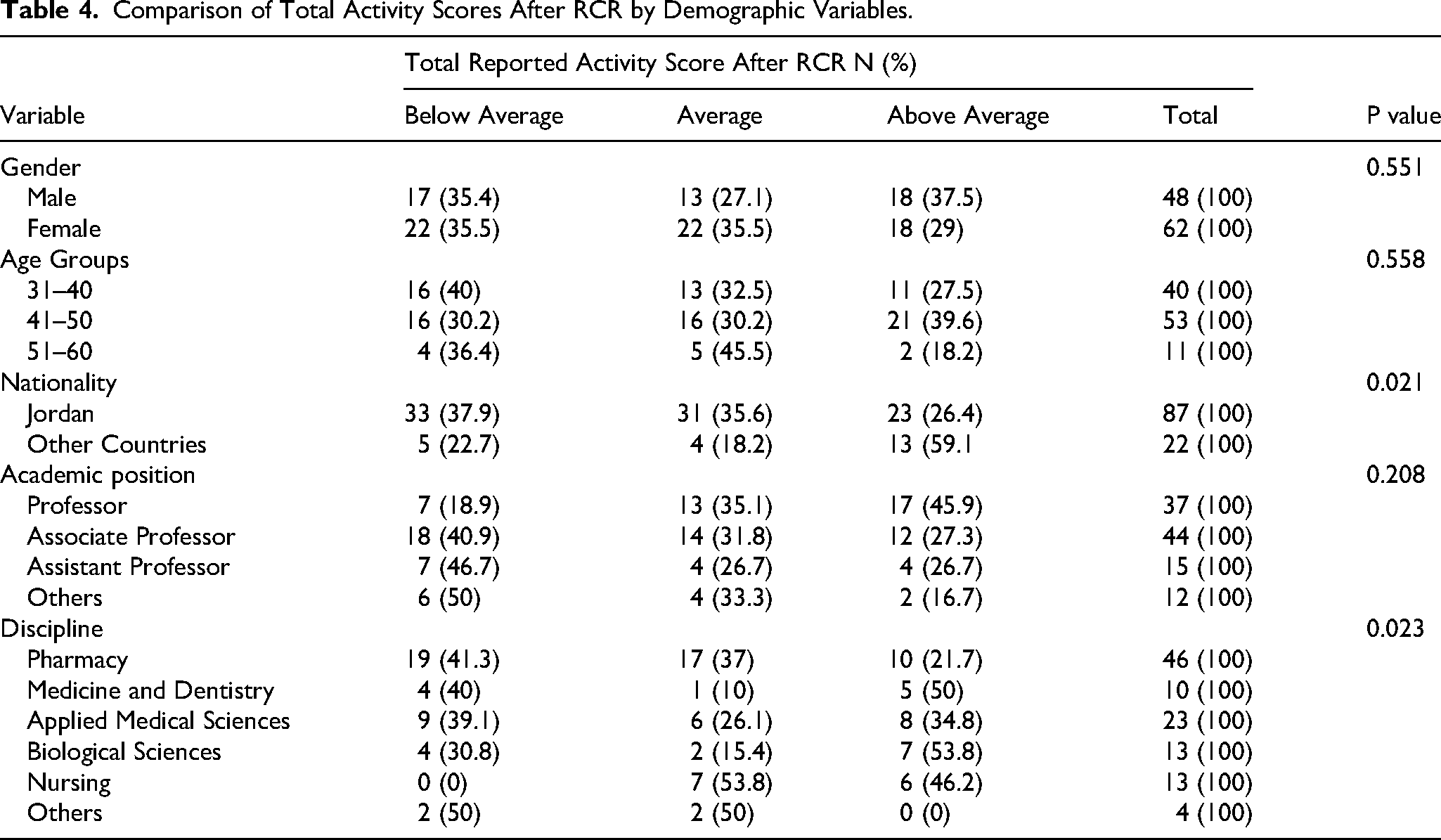
Table 4 presents the analysis of total reported activity scores after the RCR, controlling for demographic variables. There was no significant difference in gender, age groups, or disciplines across activity score categories. Country of origin revealed a significant difference between Jordanians and non-Jordanians (P = 0.021). Also, a significant difference was found among different academic disciplines of participants according to activity score category (P = 0.023).
Comparison of Total Activity Scores After RCR by Demographic Variables.
Discussion
Our findings underscore the significant role that the NIH Fogarty International Center-funded Responsible Conduct of Research (RCR) Education Fellowship Program in Jordan has played in shaping its fellows’ career growth and professional practices. Notably, the program has boosted participants’ RCR knowledge and practices, demonstrated by increased publication rates, higher attendance at RCR-related conferences, and successful development of training modules and workshops.
The study's key finding is that fellows’ involvement in RCR activities improved significantly after the training. Most participants reported that their commitment to ethical standards increased substantially, with 88% indicating moderate to high improvements in ethical practices and their institutional commitment to RCR. Fellows also demonstrated greater engagement in the field, as evidenced by participation in RCR-related conferences, contributions to the development of institutional ethical guidelines, and provision of RCR consultations. The very high survey response rate is also a testament to their continued commitment to engaging in RCR-relevant activities. The implications of these results are multifaceted. The program appears to have fostered a more profound commitment to ethical standards among scientists in the Middle East and North Africa (MENA) region (Tarboush et al., 2020). This commitment is especially important in resource-limited environments, where ethical research practices are essential for gaining international recognition and fostering collaboration.
The connection between ethics and professional scientific reputation is well established (Mella & Gazzola, 2015). Researchers who uphold ethical standards are more likely to earn the respect and trust of their peers, thereby significantly boosting their professional standing. The impact of the RCR fellowship program, as evidenced by increased conference participation and the development of research ethics guidelines, suggests that ethics training not only encourages ethical behavior but also helps researchers gain recognition and build collaborative networks. This aligns with the broader understanding that having a strong ethical foundation is crucial for career advancement in science, from securing research funding to publishing in high-impact journals (Edwards & Roy, 2017). Furthermore, the increase in publications and professional activities suggests that the training was associated with participants’ career development and the spread of RCR-related knowledge.
Similar to the outcomes observed in this study, the Fogarty International Center's training programs have significantly enhanced their trainees’ career trajectories and ethical research practices in countries across several continents (Anderson et al., 2025; Daly et al., 2025; Essack et al., 2025; Ferguson et al., 2025; Gopalan et al., 2025). For example, one trainee reported developing Ghana's Childhood Cancer Strategy and contributing to national guidelines for treating childhood cancers, highlighting the program's impact on fostering both individual growth and systemic improvements in healthcare (Owusu et al., 2025). These accomplishments align with our findings, which show that participants demonstrated increased involvement in research ethics activities, training, and the development of institutional ethical guidelines, underscoring the transformative potential of structured research ethics education programs (FIG, 2024). The consistency in results across different programs indicates that well-structured ethics education can universally enhance research quality and integrity.
Research ethics training is valuable for enhancing professional standards and advancing careers. It equips scientists with the knowledge and skills to navigate complex ethical dilemmas, reducing the risk of misconduct and supporting professional growth. It is also expected to have a positive impact at the organizational level. The RCR program in Jordan is a good example of this. According to the present findings, RCR fellows reported conducting more than 58 RCR workshops and 15 webinars in their organizations, with an estimated more than 2,000 trainees having attended such workshops/webinars. In addition, 44.2% and 28% of participants reported the development of a training module in research ethics and a research ethics guideline, respectively. Moreover, a good number reported serving as a member/chair of RECs/IRBs in their organization. Fellows’ increased involvement in RCR activities in their organizations and their ability to offer research ethics education/consultations suggest that research ethics training is key in preparing researchers for leadership and collaborative roles. This is in line with findings from a previous study (Schwandt, 2017), which shows that researchers well-versed in ethical matters are more successful in securing grants and leading projects. The success of the RCR program in a resource-limited setting like Jordan also demonstrates the essential role of research ethics education in strengthening institutional research capacity, governance, culture of integrity, establishing sustainable research ethics educational frameworks, achieving international recognition, and fostering meaningful global collaborations, especially in regions looking to boost their research quality and credibility (Al-Delaimy et al., 2025; Al-Khatib & Kalichman, 2019). Responsible conduct of research leads to better research quality and quantity, and hopefully ultimately benefits the relevant societies through innovation and supports a better quality of life (Adarmouch et al., 2025; Daghagh Yazd et al., 2025). This, in turn, benefits the global community and ultimately business, commerce, peace, and property, with all its positive impact on the United States. The advancement of research in less developed countries has led to collaborations with United States-based researchers and helped advance science, as we have seen in the cases of HIV, malaria, COVID, and other diseases (Kilmarx et al., 2024; Ndebele et al., 2014; Nelson et al., 2019; Rao, 2015).
This study has several strengths. It achieved a high response rate (90%) and included participants from various disciplines, which helps make the findings more generalizable across the scientific community in Jordan and the broader MENA region. The use of quantitative metrics, such as the number of publications, conference attendance, and the development of training materials, provides solid evidence of the program's impact.
Educational Implications
The findings also have useful implications for the design of future ethics training programs. The variation in impact across different disciplines suggests that research ethics training should be tailored to each field's specific challenges. Moreover, such training should be an ongoing process. Participants indicated a desire for continuous learning opportunities beyond initial training, especially as their careers progress and they encounter new ethics challenges. Institutions should, therefore, include periodic workshops and seminars as part of career development plans to ensure that the benefits of research ethics education are sustained.
Best Practices
Research and educational institutions are encouraged to implement training programs in research ethics and RCR, especially for young researchers, graduate students, and faculty members. This should help advance a research culture that adheres to best-practice research ethics and enhance the research profiles of those involved.
Research Agenda
The present study suggest the highly effective role that RCR training plays in enhancing RCR education and practice among researchers and their institutions in the low and middle-income MENA countries. Future studies should be conducted to further investigate underlying factors and establish associations to inform optimal RCR training practices.
Limitations
Among the study's limitations is that we did not measure participants’ pre-training RCR activities to better understand the program's impact. We also do not know how their career trajectories would have been without the RCR training. However, based on the authors’ understanding and interviews with candidates for the training, their previous RCR activities were negligible. Some served on research ethics committees, and some had ethics training, but publications, conferences, or other research ethics-related productivity were not reported at enrollment. The survey's self-report nature makes results susceptible to subjectivity, but these self-evaluation approaches are accepted for program assessment, and we have documentation of their publications and achievements from past progress report data. Finally, a more controlled study will be needed, comparing the academic progress of the group that received the RCR fellowship with another group that did not, in order to attribute the impact/progression to the RCR training.
Conclusion
In conclusion, the Fogarty RCR Education Fellowship Program has positively influenced scientists’ professional practices and career growth in Jordan and the MENA region. It has strengthened the program fellows’ commitment to ethical research and increased their involvement in RCR activities. However, variability in impact across different fields and the need for ongoing research ethics development underscore the importance of tailoring research ethics education to each discipline and providing continuous learning opportunities. Future research should focus on longitudinal studies to assess the long-term effects of research ethics training on the research community.
Research Agenda
The program needs to understand the impact of the program on studying curriculums in Jordan and other MENA countries by evaluating the old and new curriculums. Moreover, the program needs to study the impact of the program on secondary beneficiaries who attended the program activities without being enrolled.
Educational Implications
The program has developed a master's program in bioethics that expanded ethics education and enabled young scientists to specialize in ethics. It is expected that the program graduate will help policymakers in their communities in ensuring ethical practice, fostering ethical practice in clinical and research setting, and increase awareness between public.
Footnotes
Acknowledgements
The authors would like to thank the fellows of the program for their efforts in enhancing ethics education in their communities and for participation in the survey.

Ethical Approval and Informed Consent Statements
The Institutional Review Board at the Jordan University for Science and Technology (Irbid, Jordan) has approved the study (IRB number 2025/181-12).
Funding
The authors disclosed receipt of the following financial support for the research, authorship, and/or publication of this article: The study was supported by funds from Fogarty International Center (NIH: R25TW010026) and Jordan University of Science and Technology (support ID: 257-2025).
Declaration of Conflicting Interests
The authors declared no potential conflicts of interest with respect to the research, authorship, and/or publication of this article.
Data Availability
Data will be provided upon reasonable request from corresponding author.
Declaration of AI use
During the preparation of this work, the authors used QuillBot for paraphrasing and language editing. After utilizing this tool, the authors thoroughly reviewed and edited the content as necessary and takes full responsibility for the final content of the published article.