







Abstract
Trauma-related research is essential for advancing knowledge, yet ethical concerns persist regarding participant distress. Using a mixed-methods approach, this study examined reactions to trauma-related research and motivations for future participation among Korean college students. Participants (N = 138) completed measures of trauma exposure, PTSD symptoms, perceived understanding of informed consent, and reactions to research participation. Quantitative analyses indicated that greater perceived understanding was associated with higher willingness to participate, fewer perceived drawbacks, and more favorable global evaluations. Elevated PTSD symptoms were associated with stronger emotional reactions and greater perceived drawbacks. Participants without elevated PTSD symptoms also reported more favorable benefit-to-emotional-reaction evaluations. Qualitative content analysis of open-ended responses revealed that motivations for future participation differed by PTSD symptom status, with non-elevated participants emphasizing the value of trauma research and elevated participants highlighting self-understanding and trauma reappraisal. Overall, findings highlight importance of incorporating participant perspectives to support ethical and inclusive trauma research.
Keywords
Most individuals inevitably encounter life events that extend beyond ordinary experiences and pose significant threats to psychological well-being. Events that overwhelm an individual's capacity to cope and disrupt one's sense of safety or meaning are commonly defined as psychological trauma (American Psychiatric Association, 2013; Tedeschi & Calhoun, 2004). In the current study, trauma is conceptualized broadly to include both interpersonal trauma (e.g., violence, abuse, betrayal) and non-interpersonal trauma (e.g., serious illness, accidents, natural disasters), reflecting the heterogeneity of traumatic experiences (Allen, 2008).
Exposure to trauma has been linked to a wide range of adverse mental health outcomes, including posttraumatic stress disorder (PTSD), depression, and anxiety, with effects that may persist across development. Accordingly, trauma-related research is essential for advancing scientific understanding of traumatic experiences and informing effective prevention and intervention efforts (Atkins & LeGrow, 2018). Despite its scientific and clinical importance, however, trauma research continues to raise ethical concerns.
Institutional Review Boards (IRBs) and research ethics committees frequently question whether asking individuals to recall or report traumatic experiences may provoke emotional distress, retraumatization, or symptom exacerbation, as well as whether trauma-exposed individuals are capable of providing fully informed consent (Becker-Blease & Freyd, 2006; Jaffe et al., 2015). Consequently, trauma-related studies are often classified as exceeding minimal risk, subjected to heightened safeguards, or discouraged altogether. Although these protective practices are well intentioned, they may inadvertently restrict opportunities for trauma-exposed individuals to participate in research.
A growing body of empirical evidence challenges the assumption that trauma-related research is inherently harmful. Although some participants report transient emotional discomfort, most do not experience lasting negative effects and frequently describe participation as beneficial (DePrince & Chu, 2008; Newman & Kaloupek, 2004; Robertson et al., 2021). A large-scale meta-analysis involving more than 73,000 participants demonstrated that emotional distress during trauma-related research is generally low and short-lived, whereas perceived benefits and global evaluations of participation are consistently positive (Jaffe et al., 2015). Importantly, although individuals with trauma histories or elevated PTSD symptoms report slightly higher momentary distress, they do not differ from others in perceived benefits, regret, or willingness to participate again. These findings suggest that trauma-exposed individuals can engage in research in ways that are both safe and meaningful.
Despite this growing evidence base, relatively little is known about which individual factors shape positive or negative reactions to trauma-related research, particularly among young adults in non-Western contexts. Although studies outside Western settings have shown that participants recognize the value of being asked about trauma, such as among Japanese university students (Allard et al., 2019), prior research has rarely examined predictors of research participation experiences or explored why individuals would be willing to participate in similar trauma-related studies again. Korean college students represent an important population in which trauma exposure is increasingly recognized, yet empirical evidence regarding their responses to trauma-focused research remains limited. Identifying predictors of research participation responses, including willingness to participate, emotional reactions, perceived benefits and drawbacks, and overall evaluations, is therefore essential for ethical research design and informed IRBs decision-making in Korean contexts. In considering such predictors, it is also important to situate research participation within its broader socio-cultural context. In particular, socio-cultural norms related to interpersonal harmony, filial values, and concerns about social evaluation, including potential stigma associated with mental health difficulties (Ahad et al., 2023; Cha, 1994; Markus & Kitayama, 2010), as well as cultural differences in emotional expression (Lim, 2016), may be relevant for understanding how trauma-related research is experienced. These considerations underscore the need to examine trauma-related research participation in non-Western contexts, where socio-cultural norms and emotional expression patterns may differ from those commonly represented in existing literature.
Previous studies have identified several individual-level factors associated with more negative or unexpected emotional reactions to trauma-related research, including gender (DePrince & Freyd, 2006; Edwards et al., 2017) and heightened trauma-related distress or PTSD symptom severity (Jaffe et al., 2015; Newman & Kaloupek, 2004). In addition to these characteristics, the present study considers participants’ perceived understanding of informed consent, reflecting increasing recognition that the consent process itself may shape how individuals experience research participation (Stirling & Takarangi, 2025). Although informed consent is a foundational ethical requirement, its role in shaping participants’ emotional and evaluative responses to trauma-related research has received limited empirical attention. Importantly, the present study focuses on participants’ subjective perceptions of their understanding, rather than objectively assessed comprehension, given that participants’ responses to research participation are inherently shaped by their own perceptions and interpretations of the research context. However, understanding research participation solely in terms of predictors may provide an incomplete picture of participants’ experiences.
Beyond identifying predictors of distress or benefit, ethical decision-making in trauma research requires attention to participants’ own perspectives and agency. When individuals with trauma histories are viewed solely as vulnerable, their voices and capacity for autonomous decision-making may be overlooked, potentially limiting opportunities for ethical and empowered participation. Overly protective approaches may also reduce inclusivity by prioritizing risk avoidance over individuals’ rights to choose whether to participate in research (Iacono & Carling-Jenkins, 2012). Understanding how participants themselves experience the research process, and what they value within it, is therefore central to experience-based ethical judgment.
In this context, although prior studies generally suggest that participants view trauma-related research positively, less is known about how participants themselves explain their motivations for future participation. Qualitative and mixed-methods studies have begun to address this gap by examining participants’ experiences and decision-making processes (Edwards et al., 2017; Hasking et al., 2015; Slattery et al., 2023). Examining participants’ own explanations for their willingness to re-participate offers critical insight into how individuals interpret risk, benefit, autonomy, and meaning within trauma-related research. Comparisons between individuals with and without elevated PTSD symptoms may further clarify how psychological distress shapes perceived value and decision-making regarding research participation.
To address these gaps, the present study had two primary aims. First, it examined whether individual factors, including gender, type of trauma, distress levels at the time of the traumatic event and at present, PTSD symptom severity, and perceived understanding of informed consent, affect Korean college students’ responses to trauma-related research. Second, it qualitatively explored how participants, grouped by PTSD symptom severity above versus below a clinical cut-off, explain their motivations for future participation in similar research, based on affirmative responses to follow-up questions regarding hypothetical re-participation.
Methods
Participants and Procedure
With approval from the university IRBs, a total of 138 Korean college students (101 female; Mage = 22.24, SDage = 2.56) participated in this study via an online survey administered through Google Forms between November 2023 and April 2024. Participants were eligible if they were currently enrolled as university students in South Korea, had experienced at least one traumatic event, and provided informed consent to participate. Participants were recruited using convenience sampling by distributing the survey link through online bulletin boards of university communities in Seoul, South Korea. Given this open online recruitment strategy, the gender distribution likely reflects the natural composition of respondents rather than targeted sampling, although participation from communities associated with women's universities may have contributed to the higher proportion of female participants. A total of 176 individuals completed the survey, of whom 38 were excluded for not meeting the inclusion criterion of having experienced at least one traumatic event. Participation was voluntary and anonymous, and informed consent was obtained prior to survey initiation. Participants received a small gift voucher (approximately US$1.37) as compensation for their time. The compensation amount was determined with reference to typical remuneration levels in online survey studies involving college student populations in South Korea. Partial compensation (approximately US$0.60) was also provided to individuals who initiated but did not complete the survey due to ineligibility, in order to acknowledge their time and avoid penalizing early termination.
To safeguard participants’ emotional well-being, a guided grounding audio exercise and contact information for national mental health services and university counseling centers were provided at the end of the survey. Participants were instructed to contact the researcher if they experienced emotional distress. As a post-participation check-in, individuals reporting high recent distress (scores of 8 or higher on a 10-point scale) received a brief text message one week later to assess well-being and remind them of available support. No participants contacted the researcher during or after the study.
Measures
Participants were informed that some questions might elicit emotional discomfort and that participation could be discontinued at any time; this information was reiterated immediately prior to the trauma exposure and PTSD symptom measures. All measures were completed in a fixed order. Data were drawn from a larger project examining college students’ experiences of traumatic events, intrusive rumination, posttraumatic depreciation, focusing manner, and PTSD symptoms, with the present analyses focusing on trauma exposure, PTSD symptoms, informed consent comprehension, and reactions to research participation.
The Traumatic Event Questionnaire
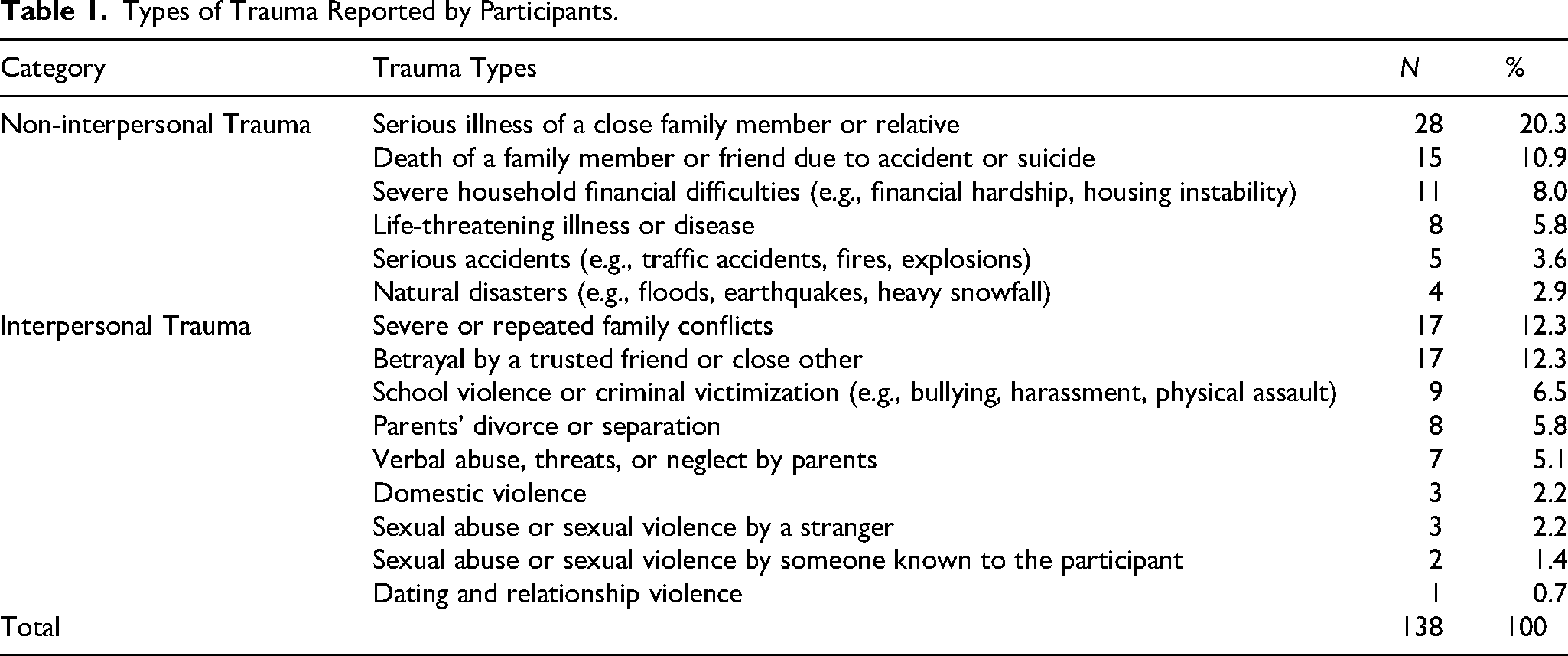
Trauma exposure was assessed using a 22-item checklist adapted from the Posttraumatic Diagnostic Scale (PDS; Foa et al., 1997), revised and validated in Korean by Kim (2011). Consistent with Allen's (2008) classification, reported traumatic events were categorized as non-interpersonal trauma or interpersonal trauma. Participants were instructed to identify the single most distressing traumatic event they had experienced, which served as the reference point for subsequent distress ratings. They rated their level of distress both at the time of the event and at the time of the survey using a 10-point Likert scale (1 = No distress to 10 = Extremely distressing). Among the 138 participants, 71 (51.5%) reported non-interpersonal trauma and 67 (48.5%) reported interpersonal trauma (see Table 1). Mean distress ratings were 8.43 (SD = 1.74) at the time of the traumatic event and 4.66 (SD = 2.40) at the time of the survey.
Types of Trauma Reported by Participants.
PTSD Checklist for DSM-5 (PCL-5)
PTSD symptom severity was assessed using the PTSD Checklist for DSM-5 (PCL-5; Weathers et al., 2013), validated for Korean populations by Lee et al. (2020). The PCL-5 is a 20-item self-report measure assessing four symptom clusters: intrusion, avoidance, negative alterations in cognition and mood, and hyperarousal. Participants rated how much they had been bothered by each symptom during the past month on a 5-point Likert scale (0 = Not at all to 4 = Extremely). Higher scores indicated greater PTSD symptom severity. Internal consistency in the present sample was excellent (Cronbach's α = .96). A clinical cut-off score of 31 (Jang & Chang, 2023) was used to classify participants into PTSD-positive and non-PTSD groups, resulting in 45 participants (32.6%) being categorized as PTSD-positive.
Informed Consent Comprehension
Participants’ perceived understanding of informed consent was assessed using six items developed by the authors. These items evaluated participants’ comprehension of key ethical elements of the study, including its purpose, importance, voluntary nature, right to withdraw, potential risks, and expected benefits. The items were as follows: (1) “I clearly understand the purpose of this study,” (2) “I agree that this study needs to be conducted,” (3) “I clearly understand that I can voluntarily choose whether or not to participate in this study,” (4) “I clearly understand that I can withdraw from the study at any time if I wish,” (5) “I clearly understand the potential risks associated with participating in this study,” and (6) “I clearly understand the potential benefits of participating in this study.” The items were administered after participants reviewed the study information and completed the informed consent form, and prior to completing the remaining study measures. Responses were rated on a 5-point Likert scale (1 = Strongly disagree to 5 = Strongly agree), with higher scores indicating greater perceived understanding of informed consent. Internal consistency for this scale was high in the present sample (Cronbach's α = .93).
Reactions to Research Participation Questionnaire (RRPQ)
Participants’ responses to trauma-related research participation were assessed using the Reactions to Research Participation Questionnaire (RRPQ; Newman et al., 2001). The RRPQ was translated into Korean by the authors using a forward–back translation procedure in accordance with established guidelines (Weidmer, 1994), followed by pilot evaluation. Ten college students rated the clarity of each translated item on a 6-point scale (0 = not at all understood to 5 = fully understood), with item-level mean scores ranging from 4.1 to 5.0.
The RRPQ consists of five subscales: Participation (e.g., “I like the idea that I contributed to science”), Personal Benefits (e.g., “I gained something positive from participating”), Emotional Reactions (e.g., “I experienced intense emotions during the research session”), Drawbacks (e.g., “Participating in this study was inconvenient for me”), and Global Evaluation (e.g., “I was treated with respect and dignity”). Items are rated on a 5-point Likert scale (1 = strongly disagree to 5 = strongly agree), with higher scores indicating stronger endorsement of the experience described. In the present study, internal consistency for the subscales ranged from α = .74 to α = .89. Following prior research (DePrince & Chu, 2008), cost–benefit balance was calculated using two difference scores: Personal Benefits minus Emotional Reactions and Personal Benefits minus Perceived Drawbacks.
To further examine participants’ reflections on their participation, two open-ended questions were included in association with two RRPQ items: “Knowing what I know now, I would participate in this study again if given the opportunity” and “Had I known in advance what participating would be like, I still would have agreed to participate.” Participants who selected either disagreement (1 or 2) or agreement (4 or 5) were prompted to explain their response in writing, allowing for more elaborated accounts of clearly valenced reactions. These responses were subsequently analyzed using content analysis by the first and second authors. Discrepancies in coding were discussed until consensus was reached.
Analysis Strategy
Data analyses were conducted using IBM SPSS Statistics (version 28.0) and proceeded in four stages. First, descriptive statistics were calculated for demographic characteristics, and frequency analyses were conducted to summarize reported trauma types. Second, Pearson correlation analyses and multiple regression analyses were performed to examine associations between individual factors and reactions to research participation. Third, independent samples t-tests were conducted to compare participants with and without elevated PTSD symptoms on cost–benefit ratio indices derived from research participation responses. Finally, open-ended written responses were analyzed using a conventional content analysis approach (Hsieh & Shannon, 2005), following established procedures for qualitative content analysis (Elo & Kyngäs, 2008). No predefined coding framework was used, and categories were developed inductively from participants’ responses. Two coders collaboratively developed the coding scheme through iterative review of the data and then independently coded all responses. Discrepancies were resolved through discussion until consensus was reached, and inter-rater reliability was assessed using Cohen's kappa.
Results
Associations Between Individual Factors and Responses to Trauma-Related Research
Pearson correlation analyses revealed several significant associations between individual variables and participants’ reactions to trauma-related research (see Table 2). Female gender (r = .19, p < .05), PTSD group membership (r = .40, p < .001), distress level at the time of the traumatic event (r = .19, p < .05) and recent distress level (r = .29, p < .001) were positively associated with Emotional Reactions. PTSD group membership was also positively associated with Drawbacks (r = .20, p < .05) and distress level at the time of trauma was positively associated with Personal Benefits (r = .21, p < .05). Participants’ perceived understanding of informed consent was positively associated with Participation (r = .37, p < .001) and Global Evaluation (r = .38, p < .001), and negatively associated with Drawbacks (r = −.29, p < .001). Among the predictors, type of trauma was the only variable not significantly associated with any of the outcome variables and was therefore excluded from subsequent regression analyses.
Correlations, Means, and Standard Deviations among Variables.
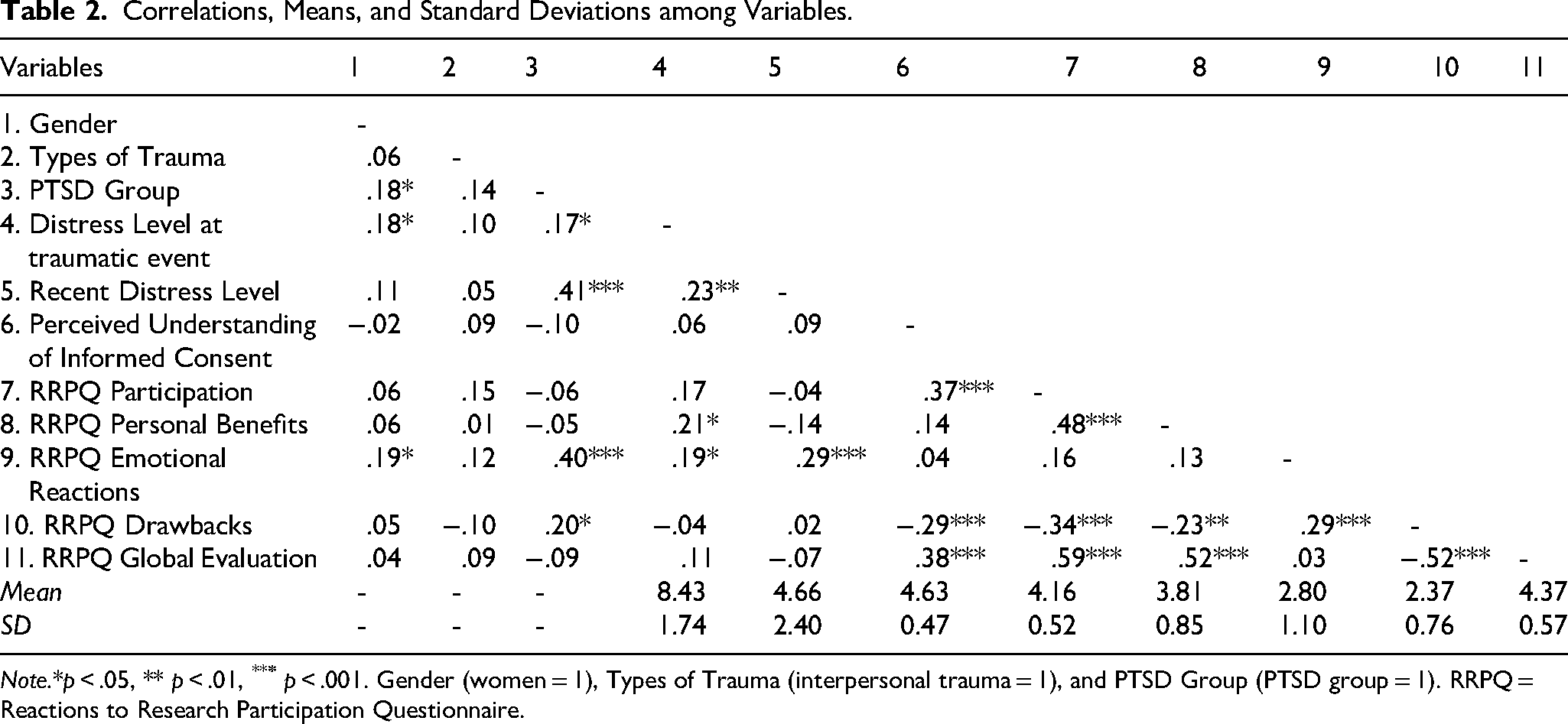
Note.*p < .05, ** p < .01, **
Multiple regression analyses were conducted to examine the effects of individual-level variables on participants’ reactions to research participation (see Table 3). Preliminary analyses indicated that assumptions for multiple regression were met (Durbin-Watson = 1.71–1.96; tolerance > .10; VIF < 10; Hair et al., 2010).
Multiple Regression Analyses of Reactions to Research Participation.
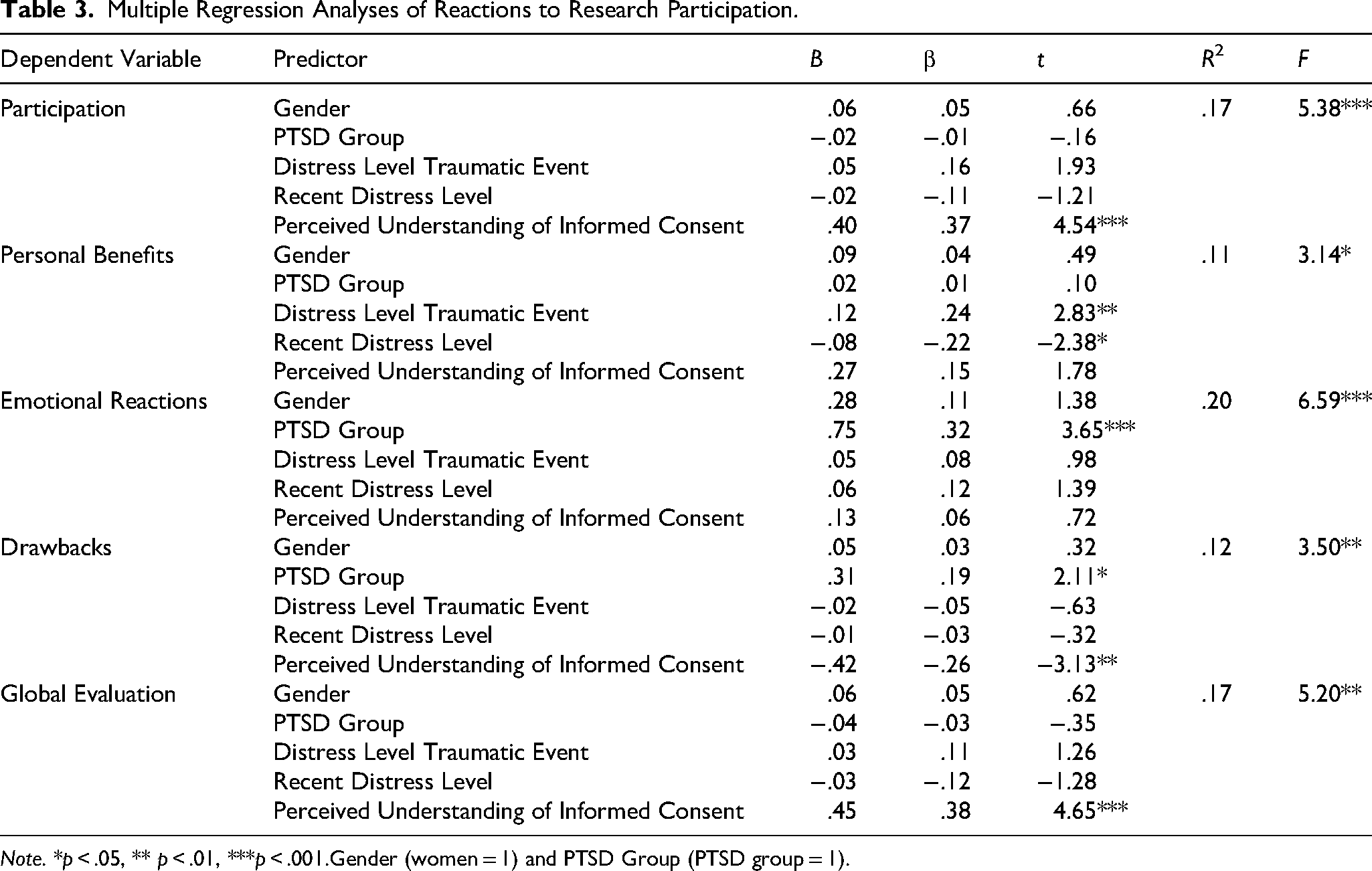
Note. *p < .05, ** p < .01, ***p < .001.Gender (women = 1) and PTSD Group (PTSD group = 1).
Perceived understanding of Informed consent showed a significant positive effects on Participation (β = .37, p < .001) and Global Evaluation (β = .38, p < .001), as well as a significant negative effect on Drawbacks (β = −.26, p < .01). Distress level at the time of the traumatic event had a significant positive effect on Personal Benefit (β = .24, p < .01), whereas recent distress level showed a significant negative effect on Personal Benefit (β = −.22, p < .05). PTSD group membership was associated with higher Emotional Reactions (β = .32, p < .001) and greater Drawbacks (β=.19, p < .05). Although gender was initially associated with Emotional Reactions in the bivariate analysis, it did not remain a significant predictor of any outcome variables in the regression models, suggesting that other variables accounted for the observed variance.
Cost-Benefit Ratio and Motivations for Future Participation
When cost–benefit ratios were calculated across the full sample, participants reported higher levels of perceived benefits relative to emotional reactions (M = 1.01, SD = 1.30) and drawbacks (M = 1.44, SD = 1.26), indicating generally positive evaluations of research participation. When comparing individuals with and without elevated PTSD symptoms (See Table 4), the non-PTSD group showed significantly higher benefits-to-emotional reaction ratios than the PTSD group, t(136) = 4.58, p < .001, d = 1.22. In contrast, group differences in benefit-to-drawback ratios were not statistically significant.
Cost–Benefit Ratios and Independent Samples t-test Results by PTSD Group Status.
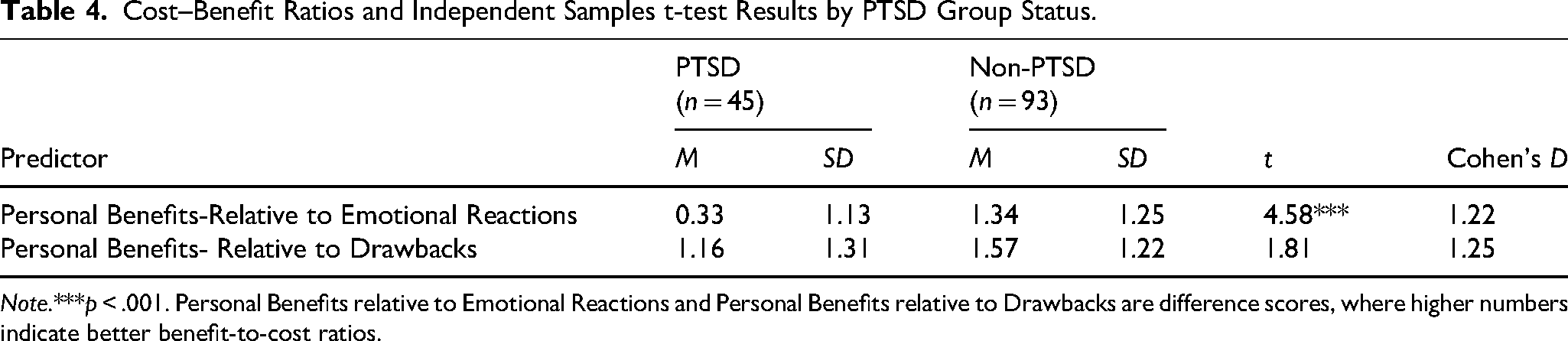
Note.***p < .001. Personal Benefits relative to Emotional Reactions and Personal Benefits relative to Drawbacks are difference scores, where higher numbers indicate better benefit-to-cost ratios.
To further explore participants’ motivations for future participation in trauma-related research, content analysis was conducted on written responses to two open-ended questions provided by 80 participants. Responses were analyzed separately for the PTSD and non-PTSD groups. Fifty-eight participants (42.02% of the total sample) did not provide written responses to these items. Importantly, the proportion of non-responders to the open-ended items was similar across PTSD and non-PTSD groups (44.4% and 40.8%, respectively), suggesting that non-response was not disproportionately associated with trauma-related distress. Two independent coders conducted the content analysis using a shared coding scheme, and discrepancies were resolved through discussion. Inter-rater reliability was assessed using Cohen's Kappa, indicating excellent agreement (κ = .98).
Content analysis revealed distinct patterns in motivations for future participation across the PTSD and non-PTSD groups (see Table 5). In the non-PTSD group, the most frequently reported motivation was support for the purpose of trauma research, with participants emphasizing the social and scientific value of such studies (n = 31; 28.44%). Many described participation as a way to contribute to public understanding or awareness of trauma. Self-understanding and reflection (n = 17; 15.60%) and revisiting and reappraising trauma experiences (n = 17; 15.60%) were also commonly reported, with participants noting that the study prompted reflection on their past experiences and coping processes. In addition, emotionally unburdened participation was frequently endorsed (n = 12; 11.01%), indicating that many participants experienced the research process as manageable and non-distressing. Altruistic motivations, captured by contribution to others and society (n = 14; 12.84%), further reflected participants’ desire to help others through their involvement.
Content Analysis of Motivations for Future Research Participation by PTSD Group Status.
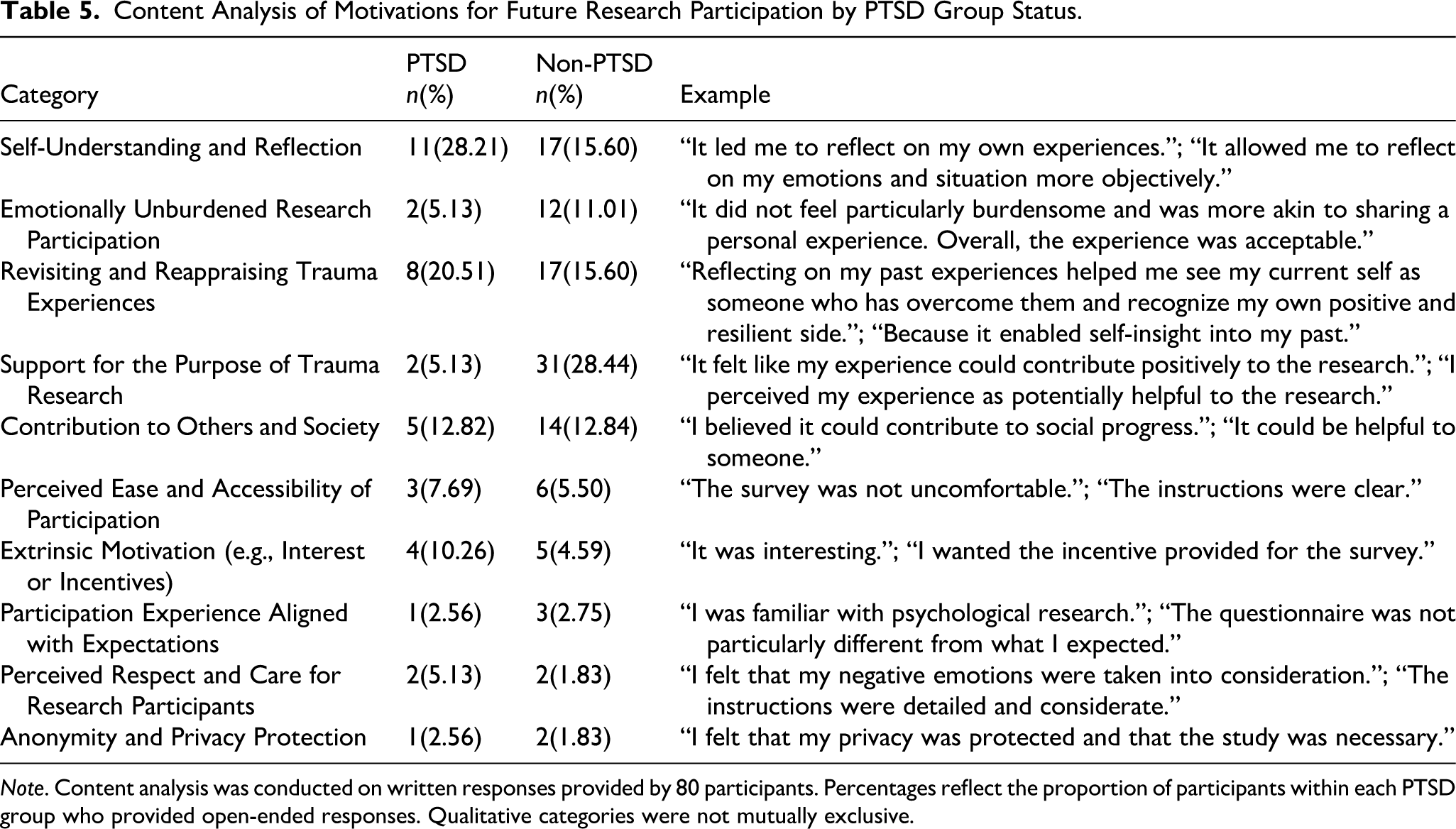
Note. Content analysis was conducted on written responses provided by 80 participants. Percentages reflect the proportion of participants within each PTSD group who provided open-ended responses. Qualitative categories were not mutually exclusive.
Among participants in the PTSD group, self-understanding and reflection was the most frequently cited motivation (n = 11; 28.21%), often described in terms of recognizing emotional progress or personal growth. A second prominent category that emerged from the data was revisiting and reappraising trauma experiences (n = 8; 20.51%), with participants describing how recalling traumatic events during the study facilitated new perspectives on their experiences. Extrinsic motivations, such as interest in the topic or incentives, were also reported more frequently in the PTSD group than in the non-PTSD group (n = 4; 10.26%).
Motivations endorsed by fewer than 10% of respondents across both groups included perceived respect and care for research participants, ease and accessibility of participation, alignment with prior expectations, and considerations related to anonymity and privacy protection (see Table 5).
Across the entire sample (N = 138), only two participants from the PTSD group expressed unwillingness to participate in future trauma-related research. These individuals cited emotional distress or concerns that their highly personal experiences might not be appropriate for research inclusion. Given the very limited number of such responses, qualitative analysis focused on motivations reported by participants who expressed willingness for future participation.
Discussion
The present study examined individual factors associated with Korean college students’ reactions to trauma-related research and their motivations for future participation using a mixed-methods approach. Overall, participants reported largely positive experiences, with perceived personal benefits outweighing emotional reactions and perceived drawbacks. These findings align with prior evidence indicating that trauma-related survey research is generally experienced as manageable and meaningful, even when momentary emotional discomfort occurs (Decker et al., 2011; DePrince & Chu, 2008; Jaffe et al., 2015).
Among the individual factors examined, perceived understanding of informed consent emerged as one of the most consistently associated factors across participation outcomes. Greater perceived comprehension of the study's purpose, procedures, voluntariness, and potential risks was related to higher willingness to participate, more favorable evaluations, and fewer perceived drawbacks. This finding is particularly notable given prior evidence that many research participants do not carefully read or fully understand consent forms in typical research settings (Douglas et al., 2021; Perrault & Keating, 2018). The present results suggest that when participants perceive that they understand the research process, informed consent may function not only as a procedural safeguard but also as an ethically meaningful process that enhances participants’ sense of control and agency. This is particularly relevant in the context of trauma-related research, where participants are often considered potentially vulnerable. The findings suggest that, under conditions in which participants perceive sufficient understanding, they may be able to engage in research participation in an informed and self-directed manner. Accordingly, these findings underscore the importance of developing consent procedures that promote comprehension rather than merely providing information, especially in trauma-related research.
Participants with elevated PTSD symptoms reported stronger emotional reactions during participation, consistent with prior findings on heightened trauma-related emotional responsiveness (Brown et al., 2014; Jaffe et al., 2015; Newman & Kaloupek, 2004). Importantly, this heightened emotional activation was not associated with more negative evaluations or reduced willingness to participate, reinforcing the ethical distinction between transient distress and harm (Decker et al., 2011). Consistent with this pattern, cost–benefit analyses further contextualized these findings. Although participants without elevated PTSD symptoms reported more favorable benefit-to-emotional-reaction ratios than those with elevated symptoms, no group difference emerged for benefit-to-drawback ratios. This pattern suggests that trauma-exposed individuals may experience greater emotional activation during participation without perceiving the experience as overall burdensome or harmful. Notably, among the 80 participants who provided open-ended responses endorsing future participation, 25 belonged to the PTSD group, indicating that a substantial proportion of trauma-exposed participants expressed willingness to participate again. At the same time, the presence of a small number of participants who declined future participation underscores the heterogeneity of trauma-related research experiences, as their responses reflected both emotional discomfort and concerns about the appropriateness of sharing highly personal experiences. This pattern suggests that factors beyond symptom severity, such as perceived relevance or individual differences in distress sensitivity, may also influence participation decisions.
An additional finding was that greater distress at the time of the traumatic event was positively associated with perceived personal benefits of participation. Although counterintuitive, this result aligns with prior qualitative work suggesting that reflecting on highly distressing experiences may foster meaning-making, psychological distance, or a sense of being heard and acknowledged (Biddle et al., 2013; Edwards et al., 2017). For some participants, recognizing that they could engage with trauma-related questions without overwhelming distress may represent awareness of psychological change or coping capacity over time. While speculative, this interpretation highlights the complex interplay between trauma history and perceived benefit during research participation.
Qualitative findings further illuminated how participants interpreted their research experiences and articulated motivations for future participation. Across both groups, self-understanding and reflection, along with revisiting or reappraising trauma experiences, emerged as the most frequently endorsed motivations, mirroring themes reported in prior trauma research participation studies (Edwards et al., 2017; Hasking et al., 2015; Robertson et al., 2021). While both groups reported these reflective benefits, participants with elevated PTSD symptoms endorsed them at higher relative proportions, suggesting that ongoing symptomatology may heighten engagement with self-evaluative and meaning-oriented processes. In contrast, participants without elevated PTSD symptoms more often emphasized supporting the purpose of trauma research and contributing to broader societal understanding, although altruistic motivations were evident across both groups. Together, these findings indicate that positive research experiences are common, while motivations for participation vary in emphasis according to participants’ psychological context.
Finally, this study extends the trauma research ethics literature to a non-Western context. Despite cultural differences in emotional expression and trauma discourse, Korean college students’ reactions closely resembled those reported in Western samples and limited prior non-Western studies (e.g., Allard et al., 2019). This convergence suggests that empirically grounded ethical conclusions regarding trauma-related survey research may generalize across cultural settings, while still warranting attention to contextual and cultural sensitivity. At the same time, this convergence may also partly reflect characteristics of the research context itself. The anonymous and non-interactive nature of the survey may also have shaped participants’ responses by reducing social desirability pressures while limiting opportunities for interpersonal support or clarification. This may be particularly relevant in cultural contexts where maintaining interpersonal harmony and restraint is emphasized (Markus & Kitayama, 2010), and where tendencies toward lower-arousal emotional states and emotional restraint (Lim, 2016) may influence how distress is experienced and expressed. Within such contexts, anonymous research participation may provide a relatively less constrained avenue for engaging with and disclosing trauma-related experiences.
Limitations
Several limitations should be considered when interpreting the findings. First, trauma disclosure within a research context may differ from disclosure in clinical or everyday settings, as the structured, voluntary, and time-limited nature of research participation may shape emotional reactions. Interview-based studies may help clarify how contextual features influence disclosure experiences. Second, although the qualitative component strengthens the study, reliance on brief written responses limited opportunities for probing and clarification. In addition, as open-ended responses were collected only from participants with clearly positive or negative ratings, neutral perspectives were not represented, potentially limiting the range of viewpoints captured. Furthermore, although non-response rates did not substantially differ between PTSD and non-PTSD groups, it remains possible that variations in participants’ willingness to provide open-ended responses may be associated with individual differences in distress or response tendencies. The relatively low level of compensation may also have influenced participants’ engagement with open-ended responses, such that those who provided responses may differ systematically from those who did not. More in-depth qualitative approaches could yield richer insight into participants’ interpretations of emotional reactions, perceived benefits, and participation decisions. Finally, the sample consisted entirely of Korean participants and was gender-imbalanced, with women comprising the majority. In addition, trauma exposure was assessed broadly across diverse event types, which may have obscured trauma-specific differences. Moreover, participants’ perceived understanding of informed consent was assessed using non-validated items, which may limit the precision with which perceived comprehension was captured. These factors may have implications for the generalizability and representativeness of the findings. Future research would benefit from more balanced sampling, finer-grained assessment of trauma characteristics, and the use of validated or multi-method approaches to assess participants’ understanding of informed consent.
Best Practices
Based on the present findings, several practical recommendations can be offered for trauma-related research. First, informed consent procedures should prioritize participant comprehension rather than mere disclosure. Using clear and accessible formats, brief comprehension checks, and framing consent as an ongoing communicative process may enhance both ethical rigor and participants’ research experiences (Stirling & Takarangi, 2025). Second, trauma-related research protocols should distinguish between transient emotional distress and ethical harm. Ethics review processes should rely on empirical evidence rather than topic sensitivity alone when evaluating risk, as grounding resources, clear withdrawal options, and post-participation support may constitute sufficient safeguards in many survey-based studies. Third, respectful communication and attentiveness to participant dignity should be emphasized throughout the research process. Even subtle expressions of care, clarity, and respect were meaningful to participants—particularly those with elevated PTSD symptoms—and may enhance trust and perceived ethical quality at minimal cost (Edwards et al., 2017; Kost et al., 2013).
Research Agenda
Future research should employ longitudinal designs to examine whether reactions to trauma-related research have delayed or enduring psychological effects, as longer-term trajectories of distress, benefit, or meaning-making remain understudied. Further work is also needed to clarify mechanisms underlying perceived personal benefits, particularly the association between greater trauma-time distress and higher benefit appraisal. Mixed-methods and qualitative approaches may help elucidate processes such as meaning-making, psychological distancing, or acknowledgment. Importantly, future studies should more intentionally examine individuals who decline participation, discontinue studies, or report negative experiences, as these perspectives are essential for refining ethical safeguards and promoting genuinely inclusive research practices. Finally, cross-cultural comparative studies and experimental research testing alternative informed consent formats and researcher communication strategies would strengthen the empirical foundation for ethical decision-making in trauma-related research.
Educational Implications
The findings have important implications for the education and training of investigators, ethics committee members, and students. Research ethics education should move beyond procedural compliance to emphasize participant-centered ethics grounded in empirical evidence, including the distinction between transient distress and ethical harm and the ethical significance of informed consent comprehension. Training for ethics committee members may benefit from incorporating empirical data on participant experiences to counter assumptions of vulnerability-based exclusion. For students and early-career researchers, engagement with participants’ qualitative accounts may foster ethical sensitivity and improve research design. Integrating these insights into graduate curricula and professional development programs may help cultivate a research culture that balances protection with respect, inclusion, and empirical grounding.
Footnotes
Acknowledgements
We would like to thank all survey participants for their time and contributions to this study.

Author Contributions
Both authors contributed equally to the conception and design of the study, data collection, data analysis, interpretation of findings, and preparation of the manuscript. The order of authorship reflects a joint decision by the co-authors.
Funding
The authors received no financial support for the research, authorship, and/or publication of this article.
Declaration of Conflicting Interests
The authors declared no potential conflicts of interest with respect to the research, authorship, and/or publication of this article.