Abstract
Stalking has been widely criminalized globally since the 1990s, yet Russia still lacks a specific criminal offence of stalking and relies on general provisions that only partially cover persistent persecutory behavior. This study uses an experimental vignette-based survey of 292 Moscow university students to examine gaps between legal norms and social perceptions of stalking. Students evaluated scenarios varying perpetrator gender, relationship context, and behaviors. Stalking was most readily recognized when male perpetrators targeted female victims, while male respondents and those endorsing romantic ideals were less likely to recognize stalking behaviors as problematic.
Keywords
Introduction
Since California enacted the first anti-stalking statute in 1990, stalking has been progressively criminalized across most Western jurisdictions, with legal definitions converging around deliberate, malicious, and repeated harassment that threatens an individual’s safety (Meloy, 1998). Yet the mere existence of legal provisions does not guarantee effective victim protection. Russia presents a salient case: lacking a dedicated stalking offence, the country relies on fragmented Criminal Code provisions—Article 119 (threats of murder or grievous bodily harm), Article 137 (violation of privacy), Article 138 (violation of the secrecy of correspondence), and Article 139 (violation of the inviolability of the home)—that were never designed to address persistent persecution as a distinct phenomenon (Ryzhova & Kornishina, 2018). This legislative gap creates uncertainty about legal boundaries and remedies, with victims dependent on prosecutors’ discretionary interpretation of which provisions apply.
The gap between formal law and effective protection is compounded by competing cultural frameworks. Media across Western and Russian contexts frequently glorify persistent pursuit “despite all obstacles,” with protagonists ignoring rejection and repeatedly seeking intimacy until they ultimately “win” love (Bachen & Illouz, 1996; Mellins, 2022; Spitzberg & Cadiz, 2002). Such narratives romanticize and normalize behaviors that legal frameworks seek to criminalize, creating direct tension between romantic ideals and legal boundaries—particularly when media depictions emphasize stranger-perpetrated or celebrity-focused stalking rather than the acquaintance and former-partner scenarios that predominate empirically.
Socio-legal scholars conceptualize this tension as a problem of legal consciousness: the ways ordinary people understand, perceive, and respond to law often diverge from formal legal definitions (Ewick & Silbey, 1998). Behaviors viewed socially as acceptable courtship may, in legal terms, constitute harassment. If potential victims cannot recognize legally actionable behaviors, and potential perpetrators interpret their conduct as romantic rather than criminal, criminalization alone cannot adequately address stalking (Merry, 1990; Nielsen, 2000). Even where formal rights exist, access remains unequal when people lack the cultural resources to recognize those rights in everyday situations (Young & Billings, 2020). Examining how individuals classify stalking behaviors—particularly where legislation is nascent or absent—illuminates how legal frameworks interact with cultural norms and social practice (Ewick & Silbey, 1998; Seron & Munger, 1996). We draw on the legal consciousness tradition not because participants are engaging a specific stalking statute—none exists in Russian law—but because this framework illuminates how individuals navigate boundary-setting and harm recognition when formal legal guidance is absent or fragmented and when people rely on broader normative and cultural schemas to classify potentially harmful behaviors.
Russian legal scholarship has predominantly focused on doctrinal analysis and proposals for introducing a special anti-stalking offence, while empirical research on how ordinary people perceive stalking remains scarce. University students living in dormitories represent a particularly important population for studying these dynamics. They face heightened vulnerability to stalking due to residential proximity, intensive internet use that facilitates cyberstalking, and life stages centered on romantic relationship formation (Burke et al., 2011; Jackson, 2024; Lukose & Agbeyangi, 2025). From a legal consciousness perspective, environmental context shapes the normative frameworks through which behaviors are interpreted: intensive peer interaction, boundary negotiation in shared spaces, and high residential density may either heighten sensitivity to harassment or normalize low-level intrusions (Ewick & Silbey, 1998). This theoretical ambiguity—vulnerability increasing awareness versus proximity producing normalization—makes dormitory residence a crucial but exploratory factor in understanding how legal consciousness forms.
This article addresses these gaps using an experimental vignette-based study of 292 Moscow university students. It asks how young people navigate the boundary between acceptable courtship and criminal harassment where legal guidance is limited, and which individual and situational factors influence whether behaviors are recognized as legally problematic. By examining the mismatch between formal criminalization and everyday legal consciousness, the study contributes to socio-legal scholarship on how law operates in settings where statutory frameworks are incomplete and where romantic ideals may conflict with legal definitions of harm.
Legal definitions and Social Perceptions of Stalking
The Legal Construction of Stalking
Understanding how individuals perceive stalking requires examining how legal systems define and criminalize it. While no universal legal definition exists, most Western jurisdictions converge on core elements: intentional and purposeful pursuit, threats or endangerment, and repetition or persistence over time (often at least two incidents) (Catalano, 2012; Miller, 2001; Van der Aa, 2018). Many frameworks also incorporate the victim’s subjective experience—fear, distress, or concrete negative consequences (Storey & Hart, 2021)—which introduces ambiguity, since “reasonable fear” varies across people and contexts. In Russia, the absence of a comprehensive stalking statute and reliance on general Criminal Code provisions make this ambiguity particularly acute, creating ideal conditions for examining legal consciousness: how people recognize stalking when legal boundaries are fragmented or unclear (Ryzhova & Kornishina, 2018).
Stalking’s consequences are severe and well-documented, including psychological harm (depression, anxiety, PTSD), socio-economic deterioration (relocation, security expenses, job loss), and disruption of social ties (Blaauw et al., 2002; Storey & Hart, 2021). Yet public recognition remains low, raising questions about whether criminalization without widespread legal consciousness can meaningfully protect victims.
Psychological Frameworks: Motivation and Pathology
Psychological research focuses on perpetrators’ motivations and mental states rather than legal thresholds. Clinically, stalking is often framed as “obsessive pursuit,” an abnormal or persistent pattern of threats or harassment directed at an individual (Meloy, 1998). Ogloff et al. (2020) identify multiple stalker types—rejected, resentful, incompetent suitors, predatory, attention-seeking, help-seeking, intimacy-seeking, and chaotic—showing that most stalkers are not anonymous “mad strangers” but are often embedded in prior relationships. Spitzberg (2015) extends this work through the concept of obsessive relational intrusion (ORI), but notes that victims’ own accounts frequently diverge from clinical categories, highlighting a broader gap between expert knowledge and lay understandings of harmful behavior. Legal consciousness research builds on this point by asking how non-experts, without clinical or legal training, categorize and evaluate such behaviors in everyday life.
Sociological Perspectives: Gender, Relationship Context, and Cultural Scripts
Sociological studies reveal systematic patterns in who is targeted and how stalking is perceived. Gender is central: men typically minimize seriousness and show more sympathy for perpetrators, whereas women express greater concern and support for victims (Dunlap et al., 2012; Phillips et al., 2004). Scenario gender composition also matters: respondents are far less likely to label behavior as stalking when the perpetrator is female and the victim male than in male-perpetrator/female-victim scenarios (Phillips et al., 2004). Survey data reflect this gendered victimization: in the U.S. National Violence Against Women Survey, women were more than twice as likely as men to report stalking victimization (Tjaden & Thoennes, 1998). Media depictions reinforce such patterns by overwhelmingly portraying men as perpetrators and women as victims (Lippman, 2018).
Relationship context further shapes perceptions. Although former-intimate stalking carries the highest risk of violence (McEwan et al., 2007), the public often perceives stranger stalking as more threatening and normalizes ex-partner pursuit as “relationship drama” or “unfinished business” (Scott et al., 2022). These findings underscore how legal definitions and social interpretations diverge: behaviors that meet legal criteria for stalking may be culturally reframed as private relationship issues or romantic persistence.
Media, Cultural Narratives, and the Romanticization of Pursuit
Mass media strongly influence public understandings of stalking. Popular culture promotes myths that it is mainly a celebrity problem, that stalkers are strangers, that victims are almost exclusively women, that perpetrators are obviously mentally ill, and that stalking is easy to distinguish from normal courtship (Spitzberg, 2002). Media narratives frequently romanticize persistent pursuit “against all odds,” featuring protagonists who ignore rejection, repeatedly contact the target, and ultimately “win” love (Bachen & Illouz, 1996). Such storylines normalize behaviors that fit legal definitions of stalking, placing romantic ideals in direct tension with legal boundaries.
Romantic Ideals and Legal Boundaries
Romantic courtship refers to pursuit behaviors that are welcomed and non-harmful, yet the line between courtship and stalking is fluid, context-dependent, and contingent on reciprocity (Owens, 2007). Romantic love encompasses multiple cognitive, biological, and social processes (Bode & Kushnick, 2021). Rusbult et al. (1993) conceptualize “romantic ideals” across dimensions such as Album Fantasies and Marital Bliss, which privilege emotional intensity and grand gestures over pragmatism. Sprecher and Metts (1999) identify beliefs in “Love finds a way,” “One and only,” idealization, and “Love at first sight,” to which the “against all odds” narrative can be added—emphasizing persistence despite rejection (Bachen & Illouz, 1996).
These frameworks frequently clash with legal norms. Legally, consent is revocable and clear refusal should halt pursuit; continued contact becomes harassment. Under romantic ideals, however, initial rejection may be reconceived as a test of commitment, with persistence seen as proof of genuine love. Understanding how individuals navigate these conflicting schemas is crucial for evaluating whether anti-stalking legislation can function as intended in everyday life.
Hypotheses
The preceding review reveals multiple competing frameworks that may shape stalking perceptions: formal legal definitions (often absent or ambiguous in the Russian context), psychological theories emphasizing perpetrator motivation and pathology, sociological evidence documenting gendered patterns in victimization and recognition, and cultural narratives romanticizing persistent pursuit. These frameworks are internally heterogeneous and do not reduce to singular positions. Legal approaches encompass varied definitions and enforcement priorities; psychological research addresses coercive control, attachment dynamics, cognitive distortions, and risk assessment alongside motivational typologies; sociological work documents gendered patterns but also examines institutional responses, intersectional vulnerabilities, and cultural variation; and cultural analysis reveals both romanticization and critical counter-narratives. The point is not that these frameworks are monolithic or opposed, but that they offer competing interpretive schemas that individuals may draw upon — selectively and inconsistently — when evaluating specific behaviors.
H1 (Residential Context and Stalking Recognition)
Students living in university dormitories—due to heightened salience of residential proximity, intensive peer interaction in bounded social spaces, and potential exposure to harassment behaviors in dense residential settings—will demonstrate different patterns of stalking recognition and normative evaluation compared to non-dormitory residents. Prior research suggests vulnerability may heighten awareness and sensitivity to boundary violations (Burke et al., 2011; Sutton, 2023), although normalization through repeated low-level exposure represents an alternative mechanism. Given this theoretical ambiguity, we treat residential status as an exploratory factor while expecting systematic differences between dormitory and non-dormitory students.
H2 (Gender and Recognition)
Female respondents will more readily recognize stalking behaviors as problematic and indicate higher perceived seriousness than male respondents, reflecting both differential victimization risk and gendered socialization about threat perception (Phillips et al., 2004; Spitzberg & Cadiz, 2002).
H3 (Relationship Context)
Students will perceive stranger stalking as most threatening. When stalkers are acquaintances or former partners, their actions will be rated as less dangerous or more acceptable, despite legal definitions and empirical evidence suggesting former-intimate stalking carries greater risk. This hypothesis reflects the persistence of cultural scripts that normalize pursuit within relationship contexts (Scott et al., 2022; Sheridan et al., 2003).
H4 (Gendered Scenarios)
Stalking will be judged more dangerous and more likely to warrant legal intervention when the perpetrator is male and the victim female, reflecting media depictions of stalking as a gendered crime and cultural patterns in which men’s pursuit of women is normalized while the reverse is treated as exceptional (Becker et al., 2021; Spitzberg & Cadiz, 2002).
H5 (Romantic Ideals and Stalking Recognition)
Students endorsing romantic ideals will be less likely to recognize persistent pursuit behaviors as problematic or requiring intervention. By contrast, respondents holding pragmatic or utilitarian relationship ideals will be more inclined to acknowledge boundaries and evaluate such behaviors as unacceptable, as romantic ideals emphasize elaborate courtship, emotional displays, and sacrifice for love, including persistence “against all odds” (Bachen & Illouz, 1996; Rusbult et al., 1993). This hypothesis directly addresses how competing normative frameworks—romantic versus legal-regulatory—shape individual perceptions of the same behaviors.
For our empirical analysis, we adopt Meloy’s (1998) legal definition: stalking is the deliberate, malicious, and repeated harassment of another person that threatens their safety. While broad and not specifying exact perpetrator actions or required victim responses, this definition captures the core legal criteria—intentionality, non-consensuality, persistence, and threat—and provides a foundation for constructing vignettes that systematically vary these elements.
Methods
Research Design and Justification
To examine how Moscow university students navigate the boundaries between legal definitions and cultural scripts regarding stalking, this study employed an experimental vignette-based methodology. Vignettes are particularly well suited to socio-legal research on everyday understandings of law because they enable systematic observation of how individuals apply legal and normative frameworks to concrete situations while controlling for scenario characteristics (Atzmüller & Steiner, 2010; Young & Billings, 2020). This approach addresses a fundamental methodological challenge in such research: directly asking participants about their “awareness of stalking law” or related legal concepts would likely elicit socially desirable responses or conflate formal knowledge with practical recognition. By presenting hypothetical scenarios without explicitly invoking legal terminology, vignettes allow researchers to observe how people categorize behaviors, assess danger, and determine whether intervention is warranted, without priming specific legal frameworks.
The vignette methodology offers several specific advantages for our research questions. First, it permits systematic variation of scenario elements (perpetrator gender, victim gender, relationship type, specific behaviors) while holding contextual factors constant. Second, the use of neutral, descriptive language avoids technical legal terms like “stalking,” “harassment,” or “criminal conduct” that might bias responses or require participants to possess formal legal knowledge they may lack. This design choice is critical in the Russian context, where comprehensive stalking legislation is absent and ordinary citizens cannot be expected to know precise legal definitions. Third, vignettes are particularly valuable for studying sensitive topics where direct questioning about personal experiences might elicit discomfort or underreporting (Jenkins et al., 2010). By asking participants to evaluate hypothetical others’ situations rather than their own experiences, we reduce social desirability bias while still accessing their normative frameworks.
Questionnaire Structure and Variables
Data collection was conducted via online survey comprising three main sections: (1) socio-demographic characteristics; (2) six experimental vignettes; and (3) a romantic ideals scale.
The study constructed 144 unique vignette combinations through systematic variation of five factors: perpetrator gender (2 levels: male/female), victim gender (2 levels: male/female), perpetrator actions (6 types: unwanted repeated contact, following/monitoring, unwanted gifts, threats to property, unwanted presence near/in property, collecting personal information), victim consequences (4 types: psychological health decline, forced relocation, financial/employment difficulties, expenses for protection), and prior relationship type (3 levels: strangers, acquaintances, formerly intimate). The full factorial structure yields 2 × 2 × 6 × 4 × 3 = 144 possible scenario combinations, ensuring comprehensive coverage of stalking behavior types and contexts documented in the empirical literature.
Each participant was randomly assigned to evaluate six different vignettes sampled from this 144-vignette pool, creating a within-subjects design in which individuals assessed multiple scenario configurations but no single participant evaluated all possibilities. This sampling approach balanced two considerations: (a) broad coverage of the scenario space, enabling examination of how diverse configurations are interpreted across the sample as a whole; and (b) reasonable survey length (approximately 20–25 minutes), which helped maintain engagement and minimize fatigue. All 144 vignettes were evaluated by multiple participants, ensuring adequate statistical power for detecting between-vignette differences.
Our vignette approach combines elements of factorial experimental design (systematic variation of scenario factors to examine which elements shape perceptions) with narrative realism and contextual richness (embedding factors within realistic university scenarios using familiar names and settings to maximize ecological validity). This hybrid design aligns with socio-legal vignette methodology on everyday engagements with law (Atzmüller & Steiner, 2010; Young & Billings, 2020), which prioritizes observing how individuals apply normative and legal frameworks to concrete situations rather than relying solely on strict laboratory manipulation.
Critically, participants were not provided with any formal legal definition of stalking before evaluating scenarios. This design choice aligns with socio-legal research on everyday understandings of law: we examine how people categorize behaviors and recognize boundaries without being primed by legal terminology (Young & Billings, 2020). Vignettes used neutral descriptive language (e.g., “repeatedly contacted,” “followed,” “sent unwanted messages”) rather than technical terms such as “stalking,” “harassment,” or “criminal conduct,” thereby approximating the real-world context in which most citizens navigate potential legal boundaries without formal legal training.
All vignettes were situated in university contexts familiar to respondents—classmates, dormitory residents, students in the same program—to maximize realism and narrative immersion. Character names were selected from popular Moscow-region names (using the REESTR ZAGS portal https://zags.nalog.gov.ru/analytics/system-scale) to ensure cultural familiarity without evoking specific associations. Vignettes deliberately avoided psychological or clinical terminology about perpetrator motivations or victim trauma, as such framing would require specialized knowledge and might prime medical rather than legal or social interpretations.
After reading each vignette, participants answered five questions measuring our dependent variables: (1) (2) (3) (4) (5)
These dependent variables capture different dimensions of stalking perception and normative evaluation. Legal recognition measures whether behaviors are categorized as stalking-like or potentially criminal. Perceived danger and acceptability assessments reveal how serious and normatively acceptable respondents judge the behaviors to be, independent of formal legal knowledge. Legal intervention measures willingness to involve formal authorities. Together, these variables illuminate how participants perceive, evaluate, and respond to stalking-like behaviors in a context of fragmented legal regulation.
The third survey section measured romantic ideals using a six-item scale adapted from Sprecher and Metts (1999), capturing beliefs about love, persistence, and romantic pursuit. This scale enables testing our hypothesis that romantic ideals function as competing normative frameworks that may override or diminish recognition of stalking-like behaviors and their perceived seriousness.
Sample and Data Collection
Participants were recruited via snowball sampling through undergraduate program group chats at HSE University in Moscow and university-oriented VKontakte communities. Snowball sampling was appropriate given our research objectives: we sought to examine how ordinary students (not legal experts or stalking survivors specifically) perceive stalking behaviors, requiring breadth rather than narrow sampling criteria. The online format facilitated rapid distribution through peer networks while maintaining participant anonymity on sensitive topics.
Data collection occurred between March 20 and April 20, 2024. The survey yielded 311 initial responses; after excluding 19 respondents (6.1%) who were not currently enrolled university students, the final sample comprised 292 participants who each evaluated six vignettes, producing 1,752 total observations (292 participants × 6 vignettes).
Sample characteristics were as follows: 30.8% male (n = 540 observations) and 69.2% female (n = 1,212 observations); median age 21 years (SD = 1.9), corresponding to 2nd-4th year undergraduate students; 47.6% living in university dormitories and 52.4% residing elsewhere. This near-equal distribution of dormitory versus non-dormitory residents was fortuitous, enabling robust testing of our residential context hypothesis. The gender imbalance reflects typical patterns in Russian social science programs but also enabled examination of gendered differences in stalking recognition and normative evaluations of stalking-like behaviors.
Measurement Reliability and Analytical Strategy
The five-item stalking attitudes scale demonstrated strong internal consistency (Cronbach’s α = 0.871), validating our dependent variable measurement (see Appendix, Table A1). The romantic ideals scale showed lower reliability (α = 0.535), suggesting either measurement issues or—more likely—the presence of multiple distinct subdimensions within romantic belief systems (consistent with Sprecher and Metts’ multidimensional conceptualization). Factor analysis revealed two primary factors: “Love as Destiny” (belief that fate determines romantic partnerships) and “Love as Work” (belief that relationships require persistent effort despite obstacles). These factors were used separately in hypothesis testing.
This study deliberately examines patterns of stalking recognition and normative evaluation in the absence of a clear, unified statutory framework. As noted earlier, Russia lacks a standalone legal definition of stalking as a distinct crime, instead addressing stalking-related behaviors through multiple Criminal Code provisions (Articles 119, 137, 138, 139). Our research question therefore concerns how individuals perceive and categorize behaviors that would constitute stalking under comparative legal definitions, and how they evaluate their seriousness and need for intervention, when formal legal boundaries remain fragmented or ambiguous. This approach is informed by legal consciousness scholarship—concerned with how ordinary people engage with law in everyday life—but does not measure consciousness of a specific stalking statute; rather, it captures normative recognition and perceptual judgments in a context of legal uncertainty (Ewick & Silbey, 1998; Merry, 1990; Nielsen, 2000).
Because each participant evaluated only six vignettes randomly sampled from the 144-vignette pool, our design does not measure within-person responses to fully crossed factorial manipulations in the strict experimental sense. Rather than testing individual-level causal responses to controlled changes, we examine between-vignette differences in stalking recognition and normative evaluations across the sample, identifying which scenario configurations are associated with higher or lower recognition, perceived danger, and support for legal intervention. This design sacrifices pure experimental control for breadth of scenario representation and ecological validity. Consequently, our inferences are associational: we speak of factors being associated with higher or lower recognition and evaluative strictness, rather than making strong claims about causal effects at the individual level.
Data analysis employed several strategies appropriate for ordinal, non-normally distributed data. Between-group comparisons used nonparametric tests: Mann–Whitney U tests for two-group comparisons (e.g., male vs. female respondents; dormitory vs. non-dormitory residents) and Kruskal–Wallis tests for multi-group comparisons (e.g., relationship type: strangers vs. acquaintances vs. former intimates). Multivariate analyses employed ordinal logistic models (OLM) to examine how multiple vignette factors simultaneously predicted stalking recognition and related evaluative outcomes. Descriptive statistics provided an overview of response distributions.
This analytical approach aligns with our theoretical framework: we examine how individual characteristics (gender, residence, romantic ideals) and situational factors (vignette elements) shape perceptions and normative evaluations of stalking-like behaviors, revealing patterns in how participants navigate the gap between formal legal definitions and cultural scripts about romantic pursuit.
Example Vignette
Factor configuration: Male perpetrator, female victim; unwanted repeated contact attempts; psychological health consequences; strangers
“Dimitry and Victoria are first-year university classmates. Victoria has noticed that Dmitry repeatedly tries to start conversations with her during breaks and after lectures. Throughout the first semester, he often contacted her on social media for non-academic reasons, despite her clear reluctance to engage. She repeatedly received invitations from him to spend time together, which she consistently declined. Victoria now feels anxious and unable to concentrate during classes when Dmitry is nearby. She experiences irritation and exhaustion as a result of his behavior.”
AI Usage
A language-based artificial intelligence tool (Perplexity AI) was used at the proofreading stage to refine grammar, clarity, and coherence of the English text. The tool did not generate substantive content, research ideas, or analyses; all conceptualization, study design, data interpretation, and theoretical framing were conducted by the authors. The final manuscript was carefully reviewed by the authors, who bear full responsibility for all arguments, interpretations, and any remaining errors.
Results
This section presents findings on how individual characteristics and situational factors shape perceptions and evaluations of stalking-like behaviors. Results are organized around the five hypotheses, followed by analysis of how specific perpetrator actions influence stalking recognition.
H1: Residential Context and Stalking Recognition
Dormitory-residing students were expected to show heightened sensitivity to stalking—more readily identifying it and perceiving greater danger—due to greater exposure to campus harassment and residential proximity risks. This expectation was not supported.
Mann–Whitney tests revealed statistically significant differences only for perceived danger (p = .005) and perceived necessity of police involvement (p = .015). Dormitory residents rated the scenarios as less dangerous and less warranting police contact than non-dormitory students. No significant differences emerged for stalking recognition, acceptability judgments, or victim rationality assessments (Appendix, Table 2).
H2: Gendered Patterns in Stalking Recognition
Male students were hypothesized to demonstrate lower recognition of stalking and to evaluate it as less serious, reflecting differential victimization risk and gendered socialization about appropriate pursuit behaviors. This hypothesis was strongly confirmed.
Statistically significant gender differences emerged across all five dependent variables (p < .001 for all comparisons). Male students were less likely to recognize stalking (mean rank: 772.95 vs. 913.36 for females), rated the behaviors as less dangerous (mean rank: 835.23 vs. 944.67 for females), were more accepting of perpetrator behaviors, more likely to judge victim responses as irrational, and less supportive of police involvement (Appendix, Table 3).
H3: Relationship Context and Stalking Evaluations
It was hypothesized that stranger stalking would be perceived as most serious, with acquaintance and former-intimate scenarios more normalized. The findings provided limited support for this expectation.
Kruskal–Wallis tests showed significant differences only for victim rationality judgments (p = .012). Victims’ responses were rated as least rational when perpetrators were acquaintances (mean rank: 831.66), and most rational when perpetrators were former intimates (mean rank: 914.53) (Appendix, Table 4).
H4: Gender Composition of Scenarios and Legal Recognition
Scenarios involving male perpetrators and female victims were expected to elicit higher stalking recognition and greater perceived seriousness than those with female perpetrators and male victims. This hypothesis was also strongly supported and showed a pattern parallel to H2 across all outcomes.
When perpetrators were male and victims female, respondents showed higher stalking recognition (mean rank: 936.08 vs. 789.69), rated the behaviors as more dangerous, lower acceptability ratings, higher evaluations of victim rationality, and stronger support for legal intervention than in female-perpetrator/male-victim scenarios (Appendix, Table 5).
H5: Romantic Ideals as Competing Normative Frameworks
Students endorsing romantic ideals were expected to demonstrate lower recognition of stalking and to evaluate such behaviors as less serious. This hypothesis was confirmed for both romantic-ideal factors identified through factor analysis.
Strong endorsement of “Love as Destiny” beliefs—the idea that fate determines romantic partnerships and “soulmates” exist—was associated with the lowest stalking recognition, whereas moderate rejection of these beliefs corresponded to the highest recognition scores (Appendix, Table 6). Strong endorsement of “Love as Work” beliefs—the view that relationships require persistent effort and pursuit despite obstacles—was likewise associated with systematically lower sensitivity across measures: lower stalking recognition, rating behaviors as less dangerous, and weaker support for police involvement (Appendix, Table 7).
Perpetrator Actions and Stalking Recognition Patterns
Beyond individual characteristics and relationship contexts, specific perpetrator behaviors also shaped how respondents recognized and evaluated stalking. Each of the six action types was analyzed separately to identify which behaviors most readily triggered recognition of stalking.
Scenarios involving repeated unwanted contact yielded the lowest stalking recognition (M = 3.09), despite this behavior’s centrality in most legal definitions of stalking. Surveillance and following, and unwanted gifts, produced only moderate recognition (both M = 3.60). Threats to property substantially increased recognition (M = 3.95), and repeated unwanted presence near the victim’s home or workplace produced moderate-to-high recognition (M = 3.78). Covert collection of personal information generated the highest recognition score (M = 4.12), indicating that privacy violations were most consistently treated as legally problematic.
Action-specific analyses thus indicate a hierarchy of stalking recognition across behavior types. Behaviors involving explicit threats to property and covert information-gathering consistently elicited high recognition and strong support for police involvement, whereas ambiguous behaviors that can be framed as courtship—unwanted contact, surveillance, and unwanted gifts—elicited lower and more variable recognition.
Victim Consequence Type and Stalking Recognition
Vignette scenarios systematically varied the type of consequences experienced by victims (psychological harm, forced relocation, financial difficulties, or protection expenses). We examined whether these consequence types differentially shaped stalking recognition and related evaluations using Kruskal–Wallis tests to compare all outcome measures across the four consequence types.
Significant differences emerged across all five dependent variables (Appendix, Table 8). Stalking recognition differed by consequence type (χ2(3) = 14.16, p = .003), with financial consequences eliciting the highest mean recognition (M = 3.84, SD = 1.30) and protection-related expenses the lowest (M = 3.54, SD = 1.37). Post-hoc pairwise comparisons (Bonferroni-corrected) revealed that financial consequences produced significantly higher recognition than both relocation (p = .017) and protection expenses (p = .004).
Perceived danger also varied significantly by consequence type (χ2(3) = 31.41, p < .001). Financial consequences were rated as less dangerous (M = 2.86, SD = 1.36), differing significantly from psychological harm (M = 3.25, p < .001), relocation (M = 3.36, p < .001), and protection expenses (M = 3.12, p = .029). This pattern suggests that tangible economic costs may be taken less seriously than psychological or immediate safety threats, despite their documented real-world impact on stalking victims.
Acceptability judgments likewise differed significantly (χ2(3) = 22.46, p < .001), with behaviors leading to financial consequences rated as least acceptable (M = 1.92, SD = 1.15) compared to psychological (p < .001), relocation (p < .001), and protection consequences (p = .013). Victim rationality assessments varied modestly (χ2(3) = 10.82, p = .013), with victims experiencing psychological harm rated as most rational (M = 3.13, SD = 1.25), differing significantly from those experiencing relocation (p = .020) or financial difficulties (p = .032).
Finally, recommendations for police contact differed substantially by consequence type (χ2(3) = 29.59, p < .001). Financial consequences prompted the strongest support for police involvement (M = 2.93, SD = 1.43), differing significantly from psychological (p < .001) and relocation consequences (p < .001), though not from protection expenses (p = .019).
These findings reveal a complex pattern: while financial consequences produce higher stalking recognition and stronger support for police intervention, they are simultaneously perceived as less dangerous than psychological or safety-related consequences. This suggests that students distinguish between behaviors warranting legal intervention (economic harms) and behaviors posing immediate threats (psychological distress, forced relocation). The pattern may reflect Moscow students’ pragmatic orientation toward concrete, documentable harms—financial losses can be quantified and proven—versus subjective psychological suffering, which lacks clear evidentiary standards in Russian legal practice (see Appendix, Figure 1 for visual comparison).
Interaction Effects: Gender and Behavior Severity
To examine whether gender effects operate uniformly across all behavior types or primarily in ambiguous scenarios, we estimated ordinal logistic regression models with interaction terms between respondent gender/perpetrator gender and behavior severity (ambiguous, moderate, severe). We tested the proportional odds (parallel lines) assumption for each model using the Brant test. Global tests suggested some violation of the assumption (Omnibus p < .001), particularly for respondent gender; therefore, results should be interpreted with some caution.
Respondent Gender × Behavior Severity
The interaction between respondent gender and behavior severity approached marginal significance for stalking recognition (LR χ2(2) = 5.63, p = .065), but was statistically significant for perceived danger (LR χ2(2) = 11.13, p = .004) and police contact recommendations (LR χ2(2) = 12.26, p = .003). Gender differences were not uniform across severity levels (Appendix, Figure 2). For stalking recognition, female respondents showed consistently higher recognition than males across all three severity categories, with the gender gap widening slightly—but not significantly—for ambiguous behaviors. The predicted probability of high recognition (categories 4–5) for females was approximately 25–30% for ambiguous behaviors compared to 12–15% for males.
For perceived danger, the gender difference was largest for severe behaviors, where female respondents rated the behaviors as substantially more dangerous than males. This pattern contradicts the hypothesis that gender effects operate primarily through scenario ambiguity: instead, gender gaps in perceived danger were most pronounced when behaviors were objectively severe (threats to property, information collection), which aligns with evidence that such behaviors carry an elevated risk of violence, particularly for women (McEwan et al., 2007).
Model coefficients (Appendix, Table 9, Model 1) show that the main effect of female gender remains positive and significant (OR = 2.38, p < .001), indicating higher stalking recognition independent of behavior severity. Behavior severity main effects were likewise strong (moderate: OR = 2.15, p < .001; severe: OR = 4.17, p < .001), indicating that more severe behaviors were associated with higher recognition and perceived seriousness. The interaction terms themselves were not individually significant at conventional levels, suggesting that while gender gaps vary somewhat by severity, the dominant pattern is one of consistent gender differences across contexts rather than effects that emerge only in ambiguous scenarios.
Perpetrator Gender × Behavior Severity
The interaction between perpetrator gender (vignette characteristic) and behavior severity was statistically significant (LR χ2(2) = 12.04, p < .001), indicating that scenario gender composition effects differed by behavior type. As shown in Appendix Figure 3, male-perpetrator/female-victim scenarios consistently elicited higher stalking recognition than female-perpetrator/male-victim scenarios, and this difference was largest for severe behaviors. For severe stalking (threats, information collection), male-perpetrator scenarios yielded predicted probabilities of high recognition near 45–50%, compared to approximately 25–30% for female-perpetrator scenarios—a gap exceeding 20 percentage points.
These results indicate that gendered patterns in perceived seriousness are strongest when behaviors clearly cross legal and safety thresholds. Ambiguous behaviors (unwanted contact, gifts) showed smaller differences between perpetrator–victim gender configurations, whereas severe behaviors showed markedly higher recognition when the perpetrator was male and the victim female.
Relationship Context × Behavior Type
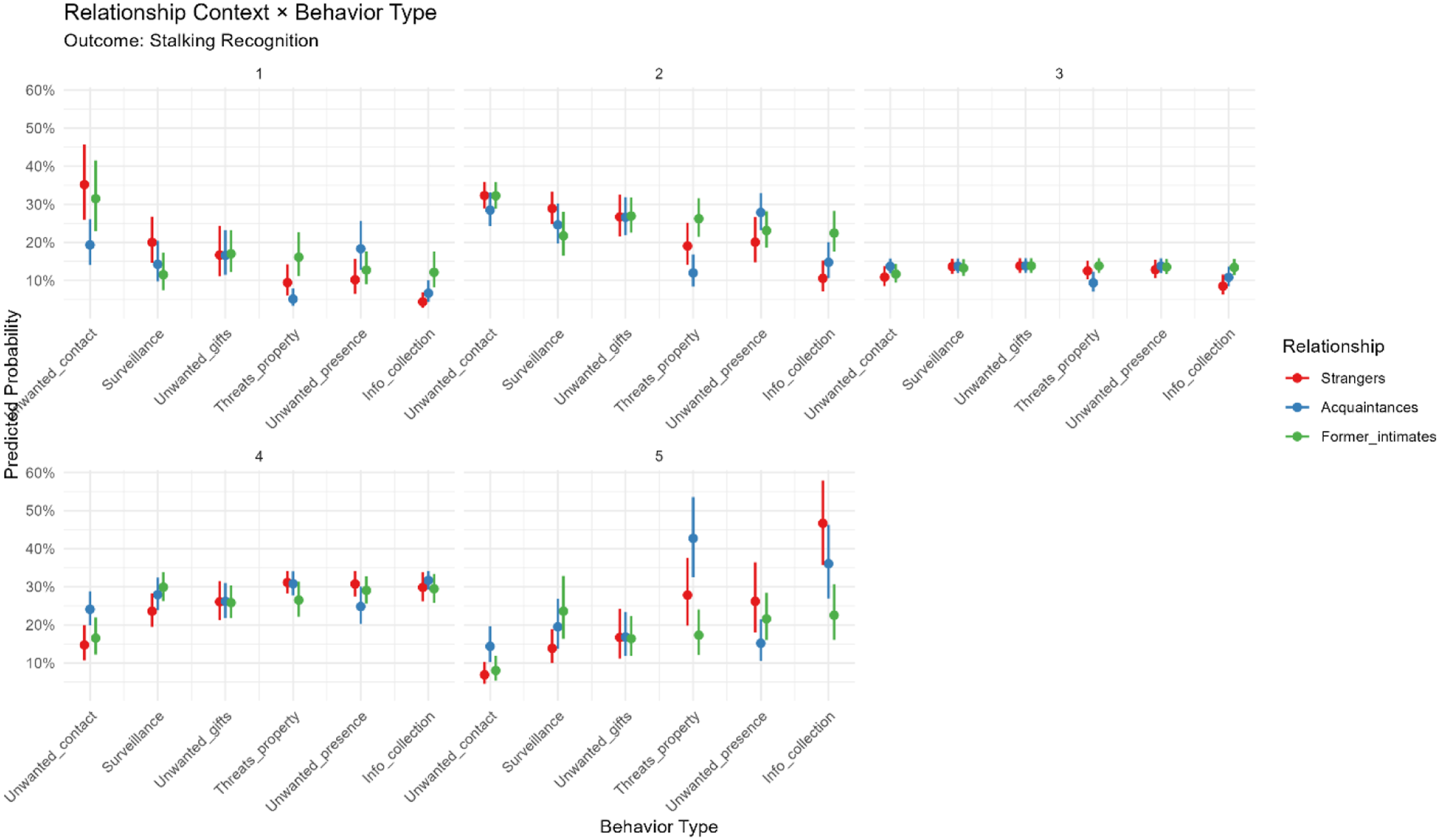
The interaction between relationship type and specific behavior categories was highly significant (LR χ2(10) = 50.55, p < .001), indicating that relationship context was associated with stalking recognition in different ways for different behaviors. Appendix Figure 4 illustrates this pattern: for more ambiguous behaviors such as unwanted contact and unwanted gifts, stranger scenarios elicited the highest recognition, whereas acquaintance and former-intimate scenarios showed lower recognition. For more severe behaviors—particularly information collection—former-intimate scenarios showed recognition levels comparable to or higher than stranger scenarios.
Overall, these results suggest that the combination of relationship context and specific behavior type matters for how scenarios are evaluated. Ambiguous behaviors from strangers tended to be rated as more serious than the same behaviors from acquaintances or former partners, whereas for severe behaviors, prior relationship to the perpetrator did not reduce perceived seriousness and in some cases coincided with higher recognition.
Romantic Ideals × Behavior Severity
Contrary to expectations, the interaction between romantic ideals and behavior severity was not significant (LR χ2(4) = 7.18, p = .127). Students endorsing romantic ideals showed lower stalking recognition across all behavior severity levels, with similar gaps between endorsement groups for ambiguous, moderate, and severe behaviors. In other words, lower recognition associated with stronger romantic ideals appeared relatively consistent across severity levels rather than concentrated in borderline or ambiguous cases.
Discussion
This study examined how Moscow university students understand stalking boundaries in a context of fragmented law and conflicting cultural narratives. Findings reveal systematic patterns in stalking recognition and normative evaluations shaped by gender, residential status, romantic ideals, and scenario characteristics.
Residential Context and Normalization
Contrary to expectations, dormitory residents demonstrated lower sensitivity to stalking—perceiving behaviors as less dangerous and less likely to warrant police intervention—despite theoretical vulnerability from proximity and age. This counter-intuitive pattern suggests that intensive shared living environments produce normalization rather than heightened awareness. Dormitory residents may develop shared interpretive norms that reframe legally problematic behaviors through tolerance and informal conflict resolution — though this interpretation remains speculative, as dormitory status was a respondent characteristic rather than an experimental manipulation (Durkheim & Gofman, 1990). However, causal claims are limited: dormitory status functions as a respondent characteristic rather than experimental manipulation, so selection effects or third variables (socioeconomic background, region) cannot be excluded. Qualitative and longitudinal research within dormitory communities could clarify how shared norms about boundaries emerge and shape threat perception.
Gendered Patterns in Stalking Perception
Gender consistently predicted how respondents recognized and evaluated stalking-like behaviors across all measures. Female respondents more readily recognized stalking, perceived greater danger, and supported police involvement, while identical male-perpetrator/female-victim scenarios triggered higher recognition than female-perpetrator/male-victim scenarios. These patterns likely reflect both differential victimization risk and gendered socialization about threat (Phillips et al., 2004). Such gender differences appear nearly universal: Moscow female students’ responses closely mirror findings from Malaysia (Chung & Sheridan, 2021), Hong Kong and mainland China (Chan & Sheridan, 2020), Japan (Chapman & Spitzberg, 2003), and Western contexts (Dunlap et al., 2012; Phillips et al., 2004; Scott et al., 2022), suggesting that gendered vulnerability transcends specific legal frameworks.
Relationship Context
Contrary to Western research showing ex-partner stalking is normalized, Moscow participants judged victims’ responses as most rational in former-intimate scenarios. This divergence may reflect distinctive Russian norms about post-relationship responsibility (Scott et al., 2022) or indicate that students rely on experiential knowledge suggesting former-partner contact often becomes problematic when comprehensive legal guidance is absent.
Romantic Ideals as Competing Frameworks
Students endorsing “Love as Destiny” or “Love as Work” beliefs demonstrated systematically lower recognition of stalking-like behaviors and evaluated them as less serious. Popular culture across Western and Russian contexts extensively romanticizes persistent pursuit despite rejection (Bachen & Illouz, 1996; Lippman, 2018; Spitzberg & Cadiz, 2002), creating interpretive frameworks that recast harassment as commitment. This cognitive reframing hinders recognition of behaviors as warranting formal intervention, rather than merely tolerating clearly recognized violations—a critical distinction for the effectiveness of legal protections.
Comparative Perspective and Implications
While gender effects appear universal, relational biases and specific recognition thresholds vary cross-culturally (Chan & Sheridan, 2020; Chapman & Spitzberg, 2003; Chung & Sheridan, 2021). Legal frameworks matter: countries with comprehensive anti-stalking statutes and sustained implementation show higher baseline recognition than contexts without such legislation. Russia occupies an intermediate position with fragmented legal provisions lacking unified statutory definition or public education campaigns, explaining intermediate levels of stalking recognition and perceived seriousness—higher than in contexts with no regulation at all but lower than in UK/US/Japan jurisdictions with established frameworks and enforcement. Russia’s combination of nascent law, modernized urban relationships, globalized media exposure, yet limited domestic discourse on gender-based violence and consent creates acute conflict between romantic and legal norms, making it instructive for understanding how public perceptions of stalking develop when law and culture misalign. These patterns likely extend to other contexts where media romanticization of persistence conflicts with emerging or absent anti-stalking legislation.
Consequence Type and Pragmatic Legal Reasoning
The observed differences in recognition and evaluation across consequence types reveal that Moscow students engage in pragmatic differentiation among harms. Financial consequences—while perceived as less immediately dangerous—prompted both higher stalking recognition and stronger support for police intervention than psychological or relocation-related harms. This pattern may reflect Russian legal culture’s emphasis on material, documentable losses over subjective psychological suffering. Monetary damages provide clear evidentiary standards (receipts, bank statements, quantifiable costs), whereas psychological harm requires expert testimony and subjective assessment, resources often unavailable to ordinary victims navigating fragmented legal provisions.
This finding has important policy implications. If recognition and perceived legitimacy of legal intervention are higher for tangible economic harms, public education campaigns and legal reforms should emphasize the economic costs of stalking (lost wages, relocation expenses, security investments) alongside psychological trauma. Framing stalking through an economic lens may resonate more effectively with both potential victims (recognizing behaviors as legally actionable) and legal authorities (prosecuting cases with clearer evidentiary foundations).
Gender Effects: Universal Frameworks, Not Ambiguity Heuristics
The interaction analyses challenge simplistic accounts of gender effects operating primarily through ambiguity. While we hypothesized that gender schemas would most powerfully shape recognition when behaviors were borderline (unwanted contact, gifts), results revealed persistent gender gaps across all severity levels. Female respondents and male-perpetrator scenarios elicited higher recognition and perceived seriousness for ambiguous, moderate, and severe behaviors, with gender gaps often widening rather than narrowing for objectively dangerous actions.
This pattern is consistent with the interpretation that gendered threat perception is shaped by broader, structurally embedded frameworks about vulnerability, power, and violence — rather than heuristics activated only when behavioral evidence is ambiguous. However, the correlational vignette design does not allow us to establish underlying mechanisms directly. Female students recognize stalking more readily not because they struggle to distinguish courtship from harassment in ambiguous cases, but because they apply a fundamentally different interpretive lens shaped by differential victimization risk and socialization about safety. Similarly, male perpetrators are perceived as more threatening across the behavioral spectrum because cultural narratives position men as potential aggressors and women as potential victims—schemas that intensify rather than dissipate when behaviors escalate.
These findings align with feminist legal theory’s emphasis on structural rather than situational gender effects (Ewick & Silbey, 1998). Gender does not merely “fill in gaps” when information is incomplete; it structures the entire process of legal recognition, from initial threat assessment through judgments about appropriate intervention.
Relationship Context: Contingent Rather Than Universal Normalization
The significant interaction between relationship type and behavior category complicates prior findings that former-intimate stalking is consistently normalized. The data reveal a pattern consistent with contingent normative evaluation: ambiguous behaviors by strangers elicited higher recognition than identical behaviors by acquaintances or ex-partners, but this pattern reversed for severe actions, where prior relationships heightened rather than diminished concern. Whether this reflects deliberate reasoning or implicit script application cannot be determined from the current design.
This contingency suggests that normalization operates selectively. Low-level intrusions (repeated messages, unwanted gifts) from former intimates may be interpreted through relational scripts emphasizing reconciliation or “unfinished business” (Scott et al., 2022), whereas equivalent behaviors by strangers lack benign explanations and thus appear more threatening. Severe behaviors—threats, information collection—exceed the bounds of acceptable relationship maintenance regardless of history, and prior intimacy may amplify danger recognition because perpetrators possess insider knowledge facilitating harm.
Limitations and Directions for Future Research
Several limitations of this study should be acknowledged, each suggesting directions for future research. The sample consists of students from a large Moscow university and therefore reflects young, urban, highly educated, relatively Westernized youth who are likely more exposed to global media and gender-based violence discourse than peers in other regions, institutions, or non-university populations. Perceptions and evaluations of stalking-like behaviors may differ by region, institution type, socioeconomic status, age, and ethno-linguistic background, so broader probability-based samples are needed to determine whether the patterns observed here extend beyond this specific student population.
The study also did not measure participants’ own experiences of stalking victimization or perpetration, despite evidence that women are more likely to experience stalking and that such experiences can shape threat perception and responses to harassment. Without these measures, it is impossible to determine whether gender differences reflect socialization, differential victimization, or both, so future research should incorporate validated victimization and perpetration instruments to test whether personal experience moderates gender, residential, and romantic-ideals effects.
In addition, the cross-sectional design captures perceptions at a single point in time and does not show how they evolve in response to legal reforms, enforcement practices, public debates, or life-course transitions. Longitudinal or repeated cross-sectional studies across periods of legal and cultural change, and across moves between family homes, dormitories, and independent living, would clarify whether patterns of stalking recognition and evaluation are stable or context-dependent and how law and culture co-evolve among urban, educated youth and other social groups.
The measurement of romantic ideals presents further limitations: the scale showed modest reliability and produced two factors (“Love as Destiny” and “Love as Work”) rather than a single construct, indicating that romantic beliefs are multidimensional. Future work should develop more robust multidimensional measures and combine them with qualitative interviews exploring how people distinguish romantic pursuit from harassment and when they see persistence as crossing into problematic behavior in different cultural and institutional contexts.
Finally, the vignette methodology and analytic strategy impose constraints. Vignettes, although well suited to studying how people classify and evaluate stalking-like behaviors, abstract from the emotional, embodied, and temporal dynamics of real situations and ask respondents to judge the experiences of strangers rather than themselves or close others. Combining experimental vignettes with qualitative interviews, ethnographic observation, and analysis of institutional materials (such as police reports or advocacy records), alongside more advanced modelling of interactions in multilevel frameworks, would provide a more ecologically valid and nuanced account of how individual characteristics, relationship contexts, behaviors, and romantic ideals jointly shape recognition and evaluation of stalking-like conduct in lived settings across diverse Russian populations.
Conclusion
This study examined how Moscow university students understand stalking in a context of fragmented law and romanticized cultural narratives. It revealed consistent gaps between comparative legal definitions of stalking and social recognition of harm, shaped by gender, residence in dormitories, romantic ideals, and specific scenario features such as perpetrator–victim gender combinations and action types. These patterns show that everyday perceptions often diverge from legal criteria: common stalking behaviors—repeated unwanted contact, surveillance, and gift-giving—are frequently reframed as courtship rather than harassment. Strengthening protection therefore requires not only clearer, comprehensive legislation and enforcement, but also cultural and educational efforts that challenge romanticized persistence and promote consent-based understandings of intimate behavior.
Footnotes

Ethical Considerations
The respondents provided written informed consents. The research was approved by the HSE University ethical commission.
Author Contributions
The authors equally contributed to the manuscript.
Funding
The authors received no financial support for the research, authorship, and/or publication of this article.
Declaration of Conflicting Interests
The authors declared no potential conflicts of interest with respect to the research, authorship, and/or publication of this article.
Data Availability Statement
The data that support the findings of this study are available from the corresponding author, upon reasonable request.
Author Biographies
Appendix
Vignette Factors and Levels Note. Factors represent independent variables systematically varied across vignettes to examine their influence on stalking recognition and evaluations of stalking-like behaviors. Full vignette texts in Russian are available from the authors upon request.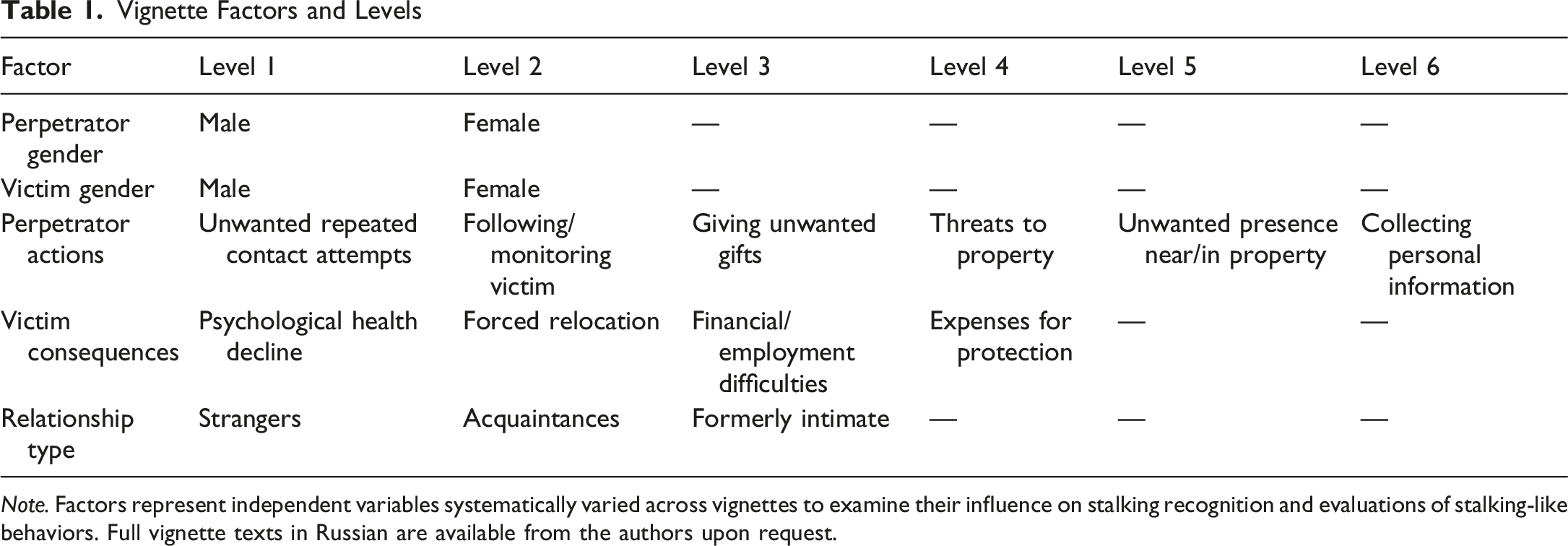
Factor
Level 1
Level 2
Level 3
Level 4
Level 5
Level 6
Perpetrator gender
Male
Female
---
---
---
---
Victim gender
Male
Female
---
---
---
---
Perpetrator actions
Unwanted repeated contact attempts
Following/monitoring victim
Giving unwanted gifts
Threats to property
Unwanted presence near/in property
Collecting personal information
Victim consequences
Psychological health decline
Forced relocation
Financial/employment difficulties
Expenses for protection
---
---
Relationship type
Strangers
Acquaintances
Formerly intimate
---
---
---
Residential Status and Stalking Evaluations: Mean Ranks Note. Differences significant at p < .005 (danger) and p < .015 (police involvement). Dormitory residents rated scenarios as less dangerous and less warranting police contact than non-dormitory students.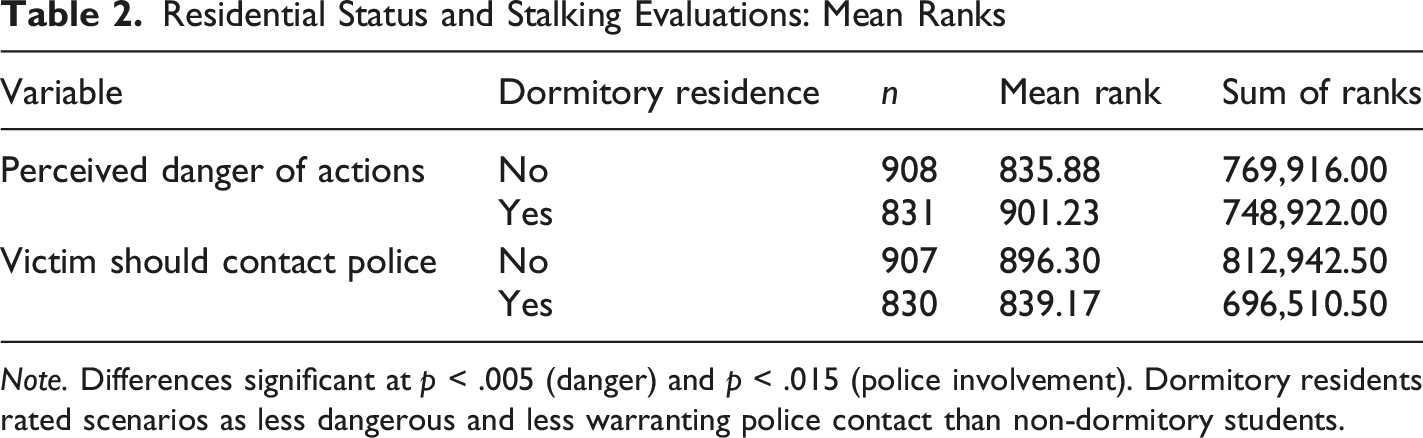
Variable
Dormitory residence
n
Mean rank
Sum of ranks
Perceived danger of actions
No
908
835.88
769,916.00
Yes
831
901.23
748,922.00
Victim should contact police
No
907
896.30
812,942.50
Yes
830
839.17
696,510.50
Gender and Stalking Evaluations: Mean Ranks for All Dependent Variables Note. All differences significant at p < .001, indicating systematically gendered patterns in stalking recognition and evaluation. Higher scores on Actions are dangerous indicate greater perceived danger.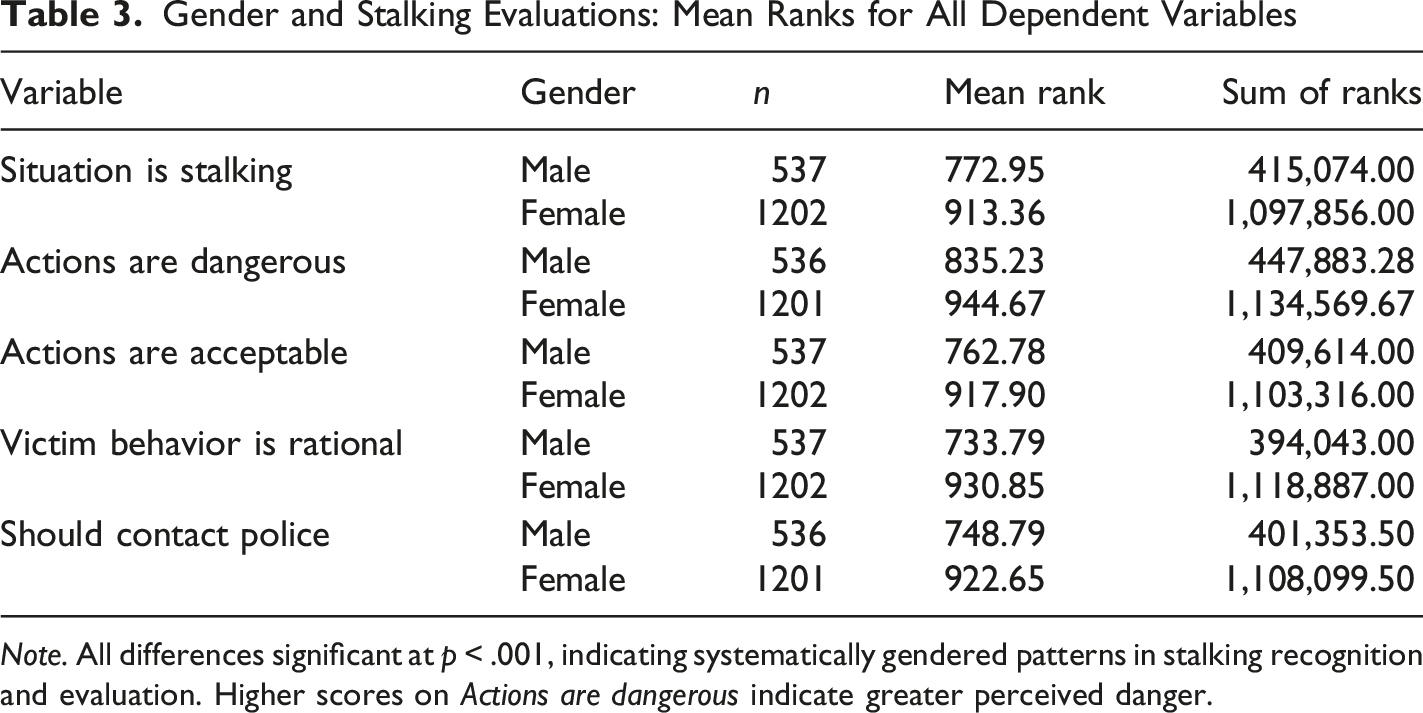
Variable
Gender
n
Mean rank
Sum of ranks
Situation is stalking
Male
537
772.95
415,074.00
Female
1202
913.36
1,097,856.00
Actions are dangerous
Male
536
835.23
447,883.28
Female
1201
944.67
1,134,569.67
Actions are acceptable
Male
537
762.78
409,614.00
Female
1202
917.90
1,103,316.00
Victim behavior is rational
Male
537
733.79
394,043.00
Female
1202
930.85
1,118,887.00
Should contact police
Male
536
748.79
401,353.50
Female
1201
922.65
1,108,099.50
Relationship Context and Victim Rationality Judgments Note. Difference significant at p = .012. Victims’ responses deemed most rational in former-intimate scenarios.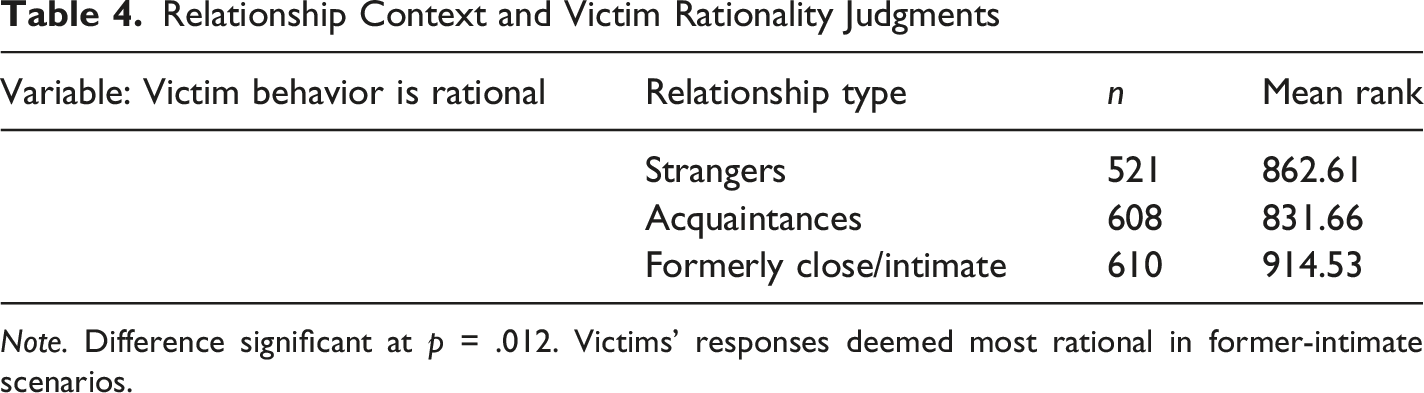
Variable: Victim behavior is rational
Relationship type
n
Mean rank
Strangers
521
862.61
Acquaintances
608
831.66
Formerly close/intimate
610
914.53
Scenario Gender Composition and Stalking Evaluations: Mean Ranks Note. All differences significant at p < .001. Male-perpetrator/female-victim scenarios consistently elicited higher stalking recognition and perceived danger.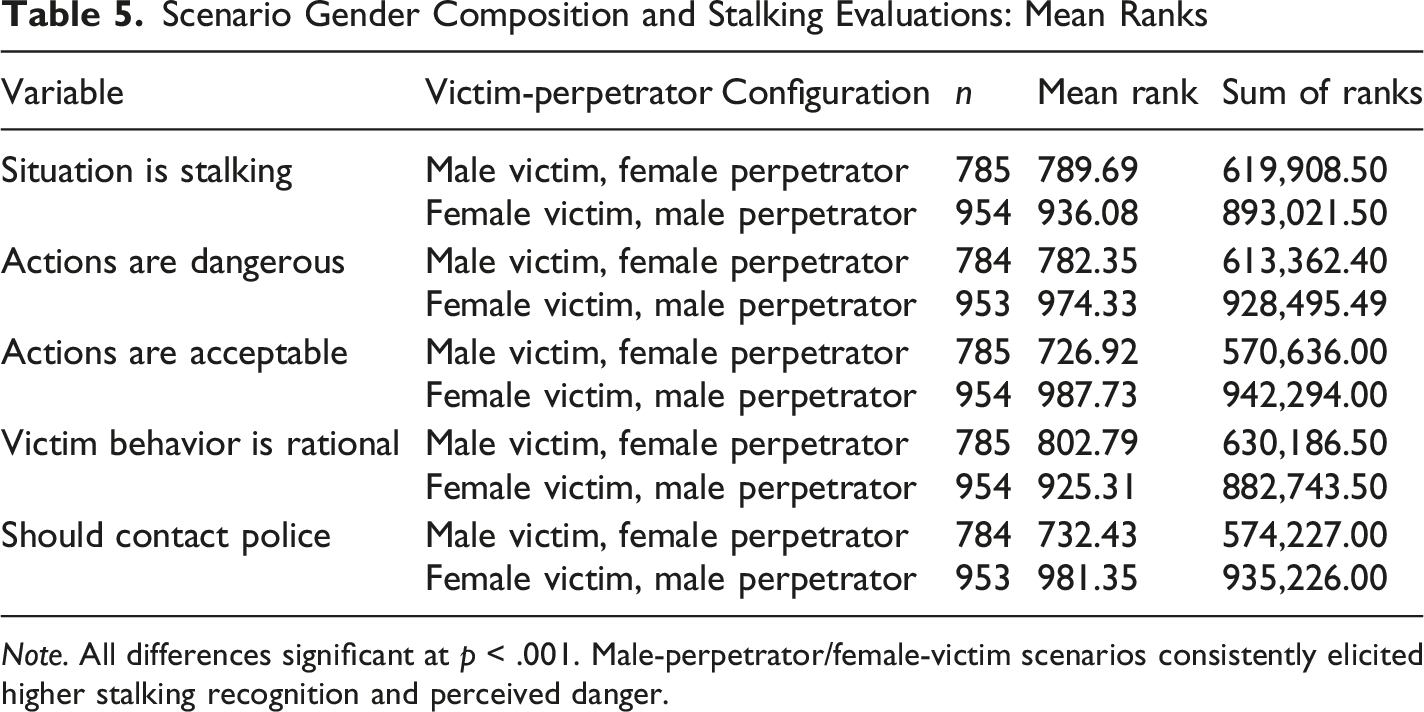
Variable
Victim-perpetrator Configuration
n
Mean rank
Sum of ranks
Situation is stalking
Male victim, female perpetrator
785
789.69
619,908.50
Female victim, male perpetrator
954
936.08
893,021.50
Actions are dangerous
Male victim, female perpetrator
784
782.35
613,362.40
Female victim, male perpetrator
953
974.33
928,495.49
Actions are acceptable
Male victim, female perpetrator
785
726.92
570,636.00
Female victim, male perpetrator
954
987.73
942,294.00
Victim behavior is rational
Male victim, female perpetrator
785
802.79
630,186.50
Female victim, male perpetrator
954
925.31
882,743.50
Should contact police
Male victim, female perpetrator
784
732.43
574,227.00
Female victim, male perpetrator
953
981.35
935,226.00
“Love as Destiny” Beliefs and Stalking Recognition Note. Higher scores indicate greater stalking recognition. Strong endorsement of destiny beliefs associated with lowest recognition.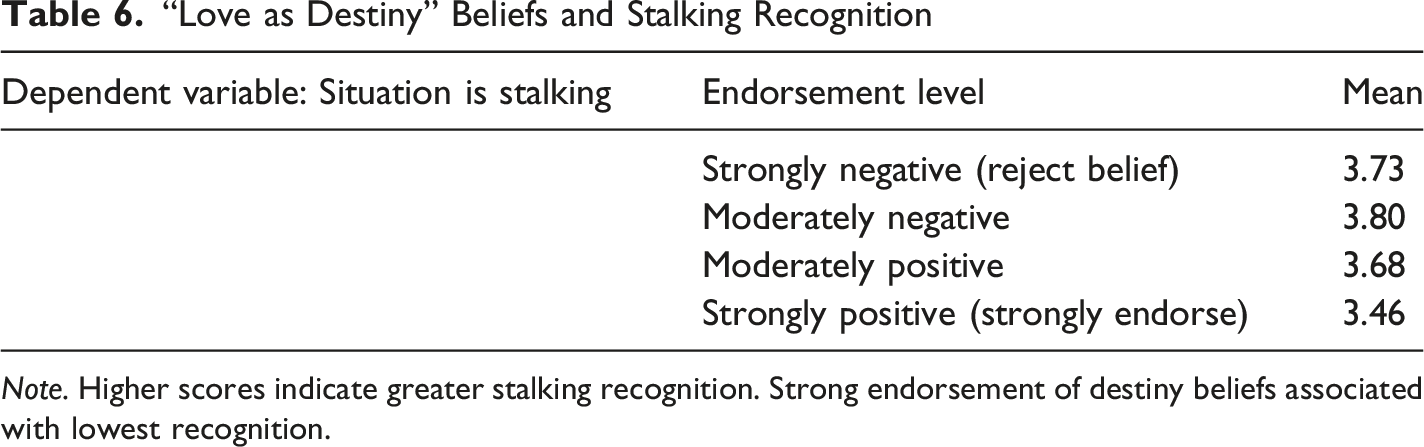
Dependent variable: Situation is stalking
Endorsement level
Mean
Strongly negative (reject belief)
3.73
Moderately negative
3.80
Moderately positive
3.68
Strongly positive (strongly endorse)
3.46
“Love as Work” Beliefs and Stalking Evaluations Note. Strong endorsement is consistently associated with lower recognition of stalking-like behaviors and weaker support for police involvement across measures. Higher scores on Actions are dangerous indicate greater perceived danger; lower values here (3.64) indicate perception of less danger.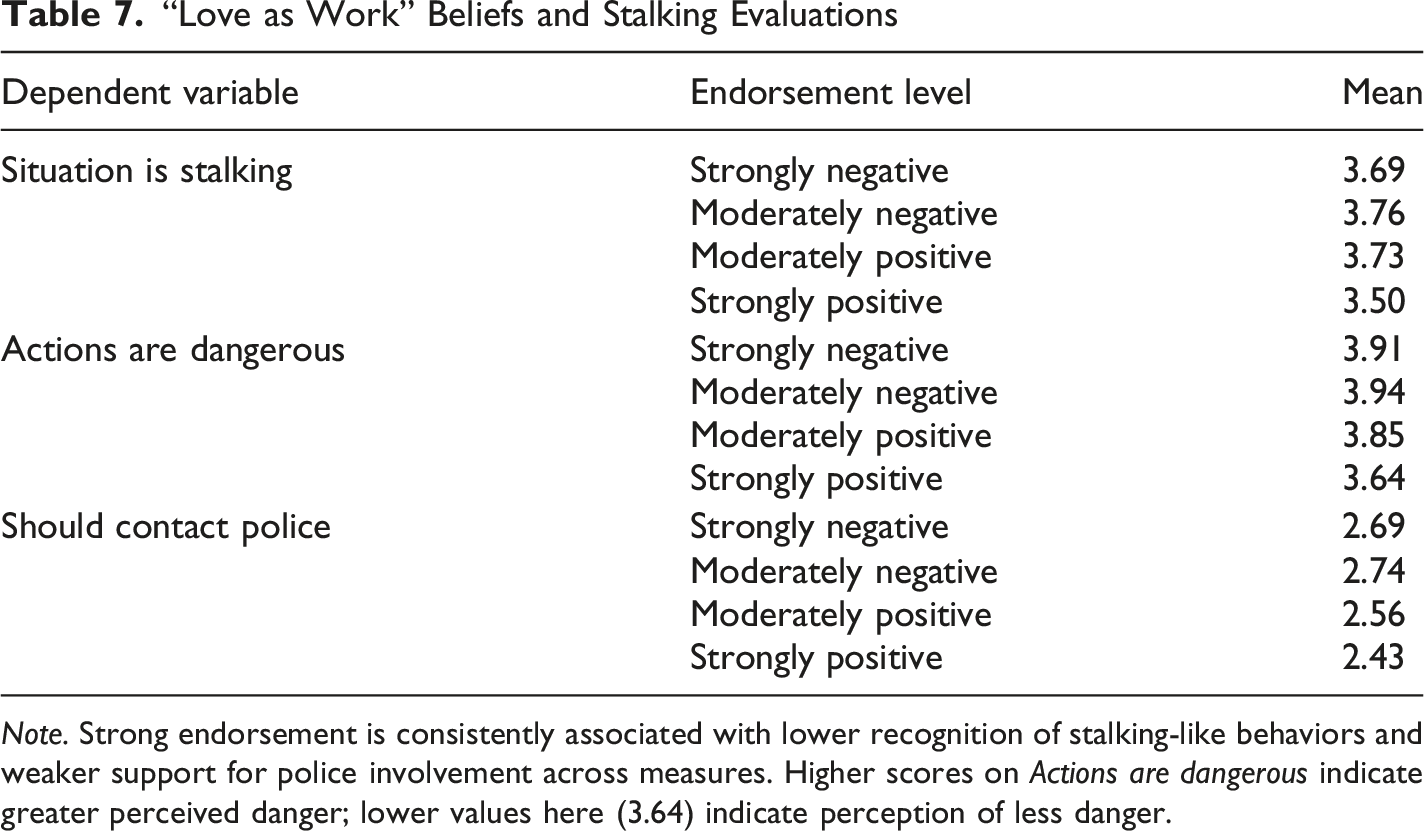
Dependent variable
Endorsement level
Mean
Situation is stalking
Strongly negative
3.69
Moderately negative
3.76
Moderately positive
3.73
Strongly positive
3.50
Actions are dangerous
Strongly negative
3.91
Moderately negative
3.94
Moderately positive
3.85
Strongly positive
3.64
Should contact police
Strongly negative
2.69
Moderately negative
2.74
Moderately positive
2.56
Strongly positive
2.43
Descriptive Statistics and Kruskal-Wallis Tests by Victim Consequence Type Note. Higher scores indicate stronger stalking recognition, greater acceptability, more rational victim responses, and stronger support for police involvement. For perceived danger, higher scores indicate greater perceived danger. p < .05. *p < .001.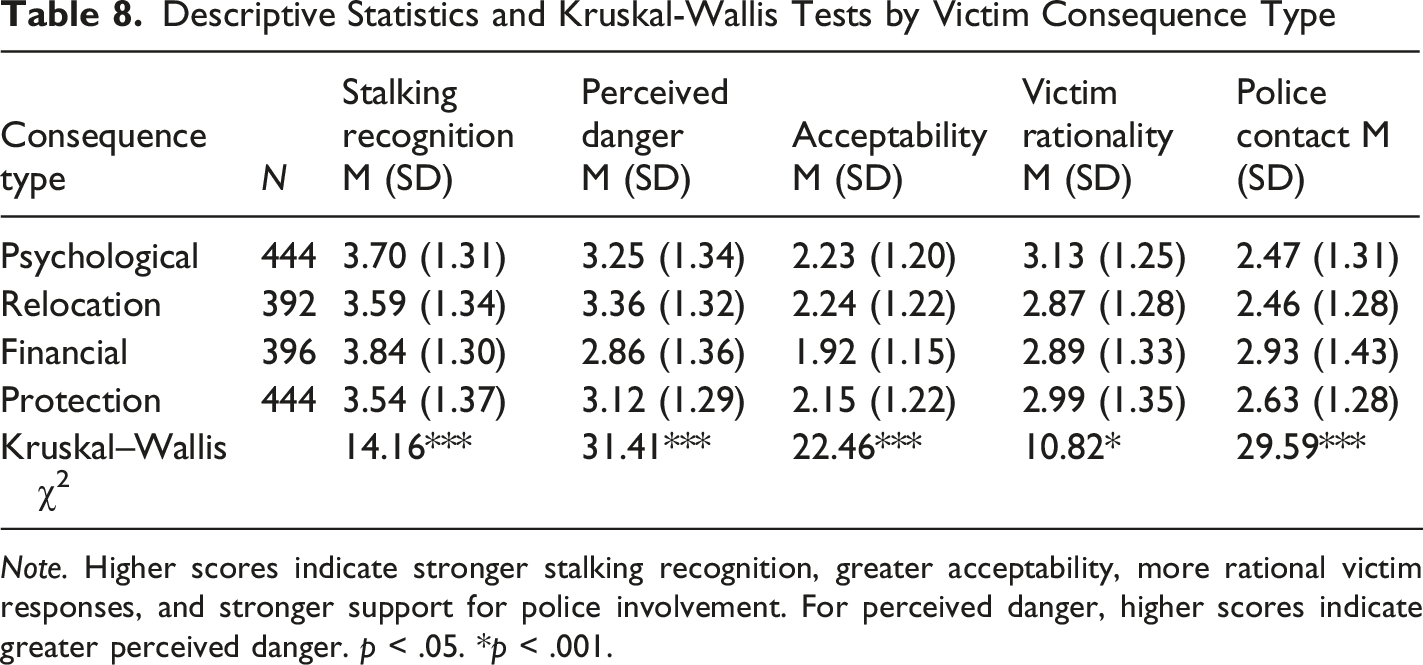
Consequence type
N
Stalking recognition M (SD)
Perceived danger M (SD)
Acceptability M (SD)
Victim rationality M (SD)
Police contact M (SD)
Psychological
444
3.70 (1.31)
3.25 (1.34)
2.23 (1.20)
3.13 (1.25)
2.47 (1.31)
Relocation
392
3.59 (1.34)
3.36 (1.32)
2.24 (1.22)
2.87 (1.28)
2.46 (1.28)
Financial
396
3.84 (1.30)
2.86 (1.36)
1.92 (1.15)
2.89 (1.33)
2.93 (1.43)
Protection
444
3.54 (1.37)
3.12 (1.29)
2.15 (1.22)
2.99 (1.35)
2.63 (1.28)
Kruskal–Wallis χ2
14.16***
31.41***
22.46***
10.82*
29.59***
Summary of Interaction Effects: Likelihood Ratio Tests Note. All models control for relevant covariates (gender, perpetrator gender, relationship type as appropriate). † p < .10. ** p < .01. *** p < .001.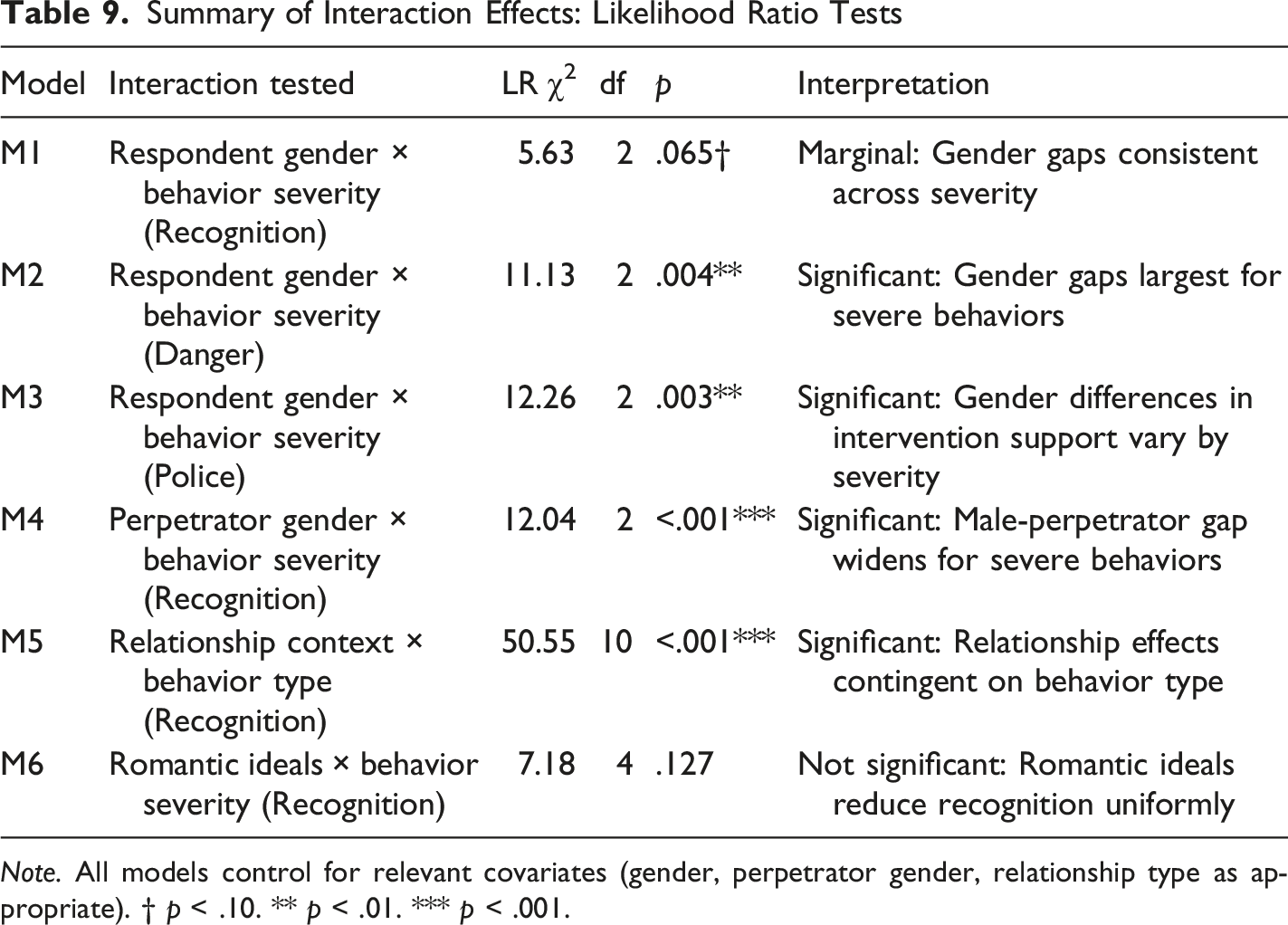
Model
Interaction tested
LR χ2
df
p
Interpretation
M1
Respondent gender × behavior severity (Recognition)
5.63
2
.065†
Marginal: Gender gaps consistent across severity
M2
Respondent gender × behavior severity (Danger)
11.13
2
.004**
Significant: Gender gaps largest for severe behaviors
M3
Respondent gender × behavior severity (Police)
12.26
2
.003**
Significant: Gender differences in intervention support vary by severity
M4
Perpetrator gender × behavior severity (Recognition)
12.04
2
<.001***
Significant: Male-perpetrator gap widens for severe behaviors
M5
Relationship context × behavior type (Recognition)
50.55
10
<.001***
Significant: Relationship effects contingent on behavior type
M6
Romantic ideals × behavior severity (Recognition)
7.18
4
.127
Not significant: Romantic ideals reduce recognition uniformly
Stalking Recognition and Evaluations by Victim Consequence Type. Note: Diamonds indicate means; boxes show medians and quartiles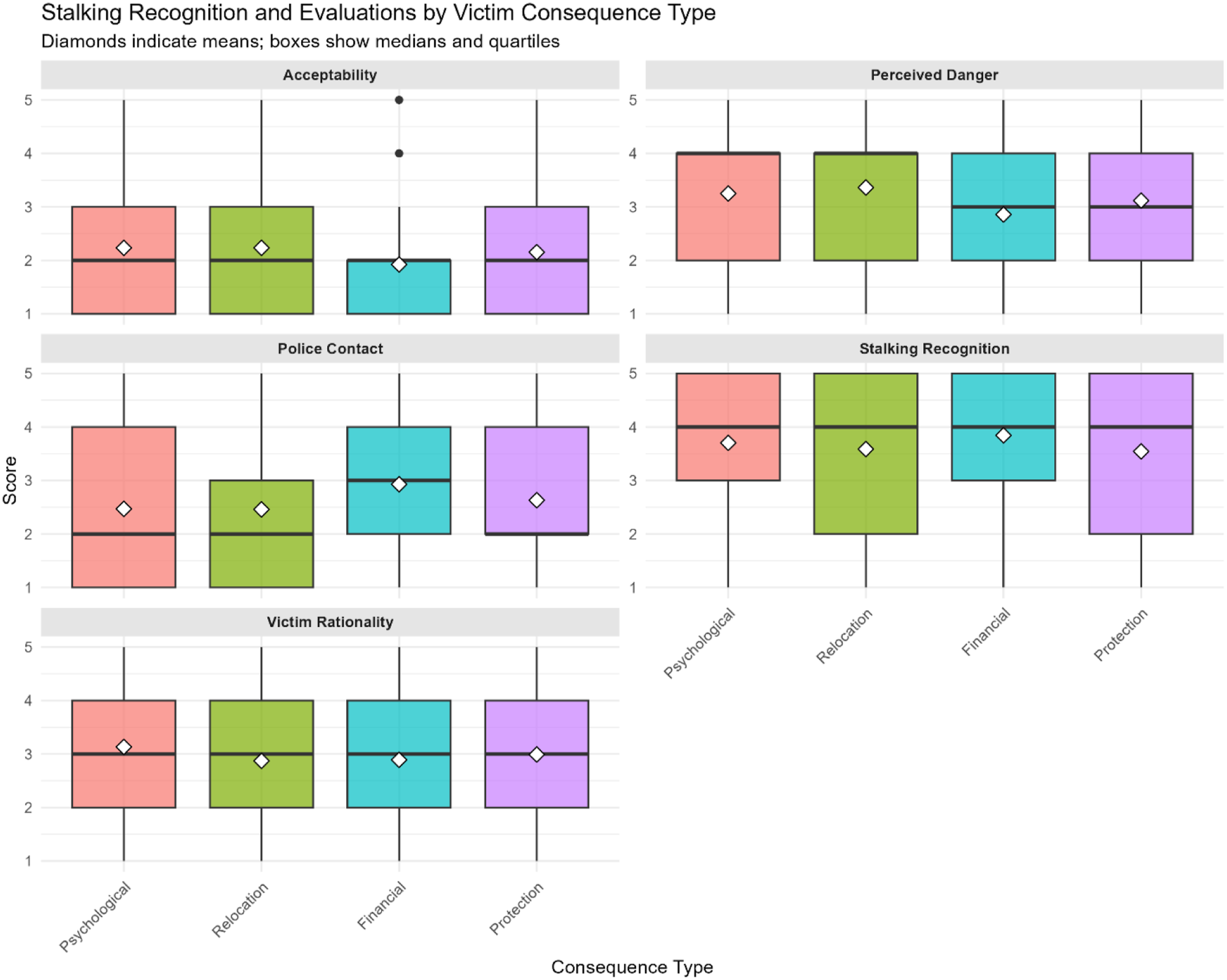
Respondent Gender × Behavior Severity Interaction Effect on Stalking Recognition. Note: Points represent predicted probabilities with 95% confidence intervals. Higher values indicate stronger stalking recognition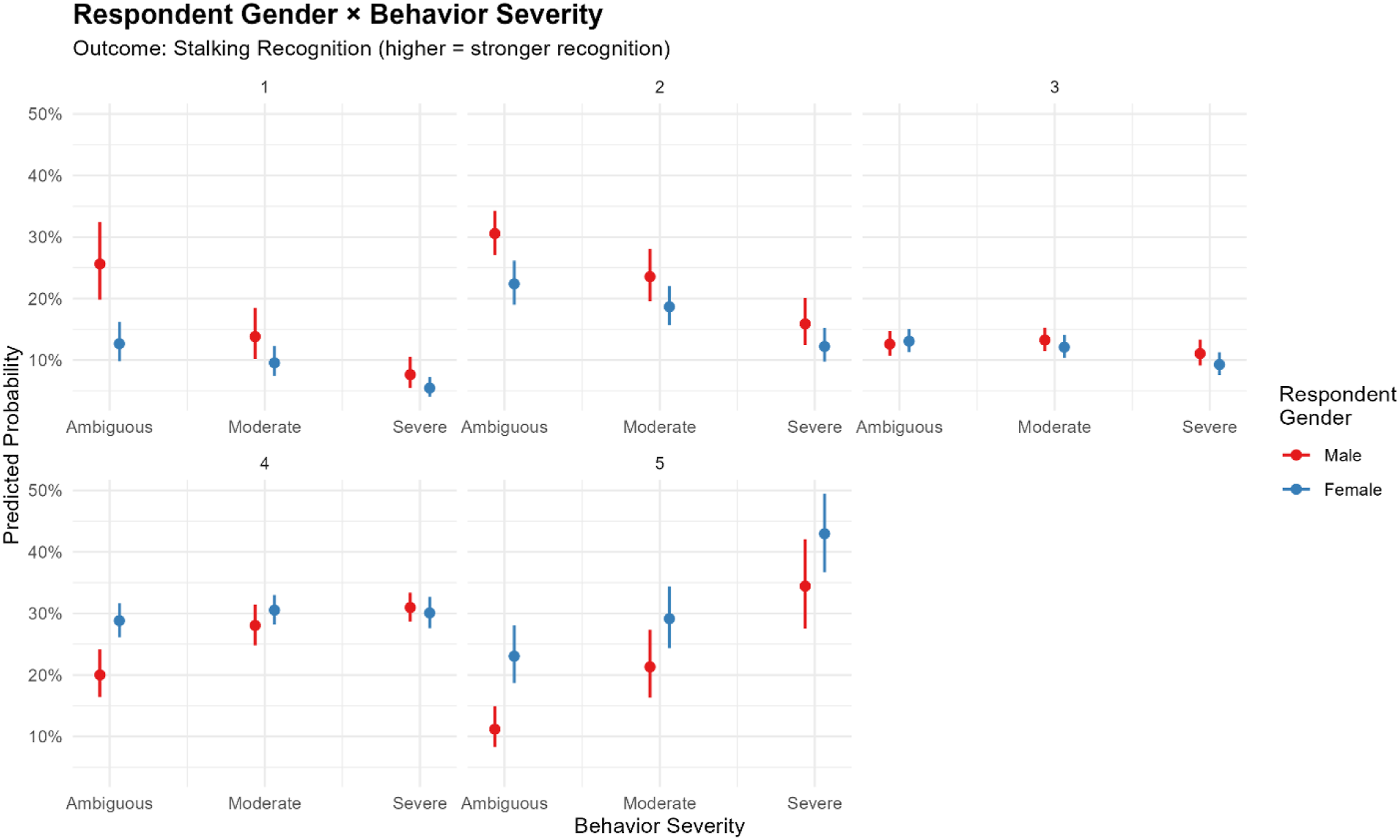
Perpetrator Gender × Behavior Severity Interaction Effect on Stalking Recognition. Note: Points represent predicted probabilities with 95% confidence intervals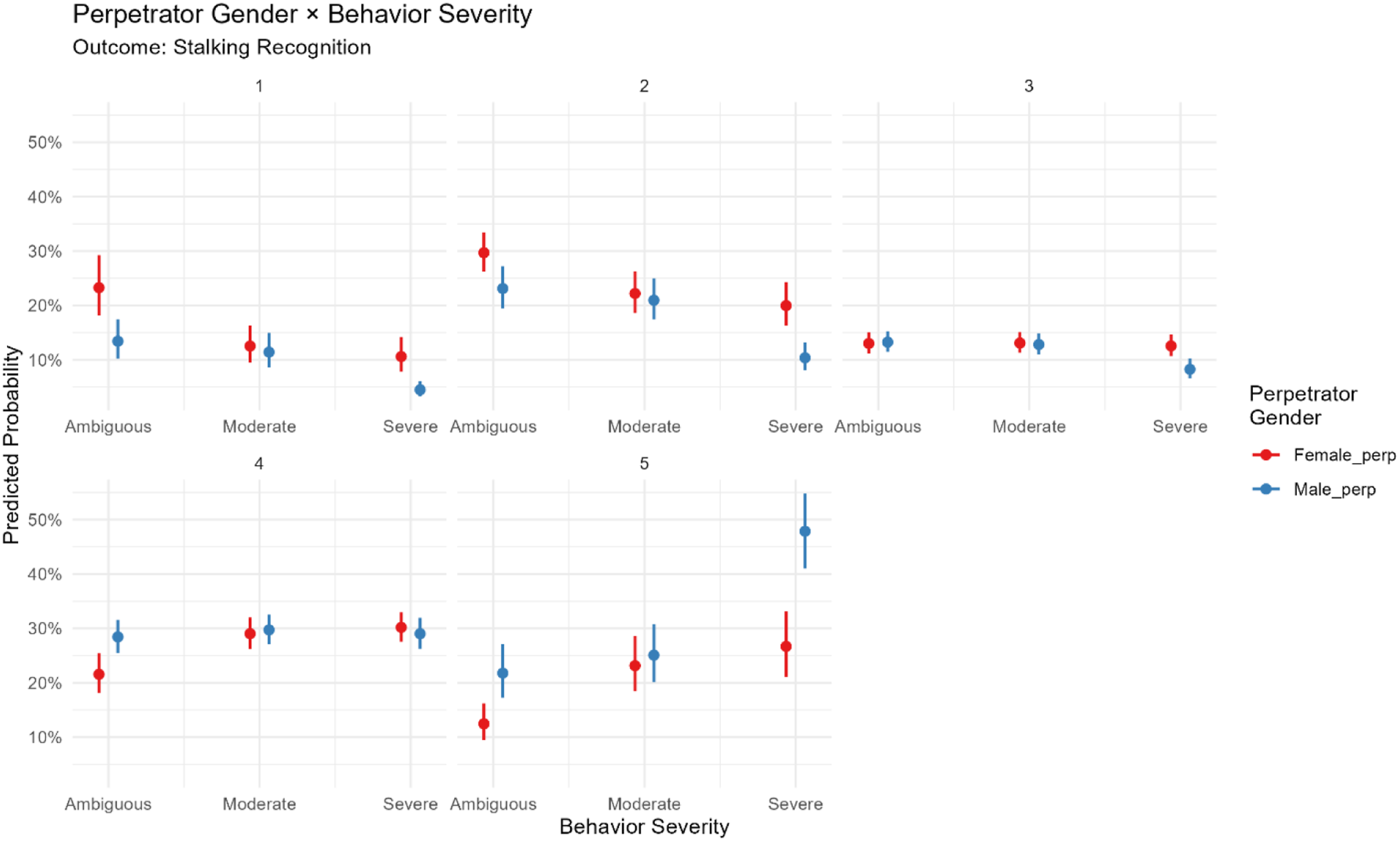
Relationship Context × Behavior Type Interaction Effect on Stalking Recognition. Note: Points represent predicted probabilities with 95% confidence intervals across all five ordinal response categories