






Abstract
Rotating biological contactors (RBCs) represent one of the most energy-efficient and robust attached-growth technologies for wastewater treatment. Over the past two decades, significant advancements have been achieved in RBC reactor design, disc materials, operational optimization, biofilm monitoring, and hybrid integrations with emerging treatment technologies. This review presents a comprehensive overview of the evolution of RBC systems, ranging from conventional disc-based aerobic reactors to advanced configurations integrated with bioelectrochemical systems such as microbial fuel cells (MFCs), microbial electrolysis cells, and rotating disc bioelectrochemical reactors. The review also discusses emerging RBC–microalgae systems for nutrient recovery, biomass valorization, and circular bioeconomy applications. Key operational and performance parameters, including chemical oxygen demand/biochemical oxygen demand removal, nitrification–denitrification, biofilm dynamics, energy consumption, hydrodynamic effects, and long-term process stability, are critically evaluated. Particular emphasis is placed on extracellular electron transfer mechanisms, electrode configurations, rotational hydrodynamics, and energy recovery in RBC–MFC hybrid systems. Recent developments in smart monitoring approaches, including optical coherence tomography, microscopy-based biofilm analysis, sensor-assisted monitoring, and intelligent process control strategies, are also reviewed for their potential to improve operational reliability and predictive maintenance. Furthermore, major operational challenges, such as biofilm sloughing, seasonal variability, mechanical stress, odor generation, corrosion, and scale-up limitations, are critically discussed. Future perspectives highlight the potential of advanced disc materials, conductive biofilm supports, smart monitoring systems, digital process optimization, and hybrid resource-recovery platforms for next-generation sustainable wastewater treatment. Overall, this review provides researchers and engineers with an updated understanding of modern RBC technologies and their growing role in energy-efficient, decentralized, and environmentally sustainable wastewater management.
Keywords
Introduction
The increasing pressure on global water resources, driven by rapid urbanization, industrial expansion, and population growth, has intensified the need for efficient and sustainable wastewater treatment technologies. Conventional biological treatment processes, particularly activated sludge systems, remain the most widely implemented technologies for municipal wastewater treatment because of their ability to achieve high removal efficiencies for organic matter and nutrients (Corominas et al., 2013; McCarty et al., 2011). However, these systems often require intensive aeration and complex operational control, leading to significant energy consumption and operational costs. Aeration processes alone may account for 50–60% of the total electricity consumption in biological wastewater treatment plants, making energy demand a major challenge in modern wastewater management (McCarty et al., 2011). As a result, there is increasing interest in treatment technologies that can maintain high treatment efficiency while reducing operational complexity and energy requirements.
Among attached-growth biological treatment technologies, rotating biological contactors (RBCs) have attracted considerable attention because of their relatively simple design, operational stability, and comparatively low energy demand (Hassard et al., 2015; Waqas et al., 2021a). RBC systems typically consist of a series of closely spaced discs mounted on a rotating shaft, with approximately half of each disc submerged in wastewater. As the discs rotate, microorganisms attach to the disc surfaces and form biofilms that alternately contact wastewater and atmospheric oxygen. This cyclic exposure facilitates microbial oxidation of organic pollutants and nutrients while enabling oxygen transfer without continuous mechanical aeration (Cortez et al., 2008; Waqas et al., 2023). Because of this operational principle, RBC systems have been successfully applied for the treatment of municipal wastewater, domestic sewage, and various industrial effluents, particularly in small- and medium-scale treatment facilities where operational simplicity and energy efficiency are essential.
The development of RBC technology began in the 1960s and gained significant attention during the 1970s, as an alternative fixed-film biological treatment process capable of achieving reliable organic removal with lower operational demands than conventional activated sludge systems (Rodgers and Zhan, 2003). Early investigations demonstrated that RBC reactors could effectively remove biochemical oxygen demand (BOD) and chemical oxygen demand (COD) while generating comparatively lower quantities of excess sludge (Cortez et al., 2008). The attached-growth configuration of RBCs enables microorganisms to develop as stable biofilms on rotating media surfaces, thereby supporting high biomass retention and resilient treatment performance under fluctuating hydraulic and organic loading conditions. Compared with suspended-growth biological treatment systems, RBC reactors offer several operational and environmental advantages, including reduced energy consumption, lower sludge production, compact reactor footprint, operational simplicity, and longer biomass retention time (Hassard et al., 2015; Waqas et al., 2021a). Oxygen transfer in RBCs occurs naturally through the periodic exposure of rotating biofilm-covered discs to atmospheric air, significantly reducing the need for energy-intensive mechanical aeration systems. These characteristics have made RBC systems particularly attractive for decentralized wastewater treatment systems and for applications, small- and medium-scale treatment facilities, and regions where operational simplicity and energy efficiency are important design considerations.
Despite these advantages, conventional RBC systems also face several operational and mechanical design challenges that may affect long-term performance and process stability. Problems such as excessive biofilm growth, uncontrolled biofilm sloughing, uneven biomass distribution, shaft and bearing deterioration, and sensitivity to hydraulic and organic loading fluctuations have been reported in both laboratory-scale and full-scale RBC installations (Rodgers and Zhan, 2003). In addition, increasingly stringent environmental regulations regarding nutrient removal, emerging contaminants, and energy efficiency have stimulated substantial research efforts aimed at improving RBC performance through reactor redesign, hybridization, and operational optimization. Several studies have demonstrated that operational parameters, including disc rotational speed, hydraulic retention time (HRT), organic loading rate (OLR), temperature, and disc submergence ratio, strongly influence biofilm development, oxygen transfer, mass transfer characteristics, substrate diffusion, and overall treatment efficiency (Cortez et al., 2008; Hassard et al., 2015). Consequently, optimization of these operational conditions is essential for maintaining stable biofilm activity and improving pollutant removal performance.
In recent years, significant progress has been achieved through the integration of RBCs with emerging wastewater treatment technologies. Hybrid systems combining RBC reactors with membrane filtration, anaerobic pretreatment, and bioelectrochemical technologies have demonstrated promising improvements in effluent quality, nutrient removal, and resource recovery (Logan and Rabaey, 2012; Waqas et al., 2021b).
For example, membrane-integrated RBC systems have shown improved effluent polishing and lower energy consumption compared with conventional membrane bioreactors (Waqas et al., 2021b). Similarly, the integration of microbial fuel cells (MFCs), microbial electrolysis cells (MECs), and rotating disc bioelectrochemical reactors (RDBERs) has created new opportunities for simultaneous wastewater treatment, electricity generation, hydrogen production, and resource recovery (Logan and Rabaey, 2012; Santoro et al., 2017).
Alongside technological integration, advances in computational modeling, process optimization, and intelligent monitoring have further enhanced the understanding and operational control of RBC systems. Computational approaches, such as computational fluid dynamics (CFD), response surface methodology, machine learning approaches, and digital monitoring tools, are increasingly being applied to evaluate hydrodynamics, optimize operational parameters, predict treatment performance, and improve long-term process stability under varying environmental conditions (Corominas et al., 2013; Tchobanoglous et al., 2014). Advanced monitoring techniques such as optical coherence tomography (OCT), sensor-assisted process control, and machine-vision analysis are also emerging as valuable tools for real-time biofilm assessment and predictive maintenance in next-generation RBC systems. These developments provide valuable tools for improving reactor design and operational strategies, enabling RBC systems to achieve higher treatment efficiencies while maintaining stable operation.
With these technological advancements, RBC systems are receiving renewed attention as sustainable, energy-efficient, and adaptable wastewater treatment technologies capable of addressing modern water management challenges. Advances in reactor design, hybrid system integration, and process optimization have significantly expanded the potential applications of RBC systems in wastewater treatment. Their ability to combine efficient pollutant removal with relatively low energy demand, operational simplicity, and potential resource recovery aligns well with the broader goals of circular economy and sustainable wastewater management. Therefore, this review aims to provide a comprehensive overview of recent advancements in RBC technology for enhanced wastewater treatment applications. Particular emphasis is placed on reactor design evolution, operational optimization, microbial ecology, bioelectrochemical integration, smart monitoring approaches, sustainability considerations, and emerging hybrid configurations. By synthesizing recent research developments, this review highlights the potential of modern RBC technologies to contribute toward more energy-efficient, resilient, and environmentally sustainable wastewater treatment systems.
Fundamentals of RBCs
Structure and components of RBC
RBCs are attached-growth biological treatment systems that remove pollutants through the combined action of microbial biofilms and controlled mechanical rotation. The core structure of an RBC consists of a series of closely spaced circular discs mounted on a horizontal rotating shaft, as illustrated in Figure 1. During operation, the shaft rotates slowly, typically within a range of ∼1–2 rpm, allowing the attached biofilm on the disc surfaces to alternately contact wastewater and atmospheric air. This intermittent exposure enables efficient oxygen transfer to the biofilm while simultaneously facilitating substrate uptake and biodegradation processes (Hassard et al., 2015). The rotating discs are generally manufactured from lightweight and corrosion-resistant materials such as high-density polyethylene (HDPE), polyvinyl chloride (PVC), and other durable polymeric materials. These materials are preferred because they provide high structural durability, resistance to chemical corrosion, and reduced mechanical loading on the drive assembly, thereby improving operational reliability and energy efficiency (Mba, 2003).
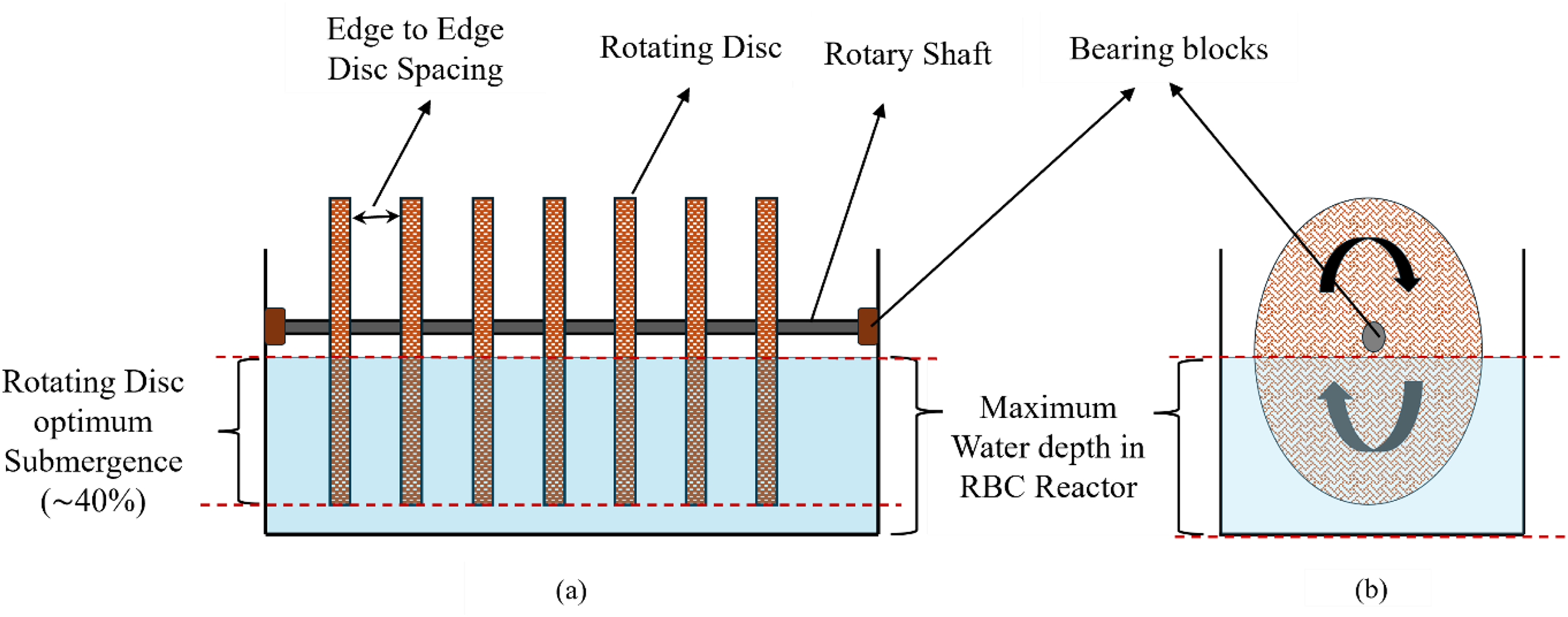
Typical RBC structure and components (side view
Each RBC reactor is commonly divided into multiple treatment stages using internal baffles or partition walls. These compartments help maintain plug-flow characteristics, reduce hydraulic short-circuiting, and support progressive pollutant removal along the reactor flow path. Multistage configurations allow sequential degradation of organic matter and nitrogenous compounds, with the initial stages primarily supporting carbon oxidation and downstream stages favoring nitrification and effluent polishing (Cortez et al., 2013). Typically, ∼35–45% of the total disc surface area remains submerged in wastewater during operation, with nearly 40% submergence considered optimal in most conventional RBC designs.(Waqas et al., 2023).
This balanced submergence ratio provides adequate wastewater contact for substrate diffusion while maintaining sufficient air exposure for oxygen transfer and biofilm aeration. The alternating aerobic and oxygen-limited microenvironments generated during disc rotation also promote simultaneous nitrification and denitrification processes within the biofilm matrix. The mechanical components of RBC systems generally include the rotating shaft, support bearings, drive motor, gearbox assembly, and structural support framework. The drive mechanism ensures continuous and stable disc rotation, while the support bearings maintain shaft alignment and reduce frictional resistance. Modern RBC systems increasingly incorporate corrosion-resistant materials, improved shaft designs, and energy-efficient motor systems to enhance operational stability and reduce long-term maintenance requirements (Mba, 2003). The shaft assembly acts as the central mechanical component, transmitting torque from a motor to the rotating media. The design must ensure uniform motion while resisting fatigue and corrosion. Earlier RBC systems often failed due to shaft fatigue and bearing misalignment, but modern configurations employ stainless-steel shafts and flexible couplings to mitigate mechanical stress (Mba, 2003). The housing tank, which is often made of reinforced concrete or fiberglass, supports the shaft bearings and ensures the correct submergence depth while facilitating hydraulic flow distribution (Mizyed, 2021). A three-stage RBC arrangement has been shown in Figure 2, which is connected using a geared motor with the help of a synchronous belt, and also a side view of three-stage RBC in Figure 3.
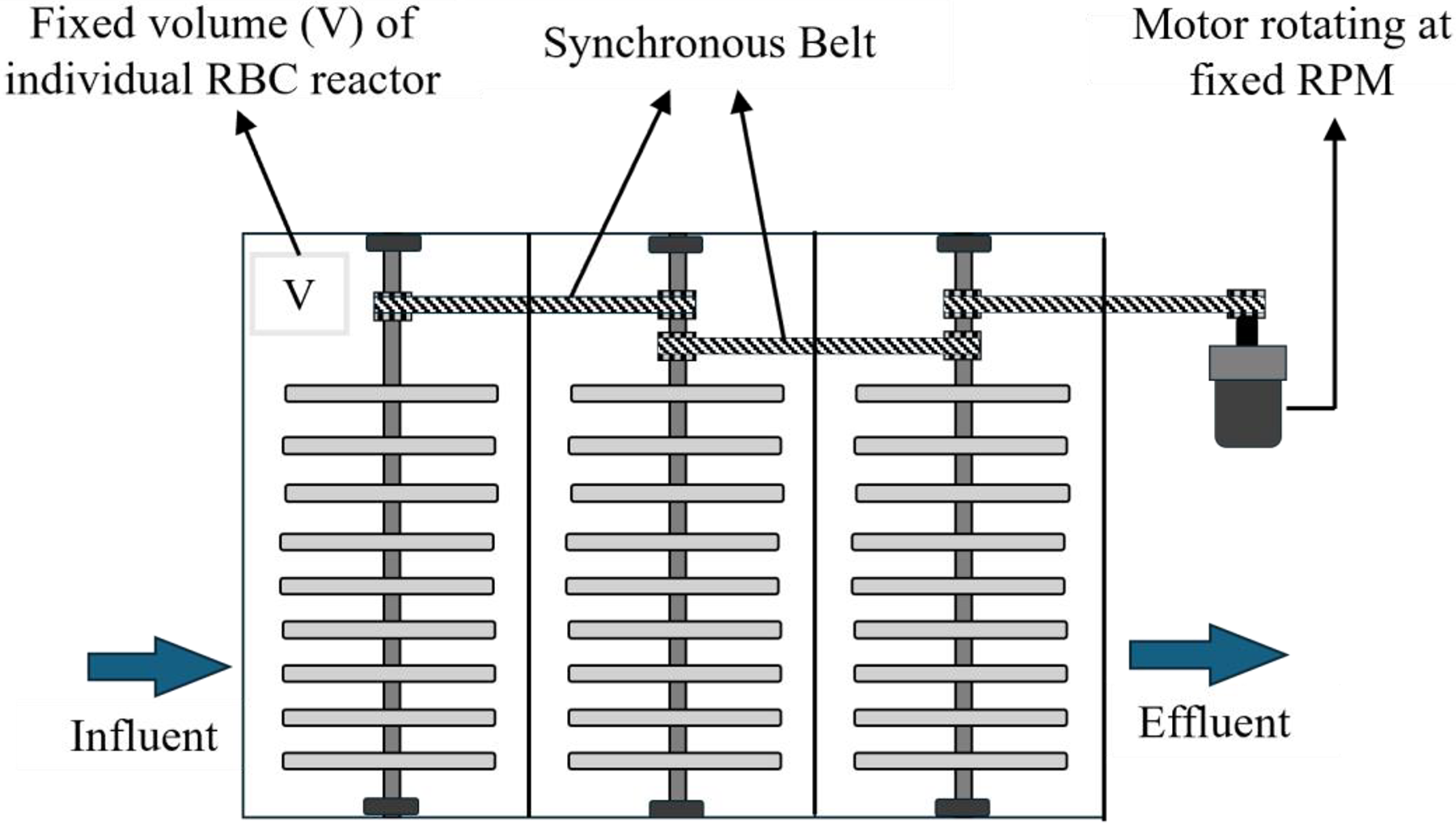
Top view of three-stage RBC arrangement operated by a single-geared motor through synchronous belts.
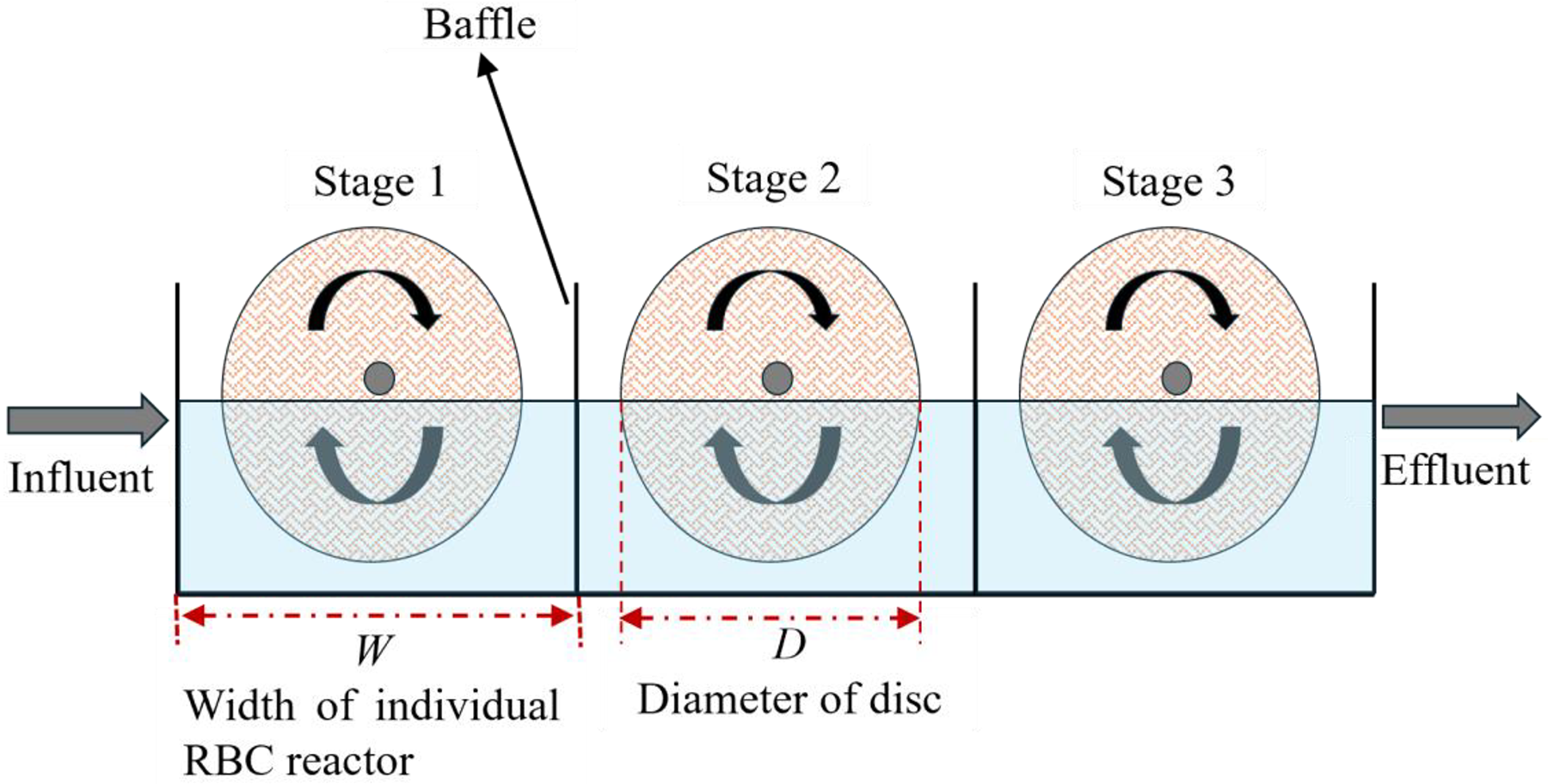
Side view of three-stage RBC rotating in clockwise direction.
The attached biofilm growing on the disc surfaces represents the biologically active component of the reactor. As wastewater flows through the staged compartments, organic pollutants and nutrients diffuse into the biofilm, where microbial communities carry out carbon oxidation, nitrification, denitrification, and other biochemical transformations. Excess biofilm is periodically removed through controlled sloughing, helping maintain active microbial layers and stable reactor performance. The simple mechanical design, efficient oxygen-transfer mechanism, compact reactor configuration, and stable attached-growth operation make RBC systems highly suitable for sustainable municipal and industrial wastewater treatment applications.
Mechanism of Biofilm Formation on Rotating Discs
The formation and maintenance of biofilm on rotating discs constitute the fundamental biological foundation of the RBC systems. Biofilm development is a dynamic and highly regulated process involving interactions among surface properties, microbial adhesion mechanisms, hydrodynamic conditions, nutrient availability, and microbial succession. The mechanism involves a complex interplay of surface chemistry, microbial ecology, and mechanical forces, resulting in a stable yet dynamic biofilm system capable of efficient pollutant removal. The resulting biofilm functions as the active biological layer responsible for organic matter degradation, nutrient removal, and overall wastewater treatment performance (Cortez et al., 2008).
Surface conditioning and initial attachment
Biofilm formation begins with the conditioning of the disc surface immediately after exposure to wastewater. During this stage, a thin conditioning film composed of organic and inorganic substances—including proteins, polysaccharides, lipids, humic compounds, and dissolved macromolecules—is rapidly adsorbed onto the polymeric disc material. This conditioning layer alters the physicochemical properties of the surface, including hydrophobicity, surface charge, and roughness, thereby creating a more favorable environment for microbial attachment. In the initial colonization phase, planktonic microorganisms suspended in the wastewater approach and reversibly attach to the conditioned disc surface through weak physicochemical interactions such as van der Waals forces, hydrophobic interactions, and electrostatic attraction. At this stage, microbial attachment remains relatively unstable and reversible. As colonization progresses, attached microorganisms begin producing extracellular polymeric substances (EPSs), which consist primarily of polysaccharides, proteins, lipids, and extracellular DNA. EPS functions as a structural matrix that firmly anchors microbial cells to the disc surface and facilitates irreversible attachment. The EPS matrix also enhances biofilm cohesion, protects microorganisms from environmental stress, and promotes nutrient retention within the biofilm structure (Cortez et al., 2008). The early microbial colonizers in RBC systems are typically fast-growing heterotrophic bacteria such as Pseudomonas and Bacillus species, which efficiently utilize readily biodegradable organic substrates present in the wastewater. These pioneer microorganisms rapidly establish the initial biofilm layer and modify local environmental conditions, thereby promoting subsequent microbial succession and development of more complex biofilm communities (Hassard et al., 2015). Disc material characteristics, including surface roughness, hydrophobicity, porosity, and mechanical stability, also significantly influence microbial attachment efficiency and early biofilm formation. Roughened or textured surfaces generally provide improved microbial adhesion and EPS retention compared with smooth polymeric surfaces. In addition, rotational hydrodynamics strongly affect the attachment process. Moderate rotational shear enhances nutrient transport and oxygen diffusion while preventing excessive biomass accumulation. However, excessive shear stress during early biofilm formation may inhibit stable microbial attachment and promote premature biomass detachment. The initial stages of biofilm development establish the structural and ecological foundation for mature RBC biofilms capable of supporting stable wastewater treatment processes under varying environmental and operational conditions.
Microcolony development and EPS matrix formation
Following stable initial attachment, microbial cells proliferate rapidly on the disc surface and begin forming structured microcolonies interconnected through an EPS matrix. This EPS matrix, composed primarily of polysaccharides, proteins, lipids, and extracellular nucleic acids, functions as both a structural scaffold and a protective biochemical barrier for the developing biofilm community. The matrix enhances microbial adhesion, maintains biofilm cohesion, and protects embedded microorganisms from hydrodynamic shear stress, toxic compounds, and environmental fluctuations. The continuous rotation of the RBC discs, typically within the range of 1–5 rpm, plays a crucial role in regulating biofilm development and activity. During each rotational cycle, the biofilm is alternately exposed to atmospheric air and wastewater, facilitating periodic oxygenation and nutrient uptake (Ravi et al., 2013). This alternating exposure significantly improves mass transfer, oxygen diffusion, and substrate transport within the biofilm matrix. As biofilm thickness increases, oxygen penetration becomes progressively limited in the deeper layers, leading to the formation of distinct redox gradients across the biofilm structure. The outer biofilm layers remain predominantly aerobic, supporting heterotrophic carbon oxidation and nitrification, whereas deeper oxygen-limited zones become anoxic or anaerobic, favoring denitrification and other reductive metabolic processes. This spatial stratification allows diverse microbial populations to coexist within the same biofilm, enabling simultaneous carbon oxidation, nitrification, and denitrification processes in RBC systems (Cortez et al., 2013). As the colonies grow, EPS production intensifies, increasing the biofilm’s cohesive strength and mechanical stability. With continued microbial growth, EPS production intensifies, increasing the mechanical strength, structural integrity, and stability of the biofilm. The EPS matrix also contributes to water retention, nutrient trapping, and protection against hydraulic and environmental disturbances. However, excessive biofilm growth may create diffusion limitations and unstable outer biomass layers. Hydrodynamic shear generated by disc rotation plays an important regulatory role in controlling biofilm thickness and maintaining active microbial surfaces. Moderate shear stress promotes compact and metabolically active biofilm structures, while controlled detachment of outer biofilm layers prevents excessive biomass accumulation and enhances substrate diffusion into deeper regions. Studies have shown that rotational shear contributes to the dynamic equilibrium between biofilm growth and detachment, thereby maintaining long-term reactor stability and treatment efficiency (von Rohr and Ruediger, 2001). Microcolony development and EPS matrix formation are essential for establishing structurally stable, metabolically diverse, and functionally resilient biofilms capable of sustaining efficient wastewater treatment in RBC systems.
Biofilm maturation
During the maturation stage, the biofilm develops into a complex, multilayered microbial structure with distinct structural and metabolic zones, as illustrated in Figure 4. As biofilm thickness increases, oxygen and substrate gradients become more pronounced, resulting in the spatial organization of microbial communities according to local environmental conditions. The outer biofilm layers, which are periodically exposed to atmospheric air during disc rotation, remain predominantly aerobic and are typically dominated by nitrifying microorganisms such as Nitrosomonas and Nitrobacter. These aerobic nitrifiers carry out the sequential oxidation of ammonia to nitrite and nitrate, contributing significantly to nitrogen removal within RBC systems. In contrast, the deeper biofilm layers experience lower oxygen penetration but retain higher concentrations of organic substrates, creating favorable conditions for heterotrophic denitrifying bacteria and fermentative microorganisms. These inner microbial populations utilize nitrate and organic carbon under oxygen-limited conditions, thereby sustaining denitrification and maintaining redox balance within the biofilm matrix (Waqas et al., 2021b). This vertical stratification significantly enhances RBC treatment performance by enabling simultaneous metabolic activities within a single attached-growth system. Oxygen diffuses inward from the biofilm surface exposed to air, while dissolved substrates and nutrients diffuse upward from the wastewater phase. As a result, aerobic carbon oxidation, nitrification, denitrification, and other microbial transformations can occur concurrently within different regions of the same biofilm structure (Hassard et al., 2015).
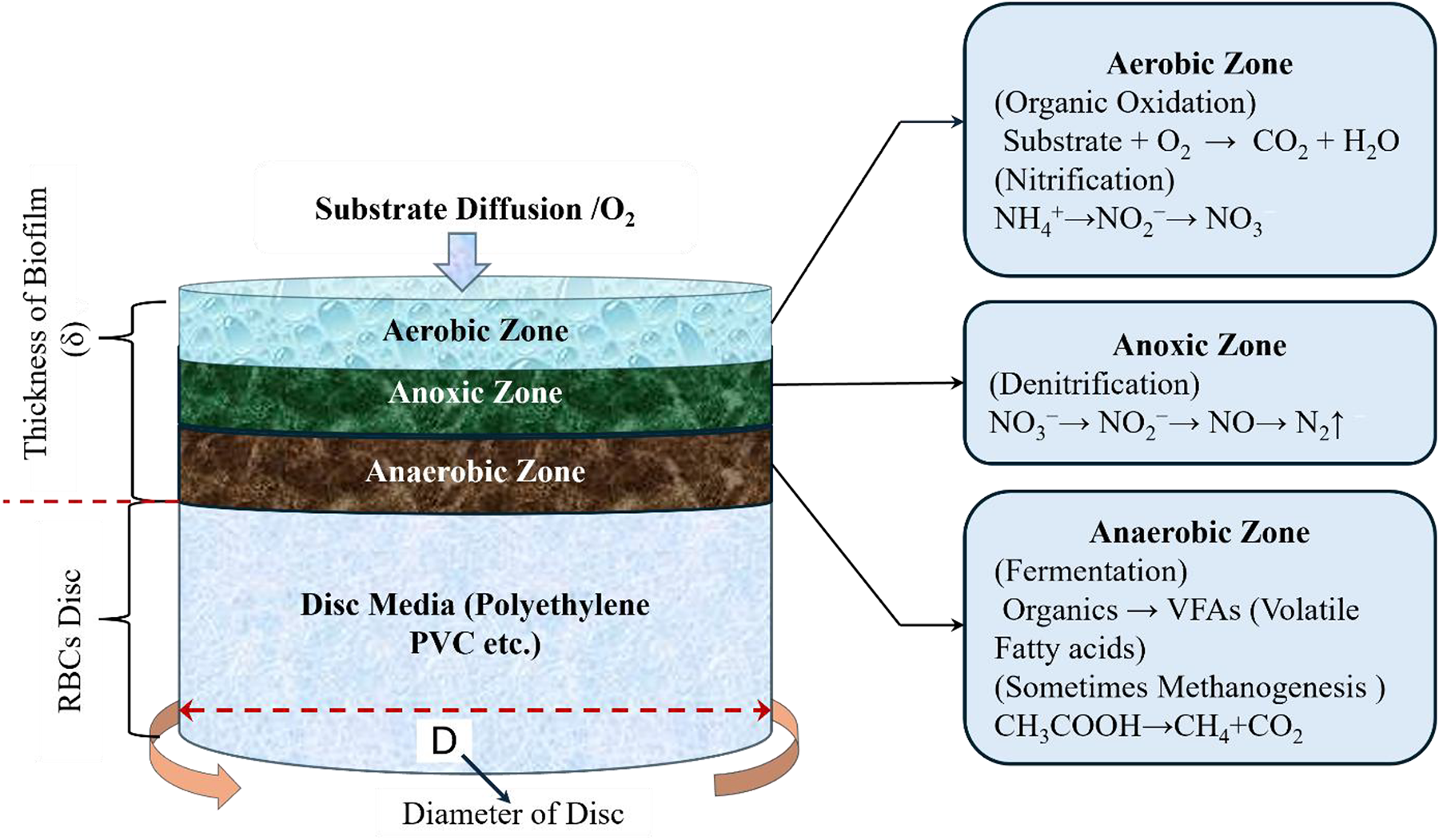
Stratified structure of biofilms with different zones developed on RBC discs.
Modern RBC designs increasingly optimize this natural stratification mechanism through multistage reactor configurations, controlled disc submergence ratio, and optimized rotational hydrodynamics. These design modifications strengthen redox zoning, improve substrate distribution, and enhance long-term treatment stability under fluctuating operational conditions. In addition, disc surface characteristics play an important role in mature biofilm development and stability. Surface microroughness, porosity, and engineered texturing improve microbial adhesion, EPS retention, and biofilm cohesion. Recent studies have shown that porous and microtextured disc materials promote denser and more shear-resistant biofilms with improved long-term structural integrity and enhanced treatment performance compared with smooth polymeric surfaces (Cheng et al., 2025). As biofilm maturation progresses, the system eventually reaches a dynamic equilibrium between microbial growth, substrate utilization, EPS production, and controlled biomass detachment. Maintaining this balance is essential for sustaining stable reactor performance, efficient mass transfer, and long-term operational reliability in RBC systems.
Biofilm detachment
The final stage of biofilm development in RBCs involves biofilm detachment, a dynamic process regulated by hydraulic shear forces, microbial decay, nutrient limitation, and internal biofilm instability. As the discs continuously rotate between wastewater and atmospheric air, shear stress generated at the air–liquid interface gradually erodes outer biofilm layers, periodically releasing excess biomass from the disc surface and exposing fresh surfaces for recolonization (von Rohr and Ruediger, 2001). The removal of biomass from the rotating disc surface under the influence of hydraulic shear is commonly referred to as sloughing. Controlled sloughing is an essential operational mechanism in RBC systems because it helps maintain an optimal steady-state biofilm thickness, preventing excessive biomass accumulation that could otherwise restrict oxygen diffusion, reduce substrate transport, and promote clogging or unstable reactor performance. Detached biofilm fragments often contain metabolically active microbial populations and are transported downstream within the reactor system. These biomass particles may continue contributing to residual organic matter degradation or participate in secondary biofilm development on downstream surfaces and compartments. The long-term stability of RBC systems depends on maintaining a balance between shear-induced biomass detachment and continuous microbial regrowth. This dynamic equilibrium sustains active biofilm surfaces and stable treatment performance over prolonged operational periods (Hassard et al., 2015). Several operational parameters strongly influence this balance, including disc rotational speed, hydraulic loading rate, submergence ratio, oxygen availability, and organic loading conditions. Excessive rotational shear may induce uncontrolled biomass loss, whereas insufficient shear may result in excessively thick and diffusion-limited biofilms (Cortez et al., 2013). Microbial self-regulation mechanisms also contribute to periodic biofilm renewal. Enzymatic degradation of the EPS matrix weakens internal biofilm cohesion over time, facilitating localized detachment and restructuring of the microbial community. Such controlled renewal processes help maintain biofilm metabolic activity and structural adaptability under changing environmental conditions. In addition, carrier surface characteristics significantly influence detachment behavior and recolonization dynamics. Studies have shown that roughened and microporous disc materials improve microbial retention by preserving a residual microbial layer following sloughing events. These retained microbial populations promote rapid recolonization, enhance biofilm recovery, and improve long-term biofilm stability compared with smooth polymeric surfaces (Cheng et al., 2025). The biofilm detachment represents a critical self-regulating mechanism that maintains active microbial surfaces, supports stable pollutant removal, and preserves long-term operational efficiency in RBC systems.
Mass Transfer, Oxygenation Dynamics, and Hydrodynamics
Mass transfer
The performance of RBC systems is fundamentally governed by mass transfer processes controlling the transport of substrates, oxygen, and metabolic products between the bulk liquid and the attached microbial biofilm. RBC reactors operate as gas–liquid–solid multiphase biofilm reactors, where discs partially submerged in wastewater rotate slowly, exposing the biofilm alternately to wastewater and atmospheric oxygen. This periodic exposure significantly enhances both substrate and oxygen transport compared with static biofilm systems, thereby improving microbial activity and pollutant removal efficiency (Hassard et al., 2015; Rodgers and Zhan, 2003; Waqas et al., 2021a).
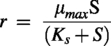
Substrate transport within RBC systems usually involves three sequential steps: (i) diffusion through the liquid boundary layer surrounding the biofilm, (ii) diffusion through the biofilm matrix, and (iii) microbial consumption within the biofilm. The mass flux of a substrate across the biofilm surface is commonly described by Fick’s first law of diffusion:

Oxygen transfer and aeration dynamics
Oxygen transfer plays a central role in RBC operation because aerobic microbial processes dominate the degradation of organic pollutants and ammonia. Unlike activated sludge systems that depend on mechanical aeration, RBC reactors rely on passive oxygen transfer facilitated by disc rotation and periodic air exposure (Hassard et al., 2015; Rodgers and Zhan, 2003). As discs rotate out of the wastewater, the thin liquid film covering the biofilm is exposed to atmospheric oxygen, enabling rapid gas–liquid mass transfer before the disc re-enters the wastewater.
The oxygen transfer rate is commonly described using the volumetric oxygen transfer coefficient kLa:
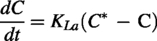
The thickness of the liquid film formed on rotating discs significantly influences oxygen diffusion. Thinner liquid films reduce diffusion resistance and improve oxygen transfer efficiency. Empirical correlations have been proposed to estimate oxygen transfer in RBC reactors, often expressed in terms of rotational velocity and hydrodynamic parameters (Chavan and Mukherji, 2008). Studies have reported that increasing disc rotational speed within typical operating ranges of 3–10 rpm enhances oxygen transfer due to improved turbulence and surface renewal, although excessively high speeds may increase biofilm shear stress and cause biofilm detachment (Cortez et al., 2008; Di Palma and Verdone, 2009).
Hydrodynamic characteristics and dimensionless analysis
Hydrodynamic behavior in RBC reactors majorly influences mass transfer rates, biofilm stability, and overall treatment efficiency. The rotation of discs generates complex flow patterns characterized by liquid film formation on the rotating surfaces, periodic renewal of the liquid boundary layer, and turbulence near the air–water interface (Chavan and Mukherji, 2008; Rodgers and Zhan, 2003). These hydrodynamic effects reduce diffusion resistance and improve both substrate and oxygen transport. Hydrodynamic conditions in RBC systems are often described using dimensionless numbers that relate rotational motion to mass transfer processes. The Reynolds number describes the degree of turbulence generated by disc rotation:


These dimensionless parameters are frequently used in empirical correlations for predicting oxygen transfer and mass transfer rates in RBC reactors (Chavan and Mukherji, 2008). The interaction between hydrodynamic forces and microbial biofilms plays a key role in determining RBC performance. Disc rotation generates shear forces that control biofilm thickness and structure, thereby influencing both mass transfer and microbial activity. Moderate hydrodynamic shear helps maintain a thin, active biofilm that promotes efficient substrate diffusion and oxygen penetration, whereas excessive shear may cause biofilm sloughing and biomass loss (Hassard et al., 2015; Waqas et al., 2021a). Conversely, insufficient shear may result in excessively thick biofilms that limit oxygen penetration and reduce treatment efficiency. The efficiency of RBC systems arises from the coupled interaction of hydrodynamic mixing, oxygen transfer, and biofilm microbial kinetics. The rotating disc configuration simultaneously enhances mass transfer, regulates biofilm thickness, and promotes stable microbial activity, allowing RBC systems to achieve effective pollutant removal while maintaining relatively low energy consumption compared with aeration-intensive biological treatment processes (Hassard et al., 2015; Rodgers and Zhan, 2003; Waqas et al., 2021a).
Advantages of RBCs over Conventional Wastewater Treatment System
The RBCs are recognized as a reliable and energy-efficient alternative to conventional suspended-growth wastewater treatment systems such as the activated sludge process (ASP). In activated sludge systems, microbial biomass remains suspended within the wastewater and requires continuous mechanical aeration and sludge recirculation to maintain biological activity and treatment efficiency. In contrast, RBCs operate through an attached-growth mechanism in which microorganisms develop as stable biofilms on rotating disc surfaces. The rotating-disc configuration enables periodic exposure of the biofilm to both wastewater and atmospheric air, naturally facilitating oxygen transfer and nutrient uptake without the need for intensive aeration equipment. This alternating air–water contact enhances mass transfer efficiency while significantly reducing operational energy demand. The attached biofilm structure also provides high biomass retention and protects microbial communities from hydraulic washout, resulting in improved treatment stability under fluctuating hydraulic and organic loading conditions (Cortez et al., 2013; Patwardhan, 2003). Compared with conventional activated sludge systems, RBCs offer several operational advantages, including lower energy consumption, reduced sludge production, simpler operation and maintenance, compact reactor configuration, and improved resilience to shock loading. Since oxygen transfer occurs primarily through disc rotation rather than forced aeration, RBC systems generally require substantially lower electrical energy input than aeration-intensive suspended-growth systems. In addition, the attached-growth biofilm configuration enables longer biomass retention times and supports the development of specialized microbial communities involved in carbon oxidation, nitrification, and denitrification. The stratified biofilm structure further promotes simultaneous aerobic and anoxic metabolic processes within a single reactor system, improving nutrient-removal efficiency without requiring multiple treatment units. RBC systems also exhibit lower sludge yield compared with ASPs because attached microbial communities generally produce less excess biomass. This reduces sludge handling, transportation, and disposal requirements, thereby lowering operational and environmental costs. Another important advantage of RBC system is its operational simplicity and reduced process-control complexity. RBCs typically require minimal operator intervention, making them particularly suitable for decentralized wastewater treatment facilities, small communities, rural applications, and industrial installations with limited technical infrastructure. Furthermore, modern RBC configurations can be integrated with membrane systems, bioelectrochemical reactors, and intelligent monitoring technologies to further enhance treatment efficiency, energy recovery, and sustainability. These characteristics position RBCs as promising technologies for next-generation low-energy and resource-efficient wastewater treatment applications. The combination of stable attached-growth operation, low energy demand, operational simplicity, compact reactor configuration, and adaptability makes RBC systems highly attractive alternatives to conventional wastewater treatment technologies. In addition, their ability to achieve efficient organic matter and nutrient removal with comparatively lower operational and maintenance requirements has increased their applicability in both municipal and industrial wastewater treatment sectors. Owing to these advantages, RBC systems have received renewed attention as sustainable and cost-effective treatment technologies suitable for decentralized and energy-conscious wastewater management applications. Some of the major advantages of RBCs over conventional wastewater treatment systems are discussed in detail in the following sections.
Energy efficiency
Low energy demand is one of the most significant advantages of RBCs compared with conventional wastewater treatment technologies. In RBC systems, oxygen transfer occurs naturally through the periodic exposure of rotating biofilm-covered discs to atmospheric air, thereby eliminating the need for separate energy-intensive mechanical aeration systems commonly required in ASP. This passive aeration mechanism substantially reduces electricity consumption while maintaining efficient biological treatment performance. In addition to lower energy requirements, the simplified operational design of RBCs contributes to improved process reliability and reduced operational complexity. Since RBC systems do not require continuous aeration control, sludge recirculation, or intensive mechanical mixing, they generally operate with minimal operator intervention and maintenance requirements. The attached-growth biofilm configuration also enhances treatment stability under fluctuating hydraulic and organic loading conditions by preventing biomass washout and maintaining stable microbial activity (Cortez et al., 2013; Hassard et al., 2015). Comparative assessments further highlight the energy-saving potential of RBC systems. According to a study by Upton et al. (1995), RBCs demonstrated ∼35% lower power consumption than trickling filter systems when evaluated on a population equivalent basis per year. The reduced energy demand associated with RBC operation contributes not only to lower operational costs but also to reduced greenhouse gas emissions and improved environmental sustainability. Because of these advantages, RBC systems are increasingly considered suitable for decentralized wastewater treatment, small- and medium-scale treatment facilities, and energy-conscious wastewater management applications where operational simplicity and low electricity consumption are critical considerations.
Enhanced microbial stability and retention
One of the major advantages of RBCs is their ability to maintain stable and highly retained microbial communities through the attached-growth biofilm mechanism. In RBC systems, microorganisms remain immobilized within biofilms attached to the rotating disc surfaces, resulting in significantly longer sludge retention times compared with conventional suspended-growth systems such as the ASP. The extended biomass retention time allows both slow-growing autotrophic microorganisms, including nitrifying bacteria, and fast-growing heterotrophic microorganisms to coexist within the same biofilm structure. This microbial diversity supports simultaneous carbon oxidation, nitrification, and partial denitrification processes within a single reactor system, thereby improving overall treatment efficiency (Waqas et al., 2023). In contrast, suspended-growth systems are more susceptible to biomass washout, particularly under high hydraulic loading conditions or flow fluctuations. Slow-growing nitrifiers are especially vulnerable in activated sludge systems because insufficient sludge retention times can limit their stable establishment and reduce nitrification performance. The attached-growth configuration of RBCs minimizes this problem by physically retaining microorganisms on the disc surfaces, even under variable hydraulic conditions. The stable biofilm architecture also improves process resilience during shock loading events, temperature fluctuations, and transient changes in influent composition. The EPS matrix surrounding the microbial community provides additional protection against environmental stress and toxic compounds, helping preserve microbial activity under adverse operational conditions (Tsagkari et al., 2022). Furthermore, the stratified biofilm structure within RBCs supports the development of distinct aerobic, facultative, and anoxic microzones, enhancing functional redundancy and improving treatment stability over prolonged operational periods. These characteristics contribute to more reliable wastewater treatment performance with lower sensitivity to operational disturbances compared with conventional suspended-growth systems. The enhanced microbial retention and biofilm stability represent key factors contributing to the high operational reliability, efficient nutrient removal, and long-term treatment stability of RBC systems.
Reduced sludge production and handling costs
The RBCs offer a significant advantage over conventional ASPs in terms of sludge generation and sludge-management requirements. The attached-growth configuration of RBCs provides a longer solids retention time, allowing microorganisms to achieve more complete substrate oxidation and endogenous respiration before biomass detachment occurs. Consequently, RBCs generally produce lower biomass yields compared with suspended-growth systems. Reported biomass yield values for RBC systems typically range between ∼0.25–0.35 g biomass per g COD removed, whereas conventional activated sludge systems commonly exhibit biomass yields of ∼0.45–0.60 g biomass per g COD removed (Cortez et al., 2008; Paolini and Variali, 1982). Several empirical studies have further reported reductions of nearly 30–55% in total sludge production in RBC systems compared with conventional ASPs. This reduction is mainly attributed to improved substrate utilization, prolonged microbial retention, and more complete degradation of organic matter within the biofilm matrix (Cortez et al., 2013; Hassard et al., 2015).
In RBC systems, excess biomass removal occurs naturally through controlled biofilm sloughing induced by rotational hydraulic shear forces. This passive self-regulating mechanism eliminates the need for complex sludge recirculation systems and reduces dependence on additional sludge-handling equipment commonly required in activated sludge treatment processes. As a result, sludge handling frequency, operational downtime, and maintenance requirements are substantially reduced. In addition, RBC systems achieve oxygen transfer through periodic air exposure during disc rotation rather than through intensive mechanical aeration. This passive aeration mechanism significantly lowers energy consumption, with studies reporting ∼60–70% lower energy demand compared with conventional activated sludge systems (Cortez et al., 2013; Hassard et al., 2015). The combined benefits of reduced sludge management, lower energy demand, and minimal operational complexity contribute to considerable economic savings and improved environmental sustainability. These advantages make RBC systems particularly attractive for decentralized wastewater treatment facilities, small communities, and resource-limited applications where low operational cost and simplified maintenance are critical considerations.
Compact design and modular scalability
The RBCs offer significant advantages in terms of compact reactor design and modular scalability, making them highly suitable for decentralized and small- to medium-scale wastewater treatment applications. The large specific surface area provided by the rotating discs supports efficient biofilm development, enhanced mass transfer, and high organic matter removal within a relatively small reactor footprint. This compact configuration reduces land requirements and simplifies installation compared with many conventional biological treatment systems. Field-scale investigations have demonstrated that RBC systems can achieve excellent treatment performance even at relatively small operational scales. Studies involving treatment capacities of ∼100 m3/day reported >90% COD removal and nearly 80% ammonium removal, confirming the effectiveness of RBC technology for municipal and industrial wastewater treatment applications (Rahman et al., 2024; Shirsat et al., 2025). Another important advantage of RBC system is its modular architecture, which allows flexible expansion of treatment capacity by adding additional disc stages or reactor units without major modification of the existing infrastructure. This modularity enables gradual scaling according to population growth, wastewater generation, or changing treatment requirements while maintaining stable effluent quality under variable hydraulic and organic loading conditions (Singh et al., 2025). Recent advancements in hybrid and sustainable RBC technologies have further enhanced their applicability for decentralized and off-grid wastewater treatment. Integration with solar-assisted systems, membrane processes, and biohybrid configurations has improved operational reliability, energy efficiency, and treatment stability while reducing dependence on external energy sources (Pandey, 2025; Waqas et al., 2023).
RBC systems offer clear advantages over conventional suspended-growth wastewater treatment technologies through their compact design, low energy demand, operational simplicity, enhanced microbial stability, and modular scalability. The attached-growth biofilm configuration supports diverse microbial communities capable of efficient organic matter degradation and nutrient removal while minimizing excess sludge production and operational complexity. These self-regulating biofilm systems provide stable treatment performance with relatively low maintenance requirements, even under fluctuating environmental and operational conditions. As highlighted by Hassard et al. (2015), the combination of high treatment efficiency, reduced operational costs, mechanical simplicity, and long-term process stability makes RBC technology a sustainable and reliable option for municipal and industrial wastewater treatment applications, particularly in decentralized and medium-scale treatment systems (Hassard et al., 2015). The compact footprint, modular scalability, and operational flexibility of RBC systems make them highly suitable for decentralized and small- to medium-scale wastewater treatment applications. Their ability to maintain high treatment efficiency within limited space, combined with simplified expansion through modular staging, provides significant advantages over many conventional treatment technologies. Furthermore, recent developments involving solar-assisted operation, biohybrid configurations, and energy-efficient process integration have further strengthened the applicability of RBCs for sustainable and off-grid wastewater management. These characteristics, together with stable treatment performance and low operational requirements, position RBC technology as a promising solution for future resilient and resource-efficient wastewater treatment infrastructure.
Evolution of RBC Technology
First-generation RBCs (industrial/municipal applications)
The first commercial RBC system was introduced in West Germany during the 1960s. Early RBC units used simple flat discs made of expanded polystyrene. These discs were ∼0.5 inches thick and 6.5–10 feet in diameter, providing a large surface area for microbial biofilm development (Brenner et al., 1984). Later, J. Conrad Stengel patented the RBC configuration and licensed the technology to Allis-Chalmers for production in the United States. In 1970, the technology was transferred to Autotrol, which introduced major design improvements in 1972. The company replaced flat discs with thin corrugated HDPE discs, increasing the available surface area by nearly 70–150% compared with conventional flat-disc systems (Brenner et al., 1984). This modification significantly improved oxygen transfer efficiency, enhanced biofilm attachment, and reduced operational costs. Due to their simple design, operational reliability, and low maintenance requirements, early RBC systems became widely adopted for compact municipal wastewater treatment applications, particularly in Germany and other European countries (Brenner et al., 1984).
Modern disc configurations and materials (PVC, HDPE, composites)
Disc materials and surface configurations have become critical design considerations in modern RBC systems because they directly influence biofilm attachment, oxygen transfer, mechanical durability, and long-term reactor performance. Current research focuses on developing disc materials that can simultaneously support stable biofilm growth and withstand continuous rotational shear and mechanical stress. PVC and HDPE remain the most widely used materials in commercial RBC systems due to their excellent chemical resistance, lightweight structure, low energy demand for rotation, and ease of large-scale fabrication (Hassard et al., 2015). However, conventional smooth polymeric discs may experience limitations under prolonged hydraulic and shear stress conditions, particularly in high-loading wastewater applications. To improve biofilm retention and mass transfer characteristics, researchers have explored alternative disc geometries beyond traditional flat surfaces. Corrugated, ribbed, and honeycomb-patterned discs provide higher effective surface area, improved localized turbulence, and enhanced oxygen diffusion. These configurations promote more uniform biofilm development and better aeration performance compared with conventional flat-disc designs (Shirsat et al., 2025). Recent advancements have also introduced composite materials such as glass-fiber-reinforced plastics and carbon-filled polypropylene. These materials offer improved structural strength, higher resistance to rotational fatigue, and enhanced surface roughness that favors microbial adhesion and biofilm stability (Waqas et al., 2023). Surface morphology has emerged as a particularly important factor influencing microbial colonization and substrate diffusion.
Liu et al. (2024) demonstrated that microtextured and porous disc surfaces significantly outperform smooth PVC materials by promoting nearly 40% denser microbial growth. The enhanced performance was attributed to improved nutrient diffusion pathways and stronger EPS anchoring sites that support stable biofilm formation. However, despite promising laboratory-scale results, long-term field validation and large-scale implementation of these advanced materials remain limited (Liu et al., 2024). In addition, emerging nano-engineered surface coatings based on silica, graphene, and other conductive nanomaterials are being investigated to improve biofilm adhesion, reduce biofilm detachment, and enhance disc durability under harsh wastewater conditions. Some studies suggest that such coatings may substantially extend disc lifespan and improve treatment stability. Nevertheless, challenges associated with large-scale manufacturing, economic feasibility, and long-term operational reliability continue to limit their commercial application (Liu et al., 2024).
Advances in rotation speed control and energy efficiency
Recent RBC research has increasingly focused on intelligent rotational-speed control to improve energy efficiency while maintaining stable wastewater treatment performance. Conventional RBC systems generally operated at fixed rotational speeds of ∼1–3 rpm, which provided reliable aeration and biofilm oxygenation under stable loading conditions. However, fixed-speed operation often showed limited adaptability under fluctuating hydraulic and organic loading conditions, leading to reduced process efficiency and unstable biofilm behavior (Cortez et al., 2013). To overcome these limitations, modern RBC systems increasingly employ variable-frequency drives and automated speed-control mechanisms that dynamically adjust disc rotational speed according to influent organic load, DO demand, and hydraulic conditions. These adaptive control strategies improve oxygen transfer efficiency, enhance substrate diffusion, and reduce unnecessary energy consumption, making them particularly suitable for municipal wastewater systems with variable loading patterns (Irfan et al., 2022).
Several pilot- and full-scale studies have demonstrated that optimized rotational-speed management can reduce overall energy consumption by nearly 25–40% compared with conventional fixed-speed RBC operation while maintaining stable effluent quality and treatment efficiency. In membrane-integrated RBC systems, controlled disc rotation also contributes to membrane scouring, reducing fouling and improving long-term operational stability. For example, an optimized membrane-RBC configuration reported an overall energy demand of only 0.07 kWh/m3, which is substantially lower than the energy consumption typically associated with aerated MBRs (Waqas et al., 2023). In decentralized wastewater treatment applications, full-scale RBC systems operating at rotational speeds of ∼3 rpm have demonstrated strong resilience against hydraulic fluctuations and shock loading conditions. Moderate rotational speeds help maintain stable biofilm attachment, balanced DO gradients, and efficient nutrient removal while minimizing excessive shear stress and operational cost (Shirsat et al., 2025). Overall, advances in rotational-speed optimization and intelligent process control are transforming RBC systems from simple fixed-operation reactors into adaptive and energy-efficient treatment technologies suitable for next-generation sustainable wastewater management applications.
Biofilm monitoring tools (OCT, microscopy, sensors)
Biofilm monitoring in modern RBC systems has advanced significantly beyond conventional bulk-performance measurements such as BOD and COD analysis. Recent developments in imaging, sensor technology, and real-time analytical tools now allow researchers to investigate biofilm structure, microbial activity, and detachment dynamics directly under operating conditions. These non-invasive and high-resolution monitoring approaches provide valuable insight into the relationship between biofilm architecture, hydrodynamics, and treatment performance (Wagner and Horn, 2017). OCT has emerged as one of the most important nondestructive imaging techniques for RBC biofilm analysis. OCT enables real-time three-dimensional visualization of biofilm morphology, allowing accurate measurement of biofilm thickness, surface roughness, porosity, and structural heterogeneity. The technique is particularly valuable for studying shear-induced biofilm sloughing associated with disc rotation and hydrodynamic stress, thereby helping to establish correlations between rotational conditions, biofilm stability, and reactor performance (Haisch and Niessner, 2007; Kim et al., 2021).
Confocal laser scanning microscopy and fluorescence in situ hybridization provide higher resolution microbial characterization at the cellular level. These techniques enable visualization of microbial distribution, EPS, and spatial organization of microbial communities within different biofilm layers. Unlike OCT, which primarily provides structural information, confocal laser scanning microscopy and fluorescence in situ hybridization help identify active microbial populations, metabolic stratification, and functional microbial zones involved in nitrification, denitrification, and extracellular electron transfer processes. Additional monitoring approaches, such as ultrasonic time-domain reflectometry (UTDR) and acoustic sensing techniques, have also been explored for continuous biofilm-thickness monitoring. UTDR estimates biofilm growth and detachment by analyzing ultrasonic echo shifts generated from biofilm surfaces, making it useful for monitoring both RBC discs and other attached-growth carrier systems (Wang et al., 2021b).
Microelectrodes and optical sensor arrays further enable localized measurement of DO, oxidation–reduction potential (ORP), pH gradients, and nutrient diffusion profiles within the biofilm matrix. These measurements provide critical insight into internal biofilm activity and redox stratification under varying operational conditions. More recently, machine-vision systems and automated image-analysis algorithms have been integrated with these sensing approaches to support real-time, data-driven biofilm monitoring and predictive process control. However, challenges such as sensor fouling, calibration drift, data complexity, and high instrumentation cost still limit large-scale implementation (Verma et al., 2023). Overall, advanced biofilm monitoring technologies have significantly improved the understanding of RBC biofilm dynamics by linking physical structure with microbial functionality and reactor hydrodynamics. These tools are increasingly important for optimizing oxygen transfer, controlling excessive sloughing, minimizing clogging, improving operational stability, and supporting predictive maintenance strategies in next-generation intelligent RBC systems.
Process and Performance of RBCs in Wastewater Treatment
The process performance of RBCs is governed by a delicate balance between biological activity, hydrodynamics, and mass transfer efficiency. As an attached growth system, the RBC’s effectiveness depends majorly on how well operational parameters, such as disc rotational speed, HRT, organic surface loading, temperature, and DO availability, are optimized to support stable biofilm growth and metabolic stratification. These factors collectively determine the rates of organic carbon oxidation, nitrification, and nutrient removal, as well as the resilience of the biofilm under fluctuating influent conditions. Performance assessment in modern RBC systems has evolved beyond conventional treatment indicators such as BOD and COD removal. Contemporary evaluation approaches increasingly incorporate energy efficiency, oxygen-transfer performance, operational stability, nutrient recovery potential, and resilience under variable loading conditions. This shift reflects the growing emphasis on sustainable, low-energy, and adaptive wastewater treatment technologies. Key operational parameters such as oxygen utilization efficiency, rotational energy demand, DO distribution, biofilm stability, and effluent quality consistency are now considered critical indicators for assessing overall reactor performance. In advanced RBC configurations, including membrane-assisted and bioelectrochemical RBC systems, additional metrics, such as power density, current generation, hydrogen recovery, and energy-neutral operation, are also becoming increasingly important. Furthermore, long-term effluent stability under fluctuating hydraulic and organic loading conditions is now recognized as a major performance criterion for decentralized and smart wastewater treatment applications. Stable operation requires careful balancing of rotational speed, HRT, OLR, oxygen transfer, and biofilm thickness to maintain efficient substrate degradation while minimizing excessive biofilm sloughing and energy consumption. Understanding the interactions among these operational, biological, and energy-related parameters provides the foundation for designing next-generation RBC systems capable of achieving high treatment efficiencies with reduced operational inputs, improved process stability, and enhanced sustainability. Such integrated performance assessment strategies are essential for advancing intelligent, resource-efficient, and adaptive RBC technologies suitable for future wastewater management applications.
Organic matter removal
Organic matter removal in RBCs is primarily achieved through the metabolic activity of attached microbial biofilms that develop on the rotating disc surfaces. These biofilms remain retained within the reactor, allowing high microbial biomass concentration and stable treatment performance. As the discs continuously rotate between the wastewater and atmospheric air, organic substrates diffuse into the biofilm matrix, where heterotrophic microorganisms oxidize biodegradable compounds using oxygen absorbed during the air-exposure phase. This cyclic wastewater–air contact enables efficient carbon degradation with minimal or no external aeration requirements (Brenner et al., 1984; Cortez et al., 2008). The removal of biodegradable organic matter predominantly occurs in the initial stages of the RBC system, where substrate concentrations, microbial growth rates, and oxygen demand are highest. In these early stages, rapid oxidation of soluble organic compounds leads to substantial reductions in BOD5 and COD. The downstream stages primarily function as polishing zones, supporting further stabilization of residual organics, nitrification processes, and effluent quality improvement (Al-Ahmady, 2005; Torkian et al., 2003).
One of the major advantages of the attached-growth configuration is its ability to retain high concentrations of active biomass within the reactor. Unlike suspended-growth systems, RBCs are less susceptible to biomass washout during hydraulic or organic shock loading conditions. This enhanced biomass retention contributes to stable treatment efficiency and operational resilience under fluctuating wastewater flow and loading condition (Paolini and Variali, 1982). In addition, the controlled rotational motion of the discs generates moderate shear forces that continuously renew the biofilm surface. This mechanism promotes the maintenance of metabolically active microbial layers while preventing excessive biofilm thickening that could restrict oxygen and substrate diffusion into deeper biofilm regions (Di Palma and Verdone, 2009). Proper balance between biofilm growth and sloughing is therefore critical for maintaining efficient mass transfer and long-term reactor stability. The overall performance of RBC systems is strongly influenced by operational parameters such as rotational speed, HRT, OLR, temperature, and disc submergence ratio. Optimized operation enhances oxygen transfer efficiency, substrate utilization, and biofilm activity while minimizing energy consumption and operational complexity. Through the combined effect of efficient mass transfer, staged substrate degradation, stable biofilm retention, and low energy operation, RBCs are capable of achieving reliable reductions in BOD5 and COD in both municipal and industrial wastewater treatment applications. Their simple operation, low sludge production, and reduced aeration requirements make RBCs attractive for sustainable and decentralized secondary wastewater treatment systems (Brenner et al., 1984).
Nutrient removal (N and P cycles)
Nutrient removal in RBCs is primarily achieved through the development of distinct microenvironmental zones within the biofilm that facilitate the sequential biological transformation processes for nitrogen and, to a lesser extent, phosphorus. As biofilms develop and thicken on the rotating disc surfaces, oxygen concentration gradients naturally form across the biofilm depth, creating aerobic outer layers and oxygen-limited inner regions. This stratified biofilm structure enables simultaneous carbon oxidation, nitrification, and denitrification within the same reactor system (Cortez et al., 2013; Hiras et al., 2004). In the aerobic outer biofilm layers, autotrophic nitrifying microorganisms such as ammonia-oxidizing bacteria and nitrite-oxidizing bacteria oxidize ammonium (NH4+) first to nitrite (NO2−) and subsequently to nitrate (NO3−). The continuous rotation of the discs between wastewater and air enhances passive oxygen transfer, which supports efficient nitrification without the need for intensive mechanical aeration. Simultaneously, the deeper oxygen-deficient regions of the biofilm provide suitable conditions for heterotrophic denitrifying bacteria, which utilize nitrate as an alternative electron acceptor and convert it into nitrogen gas (N2). This process results in effective nitrogen removal through simultaneous nitrification–denitrification, reducing the need for separate aerobic and anoxic treatment units. Multistage RBC configurations further improve nutrient-removal performance by progressively reducing organic loading along the reactor flow path. The staged arrangement allows early reactor compartments to prioritize carbon oxidation, while downstream stages promote nitrification and denitrification under more favorable substrate and DO conditions. Such spatial separation improves nitrogen-conversion efficiency and enhances overall effluent quality (Torkian et al., 2003). Although nitrogen removal is the dominant nutrient-removal pathway in RBC systems, phosphorus removal may also occur through microbial assimilation into biomass, biofilm entrapment, and limited biological phosphorus uptake under suitable operational conditions. In some advanced or hybrid RBC systems, phosphorus removal can be enhanced through integration with chemical precipitation, algal-assisted treatment, or bioelectrochemical processes.
The efficiency of nutrient removal in RBCs is strongly influenced by operational parameters, including HRT, OLR, rotational speed, temperature, DO concentration, and biofilm thickness. Proper optimization of these factors is essential for maintaining stable redox gradients, promoting balanced microbial activity, and preventing excessive biofilm sloughing. Overall, the naturally stratified biofilm structure and staged operational design make RBCs highly effective for integrated carbon and nutrient removal while maintaining relatively low energy demand and operational simplicity in municipal and industrial wastewater treatment applications.
Pathogen reduction
Pathogen attenuation in RBCs has been experimentally investigated using indicator organisms such as Escherichia coli, with results demonstrating that removal is governed by a combination of biofilm-mediated interactions and reactor hydrodynamics rather than solely by inactivation processes. In a controlled study on RBC posttreatment of upflow anaerobic sludge blanket effluent, E. coli removal was found to follow first-order kinetics, described by an exponential decay relationship,
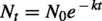
Detailed mechanistic analysis revealed that adsorption to the biofilm matrix is the dominant removal pathway, followed by sedimentation, while natural die-off contributes only marginally under typical RBC conditions (Tawfik et al., 2004). This behavior is closely linked to the physicochemical characteristics of both the biofilm and bacterial cells. The EPS within the biofilm facilitates bridging interactions, enabling negatively charged bacterial cells to attach to similarly charged biofilm surfaces. Experimental comparisons showed that systems incorporating biofilm-coated media exhibited significantly higher removal rate constants than those without biofilm, confirming the central role of attached growth in pathogen attenuation (Tawfik et al., 2004). Furthermore, aerobic conditions enhanced removal efficiency, with DO levels in the range of 3.3–8.7 mg/L yielding substantially higher removal rates compared to anaerobic conditions, where removal constants were markedly lower (∼0.1 d−1), emphasizing the importance of oxygen availability in sustaining active biofilm processes (Tawfik et al., 2004).
From a broader perspective, pathogen removal in attached-growth wastewater treatment systems, including RBC-based configurations, is generally evaluated using log reduction values rather than complete microbial elimination. In these systems, pathogen reduction occurs through a combination of biofilm adsorption, predation by higher microorganisms, sedimentation, natural die-off, oxidative stress, and prolonged exposure to unfavorable environmental conditions within the reactor. Several studies have reported that RBCs and other biofilm-based treatment systems can achieve substantial reductions in bacterial indicators such as E. coli and fecal coliforms under optimized operational conditions. A comprehensive review by Wang et al. (2021a) indicated that bacterial-removal efficiencies in onsite and attached-growth treatment systems typically range from ∼73.9% to 99.99% depending on reactor configuration, HRT, biofilm activity, and post-treatment integration (Wang et al., 2021a). Higher pathogen-removal efficiencies are generally observed in systems incorporating extended retention times, filtration mechanisms, multistage biofilm treatment, or disinfection processes. In RBC systems, the attached biofilm matrix contributes significantly to microbial removal by promoting physical entrapment and competitive microbial interactions. In addition, aerobic and anaerobic microzones within the biofilm may create environmental stress conditions that reduce pathogen survival. However, despite these mechanisms, complete pathogen elimination is rarely achieved through biological treatment alone. Residual microbial populations often remain in the treated effluent, particularly for smaller and more persistent pathogens such as viruses and protozoan cysts. Viral particles are generally more difficult to remove because of their small size, low settling characteristics, and ability to pass through biofilm structures and secondary clarification systems. Consequently, RBC effluents intended for reuse or sensitive discharge applications typically require additional polishing or disinfection steps such as ultraviolet irradiation, chlorination, ozonation, membrane filtration, or advanced oxidation processes. The efficiency of pathogen removal in RBC systems is influenced by several operational parameters, including biofilm thickness, temperature, hydraulic loading, retention time, DO levels, and reactor staging. Therefore, optimization of these parameters, together with integration of advanced monitoring and post-treatment strategies, is essential for improving microbiological safety and achieving regulatory discharge standards in modern wastewater treatment systems.
Impact of Operational Parameters
Biofilm kinetics, oxygen transfer dynamics, and hydrodynamic exposure cycles interact to control the performance of RBCs. Diffusion gradients, biofilm thickness, and substrate conversion efficiency are all directly impacted by operating parameters, since RBCs depend on attached microbial growth rather than suspended biomass. Disc rotational speed, submergence ratio, HRT, temperature, and OLR constantly show up as the main regulating variables in laboratory, pilot, and full-scale municipal systems.
Disc speed
Disc rotational speed is a key operational parameter in RBCs because it directly influences oxygen transfer, substrate diffusion, hydrodynamic shear stress, and biofilm stability. As the rotational speed increases, the thickness of the liquid boundary layer surrounding the biofilm decreases, thereby improving oxygen transport and enhancing substrate diffusion into the microbial layer. Improved oxygen availability generally promotes higher microbial activity and more efficient organic matter degradation. However, excessive rotational speed can generate high shear forces at the biofilm surface, leading to biomass detachment or sloughing. While controlled sloughing helps maintain active biofilm layers and prevents excessive biofilm thickening, excessive biomass loss may reduce treatment efficiency and destabilize reactor performance. Experimental studies have shown that increasing disc rotational speed from ∼1 to 3 rpm significantly improves oxygen transfer efficiency and BOD5 removal performance. However, rotation beyond this range often provides limited additional treatment benefit because increased shear stress promotes excessive biofilm sloughing and reduces stable biomass retention (Di Palma and Verdone, 2009).
According to operational evaluations reported in the U.S. EPA design manual, most municipal RBC systems are commonly operated within a rotational range of ∼2–3 rpm. This moderate operating range provides an effective balance between oxygen-transfer efficiency, biofilm stability, energy consumption, and long-term mechanical reliability (Brenner et al., 1984). This moderate rotational range is therefore widely accepted for general RBC applications. The optimal disc speed may vary depending on wastewater characteristics, reactor staging, OLR, HRT, and biofilm thickness. In advanced RBC systems, variable-frequency drives and intelligent control systems are increasingly being investigated to dynamically optimize rotational speed under fluctuating loading conditions. Such adaptive speed-control strategies may further improve treatment stability while reducing operational energy demand in next-generation RBC applications.
Submergence ratio
The disc submergence ratio is an important operational parameter in RBCs because it determines the balance between wastewater contact time and atmospheric oxygen exposure. During rotation, the submerged portion of the disc facilitates substrate uptake and microbial interaction with wastewater, whereas the exposed portion enables oxygen absorption from the surrounding air. Proper submergence is therefore essential for maintaining effective mass transfer, stable biofilm activity, and efficient treatment performance. The percentage of disc submergence controls the balance between wastewater contact time and atmospheric oxygen exposure. Empirical investigations have demonstrated that maintaining discs submergence within the range of 35–45% provides an optimal balance between aerobic exposure and substrate contact time (Paolini and Variali, 1982). Within this range, sufficient oxygen transfer can occur during air exposure while maintaining adequate wastewater contact for organic matter degradation and nutrient transformation. Field-scale performance evaluations of municipal RBC system reported in the U.S. EPA design manual further indicate that ∼40%-disc submergence generally supports stable BOD removal and effective nitrification across varying influent wastewater characteristics (Brenner et al., 1984). This operating range has therefore become widely accepted in conventional RBC design and operation.
Lower submergence ratios may increase oxygen exposure but can limit substrate diffusion into the biofilm due to reduced wastewater contact time. Conversely, excessively high submergence ratios improve substrate availability but reduce atmospheric oxygen replenishment, potentially leading to oxygen-limited conditions and reduced nitrification efficiency. High submergence may also increase hydraulic drag and rotational energy demand. The optimal submergence ratio may vary depending on reactor configuration, wastewater composition, OLR, rotational speed, and treatment objectives. In advanced or hybrid RBC systems, submergence optimization is increasingly integrated with intelligent process control strategies to improve oxygen-transfer efficiency, reduce energy consumption, and maintain stable biofilm performance under variable loading conditions.
Hydraulic retention time
The HRT defines the effective contact duration between wastewater and the biofilm. The HRT is a critical operational parameter in RBCs because it determines the effective contact duration between wastewater constituents and the attached microbial biofilm. Adequate HRT allows sufficient time for substrate diffusion, microbial degradation of organic matter, nitrification, and overall stabilization of the treated effluent. Experimental studies have demonstrated that RBC performance is highly influenced by HRT, particularly under varying organic loading conditions. In a laboratory-scale, two-stage RBC treating municipal wastewater, an optimal HRT of ∼14 h resulted in nearly 82% COD and 86% BOD5 removal, indicating efficient carbon degradation and stable reactor operation (Hiras et al., 2004). Operational data compiled from multiple full-scale municipal RBC installations further suggest that HRT values ranging between 10 and 16 h are generally adequate for secondary treatment under moderate organic loading conditions (Brenner et al., 1984). Within this range, RBC systems can achieve stable organic matter removal while maintaining reasonable reactor size and energy efficiency. Shorter HRTs may reduce treatment performance due to insufficient substrate–biofilm contact time and incomplete biodegradation, especially under high hydraulic or organic loading conditions. Conversely, excessively long HRTs may provide only marginal improvements in pollutant removal while substantially increasing reactor volume, footprint, and capital costs. Therefore, extending HRT beyond the optimal range often results in diminishing treatment benefits relative to infrastructure requirements. HRT also influences biofilm thickness, DO distribution, nitrification efficiency, and sludge production. In multistage RBC systems, staged HRT distribution can further improve treatment performance by allowing sequential carbon oxidation and nutrient-removal processes along the reactor flow path. Modern RBC designs increasingly integrate HRT optimization with real-time monitoring and adaptive process control to maintain stable treatment efficiency under fluctuating wastewater conditions. Proper HRT management therefore remains essential for achieving efficient, energy-conscious, and economically sustainable RBC operation.
Temperature
Temperature is an important environmental parameter influencing microbial metabolism, enzymatic activity, substrate degradation, and nutrient-removal efficiency in RBCs. Since biological treatment processes are largely governed by microbial activity, variations in temperature directly affect biofilm growth dynamics, oxygen utilization, and overall reactor performance. Temperature influences microbial metabolic activity and nitrification kinetics. Experimental studies have demonstrated that increasing the temperature from 15°C to 25°C significantly enhances microbial activity and carbon oxidation rates within the biofilm. Irfan et al. (2022) reported that organic matter degradation efficiency increased by nearly 35% within this temperature range due to accelerated enzymatic reactions and improved microbial metabolism.
Temperature effects are particularly important for nitrification processes because autotrophic nitrifying microorganisms are more temperature-sensitive than heterotrophic bacteria responsible for carbon degradation. Long-term field observations have shown that nitrification efficiency declines substantially at temperature below 15°C, primarily due to reduced activity of ammonia-oxidizing bacteria and nitrite-oxidizing bacteria (Brenner et al., 1984). Under low-temperature conditions, slower microbial growth rates and reduced oxygen-transfer efficiency may further limit nitrogen-removal performance. In most municipal wastewater treatment applications, RBC systems operating within a temperature range of ∼20–25°C generally exhibit stable organic matter degradation, efficient nitrification, and balanced biofilm activity. This temperature range is therefore considered favorable for maintaining consistent biological treatment performance. Seasonal temperature fluctuations can also influence biofilm thickness, DO gradients, microbial community composition, and sludge production. In colder climates, reduced microbial kinetics may require longer HRTs, additional reactor staging, or operational adjustments to maintain treatment efficiency. Overall, understanding temperature-dependent biofilm behavior is essential for optimizing RBC design and operation, particularly for systems treating variable municipal and industrial wastewater streams under fluctuating environmental conditions.
Organic loading rate
The OLR is one of the most important design and operational parameters in RBCs because it directly influences microbial activity, biofilm thickness, oxygen-transfer efficiency, and overall treatment performance. OLR determines the amount of biodegradable organic matter applied per unit biofilm surface area over time and therefore plays a critical role in balancing substrate utilization and oxygen availability within the reactor. At moderate loading conditions, RBC systems maintain stable biofilm growth and efficient substrate degradation. However, excessively high OLRs can lead to rapid biofilm accumulation, increased oxygen demand, and diffusion limitations within the deeper biofilm layers. Under such conditions, oxygen transfer becomes insufficient to support complete aerobic degradation, resulting in reduced treatment efficiency and unstable reactor performance. Experimental investigations have shown that when OLR exceeds ∼20–25 g BOD5/m2/d, excessive biofilm thickening and oxygen-transfer limitations begin to negatively affect COD and BOD5 removal efficiency (Al-Ahmady, 2005). High organic loading may also promote uneven biofilm growth, localized anaerobic zones, and increased risk of uncontrolled biofilm sloughing.
Similarly, a study by Torkian et al. (2003) involving a six-stage RBC treating municipal wastewater and anaerobically pretreated effluent reported noticeable reductions in soluble BOD removal at OLR values above ∼17 g/m2/d (Torkian et al., 2003). The authors attributed the decline in treatment performance to substrate overloading and mass-transfer limitations within the biofilm matrix.
Comparative analyses across multiple municipal RBC systems further indicate that stable COD-removal efficiencies exceeding 90% are most consistently achieved within moderate loading ranges of ∼10–20 g BOD5/m2/d (Cortez et al., 2008). Within this operational range, the balance between microbial growth, oxygen diffusion, and biofilm stability is generally maintained effectively. OLR also influences nitrification efficiency, DO gradients, sludge production, and energy consumption. Therefore, proper OLR management is essential for maintaining stable reactor performance, minimizing excessive biomass accumulation, and preventing process instability under fluctuating wastewater conditions. In modern RBC systems, OLR optimization is increasingly integrated with real-time monitoring and adaptive operational control strategies to improve treatment stability and energy efficiency, particularly in decentralized and variable-load wastewater treatment applications.
Integration of RBC with Bioelectrochemical Systems
Concept of integrating MFC/MEC with RBCs
The RBCs have long been recognized as energy-efficient, attached-growth wastewater treatment systems capable of achieving stable organic matter removal under variable hydraulic and organic loading conditions. Their core operational principle involves the continuous rotation of partially submerged discs, which alternately expose the attached biofilm to wastewater and atmospheric air. This cyclic exposure supports simultaneous substrate uptake and passive oxygen transfer, enabling efficient aerobic biodegradation with relatively low external energy demand. Although conventional RBCs are primarily aerobic treatment systems, recent research has explored the possibility of integrating bioelectrochemical functionalities into RBC configurations to enable simultaneous wastewater treatment, energy recovery, and resource conversion. This emerging approach combines the advantages of attached-growth biofilms with the electrochemical activity of microorganisms capable of extracellular electron transfer.
Early hybrid configurations typically employed sequential treatment arrangements in which MFCs or MECs were combined with RBC systems. In such systems, anaerobic electrochemical treatment was first used for partial organic matter removal and energy generation, followed by aerobic polishing using RBC reactors. For example, Anupama et al. (2013) reported that an MFC treating distillery wastewater achieved nearly 64% COD removal under optimized loading conditions, while the subsequent RBC stage further improved overall treatment efficiency and effluent stabilization. This sequential technique demonstrated that electrochemical pretreatment may reduce organic load while producing energy, with the RBC ensuring aerobic polishing. These initial hybrid systems demonstrated the feasibility of coupling electrochemical and biological treatment processes, where the MFC component reduced organic loading while generating electricity, and the RBC provided effective aerobic polishing and nitrification. Such sequential integration also highlighted the potential for reducing overall aeration energy requirements compared with conventional aerobic treatment systems.
More recently, research has shifted from simple process coupling toward functional integration, where electrodes are directly incorporated into RBC-like rotating structures. In these advanced systems, the rotating discs themselves function as bioelectrochemical electrodes, enabling simultaneous biofilm growth, wastewater treatment, and electrochemical energy conversion on a single rotating platform. This conceptual transition has led to the development of RDBERs and related RBC–bioelectrochemical hybrid systems (Hackbarth et al., 2023). In these integrated configurations, rotating conductive discs support electroactive biofilms capable of transferring electrons directly to or from the electrode surface. Depending on reactor design and operational mode, these systems may operate as MFCs for electricity generation, MECs for hydrogen production, or microbial electrosynthesis (MES) systems for resource recovery and value-added product formation. However, several technical challenges remain, including electrode material durability, internal resistance, biofilm detachment under rotational shear, long-term operational stability, and scale-up feasibility. Consequently, although RBC–bioelectrochemical integration demonstrates considerable promise for next-generation sustainable wastewater treatment, most systems remain at laboratory or pilot scale and require further optimization before large-scale implementation can be achieved.
Rotating disc bioelectrochemical reactors
The integration of bioelectrochemical functionality into RBCs has led to the development of RDBER, representing a major advancement in hybrid wastewater treatment technology. Unlike conventional RBC systems that utilize nonconductive polymeric discs solely as biofilm support media, RDBERs employ conductive rotating electrodes that simultaneously support microbial growth and facilitate electrochemical reactions (Hackbarth et al., 2023). In RDBER configurations, conductive graphite discs are mounted on a rotating titanium shaft, transforming the rotating biofilm support surface into an electrochemically active working electrode. This design enables extracellular electron transfer (EET) processes directly within the attached biofilm, thereby integrating biological treatment and electrochemical energy conversion within a single reactor architecture.
A laboratory-scale RDBER developed by Hackbarth et al. (2023) consisted of a 10 L reaction chamber equipped with up to 14 graphite discs attached to a central titanium shaft (Hackbarth et al., 2023). The system provided an effective surface-to-volume ratio of ∼100 m2/m3 and nearly 1 m2 of electrochemically active working electrode surface area. Although this surface-area ratio is comparable to conventional RBC systems, the major distinction lies in the electrochemical functionality of the rotating conductive discs. Unlike traditional polymer-based RBC media, the graphite electrodes enable direct microbial electron exchange, allowing the reactor to operate under both anodic and cathodic bioelectrochemical conditions. In addition, the reactor was designed as a membrane-less and fully autoclavable system, enabling sterile or axenic operation. Such characteristics are particularly beneficial for MES applications, where contamination control and maintenance of defined microbial cultures are critical (Hackbarth et al., 2023).
The scalable RDBER system demonstrated two distinct operational modes. In cathodic mode, the reactor functioned as an MES platform, where Kyrpidia spormannii formed a stable electroautotrophic biofilm with ∼87% cathode surface coverage after 24 days of operation. In anodic mode, configured as an MEC, a coculture of Shewanella oneidensis and Geobacter sulfurreducens generated anodic current densities up to 130 µA/cm2, accompanied by measurable hydrogen evolution (Hackbarth et al., 2023). These findings confirmed that rotating conductive graphite electrodes can successfully support both anodic and cathodic bioelectrochemical processes within a single rotating reactor platform. The rotational motion further enhances mass transfer, substrate diffusion, biofilm exposure, and hydrodynamic mixing compared with static electrode systems, potentially improving long-term biofilm stability and electrochemical performance. RDBER technology therefore represents a significant conceptual transition from conventional RBC operation toward multifunctional treatment systems capable of simultaneous wastewater treatment, energy recovery, hydrogen production, and resource conversion. However, despite promising laboratory-scale results, several challenges remain, including optimization of electrode materials, internal resistance reduction, long-term operational stability, scaling limitations, and economic feasibility for full-scale wastewater treatment applications. Electrode configurations in rotating systems.
The performance of rotating bioelectrochemical reactors is strongly influenced by electrode configuration, as electrode arrangement directly affects internal resistance, mass transfer, gas evolution, hydrodynamics, and overall electrochemical efficiency. In RDBER, both mechanical stability and electrochemical interactions must be carefully considered during reactor design. In the original RDBER configuration developed by Hackbarth et al. (2023), semicircular titanium counter electrodes coated with mixed metal oxide were alternately positioned between rotating graphite working electrodes mounted on a central shaft. This arrangement minimized the interelectrode distance to ∼5.5 mm while maintaining mechanical balance within the rotating system. Reduced electrode spacing lowered ohmic resistance and improved electron-transfer efficiency, thereby enhancing overall reactor performance.
However, when operated in MEC mode, hydrogen shuttling emerged as a significant operational limitation. Hydrogen generated at the cathode was partially reoxidized by anodic biofilms, reducing net hydrogen recovery efficiency and negatively affecting reactor performance (Xiao et al., 2025). This issue highlighted the importance of gas management and spatial electrode arrangement in rotating bioelectrochemical systems. To address this limitation, the counter electrode configuration was redesigned by relocating the cathode to the upper section of the reactor and replacing the original electrode structure with a perforated stainless-steel sheet. This modified configuration improved gas disengagement, reduced hydrogen recirculation within the reactor chamber, and enhanced bubble release dynamics. As a result, the system achieved higher current densities and improved volumetric hydrogen-production rates compared with the earlier configuration (Xiao et al., 2025).
Unlike static MFCs and MECs, rotating bioelectrochemical systems operate under continuously changing hydrodynamic conditions. The rotational motion generates dynamic liquid boundary layers and variable shear forces that influence biofilm thickness, microbial attachment, gas release, and electrochemical activity. Therefore, electrode design in rotating systems must simultaneously optimize both electrochemical functionality and mechanical stability. Overall, electrode configuration remains one of the most important factors governing the efficiency, stability, and scalability of rotating bioelectrochemical reactors. These findings demonstrate that multiple interconnected design parameters critically influence the performance of rotating bioelectrochemical systems. Electrode spacing plays a major role in determining ohmic resistance and overall electron-transfer efficiency, while the vertical positioning of electrodes affects gas accumulation, hydrogen shuttling, and phase separation within the reactor. In addition, electrode perforation and geometric configuration significantly influence hydrodynamic behavior, bubble detachment, and mass-transfer characteristics. Continued optimization of electrode materials, spacing, geometry, and hydrodynamic behavior will be essential for advancing RDBER technology toward practical large-scale wastewater treatment and resource-recovery applications.
Electron transfer mechanisms in rotating biofilms
The EET is the fundamental mechanism governing bioelectrochemical activity in rotating bioelectrochemical reactors, where microbial metabolism is directly coupled with electron exchange at conductive surfaces. In RDBERs, EET processes are strongly influenced by hydrodynamics, mass transfer, and shear stress generated by disc rotation. During anodic RDBER operation, electroactive microorganisms transfer electrons derived from substrate oxidation directly to the rotating graphite anode. For example, S. oneidensis oxidizes lactate to acetate while donating electrons to the anode surface, whereas G. sulfurreducens further oxidizes acetate to carbon dioxide (CO2), contributing additional electrons to the external circuit (Xiao et al., 2025). This cooperative metabolic interaction enhances overall electron recovery and current generation within the reactor. The rotational movement of conductive discs plays a critical role in regulating electrochemical performance. Disc rotation reduces the thickness of the diffusion boundary layer surrounding the biofilm, improves substrate transport and nutrient renewal, and enhances removal of metabolic by-products from the biofilm surface. At the same time, rotational hydrodynamics generate shear forces that influence biofilm thickness, microbial attachment, and structural stability. Experimental studies have shown that moderate rotational speeds of ∼1 rpm provide an optimal balance between mass-transfer enhancement and biofilm stability, resulting in improved current density and stable electrochemical activity (Xiao et al., 2025). In cathodic operation, electroautotrophic microorganisms utilize electrons directly from the rotating cathode to drive carbon dioxide reduction and other reductive metabolic pathways. Studies involving electroautotrophic biofilms have demonstrated that biofilm distribution and growth patterns on rotating cathodes are strongly influenced by local hydrodynamic conditions, indicating that fluid flow and shear stress significantly affect electron uptake and microbial colonization behavior (Hackbarth et al., 2023). These findings demonstrate that extracellular electron transfer in rotating bioelectrochemical systems is intrinsically linked to hydrodynamic conditions, substrate diffusion, and biofilm shear dynamics. Proper optimization of rotational speed, electrode configuration, and flow conditions is therefore essential for maximizing electron-transfer efficiency, maintaining stable biofilm activity, and improving the overall performance of rotating bioelectrochemical reactors.
Performance comparison: RBC vs. MFC vs. RBC–MFC hybrid
Conventional RBCs are well established as efficient attached-growth aerobic treatment systems capable of achieving substantial organic matter removal with relatively low operational energy demand. In applications such as distillery wastewater treatment, traditional RBCs have demonstrated stable BOD5 and COD removal due to effective biofilm-mediated aerobic degradation processes (Anupama et al., 2013). However, despite their operational simplicity and reliability, conventional RBCs primarily focus on pollutant removal and do not directly recover energy from wastewater. MFC, in contrast, provides simultaneous wastewater treatment and electricity generation through extracellular electron transfer mechanisms. These systems can effectively reduce COD while converting part of the organic substrate into electrical energy. Nevertheless, standalone MFC systems often suffer from relatively low power density, limited large-scale applicability, high internal resistance, and insufficient polishing capacity for complete wastewater stabilization. As a result, additional posttreatment processes are frequently required to achieve discharge-quality effluents. Hybrid RBC–MFC systems and RDBERs attempt to bridge the gap between conventional biological treatment and bioelectrochemical energy recovery. These integrated systems combine the high surface-area efficiency, stable biofilm retention, and effective oxygen transfer characteristics of RBCs with the electrochemical functionality of MFCs and MECs. By incorporating conductive rotating electrodes, RDBER systems enable simultaneous wastewater treatment, electron transfer, and partial energy or hydrogen recovery within a single reactor platform. Although hydrogen recovery and current generation in RDBER and MEC-based systems remain below theoretical maximum values, the volumetric current densities reported for rotating bioelectrochemical systems compare favorably with several previously reported pilot-scale MEC configurations (Xiao et al., 2025). In addition, rotational hydrodynamics improve substrate transport, reduce diffusion limitations, and enhance biofilm activity compared with static electrochemical systems. Consequently, RBC–MFC hybrid technologies represent an important intermediate platform between energy-intensive conventional wastewater treatment systems and future resource-recovering treatment technologies. These systems demonstrate the potential to reduce aeration demand, partially recover energy, improve treatment efficiency, and support sustainable decentralized wastewater treatment applications. However, further optimization related to electrode materials, scale-up feasibility, energy balance, and long-term operational stability is still required before large-scale practical implementation can be achieved.
Microbial Communities in RBC-Based Systems
Aerobic–anaerobic microbial interactions
The RBCs naturally develop complex aerobic–anaerobic microenvironments within the attached biofilm due to alternating exposure of the rotating discs to wastewater and atmospheric air. This cyclic exposure generates pronounced spatial oxygen gradients across the biofilm structure, where the outer biofilm layers and air-exposed regions remain predominantly aerobic, while deeper and continuously submerged zones become oxygen-limited or anaerobic. Such vertical and radial stratification enables the coexistence of multiple complementary microbial metabolisms within a single biofilm architecture (Waqas et al., 2023). In the aerobic outer biofilm regions, heterotrophic bacteria actively oxidize organic carbon compounds, while aerobic nitrifying microorganisms, such as ammonia-oxidizing bacteria and nitrite-oxidizing bacteria, carry out sequential nitrification processes. In contrast, the deeper oxygen-deficient layers support the growth of facultative anaerobes, denitrifying bacteria, and fermentative microorganisms capable of utilizing nitrate or alternative electron acceptors for anaerobic metabolism. This microbial stratification allows simultaneous carbon oxidation, nitrification, denitrification, and partial fermentation processes to occur concurrently within the same rotating biofilm system. High-throughput 16S rRNA sequencing and molecular ecology analyses have confirmed that microbial community distribution within RBC biofilms strongly correlates with local oxygen availability and redox gradients. Aerobic nitrifiers generally dominate the oxic outer layers, whereas denitrifiers and facultative anaerobic microorganisms preferentially colonize the deeper submerged microzones where DO penetration is limited (Zhang et al., 2025). The coexistence of oxic and anoxic metabolic pathways within a single biofilm significantly improves overall treatment efficiency by enabling simultaneous nitrification and denitrification without the need for physically separated aerobic and anoxic reactors. This integrated microbial organization enhances nitrogen-removal efficiency, improves reactor compactness, and increases operational stability under fluctuating hydraulic and organic loading conditions (Peng et al., 2014). The oxic and anoxic metabolisms coexist and interact in RBC biofilms, which function as organized microbial ecosystems. This natural stratification promotes integrated carbon and nitrogen processing within a single biofilm architecture, boosts functional redundancy, and enhances robustness to influent changes. Moreover, the layered microbial ecosystem within RBC biofilms provides functional redundancy and greater resilience against environmental disturbances and influent variability. The ability of aerobic and anaerobic microbial populations to coexist and interact synergistically contributes to stable carbon and nutrient removal while minimizing energy demand and infrastructure complexity. The RBC biofilms function as highly organized microbial ecosystems in which naturally developed oxygen gradients support integrated carbon oxidation, nitrification, denitrification, and anaerobic metabolic processes within a single attached-growth platform.
Role of nitrifying and denitrifying bacteria
Nitrogen removal in RBCs is mediated by specialized microbial populations occupying distinct ecological niches within the stratified biofilm matrix. The naturally occurring oxygen gradients within the biofilm support the coexistence of aerobic nitrifying microorganisms and anaerobic or facultative denitrifying bacteria, enabling efficient nitrogen transformation within a single attached-growth system. Nitrification primarily occurs in the outer aerobic biofilm layers, where oxygen availability is highest due to periodic air exposure during disc rotation. Ammonia-oxidizing bacteria oxidize ammonium (NH4+) to nitrite (NO2−), while nitrite-oxidizing bacteria subsequently convert nitrite to nitrate (NO3−). Full-scale RBC studies have shown that the relative abundance of nitrifying microorganisms generally increases along the reactor flow path, reflecting adaptation to progressively lower organic loading and more favorable aerobic conditions at downstream stages (Peng et al., 2014). High-throughput sequencing and quantitative microbial profiling have identified key nitrifying taxa such as Nitrosomonas, Nitrospira, and ammonia-oxidizing archaea as dominant contributors to nitrification in well-oxygenated biofilm regions. These microorganisms play a critical role in maintaining stable ammonium oxidation and nitrogen-removal efficiency, particularly under optimized DO conditions (Peng et al., 2014).
In contrast, denitrifying bacteria predominantly colonize the deeper oxygen-limited regions of the biofilm where DO penetration is restricted. Genera such as Rhodanobacter, Paracoccus, Thauera, and Azoarcus utilize nitrate produced during nitrification as an alternative electron acceptor under anoxic conditions, reducing nitrate to nitrogen gas (N2). This denitrification process contributes significantly to overall nitrogen removal and minimizes nitrate accumulation in the treated effluent. The alternating exposure of RBC discs to wastewater and atmospheric air creates stable aerobic and anoxic microzones within the biofilm structure. Aerobic metabolisms dominate near the biofilm surface, whereas submerged and deeper layers support denitrification pathways, as illustrated in Figure 4 (Peng et al., 2014). This spatial partitioning allows simultaneous nitrification and denitrification to occur within the same biofilm system, thereby eliminating the need for separate aerobic and anoxic treatment reactors. As a result, RBC systems achieve efficient and integrated nitrogen removal while maintaining relatively low operational complexity and energy demand. The coexistence of nitrifying and denitrifying microbial communities also enhances functional redundancy and improves process stability under fluctuating hydraulic and organic loading conditions (Waqas et al., 2021a). A summary of the major microbial functional groups, their ecological niches, and metabolic roles in RBC systems is provided in Table 1.
Functional Microbial Guilds Involved in Nitrogen Cycling in Rotating Biological Contactor Biofilms, Including Their Spatial Distribution and Metabolic Roles
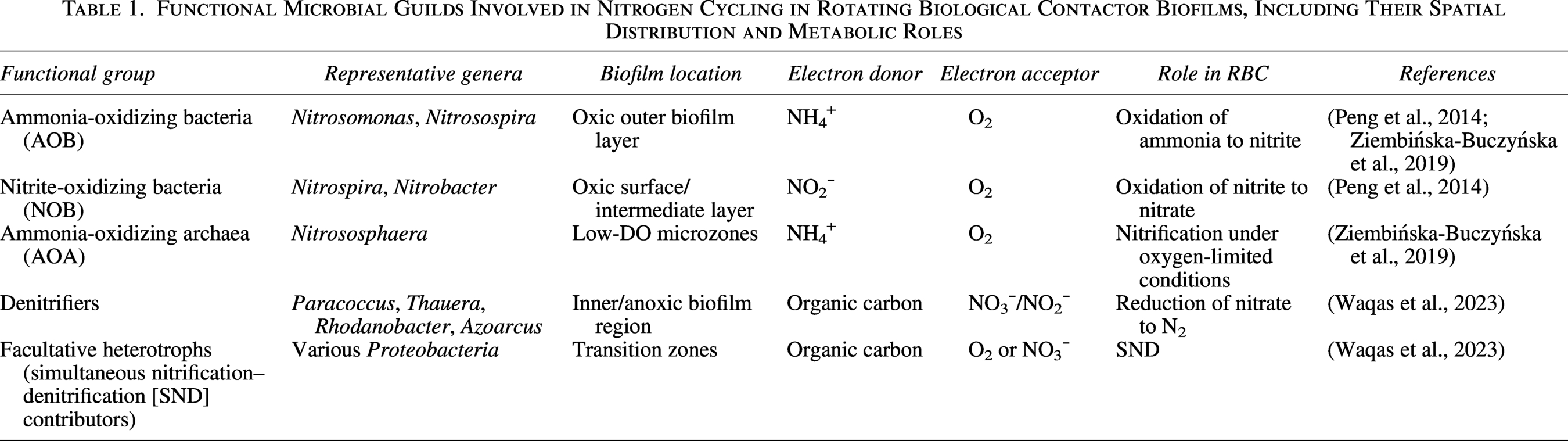
The microbial functional groups summarized in Table 1 demonstrate the highly stratified and cooperative nature of RBC biofilms, where distinct microbial populations occupy specialized ecological niches based on local oxygen availability and substrate gradients. This spatial organization is fundamental to the simultaneous occurrence of nitrification and denitrification processes within a single attached-growth system. The outer aerobic biofilm layers are predominantly colonized by ammonia-oxidizing bacteria such as Nitrosomonas and Nitrosospira, which initiate nitrification through the oxidation of ammonium (NH4+) to nitrite (NO2−). These microorganisms require sufficient DO and therefore thrive near the biofilm surface where atmospheric oxygen transfer is greatest. Nitrite-oxidizing bacteria, including Nitrospira and Nitrobacter, occupy adjacent oxic and intermediate biofilm regions and further oxidize nitrite to nitrate (NO3−), completing the nitrification pathway. Interestingly, ammonia-oxidizing archaea, particularly Nitrososphaera, are frequently detected in oxygen-limited microzones where DO concentrations are relatively low. The microbial distribution patterns summarized in Table 1 illustrate how oxygen gradients, substrate diffusion, and biofilm stratification collectively govern microbial ecology and nitrogen cycling within RBC systems. The coexistence of multiple functional guilds within a single biofilm architecture improves treatment efficiency, enhances process resilience, and supports compact and energy-efficient wastewater treatment operation.
Biofilm ecology under rotational shear
The performance and stability of RBCs are strongly governed by hydrodynamic shear generated by disc rotation, which directly influences mass transfer, biofilm morphology, EP) dynamics, and microbial community composition. Rotation creates mechanical stress that controls the thickness and density of biofilms while decreasing the thickness of the diffusion boundary layer, improving the movement of oxygen and substrate to surface layers. This improved mass-transfer environment supports efficient organic matter degradation and nutrient removal within the attached biofilm system. Moderate rotational shear generally promotes the formation of compact, dense, and metabolically active biofilms with improved structural stability and substrate utilization efficiency. In contrast, excessive shear stress can induce uncontrolled biomass detachment or sloughing, resulting in unstable biofilm retention and fluctuations in reactor performance (Paul et al., 2012; Yang et al., 2019). Consequently, the steady-state structure of biofilms is determined by a dynamic equilibrium between microbial growth, EPS production, erosion, and shear-induced biomass removal.
Rotational shear also plays an important role in maintaining functional stratification within the biofilm. By influencing oxygen penetration depth and substrate diffusion profiles, rotational velocity indirectly controls the distribution of aerobic, facultative, and anaerobic microzones across the biofilm matrix. This spatial heterogeneity supports simultaneous nitrification and denitrification processes within a single attached-growth system. In addition, variations in shear stress can alter EPS composition, cohesive strength, microbial adhesion properties, and biofilm detachment thresholds, thereby influencing microbial succession and long-term process stability (Qi et al., 2008). Advanced imaging techniques such as OCT have confirmed the presence of radial heterogeneity, localized thickness variations, and structurally complex biofilm architectures within rotating systems. These structural variations are closely associated with local hydrodynamic gradients and differential shear conditions generated during disc rotation (Wagner and Horn, 2017).
Across the studies, influent COD ranged from ∼200 mg/L in domestic sewage to 16,000 mg/L in palm oil mill effluent, demonstrating the versatility of RBC technology (Table 2). Conventional systems generally achieved COD removals between 45% and 88%, while newer configurations reported removals above 90% under optimized conditions. Nitrogen removal efficiencies varied from ∼52% to 92%, depending on reactor design, recycle ratio, oxygen transfer characteristics, and influent composition (Table 2). Table 2 highlights several important findings. Increasing the recycle ratio in two-stage RBCs improved total nitrogen removal, indicating the importance of internal circulation for simultaneous carbon and nitrogen removal. High-strength industrial wastewater could be effectively treated under very high OLRs, demonstrating the robustness of RBCs.
Comparison of Operational Parameters and Treatment Performance of Conventional and Emerging Rotating Biological Contactor Configurations
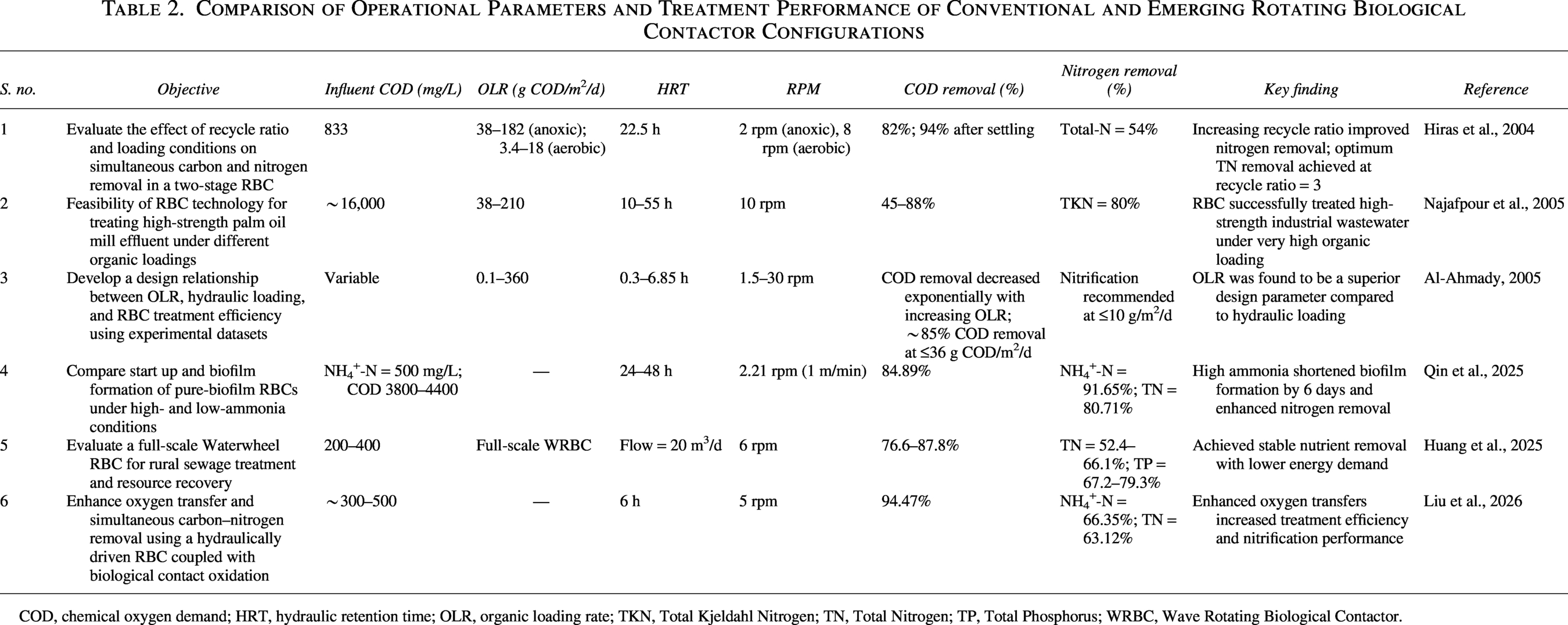
COD, chemical oxygen demand; HRT, hydraulic retention time; OLR, organic loading rate; TKN, Total Kjeldahl Nitrogen; TN, Total Nitrogen; TP, Total Phosphorus; WRBC, Wave Rotating Biological Contactor.
OLR was identified as a key design parameter influencing performance. Emerging designs, including pure-biofilm RBCs, waterwheel RBCs, and hydraulically driven RBCs, showed enhanced biofilm formation, oxygen transfer, nutrient removal, and reduced energy demand. Overall, Table 2 shows a comparison illustrating the evolution of RBC technology from conventional treatment units toward energy-efficient, high-performance systems capable of improved carbon and nutrient removal.
In electro-biological adaptations of RBC systems, including RDBER, rotational shear additionally affects EET processes and electroactive biofilm stability. Experimental studies have shown that moderate rotational speeds of ∼1 rpm optimize current density by improving mass transfer and substrate renewal without causing excessive biomass loss. However, higher rotational speeds increase shear-induced biofilm detachment and reduce the stability of electroactive microbial communities (Xiao et al., 2025). Proper optimization of rotational hydrodynamics is thus essential for maintaining biofilm integrity, maximizing treatment efficiency, enhancing electrochemical performance, and ensuring long-term reactor stability (Hackbarth et al., 2023). Therefore, rotational shear functions not only as a transport-enhancing mechanism but also as a major ecological selection pressure that shapes microbial community structure, biofilm architecture, and metabolic functionality in both conventional and hybrid RBC systems.
RBC–Microalgae Integrated Systems for Resource Recovery
Recent advances in sustainable wastewater treatment have stimulated increasing interest in the integration of RBCs with microalgal processes for simultaneous wastewater treatment, nutrient recovery, carbon capture, and biomass valorization. RBC–microalgae integrated systems combine the advantages of attached-growth biofilm treatment with the photosynthetic capabilities of algae, creating a synergistic platform capable of improving treatment efficiency while supporting circular bioeconomy objectives. Unlike conventional RBC systems that primarily depend on atmospheric oxygen transfer, algal-assisted RBCs can partially supply oxygen through photosynthetic activity, thereby reducing external aeration demand and improving overall process sustainability.
In RBC–microalgae systems, algae may develop either as suspended cultures within the reactor or as attached phototrophic biofilms on rotating surfaces. The periodic rotation of discs between wastewater and air exposure creates favorable conditions for both bacterial and algal growth by improving nutrient transport, light exposure, and gas exchange. During operation, heterotrophic bacteria oxidize organic pollutants and release carbon dioxide (CO2), which is subsequently utilized by microalgae during photosynthesis. In return, oxygen generated by algal photosynthesis supports aerobic bacterial degradation processes, creating a mutually beneficial algal–bacterial symbiosis that improves nutrient removal and reduces aeration energy demand (Posadas et al., 2017). One of the major advantages of integrating microalgae with RBC systems is enhanced nutrient removal, particularly for nitrogen and phosphorus. Microalgae assimilate ammonium, nitrate, and phosphate directly into cellular biomass during growth, thereby contributing to nutrient recovery in addition to conventional biological transformation processes. Simultaneously, bacterial communities within the biofilm continue performing carbon oxidation, nitrification, and denitrification processes. This combined metabolic activity improves overall pollutant-removal efficiency while minimizing chemical consumption and sludge production. Studies have demonstrated that algal-assisted biofilm systems can achieve high removal efficiencies for COD, ammonium, nitrate, and phosphate under optimized operational conditions (Christenson and Sims, 2011). The integration of microalgae into RBC systems also offers significant opportunities for biomass valorization and resource recovery. Algal biomass generated during wastewater treatment contains valuable biochemical components, including lipids, proteins, carbohydrates, pigments, and bioactive compounds. Harvested algal biomass may therefore be utilized for the production of biofuels, animal feed, fertilizers, bioplastics, and high-value biochemicals. The attached-growth configuration of RBC systems further simplifies biomass harvesting compared with conventional suspended algal cultivation systems, where downstream biomass separation often represents a major operational challenge.
Recent studies investigating rotating algal biofilm reactors have shown promising performance for simultaneous wastewater treatment and biomass production. For example, Gross et al. (2015) demonstrated that rotating algal biofilm systems could efficiently remove nutrients from municipal wastewater while producing concentrated algal biomass suitable for bioenergy applications. Similarly, Boelee et al. (2014) reported that algal biofilm reactors achieved stable nutrient removal with lower harvesting costs compared with suspended algal systems due to easier biomass recovery from attached surfaces. In addition to nutrient recovery, RBC–microalgae systems may contribute to greenhouse gas mitigation through biological carbon capture. Microalgae consume CO2 released during bacterial degradation and atmospheric exchange, thereby partially offsetting carbon emissions associated with wastewater treatment processes. This characteristic aligns well with emerging low-carbon and energy-neutral wastewater treatment strategies. Despite these advantages, several technical and operational challenges still limit the large-scale implementation of RBC–microalgae systems. Light penetration remains one of the most critical constraints, particularly in dense biofilms or highly turbid wastewater streams where self-shading reduces photosynthetic efficiency. Seasonal variations in temperature and solar radiation can also significantly influence algal productivity and treatment stability. Furthermore, maintaining balanced algal–bacterial interactions under fluctuating hydraulic and organic loading conditions remains operationally challenging. Biofilm overgrowth and excessive algal accumulation may further influence hydrodynamics, oxygen-transfer characteristics, and rotational energy demand. Uncontrolled biomass growth can increase shear stress, reduce effective light exposure, and promote unstable sloughing behavior. Therefore, optimization of rotational speed, HRT, light availability, disc surface properties, and nutrient loading is essential for maintaining stable reactor performance. Another important challenge involves large-scale biomass harvesting and downstream processing. Although attached-growth systems simplify biomass recovery compared with suspended algal cultures, economic feasibility remains dependent on efficient biomass utilization pathways and market demand for recovered products. In addition, contamination by unwanted microbial populations and biofouling may affect long-term reactor stability and productivity.
Recent research has also explored the integration of RBC–microalgae systems with membrane technologies, anaerobic digestion, and bioelectrochemical reactors to further improve resource recovery and process sustainability. Hybrid algal–RBC systems integrated with MFCs and rotating bioelectrochemical reactors may provide opportunities for simultaneous wastewater treatment, nutrient recovery, biomass production, and partial energy generation. Advanced monitoring technologies such as OCT, machine-vision analysis, and online DO sensors are increasingly being investigated to monitor algal biofilm growth, thickness, and photosynthetic activity in real time. These smart monitoring approaches may support improved operational control and predictive maintenance in next-generation algal-assisted RBC systems. The RBC–microalgae integrated systems represent a promising emerging technology for sustainable wastewater treatment and resource recovery. By combining biological pollutant removal, nutrient assimilation, biomass valorization, and partial carbon capture within a single treatment platform, these systems align closely with circular bioeconomy and energy-efficient wastewater management objectives. However, further pilot-scale studies, long-term operational assessments, and techno-economic analyses are still required to overcome scale-up limitations and enable broader practical implementation.
Environmental and Operational Challenges
Based on the comparative analysis presented in Table 3, RBCs have demonstrated remarkable versatility in treating a wide range of wastewater streams, from municipal sewage to complex industrial effluents. The treatment performance varies according to wastewater characteristics, contaminant composition, and microbial community structure. Municipal domestic sewage remains the most established application of RBC technology, achieving high BOD removal efficiencies of 80–96% and ammonium removal of 75–92%, primarily through aerobic heterotrophic oxidation and nitrification. Similarly, food-processing and dairy wastewaters exhibit substantial organic matter removal (75–92%), although grease accumulation and biofilm sloughing necessitate pretreatment measures (Table 3).
Rotating Biological Contactor Application Across Wastewater Categories: Contaminant Targets, Removal Mechanisms, and Performance Range
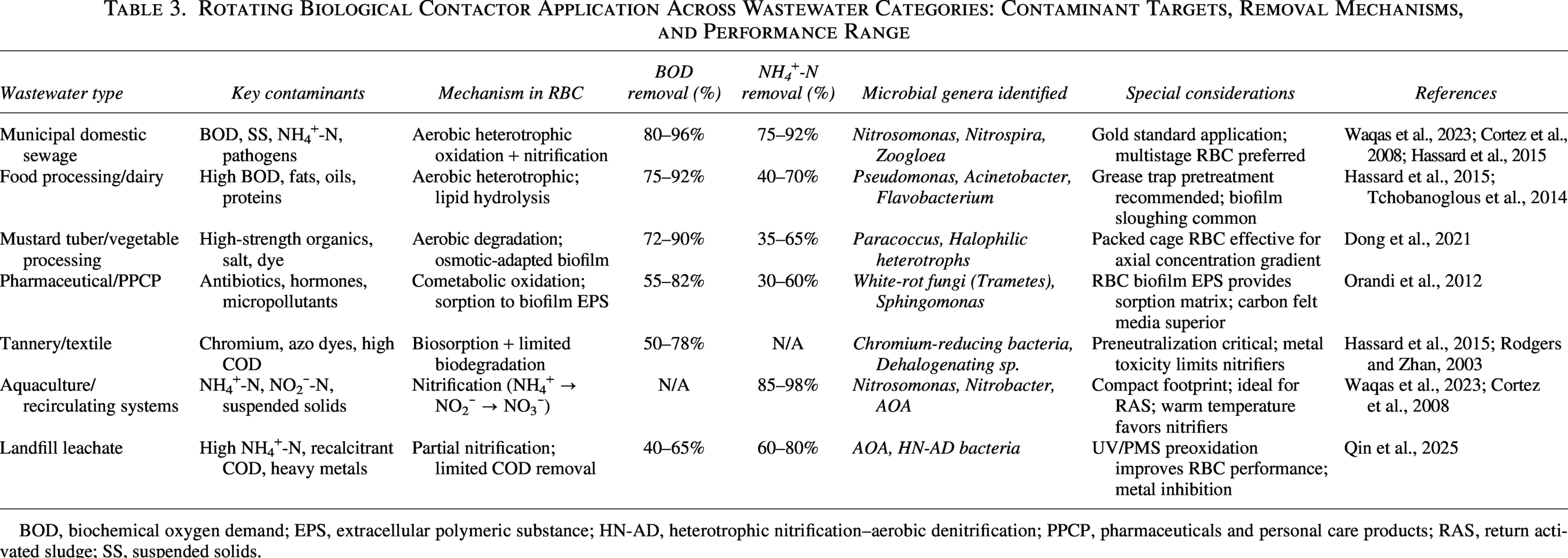
BOD, biochemical oxygen demand; EPS, extracellular polymeric substance; HN-AD, heterotrophic nitrification–aerobic denitrification; PPCP, pharmaceuticals and personal care products; RAS, return activated sludge; SS, suspended solids.
For high-strength industrial wastewaters such as mustard tuber processing effluent, pharmaceutical wastewater, and tannery/textile effluents, RBC performance is influenced by the presence of salts, dyes, pharmaceuticals, heavy metals, and other recalcitrant contaminants. In these systems, specialized mechanisms including cometabolic oxidation, biosorption, and osmotic-adapted biofilm activity contribute to contaminant removal. Although BOD removal efficiencies generally range from 50% to 90%, nitrogen removal tends to be lower due to inhibitory effects of toxic compounds and limited biodegradability. The incorporation of specialized microbial populations, such as Paracoccus, Sphingomonas, white-rot fungi, and chromium-reducing bacteria, enhances treatment effectiveness in these challenging environments. Aquaculture and recirculating aquaculture systems represent another promising application, where RBCs serve primarily as nitrification units, achieving exceptionally high ammonium removal efficiencies of 85–98% (Table 3). Landfill leachate treatment remains more challenging because of elevated ammonia concentrations, refractory organic matter, and heavy metals; however, nitrogen removal efficiencies of 60–80% have been reported when combined with appropriate pretreatment strategies (Table 3). Overall, Table 3 highlights that successful RBC implementation depends on matching reactor design, operational conditions, and microbial consortia to the specific wastewater characteristics, thereby maximizing both organic carbon and nutrient removal efficiencies.
Biofilm sloughing
Biofilm sloughing is one of the major operational challenges affecting the stability and long-term performance of RBCs. Unlike gradual biofilm erosion, which involves the continuous release of individual microbial cells or small biomass fragments, sloughing refers to the sudden detachment of large portions of the biofilm from the disc surface. This phenomenon typically occurs when the cohesive strength of the biofilm becomes insufficient to withstand external mechanical forces such as hydrodynamic shear, rotational stress, or collision effects, as well as internal structural weakening caused by substrate limitation, excessive biofilm thickness, or endogenous microbial decay (Elenter et al., 2007; Walter et al., 2013). Sloughing events often follow prolonged phases of biofilm accumulation during which increasing biofilm thickness and structural heterogeneity generate internal tensile stress within the biofilm matrix. As the deeper biofilm layers become oxygen- and substrate-limited, microbial inactivity and EPS degradation may create weak zones that eventually trigger localized structural collapse and biomass detachment.
In RBC systems, sloughing is strongly influenced by rotational hydrodynamics and operational conditions. Elevated disc rotational speeds, abrupt hydraulic fluctuations, shock organic loading, and excessive shear stress can accelerate biofilm detachment. Conversely, prolonged operation under low-shear or poorly mixed conditions may promote the development of excessively thick and unstable biofilms with weak internal cohesion, increasing susceptibility to large-scale sloughing events. Frequent sloughing negatively affects reactor performance by causing temporary reductions in active biofilm surface area, increased suspended solids concentrations, elevated effluent turbidity, and fluctuations in BOD5 and nitrogen-removal efficiency. Repeated biomass detachment may also increase downstream solids-handling requirements and compromise process stability, particularly in nitrifying RBC systems where slow-growing autotrophic microorganisms require stable biofilm retention (Hassard et al., 2015; Tsagkari et al., 2022). Mon Advanced monitoring technologies have shown considerable potential for improving sloughing prediction and operational control in modern RBC systems. Techniques such as flow and shear diagnostics, suspended solids monitoring, turbidity sensing, and non-invasive imaging methods, including OCT, can help identify early structural changes and sloughing precursors within the biofilm matrix (Elenter et al., 2007; Tsagkari et al., 2022; Walter et al., 2013). These approaches enable improved understanding of biofilm detachment dynamics and support the development of predictive maintenance and intelligent process-control strategies. The effective management of biofilm sloughing requires careful optimization of rotational speed, hydraulic loading, oxygen transfer, and biofilm thickness in order to maintain stable microbial activity while preventing excessive biomass accumulation and structural instability in both conventional and hybrid RBC systems.
Seasonal performance variability
Seasonal temperature variations are one of the most important environmental factors influencing the long-term stability and treatment efficiency of RBCs. Temperature directly affects microbial metabolism, enzymatic activity, substrate diffusion, oxygen-transfer efficiency, and the growth kinetics of both heterotrophic and autotrophic microorganisms within the biofilm matrix. Compared with suspended-growth systems, attached-growth biofilm reactors such as RBCs are generally more resilient to temperature fluctuations because the biofilm structure provides enhanced biomass retention and protects slow-growing microbial populations, particularly nitrifying bacteria. Nevertheless, several studies have demonstrated that nitrification efficiency decreases significantly under low-temperature conditions due to reduced microbial activity and slower ammonia oxidation kinetics. Controlled laboratory investigations on nitrifying biofilms have shown that biological nitrogen removal can still occur at temperatures as low as 8°C, although at substantially reduced reaction rates compared with warmer operating conditions. Németh et al. (2023) reported nitrification rates of ∼3.08 g N/m2/d at 8°C, demonstrating that biofilm-based treatment systems can maintain measurable ammonia oxidation even under cold environmental conditions when sufficient biofilm biomass and HRT are maintained.
These results demonstrate that, given adequate biofilm biomass and hydraulic residence time, biofilm-based treatment devices, like RBCs, may continue to remove nitrogen even in colder climates.
Field observations from full-scale municipal RBC wastewater treatment facilities further confirm the influence of seasonal variability on reactor performance. At the Agnita municipal RBC treatment plant, wastewater temperatures during winter periods declined to nearly 10°C, affecting nitrification efficiency and overall biological conversion processes (Gaspar et al., 2022). Under such conditions, operational adjustments, including enhanced process monitoring, modified hydraulic management, and supplemental chemical dosing, were required to maintain stable treatment performance. Seasonal temperature changes may also affect biofilm thickness, DO distribution, microbial community composition, and biofilm sloughing behavior. Lower temperatures generally reduce substrate degradation rates and oxygen utilization efficiency, potentially requiring longer HRTs and improved oxygen-transfer management to sustain treatment efficiency. Despite these seasonal limitations, the attached-growth configuration and partially enclosed reactor design of RBC systems help mitigate temperature-related performance fluctuations more effectively than completely mixed suspended-growth systems. The retained biofilm biomass provides greater microbial stability and process resilience during colder operating conditions. Therefore, maintaining stable hydrodynamic conditions, adequate oxygen transfer, optimized rotational speed, and sufficient biomass retention is essential for minimizing seasonal performance variability and ensuring reliable wastewater treatment performance in RBC-based systems operating under fluctuating climatic conditions.
Odor and corrosion issues
Although RBCs are generally considered well-aerated attached-growth systems, odor generation can still occur under unfavorable operational conditions, particularly when localized anaerobic zones develop within the biofilm or reactor compartments. The periodic exposure of rotating discs to atmospheric air normally enhances oxygen transfer and limits the accumulation of reduced sulfur compounds. However, under excessive organic loading, insufficient mixing, sludge accumulation, or inadequate oxygen penetration into deeper biofilm layers, anaerobic microenvironments may develop within the biofilm matrix or stagnant reactor regions. Under such oxygen-limited conditions, sulfate-reducing bacteria can utilize sulfate as an alternative electron acceptor and produce hydrogen sulfide (H2S) as a metabolic by-product. Hydrogen sulfide is one of the major contributors to odor emissions in wastewater treatment facilities and is commonly associated with unpleasant “rotten egg” odors. Studies investigating odor generation in biological wastewater treatment systems have identified hydrogen sulfide and ammonia as the dominant gaseous compounds responsible for nuisance odor emissions, particularly when anaerobic conditions develop within sludge deposits or biofilm structures (Burgess et al., 2001; Gostelow et al., 2001).
Beyond odor-related concerns, hydrogen sulfide also contributes significantly to microbiologically induced corrosion (MIC) in wastewater treatment infrastructure. Once released into the gas phase above treatment units, H2S can be biologically oxidized by sulfur-oxidizing bacteria to sulfuric acid (H2SO4). The formation of sulfuric acid gradually corrodes concrete surfaces, metallic components, pipelines, shafts, and reactor structures associated with RBC systems (Okabe et al., 2007). Long-term exposure to biogenic sulfuric acid can substantially reduce the structural integrity and operational lifespan of wastewater treatment infrastructure if not adequately controlled. Odor generation and corrosion risks are often intensified under conditions of excessive organic loading, poor ventilation, stagnant flow regions, inadequate DO levels, and excessive biofilm or sludge accumulation. Therefore, maintaining stable hydrodynamic conditions and effective oxygen transfer is critical for minimizing anaerobic zone formation within RBC systems. Several operational and engineering strategies are commonly recommended to mitigate odor and corrosion problems in RBC-based wastewater treatment systems. If this biogenic sulfide corrosion is not well controlled, it might eventually drastically reduce the lifespan of wastewater treatment facilities. These operational challenges can be minimized through appropriate process control and maintenance strategies. Maintaining adequate aeration and DO levels is essential to prevent the formation of anaerobic zones that promote hydrogen sulfide generation. Similarly, avoiding excessive organic and hydraulic loading helps maintain stable microbial activity and reduces the risk of sludge accumulation and oxygen depletion within the reactor. Periodic removal of accumulated sludge from stagnant zones and proper ventilation of RBC enclosures further assist in controlling odor emissions and limiting the build-up of corrosive gases. In addition, regular inspection, cleaning, and preventive maintenance of mechanical components improve long-term operational reliability. The application of corrosion-resistant construction materials and protective coatings can also significantly reduce infrastructure deterioration caused by microbiologically induced corrosion in wastewater treatment environments (Tchobanoglous et al., 2014). Advanced monitoring approaches, including DO sensors, ORP monitoring, gas-phase H2S sensors, and real-time biofilm imaging, may further support early detection of anaerobic conditions and improve operational control strategies in modern RBC systems. The effective management of odor formation and microbiologically induced corrosion is essential for maintaining operational reliability, environmental compliance, infrastructure durability, and public acceptance of RBC-based wastewater treatment facilities.
Mechanical challenges: shaft, bearings, motor loads
Although RBCs are generally considered simple and energy-efficient wastewater treatment systems, mechanical reliability remains a critical factor influencing long-term operation, maintenance requirements, and overall system durability. In conventional RBC configurations, a series of media discs are mounted on a long horizontal shaft that is continuously rotated using a motor–gear assembly. During operation, the shaft must support not only the weight of the disc media but also the accumulated biofilm biomass and retained water, resulting in substantial mechanical loading over extended operational periods. Long-term operation under cyclic rotational stress can lead to uneven loading, material fatigue, and progressive mechanical wear within the rotating assembly. Investigations of full-scale RBC installations have reported several common structural failures, including shaft fracture, stub-shaft damage, bearing deterioration, media support failure, and drive-system malfunction. These failures are typically associated with prolonged cyclic loading, mechanical stress concentration, corrosion, and uneven biomass distribution across the rotating discs (Mba et al., 1999). The reliability of auxiliary mechanical components such as bearings, transmission systems, gearboxes, and drive motors also plays a major role in determining reactor lifespan and maintenance frequency. Comprehensive mechanical assessments of operational RBC systems have shown that deterioration of bearings and drive components can significantly affect rotational stability, energy efficiency, and operational continuity (Mba, 2003). One of the most important operational challenges arises from the increase in rotational torque associated with biofilm growth and uneven biomass accumulation on the disc surfaces. As biofilm thickness increases, the effective weight of the rotating assembly also increases, imposing additional mechanical load on shafts, bearings, and motor systems. Uneven biofilm distribution may further generate imbalance within the rotating structure, increasing vibration, mechanical stress, and energy demand. Excessive torque can accelerate wear of transmission components and increase power consumption during long-term operation (Mba, 2003). To address these limitations, modern RBC systems increasingly incorporate improved mechanical designs and more durable construction materials. Advances in shaft materials, corrosion-resistant bearings, reinforced support structures, and optimized motor–gear assemblies have significantly improved operational reliability and equipment longevity. Contemporary RBC designs often employ stronger stainless-steel or composite shafts, high-performance sealed bearings, and energy-efficient drive systems capable of maintaining stable rotational performance under varying operational conditions.(Mba, 2003). To maintain stable rotation while reducing mechanical stress under a variety of operating circumstances, modern RBC designs usually include stronger shafts, corrosion-resistant bearings, and improved motor-gear assemblies. In addition, predictive maintenance approaches and condition-monitoring technologies such as vibration analysis, torque monitoring, thermal sensing, and real-time motor diagnostics are increasingly being explored to identify early mechanical deterioration and reduce unexpected system failures. Proper optimization of rotational speed, biofilm thickness, and hydraulic loading is also essential for minimizing excessive mechanical stress and ensuring stable long-term RBC operation. The effective management of mechanical challenges is crucial for improving the durability, energy efficiency, and operational sustainability of both conventional and advanced RBC systems.
Sustainability, Energy, and Economic Aspects
Energy consumption of RBC systems
Energy consumption is widely recognized as one of the most important sustainability indicators in wastewater treatment systems because biological aeration processes account for a major portion of operational electricity demand. In conventional activated sludge systems, aeration alone may contribute nearly 50–60% of the total energy consumption of the treatment facility, emphasizing the need for low-energy biological treatment alternatives (McCarty et al., 2011). RBCs significantly reduce energy demand by utilizing passive oxygen transfer through the periodic exposure of rotating biofilm-covered discs to atmospheric air. Unlike suspended-growth systems that rely on continuous mechanical aeration, RBCs provide oxygen directly through disc rotation, thereby minimizing blower energy requirements and reducing overall operational costs. Several experimental and pilot-scale studies have demonstrated that RBC systems can achieve efficient pollutant removal performance under moderate to high organic and hydraulic loading conditions while maintaining comparatively low energy consumption. For example, a laboratory-scale RBC operated at an HRT of 9 h, an OLR of 17 g COD/m2/d, and a hydraulic loading rate of 68 L/m2/d achieved ∼70.2% COD removal, 95.2% ammonium removal, and 70% total nitrogen removal. These findings demonstrate the capability of attached-growth rotating biofilms to sustain efficient treatment performance with relatively low external energy input (Waqas et al., 2021a). In terms of energy demand, RBC systems have been reported to consume ∼1.2 kWh/m3 of treated wastewater, which is considerably lower than the typical energy requirements associated with membrane bioreactors (≈1.7 kWh/m3) and sequencing batch reactors (≈3.6 kWh/m3) commonly used for domestic wastewater treatment (Waqas et al., 2021a). The lower energy requirement is mainly attributed to reduced aeration demand, lower sludge recirculation requirements, and simpler mechanical operation. In addition to reduced operational energy consumption, RBC systems also offer several sustainability advantages, including lower sludge production, simpler operation and maintenance, reduced greenhouse gas emissions associated with aeration, and suitability for decentralized wastewater treatment applications. These characteristics make RBCs particularly attractive for small communities, rural regions, and resource-constrained settings where energy-efficient and low-maintenance treatment technologies are required (Hassard et al., 2015). However, the overall energy efficiency of RBC systems can still be influenced by operational parameters, such as rotational speed, hydraulic loading, biofilm thickness, and motor efficiency. Excessive rotational speeds or uneven biofilm accumulation may increase mechanical energy demand and torque requirements. Therefore, optimization of rotational hydrodynamics and intelligent process control strategies is essential for maximizing energy efficiency while maintaining stable treatment performance. The relatively low energy demand and operational simplicity of RBC systems support their growing relevance as sustainable attached-growth technologies for next-generation wastewater treatment and resource-recovery applications.
Energy recovery in RBC–MFC hybrids
Recent advances in bioelectrochemical engineering have expanded the role of RBCs beyond conventional wastewater treatment by integrating them with MFC and MEC technologies. In these hybrid systems, rotating discs serve not only as biofilm support media but also as conductive electrochemical electrodes. Electroactive microorganisms colonizing the disc surfaces oxidize organic substrates and transfer electrons directly to the electrode surface, thereby enabling simultaneous wastewater treatment and energy recovery. This mechanism allows simultaneous pollutant removal and energy recovery from wastewater. This integration has led to the development of RDBERs, where conductive rotating electrodes combine the hydrodynamic advantages of RBC systems with EET-based energy conversion processes. Laboratory-scale studies have demonstrated that rotating conductive graphite electrodes can successfully support stable electroactive biofilms while maintaining the operational simplicity and mass-transfer characteristics typical of conventional RBC systems (Hackbarth et al., 2023).
Experimental studies further highlight the potential of these hybrid systems for simultaneous pollutant removal and bioenergy generation. For example, a scalable RDBER equipped with rotating graphite discs providing ∼1 m2 of electrode surface area supported the electroactive biofilms capable of generating anodic current densities up to ∼130 µA/cm2 during microbial electrolysis operation (Hackbarth et al., 2023). In the same reactor configuration, electroautotrophic microorganisms such as K. spormannii successfully colonized the rotating cathode surface, achieving nearly 87% surface coverage within 24 days of operation. These findings confirm that rotating biofilm architectures can effectively support both anodic and cathodic bioelectrochemical processes within a single reactor system (Hackbarth et al., 2023). These results confirm that rotating biofilm architectures can support both anodic and cathodic bioelectrochemical processes within a single reactor design.
Hydrodynamic conditions generated by disc rotation play a critical role in improving electrochemical performance. Rotational motion enhances substrate transport, improves nutrient diffusion, reduces concentration polarization, and decreases diffusion boundary-layer thickness surrounding the biofilm. These effects facilitate more efficient electron transfer between microorganisms and electrode surfaces. Studies evaluating rotational-speed effects in rotating bioelectrochemical systems have shown that moderate rotational speeds, typically around 1 rpm, provide an optimal balance between enhanced mass transfer and stable biofilm retention (Xiao et al., 2025). Compared with conventional static MFC systems, rotating bioelectrochemical reactors may also improve electrode utilization efficiency and reduce localized substrate limitation due to continuous hydrodynamic mixing and periodic biofilm exposure. Furthermore, the integration of RBC hydrodynamics with electrochemical processes has the potential to partially offset the energy demand associated with wastewater treatment by recovering electrical energy or producing hydrogen through microbial electrolysis processes. Although the electrical power outputs and hydrogen recovery efficiencies achieved by current RBC–MFC hybrid systems remain relatively modest compared with industrial energy-production technologies, these systems represent an important step toward energy-neutral and resource-recovering wastewater treatment infrastructure. Continued optimization of electrode materials, reactor architecture, rotational hydrodynamics, and electroactive microbial communities will be essential for improving long-term performance and scaling these technologies for practical applications.
Modeling tools for performance prediction and process optimization in RBCs
Table 4 presents a comprehensive overview of the mathematical modeling and computational optimization approaches employed for the design, analysis, and performance prediction of RBC systems. These approaches can be broadly categorized into empirical/statistical models, machine learning-based techniques, and CFD-based simulations, each offering distinct advantages for understanding and optimizing RBC operation. Traditional mechanistic models based on Monod biofilm kinetics remain widely used for predicting substrate degradation and biofilm growth by incorporating parameters such as substrate concentration, maximum specific growth rate, half-saturation constant, and biofilm thickness. These models typically achieve coefficients of determination (R2) between 0.82 and 0.94 and provide valuable physical insights into reactor performance, although they are less effective under transient or shock-loading conditions (Table 4).
Mathematical Modeling and Computational Optimization Methods Applied to Rotating Biological Contactor Systems
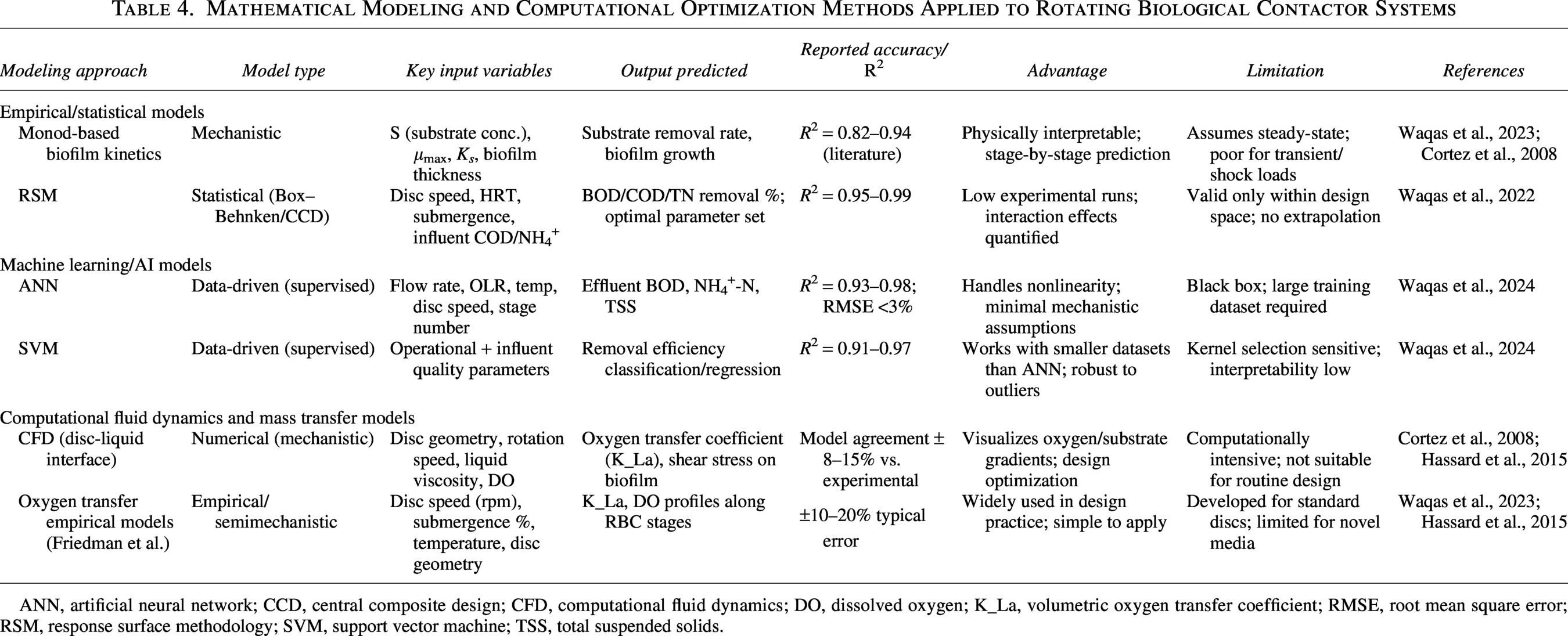
ANN, artificial neural network; CCD, central composite design; CFD, computational fluid dynamics; DO, dissolved oxygen; K_La, volumetric oxygen transfer coefficient; RMSE, root mean square error; RSM, response surface methodology; SVM, support vector machine; TSS, total suspended solids.
Response surface methodology has emerged as a powerful statistical tool for process optimization, achieving R2 values as high as 0.99 while requiring relatively few experimental runs. It enables quantification of interactions among operational variables such as HRT, disc speed, and submergence ratio. Recent advances in artificial intelligence have further enhanced RBC performance prediction. Artificial neural networks and support vector machines effectively capture complex nonlinear relationships between operational parameters and treatment outcomes, reporting prediction accuracies exceeding 90% (Table 4). These data-driven approaches are particularly valuable for real-time monitoring and process control, although their interpretability remains limited. In parallel, CFD and oxygen transfer models provide detailed insights into hydrodynamics, oxygen transfer, and biofilm shear forces within RBC reactors. CFD simulations show agreement within ±8–15% of experimental observations and facilitate reactor design optimization by visualizing oxygen and substrate gradients (Table 4). The integration of mechanistic, statistical, and AI-based approaches offers a powerful framework for improving RBC design, operation, and scale-up, supporting the development of more efficient and sustainable wastewater treatment systems.
Impact of disc and media characteristics on RBC treatment efficiency
Table 5 presents a comparative assessment of conventional, modified, and emerging media materials used in RBC systems, highlighting their influence on biofilm development, treatment efficiency, durability, and economic feasibility. The choice of media material plays a critical role in determining reactor performance by affecting microbial attachment, oxygen transfer, and available surface area for biofilm growth. Conventional materials, such as HDPE, polystyrene foam discs, and PVC corrugated sheets, remain widely used due to their low cost, mechanical stability, and satisfactory biofilm support characteristics. These materials typically provide surface areas ranging from 100 to 200 m2/m3 and are well-suited for municipal and industrial wastewater treatment applications (Table 5).
Comparative Assessment of Disc/Media Materials Used in RBC Systems
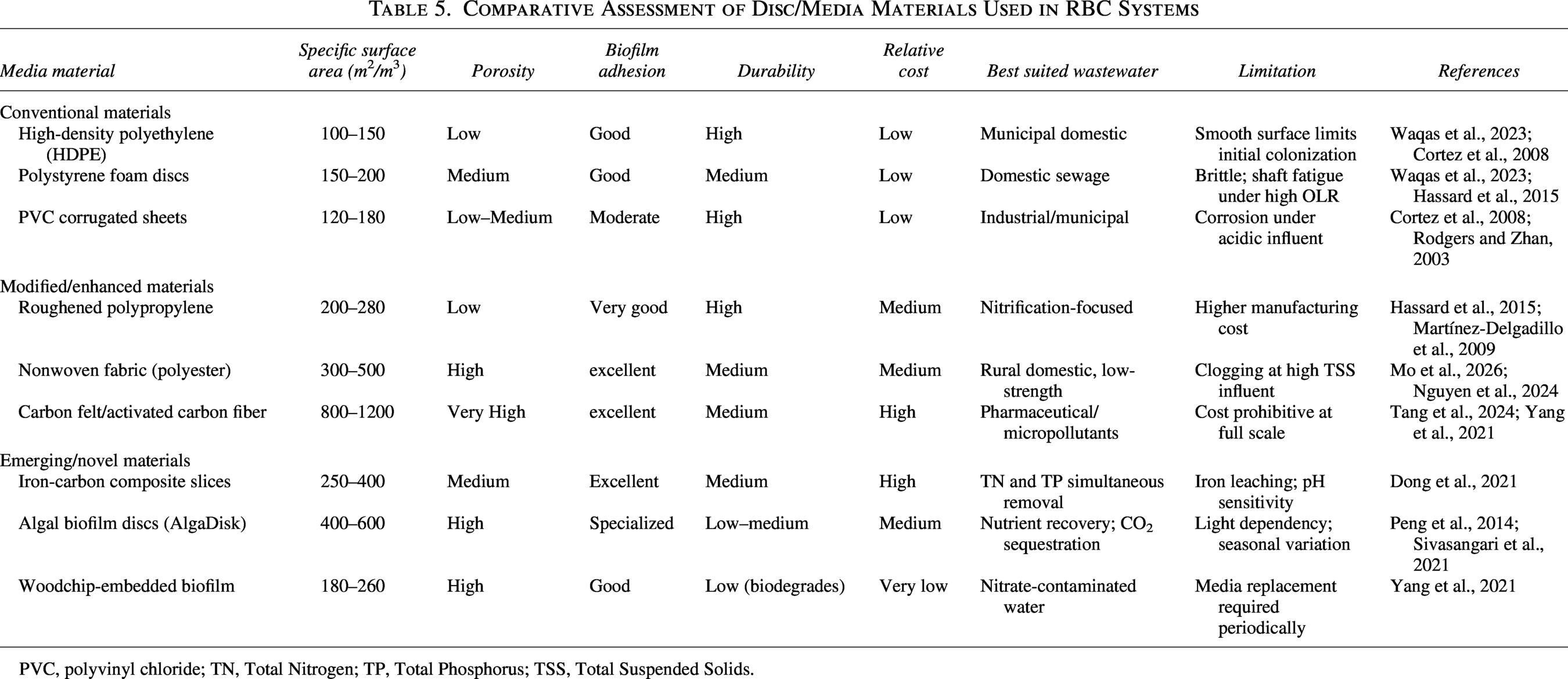
PVC, polyvinyl chloride; TN, Total Nitrogen; TP, Total Phosphorus; TSS, Total Suspended Solids.
However, their relatively smooth surfaces and limited porosity can restrict initial microbial colonization and overall treatment efficiency. To overcome these limitations, several modified media have been developed. Roughened polypropylene and nonwoven polyester fabrics offer significantly higher surface areas and improved biofilm adhesion, enhancing nitrification and organic matter removal. Nonwoven fabrics, in particular, provide excellent microbial attachment due to their high porosity, although clogging may occur under high suspended solids loading. Carbon felt and activated carbon fiber media exhibit the highest specific surface areas (800–1,200 m2/m3) and exceptional adsorption capacity, making them particularly suitable for pharmaceutical wastewater and micropollutant removal (Table 5). Nevertheless, their widespread application is constrained by high material costs. Recent advances have introduced novel media such as iron–carbon composite slices, algal biofilm discs, and woodchip-embedded supports, which expand the functionality of RBCs beyond conventional wastewater treatment. Iron–carbon composites facilitate simultaneous nitrogen and phosphorus removal, while algal biofilm discs enable nutrient recovery and carbon dioxide sequestration. Woodchip-based media offer a low-cost alternative for nitrate-contaminated waters. Overall, Table 5 demonstrates a clear transition from traditional support media toward multifunctional and resource-recovery-oriented materials that can improve treatment performance while supporting sustainable wastewater management objectives.
Techno-economic analysis of modern RBCs
From a techno-economic perspective, RBCs are considered economically attractive wastewater treatment technologies, particularly for small- and medium-scale treatment facilities. One of the major economic advantages of RBC system lies in its relatively simple mechanical and operational configuration. Unlike conventional activated sludge systems, RBCs do not require intensive aeration infrastructure, large blower systems, or complex sludge recirculation processes, resulting in reduced energy consumption and lower operational complexity. The attached-growth biofilm configuration further contributes to economic efficiency by enabling long biomass retention times and stable microbial activity without the need for continuous biomass recycling. This characteristic reduces operational control requirements and improves treatment stability under fluctuating hydraulic and organic loading conditions (Waqas et al., 2021a).
Operational studies have also shown that RBC systems generally produce ∼10–20% less excess sludge compared with conventional ASPs, thereby reducing sludge handling, transportation, and disposal costs (Waqas et al., 2021a). Lower sludge production additionally contributes to reduced environmental impact and improved process sustainability. Energy consumption is another important factor influencing the economic competitiveness of RBC systems. Due to passive oxygen transfer achieved through disc rotation and atmospheric exposure, RBCs typically consume less energy than aeration-intensive, suspended-growth technologies. Reported energy consumption values for fixed-film biological treatment systems, including biofilm-based reactors such as trickling filters and RBC-related technologies, generally range between ∼0.057 and 0.12 kWh/m3 of treated wastewater, depending on reactor configuration, operational conditions, and treatment objectives (Henrich and Marggraff, 2013). These comparatively low energy requirements highlight the economic potential of attached-growth treatment systems, particularly in regions where energy costs represent a substantial portion of wastewater treatment operational expenditures (Henrich and Marggraff, 2013; Waqas et al., 2021a). In addition, the relatively compact reactor footprint, low maintenance demand, and operational simplicity of RBC systems make them attractive for decentralized wastewater treatment applications and small communities with limited technical infrastructure. However, despite these economic advantages, modern RBC systems also face several techno-economic challenges. Mechanical maintenance of rotating shafts, bearings, and drive assemblies may contribute to long-term operational costs, particularly in aging systems or under high biomass loading conditions. Advanced hybrid RBC configurations incorporating membranes, conductive electrodes, or smart monitoring systems may further increase capital investment and system complexity. Consequently, while RBC systems offer strong potential for low-energy and cost-effective wastewater treatment, continued optimization of mechanical reliability, energy efficiency, material durability, and scale-up strategies will remain essential for improving their long-term economic sustainability and broader commercial adoption.
Conclusion
RBC technology, despite its early origins, has demonstrated a remarkable capacity for reinvention in response to evolving wastewater treatment challenges. This review highlights that the true strength of RBC systems lies not merely in their simplicity, but in their inherent adaptability, particularly the ability to couple hydrodynamic motion, biofilm stratification, and mass transfer processes within a single engineered platform. Advances in understanding mass transfer limitations, oxygenation dynamics, and biofilm–hydrodynamic interactions have significantly refined the mechanistic interpretation of RBC performance, shifting the perspective from empirical operation toward more predictive, model-driven design. Evidence from recent studies indicates that RBC can effectively treat a diverse spectrum of wastewaters, including municipal sewage, food-processing effluents, aquaculture wastewater, pharmaceutical residues, landfill leachate, and industrial waste streams. Depending on wastewater characteristics and reactor configuration, COD and BOD removal efficiencies frequently exceed 80–90%, while nitrogen removal can reach over 90% under optimized operating conditions. Emerging reactor designs, including waterwheel RBCs, pure-biofilm systems, and hydraulically driven RBCs, have further enhanced treatment performance through improved oxygen transfer, biofilm development, and nutrient removal while maintaining relatively low energy requirements.
Recent developments clearly indicate that the future of RBC systems is strongly linked to process intensification and hybridization. The integration of RBCs with bioelectrochemical systems, membrane processes, and advanced biological configurations has transformed conventional rotating media into multifunctional reactive interfaces, capable of simultaneous pollutant removal, energy recovery, and resource transformation. In particular, emerging configurations such as RDBERs demonstrate that RBC platforms can move beyond passive treatment units toward actively engineered bioelectrochemical systems, bridging the gap between wastewater treatment and circular bioresource utilization.
From a microbial and ecological perspective, RBC biofilms should no longer be viewed as homogeneous layers but rather as dynamic, spatially structured microenvironments governed by gradients in oxygen, substrate, and shear. The coexistence of aerobic, anoxic, and electroactive niches within a single rotating biofilm opens opportunities for simultaneous multipathway processes, including nitrification–denitrification coupling and extracellular electron transfer. This intrinsic stratification, when properly controlled through hydrodynamic and operational parameters, represents a key lever for enhancing system efficiency without increasing energy input. The evolution of RBC media materials has also played a crucial role in improving reactor performance. While conventional materials such as HDPE, PVC, and polystyrene remain widely used because of their durability and low cost, modified and emerging media—including roughened polypropylene, nonwoven fabrics, carbon felt, activated carbon fibers, iron–carbon composites, algal biofilm discs, and woodchip-embedded supports—provide enhanced surface area, biofilm adhesion, nutrient recovery potential, and opportunities for simultaneous carbon, nitrogen, and phosphorus removal. These advances demonstrate a clear transition from simple support structures toward multifunctional biofilm carriers designed to maximize treatment efficiency and resource recovery. The future development of RBC technology will increasingly depend on data-informed design and intelligent operation. Mathematical modeling approaches, ranging from Monod-based biofilm kinetics and response surface methodology to artificial neural networks, support vector machines, and CFD, are providing unprecedented capabilities for performance prediction, process optimization, and reactor scale-up. The integration of these modeling tools with advanced sensors and real-time monitoring systems offers a pathway toward predictive control of biofilm behavior and adaptive reactor management under variable wastewater conditions.
Despite these advances, several challenges remain that must be addressed to unlock the full potential of next-generation RBC systems. Issues related to biofilm stability, mechanical durability, seasonal variability, and fouling in hybrid configurations require integrated solutions that combine reactor design, materials innovation, and real-time process control. Moreover, while laboratory-scale studies demonstrate promising results for RBC-based hybrid and energy-recovering systems, their scalability, long-term stability, and techno-economic feasibility under real wastewater conditions remain areas requiring further validation. Also, the evolution of RBC technology will likely be driven by data-informed design and intelligent operation. The integration of computational modeling, machine learning, and advanced sensing techniques offers a pathway toward predictive control of biofilm behavior and reactor performance. Such approaches can enable RBC systems to transition from conventional fixed designs to adaptive treatment platforms, capable of responding dynamically to variations in influent characteristics and environmental conditions. In the broader context of sustainable wastewater management, RBC systems present a compelling opportunity to align treatment objectives with energy efficiency, resource recovery, and process resilience. Their relatively low energy footprint, combined with emerging capabilities for energy and nutrient recovery, positions RBCs as strong candidates for decentralized and next-generation treatment infrastructures. Ultimately, the continued advancement of RBC technology will depend on the ability to integrate fundamental process understanding with innovative engineering design, thereby transforming a historically robust technology into a future-ready platform for sustainable water and resource management.
Authors’ Contributions
S.S.C. contributed to conceptualization, methodology development, investigation, and preparation of the original draft. S.N. was involved in data curation, formal analysis, visualization, and original draft writing. D.G. contributed through literature review, validation, and article review and editing. S.M. assisted in data interpretation, visualization, and review and editing of the article. A.P. supported methodology development, resource provision, and article review and editing. S.S. contributed to conceptualization, supervision, project administration, funding acquisition, and critical review and editing of the article.
Footnotes
Author Disclosure Statement
The authors declare that they have no known competing financial interests or personal relationships that could have influenced the work reported in this article.
Funding Information
This research work was supported by the Scheme for Promotion of Academic and Research Collaboration (SPARC), India, Grant no. SPARC/2024-2025/ENSU/P3267.