







Abstract
This article examines the prevalence and characteristics of mixed methods research in the relatively new subdiscipline of sport management. A mixed methods study is undertaken to evaluate the epistemological/philosophical, methodological, and technical levels of mixed methods design in sport management research. The results indicate that mixed methods research is still rarely used, poorly legitimized and often weakly designed in this field. Our conclusions lead to the hypotheses that the more central a research field is, the higher the prevalence of mixed methods, and that mixed methods only slowly trickle down from central to more peripheral subdisciplines. Implications of the research findings for both mixed methods scholars and sport management researchers are discussed, and directions for future research are proposed.
Mixed methods (MM) research has become an increasingly influential research approach in the social and behavioral sciences. Proposals for the integration of quantitative and qualitative methods have been advanced in several pure and applied disciplines (Johnson & Onwuegbuzie, 2004; Tashakkori & Teddlie, 2003, 2010), including psychology, sociology, education, nursing, and management. Yet our understanding of the adoption of MM research within less established disciplines remains limited. A major purpose of this article is to add to the knowledge base by ascertaining the extent to and ways in which MM research is undertaken within one emerging academic subdiscipline, that of sport management. This knowledge would help us determine how MM penetrates this relatively new subdiscipline. This will be done by assessing the prevalence rates of MM in the sport management field as well as the characteristics of MM design in this subdiscipline.
Sport management offers a significant case study because since 1990 a number of calls for MM research have been made in this academic subdiscipline. In that year, Olafson (1990) encouraged sport management researchers to “consider the use of more than a single data source” and “multiple data gathering methods” (p. 117). There is a lack of evidence as to whether this and subsequent calls for MM (Millington & Wilson, 2010; Rudd & Johnson, 2010) have been taken seriously by sport management scholars, but the limited data that are available suggest that this may not be the case (Quarterman et al., 2006; Rudd & Johnson, 2010). This article addresses that knowledge gap by producing a comprehensive understanding of MM research in sport management. In so doing, we seek to draw lessons for both the MM research community and the field of sport management as well as formulate directions for future research.
Although there is no agreed-upon definition of MM research, in a broad sense MM can be defined as the combination of quantitative and qualitative approaches within a single study. A frequently cited definition is that MM is “the type of research in which a researcher or team of researchers combines elements of qualitative and quantitative research approaches . . . for the broad purposes of breadth and depth of understanding and corroboration” (Johnson, Onwuegbuzie, & Turner, 2007, p. 123). This definition stresses that MM research includes the standpoints of both qualitative and quantitative research. A key characteristic of MM research is that it replaces the either-or dichotomy with continua that describe a range of options from across the methodological spectrum (Teddlie & Tashakkori, 2009). MM research invites dialogue between qualitative and quantitative approaches; however, it can involve mixing also at the level of method or methodology when there are paradigmatic differences (Greene, 2012; Johnson & Onwuegbuzie, 2004).
Drawing on an in-depth assessment of MM research in sport management, this article will show that MM is still underused, poorly legitimized, and often weakly designed in this subdiscipline. It is further argued that MM designs can enhance the quality of sport management research, and we will demonstrate this by drawing on examples of good practice. The article is structured as follows. In the next section, the methodology used in our study is discussed. We then examine the prevalence rates of MM research in the subdiscipline of sport management. The remainder of the article presents and reflects on the research findings in relation to six key dimensions of MM design (i.e., paradigm, rationale, data collection methods, priority, timing, and integration, respectively), and connects these findings to contemporary issues and debates in the MM literature. The article concludes by reflecting on the implications of the research findings for both MM scholars and sport management researchers.
Mixed Methods Design Used in This Study
This study asked to what extent and how is MM research adopted in the subdiscipline of sport management. This overarching mixed research question was broken down into two subquestions: (a) What is the prevalence rate of MM designs in studies conducted in sport management and (b) How are MM used in the published sport management studies that could be identified as mixed? These questions were investigated using a combination timing MM design with three stages. Below we elaborate on each of these stages and their interconnections. As will be shown below, our approach can be described as QUANT → QUANT + qual in the notation system proposed by Morse (1991). The emphasis in our approach was on the quantitative component, which was complemented by qualitative methods. The design was mixed in the research question formulation (as noted above), sampling procedures, data analysis, and data interpretation stage (inferences and explanations). The strategies used to mix quantitative and qualitative approaches in these different stages of the study are discussed in detail below.
Sampling Employed in This Study
The sampling process in this study was multilayered involving the selection of journals within the discipline of sport management, and specific articles within these journals. The unit of analysis in this study was the individual articles from research journals in the field of sport management. This approach was selected because it was best suited to examine prevalence rates (Alise & Teddlie, 2010), which here refers to the proportion of sport management studies using an MM approach. A broad search of relevant articles using databases did not retrieve a valid sample. The search of the ISI Web of Science, using “sport management”and “mixed methods” as the search terms, retrieved 33 articles for the period 1950-2011. Content analysis of these 33 articles found that only two could be classified as MM studies in sport management. Furthermore, we searched four MM journals (Journal of Mixed Methods Research, International Journal of Multiple Research Approaches, Quality and Quantity, and Field Methods) for studies in sport management, using the search term “sport.” This search retrieved eight articles for all journals. Content analysis found that two studies could be classified as MM research in sport management. It would not be possible to determine prevalence rates specific to sport management from the ISI Web of Science or the MM journals as the vast majority of articles recorded in these publication outlets were not related to sport management. As such, we purposively selected journals that were specific to the discipline of sport management.
Selection of Journals
The purposively selected journals represented the most prestigious journals within the discipline of sport management. Although publications reporting MM research in sport management might also be found in books and conference articles, we concur with Bryman (2006) that journal articles are “a major form of reporting findings [which] have the advantage that, in most cases, the peer review process provides a quality control mechanism” (p. 100). To keep the sample sizes manageable, only the top four sport management journals were selected to provide articles for the study sample. The four selected journals were the Journal of Sport Management (JSM), Sport Management Review (SMR), Sociology of Sport Journal (SSJ), and International Review for the Sociology of Sport (IRSS). These journals were identified as the four elite journals in terms of prestige, contribution to theory, contribution to practice and contribution to teaching in the multidimensional rating scheme developed by Shilbury and Rentschler (2007). SSJ and IRSS are not solely dedicated to sport management but also publish articles in the field of sport sociology; however, they are considered “important outlets for sport-related research and . . . directly relevant to sport management” (Shilbury & Rentschler, 2007, p. 34). Three of the journals are rated in the 2010 Journal Citation Reports® (Thomson Reuters, 2011). With impact factors of 0.917 for SSJ, 0.827 for ISSR, and 0.814 for JSM, they were rated at 54th (SSJ) and 66th place (ISSR) out of 137 sociology journals and 112th place (JSM) among 166 management journals. These journals can be described as the most prestigious journals of a minor subfield.
Selection of Articles
All articles from the specific sport management journals were selected for this study. The articles were searched and accessed using the publishers’ websites, ISI Web of Science, Scopus, and ProQuest Sociological Abstracts. For JSM, the search covered the period 1987-2011, for SMR the period 1998-2011, for SSJ the period 1984-2011, and for IRSS the period 1966-2011. The total number of retrieved articles was 2,536. These 2,536 articles represented the sampling units that were distinguished for selective inclusion in the analysis.
Data Collection and Coding Procedures
The first stage of the research involved the designation of the article type as either an MM, qualitative, or quantitative study. This was determined in two phases. First, building on the approach taken by Bryman (2006), we searched the 2,536 articles for those studies in which the words or phrases “mixed method,”“multi-method,”“triangulation,”“quantitative AND qualitative,”“survey AND interview,”“survey AND focus group,”“survey AND participant observation,”“survey AND document analysis,”“survey AND discourse analysis,”“questionnaire AND interview,”“questionnaire AND focus group,”“questionnaire AND participant observation,”“questionnaire AND document analysis,” or “questionnaire AND discourse analysis” appeared in the title, keywords, or abstract. This meant that the sample comprised articles which to some degree foregrounded the fact that the study was based on a combination of quantitative and qualitative research (Bryman, 2006).
The decision to include a range of search terms was based on the fact that there has been little consistency in the use of terms such as MM or multimethods. In recent years there have been attempts to sort out some of the different terms scholars use to describe multiple and mixed methods. For example, Tashakkori and Teddlie (2003) argue that MM research combines qualitative and quantitative methods, whereas multimethod research uses more than one method but restricted to either qualitative or quantitative approaches. However, we expected that older studies in particular would be less likely to use the term mixed methods consistently as it has only come to be used more frequently in recent decades (Johnson et al., 2007; Small, 2011). By expanding the search terms to include more widely used methodological terms that to some degree still foregrounded the fact that the study was based on a combination of quantitative and qualitative research, we were able to locate such studies. We found that there is still little consistency in the use of the term mixed methods in sport management research, as indicated by the fact that only five studies in the sample actually used the term mixed methods to describe their research design. This suggests that the specific terminology that is now commonplace among specialist MM researchers is still not fully accepted in the relatively new subdiscipline of sport management. The decision to include search terms with diverse methodological connotations meant that while a more exhaustive sample was produced, this sample had to be rigorously scrutinized to determine which studies comprised MM (as opposed to a multimethod or monomethod research).
Ninety-one articles matched the search terms and therefore to some degree foregrounded the use of MM. The content of these articles was analyzed in depth using researcher triangulation. The data collected from each article included information that identified the article and detailed information about the methods employed in the article. These data were recorded on a code sheet specifically developed for this study. The designation of the article type was determined using the evaluation criteria proposed by Creswell and Plano Clark (2011). First, we examined the method section for evidence of the combined use of qualitative and quantitative data collection and analysis techniques. We then searched the introduction, results, and discussion for evidence of combining of quantitative and qualitative methods, as well as for the use of MM terminology. This process was done independently by two coders for each article. The coders recorded the key information and indicators and then made a global assessment of the methodological nature of the article. The articles were coded similarly 93% of the time. Those not coded similarly were resolved in consultation; they were further discussed as well as independently reviewed and coded by the third author.
The vast majority of research articles assessed in this study were clearly identifiable as either MM, qualitative, or quantitative. In some cases, however, it was it was more difficult to determine the methodological nature of the article, for example, in the case where the researcher claimed to have used qualitative methods but the only qualitative data gathered were brief responses to open questions in a questionnaire. Articles in which these responses were the only traces of a qualitative strand were excluded on the grounds that such an approach cannot be regarded as genuinely qualitative (Bryman, 2006). Nonempirical studies that matched the search terms but did not present original research were also excluded. Given the high degree of intercoder reliability, we feel confident that our evaluation is empirically reliable. The final MM sample contained 43 articles: 11 articles from JSM, 6 from SMR, 8 from SSJ, and 18 from IRSS.
The findings from Stage 1 (QUANT) acted as input into the second (QUANT) and third (qual) stages of the study (Morse, 1991). These stages involved quantitative (Stage 2) and qualitative (Stage 3) content analysis of the 43 MM articles to answer the second part of the research question: How MMs are used in the sport management studies that could be identified as mixed. The sample of the qualitative method (Stage 3) was nested within that of the quantitative method in Stage 1 to maintain a single, integrated MM study (cf. Yin, 2006). The articles were analyzed in relation to six key dimensions of MM design: paradigm, rationale, data collection methods, priority, timing, and integration.
Paradigms
Although we ourselves worked in this study from a pragmatic stance (discussed below), we attempted to categorize articles in the study by their underlying paradigmatic basis. For each article the research paradigm was recorded, based on the noted presence of designated elements of that paradigm (Alise & Teddlie, 2010). To facilitate the identification of the philosophical assumptions guiding the studies, a broad typology was used: purist stance, pragmatic stance, dialectical position, other paradigm stance, paradigm not stated. These categories were derived from key contributions to the debate on philosophical justifications for MM research (e.g., Harrits, 2011; Johnson & Onwuegbuzie, 2004; Mertens, 2012; Morgan, 2007; Onwuegbuzie, Johnson, & Collins, 2009).
Rationale
The rationale for combining qualitative and quantitative approaches was coded and analyzed using the typology proposed by Bryman (2006), which identifies 18 rationales. Bryman’s scheme enabled a detailed analysis of the rationales and actual practices in each research article. It also facilitated comparison of the rationales for mixing quantitative and qualitative approaches in sport management to those in other areas of social science research.
Data Collection Methods
The data collection methods used in each article were coded using an inductive approach. Common categories of data collection techniques were constructed based on the empirical data obtained from the articles. Common data collection techniques included questionnaires, qualitative interviews, observation, focus groups, and secondary data.
Priority
Each article was examined to determine the priority or status afforded to quantitative and qualitative methods in the research strategy, sampling procedures, data gathering methods, data analysis, and interpretation. The priority was coded using a basic three-item typology: quantitative dominant, qualitative dominant, and equal status. These items relate to different positions on the qualitative–MM–quantitative continuum (Johnson et al., 2007; Teddlie & Tashakkori, 2009). The articles were defined as “quantitative dominant” where most aspects of research design were classified as predominantly quantitative, and vice versa for “qualitative dominant.” The articles were defined as “equal status” where the priority afforded to quantitative and qualitative approaches was (roughly) the same for all the aspects of research design.
Timing
The timing component of the MM designs used in the journal articles was coded using four categories derived from the work of Creswell and Plano Clark (2011), Small (2011), and Teddlie and Tashakkori (2009). The codes employed were concurrent (or parallel), sequential–qualitative first, sequential–quantitative first, and multiphase combination timing (i.e., a combination of 1 and 2/3). These methodological terms are further discussed below.
Mixing
The mixing component of MM design refers to the degree to which quantitative and qualitative methods are combined in different inquiry phases (Creswell & Plano Clark, 2011; Yin, 2006). To facilitate evaluation of the integration of qualitative and quantitative methods in the articles, we examined whether quantitative and qualitative methods were brought together or kept separate in each of five inquiry phases: research question formulation, sampling procedures, data collection, data analysis, and data interpretation.
Contribution of Qualitative Analytical Techniques
This study used a combination timing design with an emphasis on the quantitative component. The qualitative strand was important for ascertaining the ways in which MMs are used in the published sport management studies that could be identified as MM. Qualitative data pertaining to the six dimensions of MM design were recorded and analyzed in order to generate rich descriptions of the studies’ MM strategies and procedures. The qualitative analysis provided deeper understanding to the broad-pattern findings uncovered through the quantitative analysis. To further enhance the mixing of quantitative and qualitative analyses, in the data analysis stage we used data conversion techniques. Collected qualitative data were converted into numerical data that could be analyzed statistically for prevalence and characteristics, providing numbers, sums and percentages by type of article and by dimension. Qualitative data were converted into narrative categories, which were then converted into numeric codes, which were then analyzed statistically.
The integration of the quantitative and qualitative strands enabled us to produce a more comprehensive and nuanced understanding of the research question. In the data interpretation stage, the mixing of quantitative and qualitative analyses was done to elicit convergent and divergent evidence for the research question. This was achieved through synthesis of the inferences that were obtained on the basis of the quantitative and qualitative strands of the study. The findings elicited through these methods, and the patterns of convergence and divergence across the findings from the different strands, are presented in the next sections.
Prevalence of Mixed Methods Studies
The first stage of the study identified the prevalence rates of MM research published in the four sport management journals during the period 1966-2011. The term prevalence rate refers to the proportion of articles using a particular methodological approach (Alise & Teddlie, 2010). In our study, it referred specifically to the proportion of articles in the sample (n = 2,536) using an MM approach. The overall prevalence rate of MM articles in the four journals combined (1966-2011) is 1.7%. As Table 1 shows, the prevalence rates vary greatly from journal to journal. The highest rate is 3.1% in SMR, followed by 3.0% in JSM, 1.8% in IRSS, and 0.8% in SSJ. It should be noted, however, that there is a large difference in running time between IRSS (1966-present) and, to a lesser extent, SSJ (1984-present) and the other journals. The number of published articles in these particular journals is relatively stable over the years, and the total number of articles in our sample only increases after the introduction of JSM (1996) and SMR (1998). Prevalence rates from 1998 to 2011 are 3.1% for SMR, 2.5% for JSM, 2.2% for IRSS, and 0.8% for SSJ.
Prevalence of MM Articles in Four Leading Sport Management Journals.
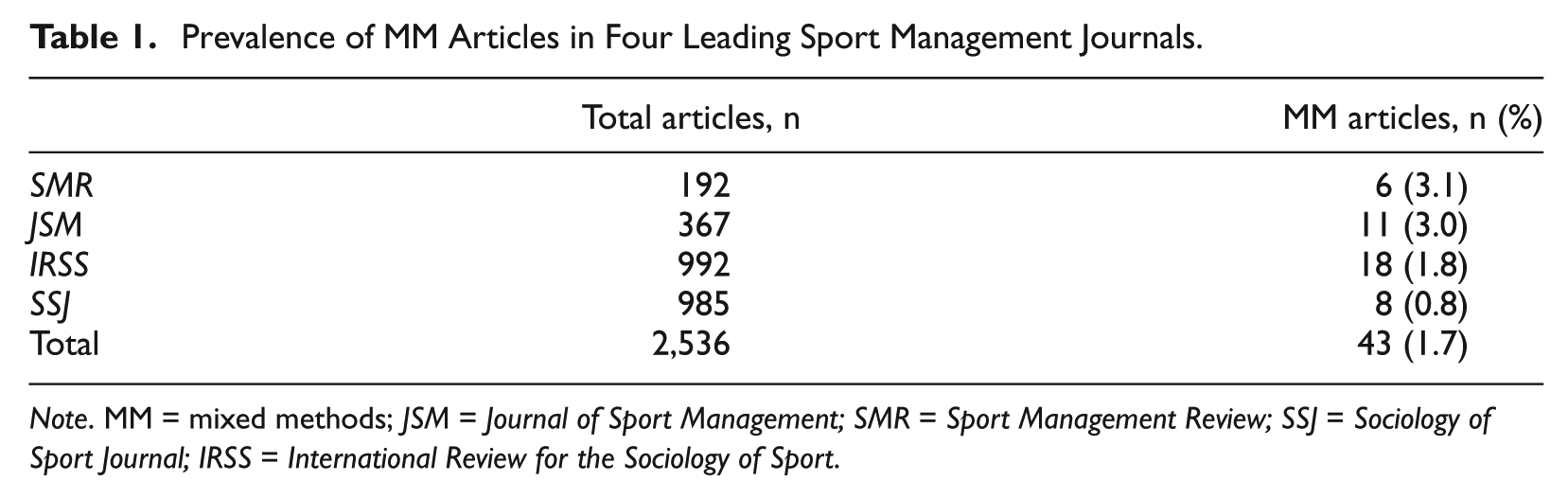
Note. MM = mixed methods; JSM = Journal of Sport Management; SMR = Sport Management Review; SSJ = Sociology of Sport Journal; IRSS = International Review for the Sociology of Sport.
Direct comparison with prevalence rates in other disciplines as found in previous research is not possible because of methodological differences (e.g., Alise & Teddlie, 2010). However, a broad comparison with the discipline of management, the mother discipline of sport management, is possible because of the broadly similar search criteria used in our study compared with Molina-Azorín (2011). 1 This comparison suggests that MM research is strongly underrepresented in the subdiscipline of sport management. Molina-Azorín (2011) studied four management journals between 1997 and 2007, and found prevalence rates varying between 6.7% and 14.6%. Prevalence rates for sport management in the same period vary between 0.0% and 3.7%. The highest prevalence rate in our overall sample is 4.9% in 2008, which is lower than the lowest prevalence rate found by Molina-Azorín. This discrepancy is even more striking given the more inclusive nature of our search criteria compared with Molina-Azorín’s (see Note 1). More advanced statistical procedures using prevalence ratios revealed that sport management articles were about seven times less likely to be an MM study than management articles. 2
Our quantitative findings further indicate that no clear trend can be observed in the development of prevalence rates over time. Figure 1 shows that while the number of articles published in the four journals has increased over the years, the number of MM articles has only slightly gone up. Because the number of journals in our sample varies over the years, the prevalence rates are not well comparable over time. However, even a look at the past 14 years (1998-2011), when all four journals were in circulation, shows a relatively low prevalence of MM articles and no increase in the proportion of MM articles published in the four journals; in spite of the increase in the number of MM studies in the social and behavioral sciences, marked by specialized MM handbooks, textbooks, journals, special issues, and conferences (Onwuegbuzie et al., 2009). These findings lead us to conclude that the use of MM research in the subdiscipline of sport management is underrepresented compared with more established disciplines such as management.
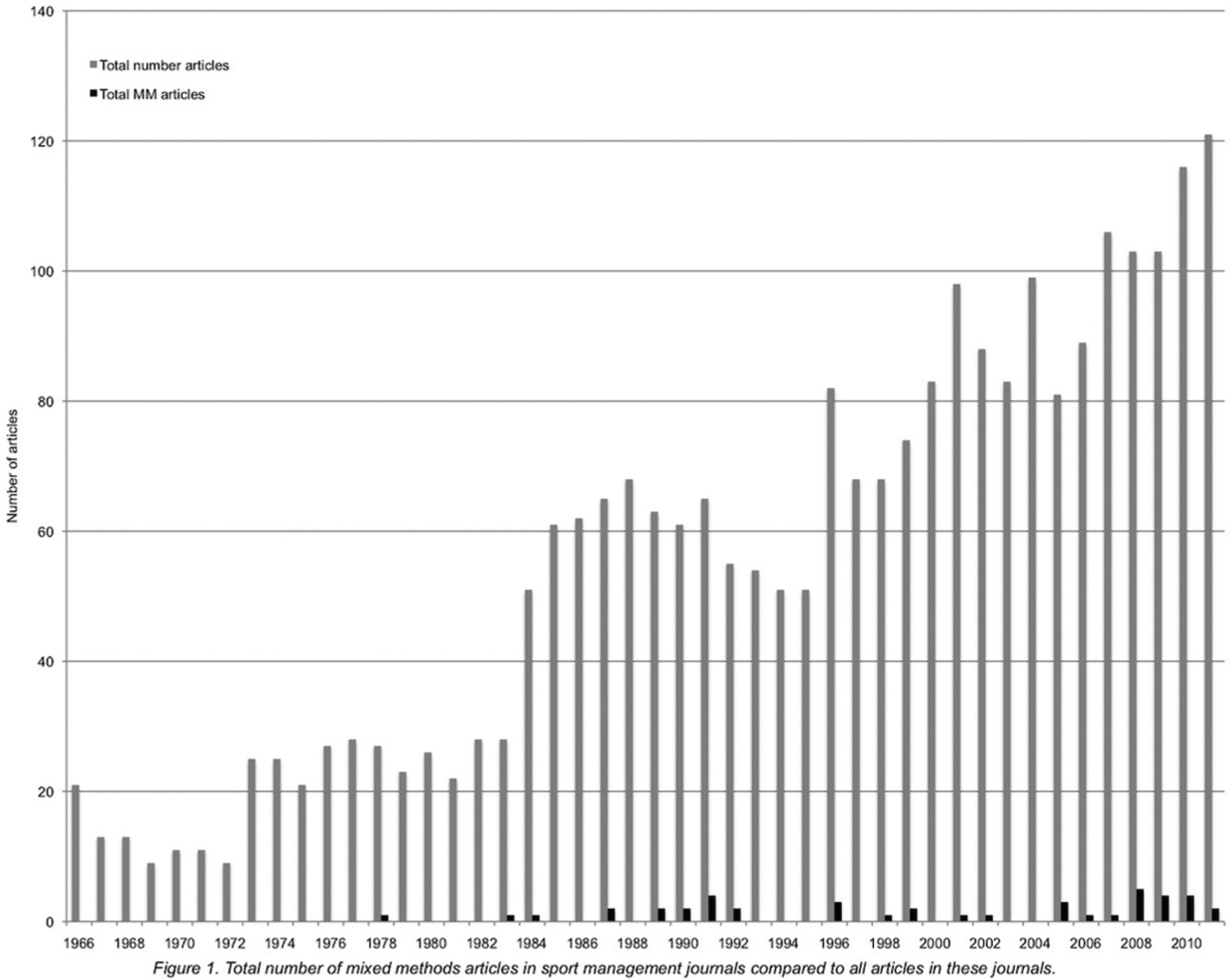
Total number of mixed methods articles in sport management journals compared with all articles in these journals.
The identification of MM designs in studies published in the four most elite sport management journals served as input for the second and third stages of the study, which sought to ascertain the ways in which MM are used in the published sport management studies that could be identified as mixed. As noted, this involved examining the articles in relation to six key dimensions of MM design using quantitative and qualitative techniques. The findings for each dimension are discussed below.
Paradigms
Questions regarding the possibility and sensibility of combining different philosophical frameworks when we mix methods are a contested area in MM research (Greene, 2008). To make sense of this debate, it is important not to confuse methodological issues with philosophical assumptions. In this context, Greene (2012) distinguishes between “mixed methods lite” and “mixed methods heavy.”“MM lite” is a research strategy that—as is employed in this article—involves mixing only at the level of method or methodology, within the same paradigmatic philosophical assumptions. “MM heavy,” on the other hand, also concerns the crossing, mixing, or matching of the philosophical underpinnings of research strategies.
Greene (2007) contends that most advocates of MM research arguably work within one philosophical paradigm. They thus enter an MM lite discussion to justify the use of both quantitative and qualitative methods from, for example, a postpositivist, interpretive, transformative or dialogic position (Deetz, 1996; Mertens, 2012). However, there is a group of MM researchers who go beyond this level and challenge and cross philosophical paradigm borders as well (Gioia & Pitre, 1990; Greene, 2012; Schultz & Hatch, 1996). These researchers shift to a “mixed method heavy” discussion on how to integrate, combine, use, or connect different philosophical paradigms in order to take advantage of the diversity of perspectives that social science has to offer.
Schultz and Hatch (1996) distinguish three different metatheoretical positions for doing multiparadigm research. The first position is paradigm incommensurability. This position departs from the separate development and application of each paradigm because their assumptions about the nature of social reality and our ability to know it prevent combinations of concepts and theories. It is also called the “purist stance” (purely postpositivist, purely interpretivist, or purely constructivist). The second position is paradigm integration. This position enables researchers to assess and synthesize a variety of contributions. It often leads to a framework that mixes and combines aspects of different paradigmatic assumptions, but is vulnerable with respect to its consideration of the relationship between the assumptions themselves. The third position is paradigm crossing. This position recognizes and confronts multiple paradigms, and can be found in various versions in the MM literature, like the pragmatic stance and the dialectical stance.
The pragmatic stance is quite popular among MM researchers. They interpret philosophical assumptions as logically independent that can be mixed and matched, in conjunction with choices about the mix of methods most appropriate for the given inquiry problem (Johnson & Onwuegbuzie, 2004; Morgan, 2007). According to the dialectical stance, differences between philosophical paradigms should not be ignored or reconciled, but must rather be honored in ways that maintain the integrity of each paradigm. Researchers should dialogue “across [paradigm] differences respectfully and generatively toward deeper and enhanced understanding” (Greene, 2007, p. 14). Moreover, the differences should be deliberately used both within and across studies toward a dialectical discovery of enhanced understandings, new and revised perspectives and meanings.
From a research strategy point of view, this paradigm crossing can be further subdivided into sequential, parallel, bridging, and interplay crossing strategies. The sequential strategy allows one paradigm to influence the other, but always in one direction only. In the parallel strategy, the researcher applies different paradigms on equal terms but separately. The bridging strategy assumes that the boundaries between paradigms are more permeable and that second-order concepts can act as bridges between them. The interplay strategy allows the researcher to move back and forth between paradigms. This strategy respects differences in research paradigms and wishes to take advantage of this diversity by the simultaneous recognition of both contrasts and connections between paradigms. This strategy thus searches for cross-fertilization and resists the incommensurability as well as the integration position (Schultz & Hatch, 1996). The interplay strategy is closely related to the dialectic stance, which requires from researchers to make Gestalt switches from one lens to the other, going back and forth, multiple times (Greene, 2007; Johnson, 2008).
From this short overview, two things become clear. First, MM research is not a separate epistemological paradigm. Different research paradigms are involved in the ways MM research is justified and carried out (Harrits, 2011). Second, it is important that MM researchers are aware of and explicit in their paradigmatic positioning because this legitimates the use, order, and relative priority of MM in their studies (MM lite) and their stance toward paradigm integration or crossing (pragmatic or dialectical) and the best way to do so (sequential, parallel, bridging, interplay; MM heavy).
In spite of this cutting-edge theoretical discussion in the MM literature, our study identified only five sport management articles (11.6%) that paid attention to their paradigmatic position. Four of those articles represented a purist stance; one a pragmatic stance. All other articles did not state their paradigmatic position.
The five articles that explicitly paid attention to their paradigmatic position could all be classified as MM lite. They discussed the methodological aspects of mixing methods, but they all stayed within one and the same philosophical paradigm. Not a single article could be found in our sport management literature sample that explicitly tried to integrate or cross different paradigms, either from a pragmatic or a dialectical stance.
Our qualitative data further suggest that those articles that did pay attention to their paradigmatic position poorly legitimized their MM design. The work of Koukouris (1991) on disengagement from elite sport is a case in point. Koukouris’s research was undertaken from within a phenomenological perspective. The study sought to combine qualitative and quantitative methods despite taking a paradigm stance that is typically associated with qualitative methods with minimum structure. The standardized questionnaire featured centrally in the study, which suggests a discrepancy between the philosophical framework and the research design of the study. The use of MM was neither legitimized nor reflected upon in the study.
The study by Müller, Van Zoonen, and De Roode (2008) on the integrative power of sport is exemplary for a “MM lite” article that explicitly pays attention to its paradigmatic position but does not reflect on the “MM heavy” discussion. The authors adopt a cultural studies methodological approach, called the “circuit of culture.” This approach conceives cultural phenomena as the end result of the combined actions and mediations of a set of social actors. To investigate the various actors that were central in their study, Müller et al. collected and analyzed four different sources of data, based on a discourse analysis, a survey, in-depth interviews, and ethnographic fieldwork which included participant observation.
Their analysis offers an outstanding case to demonstrate how the use of MM can contribute to the understanding of a complex social phenomenon in sport; in this case, the social integration value of sport participation. The authors pass with flying colors in that respect. However, their case also offers an invitation par excellence to discuss their philosophical assumptions and to explore or discuss the issue of paradigm crossing and what position they take in that regard. For example, the subtitle of their article is “imagined and real effects of sport events on multicultural integration.” Can we know “real effects”? And can we know “real effects” with the use of a critical discourse analytical perspective? Which of the methods used (discourse analysis, interviews, participant observation, survey) contributes to our understanding of imagined and real effects, respectively?
Questions like these remain untouched in the article of Müller et al. (2008). But that goes for all our sample articles. A paradigm-sensitive use of MM can hardly be found in the sport management literature; a discussion of their philosophical stances and paradigm integration or crossing is completely absent. This is a striking example of how cutting-edge debates in MM research may not easily penetrate scholarly subdisciplines, in this case sport management.
Rationales for Mixed Methods Research
A key principle of MM design is to identify and explicitly formulate the reason(s) for combining quantitative and qualitative approaches (Creswell & Plano Clark, 2011). This principle derives from the premise that quantitative and qualitative approaches should only be mixed when there is a specific reason to do so. The overall rationale of MM research is that the combined use of quantitative and qualitative approaches can provide a fuller understanding of research problems than a monomethod approach. The added value of MM research is often expressed in terms of its superiority in addressing confirmatory and exploratory questions simultaneously, providing stronger inferences, and offering the opportunity for a greater assortment of divergent views (Teddlie & Tashakkori, 2009). In recent years, a variety of reasons for mixing quantitative and qualitative approaches have emerged (Bryman, 2006; Collins, Onwuegbuzie, & Sutton, 2006). However, we know that the principle of formulating the reason for combining quantitative and qualitative approaches is not always met, and that even where such a rationale is identified, there can be a mismatch between the rationale and how it is used in practice (Bryman, 2006).
Our assessment of MM designs used in sport management studies found that more than one third of the articles (34.9%, or 15 articles) did not contain any explicitly formulated justification for combining quantitative and qualitative approaches. This percentage is higher than that found by Bryman (2006) for social science research in general (26.7%). This finding suggests that the rationale for using MM research is quite often not thought through sufficiently in the area of sport management, a tendency that reflects MM designs in social science research (Bryman, 2006).
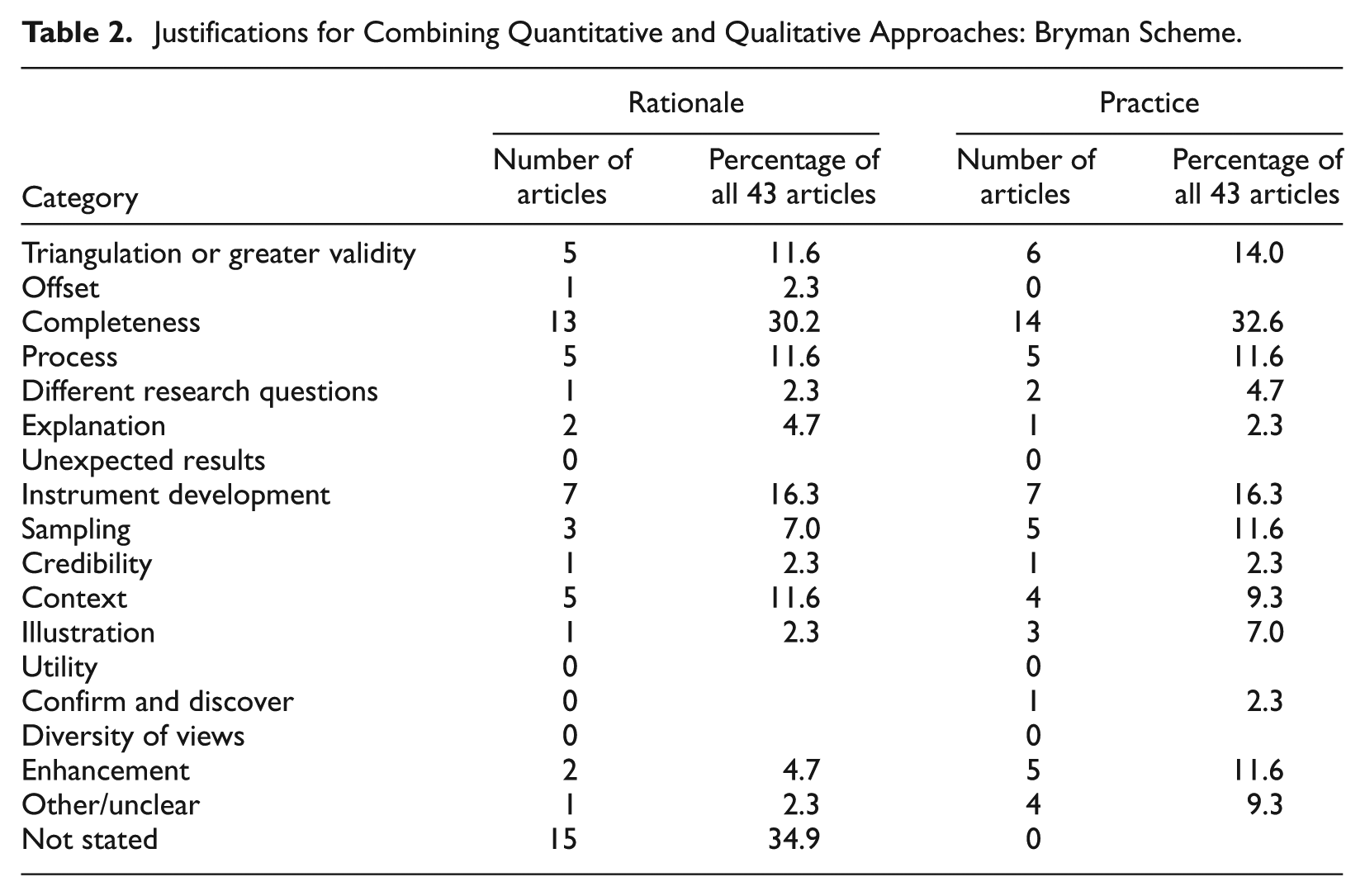
The stated justifications for combining quantitative and qualitative approaches are shown in Table 2. Completeness was presented as rationale in 13 articles (30.2%). These studies sought to combine quantitative and qualitative approaches in order to generate a more comprehensive account of the research problem. This rationale was stated more than twice as often in the sport management articles than in the social science research analyzed by Bryman (2006; 13%). Instrument development was the second most cited reason for combining quantitative and qualitative approaches, in seven articles (16.3%). The majority of these studies used qualitative findings to develop questionnaire or scale items. The purposes of triangulation, process, and context were each found in five articles (11.6%). Triangulation refers to the traditional view that quantitative and qualitative research can be combined for mutual corroboration and to produce stronger inferences. The process rationale views qualitative research as providing an account of developments, whereas quantitative research provides an account of structure. Finally, in the articles that justify MM in terms of context, qualitative data are seen to provide contextual understanding to the generalizable, broad-pattern findings uncovered through quantitative methods (Bryman, 2006).
Justifications for Combining Quantitative and Qualitative Approaches: Bryman Scheme.
Among the articles that provided an explicitly formulated reason for combining quantitative and qualitative approaches, we found some examples of good practice. A noteworthy example is Bradbury’s (2011) research on Black and minority ethnic participation in amateur soccer clubs in England, which used a context rationale. The survey found differentiated patterns of participation and a concentration of Black minority ethnic players, coaches, and administrators at a small number of clubs. Through subsequent qualitative interviews with participants, Bradbury was able to interpret the survey findings in terms of the sociohistorical development of these clubs as sites of resistance to racisms and exclusions within preexisting White soccer networks, and as “symbols of positive cultural identity production” (Bradbury, 2011, p. 24). This study exemplifies how quantitative and qualitative methods can be combined to produce stronger inferences. A further rationale for MM in this particular study would have been that of “different research questions,” where the quantitative survey is better equipped to address the what question (i.e., the extent of Black and minority ethnic participation in soccer clubs), and the qualitative interview to answer the how or why question (e.g., why their participation is concentrated in a small number of clubs). However, this rationale was neither stated nor practiced as such in this study.
Whereas Bradbury’s (2011) study only used one explicitly formulated rationale, Walker and Kent’s (2009) MM design employed multiple rationales. Their study examined how National Football League (NFL) fans perceived and reacted to corporate social responsibility activities. Specifically, the study sought to explore the relationship between corporate social responsibility activities and fans’ evaluation of reputation and patronage intentions, and the moderating effect of team identification therein. The first rationale for MM was completeness, where qualitative data were used to expand and enrich the quantitative findings derived from a questionnaire completed by 297 fans of two NFL teams. The qualitative component involved 11 semistructured interviews with fans. The second rationale was sampling. The quantitative findings were used to facilitate the purposive sampling of respondents for the qualitative interview and to “achieve a sample representative of the overall respondent pool” (Walker & Kent, 2009, p. 752). This sampling procedure is known as nesting, where the samples of each method are nested within that of the other. The sampling procedure used by Walker and Kent is the most common nested design: the survey of individuals in which some respondents are purposively selected for additional interviewing (Yin, 2006).
When the MM articles are examined in terms of practice and compared with rationales, some differences become apparent. Completeness was slightly more likely to occur as practice than as a rationale (32.6% vs. 30.2%). Three other reasons for mixing quantitative and qualitative approaches were also used more frequently as practice than as a rationale: enhancement (11.6%), sampling (11.6%), and illustration (7.0%). These findings suggest that when MM research is employed in the area of sport management, practice does not always reflect rationale, if indeed a rationale is given at all. However, overall the differences between rationale and practice are less striking than those reported by Bryman (2006) for social science research.
Data Collection Methods
Philosophical frameworks and rationales for mixing quantitative and qualitative approaches are an essential part of strong MM design, yet the heart of MM research remains the integration of qualitative and quantitative methods. The combination of multiple methods is the fundamental principle of MM research. For data collection strategies this means that “data collection methods should be combined so that they have different weaknesses and so that the combination used by the researcher may provide convergent and divergent evidence about the phenomenon being studied” (Johnson & Turner, 2003, p. 299).
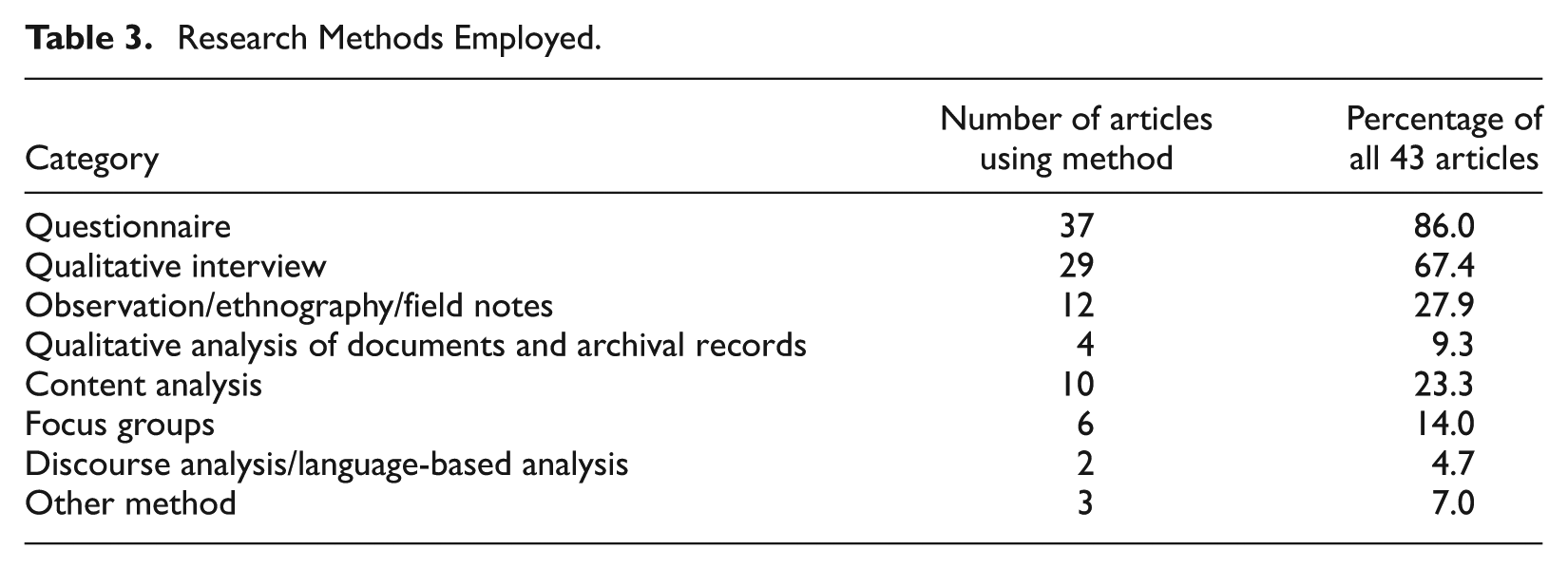
Our study found that a small range of data collection methods were being mixed in the identified sport management studies. Table 3 shows that the most frequently used data collection methods in MM research published in the four sport management journals were questionnaires (86%) and qualitative interviews (67.4%). This is in line with Bryman’s (2006) assessment, which found similar percentages for MM research in the social sciences. Other methods were less popular among sport management researchers using MM. With the exception of observation and ethnographic data collection methods (27.9%), no other method was used in more than one quarter of the articles. The combination of questionnaires in the quantitative strand and interviews in the qualitative strand dominated the MM designs.
Research Methods Employed.
An exemplary approach to mixing questionnaires with qualitative interviewing is Maclean, Cousens, and Barnes’s (2011) research on linkages in a network of community basketball providers. Because the authors identified critical cases in the quantitative strand of the research (questionnaire), they were able to obtain crucial information about why organizations did or did not connect with each other. After the linkages were identified in the quantitative phase, in the qualitative strand (interviews) respondents were asked for “explanation and confirmation of why organizations link or refrain from doing so” (Maclean et al., 2011, p. 567). Another example of the combined use of multiple data collection methods is Pelak’s (2005) study of women’s soccer in South Africa. Pelak used interviews, a questionnaire, document analysis, and field observation to study the barriers, identities, and practices of women in the male-dominated world of soccer. The study sought to advance the understanding of the research problem through adding direct observation, with the dual purpose of obtaining empirical data and building rapport. These examples illustrate how quantitative and qualitative methods can be combined advantageously. However, the actual strength of MM design will largely depend on the integration of the different methods. It is to this issue that we now turn.
Level of Interaction
A crucial aspect of MM design is the integration of quantitative and qualitative methods. MM research by definition includes at least one quantitative and one qualitative strand, which need to be combined in at least one inquiry phase (Creswell & Plano Clark, 2011). Greene (2007) conceives of the interaction between methods and the status and timing afforded to these methods as “the most salient and critical dimensions of mixed methods design” (pp. 120-121). Creswell and Plano Clark (2011) refer to the combination of these issues as the “level of interaction” (p. 65): the degree to which the different methods are conceptualized, designed, and implemented interactively. Below we examine how the identified MM studies address the interaction between quantitative and qualitative methods.
Priority
The status of qualitative and quantitative methods is an important issue to take into consideration when analyzing and evaluating MM research. Often connected to the epistemological paradigm, rationale and specific questions guiding the research, the priority afforded to a particular methodological approach in an MM study reveals much about the way the study has been conducted. MM researchers are likely to choose an equal-status design because such a design is most closely associated with MM logic and philosophy. Equal status is believed to be “the home for the person that self-identifies as a mixed methods researcher” (Johnson et al., 2007, p. 123). In equal-status design, the relative importance given to quantitative and qualitative methodologies is the same so that both play an equally important role in addressing the research question.
Our quantitative findings indicate that the equal-status design was not the typical MM design in the identified sport management articles. As shown in Table 4, only 34.9% of the articles used an equal-status design, while in 39.5% the quantitative strand dominated. This finding raises further questions about the use of MM in sport management studies. If, as Johnson et al. (2007) suggest, equal status is the true home for the MM researcher, it appears that many sport management scholars still have a long road to follow in this respect.
Priority of Research Methods.
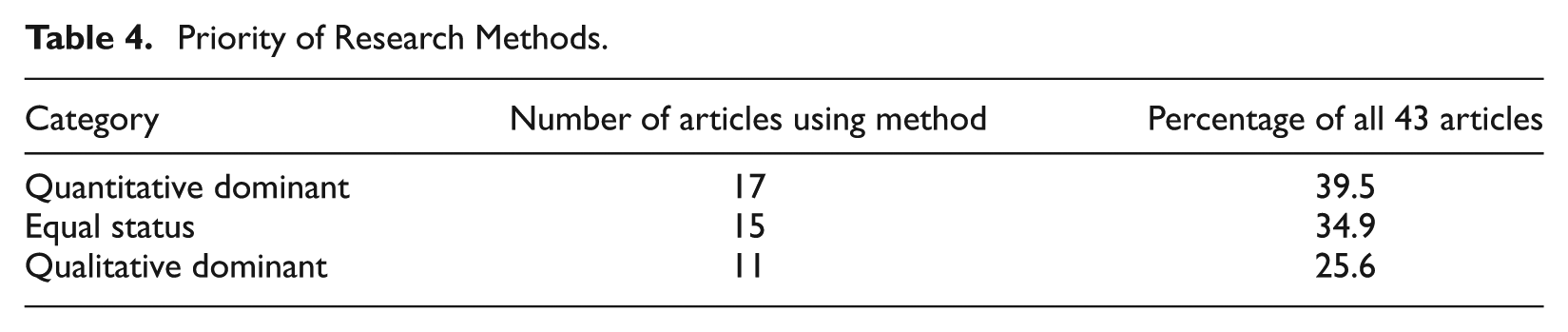
Among those studies that did employ an equal-status design, Carter and Carter’s (2007) study on deviant behavior in the NFL stands out as an example of how assigning equal priority to quantitative and qualitative methods can enhance a study’s capacity to address the research questions and generate new insight and knowledge. The study sought to explain why some NFL players participated in deviant or law-breaking behavior, while others did not. The authors described their study as a blended form of research, “which first began as an open-ended inquiry and qualitative field research, then formed into a more quantitative format that allowed for a more comprehensive look into the lives of NFL players” (Carter & Carter, 2007, p. 251). Quantitative and qualitative methods were given equal status to increase the validity and inference quality of the findings. There was a strong convergence between the qualitative and quantitative findings, with both showing that anomie was a significant predictor of law-breaking behavior among NFL players.
Timing
The timing of data collection is a relatively straightforward process. A study is undertaken either in a concurrent fashion, in a sequential design, or in a combination of these options. We found that MM research published in the four most elite sport management journals did not have a strong preference regarding the timing of quantitative and qualitative strands. As shown in Table 5, concurrent and sequential designs were used in 44.2% and 46.5% of articles, respectively, whereas only three articles (7%) used a combined design.
Timing of Research Methods.
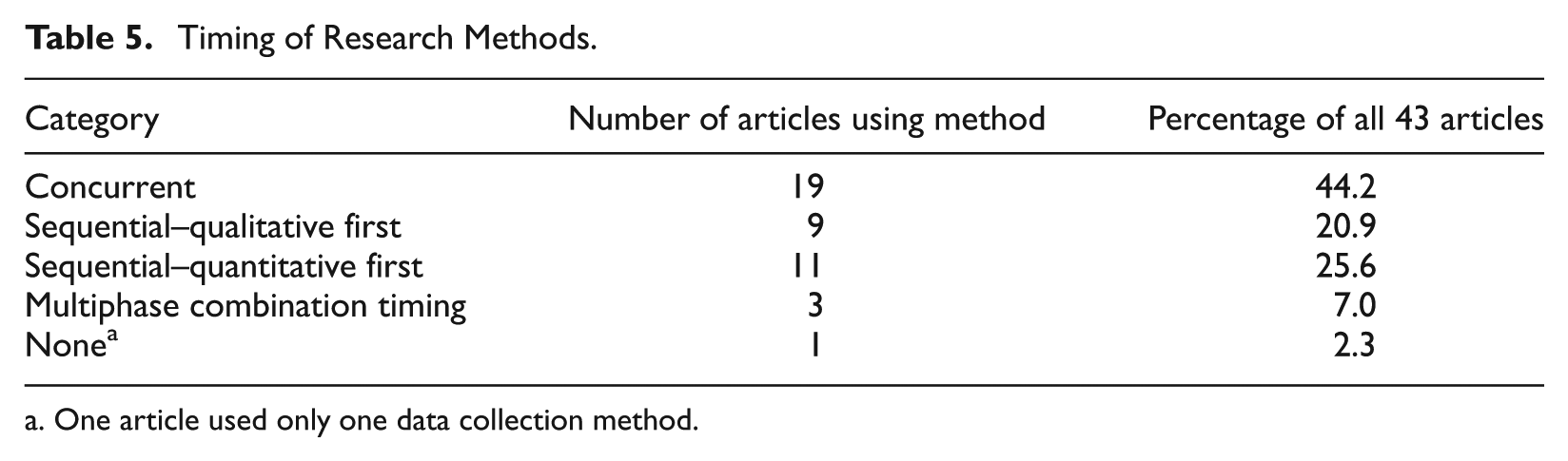
One article used only one data collection method.
The study by Hamm, Maclean, Kikulis, and Thibault (2008) is an example of MM research that used a combination of sequential and concurrent timing. Their aim was to explore the value congruence between employees and their nonprofit sport organization. Document analysis and observations were followed by surveys and interviews. Results from the document analysis and observations were used to inform the other stages of data collection, but also continued on their own throughout the data collection period. The value of their multiphase combination timing design was that it created opportunities for the repeated validation and falsification of the findings, thus enabling stronger inferences. The wealth of data gathered by such an approach can also lead to unexpected and unanticipated results (Bryman, 2006).
Mixing
Strong MM research seeks as much integration of methods as possible across different inquiry phases (Yin, 2006). Creswell and Plano Clark (2011) refer to these phases as “points of interface” where the quantitative and qualitative strands are mixed (p. 66). The main points of interface are the research question, sampling procedures, data collection, data analysis, and interpretation. The stronger the mixing of methods throughout these five inquiry phases, the more that researchers can derive the benefits from using an MM design (Yin, 2006). In contrast, a study that uses quantitative and qualitative methods without integrating them in some phase of the study cannot be considered genuine MM research (Johnson & Onwuegbuzie, 2004; Teddlie & Tashakkori, 2009).
Most articles in our sample fell well short of this ideal, again suggesting that MM designs in sport management research are not as strong as they could be. Table 6 shows that not a single study integrated quantitative and qualitative methods in all inquiry phases. Two studies (4.7%) did not mix methods in any stage of the inquiry and are therefore best understood as multiple, related studies rather than MM research (Yin, 2006). Only 11.6% of the articles stated an MM research question. In 34.9% of the articles the quantitative and qualitative methods were kept separate throughout most of the inquiry phases and were only brought together in the interpretation stage. This typically involved the researcher drawing conclusions or inferences that reflected what was learned from the combination of results from the quantitative and qualitative strands, such as by comparing or synthesizing the results in the discussion (Creswell & Plano Clark, 2011). In these articles, this was the only interface point where genuine integration occurred.
Mixing of Research Methods.
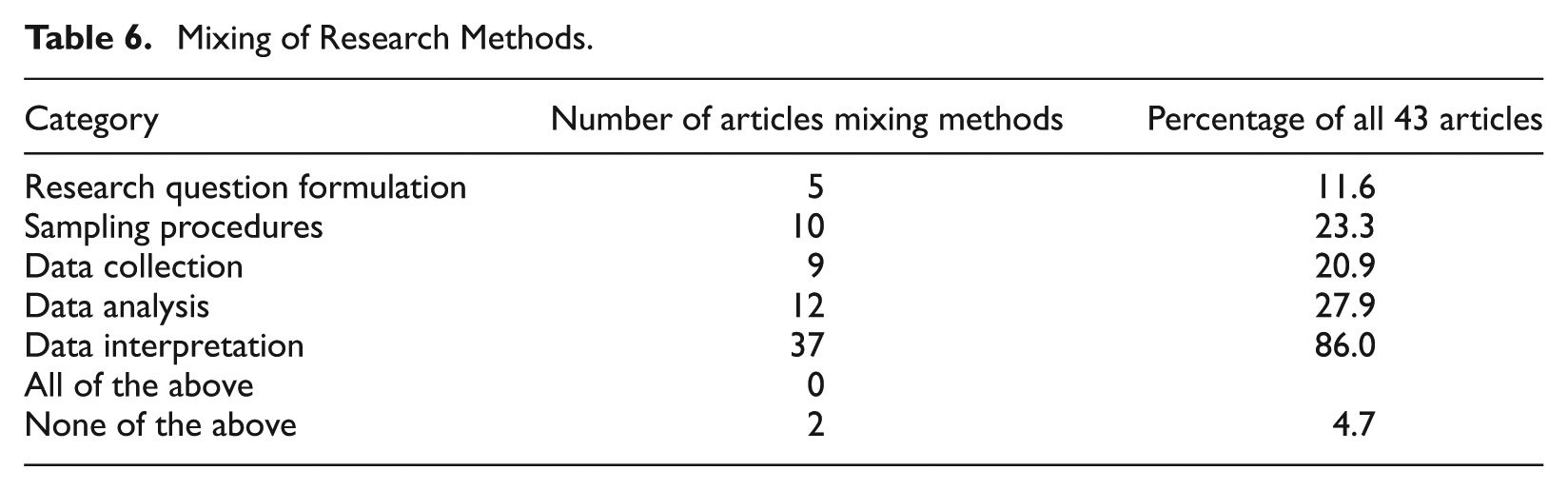
Our data suggest that one possibility for strengthening MM research in the subdiscipline of sport management is the way data analyses are performed. MM data analysis involves the procedures whereby quantitative and qualitative data analysis strategies are combined, connected, or integrated (Teddlie & Tashakkori, 2009). Data conversion strategies have arguably become a staple of MM research (Sandelowski, Voils, & Knafl, 2009). This occurs when qualitative data are converted into numbers (quantitizing) or quantitative data are transformed into qualitative data (qualitizing). Such data conversion is one of the unique characteristics of MM data analysis (Teddlie & Tashakkori, 2009), yet it is rarely used in sport management research. Only 26.8% of MM articles in our sample performed MM data analysis (Table 6).
Still, the qualitative strand of our study identified some examples of strong MM data analysis in sport management research. One study that performed data conversion is Cunningham, Cornwell, and Coote’s (2009) work on sponsorship policies. In this study, qualitative data on sponsorship policies and mission statements gathered from websites were analyzed through quantitative procedures. Several steps were taken to ensure that quantitative analysis was suitable for these qualitative texts. The researchers formed different categories that were coded into dummy variables to enable statistical analyses of these data. Another study that effectively used data transformation techniques is Földesi’s (1978) investigation of cooperative ability among Hungarian rowing teams. The data were gathered from one data source, from which then two types of data were generated: first in the form of the original source (qualitative), which was converted into the other form (quantitative). During the investigation the rowing team members’ verbal and nonverbal communication was recorded (audio and written notes), and in the data analysis stage these recordings were analyzed in both a qualitative and a quantitative manner. The quantitizing of the data was achieved through counting the number and frequency of communications sent out and the distribution of communications among crew members.
Discussion and Conclusions
Working with an MM lite design ourselves, based on a pragmatic philosophical perspective, we asked to what extent and how is MM research adopted in the emerging subdiscipline of sport management. The mixing of quantitative and qualitative analyses provided convergent and divergent evidence for this research question. The findings from the qualitative strand of the study, which sought to ascertain how MM are used in the published sport management studies that could be identified as mixed, indicate that strong MM designs can enhance the quality of sport management research by enabling a more comprehensive understanding of the research problem and providing stronger inferences. Several actual examples were provided in relation to key dimensions of MM design. These qualitative descriptions suggest that MM research at least partly penetrates this relatively new subdiscipline. However, our quantitative results paint a different picture by showing that, overall, MM designs are only rarely used in research published in the four most elite sport management journals. The prevalence rates of MM studies in the four journals are very low and have not increased over the years. This finding is in line with previous, more confined, analyses of MM in the field of sport management (Quarterman et al., 2006; Rudd & Johnson, 2010).
There are clear points of convergence between the quantitative and qualitative strands of the study. Both sets of data show that when MM designs are used in research published in the four journals, their rationale and philosophical underpinning are often not thought through sufficiently and their design is often poorly legitimized and weakly mixed. A paradigm-sensitive use of MM is virtually absent in the sport management literature, whereas a discussion of paradigm integration and crossing (“MM heavy”) is inexistent. This finding lends support to Alise and Teddlie’s (2010) recommendation that researchers should consider making their paradigm preferences more explicit to their readers. Moreover, our study found that the basic principle of formulating a rationale for combining quantitative and qualitative approaches is not met in more than one third of the studies. With regard to the level of integration, the MM designs examined in this study were typically weakly mixed with relatively few interface points. Not a single study integrated different methods in all inquiry phases, and more than one third only did so in the data interpretation phase. In sum, our empirical assessment of the adoption and use of MM research in sport management concludes that there is still little integration of contemporary insights from and debates in MM research within this subdiscipline.
The origins, size, and institutional embeddedness of sport management are all factors that might explain why sport management scholars hardly profit from advances made in MM research. Prevalence rates of MM research do not automatically follow from the size or maturity of a subdiscipline. However, it can be argued that scholars in a relatively new and minor subdiscipline face more constraints to strong MM research as they are likely to have fewer possibilities to work in teams with sufficient expertise, skills, and resources to conduct such research. In fact, such constraints can be valid reasons to decide not to engage in MM research. As Greene (2012) puts it, MM should not be an end in itself, but should only be considered if it involves strong qualitative as well as strong quantitative research. This requires researchers to acquaint themselves with both quantitative and qualitative data collection and analysis techniques, to be part of a research team, and/or to collaborate with scholars from other disciplines or methodological traditions. It can be postulated that scholars in relatively new and peripheral subdisciplines, such as sport management, often work in relative isolation or in research groups with a small number of staff, and that they are generally less centrally embedded in the academic world than scholars working in more established and central fields of study. This resonates with Creswell and Plano Clark’s (2011) argument that it is often difficult for individual scholars to develop MM research because of the required skills, time, resources, and efforts on the part of the researcher.
What, then, can sport management scholars do to advance the use of MM in their research? We know that there is ample room for improvement and expansion in emerging subdisciplines, as Rudd and Johnson (2010) argue with regard to sport management. Even though there may be significant constraints on researchers in such subdisciplines, they can profit greatly from theoretical and methodological advances made in mainstream disciplines and adjacent areas. This, however, asks for a critical, reflexive attitude toward one’s own subdiscipline, and in fact, toward one’s own research as well.
The low prevalence of MM research in sport management might hint to the fact that sport management scholars are looking for a comfortable position in mainstream methodology and are rather hesitant about moving to the forefront of scholarly research where methodological innovations take place. Relatively new subdisciplines might thus be inclined to perform monomethod research, because they are already vulnerable to criticism. This can especially be the case if they work in a subdiscipline that is judged implicitly or explicitly as a rather obscure field of study, or within which the paradigm wars still hold sway. Playing the safe option in the design of their studies might be the most natural attitude in such a situation. A key challenge, then, is educate and convince self and others within the subdiscipline of the utility of MM research so that MM will be increasingly valued and accepted (Creswell & Plano Clark, 2011), leading to better designs and justifications. To this end, MM advocates will need to cross and build bridges between the sometimes adversarial divide between quantitative and qualitative researchers in their field of study. This would also require them to engage in an “MM heavy” discussion on how different philosophical paradigms can be crossed and connected in order to take full advantage of the diversity of perspectives that the social sciences have to offer (Greene, 2012).
Limitations of This Study
Considering that these issues are beyond the scope of the empirical study presented in this article, we posit the above explanations as hypotheses for further research. Specifically, we use them to formulate the hypotheses that the more central the field of study and its dominant journals are in the scientific community, the higher the prevalence of MM is likely to be, and that MM only slowly trickle down to peripheral subdisciplines. Further research should reveal whether these hypotheses offer sound explanations for the findings in this study and whether they hold true for other relatively new academic subdisciplines as well. Such research would help offset an important limitation of this study, namely that the findings were obtained in a concrete context (cf. Molina-Azorín, 2011), specifically in one relatively small academic subdiscipline and in selected journals within that discipline. Analysis of the prevalence and characteristics of MM research should be carried out in other emerging subdisciplines to compare results. Another limitation of this study is that only the most elite, prestigious journals in sport management were included to keep the sample size manageable. Further research is needed to determine whether the prevalence rates found in this study are consistent with those of less prestigious journals in the subdiscipline of sport management. It should also be reiterated here that publications reporting MM research in sport management might also be found in books and conference articles, which were not included in the study.
Lessons for Mixed Methods Scholars
As noted, sport management scholars can do more to improve the use and value of MM in their field of research. However, the low prevalence rate of MM research and the very limited consideration of cutting-edge insights from the MM literature in this subdiscipline also suggest that advocates of MM research should seek to disseminate advances in their work to a broad community of social scientists. If one of the key challenges for sport management researchers is to educate and convince their peers of the utility of MM, then MM scholars can lead the way by promoting and sharing exemplary MM designs to educate their colleagues in emerging subdisciplines.
The accessibility of MM in the broader social science community has already improved in recent years. MM textbooks and handbooks such as Tashakkori and Teddlie’s (2003, 2010) and Creswell and Plano Clark’s (2011) have provided class instructors and researchers with tools to better understand the ways in which MM can and should be employed. The introduction of the Journal of Mixed Methods Research in 2007 has further advanced the knowledge and understanding of strong MM design. Creswell and Tashakkori’s (2007) editorial on how to develop publishable MM manuscripts is illustrative of the efforts made by MM scholars to make their work accessible to a wider community of researchers.
In spite of this, we found no increase in the prevalence rate of MM research in sport management in recent years, and the use of MM in this subdiscipline rarely gets below the surface in terms of recognizing and engaging with the subtleties and complexities of what MM research has to offer today. We therefore encourage MM scholars to increase the dissemination of their efforts to scholars in emerging subdisciplines. Furthermore, we believe that the visibility of innovations in MM research can be further improved. The MM community should be stimulated to publish their work in mainstream social science journals even more often in order to increase their visibility. The recent special issue on MM in the American Behavioral Scientist (2012) can serve as good practice here. In this way, it will become easier and more accepted for scholars in emerging subdisciplines to adopt MM in their work and enhance the quality of their research.
Footnotes
Declaration of Conflicting Interests
The author(s) declared no potential conflicts of interest with respect to the research, authorship, and/or publication of this article.
Funding
The author(s) received no financial support for the research, authorship, and/or publication of this article.