







Abstract
We explore development of elementary preservice teachers’ reflective practices as they solved problems encountered while teaching in a reading clinic. Written reflections (N = 175) were collected across 8 weeks from 23 preservice teachers and analyzed to investigate relationships among problem exploration, teaching adaptations, and problem resolution. In this sequential mixed methods design, exploratory qualitative analysis revealed co-occurrence of problem exploration, instructional adaptation, and problem resolution. Confirmatory quantitative analysis found significant relationships: preservice teachers who engaged in more problem exploration or description of instructional adaptations reported more problem resolutions the following week. Results support mixed method, longitudinal analyses to analyze preservice teachers’ written reflections, and use of written reflections with responsive feedback to develop preservice teachers’ agency for problem solving.
A fundamental task for novice teachers, those engaged in practicum, clinical experiences, student teaching, or the first years of practice (Berliner, 1988) is development of reflective practices that lead to adaptive expertise. Expertise in teaching requires skillful, fluid blending of deep, varied content knowledge with extensive pedagogy (Bransford, Darling-Hammond, & LePage, 2005; Milner, 2010) while balancing unpredictability of people and environments. Teachers who manage this balance are enacting reflective practice by combining thought and analysis with action in practice (Schön, 1983) and reflective teachers become “adaptive experts” (Hammerness et al., 2005, p. 359) who can identify instructional roadblocks, then generate and enact successful responses.
This sequential mixed methods study was conducted to improve understanding of what novices reflect on in their teaching practice, and how their reflections might be connected to instructional action. We analyzed structured reflections written by 23 novices after weekly teaching in a reading clinic to identify the events these novices focused on for reflection and the processes they applied during reflection on these events. Dewey’s (1916) pragmatic view of knowledge as (a) connected inseparably to action, (b) centered on understanding relationships between knowledge and action across different experiences, and (c) resulting in the combination of action with reflection on that action helped us understand the results as we explored two specific questions:
What problems of teaching practice did novices describe in their reflections?
What relationships, if any, were present among three themes that emerged from qualitative analysis of novices’ reflections: problem exploration, instructional adaptation, and problem resolution?
Purpose of This Study
Our interest in exploring novices’ reflective practices developed after hearing a colleague assert that novices would be unlikely to reflect deeply on any challenges in their teaching. We disagreed. In fact, novices often acknowledge their need for developing reflective practices to improve their readiness for teaching and seek out opportunities to build these habits of mind (Loughran, 2006; Lunenberg & Korthagen, 2005; Nilsson, 2009). In the initial exploratory phase of this study, qualitative analysis of the written reflections aimed to explore novices’ descriptions of problems. This phase revealed co-occurrences of reflection on problems and instructional adaptations. A subsequent review of the literature revealed support for the reflection on problems and connection to action (Dewey, 1916) that emerged from this first phase of analysis and we followed with a quantitative phase as confirmatory analysis for these co-occurrences.
In our review of the literature, we did not find studies that had implemented this type of analysis. Many used self-report scales and questionnaires to explore teachers’ perceptions of pedagogical context, knowledge, dispositions, teaching, and learning (Giovannelli, 2003; Kramarski & Michalsky, 2009). These approaches provided solid quantitative data but lacked rich descriptions and grounded perspectives of novices immersed in reflection on teaching. Other studies provided case descriptions of individual teachers’ development of reflection and adaptive expertise (Hayden, Rundell, & Smyntek-Gworek, 2013; Jay & Johnson, 2002; Lytle & Cochran-Smith, 1992; Orland-Barak & Yinon, 2007; Ostorga, 2006) and teacher educators’ reflective development (Pui-lan et al., 2005), but one analyzed data for only one lesson instead of following teachers over time (Orland-Barak & Yinon, 2007) and none connected that with confirmatory analysis that measured relationships among variables. We aimed to fill this gap by providing comprehensive, convergent analysis of the reflective data these novices provided.
Theoretical Frameworks
Dewey’s (1916) pragmatic views of knowledge as “concerned with grasping the relationship between our actions and their consequences” (Biesta, 2010, p. 106, italics original) became our theoretical lens. Understanding this relationship makes knowledge in one experience freely available for use in other experiences (Dewey, 1916), but Dewey was careful to differentiate between knowledge and habits, which are predispositions formed by prior experiences that encourage the same response when presented with particular situations. Habit “does not make allowance for change of conditions [and] . . . often leads astray” (p. 359). Knowledge is more powerful and can help us “plan intelligently and direct our actions” (Biesta, 2010, p. 107).
Knowledge for teaching serves as a tool for reorganizing instructional activity, combining pedagogical theory with practice, and illuminating connections between what is known in one content area with applications in another. Knowledge combined with action allows one to make a “systematic inspection of the situation . . . to identify and state the problem [and] develop suggestions for addressing [it], for finding a way to act, and hence find out what the meaning of the situation actually is.” (Biesta, 2010, p. 109) Reflection at its basic level centers on this type of exploration, “asking questions, describing key elements, and evaluating current practice in light of student responses” (Hayden et al. 2013, p. 147). It is aimed at taking action (Korthagen & Kessels, 1999, Korthagen & Vasalos, 2005) and is embodied in practice (Kinsella, 2007). And since some of the most efficacious learning experiences for teachers at any level come when they encounter “puzzling, troubling or interesting phenomenon” (Schön, 1983, p. 50) exploration of these problems of practice can generate adaptations either initiated in the moment of teaching or planned for future interactions (Duffy et al., 2008) and aimed toward resolution. This is the practice of adaptive experts (Gooddell, 2006; Hole & McEntee, 1999; Tripp, 1993).
Literature Review
Language and Reflective Thought
Exploration of ideas through language shapes and drives learning and solidifies development of schema (Vygotsky, 1978) and knowledge. Reiman (1999) linked intrapersonal language to reflection and argued that “a pedagogy of action/reflection and journaling can frame language in new ways, promoting deeper understanding” (p. 599). Writing to reflect “focuses attention and permits the symbolizing of meaningful experience” (p. 604). Hacker, Keener, and Kircher (2009) declared “[p]roduction of thought is the core of writing” (p. 155) and Wells (2003) asserted that writing allows “complex structures of meaning to be articulated more precisely than . . . in everyday conversation” (p. 55). But Reiman (1999) lamented the lack of solid constructs for analyzing written reflections and their usefulness and identified the need for scaffolds or guided formats to provide continuous, ongoing connections between teaching action and reflection. Reiman especially supported dialogic reflection, where teachers write for an audience (e.g., a teacher educator) and can expect a response. This method is useful for developing teaching competencies for multiracial settings (Milner, 2010) supporting preservice teachers (Farrell, 2007; Lam, 2011) and helping novices negotiate first years of practice (Tillman, 2003).
Learning Reflective Practices
Novices must learn ways adaptive experts link reflection and action, because reflective practice is more than acquiring skill sets or possessing certain dispositions. It involves integrating specific thinking activities with analysis in order to develop new habits of mind. Korthagen and Kessels (1999) outlined habits of reflection in their ALACT model, when a teaching
Challenges, Adaptation
Reflecting on teaching challenges is crucial for building agency and efficacy, since it helps novices become aware of “spaces where [they] can take initiatives” (Greene, 1988, p. 17). Experiences of ambiguity and uncertainty can become prompts to reflect, and reflection can change the “character of an action” (Shepel, 1995, pp. 434-435) when novices use it to adapt instruction to affect student outcomes. But expecting teachers to think deeply about every event in the teaching day would be unrealistic.
Cuban’s (1992) distinction of problems from dilemmas provides a way to think selectively about teaching interactions. Problems are routine, structured situations that produce conflict because a goal is blocked. Learning when to re-teach and when to move on is a problem of timing and targeting that will resolve as the ability to assess student learning improves. Expertise provides solutions to such pedagogical issues, so less reflection time is required as teachers gain proficiency with management of the tasks of teaching. Dilemmas are messier and require teachers to choose among “competing highly prized values” (Cuban, 1992, p. 6). For example, some students may transfer learning easily between reading and writing domains, seeing that strategies to recognize and record story elements on a graphic organizer can be applied in reverse as a prewriting strategy. Other students may need more scaffolded support in order to transfer strategies from reading to writing. If the teacher’s goal is for every student to write a story with specific elements, that goal may need to be confronted.
Problems have elements of predictability and can be managed, but dilemmas interrupt the teaching flow even for experts and require reflection and agency. Reflecting deeply on dilemmas while managing problems is a marker of expertise that requires the ability to filter problems by generating pedagogical adaptations that lead to resolution. Doing so frees up time and space for reflection on dilemmas, improves self-efficacy for teaching, and decreases burnout (Haverback & Parault, 2008). Novices may initially reflect deeply on every classroom challenge, not yet having management routines for resolving problems. Developing such routines is a crucial milestone in teacher development and an indicator of growth through the novice stage. When novices notice and describe problems (Jay & Johnson, 2002; Pui-lan et al., 2005), feel “empowered and perplexed enough to pose questions” (Miller, 2007, p. 312) then reflect and generate solutions, they move toward adaptive expertise.
Method
Participants
We obtained consent to collect written reflections from 23 novice teachers, all female, enrolled in a reading assessment and evaluation course with teaching component at a public Midwestern university. Six were graduate students adding teaching credentials, and 17 were junior-year undergraduates. Eighteen novices provided information on previous teaching experiences. Four of the graduate students had worked as para-educators in public schools for less than 4 years, one was an English Language instructor overseas for 2 years, uncertified to teach in the United States, and one had a degree and 2 years experience in school counseling. Undergraduates reported two to six semesters of practicum during teacher training.
Context
The course novices were enrolled in focused on developing reflective inquiry and theoretical frameworks to link assessment, instruction, and student performance. Instruction covered initial reading/writing/spelling assessment and analysis and research-based elements of instruction. Teaching in the reading clinic coincided with the class, but discussions of teaching experiences were only used as examples to clarify instructional topics. No seminar or other outlet for dedicated discussion accompanied teaching and the only regular time discourse occurred was during novices’ writing of reflections and supervisors’ responses to them.
Each novice taught one child for two 60-minute sessions per week. Children were predominantly Caucasian, attended public or private schools in a Midwestern metropolitan area, and ranged from first to sixth grade. Fourteen were boys, and 9 of the 23 children attended schools where 40% or more qualified for free/reduced lunch. Novices used three initial sessions to administer assessments and set instructional goals. Supervisors in the reading clinic were all experienced reading teachers with master’s degrees or above. They worked with novices individually to observe lessons, provided written feedback on lesson plans and reflections, and sometimes met with students outside of lessons.
Novices submitted written reflections (SOAR notes) for each teaching week. Reflections included a Subjective retelling of lesson events, progress toward Objectives, Analysis of the lesson, and Reflection. Since recognizing and describing problems is the first step to developing reflective practices (Jay & Johnson, 2002; Pui-lan et al., 2005), novices were encouraged to describe teaching challenges, plan instructional responses, and develop questions to explore during further teaching. Focusing reflections this way addressed course goals of linking assessment, instruction, and student learning through goal-directed teaching and systematic intentional inquiry into practice (Cochran-Smith & Lytle, 1993).
Data Collection
Novices began writing reflections the second week of teaching, and reflections were collected from the confidential class blog for 8 weeks. Five novices submitted fewer reflections due to absences, resulting in a final set of 175 written reflections. These reflections comprise the entire data set analyzed for this report.
Establishing Quality and Rigor
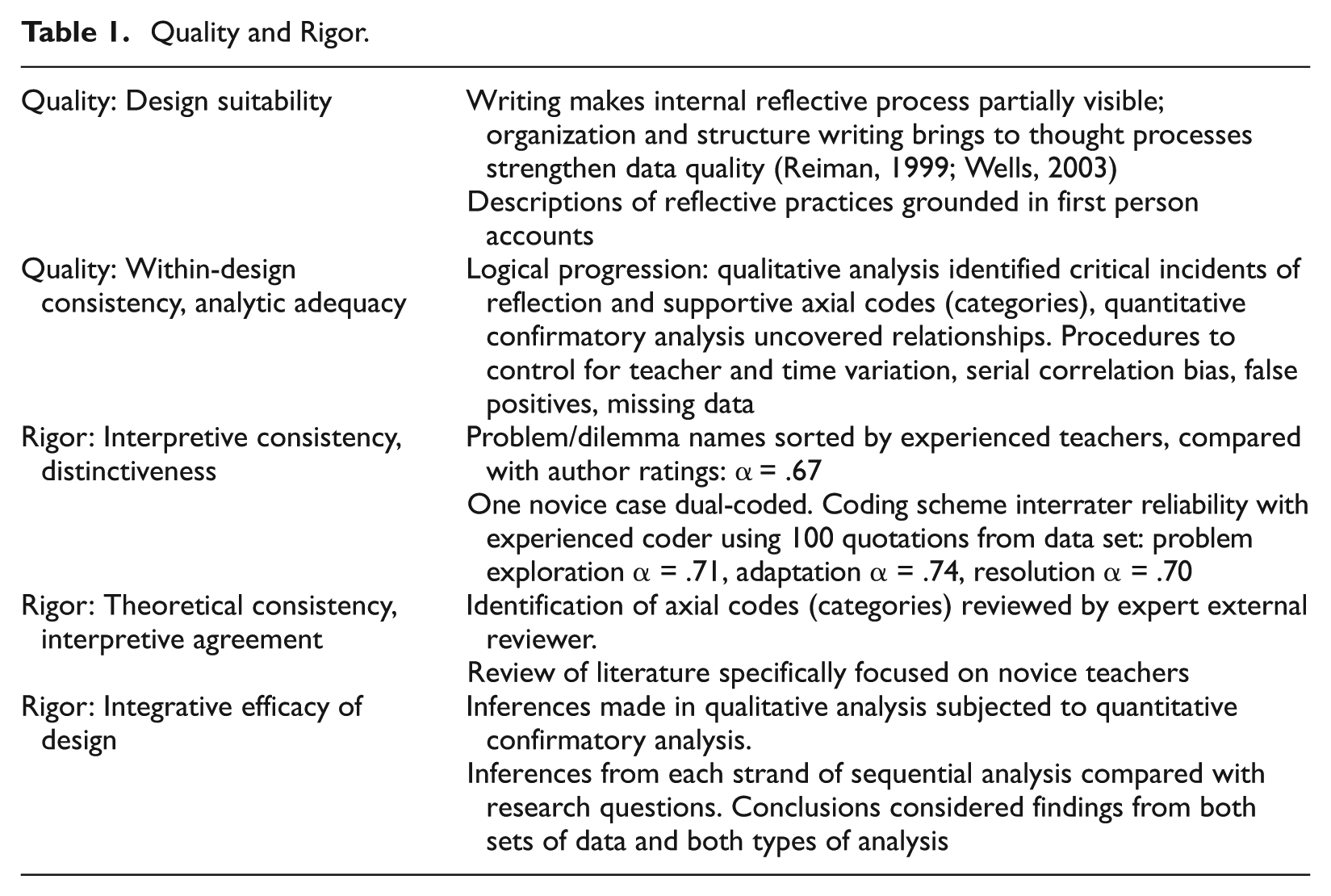
We used Tashakkori and Teddlie’s (2006, 2008) integrative framework to assess design quality and interpretive rigor of our analysis. This framework incorporates “standards of quality from both qualitative and quantitative approaches” (Teddlie & Tashakkori, 2009, p. 300). Quality aspects include design suitability and fidelity, within-design consistency, and analytic adequacy. Rigor includes aspects of interpretive and theoretical consistency, interpretive agreement, distinctiveness, efficacy, and correspondence. Table 1 presents the measures we took to insure quality and fidelity in this study.
Quality and Rigor.
Analysis
Qualitative
We began qualitative analysis by using axial coding (Strauss & Corbin, 1998) to first identify sections where novices wrote about challenges they encountered during teaching. We viewed instances when novices used more than one sentence and extended detail to describe a challenge as evidence of exploration. After reviewing the literature and discovering Cuban’s (1992) work, we coded these instances as either problem or dilemma explorations.
Reflection on problems occurred more frequently than on dilemmas, so we examined each problem exploration closely. We re-read each exploration to code the type of problem described. Ten problem types emerged (Table 2). We read the reflection again to capture novices’ responses, searching for adaptations novices planned for future lessons or implemented in the present moment, and for statements indicating the novice perceived problem resolution. This involved searching across each novice’s case, using axial coding to capture problem explorations, adaptations, and resolutions, over the 8 weeks of reflections. Once we discovered the co-occurrence of reflection on problems, adaptations, and resolution, we quantitized (described below) these axial codes, thereby creating categories that we could then use to perform confirmatory statistical analysis.
Problems of Practice in Novices’ Reflections.
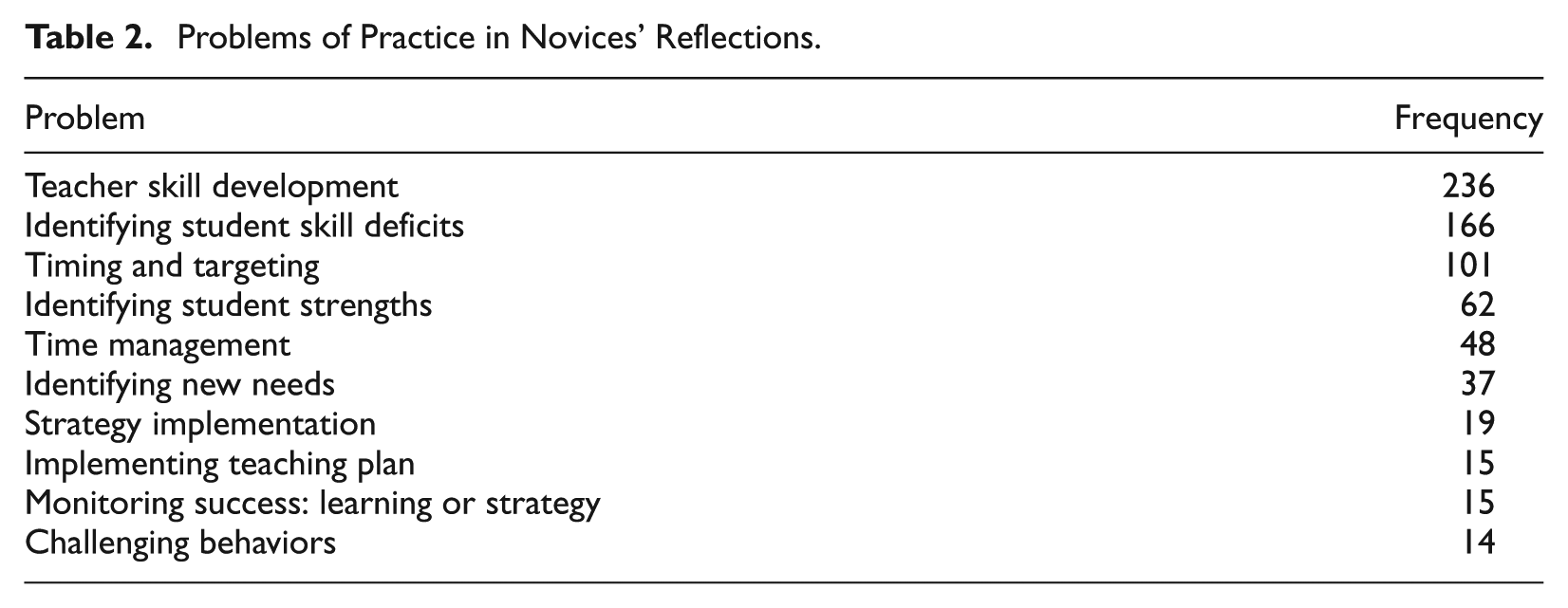
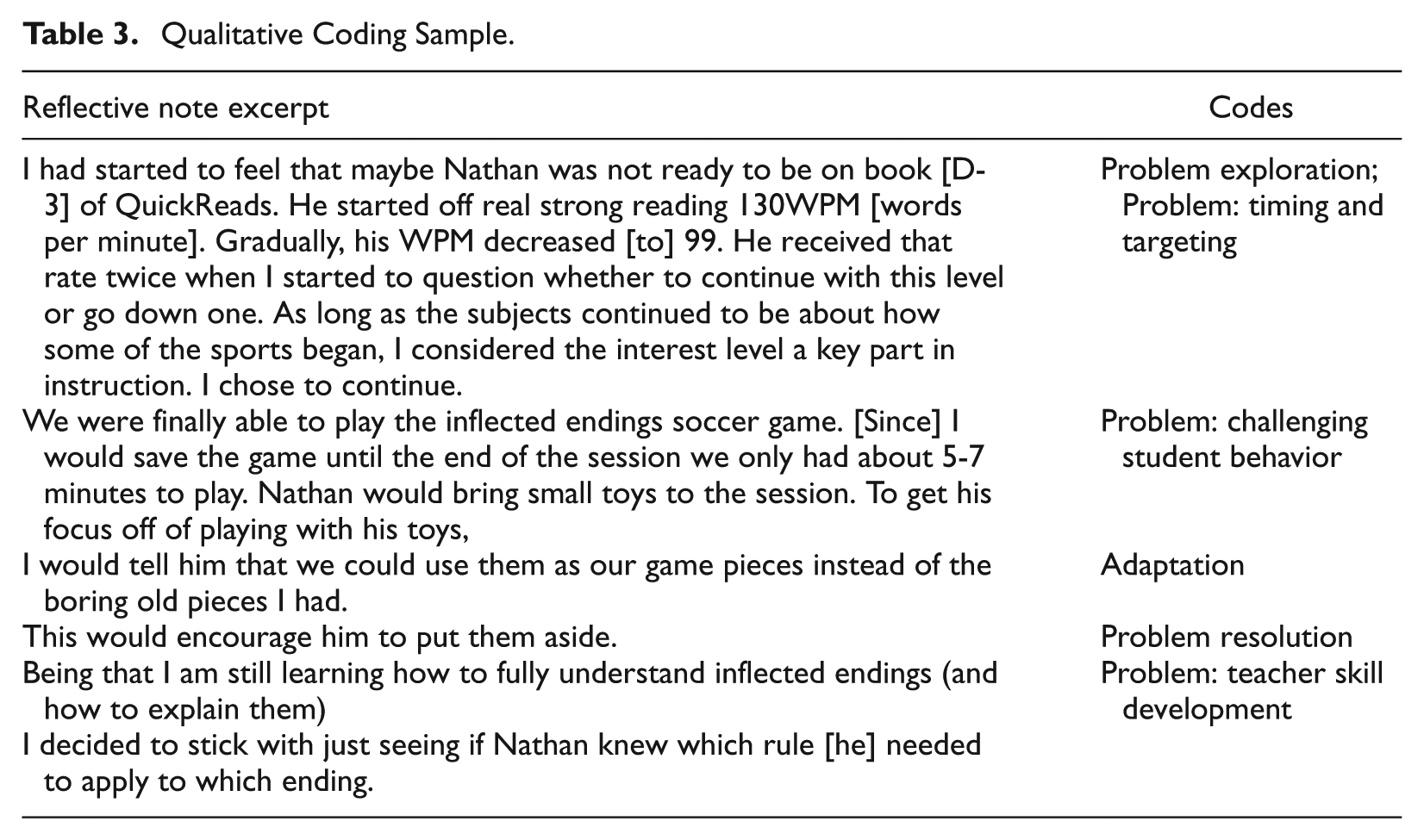
Table 3 provides an excerpt of the coded transcript of one reflection by Mikah, an undergraduate, to illustrate how problem exploration, problem naming, adaptation, and resolution were coded. In the excerpt, Mikah reflected on timing and targeting and weighed qualitative and quantitative information to make her decision on text level for Nathan’s instruction. This exemplifies the cycle of problem exploration in a reflection leading to generation of an adaptation. Frequently, novices revisited the same problem in subsequent reflections, either to add new descriptive detail, reflect on the outcome of an adaptation, revise their approach, or describe problem resolution.
Qualitative Coding Sample.
Quantitative
After identifying a problem exploration–adaptation–resolution cycle during qualitative analysis, we tested whether this cycle was a general pattern that occurred often in these novices’ reflections by modeling antecedents of problem resolution with a statistical discourse analysis (SDA, Chiu, 2008). We did this because there was variation across the 23 novices’ use of the reflective cycle, and while qualitative analysis provided pictures of individual teachers’ patterns, we wanted a picture of the overall relationships among problem exploration-adaptation-resolution for this convenience sample of novices. To explore these relationships, we quantitized axial codes for problem exploration, adaptation, and resolution with a frequency count, assigning a score (1) to each category each time it appeared in a reflection and 0 otherwise so that the qualitative data could be analyzed statistically (Caracelli & Greene, 1993; Tashakkori & Teddlie, 1998; Teddlie & Tashakkori, 2009).
To test relationships among these patterns, we needed to address analytic difficulties involving the entire data set, the outcome variable, and the explanatory variables (see Table 4). First, the sample had missing data, which can reduce estimation efficiency, complicate data analyses, and bias results. Markov Chain Monte Carlo multiple imputation estimates the values of the missing data and addresses this issue more effectively than deletion, mean substitution, or simple imputation (Peugh & Enders, 2004).
Statistics Strategies to Address Each Analytic Difficulty.
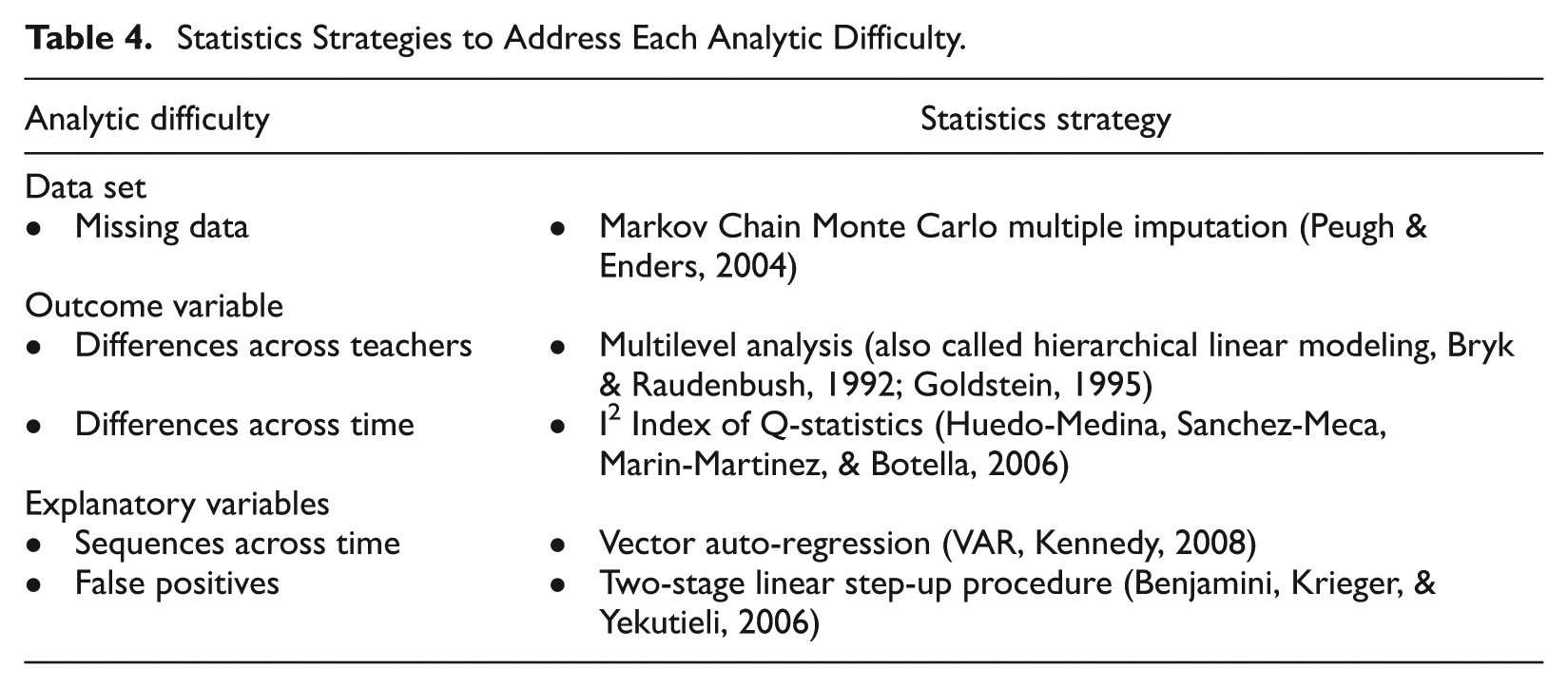
The outcome variable Resolution differed across teachers and time. Since failure to account for similarities in behaviors by the same teacher (vs. different teachers) can underestimate the standard errors, a multilevel analysis was needed to compute appropriate estimates (Goldstein, 1995). Since teachers’ behaviors in adjacent weeks are often more similar than behaviors that are several weeks apart, failure to model this similarity (serial correlation of errors) can bias results (Kennedy, 2008). An I2 index of Q-statistics tested all groups simultaneously for serial correlation of residuals in adjacent weeks (Huedo-Medina et al., 2006). If the I2 index showed significant serial correlation of errors, we added the outcome variable value of the previous conversation turn, which often eliminates the serial correlation (e.g., when modeling the outcome variable Problem Resolution, we added whether Problem Resolution occurred in the previous turn (Problem Resolution) [–1] as an explanatory variable (Chiu & Khoo, 2005).
Statistical discourse analysis (Chiu, 2008) addresses the explanatory variable issues, sequences and false positives, with a vector auto-regression (VAR, Kennedy, 2008), multilevel M-tests (MacKinnon, Lockwood, & Williams, 2004) and the two-stage step-up procedure (Benjamini et al., 2006). A VAR models how attributes of each teacher behavior in recent sequences influence a teacher’s behavior in the current week. For example, the likelihood of a Problem Resolution in a given week might be influenced by teacher Problem Exploration or Adaptation in previous weeks. Last, testing many possible outcomes increases the risk of Type I errors (Benjamini et al., 2006). The two-stage linear step-up procedure was used because it reduces these more effectively than 13 other methods (Benjamini et al., 2006).
Multilevel, Vector Autoregression
After imputing the missing data (6%) with MCMC-MI, we modeled problem resolution with multilevel VAR (Goldstein, 1995). We entered variables into our analysis according to possible causal relationships, likely importance, and time.

β00 is the grand mean intercept of Problem Resolution
ij
, for each note (i) of each novice (j). The note- and teacher-level residuals are
Results
Question 1: What Problems Did Novices Describe?
Problem identification is an essential first step in reflection (Jay & Johnson, 2002) and “professional practice has at least as much to do with finding the problem as with solving [it]” (Schön, 1983, p. 18). While our analysis revealed 10 problem types in the novices’ reflections (Table 2), three were reflected on in more than 70% of the problem descriptions. Teacher skill development, when novices identified an area of need for their own development, occurred most frequently followed by Identifying skill deficits of students. Because all children at the reading clinic exhibited reading delays the course focus was on diagnosing needs and individualizing instruction, and novices reflected in detail on student needs as they worked to refine and focus instructional planning. Timing and targeting was the third most frequently-occurring problem, when novices reflected on their students’ success meeting objectives, need for review, or readiness for new learning.
These three most frequent problems are illustrated with problem explorations from three undergraduate novice cases. These cases also represent the variation of child grade level and novice approaches. While Annie and Carol used the problem exploration-adaptation-resolution cycle to varying degrees, Andrea represents a contrast: a novice who did not engage in detailed problem exploration and never wrote about finding resolution, although she did generate some adaptations.
Annie
Annie worked with Donny, a sixth-grade student with mild mental handicaps. Annie documented 6 instances of problem exploration, 12 adaptations, and 4 resolutions. Like many of the novices, Annie described problems of practice that she encountered and included numerous self-questions, often noting the disconnection between her middle-level training and Donny’s instructional needs. Her reflections illuminate the demands on teachers to continually re-tool, revise, and adapt their skills to meet students where they are (Duffy et al., 2008). Annie began the semester by identifying Donny’s instructional needs and two areas for her own development.
Donny enjoys reading, but [has] issues pulling out details. When probed, he can normally recall . . . but I really want to help him pull out information in the story himself. I’m just a little confused how to do so. I’ve also noticed he relies on the illustrations heavily. While this is a good comprehension strategy, he uses the pictures to create his own sentences when he doesn’t know a word or gets tripped up on a sentence. I’m still trying to figure out strategies to work on sounding out the word [and] one of my goals for Donny is comprehension, so I [will] focus on this in the future, I’m just unsure how. [Teacher skill development]
In mid-semester, Annie began to make adaptations: “I tried to be cognizant this week of how many times I [corrected] Donny during his reading [Adaptation: present]. If I have him repeat too many words, his comprehension goes down greatly.” At this point, she began to reflect on problem resolution, while continuing a recursive cycle of problem exploration-adaptation.
I tried a few new activities with Donny this week . . . Some were almost too fun and he became distracted easily. I noticed that even though hands on activities are great for him, I need to monitor closely to ensure that he is on task. [Problem resolution] I’m going to brainstorm more fun games to play this week, and also branch out into other areas such as word families. [Adaptation: future]
Often, resolving one instructional issue uncovers yet another. As the semester ended, Annie recognized a new learning need for Donny and began to comprehend the difference between decoding ability and vocabulary knowledge. Although she did not generate an adaptation, this productive questioning raised her awareness and helped refine her targeting of Donny’s instructional needs. The limited time frame of the reading clinic experience was a complicating factor, and this is true of all practicum experiences.
Donny’s ability to sound out unfamiliar words is greatly improving, but he had a real test on the last page with a lot of harder, unfamiliar words. He tackled the first few very well, [then] started to become frustrated. I wonder if there is a certain number of times . . . I should correct/help him? In that book, all the difficult words were on one page. Do I only correct him every few mistakes, or each time? [Teacher skill development] All of the words were synonyms for slow. Most of these words Donny had never encountered, let alone know the meaning. [Timing and targeting]
In the last week, Annie encountered a very challenging behavior.
Having this makeup session without any outside distractions was wonderful. He gets distracted or off task after the simplest sound. It was nice to have a quiet, productive atmosphere. However, I was a little concerned about Donny’s referral to the session as a “date” and also asking if we “could kiss at the end.” [Challenging behavior] Although I feel I handled it ok I began to think how I would handle a similar situation in my classroom. It was definitely a few uncomfortable moments but I got him back on task and he didn’t mention it again. [Problem resolution]
Resolving such problems quickly, without fanfare, reduces the distraction they cause, allowing teachers to focus on instructional needs instead. Developing such responses is a crucial task for the novice. The written reflection format gave Annie a space to reflect and find a level of resolution for this uncomfortable event.
Carol
Carol was an undergraduate elementary education major paired with a second-grade student. She documented 2 instances of problem exploration, 23 adaptations, and 7 resolutions. Carol’s reflections provided a picture of persistence in problem exploration and the recursive adaptation cycle that can lead to student success and resolution of problems across areas of instruction. She began by identifying Kady’s strengths and needs.
Kady really enjoyed reading aloud together versus reading aloud to me. I saw her taking time to incorporate the pictures after she finished reading. [Identifying student strengths] When I had the game for working with long vowel sounds I found that there were certain combinations Kady especially [had] trouble with. [Identifying student skill deficits]
Carol described an unsuccessful adaptation and generated an alternative:
Kady still was quiet and wouldn’t really [respond] when I talked with her about making connections with what she was reading. [Identifying student skill deficits] I gave her examples [Adaptation: present] about how I love playing with my dog thinking it would get her to talk. I know she loves dogs, so picked a book about a little girl and her dog, thinking it would encourage easy connections, yet I failed. For [week 2] I [chose] a real-life book about a dog, thinking maybe the real pictures will help trigger connections. [Adaptation: future]
While reflecting on the outcomes of her adaptations, Carol persisted in extended problem exploration and refined adaptations strategically. After noting Kady’s responses for a few more lessons, Carol wrote, “[Kady] really responds well to the questioning strategy, therefore I may shift between strategies, to point out ways that specific strategies can help us understand what we read.” [Adaptation: future] The recursive problem exploration-adaptation cycle helped Carol guide Kady to develop flexibility with varied comprehension strategies, an approach that researchers (Almasi & Fullerton, 2012; Clay, 1991) have affirmed as vital for student confidence and reading success.
In another recursive cycle, Carol implemented a vocabulary strategy, first collecting data by writing down words Kady had troubles with so she “could shape lessons and choose books [to] help with those words.” She then used problem exploration to analyze and adapt.
I need to put limits on (her) picture, since she is really into detail. [Time management] Maybe . . . I could send [that] home for her mom to help with. Kady [could] write the vocabulary word on the card, with a sentence she makes up, and . . . finish the pictures [at home]. [Adaptation: future]
Carol scaffolded with adaptations during the lesson to support Kady through difficulties.
Kady found it hard, yet still was able to come up with three sentences that included our vocabulary words. For a couple I said she could look through the book [for] ideas from the pictures [Adaptation: present] because she absolutely had no idea.
While working on comprehension and vocabulary learning, Carol continued to scaffold decoding as well and began to find resolution.
Kady struggled at first, but once I talked with her about how to pick which vowel to say in the word, how to decide fast, and not stop on a word, Kady had no problem, spelling a word, saying it, and identifying the vowel sound. [Problem resolution]
Throughout the semester, Carol reflected on her own skill development as well.
My confidence really decreases if I don’t see a purpose or a place where I want the children to end. By simply doing word study on words from a given text, it really wasn’t connecting to the reading. Tuesday Kady built the words, yet I didn’t have enough tiles to keep the words built, so she [re-used] the letters . . . If I’d had more copies of the letters, [Teacher skill development], I could have had Kady build the words and stick them on a cookie sheet in the groups I said. We could have stopped and reflected on the words while reading if she got stuck. [Adaptation: future] It’s something as easy as that I need to keep in mind. [Problem resolution]
Recursive problem exploration-adaptation and reflecting on effectiveness and on her practice helped Carol design instruction that scaffolded Kady’s learning and, over time, led to resolution of instructional problems.
Andrea
Andrea was an undergraduate novice majoring in education for Birth-Grade 3 students who worked with Cliff, a late-first-grade student reading at early kindergarten level. Andrea wrote brief reflections identifying student strengths, skill deficits, and adaptations in a matter-of-fact, cursory way. She never engaged in extended, detailed writing for problem exploration, and while she documented five adaptations, she never wrote of finding problem resolution. Andrea generated adaptations quickly, but as the teaching term went on, she began to notice discrepancies between her instruction and Cliff’s responses.
In Week 2, Andrea noted that Cliff had difficulty answering comprehension questions after reading instructional level texts, then added “I am wondering if my questions are too hard. I feel like we are pretty used to each other now, and I do not know why he is not able to answer these simple background questions” (Problem: monitoring success of strategy). She did not explore this problem any further or adapt her approach to building comprehension in this or subsequent reflective notes, even though her supervisor provided specific suggestions for comprehension instruction. In the same note she wrote, “I was disappointed that Cliff was not even trying to decode the words he did not know . . . he just looked at me.” This thin analysis of Cliff’s response to decoding seems almost an assignment of blame and was not accompanied by concurrent adaptation or reflection on other possible causes, as the reading clinic course taught. Since the text Cliff was reading was an early kindergarten-patterned text, and he had trouble answering prereading questions as well, this problem merited deeper reflective inquiry. This incident may have foreshadowed the dilemmas Andrea encountered later in the term, when she wrote repeatedly of Cliff’s difficulties with transferring his knowledge and skills between reading and writing tasks. Transfer would be difficult to accomplish without first achieving flexibility and mastery of decoding and comprehension in early texts.
As the term continued, Andrea used her pattern of quickly identifying a problem related to Cliff’s skill acquisition, generating an adaptation, and moving on without further reflection.
We have been working with lots of different short vowel sounds, and when I asked why he chose a certain one, he didn’t quite know what to say [Identifying new need], so I think I need to go back and re-teach concepts of vowels and explain the two sounds they all make. [Adaptation: future]
Andrea’s perfunctory pattern was relatively unique in this sample, and one result was that she continued to deal with the same problems throughout the term. In Week 5, she expressed confidence that Cliff would be able to transfer his skill in writing short vowel words to reading short vowel words, but in Week 6, the opposite happened.
I noticed that Cliff is reverting back to looking at the pictures for clues [for] what the word might be before sounding it out first. [When] he came to p/o/t . . . instead of starting with the /p/, a sound he knows well, he scanned the pictures . . . and said “pan.” I just said, “Close, but let’s look at the word again.” I had to walk him through each sound, something that we haven’t done since we first began this strategy. [Dilemma: student breakdown]
Here it appears that Cliff did check the /p/ sound of pot, since he offered a word with the same beginning. In her efforts to have Cliff read all the letter-sounds correctly, Andrea decided to implement a risky adaptation: “From now on, I am going to begin covering the . . . pictures up before he reads the words to encourage him to look at the text before the pictures.” [Adaptation: future] For a kindergarten-level reader, not allowing the integration of picture clues with text clues is detrimental (Clay, 1991; Fountas & Pinnell, 1996) and this decision was not supported by Andrea’s supervisor or by the reading clinic coursework. This example of a quick adaptation, unsupported by reflection, was not well received by Cliff: “he would get angry if he could not figure out a particular word.”
Although Andrea engaged in very brief, even shallow reflection on problems, she wrote of dilemmas in her teaching interactions more frequently. Throughout the term, she struggled to help Cliff transfer his skills from writing to reading, use his knowledge flexibly, and avoid breakdowns. Andrea identified Cliff’s need to build decoding and comprehension proficiency, but she did not reflect deeply on this problem and did not engage in recursive adaptation cycles when her first adaptations failed to resolve the problem by building skills that Cliff could maintain. Lack of resolution of these early reading-skill problems made the dilemmas of transfer, using knowledge flexibly, and student breakdowns more likely.
Question 2: What Relationships, if Any, Were Present Among Themes of Problem Exploration, Instructional Adaptation, and Problem Resolution?
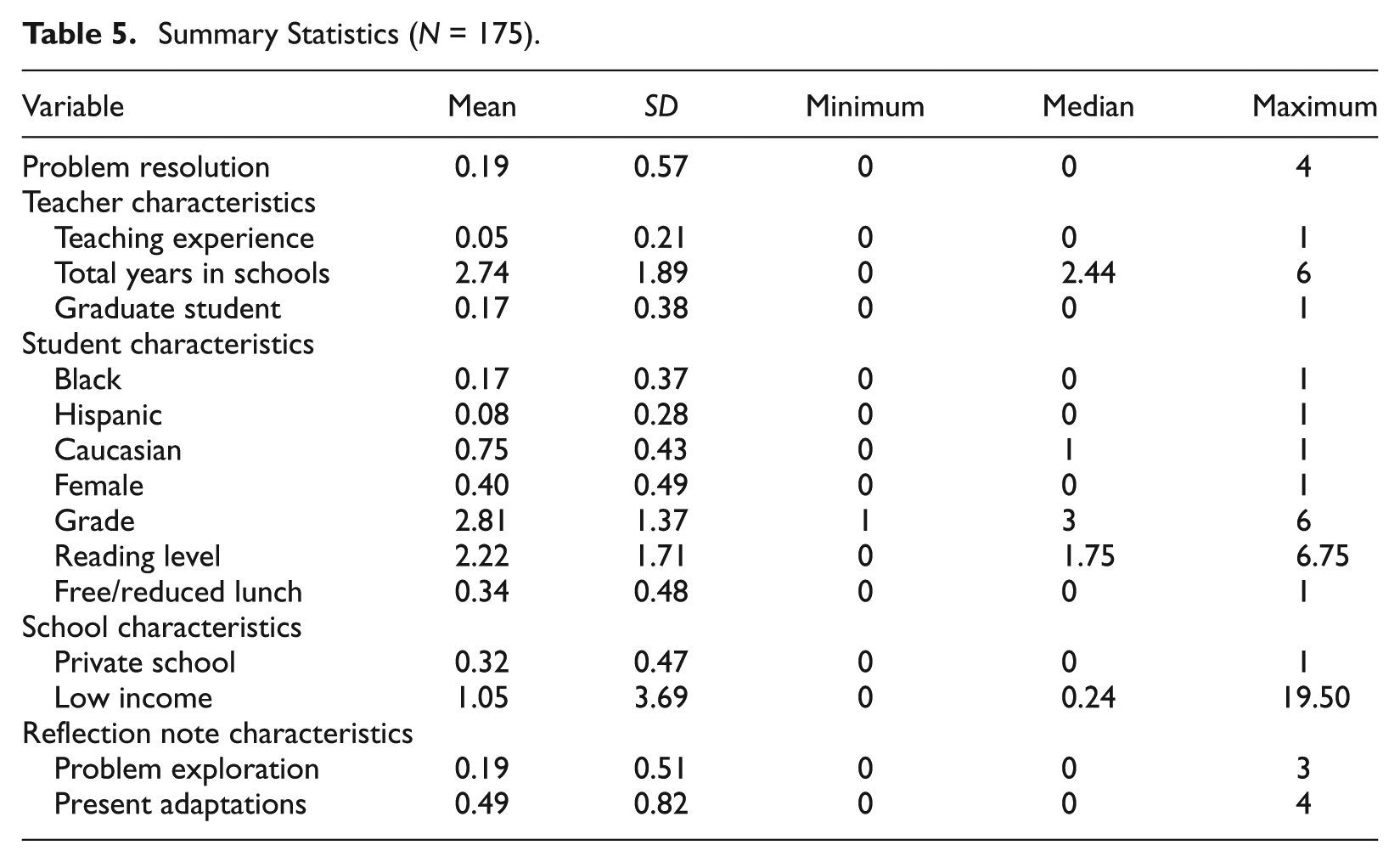
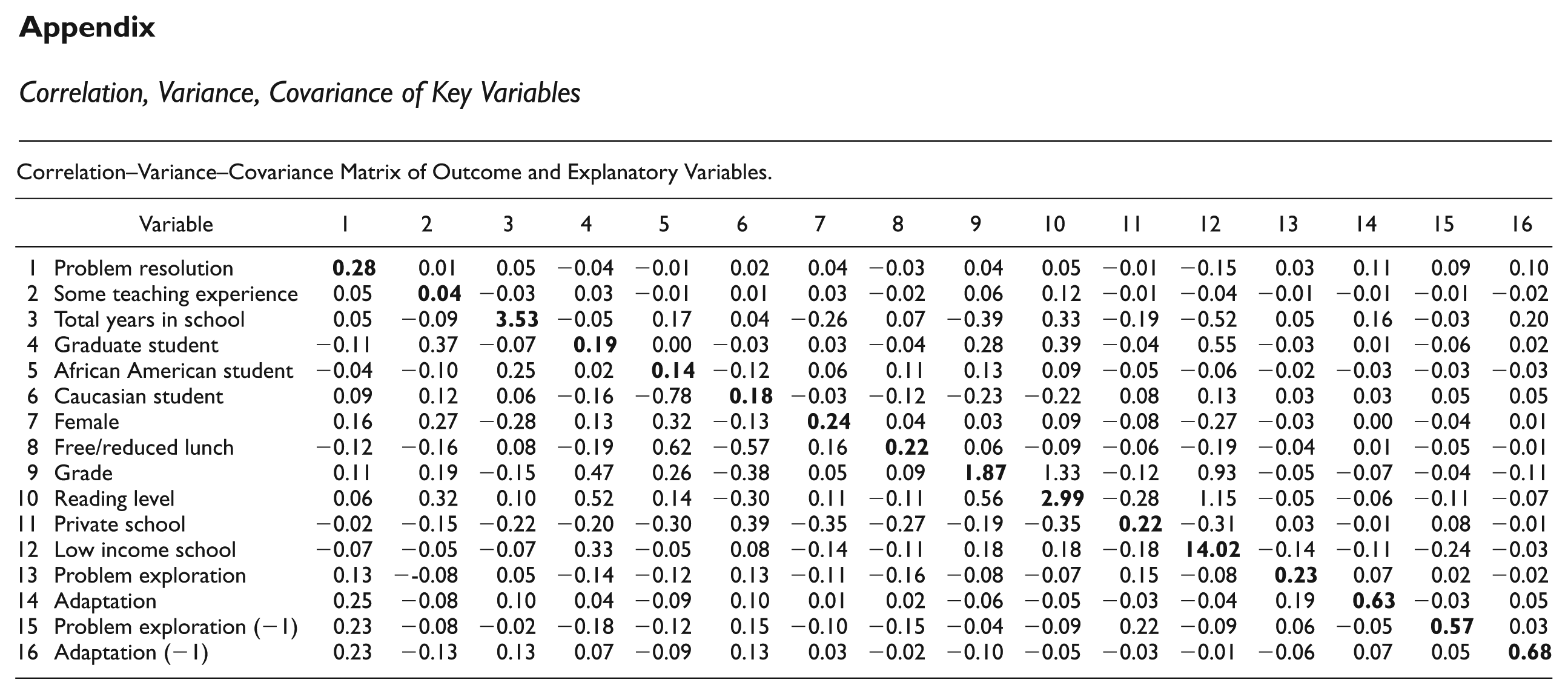
Subsequent quantitative analysis showed that problem exploration and adaption often preceded problem resolution, consistent with the exploration-adaptation-resolution cycle discovered in the qualitative analysis and supporting our belief that written reflections provided powerful support for novices’ developing reflective practices and adaptive expertise. Novices made an average of 0.19 problem explorations, 0.49 adaptations, and 0.19 resolutions per reflection for a total of 33 problem explorations, 86 adaptations, and 33 resolutions across the entire data set (see Table 5 for summary statistics, and the table in the appendix for correlation–variance–covariance). Of the differences in resolutions, 21% was due to novice characteristics and 79% was due to differences across reflections (see Table 6). Novice characteristics provided relatively little information about the occurrence of resolution, but graduate novices were significantly less likely to document resolution than undergraduate novices. This may simply be due to the more extended experiences the graduate student novices had with children. All of them had worked in full-time positions in schools for 2 to 4 years. Hammerness (2006) found that extended observation and data collection by novices led to less certainty in their statements, “suggesting that perhaps they were more open to questioning their assumptions and to re-examining their perspectives about students” (p. 81).
Summary Statistics (N = 175).
Summary of Multilevel Regression Models Predicting Problem Resolutions With Unstandardized Regression Coefficients (Standard Errors in Parentheses).
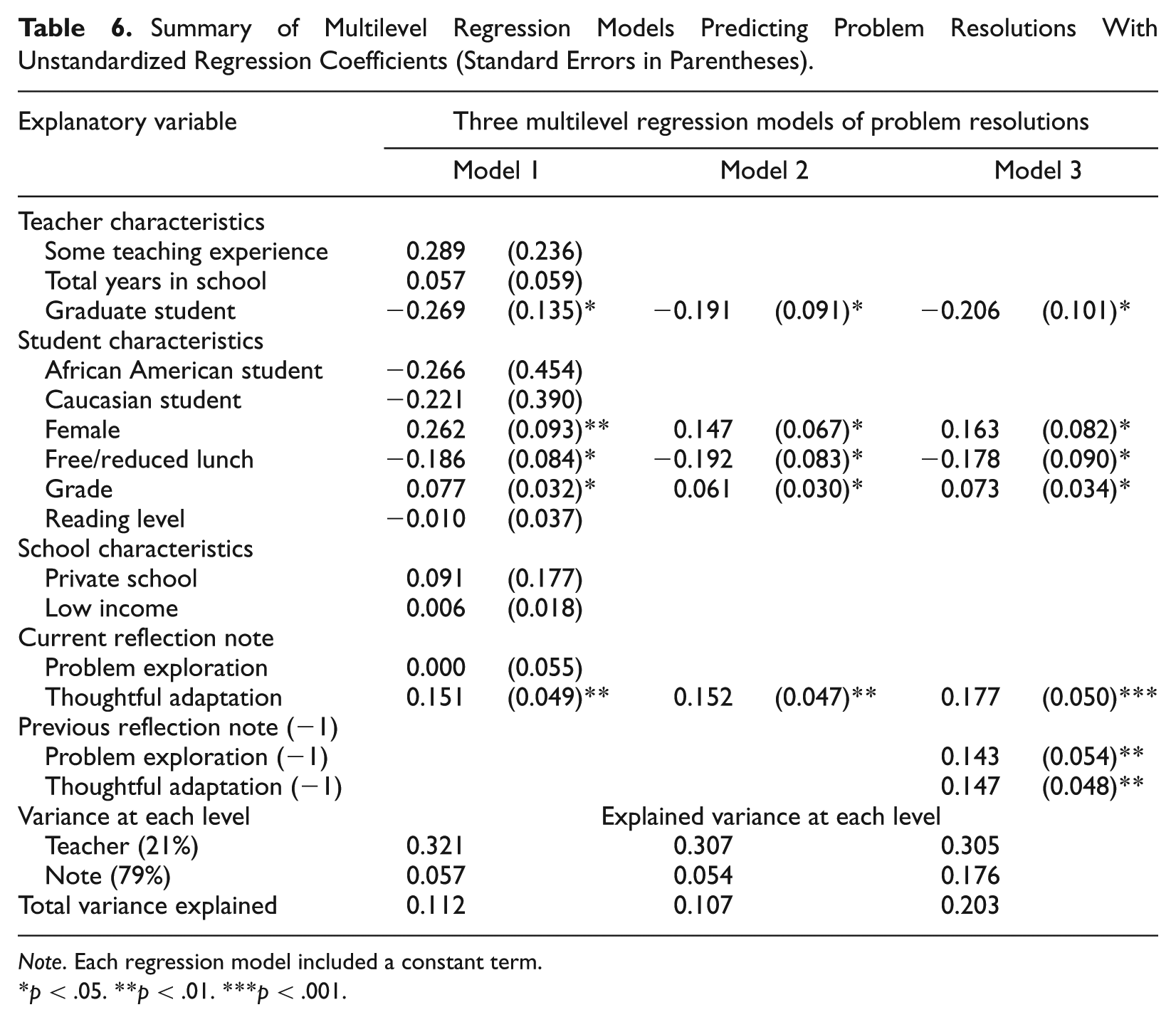
Note. Each regression model included a constant term.
p < .05. **p < .01. ***p < .001.
This pattern echoes the results of research with experienced teachers in the same reading clinic (Hayden & Pasman 2008). It may be that more seasoned students reserve judgment, waiting for additional evidence before attributing resolution. Many challenges in teaching are recurring (Cuban, 1992), and teachers become more keenly aware of their successes and failures as they amass experiences (Berliner, 1986, 1988). Shulman (1987) asserts that teacher development progresses “from expertise as learners through a novitiate as teachers [and] exposes and highlights the complex bodies of knowledge and skill needed to function effectively as a teacher. The neophyte’s stumble becomes the scholar’s window” (p. 4). Perhaps the graduate novices in this study were more likely to view problem exploration-adaptation as a process of refinement, opening “the scholar’s window” for more consideration.
Model 2 added student and school characteristics to the analysis. Novices who worked with a female student, in a higher grade, or not receiving free/reduced lunch documented more resolutions. In Model 3, reflective note characteristics were analyzed. Novices who described more adaptations in a reflection identified significantly more resolutions in that same reflection. Furthermore, novices who had more problem explorations or adaptations in the previous week’s reflection had significantly more resolutions the following week. No other variable was significant. This explanatory model accounted for more than 20% of the differences in problem resolution across reflections. Thus, novices who used their structured written reflections to explore problems in detail and generate adaptations were subsequently and significantly more likely to reflect on problem resolution.
This finding is supported by the cases of Annie, Carol, and Andrea. Annie engaged in exploration of several different problems, generated focused adaptations, and found resolution. Carol explored a smaller number of problems over the 8-week term, but explored them in depth, generating many adaptations, reflecting on the outcomes, and continually refining her approach. She illustrates the trial and error style that some novices may enact when first confronted with teaching challenges. Carol persisted and was flexible in applying the techniques she learned in the class, with resolution as the result.
Andrea did not engage in problem exploration, made very few adaptations, and documented no resolutions. She illustrates a perilous cycle that novice teachers may fall into. Andrea confronted the challenges in teaching a struggling reader with a perfunctory, scope-and-sequence kind of approach in which she assumed skills were mastered once she had taught them. She was puzzled when Cliff was unable to transfer skills to new contexts or, worse, when he seemed to forget the skills altogether. She placed responsibility for these difficulties with Cliff and did not pause to reflect more deeply or refine her instructional approach. Andrea seems to represent the type of novice that our colleague referred to when speculating that novices would be unlikely to reflect deeply on any challenges in teaching. Fortunately, Andrea’s pattern of responses to problems of practice was not representative of the sample of novices.
Discussion
Contributions to Mixed Methods Research
This sequential study demonstrates an effective method for analyzing reflections from many teachers in a clinical setting across time. Multiple measures of quality and rigor were implemented in the design and in both strands of analysis. Beginning with a qualitative exploratory phase allowed us to collect and analyze data that was grounded in the complex lived experiences of the novices. Integration of theory throughout this strand, and several layers of member checking helped assure quality and consistency of our coding formats. Quantitizing the qualitative data for confirmatory analysis revealed that the cycles of problem exploration-adaptation-resolution found within individual novice cases held significance for the larger sample as well. We accounted carefully for the statistical challenges that such a nested analysis raised.
All these measures resulted in findings that illustrated how this structured written reflection requirement supported novices’ developing understanding of the connection between knowledge and action in practice, or reflective practice. The significant relationships among problem exploration-adaptation-resolution reiterate Dewey’s (1916) pragmatic views of knowledge while specifically describing problems of practice that novices are labeling and learning (Berliner, 1988; Cuban, 1992). Structured written reflections with feedback helped these novices use reflective inquiry to generate adaptations, find resolution, and practice how to “think like a teacher” (Hammerness et. al., 2005, p. 382). Furthermore, this method gave novices a way to resolve some commonplace problems of practice while in the preservice stages. If “the central issue teacher education must confront is how to foster learning about and from practice in practice” (Darling-Hammond, 2010, p. 42), then this analysis is an important step in understanding what problems of practice concern novices and how novices used written reflections in a clinical experience to connect reflection with action and do teaching practice.
Contributions to Understanding
Knowledge did indeed serve as a tool for reorganizing novices’ instructional activity in a significant number of teaching interactions in this sample. These novices combined what they learned in the course and what they knew about pedagogy with what they experienced in their teaching practice and through the use of reflection scaffolded by a written format found ways to act (Biesta, 2010) that resulted in resolution. Annie provides an example of reflection at its most basic level by “asking questions, describing key elements, and evaluating current practice in light of student responses” (Hayden et al., 2013, p. 147). She raised many questions in her reflections, and explored several problems of practice. Through this questioning and exploration, she found ways to retool her teaching approach based on the unique needs of her student.
Carol’s approach was more focused. She engaged in fewer problem explorations only because she revisited the problems she identified and engaged in extensive adaptations and refinement of instruction directed at these problems. The result of her “systematic inspection” (Biesta, 2010, p. 109) of several key situations was that she was able to try on different pedagogical and instructional interventions, find meaning in the situation, and apply it to develop an approach that fit her student’s needs and habits of learning.
Andrea seemed to inhabit a space of puzzlement and perplexity (Dewey, 1933) and according to Dewey, this should have caused her to pause and reflect. Instead of making efficacious use of these “puzzling, troubling or interesting phenomenon” (Schön, 1983, p. 50), she remained in a cycle of equating instruction with learning, giving less consideration than necessary to her student’s responses to instruction. Instead of revising her instruction when it became apparent that Cliff had not retained knowledge from previous lessons, she puzzled over his lack of effort and the breakdown of his knowledge. Her instructional approach became almost punitive, insistent on exactness and regressing to strategies (covering pictures) that may have done more harm than good. How can teacher educators help novices like Andrea move beyond such apparent impasses? Learning what problems cause novices to pause and reflect, and how novices respond to challenges such as those experienced by this sample, can help teacher educators answer questions such as this. Experiences can be designed that provide opportunities to actively engage with these specific problems during training, when novices have easy access to experienced mentors who can mediate the learning (Alexander & Fives, 2000; Vygotsky, 1978).
Contributions to Teacher Education, Future Directions
Results of this study have value for novices and teacher educators because we analyzed a form of reflection frequently used in teacher education: externally assigned, structured, and written. While supervisor support and the accountability loop enhanced frank and detailed reporting, the reflections are still self-reports. And while most teachers do not continue reflective writing once they are established in a teaching position, this study supports requiring structured written reflections for teachers in training as a way to harness the power of language in learning and scaffold developing reflective practices that may later become internalized.
We did not conduct follow-up to determine what novices carried into their current teaching practices from this experience. But these novices’ written reflections provided evidence of a developmental journey. If “meaning takes shape in social action as actors interpret and make sense of their affairs from within the contexts of actual tasks” (Macbeth, 2006, p. 183), then the changes over time within these reflections are at least markers of this journey, and future research on development of reflective practices should include the markers of problem exploration, adaptation, and resolution.
It is reasonable to assume that supervisor/novice interactions (which were not accounted for in data analysis) and the reflection writing structure mediated novices’ reflective writing while they taught in the reading clinic. Indeed, that was a goal of the class and of the requirement to write reflections. While supervisors could intervene during lessons and read all lesson plans and reflections, one supervisor responded consistently in writing to the reflections of her supervisees while the others preferred to intervene during novices’ lessons or respond to questions face-to-face. Specific evidence of all supportive moves by supervisors was not collected and thus supervisor impact on the development of novices’ reflective practices was not analyzed. This impact needs to be examined more closely in future research.
The distinction between problems/dilemmas also needs further exploration. Which challenges are problems that can be resolved early in practice so that they no longer require deep reflection and which are dilemmas that linger long into a teacher’s career? Are dilemmas as persistently challenging as Cuban (1992) described, or do dilemmas eventually resolve into less troubling problems as teachers gain experience? Does a similar relationship exist among dilemma exploration-adaptation-resolution? How can teacher educators support novices in developing reflective responses to dilemmas? Exploring these questions can further support novices as they develop reflective practices that lead to adaptive expertise.
Footnotes
Appendix
Correlation, Variance, Covariance of Key Variables
| Correlation–Variance–Covariance Matrix of Outcome and Explanatory Variables. |
|||||||||||||||||
|---|---|---|---|---|---|---|---|---|---|---|---|---|---|---|---|---|---|
| Variable | 1 | 2 | 3 | 4 | 5 | 6 | 7 | 8 | 9 | 10 | 11 | 12 | 13 | 14 | 15 | 16 | |
| 1 | Problem resolution |
|
0.01 | 0.05 | −0.04 | −0.01 | 0.02 | 0.04 | −0.03 | 0.04 | 0.05 | −0.01 | −0.15 | 0.03 | 0.11 | 0.09 | 0.10 |
| 2 | Some teaching experience | 0.05 |
|
−0.03 | 0.03 | −0.01 | 0.01 | 0.03 | −0.02 | 0.06 | 0.12 | −0.01 | −0.04 | −0.01 | −0.01 | −0.01 | −0.02 |
| 3 | Total years in school | 0.05 | −0.09 |
|
−0.05 | 0.17 | 0.04 | −0.26 | 0.07 | −0.39 | 0.33 | −0.19 | −0.52 | 0.05 | 0.16 | −0.03 | 0.20 |
| 4 | Graduate student | −0.11 | 0.37 | −0.07 |
|
0.00 | −0.03 | 0.03 | −0.04 | 0.28 | 0.39 | −0.04 | 0.55 | −0.03 | 0.01 | −0.06 | 0.02 |
| 5 | African American student | −0.04 | −0.10 | 0.25 | 0.02 |
|
−0.12 | 0.06 | 0.11 | 0.13 | 0.09 | −0.05 | −0.06 | −0.02 | −0.03 | −0.03 | −0.03 |
| 6 | Caucasian student | 0.09 | 0.12 | 0.06 | −0.16 | −0.78 |
|
−0.03 | −0.12 | −0.23 | −0.22 | 0.08 | 0.13 | 0.03 | 0.03 | 0.05 | 0.05 |
| 7 | Female | 0.16 | 0.27 | −0.28 | 0.13 | 0.32 | −0.13 |
|
0.04 | 0.03 | 0.09 | −0.08 | −0.27 | −0.03 | 0.00 | −0.04 | 0.01 |
| 8 | Free/reduced lunch | −0.12 | −0.16 | 0.08 | −0.19 | 0.62 | −0.57 | 0.16 |
|
0.06 | −0.09 | −0.06 | −0.19 | −0.04 | 0.01 | −0.05 | −0.01 |
| 9 | Grade | 0.11 | 0.19 | −0.15 | 0.47 | 0.26 | −0.38 | 0.05 | 0.09 |
|
1.33 | −0.12 | 0.93 | −0.05 | −0.07 | −0.04 | −0.11 |
| 10 | Reading level | 0.06 | 0.32 | 0.10 | 0.52 | 0.14 | −0.30 | 0.11 | −0.11 | 0.56 |
|
−0.28 | 1.15 | −0.05 | −0.06 | −0.11 | −0.07 |
| 11 | Private school | −0.02 | −0.15 | −0.22 | −0.20 | −0.30 | 0.39 | −0.35 | −0.27 | −0.19 | −0.35 |
|
−0.31 | 0.03 | −0.01 | 0.08 | −0.01 |
| 12 | Low income school | −0.07 | −0.05 | −0.07 | 0.33 | −0.05 | 0.08 | −0.14 | −0.11 | 0.18 | 0.18 | −0.18 |
|
−0.14 | −0.11 | −0.24 | −0.03 |
| 13 | Problem exploration | 0.13 | −0.08 | 0.05 | −0.14 | −0.12 | 0.13 | −0.11 | −0.16 | −0.08 | −0.07 | 0.15 | −0.08 |
|
0.07 | 0.02 | −0.02 |
| 14 | Adaptation | 0.25 | −0.08 | 0.10 | 0.04 | −0.09 | 0.10 | 0.01 | 0.02 | −0.06 | −0.05 | −0.03 | −0.04 | 0.19 |
|
−0.03 | 0.05 |
| 15 | Problem exploration (−1) | 0.23 | −0.08 | −0.02 | −0.18 | −0.12 | 0.15 | −0.10 | −0.15 | −0.04 | −0.09 | 0.22 | −0.09 | 0.06 | −0.05 |
|
0.03 |
| 16 | Adaptation (−1) | 0.23 | −0.13 | 0.13 | 0.07 | −0.09 | 0.13 | 0.03 | −0.02 | −0.10 | −0.05 | −0.03 | −0.01 | −0.06 | 0.07 | 0.05 |
|
Acknowledgements
We appreciate the research assistance of Yik Ting Choi.
Declaration of Conflicting Interests
The author(s) declared no potential conflicts of interest with respect to the research, authorship, and/or publication of this article.
Funding
The author(s) received no financial support for the research, authorship, and/or publication of this article.