







Abstract
When used in an informed and careful manner, the repertory grid technique offers mixed methods researchers a way to quickly gain a deeper understanding of their participants’ concerns, issues, and worldviews. This paper critically assesses the potential contributions of the repertory grid technique when used in mixed methods research. After providing a background survey and description of this relatively little-known research instrument, the strengths and limitations of repertory grids are considered. This report discusses some of the ways that this technique can significantly enhance the quality of the data collected from research participants within the three core models of the mixed method design framework.
Personal Construct Repertory Grids, also known as RepGrids or the repertory grid technique, represent a “cognitive mapping tool” which is used “to elicit people’s ideas or opinions using their own words for how they construe reality” (Fetters, 2019, p. 219). Originally created by George Kelly (1905–1967), a major figure in the field of psychology during the 20th Century (Benjafield, 2008). In recent years, repertory grids have been viewed as potentially having value for facilitating Mixed Methods Research (MMR) because of their ability to generate and then integrate a combination of qualitative and quantitative data (Bazeley, 2018; Fetters, 2019). The repertory grid technique has been used in many fields, with a strong representation in management and business (Boyle, 2005; Easterby-Smith et al., 1996; Fassin et al., 2015; Song & Gale, 2008), health (Blundell et al., 2012; Brophy, 2015), education (Chitsabesan et al., 2006; Williams, 2001; Yorke, 1978), and cross-cultural studies (Canning & Holmes, 2006; Hadley & Evans, 2001; Jukka et al., 2017). Within the framework of MMR, relatively fewer exemplars using repertory grids exist (e.g. Kington et al., 2011; Taylor, 2015), which in our opinion, suggests that many mixed methods researchers may either be unaware of the technique or uncertain about how it could contribute to their investigations.
The purpose of our paper, therefore, is to critically assess the potential of repertory grids in MMR. We begin by revealing the roots of repertory grids, after which, we will present some of the few salient MMR studies which have used the technique. A discussion of repertory grid procedures, their relative strengths and weaknesses, as well as their potential contributions to MMR will also be considered. By the end of this paper, readers will have gained a deeper understanding of the repertory grid technique and a better appreciation of its prospects for mixed methods research.
Background
Understanding the repertory grid technique requires some knowledge about its creator, the psychologist George Kelly and his Personal Construct Theory (PCT). This helps in locating epistemological and axiological concerns of the technique, as well as in preparing for a discussion on how it can serve the interests of MMR.
Kelly in Context
Born to a poor farming family in rural Kansas, Kelly was a precocious boy who excelled academically. As an undergraduate, he originally intended to become an engineer, but his focus shifted midway toward education and psychology due to the social problems of the Great Depression and 1930s Dust Bowl famine (Fransella, 1995). Kelly completed an undergraduate degree in physics and mathematics, another in education, and then a master’s degree in labor relations and sociology. This was followed by a PhD in psychology from the University of Iowa. Kelly worked as a teacher, psychotherapist, and an aviation psychologist for the US Navy during the Second World War before taking a professorship in clinical psychology at Ohio State University (Fransella, 1995; Neimeyer, 2000). Among his colleagues, Kelly was considered something of a maverick, in that he called into doubt many of the tenets of behaviorism. However, his theories “did not reject the scientific perspective that underpinned psychology at this time” (Denicolo et al., 2016, p. 15).
Personal Construct Theory
Even before he became an academic, Kelly was the quintessential bricoleur. He fondly told stories of rebuilding an old car from the chassis up using only the limited tools and materials at hand (Epting, 2016, p. 27). Much later at Ohio State in the early 1950s, Kelly continued to tinker, this time methodologically, by using the conceptual tools he acquired as a result of his diverse educational experiences. With the precision of an engineer, he sought to create measurable working models for how people reconstructed their lives when faced with problems and personal disasters (Fransella, 1995, p. 5; Procter, 2016, p. 139). From education, the pragmatism of John Dewey became Kelly’s basis for “a constructivist psychology addressing the full range of human concerns” (Epting, 2016, p. 28). In terms of physics, “Personal construct theory takes the quantum mechanics view that none of us has neutral access to reality” (Fransella & Neimeyer, 2005, p. 8). The ideas of Johann Friedrich Herbart influenced Kelly’s view of mathematics and psychology as complementary tools for mapping the relationship between human experience and thought (Benjafield, 2008; Fransella, 1995, p. 41; Hinkle, 1970, p. 91).
Kelly pieced together these elements in the development of his Personal Construct Theory (Kelly, 1955/1991). Presaging by over a decade the work of Berger and Luckmann (1967) on social constructionism, PCT stems from a fundamental postulate and its corollaries. In simplest terms, Kelly (1955/1991, p. 4) described humans as incipient scientists. From their constant interaction with social and empirical environments, people create and modify mental theories about how the world around them works. Over time, people see what they expect to see, which depending on the situation, may differ significantly from others who, while having had similar experiences, have developed different interpretations. These mental theories, formed as they are from beliefs, values, and judgements, are expressed in Kelly’s system as bipolar constructs (i.e., good vs. bad, exciting vs. boring, safe vs. risky). Actions, people, or things are construed not only in terms of what a person perceives them to be, but also in what they perceive them not to be. Kelly describes these constructs as “if-then, but not relationships” (1955/1991, p. 86). People anticipate events (if x happens, then y will probably happen, but not z) and make decisions accordingly. People are usually unaware of their constructs, and it was through the repertory grid technique that Kelly enabled people to express these constructs when asked to share their thoughts about specific issues.
The Links between PCT and MMR
Kelly’s theoretical and practical interests intersect with MMR in a number of ways. It is clear that constructivism, of which Kelly’s contribution has been immense, has influenced the way mixed methods researchers approach their informants and how they interpret their data (Purzer, 2011; Sonnenberg et al., 2017). Methodologically and theoretically, mixed methods researchers are often unapologetic bricoleurs who adopt a pragmatic “craft attitude” for making sense of the messy social world (Sanscartier, 2020). This feature is not only reflected within the methodological expressions of Kelly’s work, but it is also a prominent aspect of studies found in the Journal of Mixed Methods Research (Creswell, 2009; Hemmings et al., 2013; Howes, 2017). The role of pragmatism as espoused by Dewey is a major plank of Personal Construct Theory, especially in its view of social reality as a provisional matrix of dynamic interactions. Pragmatism in its myriad forms is an important feature of MMR as well (e.g. Feilzer, 2010; Johnson et al., 2017; Morgan, 2007). Kelly’s repertory grid technique, developed as it was from these conceptual perspectives, incorporates both qualitative and quantitative data for finding a more meaningful understanding of the informants’ perspectives within specific social arenas. This complements the emphasis that MMR places on the integration of datasets (Creamer, 2018; Fetters & Molina-Azorin, 2017).
The Repertory Grid Technique in MMR
Let us now consider some exemplars of MMR studies that have utilized repertory grids. Our survey is framed within Creswell and Plano Clark’s (2018) three-part model for mixed methods research designs, which is summarized below: • • •
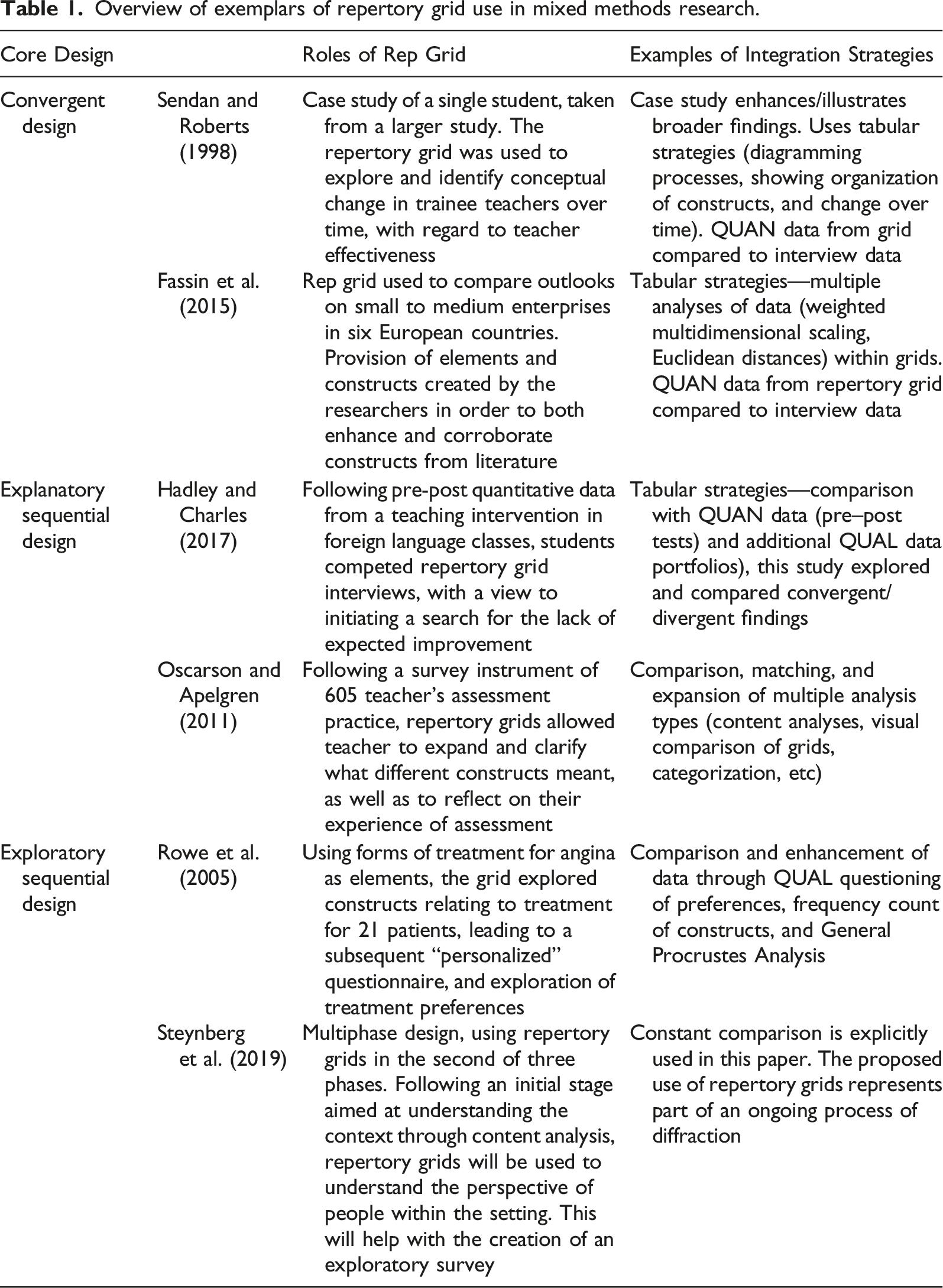
In line with a convergent MMR design, Sendan and Roberts (1998) presented an iterative series of repertory grids to find the organization of a student–teacher’s construct system and how it changed over time. This study presages much of the current MMR work on joint displays (Creswell & Plano Clark, 2018; Fetters, 2019), but the extensive use of diagrams integrates the findings with the intent of combining data sources more visually. Repertory grids have also been used in teacher training and transformative assessment (Pope & Denicolo, 2000), as well as in field-specific workshops promoting reflection or modifying ways of thinking in teachers (Donaghue, 2003; Korthagen, 1992).
In another convergent MMR study, Fassin et al. (2015) compared owner-managers of small to medium enterprises from six European countries with a view to understanding their outlook on corporate social responsibility. Elements and some constructs were provided by the researchers, partially as a result of a language gap, but also to allow for greater comparisons within and between groups. Ratings were used to calculate the organization of constructs in different groups using content analysis, weighted dimensional scaling, and by country through the use of Euclidian distance. The findings indicated differences by country, as expected, but also raised questions about the academic language of corporate social responsibility, especially with its heavy adoption of “Anglo-Saxon jargon” (Fassin et al., 2015, p. 452).
Hadley and Charles (2017) used an explanatory sequential design in a small scale study of the effects of combining a second language teaching technique known as Data-Driven Learning (Johns, 1991) with that of Extensive Reading. The quantitative stage of the study featured a battery of pretest-posttests with experimental and control class groups using a t-test of independent samples as the means of analysis. Based on the findings, which revealed no improvement on the part of the experimental group, repertory grids were administered to students during the qualitative stage, together with follow-up interviews, to uncover possible causes. It was discovered that while the reading element was popular, the pedagogical tasks associated with the data-driven learning approach were not. With the help of repertory grids, many of the learning activities—particularly those conducted solo—were revealed as seemingly ill-suited to the students’ mode of learning. The integrated data in this study suggested that future materials would benefit from redesigning them with a more pair or group-oriented approach.
On a larger scale, a survey of 605 language education teachers in Sweden aimed to explore teachers’ experiences of their role in assessment (Oscarson & Apelgren, 2011). The authors reported that Sweden, as with many other countries, was increasingly geared to criterion-based assessment processes, impacting knowledge and skills relating to alternative forms of assessment (such as portfolios). Teachers listed the forms of assessment they used as elements in a repertory grid, with an eye towards exploring commonality and difference. As with other large-scale uses of repertory grids, only a few constructs were able to be elicited, while many more were supplied to ensure comparability. In addition, the grids displayed in the report do not appear in traditional bipolar form. In spite of this, the interaction of the survey and repertory grid proved complementary and provided both additional graphical methods for displaying the results and concrete examples of teachers’ voices.
An early example of an exploratory sequential design can be seen in Rowe et al. (2005), who leveraged repertory grids to explore patient preferences for treatment of angina at a time when “relatively few models of clinical decision analysis have incorporated patients’ preferences” (Rowe et al., 2005, p. 2586). Prior survey-based research had collected responses to items generated by researchers, but neither used concepts relevant to patients, nor did they highlight individual differences which could be significant. Using a sample of 21 patients from two general practices in the UK, they elicited constructs from angina patients in order to better understand their perspectives on treatment options. This was followed up with a personalized questionnaire designed to achieve greater clarification. The results from the survey were then subjected to Generalized Procrustes Analysis (GPA), which allowed data to be seen at the level of the individual without requiring a common set of variables. While this research does not explicitly identify itself as a mixed methods research paper, it nevertheless fits within the exploratory sequential design description. Despite its small scale—a reflection of the repertory grid technique—it not only reflects an effort to understand the patients’ viewpoint more effectively than a more traditional questionnaire, but it also goes through multiple forms of data integration.
Overview of exemplars of repertory grid use in mixed methods research.
Explaining the Repertory Grid Technique
While the papers discussed so far represent some of the relatively rare examples of repertory grid use in MMR, far fewer papers deal specifically with the process of what goes into conducting a repertory grid (with notable exceptions—see Kington et al., 2011). We will now proceed with that discussion, together with a consideration of how the data can be analyzed, and then we will offer a critical appraisal of the technique’s relative strengths and weaknesses.
However, a couple of points should be made at the onset. First, as noted earlier, numerous modifications have been made to Kelly’s original technique, so it is important to remember that presently “no such creature as ‘The Grid’ exists” (Pope & Keen, 1981, p. 37). Within this variation, however, all iterations of the technique share Kelly’s interest of finding pragmatically useful data (Kelly, 1963, pp. 141–142) and seeking insight into individual or group constructs on a subject of particular interest (Bannister & Fransella, 1986, p. 143). The procedures that will be presented in our paper are primarily those that the first author has followed over the years, and which emulate stages as set forth by Shaw and McKnight (1981) and Jankowicz (2004).
Second, it is important to know something about data used to scaffold our presentation of repertory grid procedures. The material used comes from an ongoing study of teachers’ constructs regarding learners of English as a Foreign Language in an Extensive Reading (ER) program. Extensive Reading is a form of language teaching where students must read large amounts of short books (called Graded Readers) written in simple English. The simplest graded readers can have as few as three hundred words, while the more advanced books have as many as 20,000 words. Applied linguistics research suggests that when language learners read large amounts of these graded readers, over time their reading speeds, language comprehension, and grammatical proficiency improve significantly (Hadley & Charles, 2017; Pigada & Schimitt, 2006; Yoshida, 2014). The key is for learners to read at a level simple enough for them to be able to read for pleasure without the regular use of a dictionary (Day & Bamford, 2002, 2004).
As part of a larger study that is currently exploring student processes in ER, particularly within the context of university classes in Japan, one segment also seeks to gain a comparative understanding of teacher perspectives with regard to what they would view as successful student practices. The repertory grid elicited from one teacher participating in study (see Figure 1) represents their thoughts on the subject as qualitative personal constructs quantitatively linked to ideal and non-ideal features at the top of the grid. As we now proceed with the steps for carrying out the repertory grid technique, readers are invited to periodically refer to Figure 1 in order to maintain a more global view of the final product. A completed repertory grid. Note. (Figure 1): All data shown are elicited from the participant, including elements (top row), constructs (either side of the grid), and the scores linking element and construct.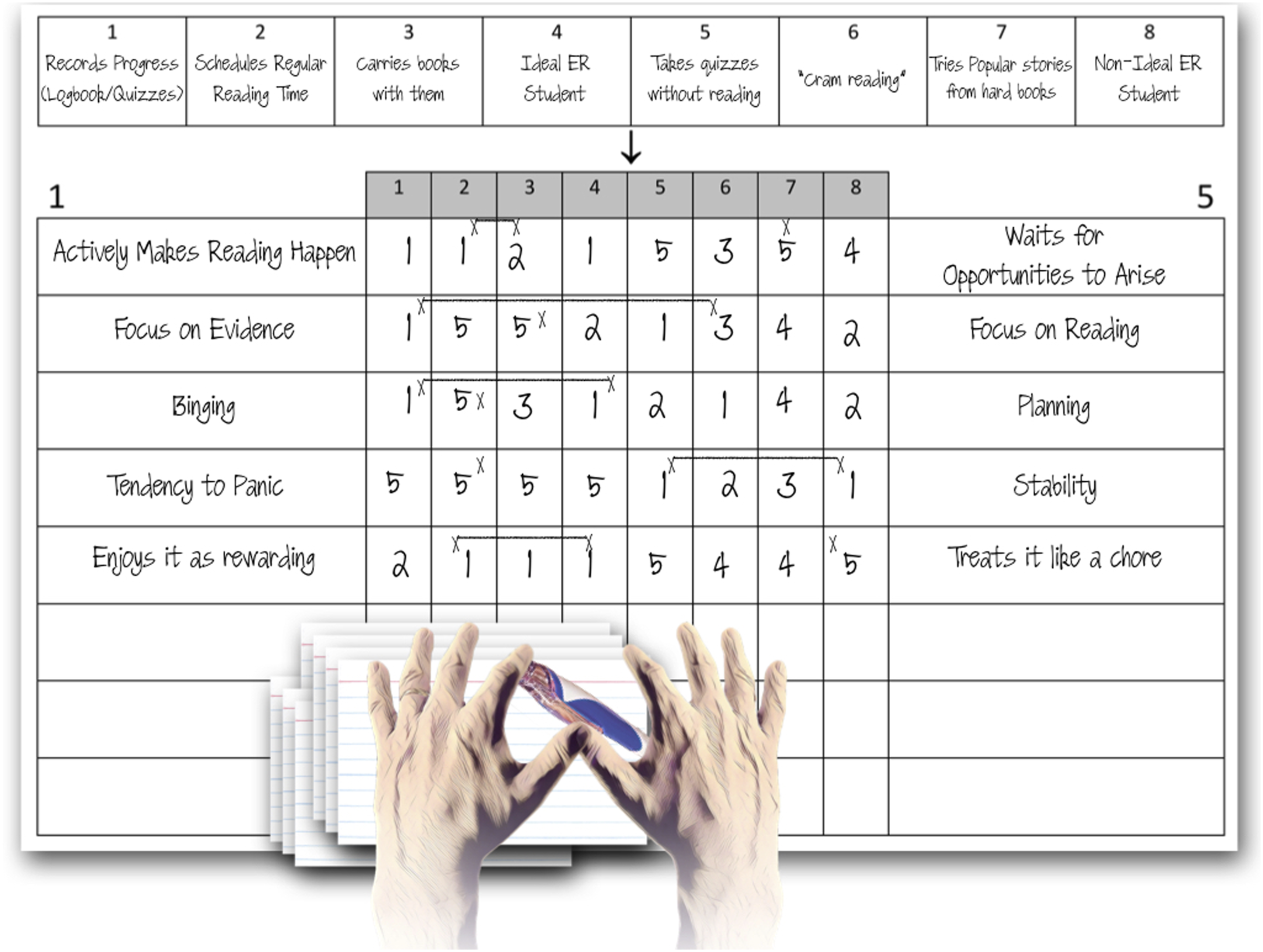
Getting Prepared
To carry out an interview, a researcher needs a blank repertory grid sheet, pen or pencil, and note cards. The repertory grid sheet has space provided for elements at the top of the grid and constructs on the left and right sides of the grid. Elements are the empirical “people, events, objects, ideas, institutions and so on” (Cohen et al., 2007, p. 435), which are “well-known and personally meaningful” to informants (Shaw, 1980, p. 10). They need to be as concrete as possible. Easterby-Smith (1981) suggests that it might be helpful “to think of elements as being the objects of people’s thoughts, and constructs as the qualities that people attribute to these objects” (p. 11). A repertory grid will usually have space for five to eight elements and bipolar constructs, and frequently has a space for some sort of rating system, which links the constructs to the elements for statistical analysis (Figure 2).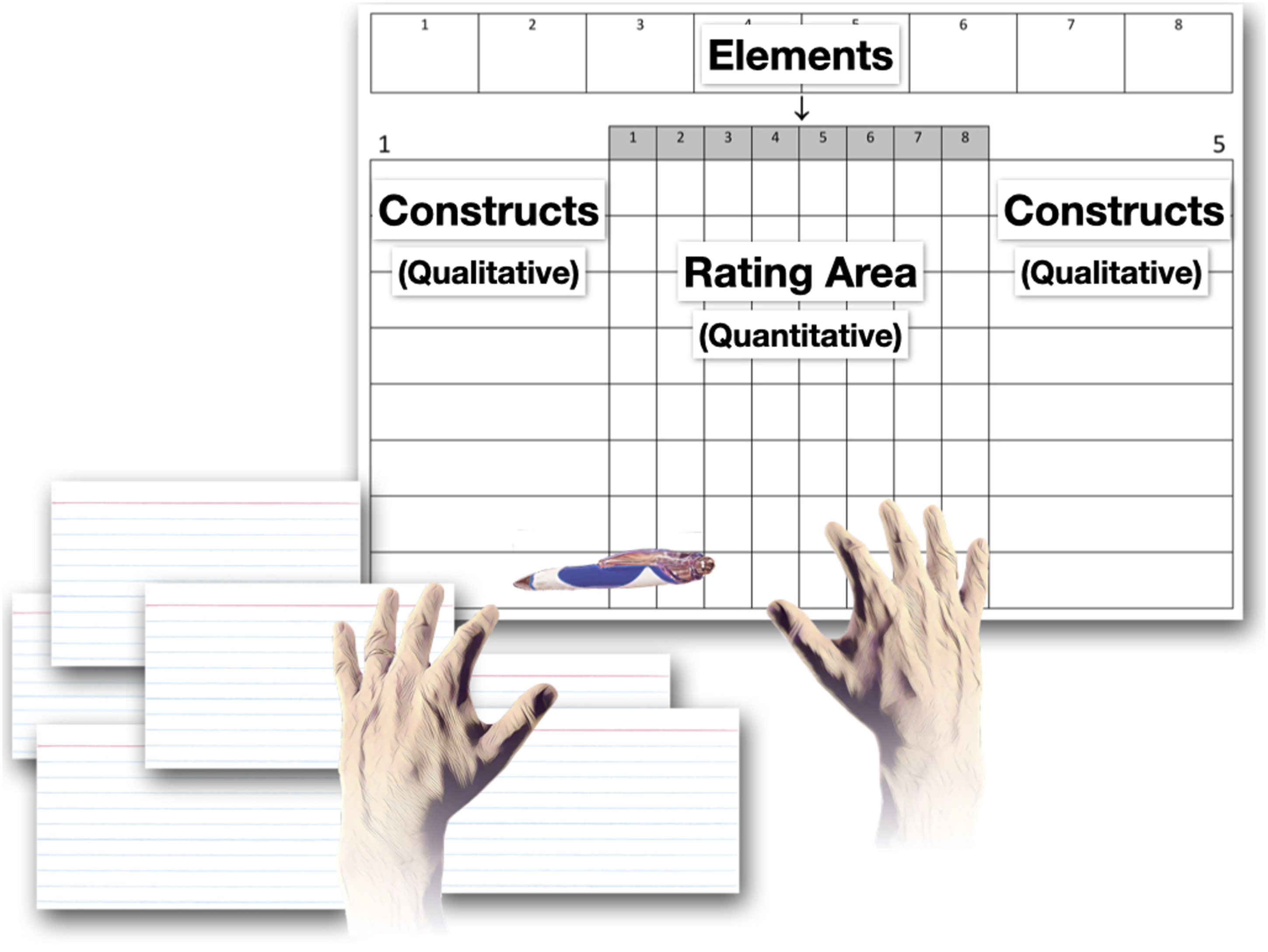
Eliciting Elements
To begin, the informant is asked to write elements on the top of the grid about the area of research interest. As can be seen in Figure 3, the teacher writes on the repertory grid sheet some of the observable activities of students in ER classes. The elements elicited are numbered for reference and the informant writes each element on a separate note card, which are used during the next step. To stimulate a clearer comparison within issues being studied, as well as between grids elicited later from different informants, researchers may supply what Fransella (2005, pp. 45–46) describes as “anchor” elements. These are expressed in this grid as an ideal and non-ideal ER student. The teacher would think about a suite of activities represented by a specific student in their mind who stood out as an ideal, and do the same for one student they remember as particularly unsuccessful. This not only elicits more bipolarity, but it also facilitates explicit comparisons between different research participants around anchor points. Tan and Hunter (2002) argue for elements as being explicitly the same type (i.e. actions or physical objects, but not both), but Fransella notes that if the elements are in the same “range of convenience” (2005, p. 45), meaning they are explicitly within the domain of the social phenomena being studied, then anchored elements such as those used in this grid can be acceptable. Nevertheless, “[w]hether the elements are elicited or provided,” explain Pope and Denicolo (2000), “it is important that they are representative of the area to be considered and that they span the range of items considered to be important in that area” (p. 72). In effect, supplied or not, the elements should represent what are meaningful to the participant, but the validity of the elements, that is, whether they “fit” can be determined during the process of explaining to them how to carry out the technique. Writing elements on the repertory grid and making note cards. Note. (Figure 3): Elements (representing the sample the informant will consider) are recorded both on the record sheet and separately on note cards. Cards will be used for eliciting constructs.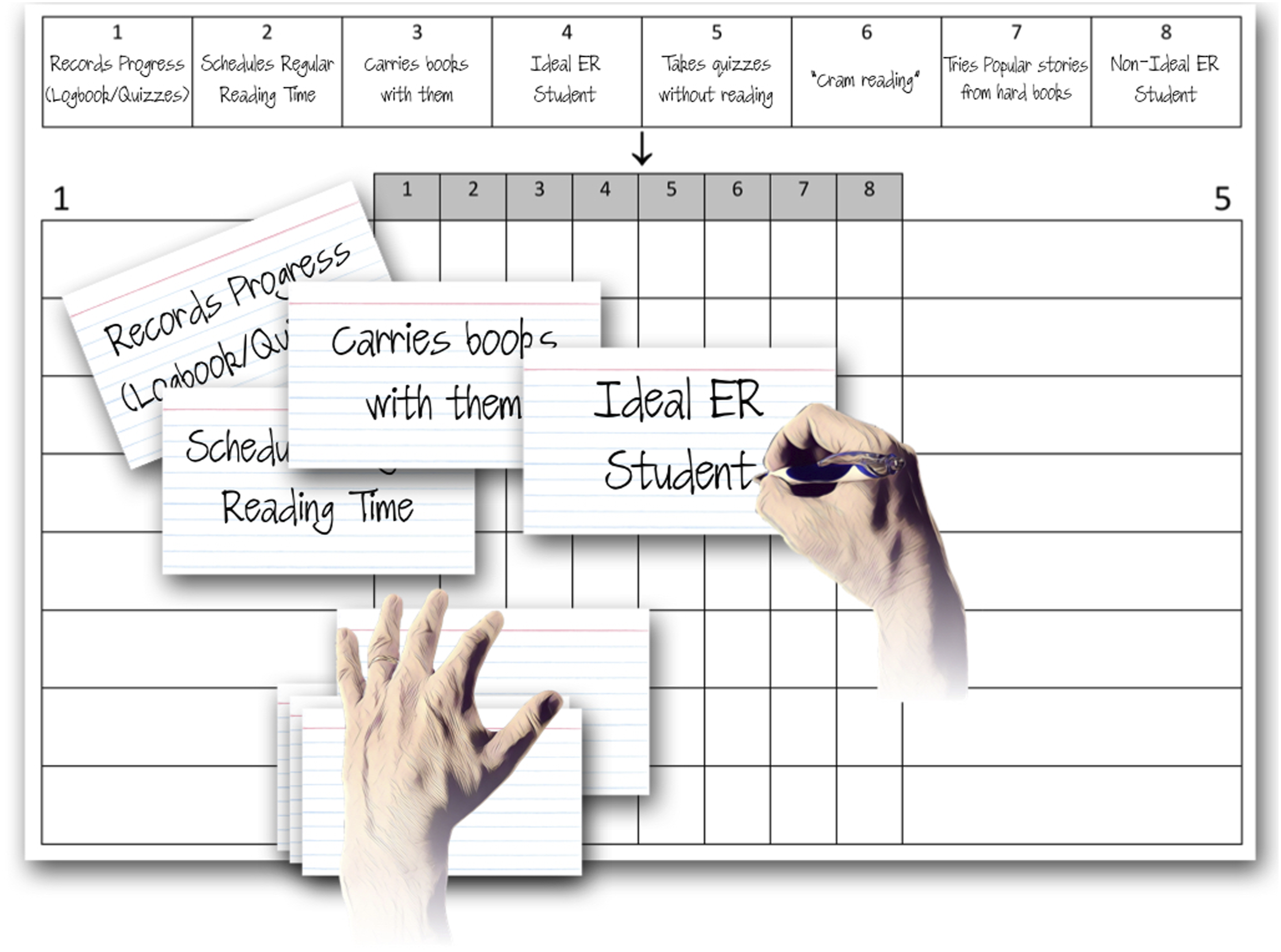
Eliciting Constructs
After filling out the elements on note cards, the cards are turned face down, shuffled, and three are drawn at random (see Figure 4). The informant then marks the elements drawn from the pack by putting with an “X” beside each on the grid. The informant is then asked, “Of the three elements that you have chosen, which two seem to have something more in common with each other?” These two elements are connected with a line, which both leaves an audit trail for the elicitation process and which can be helpful during later follow-up interviews. Always on the left side of the grid, the informant describes, in their own words, what it is that the two similar elements share. In the example, elements 2 and 3 help to actively make reading happen. On the right side, the informant expresses what makes the third element different from the other two, which in this case is waits for opportunities to arise.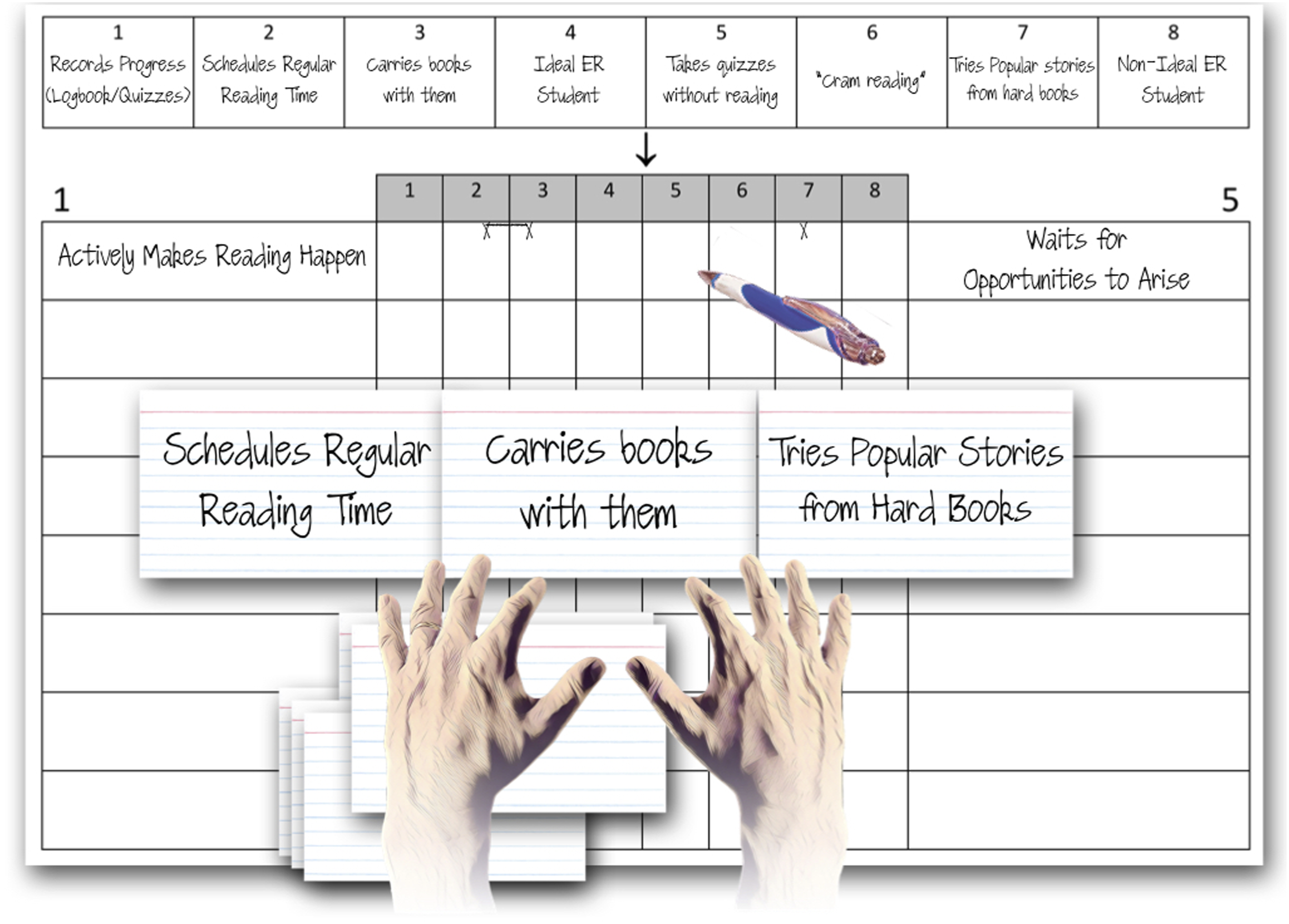
Not thinking about what it is that makes the third element different often results in a lopsided description of the construct that lacks detail, and which is often simply a negation of the construct which emerged on the left side of the grid (i.e. “active”—“not active,” “reads every day”—“doesn’t read every day”). One informant may choose “active—passive,” and another may choose “active—hesitant.” In the example given, negation would result in the construct “Does not actively make reading happen.” By focusing on what makes the third element different, the informant must delve further into what had been only implicit, and bring it further into focus by expressing it.
Rating Elements According to the Constructs (Linking)
As yet, the construct applies only to three elements, and is unconnected to the others. Connecting the elements is the goal of the following stage, in which the constructs are rated along a five point Likert scale, with the left (or emergent) construct always representing “1” and the right (to each of the elements (Easterby-Smith, 1981). The elements in this grid are rated on a five -- or implicit) construct -- as “5.”
In Figure 5, the three elements representing the observed behavior of “records progress,” “schedules regular reading times,” and the “Ideal ER Student” are rated most strongly to the construct of “actively makes reading happen,” and have each received a score of 1. In contrast, “tries popular stories from hard book” (which the teacher later explained as meaning the student chooses a well-known story in a book level that is too hard for them, in order to try and quickly get a higher word count than if they had read many books at a more appropriate level), and “takes quizzes without reading” have received a score of 5, since they are more closely associated with the implicit construct of “waits for opportunities to arise.” The element of “cram reading” is somewhere between these two constructs, and has received a score of 3. Once the first row has been rated, the informant turns the three cards over, shuffles them, and begins the process all over again with a new combination of elements. This can continue until the informant is unable to offer anymore constructs.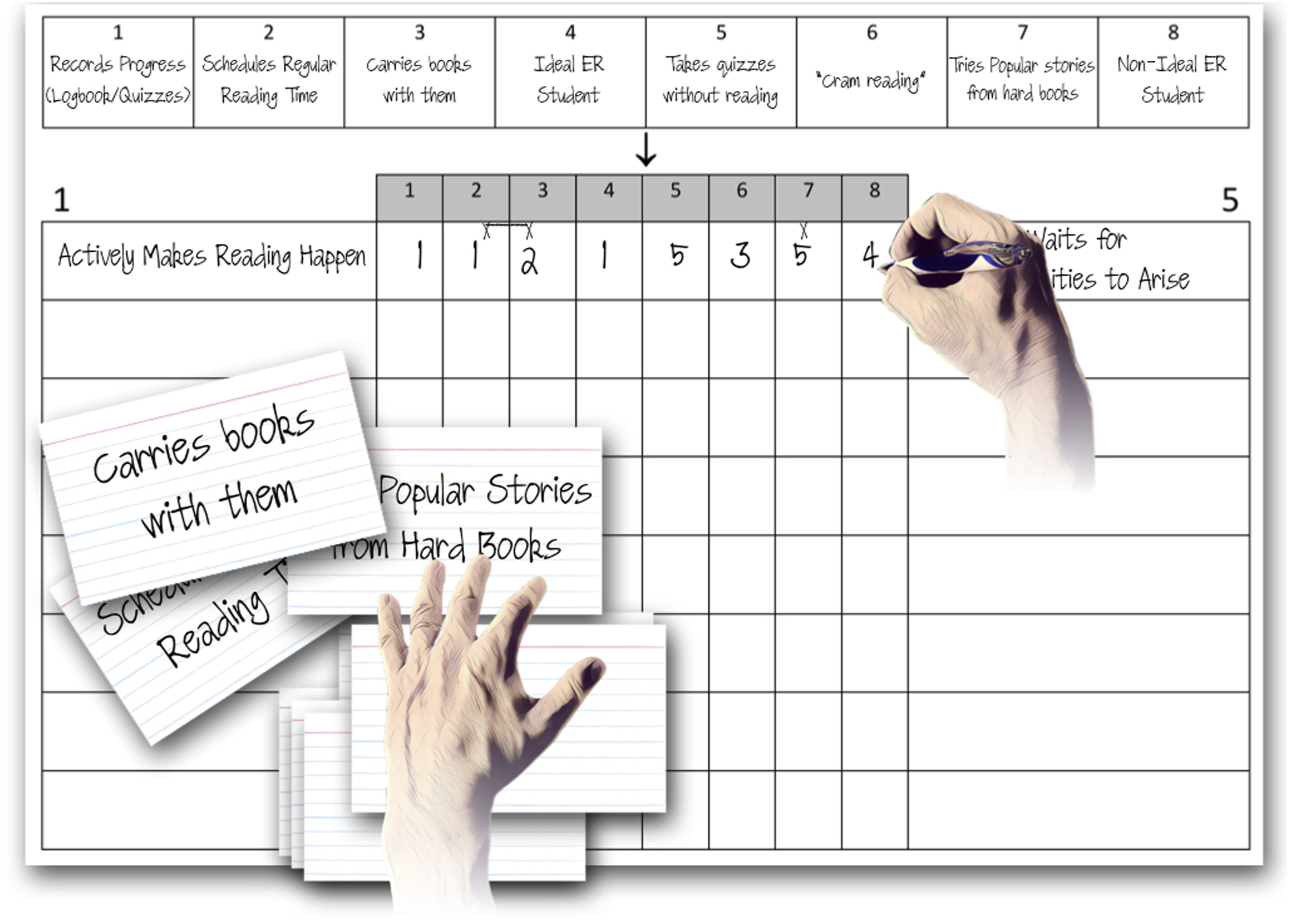
Finishing the Process
Looking back at Figure 1, the informant stopped after eliciting five bipolar constructs. Once the grid is completed, a simple review with the informant is useful as a conclusion to the procedure. Researchers may want to be sure they have understood the informant, or the informant may comment on any patterns that they see in the data. Participants may be tired after the session, but are often keen to offer insight. It is helpful to provide a copy of the grid for participants during this process, as this gives informants something tangible to take away from the experience. A summary of the repertory grid technique can be found in Figure 6. Overview of the repertory grid procedure.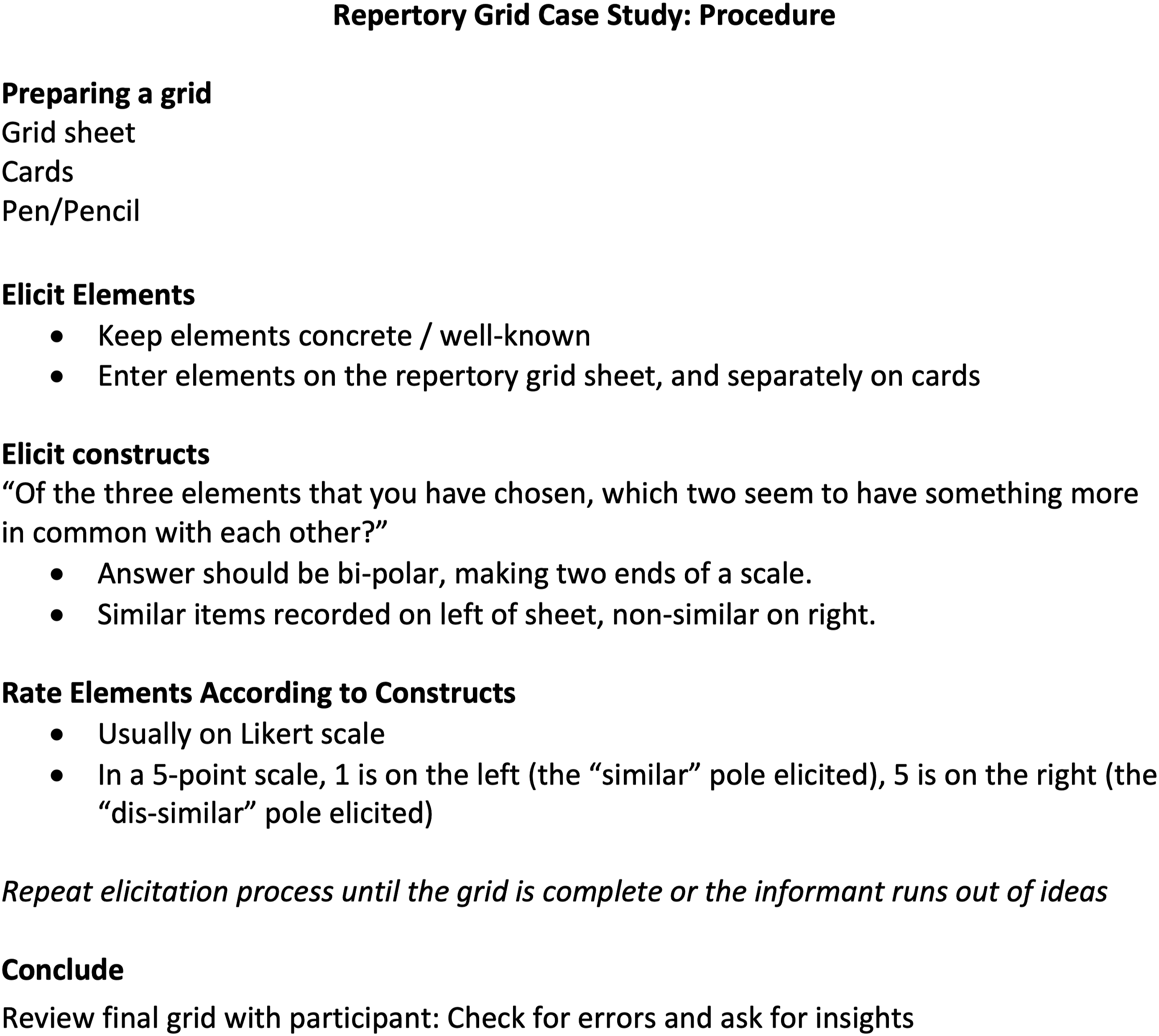
Analyzing Repertory Grid Data
The simplest way to study repertory grids is through what Jankowicz (2004, p. 80) calls “eyeball analysis”—that is, by studying what is written. Simply asking what the constructs and elements mean often results in a deeper, more focused interview that deals more specifically with the area of research interest. However, because the elements have been rated and linked to the constructs, it is possible to use multivariate or principal components analysis to discover more about their relationship, and to better integrate the data. Rep Plus (Shaw & Gaines, 2018) is a free desktop program specifically designed for the statistical analysis of repertory grids (also available online at the time this paper was written at http://pages.cpsc.ucalgary.ca/∼gaines/WebGrid/WebGridIV.html). However, while specialist software such as Rep Plus is certainly helpful, those skilled in the use of statistical programs can carry out such analyses using other packages such as R, SYSTAT, or SPSS (Leach & Freshwater, 2005, p. 137). The principal component analysis cluster function in Rep Plus (Figure 7) creates a visual representation of the constructs with elements. Showing these to informants during a follow-up interview, we have found, can result in the emergence of even more meaningful discussions and reflections, because the graph of their thoughts and words serve as useful prompts as well as springboards for further follow-up. Principal components analysis of repertory grid in Rep Plus (Shaw & Gaines, 2018).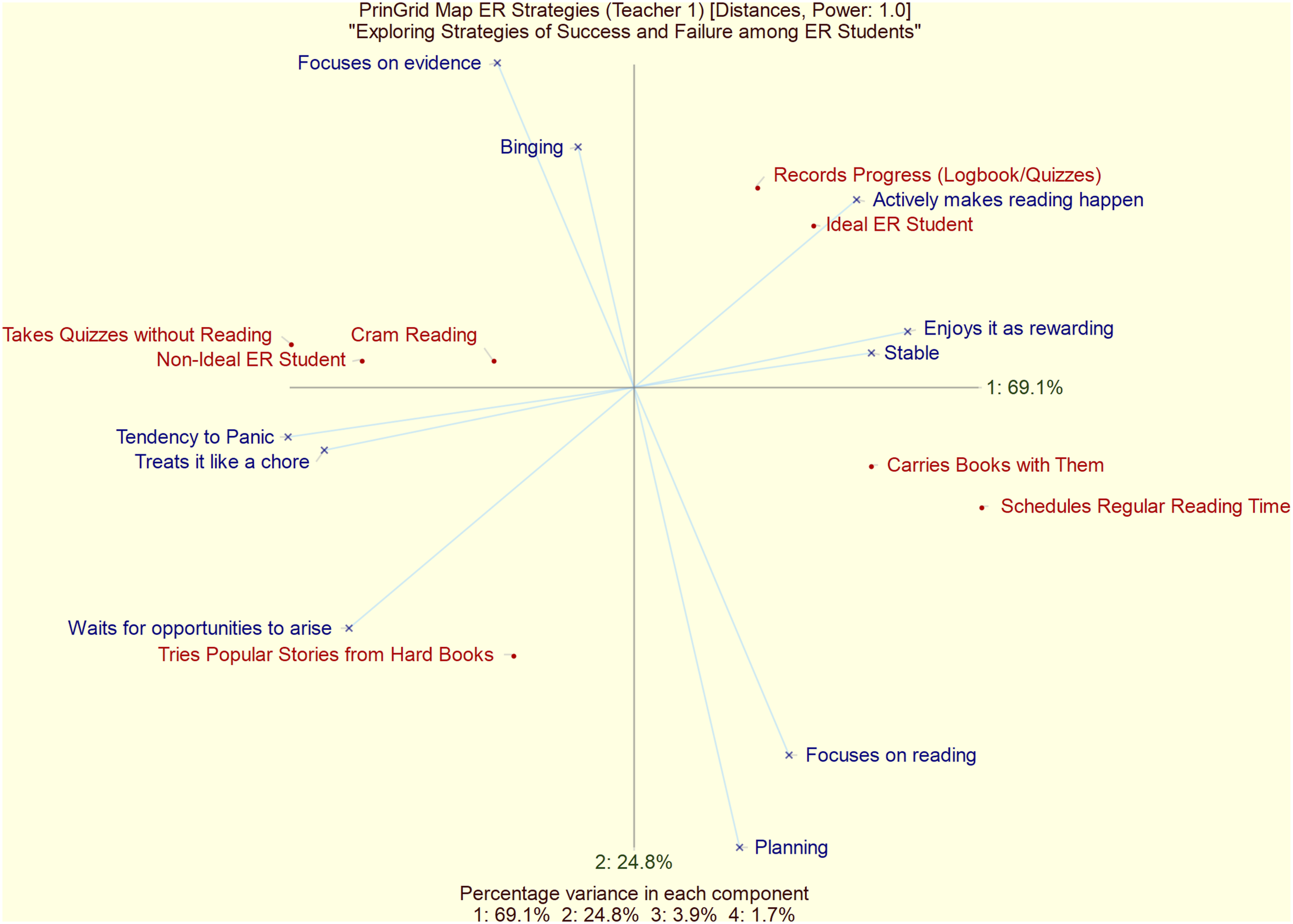
Another means of analysis for both understanding the grid data and for following up for clarification is the crossplot display in Rep Plus. Figure 8 represents the two bipolar constructs with the highest statistical significance placed on two axes, and with their relationships integrated with the empirical actions (elements). As mentioned earlier, this can lead to many new discussions that are unambiguously centered on the research questions. For example, noting that the element of “cram reading” sits squarely in the middle of this informant’s graph, the first author sought to find out more about what this element meant, and how it can be sometimes associated with ideal students, while at other times linked to non-ideal students. Factor analysis allows for a powerful yet simple display, but caution should be taken, in that the relationships are somewhat “flattened out,” which can result in a somewhat distorted visual representation. Principal components analysis of repertory grid using core constructs as axes in Rep plus (Shaw & Gaines, 2018).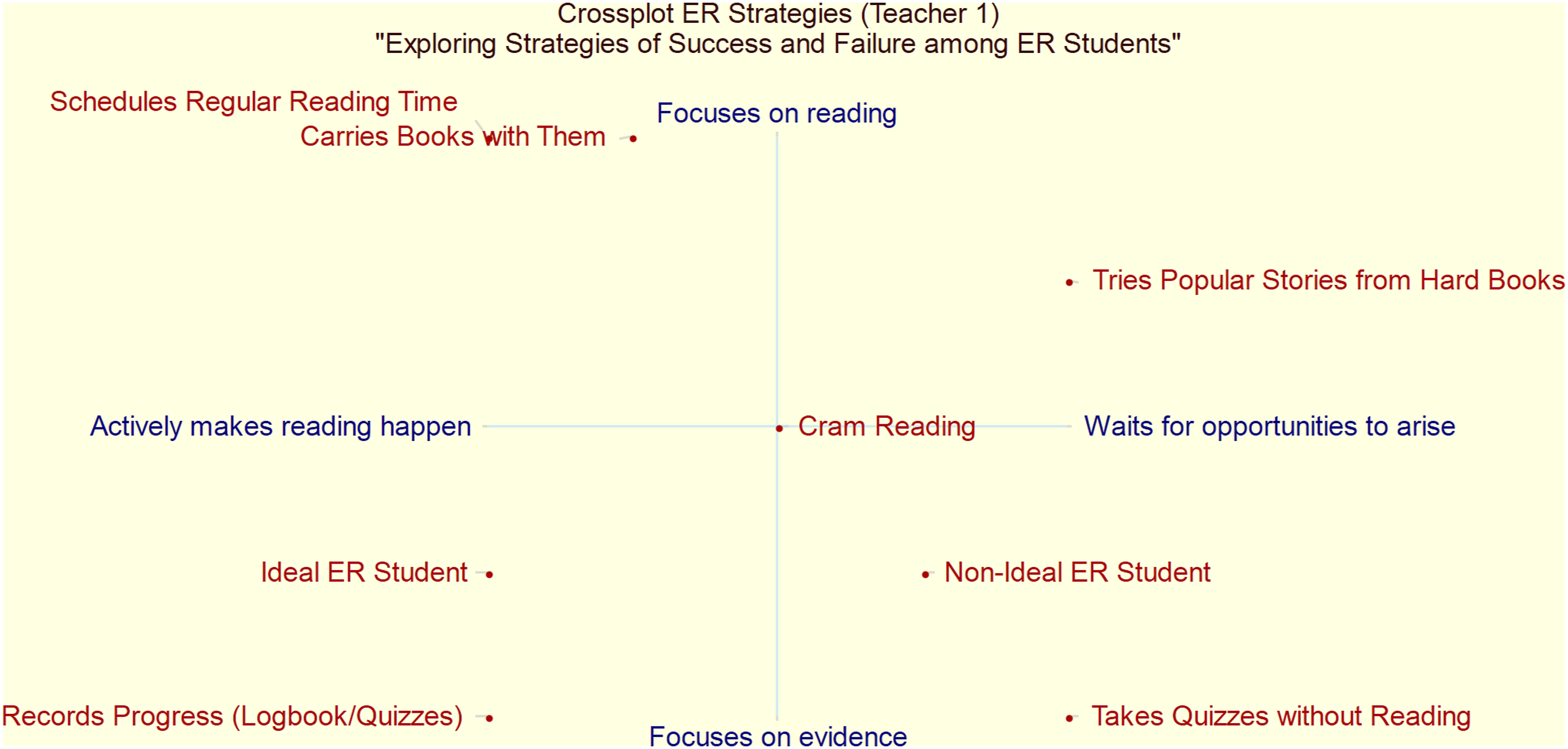
Relative Strengths and Weaknesses of the Repertory Grid Technique
No research tool is without its limitations, and the weaknesses of the repertory technique are embedded within it being administered carefully and correctly. A repertory grid is only as good as the data put into it and as a research tool, and it can be quite brittle when used in the field. Researchers must constantly be on the lookout for such things as informants making mistakes when rating the constructs, not adequately expressing the implicit construct, or providing elements that do not indicate empirical roles, observable interactions, activities, or events. Walker and Crittenden (2012, p. 80) also warn that when a session has been poorly designed, unwelcome surprises can emerge for both the informant and the researcher. Poor procedure results in going through the repertory grid process with an informant, only to find that one has little to show for their time and effort. Repertory grids can take more than an hour for some informants to complete, thus making them tiring and possibly befuddling for some. Using repertory grids as a precursor to a more traditional interview often increases the amount of work one must spend in getting data from informants, and if one opts to carry out a statistical analysis of the grid before conducting a follow-up interview, researchers may discover that some informants are too busy to give another interview later on. Others with a more suspicious temperament may not want to fill out a repertory grid from concerns that, as a tool designed by a psychologist, it might secretly drag skeletons out of their closets.
The repertory technique can be difficult to use, and while the data gathered from it may be quite valuable, it may not be practical for every study, especially if one intends to administer it to large numbers of informants. This is perhaps the greatest shortcoming for some researchers since, as Fetters (2019, p. 221) has noted, repertory grids work best with individuals rather than with large groups. Repertory grids can be used successfully with small focus groups of three to five people (e.g. Mireaux et al., 2007; Pike, 2007; Webb et al., 2019), but this requires choosing research participants with a set of tightly defined common experiences. This is in line with the commonality corollary of Kelly’s Personal Construct Theory (Kelly, 1955/1991, pp. 63–64), which states that people create communities that give rise to common experiences and common (though not identical) constructions. However, like focus group interviews, there is less granularity in the findings and viewpoints, and the ideas of some group members might be suppressed either through their wish to conform, or from external peer pressure. Attempting to create “supergrids” from large groups of informants who share less in common, or to investigate a more generalized research question, will result in a cacophony of constructs. The resulting chaos would certainly be of interest to postmodern researchers, but even here the researcher will end up combining constructs that seem similar into higher order groups. They will then need to decide which sets of constructs will get more attention, and exclude data in the process in order to create some semblance of coherence. Some have certainly attempted to take this approach (e.g. Rad et al., 2013), but the path taken to craft their findings requires much work and a somewhat torturous route of complicated statistical analysis, interpretations, and follow-up interviews. In the end, there is often the admission that individuality is lost and that what is presented “result[s] in a representation that provides a false oversimplification” (Rad et al., 2013, p. 274) of a large population. Not only is much lost when trying to present an abstract set of concepts in this way, but using repertory grids as a big data tool—one where researchers impose their constructs and viewpoints upon those of the research informants—is something that the technique was designed to counteract. It seems therefore that the ideal sample size for a repertory grid is one individual. The repertory grid should be treated essentially as a fully integrated quantitized interview, and similar to how a researcher can build insight from the steady imbrication of interviews, one can do something similar with a collection of individual repertory grids.
As we turn our attention to the potential strengths of repertory grids, some of the weaknesses discussed so far can be mitigated simply by being prepared, giving clear instructions, and using the technique in an appropriate manner. Informants can be assured that the technique is designed simply to enable people to focus their thoughts and make connections. The informant is in control of what they want to express during the interview, so there is little danger of them revealing deeply-held secrets unless they choose to do so. Rogers and Ryals (2007) explain that repertory grids facilitate the expression of tacit understandings that might be missed in a traditional interview format. It does this by lessening the imposition of the researcher’s etic perspective on the informant response, something which is a common shortcoming of survey or focus group research.
Furthermore, the repertory grid technique allows researchers to become more deeply embedded in the beliefs and social interactions of their informants from the onset of their interaction, which is particularly appropriate for transformative or intervention designs (Mertens, 2007; Tashakkori et al., 2020). During this stage, it is often a struggle to discover the core concerns of our research informants. Many researchers have experienced feeling as if the interview questions they come up with were akin to fumbling about in the dark, particularly at the outset of a project. Provided that the technique is administered carefully and correctly, repertory grids can help researchers avoid this problem by quickly zooming in on issues as seen from their informants’ worldviews. This can shave weeks, if not months, off the qualitative phase of a mixed methods project.
Contributions of Repertory Grids to Mixed Methods Research
Having discussed the background, examples in MMR, procedures, potential benefits, and limitations of the repertory grid technique, we can now consider its potential contributions to mixed methods research.
So long as statistical analyses are brought to bear in linking the elements to constructs, repertory grids can serve as an integrated mixed methods research tool in and of itself. By “integrated,” we mean what Fetters and Molina-Azorin (2017, p. 293) have explained as “the linking of qualitative and quantitative approaches and dimensions together to create a new whole or a more holistic understanding than achieved by either alone.” Integration happens when the findings are greater than the sum of their qualitative and quantitative parts, in “that their combination provides a more comprehensive understanding of the topic” (McCrudden et al., 2019). Figures created from factor or principal components analysis represent a type of a joint display of qualitative and quantitative data, as defined by Creswell & Plano Clark (2018) and Fetters (2019), which not only link the constructs to the elements in a multidimensional manner, they have been both quantitized and integrated in a way that brings out a deeper understanding of the informants’ worldview—one that is fuller than what could have been learned from eyeball analysis alone.
With Bazeley (2018), we believe that repertory grids “inherently combine both qualitative and quantitative elements to create a single source or set of data that is then typically further examined using iterative quantitative and qualitative strategies” (p. 242). It is in this merging of qualitative and quantitative data that repertory grids further aid in the development of convergent MMR designs. Not only does the technique facilitate the comparison of constructs both within and between groups, it allows researchers to steadily move toward the creation of larger groups for more expanded generalizations. As noted earlier in Rowe et al. (2005), repertory grids can also contribute to exploratory designs of MMR by highlighting areas where one party’s viewpoint is under-represented. In addition, repertory grids can assist in the creation a quantitative instrument capable of gathering large amounts of exploratory data.
Conclusion
In this paper, we have discussed the background and have outlined some of the practices of the repertory grid technique, with particular emphasis on its potential for MMR. We conclude that while it is a delicate and highly-focused form of research, the repertory grid technique has great potential for MMR, so long as it is utilized in an informed manner. While several researchers have introduced the repertory grid as a hybrid or advanced technique, there still remain relatively few studies that make use of this powerful tool. We therefore call upon more mixed methods researchers to maximize the possibilities of repertory grids in order to further the praxis of mixed methods research in our own respective fields and areas of service.
Footnotes
Declaration of Conflicting Interests
The author(s) declared no potential conflicts of interest with respect to the research, authorship, and/or publication of this article.
Funding
The author(s) disclosed receipt of the following financial support for the research, authorship, and/or publication of this article: This work was supported in part by a JSPS Grant-in-Aid for Scientific Research (Grant Number 19K00846). We have no conflicts of interest to disclose.
