







Abstract
The participation of transgender individuals in sporting spaces continues to receive increased attention in both popular media and in academic scholarship. However, while attention is growing, little is known about the attitudes the general public holds toward transgender sport participation. This is particularly true when it comes to attitudes participants hold toward transgender persons and their participation in recreational sport programming. As such, this study quantitatively explores the attitudes of intramural and club sport participants across the United States toward transgender persons and transgender participation in recreational sport programming. Specifically, results emphasize (a) the general attitudes of recreational sport participants toward transgender persons, (b) the attitudes of recreational sport participants toward the participation of transgender persons in recreational sport programs, (c) differences in attitudes by gender, and (d) differences in attitudes by program area (intramural vs club sport). Discussion of these differences and practical implications for recreational sports are considered.
Introduction
There is little doubt that transgender athletic participation is one of the most divisive contemporary social issues across North America. This is reflected throughout media discourse, political discourse, and organizational discourse. For example, media coverage of transgender athletic participation continues to grow, often demonizing transgender athletes (particularly transgender women) and essentializing the gender binary for sport participation (Peña, 2022). However, and more rarely, positive representations of transgender athletes do exist (e.g., see the documentary Changing the Game). Across the U.S. anti-transgender laws continue to materialize, many of which focus specifically on limiting transgender participation in sport, recreation, and the public sector in general (ACLU, 2024). Likely as an outcome of these media representations and political legislation, organizations have started to craft policies, statements, and conversations around transgender participation. Within sport, this has largely led to regressive participation policies. For example, after Lia Thomas became the first openly transgender woman to win an NCAA championship, both FINA (swimming's governing body) and the NCAA enacted more restrictive policies for transgender athletes (FINA, 2022; NCAA, 2022). Indeed, across competitive sport, we continue to see further narrowing of open transgender participation.
Recreational sports are not immune from such actions. Many collegiate recreation programs are beholden to state regulations, including those that limit transgender participation. Often these laws run contrary to the mission and desires of the programs themselves, challenging practitioners to promote inclusion within an exclusive structure. To its credit, NIRSA has reaffirmed that the inclusion of transgender persons is central to its mission and has criticized the onslaught of bills restricting such inclusion within recreational sport opportunities and has reaffirmed their commitment to the “rights of transgender individuals to participate in sport based on their gender identity” (NIRSA, 2021). What remains unclear is the extent to which attitudes of campus recreation participants reflect or reject the anti-trans discourse permeating media, government, and sport governance. In other words, while NIRSA leadership continues to reaffirm its support for transgender persons in general, and transgender participation in recreational sports specifically, the question remains on how recreational sport participants themselves view transgender participation within campus recreational sport programs. This question is particularly salient for both club and intramural sport participation, as more competitive structures are often the most divisive in the transgender participation debate (Jones et al., 2017a).
A Brief Note on Language and Identity
This study focuses on the attitudes that campus recreational sport participants have toward transgender participation. As such, an understanding of terminology that will be used throughout this study is important. Transgender is an umbrella term used to describe a person who expresses and feels that their gender identity does not align with the sex they were assigned at birth. Cisgender refers to a person who expresses and feels that their gender identity is the same as the sex they were assigned at birth. Transgender men are persons who were assigned female at birth who identifies as a man or along the masculine spectrum. Transgender women are persons who were assigned male at birth who identifies as a woman or along the feminine spectrum.
Policies, Attitudes, and Transgender Participation in Campus Recreational Sports
The cisnormative nature of recreational sporting spaces can act as a barrier to participation for transgender persons (Krane & Barber, 2018). Cisgenderism, or an ideology that reenforces essentialized and biological understandings of the male/female gender dichotomy, thus othering trans identities (Afroozeh et al., 2023), perpetuates normative gender ideologies within many recreation and sport organizations. This can be reflected in binary sporting structures (i.e., having a men's club program and a women's club program), gendered bathroom/locker room spaces, the use of binary options on paperwork and identification cards, and policies (e.g., a mixed gender intramural league that has limits on how many men and women can be on a court at a given time; Litwiller et al., 2022).
However, campus recreational sport programs are aware of these limitations and have started to implement policies that can positively promote participation, although such implementation is far from universal. The most common examples of such policies include those around the implementation of gender-neutral spaces. For example, Patchett and Foster (2015) found that around 63% of institutions have gender-neutral restrooms and 44% have gender-neutral locker rooms. However, this research also found that while such spaces are becoming more commonplace, only 21% of institutions have a transgender inclusion policy. Conversely, NIRSA does have a policy allowing club and intramural sport participants to participate according to their expressed gender identity within the NIRSA Championship Series (NIRSA, 2023).
Even when programs do have policies that aim to promote transgender inclusion, this does not necessarily mean that they are effective in doing so. For example, Pecoraro and Pitts (2020) found that trans inclusion policies can be perceived by trans participants as less inclusive than intended by the organization. This was particularly the case when policies used language such as “male” and “female” in ways that led to assumptions of reference to genitalia, when “expressed gender identity” (as is the case for NIRSA) was used instead of “gender expression,” when policies did not specifically outline participation eligibility, and when common recreational sport terminology, such as “national governing body,” was used as this terminology was confusing to participants (Pecoraro & Pitts, 2020). It is possible that participant confusion regarding these policies was due in part to the lacking awareness and expertise of campus recreational sport staff in promoting transgender inclusion (Anderson & Knee, 2022; Anderson et al., 2020; Anderson et al., 2018; Wilson et al., 2023). As such, training initiatives can positively promote more effective policies (Anderson et al., 2021; Knee et al., 2023), although one essential key to policy formulation and implementation should be the involvement of trans persons in the development of such policies (Pecoraro & Pitts, 2020).
In cases when organizational policies are effective, the social policing of gender norms, and anti-trans bias, can influence how comfortable a trans person might feel participating. Often this social policing comes from participants and the stigmas they hold, as stigma has been found to influence negative attitudes and actions against transgender persons (Cunningham et al., 2018) and can lead to both physical aggressions and microaggressions against trans persons. This can negatively influence the ways in which transgender persons engage with recreation. Specifically, recreation and fitness spaces are often viewed as unsafe spaces by transgender individuals (Jones et al., 2017b; Litwiller et al., 2022; Oakleaf & Richmond, 2017).
These issues require transgender persons to negotiate their recreation participation. For example, Lewis and Johnson (2011) found that social policing and harassment can force trans persons to implement personal strategies for engaging with leisure spaces, which can include either nonparticipation or changing how they outwardly express their gender when feeling unsafe, including presenting in inauthentic ways as an assimilation strategy. Similarly, Oakleaf and Richmond's (2017) study of transgender participation in public recreation found that, strategies for managing risk included engaging in hypervigilance, increasing efforts to pass, and simply avoiding certain spaces and activities. Participants described a continual process of scanning their environment, looking both for allies and for those who would object to their presence. (p. 114)
As such, cisgender attitudes toward transgender individuals generally, and their participation in recreational sport programming specifically, is an essential area of study given the ways in which trans participation can be impacted by such attitudes. Queer participants, “often have to undergo an explicit ‘acceptance’ process that other participants need not navigate” (Anderson et al., 2022, p. 4). However, research on attitudes toward transgender persons within recreation is fairly limited. On the other hand, research in competitive sport, especially in the NCAA, shows that attitudes toward transgender participation are contingent on a number of factors. Attitudes tend to be more negative among cisgender men and positive among cisgender women (Devine, 2022; Flores et al., 2020; Tanimoto & Miwa, 2021). Political conservatives (Anderson et al., 2024; Flores et al., 2020) and those with stronger religiosity (Anderson et al., 2024; Flores et al., 2020) tend to hold more negative attitudes. Indeed, Flores et al. (2020) argued, “on average, younger, less religious, White, more educated, liberal people with Democratic and LGBT identifications tend to hold relatively pro-transgender opinions” (p. 385). For example, one study on youth perspectives of transgender participation in competitive sport did find generally positive attitudes, with nearly half of the youth surveyed arguing that transgender athletes should participate according to their gender identity (Waselewski et al., 2023). Furthermore, the youth believed that inclusive policies can positively impact transgender athletes’ mental health. However, in general, attitudes are more negative toward the participation of transgender women in competitive sport than they are toward transgender men (Anderson et al., 2024; Tanimoto & Miwa, 2021), even among identities that are more likely to hold positive attitudes toward transgender participation, including youth (Waselewski et al., 2023). This is largely driven by the unproven, yet popular, discourse that transgender women hold a competitive advantage over cisgender women in competitive sport (Jones et al., 2017a).
While previous research demonstrates the ways in which attitudes toward transgender participation are delineated in competitive sport generally, there are to our knowledge no studies looking at attitudes of participants toward transgender persons and their participation within a campus recreation environment. As such, this study looks at the attitudes of club and intramural sport participants toward transgender persons in general and their participation in campus recreation programming in general. Since transgender attitudinal research in sport generally focuses on aspects of competition, and given the commonplace (yet unproven) notion of the transgender competitive advantage (Jones et al., 2017a), this study focuses on the two program areas that integrate the highest levels of competition—club and intramural sports—in order to offer a point of comparison. Results will specifically focus on overall participant attitudes, while also comparing attitudes by program area (club vs intramural sports) and by participant self-identified gender.
Methods
The study sampled current campus recreation participants from 10 universities across the United States with estimated student enrollments ranging from 7,900 to 51,000. These 10 institutions were identified through convenience sampling. Specifically, members of the research team identified and contacted both personal and professional contacts at 19 institutions, with 10 ultimately agreeing to participate in the research. Administrators at each institution shared the survey with all intramural and club sport participants via their email listservs, using direct, prewritten communications developed by the research team. Follow-up invitations were also distributed approximately 2 and 4 days following the initial invitation. Inclusion criteria for survey participation included (a) being an active participant (defined as having participated during the current academic year in which the survey was distributed) of either a club or intramural sport program at their institution and (b) being at least 18 years old. Subjects were offered the opportunity to participate in a drawing for 1 of 20 $50 Amazon gift cards that were randomly selected and sent out electronically within 2 weeks of data collection ending. Approval for the study was received by the lead researcher's Institutional Review Board.
The survey was designed using the Qualtrics online surveying platform and consisted of the following sections: (a) demographics, 14 questions; (b) attitudinal scales, 40 questions; (c) an incentive option question; and (d) an authentication question. Questions in the areas of attitudes toward transgender participation required subjects to respond using 5- and 7-point Likert scales ranging from strongly disagree to strongly agree.
Two validated scales were used to support the measurement of desired constructs around attitudes and beliefs of respondents toward the transgender community. Billard's (2018) Attitudes Toward Transgender Men and Women (ATTMW) scale was used to measure the participants’ overall attitudes toward transgender individuals in general (beyond sporting contexts). The ATTMW employs a 7-point Likert scale (1 = strongly agree; 7 = strongly disagree). Additionally, an adapted version of an instrument developed by Tanimoto and Miwa (2021) was used to measure participant attitudes toward transgender sport participation, which had previously been administered to Japanese university student–athletes and has also been adapted for use with U.S. intercollegiate athletes (Anderson et al., 2024). These measures employ a 5-point Likert scale coded in reverse order to that of Billard's (1 = strongly disagree; 5 = strongly agree). This scale was modified to use language specific to the campus recreational environment (as opposed to intercollegiate athletics) and to make appropriate edits learned from the previous scale administration (Anderson et al., 2024). For example, care was made to ask comparable questions around both sport participation according to sex assigned at birth and gender identity using more simplistic terminology than previously utilized; specifically, “medical intervention” was utilized as a generalized term for gender-affirming medical care, rather than specific medical procedures such as “hormone treatment” or “sex change.” These edits resulted in a survey that was more easily interpretable by both respondents and researchers, as determined by a pilot test of the survey, which was taken by 20 participants who were not included in the final study.
Pilot test participants were specifically used to gauge the clarity of questions and to ensure they understood the language used and the questions being asked. These pilot studies specifically resulted in changes to the Tanimoto and Miwa (2021) scale, originally adapted by Anderson et al. (2024) as described above—namely to solve the clarity of “medical transitions” for transgender participants. Furthermore, this scale provided comparisons between transgender men and transgender women using the language “female to male” (FtM) for transgender men and “male to female” (MtF) for transgender women. Regarding this comparison, the authors acknowledge the limitations and issues of using such terminology in comparisons, particularly as they can essentialize notions of sex and gender and are less than affirming of transgender lives and experiences. We acknowledge these limitations, yet believe this terminology to be necessary in this study for two reasons. The first is the reality that sport, including recreational sport, continues to categorize athletes into gendered categories in ways that mirror the existing gender binary (i.e., a women's league and a men's league; Litwiller et al., 2022). As such, given the goals of this research, we believe that questions aligning with these gendered categories is necessary to provide a point of comparison, especially when so much of the popular conversation centers around the (unproven) notion of a competitive advantage specific to transgender women (Jones et al., 2017a). However, it is important to acknowledge the barrier for participation under this binary structure as many transgender persons do not fit, nor desire, this system of categorization (Travers, 2006). Secondly, the pilot tests of the survey revealed a discomfort in the knowledge-level of respondents in using correct terminology. Often, participants would confuse transgender men and transgender women in their responses and vice versa. The use of MtF/FtM, while socially problematic, did assist respondents in their ability to take the survey, thus providing more accurate representation of their attitudes toward these populations.
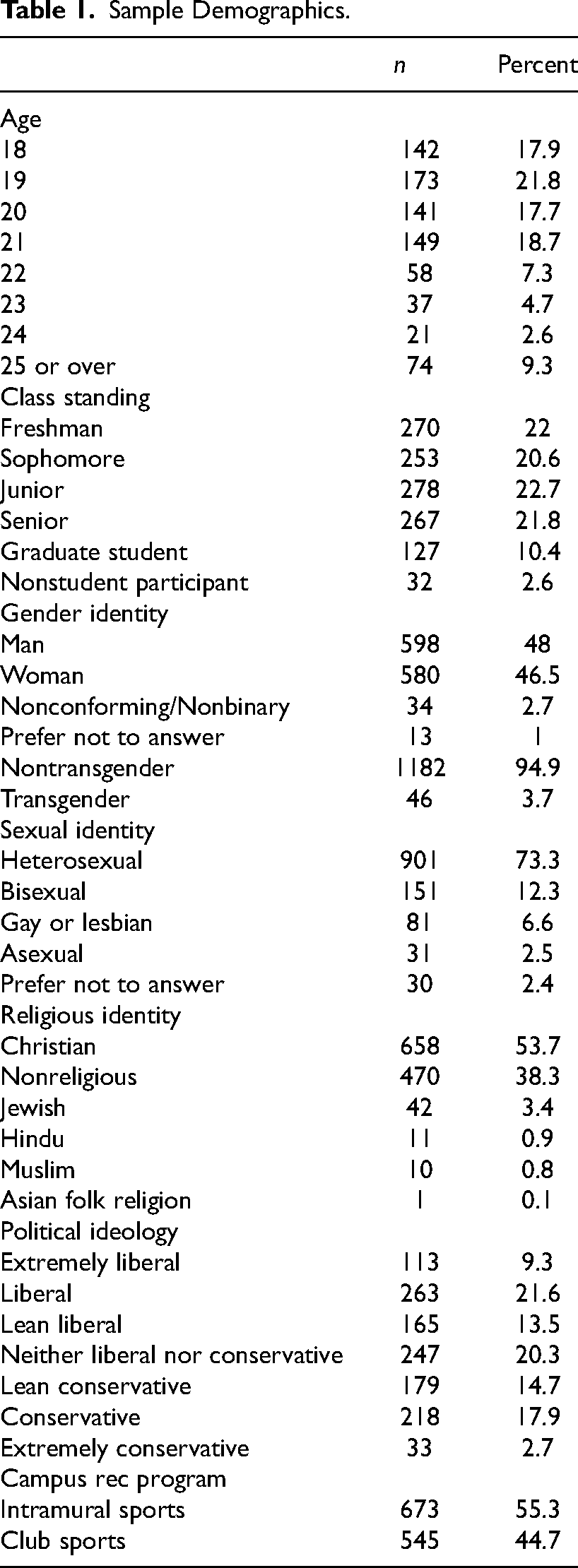
After completing pilot tests, data were collected for a total of 2 weeks and then entered into the statistical software—IBM Statistical Package for Social Sciences (SPSS) Version 28.0.1.1 (IBM, Armonk, NY, USA) for cleaning and analysis. Frequencies were run for demographics (Table 1) and to provide a summative view of attitudes toward transgender persons within campus recreation environments (Table 2) and overall (Table 3). Then, group differences were analyzed through a series of one-way analysis of variance (ANOVA) analyses. Specifically, the attitudes of cisgender men and cisgender women were compared (Tables 4 and 5), as were the attitudes of club and intramural sport participants (Tables 6 and 7).
Sample Demographics.
Descriptive Scale Data: Attitudes Toward Transgender RS Participation.
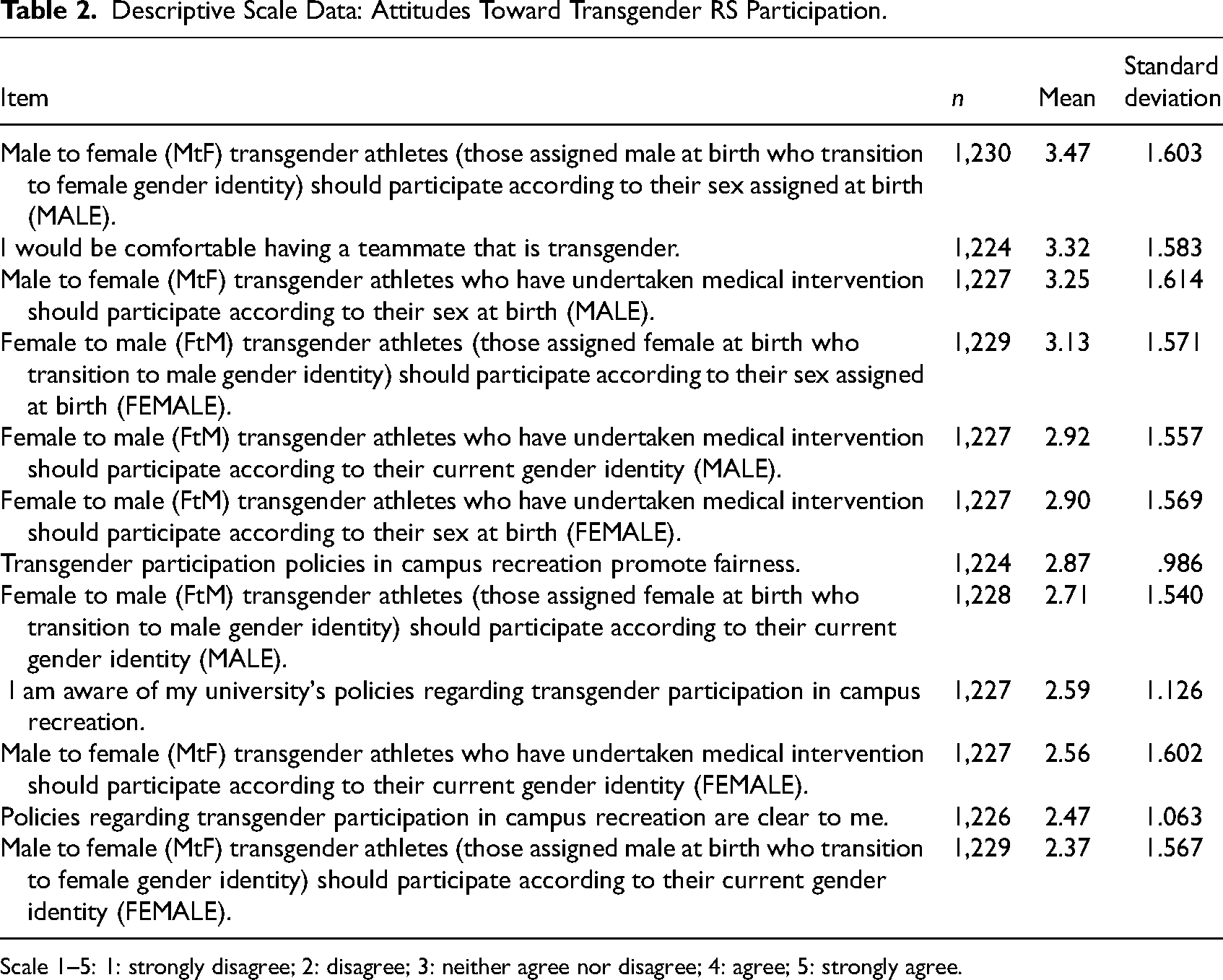
Scale 1–5: 1: strongly disagree; 2: disagree; 3: neither agree nor disagree; 4: agree; 5: strongly agree.
Descriptive Scale Data: Attitudes Toward Transgender Men and Transgender Women.
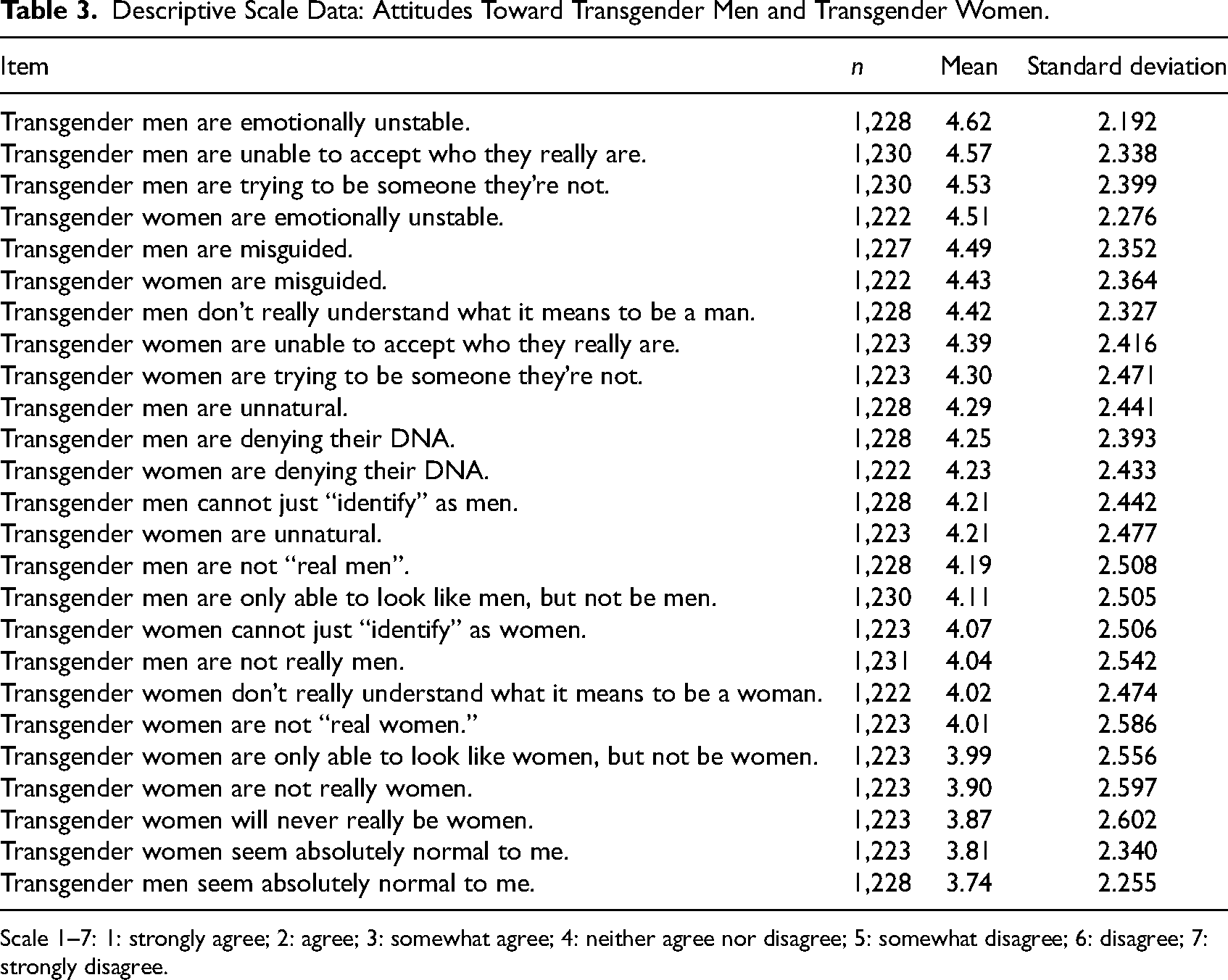
Scale 1–7: 1: strongly agree; 2: agree; 3: somewhat agree; 4: neither agree nor disagree; 5: somewhat disagree; 6: disagree; 7: strongly disagree.
Statistically Significant Differences by Self-Identified Gender (Men and Women): Attitudes Toward Transgender RS Participation.
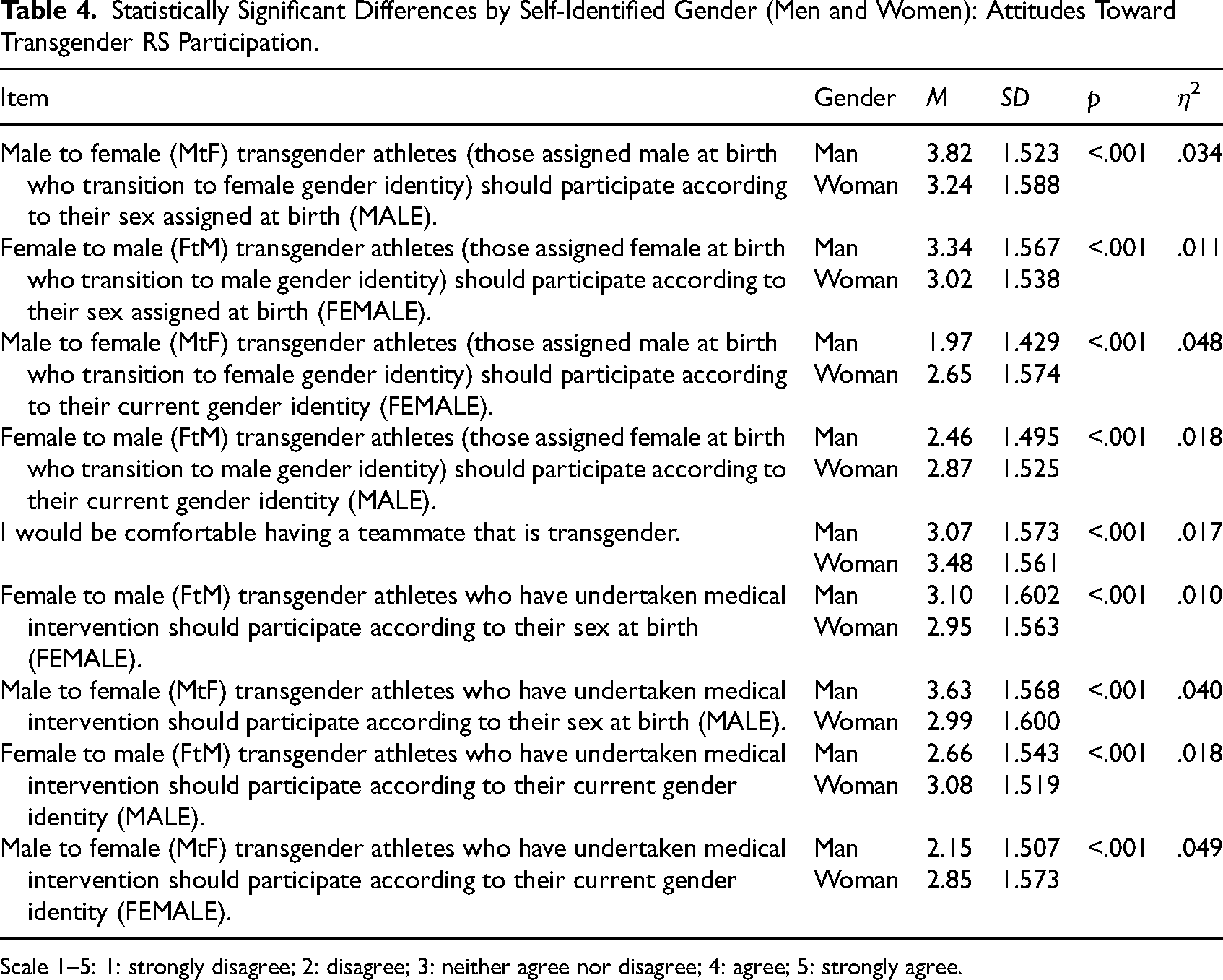
Scale 1–5: 1: strongly disagree; 2: disagree; 3: neither agree nor disagree; 4: agree; 5: strongly agree.
Statistically Significant Differences by Self-Identified Gender (Men and Women): Attitudes Toward Transgender Men and Transgender Women.
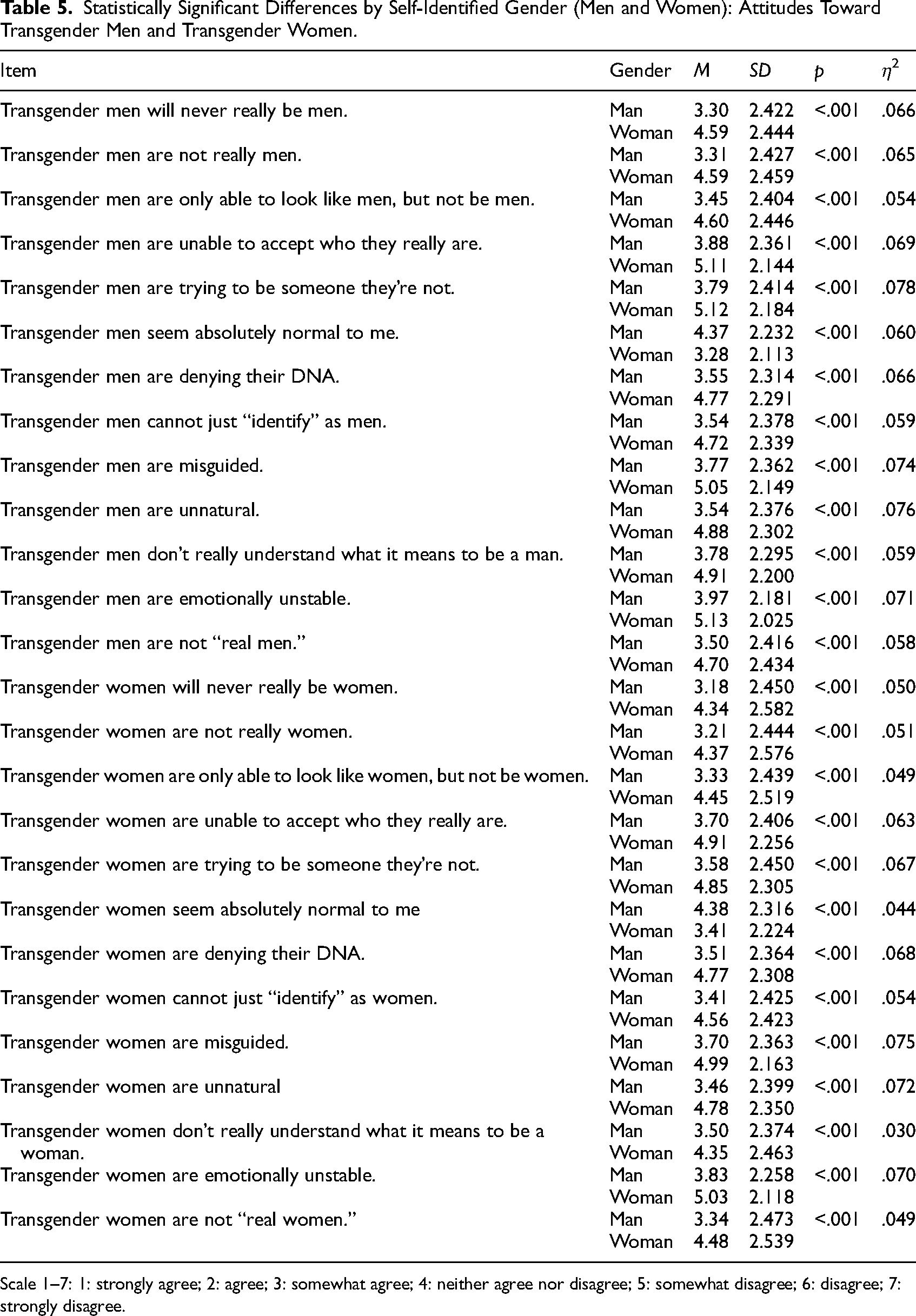
Scale 1–7: 1: strongly agree; 2: agree; 3: somewhat agree; 4: neither agree nor disagree; 5: somewhat disagree; 6: disagree; 7: strongly disagree.
Statistically Significant Differences by Participatory Program: Attitudes Toward Transgender RS Participation.
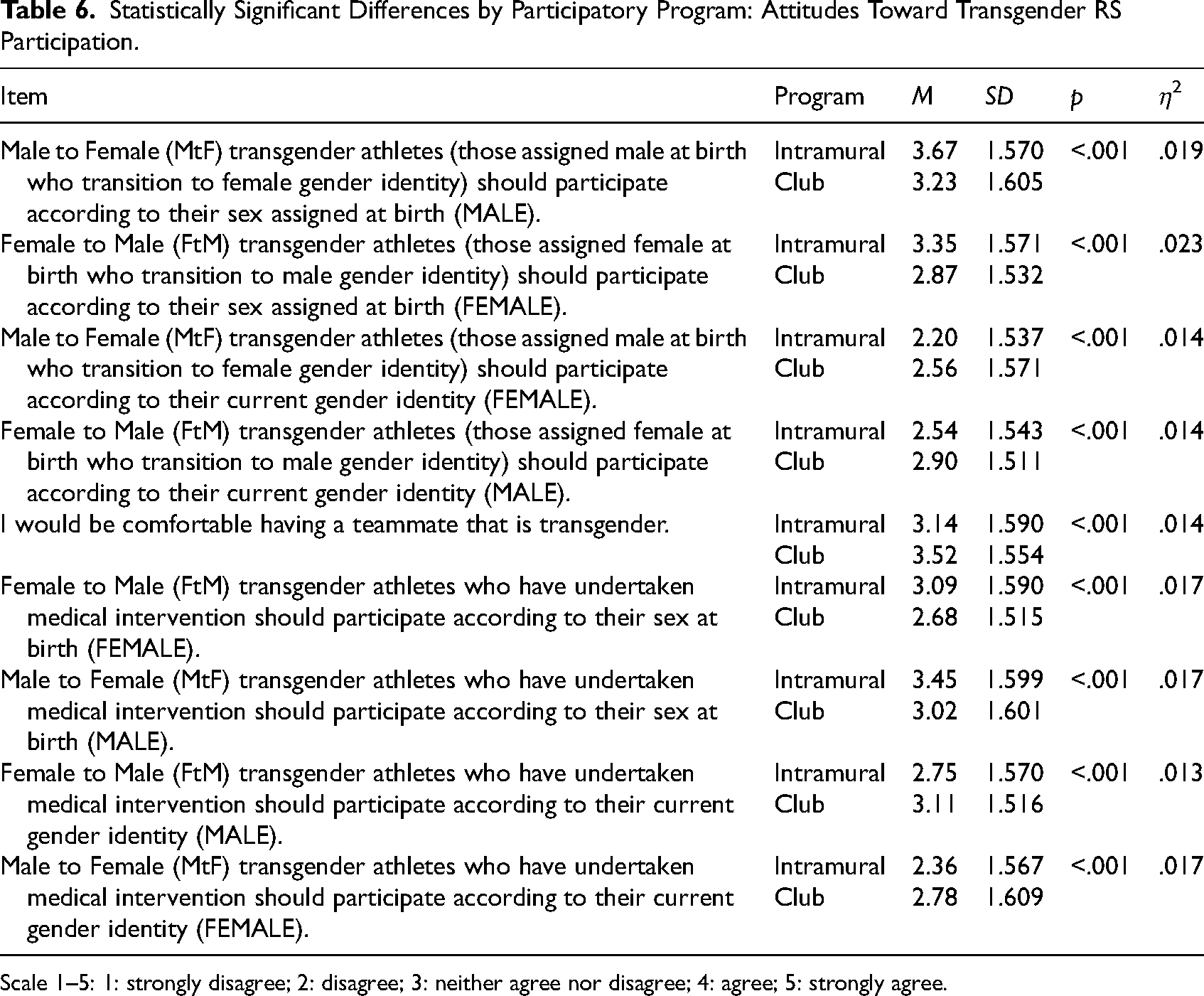
Scale 1–5: 1: strongly disagree; 2: disagree; 3: neither agree nor disagree; 4: agree; 5: strongly agree.
Statistically Significant Differences in Items by Participatory Program: Attitudes Toward Transgender Men and Transgender Women.
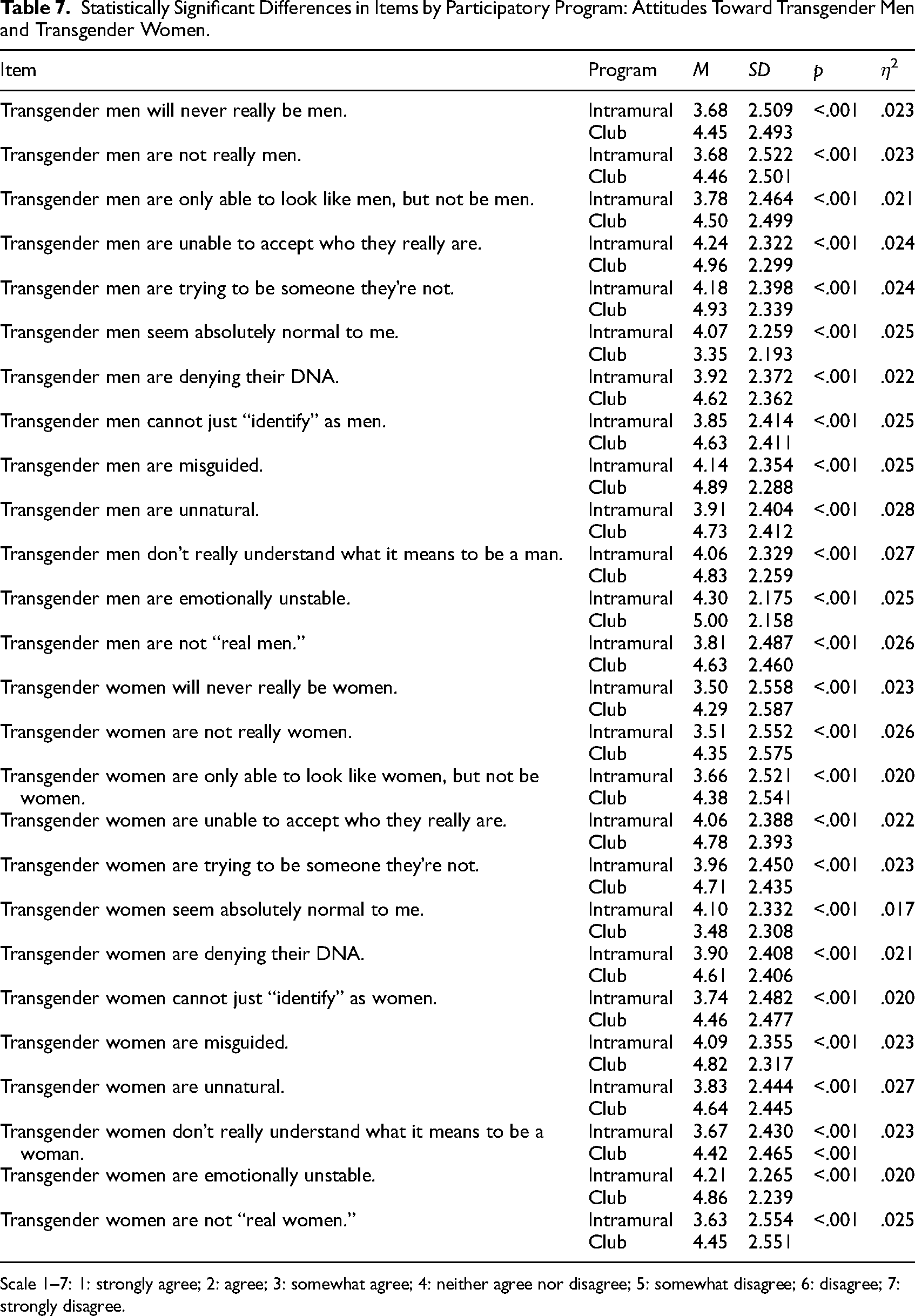
Scale 1–7: 1: strongly agree; 2: agree; 3: somewhat agree; 4: neither agree nor disagree; 5: somewhat disagree; 6: disagree; 7: strongly disagree.
Respondent Characteristics
Distribution to participants at 10 university campus recreation programs resulted in 1,246 individual survey responses. As shown in Table 1, the majority of respondents identified as being an undergraduate student (87.1%) with fewer respondents identifying as graduate (10.4%) or nonstudent participants (2.7%). This undergraduate identification is reflected in the age distribution with respondents mostly being in the 18–21 range (76.1%). Gender identity was primarily binary with only 2.7% selecting the nonbinary choice, 1% preferring not to answer, and 97.5% selecting man (48%) or woman (46.5%); as such, comparative analysis was limited to these two primary gender identities. Most respondents identified as heterosexual (73.3%) and nontransgender (94.9%). Over half of respondents identified as Christian (53.7%). Political ideology for this survey sample ranged from liberal (44.4%) to conservative (35.3%) and 20.3% were neither liberal nor conservative. In terms of recreational sports area of primary participation, respondents had an almost balanced distribution between intramural (55.3%) and club sport (44.7%) participation.
Results
Scale Data Results
Results from the scale data exhibited in Table 2 reflect mean scores of Likert scale responses ranging from 1 (strongly disagree) to 5 (strongly agree). These measures focus on attitudes toward participation of transgender persons in campus recreational sports. The highest mean score was 3.47 with the statement “Male to Female (MtF) transgender athletes (those assigned male at birth who transition to female gender identity) should participate according to their sex assigned at birth (MALE).” The lowest mean score was 2.37 (disagree) with the statement “Male to Female (MtF) transgender athletes (those assigned male at birth who transition to female gender identity) should participate according to their current gender identity (FEMALE).” Results from the scale data exhibited in Table 3 reflect the mean scores from 1 (strongly agree) to 7 (strongly disagree). These measures focus on the overall attitudes toward transgender persons beyond sporting contexts. The highest mean score was 4.62 with the statement “Transgender men are emotionally unstable.” The lowest mean score was 3.74 for the statement “Transgender men seem absolutely normal to me.”
Statistically Significant Differences in Self-Identified Gender
We conducted a one-way ANOVA to compare the difference of mean attitudes toward transgender participation in campus recreation between respondents who self-identified as cisgender men and cisgender women (Table 4). A one-way ANOVA revealed a significant difference (p < .001) along most items, indicating differences between male and female respondents, with the greatest reported effect size (η2) of .049, for the statement “Male to Female (MtF) transgender athletes who have undertaken medical intervention should participate according to their current gender identity (FEMALE).” The same process was followed to compare attitudinal differences toward transgender persons overall between cisgender women and cisgender men (Table 5). This one-way ANOVA revealed a significant difference (p < .001) among most items, with the largest effect size (η2) of .078 for the statement “Transgender men are trying to be someone they’re not.”
Statistically Significant Differences in Items by Participatory Program
We conducted a one-way ANOVA to compare the differences of means between respondents who identified as club sport or intramural participants on their attitudes toward transgender participation in campus recreation (Table 6). Results revealed a significant difference (p < .001) among most items with the largest reported effect size (η2) of .023 for the statement, “Female to Male (FtM) transgender athletes (those assigned female at birth who transition to male gender identity) should participate according to their sex assigned at birth (FEMALE).” Similarly, we conducted a one-way ANOVA to compare differences in overall attitudes toward transgender persons between club and intramural sport participants (Table 7). Results revealed a significant difference (p < .001) among most items with the largest reported effect size eta squared (η2) of .028 for the statement “Transgender men are unnatural.”
Discussion
This study explored the attitudes of club and intramural sports participants toward the participation of transgender persons in recreational sport programming. Doing so provides necessary attitudinal data on a topic that is frequently discussed in popular discourse, yet currently understudied. Specifically, this study analyzed overall attitudes toward participation, while additionally providing points of comparison among three domains. The first domain is the differentiation in the attitudinal scales between attitudes toward transgender male (using the notation in the survey FtM) and transgender female (using the notation in the survey MtF) participants, while recognizing the limitations of such comparisons as noted in the description of the methods above. The second domain of comparison is that of the attitudes between cisgender male and cisgender female participants, while the final comparison was between program areas—comparing club and intramural respondents.
Attitudes Toward Transgender Persons
In terms of overall attitudes of recreational sport participants toward transgender individuals, scores generally hover around the midpoint of the 7-point scale (4), indicating fairly neutral attitudes toward both transgender men and transgender women. These neutral scores are interesting for two reasons. The first is the relationship of these neutral attitudes juxtaposed with the vitriol of the discourse surrounding transgender persons in society at large, particularly within the political sector and media. One would assume, given the prominence of discussion on transgender individuals today (Peña, 2022) and the frequency of anti-transgender discourse, laws, and policies (ACLU, 2024), that attitudes would diverge rather strongly away from the center and skew negative. Research has found that attitudes toward transgender individuals are fairly negative within the general public (Taylor et al., 2018) and continue to lag behind studies of attitudes toward sexual minorities (Norton & Herek, 2013).
There are two possible explanations for these neutral results. The first is that attitudes are so strong on either side of the debate—highly favorable attitudes and highly negative attitudes—that, in the end, these scores canceled each other out. However, further analysis of the data shows that this is not the case, and extreme scores (i.e., strongly agree and strongly disagree) were not the norm. A second explanation is that study participants are not considering transgender individuals in the context of their daily lives, are less educated about transgender identities and social realities, and/or are less susceptible to the whims of popular discourse and anti-trans media coverage. Indeed, trends around adolescent media consumption align with the adoption of peer-based social media as a main source of information for adolescents and young adults in the United States rather than legacy or traditional media sources (Twenge et al., 2019). As such, the polarizing representations of transgender persons, and transgender athletic participants, in current traditional media sources may not influence attitudes of young persons in significant ways.
A second reason these scores are interesting, and also concerning, is the neutrality of attitudes toward a marginalized population as opposed to general support for this population. Specifically, many of the measures of attitudes from Billard's (2018) scale are intentionally using transphobic statements. For example, the statements “transgender men are not really men” (4.04) and “transgender women are not really women” (3.9) both reflect transphobic notions of gender and thus the relatively neutral attitudes for these measures do not challenge such transphobic notions. This is an issue given the negative consequences that transphobia has, particularly structural transphobia, on the psychological health of transgender persons (Price et al., 2023).
Attitudes Toward Transgender Recreational Sport Participation
The attitudes toward transgender persons outside of recreational sport participation provide an important starting point. However, spaces that are traditionally built around gender segregation, such as sport, recreation, and fitness spaces, can be considered differently when determining attitudes given the foundation of such spaces in the gender binary and essentialized notions of sex and gender (Cunningham et al., 2018; Flores et al., 2020) and concerns for competitive fairness (Jones et al., 2017a). As such, this study measured the overall attitudes toward the participation of transgender persons in recreational sport programming, starting with general comparisons between attitudes toward transgender men and attitudes toward transgender women. Then, comparisons were made to see if participants considered the role of “medical intervention” in determining their attitudes toward transgender participation in campus recreation.
Like general attitudes, scores tend to hover around the midpoint of this 5-point scale (3). However, attitudes tend to be less in favor of transgender women participating in women's club and intramural sport programming than they are of transgender men participating in men's club and intramural sport programming. The highest level of disagreement (2.37) came from the measure, “Male to Female (MtF) transgender athletes (those assigned male at birth who transition to female gender identity) should participate according to their current gender identity (FEMALE)”, while the inverse statement, “Male to Female (MtF) transgender athletes (those assigned male at birth who transition to female gender identity) should participate according to their sex assigned at birth (MALE)” received relative agreement (3.47). Conversely, although attitudes toward the participation of transgender men also trend against participation in men's programming, they do so to a significantly lesser extent. Interestingly, the concept of undergoing a medical transition had only a marginal effect on attitudes toward participation, with slightly more agreement that they should participate according to their gender identity if they have undergone a medical transition, compared to the general question (i.e., without consideration of medical transition). However, even with this slight change, attitudes continue to disagree with participation according to gender identity (averaging 2.56 for transwomen; 2.92 for transmen). Taken together, this certainly reflects the continued, commonly held concerns that transgender women hold a competitive advantage in athletic competition and are therefore more scrutinized in athletic-based attitudes (Jones et al., 2017a). Furthermore, these results mirror those of attitudes among varsity athletes (Anderson et al., 2024; Tanimoto & Miwa, 2021).
This raises two important questions. The first is, to what extent is competitive parity a concern to participants in campus recreational programming? The second is, to what extent does a competitive advantage for transgender women exist? Each of these questions, considered together, was central in NIRSA's (2021) statement against anti-transgender sport participation bills. Often, and as noted by NIRSA (2021), the conversation around the idea of competitive advantage comes from commonly held assumptions that men hold more inherent abilities within sporting spaces than women; this assumption is then passed onto transgender women. The underlying assumption is that, “girls and women are second best, less than, and ‘the other’” (Cunningham et al., 2021, p. 2) and that the masculine body is preferred within sporting spaces (Krane & Barber, 2018). However, the science behind transgender women holding a competitive advantage is severely lacking. While Hilton and Lundberg (2021) attributed specific attributes to male competitive advantage, this research is far from providing consensus that this advantage is biologically based (Jones et al., 2017a). Indeed, NIRSA's statement (2021) argued, Sport competition has always involved inherent advantages to some, and those advantages are never equally distributed. Some advantages may be physical (e.g., height differentials between two competing basketball centers), and some may be socioeconomic (e.g., wealthy parents who can afford elite travel teams and private coaching for their children). Part of sports has always been navigating these variances (p. 2).
This is particularly true for campus recreational sports, which do not hold competition above all else in their philosophy. As such, the divergence between the attitudes of participants toward transgender women's participation and the science behind the idea of a competitive advantage and the philosophy of recreational sport programming seem to diverge some. While NIRSA has taken important steps in the promotion of transgender participation, more training for participants (Anderson et al., 2021; Knee et al., 2023), and more specific transgender-participation policies at institutions (Pecoraro & Pitts, 2020) can go a long way in transcending this divergence.
Differences in Attitudes Toward Transgender Sport Participation
An evaluation of gendered differences in this study mirrors that of previous research, which has found that cisgender women hold more favorable attitudes toward transgender participation in sport than cisgender men (Devine, 2022; Flores et al., 2020; Tanimoto & Miwa, 2021). This further mirrors attitudes toward transgender individuals in non-sporting contexts, where cisgender women tend to hold more favorable attitudes toward transgender individuals and rights than cisgender men (Norton & Herek, 2013; Taylor et al., 2018). In fact, the vast majority of measures in this study, both in terms of general attitudes and those specific to recreational sport participation, have statistically significant differences between cisgender men and cisgender women, with the latter generally holding less negative attitudes. These differences are particularly acute when it comes to the participation of transgender women in recreational sports. Indeed, measures asking about transgender women's participation according to their current gender identity were not only statistically significant, but also contained the strongest effect sizes for this scale (albeit the effects remained small) when comparing cisgender men and cisgender women's responses. Specifically, when asking both about participation according to their current gender identity in general and after undergoing medical intervention, cisgender women were more likely to agree than cisgender men for both measures. The same is true when comparing attitudes of transgender men's participation, albeit with a much smaller effect.
However, it is important to note that even though cisgender women hold less negative attitudes, they still lean toward disagreement with transgender participation according to their current gender identity. Specifically, both cisgender women and cisgender men fall below the midpoint score (3) on all measures asking about the participation of transgender women according to their current gender identity, regardless of medical transition. Conversely, both cisgender men and cisgender women score above the midpoint of three when asked whether transgender women should participate according to their sex assigned at birth in general, showing stronger agreement. This is also true when considering transgender women who have undergone medical intervention for cisgender men, while cisgender women hover closer to the neutral midpoint. The same is true with transgender men's participation, although to a much lesser extent.
Gendered comparisons make two things clear. The first is that cisgender women continue to show less negative attitudes toward transgender participation than cisgender men, following the trends found elsewhere (Devine, 2022; Flores et al., 2020; Tanimoto & Miwa, 2021). The second is that focus continues to be placed on the participation of transgender persons in women's sport, in this case women's recreational sport programs. In other words, transgender women tend to maintain less favorable attitudes with regard to their participation than transgender men. This is not to say that transgender men receive favorable attitudes in this study, rather they are less unfavorable across the board when compared to transgender women. This reaffirms the heterosexist belief that the muscular, masculine body is preferred within recreational sport contexts and as such women's sport requires “protecting” from the perception of a masculine athletic advantage through which transgender women's participation is scrutinized (Jones et al., 2017a; Krane & Barber, 2018). What remains interesting, however, is that cisgender women are less concerned with this than cisgender men (although they remain less than positive in their attitudes), showing the continued need for more work geared toward cisgender men.
A second area of comparison was between club and intramural sport respondents. Given the emphasis of competition and competitive advantage in influencing attitudes toward the participation of transgender persons in athletics in previous research (Anderson et al., 2024; Jones et al., 2017a), it is a reasonable assumption that intramural sport participants would hold more favorable attitudes than club participants, given the slightly higher emphasis on competition common in club sports. However, comparisons between the two program areas in this study found the opposite. Intramural sport participants hold more negative attitudes toward transgender participation according to current gender identity than club sport participants. This was the case for attitudes toward both transgender men and transgender women. However, while these differences were statistically significant, effect sizes were relatively small. Furthermore, while club participants held more favorable attitudes, they still leaned in favor of disagreement for transgender women to participate according to their current gender identity; however, club participants did lean in favor of transgender men's participation according to their gender identity.
Given the relatively small differences (as is evident by effect size), the divergence in attitudes should not be over-emphasized. However, it is of note that all measures specific to recreational sport participation and all measures concerning attitudes toward transgender persons in general were more positive among club sport participants. As stated, this finding on the surface runs contrary to previous research demonstrating the emphasis on parity within competitive sporting structures (Anderson et al., 2024; Jones et al., 2017a). However, it is likely that the emphasis within university club sports is less focused on competitive aspects and more focused on social aspects of club membership. Indeed, the underlying philosophy of campus recreational sports emphasizes participation for all, regardless of ability, skill, background, competitiveness, or identity (NIRSA, 2021). Thus, while team-based environments in intercollegiate or professional sport might encourage atmospheres that are more hostile to individuals who deviate from heterosexist norms (Krane & Barber, 2018), it is possible that club environments envelope transgender teammates into a protective, stable team environment. While research has not considered this dynamic regarding transgender teammates within club sports previously, there is some evidence from research on gay and lesbian inclusion within club sports that supports this conclusion (Anderson & Mowatt, 2013). Furthermore, the more continuous cultural atmosphere that exists within the team environment commonly found within club sports, particularly when compared to the ad hoc nature of intramural sport participation, is likely more adaptable to, and perhaps protective of, differing identities.
Limitations
This study presented the attitudes of current recreational sport participants toward transgender individuals and transgender participation in campus recreation. Although the study adds to this body of research in important ways, it does have limitations that are necessary to consider when interpreting the results. The study is limited in ways that most survey-based research is limited, including response-bias and how forthcoming subjects may be in expressing their individual identities and attitudes that may be counter to socially expected norms. Although the sample of the study shows good representation across demographic and regional breakdowns, it does represent only 10 institutions, and as such generalizability should be considered accordingly. We were, however, limited in our ability to made gendered comparisons beyond those between cisgender men and cisgender women because non-binary and non-conforming identities did not have enough survey representation to make meaningful comparisons. Additionally, while the scale utilized in the study to measure attitudes toward transgender individuals is validated and has been used with college-student-based population groups is relatively recent in its development (2018), the language within the instrument and vernacular used to describe people of marginalized gender and sexual identities is constantly evolving. Similarly, the notations FtM/MtF are problematic and non-affirming of transgender experiences and lives given the assumptions of gender essentialization inherent within their usage. As such, some respondents may have found the language off-putting and/or offensive. Future researchers should consider what edits, if any, should be made to the scale as the language used to identify and describe these marginalized groups evolves. Lastly, the interpretation of results should consider both the statistical significance of measures and their associated effect size. Specifically, effect sizes were fairly low across measures, making results difficult to assess. However, as this is the first attitudinal survey of transgender recreational sport participation, these results provide an important starting point. Future research should focus in on specific attitudinal measures to gauge where attitudes significantly vary. Furthermore, qualitative research on this topic would go a long way in describing where such attitudes impact behavior.
Application to Practice
Results from this study provide foundational data on campus recreational sport participant's attitudes toward transgender participation in intramural and club sports. This provides supportive evidence for those in campus recreation leadership positions in establishing best-practices and policies to create a transgender-inclusive culture. Knowledge gleaned from this study has the potential to be applied to practice in two ways: communication and training.
The first avenue of application that we have identified is through communication. We live in a world where individuals consume information from many different sources. Half of U.S. adults get their news at least sometimes from social media (Social Media and News Fact Sheet, 2023). It is important for those in leadership positions to consider the various media outlets that are driving commonly held assumptions about transgender sport participation. Not only should leadership be considering where participants get their global news from, but also how participants are receiving information about campus recreation policies. As previously mentioned, NIRSA has published a strong statement against anti-transgender sport participation bills (2021). Nevertheless, our study found that the majority of respondents were unaware of campus recreation policies related to transgender inclusion (see Table 2). This highlights a disconnect that may be occurring between policy and communication. Policy creation in this area is imperative, and the intentional communication to participants is equally important as this can influence participant understanding and attitudes.
The second application to practice is through training. In previous studies staff have received effective educational training to promote an inclusive environment for LGBTQ + participants within campus recreation (Anderson et al., 2021; Knee et al., 2023). In future research, training could be provided not only to staff but also to participant groups. This could be especially effective in the most committed groups such as intramural and sports club participants, the subjects of our current study. Special care should be taken in male-dominated intramural and club sports leagues/teams as data from our study reflected these settings may not be as inclusive given the more negative attitudes generally held by cisgender male participants. Focus should also emphasize the inclusion of transgender women within campus recreational sports, as they are more likely to experience negative attitudes. Furthermore, providing intentional inclusivity training for participant groups should be a focus for both training and communication initiatives. Having both staff and participants receive inclusivity training would support this initiative full circle. Practical applications of this study's results through communication and training initiatives are a foundational first step in supporting a welcoming campus recreation environment for all.
Conclusion
This study looked at the attitudes that recreational sport participants hold toward transgender persons and transgender participation within intramural and club sports. Results show that participants hold relatively neutral attitudes toward transgender persons and lean toward negative attitudes toward the participation of transgender persons according to their current gender identity. This is particularly the case for transgender women, who are the recipients of more negative attitudes regarding their participation than transgender men (although transgender men also receive generally negative attitudes). This is true even when comparing the differences in attitudes between cisgender men and cisgender women and between intramural and club sport participants, although cisgender women and club sport participants both hold slightly more favorable attitudes than their comparative counterparts.
Footnotes
Declaration of Conflicting Interests
The authors declared no potential conflicts of interest with respect to the research, authorship, and/or publication of this article.
Funding
The authors disclosed receipt of the following financial support for the research, authorship, and/or publication of this article: This work was supported by the Richard F. Mull Recreational Sports Scholarship Fund.
