







Abstract
This systematic review examined empirical literature regarding university students’ utilization of campus recreation programs (CRP) through the lens of the social-ecological model of health promotion. A comprehensive database search identified 22 articles published between 2004 and 2023, screened in accordance with PRISMA guidelines. Findings indicate that a range of intrapersonal (e.g., gender differences and knowledge deficits), interpersonal (e.g. peer networks and family influences), institutional (e.g. facility accessibility and adapted programming), and community (e.g. cultural norms around body ideals or disability) factors shape CRP utilization. Further, CRP utilization was associated with multiple benefits, including enhanced physical and mental health, social connectedness, and academic outcomes. Despite methodological limitations, including a predominance of U.S.-based studies and uneven study quality, results underscore CRPs’ potential to foster holistic well-being and student success in higher education contexts.
Keywords
Introduction
Physical activity (PA) supports physical, psychological, and social health (Bull et al., 2020), yet most adults do not meet World Health Organization (WHO) guidelines, increasing risks for chronic conditions such as heart disease and diabetes (Guthold et al., 2018; Hallal et al., 2012; WHO, 2020). Often, PA declines during emerging adulthood (ages 18–25), a life stage marked by greater autonomy and new stressors such as adapting to the demands of independent living, employment, and higher education (Armstrong et al., 2018; Beiter et al., 2015). University students frequently report insufficient PA, with evidence of decreased activity and increased sedentary time during the transition to higher education (Deforche et al., 2015; Pengpid et al., 2015; Peterson et al., 2018; Small et al., 2013). This is concerning given PA's role in supporting mental health (Donnelly et al., 2024; Murphy et al., 2018), social well-being (Xia et al., 2025; Zhao et al., 2024), and academic outcomes (i.e. lower academic stress and higher academic performance; Gasiūnienė & Miežienė, 2021; Wunsch et al., 2021). These considerations underscore the importance of campus-based strategies to promote PA among university students.
Higher education institutions can promote student health through campus-based resources such as health centers, counseling, and student organizations. Among these, campus recreation programs (CRP), including fitness centers, outdoor recreation, and wellness programs, are a particularly effective venue for PA via equipment, group classes, and intramurals. Their convenience and affordability have led CRP to be called “a focal point of campus life” and a source of belonging (Stankowski et al., 2017, p. 55). Evidence suggests that CRP utilization functions as part of holistic postsecondary education, not a peripheral amenity (Forrester, 2006; Leonard & Liu, 2022). Empirical evidence further links CRP utilization with positive physical, mental, social, and academic outcomes among university students (e.g., Leonard & Liu, 2022; Lindsey & Sessoms, 2006; Roddy et al., 2017).
Conceptual Framework: Social-Ecological Model of Health Promotion
Social phenomena are often multifactorial, with multiple influences interacting across layers to shape behavior (Giddens, 1984). The social-ecological model (SEM) embraces this complexity, viewing health behavior as the joint product of personal, social, and physical–environmental forces (McLeroy et al., 1988; Sallis et al., 2015; Stokols, 1992). In PA research, SEM-based studies show that engagement is shaped not only by individual attitudes and peer support but also by facility design and operations (e.g., equipment variety, layout, hours, and instructor practices/programming), the surrounding built environment (e.g., distance, walkability, transit, and safety), and cultural norms (Bauman et al., 2012; Zhang et al., 2022b).
Accordingly, this review adopted McLeroy et al.'s (1988) five-level SEM to examine university students’ CRP utilization: intrapersonal, interpersonal, institutional, community, and policy. The model distinguishes institutional from community influences, a separation that fit our focus on both facility-specific factors (i.e., institutional) and campus-wide cultural norms (i.e., community). Analyzing determinants by level within the SEM allows stakeholders, including students, peers, facility managers, and policymakers, to be targeted with level-appropriate interventions, and any change at one level may trigger effects at others (Martin Ginis et al., 2016).
To date, the role that PA engagement plays among university students has been the subject of several systematic reviews related to physical and mental health (e.g., Donnelly et al., 2024) and academic outcomes (Babaeer et al., 2022). However, to the authors’ knowledge, no reviews have sought to investigate the role that utilization of CRP may play in university students’ physical, mental, social, and academic well-being. A systematic review approach was chosen to synthesize diverse findings across studies and to identify patterns, gaps, and directions for future inquiry in this emerging area. Therefore, the purpose of this systematic review was to investigate the body of empirical literature related to CRP utilization among university students using the social-ecological model. Specifically, the research questions that guided this inquiry were: (a) What are the characteristics of empirical literature regarding the utilization of CRP? (b) How do findings relate to university students’ CRP utilization described across SEM levels? (c) What health (e.g., physical, mental, and social) outcomes are associated with CRP utilization? and (d) What academic outcomes are associated with CRP utilization?
Methods
A systematic review was conducted following PRISMA guidelines which provide a standardized framework for reporting systematic reviews (Page et al., 2021). Use of PRISMA guidelines strengthens transparency, ensures methodological rigor, and enhances the trustworthiness of findings (Moher et al., 2010; Page et al., 2021). After formulating the research aim, eligibility criteria were set prior to searching the databases. Relevant studies were identified via keyword database search and screened for inclusion based on their alignment with the eligibility criteria. Data from eligible articles were then extracted and charted. Next, studies were evaluated for research rigor and quality. Lastly, results were organized in keeping with the research questions and research gaps, and potential future directions were discussed.
Search Strategy
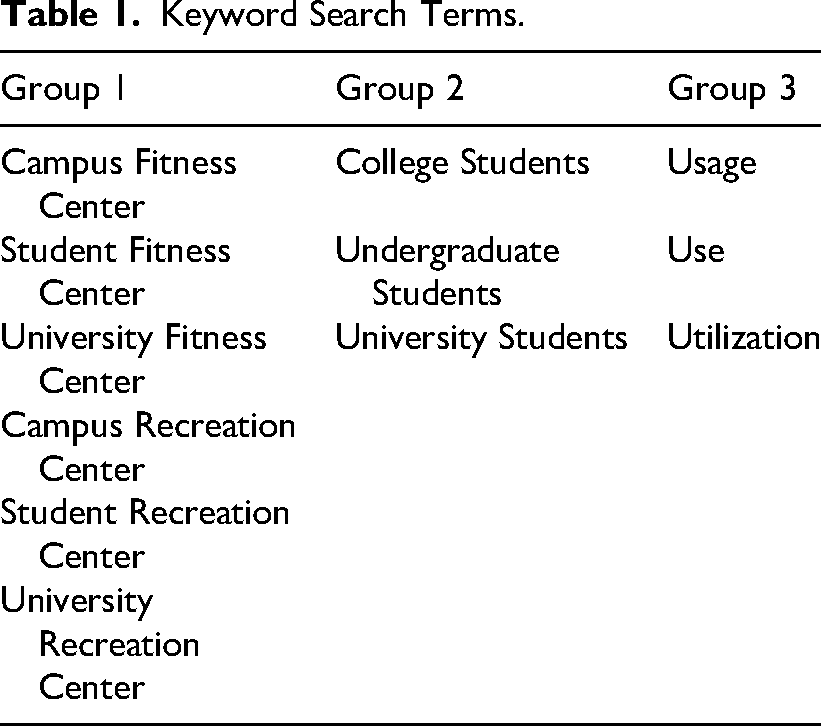
An initial keyword search of electronic databases was conducted from February to May 2024 and updated in February 2025. Databases included Academic Search Complete, APA PsycArticles, APA PsycInfo, Consumer Health Complete (EBSCOhost), Education Research Complete, ERIC, Family & Society Studies Worldwide, Global Health, Health Source (Consumer Edition; Nursing/Academic Edition), and SPORTDiscus. The search targeted three concepts: campus recreation, university students, and utilization, with specific terms reported in Table 1. No additional filters (e.g., language and peer-review) were applied during the initial search.
Keyword Search Terms.
Eligibility Criteria
The criteria for inclusion were: (a) peer-reviewed empirical articles, (b) published in English, (c) college or university student participants, and (d) utilization of on-campus recreation or fitness centers. During the initial search, there were no restrictions on publication dates to ensure a comprehensive collection of relevant information. Studies were excluded if they were: (a) published in languages other than English, (b) were not peer-reviewed (e.g., theses, dissertations, and periodicals), or (c) did not report empirical findings or results (e.g., best practice, review, or position papers). While terms like “outdoor recreation” and “intramural sport” were not included explicitly in the keyword search, studies that included such programs under the larger umbrella of campus recreation were not excluded from this review.
Study Selection
The search identified 1,646 articles; after removing 435 duplicates, 1,211 titles and abstracts were screened independently by three members of the research team. Because no filters were applied to the initial search, many records were excluded for not meeting inclusion criteria, such as being published in languages other than English, focusing on off-campus physical activity or recreation, or involving participants other than university students. Interrater reliability statistics were not calculated, as disagreements were resolved systematically by discussion with the senior author until a consensus regarding alignment with inclusion criteria was reached. Abstract-level screening yielded 24 articles, which were reviewed at the full-text level. Following full-text review, five additional articles were excluded for not meeting all criteria. A hand search of reference lists and Google Scholar (first five pages) yielded three additional eligible studies for a total of 22 included articles. The final selection process is detailed in Figure 1.

PRISMA flow diagram.
Data Charting
Data were charted in an Excel spreadsheet, capturing citation details, participant characteristics, study characteristics, and major findings. To ensure reliability, each article was independently coded by multiple reviewers on a subset of five studies, yielding >80% agreement, and discrepancies were resolved through discussion. Remaining articles were divided across reviewers, with each serving as both primary and secondary coder to maintain accuracy.
Major findings were classified using the SEM (McLeroy et al., 1988). Identified factors (e.g., participant experiences and barriers) were mapped to the five SEM levels. When a factor plausibly related to more than one SEM level, it was described once under the SEM level most emphasized in the original study to preserve a coherent level-by-level narrative. The first author completed initial SEM-level classification, and a senior author reviewed the classification decisions. When classification was ambiguous, we consulted the original study authors’ interpretations and resolved differences through discussion until consensus was reached. Although policy-level codes were part of the framework, no studies reported factors at this level. Because outcomes related to physical, mental, social, and academic well-being were almost exclusively measured at the intrapersonal level, these are presented in a separate section to preserve a coherent level-by-level analysis of CRP utilization factors while providing a focused discussion of outcomes.
Quality Appraisal
Each article was appraised for methodological quality using the Mixed Methods Appraisal Tool (MMAT; Hong et al., 2018), which accommodates qualitative, quantitative, and mixed-methods designs. Ratings of “yes,” “no,” or “can’t tell” were applied, with a pilot review of four articles conducted to establish consensus procedures. Remaining studies were then assessed, and discrepancies resolved through discussion. No overall scores were computed, in line with MMAT guidelines. Due to the exploratory nature of this review, findings were described in relation to study characteristics and situated within the SEM framework regardless of article quality. Methodological limitations and broader implications are addressed in the limitations section.
Results
Study Characteristics
This review included 22 articles on university students, published between 2004 and 2023: 2004–2008 (n = 3), 2009–2013 (n = 5), 2014–2018 (n = 4), and 2019–2023 (n = 10). The concentration in recent years suggests growing scholarly attention to the role CRP plays in campus life. Geographically, 19 studies were U.S. based, one was conducted in Spain (Monforte et al., 2021), and two did not report a location (Guan et al., 2020; Kampf & Teske, 2013). Detailed study characteristics are presented in Table 2.
Study Characteristics & Major Findings.
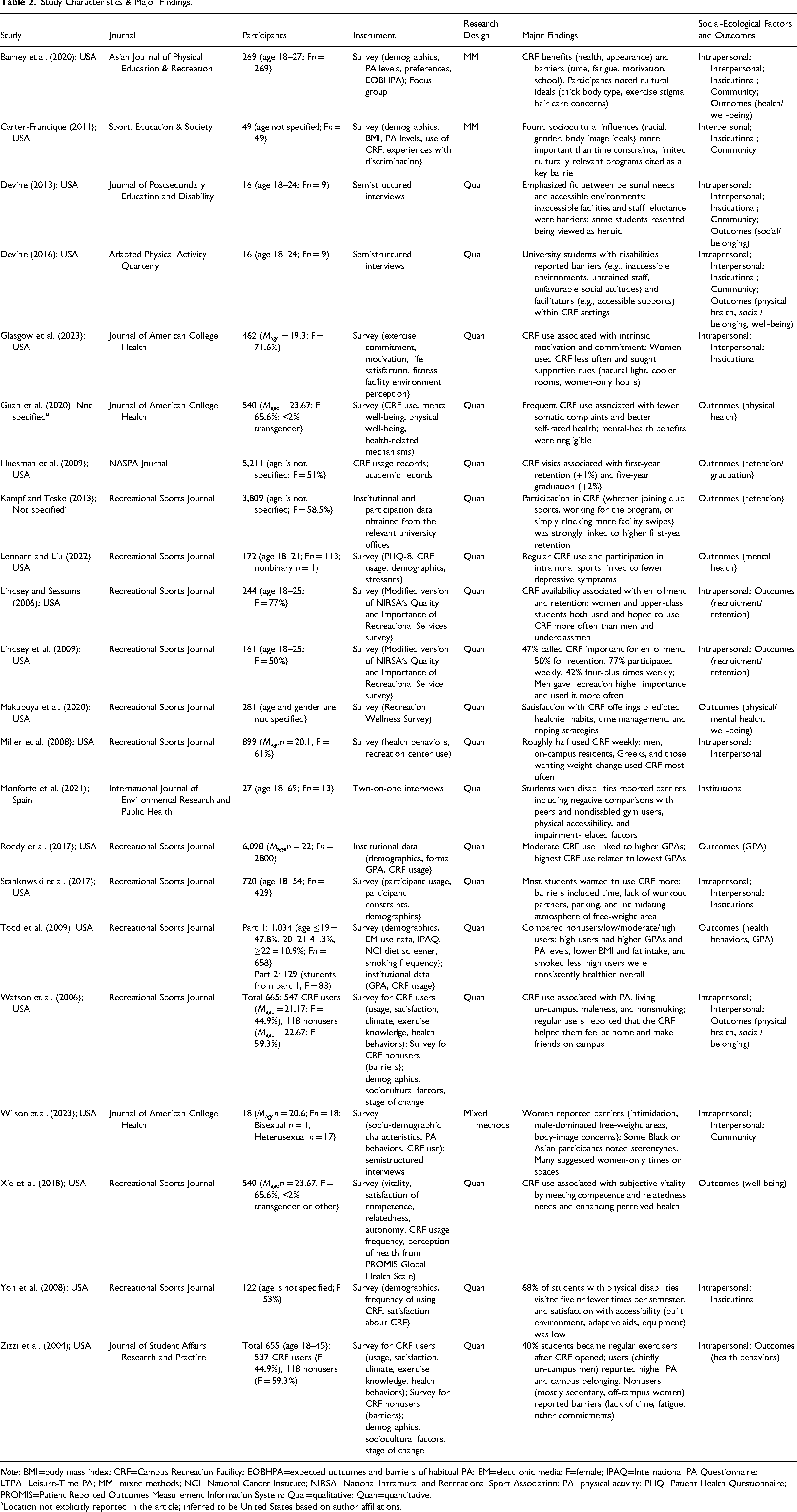
Note: BMI=body mass index; CRF=Campus Recreation Facility; EOBHPA=expected outcomes and barriers of habitual PA; EM=electronic media; F=female; IPAQ=International PA Questionnaire; LTPA=Leisure-Time PA; MM=mixed methods; NCI=National Cancer Institute; NIRSA=National Intramural and Recreational Sport Association; PA=physical activity; PHQ=Patient Health Questionnaire; PROMIS=Patient Reported Outcomes Measurement Information System; Qual=qualitative; Quan=quantitative.
Location not explicitly reported in the article; inferred to be United States based on author affiliations.
Participants
The majority of the reviewed articles (n = 14) targeted undergraduate students only. Five did not specify academic level (Barney et al., 2020; Makubuya et al., 2020; Monforte et al., 2021; Stankowski et al., 2017; Yoh et al., 2008), and three sampled students spanning undergraduate to graduate levels (Guan et al., 2020; Watson et al., 2006; Xie et al., 2018). Several studies targeted specific subpopulations: four examined students with disabilities (Devine, 2013, 2016; Monforte et al., 2021; Yoh et al., 2008), and three included only female participants (Barney et al., 2020; Carter-Francique, 2011; Wilson et al., 2023) including one focused specifically on Black or African American women students (Carter-Francique, 2011). Sample sizes ranged from 16 (Devine, 2013) to 6,098 (Roddy et al., 2017) with a mean of approximately 1,000 across studies.
The reviewed studies employed various sampling strategies. Convenience sampling was the most common, reported in nine articles (Barney et al., 2020; Carter-Francique, 2011; Glasgow et al., 2023; Guan et al., 2020; Lindsey et al., 2009; Lindsey & Sessoms, 2006; Makubuya et al., 2020; Todd et al., 2009; Yoh et al., 2008). Random sampling was employed in four studies (Leonard & Liu, 2022; Miller et al., 2008; Stankowski et al., 2017; Xie et al., 2018). Purposive sampling was used in two studies (Monforte et al., 2021; Wilson et al., 2023). Snowball sampling was used in two studies (Devine, 2013, 2016). Additionally, two studies used multiple sampling approaches, combining convenience sampling and purposive or random sampling (Watson et al., 2006; Zizzi et al., 2004). Three studies used available institution-level datasets (Huesman et al., 2009; Kampf & Teske, 2013; Roddy et al., 2017).
Design and Instrumentation
Research designs were categorized broadly into three types: quantitative (n = 16), qualitative (n = 3), and mixed methods (n = 3). Quantitative studies primarily used surveys or questionnaires (n = 13), or institutional data (n = 3). Most questionnaire-based studies (n = 8) used pre-existing instruments with or without modifications (e.g., Patient Health Questionnaire [PHQ]-8, PROMIS). Five used researcher-developed surveys with pilot testing or literature guidance (Makubuya et al., 2020; Stankowski et al., 2017; Watson et al., 2006; Yoh et al., 2008; Zizzi et al., 2004). Three studies did not collect data from individual university students, but instead used institutional information (e.g., CRP usage logs, grade point average, and university retention), labeling these “institutional data” (Huesman et al., 2009; Kampf & Teske, 2013; Roddy et al., 2017).
All three qualitative studies used semistructured interviews: two employed one-on-one formats (Devine, 2013, 2016) and one used a two-on-one approach (Monforte et al., 2021). Mixed-methods studies combined instruments as follows: a validated questionnaire and focus group interviews (Barney et al., 2020), a self-developed questionnaire that included closed- and open-ended items (Carter-Francique, 2011), and one-on-one interviews and a questionnaire for which validation could not be determined (Wilson et al., 2023).
Quality Appraisal
Quality appraisal is summarized in Table 3. All qualitative studies (n = 3) met all five MMAT criteria, indicating high methodological rigor. Mixed-methods studies (n = 3) showed the most consistent limitations, most commonly insufficient rationale for using mixed-methods and weak integration of qualitative and quantitative components. Quantitative studies (n = 16) exhibited variable quality across items; some studies satisfied most criteria, whereas others met fewer items. Articles using single-method designs (qualitative or quantitative) satisfied 60% to 80% of assessed items, while mixed-methods approaches met 0% to 20%. Due to the exploratory nature of this review, findings were described in relation to study characteristics regardless of article quality appraisal.
Critical Appraisal Using Mixed-Methods Appraisal Tool.
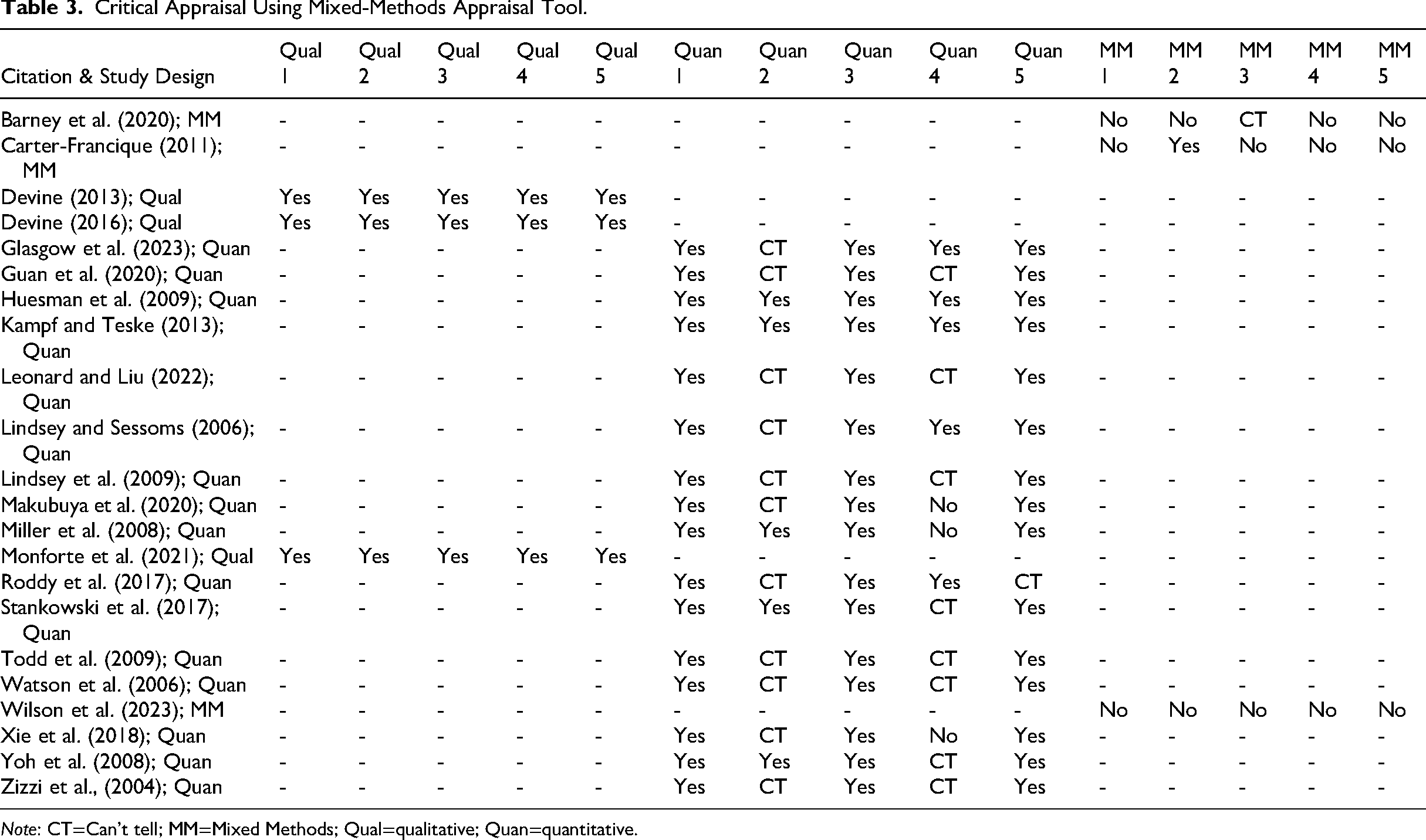
Note: CT=Can’t tell; MM=Mixed Methods; Qual=qualitative; Quan=quantitative.
Major Findings
As the aims and measures of reviewed studies varied, we synthesized the findings into two broad categories: (1) factors associated with CRP utilization, organized by SEM level and (2) outcomes associated with CRP utilization (i.e., physical and mental health, social well-being, and academic outcomes).
SEM Factors Associated With CRP Utilization
In this review, intrapersonal factors reflected individual-level attributes, perceptions, or constraints; interpersonal factors reflected direct social relationships and interactions; institutional factors captured CRP- or university-level operational features; and community factors captured campus-wide sociocultural norms and shared narratives. Factors in the included studies were categorized into the following SEM levels: intrapersonal (e.g., time constraints and exercise-knowledge gaps), interpersonal level (e.g., peer workout partners and Greek-life networks), institutional level (e.g., equipment variety and wheelchair-friendly layouts), community level (e.g., campus narratives such as fitness is a White activity, heroic framing of students with disabilities who exercise). None of the reviewed studies were categorized to the policy level of SEM. Structuring the findings across these levels can examine alignment between higher- and lower-order influences and expose evidence gaps at each tier, thereby helping researchers, practitioners, and policymakers to pinpoint common intervention targets and opportunities for cross-level collaboration (Matsick et al., 2024; Zhang et al., 2022a). Readers are encouraged to interpret these findings with caution, as several SEM factors were informed by single studies and study quality varied (see Quality Appraisal); nonetheless, this highlights valuable directions for future research and opportunities to strengthen the evidence base.
Intrapersonal Factors
Six intrapersonal factors were identified: gender differences, exercise-related knowledge deficits, time constraints, fatigue, on-campus residence, and hair care or grooming concerns. Across seven studies, men generally reported higher CRP utilization than women, with one exception (Lindsey & Sessoms, 2006) where women reported greater use and desired frequency (Glasgow et al., 2023; Lindsey et al., 2009; Lindsey & Sessoms, 2006; Miller et al., 2008; Watson et al., 2006; Yoh et al., 2008; Zizzi et al., 2004). Knowledge deficits, particularly unfamiliarity with free weights, were also identified as barriers for women, with regression analyses linking free-weight knowledge to increased visits when addressed (Stankowski et al., 2017; Wilson et al., 2023).
Time constraints (e.g., academic workload, employment, and personal obligations) limited CRP utilization in four studies (Barney et al., 2020; Stankowski et al., 2017; Watson et al., 2006; Zizzi et al., 2004). Fatigue was also noted as a barrier in four articles (Barney et al., 2020; Devine, 2013, 2016; Zizzi et al., 2004). Among students with disabilities, these barriers were compounded, as arranging transport often led to fatigue before exercise (Devine, 2013, 2016), and gender gaps were pronounced, with only 9% of women versus 58% of men with disabilities utilizing CRP more than five times per semester (Yoh et al., 2008).
Three studies found that living on campus rather than off campus appears to facilitate more frequent CRP utilization (Miller et al., 2008; Watson et al., 2006; Zizzi et al., 2004). Lastly, although less frequently reported overall, hair care and grooming concerns after exercise were also cited as barriers to CRP use specifically by African American women students (Barney et al., 2020).
Interpersonal
Interpersonal influences shaped CRP utilization through two related pathways: supportive relationships that facilitated participation (e.g., companionship and encouragement) and social-evaluative dynamics that discouraged it (e.g., exclusion, scrutiny, and gendered discomfort) (Barney et al., 2020; Carter-Francique, 2011; Devine, 2013, 2016; Miller et al., 2008; Stankowski et al., 2017; Watson et al., 2006; Wilson et al., 2023). Peer influences and social networks were most frequently discussed. Working out with friends and supportive networks enhanced motivation and confidence (Carter-Francique, 2011; Devine, 2016; Wilson et al., 2023). Women in particular reported greater likelihood of utilizing CRP when accompanied by a friend (Stankowski et al., 2017), whereas lack of a workout partner was described as a barrier (Watson et al., 2006). In quantitative analyses, Greek-organization membership was associated with higher use and predicted CRP utilization (Miller et al., 2008). At the same time, peer contexts could deter participation. Some Black/African American women reported feeling excluded or pressured by slim, sport-involved peers (Barney et al., 2020; Carter-Francique, 2011). Among students with disabilities, interpersonal dynamics included unwanted attention, excessive praise or “heroic” framing, and negative scrutiny, and these experiences were described as interacting with broader community norms (Devine, 2013, 2016).
Similar interpersonal dynamics were also observed in romantic relationships. Some women exercised with boyfriends and felt more confident after being shown how to operate the equipment (Wilson et al., 2023), whereas others felt self-conscious around fitter partners or perceived less need to attend when partners affirmed existing body size (Barney et al., 2020; Wilson et al., 2023). These social-evaluative processes were further reinforced by perceptions of gendered space within the CRP. Free-weight knowledge barriers were amplified by perceptions of male-dominated free-weight areas, contributing to feelings of exclusion or intimidation (Carter-Francique, 2011; Wilson et al., 2023). Possibly as a result of these interpersonal barriers, women showed stronger preferences for single-gender programming (Glasgow et al., 2023).
Institutional
Institutional factors were especially salient for students with disabilities, underscoring how CRP design and policies shape utilization. Supports such as pool lifts, zero-depth entries, wheelchair-friendly flooring, hand cycles, and tandem bikes facilitated access and were described as a “lifesaver” (Devine, 2016, p. 185). Instructional staff who routinely adapted activities (e.g., yoga modifications) also aided engagement (Devine, 2016). Nevertheless, many institutional barriers persisted, such as large or echo-filled lobbies, parking difficulties, confusing internal layouts, or narrow track lanes (Devine, 2013, 2016), and another study found that students with disabilities rated accessibility, corridors, auxiliary aids, and equipment conditions at a significantly low satisfaction level overall (Yoh et al., 2008). In one instance, a student's request for a two-person kayak was declined because staff assumed that nondisabled students might dislike it for lacking a challenge, reinforcing perceptions of equal fees but fewer options (Devine, 2016). Similarly, another study indicated that students with disabilities found it difficult to locate programs specifically geared toward them at their university and thus sought alternative opportunities (e.g., disability associations or adapted gyms) (Monforte et al., 2021).
Beyond disability, environmental and facility features also influenced utilization such as: equipment variety, open space, ambient temperature, storage, and parking availability (Barney et al., 2020; Glasgow et al., 2023; Stankowski et al., 2017). Some Black/African American women perceived the environment as unwelcoming due to limited culturally relevant music or TV and a lack of programs designed for Black women (Barney et al., 2020; Carter-Francique, 2011). Awareness gaps were noted as well, with some students unaware that CRP access fees were embedded in general student fees, indicating a communication or marketing gap (Barney et al., 2020).
Community
At the community level, cultural and societal structures come into play. Accordingly, culture-related determinants were coded as community-level factors because the reviewed studies focused on their impact on the campus community, rather than broader institutional policy or governance. Specifically, reviewed study findings suggest that racialized norms and disability narratives surrounding exercise behaviors impacted students’ perspectives toward CRP utilization.
Findings were most salient for students with marginalized identities, including women, racial minorities, and those with disabilities. Among Black or African American women, norms valorizing “thick” body types and characterizing exercise as “White behavior” reduced motivation for CRP utilization or weight loss (Barney et al., 2020; Carter-Francique, 2011). At predominantly White institutions, some students encountered the assumption that Black people are “all athletic,” being asked whether they belonged to a sports team; one Asian student reported using CRP engagement to counter the “unathletic” Asian American stereotype (Wilson et al., 2023, p. 2227).
For students with disabilities, there appeared to be a polarized cultural perception, either a mindset in which PA was discouraged or not expected of them, or a “heroic” framing that excessively praises them, both of which can leave them feeling objectified rather than treated as ordinary workout peers (Devine, 2016). Some participants reported receiving little or no encouragement from parents, teachers, or medical personnel to be physically active growing up, which was discussed alongside low expectations from people without disabilities about what students with disabilities can accomplish physically (Devine, 2013).
Outcomes Associated with CRP Utilization
Physical and Mental Health
Across five studies, CRP utilization was associated with benefits for physical and mental health (Barney et al., 2020; Guan et al., 2020; Leonard & Liu, 2022; Makubuya et al., 2020; Todd et al., 2009). Frequent users showed higher PA, lower fat intake, and less screen time (Todd et al., 2009). CRP utilization was also linked to reduced somatic symptoms and better overall health, partially mediated by improved sleep quality (Guan et al., 2020). Furthermore, students engaging in open recreation, intramural sports, or higher CRP utilization rates showed a lower prevalence of depressive symptoms (Leonard & Liu, 2022) and reported improvements in healthy habits and stress management (Makubuya et al., 2020). CRP usage was likewise associated with lower body mass index (Todd et al., 2009) and lower smoking rates (Todd et al., 2009; Watson et al., 2006; Zizzi et al., 2004).
Social Well-Being
The majority of research indicated that CRP activities can foster a sense of belonging and social well-being, beyond mere health maintenance (Devine, 2013, 2016; Leonard & Liu, 2022; Makubuya et al., 2020; Watson et al., 2006; Xie et al., 2018). Students who used CRP highlighted that these programs helped them make friends and feel more “at home” on campus, with those exercising more than 4 hours per week stating a stronger positive impact on overall quality of life (Watson et al., 2006). In a survey study of 540 students, CRP utilization was linked to higher satisfaction of relatedness and competence needs, which contributed to students’ sense of vitality and overall well-being (Xie et al., 2018). For students with disabilities, exercising with friends supported stress relief and network building (Devine, 2013, 2016; Leonard & Liu, 2022; Makubuya et al., 2020). Just one study did not find a clear link between CRP utilization and enhanced social support (Guan et al., 2020).
Academic Outcomes
Seven studies examined academic outcomes and student success indicators in relation to CRP use, including institution-recorded persistence metrics (e.g., first-year retention and 5-year graduation) and students’ self-reported importance of CRP availability for their decisions to attend and continue attending the institution (Huesman et al., 2009; Kampf & Teske, 2013; Lindsey et al., 2009; Lindsey & Sessoms, 2006; Roddy et al., 2017; Todd et al., 2009; Watson et al., 2006). Greater CRP use was associated with modest yet significant improvements in both first-year retention and 5-year graduation rates, after controlling for academic preparedness and social fit (Huesman et al., 2009) and with higher odds of continued enrollment (Kampf & Teske, 2013). In survey-based recruitment/retention items, men rated the availability of CRP as more important for decisions to attend and continue at the institution (Lindsey et al., 2009), although mechanisms for this difference were not tested. Evidence for GPA was mixed: some studies reported higher GPAs among more consistent users (Todd et al., 2009), whereas the most frequent male users showed lower GPAs (Roddy et al., 2017), and one study reported no association (Watson et al., 2006).
Discussion
This systematic review synthesized empirical studies on university students’ utilization of CRP, mapped multilevel factors using the SEM and summarized physical, mental, social, and academic outcomes. Across the 22 studies, time constraints and fatigue were the most persistent intrapersonal barriers, aligning with a recent review of 39 studies (n = 17,771) that identified lack of time as the most frequently reported barrier (Brown et al., 2024). Population data add context, showing PA declines during the transition to emerging adulthood (Armstrong et al., 2018; Kwan et al., 2021), and fewer than half of university students meet PA guidelines in recent campus surveillance and European samples (American College Health Association, 2025; Espada et al., 2023). Although this review did not measure students’ PA directly, the convergence of widespread time constraints and declining PA, and the campus proximity and schedule flexibility of CRP, indicates that these facilities could become a practical, low-friction venue for helping students accumulate meaningful PA hours. For example, facilities might offer short high-intensity circuits, 10-minute stretching breaks between classes, or app-guided mini-workouts that fit demanding academic schedules (Al-Nawaiseh et al., 2022; Hayes, 2024; Yin et al., 2025).
Beyond the overall shortfall in PA, the reviewed studies show a pronounced gender gap in CRP utilization. Exercise-related knowledge deficits were a salient barrier for women (Stankowski et al., 2017; Wilson et al., 2023). While investigating overall PA levels of university students was outside the scope of this review, the lower CRP utilization among women university students is well-aligned with previous findings related to gender-based differences in PA engagement. For example, a large-scale U.S. survey (n = 9,472) showed that men consistently engage in higher levels of moderate-to-vigorous PA across adolescence and emerging adulthood than women (Armstrong et al., 2018). Evidence-informed measures to narrow this gap include offering brief skills orientations and guided introductions to equipment and classes, which directly target the knowledge barrier identified by participants and authors in the included studies (Stankowski et al., 2017; Wilson et al., 2023).
At the interpersonal level, our review shows that peers, romantic partners, and family members shape CRP utilization among university students. Although evidence remains limited, included studies indicate that beliefs and behaviors of close others can support or impede utilization (Barney et al., 2020; Miller et al., 2008; Wilson et al., 2023). This aligns with broader work showing that who provides support, and in what form, matters: a systematic review of 25 studies found that emotional and companionship support reliably promotes PA, whereas purely informational/directive messages often do not (Van Luchene & Delens, 2021). Belanger and Patrick (2018) add nuance: esteem support from friends or family increased PA, but family-delivered informational support was associated with lower PA. Together, these studies suggest that CRP initiatives should prioritize opportunities for companionship and encouragement (e.g., buddy challenges and peer-led sessions) while avoiding advice-heavy messaging that can feel prescriptive or controlling.
Women frequently perceived free-weight areas as male-dominated (Carter-Francique, 2011; Wilson et al., 2023), a pattern echoed across fitness-center research (Coen et al., 2018; Fisher et al., 2018; Turnock, 2021). Although women-only sessions drew some enthusiasm (Glasgow et al., 2023), scholars cautioned that segregation may reinforce men's dominance in mainstream lifting zones (Coen et al., 2018; Turnock, 2021). Men also reported constraints tied to hegemonic masculinity (e.g., fear of appearing weak), underscoring the need for inclusive solutions (Coen et al., 2018). Coen et al. (2018) participants described “gendered lines,” with authors recommending interspersed equipment to reduce segregation. Cowley and Schneider (2025) further noted unsolicited coaching and sexualized staring, advocating staff training and antiharassment protocols. Collectively, these evidence-informed recommendations highlight strategies to shift weight-room culture toward inclusion.
At the institutional level, barriers were especially salient for students with disabilities. Although adapted resources (e.g., pool lifts and specialized equipment) facilitated access for some, many still perceived CRP as less valuable for them than their nondisabled peers, paying the same fees yet encountering fewer viable programs or inaccessible facilities (Devine, 2013, 2016; Monforte et al., 2021; Yoh et al., 2008). Beyond university settings, studies likewise identify physical and instructional accessibility as key facilitators of fitness-center utilization among adults with disabilities, whereas inadequate accommodations can undermine belonging and self-esteem (Richardson et al., 2017; Sharon-David et al., 2021). Thus, CRP administrators must address not only physical access and adapted programming but also staff training and inclusive messaging, ensuring all students recognize themselves as valued members of the recreation community.
At the community level, cultural norms and perceptions can discourage PA for certain student groups, especially Black or African American women and students with disabilities (Barney et al., 2020; Carter-Francique, 2011; Wilson et al., 2023). In line with prior work, some Black or African American women described exercise as White behavior or endorsed a thick body ideal, which may bolster self-esteem yet obscure health risks (Cameron et al., 2018). Culturally responsive programming that pairs body-positivity with practical health education may help honor diverse ideals while sustaining long-term wellness.
Students with disabilities were at times subject to heroic portrayals (Devine, 2013, 2016). For example, some participants were introduced as a “special” participant or received enthusiastic praise from staff, which they experienced as embarrassing or unwanted attention (Devine, 2016, p. 184). Read through the lens of the supercrip narrative, such praise celebrates individual grit while leaving structural barriers unaddressed (Jan, 2015; McGillivray et al., 2021). Some also described overprotection by parents, teachers, and medical providers (Devine, 2013), which aligns with prior work suggesting that fear, parental behavior, and ableist low-expectation norms can constrain early opportunities to develop PA skills and confidence (Goodwin & Ebert, 2018; Lauruschkus et al., 2017; Shields et al., 2012). Taken together, these findings suggest that CRP efforts should target culture, messaging and supported entry into fitness spaces for students with disabilities.
Utilization of CRP was associated with better indicators of physical and mental health, social well-being, and academic outcomes. Across studies, frequent CRP utilization was generally linked to more favorable health indicators. For example, high-frequency users showed healthier behaviors (Roddy et al., 2017; Todd et al., 2009), and weekly visitors were nearly twice as likely to report no depressive symptoms (Leonard & Liu, 2022). Overall, these findings align with prior evidence linking campus recreation participation with physical health and wellness benefits (Forrester, 2014) and with integrative evidence that recreation-based programs can reduce perceived stress, anxiety, and depression among postsecondary students (Litwiller et al., 2022).
Evidence for social well-being was largely positive but not entirely uniform. While several studies described greater belonging or social connectedness among CRP users, others such as Guan et al. (2020) did not find a clear association between CRP use and social support. Guan et al. (2020) noted that this null finding may reflect measurement, as their social support measure was relatively global and may not capture more proximal CRP-related belonging or connectedness. Consistent with this distinction, prior work links campus recreation participation with social belonging and sense of community (Miller & Croft, 2022; Prochnow et al., 2025).
In the academic domain, higher swipe counts and participation were associated with stronger retention and graduation metrics (Huesman et al., 2009). Evidence for GPA appears more mixed across studies, suggesting that academic benefits may be more consistent for persistence outcomes than for grades. Relatedly, freshmen who joined intramural sports reported higher first-year GPAs, completed more credits, and were twice as likely to be retained compared to nonparticipants (Vasold et al., 2019). Taken together, CRP utilization appears to extend beyond physical benefits and may contribute to the overall quality of college life (Chiu et al., 2025). Consequently, universities can view CRP as a meaningful component of a holistic educational experience that supports health promotion, student success, and well-being.
Limitations & Conclusions
This review is not without limitations. First, most evidence came from single-institution studies conducted in the United States and often employed homogenous participant samples, which likely influenced the generalizability of findings. Similarly, quantitative and mixed-methods designs were generally cross-sectional in nature, which may have yielded less robust data that other methodological approaches. In addition, the methodological quality ranged substantially between studies, thus conclusions should be interpreted with caution. Nevertheless, while some conclusions were informed by limited data from single or a few studies, this underscores the value of the review in identifying promising directions and highlighting areas where further research can strengthen the evidence base.
By examining university students’ CRP utilization through the lens of the social-ecological model, this review sheds light on a wide range of factors from personal motivations and peer influences to institutional supports and cultural norms that shape CRP utilization. Presenting outcomes (i.e., physical/mental health, social well-being, and academic benefits) separately highlights the broad positive impact that recreation engagement can have on individual students and campus communities. The scope of this review did not allow for an in-depth examination of how CRP resources vary across institutions; future research should investigate how differences in university size and resource availability shape institutional-level factors within the SEM. Additionally, future research should explore collaborative approaches between campus recreation professionals and diverse student groups to co-design programs that reflect students’ lived experiences and preferences.
Application to Practice
Taken together, current findings suggest that increasing CRP utilization calls for targeted, multilevel strategies, such as short fitness classes to address time barriers, peer-led sessions to leverage social support, inclusive facilities for students with disabilities, and culturally responsive programming that counters exclusionary norms. Implemented effectively, such efforts can foster not only student well-being but also institutional success. Campus recreation professionals should also engage students in co-designing programs and facility enhancements to ensure offerings reflect diverse needs and lived experiences. Staff should prioritize inclusive weight-room practices, such as interspersing equipment and implementing antiharassment protocols, to address gendered barriers and foster equitable participation. Doing so can strengthen trust, improve program relevance, and create environments that encourage sustained participation.
Footnotes

Funding
The authors received no financial support for the research, authorship, and/or publication of this article.
Declaration of Conflicting Interests
The authors declared no potential conflicts of interest with respect to the research, authorship, and/or publication of this article.