







Abstract
This study investigated the sensory and emotional perceptions of pleated polyester pants by comparing their real-world representation with virtual representation under identical lighting conditions. Using CLO 3D simulations and controlled physical recordings, this study examined how variations in digital rendering affect viewers’ interpretations of gloss, texture, and material properties. Both expert and non-expert participants evaluated two pleat types, knife and box pleats, through semantic differential analysis. The results indicated significant perceptual discrepancies between actual and virtual formats, with non-experts being particularly susceptible to surface-level exaggerations in digital visuals. The emotional responses also varied, with virtual garments often perceived as more luxurious or dynamic than their physical counterparts. The expert participants showed greater perceptual stability, highlighting the importance of familiarity with materials. These findings emphasize the inherent limitations of digital garment visualization, which leads to perceptual distortions even under controlled conditions, underscoring the need for more emotionally reliable and perceptually aligned virtual representations.
Introduction
Recent advancements in digital fashion have accelerated the adoption of virtual garment simulations across design, product development, and e-commerce. As consumers increasingly evaluate apparel based solely on visual information without direct physical interaction the risk of perceptual distortion continues to grow. Digital renderings may exaggerate or misrepresent material characteristics owing to limitations in rendering algorithms, insufficient material data, and system-level constraints, resulting in a gap between visual expectations formed through digital content and actual product experience. Despite the widespread use of virtual simulations, few studies have empirically investigated perceptual differences between actual and virtual garment presentations under strictly controlled conditions.
Three gaps in the existing literature motivate the present study. First, most prior research on virtual garment evaluation has focused on technical accuracy or fit appraisal, while systematic empirical comparisons of sensory and emotional perceptual responses between actual and virtual garments under controlled conditions remain scarce. Second, surface reflectance a critical determinant of how material properties such as glossiness, texture, and dimensionality are visually perceived has not been operationalized as an independent analytical variable in virtual garment perception research. Third, the role of viewer expertise in shaping perceptual responses to virtual garment simulations has received insufficient empirical attention, despite evidence that expert and non-expert observers may interpret visual material cues differently.
Polyester was selected as the primary material because of its distinctive surface qualities, such as gloss and structure, which make it visually sensitive to simulation methods. Pleated pants were chosen as the target garment because pleated structures produce dynamic three-dimensional changes during movement, generating complex visual rhythms and varying reflectance patterns under fixed lighting conditions. The present study addresses the identified gaps through three contributions: (1) a controlled empirical comparison of sensory and emotional perceptions of actual and virtual pleated polyester pants under matched lighting conditions; (2) the operationalization of surface reflectance as a key simulation parameter through systematic CLO 3D material configuration; and (3) the incorporation of viewer expertise as an analytical variable, providing a nuanced perspective on perceptual differences between expert and non-expert groups.
This study aims to provide foundational insights into enhancing interpretability and user trust in digital fashion simulations. Clarifying how viewers perceive virtual garments compared with their physical counterparts contributes to a more informed understanding of digital material perception. This study offers practical implications for fashion designers, marketers, and simulation developers seeking to improve the credibility and user experience of virtual garment presentations. Unlike previous studies that primarily focused on technical accuracy or garment fit, this study uniquely explored psychological and sensory interpretations of digitally rendered garments under controlled visual conditions. Furthermore, incorporation of viewer expertise into the analysis presents a nuanced perspective on how different viewers perceive and evaluate virtual fashion content, bridging a critical gap in the existing literature.
Theoretical background
Sensory and emotional perception in virtual fashion visualization
Sensory perception is fundamental in understanding how visual and tactile characteristics of objects are processed at the individual level. Vision is responsible for processing most external information, accounting for approximately 60%–70% of perceptual input. 1 (see also Lindgaard 2007) 2 Tactile perception can be categorized as active touch, which involves intentional exploration, and passive touch, which responds to stimuli without conscious movement. 3
In virtual environments, where direct physical interaction is absent, visual tactility is essential. Based solely on visual stimuli, visual tactility refers to the inferred tactile quality of an object, which allows viewers to estimate material attributes, including texture, weight, and surface richness. 4 These perceptions are formed not only through low-level visual cues but also through emotionally charged descriptors shaped by prior experiences. Terms, such as “rough,” “cold,” or “soft,” convey sensory expectations, whereas adjectives, such as “luxurious,” “elegant,” and “comfortable,” reflect emotional associations. 5 Thus, understanding both sensory and emotional perceptions is essential for the accurate interpretation of material qualities in virtual fashion visualization.
Emotional evaluation and the SD method
Emotional evaluation is a well-established interdisciplinary field that investigates human responses to external stimuli, including clothing, product design, and spatial environments, with the goal of enhancing quality of life. Of various approaches, Nagamachi 5 proposed a systematic methodology for analyzing emotions of users in the context of design. Emotion is a complex psychological experience that emerges from the interaction between sensory input and cognitive perception. It encompasses subjective feelings, such as pleasure, discomfort, and luxury, and plays a significant role in shaping cognition, behavior, and visual experience.6,7 Emotional reactions are involuntary and are often grounded in personal memory and prior experiences, occurring spontaneously without conscious control. 8
Various analytical techniques have been proposed to evaluate emotional responses objectively. One of the most widely used methods is the semantic differential (SD) method, originally developed by Osgood et al. 6 This technique employs bipolar adjective pairs to measure subjective impressions on a quantitative scale. It has been extensively adopted in psychology and design research to quantify emotional meaning and user preferences. 9
In this study, the concept of visual tactility was grounded in the sensory-affective framework articulated by Schifferstein, 7 who distinguished between the functional importance of sensory modalities (visual and tactile perceptions) and the emotional responses evoked by those (feelings of comfort, luxury, and liveliness). This conceptualization provides a theoretical foundation for analyzing how lighting conditions in virtual simulations affect the visual perception of pleated garments. This study employed the SD method as a key tool to evaluate and capture the nuanced emotional responses elicited by lighting in virtual environments. This method was selected for its capacity to identify to qualitative emotional impressions that are otherwise difficult to express numerically. The scale was constructed using carefully selected bipolar adjectives, as such adjective pairs may reflect both consistent and contrastive emotional dimensions. By integrating sensory and emotional evaluation methods, this study provided insight into how virtual lighting conditions affect the perception of pleated pants in virtual simulations.
Methodology
Fabric and pleat configuration
A 100% polyester jersey fabric was used to produce the pleated pants used in this study. The excellent light reflectance and durability of polyester contributed to enhanced visual effects in garments under various lighting conditions. The use of jersey-knit fabric, rather than woven alternatives, was motivated by its inherent elasticity and drape, making it particularly suitable for pleated designs that require flexibility and movement. Pleats, which are characterized by repetitive folded structures, generate complex visual effects through line repetitions and spatial rhythms. When worn, pleats transform into dynamic three-dimensional forms, with their shape and depth changing in response to body motion, thereby offering varying visual and tactile impressions.
To select the pleat type and width, knife and box pleats were chosen based on their superior structural clarity, directional uniformity, and ability to enhance the visual rhythm of the garment. According to Jackson, 9 knife pleats, which consist of folds pressed uniformly in one direction, create a clean, consistent surface that accentuates linear movement and efficiently reflects light, amplifying the dynamic visual effects during motion. To determine the optimal pleat width, a pilot experiment was conducted with 10 experts to evaluate pleats with 5, 10, and 15 mm width under natural lighting conditions. Knife-style outer pleats and box pleats were compared because these provided consistent fold structures and maintained visual sharpness during movements. The evaluation indicated that pleats with 5 mm width exhibited the most distinct visual clarity alongside maintaining structural stability. Although pleats with 10 mm width offered good visibility, the finer detailing of those with 5 mm width was preferred without compromising crease quality.
Expert consultations further confirmed that pleats narrower than 5 mm often led to formation defects, particularly in box pleats, where 3 mm width caused incomplete crease formation. Consequently, 5 mm was finalized as the optimal width for both knife and box pleats to ensure visual definition and manufacturing feasibility. This decision complied with the findings in previous studies. For instance, narrower pleats (0.3–1.5 cm) were found to enhance visual perception, whereas Armstrong 10 recommended adjustable pleat width between 3 mm and 15 mm, depending on design needs. Additionally, the optimal pleat width was experimentally identified by analyzing defect rates across ranges of 1/8″, 2/8″, 3/8″, 4/8″, 5/8″, 6/8″, and 1″. By integrating pilot experiment findings, expert feedback, and existing literature, this study finalized knife and box pleats with 5 mm width as the most effective configuration for achieving both aesthetic clarity and structural integrity.
Wide-leg pants design and pattern development
Wide-leg pants were selected to optimize the observation of dynamic pleat behavior during wearer movement. The wide silhouette allows for greater fabric motion, enabling visible structural changes in pleats according to body movements. These movements result in varying reflectance patterns under fixed lighting conditions, making wide-leg pants particularly suitable for examining how pleasant surfaces respond visually to consistent light sources. An analysis of recent fashion collections further supported this selection, reflecting a trend toward wider silhouettes.
Anthropometric data from the Size Korea National Body Measurement Survey were used to develop a pattern appropriate for the target demographics of women aged between 20 and 30 years. Standardized measurements, such as average height, waist-to-hip ratio, and lower body proportions, informed the pattern development process to ensure representative fitting. Various samples were produced to determine the appropriate width of the wide-leg silhouette. After a comprehensive evaluation, the final pattern incorporated 5 mm knife pleats and 5 mm box pleats, achieving a balance between pleat definition and structural stability under movement.
Virtual simulation setup and lighting configuration
Lighting is not only a physical factor but also a crucial visual stimulus that affects space perception and emotional evaluation. CLO 3D provides a lighting system that allows users to freely adjust the position, intensity, size, color, and direction of lighting to create realistic virtual images. Increasing the intensity and size of light softens shadows and enhances reflection from the surface, creating a more natural appearance. The CLO 3D lighting system includes multiple lighting types, each of which serves a specific purpose. For instance, square lighting enables users to modify the number, width, height, and angle of lights for custom illumination. Spherical lighting allows for radius adjustments of spherical light sources. Spot lighting is used for highlighting specific objects by controlling the cone angle, light spread, and shadow spread. The Illuminating Engineering Society (IES) lighting adjusts the brightness and shape by utilizing prestored lighting intensity data from the IES files. Finally, dome lighting modifies the entire lighting environment by applying environmental maps, allowing intensity adjustments from 0 to 4. Setting the intensity to 0 results in a completely dark background, which demonstrates the importance of controlled lighting settings in virtual environments.
Essentially, virtual lighting plays six key roles. First, it ensures that all subjects within a virtual space are clearly visible. Second, it enables color adjustments that influence the perceived color of an object. Third, it enhances three-dimensional perception, allowing 2D images to be perceived as a part of the virtual space. Fourth, it helps adjust the number, intensity, position, and diffusion of lights, which enhance the representation of texture. Fifth, it helps with various lighting combinations, which create specific atmospheres that reinforce intended visual effects. Finally, CLO 3D lighting helps with adjusting color temperature and brightness that align with users’ psychological states and biorhythms, making it applicable to virtual image marketing and user experience optimization. This study employed CLO 3D lighting settings to examine how the texture and fold of pleated pants changed under different lighting conditions.
Fabric property measurement and virtual fabric development
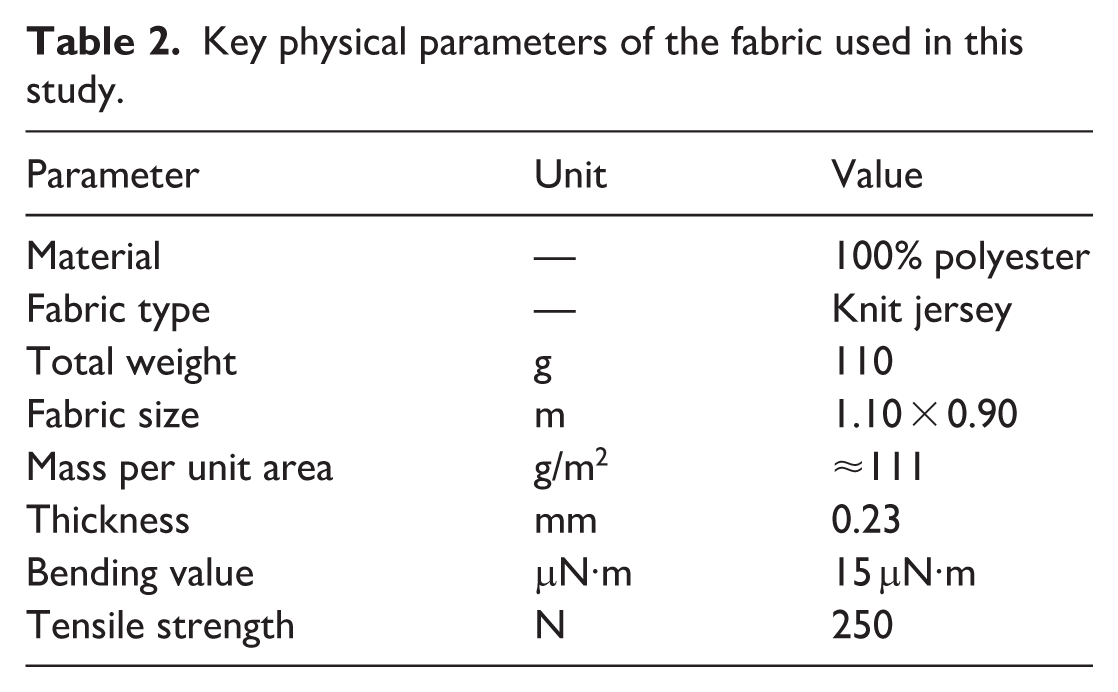
Physical property experiments were conducted to characterize 5 mm knife pleats and 5 mm inverted pleats used in the study. Pleated fabric samples (220 mm × 30 mm) were prepared, and measurements were conducted for key parameters, including weight, thickness, bending value, and tensile strength. These measurements were performed across the weft, warp, and true bias directions to comprehensively capture material behavior. The bending properties were assessed by observing vertical displacement when the fabric contacted the floor under a roller. The tensile properties were evaluated using a digital force gauge to measure the force applied after 1 mm of extension between fixed fabric ends. The elasticity data were collected by setting at least five intervals between 0 and 25 mm.
The obtained physical property data were integrated into the EMULATOR function of CLO 3D software to create virtual fabrics. Fabric parameters, such as name, type, size, weight, thickness, bending strength, and tensile strength, were entered, and a scanned image of the pleated fabric was uploaded to replicate the visual texture in the virtual environment. To analyze the visual characteristics of pleated pants, the lighting and material settings were configured within CLO 3D. A shiny fabric type based on physically based rendering (PBR) was applied with a normal map intensity of 10 to enhance the surface texture and a displacement map height of 0 mm, with a cut height of 1 mm to accentuate pleat three-dimensionality. The reflectance and metallic appearance were both set at 100 to maximize the surface reflectivity, whereas a surface roughness map was applied to enhance the realism of wrinkle textures. The bending and shear strengths were calibrated to enable a natural pleat movement, and the buckling point and ratio were set at 0 to prevent irregular wrinkling. This comprehensive simulation set-up allowed for a detailed comparison between actual and virtual pleated garments under controlled lighting conditions.
The CLO 3D virtual fabric parameter settings derived from these measured properties are summarized in Table 1.
Virtual fabric parameter settings and simulation conditions.
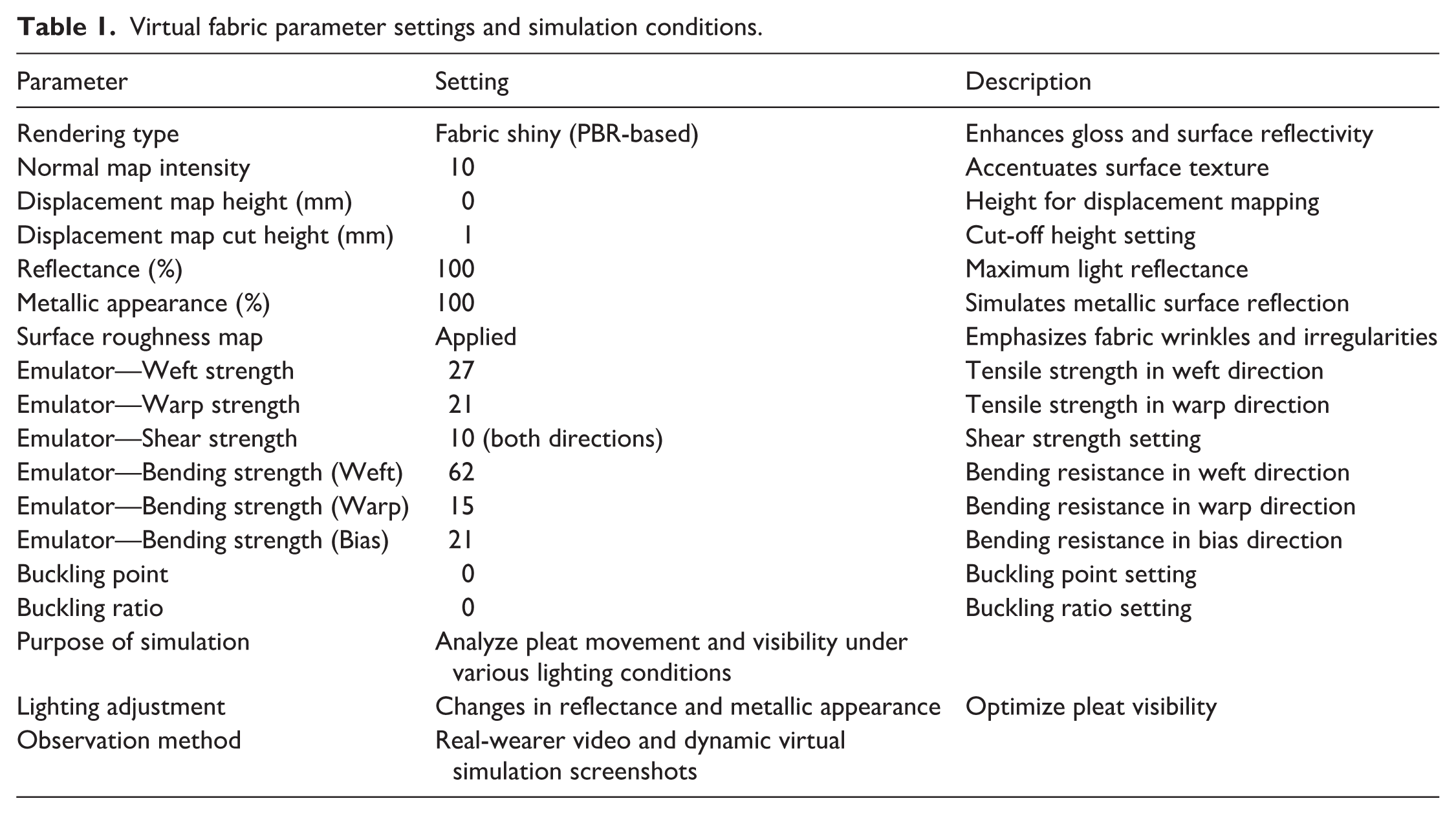
Simulations demonstrated that pleat clarity varied according to the lighting environment, and that higher reflectance made pleats more pronounced. Adjusting reflectance and metallic appearance emphasized the characteristics of light reflection, whereas bending and shear strengths were configured to allow natural pleat formation during fabric movement. Research was conducted on light source arrangement and fabric selection to enhance pleat visibility under specific lighting conditions, and experiments were designed to maximize pleat visibility using glossy fabric to optimize the effect of light reflection. Screenshots from both actual wearer videos and dynamic movements created using virtual devices were captured at consistent time intervals and at key motion points where pleat deformation was most visually prominent, facilitating a detailed comparison between pleat visibility and material behavior across real and virtual environments.
To examine the visual transformation of pleated structures during movement, a walking simulation was conducted using the CLO 3D software. Figure 1 presents four key frames captured at consistent intervals to depict pleat deformation and light interaction. The simulation was designed to replicate a natural walking sequence consisting of (1) left leg lift, (2) left foot landing, (3) right leg lift, and (4) both feet on the ground.

Virtual garment images illustrating pleat behavior, texture deformation, and reflective surface characteristics under simulated conditions.
The physical properties of the fabric, including thickness, mass per unit area, and knit density, were experimentally measured and are summarized in Table 2. These measured values were subsequently used as input data for the CLO 3D Emulator to calibrate tensile, bending, and shear parameters for virtual fabric simulation. Also, Table 2 summarizes the measured physical properties of the polyester jersey fabric used in this study, including thickness, mass per unit area, and knit density.
Key physical parameters of the fabric used in this study.
Actual filming conditions and synchronization with virtual
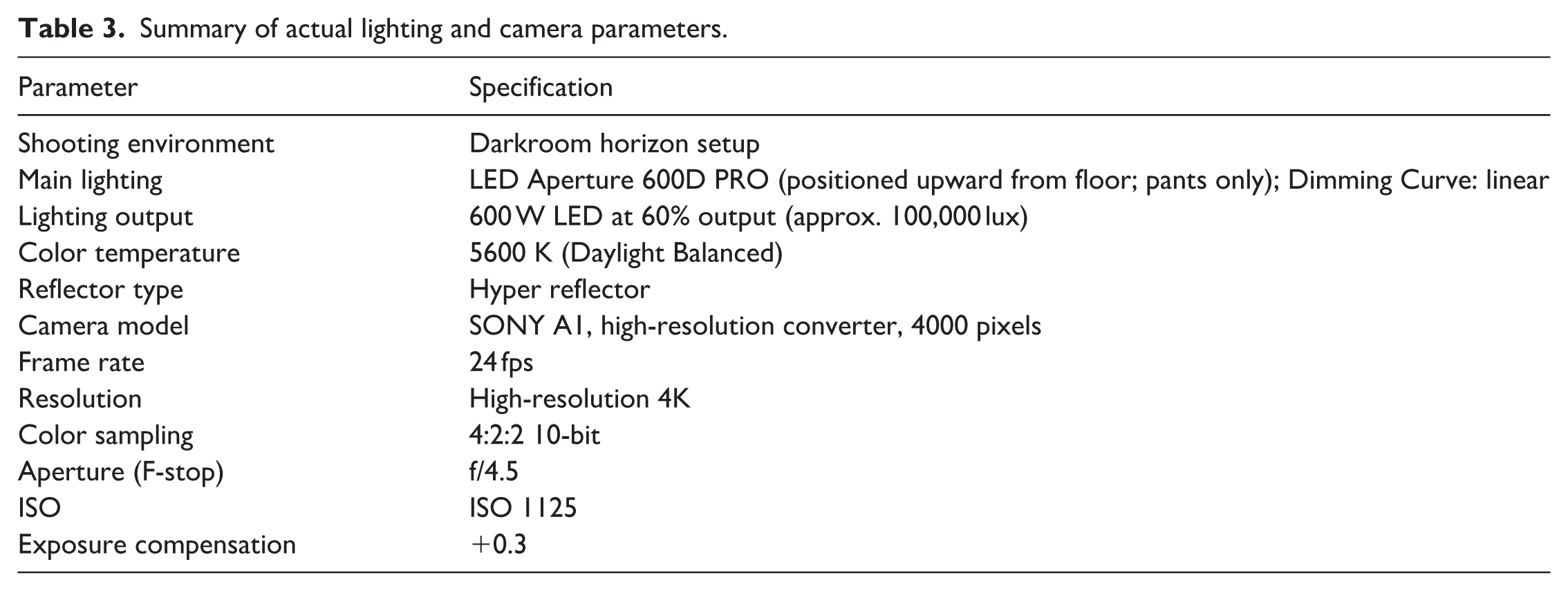
To enable a precise comparison between real and virtual representations of pleated garments, the real-world shooting conditions were carefully matched to the parameters applied in the CLO 3D simulation. The physical shoot test was conducted in a dark room horizon set-up to eliminate ambient light interference. A continuous light-emitting diode (LED) light source (aperture 600D PRO) was used as the main light source, positioned near the floor and angled upward to emphasize the lower section of the pants and enhance their three-dimensional structure during motion. The lighting set-up featured a linear dimming curve, with the LED operating at 60% of its 600 W capacity and delivering up to 100,000 lux at a color temperature of 5600 K (daylight balanced) using a hyper-reflector to intensify directional highlights.
Camera capture was performed using a SONY A1 high-resolution mirrorless system equipped with a 4000-pixel converter. The recording settings included a frame rate of 24 fps, 4 K resolution, 4:2:2 10-bit color sampling, aperture of f/4.5, ISO set at 1125, and exposure compensation of +0.3. These camera parameters were selected to achieve visual fidelity and accurately record the gloss, texture, and shadow gradations on the pleated surface (Table 3).
Summary of actual lighting and camera parameters.
The walking motion in the virtual simulation was synchronized with the movement of the subject during the filming process, and both sequences were captured at identical frame intervals. Each frame captured a distinct moment in a synchronized walking sequence: (1) left leg lift, (2) left foot landing, (3) right leg lift, and (4) both feet on the ground. Lighting conditions and movement timing were matched across both virtual and physical environments to enable the direct analysis of pleat behavior, texture deformation, and reflective surface characteristics (Figure 2).
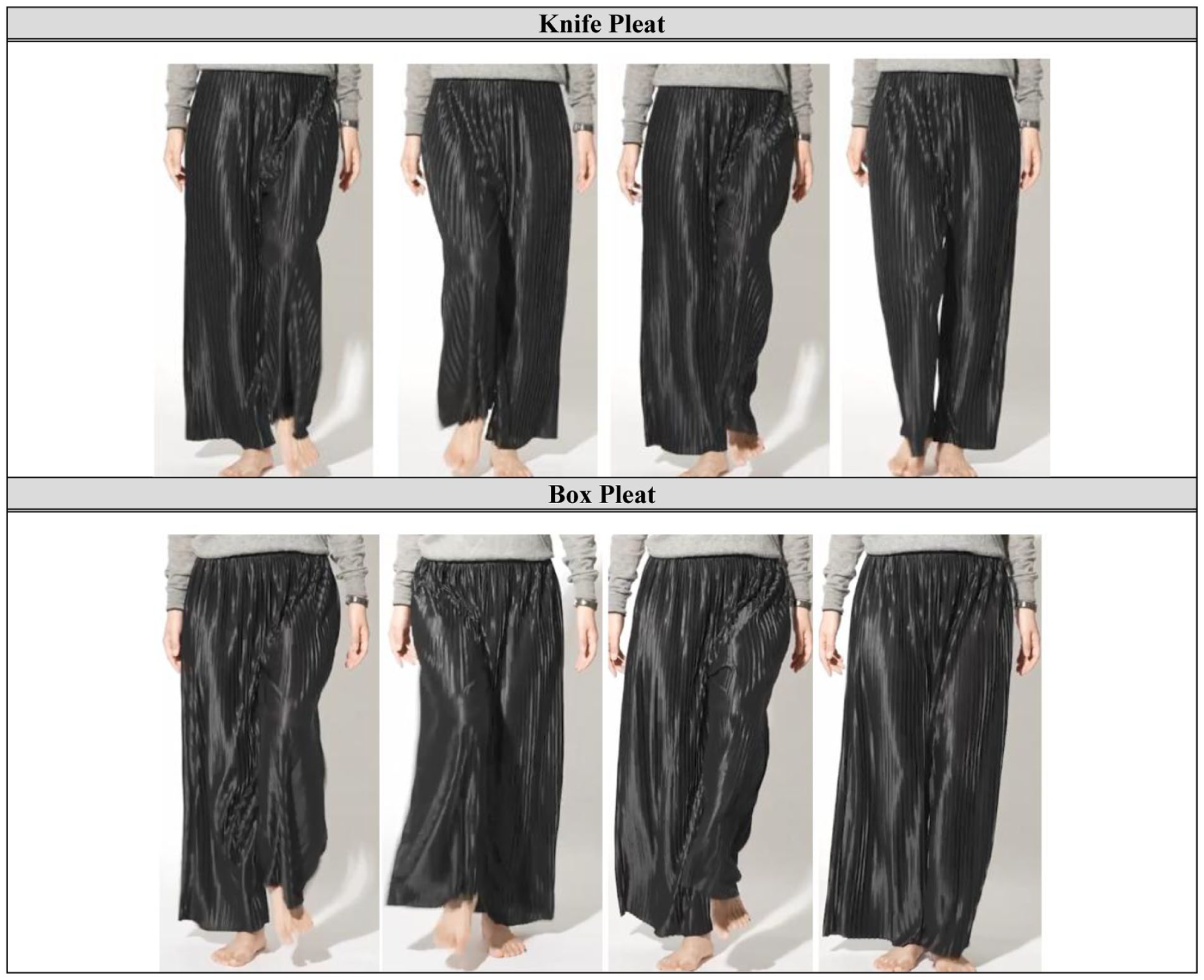
Actual garment images illustrating pleat behavior, texture deformation, and reflective surface characteristics under real-wear conditions.
Selection of sensory and emotional descriptors
The sensory and emotional descriptors used in this study were selected based on previous studies that employed bipolar adjective pairs to assess adjectives and sensory perceptions in product and fashion design contexts. Initially, a comprehensive set of sensory and emotional adjective pairs was compiled from extant literature. To refine this list, a pilot test was conducted with five experts, each holding a PhD in clothing studies or possessing more than 10 years of professional experience in the fashion industry. Through this validation process, overlapping and semantically similar terms were eliminated, resulting in a curated set of 35 sensory adjectives and 31 bipolar emotional adjective pairs. This set ensured both theoretical rigor and potential of practical application for evaluating perceptual responses in a virtual environment. These findings have theoretical implications that can help enhance virtual fashion environments by promoting emotionally resonant and perceptually enriched garment representations.
Participants and experimental procedure
A total of 30 participants were recruited for this study, divided into 2 groups: 15 experts and 15 non-experts. The expert group comprised fashion professionals with a minimum of 5 years of hands-on experience using CLO 3D virtual garment simulation software, ensuring familiarity with digital rendering characteristics and virtual fabric representation. The non-expert group consisted of participants with a background in fashion including fashion students, consumers, and industry practitioners but with no prior experience using CLO 3D or equivalent virtual garment simulation tools. All participants had normal or corrected-to-normal vision. Informed consent was obtained from all participants prior to the study.
Stimuli were presented in individual face-to-face sessions conducted under standardized conditions. Each participant viewed four video stimuli in a fixed order: (A) knife pleat actual, (B) knife pleat virtual, (C) box pleat actual, and (D) box pleat virtual. All participants viewed the same set of stimuli under identical viewing conditions. Each video was presented on a calibrated display monitor at a fixed viewing distance of approximately 60 cm. Following each stimulus, participants completed the sensory and emotional evaluation scales immediately, rating each bipolar adjective pair on a 7-point Semantic Differential scale (−3 to +3, with 0 indicating a neutral response). No time limit was imposed on the evaluation. The entire session lasted approximately 60–80 min per participant.
Research questions and hypotheses
Under identical lighting conditions, how does sensory perception of pleated pants differ between actual and virtual representations?
Under identical lighting conditions, how does emotional response to pleated pants differ between actual and virtual representations?
Under identical lighting conditions, what perceptual discrepancies arise between actual and virtual representations?
Under identical lighting conditions, how do expert and non-expert groups differ in their sensory and emotional interpretations of pleated pants between actual and virtual representations?
Based on the research questions, the following hypotheses were formulated:
Statistical analysis
All statistical analyses were conducted using SPSS (version 26.0; IBM Corp., Armonk, NY). To examine perceptual differences between actual and virtual representations, paired-samples t-tests were conducted for each sensory and emotional adjective pair. The t-value represents the standardized magnitude and direction of the mean difference between conditions, indicating whether virtual representations were rated higher or lower than actual garments. The p-value indicates the probability that the observed difference occurred by chance. A significance threshold of p < 0.05 was applied throughout. Integration scores for sensory and emotional dimensions were calculated by averaging all individual variable scores within each domain to provide an overall index of perceptual difference between actual and virtual conditions.
Results and discussion
Sensory perception differences between actual and virtual representations
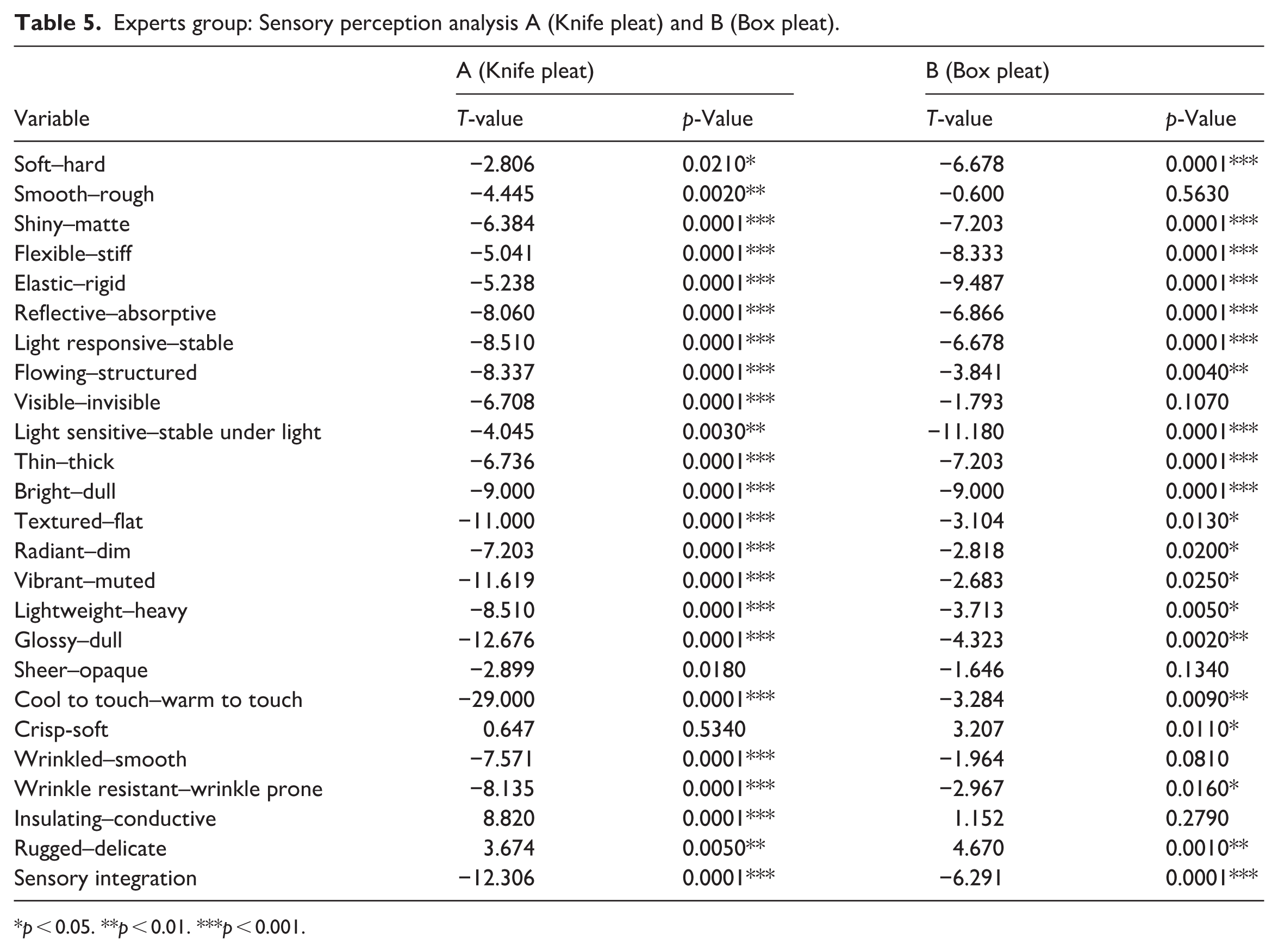
Across both expert and non-expert groups, virtual representations consistently received higher sensory ratings than actual garments. The integrated sensory variable was statistically significant in all four conditions (non-expert, knife pleat: p = 0.004; non-expert, box pleat: p < 0.001; expert, knife pleat: p < 0.001; expert, box pleat: p < 0.001), confirming that perceptual discrepancies between actual and virtual representations exist regardless of pleat type or viewer expertise. Dimensions related to light–material interaction—including shiny–matte, reflective–absorptive, and light-sensitive–stable under light—showed the most consistent and largest differences across both groups, reflecting the role of surface reflectance in amplifying sensory cues in virtual rendering. Detailed t-values and p-values for all variables are presented in Tables 4 and 5.
Non-experts group: Sensory perception analysis A (Knife pleat) and B (Box pleat).

p < 0.05. **p < 0.01. ***p < 0.001.
Experts group: Sensory perception analysis A (Knife pleat) and B (Box pleat).
p < 0.05. **p < 0.01. ***p < 0.001.
Among non-experts, perceptual discrepancies were more pronounced in condition B (box pleat) than in condition A (knife pleat). For condition A, 10 of 22 variables reached significance (p < 0.05), whereas for condition B, 19 of 22 variables were significant. Variables such as cool-to-touch–warm-to-touch, wrinkle-resistant–wrinkle-prone, and rugged–delicate did not differ significantly in condition B, suggesting that non-experts find certain tactile and structural qualities less distinguishable between actual and virtual formats.
Experts demonstrated broader and more uniform sensitivity to perceptual differences. In condition A, all variables except crisp–soft reached significance, and in condition B, all variables except smooth–rough, visible–invisible, wrinkled–smooth, and insulating–conductive were significant. The near-universal significance observed in the expert group suggests that domain knowledge enhances sensitivity to material fidelity, particularly for dimensions involving surface texture, reflectance, and structural deformation (Figures 3 and 4).

T-values for sensory perception differences between actual and virtual representations (non-expert group).
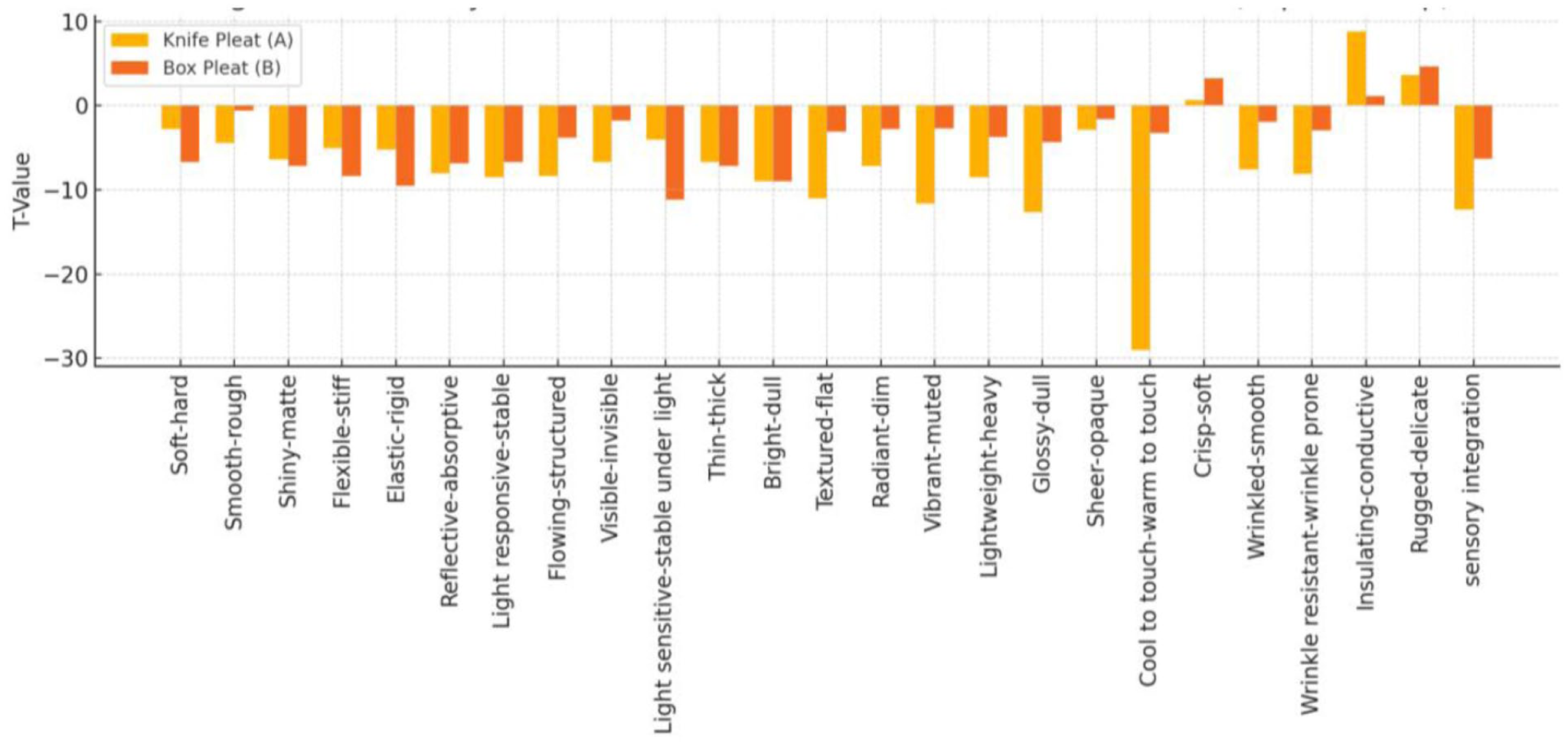
T-values for sensory perception differences between actual and virtual representations (expert group).
The analysis of pleated pants in A- (knife pleats) and B-videos (box pleats) by expert and non-expert participants supports Hypothesis 1, confirming that sensory perception significantly differs between actual and virtual representations, even under identical lighting conditions. Across both groups, perceptual attributes such as soft–hard, smooth–rough, shiny–matte, flexible–stiff, elastic–rigid, and textured–flat showed statistically significant differences (p < 0.05), indicating that virtual garments often fail to convey realistic texture, elasticity, and surface qualities.
For non-experts, condition B (box pleats) produced stronger perceptual discrepancies than condition A (knife pleats), with p-values < 0.001 across most variables. This suggests that complex pleat structures, when rendered digitally, amplify visual cues like reflectivity, texture contrast, and perceived elasticity. Although experts showed smaller perceptual gaps, their evaluations were still statistically significant. Notably, attributes involving light–material interaction such as reflective–absorptive, light-sensitive–stable, and wrinkle-resistant–prone differed consistently (p < 0.001), reflecting their heightened sensitivity to material fidelity under lighting.
These findings highlight the limitations of current virtual representations in delivering sensory realism, especially for non-experts who rely more heavily on surface-level cues. In contrast, experts appear to draw upon prior tactile and material experience, enabling more accurate assessments despite visual amplification effects.
Comparative analysis of emotional responses to actual and virtual representations under identical lighting conditions
Emotional responses similarly differed between actual and virtual representations across both groups and pleat conditions. The integrated emotional variable reached statistical significance in all four conditions (non-expert, knife pleat: p = 0.012; non-expert, box pleat: p < 0.001; expert, knife pleat: p < 0.001; expert, box pleat: p < 0.001), confirming that virtual garments consistently elicit different emotional impressions from their actual counterparts. Dimensions such as dynamic–static, comfortable–uncomfortable, high quality–low quality, and dimensional–flat showed the most consistent significance across both groups, suggesting that virtual representations tend to heighten perceived dynamism and quality while diminishing naturalness. Detailed results for all variables are presented in Tables 6 and 7.
Non-expert group: Emotion perception analysis A (Knife pleat) and B (Box pleat).

p < 0.05. **p < 0.01. ***p < 0.001.
Experts group: Emotional perception analysis A (Knife pleat) and B (Box pleat).

p < 0.05. **p < 0.01. ***p < 0.001.
Among non-experts, emotional discrepancies were again more pronounced in condition B (box pleat) than condition A (knife pleat). For condition A, 7 of 15 variables reached significance (p < 0.05), whereas for condition B, 11 of 15 variables were significant. Variables such as stable–unstable, sporty–elegant, fun–boring, ordinary–extraordinary, and casual–formal did not reach significance in condition B, indicating that non-experts perceive certain affective qualities—particularly those related to formality and energy—as comparable between actual and virtual formats.
Experts showed broader emotional differentiation overall, with the integrated emotional variable reaching p < 0.001 in both conditions. However, dimensions such as interesting–boring, natural–artificial, innovative–conventional, and luxurious–cheap did not reach significance in either condition, suggesting that expert viewers are less susceptible to affective amplification effects in virtual rendering for dimensions related to novelty and perceived value. This pattern indicates that domain expertise moderates’ emotional responses to virtual garments, particularly for evaluative dimensions that require prior material and aesthetic knowledge (Figures 5 and 6).
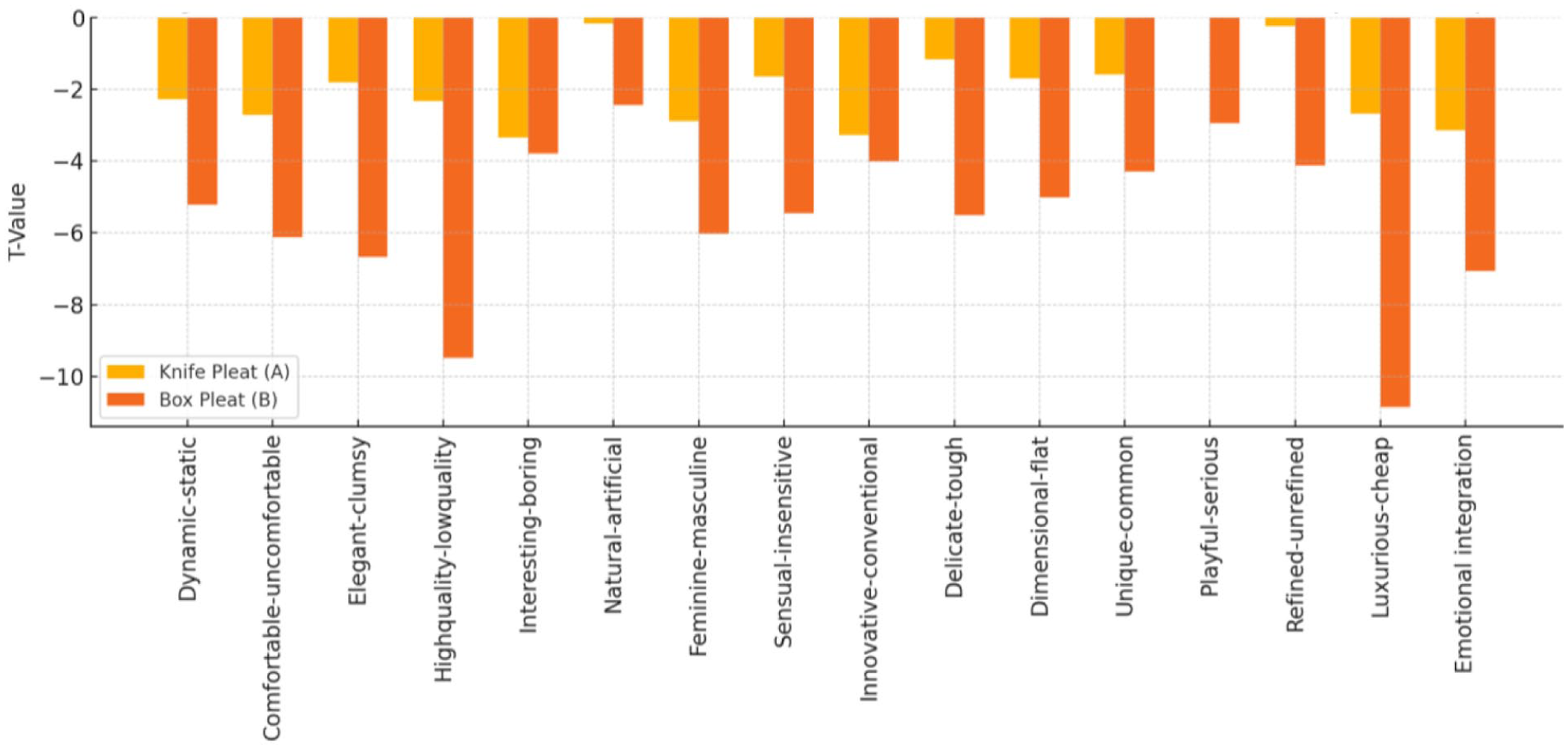
T-values for emotional perception differences between actual and virtual representations (non-expert group).

T-values for emotional perception differences between actual and virtual representations (expert group).
Both experts and non-experts analyzed the pleated pants presented in conditions A (knife pleats) and B (box pleats), providing evidence for Hypothesis 2, that emotional responses differ between actual and virtual representations, with virtual formats eliciting greater variability despite identical lighting conditions.
Non-expert participants exhibited more pronounced emotional fluctuations across attributes such as dynamic–static, comfortable–uncomfortable, high quality–low quality, and luxury–cheap (p < 0.05), particularly under condition B (box pleats), where complex surface geometry in digital form amplified perceptions of luxury and dynamism (p < 0.001).
While expert participants showed more consistent evaluations, notable discrepancies still emerged in attributes like feminine–masculine and dimensional–flat (p < 0.001), suggesting that even experienced viewers are influenced by subtle shifts in geometry and light interaction. These results highlight that although experts apply a more stable perceptual framework, emotional interpretations in virtual environments remain susceptible to enhanced visual stimuli, especially in the context of intricate garment structures.
Overall, virtual representations were found to amplify emotional impressions enhancing or diminishing perceptions of comfort, luxury, and visual appeal depending on how simulated lighting interacts with pleated structures. Non-experts, who rely more heavily on surface-level cues, are particularly susceptible to these effects, while experts appear to moderate their responses by referencing prior material experience and focusing on inherent garment qualities. The distribution of significant variables across conditions and groups is summarized in Figure 7 and Table 8.
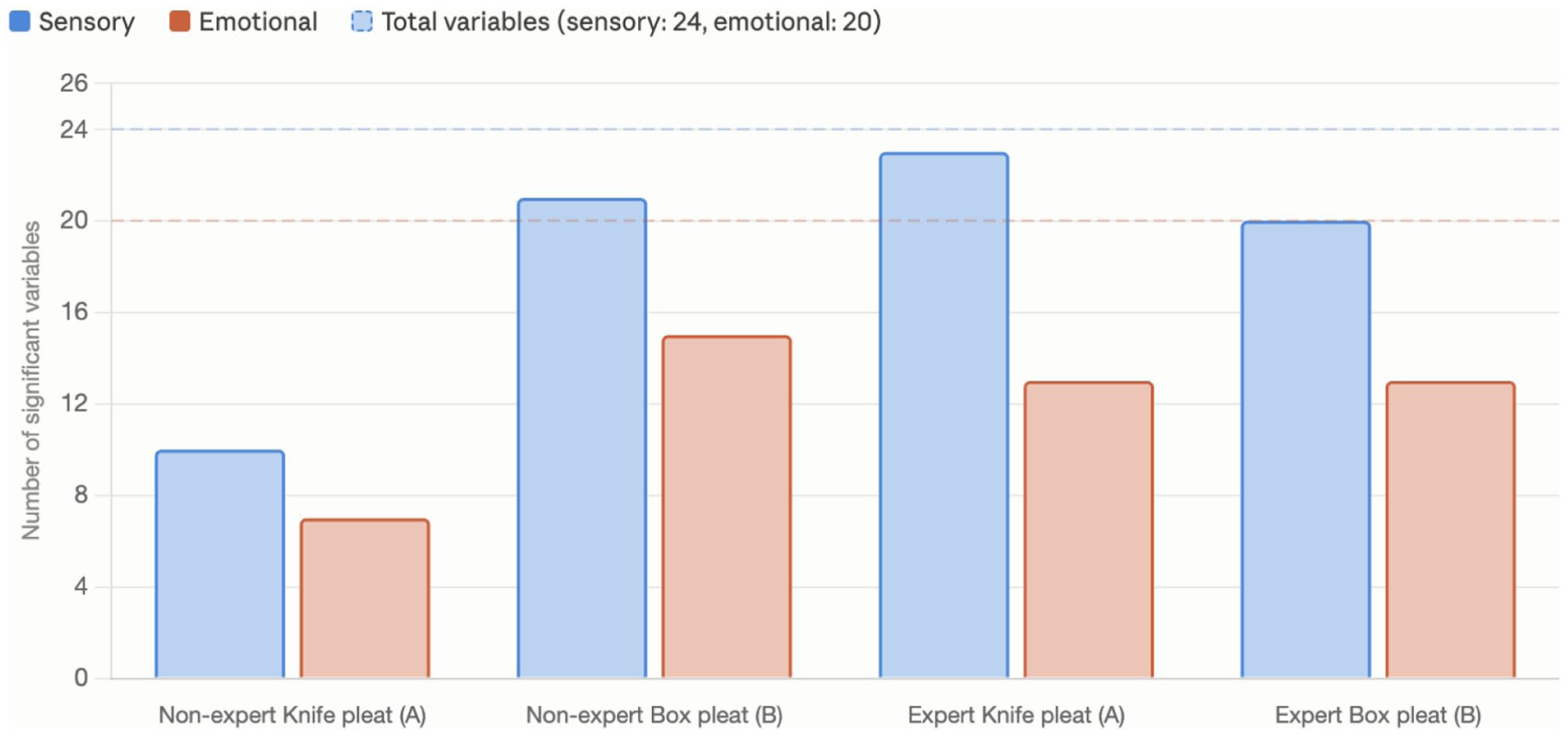
Number of statistically significant variables by condition and group.
Summary of perceptual differences between groups.

Figure 7 summarizes the number of statistically significant variables across all four conditions. Box pleat conditions (B) consistently yielded more significant differences than knife pleat conditions (A), particularly among non-experts, where significant sensory variables increased from 10 (knife pleat) to 21 (box pleat) out of 24 total. Expert participants demonstrated broader sensitivity across both conditions, with 23 and 20 significant sensory variables for conditions A and B respectively. These patterns suggest that box pleat structures produce stronger perceptual amplification in virtual rendering, and that CLO 3D reflectance settings interact more prominently with complex pleat geometries.
Role of surface reflectance in perceptual differences between actual and virtual representations
As illustrated in Figure 7, box pleat conditions consistently produced more perceptual discrepancies than knife pleat conditions, particularly among non-experts.
The perceptual differences observed in this study can be partly attributed to the deliberate configuration of surface reflectance parameters in the CLO 3D simulation. Reflectance and metallic appearance were both set at 100% (see Table 1), a configuration designed to maximize the visibility of pleat structures under controlled lighting. This setting, while effective for observing pleat deformation, inherently amplifies gloss and surface brightness beyond what would be perceived under natural material conditions. Physically-based rendering (PBR) algorithms simulate light interaction by computing specular highlights, diffuse reflection, and shadow gradients—processes that, at maximum reflectance, tend to exaggerate surface luminance and perceived smoothness. This rendering amplification effect provides a theoretical explanation for the consistently higher sensory ratings observed in virtual conditions across both groups, particularly for dimensions such as shiny–matte, reflective–absorptive, and bright–dull, where the gap between actual and virtual ratings was most pronounced.
The results support Hypothesis 3, confirming that perceptions of material properties differ significantly between actual and virtual garment representations, even under consistent lighting. These differences stem from variations in digital rendering techniques that alter how surface qualities are visually conveyed. Attributes such as reflective–absorptive, flowing–structured, and glossy–dull showed statistically significant gaps (p < 0.001).
Expert participants exhibited the most pronounced differences in bright–dull and radiant–dim (p < 0.001), suggesting heightened sensitivity to light-related cues in virtual environments. Non-experts, meanwhile, responded more strongly to textured–flat and shiny–matte attributes (p < 0.001), indicating that simulated gloss and surface simplification had a greater impact on their material interpretation. These findings demonstrate that virtual garments tend to visually amplify glossiness, brightness, and fluidity through rendering, which may distort users’ understanding of fabric behavior particularly among non-experts who rely more on visual appearance than on tactile memory. The results align with prior research show that simulation-based lighting and shading can exaggerate contrast and reflectivity, especially in the absence of real-world depth cues.
Expert versus non-expert interpretation of actual and virtual representations
These group differences can be further interpreted through Schifferstein’s sensory-affective framework, which distinguishes between the functional role of visual modalities in estimating material properties and the emotional responses those estimations evoke. For non-experts, who lack prior tactile reference points for polyester jersey fabric, visual cues produced by PBR rendering including amplified gloss, heightened contrast, and exaggerated pleat depth serve as the primary basis for both sensory and emotional judgments. This reliance on surface-level visual information makes non-expert evaluations particularly susceptible to rendering amplification. Experts, by contrast, can draw on internalized tactile and material knowledge to temper visually exaggerated cues, resulting in more conservative and consistent evaluations. The moderation of virtual amplification effects by expertise suggests that perceptual fidelity in digital fashion environments is not solely a technical challenge, but also a function of viewer literacy in material interpretation.
The results confirm Hypothesis 4, showing that expert participants demonstrated more consistent sensory and emotional evaluations between actual and virtual representations compared to non-experts. In sensory dimensions, non-experts exhibited significant variation in attributes such as shiny–matte, soft–hard, and textured–flat (p < 0.001), while experts maintained relatively uniform assessments, suggesting reliance on prior material knowledge rather than surface-level visual cues. Emotionally, non-experts showed greater shifts in perceptions of luxury, dynamism, and comfort depending on the presentation format (p < 0.001), whereas experts responded within narrower emotional ranges. Notably, in condition B (box pleats), non-experts reported stronger sensory and emotional discrepancies than in condition A (knife pleats), implying that complex pleat structures in digital environments amplify perceptual distortion among users with less experience.
In contrast, experts responded to both pleat types with similar levels of judgment, reflecting a stable internal reference framework. These results highlight the influence of expertise in moderating the effects of digital exaggeration and confirm that experts are better able to contextualize material representations across both real and simulated formats.
Conclusion and implication
This study demonstrates that, even under fixed lighting conditions, users’ sensory and emotional perceptions of pleated pants significantly differ between actual and virtual representations. While expert participants displayed consistent and analytical evaluations based on prior tactile experiences, non-experts showed increased emotional volatility and greater sensitivity to surface exaggerations in virtual garments particularly in attributes such as glossiness, texture, and elasticity. These distortions resulted in heightened perceptions of luxury, comfort, or dynamism in digital representations, often disconnected from the actual material properties.
A detailed examination of semantic differential adjective pairs revealed that perception gaps were particularly pronounced in items like shiny–matte, textured–flat, luxurious–cheap, comfortable–uncomfortable, and dynamic–static. These descriptors, especially among non-expert participants produced lower scores for perceived realism and greater emotional fluctuation, suggesting that virtual rendering techniques tend to amplify certain visual cues that consumers subconsciously associate with quality or desirability. Such amplification is not inherently misleading, but without proper contextualization, it may result in inaccurate consumer expectations and eventual dissatisfaction.
These findings provide concrete practical implications for the textile production chain, including designers, 3D developers, brands, buyers, and vendors operating within digital garment workflows. This contribution is grounded in the empirical finding that surface-related attributes such as pleat definition, texture, and gloss are systematically amplified in virtual garments, particularly for non-expert viewers. For designers and 3D developers, the findings reinforce the need for perceptually grounded design ensuring that materials are not just visually convincing but emotionally and sensorially accurate. For brands and buyers, particularly those commissioning virtual garments from vendors, it becomes crucial to assess whether the supplied 3D visualizations are likely to cause perceptual misalignment. When buyers provide 3D assets to vendors, vendors should not assume that appearance alone suffices; rather, they must validate whether the visual representations accurately reflect material attributes as experienced by non-expert end users. From the vendor’s perspective, this means actively verifying whether simulated pleats, textures, or gloss properties match not only the original intent but also the way consumers interpret these cues emotionally. Given that end users cannot physically touch virtual garments, vendors must take responsibility in flagging attributes prone to misinterpretation especially those statistically shown to produce divergent responses. Vendors should collaborate with brands to integrate textual explanations or interactive clarifications (e.g. “visual gloss may appear stronger than actual finish”) to mitigate potential gaps in user understanding. These insights can guide vendor-side decisions on how to present, annotate, or calibrate 3D content in ways that support perceptual clarity.
From the consumer perspective, this study offers practical insights into how virtual garment representations can shape expectations, trust, and post-purchase satisfaction in digital retail environments. Specifically, the findings identify surface attributes that are most susceptible to perceptual distortion in virtual environments, providing consumers with a clearer basis for interpreting digital material information and managing expectations. Especially in e-commerce environments, where users rely heavily on visual representations, understanding the potential for sensory misjudgment such as overestimating softness or luxury can help manage expectations and reduce returns. Visual-tactile education, product disclaimers, or guided virtual try-on cues may enhance trust and reduce confusion. Finally, industry experts whose perceptual responses remained more stable can serve as evaluators and standard setters in validating digital garments prior to public presentation. Their feedback can help anticipate how less experienced users might emotionally or sensorily misinterpret specific garment attributes.
In conclusion, perceptual fidelity in digital fashion must extend beyond technical realism to include emotional and sensory resonance. As demonstrated through the data, misalignments in specific adjective pairs reflect how digital exaggeration particularly in pleated structures affects perception differently depending on user expertise. Addressing these gaps through design, communication, and validation is not only a technological challenge but a strategic imperative for digital fashion platforms, vendors, and creators aiming to deliver authentic and trustworthy virtual garment experiences. While this study does not introduce a new material or measurement technique, it provides new empirical evidence on how visual amplification in virtual representations systematically alters sensory and emotional perception depending on user expertise.
Limitations
This study presents several limitations that should be considered when interpreting the findings. First, the sample size was relatively small and demographically narrow, consisting of only 20 participants (10 experts and 10 non-experts), primarily from similar educational and professional backgrounds. Such homogeneity may have constrained the statistical power and limited the ability to detect nuanced variations across broader populations such as differences by age group, regional culture, fashion familiarity, or digital literacy. Future studies should recruit a larger and more diverse participant pool to enable subgroup analysis and enhance external validity.
Second, the sensory and emotional responses were measured using the semantic differential (SD) method, which, while well-established in perception research, depends heavily on subjective judgment. Participants’ evaluations may have been influenced by transient psychological factors (e.g. fatigue, mood), past exposure to digital garments, or their understanding of adjective meanings. To improve data robustness, future research should integrate biometric or behavioral measures such as eye-tracking, galvanic skin response, or facial expression recognition, which can offer more objective and continuous indicators of sensory or emotional engagement.
Third, the experimental stimuli consisted of short pre-rendered video clips, which lacked interactive or embodied engagement. This static format may have limited participants’ ability to fully assess garment properties related to motion, fit, or drape behavior factors critical in real-world apparel evaluation. As digital fashion increasingly incorporates virtual try-on and avatar-based interfaces, future research should explore immersive environments using real-time simulation engines, haptic feedback, or extended reality platforms. Such approaches would allow participants to engage with garments in a more dynamic and ecologically valid manner, thereby increasing the accuracy and practical relevance of perceptual assessments.
Addressing these limitations through methodological expansion and technological integration will be essential for advancing digital fashion research and ensuring that perceptual data more closely mirrors the complexities of real-world garment evaluation.
Footnotes

Funding
The authors disclosed receipt of the following financial support for the research, authorship, and/or publication of this article: This research was supported by Basic Science Research Program through the National Research Foundation of Korea (NRF) and funded by the Ministry of Education (RS-2023-00245538).
Declaration of conflicting interests
The authors declared no potential conflicts of interest with respect to the research, authorship, and/or publication of this article.