






Abstract
A three-dimensional garment pattern design system with an intuitive interface for three-dimensional body and garment models was developed. An open-source human modeling software was modified to generate 3D body models based on four basic body measurements: height, bust girth, waist girth, and hip girth. The generated body models were then used as input to construct three-dimensional garment models with ease allowance in a proprietary software environment developed in this study. The system enables users to draw cutting lines directly on 3D garment models and generates two-dimensional garment patterns through mesh cutting, reshaping, and flattening processes. In addition, a template-based design function was developed to save and replay the design process, enabling consistent pattern generation across body models with different sizes. The proposed workflow supports both compression garments and garments with ease allowance and was validated through virtual fitting simulations and physical garment construction. The results demonstrate the feasibility and practical applicability of the proposed mesh-based garment-to-pattern generation approach.
Introduction
As living standards improve and social networking services spread, fashion has become an important means for modern consumers to express themselves and showcase their aesthetic sensibilities. This has led consumers to purchase clothing that fits their body shape well and reflects their individual needs. Furthermore, as consumers increasingly desire to participate directly in the fashion creation process, there has been a growing need for personalized production that reflects each person’s uniqueness and preferences.
However, most fashion companies still focus on efficiency and productivity rather than on consumers. As a result, there have been many issues on the insufficient fit of garments. To address these problems, various studies have been conducted to analyze three-dimensional body data and to design garment patterns based on this information.1,2
Research has been conducted that obtains garment patterns by dividing and flattening the mesh of three-dimensional body data. 3 Another study involved drawing lines on a 3D garment model and dividing its mesh to create well-fitting patterns. 4 Applications include designing body armor tailored to women’s breast contours by segmenting 3D body regions 5 and creating men’s underwear patterns from 3D male lower body data. 6 Other research has generated customized patterns for individuals with scoliosis 7 and proposed corset-style patterns derived from 3D body data. 8 Since these studies mostly use the body surface mesh to create garment patterns, they are limited to knit materials, compression wear, in which the ease allowance is minimal or negligible, resulting in garment patterns that fit tightly to the body. 9
In the actual garment industry, the form of garments with ease allowance, which do not cling tightly to the body, is more important than compression wear. Therefore, research enabling the production of garment patterns with ease allowance has been proposed. This involves generating a three-dimensional basic garment model around the body and modifying basic garment patterns based on 3D body models and changes in body measurements. 10 Methods for constructing 2D patterns by segmenting 3D garment models from scans of clothed humans have also been introduced. 11 However, even with these methods, producing garment patterns with ease allowance remains difficult, leading to the introduction of parametric concepts in garment design.12,13
Recent studies have further expanded garment pattern generation by incorporating parametric programming, large-scale garment datasets, artificial intelligence, and three-dimensional reconstruction. Programmable pattern-generation frameworks have enabled users to manipulate body measurements and design parameters while generating sewing pattern geometry through garment programs. 14 Large-scale synthetic datasets of three-dimensional made-to-measure garments with corresponding sewing patterns have also been introduced to support data-driven garment modeling and learning-based garment generation. 15 More recently, diffusion models, three-dimensional reconstruction, and large multimodal models have been applied to convert generated fashion images or multimodal design concepts into two-dimensional garment patterns or parametric pattern-making programs.16,17 Despite these advances, many recent approaches focus on automatic pattern generation, programmable pattern structures, or data-driven garment modeling, whereas the present study focuses on an interactive mesh-cutting workflow that allows users to define cutting lines directly on three-dimensional garment models and reuse the design process across body models with different sizes.
Furthermore, most previous studies focused on systems designed for experts with knowledge of garment patterns, making them difficult to use for those with limited patternmaking experience. Accordingly, there remains a continuous demand for the development of 3D-based garment pattern-making systems with intuitive interfaces.
In addition, most of the previous studies focused primarily on compression wear that closely adheres to the body, as their pattern generation methods involved cutting the mesh of three-dimensional body data. However, in actual industrial applications, there is a greater demand for garment patterns with ease rather than for tight-fitting compression wear. In particular, garments with ease allowance are essential in various apparel industries, such as casual wear, occupational uniforms, and protective clothing, where both comfort and fit are required. Therefore, this study aims to generate not only compression garments but also garment patterns with varying ease allowances from the body surface. To achieve this, a method was developed that automatically generates three-dimensional garment models based on body measurements and creates two-dimensional patterns by cutting the mesh of the garment models.
Unlike previous systems that require extensive technical expertise in three-dimensional pattern generation, the proposed method enables intuitive garment pattern creation by allowing users to draw cutting lines directly on three-dimensional garment models. While fundamental knowledge of garment construction remains necessary for meaningful design decisions, the system significantly reduces the technical complexity associated with transforming three-dimensional garments into two-dimensional patterns. This significantly lowers the entry barrier for those without professional training and broadens accessibility to complex pattern design. It opens up possibilities not only for developing functional garments, such as athletic or special-purpose wear, but also for engaging a wider range of users including beginners and hobbyists in the garment design process.
In this study, a three-dimensional body model is generated using four basic consumer body sizes including height, bust girth, waist girth, and hip girth. Then a garment model is generated based on that body model. Finally, the mesh cutting, mesh reshaping, and mesh flattening algorithms were utilized to obtain the two-dimensional garment patterns. A template system was developed that can automatically generate consistent patterns on the body models with different sizes. The main contributions of this study include the development of an interactive mesh-based garment-to-pattern generation workflow, a template-based design method for consistent pattern generation across body models with different sizes, and the extension of mesh-based pattern generation to garments with ease allowance.
Development of pattern design process
Generation of 3D body and garment model
In this study, MakeHuman (https://www.makehumancommunity.org), an open-source human modeling software, was used exclusively for generating three-dimensional body models based on basic anthropometric parameters. MakeHuman provides a graphical user interface that allows the creation of virtual human models by manipulating macro-level attributes such as height, gender, and body proportions. The software was modified to generate body models using four basic measurements including height, bust girth, waist girth, hip girth, and gender. Arm length, leg length, thigh girth, and other measurements not specified by the user were calculated using the statistical methods provided by MakeHuman. While this approach enables efficient body model generation using minimal user input, it represents a simplified representation of individual body shape and may not capture all variations affecting garment fit and ease distribution. The three-dimensional body models generated by MakeHuman were then exported and used as input data for a proprietary software system developed by the authors. This in-house software was responsible for all subsequent processes, including garment model construction, application of ease allowance, mesh cutting, mesh reshaping, mesh flattening, and two-dimensional pattern generation. The overall computational workflow of the proposed system consists of body model generation, layer-based garment model construction, convex hull-based layer normalization, ease allowance application, linear interpolation between key layers, interactive mesh cutting, mesh reshaping and flattening, and barycentric-coordinate-based template transfer.
Based on the exported three-dimensional body model, a three-dimensional garment model was constructed using a garment modeling algorithm implemented in the proprietary software developed in this study. The garment model was generated by organizing the surface points of the body model into layered structures and applying ease allowance to define garment dimensions distinct from body measurements. Figure 1 shows the joints (red circles) and surface points of the body model. Joints and surface points of the human body.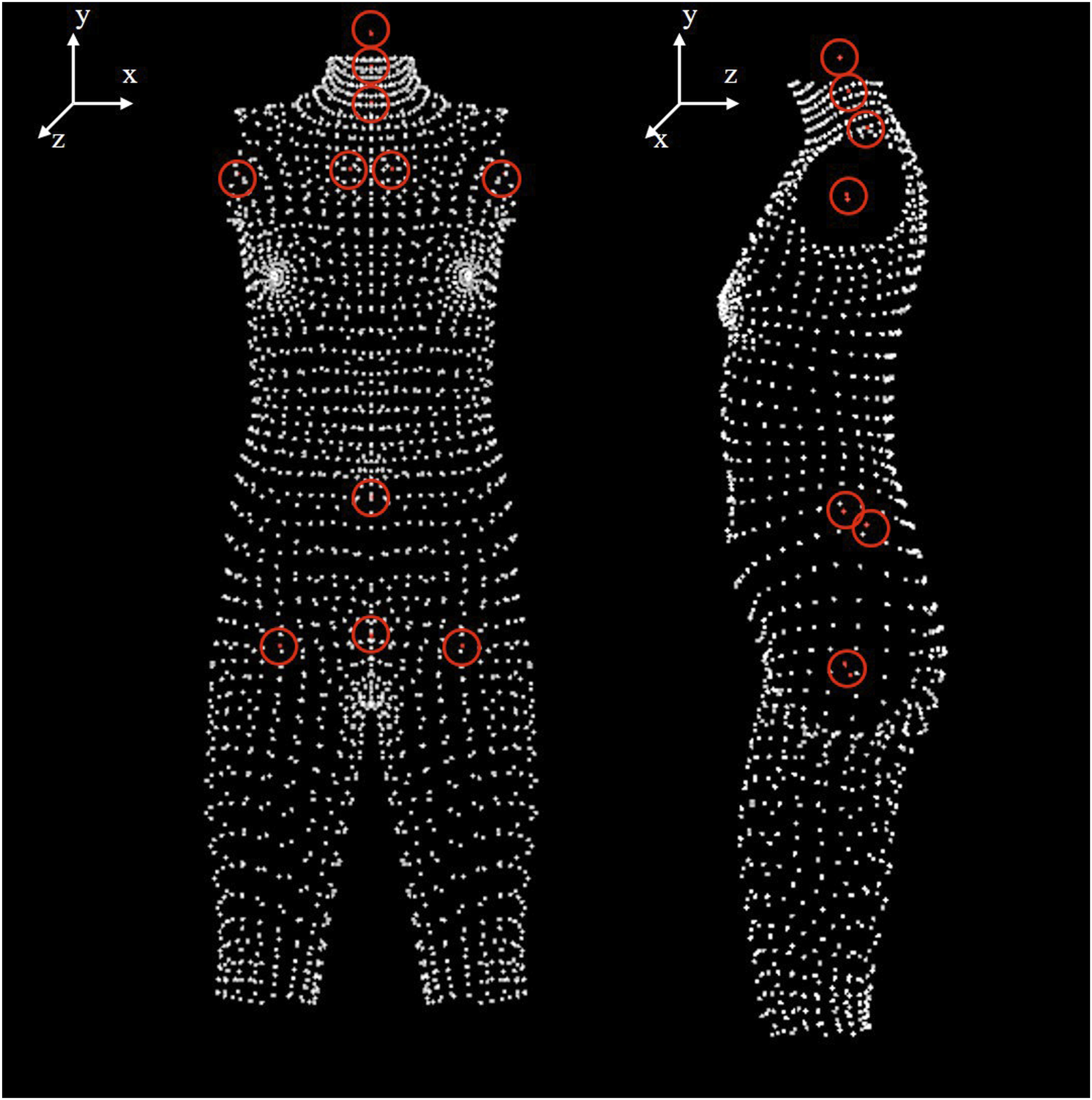
To make a three-dimensional garment model out of the surface points of the body model, it is necessary to organize them. The spacing of the layers was determined based on a fixed vertical interval to ensure consistent resolution along the body height. First, the surface points were sorted by their y coordinates in descending order. Then the y coordinates of the points located within a specified y-coordinate range were set to the same value. Using this method, a set of point layers were obtained as shown in Figure 2. Example of point layers.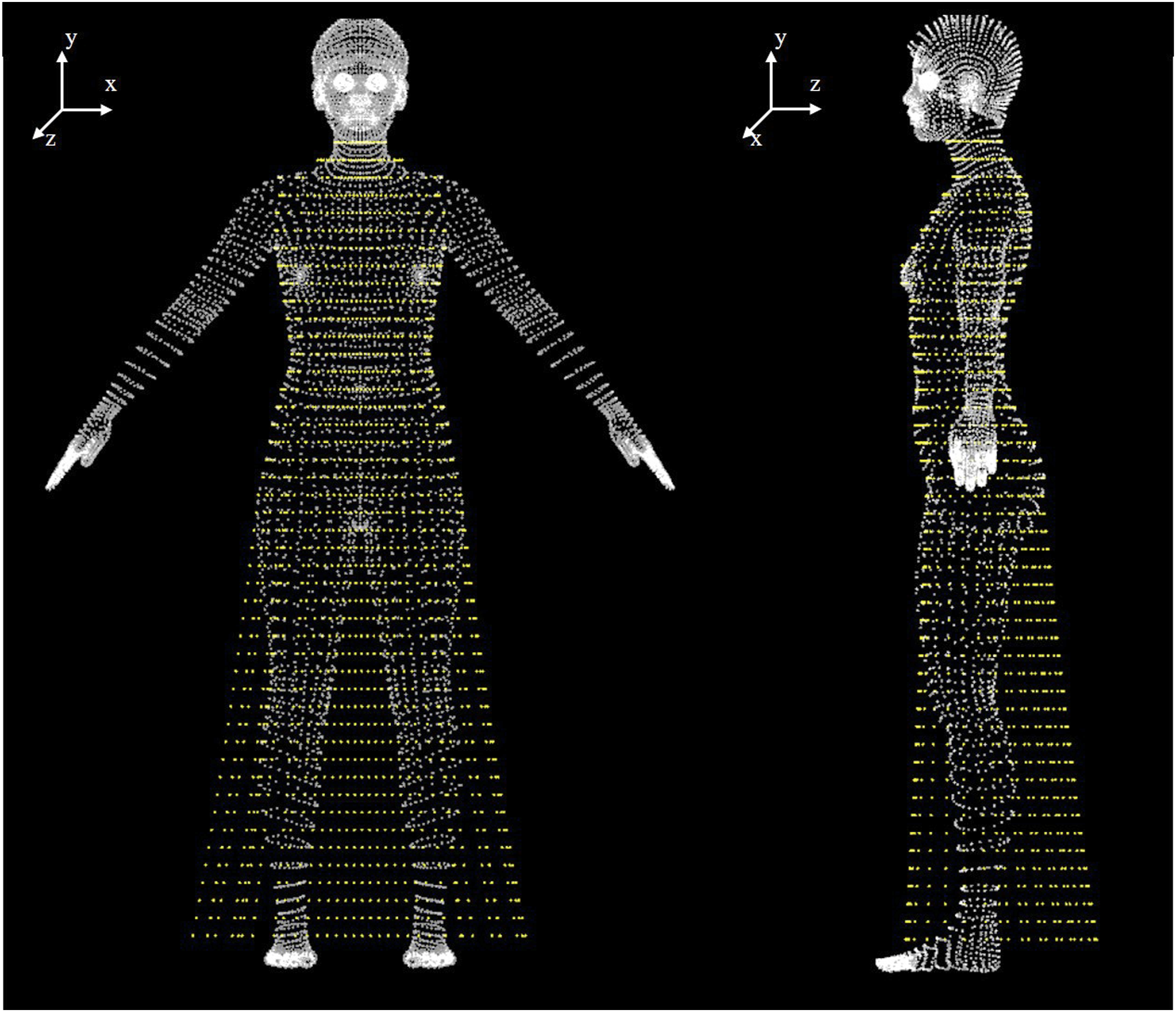
Next, the center and the convex hull of each layer were determined. Then, a circle was defined with a radius equal to the longest distance between the center and the point on the convex hull. On that circle, Formation of a point layer for garment model.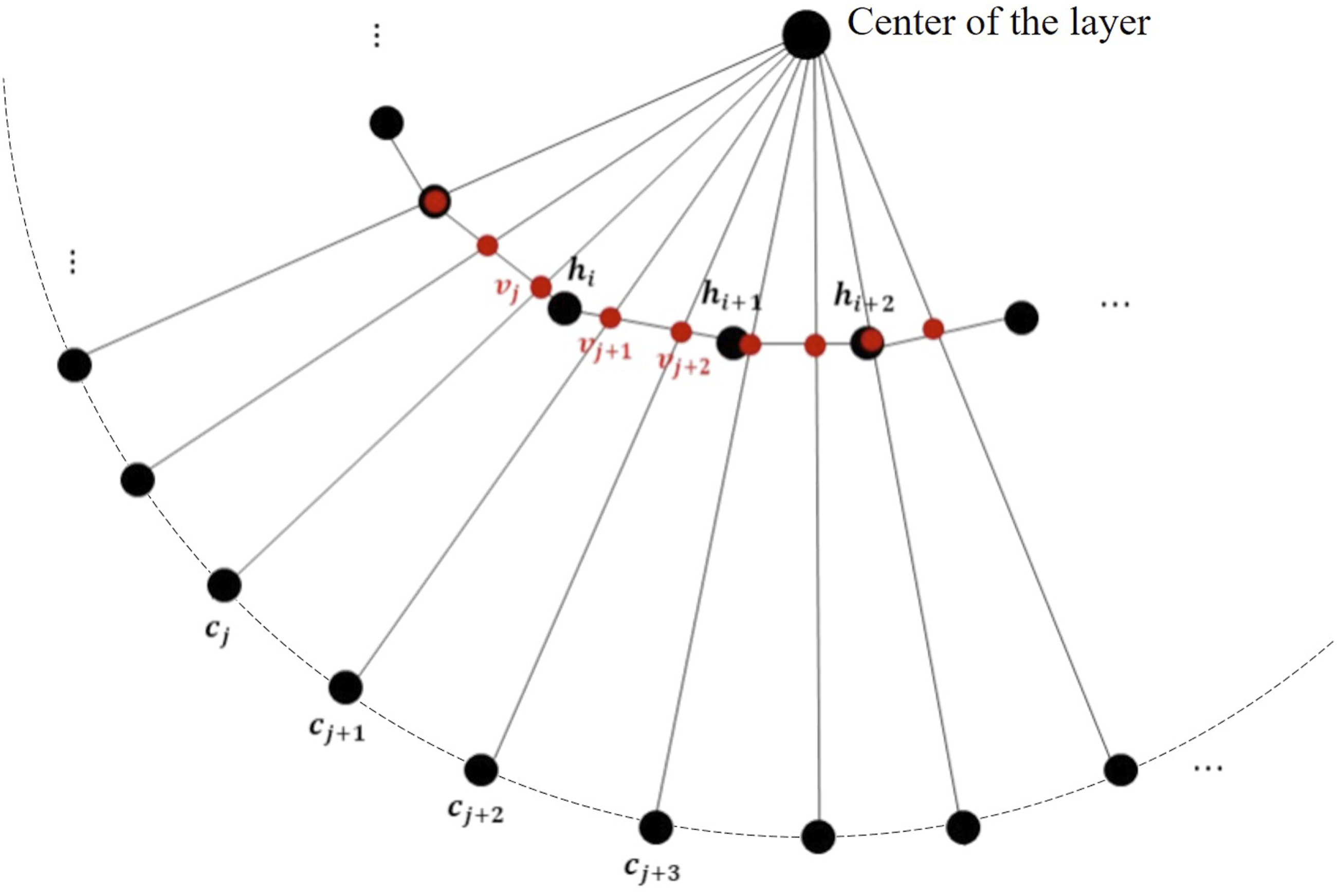
Using this method, layers of points reflecting the shape of the original layer could be obtained. Three key layers corresponding to the bust girth, waist girth, and hip girth of the body model served as the primary layers for size adjustment, while the garment circumferences were determined by adding ease allowance to these body measurements. When body size changes, the shapes of the primary layers are changed according to the new sizes. Then, the shapes of the intermediate layers between two key layers are interpolated using Eqn.1 so that the overall shape of the garment model can have a smooth shape. Linear interpolation was applied between adjacent key layers to ensure smooth geometric transitions along the garment height.

Ease allowance was applied by moving the points of each garment layer outward from the corresponding body layer by a specified amount, thereby defining the difference between the body girth and the garment circumference at each layer. Figure 4 shows the resulting point layers for the garment model. The key parameters involved in garment model construction, including layer spacing, circumferential sampling resolution, and interpolation settings, were selected within ranges commonly used in garment and mesh modeling to balance geometric fidelity and computational efficiency. Set of 3D garment model layers.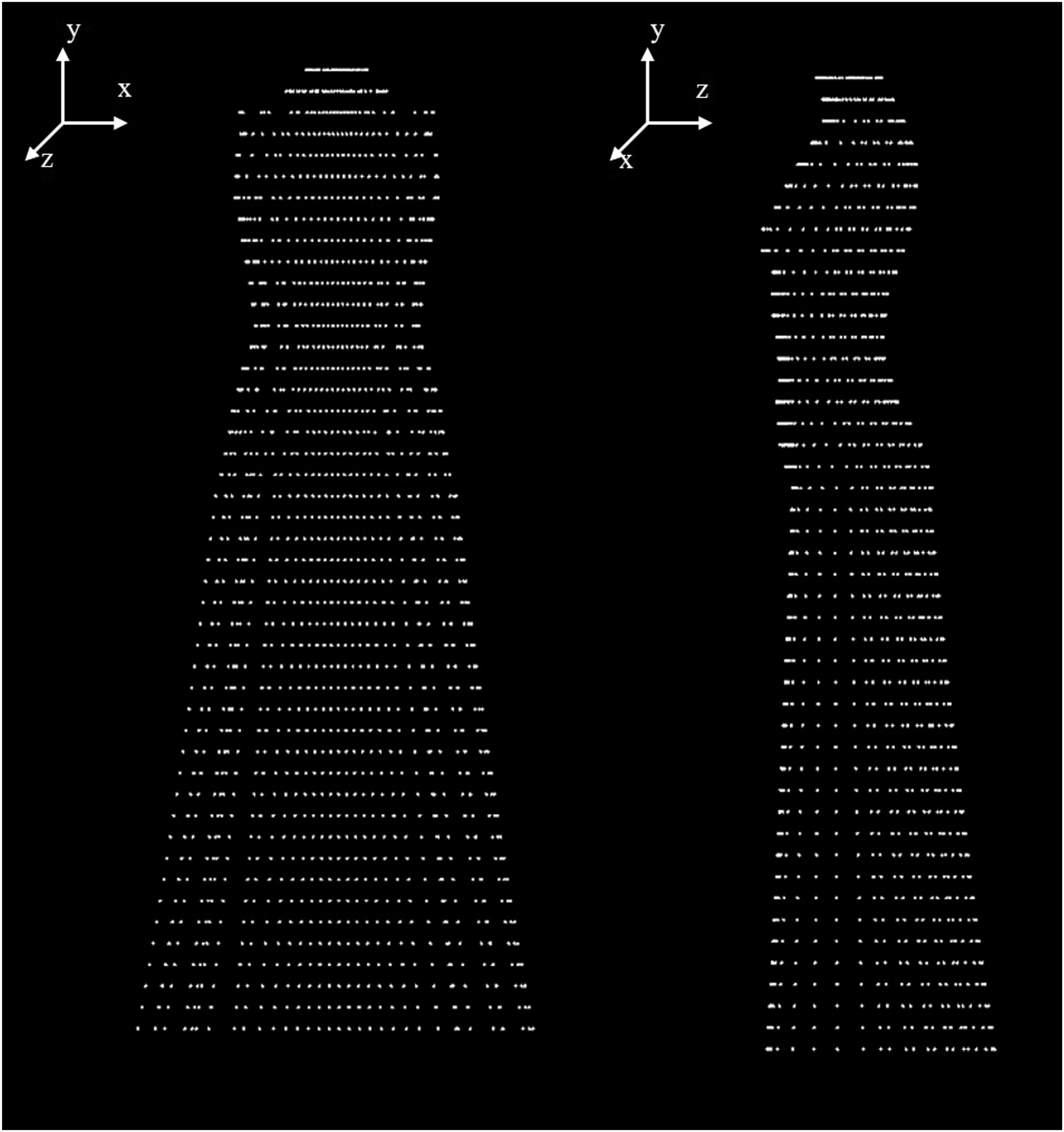
In this study, a sleeveless one-piece was modeled because it can be used for designing both top and bottom garments. The torso section maintains a fitted shape that follows the body’s curves and contours. The section below the hip girth layer was modeled as a flare skirt by increasing the ease amount of each layer with respect to its height. Figure 5 shows an example of a 3D garment model. Example of 3D garment model.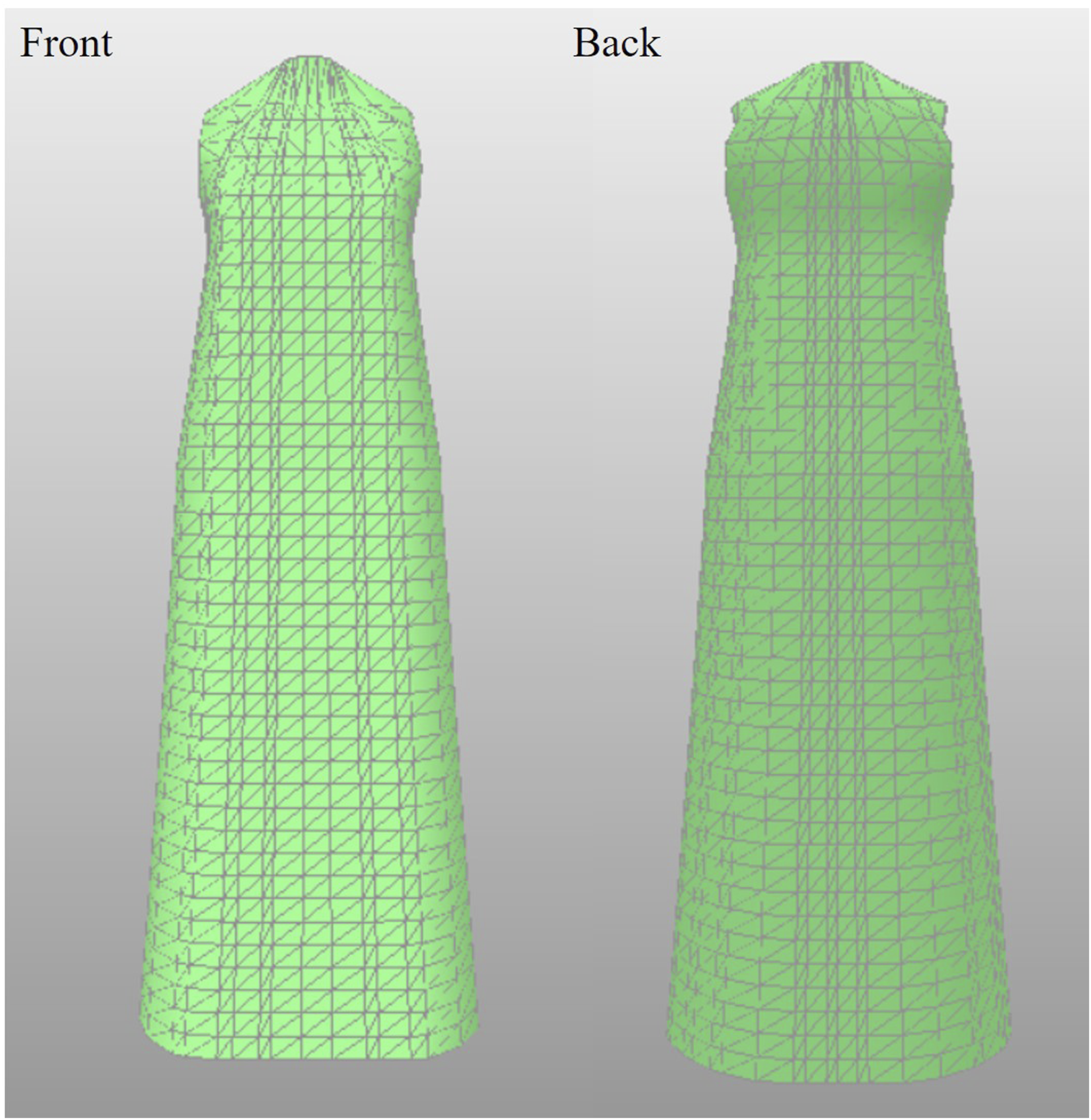
Interactive pattern design
In most previous studies where the mesh-cutting method is used for pattern design, the design process should be repeated from scratch whenever the size of the body model changes. This may not be an issue when designing a single garment for one body model. However, it would be a significant problem in mass customization, where the consistent garment patterns should be produced for bodies with various sizes. To address this problem, a template-based 3D garment design process has been developed in this study as follows.
Users can draw the cutting lines from six points of view including: the front, back, top, bottom, right, and left. The shape and position of each cutting line are recorded as a design template and it is applied to the garment models with different sizes to generate consistent patterns. To describe the appropriate shape at the cutting line regardless of the body size effectively, both relative and absolute coordinates of the points on a cutting line were stored in a design template.
Figure 6 shows the points located outside the garment model. Their positions are stored using a relative coordinate system with respect to the garment model. Points outside the garment model.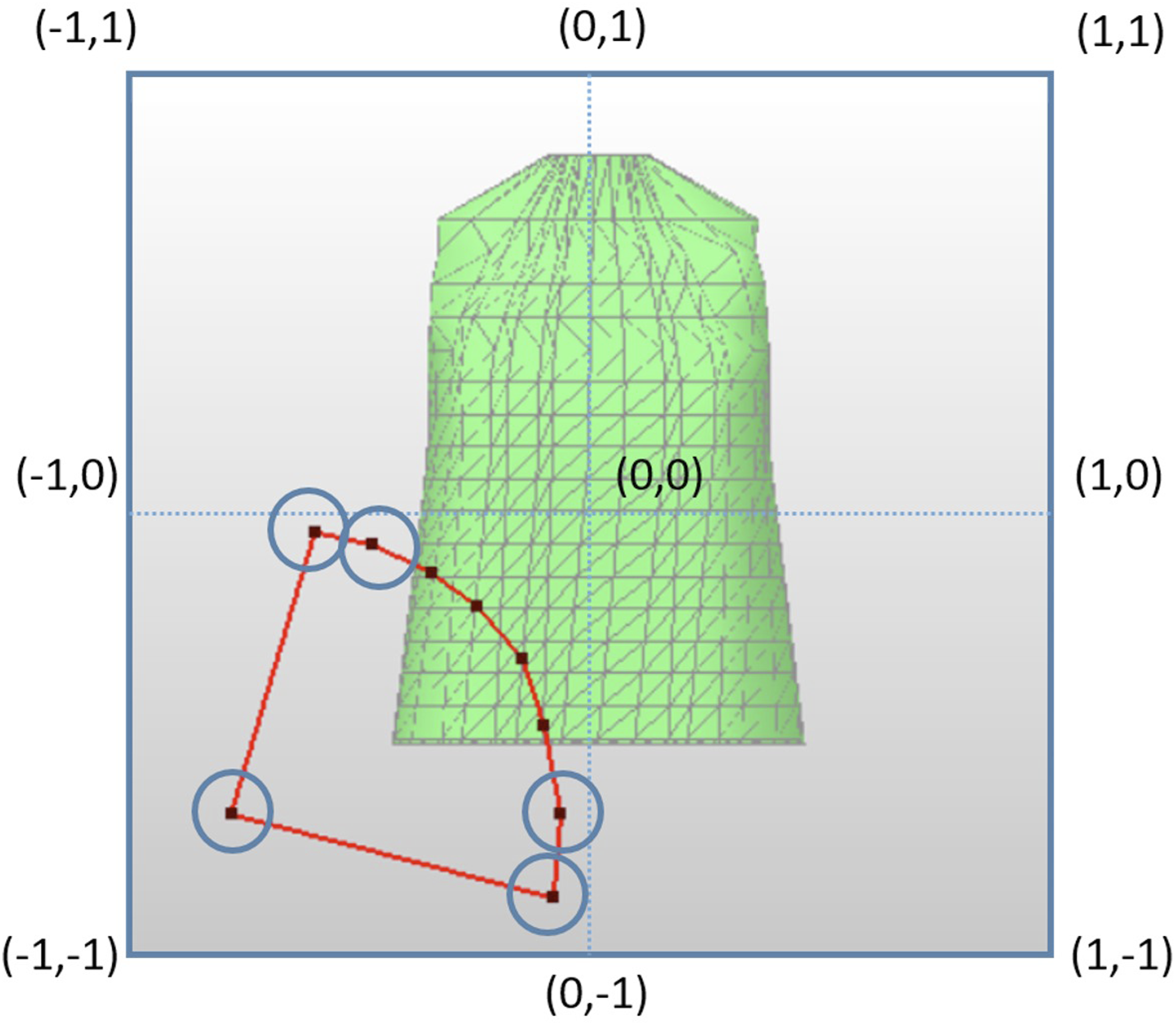
Figure 7 shows the points located inside the three-dimensional garment model. Points inside the garment model.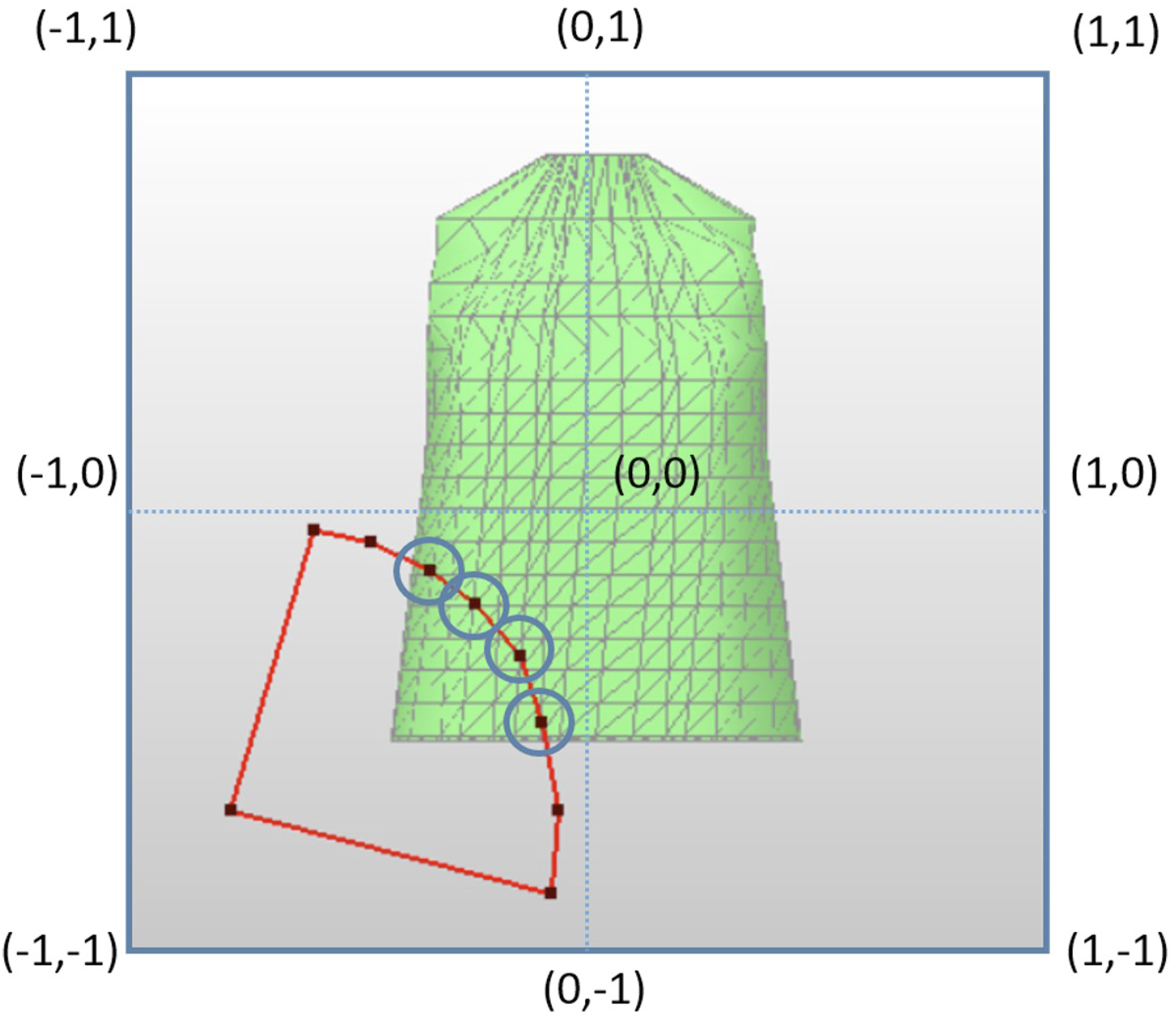
The position of a point inside the garment model can be defined using a barycentric coordinate system, as shown in Eqn. 2 and Figure 8, because the mesh topology of the garment model does not change regardless of its size. This approach assumes that the mesh topology of the garment model remains unchanged across different sizes, as all garment models are generated from a common base mesh and modified only through geometric deformation without altering vertex connectivity. As a result, corresponding mesh faces and vertices remain consistently traceable across garment models with different sizes. This dual coordinate representation enables size-independent template transfer by decoupling cutting line definition from absolute garment dimensions. As the relative and barycentric coordinates are preserved during geometric deformation, cutting lines can be consistently reconstructed on garment models of different sizes. Barycentric coordinates.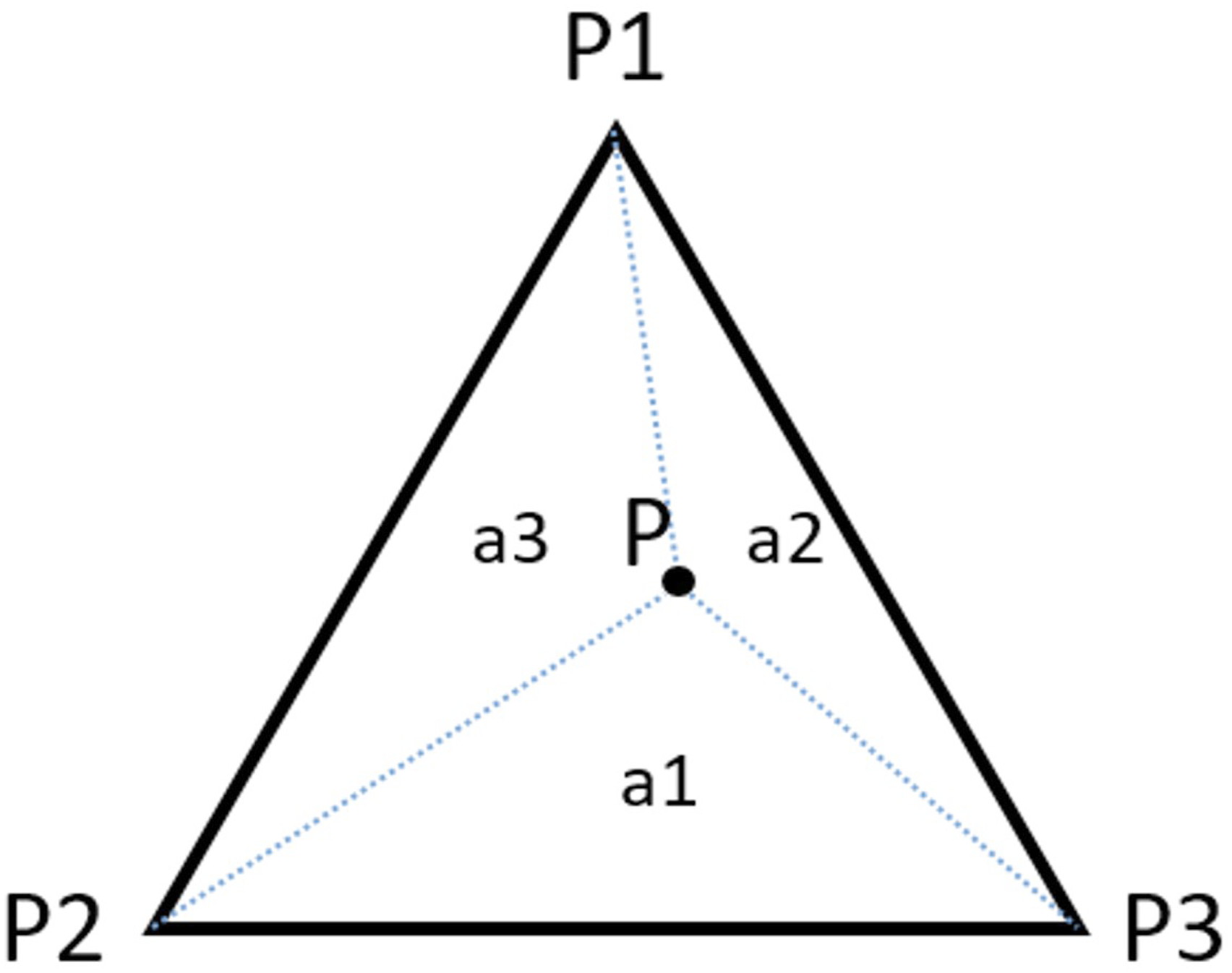

Results and discussion
Overview of system
The proprietary software developed in this study integrates multiple functions required for three-dimensional garment pattern design, including garment model generation, interactive mesh cutting, mesh quality control, mesh flattening, and template-based design replay. The software was implemented using Embarcadero C++ Builder 2010 and provides a graphical user interface that allows users to intuitively draw cutting lines directly on three-dimensional garment models (Figure 9). After further refinement of the user interface, the proprietary software developed in this study will be made available for research and educational use through the corresponding author’s laboratory website following publication. Overview of pattern design software.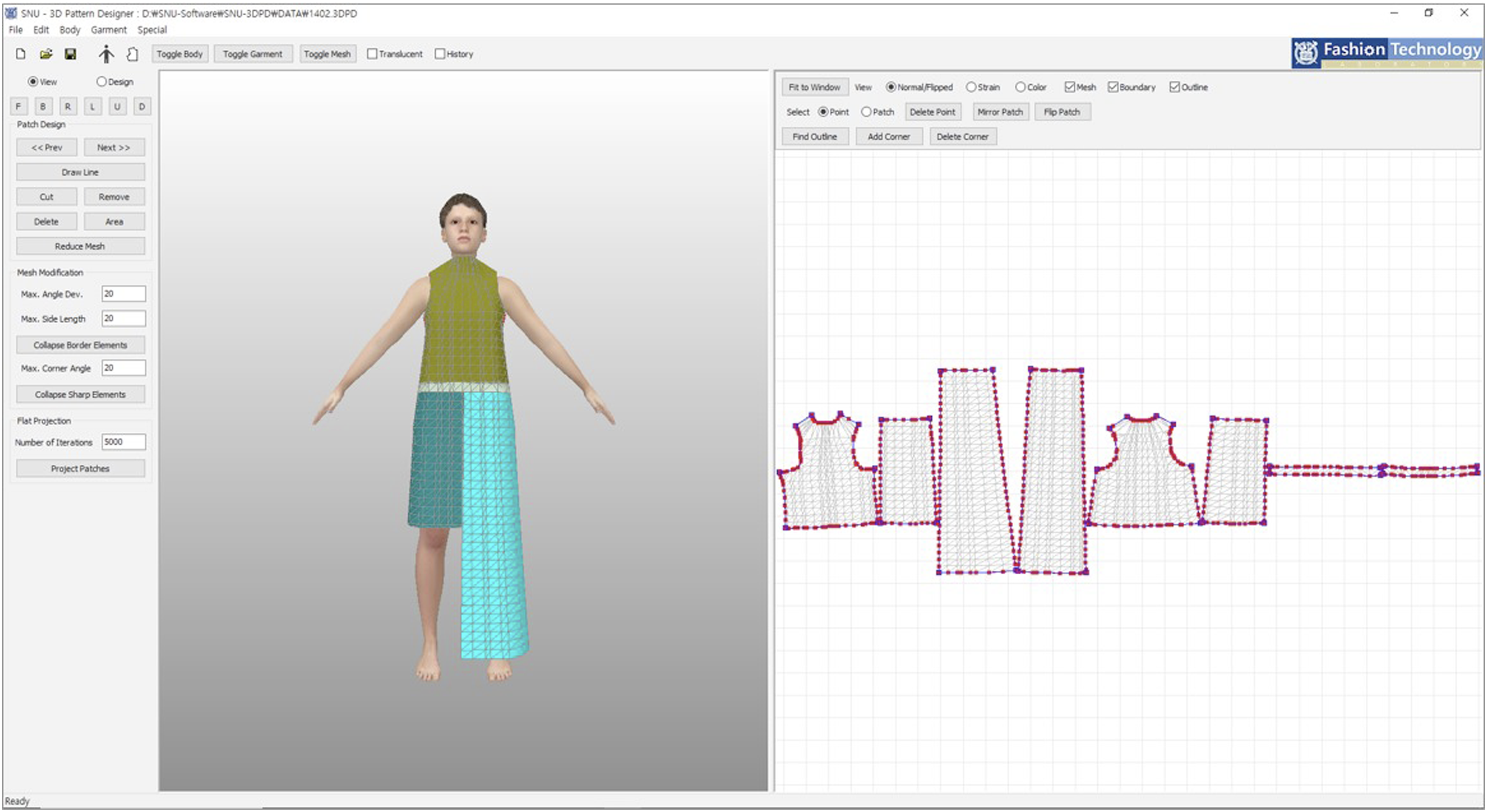
Pattern design process
Users can generate three-dimensional body and garment models using basic body measurements. Users can draw cutting lines to divide the garment model into multiple patches and delete some of them to design the garment they want (Figure 10). Pattern design process. (a) Generation of body and garment model; (b) Drawing cutting lines; (c) Final patches.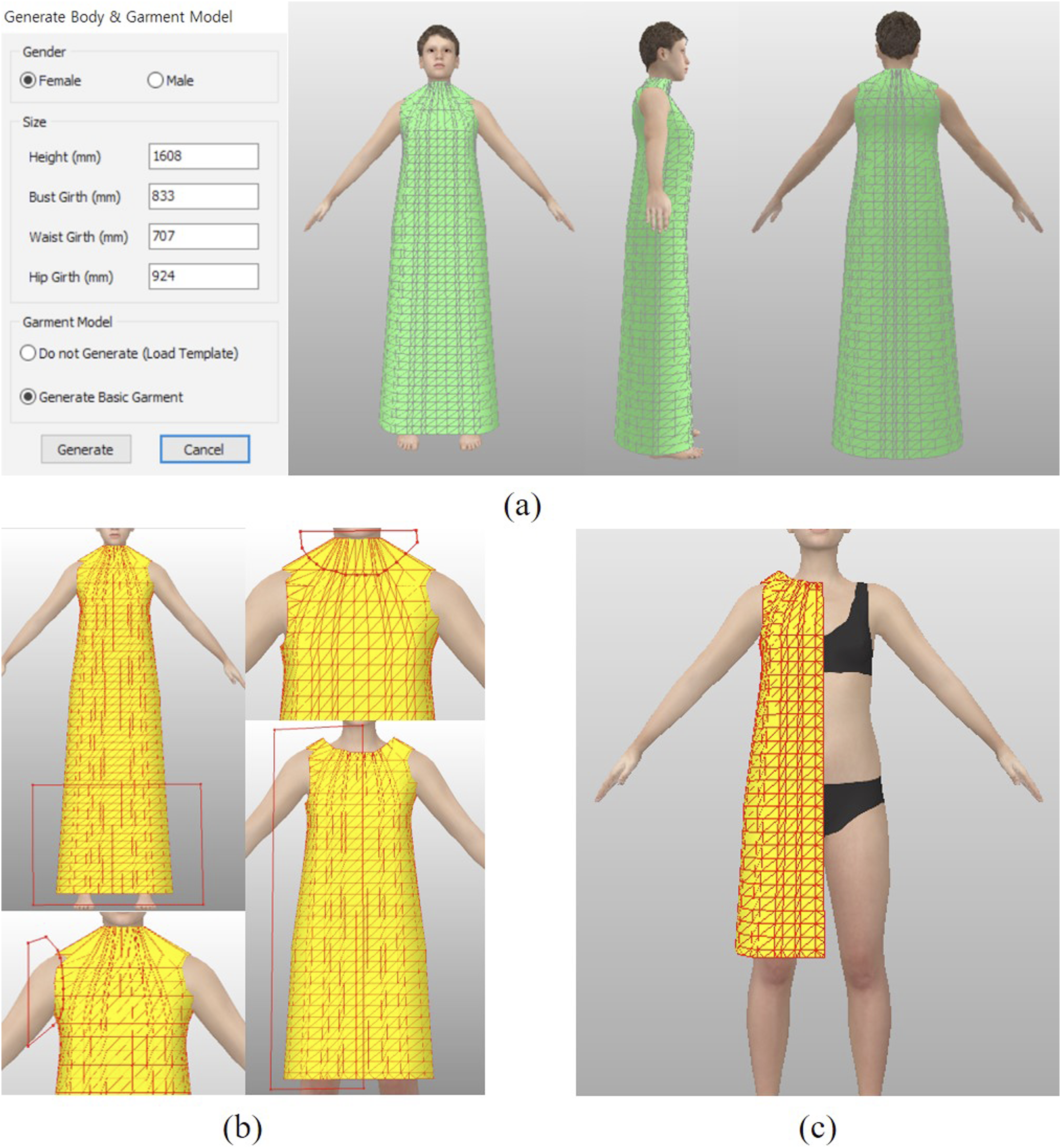
The design process can be saved as a template to be used to make the same design on the body models with different sizes.
When flattening 3D garment model patches into 2D patterns, the flattening process follows standard mesh unfolding principles while incorporating mesh quality control to prevent excessive distortion. Mesh reshaping and subdivision were additionally applied when poor-quality mesh elements were detected during the flattening process. Mesh elements with sharp angles may cause stability issues during this process. To prevent such problems, users can specify threshold values for the edge length and angles between two edges forming the mesh. If a mesh contains edges or angles smaller than the specified threshold, it is considered to have poor quality. Poor-quality meshes can be reconstructed or subdivided into smaller meshes to achieve better quality. Once all the patches are appropriately flattened as shown in Figure 11, the outlines of the patterns can be saved as a DXF (Drawing Exchange Format) file to be used in other CAD software. The exported patterns represent automatically generated base patterns rather than final production-ready patterns. Due to the discrete characteristics of mesh-based geometry representation, curved pattern boundaries such as armholes and necklines may require additional smoothing and refinement in commercial CAD environments before manufacturing. Flattened garment pattern.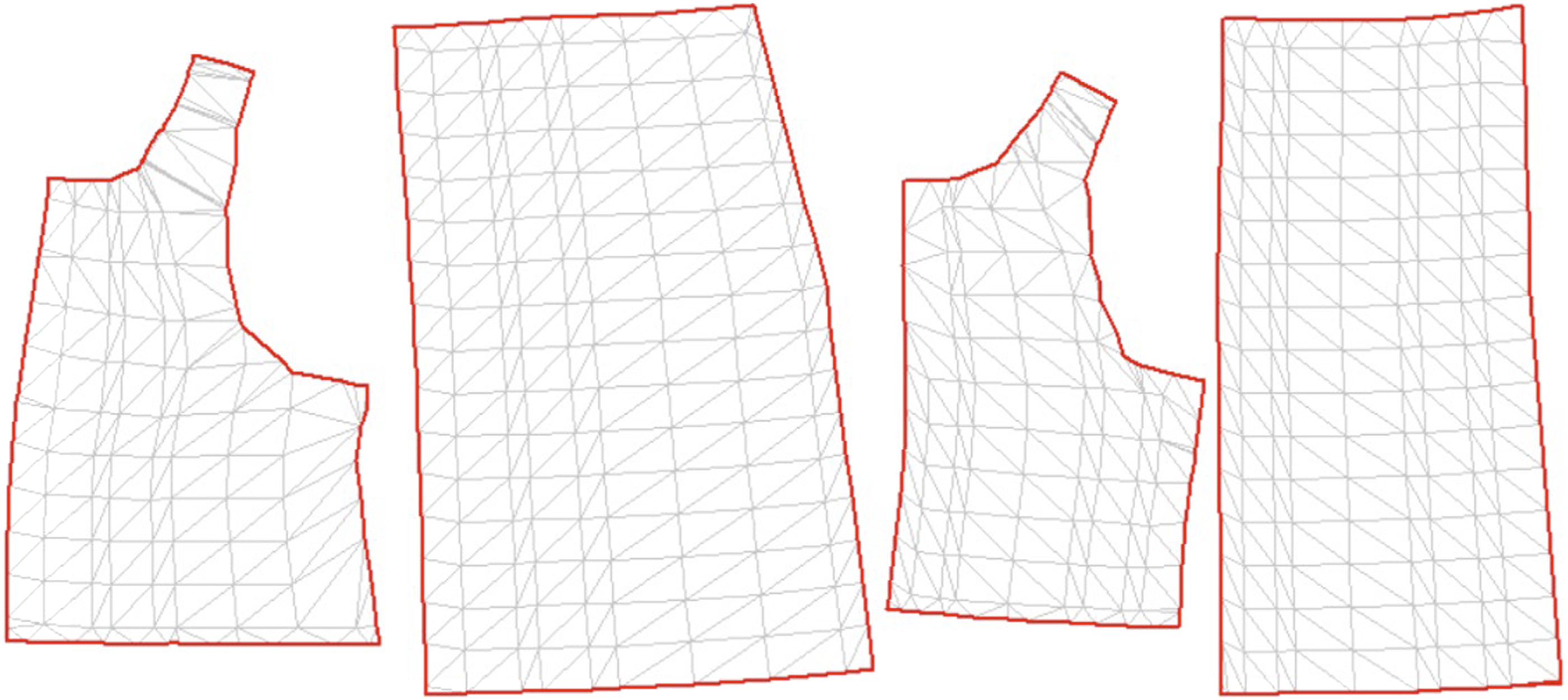
Template-based design
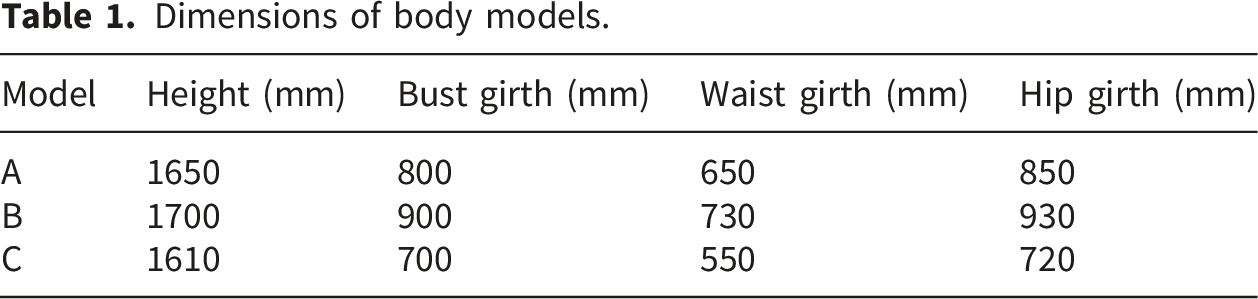
Figure 12 shows the application examples of an A-line dress design template to body models of different sizes. The dimensions of each body model are listed in Table 1. First, model A was used to design an A-line dress, which was then flattened to 2D patterns. This process was recorded as a template and it was applied to models B and C to produce patterns, respectively. By using the template, new patterns could be obtained automatically, which is expected to be useful not only for one-to-one custom garment production but also for applications with potential for mass customization. In this study, the effectiveness of the template-based approach was demonstrated through consistent pattern generation across different body sizes, while quantitative evaluation of geometric consistency will be addressed in future work. Template-based pattern generation. Dimensions of body models.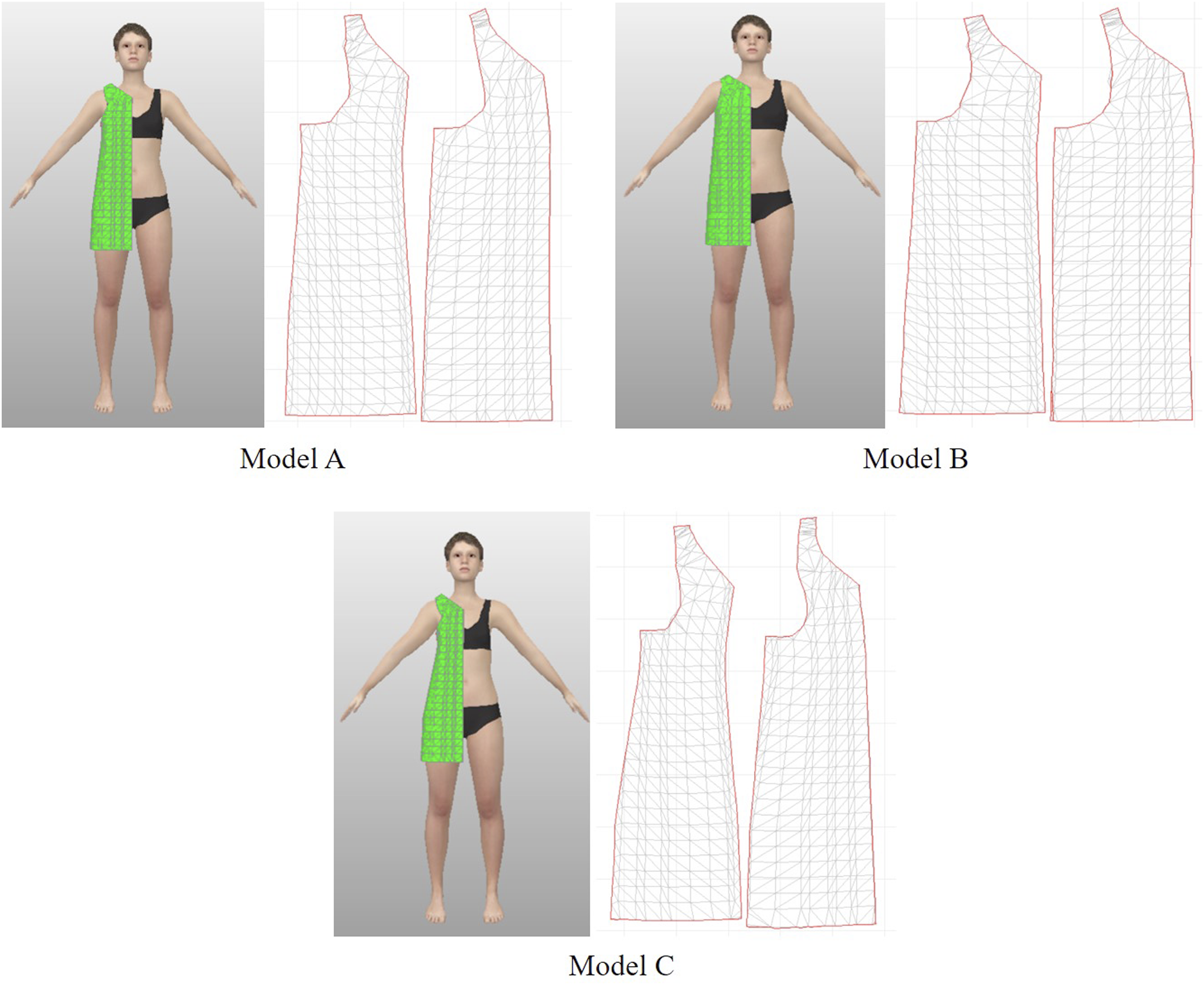
Verification of proposed design method
Using the system developed in this study, a new A-line dress pattern was designed. The outlines of the resulting pattern were then saved as a DXF file and imported into a commercial CAD software, where the seam lines were finalized. In this workflow, the overall pattern geometry and panel outlines were generated automatically by the proposed system, while the subsequent CAD processing was limited to minor manual refinements such as seam smoothing and detail adjustment for production. Due to the characteristics of the mesh model, some modifications were needed. For example, the armhole and neckline curves were smoothed, and slight adjustments were made to the front and back center lines. Care was taken to ensure that each modification did not exceed 5mm, indicating that only minor manual refinement was required after automatic pattern generation. The difference between the modified and the original patterns is as shown in Figure 13(a). Paper patterns were made to produce the physical garment. Figure 13(b) shows the completed paper patterns, which were used to make an actual garment. Pattern modification. (a) Modified pattern; (b) Final pattern shape.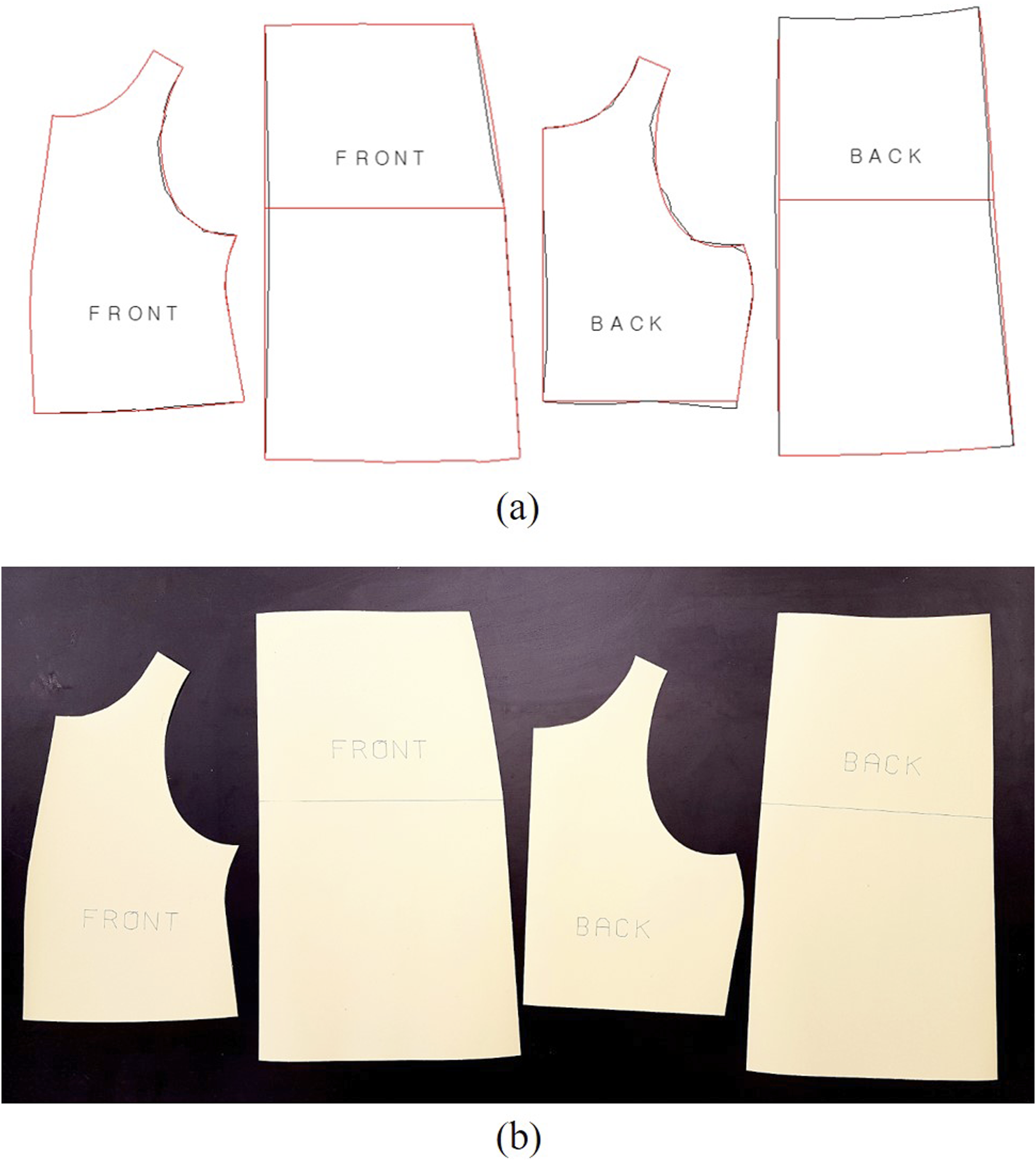
An actual garment was made of canvas fabric and was fitted on a mannequin that has measurements used in generating the body model (Figure 14). A comparison was conducted between the simulated garment in a virtual environment and the actual garment fitted on a mannequin, evaluated by three experts with Ph.D. degrees in clothing and textiles. This expert evaluation was conducted as a qualitative and exploratory assessment focusing on overall fit appearance and silhouette consistency, rather than as a structured quantitative evaluation. The results confirmed that the proposed system is capable of producing garment patterns that achieve the intended fit appearance and silhouette as designed by the designer. Based on this qualitative evaluation, the feasibility and practical applicability of the proposed software and workflow were demonstrated. However, since this experiment relied solely on visual judgment to validate the system and process, there is a need to establish methods for incorporating quantitative evaluation in addition to visual assessment. A-line one-piece dress.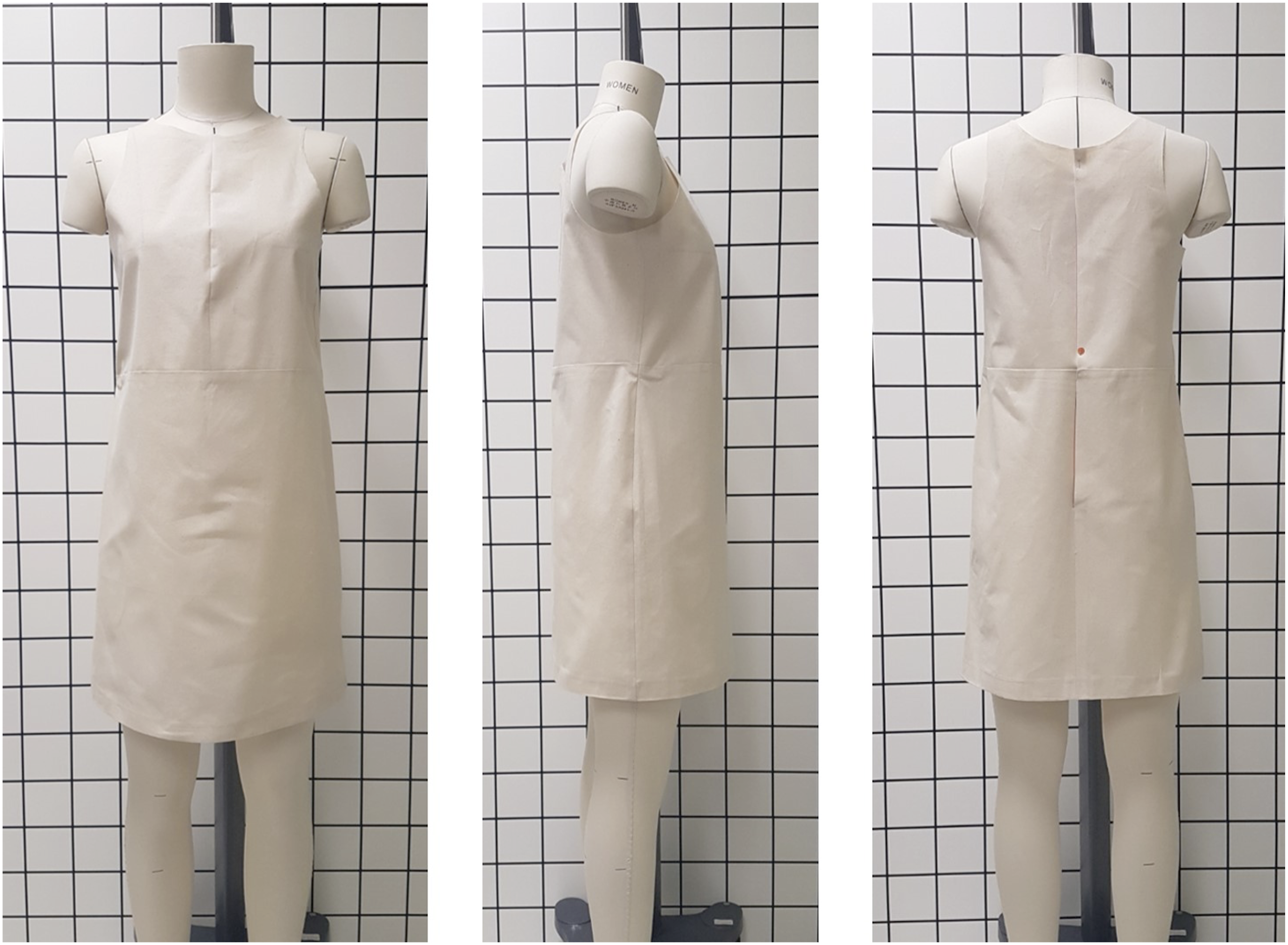
Examples of various body shape and styles
Dimensions of various body shape models.
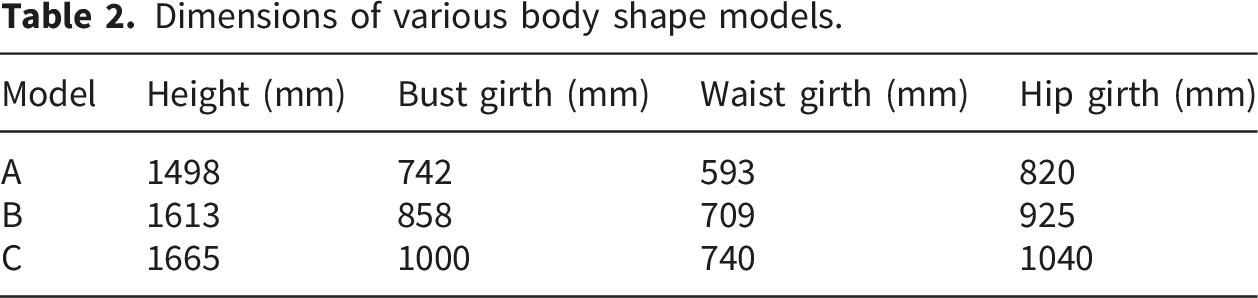

Examples of various body shape.
Various types of garments, including a one-piece dress with dart-based shaping, were designed using this system, and 3D virtual fittings were conducted in CLO 3D (CLO Virtual Fashion, Korea) to further demonstrate the applicability of the developed method (Figure 16). Examples of various fashion designs.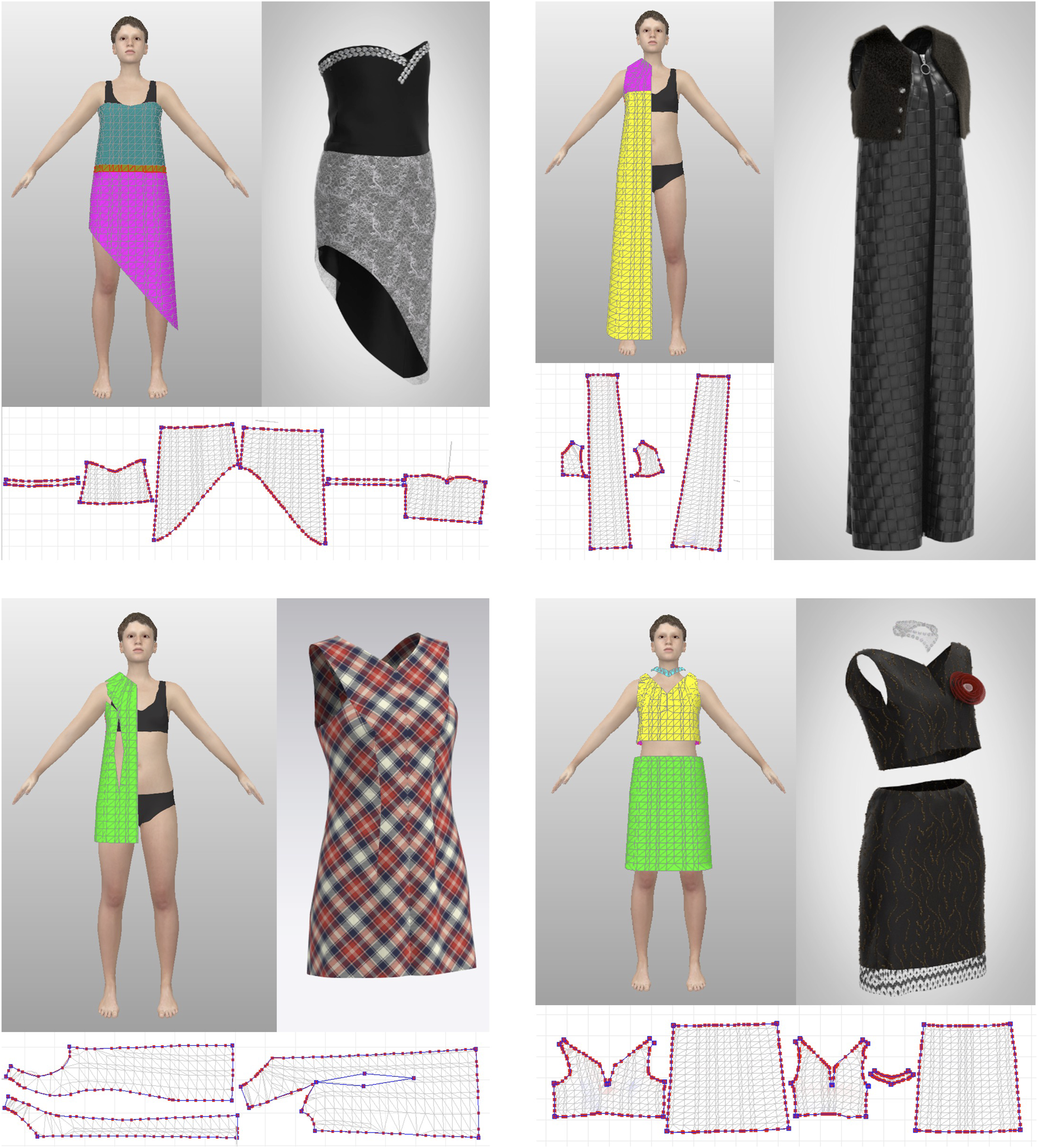
Conclusion
In this study, a three-dimensional garment pattern design method with an intuitive interface was developed using the division and flattening of three-dimensional garment models. This research takes a step forward from previous approaches that focused on developing compression wear through mesh segmentation of three-dimensional body data. The proposed method applies mesh segmentation algorithms to garment models with ease allowance, aiming to generate a variety of garment patterns that reflect different levels of looseness.
To support this approach, three-dimensional body models were generated using an open-source human modeling software based on four basic body measurements, and three-dimensional garment models were subsequently constructed in a proprietary software environment developed in this study. An intuitive graphical user interface was implemented to allow users to design garment patterns by directly drawing cutting lines on three-dimensional garment models. In addition, the design process can be saved and replayed as templates, enabling the automatic generation of consistent patterns across body models of different sizes. To validate the proposed method, garment patterns of various styles were produced and evaluated through both virtual fitting simulations and physical garment construction.
Although the validation in this study was primarily based on qualitative visual assessment by expert evaluators, this approach was considered appropriate for demonstrating the feasibility and practical applicability of the proposed system. Nevertheless, future work will focus on incorporating quantitative validation metrics to enhance methodological rigor. Potential approaches include geometric deviation analysis between three-dimensional garment models and their flattened two-dimensional patterns, quantitative comparison of key garment dimensions before and after pattern generation, and objective fit evaluation metrics derived from virtual fitting simulations and physical garment measurements. Such quantitative assessments are expected to provide a more comprehensive evaluation of pattern accuracy, fit consistency, and ease distribution.
The present study was limited to the development of a one-piece garment model. In addition, the reliance on a limited set of basic body measurements represents a simplification that may influence fit accuracy, particularly for individuals with atypical body proportions. Future research will aim to extend the proposed method to various basic garment types, such as pants and sleeves, and to incorporate additional garment construction elements and design details, including collars, darts, pleats, pockets, and suit lapels. Through these extensions, the proposed method is expected to further support both individual production and applications with potential for mass customization by reducing the technical burden of three-dimensional pattern generation and flattening.
Commercial three-dimensional garment CAD systems, such as CLO 3D and Style3D, provide highly developed tools for garment visualization, simulation, and production-oriented pattern editing. In contrast, the proposed system is intended as a complementary research and educational framework that focuses on mesh-based garment-to-pattern generation, direct cutting-line manipulation on three-dimensional garment models, and template-based transfer of the design process across body models with different sizes. Therefore, the main advantage of the proposed software lies not in replacing commercial CAD systems, but in providing a transparent and reusable workflow for exploring the geometric relationship between three-dimensional garment forms and two-dimensional pattern structures. Furthermore, the overall process is expected to serve as an educational resource for students and novice designers by helping them understand the relationship between three-dimensional garments and two-dimensional patterns, while reinforcing fundamental concepts of garment construction.
Footnotes
Acknowledgments
This work was supported by the National Research Foundation of Korea(NRF) grant funded by the Korea government(MSIT) (RS-2025-00515729).

Funding
The authors received no financial support for the research, authorship, and/or publication of this article.
Declaration of conflicting interests
The authors declared no potential conflicts of interest with respect to the research, authorship, and/or publication of this article.