







Abstract
Background:
The National Institutes of Health (NIH) and the American Medical Association (AMA) recommend a sixth-grade reading level for patient-directed content. This study aims to quantitatively evaluate the readability of online information sources related to carpal tunnel surgery using established readability indices.
Methods:
Web searches for “carpal tunnel release” and “carpal tunnel decompression surgery” queries were performed using Google, and the first 20 websites were identified per query. WebFX online software tools were utilized to determine readability. Indices included Flesch Kincaid Reading Ease, Flesch Kincaid Grade Level, Coleman Liau Index, Automated Readability Index, Gunning Fog Score, and the Simple Measure of Gobbledygook Index. Health-specific clickthrough rate (CTR) data were used in order to select the first 20 search engine results page from each query.
Results:
“Carpal tunnel release” had a mean readability of 8.46, and “carpal tunnel decompression surgery” had a mean readability of 8.70. The range of mean readability scores among the indices used for both search queries was 6.17 to 14.0. The total mean readability for carpal tunnel surgery information was found to be 8.58. This corresponds to approximately a ninth-grade reading level in the United States.
Conclusion:
The average readability of carpal tunnel surgery online content is three grade levels above the recommended sixth-grade level for patient-directed materials. This discrepancy indicates that existing online materials related to carpal tunnel surgery are more difficult to understand than the standards set by NIH and AMA.
Keywords
Introduction
Carpal tunnel syndrome (CTS) is a common compression neuropathy of the upper extremity. The American Academy of Orthopaedic Surgeons Clinical Guideline on Diagnosis of Carpal Tunnel Syndrome defines CTS as a symptomatic compression neuropathy of the median nerve at the wrist, characterized physiologically by evidence of increased pressure in the carpal canal and decreased function of the nerve at that level. 1 Incidence in the United States has been estimated as high as 3 cases per 1000 subjects with a prevalence of 50 cases per 1000 subjects. The etiology of CTS continues to be studied, but commonly known causes of CTS include diabetes, hypothyroidism, rheumatoid arthritis, masses, and trauma. Repetitive movements of the wrist, previously thought to be causative, are now better understood to exacerbate symptoms such as pain, numbness, and paresthesias along the median nerve distribution.2,3 Carpal tunnel syndrome can be managed with both surgical and nonsurgical options. Surgery is recommended for failed nonsurgical treatment (local steroid injections, splinting, oral steroids) or at any stage if the patient prefers surgery. 2 The definitive treatment for CTS is known as carpal tunnel release, a surgical procedure performed endoscopically or via open approach. This intervention entails dividing the transverse carpal ligament longitudinally to allow more space in the carpal tunnel, thereby decreasing pressure on the median nerve. The procedure boasts a 90% initial success rate and low complication rates. Although infrequent, potential post-surgical complications include neuroma of the palmar cutaneous branch of the median nerve, hypertrophic scars, dysesthesias, and wrist joint stiffness. 4
Given the widespread prevalence and varied presentations of CTS, the readability of online medical information related to carpal tunnel release is of great significance. The internet has revolutionized health information due to its accessibility, convenience, and opportunity for rapid communication. Modern physicians frequently supplement in-office visits with internet-sourced health information to enhance patient understanding of their conditions. Engagement with online healthcare materials has been demonstrated to influence patient decision-making. Therefore, it becomes increasingly important for patients to comprehend the information they encounter online. 5 Readability, as defined by the American Medical Association (AMA) and the National Institutes of Health (NIH), pertains to the ease with which patients can understand health-related written content.6 -13 These institutions recommend healthcare materials related to procedures, postoperative protocols, and general information should not exceed a sixth-grade reading level to ensure patient engagement and comprehension. Patients with average literacy levels may struggle to understand information presented by commonly used websites discussing carpal tunnel release risks, benefits, alternatives, and postoperative protocols. In addition, physicians have been found to overestimate their patients’ knowledge base and literacy levels, which further underscores the issue of readability in primary care settings. 14
Prior studies have examined the readability of carpal tunnel release information. A study reported that online patient resources for carpal tunnel surgery exceeded the recommended reading level by an average of about 7 grade levels, leading to a mean readability aggregate of 13.1. This is equivalent to a first-year college student literacy level. 9 A later study examined 100 online educational materials related to 10 hand conditions; they concluded that the mean reading level for material related to CTS was 10.3, equivalent to a high school sophomore level. 10 The present study aims to contribute meaningfully to enhance patient education by analyzing the readability of popular search engine results related to carpal tunnel release surgery in 2023.
Materials and Methods
Keyword Rationale
Readability of online resources for carpal tunnel release is the focal point of this study. An overview of the methodology workflow is depicted in Figure 1. The keywords “carpal tunnel release” and “carpal tunnel decompression surgery” were determined as search engine queries for several reasons. First, patients are more likely to search the name of a procedure directly rather than other aspects such as risks, benefits, alternatives, and postoperative protocols. This study takes the approach in identifying general information about carpal tunnel release rather than specifics. Second, patients are more likely to use colloquial language rather than a clinical language in their queries. “Carpal tunnel decompression surgery” was chosen over the term “median nerve decompression surgery” for this reason. Lastly, “carpal tunnel release” is considered the official name of the procedure and is most likely the terminology used when physicians discuss the surgery with their patients.4,9,15
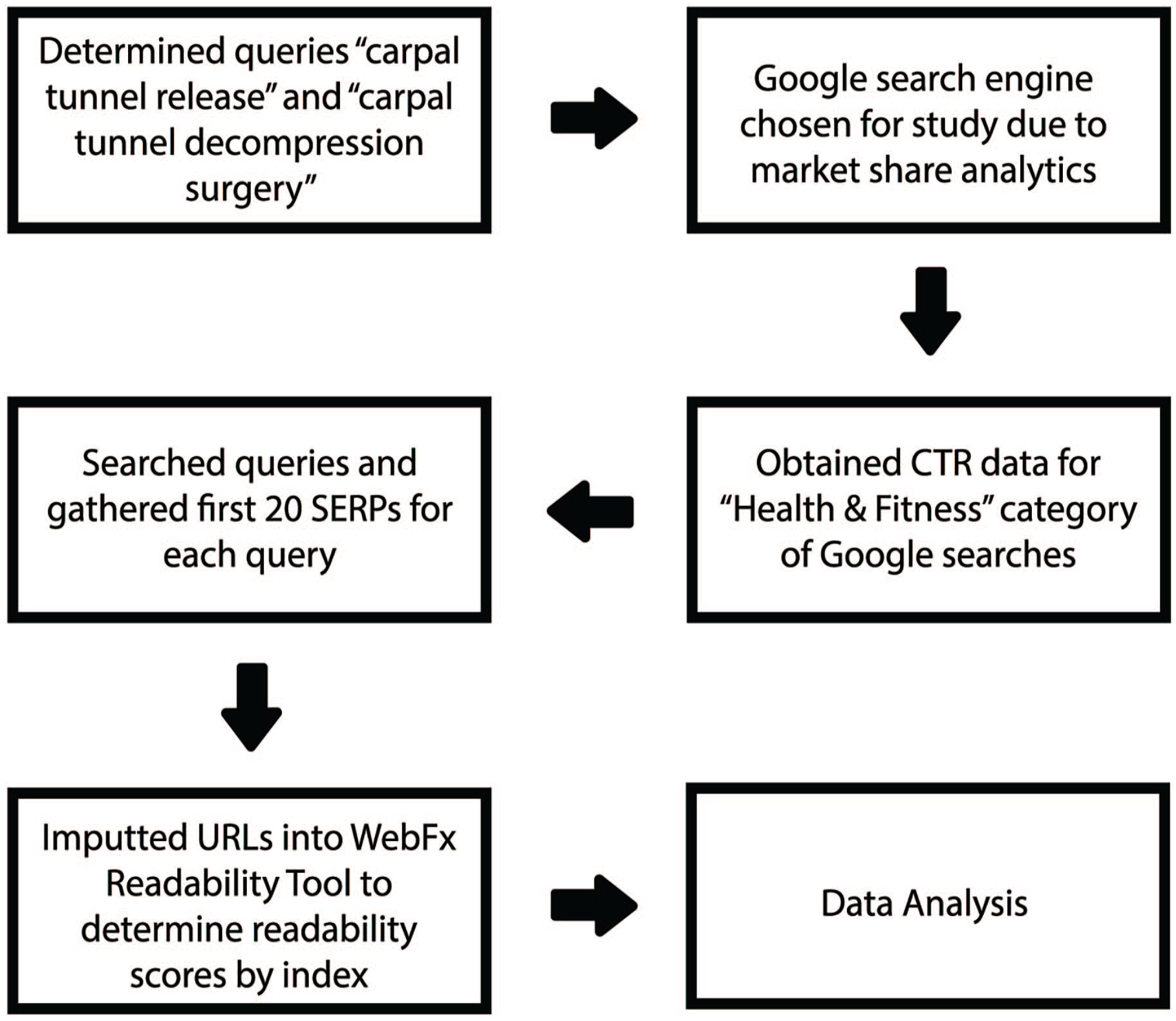
A methodology workflow that illustrates the sequence of data collection and analysis. Each box represents steps leading to the conclusions outlined in this study.
Website Collection
Google (Google LLC, Mountain View, California) was chosen as the search engine because approximately 88% of internet searches in the United States are performed using this search engine as of July 2023 (Figure 2). 16 To reduce result bias, all identifying information was removed from the Google Chrome browser, including location and personal user data. Google web searches were then performed on August 22, 2023, using the keywords “carpal tunnel release” and “carpal tunnel decompression surgery.” After searching the queries, the first 20 nonsponsored results relating to patient-directed information about carpal tunnel release were identified based on search engine results position and health-specific clickthrough data obtained from Advanced Web Ranking. 17 The queries were searched on a single computer by the first author to ensure a systematic approach to gathering data. The Uniform Resource Locators (URLs) were then entered onto Google Sheets (Table 1) pending a readability analysis.
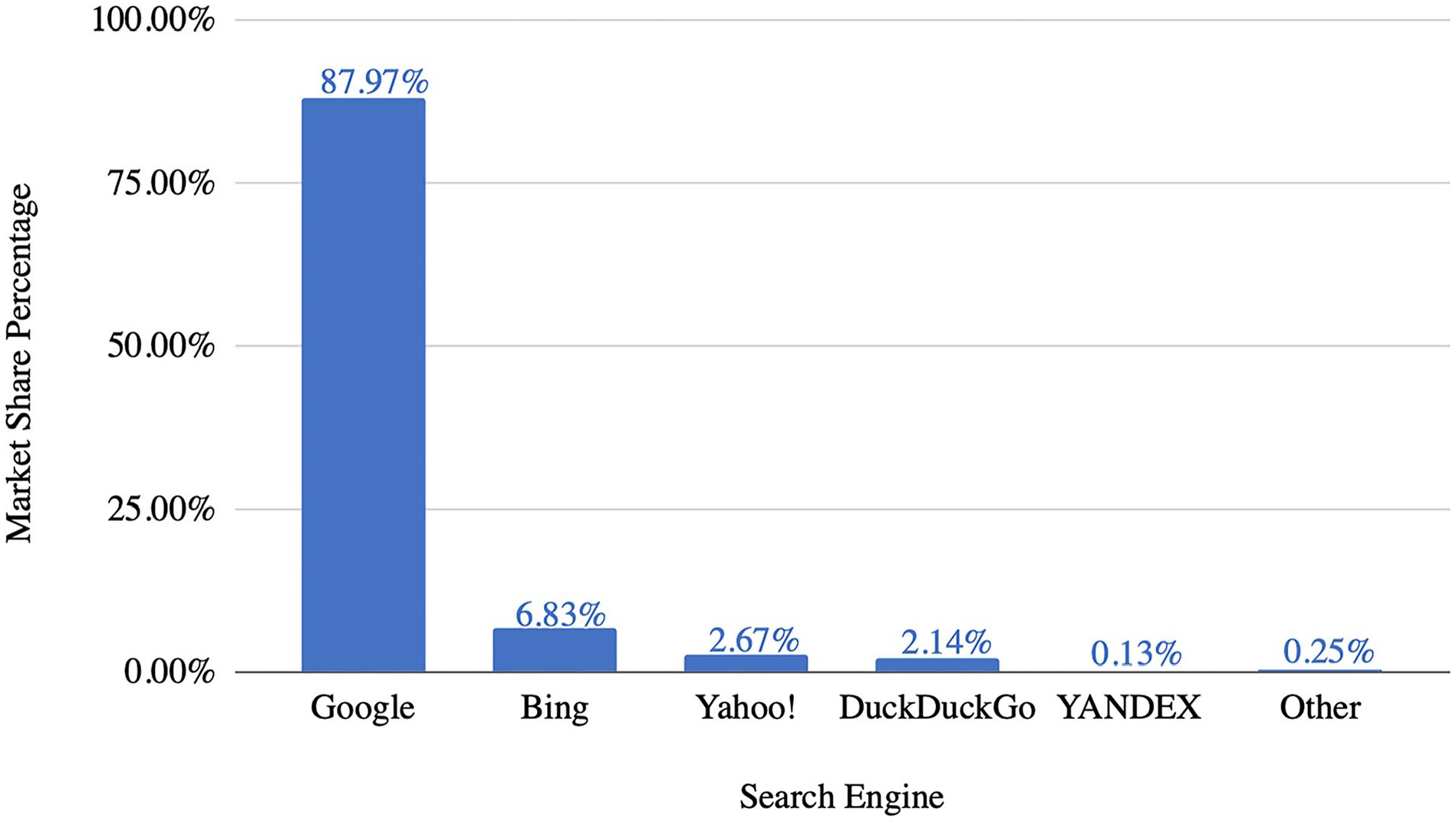
The distribution of search engines and their utilization between August 2022 and July 2023 in the United States. Google is noted to be the most popular search engine, holding approximately 87.9% of the market share. 16
Included Websites of Readability Analysis by Search Query.
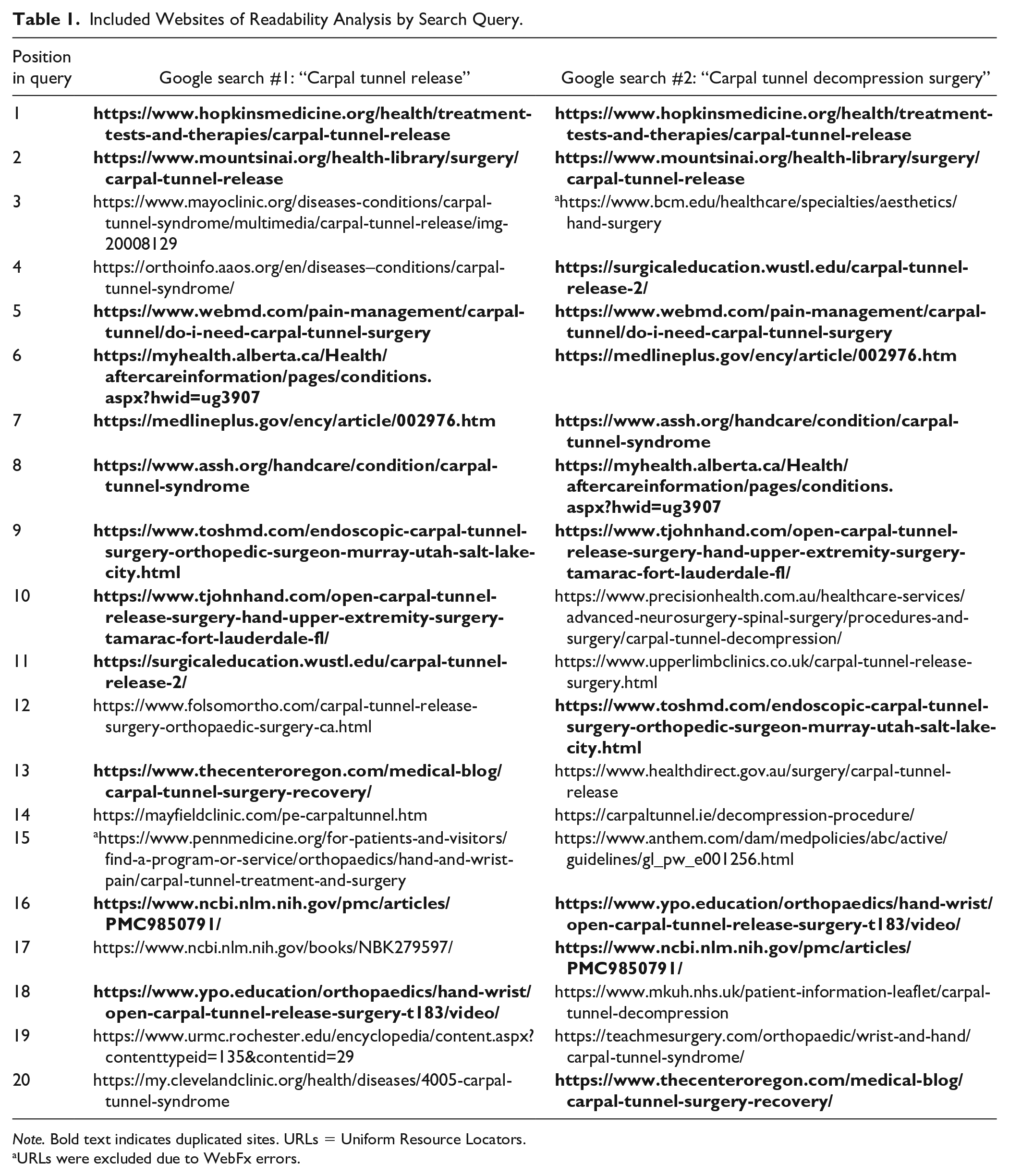
Note. Bold text indicates duplicated sites. URLs = Uniform Resource Locators.
URLs were excluded due to WebFx errors.
Health-Specific Clickthrough Rate
Clickthrough rate (CTR) is essentially a value that approximates the proportion of online users who will click on a link based on its search engine results page (SERP) position. Clickthrough rate was utilized as a means to measure online traffic to websites from search queries. These estimates can vary based on numerous factors, including type of device used to search, search criteria/constraints, time of search, and others. The most relevant CTR data to this study pertain to the “Health and Fitness” search category available via Advanced Web Ranking, an open-access online database. 17 These data were used as the rational basis for using the first 20 SERPs when conducting the search queries. Generally speaking, search results that are apparent in the first few pages of search engine results typically accrue higher traffic. In other words, patients may be more inclined to click on earlier-appearing results for medical information. One-year (July 2022-July 2023) and 4-year (July 2019-July 2023) CTR data were obtained and analyzed in R programming language software as depicted in Table 2.17,18
Health and Fitness Category CTR. 18
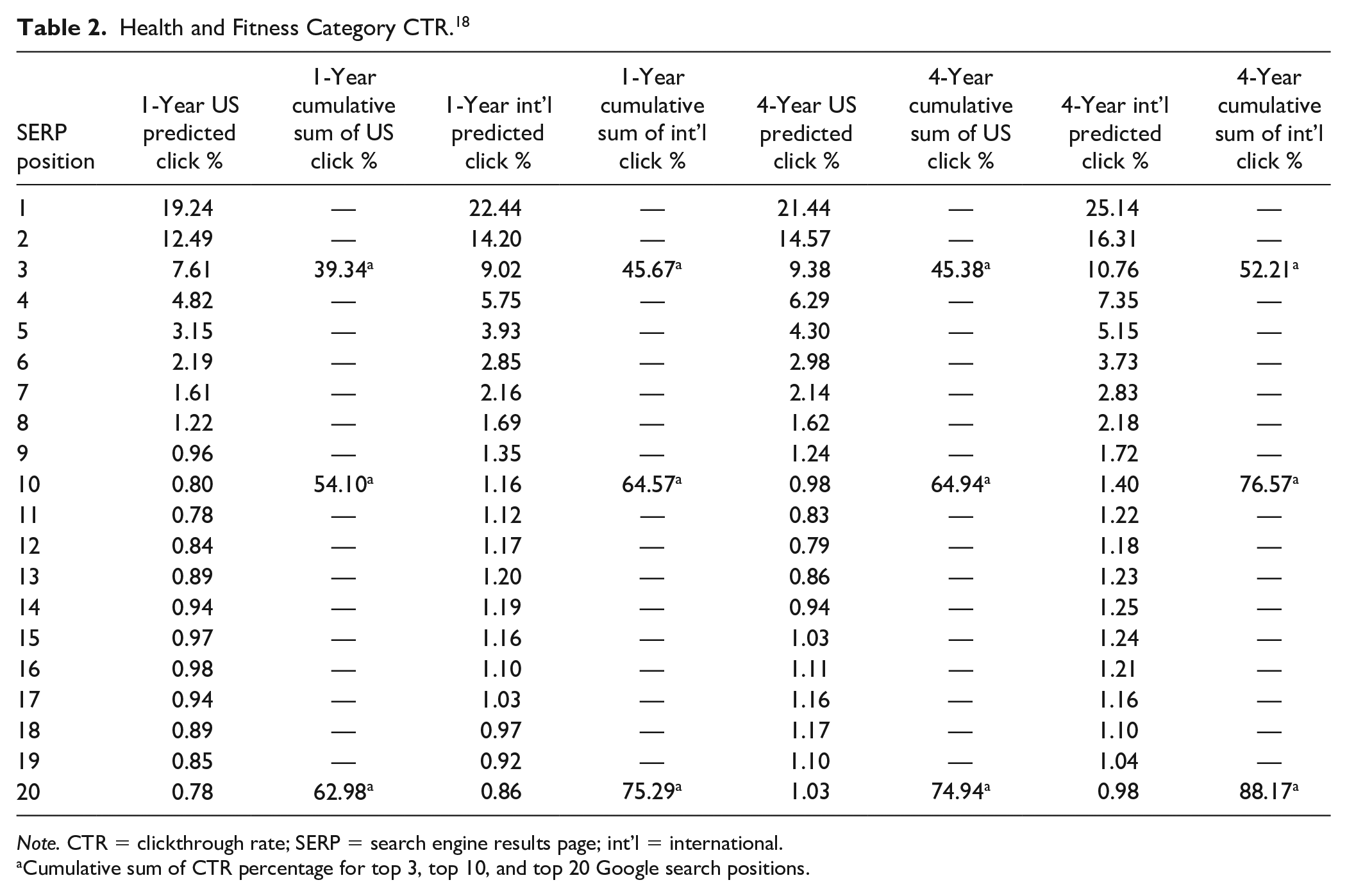
Note. CTR = clickthrough rate; SERP = search engine results page; int’l = international.
Cumulative sum of CTR percentage for top 3, top 10, and top 20 Google search positions.
Evaluating Readability
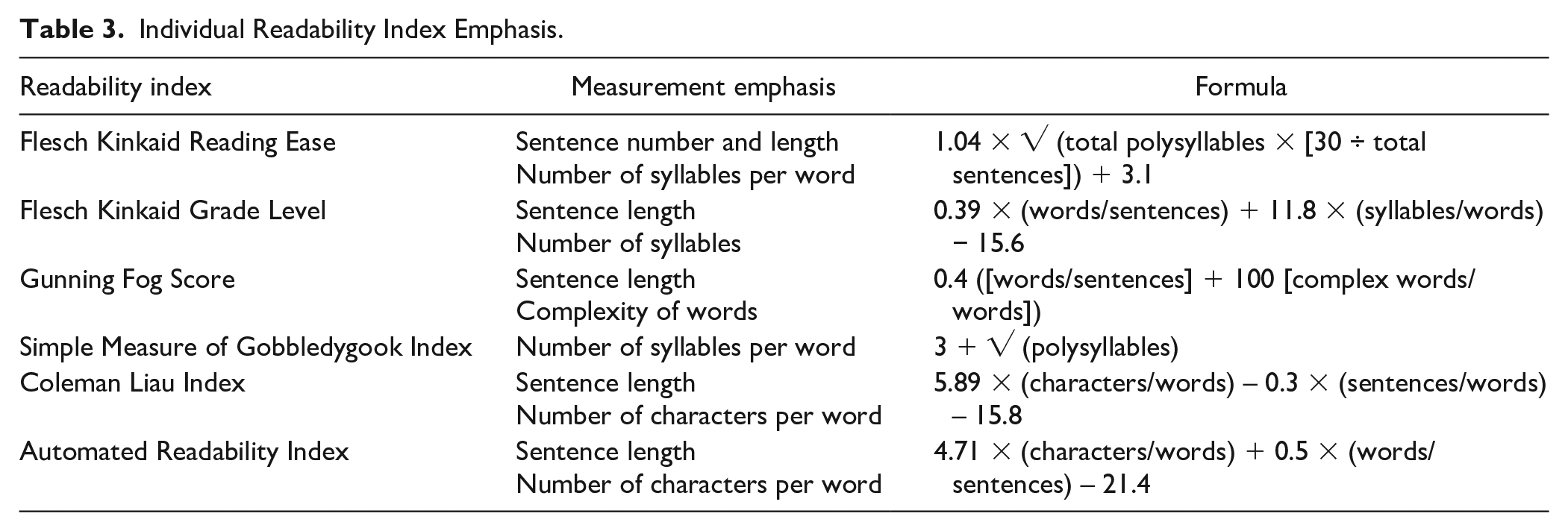
Assessment of website readability consisted of multiple well-established indices including the Flesch Kincaid Reading Ease (FKRE), Flesch Kincaid Grade Level (FKGL), Gunning Fog Score (GFS), Coleman Liau Index (CLI), Automated Readability Index (ARI), and the Simple Measure of Gobbledygook (SMOG) Index. These indices have been shown to analyze readability of written content based on formulas incorporating one or more aspects of sentence and word data. Formulas within these indices usually involve parameters such as average word length in syllables, average sentence length in words, proportion of common words used, proportion of words with 3 or more syllables used, and proportions of words that are monosyllabic.
Flesch Kincaid Reading Ease focuses on average words per sentence and the average syllables per word. It considers both sentence length and word complexity to estimate readability, providing a score ranging from 0 to 100. Higher numbers denote easier readability. This index was excluded from final mean calculations due to its scale discrepancies with US grade levels; however, it was still utilized individually to determine readability of the websites selected. The outputs calculated by the remainder of indices correspond to US grade levels and were used in mean calculations. Flesch Kincaid Grade Level is similar to FKRE, using both sentence length and word complexity to determine readability. Gunning Fog Score utilizes the average words per sentence and the percentage of words with 3 or more syllables, whereas CLI places more emphasis on word length rather than syllables. Automated Readability Index is designed to help writers gauge audience comprehension based on number of characters, number of words, and number of sentences. Finally, the SMOG formula encompasses the number of polysyllabic words and the number of sentences in its readability output. Individual index criteria are summarized in Table 3.11,19
Individual Readability Index Emphasis.
These indices are well established in the literature for their readability formulas and ability to determine audience comprehension based on scores. They have been implicated in readability analyses of various hand pathologies including CTS, 9 arthritis, 10 De Quervain syndrome, 10 flexor/extensor injuries, 10 congenital hand differences, 12 and others. 19 In addition to hand pathologies, they have also been utilized to address literacy concerns in other science- and health-related topics not limited to Mohs micrographic surgery wound care, 11 traumatic brain injury, 13 and prescription drugs. 19
Data Analysis
Advertisements, sponsored links, and multimedia (such as photos, videos, and diagrams) were excluded from data acquisition. Only written content on website pages was utilized to obtain readability scores. Website URLs taken from Table 1 were inputted into the WebFx Test Tool, an online automated readability tool. This tool generated readability scores from FKRE, FKGL, GFS, ARI, and SMOG indices. 20 The respective index scores were then recorded in Google Sheets and analyzed. Index readability scores were calculated for the websites obtained from search results for both “carpal tunnel release” and “carpal tunnel decompression surgery.” These scores were combined to provide a mean readability for each query (separated by index). The index means were then aggregated to determine a mean readability score for each query, and finally a total mean readability score for carpal tunnel surgery information. Figures and tables were created using Google Sheets, Google Documents, Microsoft Word (Microsoft, Redmond, Washington), and Microsoft Excel.
Results
The websites utilized in this study were based on the first 20 SERP positions and the CTR data from the “Health and Fitness” category of Google searches. Results from July 2022 to July 2023 showed that approximately 63% of US users who search for health and fitness material stop searching after the first 20 results. Over a 4-year period from July 2020 to July 2023, approximately 75% of US users stop their inquiries after the first 20 results. Clickthrough rate data can be found in Table 2.17,18 In total, 40 total websites were evaluated in this study with 20 per search query. Due to errors in the WebFx Test Tool, 2 websites were excluded, permitting 38 websites to be utilized for final data analysis. As mentioned, the various readability indices (FKGL, GFS, CLI, ARI, and SMOG) used in this study correspond to US grade levels and were therefore included in the total mean calculations of readability. Flesch Kincaid Reading Ease was excluded from final mean calculations due to its scale from 0 to 100 which does not align with grade levels.
Mean readability scores by index for individual search queries can be found in Table 4. Mean readabilities by index were as follows: FKRE 55.43, FKGL 7.43, GFS 8.39, CLI 13.94, ARI 6.23, and SMOG 6.91. For the search query “carpal tunnel release,” the mean readability across indices was 8.46. For the search query “carpal tunnel decompression surgery,” the mean readability across indices was 8.70. A bar graph summary of the data is provided in Figure 3. The total mean readability for carpal tunnel surgery including both search queries was found to be 8.58 with a range of 6.17 to 14.0. This corresponds approximately to a ninth-grade reading level, three grade levels above the standard sixth-grade reading level set by the AMA and NIH.
Mean Readability Scores of Search Queries.
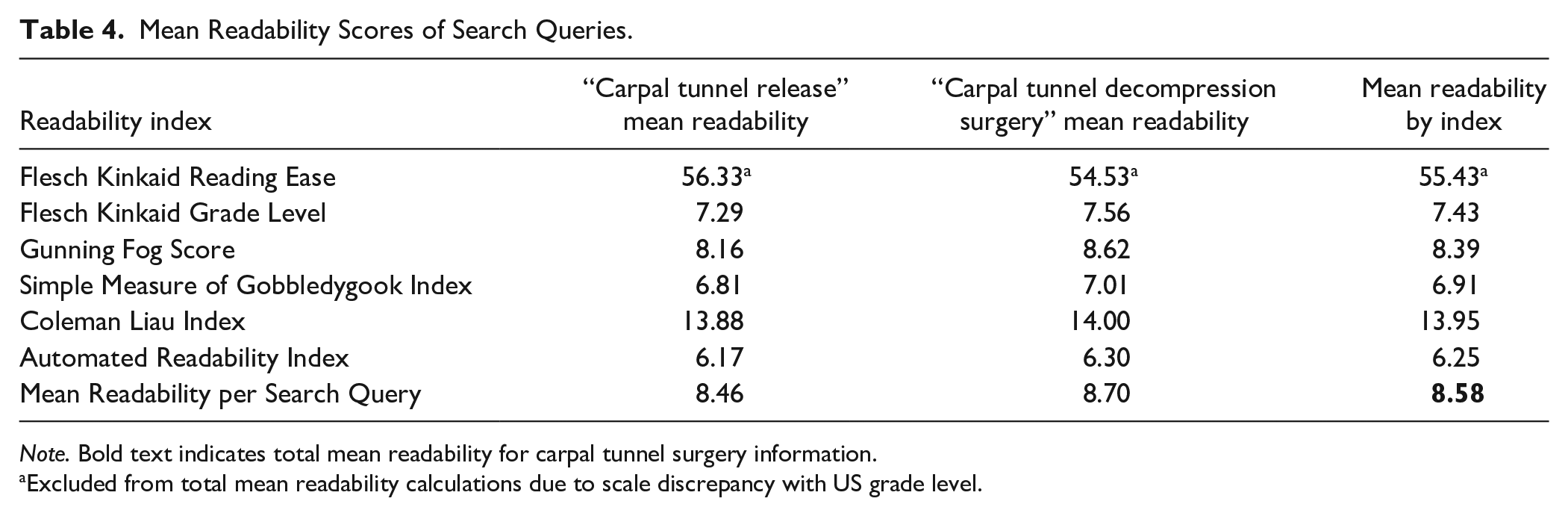
Note. Bold text indicates total mean readability for carpal tunnel surgery information.
Excluded from total mean readability calculations due to scale discrepancy with US grade level.
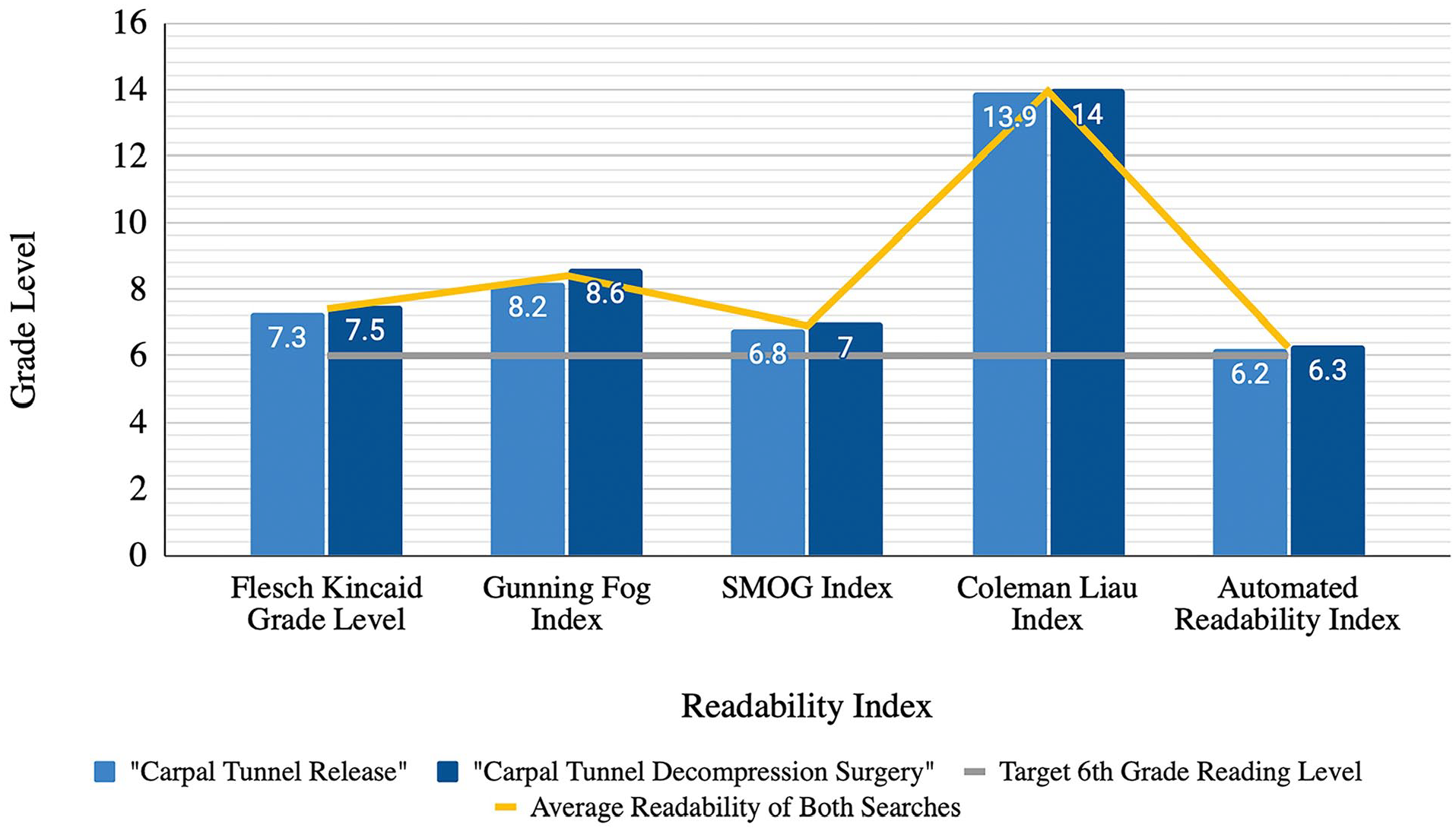
Mean readability results for “carpal tunnel release” and “carpal tunnel decompression surgery” search queries by readability index. Search averages (yellow line) and target reading level (gray line) are included for reference.
Discussion
The Internet has undoubtedly transformed patient education and medical decision-making. In the last decade, quick and easy access to medical information has completely altered the healthcare landscape. There were an estimated 4.1 billion internet users as of December 2018, representing about half of the world’s population at the time. A study conducted in 2020 determined that approximately 87% of 1000 respondents have used the internet for health care-related reasons. Therefore, modification of online content to reflect patient readability and literacy standards should be of utmost importance given the role the internet has in influencing medical decision-making. 6 The goal of readability studies is to ensure information relating to a variety of conditions is comprehensive, accurate, and easy to understand to promote an environment of shared decision-making for both patients and physicians alike.
Since 1999, the AMA and NIH have both recommended a sixth-grade level of literacy for patient-directed information. Literacy has been operationally defined as an “individual’s ability to read, write, and speak in English and compute and solve problems at levels of proficiency necessary to function on the job and in society, to achieve one’s goals, and develop one’s knowledge and potential.” In the context of healthcare, literacy is a well-known correlate of health status and health-promoting behaviors. Poorer literacy is associated with poorer health, higher healthcare use, and higher cost on average for patients. 7 Physicians must make a concerted effort to recognize average literacy levels and adjust communications to improve health outcomes.
Prior readability and health literacy studies have been conducted on carpal tunnel surgery, with notable differences. Eberlin et al concluded that the average readability of material related to carpal tunnel release was 13.1, corresponding to a first-year university literacy level. This is roughly four grade levels above the value we concluded (8.58), indicating that readability may have improved within the last 9 years. The methodology employed by Eberlin et al utilized Google and Bing, allowing 13 websites (a total of 102 articles) to be analyzed via the plain text contents. Only the “carpal tunnel surgery” query was searched, and this was listed as a limitation due to the inevitability of different search terms used by the patient population. 9 Furthermore, the study conducted by Akinleye et al focused on multiple hand pathologies, obtaining a mean readability of 10.3 for carpal tunnel surgery. However, this study only utilized FKRE and FKGL indices with a small sample size, potentially limiting its reliability. 10 Our study included a total of 40 websites, 2 different search queries, and multiple reliability indices—perhaps ameliorating some limitations posed by Eberlin et al and Akinleye et al.
Another recent study asserted that orthopedic patients had demonstrated significant deficiencies in comprehension of their orthopedic problems. Waryasz et al enrolled 50 patients undergoing carpal tunnel release and had them complete a postoperative questionnaire regarding information about the procedure and postoperative instructions. They provided patients with basic information regarding carpal tunnel surgery and standardized instructions regarding postoperative care. Both the questionnaire and postoperative instructions were written at an eighth-grade level according to the Flesch Kincaid Readability Index. Waryasz et al 21 concluded that although they had made a significant effort to help patients achieve health literacy in carpal tunnel surgery, their patients continued to lack comprehension of various aspects of carpal tunnel surgery, most notably the involved anatomy. Evidently, there continues to be a patient knowledge gap in the context of carpal tunnel release surgery. To address this, patients who decide to supplement knowledge of their condition with online information should ideally be able to understand what they read.
A prime illustration of this ongoing problem is apparent amid the coronavirus disease 2019 (COVID-19) pandemic. Readability of online information continues to be thoroughly tested—health literacy became a vastly underestimated problem due to the development of coronavirus infection and sudden-onset respiratory distress. Health communications disseminated by news outlets and government entities aimed to educate people about disease prevention, isolation practices, and varying presentations of illness. Health literacy played a crucial role in helping individuals to understand the rationale behind public health recommendations, encouraging them to prioritize collective well-being. Those who were not aware of public health recommendations were often health illiterate, resulting in increased anxiety levels within the general population. Anxiety levels acted as both a catalyst for seeking information and an obstacle to the ability to read and interpret the information accessed.22,23 Presumably then, increased readability of written content should theoretically lessen anxiety and facilitate better comprehension.
Improving Online Readability
Improving online content readability is a challenging task considering the sheer volume of information available to patients. However, raising awareness and implementing subtle changes to language and formatting can simplify complex content. Readability education is crucial for authors of patient education materials. The peer review process for publication of these materials should be adapted to assess readability, ensuring that material aligns with a sixth-grade reading level. 24 Readability indices can be utilized to shed light on the complexity of written content based on word length, number of syllables, and a variety of other syntactic components. 25 Websites with patient resources should also actively solicit patient feedback to further refine these documents in a continual process. Authors should recognize that older individuals or those less familiar with technology may prefer documents with larger text and a print functionality. 26
Medical information itself should use concise and straightforward language. Medical jargon should ultimately be avoided unless deemed crucial to patient understanding. In a 2010 study assessing readability of orthopedic patient materials, Badarudeen and Sabharwal 26 suggest guidelines for enhancing readability. Potential improvements to materials include using familiar terms, employing conversational language, and leveraging relatable analogies to aid understanding. In addition, multimedia adjuncts can serve as powerful tools in patient education materials, bolstering understanding and memory retention. Ideally, images should be colorful, uncomplicated, and positioned alongside relevant text with clarifying captions.8,26
In the context of CTS, use of these recommendations may promote understanding of symptoms, risk factors, postoperative adherence, and general understanding of the afflicting condition. Online platforms such as Orthogate and OrthoInfo have been recognized for their efforts to consolidate extensive information available online on various orthopedic topics, including those related to CTS and its surgical treatments. 27 These example websites offer printable fact sheets coupled with visual aids and digestible text to enhance readability and support patient education. Online readability assessment should be understood as a dynamic process that warrants author awareness and serial research studies to assess the effectiveness of patient education materials within the healthcare landscape.
Limitations
This readability study is subject to limitations. First, search engine results may vary based on a variety of factors that influence SERP positions that cannot be accounted for. Second, search results evolve over time, and different patient-directed materials may be accessible to different users. Third, this study did not include multimedia sources, which may supplement patient comprehension of materials present on websites. Fourth, readability measures did not account for formatting of text, such as bullet points or use of well-known medical terminology (such as “complication”), which may increase comprehension. Fifth, the WebFx Readability Tool’s URL input feature may include hyperlinks, embedded materials, and other written text not directly related to patient material on the websites used. The WebFx tools were also subject to inherent error, leading to 2 websites being excluded from final data analysis.
In terms of calculations, there are some limitations that can be addressed in future studies. There was notable overlap of website URLs between search queries of “carpal tunnel release” and “carpal tunnel decompression surgery,” which may have affected mean calculations. In addition, there was considerable variability between index measures—for example, the CLI had a range of 10.5 to 20.3, whereas FKGL had a range of 4.8 to 11.2. It is important to note that the readability tests used in this study consider a variety of parameters and are subject to underestimation and overestimation.
Conclusion
The average readability of carpal tunnel surgery online content is currently at a ninth-grade reading level, three grade levels above the recommended sixth-grade level for patient-directed materials. This discrepancy indicates that patient-directed materials related to carpal tunnel surgery are more complex and difficult to understand than what is suggested by the standards set by NIH and AMA. Future studies should continue to monitor readability of patient-directed materials related to carpal tunnel surgery in order to improve patient comprehension. Perhaps the use of more modern validated readability instruments, such as the LIDA tool and DISCERN tool, is better suited to gauge both reliability and readability of healthcare websites. 28 Although considered a difficult task, an overhaul of carpal tunnel release online information readability may be in the best interest of institutions, physicians, and patients to facilitate better health outcomes. We recommend physicians practice effective communication strategies and patients carefully consider where to pursue medical information based on accuracy and readability of written content related to carpal tunnel surgery.
Footnotes
Acknowledgements

Ethical Approval
This study was approved by our institutional review board.
Statement of Human and Animal Rights
This article does not contain any studies with human or animal subjects.
Statement of Informed Consent
This article does not contain human subjects. Informed consent was not necessary for this study.
Declaration of Conflicting Interests
The author(s) declared the following potential conflicts of interest with respect to the research, authorship, and/or publication of this article: Author HDK is the son of author RCK. The authors do not believe this relationship affects the integrity of the research study. AK, KL, MJV, JK, and NP declare no potential conflicts of interest with respect to research, authorship, and/or publication of this article.
Funding
The author(s) received no financial support for the research, authorship, and/or publication of this article.