







Abstract
“Culinary Medicine empowers individuals and communities to prepare food that is both nourishing and culturally meaningful.”
Lifestyle Medicine and Culinary Medicine are natural partners in optimizing whole-person care. Lifestyle Medicine addresses the root causes of chronic illness through proven pillars: movement, sleep, stress resilience, relationships, avoidance of harmful substances, and nutrition, the most frequently used clinical pillar.1,2 Culinary Medicine, as highlighted by the work of Hauser et al, brings the nutrition pillar to life by enabling practitioners to advise and to cook, plan, and guide food behavior. 3 This integration is essential for providing comprehensive, transformative care.
Culinary Medicine empowers individuals and communities to prepare food that is both nourishing and culturally meaningful. 4 “A Novel Culinary Medicine Course for Undergraduate Medical Education” (AJLM 2019) demonstrated that medical students who learn cooking alongside nutritional science report greater confidence in counseling patients and a stronger intention to integrate these practices into their work. 5
Both Lifestyle Medicine and Culinary Medicine emphasize the importance of good nutrition, aligning to empower patients to build healthy food behaviors in their own environments. Knowledge has power, but does not always lead to action. The most common pitfall in habit formation is trying to make overly ambitious changes. BJ Fogg shares in his book, Tiny Habits, that lasting behavior change requires that one: “Stop judging yourself. Take your aspirations and break them down into tiny behaviors. Embrace mistakes as discoveries and use them to move forward.” 6 A “doable” approach to improving nutrition is to employ this concept of “Tiny Habits.” 7 This can be done by breaking down the big-picture goal of healthy living into bite-sized habits and discrete, manageable actions that can be integrated into an existing routine. 6
An initial small step is to encourage patients to incorporate an additional single fruit or vegetable into one meal each day. This patient-centered approach emphasizes individual preferences, encouraging the patient to select a specific meal and an already appealing food item for integration. A clinical prompt to facilitate this action is to ask: “What meal can you add one fruit or vegetable to, and what will you add?” This enables a patient to make clear, actionable steps toward healthier eating. Providing actionable examples, like adding a banana or blueberries to breakfast cereal, enjoying a salad at lunch, or preparing frozen broccoli for dinner, provides both guidance and reassurance. Such illustrations reduce barriers and make change feel practical.
Equally important is recognizing the realities of access and transportation, particularly in lower socioeconomic environments. If food pantries are a primary source, clinicians must suggest recipes using commonly available items. When groceries must be carried long distances on foot or by bus, lighter-weight produce is more realistic than heavier bags of apples or oranges. Meeting patients where they are honors their circumstances and enables success.
Acknowledging and praising positive steps, no matter how small, is essential to facilitating success; each incremental improvement is meaningful.8,9 By validating even modest success, clinicians reinforce effort, build confidence, and encourage ongoing progress toward lasting dietary change.
The integration of Lifestyle Medicine and Culinary Medicine reflects the heart of whole-person care. Healing is not purely biological—it is behavioral, relational, and personal. Preparing and sharing meals becomes self-care, connection, and well-being. The clinic and kitchen merge, shifting health care toward prevention, participation, and human connection. 10
Chicken Meal Examples
Meal examples and recipes can be inspiring tools for demonstrating how adding more fruits and vegetables can be simple and delicious. The chicken meal examples below serve as a practical template clinicians can use with patients. This approach focuses on re-engineering a familiar American meal to promote incremental yet impactful dietary changes, and it can be done with any individual’s culturally preferred foods.
Home Meal Example and Recipes
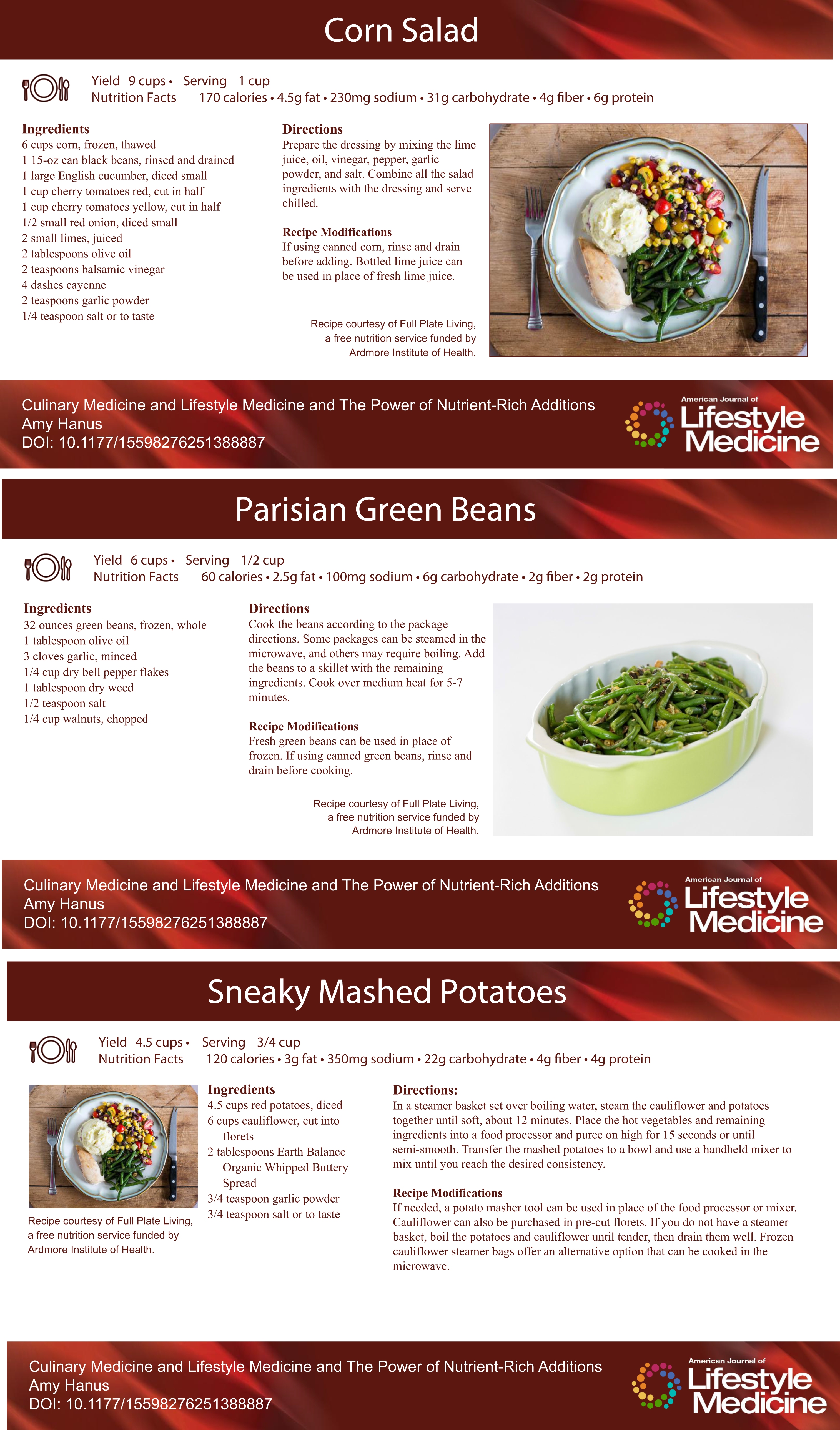
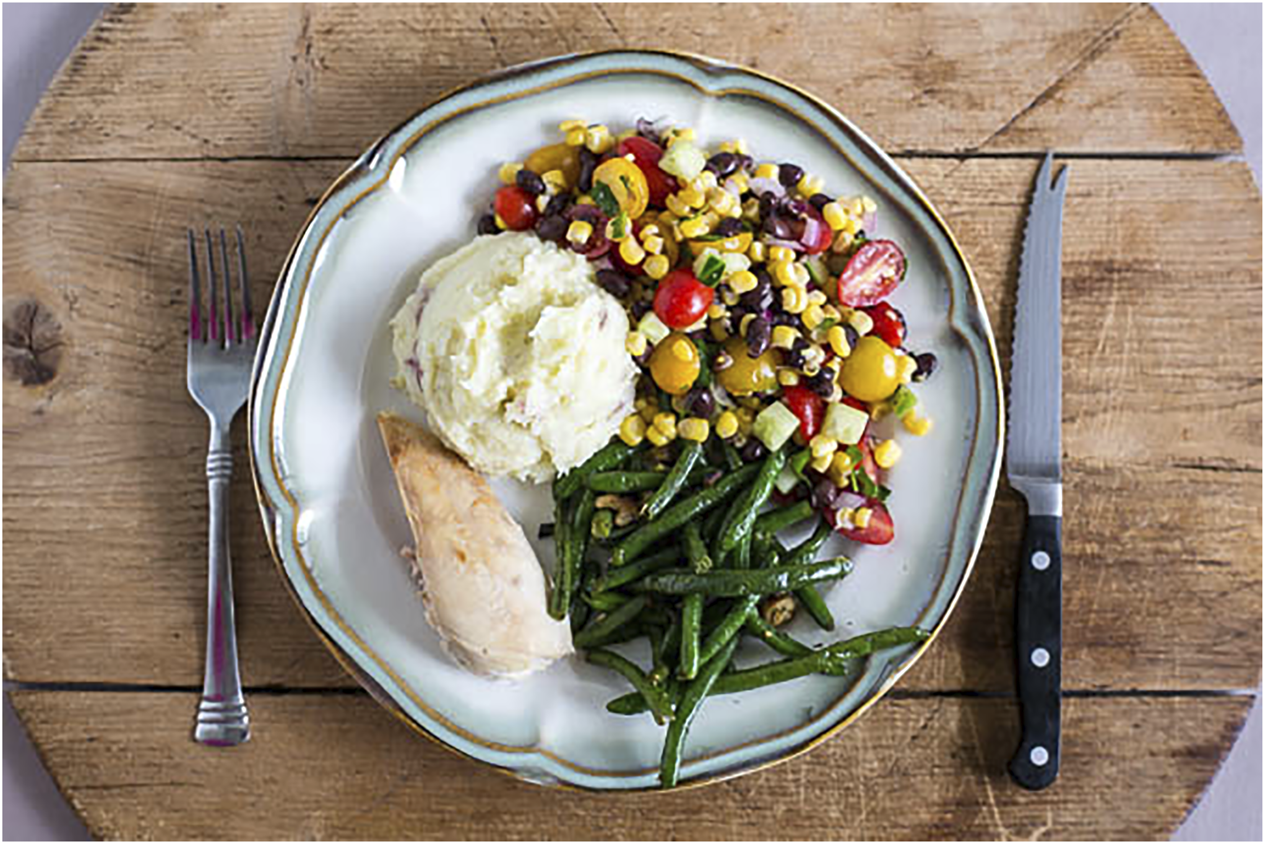
Using the goal to add more vegetables to a meal, this example meal includes 3 different side dishes: green beans, corn salad, and mashed potatoes. The corn salad recipe includes additional vegetables, such as cucumber and tomatoes, and the mashed potato recipe incorporates cauliflower. This meal, which features a serving of roasted chicken, ¾ cup of mashed potatoes, ½ cup of green beans, and 1 cup of corn salad, totals 474 calories and provides 10g of fiber.
Sneaky Mashed Potatoes
This mashed potato recipe is an easy way to sneak in an additional vegetable (https://www.fullplateliving.org/blog/sneaky-mashed-potatoes).
Ingredients
• 4.5 cups red potatoes, diced
• 6 cups cauliflower, cut into florets
• 2 tablespoons Earth Balance Organic Whipped Buttery Spread
• 3/4 teaspoon garlic powder
• 3/4 teaspoon salt or to taste
Directions
In a steamer basket set over boiling water, steam the cauliflower and potatoes together until soft, about 12 minutes. Place the hot vegetables and remaining ingredients into a food processor and puree on high for 15 seconds or until semi-smooth. Transfer the mashed potatoes to a bowl and use a handheld mixer to mix until you reach the desired consistency.
Recipe Modification
If needed, a potato masher tool can be used in place of the food processor or mixer. Cauliflower can also be purchased in pre-cut florets. If you do not have a steamer basket, boil the potatoes and cauliflower until tender, then drain them well. Frozen cauliflower steamer bags offer an alternative option that can be cooked in the microwave.
Yield: 4.5 cups
3/4 cup serving: 120 calories • 3g fat • 350 mg sodium • 22g carbohydrate • 4g fiber • 4g protein
Parisian Green Beans
A delicious recipe to add to any family dinner or take to a potluck (https://www.fullplateliving.org/blog/parisian-green-beans).
Ingredients
• 32 ounces green beans, frozen, whole
• 1 tablespoon olive oil
• 3 cloves garlic, minced
• 1/4 cup dry bell pepper flakes
• 1 tablespoon dry weed
• 1/2 teaspoon salt
• 1/4 cup walnuts, chopped
Directions
Cook the beans according to the package directions. Some packages can be steamed in the microwave, and others may require boiling. Add the beans to a skillet with the remaining ingredients. Cook over medium heat for 5-7 minutes.
Recipe Modifications
Fresh green beans can be used in place of frozen. If using canned green beans, rinse and drain before cooking.
Yield: 6 cups
1/2 cup serving: 60 calories • 2.5 g fat • 100 mg sodium • 6g carbohydrate • 2g fiber • 2g protein
Corn Salad
This salad is perfect to make ahead of time to enjoy at any meal (https://fullplateliving.org/diet/recipes/corn-salad).
Ingredients
• 6 cups corn, frozen, thawed
• 1 15-oz can black beans, rinsed and drained
• 1 large English cucumber, diced small
• 1 cup cherry tomatoes, red, cut in half
• 1 cup cherry tomatoes, yellow, cut in half
• 1/2 small red onion, diced small
• 2 small limes, juiced
• 2 tablespoons olive oil
• 2 teaspoons balsamic vinegar
• 4 dashes cayenne pepper
• 2 teaspoons garlic powder
• 1/4 teaspoon salt or to taste
Directions
Prepare the dressing by mixing the lime juice, oil, vinegar, pepper, garlic powder, and salt. Combine all the salad ingredients with the dressing and serve chilled.
Recipe Modifications
If using canned corn, rinse and drain before adding. Bottled lime juice can be used in place of fresh lime juice.
Yield: 9 cups
1 cup serving: 170 calories • 4.5 g fat • 230 mg sodium • 31g carbohydrate • 4g fiber • 6g protein
Recipes courtesy of Full Plate Living, a free nutrition service funded by Ardmore Institute of Health.
Restaurant Meal Example
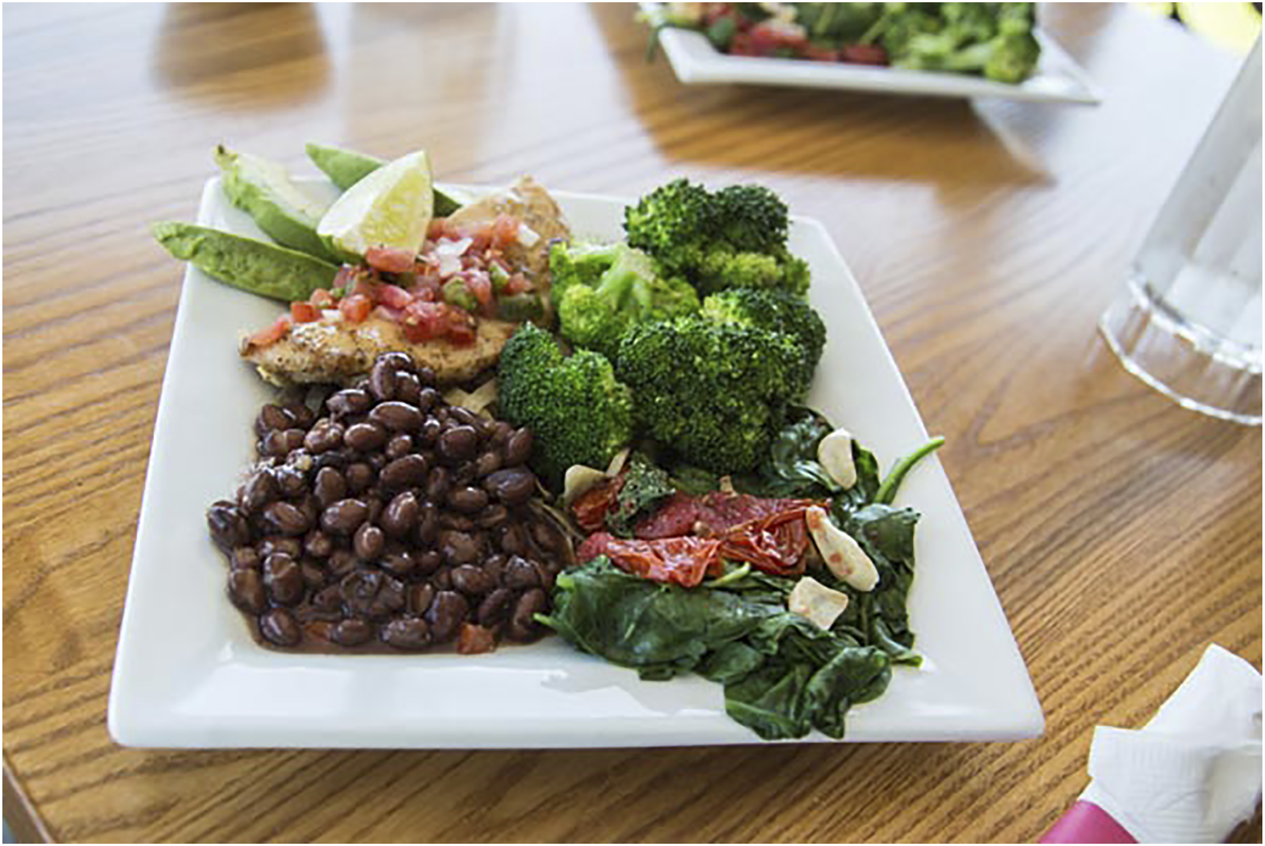
Finding vegetables when eating outside the home requires its own set of strategies, but grilled chicken is often a staple, as are vegetable and other plant-forward sides, like legumes, whole grains, and fruit. Here’s a restaurant example that includes grilled chicken breast with avocado slices, steamed broccoli, black beans, and sautéed spinach with roasted garlic and tomatoes. This meal has 355 calories and 16g of fiber.
While more positive steps can be encouraged, helping patients adopt small, consistent habits, such as adding 1 vegetable to 1 meal, builds momentum toward better health. By combining the principles of Lifestyle Medicine and Culinary Medicine, clinicians can empower patients to create lasting change and cultivate long-term well-being.
Footnotes
Declaration of Conflicting Interests
The author declared no potential conflicts of interest with respect to the research, authorship, and/or publication of this article.
Funding
The author received no financial support for the research, authorship, and/or publication of this article.